Geopolitics and Geoeconomics of the Strait of Hormuz
Sputnik – 02.05.2026
The reckless reliance on a blitzkrieg to eliminate Iran’s political and military leadership has left Israel and the United States in an extremely precarious situation, where Tehran’s key trump card in the conflict turned out to be control over the Strait of Hormuz.
Alexander Yakovenko, deputy director of Sputnik’s parent company Rossiya Segodnya and head of the Committee on Global Issues and International Security of the Russian Security Council’s Scientific-Expert Board, has addressed the standoff around the Strait of Hormuz.
Analysts in Israel are already writing of a complete failure, with the prospect of “returning to the issue” sometime in the future. Judging by published reports, everything was planned for June this year, but, as the saying goes, the devil intervened, and Benjamin Netanyahu succumbed to the temptation of a final solution through “regime change.” The scapegoats will be the Mossad division responsible for Iran and the military command responsible for Lebanon.
Donald Trump faces a far more difficult predicament: he has been drawn into a war that is neither his own nor in America’s interest. But the main issue is that the Strait of Hormuz problem now rests squarely on his shoulders. Aside from acceding to all of Iran’s demands, there appear to be no viable options for resolving the blockade – including the resumption of military action, which, according to observers, would have catastrophic consequences for the region, the global economy, and the Trump administration.
In terms of the Persian Gulf and the greater Middle East, a complete geopolitical reconfiguration has taken place, including a shift in Turkiye’s role (it was Ankara that effectively killed the plans to bring Iraqi Kurds into the “march on Tehran,” which was intended to bolster the confidence of those whom Israeli intelligence believed were ready to take to the streets of Iranian cities).
The destruction of the region’s extraction and logistics infrastructure prompted the UAE to withdraw from OPEC and OPEC+, which will only intensify Abu Dhabi’s contradictions with Riyadh and accelerate the political realignment of smaller players toward Ankara, Saudi Arabia, or Iran.
Iran’s agency has grown qualitatively: from a pariah state burdened by sanctions, Iran has genuinely become a regional power (in contrast to Netanyahu’s claim that Israel is a regional power and “in some ways even a global one”). Everything now depends on Iran – a fact understood by those at the helm in Tehran, namely, by general consensus, the Islamic Revolutionary Guard Corps (IRGC). And all this is aside from the most pressing issue on the regional agenda: the restoration of extraction and logistics infrastructure, especially given that the damage has a cumulative effect – in other words, “time is money.”
Russia, Pakistan, and China have become even more deeply involved in the affairs of the region, while the United States has demonstrated its inability to provide military protection for its allies. In other words, the role of external players has grown, whereas control over the region had been in American hands since the Baghdad Pact at the beginning of the Cold War. Now it can be said that the entire institutional structure in the region is collapsing – even in the OPEC format – and the region is opening up to an entirely new architecture.
In terms of geoeconomics, Tehran now holds a powerful lever of influence over the global economy and world trade through its control over the Strait of Hormuz. Moreover, this is not only direct control but also the ability to destabilize the situation around the Strait at any point in the future, regardless of any agreements that might be reached regarding its possible reopening as part of a ceasefire. In other words, everyone understands that things will never return to how they were before.
The only thing that matters for the global economy and the international financial system – including the dollar’s linkage to oil trade – is the stability of commercial traffic through the Strait. With no indication of it being reopened, the world is losing between 8 and 15 million barrels of oil and petroleum products per day, as well as up to 20% of global LNG supplies. This also includes a range of industrial goods in the petrochemical sector and derivatives for the agricultural sector. Experts expect a monthly shortfall of 300 million barrels, which amounts to three-quarters of the released strategic reserves of developed countries. Moreover, by early May, both strategic reserves and the advantages of unlocking Russian and Iranian oil, along with the balancing buffer of floating storage, will be nearly exhausted. In short, in every respect, a moment of truth is approaching in a conflict that is difficult to restart now that military action has been paused.
Not only have the United States and Israel handed Iran, on a silver platter, escalation dominance in the conflict – the ability to manage escalation if Washington and Tel Aviv launch another round – but Tehran will also gain additional revenue from selling its 1.5 million barrels of oil per day, which economists estimate at 2–3 billion per month, or 24–36 billion per year. Essentially, even without the unfreezing of Iranian assets in Western countries, Iran will have the resources to rebuild what has been destroyed. To this should be added the fees collected from commercial vessels transiting the Strait of Hormuz.
It is also worth noting a direct geopolitical consequence of the Iranian conflict: the discord within the Western alliance along the line of Trump’s America versus liberal-globalist Europe. The recent visit of the British monarch to the United States, during which he called in his address to Congress for the collective “defense of Ukraine” invoking Article 5 of the Washington Treaty (despite the fact that Kiev is not a NATO member), indicates that the lack of allied support for the Iranian adventure is a clear appeal to restore Western unity specifically on an anti-Russian basis – everything else is secondary. In Europe, they no longer hide the fact that they intend to “wait out” Trump, if that is what it takes, but under no circumstances will they agree to a settlement of the Ukrainian conflict.
As such, it is not denied that Ukraine is merely the opening move in yet another war of the West against Russia, and that Western elites are determined to make it a decisive, final confrontation of a civilizational nature. This presents an interesting situation for Russia, which could be resolved one way or another very soon. If Russia participated in two world wars, in which, albeit in different ways, relations between groups of Western countries were contested, and in the Cold War we faced a united West, then now we see a disunited West, weakened militarily and in terms of domestic political development. Its consolidation is only possible at our expense.
Charles III quite opportunely mentioned the burning of the White House by the British in 1814, as it reminds us – and perhaps Washington – of positive moments in our shared history, including Russia’s support for the American Revolution and the Union side in the Civil War. The decision rests with the Americans, but it is curious how the Middle East references an era before the ideologization of international relations in the 20th Century.
CHD Scientist: CDC, FDA COVID Vaccine Safety Monitoring ‘Insulting, and Many People Are Injured’
By Suzanne Burdick, Ph.D. | The Defender | April 29, 2026
Federal health officials under the Biden administration failed abysmally to look for COVID-19 vaccine safety signals, according to congressional testimony delivered today by Children’s Health Defense (CHD) Senior Research Scientist Karl Jablonowski.
The government’s vaccine safety monitoring “over the past several years has been insulting, and many people are injured,” Jablonowski wrote in his written testimony.
History repeats itself if we don’t learn our lessons, Jablonowski warned.
“The COVID-19 pandemic created over 100 billionaires in the United States and over 1,000 billionaires around the world,” Jablonowski wrote. “Anything that profitable is going to repeat.”
Jablonowski, who holds a doctorate in biomedical and health informatics from the University of Washington’s School of Medicine, spoke as a witness at the U.S. Senate Permanent Subcommittee on Investigations hearing, “Unmasked: How Biden Health Officials Purposely Turned a Blind Eye Toward COVID-19 Vaccine Safety Signals.”
Hours before the hearing, Sen. Ron Johnson (R-Wis.), subcommittee chair, released a report detailing how Biden-era federal health officials refused to use a state-of-the-art statistical tool for detecting COVID-19 vaccination signals in VAERS — even though they knew the tool they were using was too broken to pick up on safety signals, including sudden cardiac death.
Johnson’s report, which cited roughly 600 pages of emails, revealed that in 2021, officials with the U.S. Food and Drug Administration (FDA) told an FDA researcher to “cease and desist” using the state-of-the-art tool to analyze COVID-19 vaccine injury reports in the Vaccine Adverse Event Reporting System (VAERS).
Johnson obtained the emails after he subpoenaed the U.S. Department of Health and Human Services in January 2025 for COVID-19 vaccine safety records and pandemic-related communications.
FDA was ‘blind’ to COVID vaccine injury reports in VAERS
In his testimony, Jablonowski detailed how each of the federal government’s three vaccine safety monitoring systems — VAERS, V-safe and Vaccine Safety Datalink (VSD) — had “pitfalls” and “failed” to adequately assess safety issues with the COVID-19 vaccine and other vaccines.
The failures of vaccine safety monitoring “can be, and were, catastrophic,” he said.
For instance, the FDA insisted on monitoring COVID-19 vaccine reports using a method that it knew didn’t work. The FDA knew the method was likely to give inaccurate results if similar vaccines — such as the Pfizer and Moderna COVID-19 vaccines — were included in the dataset. This is called masking.
“The FDA was completely blind to COVID-19 vaccine adverse events,” Jablonowski wrote. He said the FDA could have used an improved statistical method accounting for masking.
A 2022 peer-reviewed paper in Drug Safety showed that the improved method detected roughly 25 statistically significant COVID-19 vaccine safety signals — including sudden cardiac death, Bell’s palsy and pulmonary infarction — that the FDA’s older method missed.
In an earlier interview with The Defender, Jablonowski explained why it was so harmful for the FDA to continue using the older method:
“Imagine a night watchman has to find something on the ground. But instead of holding a flashlight, he is wearing sunglasses. In the morning, he says he didn’t find anything. That’s true, but it’s because he was using a tool that impeded his ability to see.”
As of March 27, 1,675,590 adverse events were reported to VAERS following COVID-19 vaccination, according to OpenVAERS. That number includes over 39,077 reports of death, 29,200 reports of myocarditis or pericarditis, and 18,009 reports of Bell’s palsy.
A national survey conducted in November 2025 found that roughly 1 in 10 U.S. adults who received the COVID-19 vaccine experienced “major” side effects.
V-safe was designed to collect ‘inconsequential’ data
Jablonowski told lawmakers that the Centers for Disease Control and Prevention’s (CDC) COVID-19 vaccine safety monitoring tool, V-safe, was designed to collect only “inconsequential” information that no one really cares about.
The V-safe app invited COVID-19 vaccine recipients to check off boxes to indicate what, if any, side effects they experienced after getting the shot.
However, the box options were for common short-term vaccine side effects that most people would consider “inconsequential,” such as chills, headache, joint pain, muscle or body aches, fatigue or tiredness, nausea, vomiting, diarrhea, abdominal pain or rash.
If a person experienced a more serious problem, they had to manually type it into the “other” text field, Jablonowski noted. He said:
“It is with horror that we find 366 individuals typed ‘myocarditis’ in the ‘other’ free-text field, a condition requiring a medical diagnosis. The horror is amplified by the nearly 50,000 registrants who typed ‘chest pain’ into the ‘other’ free-text field.”
Vaccine Safety Datalink is off-limits to independent researchers
Jablonowski also detailed how VSD, a collaborative database of patient information from 13 integrated healthcare organizations covering over 15.5 million people, also fails the public.
VSD data can ostensibly be used to detect vaccine safety issues in near-real time, Jablonowski said.
The problem is that only a small handful of scientists are ever allowed to look at the data. Jablonowski said:
“This many million-dollar taxpayer funded resource is not available to any scientist outside of the 13 Managed Care Organizations (MCO) or the federal government without independent IRB [independent review board] applications approved by all 13 MCOs, an estimated $250,000 per project.”
In other words, independent researchers are realistically barred from analyzing the data. “Transparency is simply unattainable,” Jablonowski said.
Watch Jablonowski’s opening statement here.
This article was originally published by The Defender — Children’s Health Defense’s News & Views Website under Creative Commons license CC BY-NC-ND 4.0. Please consider subscribing to The Defender or donating to Children’s Health Defense.
COVID Conniving Receives First Federal Indictment
By Jim Bovard | The Libertarian Institute | May 1, 2026
David Morens, a former top advisor to COVID Czar Tony Fauci was indicted this week and “charged with conspiracy against the United States; destruction, alteration, or falsification of records in federal investigations; concealment, removal, or mutilation of records; and aiding and abetting,” according to the Justice Department press release.
Morens allegedly helped top federal health officials cover up the potential role of federal grants in spurring the COVID pandemic. The Freedom of Information Act (FOIA) requires federal agencies to preserve and disclose federal records with some narrow exceptions. In early 2021, Morens emailed a colleague, “I learned from our foia lady here how to make emails disappear after i am foia’d but before the search starts, so i think we are all safe.”
Morens added, “Plus i deleted most of those earlier emails after sending them to gmail.” In a previous email, he assured his collaborators, “I have spoken to our FOIA folks” and “I should be safe from future FOIAs. Don’t ask how…”
Fauci doesn’t need to worry about getting indicted since President Joe Biden, on his last morning in office, pardoned any crimes that Fauci might have committed in the previous decade. Fauci justified COVID mandates because average citizens “don’t have the ability” to determine what is best for them. Congressional investigations revealed that Fauci was at the center of string-pulling to shirk responsibility on COVID.
Top federal officials scrambled to erase the federal role in bankrolling reckless gain of function research at the Wuhan Institute of Virology in China, the most likely source of the COVID virus that killed more than seven million people around the world. That type of research seeks to genetically alter organisms to enable the spread of viruses into new species. As MIT professor Kevin Esvelt asked in 2021, “Why is anyone trying to teach the world how to make viruses that could kill millions of people?” The risks were compounded because the Wuhan Institute had a very poor safety rating. Two years earlier, the State Department confidentially “warned other federal agencies about safety issues at Wuhan labs studying bat COVID,” but the public disclosure of that alert was delayed until 2022—long after President Biden illegally mandated COVID vaccines for a hundred million American adults.
If COVID-19 had been initially recognized as the result of one of the biggest government boondoggles in history, it would have been far more difficult for American politicians and government scientists to pirouette as saviors as they seized sway over daily life. Instead, politicians, bureaucrats, and the media stampeded most of the American public with the notion that total submission to boneheaded decrees was their only hope to survive.
Attorney General Todd Blanche issued a statement on the indictment of Morens:
“These allegations represent a profound abuse of trust at a time when the American people needed it most—during the height of a global pandemic.”
Luckily, there haven’t been any “profound abuses of trust” since Trump took office again—at least according to his Justice Department. Blanche added, “Government officials have a solemn duty to provide honest, well-grounded facts and advice in service of the public interest — not to advance their own personal or ideological agendas.”
Be still my beating heart. Is this a subtle signal that the Trump team will disclose the other three million documents on the Epstein scandal?
FBI chief Kash Patel announced at the indictment press conference, “Circumventing records protocols with the intention of avoiding transparency is something that will not be tolerated by this FBI.”
Has the FBI turned over a new leaf or what? The FBI is one of the most notorious FOIA violators in Washington. When FOIA was first passed in 1966, FBI chief J. Edgar Hoover ordered his agency to totally refuse compliance with the law. A federal judge slammed the FBI in 2017 for claiming it needed seventeen years to fulfill a FOIA request on surveillance of antiwar activists in the 1960s. The FBI deleted the names of Clark Kent and Lois Lane from a letter that made reference to the famous Superman characters—because disclosing them in a FOIA response would “constitute a clearly unwarranted invasion of personal privacy.” Louis Freeh, director of the FBI from 1993-2001, repeatedly denounced my articles on Ruby Ridge; but when I filed a FOIA, the FBI claimed to have no records of those published letters to the editor. They sent their response to “Mr. Brovard” so maybe that helped them not find anything.
FBI FOIA trampling is par for the Bureau covering up its destruction of freedom of speech and freedom of the press. As federal judge Terry Doughty declared in a 2023 decision, “The FBI [acted] as doorman to a vast program of social media surveillance and censorship, encompassing agencies across the federal government—from the State Department to the Pentagon to the CIA.”
Morens may be the first federal official to ever be charged with a crime for actions to evade FOIA requests. Certainly, in more than fifty years, no federal FOIA official has ever been jailed for violating the law by refusing to disclose information. I’ve received so many BS responses from FOIA officers over the decades that I have lost count. When I filed a FOIA with the Office of the U.S. Trade Representative to see what information they had on me in their files, they replied in 2010, “We have no records on Kevin Bovard.” But I wasn’t asking about my cousin.
In 2015, I heard scuttlebutt that the Justice Department pressured USA Today to cease publishing my articles bashing Attorney General Eric Holder. I filed a FOIA to get the department’s official emails to my editors, but DOJ FOIA claimed it had nothing. I only got the damning emails after I filed a follow-up FOIA request and made a lucky guess on the exact day, hour and minute the emails were sent.
For too long, deceiving the American people has been treated like a victimless crime in Washington. If the Morens indictment can set a precedent leading to more such criminal investigations of bureaucratic cover-ups, that will be a booster shot for American democracy.
Iran Blockade Complications /Lt Col Daniel Davis & Nima Alkhorshid
Daniel Davis / Deep Dive – May 1, 2026
Minab children massacre not ‘unfortunate situation’ but ‘heinous war crime’: Tehran
Press TV – May 1, 2026
Iran’s Foreign Ministry spokesman has condemned the US war secretary’s attempt to portray the massacre of children in Minab as an “unfortunate incident,” reiterating that the missile strike was “a heinous war crime.”
During hours of tense testimony before Congress on Wednesday, Pete Hegseth described the deadly strike on Shajareh Tayyebeh Elementary School in Iran’s southern city of Minab as an “unfortunate incident,” which according to him remains under investigation.
On the first day of the US-Israeli aggression against Iran on February 28, US Tomahawk missiles struck the school, killing 168 people, most of them children.
In a post on X on Friday, Esmaeil Baghaei said that the attack “was not an ‘unfortunate situation.’ It was a premeditated, heinous war crime.”
Baghaei shared a video of Representative Ro Khanna questioning Hegseth about the cost to American taxpayers “in terms of the strike on the Iranian school where kids were killed, in terms of the missiles we used.”
“To put it plainly,” Baghaei said, “how much did it cost American taxpayers for their secretary of defense to direct the deliberate killing of innocent schoolchildren and their teachers?”
The spokesman added that those responsible for the crime “must be held fully accountable and brought to justice.”
In an address to the UN Human Rights Council in late March, Iran’s Foreign Minister Abbas Araghchi described the incident as “the tip of the iceberg” of systematic violations committed with impunity by the United States and Israel.
The two enemies launched a large-scale, unprovoked war against Iran, assassinating the Leader of the Islamic Revolution, Ayatollah Seyyed Ali Khamenei, and a host of senior commanders while indirect negotiations were underway between Tehran and Washington regarding Iran’s peaceful nuclear program.
Subsequent terrorist strikes on civilian targets have so far killed more than 3,300 people, including children.
Iran can thrive under blockade, the US and its allies cannot
By Robert Inlakesh | Al Mayadeen | May 1, 2026
While officials of the US Trump administration have repeatedly claimed that their blockade on Iran’s blockade of the Strait of Hormuz is a winning strategy, on the contrary, Tehran thrives. Instead of taking the temporary ceasefire as an opportunity to find a viable offramp, Washington has used mental gymnastics to sell the public on a non-existent get out of jail free card.
US Treasury Secretary Scott Bessent has claimed that Iran’s oil industry is creaking under the pressure of the blockade imposed upon its exports, even making rather outlandish comments about the inevitability of oil infrastructure blowing up as a result. While the US seizure of Iran-linked tankers and vessels does evidently have an impact, it is being enormously overblown by an American administration that is out of viable options.
The way US President Donald Trump and his senior officials are speaking, it would lead you to believe that the “uno reverse card,” as it has been mockingly referred to, was going to lead to the freefall of Tehran’s economy. Yet, the US is still adding more sanctions to Iran, attempting to seize and/or freeze more of its assets, while issuing round-the-clock threats. If the US-imposed blockade, which is failing to block all shipping to and from Iran, were so effective, then these other much lesser measures wouldn’t make sense.
Even the pro-war Zionist think tanks, like the Foundation for Defense of Democracies (FDD), have been agitating for more aggressive tactics and to escalate. For example, the Washington-based FDD recently published a Policy Brief article entitled ‘Trump Strikes at China’s Iranian Oil Trade, but It’s Not Enough’. In other words, nobody is convinced by Trump’s strategies, not even the biggest fans of the Iran war.
In the realm of reality, the Islamic Republic of Iran has survived under US sanctions for some 47 years now. Although the sanctions have had varying impacts at different phases of the ongoing conflict with the US, Iran has managed to adapt to its predicament. It survived through 8 years of brutal war with its neighbours, after former Iraqi President Saddam Hussein attacked it for the sake of the United States, and has endured the most brutal sanctions campaigns known to man.
What the US has done over the years is make Iran de facto sanctions-immune. This does not mean that they don’t work at all; clearly, the Iranian economy has taken enormous hits, and the civilian population has borne the brunt of the consequences. But the takeaway here is that the Islamic Republic is not going to buckle in a matter of weeks or months, just because the US is interdicting the passage of some Iranian vessels.
As a matter of record, back in 2018, when President Trump first imposed his maximum pressure campaign – following the decision to unilaterally pull out of the 2015 nuclear deal – the daily Iranian oil exports rapidly declined to 350,000 barrels per day. It remained this way for some 33 months, until Tehran managed to recover. The recovery led Iran back to exporting around 2.5 million barrels per day. Amidst the height of the first round of the current war, Iran even managed to break records for oil revenues generated, not seen since the triumph of the Islamic Revolution in 1979.
In addition to this, the Iranians have established a status quo under which they will not allow the Strait of Hormuz to be transited unless a toll is paid to them first; a move that has not only placed the key global chokepoint under their control, but will inevitably drive enormous profits in the long run.
Iran did not buckle under years of maximum pressure sanctions and the steep decline in their oil exports. Its Gulf neighbours will not fare so well. The damage done to US allies, like the United Arab Emirates (UAE), has already surpassed what is necessary to cause permanent damage. Emirati officials may have even doubled down on their support for the Zionist project and to see Iran destroyed, withdrawing from OPEC, and claiming they will use alternative export routes, but everyone knows those options simply do not exist.
In the end, it was always going to boil down to the US buckling under the weight of an economic fallout, due to the total closure of the Strait of Hormuz, a pressure that only grew worse following Trump’s goofy decision to impose his own blockade.
Therefore, the embarrassing failure of the Trump administration was only ever going to lead to one of two outcomes: a full US backdown or the resumption of war.
Iran slams US leadership, debunking fabrications, false war costs
Al Mayadeen | May 1, 2026
Iranian officials criticized the United States over its leadership and its justification for the US-Israeli war on Iran, debunking Washington’s fabrications and scrutinizing its political coherence and legal rationale.
In reference to the reported cost of the US-Israeli war on Iran, estimated at 25 billion dollars by the US Department of War, Iranian Foreign Minister Abbas Araghchi maintained that “the Pentagon is lying.”
In a post on X, Araghchi asserted that “Netanyahu’s gamble cost America $100b so far, four times what is claimed.”
He further noted that “indirect costs for U.S. taxpayers are FAR higher. Monthly bill for each American household is $500 and rising fast.”
“Israel First always means America Last,” he assertively concluded.
Trump’s contradictions reveal US decision-making made elsewhere
Mohsen Rezaei, a member of Iran’s Expediency Discernment Council, said, also took a swing at the “America first” slogan, asserting that “the contradictory statements of Trump show that real decisions in US are being made somewhere else.”
In a post on X, he argued that key decisions in Washington were being shaped by “behind-the-scenes power networks” that do not align with the “America First” slogan associated with Trump and MAGA.
Rezaei added that this demonstrates “the kind of deadlock America is facing,” emphasizing that Americans “are the ones paying the price.”
‘Self-defense’ against what?: Baghaei
Separately, Iranian Foreign Ministry spokesperson Esmail Baghaei rejected US claims that the US-Israeli war on Iran was launched in “self-defense”.
In a post on X responding to a US claim that the war was launched “at the request of and in the collective self-defense of its Israeli ally,” he questioned the legal basis for such claims, asking, “Was there any ‘armed attack’ by Iran to justify ‘self defense’?”
Baghaei rejected the claim by Washington, emphasizing that the war was “an act of AGGRESSION against the nation of Iran.”
Here’s why Iran is sovereign and Germany is not
By Tarik Cyril Amar | RT | May 1, 2026
Sovereignty, as defined in international law, is both crucial and complex. In the real shark-pool world of geopolitics, it is not hard to spot: if you have the ability to rule at home and resist attack from outside (any outside), then you are sovereign. Otherwise not. No exceptions.
That’s why Iran has sovereignty, but Germany does not. Iran has withstood two months of a devious and brutal war of aggression waged by the US and Israel, which in turn is “merely” the culmination of decades of assaults levied via economic warfare, assassination campaigns, and subversion.
However, Iran has not only successfully foiled the current Israeli-American blitzkrieg-and-regime-change scenario, but also put the attackers on the backfoot. Tehran’s achievement is already historic. It has changed and will change the course of history.
Germany, by contrast, cannot even defend its own vital infrastructure, as the Nord Stream sabotage and its aftermath have demonstrated. What is even worse, its governments have had no will to do so. On the contrary, they have been rewarding the Ukrainian attackers with untold billions to feed Kiev’s ultra-corruption. Their backers – certainly including the US and Poland, and most likely Great Britain, too – need not worry about any trouble from Berlin either.
Case closed: Iran is sovereign, Germany is not. If you are German and find this uncomfortable, complain to Berlin.
Against this backdrop, it is oddly fitting that it is Iran which is now exerting a powerful influence on German politics despite not having any deliberate designs to do so, whereas German calls on Tehran (or, for that matter, Moscow or Beijing) to do this and leave that – as articulated by Foreign Minister Johann Wadephul with an almost comical lack of self-awareness – come across as embarrassing: sad spectacles of an impotence that doesn’t even know itself.
Iran, on the other hand, has now had a palpable impact on what unfortunately remains Germany’s single most important foreign-policy relationship. Indeed, as the current, post-1990 “unification” (really, expansion, and that’s still a polite term) Germany is really the old Cold War West Germany writ large (and going to seeds, too), the relationship with the US is more than just important. Historically, it was literally foundational.
And here we are: It is due to Iran’s resistance that this relationship has entered a deep crisis. Of course, other factors have played (or should have played) a role as well: for instance, Washington’s ferocious, bipartisan economic warfare against its old key client (polite term) in Europe, including at least complicity in destroying vital energy infrastructure and supply options (Biden, Democrats) via massive incentives for German industry to relocate to the US (Biden, Democrats) to devastation by tariffs (Trump, Republicans).
But it is over Iran that things have now come to a head: German Chancellor Friedrich Merz has openly criticized Washington’s conduct of the war, and US President Donald Trump has launched one of his social media rampages, going after Merz and Germany with, as Secretary of War (Crimes) Pete Hegseth would put it, “no quarter” given.
Trump has even threatened, in effect, to withdraw the almost 40,000 US troops from Germany. It would be stupid and self-damaging for the US to do so, but then, this is the Trump administration. Full disclosure: As a German, I hope they go ahead.
Trump has also told Merz off for wanting Iran to have a nuclear weapon (false on two counts: Iran isn’t building one, and Merz is a compliant client leader who would never dare dissent from the US and Israel) and for being bad at running Germany, which must rankle, because most Germans agree. Merz has just earned himself the worst poll ratings of any German chancellor ever.
He has made things even worse – yes, Merz can do that – by releasing an exceedingly masochistically timed interview to complain that, in essence, no one likes him. True, but saying so has only triggered a national tsunami of mockery: now he is not only vastly unpopular but derided as a wimp, who loves to dish out harsh admonishments and mean austerity but can’t take the response.
A short video clip deep-faking Merz performing a satire of MC Hammer’s classic “You can’t touch this” by singing “No one likes me” is going viral. At a town hall-style meeting, the chancellor was openly laughed at. Major mainstream media are beginning to talk about a crisis deep enough to end the current government and, even worse for Merz, about rebellious murmurs inside his own CDU party.
All of this because Merz was making remarks about the Iran War. But make no mistake: Friedrich Merz, still infamous for applauding Israeli “dirty work” (“Drecksarbeit”) in Iran last summer, has not discovered a conscience. Listen attentively to his recent statements, made before a group of high school kids, and you realize, the chancellor’s real beef with America is that Washington hasn’t done its current “dirty work” quickly and, above all, successfully. No one loves a loser, not even, it turns out, Friedrich Merz, whose prior obsequiousness toward Trump had raised eyebrows even in Germany.
Yet whatever Merz’s sordid motives, take a step back and look at this picture from the point of view of history-in-the-making: Here is the German chancellor, who claims to be ready to make his country lead Europe (yes, not a great idea, but let that pass for now), whose government is presiding over the greatest German debt-and-armament splurge since World War Two (and that against a background of profound economic crisis), and he is stumbling over Iran. So much for the rise of multipolarity and the decline of Europe.
Not because that was Tehran’s aim. As a matter of fact, the Iranian leadership probably has very little time to think about Berlin – except noting for the future that, in practical terms, it is serving as a loyal accomplice in the American-Israeli war of aggression. No, the reason Iran now impacts and shakes the American-German relationship is that Tehran has been defeating the US, and so the client state Germany is registering the public “humiliation” of America (Merz’s term) by showing immediate signs of faltering compliance.
Who in this picture is reshaping things? And who is being shaped? Here’s another way to define sovereignty. And Germany still loses.
Tarik Cyril Amar is a historian from Germany working at Koç University, Istanbul, on Russia, Ukraine, and Eastern Europe, the history of World War II, the cultural Cold War, and the politics of memory.
Israel pours $730m into global propaganda machine as reputation collapses
The Cradle | May 1, 2026
Israeli lawmakers last month approved a sharp increase in the 2026 public diplomacy budget, allocating roughly $730 million to the global messaging apparatus, also known as “Hasbara,” according to a report by the Jerusalem Post on 29 April.
Surveys point to a deepening collapse in international support, as Israel’s genocide in Gaza and continued aggression toward its neighboring countries have sent the Tel Aviv’s reputation into freefall on the global stage.
The funding accounts for more than four times the previous year’s allocation, and forms part of a broader push led by Israeli Foreign Minister Gideon Saar, who characterized the effort as a strategic imperative, saying it should be treated “like investing in jets, bombs, and missile interceptors” and calling it “an existential issue.”
The campaign spans large-scale digital outreach and political engagement aimed at bending perceptions and influencing narratives around Israel.
Around $50 million is being funneled into social media advertising, and roughly $40 million is going toward flying in foreign delegations such as politicians, clergy, and influencers as part of the outreach effort.
Officials insist the strategy improves perceptions abroad, with Israel’s consul general in Los Angeles, Israel Bachar, claiming that “Everyone who returns from the country understands better and is more supportive. But you have to fly out a lot of people.”
However, polling data cited in the reports shows a sharp collapse in public opinion towards Israel, particularly in the US.
A Pew Research Center survey found that 60 percent of US respondents now view Israel unfavorably, with declines cutting across political, religious, and demographic groups.
Analysts and researchers dismiss the spending outright, arguing it cannot offset the impact of Israel’s actions on the ground.
Communication scholar Nicholas Cull said, “Our conclusion was, it’s the policy, stupid,” referring to Israel’s policy of genocide and apartheid, and its broader military conduct as a central pillar of its expansionist agenda.
“Yes, you can do a lot with public diplomacy, and there are strategies that could help on the margins. But they’re only going to affect a small percentage, because the bulk of the impressions on issues that people care about are shaped by the actual policies, not how well you sell those policies.”
“The problem is that people don’t believe the state anymore,” said Ilan Manor, another expert cited in the report, warning that increased funding may expand reach but will not restore trust.
That push is reinforced by what Israeli officials describe as a parallel “Eighth Front” – a so-called “Digital Iron Dome” that combines mass reporting campaigns, AI-driven targeting, and coordinated influencer networks to suppress dissenting content and flood platforms with state-approved narratives in real time.
Israel had invested millions in coordinated digital influence campaigns, including a $6-million contract to shape AI outputs, targeted Gen Z messaging, and large-scale ad buys, in an effort to control online narratives and counter declining public support in the US.
The country’s propaganda arm had previously deployed a large network of at least hundreds of fake social media accounts and fabricated news sites to spread unverified claims linking UNRWA to Hamas’s 7 October Operation Al-Aqsa Flood in order to undermine its humanitarian mission in Palestine.
Leaked audios reveal pro-Israel groups ‘paid’ for US pardon of convicted drug trafficker Juan Orlando Hernandez
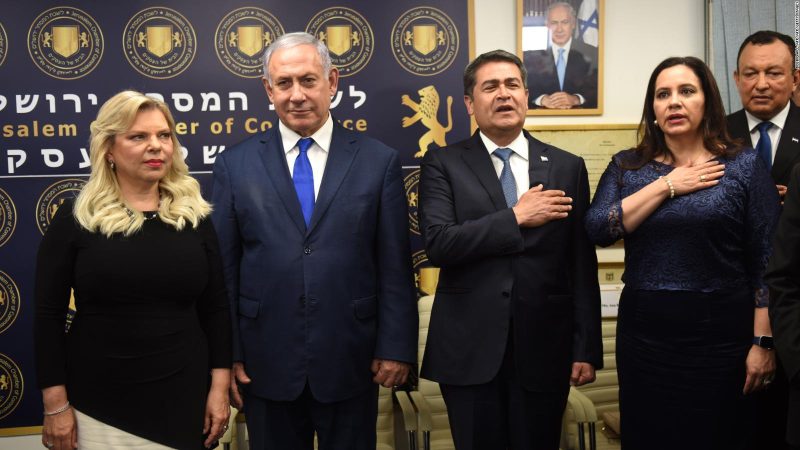
The Cradle | April 30, 2026
WhatsApp, Signal, and Telegram audio messages published by Canal RED and Hondurasgate on 29 April reveal pro-Israel groups “paid” for the release of former Honduran president and convicted drug trafficker Juan Orlando Hernandez (JOH) from US federal prison last year.
“The pardon money … came from a board of rabbis and people who supported Israel, and they had previously supported Yani Rosenthal,” JOH is heard saying in the leaked audios.
Yani Rosenthal is the former president of the right-wing Liberal Party of Honduras. He was convicted in December 2017 of laundering drug proceeds for a prominent Honduran drug cartel.
In 2024, JOH was convicted in a US federal court of three counts of drug trafficking and weapons conspiracy and received a 45-year prison sentence. He was also found guilty of receiving money from the former leader of the Sinaloa Cartel, Joaquin Archivaldo “El Chapo” Guzman, to finance electoral fraud.
JOH was pardoned late last year by US President Donald Trump, who called the DEA investigation into Hernández a “Biden administration set up.” Trump announced the pardon hours before Honduras’s presidential elections.
In that same social media post, Trump endorsed the current President Nasry “Tito” Asfura and threatened to cut aid to Honduras if he was not elected.
“The Prime Minister of Israel is going to give us his support. They had everything to do with my departure and negotiations,” JOH says in one of the audios released on Wednesday.
According to Canal RED, the leaked audios show that Trump’s pardon for JOH “was secured through intense lobbying led by Roger Stone and the Republican caucus … with the support of Israeli Prime Minister Benjamin Netanyahu.”
The audios also suggest that Hernandez’s return to Honduras and his upcoming presidential run are being financed by Israel.
“Mr. President, I’m here asking about my case, if there’s any resolution, if you have anything to share with me to see if there’s been any progress with the Supreme Court. I want to believe that you won’t sideline me because, thanks to me, you’re sitting in that chair … And I hope for your support. Because that’s what we discussed with President Trump,” JOH tells President Asfura in one of the leaked audios.
According to the report, Trump and Netanyahu are “seeking millions in compensation” in exchange for securing Asfura’s election and JOH’s possible reelection.
“The negotiations at the Florida residence included the expansion of Zones for Employment and Economic Development (ZEDEs), the construction of a new military base, a free trade agreement, and a law to incentivize investment in AI, whose contracts would be awarded directly to private American companies such as General Electric,” Canal RED reports.
ZEDEs, or “private states”/’model cities,” permit autonomous courts and foreign legal systems in Honduras, which civil groups say surrender sovereignty.
Additionally, a second set of leaked audios released on Thursday involving JOH, Asfura, and Honduran Vice President Maria Antonieta Mejia indicates the formation of a news outlet funded with more than half a million dollars in Honduran public funds, along with contributions from Javier Milei’s government in Argentina, aimed at ‘attacking’ the left-wing governments of Gustavo Petro in Colombia and Claudia Sheinbaum in Mexico.
Congress Extends Section 702 Spy Program 45 Days
By Dan Frieth | Reclaim The Net | April 30, 2026
The surveillance program that scoops up Americans’ communications without warrants got another 45 days of life on Thursday, after Congress reauthorized a clean version of FISA Section 702 hours before it was set to expire.
The House voted 261-111 to push the program’s expiration to June 21, sending the legislation to President Trump’s desk before the midnight deadline.
Senate Majority Leader John Thune said, “This will allow additional time to do that,” referring to ongoing work on a longer-term reauthorization that the upper chamber has been drafting separately.
What the procedural language obscures is what Section 702 actually does. The statute lets the NSA harvest communications from foreign targets without warrants, then stores those communications in a database that intelligence agencies can later search for information about Americans.
The agency calls this incidental collection but it functions as a workaround for the Fourth Amendment, allowing the government to access Americans’ messages, calls, and emails by claiming the foreigner on the other end of the conversation was the real target.
The renewal arrived only after a messy week of legislative whiplash. The House had originally passed a three-year extension on April 29, attaching an unrelated provision to ban the Federal Reserve from issuing a central bank digital currency.
Senate leadership killed that version on arrival, then jammed the lower chamber with a stripped-down 45-day extension that contained no privacy reforms, no warrant requirement, and no concession to the lawmakers who have spent years documenting how the program gets misused.
The Foreign Intelligence Surveillance Court opinion at the heart of Thursday’s fight is the closest thing to a smoking gun the public has seen on Section 702 in years.
The ruling addresses searches of Americans’ communications inside the NSA’s foreign intelligence database, the same backdoor query practice that has been flagged repeatedly by oversight bodies.
The court found problems with how the government has been running these searches.
What problems, specifically, remain classified.
That is the document Senator Ron Wyden, the Oregon Democrat who has spent over a decade trying to force daylight onto NSA programs, wanted Americans to read before Congress voted on a multi-year extension.
Wyden initially refused consent for the 45-day deal, holding out until Senate Intelligence Committee Chair Tom Cotton and ranking Democrat Mark Warner agreed to send a letter asking the executive branch to declassify the opinion within 15 days.
On the floor, Wyden made the case for why the secrecy is the problem. “That ruling found serious violations of Americans’ constitutional rights and how the Trump administration has used Section 702,” he said. “Congress should not vote — should not vote — to renew Section 702 when Americans are left in the dark about these troubling abuses,” Wyden said.
Cotton, an unwavering supporter of the program, took the framing personally. “I am ducking nothing. I am pointing out the senator from Oregon’s long-standing practice of distorting highly classified material in public,” Cotton said. “One of these days there are going to be some consequences, and it may be while I’m the chairman of this committee.”
Cotton runs the committee that controls intelligence community oversight, and the speech or debate clause of the Constitution is the only thing protecting senators from prosecution for what they say on the floor.
Stripped of theatrics, the message from the chairman of the body that supposedly checks the surveillance state was that pointing out documented abuses is itself a punishable act.
The result of all this is also that a surveillance program with documented constitutional problems gets six additional weeks of operation while the ruling describing those problems stays buried.
Current law already requires the FISC opinion to be released to the public eventually. Wyden wants that timeline accelerated to before Congress votes on a multi-year reauthorization, on the reasonable theory that lawmakers should know what they are voting to renew.
“Congress must use a short-term extension to openly debate the critical issues in front of the American people. I am disappointed that, instead, it sure feels like the other side of the aisle is covering the abuses up,” Wyden said.
What happens next depends on whether the executive branch honors the declassification request, and whether the Senate’s three-year reauthorization includes anything resembling meaningful reform.
The version that has been moving through committee does not require warrants for searches of Americans’ communications. It does not narrow the categories of foreign intelligence that can justify surveillance or impose meaningful limits on how long the NSA can retain the communications it collects.
The program scheduled for renewal on June 21 is not the program Congress originally approved.
Zionists Are Gunning for Your Freedom of Speech
By Jack Hunter | The Libertarian Institute | May 1, 2026
The First Amendment of the Bill of Rights in the Constitution of the United States guarantees the right to free speech. This right has long differentiated the United States from other Western nations like the United Kingdom and Canada where laws against so-called “hate speech” laws exist and are enforced.
Thankfully, America is different. In our country, even alleged hate speech is protected speech to ensure democratic principles and debate.
In a 1929 dissenting opinion, Supreme Court Justice Oliver Wendell Holmes said that the Constitution secured “freedom for the thought that we hate.” In 2011, Chief Justice John Roberts said in a ruling that the First Amendment serves “to protect even hurtful speech on public issues to ensure that we do not stifle public debate.”
This constitutional protection has been increasingly threatened recently, particularly by pro-Israeli forces that have tried to frame any criticism of that government as “anti-Semitism” and thus hate speech punishable by law. This has included everything from arrests, to squashing campus debate to buying TikTok to an attempt to cover up human rights absuses in Gaza. President Donald Trump has even issued executive orders that use vague definitions of what constitutes “anti-Semitism” that comes with criminal penalties.
Mark Levin is an American-born Zionist radio host who is an outspoken advocate for Israel’s government, regularly calling anyone who criticizes the U.S.-Israeli war with Iran and conflict in Gaza “Nazis.”
Toward this agenda, Levin recently appeared to not agree with his own country’s free speech rights. On his latest Sunday Fox News program, unironically called Life, Liberty and Levin, the neoconservative pundit explained why free speech liberties in the U.S. have gone too far.
Seemingly worried that certain speech is protected in the United States, Levin said in the wake of the Secret Service taking down a shooter at the White House Correspondents Dinner on Friday, “First time things like this have happened, but it really is problematic because so much of it is protected.”
“And you hear people say, don’t you believe in the First Amendment?” Levin said. “They don’t even know what the First Amendment believes.”
Certain “speech” is “problematic” because “so much of it is protected.” You could see where this was headed.
Levin then explained what he believes “the First Amendment believes.” “Do you want to de-platform people?” he ranted. “You know, the libs do that. I don’t have any problem with de-platforming Nazis or jihadis.”
“Nazis,” Levin says. Levin uses this term loosely, all the time, and that’s putting it mildly.
Prominent libertarian personality Josie Glabach, known most popularly as “The Libertarian Redhead,” made a telling list of the many people and groups Levin has called Nazis since 2024:
- The Democrats
- The Democrat media
- An Australian bakery
- The Pakistani defense minister
- Libertarian Institute Director Scott Horton
- The entire Libertarian Party
- College students
- MMA fighter Jake Shields
- Nick Fuentes
- Putin’s buddies
- Influencer Dan Bilzarian
- The Houthis
- Comedian and libertarian personality Dave Smith
- Anyone who associates with Dave Smith
- Tucker Carlson
- Beirut
- Hezbollah
- A veteran who asked Mark to be more tolerant
- Influencer Myron Gaines
- The city of London
- Hamas
- The New York Times
- New York Times columnist Thomas Friedman
- A New York Times correspondent
- Terrorists;
- The “woke reich”
- Maine Democratic Senate candidate Graham Platner
- The United Nations
- Harvard University
- The city of Amsterdam
- Columbia University students
- Iterations of the “Iranian Nazi regime,” the “Islamic Nazi regime,” the “Islamo Nazi regime,” the “Islamist Nazi regime,” and “All of Iran (the new Nazis)”
- The Ayatollah (presumably of Iran)
- Former Iranian President Ebrahim Raisi
- A protestor on a subway
- Congresswoman Rashida Tlaib (D-MI)
- President Joe Biden’s entire State Department
- Turkish Preisdent Recep Erdoğan
- College basketball analyst Bruce Pearl
- Certain Arab, liberals and journalists
- Reporter Lulu Garcia-Navarro
- ISIS
- Seventeen random Twitter users
This eclectic group of entities great and small, many of whom are regular critics of Israel’s government, are “Nazis” in Levin’s view. As Libertarian Institute Senior Fellow Tom Woods succinctly put it, “Nazis’ includes everyone who mocks Levin.”
Levin continued his Sunday rant against “Nazis”:
“I don’t have any problem with de-platforming them. What does that mean, de-platforming them? A government law? No. It means that X or Twitter or Facebook or Amazon with Twitch and someone says you know what? You’re a low life we’re not paying, you know, get off our platform. What’s wrong with that?”
The neocon pundit appeared to say that private platforms should police speech according to the political views of Mark Levin. He is right that this is no violation of the First Amendment. Private companies can allow or restrict speech as they please. “It’s called private enterprise,” he said. “I got no problem with that.”
Then Levin basically said such speech was no different than pornography, which is not protected under the First Amendment. Levin continued, “I mean, what if they have this horrific pornography on? Is that okay? No, it’s not okay.”
“Because our kids have access to it,” he said. “People who are impressionable have access to it. “What if they had people screaming at the top of the lungs saying, assassinate this guy and assassinate that guy? Well, they shouldn’t do that.”
“Why? What’s the standard?” Levin went on. “You need to have a standard. What should the law be? What does the Constitution say?”
The Constitution says that all speech is protected, but “true threats” and obscenity are not.
But political opinions about Israel that go against Levin’s views are protected, whether he likes it or not.
That’s when Levin basically outright said that speech that criticizes Israel should be forbidden just like pornography. “I just think we’ve taken this too far because we’re not even talking about political speech, which is the most protected of all speech,” Levin said.
“We do limit speech,” he insisted. “We limit speech, pornography. We limit speech.”
What Levin, like so many other Zionists, truly want is for the First Amendment to be amended itself. They believe, whether they say it forthright or not (and Levin appears to be doing just that), that this legal provision designed by the Founders precisely to protect political speech should no longer protect speech that is critical of Israel’s government.
Americans have historically valued their free speech. American Zionists like Levin now want a carve out.
But the free speech guarantee enshrined in the United States’s governing charter is so integral to the American experience, to gut it for any reason would be to drastically alter the DNA of the soon to be 250-year-old country.
As an American, Mark Levin doesn’t seem to have a problem with doing just that—all in the service of a foreign country.
It might be better for Americans to instead wish other nations well, yet solely concentrate on our own affairs at home, and perhaps just as important, to stop listening to American pundits whose primary allegiance seems to be countries other than their own.
Featured Video
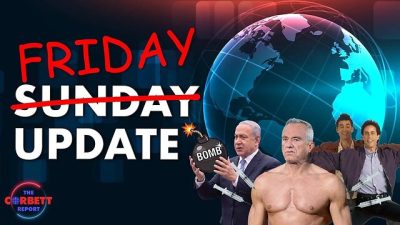
Racist Seinfeld Dances for Joy as Bibi Unveils His New Map
or go to
Aletho News Archives – Video-Images
TV Drama Review
Japanese drama projects Japan’s wartime atrocities onto Chinese characters

Global Times | October 25, 2026
By portraying Chinese characters as perpetrators of ruthless violence while casting Japanese Self-Defense Forces (SDF) intelligence operatives as defenders, the season 2 of the Japanese drama Vivant has recently drawn criticism from Chinese netizens, who argue that its depiction turns historical reality on its head while ignoring Japan’s wartime atrocities.
The TBS drama series – a spy suspense story in which an alleged unofficial intelligence unit of the SDF operates across the globe — has attracted a passionate fanbase. Its currently airing season 2 opened with a household rating of 18.8 percent, the highest for a TV drama this year, according toa commentary article by Japanese media Toyo Keizai.
What draws attention is the portrayal of the enemies in the series, the article noted. Scenes in which the Chinese organization subjects kidnapped members of the SDF unit to brutal torture are repeated with unrelenting intensity.
It is rare for Japanese TV dramas to explicitly portray a real-life country as the enemy, the article noted.
Japanese Prime Minister Sanae Takaichi also made a reference to the drama, saying that she has been recording Vivant and hopes to binge-watch it over the year-end and New Year holidays, according to Japanese media outlets.
China’s CCTV News report on Sunday revealed that the drama features scenes in which Chinese personnel cut off the fingers of and stab Japanese intelligence operatives in the abdomen. Such acts bear striking similarities to the torture inflicted on Chinese nationals by invading Japanese troops during the World War II.
The drama distorts the truth by attributing these atrocities to modern Chinese characters. Beneath the surface, it subtly glorifies Japan’s cross-border overseas operations, blurs the functional boundaries of the SDF and implicitly promotes an expansionist narrative, per CCTV News. … continue
Blog Roll
 Aletho News
- EU facing trillion-euro debt hole while seeking more cash for Kiev
- How US, Europe, Persian Gulf states exhausted missile stockpiles, splurged billions to defend Israel
- Up in arms… Koreans reject U.S. empire’s plan to make South Korea the next Ukraine
- Iran, Turkey, Pakistan, Saudi Arabia could advance region-led security framework in Tehran: FM spox
- Netizens condemn Japanese drama for projecting Japan’s wartime atrocities onto Chinese characters
- Racist Seinfeld Dances for Joy as Bibi Unveils His New Map
- A West Bank War for Netanyahu’s Election Campaign, Could It Backfire?
- Yemen denounces European Parliament’s ‘hypocritical’ push to blacklist Ansarullah
- Qalibaf: UAE’s UN bid aims to ‘clear the runway’ for ‘Greater Israel’, whitewash genocide
- Pakistan reopens Iran border after boosting security: Report
- If Americans Knew
- An error has occurred; the feed is probably down. Try again later.
- No Tricks Zone
- Sudden Stratospheric Warming, Powerful El Niño Combination May Lead To Extreme Europe Cold, Energy Crisis!
- Two New Studies Find Thwaites Glacier Melt Cannot Be Driven By Human Activity Or A Warming Ocean
- E-Cars Reduce CO2 Emissions By Only 41% Compared To Internal Combustion Engine Vehicles
- Predictions Made By Renowned Climate Professor Over Past Decades Have Been Proven To Be Poor
- New Study Suggests Large Regions Of The Pacific Ocean Have Been Cooling For The Last 80 Years
- Germany’s Green Energy Debacle: High Energy Costs Force Kahla Porzellan to Close After 182 Years!
- New Study: 50 Years Of The Most Aggressive ‘Net Zero’ Policies Can Only Affect The Global Climate By 0.03°C
- US September “Heat” Was No Record…Many Records Set Decades Ago
- Latest European Green Energy Debacle; Portugal’s Largest Flagship Solar Park Insolvent!
- Green Energy Debacle: German Expert Professor Fritz Vahrenholt Warns Of Severe Economic And Social Consequences

