Big Corporations Now Deploying Woke Ideology the Way Intelligence Agencies Do: As a Disguise

Customers wait in line to purchase limited-edition Air Jordan 1 on July 25, 2019, in Yichang, Hubei Province of China. (Photo by VCG/VCG via Getty Images)
By Glenn Greenwald | April 13, 2021
The British spy agency GCHQ is so aggressive, extreme and unconstrained by law or ethics that the NSA — not exactly world renowned for its restraint — often farms out spying activities too scandalous or illegal for the NSA to their eager British counterparts. There is, as the Snowden reporting demonstrated, virtually nothing too deceitful or invasive for the GCHQ. They spy on entire populations, deliberately disseminate fake news, exploit psychological research to control behavior and manipulate public perception, and destroy the reputations, including through the use of sex traps, of anyone deemed adversarial to the British government.
But they want you to know that they absolutely adore gay people. In fact, they love the cause of LGBT equality so very much that, beginning on May 17, 2015 — International Day against Homophobia, Transphobia and Biphobia — they started draping their creepy, UFO-style headquarters in the colors of the rainbow flag. The prior year, in 2014, they had merely raised the rainbow flag in front of their headquarters, but in 2015, they announced, “we wanted to make a bold statement to show the nation we serve how strongly we believe in this.”

Official publication of the British surveillance agency GCHQ, May 17, 2015
Who could possibly be opposed to an institution that offers such noble gestures and works behind such a pretty facade? How bad could the GCHQ really be if they are so deeply committed to the rights of gay men, lesbians, bisexuals and trans people? Sure, maybe they go a little overboard with the spying sometimes, and maybe some of their surveillance and disinformation programs are a bit questionable, and they do not necessarily have the highest regard for law, privacy and truth. But we know that, deep down, these are fundamentally good people working within a fundamentally benign institution. Just look at their flamboyant support for this virtuous cause of social justice.
Similar agencies of deceit, militarism and imperialism now robustly use this same branding tactic. The CIA — in between military coups, domestic disinformation campaigns, planting false stories with their journalist-partners, and drone-assassinating U.S. citizens without due process — joyously celebrates Women’s Day, promotes what it calls The Agency Network of Gay, Lesbian, Bisexual, and Transgender Officers (ANGLE), hosts activities for Pride Month, and organizes events to commemorate Black History Month. The FBI does the same.

Throughout the month of June, CIA hosted a series of events, panels, & activities celebrating the progress toward equality for members of the Lesbian, Gay, Bisexual, and Transgender community. #PrideMonth bit.ly/2MY0LqZ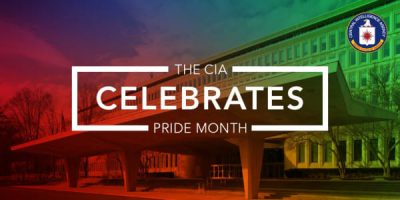
June 26th 2018
115 Retweets402 Likes
It’s so sweet that one is tempted to forget about, or at least be more understanding of, all the bombing campaigns and all the dictatorships they install and prop up that repress and kill the very people that they purport to honor and cherish. Like the GCHQ, how menacing can an intelligence agency be when it is so deeply and sincerely supportive of the rights of the people they routinely spy on, repress and kill?
Again, this does not make the CIA perfect — sure, they make some mistakes and engage in some actions that are worthy of criticism — but to combat real evil, you do not go protest at Langley. They are engaged in important work combating homophobia, racism and misogyny. Thus, real warriors against evil look not to them but instead go searching online for the Boogaloo Boys and boomers on Facebook who post Q-Anon and other problematic memes. That is where your focus should remain if you want to root out the real threats.
Large corporations have obviously witnessed the success of this tactic — to prettify the face of militarism and imperialism with the costumes of social justice — and are now weaponizing it for themselves. As a result, they are becoming increasingly aggressive in their involvement in partisan and highly politicized debates, always on the side of the same causes of social justice which entities of imperialism and militarism have so effectively co-opted.
Corporations have always sought to control the legislative process and executive branch, usually with much success. They purchase politicians and their powerful aides by hiring them as lobbyists and consultants when they leave government, and those bought-and-paid-for influence-peddlers then proceed to exploit their connections in Washington or state capitals to ensure that laws are written and regulations enforced (or not enforced) to benefit the corporations’ profit interests. These large corporations achieve the same goal by filling the campaign coffers of politicians from both parties. This is standard, age-old K Street sleaze that allows large corporations to control American democracy at the expense of those who cannot afford to buy this influence.
But they are now going far beyond clandestine corporatist control of the government for their own interests. They are now becoming increasingly powerful participants in highly polarizing and democratic debates. In the wake of the George Floyd killing last summer, it became virtually obligatory for every large corporation to proclaim support for the #BlackLivesMatter agenda even though many, if not most, had never previously evinced the slightest interest in questions of racial justice or policing.
One of the very few companies that refused to do so was the Silicon Valley-based cryptocurrency exchange platform called Coinbase — which announced that it would remain apolitical and not involve itself in partisan debates or causes of social justice unrelated to its core business mission. When announcing that policy of political neutrality, the company’s co-founder Brian Armstrong explained that “the reason is that while I think these efforts are well intentioned, they have the potential to destroy a lot of value at most companies, both by being a distraction, and by creating internal division.” That once-anodyne announcement — to stay out of politics as a corporate entity — produced instant backlash. And exactly two months after, the notoriously censorious and politicized “tech reporters” of The New York Times punished the company for its heresy of neutrality with a lengthy article depicting Coinbase as a bastion of racism and toxic bigotry (the company was also savaged by journalists because of its audacity to reveal and respond to the NYT’s allegations in advance of the paper’s decision to publish).
Ever since, large corporations are diving into numerous other political debates with great vigor and force — provided that their views are in alignment with affluent liberal culture and prevailing social justice pieties (though, like NBA officials and stars, they confine themselves to easy domestic causes and scripted liberal platitudes while they steadfastly avoid commenting on any injustices that may implicate their business interests, such as debates over labor abuses in China or Amazon’s abuse of its workers). The Wall Street Journal on Sunday reported that “dozens of chief executives and other senior leaders gathered on Zoom this weekend to plot what several said big businesses should do next about new voting laws under way in Texas and other states.” The campaign against these laws includes not just corporate giants but also the nation’s largest and richest corporate law firms.
Part of the motive may be self-serving strategy. With Democrats controlling both houses of Congress as well as the Executive Branch — all of the instruments that can legislate and regulate their businesses — they may be calculating that using their massive weight to serve the Democratic Party’s political agenda is wise. Doing so could curry favor with powerful lawmakers and regulators and result in rewards or, conversely, allow them to avoid punishment and recrimination for the crime of refusing to engage in activism. That motive at least partially explains why they have been so generous with their donations to Democratic candidates. “Wall Street is putting its money behind Democrat Barack Obama for president,” reported Reuters in 2008, while they did the same overwhelmingly in 2020 to support Biden over Trump (just as Democrats have increasingly become the party of affluent suburbanites, they are also increasingly supported by the wealthiest corporate and tech power centers).
The farcical nature of all of this is obvious. Just as it is laughable that the CIA and GCHQ care about social justice, feminism, and racial diversity as they bomb and subvert the rest of the world in ways that contradict all of those professed values, the idea that corporate giants who use sweatshops, slave labor, mass layoffs and abuse of their workforce care about any of these causes would make any rational person suffocate on the stench of their insincerity.
 New York Times, Nov. 20, 2020

But whatever the motives, the dangers of growing corporate involvement in U.S. political debates are manifest. In its healthiest form, the way democracy would function is that citizens vote for the representatives they believe will best serve their interests, and those representatives then enact laws they believe their constituents favor. But when giant corporations use their unparalleled economic power to override that process — by forcing state and local governments to rescind or reject laws they would otherwise support due to fear of corporate punishment — then the system, by definition, far more resembles an oligarchy than a democracy. Rod Dreher, writing on Monday in The American Conservative, advanced arguments and concerns that were once the province of the left:
This is progressive oligarchy. Woke Capitalism is a threat to democracy. As I write about in Live Not By Lies, these same people are eventually going to eagerly collaborate with government to create the Social Credit System necessary to make this country controllable.
When is it going to occur to people on the Left that Big Business is doing all this because it knows that if it makes the right moves on cultural issues that matter to the Woke, it will be able to do whatever it wants to workers? It has never had to worry about Republicans. That may be changing soon, if we elect a crop of populists who know how to do more than tweet and make belligerent but empty speeches. I’d like to see Republicans like this get elected, and get active to remind Big Business of its proper place. . . .
Big Business is already quite powerful in our society. Do we really want a society in which Big Business reserves to itself the right to tell polities what their laws and policies are going to be, at the risk of punishing that polity economically if it resists? Does this sound like the kind of country you want to live in? If you are pro-choice, imagine that Big Business decided to threaten your state’s legislature with economic consequences if it doesn’t pass pro-life legislation. One expects the business lobby to engage itself on legislative questions pertaining to its own sphere, but beyond it? Big Business already has a lot of power over our lives — and now it wants more. The only force powerful enough to reign it in is the State. Whatever else you might say about the State, at least it is democratically accountable — unlike Big Business.
Residing beyond the dangers of even greater corporatist control over our lives and politics is the deceitful branding and distractions that this exploitation of social causes, by design, engender. If large corporations are crusading for voting rights, why would anyone regard them as a menace? The contrary is true: we should be grateful for their noble activism.
When it comes time to identify the root causes of social pathologies, we will look elsewhere. The concentration of wealth and power in the hands of the corporate class and the ways they abuse and eliminate labor, control government, and destroy the working and middle classes will be impossible to see, as we are all blinded by the glare of their virtuous Instagram posts about racial justice and their unified campaigns against voter suppression. In an instant of swooning over their benevolent devotion to social justice, we will forget what they actually exist to do. When we work to harness their power to support our own political causes, we forget about how out of control and menacing that power is, and what it is most often used for. And that is exactly the way they want it.
‘Our focus was to get Trump out of office’: CNN technical director admits network is ‘PROPAGANDA’
RT | April 13, 2021
An undercover video released by Project Veritas shows CNN technical director Charlie Chester revealing how the network purposefully painted Joe Biden in a positive light to get Donald Trump out of office.
In a conversation with a Project Veritas journalist, Chester can be seen on video admitting CNN worked to make Trump look “unfit for office,” while simultaneously portraying Biden as healthy to combat fears the 78-year-old was not up to holding the presidency.
“Look what we did, we [CNN] got Trump out. I am 100% going to say it, and I 100% believe that if it wasn’t for CNN, I don’t know that Trump would have got voted out…I came to CNN because I wanted to be a part of that,” Chester says in the video.
He also detailed bringing in “medical people” to tell a story that was “all speculation” about Trump’s hand shaking.
“We were creating a story there that we didn’t know anything about. That’s what – I think that’s propaganda,” he said.
Chester revealed the opposite was done for Biden during the 2020 presidential race.
“We would always show shots of him [Biden] jogging and that [he’s] healthy, you know, and him in aviator shades. Like you paint him as a young geriatric,” he said, saying the strategy was a “deflection” of his age and numerous public gaffes.
CNN ran numerous stories about Trump’s health during the presidential race, including one from Brian Stelter with a headline reading: ‘It’s now up to journalists to get to the truth about Trump’s health’.
Another from outspoken Trump critic Jim Acosta in October read: ‘Trump’s doctors paint a rosy – but vague – picture of his health during Covid-19 treatment’.
The CNN employee also claimed his network’s strategy as it moves away from Covid-19 coverage is to shift to a focus on climate change.
“It’s going to be our [CNN’s] focus. Like our focus was to get Trump out of office, right? Without saying it, that’s what it was, right? So, our next thing is going to be climate change awareness,” he said.
Chester added he doesn’t specifically know what that coverage looks like, but it will likely include fear-mongering videos of “the effects it’s having on the economy,” as well as “decline in ice” and “weather warming.”
Chester revealed the person deciding all of this slanted coverage is CNN head Jeff Zucker.
The network had not reacted to the video at the time of this article’s publication. However, a source close to CNN told Mediaite Chester was targeted through the dating app Tinder, which included the detail that he worked for the channel.
Study Links Pesticides To Childhood Central Nervous System Tumors

Waking Times | April 9, 2021
A new study adds to the evidence that pesticides harm children’s health.
The study, published in Environmental Research last week, found that children were more likely to develop central nervous system (CNS) tumors if their mothers had lived within 2.5 miles of land where pesticides were being sprayed when they were born.
“This study is the first, to our knowledge, to estimate effects for a large number of specific pesticides in relation to CNS tumor subtypes,” Julia Heck, a study coauthor and the associate dean for research at the University of North Texas College of Health and Public Service said, as NBC Los Angeles reported.
The research looked at the California Cancer Registry to identify cases of certain cancers in children under six years old, the study explained. They focused on mothers who lived in rural areas and gave birth between 1998 and 2011 to identify 667 cases of childhood central nervous system tumors and 123,158 controls.
They then compared these cases to data from the California Department of Pesticide Regulation’s (CDPR) Pesticide Use Reporting (PUR) system to identify whether chemicals classed as possible carcinogens by the U.S. Environmental Protection Agency (EPA) had been sprayed within 2.5 miles of the mothers’ homes at birth.
One important implication of the study is that the mothers did not have to be directly working in agriculture in order for their children to face dangerous exposure.
“California’s agricultural work force numbers more than 800,000, according to state estimates,” Dr. Christina Lombardi, study co-author and epidemiologist with the Samuel Oschin Comprehensive Cancer Institute at Cedars-Sinai Medical Center in Los Angeles, told Beyond Pesticides. “In addition to the negative health effects of pesticides on workers there are large numbers of pregnant women and young children living adjacent to treated fields who may experience detrimental health effects as well.”
This risk is exacerbated by the fact that farmland and residential land is not always clearly delineated in the state.
“This transition from farmland to residential neighborhoods is abrupt across California, and, of course, constantly changing as farmland is developed,” study co-author Myles Cockburn of the University of Southern California told Beyond Pesticides.
The researchers found that some of the chemicals they studied increased tumor risk as much as 2.5 times. Overall, exposure to the pesticides chlorthalonil, bromacil, thiophanate-methyl, triforine, kresoxim-methyl, propiconazole, dimethoate and linuron all increased tumor risk.
This is far from the first study to show that pesticide exposure is a danger to pregnant mothers and children. In fact, researchers have been studying the link between pesticides and childhood cancer since the 1970s, according to NBC Los Angeles.
The report authors called for government action to better protect mothers and children.
“Policy interventions to reduce pesticide exposure in individuals residing near agricultural fields should be considered to protect the health of children,” coauthor and UCLA’s Fielding School of Public Health epidemiology professor Beate Ritz told NBC Los Angeles.
The Magic of Israel
Now you see it, now you don’t
BY PHILIP GIRALDI • UNZ REVIEW • APRIL 13, 2021
The popular narrative of plucky little Israel prevailing over hordes of bloodthirsty Arabs has captured the Western imagination even though it is manifestly false in almost every detail. But Israel’s greatest accomplishment might well be something else, it’s ability to make things disappear. It plausibly all began in June 1967 when Israel attacked the USS Liberty, a lightly armed but well identified US naval vessel cruising in international waters under a large American flag. Fighter bombers and torpedo boats sought to sink the ship, destroying the lifeboats so no one would escape. In the engagement, 34 American military personnel were killed and a further 171 wounded, before a heroic defense by the crew managed to save the vessel. President Lyndon Johnson, who said he would rather see the ship sink than embarrass his friend Israel, started a cover-up which has lasted to this day. There has been no legitimate court of inquiry into the attack and when the ship’s captain received a Medal of Honor for his heroism, it was awarded secretly in the Washington Navy Yard rather than openly at the White House. Israel and its legion of apologists certainly know how to make potential embarrassments disappear.
Last week on this site I posted an article that I thought would prove to be extremely interesting to those who have been expressing concern about foreign interference in our government. It included a link to a series of computer screen texts provided by a credible independent source demonstrating that an employee of the Israeli Consulate General was deeply involved in what appears to be extorting millions of dollars from the father of a congressman based on assisting that congressman through some legal difficulties. The scheme being concocted also included discussion of arrangements for a commando raid on Iran to free a prisoner. The information conveyed in the screenshots that were provided of the texts has not been disputed by anyone involved in the venture, but as I thought the accompanying article was timid in its willingness to draw any conclusions, I wrote my piece attempting to connect the dots.
The Congressman involved was, of course, Matt Gaetz of Florida, who is now facing the House Ethics Committee, surely an oxymoron if there ever was one, concerning his primarily sexual exploits. To my surprise, however, there has been hardly a word in the mainstream media about looking deeper into the possible Israeli connection. One would have thought the copied texts would be newsworthy due to the extortion angle but even more due to the fact that an armed attack on a nation with which the US is not at war was being funded and planned by a foreign government’s diplomatic mission in New York.
To be sure my article did very well both on Unz and even Facebook, though I had to cut and paste it in the latter site due to its blocking of Unz. I did a bit more checking and noted something that has been occurring for some time: the piece, like others relating to Israel, was not coming up on search engines like Google, which means it was not getting the exposure that it merited. I search daily by my name assuming that my pieces if replayed elsewhere will be displayed. In the past I would sometimes get scores of hits on a popular article, but during the past year hardly anything has been appearing. I have to assume that deliberate and widespread censorship of articles critical of Israel is taking place, which was no surprise as friends of Israel are not exactly rare in the social media. Facebook’s censorship board, for example, includes a former Israeli government minister.
It all comes down to the power of the Israeli/Jewish lobby and its ability to make things that it does not like go away. And sometimes it can make things happen that are manifestly not in the interest of the United States. Jonathan Pollard, the most damaging spy ever in the history of the United States, was recently allowed to return to Israel. In an interview on March 26th he said that any American Jews working for US intelligence agencies must do their duty and spy for Israel because one’s real loyalty is to the Jewish state and one’s co-religionists.
Clearly Pollard is not alone and it was shocking to learn that outgoing president Donald Trump pardoned the Israeli agent who recruited and presumably helped “run” Pollard when he was stealing US secrets. Aviem Sella received a full pardon from Trump as part of hundreds of last minute pardons, many of which had been arranged through two Orthodox Jewish agencies favored by presidential son-in-law Jared Kushner.
Sella was a retired Israeli air force officer doing graduate studies and living in the US when he enlisted Pollard to spy for Israel. He fled the country after Pollard was arrested in 1985 and was charged in absentia on three espionage counts but Israel refused to extradite him to the US to stand trial. A White House statement noted that Sella’s request for clemency received support from Israeli Prime Minister Benjamin Netanyahu, the Israeli ambassador in Washington Ron Dermer, the American ambassador to Israel David Friedman, and Miriam Adelson, the widow of the Republican Party’s top donor and Trump supporter Sheldon Adelson. Would anyone expect otherwise?
The Sella pardon should be seen for what it is. It was a gift to the corrupt Netanyahu, who was at the time facing another national election. It served no US national interest at all and in fact sent the message to those who might be tempted a la Pollard that spying for Israel might be regarded as consequence free, in fact desirable and the right thing to do. Of course, the special “exemption” when dealing with Israel should also be regarded as a tribute to Jewish power in the United States, which relies on the corruption of those in leadership positions, using financial inducements or even blackmail backed up by smears of anti-Semitism and holocaust denial for those who cannot be bought.
And the power to corrupt governments and media is not limited to the United States. Nearly everyone in public office or who relies on the media for an income understands one does not cross the Israel Lobby. In Britain, former Foreign Office Minister Sir Alan Duncan has written a memoir that accuses pro-Israel lobbyists of “the most disgusting interference” in British politics while also distorting the country’s foreign policy in the Middle East to favor the Jewish state.
Duncan also claimed that Conservative Friends of Israel (CFI) went “ballistic” and blocked him from becoming the Middle East minister at the Foreign Office. Duncan has long been a major target for the Israel lobby. In 2017, an Al Jazeera documentary exposed the maneuvering of pro-Israel groups working together with the Israeli Embassy in London to “take down” Duncan and also Labour Party leader Jeremy Corbyn.
Per Duncan, Conservative Friends of Israel, which openly promotes the interests of a foreign country, had successfully promoted a “Netanyahu-type view of Israeli politics into our foreign policy.” In one chapter Duncan criticized Conservative MPs’ fawning over Benjamin Netanyahu during his visit to Britain, a performance apparently similar to the time when Bibi addressed the US Congress and received 27 standing ovations.
The Duncan book appeared when another story broke about how a group called “UK Lawyers for Israel” acting on behalf of the Israeli government has been altering the material included in secondary school text books. Per a statement issued by Pearson, the largest publisher of school books in the UK, the company has suspended publication of two textbooks responding to “an eight-page report, by Middle East specialists Professors John Chalcraft and James Dickins, which found hundreds of changes to the textbooks overwhelmingly favoring an Israeli narrative and removing or replacing passages that support Palestinian narratives.”
Censorship of course materials as well as textbooks by Jewish groups to depict Israel in a certain way has certainly been going on in the United States for many years. And the corruption of our institutions to favor Israel and protect it from criticism is incessant. It will be interesting to see if the Gaetz story in all its aspects will ever be allowed to surface or whether the congressman will be offered some inducement to allow him to quietly resign. Somehow, it reminds one of the still unresolved Jeffrey Epstein case in which Epstein and his accomplice Ghislaine Maxwell obtained blackmail material relating to world leaders and celebrities having sex with young girls, somewhat similar to the claims regarding Gaetz.
Many including myself believe that Epstein was part of an Israeli intelligence operation, similar in scale to what was being run on 9/11, which sought to “influence” key figures on issues regarded as important by the Jewish state. Clearly, the game goes on with no one in Washington caring much about the damage being done. Do corrupted and intimidated Congressmen over their morning coffee ponder whether certain activities are “Good for Israel” and therefore not subject to further scrutiny? Judging from Epstein and Gaetz, one would have to believe that to be the case.
Philip M. Giraldi, Ph.D., is Executive Director of the Council for the National Interest, a 501(c)3 tax deductible educational foundation (Federal ID Number #52-1739023) that seeks a more interests-based U.S. foreign policy in the Middle East. Website is councilforthenationalinterest.org, address is P.O. Box 2157, Purcellville VA 20134 and its email is inform@cnionline.org
State Lawmakers Attack Federal Misuse of National Guard
By Brian McGlinchey | Stark Realities | April 6, 2021
Fed up after years of relentless National Guard deployments in undeclared wars, state lawmakers across the country are pushing legislation that would prohibit the use of Guard units in combat zones without a formal declaration of war by Congress.
The bills are being promoted by BringOurTroopsHome.US, a self-described organization of “right-of-center” veterans working to end American involvement in “endless wars” and restore congressional authority over war-making. The libertarian 10th Amendment Center is also backing the cause.
The proposed laws would require governors to determine the constitutionality of orders that place Guard units on federal active duty; where they’re deemed unconstitutional, the governor is required to take action to prevent the unit from being surrendered to federal control and sent into harm’s way.
The first “Defend the Guard” bill was conceived and introduced by Air Force veteran and West Virginia state legislator Pat McGeehan. While no state has enacted the law yet, interest is spreading widely, with legislators now pushing the measure in 31 states.
Conservative Veterans Taking Point
BringOurTroopsHome.US is led by Dan McKnight, a 13-year veteran of the Marine Corps Reserve, active duty Army and Idaho Army National Guard whose military service ended after he was injured in Afghanistan.
McKnight and many other veterans leading the drive against the War on Terror are from the right side of the political spectrum. That’s a sharp contrast to the typical antiwar veteran of the Vietnam era, but McKnight says vets from both wars share a common experience.
Today’s veterans “are coming home and saying the same thing (Vietnam vets did): ‘What was the point of that? What was our mission? We have no mission, we have no definition of success, we have no clear path to victory, we have no idea what victory means and we’re there without a constitutional authority to send us there’,” he says.
“Every one of us raised our hands and swore an oath to the Constitution…and when it says Congress shall be the only body to declare war, we take that to heart. And when Congress doesn’t do it, we understand bad things can happen: long, endless foreign misadventures,” says McKnight.
In a 2019 Pew Research poll, 64% of veterans said the war in Iraq wasn’t worth fighting; 58% said the same of Afghanistan. A January Concerned Veterans for America/YouGov poll found two-thirds or more of veterans support full withdrawals from both countries.
“The right-of-center veterans are now echoing the message of left-of-center veterans, and it’s hard to ignore when veterans from the entire political spectrum are saying the same thing: Enough already—if you want us to go and bleed and die and spend our lives and your treasure in a foreign land, then Congress should put their name on the line before we put our boots on the ground,” McKnight says.
That’s what the Constitution demands. In an impassioned speech at the West Virginia legislature last month, McGeehan quoted James Madison: “The Constitution supposes what the history of all governments demonstrates, that the executive is the branch of power most interested in war and most prone to it. It has accordingly, with studied care, vested the question of war in the legislature.”
Deployments’ Steep Toll
The National Guard has played a major role in America’s post-9/11 militarism: As recently as December, more than 57,000 Guard members were deployed around the world.
The federal government’s reliance on the National Guard makes state legislatures an intriguing second front in the drive to curtail the War on Terror. “Defend the Guard” laws also give state lawmakers a rare chance to influence foreign policy—and to impose consequences for the executive branch’s usurpation of war powers.
The heavy reliance on the Guard takes a toll on soldiers, families, neighborhoods and states. The intense pace of National Guard deployments was underscored at a recent Defend the Guard hearing in South Dakota: While opposing “Defend the Guard,” the state adjutant general acknowledged that, during the entire Global War on Terrorism to date, the state has had all its troops home for just 42 days.
McKnight has friends who’ve done a staggering 12 or 13 overseas National Guard deployments. Beyond the risk to life and limb, and the hardships imposed on individuals, families and marriages, he says communities also pay a price.
Guard members “are police officers, tradesmen, mechanics, schoolteachers, attorneys. (When) they have to leave that job behind, it puts a burden on the community,” says McKnight. Upon their return, Guard members are generally guaranteed the option to reclaim their jobs—but that sometimes means displacing those who filled their positions while they were away, compounding the disruptive effect.
Deployments also prevent National Guard units from responding to crises at home—their primary reason for existing. For example:
- When Hurricane Katrina devastated New Orleans and the Gulf Coast of Louisiana and Mississippi in 2005, thousands of the states’ National Guard soldiers were deployed to Iraq. Mississippi’s 223rd Engineer Battalion returned to repair hurricane damage—but was ordered to leave its equipment in Iraq for use by other units.
- In 2020, as Oregon endured some of its worst wildfires ever, half the state’s National Guard helicopters were in Afghanistan, including all its CH-47 Chinooks—dual-rotor choppers capable of carrying 26,000-pound payloads and ideal for use in firefighting. The Oregon Guard did what it could with Blackhawk helicopters that have one tenth the lifting power.
The Empire Strikes Back
When Defend the Guard measures are introduced in state legislatures, the national security establishment and its allies emerge to defend the status quo—by hook or by crook.
In South Dakota, McKnight says, “the military-industrial complex…sent a two-star general to testify…and made all kinds of threats, and insinuated the state would lose their National Guard if they passed this bill, which is simply not true.”
Weeks ago, Republican Idaho Representative Joe Palmer, who chairs the state’s Transportation & Defense Committee, seemed to resort to underhanded tactics to kill a Defend the Guard bill.
He put the measure to an initial procedural vote in the committee, and declared it to have failed by voice vote. Video of the proceedings, however, shows the result of the voice vote to be unclear at best, and McKnight says his group’s post-vote polling of members suggests the measure would have advanced had Palmer taken a recorded vote.
If Palmer didn’t already know he should play fair with veterans who are trying to prevent fellow citizen-soldiers from dying in unconstitutional wars, he may be learning that lesson now: McKnight says his group facilitated an emergency meeting of the GOP committee in Palmer’s home town, which is now considering a resolution censuring Palmer for his conduct.
“If you want to play parliamentary tricks and the price of your tricks is the blood of my brothers and sisters who (deploy) over and over again, then we’re going to take some blood of our own, and we’re going to do that the way politicians understand, and that’s with voters in the primary and the general election,” says McKnight.
Sometimes, the establishment’s machinations are done away from cameras. In a 2015 interview, West Virginia’s McGeehan said he was summoned to a meeting in the Speaker’s office with the commander of the state National Guard. The general said he’d received a call from the Pentagon, threatening that, if Defend the Guard became law, West Virginia bases would find their way onto the list of installations targeted for closure.
Liz Cheney Intervenes to Thwart Wyoming Bill
McKnight says “the most offensive opposition that we’ve faced” came from U.S. Congresswoman Liz Cheney, daughter of former vice president Dick Cheney.
“When we pushed the Defend the Guard bill in Wyoming last year, she or her staff contacted members of the Wyoming legislature and said, ‘If this passes in Wyoming, I will personally see to it that two C-130 aircraft are stripped from Wyoming and sent to Texas’,” says McKnight, who was in Cheyenne to support the bill, along with U.S. Senator Rand Paul.
Bethany Baldes, Wyoming state director of BringOurTroopsHome.US, was also on hand. She too says lawmakers told her they received calls from Cheney’s office that included threats to send new C-130 cargo planes to Texas. (Cheney’s communications director has not replied to an invitation to comment on this story.)
The measure failed, 35-22. A statement signed by a group of Wyoming senators opposing the measure seemed to turn logic on its head by claiming the bill “calls into question Wyoming’s support for our soldiers and airmen in the National Guard.”
That episode was McKnight’s second jarring encounter with Cheney, whom he describes as a “warmonger heiress of a military-industrial fortune.” Months before, he and other veterans met with Cheney in Washington to urge her to support the withdrawal of U.S. forces from Afghanistan.
“We went into Liz Cheney’s office and we asked her, ‘What conditions must be met on the ground for you to support ending the war in Afghanistan and bringing our troops home?’ And she said, ‘I don’t think I could ever support that position’.”
Pressing the issue, the veterans asked Cheney how long troops should remain. “She looked us stone-faced in the eye and said, ‘Forever. American troops will be in Afghanistan forever’,” says McKnight. “That’s when we decided it was time to step away from the swamp and work in the states, and force the states to force Congress’s hand.”
The Military Origins of Facebook

Featured image: Mark Zuckerberg walks among attendees at a VR conference in Barcelona, Spain in 2016, Source: Mark Zuckerberg’s Facebook page
BY WHITNEY WEBB |
UNLIMITED HANGOUT| APRIL 12, 2021
In mid-February, Daniel Baker, a US veteran described by the media as “anti-Trump, anti-government, anti-white supremacists, and anti-police,” was charged by a Florida grand jury with two counts of “transmitting a communication in interstate commerce containing a threat to kidnap or injure.”
The communication in question had been posted by Baker on Facebook, where he had created an event page to organize an armed counter-rally to one planned by Donald Trump supporters at the Florida capital of Tallahassee on January 6. “If you are afraid to die fighting the enemy, then stay in bed and live. Call all of your friends and Rise Up!,” Baker had written on his Facebook event page.
Baker’s case is notable as it is one of the first “precrime” arrests based entirely on social media posts—the logical conclusion of the Trump administration’s, and now Biden administration’s, push to normalize arresting individuals for online posts to prevent violent acts before they can happen. From the increasing sophistication of US intelligence/military contractor Palantir’s predictive policing programs to the formal announcement of the Justice Department’s Disruption and Early Engagement Program in 2019 to Biden’s first budget, which contains $111 million for pursuing and managing “increasing domestic terrorism caseloads,” the steady advance toward a precrime-centered “war on domestic terror” has been notable under every post-9/11 presidential administration.
This new so-called war on domestic terror has actually resulted in many of these types of posts on Facebook. And, while Facebook has long sought to portray itself as a “town square” that allows people from across the world to connect, a deeper look into its apparently military origins and continual military connections reveals that the world’s largest social network was always intended to act as a surveillance tool to identify and target domestic dissent.
Part 1 of this two-part series on Facebook and the US national-security state explores the social media network’s origins and the timing and nature of its rise as it relates to a controversial military program that was shut down the same day that Facebook launched. The program, known as LifeLog, was one of several controversial post-9/11 surveillance programs pursued by the Pentagon’s Defense Advanced Research Projects Agency (DARPA) that threatened to destroy privacy and civil liberties in the United States while also seeking to harvest data for producing “humanized” artificial intelligence (AI).
As this report will show, Facebook is not the only Silicon Valley giant whose origins coincide closely with this same series of DARPA initiatives and whose current activities are providing both the engine and the fuel for a hi-tech war on domestic dissent.
DARPA’s Data Mining for “National Security” and to “Humanize” AI
In the aftermath of the September 11 attacks, DARPA, in close collaboration with the US intelligence community (specifically the CIA), began developing a “precrime” approach to combatting terrorism known as Total Information Awareness or TIA. The purpose of TIA was to develop an “all-seeing” military-surveillance apparatus. The official logic behind TIA was that invasive surveillance of the entire US population was necessary to prevent terrorist attacks, bioterrorism events, and even naturally occurring disease outbreaks.
The architect of TIA, and the man who led it during its relatively brief existence, was John Poindexter, best known for being Ronald Reagan’s National Security Advisor during the Iran-Contra affair and for being convicted of five felonies in relation to that scandal. A less well-known activity of Iran-Contra figures like Poindexter and Oliver North was their development of the Main Core database to be used in “continuity of government” protocols. Main Core was used to compile a list of US dissidents and “potential troublemakers” to be dealt with if the COG protocols were ever invoked. These protocols could be invoked for a variety of reasons, including widespread public opposition to a US military intervention abroad, widespread internal dissent, or a vaguely defined moment of “national crisis” or “time of panic.” Americans were not informed if their name was placed on the list, and a person could be added to the list for merely having attended a protest in the past, for failing to pay taxes, or for other, “often trivial,” behaviors deemed “unfriendly” by its architects in the Reagan administration.
In light of this, it was no exaggeration when New York Times columnist William Safire remarked that, with TIA, “Poindexter is now realizing his twenty-year dream: getting the ‘data-mining’ power to snoop on every public and private act of every American.”
The TIA program met with considerable citizen outrage after it was revealed to the public in early 2003. TIA’s critics included the American Civil Liberties Union, which claimed that the surveillance effort would “kill privacy in America” because “every aspect of our lives would be catalogued,” while several mainstream media outlets warned that TIA was “fighting terror by terrifying US citizens.” As a result of the pressure, DARPA changed the program’s name to Terrorist Information Awareness to make it sound less like a national-security panopticon and more like a program aiming specifically at terrorists in the post-9/11 era.

DARPA’s IOA, oversaw Total Information Awareness during its brief existence
The TIA projects were not actually closed down, however, with most moved to the classified portfolios of the Pentagon and US intelligence community. Some became intelligence funded and guided private-sector endeavors, such as Peter Thiel’s Palantir, while others resurfaced years later under the guise of combatting the COVID-19 crisis.
Soon after TIA was initiated, a similar DARPA program was taking shape under the direction of a close friend of Poindexter’s, DARPA program manager Douglas Gage. Gage’s project, LifeLog, sought to “build a database tracking a person’s entire existence” that included an individual’s relationships and communications (phone calls, mail, etc.), their media-consumption habits, their purchases, and much more in order to build a digital record of “everything an individual says, sees, or does.” LifeLog would then take this unstructured data and organize it into “discreet episodes” or snapshots while also “mapping out relationships, memories, events and experiences.”
LifeLog, per Gage and supporters of the program, would create a permanent and searchable electronic diary of a person’s entire life, which DARPA argued could be used to create next-generation “digital assistants” and offer users a “near-perfect digital memory.” Gage insisted, even after the program was shut down, that individuals would have had “complete control of their own data-collection efforts” as they could “decide when to turn the sensors on or off and decide who will share the data.” In the years since then, analogous promises of user control have been made by the tech giants of Silicon Valley, only to be broken repeatedly for profit and to feed the government’s domestic-surveillance apparatus.
The information that LifeLog gleaned from an individual’s every interaction with technology would be combined with information obtained from a GPS transmitter that tracked and documented the person’s location, audio-visual sensors that recorded what the person saw and said, as well as biomedical monitors that gauged the person’s health. Like TIA, LifeLog was promoted by DARPA as potentially supporting “medical research and the early detection of an emerging epidemic.”
Critics in mainstream media outlets and elsewhere were quick to point out that the program would inevitably be used to build profiles on dissidents as well as suspected terrorists. Combined with TIA’s surveillance of individuals at multiple levels, LifeLog went farther by “adding physical information (like how we feel) and media data (like what we read) to this transactional data.” One critic, Lee Tien of the Electronic Frontier Foundation, warned at the time that the programs that DARPA was pursuing, including LifeLog, “have obvious, easy paths to Homeland Security deployments.”
At the time, DARPA publicly insisted that LifeLog and TIA were not connected, despite their obvious parallels, and that LifeLog would not be used for “clandestine surveillance.” However, DARPA’s own documentation on LifeLog noted that the project “will be able . . . to infer the user’s routines, habits and relationships with other people, organizations, places and objects, and to exploit these patterns to ease its task,” which acknowledged its potential use as a tool of mass surveillance.
In addition to the ability to profile potential enemies of the state, LifeLog had another goal that was arguably more important to the national-security state and its academic partners—the “humanization” and advancement of artificial intelligence. In late 2002, just months prior to announcing the existence of LifeLog, DARPA released a strategy document detailing development of artificial intelligence by feeding it with massive floods of data from various sources.
The post-9/11 military-surveillance projects—LifeLog and TIA being only two of them—offered quantities of data that had previously been unthinkable to obtain and that could potentially hold the key to achieving the hypothesized “technological singularity.” The 2002 DARPA document even discusses DARPA’s effort to create a brain-machine interface that would feed human thoughts directly into machines to advance AI by keeping it constantly awash in freshly mined data.
One of the projects outlined by DARPA, the Cognitive Computing Initiative, sought to develop sophisticated artificial intelligence through the creation of an “enduring personalized cognitive assistant,” later termed the Perceptive Assistant that Learns, or PAL. PAL, from the very beginning was tied to LifeLog, which was originally intended to result in granting an AI “assistant” human-like decision-making and comprehension abilities by spinning masses of unstructured data into narrative format.
The would-be main researchers for the LifeLog project also reflect the program’s end goal of creating humanized AI. For instance, Howard Shrobe at the MIT Artificial Intelligence Laboratory and his team at the time were set to be intimately involved in LifeLog. Shrobe had previously worked for DARPA on the “evolutionary design of complex software” before becoming associate director of the AI Lab at MIT and has devoted his lengthy career to building “cognitive-style AI.” In the years after LifeLog was cancelled, he again worked for DARPA as well as on intelligence community–related AI research projects. In addition, the AI Lab at MIT was intimately connected with the 1980s corporation and DARPA contractor called Thinking Machines, which was founded by and/or employed many of the lab’s luminaries—including Danny Hillis, Marvin Minsky, and Eric Lander—and sought to build AI supercomputers capable of human-like thought. All three of these individuals were later revealed to be close associates of and/or sponsored by the intelligence-linked pedophile Jeffrey Epstein, who also generously donated to MIT as an institution and was a leading funder of and advocate for transhumanist-related scientific research.
Soon after the LifeLog program was shuttered, critics worried that, like TIA, it would continue under a different name. For example, Lee Tien of the Electronic Frontier Foundation told VICE at the time of LifeLog’s cancellation, “It would not surprise me to learn that the government continued to fund research that pushed this area forward without calling it LifeLog.”
Along with its critics, one of the would-be researchers working on LifeLog, MIT’s David Karger, was also certain that the DARPA project would continue in a repackaged form. He told Wired that “I am sure such research will continue to be funded under some other title . . . I can’t imagine DARPA ‘dropping out’ of a such a key research area.”
The answer to these speculations appears to lie with the company that launched the exact same day that LifeLog was shuttered by the Pentagon: Facebook.
Thiel Information Awareness
After considerable controversy and criticism, in late 2003, TIA was shut down and defunded by Congress, just months after it was launched. It was only later revealed that that TIA was never actually shut down, with its various programs having been covertly divided up among the web of military and intelligence agencies that make up the US national-security state. Some of it was privatized.
The same month that TIA was pressured to change its name after growing backlash, Peter Thiel incorporated Palantir, which was, incidentally, developing the core panopticon software that TIA had hoped to wield. Soon after Palantir’s incorporation in 2003, Richard Perle, a notorious neoconservative from the Reagan and Bush administrations and an architect of the Iraq War, called TIA’s Poindexter and said he wanted to introduce him to Thiel and his associate Alex Karp, now Palantir’s CEO. According to a report in New York magazine, Poindexter “was precisely the person” whom Thiel and Karp wanted to meet, mainly because “their new company was similar in ambition to what Poindexter had tried to create at the Pentagon,” that is, TIA. During that meeting, Thiel and Karp sought “to pick the brain of the man now widely viewed as the godfather of modern surveillance.”

Peter Thiel speaks at the World Economic Forum in 2013, Source: Mirko Ries Courtesy for the World Economic Forum
Soon after Palantir’s incorporation, though the exact timing and details of the investment remain hidden from the public, the CIA’s In-Q-Tel became the company’s first backer, aside from Thiel himself, giving it an estimated $2 million. In-Q-Tel’s stake in Palantir would not be publicly reported until mid-2006.
The money was certainly useful. In addition, Alex Karp told the New York Times in October 2020, “the real value of the In-Q-Tel investment was that it gave Palantir access to the CIA analysts who were its intended clients.” A key figure in the making of In-Q-Tel investments during this period, including the investment in Palantir, was the CIA’s chief information officer, Alan Wade, who had been the intelligence community’s point man for Total Information Awareness. Wade had previously cofounded the post-9/11 Homeland Security software contractor Chiliad alongside Christine Maxwell, sister of Ghislaine Maxwell and daughter of Iran-Contra figure, intelligence operative, and media baron Robert Maxwell.
After the In-Q-Tel investment, the CIA would be Palantir’s only client until 2008. During that period, Palantir’s two top engineers—Aki Jain and Stephen Cohen—traveled to CIA headquarters at Langley, Virginia, every two weeks. Jain recalls making at least two hundred trips to CIA headquarters between 2005 and 2009. During those regular visits, CIA analysts “would test [Palantir’s software] out and offer feedback, and then Cohen and Jain would fly back to California to tweak it.” As with In-Q-Tel’s decision to invest in Palantir, the CIA’s chief information officer during this time remained one of TIA’s architects. Alan Wade played a key role in many of these meetings and subsequently in the “tweaking” of Palantir’s products.
Today, Palantir’s products are used for mass surveillance, predictive policing, and other disconcerting policies of the US national-security state. A telling example is Palantir’s sizable involvement in the new Health and Human Services–run wastewater surveillance program that is quietly spreading across the United States. As noted in a previous Unlimited Hangout report, that system is the resurrection of a TIA program called Biosurveillance. It is feeding all its data into the Palantir-managed and secretive HHS Protect data platform. The decision to turn controversial DARPA-led programs into a private ventures, however, was not limited to Thiel’s Palantir.
The Rise of Facebook
The shuttering of TIA at DARPA had an impact on several related programs, which were also dismantled in the wake of public outrage over DARPA’s post-9/11 programs. One of these programs was LifeLog. As news of the program spread through the media, many of the same vocal critics who had attacked TIA went after LifeLog with similar zeal, with Steven Aftergood of the Federation of American Scientists telling Wired at the time that “LifeLog has the potential to become something like ‘TIA cubed.’” LifeLog being viewed as something that would prove even worse than the recently cancelled TIA had a clear effect on DARPA, which had just seen both TIA and another related program cancelled after considerable backlash from the public and the press.
The firestorm of criticism of LifeLog took its program manager, Doug Gage, by surprise, and Gage has continued to assert that the program’s critics “completely mischaracterized” the goals and ambitions of the project. Despite Gage’s protests and those of LifeLog’s would-be researchers and other supporters, the project was publicly nixed on February 4, 2004. DARPA never provided an explanation for its quiet move to shutter LifeLog, with a spokesperson stating only that it was related to “a change in priorities” for the agency. On DARPA director Tony Tether’s decision to kill LifeLog, Gage later told VICE, “I think he had been burnt so badly with TIA that he didn’t want to deal with any further controversy with LifeLog. The death of LifeLog was collateral damage tied to the death of TIA.”
Fortuitously for those supporting the goals and ambitions of LifeLog, a company that turned out to be its private-sector analogue was born on the same day that LifeLog’s cancellation was announced. On February 4, 2004, what is now the world’s largest social network, Facebook, launched its website and quickly rose to the top of the social media roost, leaving other social media companies of the era in the dust.
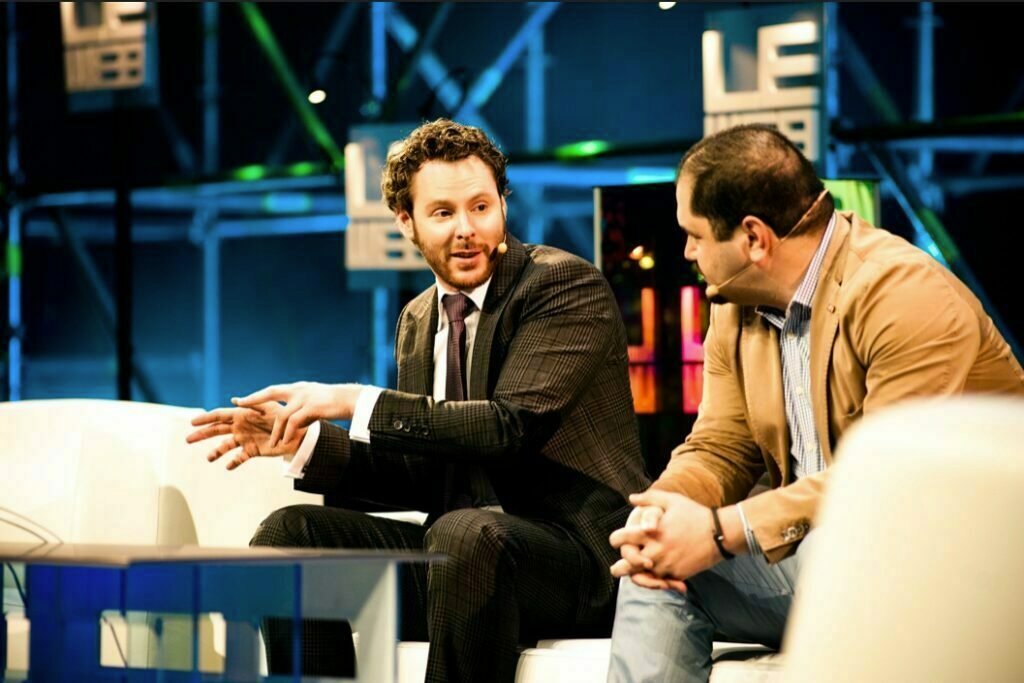
Sean Parker of Founders Fund speaks during the LeWeb conference in 2011, Source: @Kmeron for LeWeb11 @ Les Docks de Paris
A few months into Facebook’s launch, in June 2004, Facebook cofounders Mark Zuckerberg and Dustin Moskovitz brought Sean Parker onto Facebook’s executive team. Parker, previously known for cofounding Napster, later connected Facebook with its first outside investor, Peter Thiel. As discussed, Thiel, at that time, in coordination with the CIA, was actively trying to resurrect controversial DARPA programs that had been dismantled the previous year. Notably, Sean Parker, who became Facebook’s first president, also had a history with the CIA, which recruited him at the age of sixteen soon after he had been busted by the FBI for hacking corporate and military databases. Thanks to Parker, in September 2004, Thiel formally acquired $500,000 worth of Facebook shares and was added its board. Parker maintained close ties to Facebook as well as to Thiel, with Parker being hired as a managing partner of Thiel’s Founders Fund in 2006.
Thiel and Facebook cofounder Mosokvitz became involved outside of the social network long after Facebook’s rise to prominence, with Thiel’s Founder Fund becoming a significant investor in Moskovitz’s company Asana in 2012. Thiel’s longstanding symbiotic relationship with Facebook cofounders extends to his company Palantir, as the data that Facebook users make public invariably winds up in Palantir’s databases and helps drive the surveillance engine Palantir runs for a handful of US police departments, the military, and the intelligence community. In the case of the Facebook–Cambridge Analytica data scandal, Palantir was also involved in utilizing Facebook data to benefit the 2016 Donald Trump presidential campaign.
Today, as recent arrests such as that of Daniel Baker have indicated, Facebook data is slated to help power the coming “war on domestic terror,” given that information shared on the platform is being used in “precrime” capture of US citizens, domestically. In light of this, it is worth dwelling on the point that Thiel’s exertions to resurrect the main aspects of TIA as his own private company coincided with his becoming the first outside investor in what was essentially the analogue of another DARPA program deeply intertwined with TIA.
Facebook, a Front
Because of the coincidence that Facebook launched the same day that LifeLog was shut down, there has been recent speculation that Zuckerberg began and launched the project with Moskovitz, Saverin, and others through some sort of behind-the-scenes coordination with DARPA or another organ of the national-security state. While there is no direct evidence for this precise claim, the early involvement of Parker and Thiel in the project, particularly given the timing of Thiel’s other activities, reveals that the national-security state was involved in Facebook’s rise. It is debatable whether Facebook was intended from its inception to be a LifeLog analogue or if it happened to be the social media project that fit the bill after its launch. The latter seems more likely, especially considering that Thiel also invested in another early social media platform, Friendster.
An important point linking Facebook and LifeLog is the subsequent identification of Facebook with LifeLog by the latter’s DARPA architect himself. In 2015, Gage told VICE that “Facebook is the real face of pseudo-LifeLog at this point.” He tellingly added, “We have ended up providing the same kind of detailed personal information to advertisers and data brokers and without arousing the kind of opposition that LifeLog provoked.”
Users of Facebook and other large social media platforms have so far been content to allow these platforms to sell their private data so long as they publicly operate as private enterprises. Backlash only really emerged when such activities were publicly tied to the US government, and especially the US military, even though Facebook and other tech giants routinely share their users’ data with the national-security state. In practice, there is little difference between the public and private entities.
Edward Snowden, the NSA whistleblower, notably warned in 2019 that Facebook is just as untrustworthy as US intelligence, stating that “Facebook’s internal purpose, whether they state it publicly or not, is to compile perfect records of private lives to the maximum extent of their capability, and then exploit that for their own corporate enrichment. And damn the consequences.”
Snowden also stated in the same interview that “the more Google knows about you, the more Facebook knows about you, the more they are able . . . to create permanent records of private lives, the more influence and power they have over us.” This underscores how both Facebook and intelligence-linked Google have accomplished much of what LifeLog had aimed to do, but on a much larger scale than what DARPA had originally envisioned.
The reality is that most of the large Silicon Valley companies of today have been closely linked to the US national-security state establishment since their inception. Notable examples aside from Facebook and Palantir include Google and Oracle. Today these companies are more openly collaborating with the military-intelligence agencies that guided their development and/or provided early funding, as they are used to provide the data needed to fuel the newly announced war on domestic terror and its accompanying algorithms.
It is hardly a coincidence that someone like Peter Thiel, who built Palantir with the CIA and helped ensure Facebook’s rise, is also heavily involved in Big Data AI-driven “predictive policing” approaches to surveillance and law enforcement, both through Palantir and through his other investments. TIA, LifeLog, and related government and private programs and institutions launched after 9/11, were always intended to be used against the American public in a war against dissent. This was noted by their critics in 2003-4 and by those who have examined the origins of the “homeland security” pivot in the US and its connection to past CIA “counterterror” programs in Vietnam and Latin America.
Ultimately, the illusion of Facebook and related companies as being independent of the US national-security state has prevented a recognition of the reality of social media platforms and their long-intended, yet covert uses, which we are beginning to see move into the open following the events of January 6. Now, with billions of people conditioned to use Facebook and social media as part of their daily lives, the question becomes: If that illusion were to be irrevocably shattered today, would it make a difference to Facebook’s users? Or has the populace become so conditioned to surrendering their private data in exchange for dopamine-fueled social-validation loops that it no longer matters who ends up holding that data?
Part 2 of this series on Facebook will explore how the social media platform has grown into a behemoth that is much more extensive than what LifeLog’s program managers had originally envisioned. In concert with military contractors and former heads of DARPA, Facebook has spent the last several years doing two key things: (1) preparing to play a much larger role in surveillance and data mining than it currently does; and (2) advancing the development of a “humanized” AI, a major objective of LifeLog.
Whitney Webb has been a professional writer, researcher and journalist since 2016. She has written for several websites and, from 2017 to 2020, was a staff writer and senior investigative reporter for Mint Press News. She currently writes for The Last American Vagabond.
Brown University: The surveillance school
By JOHN WRENN | Brown Daily Herald | March 28, 2021
In the past several years, it has been fashionable to gawk in horror at China’s “social credit system,” an all-encompassing integration of surveillance, finance and state. Writing for The Triple Helix, Brown’s student publication focused on science and society, Priya Bhanot ’23 called China’s surveillance apparatus “Black Mirror Brought to Life.” China’s reputation for ubiquitous surveillance isn’t unjustified; a 2020 review of surveillance camera research by Comparitech found that of the world’s top 20 cities by cameras-per-capita, 18 are in China. But ubiquitous surveillance is far closer to home than Americans might think. As of 2020, Brown University has deployed one surveillance camera for approximately every 18 community members, placing it just shy of London, but ahead of every Chinese city except Taiyuan and Wuxi. In other words, Brown has about as many surveillance cameras as it does full-time faculty, of which it currently has 816!
It wasn’t always like this. In the span of two decades, Brown University quietly deployed an expansive surveillance apparatus, unbeknownst to many in the community; it’s well past time we critically examined our University’s pervasive surveillance of College Hill.
In 2000, the University only had 60 surveillance cameras, which the University mostly used to surveil parking lots and computer labs; a smattering watched Faunce’s club storage area, too. That year, Brown overhauled its fragmented VCR-based recording system into a fully-digital one, enabling Public Safety to monitor its cameras en masse from a central command center. This infrastructure investment marked a paradigm shift in Brown’s capacity for video surveillance.
By 2003, the total had increased to 105 cameras, with some now watching Faunce’s game room and the Main Green. According to The Chronicle, this proliferation of cameras into recreation spaces drew students’ first complaints about camera surveillance:
At Brown University, students have not complained about the cameras that watch over areas such as the basement of a student center. But students did object to a proposal to place cameras facing the main green of campus — to help manage crowds during commencement and other major events — says David Cardoza, card-access manager for the university’s security department.
Nevertheless, Brown continued to deploy new surveillance cameras in public spaces. By 2007, Brown had deployed 185 cameras, with 16 newly-installed cameras monitoring the Friedman Study Center in the Sciences Library. By 2011, Brown had deployed 250 cameras.
From here, the rate of installation increased drastically. In December 2013, the Campus Safety Task Force touted that Brown had deployed 430 cameras and a new array of 47 storage units for their footage. As of February 2020, the latest date for which data is publicly available, Brown University operates approximately 800 surveillance cameras. Following a spree of hateful graffiti in Hegeman Hall, the University installed its first cameras inside a dormitory. At the time of writing, the cameras remain installed.
This explosive proliferation of surveillance cameras at Brown University has progressed virtually unchecked and without community input. University Chief of Police Mark Porter suggested that the proliferation of cameras may reduce students’ fear of crime, but campus sentiment is considerably less enthusiastic about surveillance. In fall 2010, Herald editorial cartoonist Evan Donahue ’11 posted hoax letters in Keeney for a class project that announced the installation of security cameras around Keeney and Pembroke. Dylan Field ’13, a Residential Counselor in Keeney, told The Herald he was worried about the possibility of camera installation. Richard Bova, then-senior associate dean of Residential and Dining Services, categorically rejected the letter’s premise: “There has never been a plan — never will be a plan — to install cameras in any residence halls.” Of course, there eventually was such a plan.
Statements from DPS staff suggest a position of seemingly-limitless surveillance. “When you’re getting into the investigative side, you couldn’t have enough cameras,” said DPS Technical and Support Systems Manager David Cardoza to The Herald in 2008. Yet, in a 2011 interview with The Herald, Porter estimated that only about six crimes had been solved with the help of cameras. These solved crimes included the theft of a laptop from the Brown Bookstore and the truly shocking case of a thrown soda can in Faunce.
The successful use of cameras as an investigative aid in these incidents fails to justify the monetary expense of the camera system (exceeding $300,000 in 2000), much less the cost of students’ privacy. So what good are they? Speaking to The Herald in 2011, Porter instead emphasized the cameras’ purpose to deter, rather than aid in investigations: “We know that when we install them, that people will know they’re there.” This troubling justification invokes the specter of pre-crime — the almost-unfalsifiable presumption that there are agents on College Hill who would terrorize our community if not for the thin blue line of ubiquitous surveillance.
This justification warrants skepticism. A 40-year systemic review and meta-analysis published in 2019 found that passively monitored surveillance camera systems — like that adopted by Brown University — had no significant effect of crime reduction. Nor is it credible that “people will know” that cameras are there. Katie Goddard ’12 remarked to The Herald in 2011, “I haven’t noticed them”; neither had Daniel Valmas ’12, also interviewed by The Herald. Indeed, DPS makes no effort to draw attention to its surveillance cameras.
Rather, Brown University outright obscures the extent of its surveillance of College Hill. In 2008, the University declined to release its policy governing surveillance cameras to The Herald, or to provide a list of camera locations, or comment on how long recorded footage is archived for. The University’s surveillance policy, location of cameras and data retention practices remain completely opaque.
How can the Brown community engage in an informed discussion about surveillance if they are unaware of the scope of the surveillance? Until the University embraces transparency, the practice of “sousveillance” — the monitoring of people and institutions of authority by ordinary citizens — provides a means by which we students can educate ourselves and our peers. Since 2017, my friends and I have marked the locations of approximately 150 surveillance cameras on College Hill. While this is only a fraction of Brown University’s more than 800 cameras, the scope of the surveillance is staggering: It is impossible to cross (or even approach) Brown University without being surveilled. I encourage you to try.
John Wrenn MS’18 PhD’21 is a fifth-year doctoral candidate. He can be contacted at me@jswrenn.com, where he would be delighted to instruct you in the sousveillance of Brown University. Please send responses to this opinion to letters@browndailyherald.com and op-eds to opinions@browndailyherald.com.
Rep. Thomas Massie’s Refreshing Answer Regarding Whether People Should Take Coronavirus Vaccines
By Adam Dick | Ron Paul Institute | April 12, 2021
Many American politicians, from President Joe Biden on down, are repeatedly declaring the blatantly fraudulent propaganda that experimental coronavirus vaccines are safe and everyone should take them. It is, thus, refreshing when occasionally a politician breaks through the torrent of propaganda to present a normal and more sensible response to the question of whether people should take one of the experimental coronavirus vaccines. Rep. Thomas Massie, a Republican member of the United States House of Representatives from Kentucky, did just that in a quoted statement in an article on Sunday.
In a Sunday article at Kentucky Health News by Melissa Patrick, Massie is quoted as follows regarding people taking the shots:
‘I’m leaving personal medical decisions up to the individuals and won’t be undertaking a vaccine promotion campaign,’ he said in a email. ‘It would be somewhat disingenuous for me to do so when I have no plans to receive the vaccine myself, in the absence of data showing that it’s beneficial to those who’ve already recovered from the virus.’
Asked about people who haven’t been exposed, he replied, ‘Ultimately, people should listen to their personal doctors. It would be foolish for the general public to take health advice from my cohort of politicians, who are themselves fairly unhealthy, uneducated in science or medicine, don’t think that being $30 trillion in debt is a concern, and are conditioned to say what will most benefit themselves.’
People can also do their own research regarding the experimental coronavirus vaccines, some of which are not even vaccines in the normal meaning of the term. Such research, though, can be made more difficult by the fact that big money media companies tend not to report, and major technology companies tend to suppress, information that would give people reason for caution in regard to taking the shots.
Massie is an Advisory Board member for the Ron Paul Institute for Peace and Prosperity.
Copyright © 2021 by RonPaul Institute
US, Israel set to punish Palestinians for holding a democratic election, again
By Robert Inlakesh | Press TV | April 11, 2021
Robert Inlakesh is a journalist, writer and political analyst, who has lived in and reported from the occupied West Bank. He has written for publications such as Mint Press, Mondoweiss, MEMO, and various other outlets. He specializes in analysis of the Middle East, in particular Palestine-Israel. He also works for Press TV as a European correspondent.
Israeli and US officials are citing concerns over the potential outcome of the upcoming May 22 Palestinian legislative elections, and if their reactions mirror the past example, the conflict in the Palestinian Occupied Territories could severely escalate.
The people of the West Bank, East Jerusalem al-Quds and Gaza are set to vote in their first set of elections in 15 years. Much to the dismay of Israel and the United States, who claim they will not interfere in Palestinian democratic processes, it looks like their most despised group Hamas is on the way to a potential landslide victory.
In 2006, Hamas historically won the legislative elections, seizing control of the Gaza Strip. Their Fatah Party rivals, the United States and Israel, however, did not accept the election results and decided to take action to punish the people of Palestine for having their own say at the ballot box.
What ensued was dubbed as the ‘Palestinian civil war,’ which officially ended in 2007, with Hamas having successfully stopped an attempted Fatah-led coup – backed by the United States and Israel. Israel, as a result of the removal of Fatah power from the Gaza Strip, saw the perfect opportunity to impose a full and tightened blockade over the territory – thus collectively punishing its civilian population for their choice in the elections. Upon the Hamas victory, the US and EU also imposed overwhelming sanctions on Gaza meant to undermine the elected Hamas government.
As a result of the rivalry between the Fatah Party, currently heading the Palestinian Authority (PA) – which maintains limited control over small portions of the West Bank – and Hamas, there have been no elections since. Time and time again Palestinian Authority President Mahmoud Abbas, whose term in office expired in 2009, has postponed the elections, until early this year, when Abbas announced that legislative and presidential elections were finally to take place.
For Palestinians, their elections are set up to fail from the get-go. Pretty much the only political party they have to choose from, without being punished by the West and Israel, is the Fatah Party. All other major political Parties are registered terrorist organizations by most Western countries and Israel itself. Due to Western political immaturity, no organization that refuses to sell out the Palestinian cause for national liberation is to be considered as a legitimate political force and so instead it must be punished, attacked, sanctioned and humiliated. Thus, any Palestinian voting for a change to the status quo, meaning voting outside of lists belonging to Fatah, are to be punished for their choice to change to political scene.
We know from statements published by Fatah and Hamas that both intend to set up a unity government, meaning that Hamas will be in on decisions to lead the Palestinians of the occupied Palestinian territories. Yet, if this occurs, Israel is very open about their rejection of any collaboration with a government formed of Hamas members. This means that all of the cooperation between the Palestinian Authority and Israel, such as “security cooperation,” would cease and the two would be at conflict.
Early this year, Israeli Shin Bet chief Nadav Argaman had repeatedly warned President Mahmoud Abbas about the consequences of holding elections and made it clear that Hamas would not be tolerated. The Shin Bet chief also stressed that Abbas not go ahead with the elections.
Now it has been reported that, in a meeting between the two, both Israeli Foreign Minister Gabi Ashkenazi and US Secretary of State Antony Blinken are “concerned” about a Hamas win and urge a postponement of the elections. The hilarious part of the meeting, reported by Israel’s Walla news outlet, was that both figures also stressed that they didn’t intend to interfere in Palestinian democratic processes. But if you are urging a postponement of elections, after 15 years of no elections and are set to reject the party most likely to win at this point, then what else other than interference is that?
Israel has already gone on a tirade of arresting Palestinian political activists and prominent members of Hamas, in the West Bank and threatens ending cooperation with the PA, which will result in an escalation of violence. The US also does not indicate it will accept a Hamas win and is already expressing concern. So, if Hamas were to win in the West Bank, then we can only assume that their sanctions against Gaza may be transferred somewhat onto the West Bank too. This is essentially the US and Israel offering the Palestinian people an ultimatum; choose the status quo and still have the limited money you have, or choose who you like and we will crush you.
Due to the internal divisions now seen in the Fatah Party – which seems most likely to pave the way for a Hamas win – there is no indication that this will be respected by the West and Israel.
So, what do Palestinians do, vote for the status quo and continue to suffer as usual, watching the settlements expand upon the rest of their lands in the West Bank and East Jerusalem (al-Quds), or vote for the alternative which will likely mean an all-out conflict with the West and Israel?
As much as the West and Israel attempt to publicly distance themselves from the Palestinian elections, they are as much a part of it as are all the Palestinian political parties themselves. This is just the reality of the ongoing illegal occupation, there is no official autonomous Palestinian State, only oppressed peoples fighting for that State. So, any attempt to act as if a fair election, without Israeli-US influence is possible, is a product of great imagination.
Report: Iran’s verification of US reversal to take 3 months at least
Press TV – April 11, 2021
A detailed report by the Iranian parliament’s Research Center says the verification of any US removal of sanctions on Tehran would require at least three months, emphasizing that the process would not be possible within hours or days.
“It is obvious that the real test of sanctions removal and fulfillment of measurable indices put forward by Iran is not possible in a matter of few hours or days, and would take at least 3 to 6 months. It is also necessary to verify within specified intervals (for example every six months) that the Iranian economy benefits from the removal of the sanctions,” the parliament’s Research Center (IPRC) said in its report.
The report said Article 6 of the Strategic Action Plan to Counter Sanctions, a law passed in December by Iranian legislators, stipulates several general criteria concerning the removal of the anti-Iran sanctions.
They include normalization of banking transactions, total removal of export barriers, unhindered sale of Iranian petroleum and oil derivatives, in addition to complete and rapid return of revenues from Iranian oil sales.
Last December, Iranian lawmakers overwhelmingly voted in favor of the action plan, which tasked the administration with suspending extra commitments under the 2015 nuclear deal, officially known as the Joint Comprehensive Plan of Action (JCPOA).
The Iranian parliament’s report went on to say that Article 7 of the Strategic Action Plan to Counter Sanctions obliges the government to report to the parliament on measures taken to counteract the US sanctions. Parliamentary commissions have been assigned to assess those measures.
The report noted that Washington has a number of economic, political and legal means which it could employ despite its possible removal of the sanctions in order to prevent the Iranian economy from benefiting from the dividends of the nuclear deal.
The United States, the report said, may prevent Iran from benefiting economically from the removal of the sanctions by trying to maintain the status quo, including limiting other countries’ cooperation with the Islamic Republic.
Research conducted by the IPRC has significant impact on the legislation passed by Iranian lawmakers.
On April 8, Leader of the Islamic Revolution Ayatollah Seyyed Ali Khamenei said verification means Iran should be able to sell its oil under normal conditions and receive its money.
The Biden administration has conceded that its predecessor’s so-called maximum pressure campaign has failed, but it has so far failed to take any practical steps to undo the wrongs.
Featured Video

Penguins, Polar Bears and Sea Ice
or go to
Aletho News Archives – Video-Images
Book Excerpt
Measles and Mortality
Informed with Aaron Siri| November 19, 2026
Given the news coverage around measles and mortality, I decided to share the section of my book, Vaccines, Amen, that covers precisely this topic. Help me spread a bit of reality into the media hysteria around this issue. Here is that section of the book… continue
Blog Roll
 Aletho News
- Iran, four other countries condemn US plans to deploy weapons in outer space
- US media brings back the Iraq war playbook and why it won’t work
- Zakharova schools German FM on history basics
- Germany to produce drones for Ukraine
- Merz takes a swipe at Merkel over Ukraine’s NATO bid
- Measles and Mortality
- New York State Demands Amish Adopt Its Beliefs or Leave
- Saudi Arabia turns to South Korea, Ukraine to bolster air defenses
- Who pays for the war on Iran? The Gulf states had an answer in 1991
- New Congress… Same Old Wars!
- If Americans Knew
- An error has occurred; the feed is probably down. Try again later.
- No Tricks Zone
- An error has occurred; the feed is probably down. Try again later.

