Why Immunity for the CIA?
By Jacob G. Hornberger | FFF | August 11, 2020
Amidst the controversy over the doctrine of qualified immunity for cops, no one is talking about the full immunity accorded to the Central Intelligence Agency, an agency within the national-security establishment that wields omnipotent power.
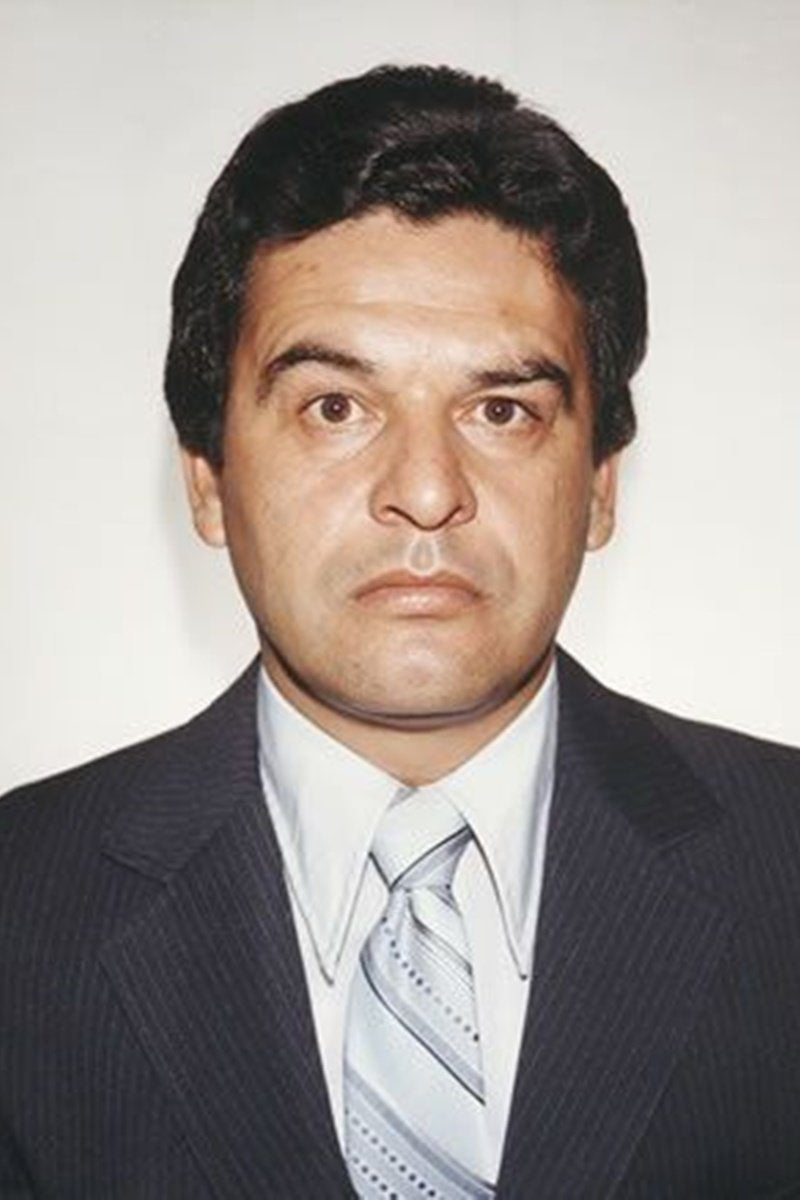 Among the most interesting lines in the new Amazon Prime series The Last Narc is what a CIA official says to DEA investigator Hector Berrellez, who was charged with leading the investigation into the kidnapping, torture, and murder of DEA agent Enrique “Kiki” Camarena. The official tells Berrellez that the CIA is not a law-enforcement agency and, therefore, doesn’t have to comply with the Constitution. Its mission, he said, is to protect the United States. Therefore, the implication is that the Constitution cannot be permitted to serve as a barrier to that end.
That’s the way it’s been since the beginning. The CIA has had omnipotent power to do whatever it deems necessary to protect “national security.” That includes, of course, the power of assassination, a power that the CIA assumed practically since its inception. In fact, as early as 1952, the CIA was developing a formal assassination manual for its assassins.
The CIA also wields the power of torture, the power to record its torture sessions, and the power to destroy such recordings to prevent Congress or the public from listening to them or viewing them.
The CIA also wields the power to lie, at least if it’s in the interest of “national security.”
No one jacks with the CIA. Not the Justice Department, including every U.S. Attorney in the land. Not the Congress. Not the president. Not the military. Who is going to mess with an organization that wields the omnipotent power to destroy or kill people and is more than willing to exercise that power in the name of protecting “national security”?
The kidnapping, torture, and execution of Kiki Camarena
A good example of this phenomenon is found in The Last Narc, which I wrote about in a blog post last week.
In 1985, 37-year-old DEA agent Enrique “Kiki” Camarena was kidnapped on the streets of Guadalajara, Mexico, and brutally tortured for 36 hours before finally being executed.
It was commonly believed that the crime had been committed by the Guadalajara drug cartel, which was headed by Rafael Caro Quintana, Ernesto Fonseca Carrillo, and Miguel Ángel Félix Gallardo, all of whom are featured in Netflix’s series Narcos: Mexico. But Mexican officials steadfastly refused to extradite the three drug lords to the United States for trial.
The DEA assigned Berrellez to take charge of the investigation. Berrellez, who felt as comfortable operating in Mexico as he did in the United States, found three former members of the Jalisco State Police who were willing to talk. They came to the United States and told Berrellez that back in 1985, they had been working double jobs — as state policemen and also as bodyguards for Caro, Fonseca, and Gallardo.
Berrellez interviewed them separately to ensure the integrity of their statements. They each pointed toward complicity of high Mexican officials with the cartel in the distribution of drugs into the United States, which I don’t think would surprise anyone.
The three former cops and bodyguards told Berrellez that they were in the room while Camarena was being tortured. Each of them stated that there were several high Mexican officials present in the house in which Camarena was being tortured while he was being tortured.
The heroism of Hector Berrellez
But then Berrellez discovered something else. According to the three former Mexican state policemen, a man named Max Gomez, also known as Felix Rodriguez, was inside the torture room and taking an active role in the brutal interrogation of Camarena. Berrellez investigated and determined that Rodriguez was a “retired” CIA agent.
Among the principal questions that was being addressed to Camarena was the extent to which he had discovered, in the course of his investigation, the nexus between the drug cartel, the CIA, and the Mexican government in the drug trade.
It was later learned that the interrogation was being recorded, which is something that one would not expect drug lords to do but that one would expect a CIA agent to do.
At that point, Berrellez was in trouble. It’s one thing to conduct an investigation that leads to the Mexican government’s involvement in Camarena’s torture and murder. It’s another thing to conduct an investigation that leads to the U.S. government’s involvement in the torture and murder of a DEA agent who is also an American citizen.
As Berrellez states in The Last Narc, he was warned to back off and let sleeping dogs lie. He was warned that if he didn’t, his life would be in jeopardy. If he didn’t back off, U.S. officials even threatened to forcibly return him to Mexico to face criminal charges that the Mexican government had leveled against him.
But Berrellez refused to back off, and so U.S. officials removed him from the investigation. Even though he could have remained silent, he instead decided to go public with his findings and cooperated in the making of The Last Narc. He comes across as a heroic figure in the series.
For his part, Rodriguez denies that he was in the torture room or that he has had anything to do with Guadalajara cartel and with drug dealing. The problem, however, is that CIA agents will lie if they believe that it is in the interest of “national security.” And they all know that they have immunity when it comes to lying and anything else that touches on “national security.”
Full immunity for the CIA
Here you have a prima facie case of U.S. governmental involvement in the torture and assassination of a U.S citizen, one who was an agent of the DEA. The alleged purpose of the torture was to determine if Camarena had uncovered evidence of CIA complicity with the Guadalajara Cartel and the Mexican government in the drug trade. Three witnesses, all giving their testimony separately, identified Rodriquez as one of Camarena’s interrogators.
That’s clearly enough evidence to launch a formal investigation into the matter. Perhaps it’s worth mentioning that Camarena’s murder took place during Iran Contra, when U.S. officials were breaking the law to raise the money to give to the Nicaraguan contras.
Has any of this caused any U.S. Attorney or the U.S. Congress to launch an aggressive investigation into the matter?
Don’t make me laugh. This is the CIA we are talking about. No one investigates the CIA, which makes the U.S. government as crooked and corrupt as the Mexican government. If you want to get a good sense of how both governments operate, I highly recommend watching The Last Narc.
Jacob G. Hornberger is founder and president of The Future of Freedom Foundation. He was born and raised in Laredo, Texas, and received his B.A. in economics from Virginia Military Institute and his law degree from the University of Texas. He was a trial attorney for twelve years in Texas. He also was an adjunct professor at the University of Dallas, where he taught law and economics.
Syria’s Arab Tribes Give Pro-American Forces and SDF One Month to Leave Eastern Syria
Sputnik – 11.08.2020
On 11 August, sheikhs and elders of the Arab Al-Uqaydat tribe met in the Syrian Deir ez-Zor province, agreeing that the US-led coalition is responsible for murdering tribal sheikhs in the province, and demanding that the region be cleared of SDF forces, local control returned to the Syrians, and stating: “leave the Arab region to the Arabs”.
Sputnik’s correspondent in al-Hasakah reported, citing civilian sources in Deir ez-Zor, that nearly 5,000 people attended a meeting of Al-Uqaydat sheikhs and elders. They agreed that the pro-American coalition and the SDF have one month to turn over all of those involved in murdering sheikhs in the Deir ez-Zor governorate, and demanded that the SDF and the coalition leave the province.
The tribal sheikhs condemned the security chaos caused by a series of murders of tribal elders and sheikhs, as well as condemning widespread corruption. These factors are reported to have forced the tribe to make the decision.
The most recent high-profile crime attributed to SDF fighters is the assassination of Sheikh Mutashar al-Hafil and his relative Dar Mihlef al-Khalaf, which has provoked a wave of protests and aggression by local tribes against both the armed SDF groups and the pro-American coalition.
“We are calling on the international coalition to transfer control over the province directly to its Arab population, respecting Syria’s territorial integrity, as well as the rights of Syrian citizens”, the trial elder’s statement said.
Al-Uqaydat tribal representatives also demand that the SDF release all prisoners and hostages: particularly and first, women and children.
Reportedly, the month given to the SDF and the coalition to meet the ultimatum starts today, August 11, 2020.
The Al-Uqaydat tribes have traditionally been situated in the eastern part of the Syrian Deir ez-Zor province. Popular protests hit these cities after pro-American SDF forces killed several sheikhs and tribal elders. In response, tribal representatives broke into SDF headquarters in several governorate cities and captured fighters.
Trump insists on a Putin visit to US
By M. K. BHADRAKUMAR | Indian Punchline | August 11, 2020
The US President Donald Trump’s remark on Monday that a G7 summit is no longer on the cards for the month of September leaves many questions unanswered. We do not know the circumstances in which Trump felt that he is “much more inclined to do it (G7 summit) sometime after the election”. Again, Trump was delightfully vague on giving a timeline, which is understandable since a G7 summit now hinges entirely on the outcome of the November election.
Trump didn’t explain, either, why a G7 summit hasn’t materialised in September, which would have given him some boost on the world stage — and given a much-needed fillip to his campaign. This is the second time Trump has been unable to host a G7 summit. In June, the allies, especially Germany, point blank refused — Angela Merkel regretted apparently due to preoccupations related to the pandemic.
If the postponement in September is also due to the European allies’ lukewarm attitude, it becomes a snub to Trump personally. All he’d say was “We haven’t sent out invitations. We’re talking to them.” If Trump falls by the wayside in the November election, the European allies may be even less inclined to troop to Washington before Joe Biden assumes office in January. Trump’s insistence on inviting Russian President Vladimir Putin to the G7 summit, which he repeated yesterday, has not gone down well in the European capitals.
In sum, Trump’s inability to hold a G7 summit highlights Europe’s overall disenchantment with him. Trump’s foreign policy legacy during his first term is ending on a dismal note, calling attention to the damage he has inflicted on the transatlantic partnership.
Perhaps, Trump gets one more chance to redeem his foreign policy record on this template if only the US-Russia arms control talks make headway. The first formal bilateral talks between the US and Russia on space security since 2013 took place in Vienna on July 27 alongside the second round of the nuclear arms control working group meetings. The renewal of new START, which is expiring in coming February, is a low-hanging fruit.
Meanwhile, the Vienna talks also touch on the erstwhile Intermediate-Range Nuclear Forces Treaty (INF Treaty), which is of utmost concern to the European countries. Russia has called for revival of discussions on extending the INF Treaty and Washington has held open the possibility that the negotiations in Vienna would include an INF Treaty extension. One way Trump could overcome the European resistance to inviting Putin to a G7 summit in the US could be by linking it to an event connected with arms control, especially the INF Treaty.
Russia sees arms control as a useful tool to manage its military competition with the US by making it less dangerous and costly. As for European countries, the INF Treaty has been historically the only operational bilateral instrument of nuclear arms control with Russia with focus on Europe’s security and stability. Moreover, the INF Treaty was the cornerstone of European security and its signing in 1987 by the US and the former Soviet Union was a harbinger of political “winds of change” in the East-West relationship.
Equally, Trump also appears to be serious in pursuing forms of cooperation with Russia that would accommodate both countries’ interests. Oil price and terrorism are two such issues; arms control could be another. On arms control, there is also a rare “bipartisan consensus” in the US as regards the renewal of the new START.
Having said that, Trump is unpredictable and the commencement of arms control talks cannot by itself persuade Moscow to lower its guard. Thus, on August 7, Russian Foreign Ministry reacted to the Pentagon announcement of July 29 regarding more US deployments to Poland. A statement in Moscow warned that “such actions escalate tensions in Europe. We have emphasised more than once that attempts to deter us by force and intimidate our country will receive a befitting and timely response.”
On July 29, at a press conference at the Pentagon, Defence Secretary Mark Esper had announced a “plan on rotating forward the lead element of the Army’s newly established V Corps headquarters to Poland, once Warsaw signs a Defense Cooperation Agreement and burden sharing deal, as previously pledged. There are or may be other opportunities as well to move additional forces into Poland and the Baltics.” Interestingly, a week later in an interview with Fox News, Esper added that the deployment to the east to (Poland and the Baltics) aimed to serve as a more effective ‘deterrent’ against Russia. He said moving troops eastward is only logical because “the border has shifted as the alliance has grown.”
On August 7, the official military newspaper Krasnaya Zvezda (Red Star) reacted strongly by issuing a stern warning to the US that Russia will perceive any ballistic missile launched at its territory as a nuclear attack that warrants a nuclear retaliation. This is in line with the revised Russian military doctrine enunciating the new nuclear deterrent policy allowing “first use”, which envisages the use nuclear weapons in response to a nuclear attack or an aggression involving conventional weapons that “threatens the very existence of the state.”
Moscow has ruled out Putin’s participation in a G7 summit that excludes China or has any anti-China orientation. Having said that, Trump would be betting that given the Kremlin’s keenness to make progress on arms control — extension of new START, in particular — Putin might be open to a visit to the US to formalise any agreements, once the hurly burly of the November election in America is done. Trump’s remarks yesterday hint at such a possibility when he said Putin is an “important factor”. Moscow has taken due note of it.
Trump’s calculus aims at animating the US-Russia-China triangle with a view to isolating China. Putin, on the other hand, will sequester the Russian-Chinese entente from collateral damage, if any. On August 9, Russian Foreign Ministry issued an unusual statement conveying solidarity with China “on the situation around the Tiktok social media app’s operation in the US”.
Beijing, meanwhile, is nonchalantly reiterating its position that “it is not yet the right timing” for China to join the nuclear disarmament talks in Vienna. And, Putin and Chinese President Xi Jinping were the first world leaders to congratulate Alexander Lukashenko on his re-election as Belarusian president.
Iran and China terrify the Empire, but why?
By Aram Mirzaei | The Saker blog | August 11, 2020
The proposed 25-year deal between the Islamic Republic of Iran and the People’s Republic of China, titled “Comprehensive Strategic Partnership between I.R. Iran and P.R. China” has been heavily discussed recently. While not all details in the deal are clear, it has been described by Iranian and Chinese officials as specifying the roadmap of developing and deepening Tehran-Beijing ties in “Political”, “Executive Cooperation”, “Human and Cultural”, “Judiciary, Security and Defence”, and “Regional and International” domains.
It remains unclear when such a deal will be formally clinched. But Iran’s government says the two sides have so far finalized at least 75 percent of the draft version of the pact. Once concluded, the text of the deal will be discussed for final approval in Iran’s Parliament. However, many lawmakers are already critical of the government for not consulting the deal before entering into negotiations with China.
What has so far been made public is that the 25-year cooperation roadmap will cover economy, security and military areas. Iran will reportedly supply the PRC (People’s Republic of China) with oil for 25 years. In return, China will invest heavily in Iran’s infrastructure as well as banking and telecommunications sectors, amounting to some 400 billion dollars. Reactions, both inside and outside Iran have been mixed. Some inside Iran have criticized the deal since they believe that the Islamic Republic has negotiated it from a position of weakness, in order to escape the failing JCPOA deal and its aftermath – Washington’s maximum pressure campaign. Supporters of the deal argue that the deal is a political victory against what Beijing and Tehran have identified as a common opponent.
Naturally, the US State Department and anti-Iran Farsi media outlets based outside Iran have denounced the possible deal without even knowing all the details. The US State Department went on to issue tweets in Farsi, comparing the potential Iran-China accord to the 1828 Treaty of Turkmenchay which was a peace treaty between Qajar Iran and the Russian Empire. By the treaty, Iran had to cede to Russia control of most of its areas in the South Caucasus.
As per usual, social media is the main tool they use for their propaganda. Certain think tanks led by Western governments, particularly the United States spread rumours and lies. For instance, they have created various hashtags like “No to Iran Sellout!” This has been picked up by Iranian analysts too:
“Based on our monitoring of social media, we spotted the first analyses on the Iran-China cooperation plan in US media. What the mainly US media claim is reproduced in social media, particularly Twitter. Those who are active in cyberspace and social media include users affiliated with the Zionist regime, users affiliated with the Mujahideen Khalq Organization as they are supposed to insinuate wrong interpretations into public minds in Persian language. MKO agents based in Albania and benefiting from Western funding are involved. The Zionist regime and Saudi Arabia are also cooperating by spending money and offering human resources. From as early on as 1995, Iran has been aware of the importance of the Beijing- Tehran axis as a counterweight to the U.S.-led global order. Iran and China share a desire to engage in revisionist regional moves without wanting to start a large-scale war; to put an end to US imperialism and military supremacy in the Persian Gulf region. It is a valid question however, whether this will not lead to a Chinese show of military might in the region.
Our ties with some nations may be focused on a single aspect like agriculture, culture and energy. But with China, we have reached the conclusion that we can cooperate in academic, cultural and IT and economic sectors. And regarding the strategic aspects, our ties with some countries may be periodic. But the Islamic Republic of Iran and the People’s Republic of China eye long-term cooperation.“ – Hamed Vafai, China Affairs Analyst
The Iranians outside of Iran who oppose the deal are often pro-Western and echo the same lies spewed by Washington – for example when they claim that Iran has sold its soil to China, offering Beijing Iran’s Kish Island as a military base and so on. The sheer hypocrisy by Pro-US Iranians is mind-boggling. The things they accuse the Islamic Republic of doing for China are the same things their beloved “King” did for the US, if not even more. I don’t need to go into detail over how subservient the Iranian monarchy was to Washington.
Tehran has made it clear that this deal is to protect the Iranian economy from US sanctions, and that it will not cede any part of its soil to China. Tehran rejected the criticism saying is it aimed at appeasing the enemies of the Islamic Republic. “Unfortunately, a destructive line of propaganda has been initiated and directed from outside Iran against the expansion of Iran’s relations with neighbors and especially (with) China and Russia,” Iranian president’s chief of staff, Mahmoud Vaezi, said last week.
The Iranian foreign ministry spokesman, Seyed Abbas Mousavi dismissed unfounded claims of Iranian islands in the Persian Gulf being leased out to China, oil sold at exclusively low prices, or the deployment of Chinese armed forces in the Gulf, an invading force in Iranian waters that is. He said such claims were too ridiculous to even merit a denial. Apparently the Chinese response to the allegations was not so different.
So what’s in it for the parties involved?
There is no doubt that Washington’s withdrawal from the JCPOA and the subsequent sanctions imposed by Washington has left the Iranian economy in a very difficult position, especially since the EU has betrayed the deal as well. Part of the blame has been placed on the Rouhani government, which I believe to be wrong. It is counterproductive to assume that the Islamic Republic’s commitment to the JCPOA triggered the crisis since the pressure on Iran’s economy was no less severe before the JCPOA.
The trade deal itself is one of necessity as the West has failed to live up to their promises and proven once and for all that they can never be trusted. Not only have they reneged on their commitments, but they also continue to wage psychological warfare on Iran through propaganda and lies. Bearing in mind that Washington has forbidden many countries from doing deals with Tehran, I see no reason to be critical of this potential deal with the PRC as of yet. This is about the Islamic Republic’s very survival, something that the IRGC and the top leadership in Tehran have also recognized – which explains why they have remained so silent about it.
The potential partnership offers Iran a way out of the harsh US sanctions. For Iran this would translate into an injection of approximately 280 billion dollars for its energy sector and 120 billion dollars for manufacturing and transport infrastructure. In return for a discounted oil-flow to China and preferential Chinese access to various sectors of the Iranian economy, Iran would have its infrastructure given a much needed boost. The deal includes 100 projects which defy US unilateral sanctions against Iran.
China is the only remaining official buyer of Iranian oil and has strongly opposed Washington’s sanctions. It defies the US also economically together with Russia and Iran, as the three have attempted to replace the US dollar in their dealings, an act that inspired Pakistan and may have other regional states follow. Why wouldn’t the Islamic Republic with its free-falling rial want China as a potential shield against US sanctions and even motions at the UN Security Council? What other options does Iran have? To negotiate a new JCPOA with Washington, one which the US would at any time once more renege on? Besides, it should be known to all by now that the nuclear issue is not really why Washington is sanctioning the Islamic Republic.
The PRC is viewed in the West as a threat both because of its rising economic power, and more recently because of its potential political power, poised to challenge Washington’s hegemony. Crude accusations of Chinese imperialism and false expressions of “worry” for poor Asian and African countries aside, the West is worried because China’s entry into the Middle East would enhance Beijing’s position not only in West Asia, but in Central Asia and the Caucasus as well. For China, Iran could very well be a gateway into the Middle East, as it has historically also been. Iran has connections in Syria, Iraq and Lebanon where China has up until recently been absent, and their partnership could flourish as Iraq and Syria will rebuild their countries after decades of US imposed wars. The Islamic Republic can introduce lucrative projects to the Chinese who may not know the region quite well.
All this gives Washington clear reason to be annoyed since it would make the US sanctions rather useless. But Washington also knows that the implications of this potential deal are far greater than just helping Iran.
Washington knows that its position in the Middle East as the sole dominant power alongside Israel is being challenged by Russia, Iran and now China as well. The Zionist axis has lost the struggle for Syria and is desperately clinging onto the oil fields in the eastern parts of the country, they have lost in Iraq as Baghdad wants them out, and they will lose elsewhere too. Even Turkey – a NATO ally – is a loose cannon that Washington cannot trust, especially since Ankara has repeatedly refused to follow Washington’s orders. This leaves Washington with the vassal reactionary monarchies in the Persian Gulf and Israel as the only reliable “friends” of Washington’s. The birth of an alliance/united front with a common cause against the Zionist empire could potentially lead to an East-West divide situation not so different from the Cold War in Europe.
Personally, I welcome it. A bipolar balance in the region would deter Washington further from regime change attempts. The only reason for Washington’s audacity to start the Syrian and Iraqi wars were because of the power vacuum left after the dissolution of the Soviet Union – without a counter-weight against it, Washington has been free to do as it pleases in the region for the past 3 decades.
Necessity will drive China and Iran to deepen relations. Both share grievances against the US and its vassals, both are being threatened in their own regions by Washington and together with the Russian Federation, they can finally bring back a balance of power in the world. When it is all said and done, let’s see what these two ancient Asian cultures can achieve together.
US man posing as Hong Kong activist disseminates anti-China propaganda
Press TV – August 10, 2020
A prominent Hong Kong pundit and anti-China activist named Kong Tsung-gan is in fact an American man with ties to Amnesty International and key Hong Kong separatist figures.
According to an investigation by The Grayzone, the man, who has been posing online as a Hong Kong native, has become a go-to source for Western media.
Kong employed by an American teacher, who is a ubiquitous figure at local protests, is routinely cited as a grassroots activist and writer by major media organizations and published in English-language media.
The character has been created to disseminate anti-China propaganda behind the cover of yellowface and his prolific digital presence and uninterrogated reputation in mainstream Western media has helped him to better do the job.
The content he focuses on aims to hype up the Hong Kong “freedom struggle” while at the same time he calls for the US to turn up the heat on China.
China enacted a national security law for Hong Kong earlier this month, criminalizing sedition, secession, and subversion against the mainland and allowing Chinese national security institutions to operate in the city for the first time since 1997, when Hong Kong returned from British to Chinese rule but attained semi-autonomy.
The legislation has been harshly criticized by Western countries, which allege that it harms the city’s semi-autonomous status. Beijing rejects the allegation.
The truth about Kong’s identity has been circulating on social media in Hong Kong, and even last December, The Standard mentioned a brief account about it.
Several locals, who spoke to The Grayzone, expressed their outrage over what they referred to as a deceptive stunt they considered not only unethical, but racist.
After his first appearance on Twitter under the username @KongTsungGan in March 2015, Kong tweeted mostly about Tibet and the Hong Kong Umbrella Movement.
He at some point changed his Twitter avatar to a black-and-white headshot of an unknown Asian person, but later changed it to an image showing Liu Xia, the wife of the late Nobel Prize-winning dissident Liu Xiaobo who celebrated the US wars on Vietnam, Afghanistan, and Iraq.
Liu Xiaobo, a right-wing ideologue, was rewarded with the 2014 Democracy Award by the National Endowment for Democracy – the favorite meddling machine of the US government.
Beirut Devastated: The New Paradigm May Be Explosive
By Alastair Crooke | Strategic Culture Foundation | August 9, 2020
Sometimes the news cycle and the geo-political cycle simply part company. This is one such occasion – the devastation of Beirut Port. What happened there is destined to constitute a major geo-political event – whatever way its sequellae should cascade out and shape the future. There are good, historic reasons for this parting of the ways: One (which explains the regional silence), is that we have not yet had the forensics. Yes, satellite photos galore, but not the nitty-gritty from the ground. Not the forensics.
The main stream media is in a hurry to ‘shape’ its story of the explosion in advance of the Special Tribunal verdict on the death of Rafic Hariri (now due on 18 August), and which is expected to indict Hizbullah members. Yet there are still many unanswered questions. It will be a further few days until these forensics become available from the site. They will of course be contested, and may resolve very little.
Against this silence, awaiting word from key players, the western and Israeli media headlines are churning out ‘everything you need to know’, and their ‘wrap-ups’ from Beirut. It is however, far from wrapped-up. More questions arise as the days pass. And the region has a collective memory of such geo-political inflection points.
The ‘popular’ 1953 uprising against PM Mossadegh, which transpired to be an MI6/CIA coup, and which – subsequently – was to usher in the game-changing Iranian Revolution; the 2005 assassination of Rafic Hariri, which led to Syria’s exit from Lebanon – and on flimsy computer patterning of calls (of unknown content) on ‘families’ of cell phones – was institutionalised into shaping the culpability of Hizbullah, and concomitantly, the movement’s widespread terrorist designation. (Hizbullah has, from the outset, disputed the western/international narrative on the Hariri assassination).
Yet the truth is, that what happened to Rafic Hariri remains still obscured in the fog of partisan war (as maybe will be the fate of this week’s Beirut devastation). In Syria, the Chemical Weapons story for Douma became another ‘turning point’, amidst the roar of U.S. Tomahawk missiles (as Assad became a Chemical Weapons pariah). Yet, documents from the OPCW in last days show the chemical weapons claim was a fabrication.
Yes, the region has good cause to pause. On the one hand, we have not had the forensics on the Port explosion, and on the other, we have Trump’s assertion – later reiterated by him – that he was told by his military generals that what happened in Beirut was “an attack” (a bomb). The President did not “speculate” that it was an attack. He said plainly that his generals had told him so.
This statement cannot entirely be air-brushed out of the calculus. And nor can the exact mirroring of the strangely unified ‘shape’ and mushroom effect of the Beirut main explosion with a similar ‘unexplained explosion’ some months ago in Syria – be discounted. And finally, there is the question: Were there three explosions?
So, we await what is likely to be a perfectly binary outcome. Either the devastation resulted from culpable negligence by the port security authorities, or was a bold attempt to audaciously ‘explode’ the current regional dynamics; to re-shape narratives and radically to re-cast geopolitics. Both are possible.
What then? The Israeli narrative is that the destruction in Beirut will cause the Lebanese population to rise up against Hizballah, and will demand that its munitions be removed away from population centres. (Israel of course would welcome the visibility into Hizbullah’s arsenals that this would entail). The scheduling of an emergency UNSC meeting for Monday, and calls to place Lebanon under international supervision, suggest that western states will be seeking to use the crisis further to weaken and constrain Hizbullah.
March 14th will seek to capitalise on what has happened to mobilise the Lebanese against Hizballah, but it is unlikely to get the domestic resonance that others may anticipate. The port of Beirut historically has been a Sunni patrimony. It has no single security structure, and these latter are no friend to Hizbullah. The port is also open to inspection by UNIFIL. If the management of the facility were to be characterised, it would be said to be one of decay and rampant venality. It is possible that this – culpable negligence leading to accident – was responsible fully or partially, for what happened.
If so, it would seem that public anger may focus more on the corrupt Za’im (the ‘capos’ of the system that have been ravaging the economic structure for their own enrichment for decades), than necessarily be directed at Hizbullah. Indeed, the present government may have a tough time to survive – even though it was not in office at the time any negligence may have occurred. That responsibility belongs to the Old Guard.
Were it to transpire that Trump was broadly correct, and that what occurred was an attack of some sort, it would not be hard to answer to the question cui bono? Israeli journalists are already preening themselves over the ‘event’s auspicious timing: That “Lebanon [now] is bound to implode”, and that the explosion’s ‘shockwaves’ will discomfort Hizbullah for a long time to come, but more especially in advance of the Special Tribunal report.
One Israeli journalist added that the explosion “at Lebanon’s main port sends a warning message to Iran, too, who only about a month ago said it would deploy ships and oil tankers to Lebanon. There were even talks of a vessel that would host a power station, which would give Beirut electricity … Israel and the United States in particular, fear these ships, if they do make it to Lebanon, would start a regular supply line not only of oil, flour and medicine, but also of weapons, ammunitions and missile parts”.
Much then, hangs on the forensics: Was this a bold ‘false flag’ initiative to upturn the strategic status quo (of the kind on which Israel once prided itself), hiding beneath, and making use of a publicly known vulnerability at the Beirut port – the storage of 2,700 kg of ammonium nitrate – in order to destroy Hizbullah’s strategic place in the region, and to shift politics in an unexpected new direction (favourable to Israel)?
Or, a further example of Lebanese élite lassitude and venality, caring only for themselves and nothing for the well-being of its people?
If the former, and events presage a renewed attempt to crush Hizbullah, the new regional paradigm indeed may be explosive.
Syrian tribe declares popular war against US forces, SDF
Press TV – August 10, 2020
A Syrian tribe in the eastern province of Dayr al-Zawr has launched a popular resistance force against US troops and their allies, accusing the so-called Syrian Democratic Forces (SDF) of stealing the country’s resources.
The US-based Rai al-Youm newspaper said on its website on Monday that the tribe of Akidat announced in a statement the formation of a military council and launching popular resistance against the US forces and their allied militants in an apparent direct accusation of the American troops of being behind the assassination of Matshar al-Hafl, a senior member of the tribe.
The statement also accused the SDF of stealing the country’s resources and killing its prominent figures.
According to the statement, the elders and notable members of the tribe had held a meeting to take action against the “American occupiers” and the US-backed mercenaries, and to liberate the Syrian territory.
The statement said they agreed to form a political council and a tribal army – to serve as its military wing – to manage the tribe’s affairs in cooperation with the relevant authorities.
It added that the council has begun the practical steps towards the formation of the Akidat army to liberate Syrian territory in coordination with the Syrian army.
The US-led coalition has been conducting airstrikes and operations against what are said to be Daesh targets inside Syria since September 2014 without any authorization from the Damascus government or a United Nations mandate. Damascus has repeatedly condemned the airstrikes.
The military alliance has repeatedly been accused of targeting and killing civilians.
The US has dispatched new deployments to the Syrian provinces of Hasakah and Dayr al-Zawr following President Donald Trump’s October decision to keep hundreds of US troops in Syria to “secure” the country’s oilfields which Syrian troops have yet to retake from militants.
Russian Foreign Minister Sergei Lavrov reiterated that US attempts to control Syria’s oilfields were “illegal” and amounted to “robbery.”
Damascus is in great need of its major oil deposits in order to address its energy needs and rebuild the country amid crippling Western sanctions.
The Arab country has been gripped by foreign-backed militancy since March 2011. The Syrian government says the Israeli regime and its Western and regional allies are aiding Takfiri terrorist groups that are wreaking havoc in the country.
The Arab country is currently extracting oil at only 10 percent of its pre-war capacity.
China Denounces Statement of 5 Western Foreign Ministers on Hong Kong as Meddling
Sputnik – 10.08.2020
The joint statement of the foreign ministers of Australia, Canada, New Zealand, the United Kingdom and the United States on Hong Kong is yet another instance of interference in China’s domestic affairs, the Chinese embassy in Canada said in a statement on Monday.
“On 9 August, the foreign ministers of Canada and other countries made a statement which once again contained irresponsible comments on the Hong Kong affairs and amounted to gross interference in China’s domestic affairs. China expresses its strong dissatisfaction and firm opposition to this,” the Chinese embassy said.
Postponing the elections was out of public health precautions amid the pandemic, while the security law closed security gaps in Hong Kong that could otherwise jeopardize the region’s long-term peace and security, the statement read, reiterating the rationale that Beijing has consistently used to confront similar accusations.
The embassy further called on the five signatory countries to “immediately stop interfering in China’s domestic affairs and using Hong Kong as a tool,” emphasizing that Hong Kong is a subject of China’s jurisdiction.
On Sunday, US State Secretary Mike Pompeo and his counterparts from Australia, Canada, New Zealand and the UK made a statement condemning the new security law in Hong Kong as infringing on the special administrative region’s rights and freedoms. The five foreign ministers also urged the Hong Kong authorities to conduct the recently-postponed legislative elections as soon as possible and let disqualified pro-democracy candidates run in the campaign.
The Hong Kong elections were initially scheduled for 6 September. In late-July, the government postponed the vote, citing coronavirus-related risks. Additionally, several candidates, considered pro-democracy, were banned from running on the grounds that their political activities were inconsistent with the new security law.
The Chinese government enacted the law on 30 June, following a little more than a month-long review at the National People’s Congress. The law adjusts security policies in Hong Kong to Beijing’s perception of crime and punishment with regard to separatism, subversion, terrorism and collusion with foreign countries. The Western critics of the law fear that it might painfully limit Hong Kong’s exclusive rights and freedoms, which it was guaranteed under the 1984 UK-Chinese agreement.
Afghanistan’s grand assembly approves freeing of 400 Taliban prisoners
Press TV – August 9, 2020
Afghanistan’s Loya Jirga, or grand assembly of elders, has approved the release of 400 imprisoned Taliban militants who had been involved in serious crimes in Afghanistan, removing the final obstacle to negotiations between the Afghan government and the militants.
After three days of deliberation, the elders approved the release of the 400 militant prisoners on Sunday.
Former president Hamid Karzai told the convention, “This is a very happy day. Based on the information I have, the intra-Afghan talks would begin within two to three days after the release of the 400 Taliban prisoners.”
Chief negotiator Abdullah Abdullah, who is the head of Afghanistan’s High Council for National Reconciliation (HCNR), said, “The decision of the Loya Jirga has removed the last excuse and obstacles on the way to peace talks. We are on the verge of peace talks.”
Kabul and the Afghan Taliban have been involved in a prisoner exchange for a couple of months. The prisoner swap was an Afghan government obligation under a deal between the United States and the Taliban that was struck in February. Kabul was excluded from the talks, and the obligation was imposed on it.
The exchange has been regarded as a first step toward broader talks between the government and the Taliban. The prospect of the talks was dimmed after Kabul refused to free hundreds of inmates involved in serious crimes. Last month, Afghan President Ashraf Ghani said he had “no authority” under the country’s constitution to release the remaining inmates because of their involvement in serious crimes. Ghani said the decision on the release of those militants had to be made by the Loya Jirga.
Under the deal with the Taliban, the US will start a phased withdrawal of its troops from Afghanistan. US Defense Secretary Mark Esper announced on Saturday that a sizable number of US troops would be pulled out of Afghanistan before the end of November.
The United States invaded Afghanistan and toppled a Taliban regime in 2001 under the pretext of fighting terrorism following the September 11 attacks.
Official data shows that bombings and other assaults by the Taliban have surged 70 percent since the militant group signed the deal with the United States.
Biden orders removal of Israel occupation reference from election campaign
MEMO | August 8, 2020
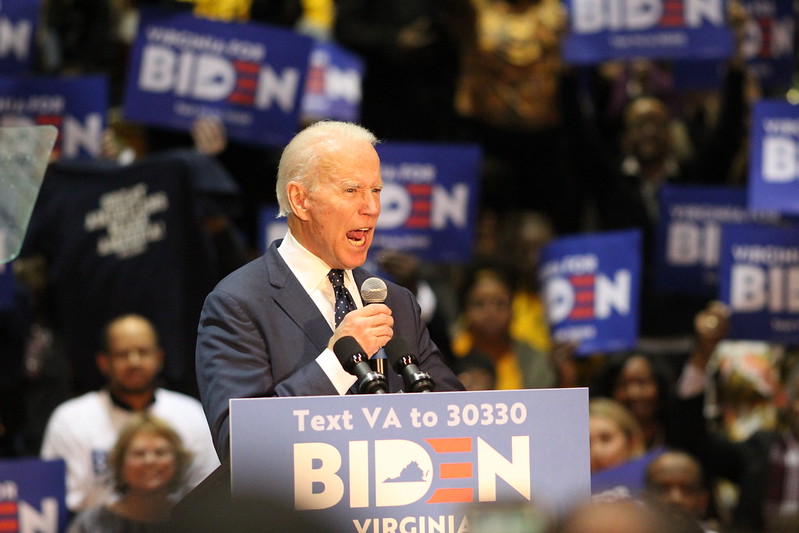
US Democratic presidential nominee Joe Biden has ordered the removal of any reference to the Israeli occupation in his campaign programme just days before it was released on 15 July, Foreign Policy revealed on Thursday.
Vermont Senator Bernie Sanders, who withdrew his presidential campaign in favour of Biden, had agreed with Biden that he would include in the Democratic Party platform an assertion that Palestinians had a right to live free of foreign “occupation”, referring to Israel.
However, under pressure from pro-Israeli advocacy groups, Biden made a last-minute decision to remove any reference to the Israeli occupation, Foreign Policy reported three sources confirming.
Therefore, Biden aides asked the progressive leaders in the Democratic Party and urged them to drop their demand to declare Israel an occupying power, the magazine reported.
According to the magazine, Biden aides argued that the inclusion of the word “occupation” threatened to undermine unity within the Democratic Party.
“The question of whether to allow the text to refer to ‘occupation’ or use the phrase ‘end the occupation’ was taken to the vice president and he said ‘no’,” Jason Isaacson, chief policy and political affairs officer at the American Jewish Committee, told Foreign Policy.
“This is not an issue on which the party can bend because it would be contrary to the position of Joe Biden,” Isaacson added.
Foreign Policy noted that the retraction reflected Biden’s reluctance to reverse decades of staunch support for Israel.
It also stated that this retreat marked something of a victory for the party’s establishment, which has sought to preserve close relations with Israel, even as its Prime Minister Benjamin Netanyahu has moved increasingly close to the Republican Party and its standard-bearer, President Donald Trump.
“The party platform section on Israel and Palestine is a clear victory for those supporting a return to mainstream Democratic policies of the past and a loss for the progressives seeking more restrictive or conditional support for Israel,” Peter Mulrean, who served for three decades in the State Department and subsequently oversaw United Nations aid programmes for Palestinians, informed the magazine.
Pentagon issues report on Syria war, condemns recruitment of children by SDF
MEMO | August 8, 2020
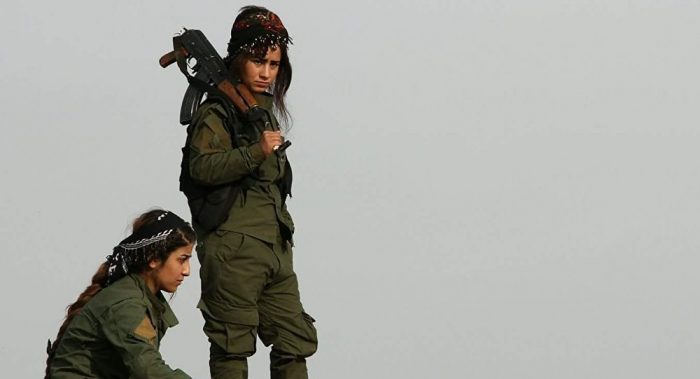
The Pentagon confirmed in a report on the war in Syria and Iraq that the militia of the Syrian Democratic Forces (SDF) continues to recruit children through forcible detention.
On Thursday, the Lead Inspector General issued a report on Operation Inherent Resolve (OIR), launched by a US-led international coalition against Daesh in Syria and Iraq, indicating that the SDF militia continues to arrest and recruit children from refugee camps in the areas it controls in north-eastern Syria.
The report pointed out that the SDF militia did not fulfil its pledges to international organisations to not recruit children, stressing that youngsters are still being forcibly recruited.
The United Nations Human Rights Council (UNHRC) published in its report issued on 16 January, new evidence about the exploitation and recruitment of children by SDF militia.
On 29 June, 2019, Virginia Gamba, the UN Special Representative for Children and Armed Conflict, signed an action plan with SDF leader Ferhat Abdi Shahin, known as Mazloum Abdi, to release child fighters in the militia ranks.
Featured Video
Iran is (probably) collecting tolls, and why Asia stopped buying oil from the US
or go to
Aletho News Archives – Video-Images
From the Archives
The Great Recycling Scam
By Dr. Vernon Coleman – 21st Century Wire – September 2, 2022
Recycling was introduced, worldwide, as a tool to teach citizens to become compliant.
Forcing citizens to sort their rubbish into up to nine separate bags or boxes every week had absolutely nothing to do with ‘saving the planet’ and everything to do with teaching citizens (through a mixture of fines and shame) to behave ‘responsibly’ i.e. to do as they were told without looking too closely at the rationale of what they were being told to do.
The recycling never had anything to do with protecting the planet, of course. Most of the rubbish sorted, washed and collected in the UK was taken abroad, by lorry or ship or train, and burnt or dumped. It was, quite simply, impractical and not cost effective to recycle the material that had been collected. And, of course, collecting the sorted rubbish involved massive costs in terms of cash and pollution.
Today, the recycling business has reached an apogee of lunacy. Councils introduce ever more complex rules and fees. They refuse to take away much of the waste that is collected. And those wanting to take their rubbish to a ‘recycling’ centre will probably have to make an appointment and answer a host of questions.
It is no surprise that fly-tipping has become a major problem. The biggest causes of plastic in the sea are dumped fishing gear and plastic waste (much of it officially designated as recycled) which has been dumped by ships.
The good news, however, is that in Britain, recycling rates are falling. More and more people have become aware that the whole recycling movement was just another piece of manipulative trickery.
Blog Roll
 Aletho News
- Lies, Damn Lies, and Ukraine News
- Financial Times rejects Nordic demands to correct Putin call story – media
- The Case for Less Unity in Europe
- Ukraine expands minority rights under EU pressure – but Russians remain excluded
- Albania takes anti-riot crackdown cue from France
- The interest of the House of Rothschild in Ukraine
- Pentagon fires top military planner
- Three tankers hit mines on unauthorized Hormuz route: IRGC Navy
- Iran is (probably) collecting tolls, and why Asia stopped buying oil from the US
- Regional security runs through Tehran
- If Americans Knew
- US Journalist and Activist Detained After Israeli Settler Attack in West Bank
- Israeli forces continue West Bank raids as Hebron lockdown enters sixth day
- The Two Faces of Gadi Eisenkot, Who Could Be Israel’s PM
- US Sending an Additional Patriot System to Israel To Prepare for Potential Attacks on Iran
- Pentagon Estimates the US Has Spent Over $47 Billion on Iran War, But True Cost Is Much Higher
- ‘Who Will Bomb Me Next?’: Palestinians in Gaza and the West Bank on Israel’s Election
- DAILY UPDATE: Latest essential news on Palestine, Israel, & region
- Majority Of Jewish Schools In The UK Teaching Kids To “Love Israel”
- Eisenkot or Netanyahu: No matter who forms government, democracy is dead
- Six Palestinians Killed In Gaza In 24 Hours
- No Tricks Zone
- Germany’s Green Energy Transition Becoming Increasingly Expensive…Another 6 Trillion Euros!
- Sudden Stratospheric Warming, Powerful El Niño Combination May Lead To Extreme Europe Cold, Energy Crisis!
- Two New Studies Find Thwaites Glacier Melt Cannot Be Driven By Human Activity Or A Warming Ocean
- E-Cars Reduce CO2 Emissions By Only 41% Compared To Internal Combustion Engine Vehicles
- Predictions Made By Renowned Climate Professor Over Past Decades Have Been Proven To Be Poor
- New Study Suggests Large Regions Of The Pacific Ocean Have Been Cooling For The Last 80 Years
- Germany’s Green Energy Debacle: High Energy Costs Force Kahla Porzellan to Close After 182 Years!
- New Study: 50 Years Of The Most Aggressive ‘Net Zero’ Policies Can Only Affect The Global Climate By 0.03°C
- US September “Heat” Was No Record…Many Records Set Decades Ago
- Latest European Green Energy Debacle; Portugal’s Largest Flagship Solar Park Insolvent!

