Bernie Sanders and the Zionist narrative
By Ramona Wadi | MEMO | November 7, 2023
Whenever politicians appear to distance themselves temporarily from the mainstream narrative on Israel, one would do well to be prudent before deciding where their loyalties truly lie, and let the alignment with Zionism reveal itself in due course.
“I don’t know how you can have a permanent ceasefire with an organisation like Hamas which is dedicated to turmoil and chaos, and destroying the state of Israel,” said US politician Bernie Sanders in an interview with CNN. If there is no ceasefire, how can Sanders argue for a humanitarian pause? And what is humanitarian about a lull that provides temporary relief before Israel embarks on the next phase of its murderous bombing campaign in Gaza? Is it “hope”, which Sanders has the audacity to mention as being the ambiguous construct to be given to the Palestinians by the international community, always within the context of the two-state compromise?
The Zionist narrative, which the world promotes even as calls for a ceasefire increase, forms the premise of Sanders’s comments. In 2021, he penned an op-ed in the New York Times that called for the recognition of Palestinian rights and lives while upholding Israel’s “absolute right to live in peace and security”. Israel’s so-called rights are rooted in its colonial framework; Sanders’s attempt at equivalence between the colonised and the coloniser is evident even in the language used: the humanitarian versus the political.
In 2019, Sanders suggested that the US should curb its military aid to Israel based on its treatment of Palestinians in Gaza. “I think it is fair to say that some of that should go right now into humanitarian aid,” Sanders added while speaking at J Street’s national conference.
During a presidential debate in the same year in Atlanta, Sanders embarked on another contradiction: “It is no longer good enough for us to be pro-Israel, I am pro-Israel, but we must treat the Palestinians with the dignity they deserve.” Being pro-Israel is being pro-colonialism, for the simple reason that Israel is a colonial enterprise that thrives upon the dispossession of the Palestinian people.
There is nothing about Israel which is not connected to the Zionist ethnic cleansing of Palestinians known as the 1948 Nakba, the ethnic cleansing that has never ended.
Now that Israel has given the world a view of what the Nakba looks like, this time complete with precision strikes that have killed over 10,000 civilians but failed to take down Hamas, what is Sanders truly advocating? What humanitarian pause does he envisage, for example, given that Israel is dropping bombs on hospitals in Gaza? One hundred Israeli doctors have signed a petition calling for Israel to bomb Al-Shifa Hospital, claiming that it harbours Palestinian resistance groups.
What is humanitarian about the humanitarian pause that Sanders claims to want, when the underlying message is a green light for Israel to destroy Gaza under the pretext of destroying Hamas? Considering the aftermath of the bombing, which Israel is already hinting at, what is Sanders’s stance over Netanyahu’s plans for Israel’s possible physical re-occupation of Gaza “for an indefinite period” under the pretext of the colonial security narrative?
There is no way that Sanders can gloss over Israel’s colonial violence, not even with rhetoric about humanitarian pauses. Besides the fact that Sanders’s statement was too little, too late, it would benefit Palestinians if fewer people jumped on the adulation bandwagon for statements that look at the colonised through a colonial humanitarian lens.
Umm al-Rashrash ‘Eilat’, an Unprepared City Under Threat
Al-Manar | November 7, 2023
Umm al-Rashrash, or what is called ‘Eliat’, a city located on the coast of the Gulf of Aqaba in the Red Sea, has found itself in a dire situation after becoming the destination for survivors and fleeing illegal settlers from the Gaza Strip and northern Palestine settlements. With over 60,000 settlers seeking refuge since Operation Al-Aqsa Flood began, the city has faced unexpected challenges.

No Defensive Systems above The City
Previously relying on the Iron Dome system for protection, which is only equipped to handle short-range missiles and artillery shells, ‘Eilat’ quickly realized its vulnerability when facing drones, winged missiles, and ballistic missiles.
The city had not anticipated being a direct target for right-wing and Iraqi resistance groups. It was assumed that American warships would provide ample protection. However, the arrival of the first batch of drones and missiles shattered that belief, leaving the city exposed and in need of additional air defense systems.
The lack of defensive measures and fortified rooms further compounds the threat facing illegal settlers in Eilat. With no shelters to protect them, every missile or intrusion poses a significant danger to their lives. The city’s vulnerability is heightened by the ease of infiltration through its beaches. The situation is exacerbated by the transformation of a large part of the military base, located on the coastal road’s southern entrance, into entertainment centers. This decision, made in 2021, diminished the city’s ability to defend against potential attacks.
To address these pressing concerns, the Zionist entity has deployed military boats in the Red Sea and positioned SAR-class corvettes to conduct patrols near Eilat’s port. Efforts are underway to bring in multiple defense systems, but the frequency of attacks leaves the city in a perpetual state of danger.
From a City of Displacement to a Front Line
With the beginning of the Al-Aqsa Flood operation, the Zionist entity worked to develop an emergency plan to evacuate its settlements, which is in two stages: The first, called “a safe distance,” is designated for the settlements adjacent to the fence, whether in the Gaza Strip (up to 4 km from the fence) or in the north on the border with Lebanon. (Up to 2 km from the fence). As for the second plan, it is called “Naseem,” and it is designated for settlements located between 4 and 7 km from the fence.
In the context of precautionary preparations for an increase in the number of residents who will evacuate from their homes, it was reported in the Zionist entity that the National Emergency Authority (Rahal) and the ‘Eilat’ Municipality are seeking to establish a tent city in the ‘Eilat’ industrial zone, which has an area of about 150 dunums.

However, after the transformation of ‘Eilat’ from a tourist city that received the displaced into a front line and into a targeted city, it can be said that everything that the entity worked on regarding the displaced must be reconsidered and it must search for new ways, a new city and a new place to shelter those fleeing from its settlements, with the losses it costs.
According to Zionist media reports there is new economic and popular pressure due to the deteriorating conditions of the displaced and the lack of good care for them.
Why Israel wants to dump Palestinian refugees on a Western nation
By Rachel Marsden | RT | November 7, 2023
Israel’s Intelligence Ministry has come up with a creative solution for dealing with those displaced by the Gaza conflict, of which there are an estimated 1.4 million and counting: Go west — all the way to Canada.
As Gaza residents were being directed by Israel to clear out and move towards the southern border with Egypt – while the IDF pelted the northern part of the enclave, where most Hamas forces are reportedly concentrated, with missiles – one of the big questions some of us asked was where over 2 million Palestinians would possibly go.
Thanks to a leaked Israeli government document, dated October 13 and published by Israeli news site Sicha Mekomit, there’s now some insight into what at least some Israeli government officials have been floating. This paper, which Israeli Prime Minister Benjamin Netanyahu’s office says presents “initial thoughts” that won’t be considered until the war is over, envisions the refugees heading to Egypt first. But, because Egypt has previously refused to absorb Gaza residents, it may ultimately just end up being used as a staging ground for their mass relocation to other countries. The proposal is for Egypt, Turkey, Saudi Arabia, and the United Arab Emirates to at least provide financial support for this mass displacement, if not offer to take in some refugees themselves, either in the short or long term.
But the real kicker is that one particular Western country – way over on the other side of the world from the conflict – is singled out for its “lenient” immigration policy, making it a place where Israeli officials figure the displaced Palestinians could feasibly be resettled. And that country is Canada. Because despite its strict points-based immigration system that selects for potential newcomers based on their skills and education, Canada still clearly has a reputation for being a refugee welcome mat – even though today’s reality is a far cry from this perception.
Not that our big-mouthed Canadian officials have helped. “To those fleeing persecution, terror & war, Canadians will welcome you, regardless of your faith. Diversity is our strength #WelcomeToCanada,” Prime Minister Justin Trudeau tweeted in January 2017, in reaction to then-US President Donald Trump’s executive order banning refugees from a list of Muslim countries. But it wasn’t long before Trudeau had to send out members of his own administration to explain to these same migrant communities that his tweets were a bit more obtuse than official policy.
Nor does the image of Canada as a freeloader’s paradise jibe with real life upon arrival in the country. By 2019, Canada had welcomed nearly 60,000 Syrian refugees amid the US-backed regime change war against President Bashar Assad. Images abound of Canadian Prime Minister Justin Trudeau handing out winter jackets to arriving families at Toronto’s Pearson airport. “You’re safe at home now,” Trudeau told them. That was back in 2015. Just four years later, some provinces had ditched all aid for immigration and refugee programs and just 24% of male and 8% of female refugees from Syria had found employment, according to government data.
As a Canadian who still spends considerable time in the country, it’s not uncommon to hear from school teachers about how many Syrian children are struggling to integrate into schools and are displaying considerable behavioral troubles.
For every feel-good success story, there’s also one about Syrians returning back to their home country now that the situation there has stabilized with Assad still in power and the US having moved on from intervening in Russian-allied Syria to doing the same over Ukraine.
If Syrians aren’t faring too great in Canada, and are struggling with the end of the initial generous government assistance, then what hope is there for those from Gaza who have spent their lives under blockade? “Some 50 per cent of students (aged 5-17 years) do not achieve their full educational potential, meaning that the psychological impact of hostilities has led to a deterioration in learning outcomes, and difficulties in reading and writing,” according to the United Nations.
Even among Canadians born and educated in Canada and gainfully employed, there are those struggling to survive with inflation and the current cost of living. And because of Canada’s ongoing housing crisis, with rent and mortgages out of the reach of much of the working class, 44% of Canadians in a recent survey now feel that there’s too much immigration to the country.
So it goes without saying that Israel never bothered asking Palestinians if they want to be displaced to the other side of the planet from their home, but clearly no one in Israel has asked Canadians how they feel, either, about the possibility of serving as a dumping ground for their ethnic cleansing efforts in Gaza. Because, if they had, they’d have realized that Canada was already full. So, who gave them that idea? Did they come up with it on their own? Or is someone in Trudeau’s government actually suggesting that it’s a realistic scenario? There’s been no debate about any such possibility, and until there’s a full discussion about it in Canadian parliament and some official dares to stick his neck out and commit political suicide over the idea, Canadian officials need to tell the Israeli Intelligence Ministry to shove it.
Like its fellow Western allies, Canada’s official position is to support a two-state solution for a Palestinian homeland. Just a few days ago, Trudeau reiterated that “the world and the region needs a peaceful, safe, prosperous, viable Palestinian state alongside a peaceful, prosperous, democratic, safe … Israel.” This means that Gaza residents ultimately get to stay in Gaza, and don’t get offloaded onto other countries in mass displacement just because some folks in Israel may be in favor of using revenge against Hamas as a convenient pretext to wipe Gaza off the map as an independent entity.
At least 10,000 Palestinians have been killed so far amid Israel’s pursuit of security in the wake of the Hamas attacks of October 7th. Neither they – nor Canadians on whom this proposal is offering to unload survivors – should be reduced to being pawns as the proposed plan suggests. Better head back to the drawing board and try coming up with an idea for your own “security” that’s less radical than emptying out an entire state into another.
Rachel Marsden is a columnist, political strategist, and host of independently produced talk-shows in French and English.
How big does Palestine rally need to be for honest reporting?
By Yves Engler | November 7, 2023
On Saturday over 50,000 marched in Montréal against Justin Trudeau’s role in enabling Israel’s genocidal siege and slaughter in Gaza. I say this confidently having walked from one end of the march to the other and watched overhead drone footage. This was the largest antiwar/international solidarity mobilization in Montréal since the 2003 protests against the invasion of Iraq.
The largest Palestine solidarity demonstration in Canadian history concluded in front of CBC’s office to highlight pro-Israel media bias. Proving the point, Global News reported that “hundreds gathered”.
While Global’s Farah Nasser described how “hundreds gathered in Montreal” the images on the screen showed at least ten thousand rallying. The jarring juxtaposition between lived reality and the “journalism” that is supposed to report the truth puts into context why some protestors put fake blood on the building’s glass doors and wrote “call it genocide” and “justice for journalists in Gaza” on the ground in front of the CBC.
At the end of the march, I was asked to speak outside the CBC/Radio-Canada offices as part of protesting Canadian media coverage of the 10,000 Palestinians killed in recent weeks.
Below is a portion of my prepared remarks:
“The Canadian media is enabling Israel’s genocidal siege and violence in Gaza. CTV and Global both recently fired Palestinian/Arab reporters for opposing the genocide on their social media.
“The media humanizes Israelis and dehumanize Palestinians. For instance, a young Vancouverite who travelled 10,000 kilometers from their home to join the Israeli military is lauded and mourned, but any Palestinian killed fighting Israel isn’t even considered.
“On multiple occasions Canadian outlets have directly manufactured consent for Israel’s war crimes. As an example, yesterday the National Post and other Postmedia outlets published “How Hamas uses hospitals as shields during war against Israel”.
“The media have been promoting the narrative that Israel has a right to defend itself. But Israel is the occupying power that has been oppressing Palestinians for more than 75 years and it always kills many times more Palestinians during every flare up in violence.
“Two weeks ago a leftist journalist began a list of prominent commentators supporting Israel’s genocidal violence. A few days ago he began asking them how many more thousands of Palestinian children would have to be killed before they supported a ceasefire. They mostly refused to respond.
“Media bias against Palestinians is not new and there are innumerable examples to point to. CBC English has mandated its reporters not to use the word “Palestine”. In 2019 they even forced a radio host to apologize for using the word Palestine when interviewing an author who published a graphic novel titled Palestine!
“When I published Canada and Israel: Building Apartheid in 2010 a Montreal Gazette reporter told me he enjoyed the book and would’ve sought to review it if the title hadn’t included the word apartheid. When a (single) daily paper reviewed my book it prompted a counter review. In the lead-up to the London launch, University of Western Ontario professor David Heap submitted a positive review to his local paper. But two weeks later, the London Free Press published Honest Reporting Canada (HRC) head Mike Fegelman’s response claiming it was “professionally unethical for Heap to not disclose his highly partisan stance on the Mideast file” when reviewing Canada and Israel.
Of course, the HRC did not disclose it is a well-resourced ‘flack’ organization that criticizes media for not towing their pro-genocide and apartheid line. They write replies, submit complaints and instigate email campaigns to media outlets when they publish something deemed objectionable.
But the HRC does nothing more than reinforce the dominant media’s broader structural bias towards power. On Palestine they largely echo the position of the Israel lobby, Canadian government and US empire.
Still, it was shocking to witness the media crassly downplay such a large demonstration. As thousands chanted in front of CBC “every time the media lies another family in Gaza dies”.
The Gospel of Gaza
What we must learn from Netanyahu’s Bible lessons

BY LAURENT GUYÉNOT • UNZ REVIEW • NOVEMBER 6, 2023
In a speech in Hebrew on October 28, Netanyahu justified the Israeli slaughter of civilians in Gaza with a biblical reference to Amalek.
You must remember what Amalek has done to you, says our Holy Bible. And we do remember. And we fight. Our brave troops and combatants who are now in Gaza and in all other regions in Israel, are joining the chain of Jewish heroes, a chain that has started 3,000 years ago, from Joshua ben Nun, until the heroes of 1948, the Six-Day War, the October 73 War, and all other wars in this country. Our hero troops, they have one supreme main goal: to completely defeat the murderous enemy, and to guarantee our existence in this country.
In Netanyahu’s Holy Bible, God gives his chosen people Palestine, and the same God commands them to exterminate the Amalekites, an Arab people that stands in their way. Yahweh asks Moses to not only exterminate the Amalekites, but to “blot out the memory of Amalek under heaven” (Deuteronomy 25:19).
It was left to Saul to finish them up: “kill man and woman, babe and suckling, ox and sheep, camel and donkey,” Yahweh instructs him (1Samuel 15:8). Because Saul spared the Amalekite king Agag, Yahweh withdrew the kingship from him and drove him mad: “I regret having made Saul king, since he has broken his allegiance to me and not carried out my orders” (15:11). The holy prophet Samuel, who had a direct line of communication with Yahweh, had to butcher Agag himself (“hewed Agag in pieces,” in the Revised Standard Version). Yahweh then gave the kingship to David, who proved a more obedient exterminator, for example when he put the people of Rabba “under saws, and under harrows of iron, and under axes of iron, and made them pass through the brick kiln: and thus did he unto all the cities of the children of Ammon” (2 Samuel 12:31).
Despite their complete genocide in the Bible, the Amalekites remain the eternal nightmare of Israel. Amalek came to be associated, like his grandfather Esau, with Rome and Christianity, but also with Iran, because the villain of the Book of Esther, Haman, is referred to as an Agagite, that is, a descendant of the Amalekite king Agag. That is why the hanging of Haman with his ten sons and the massacre of 75,000 Persians are often conflated in Jewish tradition with the extermination of the Amalekites and the brutal execution of their king. The Torah reading on the morning of Purim is taken from the account of the battle against the Amalekites, which ends with the conclusion that “Yahweh will be at war with Amalek generation after generation” (Exodus 17:16).[1]
In a 2009 New York Times piece called “Israel’s Fears, Amalek’s Arsenal,” Jeffrey Goldberg reports that, when he asked one of Netanyahu’s adviser’s “to gauge for me the depth of Mr. Netanyahu’s anxiety about Iran,” the answer he received was: “Think Amalek.”[2] Now Netanyahu is calling on Israelis to remember Amalek while their army shells Gaza, men, women, children, infants and livestock included.
Netanyahu has not gone insane, as I explained earlier. He is simply possessed by the Bible, because Israel and the Bible are one. Netanyahu’s insanity is rooted in the Bible. His obsession with Amalek is a collective one, shared by Zionist religious Jews around the world. Let us, for example, listen to this lecture by Rabbi Eliyahu Kin, delivered in 2009, on the question: “Why must Jews destroy Amalek?” Let me summarize it for you. The Amalekites deserved their fate because they opposed the will of God. The will of God is good, and opposing the will of God is evil. So exterminating Amalek is good, while saving just one Amalekite, as Saul did, is evil. In fact, since God is good, exterminating Amalek is the expression of his goodness. And since “the best way to love what Hashem (God) loves is to hate what Hashem hates,” hating Amalek is loving God. The reason why the Amalekites hate the Jews is not because the Jews want to exterminate them. “What bothers Amalek is that the Jew believes in mussar, morality, ethics, being good, being nice.” The Amalekites are also evil because they oppose the Torah — in which God orders them to be exterminated. Ultimately, Rabbi Kin summarizes, “we are cruel to Amalek because we need to be. Because that is exactly what they would do to us if they had the chance.” Why? Because Amalek “is a concentration of hatred.” And Jews must hate hatred — except the hatred of God for Amalek, which they must love as an expression of God’s love. How do you deal with such collective madness?
More to the point: what’s wrong with Netanyahu quoting the Bible? It is the Holy Bible, isn’t it? The Word of God! We, Christianized peoples, have been taught too that in ancient times God chose the Jews, gave them Palestine, and commanded them to exterminate the Amalekites (and the Midianites, and many other peoples, seven nations in all). What can Christians possibly object to the rabbi? That God was hot-blooded in those days, but has now cooled down? That the Amalekites are no longer around, or now have the right to oppose the biblical project? (Because, you know, we are Israel now). Enough with all this hand-wringing! After all, God, the creator of the universe, does order, in our Christian Bible, to exterminate Amalek, men, women, children and babies (and cattle, for Yahweh makes no difference). It is undeniable, indisputable, irrefutable.

Let us face it: the God of the Old Testament is a bloodthirsty devil. Some people have known that for a long time, and tried to warn us. Bakunin, for example, who saw the Jewishness in Marxism, stated in God and the State that of all the gods adored by men, Yahweh “was certainly the most jealous, the most vain, the most ferocious, the most unjust, the most bloodthirsty, the most despotic, and the most hostile to human dignity and liberty.” To quote from John Kaminski, “Yahweh gave the Jews the right to steal the lands of others (Deuteronomy 6:10-13, 6:18-19, 7:1-2). Yahweh gave the Israelites the right to commit genocide, to totally annihilate the peoples whose lands they had the God-given right to take as their own (Deuteronomy 7:16). Yahweh gave the Israelites the right to ‘destroy them (other peoples) with a mighty destruction until they be destroyed’ (Deuteronomy 7:23). Yahweh gave the Israelites the right to murder and plunder other races of their property (Exodus 3:20-22). Yahweh has made the Israelites a ‘holy’ people, a master race among other races (Deuteronomy 7:6).”
Bakunin was among those insightful intellectuals who, in the nineteenth century, woke up to the realization that Israel had been the creation of the most evil deity from the beginning. But most people didn’t hear them, because Israel was, for Christians, an abstraction, a story, a holy legend from mythological times. But today, Israel is real, and its hellish character is plainly manifested for everyone to see. Never before has the realization of Israel’s evil soul been so accessible. We are living in a time of revelation, and we’d better not miss it.
“The Palestinians have unwittingly sacrificed themselves for the purposes of enlightening the entire planetary civilization to the profound evil and satanic nature of the Zionist State of Israel,” wrote the Armchair Prophet.[3] A profound statement. Gaza is Christ, and Israel is Israel.[4] But Gaza is also Amalek. Amalek was Christ from the beginning, but we didn’t see it, because we were told that Christ was Yahweh’s son, and one with him. Now we can begin to see our tragic mistake. This is our wake up call. Let us face the truth about Yahweh and the chosen people he created in his image (or the other way around).
Why have Christians never noticed that, when he promised Israel domination over the nations on the condition of exclusive worship, Yahweh was the very same devil that later appeared to Jesus and “showed him all the kingdoms of the world and their splendor [and] said to him, ‘I will give you all these, if you fall at my feet and do me homage’” (Matthew 4:8-10). After all, Satan is just an “angel of Yahweh” in the Hebrew Bible (Numbers 22 and 32), indistinguishable from Yahweh himself in 1Chronicles 21.
Netanyahu is opening our eyes, and I am eagerly awaiting his next Bible lesson. After mentioning Amalek, he referred to the biblical Joshua as a “Jewish hero”. Please read the Book of Joshua to understand what he means, and what all Israelis who applaud him mean. Joshua committed genocide after genocide on the order of Yahweh, killing “men and women, young and old” (6:21) In the whole land, he “left not one survivor and put every living thing under the curse of destruction, as Yahweh, god of Israel, had commanded” (10:40).
Three days before that speech, Netanyahu declared to his people: “We shall realize the prophecy of Isaiah.” You may recall from your Sunday school that Isaiah prophesied a time when all nations “will hammer their swords into plowshares and their spears into sickles” (Isaiah 2:4). But go back to your Bible, and read the full prophecy to understand what Netanyahu means. Isaiah is about a time when “the Law will issue from Zion” and Israel “will judge between the nations and arbitrate between many peoples” (2:3-4). Here is more from Isaiah: “the nation and kingdom that will not serve you will perish, and the nations will be utterly destroyed” (60:12); “You will suck the milk of nations, you will suck the wealth of kings” (60:16); “You will feed on the wealth of nations, you will supplant them in their glory” (61:5-6). “Yahweh’s sword is gorged with blood, it is greasy with fat,” says Isaiah on the occasion of “a great slaughter in the land of Edom [Amalek’s grandfather]” (34:6).
One man, in the second century AD, saw clearly that Jesus could not possibly be the son of Yahweh, that he was instead his archenemy. His name was Marcion. Scholars call him a Gnostic, because he taught that Yahweh was an evil demiurge, and Christ the good god coming down from Heaven to save us from Yahweh. Most texts we call Gnostics promoted this view, in one form or another. In the Apocryphon of John, also from the second century, Yahweh (or Yaltabaoth) is the first of a series of demonic entities called archons, who usurps the position of God by proclaiming: “I am a jealous god, there is none other than me.” Yaltabaoth and the other archons attempt to imprison Adam in the Garden of Eden, a false paradise. But Christ, who is the first aeon, sends Eve to Adam to release the light trapped in him, and lead him to eat the liberating fruit of the Tree of Knowledge.
Modern scholarship has established that Gnosticism arose within Judaism, probably in Samaria. In the highly regarded opinion of Gilles Quispel, Gnosticism was a Jewish heresy before it was a Christian heresy. During the first three centuries there were Christian Gnostics and anti-Christian Gnostics, but all are Jews.[5] As a Jewish heresy, Gnosticism can be seen as a rejection by spiritual Jews of the materialistic and sadistic nature of Yahweh. Gnostics, however, still took their Torah too seriously and accepted the premise that, before becoming the god of Israel, Yahweh had been “God”, the creator of the world. In that sense, they were still under a biblical delusion.

In the Jewish infancy of Christianity, there was a struggle between Gnostic Christians and anti-Gnostics Christians. Marcion wrote the first evangelium and established the first organized ekklesia. It was still very strong in the early third century, according to Tertullian, who also tells us that the Gnostic teacher Valentinus almost became bishop of Rome (Against Marcion). Gnostics, relying on Paul’s teaching, believed that Jesus’s new covenant freed them from Moses’s covenant, but their enemies insisted on continuity, and claimed that the New Covenant (or Testament) fulfilled rather than contradicted the Old one. The anti-Gnostics ultimately prevailed, and the Jewish Tanakh became part of the Christian canon. That might have been a wise political move as long as the purpose was to convert Jews. But as Christianity became a Gentile religion, it resulted in Gentiles worshipping Yahweh along with Christ.
Christianity has given us the powerful story of Christ, the man who wanted to free Jews from their evil, ethnocentric god, and was martyred for it. But Christianity also became Yahweh’s Trojan Horse into Gentile civilization. The spirit and the teaching of Christ came to us mixed with the spirit and the teaching of Yahweh. The spirit of Yahweh is the spirit of mass murder: “The spirit of Yahweh came upon him (Samson), and he went down to Ashkelon, where he killed thirty of their men and despoiled them” (Judges 14:19). The spirit of Yahweh is in all Israel, now, stronger than ever before, fed by a century of bloodbaths orchestrated by Zionists.
In a book written under the pen-name Seymour Light, The Marcion Thesis, Revisited, which I recommend, Nick Kollerstrom (also author of the memorable Terror on the Tube) points out that, if we had to draw Yahweh’s portrait, he would have to be a dragon: he “rides through the heavens” (Deuteronomy 33:22) with his wings (Psalm 17:8, 36:8, 91:4), while “smoke rises from his nostrils, and from his mouth devouring fire” (Psalms 18:8 and Samuel 22:9). Yahweh also shares with the evil dragons of lore his lust for gold which he hoards in his dwelling place: “Mine is the silver, mine the gold!” (Haggai 2:8). (According to 1Kings 10:14, the amount of gold hoarded each year into Salomon’s temple was “666 talents of gold”). Like dragons, Yahweh is also a consumer of young virgins: thirty-two of them were offered to him after the slaughter of the Midianites, presumably burnt as holocausts together with the oxen, donkeys and sheep that were also part of Yahweh’s share (Numbers 31).
In the episode of Elijah’s contest with the prophets of Baal, Yahweh’s devouring fire is given as the definite proof that he is God: “You must call on the name of your god, and I shall call on the name of Yahweh; the god who answers with fire, is God indeed” (1Kings 18:24). How spiritual! It is Yahweh’s devouring fire that is now unleashed on Gaza.
You better realize it now: Yahweh, the god of Israel, is Satan.
For more evidence, read my other Unz Review articles:
- Zionism, Crypto-Judaism, and the Biblical Hoax
- The Holy Hook
- The Devil’s Trick: Unmasking the God of Israel
Notes
[1] Elliott Horowitz, Reckless Rites: Purim and the Legacy of Jewish Violence, Princeton University Press, 2006, pp. 122-125, 4.
[2] Jeffrey Goldberg, “Israel’s Fears, Amalek’s Arsenal,” New York Times, May 16, 2009, on www.nytimes.com
[3] The Armchair Prophet, “What’s happening in Gaza right now is beyond biblical…beyond apocalyptic,” State of the Nation, November 2, 2023, on https://stateofthenation.co/?p=193985
[4] Watch Abby Martin’s 2019 documentary Gaza Fights for Freedom.
[5] Gilles Quispel, Gnostica, Judaica, Catholica. Collected Essays of Gilles Quispel, edited by Johannes Van Oort, Brill, 2008. Also Attilio Mastrocinque, From Jewish Magic to Gnosticism, Mohr Siebeck, 2005.
Israeli Finance Minister calls for ban on Palestinians harvesting olives in occupied West Bank
MEMO | November 6, 2023
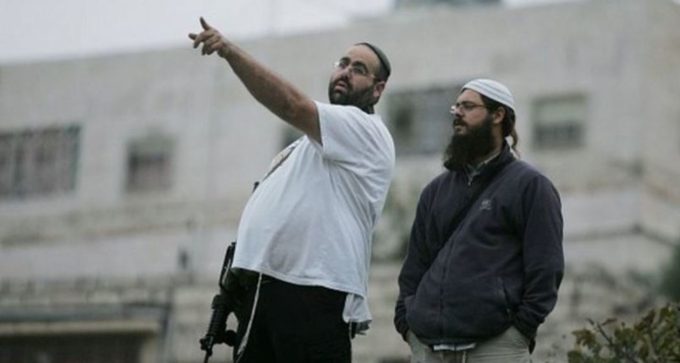
Israel’s extreme far-right Finance Minister Bezalel Smotrich has urged Prime Minister Benjamin Netanyahu and Defence Minister Yoav Galant to prohibit Palestinians in the West Bank from harvesting their olive crop. According to Smotrich, Israel needs to establish “sterile security zones” with no Palestinian presence around settlements and settler-only roads. The aim is to prevent Palestinian farmers from having access to their olive groves in the occupied territory.
The Zionist fanatic also criticised what he called, without a hint of irony, “the continued neglect of the security of the settlers in Judea and Samaria” and claimed that security has been undermined severely since the 7 October attack in the south of the occupation state.
“The concept of security must be shaken, emphasising the need to create sterile security zones around the settlements and roads and to prevent Arabs [sic] from entering them, including for harvesting,” said Smotrich. “The writing is on the wall and I am not ready to be a part of it. I will not agree to additional blood under my watch due to insistence on maintaining distorted perceptions.”
While the world’s attention has focused on the Israeli bombardment of the Palestinians in the Gaza Strip, illegal Jewish settlers have been attacking Palestinians and their properties in the occupied West Bank. Most attacks take place while the armed settlers are protected by the Israeli army. All of Israel’s settlements and the settlers who live in them are illegal under international law.
According to the Palestinian Authority-affiliated Wall and Settlement Resistance Commission, since 7 October settlers have carried out at least 280 attacks against Palestinians in the West Bank, utilising terrorist tactics against the indigenous population and their farms and properties.
The Israeli army has also killed 151 Palestinians in the occupied territory in the same period, and arrested 2,080 others. The death toll in Gaza has now passed the 10,000 mark. Most of those killed were children and women.
Israeli attack on south Lebanon kills three children, Hezbollah hits back
The Cradle | November 6, 2023
An Israeli drone strike on a civilian car in the village of Ainata in southern Lebanon on the evening of 5 November left four civilians dead – three of them children.
The precision munition strike was launched from a drone towards the car, reported Al-Mayadeen’s correspondent.
A woman and her three grandchildren were killed in the attack, and the mother of the children was seriously injured and is currently in critical condition.
The three girls, aged 10, 12, and 14, were killed instantly.
Earlier the same day, Israeli forces targeted two ambulances in Wadi al-Dabaa, resulting in the injury of four paramedics.
A spokesman for the Israeli army claimed in a statement that the targeted vehicle was “identified as a suspicious vehicle containing several terrorists” and that the event is currently “under review.”
In response to the targeting of civilians, Hezbollah launched grad rockets (Katyusha rockets) at the northern Israeli town of Kiryat Shmona, dealing direct damage in several areas and setting a car ablaze.
In a statement, the Lebanese resistance movement said that it “will never tolerate harm and assault on civilians, and its response will be firm and strong.”
Hezbollah lawmaker and parliament member Hassan Fadlallah clarified that “the enemy will pay for its crimes against civilians.”
According to the Kiryat Shmona spokesperson, the first wave launched from Lebanon consisted of 6 rockets, one of which caused damage to property.
The second wave also saw six rockets launched, all falling inside Kiryat Shmona. Three impacted houses, and the other three fell in the surrounding areas, also causing damage.
He added that electricity lines were also damaged.
This exchange comes two days after Hezbollah Secretary-General Hassan Nasrallah’s speech addressing Operation Al-Aqsa Flood, during which he warned that if Israel targets civilians on Lebanese soil, the resistance movement will reciprocate the attacks against Israeli civilians.
Hezbollah and the Israeli army have been engaged in an ongoing exchange of fire on their shared border since 8 October – one day after the Palestinian resistance, led by Hamas, launched its offensive on the Israeli settlements of the Gaza Envelope.
These clashes have gradually increased in intensity as the Israeli army continues with its ground incursion into the Gaza Strip as well as its incessant bombing of the besieged enclave – which has killed nearly 10,000 Palestinians.
Iran FM says Tehran received new message from Washington on Gaza
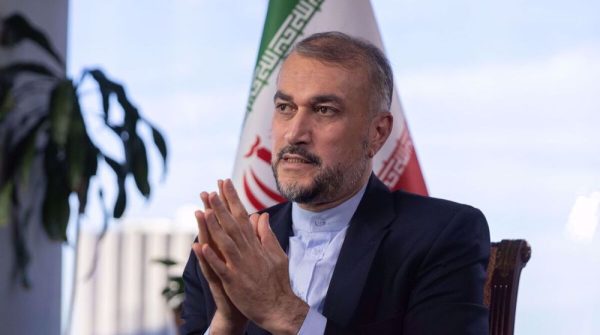
Iranian Foreign Minister Hossein Amir-Abdollahian
Press TV – November 6, 2023
Iranian Foreign Minister Hossein Amir-Abdollahian says Tehran has received a new message from Washington claiming that the US seeks a ceasefire in the Gaza Strip, but they continue to support Israel’s genocide in the Palestinian territory in practice.
The minister, who was speaking to reporters on the sidelines of a Monday meeting between Iranian and Iraqi heads of governments in Tehran, said, however, that the message did not correspond to what the US has done in practice in Gaza where it has supported the Israeli crimes against the civilians.
“The Americans … delivered a message to us in the past three days (claiming) that they are after ceasefire and have carried out efforts in this regard,” said Amir-Abdollahian, but “they, however, back mass killing and genocide” of people in Gaza.
“We hope that the US will soon change its policy and stop supporting the occupying party,” he said.
The US had sent similar messages to Iran, a country with influence over resistance groups in Palestine, since the Israeli aggression on Gaza started on October 7, according to statements by Amir-Abdollahian and other authorities.
Amir-Abdollahian also commented about reports suggesting that his US counterpart Antony Blinken had arrived in the Iraqi capital Baghdad earlier on Monday while wearing a bullet-proof vest out of fears that he could be targeted because of his support for the Israeli carnage in Gaza.
“This is the reality about the US role in the region,” said the diplomat.
Resistance groups in Iraq have launched attacks on US military bases in the Arab country in response to Washington’s offering of direct and open support for the Israeli attacks on Gaza.
Those groups and peers in other countries of the region have warned that such attacks on US interests could expand if Israel does not stop its brutal aggression against Gaza.
Gaza health authorities said on Monday that the number of people killed in 31 days of Israel attacks had exceeded 10,000 with children accounting for nearly half of the death toll.
Israeli Soldiers Detain German Journalists in West Bank
Sputnik – 06.11.2023
The Israeli military detained a film crew from German broadcaster ARD in the West Bank and threatened journalists with weapons, the Tagesschau broadcaster, part of the ARD media group, reported on Sunday.
The journalists were detained after they filmed violence against Palestinians by radical Jewish settlers, the report said, adding that ARD in Tel Aviv sees this as a clear attack on press freedom.
“Soldiers threatened us with guns and asked if we were Jews. Our colleague was called a traitor … Journalists who want to cover events taking place in the West Bank in the shadow of the war in the Gaza Strip are apparently not allowed to do so,” ARD correspondent Jan-Christoph Kitzler said.
The situation was resolved only an hour later, after the arrival of additional Israeli military and police forces, the report added. ARD in Tel Aviv promised to hire a lawyer to determine the legal consequences of the incident.
Christian Limpert, the head of ARD-Studios Tel Aviv, said it was the second such incident this week. “For us it is the second incident within a week. Our team has clearly identified itself as an accredited press representative and was far away from military security areas. We cannot accept the actions of the Israeli military,” he said.
I was tortured, evicted from home for my media, rights work: West Bank activist
By Syed Zafar Mehdi | Press TV | November 6, 2023
There is “an announced and official war” on the besieged Gaza Strip and “an unannounced and unofficial war” on the occupied West Bank, says a Palestinian human rights activist.
Issa Amro, a prominent human rights activist based in the occupied West Bank, in an interview with the Press TV website on Monday, said the Israeli military has laid crippling siege around the territory.
He said all checkpoints have been closed in the occupied West Bank, most of the roads have also been shut, and the majority of communities are not allowed to leave their respective areas.
The Israeli regime launched an indiscriminate aerial bombardment of the besieged Gaza Strip early last month, which was followed by attacks and military raids in the occupied West Bank.
One more Palestinian man was killed by the Israeli army fire in the West Bank on Monday, taking the death toll to 154 since October 7, the Palestinian Authority-run health ministry said.
According to the Palestinian Prisoner’s Society, at least 2,150 Palestinians have been detained in arbitrary military raids by Israeli forces in the occupied West Bank in the past four weeks.
In the besieged Gaza Strip, the death toll has risen to over 9,500, most of them children and women.
Amro described the detention of Palestinians in the occupied West Bank as “random and arbitrary”, saying over 2,000 people have been held under the controversial “administrative detention” policy.
The West Bank-based human rights activist who has been attacked by Israeli forces on multiple occasions said Israeli settlers dressed as soldiers have been “harassing” local Palestinians and carrying out “organized violence” towards Palestinians in different villages of the occupied region.
Israeli settlers, he maintained, have been on the rampage, warning Palestinian residents, attacking them, burning their houses, and beating them up despite any provocations.
In his village, Amro said, a strict lockdown has been imposed and local inhabitants are allowed to leave their homes only on Sunday, Tuesday and Thursday “for one hour each to get food and return.”
“It is not a normal life, it’s a very very bad life, and it’s a really scary life,” he told the Press TV website, adding that he was ruthlessly beaten on October 7 “for ten hours continuously” and later evicted from his home as well.
“I returned home only yesterday (Sunday) after my lawyer intervened.”
On the relentless targeting of journalists in both the Gaza Strip and West Bank, Amro said journalists are not even allowed to film Israeli soldiers, cover their stories, or write anything on social media.
“Journalists here are afraid of their lives, about their freedom. Many journalists have been arrested in the West Bank in last month, they were beaten up and their cameras were broken.”
Amro is a prolific writer and contributes his articles to many reputed international publications.
He told the Press TV website that he is scared for his life, like other Palestinians, including journalists – “to be shot, to be arrested, to be tortured.”
“I was myself tortured (by the Israeli military) as I shot films and spoke to media on October 7. It was due to my journalism and human rights work,” he asserted.
Amro said the Israeli regime used the Hamas operation on October 7, ‘Al-Aqsa Storm’ operation’, “to announce a war, to end what they started in 1948, the Nakba, ethnic cleansing of Palestinians.”
“Without a real intervention of the international community and stopping the support for Israel, it will go on killing the civilians and targeting Palestinians in the West Bank and Gaza,” he remarked.
Thoughtcrime Arrests In Israel: “People Have Been Arrested For Saying Their Heart Was With The Children of Gaza”
It’s all following the algorithm—same as Canada, same as US—you MUST agree with your STATE
By Celia Farber | The Truth Barrier | November 5, 2023
“The police say that any slogans in favor of Gaza or against the war mean supporting terrorism… even if you say that you are, of course, against people being murdered,” Abeer Baker, a human rights lawyer representing some of the people who have been arrested, told CNN.
“The Israel Police said that as of October 25, it had arrested 110 people since the start of the war for allegedly inciting violence and terrorism, mostly on social media. Of these arrests, only 17 resulted in indictments. Most people were released without further charges, usually after a few days.
“Baker said the low number of indictments suggested that people were being arrested for making statements that are not illegal.
“People have been arrested for saying their heart was with the children in Gaza,” Baker told CNN, pointing to a widely-reported case of a comedian from northern Israel who was arrested after posting that phrase on his social media.
‘Not talking about the law’
“The Israel Police says it is acting under Israel’s Counter Terrorism Law. Article 24 of this legislation states that anyone who does anything to “empathize with a terror group” whether that’s by “publishing praises, support or encouraging, waving a flag, showing or publishing a symbol” can be arrested and jailed for up to three years.
“However, Adalah, a non-governmental organization (NGO) that advocates for Arab rights in Israel said in a statement that these arrests are arbitrary and target Palestinians only. It said that many are carried out with brutal force in the middle of the night, and without proper legal justification.
“The criteria is not whether it’s legal or not, the criteria is whether it makes people angry or whether it’s something that is against the mainstream, we are not talking about the law. We are talking about atmosphere,” Baker said, adding that discussing the context of the October 7 attacks is “forbidden.”
Article here.
Featured Video

Anthrax War – CBC The Passionate Eye
or go to
Aletho News Archives – Video-Images
Book Review
Shattered Dreams: The HPV Vaccine Exposed (2019)
By Christina England – 30 Q&As – Book Review & Summary
Lies are Unbekoming | September 4, 2026
… Gardasil received FDA fast-track approval in 2006, Cervarix followed in 2009, and Gardasil 9 was approved in December 2014 with more than double the aluminium adjuvant content of the original. The commercial context is specific. Merck was about to lose patent protection on Zocor and faced $18 billion in Vioxx injury claims from a cardiovascular drug the company had marketed while suppressing its own data showing a five-times increase in heart attacks. Analysts projected the global HPV vaccine market at $4 billion by 2011, contingent on government-funded national programs for teenage girls. The 1986 National Childhood Vaccine Injury Act had already granted manufacturers complete liability immunity. By 2013, Japan had withdrawn its HPV vaccine recommendation after cataloguing severe adverse reactions in hundreds of girls. No Western government followed. The establishment position across the UK, US, Australia, and most of Europe held, and still holds, that the vaccines are safe and effective, that reported injuries are coincidental, and that cervical cancer prevention justifies the program. The book was published into this position, not against a vacuum.
Shattered Dreams sits alongside Mary Holland’s The HPV Vaccine On Trial and Viera Scheibner’s foundational vaccination work as part of the documented record on what has been done to a generation of teenage girls under the banner of cancer prevention. The full summary unpacks three specific findings: that Merck used the aluminium adjuvant itself as the “placebo” control in 92.5% of trial subjects, making it structurally impossible to detect excess reactions from the adjuvant; that Dr. Sin Hang Lee found HPV DNA fragments bound to aluminium in every one of sixteen Gardasil samples tested, and in the blood and spleen of a New Zealand girl six months after her third dose; and that in every country with high vaccination coverage, including Australia, the UK, Norway, and Sweden, cervical cancer rates have stopped declining and started rising specifically in the vaccinated cohort. Martínez-Lavín’s 2017 calculation puts the number needed to seriously harm with Gardasil 9 at 140, and the number needed to vaccinate to prevent one case at 1,757. Thirteen young women are seriously harmed for every one who benefits. The vaccine was approved on the basis of trials that could not detect what the trials were supposed to detect, and it is still being given to twelve-year-olds today. … Read full review
Blog Roll
 Aletho News
- British Transport Police Facial Recognition Trial Scanned 926,912 People With Zero Arrests
- House Bill Would Ban Federal Use of Flock ALPR Data
- Can a Spice Rival a Drug? 10 Head-to-Head Trials Put It to the Test.
- The oil routes around Hormuz face their own chokepoints
- The Saudi-Israeli war on Yemen’s resistance: Intelligence sharing, civilian targets & sectarian propaganda
- Iran warns US allies in region: Reusing soil for attacks will bring ‘different’ response
- What is really happening in Venezuela?
- Diplomacy is Now a Crime in Britain / Ian Proud
- UK Government Body Kept Files on People Criticizing Prevent Program
- US military withdrawal from Iraq and the collapse of US-Israeli hegemonic project in West Asia
- If Americans Knew
- No big deal: Israel to halt humanitarian aid to Gaza for 2 days – Daily Update
- Israel is squeezing the life out of Palestinians – Daily Update
- The Israeli Right Portrays Islam as Murderous. It Serves a Political Purpose
- Jordan Has Had Enough: King Abdullah’s Scathing Warning to Israel
- Israeli Colonizers (i.e. Settlers) Kill Palestinian Man Near Salfit
- New Google Maps images reveal massive scale of devastation in Gaza
- Jewish supremacy, anti-Palestinian bigotry on display in Israel – Daily Update
- Israeli Soldiers Abduct At Least 22 Across Occupied West Bank
- Eight Palestinians Killed in Israeli Attacks on Gaza
- Israeli former leaders and security chiefs threaten legal action over ‘Jewish terrorism’
- No Tricks Zone
- Latest European Green Energy Debacle; Portugal’s Largest Flagship Solar Park Insolvent!
- Green Energy Debacle: German Expert Professor Fritz Vahrenholt Warns Of Severe Economic And Social Consequences
- Two More Paleo Reconstructions Affirm Meters-Higher Sea Levels Across Ireland, Brazil 7000-6000 Years Ago
- New Study: Earth And Venus Surface Warmth Largely Explained By Convection And Lapse Rate, Not CO2 Or Radiation
- 2025 Nature Paper Claiming Worsening Global Drought Gets RETRACTED …Heavily Flawed
- New Study: ‘Global Drought Shows No Detectable Recent Acceleration Under Climate Warming’
- Economic Masterminds: German Socialists Suggest Taxing Productivity Gains Stemming From Using AI
- The South China Sea Has Not Been Cooperating With The Climate Change Narrative
- Energy Crisis: Germany Enters Heating Season With Historically Low Gas Reserve Fill Levels
- New Study: The Antarctic Ice Sheet Gained Mass From 2020-2024 Due To Staggering Snow And Ice Accumulation

