British bases in Cyprus face renewed scrutiny amid war on Iran
Al Mayadeen | May 23, 2023
The war on Iran has reignited political tensions in Cyprus over the continued presence of British military bases on the island, with critics describing them as a lasting symbol of colonial domination and a direct threat to Cypriot security.
The debate intensified after a drone struck the British Akrotiri base in southern Cyprus in March, causing limited material damage but triggering renewed scrutiny over London’s military role on the strategically located island.
In the days that followed, British and Greek fighter jets intercepted additional projectiles reportedly heading toward Cyprus, while several European states deployed naval assets to the eastern Mediterranean amid fears of regional escalation linked to the US-Israeli aggression on Iran.
According to Cypriot and Lebanese media reports, Cyprus’s intelligence chief, Tasos Tzionis, later allegedly established contacts with the Lebanese Resistance to obtain assurances that no further attacks would target the island, amid concerns that British military activity could drag Cyprus deeper into the regional confrontation.
British military presence described as colonial legacy
Cypriot President Nikos Christodoulides has publicly criticized Britain’s handling of the situation, warning that ambiguity surrounding the role of the Akrotiri and Dhekelia bases effectively turned Cyprus into a target during the confrontation.
Speaking in Brussels earlier this year, Christodoulides described the British bases as a “colonial legacy,” stressing the need for a broader discussion with London once regional tensions due to US and Israeli hostilities subside.
The Cypriot government reportedly lacks oversight over many military activities conducted inside the British-controlled zones, including the transfer of military equipment and logistical operations connected to Western regional interventions.
Diplomatic sources cited in the report said London “does whatever it wants” inside the bases, which have long served as key hubs for British and US military operations across West Asia.
Strategic role of Cyprus in Western military operations
Located roughly 150 kilometers from the coasts of Syria and Lebanon and around 350 kilometers from Gaza, Cyprus occupies a central position in the eastern Mediterranean and has increasingly served as a forward operating platform for Western military and intelligence activity.
Akrotiri has reportedly been used in logistical support operations tied to “Israel”, as well as in broader US and British regional military deployments.
The Dhekelia base also hosts extensive surveillance infrastructure, including radar and signal interception systems used in operations stretching from Iraq to Afghanistan.
Researchers and political analysts in Cyprus argue that the continued British presence undermines the island’s sovereignty and complicates efforts to resolve the decades-long division of Cyprus between the Turkish-occupied north and the internationally recognized south.
Calls grow for decolonization and sovereignty
The British-controlled territories are not conventional foreign military bases governed through bilateral agreements. Instead, they remain sovereign British overseas territories retained by London when Cyprus gained independence from British colonial rule in 1960.
Together, Akrotiri and Dhekelia cover roughly 3% of Cyprus’ territory and include civilian communities inhabited by around 11,000 Cypriots.
Critics argue that the arrangement represents an incomplete decolonization process imposed on Cyprus as a condition for independence.
The issue has gained renewed relevance following international legal disputes over Britain’s control of the Chagos Islands, where London agreed to return sovereignty to Mauritius while retaining long-term military access to Diego Garcia, a major Anglo-American military base.
Cypriot officials are now reportedly studying similar legal and diplomatic pathways as pressure grows domestically to challenge Britain’s continued military presence on the island.
Germany’s allegations over attacks on Jewish targets follow ‘worn-out cliches’: Iran embassy
Press TV – May 23, 2026
Iran’s Embassy in Berlin says German prosecutors’ claims about Tehran’s alleged involvement in attacks on Jewish figures are “unfounded” and follow “worn-out clichés.”
In a statement posted on X on Saturday, the Iranian embassy said security is “a necessary and respectable matter” in every country, including both Iran and Germany.
However, it said that such claims against Tehran were made “on orders from Iran’s enemies,” adding that the repetition of “worn-out clichés” merely leads to the discrediting of the legal institutions of the accusing side.
The embassy further stated that if the protection of Jewish institutions and sites linked to Abrahamic religions is considered a universally accepted principle, then “the military attack by the Israeli regime in April 2026 on the Rafi’-Nia Synagogue in Tehran should also be perceived and condemned with the same sensitivity.”
The latest development came after German federal prosecutors announced criminal charges against a Danish national and an Afghan national accused of involvement in an alleged plot targeting prominent Jewish leaders in Germany.
According to prosecutors, the Danish suspect, identified as Ali S. under German privacy laws, is accused of working for the intelligence service of Iran’s Islamic Revolution Guard Corps (IRGC) and maintaining close ties with the Quds Force.
Prosecutors claimed he was tasked in early 2025 with gathering information on Josef Schuster, president of the Central Council of Jews in Germany, and Volker Beck, chairman of the German-Israeli Society, as well as two Jewish grocery stores in Berlin.
German prosecutors alleged that the surveillance activities were intended to facilitate the planning of murder and arson attacks in Germany.
German and Danish authorities had previously announced in July last year that a Danish national was arrested in Denmark on suspicion of spying for Iran by collecting information on Jewish sites and individuals in Berlin.
NATO must ‘show its teeth’ to Russia – Czech president
RT | May 23, 2026
Czech President Petr Pavel has urged NATO to “show its teeth” in response to what he described as Russian “provocations” on the bloc’s eastern flank.
Pavel’s remarks follow a series of Ukrainian drone incursions into NATO airspace in Europe. Since mid-March, long-range UAVs have repeatedly crossed Baltic and Nordic airspace en route to targets in northwestern Russia, particularly oil facilities in Leningrad Region. The incursions prompted fighter jet deployments, and some drones crashed inside NATO states, causing damage.
Moscow has accused European NATO members of quietly allowing Kiev to use their airspace for attacks on Russian territory, but Western officials deny this, instead blaming Russia for the incursions and claiming that Russian electronic warfare systems may have redirected the drones to stray into NATO airspace.
In an interview with The Guardian published Friday, Pavel echoed the accusations, claiming that Russia was intentionally staging “provocations” operating just below the threshold that would trigger NATO’s collective defense clause, Article 5. He also claimed that Russian military officials openly mock the bloc’s indecision during such incidents, and called for “decisive enough, potentially even asymmetric” responses to counter Moscow’s actions.
“Russia, unfortunately, does not understand nice language. They mostly understand the language of power, ideally accompanied with action,” he claimed. “When I asked them why they do these provocative actions in the air… their answer was ‘because we can’. That’s exactly the kind of behavior we allowed.”
Citing earlier Western allegations of Russian “provocations” in the Black and Baltic Seas – such as fighter jet intercepts and purported airspace violations – Pavel suggested that NATO should consider shooting down “either an unmanned or manned” Russian aircraft if spotted near its borders. Moscow has denied the accusations, insisting its patrols occur in international airspace and are a necessary response to Western reconnaissance flights near Russian borders.
Pavel also proposed “potentially asymmetric” measures against Moscow, including disrupting internet access, targeting satellites, or cutting Russian banks off from the global financial system, measures he said “are not killing people, but are sensitive enough to make Russia understand this is not the way they should go.”
Pavel’s position echoes that of several other NATO countries. Swedish Prime Minister Ulf Kristersson said on Thursday that NATO states should actually help Kiev “direct” drone attacks “in the right directions.” Latvian and Estonian officials defended Ukrainian incursions by saying that Kiev “has every right to defend itself.”
Finland, however, rebuked Kiev over the breaches of its airspace, while Slovak Prime Minister Robert Fico urged renewed dialogue with Moscow, warning of potential Ukrainian drone provocations involving NATO territory that he said could trigger direct conflict between Russia and the bloc.
Multiple Western officials have claimed that Moscow could test the alliance through provocations and hybrid operations, or eventually attack European states after the Ukraine conflict ends. Citing the purported threat, European NATO members last year pledged to raise military spending to 5% of GDP and launched rearmament initiatives such as ReArm Europe.
Moscow, however, dismissed claims that it poses a threat to Europe as baseless “nonsense” and condemned what it calls reckless EU militarization. Kremlin spokesman Dmitry Peskov recently accused European “warmongers” of portraying Russia as a “model external enemy” to distract from domestic problems.
France criminalizing pro‑Palestine speech for ‘antisemitism’: Op-Ed
Al Mayadeen | May 22, 2026
French authorities have systematically silenced and criminalised pro-Palestinian solidarity under the guise of combating antisemitism, columnist Rokhaya Diallo writes in The Guardian, warning that a now‑shelved government bill aimed at punishing “indirect incitement” and “denial of a state” would have made it impossible to criticise “Israel” without risking legal sanctions.
Diallo notes that tensions in France over how to respond to a rise in antisemitism have been running high. A government‑backed bill introduced in 2024 by Caroline Yadan, a member of the National Assembly, was intended to counter “new forms of antisemitism.” However, its wording quickly veered toward a different objective: curbing the ability to criticise “Israel.”
“It must be possible to denounce the many crimes – extensively documented – committed by Israel, and to do so repeatedly without risking sanctions,” Diallo writes. “Freedom of expression in France allows individuals to voice any form of sentiment towards any country as long as there is no incitement to violence.”
Bill would have criminalised ‘indirect incitement’ and ‘denial of a state’
The Yadan bill proposed widening the existing offence of “glorifying terrorism” so that “indirect incitement” could be punished. It also introduced a new offence penalising the act of “inciting the destruction or denial of a state.”
Diallo argues that such a prohibition would run counter to the fundamental right to decolonization.
“Under the proposed legal framework, what would become of the right to question France’s own borders?” she asks, noting that France’s overseas departments are former colonies where independence movements have not disappeared.
A petition opposing the bill gathered a record 700,000 signatures. Rights bodies warned of the dangerously illiberal trajectory of the proposal. Five UN special rapporteurs issued an open letter expressing concern that the bill threatened “the exercise of protected rights, in particular the right to freedom of expression and opinion, including media freedom.”
Rima Hassan arrested, charged with ‘glorifying terrorism’
Diallo points to the case of French‑Palestinian MEP Rima Hassan of the left‑wing France Unbowed party, a prominent voice for Palestinian liberation. Hassan was arrested last month, taken into police custody and questioned for “glorifying terrorism.” Her alleged offence was a post on X quoting Kozo Okamoto, a member of a Japanese group that carried out a 1972 attack at Tel Aviv’s Ben‑Gurion airport.
News of her detention leaked as she was being questioned, accompanied by false claims that synthetic drugs had been found among her personal effects. The drug probe was later dropped, but only after days of negative media coverage.
It then emerged that Hassan’s phone had been under police surveillance from the beginning of the year without her knowledge. She will be tried in July and says she intends to refer the matter to an independent UN rapporteur and to the European Parliament.
Pattern of structural criminalisation of pro‑Palestinian activism
Diallo argues that the Yadan proposals should be seen as part of a broader pattern of structural criminalisation of pro‑Palestinian activism. After October 7, 2023, the French interior minister attempted to ban Palestinian solidarity demonstrations. University students who mobilised against the Yadan bill faced violent police repression. Prosecutions for alleged glorifying terrorism have multiplied since 2023, targeting influencers, athletes, trade union activists, and even members of parliament.
“The disproportionate response to pro‑Palestinian activism over what human rights groups have called a genocide raises questions about the lengths deployed, apparently to restrict a form of expression that is essential in a democracy,” Diallo writes.
While the Yadan bill is dead, she concludes, its provisions should be seen within a broader dynamic: one that seeks systematically to conflate anti‑Zionism with antisemitism and narrow the space for any pro‑Palestinian discourse.
IDF Militants Mass Raped And Tortured Global Sumud Flotilla Activists
The Dissident | May 22, 2026
Israel has mass raped and tortured detained activists with the Sumud Flotilla, who were attempting to bring aid to Palestinians in Gaza, multiple victims have revealed.
On Tuesday, Israel kidnapped “430 people onboard 50 ships in international waters”.
Israel’s National Security Minister Ben Gvir released a video showcasing Israeli abuse of the detainees, including by forcing them to kneel while the Israeli national anthem played.
Democracy Now noted , “The video shows dozens of men and women kneeling in rows, with their foreheads to the ground and their hands zip-tied behind their backs at the port in Ashdod”.
Now, released activists from around the world have detailed mass rape, sexual abuse, and torture that Israeli forces unleashed on them while in detention.
A Press release from the Global Sumud Flotilla documented that, “Participants from the Global Sumud Flotilla, now in Istanbul, have begun providing harrowing testimony about widespread abuse, assault and torture: rubber bullets fired at close range, tasers to the face and upper body, stun grenades thrown into groups of detainees, stress positions held for hours under permanent bright light, hijabs (Muslim religious headcovers) forcibly removed, as well as various forms of sexual violence including: humiliating strip searches, sexual taunting, groping and pulling of genitals, and multiple accounts of rape.”
It added, “Some of the most horrifying accounts centre on a single vessel that participants call the ‘torture boat.’ This specific israeli naval vessel with a makeshift prison constructed of barbed wire and metal shipping containers became the primary site of intense violence following the interception; this reflects a small fraction of the patterns of systemic violence and sexual abuse against the Palestinian people at the hands of the israeli regime for decades.”
The activist organization has documented “At least 15 cases of sexual assaults, including rape” along with activists “shot with rubber bullets at close range” and “tens of people’s bones broken”.
Adrien Jouan, one activist with Global Sumud Flotilla, showed evidence of brutal torture, with severe bruising all over his body.
Another activist on Instagram live showcased severe bruising on his leg.

Released Brazilian activist Thiago Ávila revealed that , “there is no easy way to say it, but I have to say it, people got raped at the Global Sumud Flotilla. These monstrous soldiers raped our participants. It was not one, not two, not three, it’s many cases of sexual violence against our participants on the prison boat on the way to the port of Ashdod, where they got once again beaten up, many people with broken ribs, many people with broken bones in the arms, the collar bone, the ribs”.
Independent journalist Alex Colston, who was part of the Sumud Flotilla, revealed , “I just got out of Israeli prison … I saw people shot point blank with rubber bullets, I myself, I can’t feel my hands because they are all scarred up because they would take the cuffs and they would yank my hand over and over again. When I would be tied or cuffed, they would step on my cuffs. They kicked me in the ribs more times than I can count. I passed out at least one time. … even if you plead for them to stop … Israeli guards were getting obvious pleasure from hurting us as much as they could”.
Another participant in the flotilla , testifying to the torture she went through, said:
Handcuffs on my hands and feet. Dragged me. When I couldn’t walk, they dragged me on the ground.
They hit us. Hurt all of us a lot. Handcuffs so tight my hands lost feeling
They laughed all the time. Super sadistic.
Took off my shirt. Took pictures. Mistreated us all night long
Another activist testified that , “I had my hands zip-tied behind my back for so long and it was so tight I almost started vomiting, they slammed my head into a table several times and degraded me as I was strip-searched. They had me in handcuffs for 19 hours to the point my skin had begun to swell around them.”
Australian activist Juliet Lamont revealed , “We had people who were tasered in the face. People were syringed with unknown sedatives. I was put down, cable tied. They put so much water under me for an hour that I thought I was going to drown. I was sexually assaulted in this kind of torture chamber. And five men were bashing me and smashing my face”.
Italian economist, Luca Poggi, who was with the Flotilla activists revealed that “We were stripped, thrown to the ground, kicked. Many of us were Tasered, some were sexually assaulted, and some were denied access to a lawyer”.
Another German activist with serious injuries revealed that , “Israel beat her daily”.
The barbaric torture of the Sumud Flotilla activists is just another example of the brutal torture, sexual violence, and rape that Israeli forces unleash on Palestinian detainees daily.
UNRWA staff smuggled millions of Nakba records out of Gaza during Israel’s genocide: Report
The Cradle | May 22, 2026
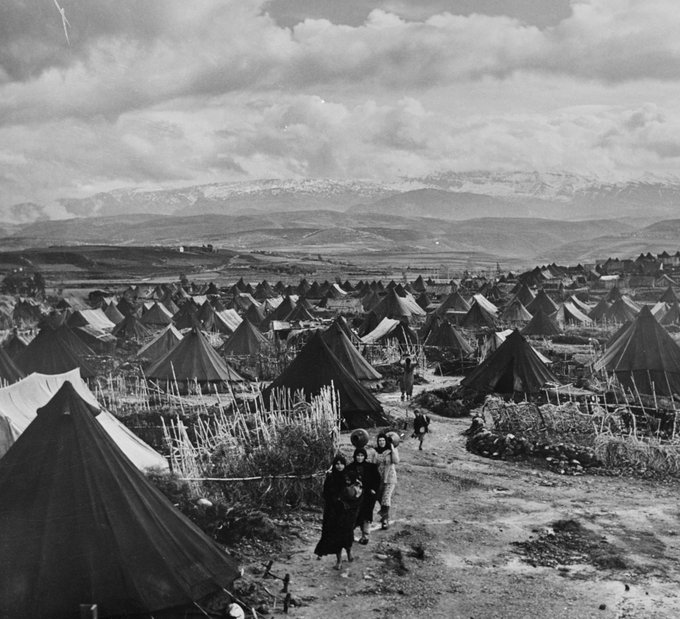
A 10-month-long covert operation by staff of the UN Agency for Palestinian Refugees (UNRWA) retrieved millions of historical documents from Gaza and occupied East Jerusalem, preserving legal and historical records dating back to 1948 of Israel’s ethnic cleansing and land theft campaign, The Guardian reported on 14 May.
Dozens of staff across four countries carried documents past border checkpoints, airlifted boxes on military planes, and raced Israeli tanks to Rafah to save what could never be replaced.
The archive, kept inside UNRWA’s Gaza City compound, contained the original registration cards of Palestinians who sought refuge in Gaza during the Nakba, alongside birth, marriage, and death certificates spanning generations.
“There are testimonies of how people were forced to flee in 1948, where they came from, where their property was, what was destroyed,” said Jean-Pierre Filiu, a professor specializing in West Asian studies.
“Two hundred thousand came to Gaza in between 1948 and 1949, from all over Palestine.”
The operation began days after Israeli forces ordered the evacuation of UNRWA’s Gaza City offices at the start of its assault on Gaza, with International staff being forced to leave on very short notice, with no time to take the documents.
After their forced evacuation, a small team returned and made three trips, driving trucks back through active bombardment to move the records south to a food warehouse in Rafah.
Evacuating the records from Gaza was further complicated as Egyptian authorities required Israeli approval before allowing the archives to cross the border, approval that UNRWA officials were certain would either be denied or used to seize the documents.
Meanwhile, UNRWA had been facing concurrent cyberattacks that threatened to wipe the agency’s servers and the digitized historical records.
“We genuinely thought we could see both the originals destroyed and any digital copies we had made. Then everything would have been gone for good,” said Roger Hearn, the senior UNRWA official who oversaw the rescue.
The documents were collated in Egypt and then airlifted to Amman aboard Jordanian military planes returning from aid deliveries, with the final cargo departing just two weeks before Israeli forces invaded Rafah in May 2024.
A parallel operation extracted a second set of archives from UNRWA’s East Jerusalem compound, which by early 2024 had become the target of arson attacks and mounting Israeli pressure to expel the agency.
Staff secretly transferred those records to Jordan over several months. In January 2025, new Israeli legislation formally barred UNRWA from operating in Israel and Israeli-occupied Palestine.
In Amman, more than 50 staff are currently scanning nearly 30 million documents by hand in a cramped basement facility, funded primarily by Luxembourg, with the digitization effort estimated to take another two years.
“Their destruction would have been catastrophic,” Hearn said. “If there is ever a just and durable solution to this crisis, then this is the only evidence people can use to show there were once Palestinians living in a particular place.”
Israel’s war on Gaza has amounted to a systematic assault on Palestinian cultural existence, targeting the physical and historical foundations of Palestinian identity in an apparent attempt to erase the people’s collective memory and presence from the land.
The destruction of mosques, churches, heritage sites, libraries, manuscripts, museums, cemeteries, and archival records forms part of a broader campaign to sever Palestinians from their history and national continuity.
These repeated attacks on the documentary and material traces of Palestinian life have turned cultural erasure itself into a weapon of war, with UNESCO verifying damage to scores of cultural and historical sites across Gaza since the genocide began in October 2023.
‘Board of Peace’ plan accused of turning Gaza disarmament into Israeli land grab
MEMO | May 22, 2026
A proposed roadmap for Gaza has been condemned as an attempt to give Israel through diplomacy what it failed to achieve through more than two years of genocide: the disarmament of Hamas and other Palestinian factions, without guaranteeing a full Israeli withdrawal from the besieged enclave.
The plan, circulated by Nickolay Mladenov, the Board of Peace’s high representative for Gaza, comes despite Israel’s repeated violations of the ceasefire and its failure to complete even the first phase of the agreement. Critics say Washington and Tel Aviv are now trying to force Palestinians into surrendering their weapons while Israel expands its military control inside Gaza, including along the so-called Yellow Line.
However, critics say the roadmap demands Palestinian disarmament while failing to guarantee Israel’s full withdrawal from Gaza. Palestinian analyst Muhammad Shehada warned that the proposal could allow Israel to retain around 18 per cent of the Strip, including some of Gaza’s most fertile agricultural land, even after weapons and militias are removed.
The Arabic text of the roadmap states that Israeli forces would withdraw in phases only after verified progress in the “identification, restriction and collection” of weapons. Even in the final phase, Israel would withdraw “except for a security perimeter” until Gaza is deemed secure from any renewed threat. The plan does not define the size of this perimeter, raising fears that Israel could turn a temporary security zone into a permanent occupation.
Those concerns are reinforced by Israel’s conduct since the ceasefire. Israel has repeatedly violated the truce, continued attacks and failed to meet its own obligations during the first-stage, while still demanding that Hamas proceed with disarmament. Hamas has rejected the Board of Peace’s framing, arguing that it ignores Israeli violations and unfairly demands disarmament while Israel remains inside Gaza. Hamas insists that the question of arms must be linked to Israel’s withdrawal from the territory.
Mladenov himself has warned the UN Security Council that Gaza’s current division risks becoming permanent, with more than two million Palestinians crowded into less than half of the Strip while Israel maintains troops in around 60 per cent of Gaza.
The roadmap places the entire transition under an Implementation Verification Committee, a body tasked with deciding whether each stage of the plan has been completed before the next stage can begin. However, critics warn that the mechanism could leave the entire process effectively subject to Israeli approval.
According to the text, the committee would be established by the high representative for Gaza and include representatives of the guarantors, the International Stabilisation Force and the Peace Council.
In practice, critics say this gives Israel and its US-backed allies sweeping control over the pace and outcome of the process. Movement from one phase to the next would not be automatic. It would depend on the committee confirming that the previous stage had been completed, including the collection of weapons, dismantling of military infrastructure and restoration of security conditions acceptable under the plan.
The roadmap also states that Israel’s withdrawal would be phased and tied directly to verified progress in the process of “identifying, restricting and collecting” weapons. This means Israel would not be required to leave Gaza first. Instead, Palestinians would be asked to disarm while Israeli forces remain inside the enclave, with further withdrawal dependent on outside verification.
Even the final phase does not guarantee a complete Israeli withdrawal. The text says Israeli forces would leave Gaza except for a “security perimeter”, where they would remain until Gaza is deemed secure from any renewed threat. The roadmap does not define the size of this perimeter or set a firm deadline for Israel to leave it.
Russia Has Three Responses to Ukrainian Attack on Donbass Children – Expert
Sputnik – 22.05.2026
Russian President Vladimir Putin has told the Defense Ministry to plan responses to the Ukrainian drone attack on a high school dormitory in Starobelsk in the Lugansk People’s Republic (LPR).
Russia has several options, National Defense magazine editor-in-chief Igor Korotchenko tells Sputnik.
- Hitting decision-making centers — specifically in Kiev, “where the leaders of the terrorist regime direct and order attacks on Russia, including the latest large-scale tragedy involving the deaths of children”
- Critical infrastructure that supports Ukrainian Armed Forces rear operations and stability
- Ukrainian military and state command networks
“The retaliation strike must be large-scale and concentrated,” Korotchenko says. “Of course, we will not strike civilian infrastructure or the civilian population. Those are the methods used by Zelensky’s terrorists against us.”
The pundit stressed that Russia is fighting the military operation in Ukraine in line with international law and the UN Charter.
“Accordingly, strikes will target only military sites, critical infrastructure — considered lawful military targets — and Ukraine’s political and military command centers.”
The strike on the Starobelsk dormitory was not accidental — it came in three waves during the night. There are no military facilities near the dormitory.
Why does the Zelensky regime target civilians? Because it built up an illusion of safety and impunity, the expert replies.
Hunter Biden Tells Candace Owens His Father Blackmailed by Israel

By Kurt Nimmo | Another Day in the Empire | May 22, 2026
Hunter Biden, the crack addict son of the former president, told Candace Owens the Zionists were out to get him and his father. Despite the fact Joe Biden proudly considers himself a Zionist, the real Zionists threatened and blackmailed him into allowing a genocide in Gaza, according to Hunter.
Left unmentioned is the fact Joe Biden provided Israel with what it needed to eliminate Palestinians in Gaza. AIM-120C-8 AMRAAM air-to-air missiles for fighter jets, 155mm artillery shells, Hellfire AGM-114 missiles for attack helicopters, 2,800 MK-82 500-lb. bombs, JDAMs, small diameter bombs, and bomb fuzes worth $8 billion. He arranged the shipment of thousands of Joint Direct Attack Munition (JDAM) kits and hundreds of small diameter bombs worth $680 million. His Pentagon authorized the “deployment of a Terminal High-Altitude Area Defense (THAAD) battery and associated crew of U.S. military personnel to Israel.”
During the Biden regime, “an analysis published by the medical journal The Lancet estimated that the actual number of Palestinian deaths in Gaza, including those decomposing beneath the rubble of bombed-out hospitals, schools, and densely packed refugee camps, is likely more than 186,000.”
Evidence of “genocide, starvation, ethnic cleansing, and forced displacement was clearly available to the Biden administration, yet it lied to the American public to hide its own criminal culpability in the war crimes, crimes against humanity, and genocide.”
By June [2024], the Biden administration had sent Israel at least 14,000 massively deadly 2,000-pound MK-84 bombs, made in Oklahoma and dropped on hospitals, apartment blocks, and crowded refugee camps. In addition, it sent 6,500 500-pound bombs, 3,000 Hellfire precision-guided air-to-ground missiles, 1,000 bunker-buster bombs, 2,600 air-dropped small-diameter bombs, and other munitions.
Democracy for the Arab World Now (DAWN) produced a 172-page document submitted to the International Criminal Court accusing President Biden, former Secretary of State Antony Blinken, and former Defense Secretary Lloyd Austin of committing war crimes. The filing “details how the US officials provided ceaseless military and diplomatic support to Israel despite being aware that its aid was being used to commit the type of alleged war crimes for which the ICC issued warrants against Israeli leaders,” Zeteo reported.
Such US support has included at least $17.9 billion of weapons transfers, intelligence sharing, and targeting assistance – and the US abstaining from, voting against, and vetoing several UN resolutions calling for a ceasefire and hostage deal or increased humanitarian aid over the course of 15 months. It’s also included repeatedly sending weapons to Israel without congressional review.
Biden not only gave Israel everything it wanted, he was also part of Prime Minister Benjamin Netanyahu’s war cabinet. “While there certainly is a time-honored tradition of a ‘special relationship’ between the U.S. and Israel, Biden has gone where no other U.S. president ever has gone during one of Israel’s wars—not only physically but also politically and strategically,” TIME Magazine reported.
“Biden’s connection to Israel is deeply engrained in his political DNA,” argues Aaron David Miller, a former Middle East negotiator. “I don’t believe you have to be a Jew to be a Zionist, and I am a Zionist,” Biden declared when he met with Netanyahu and his war cabinet during a visit to Israel.
During his long career, Biden voiced unwavering support for Israel. “America must insure Israel’s existence,” he declared in 1972 by “ensur[ing] that Israel receives whatever weapons she needs.” In 1975, he admitted that the “interest groups that I hear from are the Jewish interest groups concerned about Israel. And they’ve always been reasonable when they’ve come to me, they’ve never threatened me in any way. Maybe it’s because I tend to vote their way.”
Since his political career began as a senator in 1973, Biden has consistently supported the Jewish state. He affirmed Israel’s right to defend itself throughout the Yom Kippur War and the October 7 prison break, earning him the nickname of the most pro-Israel president in American history.
Hunter is attempting to salvage his father’s reputation, but he cannot hide the fact the elder Biden consistently supported the illegal invasion of Iraq, and that of Afghanistan. He supported the 78-day bombing of Serbia in 1999 (he called for “a Japanese-German-style occupation” of the country).
“Biden’s imperial outlooks,” writes Gerald Sussman,
drawn from Washington’s and the mainstream media’s commitments to maintaining US hegemony in the world, has placed him among the world’s leading war criminals, alongside those, Kennedy, Johnson, and Nixon, who led the genocide in Vietnam, where millions of people were bombed, gassed, maimed, and disfigured by chemical weapons.
While the former president’s disgraced son insists his father was setup by the Zionists, he cannot escape the fact his old man is a war criminal that “continuously and unconditionally provid[ed] political support and military support to Israel while being fully aware of the specific crimes committed by Netanyahu, Gallant, and their subordinates” while providing over $17.9 billion in military aid and arms transfers to the criminal government of Israel.
The logic of victory: Iran’s principled terms for end to imposed war define a new strategic reality
Press TV | May 22, 2026
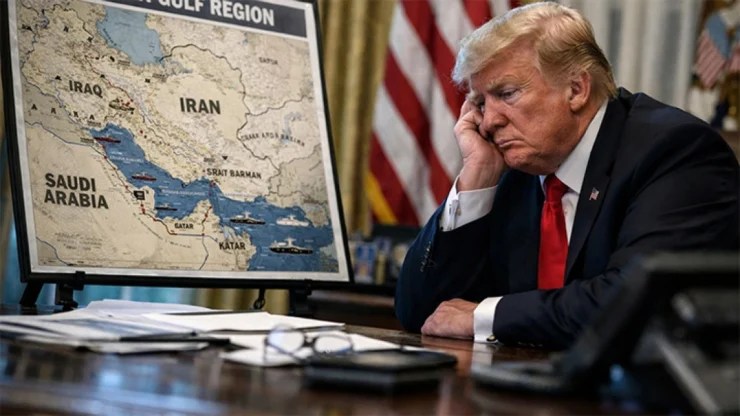
Nearly 40 days of all-out military aggression, shadow warfare, and economic blockade have given way not to Iran’s surrender, but its emergence with a strategic upper hand.
The “Ramadan War” – an unprovoked and illegal military aggression that came amidst Oman-mediated nuclear diplomacy – ended in a way Washington and Tel Aviv never anticipated. Iran did not collapse, its alliances did not fracture and its military deterrent remained intact. And now, as the guns have fallen silent, it is Iran – not the US – that is setting the terms.
Iran’s end-of-war conditions are not maximalist bargaining ploys. Rather, they are the logical, rational, and legally grounded demands of a victor who has proven, on the battlefield and in the diplomatic arena, that aggression against a resilient nation produces only defeat.
Tehran is not asking for charity. It is demanding what is rightfully owed to a nation that has been wrongfully attacked, illegally sanctioned, economically terrorized, and yet emerging stronger, more cohesive, and more confident.
The foundational logic of ending an imposed war
The first and most critical point in Iran’s strategic calculus is remarkably simple: in any war, the side that requests a ceasefire is the side that is losing. Iran did not request a ceasefire; it was the American side. This single fact upends the conventional Western narrative that portrays Iran as an isolated, pressure-cooked “regime” desperate for a deal.
Iran’s logic is rooted in the universal, time-tested rationality of all wars. Wars do not end because both sides grow weary simultaneously. They end when one side realizes that continued fighting will produce worse outcomes than accepting the other side’s terms.
In the 40-day imposed war and its aftermath, the American-Zionist enemy – an alliance of the world’s most advanced militaries, intelligence agencies, and economic powers – failed to achieve its stated objectives. There was no “regime change.” Iran’s nuclear infrastructure remains intact. The Axis of Resistance did not collapse. And critically, Iran emerged stronger.
Had America possessed the capacity to defeat Iran militarily, it would have done so. It would not have sought a ceasefire and opened back channels for negotiation.
The very act of seeking an end to war is an admission of strategic failure. Therefore, the enemy has no right to obtain through diplomacy – through the end of war – what it could not obtain through indiscriminate force, cowardly acts of terror, and state-sponsored criminality.
This is a strategic logic and it dictates everything that follows.
The aggressor pays: Restitution, withdrawal, and end of sanctions
Because the US is the aggressor – having initiated an unprovoked war against the Iranian nation through assassinations, sabotage, cyberattacks, and direct military strikes – it must bear the full cost of the cowardly aggression.
Iran’s conditions are therefore not punitive fantasies but standard provisions in any post-war settlement where the aggressor ends up on the losing side.
Iran demands full payment of war damages and compensation for all victims of American and Israeli aggression; return of all Iranian assets and properties illegally blocked or seized; complete withdrawal of US forces from military bases surrounding Iran; termination of the illegal naval blockade that in itself constitutes an act of war; a comprehensive end to aggression on all fronts, including against Iran’s allies in the Axis of Resistance; full and verifiable lifting of all illegal sanctions against Iran, including the revocation of UN Security Council sanction resolutions and a signed end-of-war agreement enshrining these terms.
These demands are not opening bids but the minimum acceptable outcome for Iran. The enemy may negotiate over the sequencing or technical details of implementation, but the substance is non-negotiable. The aggressor pays, withdraws and lifts its illegal economic siege.
Diplomacy as a continuation of war by other means
Iran has already demonstrated its superiority in diplomacy. By forcing the American side to accept its framework for ending the illegal and unprovoked war, Tehran has demonstrated that Washington is the frustrated, failed and isolated party in this war.
The US assembled the most powerful military coalition in modern history, planned for years to overthrow the Islamic Republic or force it into fundamental concessions, and came away with nothing. None of the military objectives came to fruition and everyone acknowledges that.
Any future negotiations after the end of this imposed war will be conducted from a position of Iranian strength. Iranian negotiators will have no need to link those talks to wartime pressures. And make no mistake: Iran will enforce compliance.
Any shortcoming by the enemy in fulfilling its obligations will be met with Iranian responses below the threshold of full-scale war – a domain in which Iran operates with even greater ease and lethality. The enemy has already tested Iran in conventional war and suffered a crushing reputational, military, political, and strategic defeat. It has no appetite for a second round.
Strait of Hormuz – A prize already won by Iran
Perhaps no single issue illustrates Iran’s strategic upper hand more clearly than the Strait of Hormuz. Western analysts habitually frame the strait as a point of vulnerability for Iran, a choke point that Iran threatens to close. This is exactly backward.
Iran’s position is that the Strait of Hormuz is already an Iranian gain from the war. It is a legal, principled, and logical right that is presently in Iran’s hands. Unlike blocked assets or sanctions, which require active enemy reversal control over this strategic waterway located between the Persian Gulf and Gulf of Oman – requires no new action from Iran. It is a fait accompli.
Iran’s enhanced control over the Strait of Hormuz serves three concrete objectives.
- Security: Guaranteeing Iran’s security in the Persian Gulf against future American or Persian Gulf Arab aggression.
- Economic justice: Preventing blackmail by regional governments and securing material rights of the Iranian nation through tolls and transit fees.
- Strategic deterrence: Creating a new normal in which any future aggression against Iran must account for Tehran’s tightened grip over global energy chokepoints.
The status of the strait after the war is fundamentally different from before the war. Iran will not return to the previous order. That order – in which the US patrolled freely, imposed sanctions, and threatened Iran with impunity – is effectively dead. Iran’s permanent sovereignty over the waterway is not a demand but a reality that the enemy must accept.
Iran is not acting unilaterally or recklessly in this regard. Agreements with neighboring Oman, based on mutual interests, are necessary to consolidate Iran’s control. Iran’s diplomatic apparatus is actively pursuing these agreements.
This is not an act of belligerence but an act of responsible statecraft, embedding Iran’s strategic gain within a framework of regional cooperation.
Finally, the strait carries profound symbolic weight. Iran’s unchallenged sovereignty over the Strait of Hormuz represents the heavy penalty and fine that the aggressor must pay for having invaded Iranian territory – directly or by proxy. Every tanker that transits under terms acceptable to Tehran is a reminder that the US miscalculated catastrophically.
And if the enemy ever indulges in the fantasy of another war on Iran, it will now have to factor in Tehran’s expanded maritime and land sovereignty as a permanent, inescapable variable.
The nuclear file – Deferred but not diminished
Western media frequently portrays Iran’s nuclear program as the central point of leverage against Tehran. It is not a point of weakness, but an area of demonstrated Iranian resilience.
Throughout its long history of peaceful nuclear activities, including temporary, voluntary transparency measures, Iran has never abandoned its principles or its legal rights.
International law recognizes Iran’s right to possess the full nuclear fuel cycle. America has no authority to override international organizations and treaties and it is not the world’s nuclear policeman. The US defeat in the recent war has stripped it of any pretense to that role.
Both the US and the Zionist regime tried to force Iran’s nuclear surrender through unprovoked war and bombing campaigns, but catastrophically failed. They will also fail in any future negotiations to strip Iran of its inalienable nuclear rights. Iran’s nuclear decisions – regarding enrichment levels, research, development, and even the scope of its program – are Iran’s own business.
They are not tied to the recent war, from which Iran emerged victorious in preserving its nuclear materials, facilities, and, most critically, its scientific and engineering knowledge.
The bomb question: A clear doctrine, not an ambiguity
Donald Trump and members of his war cabinet, including war secretary Pete Hegseth, repeatedly claim that preventing Iran from obtaining a nuclear bomb is their primary objective. But here again, Iran’s position is clear and has been stated repeatedly: a nuclear bomb has no place in Iran’s defense and security doctrine.
This is not a new or ambiguous position. It is a matter of public record, reinforced by the martyred Leader of the Islamic Revolution, Ayatollah Seyyed Ali Khamenei’s fatwa (religious decree) against the development and use of nuclear weapons.
Trump cannot claim victory on an issue where no threat existed. The embattled American president does not get to factor the nuclear bomb myth as his personal achievement.
If, in the future, with changed regional circumstances and potentially a revised fatwa, Iran’s doctrine evolves, that is a matter for another time. But today, in the present, the doctrine has not changed. Iran possesses all the knowledge required to complete the nuclear cycle for peaceful development, and it will continue to exercise its inalienable rights.
The invalidity of Trump’s deadline threats
Throughout the recent war and its aftermath, Trump repeatedly resorted to a worn-out, theatrically bankrupt tactic: the artificial deadline. “Iran must agree by X date, or else.” This gimmick failed at least five times. Each time, the US president backpedaled.
This deadline threat is a psychological warfare technique designed to induce panic, haste, and unforced errors from the Iranian side. Iran has shown that it will not be rushed and it will take all the time necessary to draft a meticulous, robust end-of-war document that closes every loophole and secures national and strategic interests.
The deadline is fundamentally a threat of war. But war has already been tried. War brought the enemy nothing but humiliation, and re-entering a war cannot produce anything different.
The enemy is bluffing with a hand it has already shown and lost. Iran’s diplomatic apparatus must remain vigilant against this trick, but it need not lose sleep over it.
The Bab el-Mandeb incidents – A warning across the sea
Recent explosions and security incidents reported in the Bab el-Mandeb Strait and around Socotra Island, including a temporary shutdown of the strait for several hours, have been met with conspicuous silence from the US, the Israeli regime, and Western media outlets.
That silence is not accidental. It is the silence of an enemy that understands it has been outmaneuvered.
These incidents constitute a clear and explicit warning from the broad Axis of Resistance. If the American-Israeli enemy resumes its military adventurism against Iran, the war this time will not remain contained to the Persian Gulf. It will expand to include the Red Sea and the Gulf of Aden. Bab el-Mandeb, another global energy chokepoint, will become an active front.
Even during active negotiations to end the war, the hand of the resistance front is not tied. Iran and its allies have many available options, any of which can make conditions harder for the enemy. The message is unambiguous: military escalation will be met with geographical expansion of the war, not with Iranian retreat.
These security incidents may well be a prelude to the extra-regional translation of the war against the Islamic Republic of Iran, as previously alluded to in warnings from the Islamic Revolution Guards Corps (IRGC). In other words, the battlefield is no longer limited to Iranian soil, the Persian Gulf, or even West Asia. Iran’s enemies are being served notice that their own vulnerabilities – far from their shores – are well within reach.
American refineries – The cyber dimension
The recent chain of explosions and fire incidents in at least five American refineries and petrochemical complexes across different regions of the United States has also been underreported and underexamined by American authorities. This, too, is no accident.
These incidents demonstrate a strategic evolution that should terrify Iran’s enemies. The world has reached a stage where knowledge based on information technology has grown so advanced that it can replace physical military action in specific geographies.
Cyber capabilities, wielded by unknown actors anywhere in the world, can achieve the same results as armed assault, but without the high costs, missile range limitations, or legal and international liabilities.
Iran’s adversaries have long relied on their ability to project conventional military power globally. The refinery incidents suggest that this advantage is being nullified. An actor with sophisticated cyber capabilities can now impose severe economic costs on the American homeland without the need to fire a single missile or cross any border.
The lesson for the enemy is stark: your critical infrastructure is vulnerable. Your refineries, your grids, your financial systems – all are potential targets in a domain where traditional military superiority offers no protection. If you wage another war on Iran, you will not be safe anywhere.
Are we on the verge of a US-Iran deal?
China is emerging as the silent, indispensable diplomatic power in the region
By Trita Parsi | May 22, 2026
Nothing is confirmed and finalized yet, and the spoilers should not be underestimated, but lots of activity points in the direction of a deal.
A few things stand out:
1. The role of China in the background is essential. Without having its fingerprints on the deal, and by that, avoiding any responsibility if it fails, China is emerging as the silent, indispensable diplomatic power in the region. (While Pakistan’s Asim Munir is traveling to Tehran, the Pakistani Prime Minister will be departing for Beijing shortly)
2. The regional involvement in the mediation is astounding: Pakistan, Qatar, Egypt, Turkey, Saudi and Oman are all or have all been playing an instrumental role in moving things forward. If a deal is reached, it will have regional buy-in (save from Israel and the UAE) at levels far beyond the JCPOA.
3. Regional diplomats and intel folks have been shuttling in and out of Tehran for weeks now. Qatar’s role, in particular, is noteworthy.
4. Europe’s absence is noticeable but not felt, as its irrelevance is becoming normalized.
5. More ships have been passing through the Strait of Hormuz. Whether these were mainly tankers going to China, and whether China paid a fee, is unclear at this point. But it is noteworthy that the ships are passing through both the Iranian AND the American “blockades.”
6. Though some distance remains to reaching a deal, my own conversation with folks on both sides has left me slightly more optimistic, primarily because of the flexibility I am detecting on the Iranian side regarding the stockpile (despite the Reuters story from yesterday). Ideas that were categorically rejected two weeks ago are now being genuinely considered.
7. If a deal is secured, Trump will face a lot of criticism from the Blob and the pro-Israel crowd in DC, but he will be in a very good position to sell the deal to the American public, whose concerns are very different from those of the Blob…
Featured Video
Seyed M. Marandi: US-Iran War Inevitable: Kuwait and Bahrain May Fall
or go to
Aletho News Archives – Video-Images
From the Archives
USS Liberty Massacre: A Pivotal Moment in the Hostile Takeover of America
By Kevin Barrett | Crescent | Dhu al-Qa’dah 24, 1445
In corporate America, hostile takeovers are commonplace. They occur when an aggressor—a larger corporation or rich individuals—seizes control of a smaller corporation without asking permission.
What few recognize is that the United States itself has been subjected to a hostile takeover. Since the aggressor, the illegitimate settler colony known as “Israel,” is much smaller than the US, the takeover has necessarily been surreptitious.
As of June, 2024, Israel’s gradual takeover of the US has become obvious and undeniable—a proverbial “elephant in the living room.” … continue
Blog Roll
 Aletho News
- Seyed M. Marandi: US-Iran War Inevitable: Kuwait and Bahrain May Fall
- Leaders Condemn Ansarallah Attack on Saudi Arabia While Ignoring Illegal War Against Yemen
- Leaked: Britain’s Covert Iraqi Psyops Network
- Yemeni Armed Forces Warn Airlines Against Using Saudi Airports, Exempt Mecca and Medina
- Iran security chief says powers greater than US tried to conquer Iran but ended in ‘dustbin of history’
- Europe’s mounting social chaos… chickens coming home to roost for proxy war against Russia
- US-Russia Diesel Deal Becomes Massive Defeat for Ukraine
- Hormuz and the Looming Economic Catastrophe
- Dhubab offensive, media blitz and the rapid unraveling of Saudi-backed coalition’s new gambit
- Putin Conveys to Trump Iran’s Vision on Possible Conflict Resolution – Kremlin
- If Americans Knew
- Gaza: Ceasefire Anniversary Marks Year of Failed Promises
- The American Conservative: Mike Huckabee Should Resign
- A C-Section in Shackles: A Palestinian Woman’s Harrowing Birth in Israeli Detention
- ‘He’s Desperate’: AIPAC Begins Spending Against Abdul El-Sayed to Boost Mike Rogers:
- Trump, Hormuz, and the Looming Economic Catastrophe
- For three years, Israel has killed a child in Gaza every 71 minutes – Daily Update
- Israeli forces kill another child in Gaza – Daily Update
- Gaza ceasefire exists in name only, say more than 100 organizations
- Nearly 2 Million in Gaza Need Urgent Shelter Assistance as Winter Looms: IOM Chief Warns
- Suppressing Palestinian resistance: US charity under fire for AI monitoring of Gaza classrooms
- No Tricks Zone
- Germany’s Green Energy Debacle: High Energy Costs Force Kahla Porzellan to Close After 182 Years!
- New Study: 50 Years Of The Most Aggressive ‘Net Zero’ Policies Can Only Affect The Global Climate By 0.03°C
- US September “Heat” Was No Record…Many Records Set Decades Ago
- Latest European Green Energy Debacle; Portugal’s Largest Flagship Solar Park Insolvent!
- Green Energy Debacle: German Expert Professor Fritz Vahrenholt Warns Of Severe Economic And Social Consequences
- Two More Paleo Reconstructions Affirm Meters-Higher Sea Levels Across Ireland, Brazil 7000-6000 Years Ago
- New Study: Earth And Venus Surface Warmth Largely Explained By Convection And Lapse Rate, Not CO2 Or Radiation
- 2025 Nature Paper Claiming Worsening Global Drought Gets RETRACTED …Heavily Flawed
- New Study: ‘Global Drought Shows No Detectable Recent Acceleration Under Climate Warming’
- Economic Masterminds: German Socialists Suggest Taxing Productivity Gains Stemming From Using AI

