Marrakesh erupts in protest against Israeli minister’s visit
Al Mayadeen | August 22, 2026
The Moroccan city of Marrakesh witnessed a large demonstration on Friday evening organized by supporters of the Palestinian people, who gathered to voice their strong opposition to the visit of Israeli occupation Transport Minister Miri Regev.
The protest came as Regev arrived in Marrakesh aboard the first direct flight between “Israel” and Morocco in three years.
Regev, a prominent minister in Benjamin Netanyahu’s government, is visiting Morocco to announce the resumption of the direct air route between Tel Aviv and Marrakesh, operated by Arkia Airlines, following a nearly three-year suspension.
An Israeli delegation is accompanying the minister, who has faced protests over her record of anti-Palestinian positions, as well as her racist and inflammatory rhetoric.
Marrakesh protests expose Morocco’s growing anti-normalization push
Regev drew international attention last May during the detention of activists aboard the Global Sumud Flotilla, which included Moroccan participants.
At the time, videos showed her boasting about the interception and detention of the activists. In a similar vein, Israeli Police Minister Itamar Ben-Gvir also published a video documenting the mistreatment and mockery of the flotilla activists, prompting widespread international condemnation.
The protests in Marrakesh highlight the growing divide between Morocco’s normalization policies and widespread public opposition to closer ties with “Israel”.
While the government has maintained diplomatic and economic relations with “Israel”, many Moroccans continue to reject normalization and express solidarity with the Palestinian cause. The demonstrations show that, despite the resumption of direct flights and efforts to deepen official relations, opposition to normalization remains strong and continues to take to the streets.
Israel is sponsoring ads on Ted Cruz’s podcast. Is that legal?
By Connor Echols and Nick Cleveland-Stout | Responsible Statecraft | August 22, 2026
The Israeli government is running advertisements on a popular podcast hosted by Sen. Ted Cruz (R-Texas), raising questions about whether the staunchly pro-Israel lawmaker is indirectly receiving campaign funding from a foreign country.
Radio and podcast giant iHeartMedia has syndicated Cruz’s show, “Verdict with Ted Cruz,” since 2022. Because of lobbying-related restrictions, the company cannot legally pay the senator for ad revenue. But, it turns out, that’s not the only way to ensure the money benefits Cruz.
Under an unusual licensing deal, iHeartMedia agreed to donate revenue “associated with (the show’s) advertising sales” to the Truth and Courage PAC, a super PAC dedicated to “ensuring that Ted Cruz is re-elected to the United States Senate.” The company has given at least $1,738,000 of “digital revenue” to the Truth and Courage PAC since 2023, according to Federal Election Commission filings.
The agreement has drawn significant scrutiny from watchdog groups, some of which filed a complaint against Cruz with the FEC alleging he “brazenly violated” laws that bar candidates from receiving corporate donations. Though the senator admitted to having met with representatives from the company to discuss the acquisition of the show, the agency ruled in his favor, finding that there was “no available information to indicate that Cruz solicited, directed, received, transferred, or spent the funds iHeart paid to the PAC.”
“Cruz’s role was limited to hosting the Podcast and he does not appear to have been involved with the decision for iHeart to pay the PAC, meaning that he did not direct or solicit any funds,” the commission found.
The Israeli government-funded ad revenue appears to operate in a similar gray area. The advertisements, which are part of the $7 million “I am Israel” campaign launched in June, are geared toward encouraging Christians to visit the country and see biblical sites for themselves.
“Israel isn’t a destination; it’s a revelation, where every site you’ve studied, every scripture you’ve memorized, every sermon that ever moved you suddenly has an address, a landscape, a heartbeat,” Ben Ferguson, Cruz’s co-host, says in one ad. “This is the trip that changes not just how you see the Holy Land, but how you see everything.”
Ferguson then urges listeners to “start planning your trip today” and tells them to follow “Visit Israel” accounts on social media. The ads do not disclose that Visit Israel is a public-facing entity of the Israeli ministry of tourism.
The campaign appears to exploit a loophole in election financing laws. Candidates and PACs are banned from receiving any funding “directly or indirectly” from foreign nationals, according to the FEC. But Cruz would only run afoul of campaign finance laws if Israel explicitly earmarked its contribution to go to the PAC, said Craig Holman, a leading expert on campaign finance laws and an ethics lobbyist at Public Citizen.
“Assuming there is no formal agreement, then the money is considered iHeartRadio funds, with which it can do as it pleases,” Holman said.
Holman blamed court decisions like Citizens United for opening the path to Cruz’s “surreptitious financial arrangement” with iHeartMedia.
Subscribe now to our weekly round-up and don’t miss a beat with your favorite RS contributors and reporters, as well as staff analysis, opinion, and news promoting a positive, non-partisan vision of U.S. foreign policy.
“The courts have fabricated a myth that outside groups are ‘independent’ of candidates and therefore fall outside the campaign finance limits and disclosure laws,” Holman told RS. “So, wealthy interests and even foreign governments launder money to outside groups with the explicit intent of the outside group spending that money to support a specific candidate. Israel is exploiting this court-created loophole.”
Neither Cruz nor iHeartMedia responded to requests for comment about whether the Truth and Courage PAC has received or will receive money from the “I am Israel” campaign. RS also reached out to a representative of the PAC, who did not respond.
iHeartRadio’s last publicly disclosed donation to the PAC was in May. The PAC does not share detailed information about the ad revenue it receives from iHeartMedia, and it does not have to reveal any further donations until the end of the third fiscal quarter in September.
The “I am Israel” campaign is part of the Israeli government’s efforts to reinvigorate the country’s tourism industry after years of war. In May 2019, 105,700 American tourists visited Israel. In May of this year, that number was only 22,600.
At the campaign’s June launch event in New York, which was hosted by the Jerusalem Post, Israeli Ambassador to the United Nations Danny Danon encouraged attendees to help boost these numbers. “We have accomplished so much in the last 3 years. We have defeated our enemies,” said Danon. “Now it’s your turn… Now you have to start again, bring the groups to Israel.”
The ads on Verdict target Christians in particular. The Israeli government has invested significantly in efforts to bolster support for Israel among Christians, including greenlighting a proposal to target churchgoers with pro-Israel ads during services and funding a Bible study program taught by IDF soldiers and West Bank settlers, as RS has previously reported. The Israeli government also secretly funneled $245,000 to Eagles’ Wings, a Christian Zionist organization based in New York, to lobby over 100 congressional offices for more military aid to Israel.
These initiatives reflect Israel’s concerns that it is losing influence among American evangelicals. While they have long been one of the most influential pro-Israel constituencies in the U.S., that support is now slipping; a 2025 poll found that only 24% of evangelicals under 35 years old support the Israelis over the Palestinians.
The Israeli ministry of tourism hinted at this dwindling support in a procurement document for the campaign. The goal of the June launch event was to broadcast “a message of ‘business as usual,’” according to the document, signed by Michael Yitzhakov, chief of staff of the Israeli ministry of tourism. The Israeli government agreed to pay the Jerusalem Post around $195,000 for the event.
Cruz is among Israel’s most zealous allies in Congress. “There is no military on the face of the planet, including the U.S. military, that goes to the lengths that the Israeli military goes to avoid civilian casualties,” he said in November 2023. Just last week, Cruz lauded Israeli companies for “betting big on Texas, investing $3.2 billion and creating more than 4,200 jobs across our state.”
Cruz is an adherent to Christian Zionism, a theological belief that Christians have a religious obligation to support the modern state of Israel. “I was taught from the Bible, those who bless Israel will be blessed, and those who curse Israel will be cursed,” he told podcast host Tucker Carlson last year. “And from my perspective, I want to be on the blessing side.”
Over the years, Cruz has received significant financial support from pro-Israel donors, including Israeli-American billionaire Miriam Adelson, who gave $1 million to the Truth and Courage PAC in 2024. And, as he told Carlson last year, the pro-Israel lobbying group AIPAC “raises a lot of money for me.”
Connor Echols is the managing editor of Responsible Statecraft. He was previously the managing editor of the NonZero Newsletter.
The American Academy of Pediatrics Is Back at It Again…
Recommending that all children 6 months and older get the flu vaccine
By Aaron Siri | Injecting Freedom | August 20, 2026
AAP, the trade group, is back at it again with its predictable, self-interested recommendation that all children 6 months and older get a flu vaccine, announcing “flu vaccines have been thoroughly studied…”
What AAP ignores is that a Cochrane Systematic Review of flu vaccine studies concluded it “could find no convincing evidence that [flu] vaccines can reduce mortality, hospital admissions, serious complications, or community transmission of influenza.”
If AAP’s concern was about health, it would read these studies as well as those showing it increases the risk of having a respiratory infection. But we already know that AAP’s true concern is the pecuniary interest of its members.
Flock cameras destroyed as anti-surveillance protests spread
RT | August 21, 2026
As more US police departments deploy Flock cameras to monitor traffic and track criminals, public backlash has grown. In San Diego, a protester dressed as Darth Vader showed up to a city council meeting to portray Flock as a tool for tracking “rebel scum.”
There are now more than 130,000 Flock cameras dotting the US, with law enforcement departments in at least 4,000 cities erecting the AI-powered surveillance devices on intersections, parking lots, and public land. Flock Technologies says the cameras have helped police stop burglaries, carjackings, and homicides, but opponents say they encroach on civil liberties.
At a meeting of the San Diego City Council on Wednesday, a man dressed as Star Wars villain Darth Vader shared his opinion on the technology, approaching the podium with his character’s signature mechanical breathing.
“The Emperor is a fan of Flock, and we must continue utilising Flock technologies so that we can surveil the rebel scum,” he declared. “As they move from playground to playground, from playground to pool, from pool to gymnasium, because we all know that the Flock cameras are not only following the license plate readers, they are following children.”
Flock is best known for its Falcon ALPR (Automated License Plate Recognition) cameras, which capture still images of passing vehicles. However, the company’s Condor PTZ video cameras can be used by police departments to track the movement of individuals across multiple cameras with AI, and search for people via description.
Flock’s Falcon ALPR cameras have already been used by more than 50 police officers to stalk women – including ex-wives and partners – without their consent, the Washington Post reported earlier this month. Vulnerabilities in Flock’s software have also left images of children, recorded with the company’s video cameras, exposed online.
“I need this so I can stalk my ex-girlfriend,” ‘Darth Vader’ told the city council meeting. “This technology will help us find Luke Skywalker as he traverses the universe in his X-Wing.”
The rollout of Flock cameras began at scale in 2020, but the process has not been smooth. Flock cameras have been shot, spray-painted, cut down, and obstructed across the country. According to FlockStats, a website that counts confirmed incidents of vandalism against the devices, at least 162 have been destroyed nationwide.
As the cameras have proliferated, so have their detractors. Republican Representative Thomas Massie is among the highest-profile opponents of the technology, introducing a bill last month that would withhold federal funding from police departments deploying the cameras. Connecticut Governor Ned Lamont, a Democrat, has also ordered cities to pause the installation of Flock cameras until the state develops new privacy legislation. – Videos
BBC cancelled interview on Israel’s killing of Hind Rajab
By Muhammad Shehada – August 19, 2026
Disappointed the BBC cancelled my interview on Israel’s killing of Hind Rajab.
2 producers eagerly reached out. They confirmed the time & one called to prepare a brief for the anchor.
She asked me whether Israel’s announcement is positive, I explained in detail it was a cover up.
The IDF is blaming the killing of Hind, her uncle, aunt & 4 cousins on the family itself for trying to flee by car & on the ambulance sent to rescue her for “failures in the co-ordination of the movement.”
None of this is remotely true! The Red Cross immediately informed the IDF about 5-year-old Hind who was hiding in that motionless car, & they requested permission from Israel to allow an ambulance to rescue them.
After multiple long hours, Israel granted greenlight to the ambulance & provided them with a designated route on a GPS to drive on.
As soon as the ambulance reached Hind’s car, the IDF ambushed & bombed them immediately with an American made anti-tank missile then opened fire on Hind’s car. The car was hit with 355 bullets.
Israel then kept that area under lockdown for 12 days, & prevented anyone from approaching.
Hind’s mom went daily to the Ahli baptist hospital hoping to find her daughter, until her lifeless body was brought in along with the charred remains of the ambulance men.
Israel then claimed after an “initial investigation” that its troops were NEVER in that area to begin with. They maintained that claim for 2 years despite ample recordings & satellite images debunking this lie.
The only reason Israel is now making this new announcement of a deeper investigation is to shield its soldiers & generals from the International Criminal Court by invoking the principle of “complementarity;” that the ICC cannot investigate a state that is already investigating itself in good faith.
I told the BBC producer Israel today also quietly shut down the investigation into the triple tap killing of American, Canadian, British, Australian & Polish citizens in the WCK massacre. Israel blamed the massacre on the aid workers themselves for “deviating from the predesignated route” & for hiring an armed security guard “without informing the IDF” (both claims where debunked by WCK themselves, who had coordinates their every step with the IDF).
I told the producer the Israeli commander responsible for this massacre, Nochi Mendel, is a fanatical settler who had signed a petition calling for starving Gaza & that he was celebrated by settler leaders & supported by Israeli government leaders after what he did.
Mendel even received a box of chocolate from the settler council’s leader & a letter of support for what he did.
Mendel was initially dismissed by the IDF & blamed for the massacre, but was quickly & quietly reinstated & promoted in the Defence Ministry as the head of the settlements and national infrastructure unit.
It’s abundantly clear Israel is NOT serious about prosecuting any of the atrocities committed in Gaza. Since the genocide began, only two soldiers were punished by the IDF; one for microwaving a living frog & another for cooking sausages in the army kitchen on Shabbat.
The producer asked me: What about the 150 cases the IDF said are pending review?
I answered: it’s just a number designed to give the appearance of seriousness, but it’s essentially meaningless.
If it took the IDF two whole years to admit the simplest of facts that the entire world had already known, which is that their troops were the ones who fired on Hind Rajab’s car, how do you expect them to do with the remaining cases that are not as high profile?
Five minutes after the call, the producer wrote me that they decided to cancel the interview & will not even host anyone else to comment on the issue, & instead they’ll play archival footage!
Muhammad Shehada is a Political Analyst, Visiting Fellow at the European Council on Foreign Relations, and is a contributing writer at Zeteo, 972mag, Haaretz, LRB, Al-Jazeera, Newsweek, and The New Arab.
All Anti-Iranian US Sanctions Failed – Iran’s Foreign Minister
Sputnik – 21.08.2026
Iranian Foreign Minister Abbas Araghchi said on Friday that US sanctions against Iran had repeatedly failed, recalling threats made by former US President Barack Obama.
Araghchi commented on Obama’s October 2012 social media post in which the former president cited then-US Vice President Joe Biden’s promise to impose “the most crippling sanctions in the history of sanctions” against Iran.
“14 years ago: ‘Most crippling sanctions in history.’ Failed. 8 years ago: ‘Maximum pressure.’ Failed. 5 months ago: ‘Unconditional surrender.’ Failed. Today: ‘Most crushing economic operation ever.’ Bound to fail. We have seen this movie before. Same bull. Different bullies,” Araghchi wrote on X.
On Wednesday, US President Donald Trump said that Tehran had not taken the opportunity to reach a deal with Washington, and that the United States was therefore launching a large-scale economic operation against the Islamic Republic.
Araghchi called the operation a distraction from the United States’ own crisis that would lead to an even greater defeat for Washington.
Israeli Occupation Kills Father of Palestinian Martyr in Jenin, Intensifies West Bank Oppressive Raids
Al-Manar | August 21, 2026
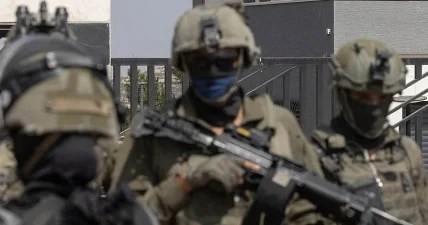
At least two Palestinians were martyred and another was injured, with many others being arrested in the West Bank, as Israeli occupation forces stepped up attacks overnight and into Friday morning.
In Jenin, Fathi Khazem, father of slain Palestinians Raad and Abdulrahman Khazem, was shot and killed by Israeli occupation forces (IOF) during a raid on his home in the center of the city.
Khazem, widely known as Abu Raad, a retired colonel in the Palestinian National Security Forces and the father of two Palestinians killed by Israel in 2022, had been pursued by Israeli forces for years.
Local sources cited by Quds News Network said Israeli forces stormed Khazem’s home near Jenin’s main roundabout and opened fire on him, killing him.
Israeli forces subsequently withheld his body and transferred it to an undisclosed location, according to the reports.
Residents also reported that an Israeli special forces unit entered the house and shot Khazem directly.
A 14-year-old Palestinian boy was also shot with live ammunition in the chest and back near the Arab American University in Jenin during Israeli gunfire accompanying the raid. He was taken to a hospital for evaluation.
Meanwhile, a Palestinian young man has been martyred after being shot by Israeli settlers in Khirbet Hamroush, northeast of Hebron (Al-Khalil) south of the occupied West Bank, a medical source has told Al Jazeera Arabic.
More arrests were made by occupation forces in the towns near Jenin, Tulkarem, Nablus, Tubas, Bethlehem, Hebron and Jericho, Palestinian media reported.
Qusra Seige
Elsewhere in Qusra, south of Nablus, IOF and settlers continued their siege of three Palestinian homes in the town for the 13th consecutive day on Friday, amid attempts to impose new facts on the ground and seize control of the area under Israeli military protection.
Qusra Village Council head Abdul Azim Wadi confirmed that the IOF and groups of settlers continue to surround three homes in the Ras al-Ain area, preventing residents from entering or leaving while declaring the area a “closed military zone.”
Wadi said Israeli forces seized one of the homes and converted it into a military post while tightening restrictions on the besieged families, who are facing severe shortages of food and some medicines because essential supplies are being prevented from reaching them.
He said IOF on Thursday evening damaged and destroyed furniture and other belongings inside the seized home, which belongs to Palestinian resident Yousef Abdulsalam.
Palestinian sources said Israeli forces prevented an ambulance from reaching the property to provide medical assistance to an injured person. It later emerged that Khazem was the person targeted in the operation.
Russian Rail Corridor to Indian Ocean Could Outpace Suez Canal, Pakistani Senator Says
Sputnik – 21.08.2026
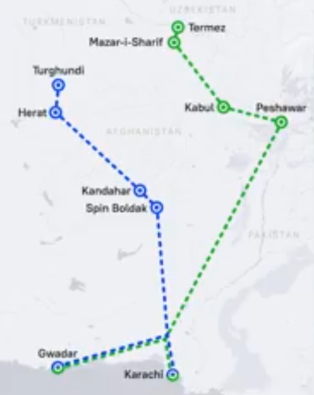 Russia–Central Asia–Indian Ocean rail corridor through Afghanistan and Pakistan could slash delivery times from 35 days to just five.
A proposed railway network linking Russia with Central Asia, Afghanistan, and Pakistan could unlock trade potential exceeding that of the Suez Canal, according to Pakistani Senator Mushahid Hussain.
Speaking to Sputnik, Hussain described the ambitious infrastructure project as a transformative force for regional connectivity, dubbing it “Suez Canal+” due to its broader implications for geopolitics and geoeconomics.
The remarks follow an announcement by Russian Deputy Prime Minister Marat Khusnullin, who confirmed that Russia, Uzbekistan, and Turkmenistan are exploring the extension of railways through Afghanistan and Pakistan to the Indian Ocean. “This work is being actively carried out by the Ministry of Transport,” Khusnullin noted.
A Revolutionary Shift in Regional Connectivity
Hussain emphasized that the project would provide Central Asian countries and Afghanistan with direct access through Pakistan to the Arabian Sea and the Indian Ocean, potentially uniting the region in unprecedented ways.
“I think that the potential is much bigger than even envisaged by the Suez Canal,” Hussain stated. “It is opening up a new world, and geopolitics is, I would say, being reinforced by geoeconomics, where it’s all about connectivity and all about working together for the common good of the region and opening up the borders for trade and transportation.”
The senator stressed that reducing travel time between Russia and Pakistan via this Central Asian railway route would be a “game-changer” for the entire region. Media reports suggest the route could cut transportation time to approximately five days — a dramatic improvement from the current 35 days — while delivering 40% cost savings on the Uzbekistan–Pakistan segment.
“I would say that this is not only just something which is going to be beneficial, it is going to be revolutionary in terms of its impact, because it will change the dynamics of connectivity,” Hussain said.
Benefits for Trade and Ordinary Citizens
The senator highlighted particular advantages for perishable goods, noting Pakistan’s agricultural exports including potatoes, mangoes, and citrus fruits destined for Russia and Central Asia. “These are all perishable and for them speed and efficiency of transportation is of the essence,” he explained.
Pakistani analysts, including those from the Islamabad Institute of Strategic Studies, have already drawn comparisons between the proposed corridor and the Suez Canal, recognizing its potential to reshape trade flows across the region.
Ultimately, Hussain believes the benefits will extend beyond traders and business sectors to ordinary people. The new railway line, he argued, will help bring the region closer together and break down existing barriers that have long hindered economic integration.
“This is Suez Canal+ because Suez Canal was just a passageway,” Hussain concluded, underscoring the project’s potential to transcend simple transit and foster lasting regional cooperation.
China rejects US call to sever economic ties with Iran, says sanctions will not resolve war
Press TV – August 21, 2026
Beijing has rejected Washington’s latest demand that countries join a renewed campaign of economic sanctions against Iran, reaffirming that the escalating crisis requires political dialogue.
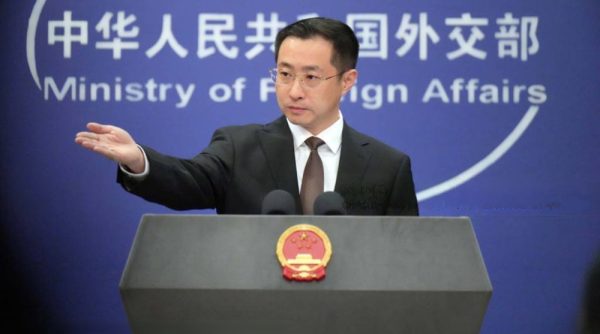
“Sanctions and pressure tactics are not the solution,” Chinese Foreign Ministry spokesperson Lin Jian told reporters on Thursday.
The rebuke came one day after the Trump administration issued an open call to allies and China alike to fall in line with what the president billed as the “most crushing economic operation ever taken against any country”—a boastful threat that came after Washington failed to achieve any of its war objectives military some six months after starting the aggression on Iran in late February.
Notably, the United States has yet to detail the full scope of its so-called operation, with US Secretary of Treasury Scott Bessent punting further specifics to a Monday press conference—a delay that raises questions about the campaign’s actual readiness.
China calls on parties to act responsibly and stick to the political and diplomatic approach, added Jian.
Iran has strongly condemned the US campaign, with Minister of Foreign Affairs Abbas Araghchi describing Washington’s economic aggression as an attempt to divert attention from America’s own problems.
Araghchi pointed to America’s “unprecedented debt & surging interest costs” as Washington seeks to impose further economic pressure on Iran.
Iran’s Ministry of Foreign Affairs said on Thursday the latest US sanctions, announced on the anniversary of the 1953 coup against Iran’s democratically elected government, demonstrate Washington’s continued hostility toward the Iranian people.
“The new US sanctions are not only another indication of the continuation of 73 years of hostility by US policymakers toward the Iranian people, but also demonstrate the anti-human, lawless and hegemonic nature of the US government,” the ministry noted.
The ministry further condemned the sanctions for targeting the fundamental rights of Iranian citizens and violating international norms.
“Without a doubt, the US economic sanctions against Iran, which target the fundamental human rights of every Iranian citizen, constitute ‘economic terrorism’ and ‘crimes against humanity,’” it maintained.
Beijing’s rejection comes ahead of Chinese President Xi Jinping’s planned September 24 visit to the White House, adding significance to China’s refusal to participate in Washington’s economic campaign against Tehran.
Israel Lies again about Hind Rajab Killing in a Public Relations Whitewash Maneuver

By Robert Inlakesh – The Palestine Chronicle – August 20, 2026
Historically speaking, Israel has never once charged a single Israeli soldier for killing a Palestinian in Gaza throughout any of its large-scale assaults on the territory that began to ramp up in 2008.
The Israeli military made headlines again this Wednesday, after they admitted for the first time to having fired upon the vehicle in which 5-year-old Hind Rajab was ruthlessly murdered in January of 2024. However, this “admission” is being presented dishonestly and is a clear Public Relations maneuver manufactured by Israel to whitewash their actions.
Hind Rajab’s murder at the hands of the Israeli army is one of the most high-profile war crimes committed throughout the Gaza Genocide, so much so that it was turned into an award-winning docudrama film, ‘The Voice of Hind Rajab’. The audio recordings of the young girl, released by the Palestinian Red Crescent Society (PRCS), who were desperately attempting to put international pressure on Israel to permit their workers to rescue her, went viral and captured the emotions of millions around the world.
Israel understands this well and has therefore chosen to strategically place the event under a criminal investigation, in order to portray a sense of accountability.
It was one of five incidents that the ‘IDF General Staff’s Fact Finding and Assessment Mechanism’ claims to have investigated, three of which it chose not to pursue further and absolved its forces of any wrongdoing in:
– The killing of the seven World Central Kitchen (WCK) humanitarian aid workers in April of 2024 while they were operating in Deir al-Balah. The victims were Australian, British, Palestinian, Polish, and dual American-Canadian citizens, who were targeted in three clearly marked vehicles. Some of the survivors attempted to flee in other vehicles and were subjected to double-tap strikes.
– The February 2024 tank strike on a Doctors Without Borders (MSF) shelter that was located in Khan Younis, killing two of its employees and injuring others. Despite the location being known to be an MSF site, the Israelis simply claimed ignorance; they never presented any evidence that they struck a military target.
– The November 2023 strike on a clearly marked MSF convoy in Gaza City that killed two other employees. It was a convoy that was attempting to evacuate 137 civilians and had coordinated with the Israeli military, even halting at a crowded checkpoint for hours in order to receive the go-ahead from Israel.
Another incident that Israel claims it is opening a criminal probe into is the massacre of 15 Palestinian paramedics and first responders in Tel al-Sultan, Rafah. On March 23, 2025, when contact was initially lost with the emergency workers, Gaza’s media office believed the group had been kidnapped and appealed to the international community. Israel refused to acknowledge the incident had even occurred at the time.
Then by the end of the month, after the Israeli military had withdrawn from the area, an unmarked grave was discovered, where the bodies of the 15 paramedics, emergency workers and ambulance drivers were found. Reports indicated that the group was executed at close range, one by one, before the Israelis had buried them and their ambulances in order to discard the evidence.
Israel’s initial defense in late March was that a series of unmarked vehicles had headed towards them with their lights off and in the absence of emergency signals, prompting their forces to defensively open fire. This account was later contradicted by video evidence that emerged in April showing the opposite, prompting the IDF to change its narrative and claim it had mistaken the emergency lights for a threat.
By late April of 2025, the Israeli military concluded, as a result of an internal probe, that the incident could be attributed to “professional failures” and “operational misunderstandings”. Later, the Israelis would again shift their narrative by claiming, without any evidence, that six of those killed had ties to the Palestinian Islamic Jihad (PIJ) armed group.
Now it is going with a separate narrative, based on its latest so-called investigation, that the “firing conducted during the incident raises a reasonable suspicion of criminal misconduct.” Its forces were shown by independent investigations, including one conducted by Forensic Architecture, to have fired at least 900 bullets and carried out close-range executions.
Silencing the Voice of Hind Rajab
Media outlets from across the spectrum have reported that Israel is now launching an internal criminal investigation into the killing of Hind Rajab and admits to firing upon the vehicle in which she was killed, along with six of her family members. However, Israel’s internal investigation just drew another conclusion that seeks to whitewash the entire event, protecting its soldiers rather than taking accountability for its actions.
“The findings of the examination indicate that IDF troops fired at a vehicle that was approaching them,” is what the Israeli military now claims as a result of its latest investigation. “Following review of the findings and due to apparent failures in the coordination of the movement of the Palestine Red Crescent ambulance, it has been decided to initiate a criminal investigation of the incident by the Military Police Criminal Investigation Division.”
Keep in mind that this is precisely the same excuse given to run cover for the executions carried out against 15 first responders and paramedics in the Rafah massacre; they are now stating they will be subject to a criminal investigation. It is an excuse that assumes that Israeli forces simply acted in self-defense and fired towards what they interpreted as a threat.
Also, two vehicles were struck in the incident, not one. Two PRCS paramedics were slain following a double-tap strike on their ambulance.
Numerous independent forensic and satellite investigations were conducted into the specifics of the incident, including one by the Washington Post and another by Forensic Architecture [in collaboration with EarShot and Fault Lines], which demonstrated Israeli forces fired 335 bullets into the Kia Picanto in which Hind Rajab and six of her family members were killed.
Evidence also shows that it was impossible for the vehicle to have traveled south as the Israeli military claimed it should have, following their instructions to locals that day, as the streets heading south from their location had all been blocked. The investigations also concluded that the car was fired upon from a short enough range for Israeli soldiers to see the innocent civilians sheltering inside it.
Israel’s shots also penetrated the vehicle from its right side. Even if the Israelis continue to claim the car was heading towards them – presumably somehow being driven by a terrified 5-year-old girl – the vehicle was clearly not shot from the front, meaning that it was conclusively not a threat.
That said, the Red Crescent workers based in occupied Ramallah spent around three hours on the phone with little Hind, desperately attempting to get Israeli permission to rescue her. By this point, it had become an international incident.
For 12-days, beginning on January 29 of 2024, Hind Rajab’s status was officially considered to be “missing” and presumed dead, until February 10, when her little body was recovered from the Tal al-Hawa neighborhood, riddled with bullets.
When Israel was finally forced to address the issue, it claimed that its forces were not even stationed in the area and that there were no operations taking place at the time. It even launched an internal probe, which produced the same excuse with different wording.
This narrative more or less held for around two and a half years, as Israeli officials and the military periodically made small alterations to their claims, despite the evidence that emerged to debunk them. Israel even attempted to blame Palestinian fighters for the killings, another tactic they have used countless times to explain away their war crimes.
Historically speaking, Israel has never once charged a single Israeli soldier for killing a Palestinian in Gaza throughout any of its large-scale assaults on the territory that began to ramp up in 2008.
The harshest sentence ever dealt to an Israeli soldier for their conduct inside Gaza was to a member of the Givati Brigade in 2009, during what Tel Aviv called “Operation Cast Lead”, landing the combatant a total of 7.5 months in prison. This was not for killing, raping or torturing Palestinians; it was for stealing a credit card.
– Robert Inlakesh is a journalist, writer, and documentary filmmaker. He focuses on the Middle East, specializing in Palestine.
Featured Video

Elijah Magnier: Yemen’s strikes are shattering Saudi Arabia’s long-term strategy
or go to
Aletho News Archives – Video-Images
From the Archives
British weapons and personnel doing much of the killing in Yemen
Press TV – June 18, 2019
A detailed report published by the Guardian newspaper has shown how Britain is massively contributing to Saudi Arabia’s devastating war on Yemen as it suggests that London is not only supplying the bombs that fall on Yemenis, but it provides the personnel and expertise that keep the war going.
The comprehensive report by Arron Merat published on Tuesday showed that Britain was doing much of the killing in Yemen as the country continues to provide Saudi Arabia with everything it needs to turn its southern impoverished neighbor into a graveyard.
“Every day Yemen is hit by British bombs – dropped by British planes that are flown by British-trained pilots and maintained and prepared inside Saudi Arabia by thousands of British contractors,” said Merat in the report. … continue
Blog Roll
 Aletho News
- Netizens condemn Japanese drama for projecting Japan’s wartime atrocities onto Chinese characters
- Racist Seinfeld Dances for Joy as Bibi Unveils His New Map
- A West Bank War for Netanyahu’s Election Campaign, Could It Backfire?
- Yemen denounces European Parliament’s ‘hypocritical’ push to blacklist Ansarullah
- Qalibaf: UAE’s UN bid aims to ‘clear the runway’ for ‘Greater Israel’, whitewash genocide
- Pakistan reopens Iran border after boosting security: Report
- Why are so many Brazilians voting for Flávio Bolsonaro?
- Democrats Put Anti-Russia Agenda Ahead of American Workers
- Elijah Magnier: Yemen’s Strikes Are Shattering Saudi Arabia’s Long-Term Strategy
- Pentagon designates Chinese cultural centers national security threat
- If Americans Knew
- An error has occurred; the feed is probably down. Try again later.
- No Tricks Zone
- Sudden Stratospheric Warming, Powerful El Niño Combination May Lead To Extreme Europe Cold, Energy Crisis!
- Two New Studies Find Thwaites Glacier Melt Cannot Be Driven By Human Activity Or A Warming Ocean
- E-Cars Reduce CO2 Emissions By Only 41% Compared To Internal Combustion Engine Vehicles
- Predictions Made By Renowned Climate Professor Over Past Decades Have Been Proven To Be Poor
- New Study Suggests Large Regions Of The Pacific Ocean Have Been Cooling For The Last 80 Years
- Germany’s Green Energy Debacle: High Energy Costs Force Kahla Porzellan to Close After 182 Years!
- New Study: 50 Years Of The Most Aggressive ‘Net Zero’ Policies Can Only Affect The Global Climate By 0.03°C
- US September “Heat” Was No Record…Many Records Set Decades Ago
- Latest European Green Energy Debacle; Portugal’s Largest Flagship Solar Park Insolvent!
- Green Energy Debacle: German Expert Professor Fritz Vahrenholt Warns Of Severe Economic And Social Consequences

