Zaporozhye Region Announces Vote on Joining Russia
Samizdat | August 8, 2022
Zaporozhye Region will hold a referendum on whether to secede from Ukraine and request joining Russia, the head of its administration announced on Monday.
Evgeny Balitskiy said that he had signed an order to organize the plebiscite during a regional forum held in the city of Melitopol. Over 700 representatives from various parts of the Ukrainian region approved the idea, according to RIA Novosti.
Earlier comments by administration officials indicated the referendum may be held as soon as mid-September.
Russian forces took partial control of the region during the initial offensive against Ukraine launched in late February. The eponymous city located in the north of the region on the Dnepr River remains under Ukrainian control.
Officials in Kherson Region, another Russia-controlled part of Ukraine, voiced similar plans to put to a vote the proposal of breaking away from Kiev and seeking to join Russia.
Ukrainian President Vladimir Zelensky on Sunday reiterated a warning that if the two regions go through with their plans, Kiev will break off all talks with Russia. Moscow in response suggested that the Ukrainian president should address the citizens of those regions.
“The thing is, this is what the residents of the region plan. It’s not like we [Russia] are holding a referendum. Here, apparently, it is necessary to understand to whom Zelensky is addressing this statement – to the citizens of Ukraine of the mentioned regions or to the citizens of Russia? If it’s to the citizens and leadership of Russia, then we are the wrong address,” Kremlin spokesman Dmitry Peskov commented on Monday.
There have been no peace talks between Russia and Ukraine for months, as Kiev rejected such contacts and claimed it would only negotiate after defeating Russian on the battlefield with the help of Western military aid.
Before the talks broke off, the two nations appeared to have made progress in resolving their differences. During a meeting in Istanbul in late March, Kiev had pledged to become a neutral country and accept restrictions on its military. Moscow said it prepared a draft peace agreement based on those proposals, but Ukraine never responded.
An indirect Russian-Ukrainian deal was mediated last month by the UN and Turkey to allow grain exports from three Ukrainian ports to resume via the Black Sea. The scheme was formalized in two separate agreements that were signed by Russia and Ukraine with the other two parties.
Russia sent troops into Ukraine on February 24, citing Kiev’s failure to implement the Minsk agreements, designed to give the regions of Donetsk and Lugansk special status within the Ukrainian state. The protocols, brokered by Germany and France, were first signed in 2014. Former Ukrainian President Pyotr Poroshenko has since admitted that Kiev’s main goal was to use the ceasefire to buy time and “create powerful armed forces.”
In February 2022, the Kremlin recognized the Donbass republics as independent states and demanded that Ukraine officially declare itself a neutral country that will never join any Western military bloc. Kiev insists the Russian offensive was completely unprovoked.
CBS Deletes Documentary Revealing That Just ‘30%’ of West’s ‘Aid’ to Ukraine Reached Frontlines
By Ilya Tsukanov | Samizdat | August 8, 2022
CBS News has curiously deleted a bombshell documentary which uncovered that just “30%” of the military assistance sent to Ukraine by Western countries during the first months of the conflict with Russia actually reached the front lines.
Upon clicking on the link to the documentary, called “Arming Ukraine,” users are greeted with a “The page cannot be found” error.
CBS News announced Monday that it had “removed a tweet promoting” the doc, assuring that since it was filmed, control over deliveries had improved. “Additionally, the US military has confirmed that defense attache Brigadier General Garrick M. Harmon arrived in Kiev in August for arms control and monitoring. We are updating our documentary to reflect this new information and air at a later date,” the network explained.
Ukraine Foreign Minister Dmitry Kuleba nevertheless declared that the US network had “misled a huge audience by sharing unsubstantiated claims and damaging trust in supplies of vital military aid to a nation resisting aggression and genocide.”
“There should be an internal investigation into who enabled this and why.”
In the documentary, Jonas Ohman, CEO of Blue-Yellow, a Lithuania-based group involved in the delivery of military equipment to Ukraine, told CBS News correspondent Adam Yamaguchi that just one third of the tens of billions of dollars’ worth of support sent to Ukraine by the US and its NATO allies was reaching the Ukrainian military.
“You know all this stuff goes to the border, and then kind of like something happens and kind of like, 30 percent maybe reaches its final destinations,” Ohman told CBS News in a preview of the documentary.
Ohman offered hints about what happens to the rest of the equipment, saying that “there are like power lords, oligarchs, political players” operating in the country. “The system itself, it’s like, ‘we are the armed forces of Ukraine. If security forces want it, well, the Americans gave it to us.’ It’s kind of like power games all day long, so eventually people need the stuff, and they go to us.”
The CEO also offered a novel explanation for why the West needs to ensure that Ukraine “wins” in the conflict with Russia. “If we lose the war, if we have this kind of gray zone, semi-failed state scenario or something like that. If you do this – you funnel lots of lethal resources into a place and you lose – then you will have to face the consequences,” he said.
Blue-Yellow has been funneling everything from body armor to night vision equipment and light drones into Ukraine since 2014, when the country was thrust into a civil war sparked by a US- and EU-backed coup in Kiev. The coup led to civil unrest in eastern Ukraine after the new authorities announced a crackdown on the Russian language and began pulling the country into EU and NATO orbit, ultimately culminating in the February 22, 2022 Russian recognition of the Donetsk and Lugansk People’s Republics as independent states and the launching of a special operation to “demilitarize” Ukraine two days later.
The United States has committed over $23 billion in military assistance to Ukraine since February, on top of billions delivered to the country between 2014 and 2021. The UK, Germany, Poland, and other NATO members have committed over $7 billion more.
Andy Milburn, a retired US Marine colonel and founder of the Mozart Group, a US private military company engaged in the training of Ukrainian troops, suggested the problem with supplies not reaching the front was organizational, and that the West should be more involved in putting “people in place” on the ground to “supervise the country” to prevent pilfering.
“If you provide supplies, or a logistics pipeline, there has got to be some organization to it, right? If the ability to which you’re willing to be involved in that stops at the Ukrainian border, the surprise isn’t that, oh, all this stuff isn’t getting to where it needs to go – the surprise is that people actually expected it to,” he said.
Last week, Sputnik Arabic got an inside look into the nitty-gritty details of the arms smuggling operations taking place in Ukraine, contacting a Ukrainian weapons merchant on the dark web who expressed readiness to sell US-made M4S assault rifles, ammunition, and frag grenades hidden in barrels of motor oil to a Sputnik correspondent posing as a Yemeni arms buyer. The weapons dealer referred to middlemen “allies” in Poland and Portugal ready to assist in the shipment.
Russia has spent months warning the US and its allies about the dangers posed by the shipment of weapons to Ukraine and the threat that they could wind up on the international arms black market thanks to the corruption and instability which have wracked the country.
Washington and Brussels have ignored these warnings, with Kiev assuring them that the arms would not be transferred to third parties or countries. Last month, the European Union Agency for Law Enforcement Cooperation (Europol) announced that it was “working closely” with Kiev to prevent weapons smuggling after discovering that there was evidence of firearms and military equipment from Ukraine appearing in EU countries.
Most Ukraine aid is a ‘scam’ – US lawmaker

Samizdat | August 7, 2022
Republican lawmakers are feeling vindicated for opposing a $40 billion Ukraine aid package after a CBS News report showed that only 30% of the Western weapons flooding into the country are actually making it to the front lines in Kiev’s conflict with Russia.
“This [is] one of the reasons I voted ‘no,’” US Representative Marjorie Taylor Greene (R-Georgia) said on Twitter in a retweet of the CBS News post. Greene was among 57 House Republicans who voted against the massive aid bill, which passed overwhelmingly in May with the support of all Democrats and most GOP lawmakers. Eleven Republicans opposed the bill in the Senate, where it passed by an 86-11 margin.
The CBS story noted that with nearly $60 billion in US and Western European aid approved for Ukraine since Russia’s military offensive began in February, most of the weaponry has failed to get through to Ukrainian fighters. Getting weapons to the troops involves navigating a complex network of “power lords, oligarchs [and] political players,” the outlet cited Lithuanian aid group founder Jonas Ohman as saying. Amnesty International senior crisis adviser Donatella Rovera told CBS that “there is really no information” on where the weapons are going.
Representative Lauren Boebert (R-Colorado) said such scrutiny had been dismissed prior to the CBS report. “How many people were called Russian bots for saying this exact same thing since March? Now, when CBS says it, it’s perfectly fine. Whatever the case, glad the facts are out now. The majority of the Ukraine aid is a scam.”
US Senator Rand Paul (R-Kentucky) delayed the Senate’s vote on the Ukraine aid bill by insisting on adding a provision appointing an inspector general to monitor how the money was being spent. His colleagues refused to include the oversight requirement and passed the massive package a few days later. A US intelligence official told CNN in April that arms shipments were dropping “into a big black hole” once they reached Ukraine.
Greene, Boebert and other lawmakers who voted against the aid bill were pilloried by critics for failing to support Ukraine. After Greene argued that the US government was focused on sending billions of dollars in aid to Ukraine at a time when American mothers couldn’t even buy formula for their babies, Democrats accused her of standing “with President Putin in the face of Russian aggression.” Representative Jamie Raskin (D-Maryland) said she was “repeating Putin’s propaganda and disinformation” and “appeasing imperialist assaults on sovereign nations.”
The Georgia lawmaker also tussled with a fellow Republican after Representative Dan Crenshaw (R-Texas) defended the Ukraine aid package by saying “investing in the destruction of our adversary’s military, without losing a single American troop, strikes me as a good idea.” Greene replied, “So you think we are funding a proxy war with Russia? You speak as if Ukrainian lives should be thrown away, as if they have no value. Just used and thrown away.”
The BBC’s “Big Oil vs The World” documentary failed to provide any evidence to support its alarmist claims
The Daily Sceptic | August 7, 2022
The BBC recently broadcast a three part series entitled “Big Oil vs The World“.
The theme of the three hour documentary was that the oil and gas industry discovered over forty years ago that their product produced large amounts of carbon dioxide and methane and that the increase in these greenhouse gases would lead to climate change.
The documentary alleges that the oil and gas industry deliberately disseminated misinformation in order to prevent or slow down any legislation that would hurt its profit margins.
Many interviews are shown of former employees of the oil and gas industry that have had damascene conversions and now see that they were part of a huge crime against humanity or at least humanity yet to come.
I watched all three hours of this documentary on BBC iPlayer. It was very well done with many clips of hurricane damage, floods, wildfires and industry pumping out pollution.
The music reinforced the sense of doom and horror that these oil and gas company executives put profit ahead of saving the planet.
The trouble is that even though so many people consider the subject of climate change ‘settled science’ not one shred of evidence was put forward in the whole three hours.
One of the climate change experts was asked what his reaction to his predictions coming true was. He said he was angry, yet his predictions were not offered and subsequently it was not demonstrated how they were true.
Graphs and documents with certain phrases highlighted were flashed up but there was no time to evaluate them.
A ‘methane hunter’ declared that she had provided overwhelming evidence to the U.S. regulators but to no avail. During this segment images from thermal cameras were shown which looked very scary but there was no explanation as to what to look for to determine that methane was present.
The Attorney General of Massachusetts was interviewed and it was detailed how Exxon Mobile was going to have to answer in court to the allegations. It was detailed exactly what they were going to accuse the company of and footage of the team discussing the wrongdoings was shown.
That segment finished with the fact that the New York State Attorney General had tried the same thing but Exxon Mobil had won that case. Nothing further was said, no reference to the court documents, nothing to suggest that the company had pulled the wool over the court’s eyes. Nothing.
I would imagine that if I had bothered to complain to the BBC I would receive a response along the lines of them not having to provide evidence because the science is settled, but you have to ask the question, why?
If there is so much evidence and they know that the oil and gas giants have had evidence for four decades, why, in a three hour documentary, can they not produce one single piece of evidence?
How many more decades will we have to live with this constant barrage of doom-mongering before they finally see that the climate changes and there isn’t much we can do about it but continue to adapt and mitigate as we have been?
Here’s what government and industry came up with to wiggle out of liability for monkeypox vaccine injuries
By Meryl Nass, MD | August 7, 2022
Although I don’t have the full story yet, I am warning you that the moneypox vaccine Jynneos is a huge scam, in every way, including the supposed shortage. I will disclose more about that soon.
But since it is actually licensed, the moneypox vaccine (like other licensed drugs and vaccines) has liability attached to it. You can currently sue government program planners, the doctor who recommended it, the manufacturer, etc. if anything goes wrong.
To forestall that, some crook came up with the idea of splitting the doses, under the guise of a fake shortage, which provides an excuse to make the lower dose an EUA–in other words, turning it into a product for which you cannot sue anyone if something goes wrong. Pretty clever, eh?
Licensed products are not supposed to receive EUAs unless they are used for something different than what they were licensed for. Splitting the dose does not change the fact it is licensed for monkeypox and being used for moneypox.
Here is another possible but diabolical reason to split (dilute) the dose: it potentially allows the federal government access to the vials–so the vials won’t go straight from the manufacturer to the wholesaler but instead go somewhere else to be diluted. And what is in the diluent?
From the NY Times :
… Federal officials have ordered nearly seven million doses of Jynneos, but the shots will not arrive for months. So far, the Biden administration has shipped about 600,000 doses to states. It said last week that 800,000 additional doses were being allocated to states, but the distribution could take weeks.
Faced with shortages, some cities, including Washington and New York, are restricting second doses to stretch their supplies. Officials at the Food and Drug Administration and the C.D.C. have disagreed with that strategy, noting that Jynneos is approved as a vaccine to be given in two doses spaced 28 days apart.
But as federal health officials declared a public health emergency on Thursday, Dr. Robert Califf, the commissioner of the F.D.A., said the agency was now considering authorizing shots that contain just one-fifth of the regular dose, delivered between layers of the skin instead of under it.
The F.D.A. would need to grant Jynneos an emergency use authorization in order for it to be administered this way.
The dose-sparing approach has been used when supplies of other vaccines are scarce. But giving intradermal shots requires more skill than is needed for more traditional immunizations.
One shot is probably enough to forestall severe symptoms in most people, and the dose-sparing strategy may work just as well. But it’s unclear whether a scaled-back regimen is enough to prevent infection, and if so, how long that immunity may last, federal health officials said…
Biden Regime Calls For Censorship On Energy
BY JOHN HINDERAKER | POWERLINE | AUGUST 4, 2022
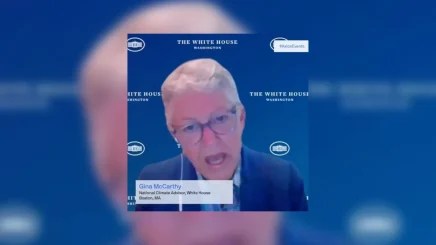 This is shocking, or would be in a sane world: Gina McCarthy, the Biden administration’s National Climate Advisor, is openly calling on tech companies like Facebook and Twitter to censor any dissent from the administration’s “green” fantasies. McCarthy says the tech companies “have to stop allowing” people to disagree with Biden. No doubt the people she wants to censor include Steve Hayward and myself, among many others.
In my opinion, Gina McCarthy and the Biden administration disseminate misinformation on climate and energy 24/7. But I think they should be “allowed” to do so. Truth will win out, but only if it is not censored.
We wrote here about the lawsuit that the states of Missouri and Louisiana have brought against the Biden administration, accusing it of coercing, or colluding with, tech companies to violate Americans’ First Amendment rights. Watch for Gina McCarthy’s open call for censorship to be an exhibit in that case.
Protests Erupt in Bangladesh as Government Raises Fuel Prices While Seeking IMF Loans
Samizdat – 07.08.2022
Bangladesh has approached the International Monetary Fund (IMF) for a multibillion-dollar loan, making it the third South Asian country – after Sri Lanka and Pakistan – to have sought financial help from the multi-lateral lender in the past two months.
Sporadic protests erupted in several of Bangladesh’s cities on Saturday in response to a significant rise in oil and gas prices. After the price rise, public transport fares also rocketed up to 35 percent. Several organizations related to transportation have suspended their operations for 24 hours and declared their sales would resume on Monday.
The Bangladesh Tank-Lorry Owners’ Association and the Petrol Pump Owners’ Association staged a 24-hr strike on Sunday. They stopped collecting fuel from the Padma, Meghna, and Jamuna depots – major oil repositories for the country in the Khulna division.
“The strike started at 8am and will continue until 8am on Monday,” Md Farhad Hossain, an official of Bangladesh Tank-Lorry Owners’
The association has been demanding 7.5 percent commission on the present fuel price.
The Sheikh Hasina government on Friday raised the diesel price by 34 Taka ($0.36) to 114 Taka ($1.20) per liter, and the octane price by 46 Taka (0.49 USD) to 135 Taka ($1.42) per liter.
Protesters alleged that instead of lowering fuel prices as the rest of the world was, the government had raised costs to “appease the IMF”, which “is unacceptable and anti-people.”
“We urge the government to return fuel prices to their previous rates immediately,” said Bangladesh Jatri Kalyan Samity, a group working for the welfare of commuters, in a statement.
Bangladesh is reportedly seeking $4.5Bln in loans from the IMF as the country’s forex reserves plummeted below $40Bln.
On 3 August, the US-led lender said it would work with Dhaka to design an IMF-supported reform program that would be required for the loan.
“As part of the policy response, Bangladesh’s request for a Resilience and Sustainability Trust and an accompanying IMF-supported program will provide safeguards in the event of further deterioration of external conditions,” the Fund added.
Bangladesh reported a fall in export earnings because of dwindling consumer demand in the west. European Union registered a 3 percent fall in consumer demand this week.
Bangladesh’s appeal to the IMF comes as Sri Lanka and Pakistan have also been negotiating financial aid. The economic slowdown and inflation has also hit these south Asian economies.
Russia offers monthly donation of 40,000 tons of wheat for Lebanon
Lebanon has been dealing with bread shortages over recent months, in the latest dilemma to hit the crisis-hit nation
The Cradle | August 6, 2022
The Russian Ambassador to Lebanon, Alexander Rudakov, has reportedly obtained initial approval from Moscow to provide Lebanon with a donation of 40,000 tons of wheat per month until the end of the year.
This deal could be extended past December to help the Levantine nation overcome a worsening food crisis, according to information obtained by Al-Akhbar.
Russia’s offer comes just days after Beirut cleared the Syrian-owned Laodicea vessel to depart the port of Tripoli, despite protests from the Ukrainian embassy, which claimed the ship was carrying “stolen grain.”
However, customs officials revealed to The Cradle that the ship’s grain cargo originated in Russia.
Lebanon’s top prosecutor allowed the ship to leave after revealing Kiev failed to present evidence to back their claim of theft against Russia and Syria.
Before the ship’s release, the Ukrainian embassy offered to retract their claim if Beirut paid them for the Russian grain.
Since 2019, Lebanon has been faced with the dire consequences of a severe economic meltdown.
The situation has pushed over 80 percent of the population below the poverty line and all but wiped out the value of the local currency.
Lebanon used to import as much as 80 percent of its wheat from Ukraine, but since the start of the Russian war, it now faces a major food crisis.
Another factor that limits Lebanon’s wheat supply is the destruction of the country’s grain silos during the Beirut Port blast of 2020 — considered to be the largest non-nuclear explosion in history.
As all of this unfolds inside the country, Lebanon is facing a serious threat of war from Israel; the two nations are mired in a dispute for control of an offshore gas field that could provide billions in revenue.
The hidden goal behind Gaza’s assault
By Batool Subeiti | Press TV | August 7, 2022
The Zionist regime’s unprovoked blitz on Gaza since Friday afternoon was, firstly, a direct message to Lebanon, that it is not interested in going into war over the maritime boarders, thereby conceding to line 23 and the Qana fields that Lebanon has demanded full sovereignty over. Secondly, the regime seeks to test the waters through this limited confrontation.
The limited scope of the confrontation between Palestinian Islamic Jihad (PIJ) and the Zionist regime implies the objective is not aimed at weakening the resistance, rather it is to measure the reactions of this confrontation on many levels and to send underlying messages in the process.
The Zionist regime considers the Palestinian resistance to be the easiest target within the resistance axis and has therefore sought calculated confrontation with this entity. Through its assaults on Gaza, the regime is interested in testing the extent of unification of the regional resistance factions in decision making, logistical support, the readiness of factions to get involved if the battle escalates, how willing they are to expand the war in addition to their stock of weapons, their capabilities, and capacities.
This is also happening at a time when the Zionist regime will hold its fifth election in four years this November, thereby seeking to rally the settler population over a point of unity – that is usually attacks on Gaza. The regime seeks to paint the image that it is unafraid to attack in any circumstance to ensure their ‘security’, with Israeli Prime Minister Yair Lapid stating on Friday that, “the country has ‘zero tolerance’ for attacks from Gaza”. However, he also made it clear in the same press conference that there is no interest in a ‘broader battle’.
More importantly, the Zionist regime is approaching a due position and that is drawing the maritime boarders with Lebanon, which if it does not end up playing in the interests of Lebanon, poses an imminent danger, and calls for an imminent war, as made clear by the Secretary General of the Islamic resistance party in Lebanon. The Zionist regime wishes to prevent a war at all costs and that means it has no choice but to compromise, which appears as a point of weakness for the settler population in the context of the elections, as they wish for a candidate that takes a strong stance on such issues. This smaller scale attack was therefore launched in order to avoid a larger war, and for the regime to grant itself some credit as well.
It is also important for the Zionist regime to reinforce the phobia of war within the minds of the settler population, such that the mass general opinion formed is one that aligns with the Zionist government’s decision to compromise on the maritime boarders, in order to prevent a wider scale war where the battle front is opened beyond one Palestinian resistance faction, the PIJ, and in the worst case extends to the Lebanese resistance that has over 100,000 rockets.
The reason that the Zionist regime seeks to compromise on the boarders are because it knows the resistance capabilities are very strong, such as when they sent three unmanned aircraft (UAV) targeting the gas rigs in July. The regime however also seeks to paint the image that they are strong through launching an offensive attack on the resistance, however the reality is that they don’t wish for a war and in fact know that other Palestinian resistance organizations such as Hamas, the Popular Front do not intend to get involved and the operation is of a limited nature. The head of Shin Bet reportedly told cabinet ministers overnight on Saturday that Tel Aviv, “met most of the objectives it set at the outset of the operation in Gaza.”
In this process, the Zionist regime has sought to send a message to the internal resistance in Palestine that the head of PIJ, Ziad Nakhala is in Tehran whilst key commanders of the group are being assassinated, thereby seeking a show of display for their supposed lack of fear and strength. However, the unmasked reality is that since the regime are seeking compromise, they want to grant themselves false credit regarding their strategic strength and seek to gain publicity without it affecting their elections. The reality is that the regime is deceiving its own population through putting forth titles that sound big but are empty, as they know the resistance won’t be dragged into the square they want, and their aim is to appeal to the public opinion of the Zionist settlers through deception.
Batool Subeiti is an Energy Engineer and political analyst based in London, UK.
Featured Video

Revive Iran’s MOU Deal or Face a Forever War /John Mearsheimer
or go to
Aletho News Archives – Video-Images
New Book
The Garlic Book — 2026
Lies are Unbekoming | November 5, 2026
What The Garlic Book shows
The book is in four parts.
 Part One, The Record, treats the history of garlic as evidence. From the clay garlic bulb placed in an Egyptian grave nearly six thousand years ago, through the Ebers Papyrus, through Hippocrates, Dioscorides, Pliny and Galen, the Arab physicians under Avicenna, the medieval herbals, Culpeper, and the plague years, to the last era in which Western physicians prescribed garlic as a matter of course, which ran from 1850 to 1945. It closes with the living traditions that never stopped using it, and with the folklore of charms, vampires and the evil eye.
Part Two, The Chemistry and the Evidence, sets out what is known about why a clove has no smell until it is cut, and why the order of crush, rest and heat changes the medicine. It then reads the clinical evidence against the historical record — bacteria, blood and vessels, cancer epidemiology, metals and fatigue — and names the trials that went against garlic as directly as the trials that went for it, including the 2007 Stanford trial funded by the US National Institutes of Health which found that raw garlic, garlic powder and aged garlic extract moved LDL cholesterol no more than placebo did. It then turns to onion, garlic’s closest relative, and reads the newer evidence published since 2015, before closing with the whole of the record through the terrain lens.
Part Three, Why Medicine Set It Aside, asks the question directly. One chapter contrasts the pharmaceutical model of isolating a single active compound with the folk model of combining whole plants, and reports what the garlic evidence says about which model works better. One chapter examines the economics of research on a plant that cannot be patented. One chapter — Fire Cider — tells the story of a folk preparation whose name was taken into a United States trademark by a Massachusetts company in 2012, and won back by three herbalists in 2014 who documented forty years of prior use through Rosemary Gladstar and her students into the older tradition.
Part Four, Garlic in Practice, is the working manual — the kitchen pharmacy, traditional uses by body system, a full chapter on safety and interactions, and a complaint-by-complaint practical guide. The book closes with The Trial That Was Never Run — a one-chapter reading of the whole evidential architecture.
At the back: two appendices (a traditional list of uses, and a preparation quick-reference), a full bibliography, and a live index.
Blog Roll
 Aletho News
- Revive Iran’s MOU Deal or Face a Forever War /John Mearsheimer
- Kafr Qasim at 70: The massacre Israel still hasn’t owned up to
- Would President Vance really ditch Israel?
- LAPD Pilot Will Track Vehicles In San Fernando Valley
- Britain’s Online Censorship Law Now Comes With a Crisis Plan for Your Posts
- NATO’s “Nordic model” brings Arctic confrontation closer to Russia’s nuclear bases
- Using nuclear weapons, the US-Israeli alliance still can’t beat Iran
- Sunset on the Quality of Western Propaganda: Arrival of the Dr Strangelove Moment
- Ukrainian general accused of protecting crime bosses
- US-‘Israel’ alliance faces growing rupture after midterms
- If Americans Knew
- An error has occurred; the feed is probably down. Try again later.
- No Tricks Zone
- New Study: The Net Fossil Fuel Contribution To Rising Atmospheric CO2 Has Been Zero For 500 Years
- Germany’s Green Energy Transition Becoming Increasingly Expensive…Another 6 Trillion Euros!
- Sudden Stratospheric Warming, Powerful El Niño Combination May Lead To Extreme Europe Cold, Energy Crisis!
- Two New Studies Find Thwaites Glacier Melt Cannot Be Driven By Human Activity Or A Warming Ocean
- E-Cars Reduce CO2 Emissions By Only 41% Compared To Internal Combustion Engine Vehicles
- Predictions Made By Renowned Climate Professor Over Past Decades Have Been Proven To Be Poor
- New Study Suggests Large Regions Of The Pacific Ocean Have Been Cooling For The Last 80 Years
- Germany’s Green Energy Debacle: High Energy Costs Force Kahla Porzellan to Close After 182 Years!
- New Study: 50 Years Of The Most Aggressive ‘Net Zero’ Policies Can Only Affect The Global Climate By 0.03°C
- US September “Heat” Was No Record…Many Records Set Decades Ago

