Russia, Ukraine and the Law of War: War Crimes
By Scott Ritter | Consortium News | April 1, 2022
During his recent four-day European tour, U.S. President Joe Biden made headlines when, during a meeting with Polish President Andrzej Duda, he described Russian President Vladimir Putin as “a man who I quite frankly think is a war criminal,” adding “I think it will meet the legal definition of that as well.”
Putin’s spokesperson, Dmitry Peskov, condemned Biden’s comment as “unacceptable and unforgivable rhetoric on the part of the head of a state whose bombs have killed hundreds of thousands of people around the world.”
Biden made his remarks following a statement issued by Secretary of State Antony Blinken in which Blinken announced that the State Department had made a formal assessment that the Russian military had committed war crimes in Ukraine. “Based on information currently available,” Blinken said, “the U.S. government assesses that members of Russia’s forces have committed war crimes in Ukraine. “Our assessment,” Blinken added, “is based on a careful review of available information from public and intelligence sources.”
According to Blinken, “Russia’s forces have destroyed apartment buildings, schools, hospitals, critical infrastructure, civilian vehicles, shopping centers, and ambulances, leaving thousands of innocent civilians killed or wounded. Many of the sites Russia’s forces have hit have been clearly identifiable as in-use by civilians.” Blinken declared that this category “includes the Mariupol maternity hospital” as well as “a strike that hit a Mariupol theater, clearly marked with the Russian word for ‘children’ — in huge letters visible from the sky.”
Blinken’s accusations echo those made by the Ukrainian government and organizations such as Amnesty International. Karim Khan, the lead prosecutor for the International Criminal Court, has announced that his office will begin investigating allegations of Russian war crimes committed during its ongoing military operation in Ukraine.
The narrative that paints Russia and the Russian military as perpetrators of war crimes, however, runs afoul of actual international humanitarian law and the laws of war. The issue of jus in bello (the law governing conduct during the use of force) set forth a framework of legal concepts which, when allied to specific actions, help determine whether an actual violation of the law of war has occurred.
Jus in bello is derived from treaties, agreements, and customary international law. Two sets of international agreements, the Hague Conventions of 1899 and 1907, and the four Geneva Conventions of 1949, serve as the foundation for the modern understanding of jus in bello, regulating, respectively, what is permissible in the execution of war, and the protections provided to non-combatants, including civilians and prisoners of war. “Grave breaches” of jus in bello can be prosecuted in courts of relevant jurisdiction as war crimes.
Starting from the proposition that war is little more than organized murder, the issue of how to define what constitutes murder sufficient to be categorized a being of a criminal nature is far more difficult than one might think. Michael Herr gave voice to this reality in his book, Dispatches, about America’s war in Vietnam, when he observed that, “Charging a man with murder in this place was like handing out speeding tickets at the Indy 500.”
Distinction, Intention, Necessity
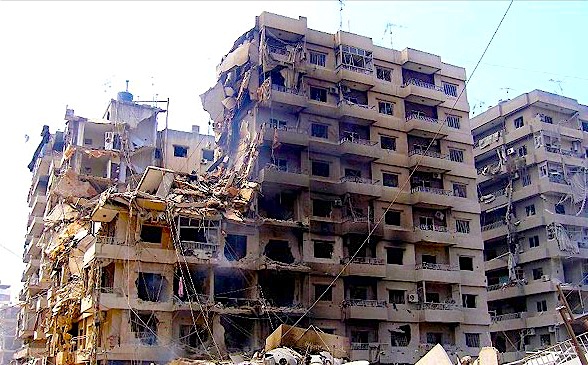
Israeli air and artillery attacks against apartment building, Beirut 2006. (Hamed Talebi/Mehr News Agency/Wikimedia Commons)
One of the key considerations that distinguishes a legitimate act of war, and a war crime, is the notion of “military necessity.” According to the precepts set forth in the law of war, military necessity “permits measures which are actually necessary to accomplish a legitimate military purpose and are not otherwise prohibited by international humanitarian law. In the case of an armed conflict the only legitimate military purpose is to weaken the military capacity of the other parties to the conflict.”
Working hand in glove with the concept of military necessity is the issue of “humanity”, namely that a military operation cannot inflict suffering, injury, or destruction that is not necessary to accomplish a legitimate military objective. While “humanity” is difficult to define (is there ever a humane way to take a human life during war?), it does relate to another principle of international humanitarian law, “proportionality.”
Proportionality in wartime has yet to be strictly codified, but in basic terms it revolves around “the idea that military means should be proportionate to their anticipated ends.”
In short, if there is an enemy sniper in a room on the third floor of an apartment building, proportionality would be met if the force necessary to eliminate the sniper in the room in question was used; if there were any civilians in the room at the time, this would not constitute a violation of the laws of war, as the civilians would unfortunately (and tragically) fall under the notion of “collateral damage.”
If, however, force is applied that results in the destruction of the entire apartment complex, killing scores if not hundreds of civilians, then a case could be made that the use of force was disproportionate to the expected military result, and as such constitutes a war crime.
The final principle of note is that of “distinction”, which holds that parties to an armed conflict must “at all times distinguish between the civilian population and combatants and between civilian objects and military objectives and accordingly shall direct their operations only against military objectives.” Distinction prohibits “indiscriminate attacks and the use of indiscriminate means and methods of warfare,” such as carpet bombing, or an artillery bombardment which lacked a specific military purpose.
From these basic precepts and principles, the international community has codified specific acts that constitute war crimes in the form of the Rome Statute of the International Criminal Court, in particular Article 8 (War Crimes). Here we find enumerated various actions which give rise to most, if not all, of the accusations made by Biden and Blinken when leveling their accusations of war crimes at Putin and the Russian military:
- Intentionally directing attacks against the civilian population as such or against individual civilians not taking direct part in hostilities;
- Intentionally directing attacks against civilian objects, that is, objects which are not military objectives;
- Intentionally directing attacks against personnel, installations, material, units, or vehicles involved in a humanitarian assistance or peacekeeping mission in accordance with the Charter of the United Nations, as long as they are entitled to the protection given to civilians or civilian objects under the international law of armed conflict; and
- Intentionally launching an attack in the knowledge that such attack will cause incidental loss of life or injury to civilians or damage to civilian objects.
The Elements
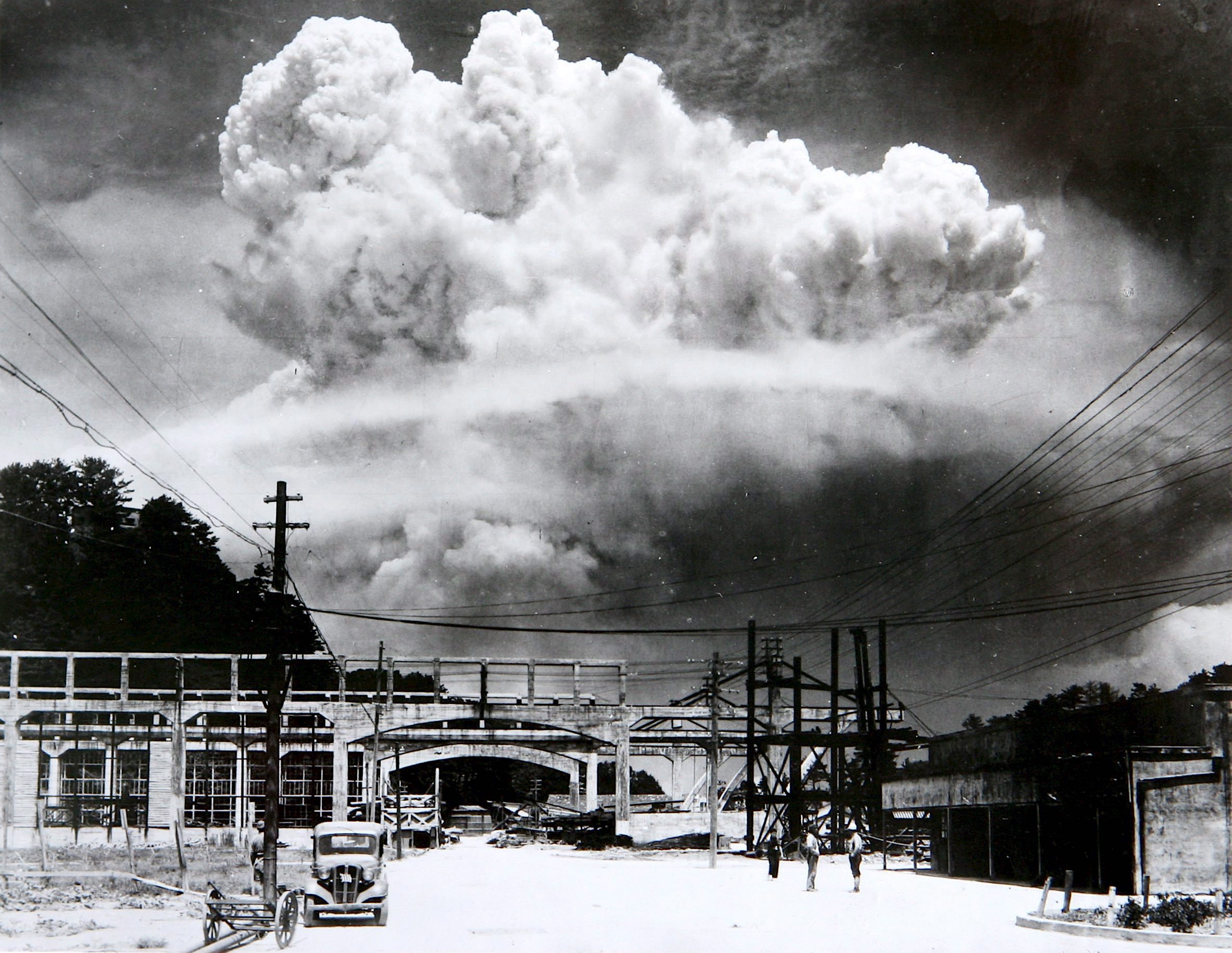
Extreme example of lack of proportionality with intent: The bombing of Nagasaki as seen from the town of Koyagi, about 13 km south. (Hiromichi Matsuda/Wikimedia Commons)
Each of the crimes listed above consist of two elements, each of which must be proved as a matter of law, before the accusation of a war crime can be cognizable. These are the physical element, or actus reaus, namely the act itself, and the mental element, or mens rea, which constitutes specific intent, or dolus specialis, to commit the act in question.
Even if you can prove the physical element of an alleged crime, such as the bombing of a hospital or apartment complex, unless one can prove the actual intent behind the attack (i.e., not just directing attacks against a civilian population, but rather intentionally directing these attacks), no crime has been committed.
One of the main mitigating circumstances against most alleged war crimes is the principle of “military necessity.” Take, for example, the act of bombing a hospital. If a bomb strikes a hospital, one has established de facto actus reas. Now, let’s say there exists a written order from a commander to a pilot ordering the pilot to bomb the hospital in question—dolus specialis has now been established, and a war crime has been committed.
Not so fast.
While the law of war prohibits direct attacks against civilian targets, such as housing, schools, and hospitals, as the International Committee of the Red Cross makes clear, “a hospital or school may become a legitimate military target if it contributes to specific military operations of the enemy and if its destruction offers a definite military advantage for the attacking side,” or if it is “being used as a base from which to launch an attack, as a weapons depot, or to hide healthy soldiers/fighters.”
Herein lies the rub. “Increasingly,” a recent article published in The Washinton Post noted, “Ukrainians are confronting an uncomfortable truth: The military’s understandable impulse to defend against Russian attacks could be putting civilians in the crosshairs. Virtually every neighborhood in most cities has become militarized, some more than others, making them potential targets for Russian forces trying to take out Ukrainian defenses.”
Moreover, “Ukraine’s strategy of placing heavy military equipment and other fortifications in civilian zones could weaken Western and Ukrainian efforts to hold Russia legally culpable for possible war crimes.”
Who is Guilty?
The bottom line is that if Russia has intelligence that Ukraine is using an otherwise protected civilian target for military purposes, and if a decision is made to attack the target using force deemed proportional to the threat, then no war crime has been committed.
Indeed, given what The Washington Post has documented, it appears that it is Ukraine, not Russia, which is committing war crimes. According to Richard Weir, a researcher in Human Rights Watch’s crisis and conflict division quoted in the Post article, the Ukrainian military has “a responsibility under international law” to either remove their forces and equipment from civilian areas, or to move the civilian population from the areas where military personnel and equipment are being stored.
“If they don’t do that,” Weir said, “that is a violation of the laws of war. Because what they are doing is they are putting civilians at risk. Because all that military equipment are legitimate targets.”
The bottom line is that while the Ukrainian government, American politicians, and human rights groups can make allegations of war crimes by Russia in Ukraine, proving these allegations is a much more difficult task.
Moreover, it appears that, upon closer examination, the accuser (at least when it comes to the Ukrainian government) might become the accused should any thorough investigation of the alleged events occur.
If the Ukrainian government contends that specific sites struck by Russia fall into a protected category, and that by attacking them Russia has committed a war crime, then it must be assumed that any undertaking by Ukraine to place military personnel and equipment in the vicinity of these targets constitutes “an intentional co-location of military objectives and civilians or persons hors de combat with the specific intent of trying to prevent the targeting of those military objectives.”
That is the legal definition of a human shield, which is in and of itself a violation of the laws of war.
Scott Ritter is a former U.S. Marine Corps intelligence officer who served in the former Soviet Union implementing arms control treaties, in the Persian Gulf during Operation Desert Storm and in Iraq overseeing the disarmament of WMD.
Pakistani PM commends India
Samizdat | April 2, 2022
Pakistani Prime Minister Imran Khan has complimented regional rival India for maintaining an “independent foreign policy” amid US and allied pressure to adopt a harsher stance toward Russia.
Speaking Friday after accusing Washington of “interference” in Pakistan’s internal affairs, Khan went on to praise New Delhi’s unwillingness to go along with a barrage of sanctions and economic restrictions against Moscow.
“They protect their independent foreign policy which is centered on its people,” he said, as cited by local media. “No country is respected unless it stands on its own two feet.”
Facing a no-confidence vote on Sunday after losing his parliamentary majority following multiple defections from his party, Khan’s remark was quickly denounced by political opponents, with the leader of the opposition National Assembly, Shehbaz Sharif, blasting him for talking up the policy approach of Pakistan’s top adversary.
“His recurring praise for [Indian Prime Minister] Narendra Modi’s foreign policy is an insult to the sacrifices of valiant Kashmiris braving Hindutva,” he tweeted, referring to a Muslim-majority population in northern India and a form of Hindu nationalism. “Among other things, the damage done to our foreign policy is incalculable,” Sharif added.
Khan, however, quickly shot back, saying that his rivals believe his “statements will anger America” and that “Pakistan cannot survive without its support.”
“They [the United States] order us. They say that if the no-confidence motion does not become successful, there will be consequences for Pakistan,” the PM went on, arguing that his administration will not join the “bloc politics to achieve the same objectives” against Russia.
The Pakistani leader previously said a “foreign country” was seeking to remove him from office and is driving the no-confidence vote, openly naming that nation as “America,” ostensibly by accident, during a televised address on Thursday. The government also summoned the acting US envoy in Islamabad over the alleged political meddling on Friday, which it denounced as “blatant interference.”
Khan previously praised India’s “independent” policy in late March, stating that his own country, like New Delhi, would not “bow” to Western pressure to join the sanctions spree against Moscow. Despite international pressure and criticism for staying neutral, India adopted a pragmatic approach and continued purchasing Russian oil, even at a discount, to ensure the country’s own energy security.
Post office social media surveillance program found to be illegal
By Christina Maas | Reclaim The Net | April 1, 2022
A review conducted by the Postal Service Office of Inspector General found that the Postal Service surveillance program iCOP exceeded its legal authority by surveilling Americans during protests between 2018 and 2021.
In 2021, Yahoo News reported the existence of the secret program, prompting outrage from lawmakers and constitutional experts who noted the program operated without oversight from Congress. Soon after the Yahoo News’ report, Congress requested the Inspector General’s office to launch an investigation into iCOP (Internet Covert Operations Program).
“We determined that certain proactive searches iCOP conducted using an open-source intelligence tool from February to April 2021 exceeded the Postal Inspection Service’s law enforcement authority,” the March 25, 2022, Inspector General report stated.
“Furthermore, we could not corroborate whether other work analysts completed from October 2018 through June 2021 was legally authorized.”
According to Yahoo News, iCOP used sophisticated technology, including facial recognition, to compile reports on protesters. It ran keywords searches for terms such as “protest” on online platforms to collect speech about protests that had nothing to do with the Postal Service’s work.
The House Oversight Committee chair, Rep. Carolyn Maloney said the Inspector General report proves there was cause for concern over iCOP’s activities.
“The Oversight Committee requested this report because of our significant concerns about intelligence activities conducted by the Postal Service Inspection Service’s analytics team related to First Amendment activity,” Maloney said in a statement to Yahoo News. “The Inspector General’s audit makes clear that the committee’s concerns were justified, and that the use of open-source intelligence by the analytics team ‘exceeded the Postal Inspection Service’s law enforcement authority.’”
The report concluded that the Postal Service exceeded its legal authority in monitoring protesters, and stressed iCOP’s activities should have a “postal nexus.”
“However, the keywords used for iCOP in the proactive searches did not include any terms with a postal nexus. Further, the postal nexus was not documented in 122 requests and 18 reports due to a lack of requirements in the program’s procedures. These issues occurred because management did not involve the Postal Inspection Service’s Office of Counsel in developing iCOP or its procedures.”
UK Sleepwalking Into Food Crisis As Fresh Produce Set To Vanish From Supermarkets
By Tyler Durden | Zero Hedge | April 1, 2022
The National Farmers’ Union has warned the UK is sleepwalking into a food security crisis. Soaring energy and fertilizer costs have led to an unprecedented situation where growers’ margins have collapsed, forcing many to halt growing operations.
Reuters says because of the inclement weather in the UK. Farmers grow cumbers, plant peppers, aubergines, and tomatoes in vast greenhouses. Greenhouses use natural gas for heat, but after last year’s surge in gas prices exacerbated by Russia’s invasion of Ukraine last month, the crops have become uneconomical to produce.
Trade body British Growers said the average cost to produce a cucumber in Britain before the energy crisis was around 25 pence, which is now more than doubled and set to hit 70 pence when higher energy prices fully kick in.
“Gas prices being so sky-high, it’s a worrying time,” grower Tony Montalbano said.
“All the years of us working hard to get to where we are, and then one year it could just all finish,” Montalbano said.
He noted his 30,000 square meters of glasshouses at Green Acre Salads business, which supplies major supermarkets such as Tesco, Sainsbury’s, and Morrisons, are shuttered because costs outpace market prices. In fact, the farmer would be losing money if he were to grow.
Compared with this time last year, European gas prices are up a mindboggling 500%.

Fertilizer prices have tripled since last year, along with soaring prices for packaging, diesel, freight, labor, and everything related to running a grow operation.
“We are now in an unprecedented situation where the cost increases have far outstripped a grower’s ability to do anything about them,” said Jack Ward, head of British Growers.
With many greenhouses offline, this will inevitably push down the output of produce for supermarkets and result in persistent and or even higher food inflation when overall inflation is at historic levels.
To give an idea of just how bad the situation is, the Valley Growers Association, whose members produce about 75% of Britain’s cucumber and sweet pepper crop, said 90% of farmers didn’t plant in January. Others said they would not grow with elevated gas prices.
“There’s definitely going to be a lack of British produce in the supermarkets,” association secretary Lee Stiles said. “Whether there’s a lack of produce overall depends on where and how far away the retailers are prepared to source it from.”
The UK could increase imports of produce, but countries worldwide are implementing protectionism measures to keep farm goods domestically to mitigate shortages due to the Ukraine conflict disrupting the global food supply.
Like many other countries worldwide, the UK is sleepwalking into a food crisis.
The Remarkably Surprising Results of Ending Mask Mandates
A number of states have recently lifted mask mandates after months or years of forced masking – so what’s happened afterwards?
By Ian Miller | March 31, 2022
During the pandemic, an endlessly repeated phrase from experts, media members, politicians and social media pundits has been that it’s “too soon” to lift restrictions.
It’s important to deconstruct the intentions encapsulated in that phrase, because it’s remarkably pernicious.
The implication of the infuriating phrase, “it’s too soon to lift restrictions,” is that restrictions were proven to have had a demonstrable impact on the spread of COVID, which is entirely inaccurate. It also implies that restrictions should be considered necessary or valuable for a virus which will likely infect everyone on earth, possibly multiple times throughout their lifetime.
There’s also the unspoken assumption that restrictions are imposed at no cost; that masking kids in schools, for example, has little to no downside with significant benefits.
The “evidence” used by health officials to justify continued mask mandates has consistently been unbelievably flawed and thoroughly debunked.
We’ve seen the results of masking across the general population and in specific populations:
By pretending that mask mandates ever had any evidentiary basis, that the “benefits” will always outweigh the harms, while ignoring the inescapable reality that COVID will infect essentially everyone regardless of policy, the phrase that it’s “too soon” is profoundly ignorant and extremely disturbing.
Even now, as the Los Angeles City Council voted to end the vaccine requirement for many businesses, they have already set the stage for future mandates:
“I know it feels like we’re out of the woods. It feels like we’re all going back to normal. But there’s new variants and new strains all the time,” he said. “This BA.2 (variant) is spreading and we really don’t know what the variant a month from now or two months are.”
Martinez responded last week by saying, “I agree with you on that,” and noted that the City Council would have to revisit the vaccination mandates “as we learn to live with this pandemic unfortunately.”
Of course, Martinez ignores the unequivocal, inarguable fact that the vaccine mandates and passports in Los Angeles he’s advocated for had zero impact whatsoever on the rate of spread.
NY Times Latest to Mislead Public on New Ivermectin Study
The NEJM study chose a much lower dose, 400mcg per day for only three days, less than half the total dose that has been shown to be effective
By Madhava Setty, M.D. | The Defender | March 31, 2022
The New York Times on Wednesday sent an email blast to subscribers with the subject line: “Breaking News: Ivermectin failed as a Covid treatment, a large clinical trial found.”
The Times was referring to a study I wrote about, that same day, for The Defender.
My article called out the Wall Street Journal for its March 18 reporting on the same study — before the study was even published — for its failure to provide an accurate, critical assessment of the study.
The study in question — “Effect of Early Treatment with Ivermectin among Patients with Covid-19” — was officially published Wednesday in the New England Journal of Medicine (NEJM).
In it the authors concluded:
“Treatment with ivermectin did not result in a lower incidence of medical admission to a hospital due to progression of Covid-19 or of prolonged emergency department observation among outpatients with an early diagnosis of Covid-19”
The Times did not critique the study itself, but quoted the opinion of Dr. David Boulware, an infectious-disease expert at the University of Minnesota:
“There’s really no sign of any benefit. Now that people can dive into the details and the data, hopefully that will steer the majority of doctors away from ivermectin towards other therapies.”
Yes. Let us dive into the details and the data and see where it “steers” us, shall we?
A closer look at the details
The NEJM study took place in Brazil between March 23 and Aug. 6, 2021.
The study examined 1,358 people who expressed symptoms of COVID-19 at an outpatient care facility (within seven days of symptom onset), had a positive rapid test for the disease and had at least one of these risk factors for severe disease:
- Age over 50
- Hypertension requiring medical therapy
- Diabetes mellitus
- Cardiovascular disease
- Lung disease
- Smoking
- Obesity
- Organ transplantation
- Chronic kidney disease (stage IV) or receipt of dialysis
- Immunosuppressive therapy (receipt of ≥10 mg of prednisone or equivalent daily)
- Diagnosis of cancer within the previous 6 months
- Receipt of chemotherapy for cancer.
Young and healthy individuals were not part of this study.
Both vaccinated and unvaccinated individuals were included in the study. The percentage of vaccinated participants in each group was not specified. Note that by choosing not to identify vaccination status as a confounding variable the authors are implying that vaccines are playing no role in preventing hospitalization.
The 1,358 subjects were divided into two equally sized groups that were relatively well-matched and randomized to receive either a three-day dose of placebo or a three-day course of ivermectin at 400 mcg/kg.
The primary outcome was hospitalization due to COVID-19 within 28 days after randomization or an emergency department visit due to clinical worsening of COVID-19 (defined as the participant remaining under observation for >6 hours) within 28 days after randomization.
How researchers were able to conclude ‘no benefit’ despite signs to the contrary
The study’s authors wrote:
“100 patients (14.7%) in the ivermectin group had a primary-outcome event (composite of hospitalization due to the progression of COVID-19 or an emergency department visit of >6 hours that was due to clinical worsening of COVID-19), as compared with 111 (16.3%) in the placebo group (relative risk, 0.90; 95% Bayesian credible interval, 0.70 to 1.16).”
In other words, a greater percentage of placebo recipients required hospitalization or observation in an emergency department than those who received Ivermectin.
The authors of the study broke it down by subgroups here:

As is demonstrated in nearly every subgroup, the Ivermectin recipients fared better than those who received the placebo.
However, these data were not statistically significant given the size of the study.
This is how the authors were able to conclude there was no benefit to ivermectin use in preventing hospitalization in high-risk patients in their study.
Patients were under-dosed, some didn’t follow instructions
As it stands, the study The New York Times and The Wall Street Journal declared as proof of the uselessness of ivermectin in treating COVID-19 is actually quite promising — contrary to what their headlines told readers.
The dosing protocol advised by the Frontline COVID-19 Critical Care Alliance (FLCCC) includes a five-day course of ivermectin at 600 micrograms per kilogram of body weight for people with risk factors such as those possessed by participants in the study.
Instead, the investigators behind the NEJM study chose a much lower dose, 400mcg per day for only three days. This represents less than half of the total dose that has been shown to be effective in practice.
Furthermore, despite acknowledging that studies have shown some indication that the bioavailability of ivermectin increases when taken with food, especially a fatty meal, participants in the trial were instructed to take the medicine on an empty stomach.
In other words, the patients were significantly under-dosed — and yet a positive effect of the drug was emerging, though not statistically significant given the size of the study.
Also of note, the investigators chose to include emergency room visits with hospitalizations for COVID. Clearly, six hours of observation in an ER is a significantly different outcome than a hospitalization that may last a night or much longer.
When excluding the ER visits from the primary outcome and examining only hospitalizations, the ivermectin cohort had even less risk of an outcome, i.e. the relative risk was 0.84 vs 0.9 when ER visits and hospitalization were grouped together.
Perhaps the most glaring deficiency of the study is the low number of placebo recipients who actually followed the study’s protocol:

Only 288 of 679 participants randomized to receiving the placebo reported 100% adherence to the study protocol. Nearly 400 didn’t.
Why not? We asked Dr. Meryl Nass, an internist and member of the Children’s Health Defense scientific advisory committee.
Nass told The Defender :
“Presumably they knew the difference between ivermectin and placebo, and the placebo subjects went out and bought ivermectin or something else … but whatever they did, they didn’t bother with the pills they were given.
“So, it was not actually a double-blinded trial. Yet the 391 people who didn’t take the placebo but did something else were included in two of the three calculations of ivermectin efficacy anyway.”
So, was this the definitive answer proclaimed by mainstream sources? Nass thinks otherwise:
“I would say that instead, it was a failed trial due to the 391 placebo recipients who admitted they did not follow protocol versus the 55 in the ivermectin arm.”
More questions than answers
Rather than pounding the final nail in the coffin around ivermectin’s utility in treating COVID, the NEJM study raises more questions.
- What would the effect have been if a higher dose shown to be effective were administered?
- What would be the benefit of this medicine in patients with no risk factors?
- How statistically significant would the results have been if more participants were enrolled?
- Why weren’t more participants enrolled as the study progressed given the emerging benefit of the drug and the absence of adverse events?
- Why did the investigators define a primary outcome with such different real-world implications (ER visits vs hospitalizations)?
- With less than 50% of the placebo arm adhering to the study protocol, why were their outcomes included in the analysis?
- What effect did vaccination status have on outcome? If this is the primary means endorsed to prevent hospitalization, why wasn’t vaccination status mentioned as a confounder?
- Did the investigators choose to limit the study as it became clear that an Ivermectin benefit would be too big to ignore?
Given these obvious issues with the study, it is becoming even more clear where the real story is: Neither The Wall Street Journal or The New York Times are willing to pursue startling details around how corporate interests are corrupting scientific opinion as reported here.
Instead, these iconic journals chose to report on a scientific study on or prior to the day of publication using misleading headlines backed up by flimsy investigations conducted by journalists with no capacity to dissect the analysis or data.
Here’s a bigger question: Are they incompetent, or complicit, too?
© 2022 Children’s Health Defense, Inc. This work is reproduced and distributed with the permission of Children’s Health Defense, Inc. Want to learn more from Children’s Health Defense? Sign up for free news and updates from Robert F. Kennedy, Jr. and the Children’s Health Defense. Your donation will help to support us in our efforts.
Russia will see record gas earnings this year – expert
Samizdat | April 1, 2022
Russia will have record revenues from natural gas sales this year due to high prices in the spot markets, Janis Kluge, a Eurasia-focused researcher at the German Science and Politics Foundation, told ntv.de news outlet.
“Almost half of the Russian budget is based on transactions with oil and gas. The state earns enormously from production taxes and export duties. It receives the income in rubles, and the amount is determined by two factors: firstly, by energy prices on the world market and, secondly, by the exchange rate of the ruble,” Kluge says.
According to him, revenue from gas will soar this year, as many of Russia’s gas contracts are adjusting to the rising spot prices.
“The gas price on the spot markets has quintupled within the past year. That means Gazprom will have record revenues,” he said, while predicting that the cost will increase significantly within the next several months.
The situation is similar with oil, Kluge says, which profits from the ruble’s sanctions-induced drop.
“Russia planned the national budget with a dollar-ruble exchange rate of 72, but now the ruble is around 85, much weaker, but with a view to energy exports this is an advantage. If we multiply the oil price by the ruble exchange rate, it shows that Moscow expected revenues of around 4,500 rubles per barrel of oil, but is getting much more, around 7,000 rubles.”
According to him, the profit from energy sales will be enough to cover the impact of Ukraine-related sanctions on the Russian economy, among other things, by halting inflation.
Kluge also believes the costs of the operation in Ukraine are not very high, and economic measures, except for a complete embargo, will hardly “stop the tanks.” And seeing that the Russian Central Bank has been inventive in introducing counter-measures to keep the economy afloat, Kluge predicts that Russia will survive the sanctions and even have a budget surplus this year.
German Chemical Giant Warns Of “Total Collapse” If Russian Gas Supply Cut
By Tyler Durden | Zero Hedge | April 1, 2022
CEO of Germany’s multinational BASF SE, the world’s largest chemical producer, has warned that curbing or cutting off energy imports from Russia would bring into doubt the continued existence of small and medium-sized energy companies, and further would likely spiral Germany into its most “catastrophic” economic crisis going back to the end of World War 2.
Company CEO Martin Brudermuller issued the words in an interview with Frankfurter Allgemeine newspaper just ahead of German officials by midweek giving an “early warning” to industries and the population of possible natural gas shortages, as Russia appears ready to firmly hold to Putin’s recent declaration that “unfriendly countries” must settle energy payments in rubles, related to the Ukraine crisis and resultant Western sanctions.
According to Bloomberg he mused that while “Germany could be independent from Russia gas in four to five years” it remains that “LNG imports cannot be increased quickly enough to replace all Russian gas flows in the short term.”
But in the meantime, Brudermuller described that “It’s not enough that we all turn down the heating by 2 degrees now” given that “Russia covers 55 percent of German natural gas consumption.” He emphasized that if Russian gas disappeared overnight, “many things would collapse here” – given that “we would have high levels of unemployment, and many companies would go bankrupt. This would lead to irreversible damage.” He continued:
“To put it bluntly: This could bring the German economy into its worst crisis since the end of the Second World War and destroy our prosperity. For many small and medium-sized companies in particular, it could mean the end. We can’t risk that!”
The dire warning of coming disaster in the event Russian gas is shut off came in response being questioned over whether it’s at all possible to abandon Russian energy.
Asserting that this issue is not “black and white” – and that the German economy stands on the brink of catastrophe, the BASF CEO said that if this standoff continues to escalate it will “open the eyes of many on both sides”…
Below is the question posed by the newspaper, and Brudermuller’s response:
And what if, for example, Putin’s demand for payment in rubles leads to an immediate stop in gas supplies?
“A delivery stop for a short time would perhaps open the eyes of many – on both sides. It would make clear the magnitude of the consequences. But if we don’t get any more Russian gas for a long time, then we really have a problem here in Germany. At BASF, we would have to scale back or completely shut down production at our largest site in Ludwigshafen if the supply fell significantly and permanently below 50 percent of our maximum natural gas requirement. Minister Habeck has already activated the early warning level of the gas emergency plan.”
Separate sources estimate that at Ludwigshafen alone this scenario would immediately lead to some 40,000 employees being possibly laid off, or at least put on short-time working hours.
He warned further in the interview that many Germans are currently greatly underestimating the consequences of what Russia shutting off the taps would mean… nothing less than a historic crisis:
“Many have misconceptions. I notice that in many of the conversations I have. People often make no connection at all between a boycott and their own job. As if our economy and our prosperity were set in stone.”
He explained that higher prices are already having a huge impact on the food supply given at this point BASF has been forced to reduce the production of ammonia for fertilizer production.
Brudermuller called this “a catastrophe and we will feel it even more clearly next year than this one. Because most of the fertilizers that the farmers need this year have already been bought. In 2023 there will be a shortage, and then the poor countries in particular, for example in Africa, will no longer be able to afford to buy basic foodstuffs.” In a very alarming statement and forewarning, he added: “There is a risk of famine.”
US warns India not to help Russia undermine dollar
Samizdat | April 1, 2022
A top US national security official has called on India to scale back its economic and military ties with Russia, warning of “consequences” for any nation that helps Moscow avoid the recent wave of Western sanctions.
Speaking to reporters after meeting with Indian officials on Thursday, Washington’s deputy national security adviser for international economics, Daleep Singh, urged New Delhi not to boost Russian energy imports, and to avoid any moves that might “undermine” the US dollar.
“What we would not like to see is a rapid acceleration of India’s imports from Russia as it relates to energy or any other any other exports that are currently being prohibited by the US,” he said, adding that the United States is “very keen for all countries, especially our allies and partners, not to create mechanisms that prop up the ruble and that attempt to undermine the dollar-based financial system.”
While condemning Russia’s “needless war” on Ukraine, Singh said his visit to India was “in a spirit of friendship to explain the mechanisms of our sanctions,” but nonetheless warned that there would be “consequences [for] countries that actively attempt to circumvent or backfill” those penalties.
Asked what those consequences could entail, the adviser declined to elaborate, saying that was part of “private discussions that I’m not going to share publicly.”
Singh’s remarks followed reports that Moscow and New Delhi are currently working out a rupee-ruble payment system, which would allow the two nations to conduct bilateral trade in each others’ currencies. India also recently agreed to buy a quantity of Russian crude oil at a discount, an unpopular decision with the US and some allies, who have embarked on a punitive sanctions campaign designed to isolate Russia’s economy and wreck the ruble.
Russian Foreign Minister Sergey Lavrov also visited the Indian capital on Thursday, coinciding with official meetings with Singh as well as UK Foreign Secretary Liz Truss.
Though American, Australian and British officials have criticized India’s refusal to go along with the sanctions spree, US State Department spokesman Ned Price insisted that Washington is not “seeking to change” any nation’s “relationship with the Russian Federation,” citing India in particular.
“What we are seeking to do, whether it is in the context of India or other partners and allies around the world, is to do all we can” to ensure that “the international community is speaking in unison,” Price added in comments on Lavrov’s trip.
Often portrayed as the “architect” of the US sanctions regime on Moscow, Singh went on to cite growing ties between Russia and China, cautioning that their partnership could have major consequences for India, which has long been locked in a territorial dispute with Beijing along the Sino-Indian border.
“If you set that against the reality that China and Russia have now declared a no limits partnership, and that Russia has said that China is its most important strategic partner, by extension, that has real implications for India,” he said, claiming that Moscow would not “come running to India’s defense” in the event of a Chinese incursion.
NATO should have been dissolved after Soviet collapse: China
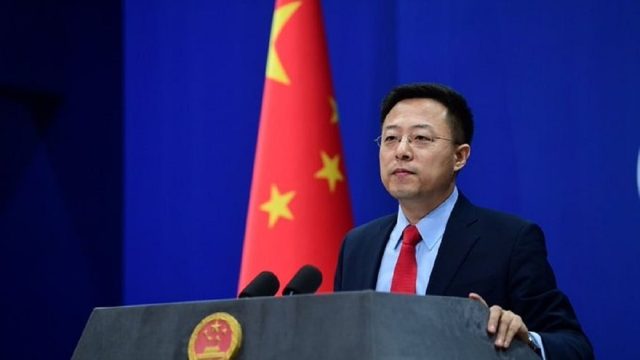
Press TV – April 1, 2022
China has criticized the eastward expansion of NATO, saying that the US-led military alliance should have been dissolved after the collapse of the Soviet Union more than three decades ago.
Chinese Foreign Ministry spokesman Zhao Lijian said at a news conference on Friday that the North Atlantic Treaty Organization (NATO), as a product of the Cold War, should have become history when the Soviet Union dissolved in 1991.
“In the early 1990s, then-US Secretary of State James Baker promised to former Soviet leader Mikhail Gorbachev that NATO would not expand even an inch eastward,” Zhao said.
As the initiator and biggest “behind-the-scene planner” for the Ukraine conflict, the US has led NATO to engage in five rounds of eastward expansion in over 20 years, he added.
“The number of NATO members increased from 16 to 30, advancing more than 1,000 kilometers eastward to the Russian border,” Zhao said.
He said that the world does not need a new Cold War, neither does Europe. He called on NATO to reflect on its role in the Ukraine crisis and the security of Europe itself.
NATO was formed in 1949 by 12 countries, including the US, Canada, the UK and France. Following the collapse of the Soviet Union, a number of former Warsaw Pact countries switched sides and joined the military alliance. It currently consists of 30 independent member countries, who are committed to protect each other.
NATO’s eastward expansion has long been a concern for world powers China and Russia, who have constantly warned that the move would lead to a war.
Russia has constantly been warning against membership of many parts of the old Soviet Bloc in NATO, especially the prospective membership of Ukraine in the Western military alliance, something that eventually pit Moscow against the Kiev government.
Russian President Vladimir Putin, who ordered the military campaign in Ukraine in February 24, has been clear for many years that if continued, the expansion would likely be met with serious resistance by the Russians.
Before the military conflict, Moscow had put forward a set of security proposals to de-escalate the tensions, including a guarantee that Ukraine will not join NATO.
The proposals were rejected.
Featured Video

Ukraine Already Carved Up… Before Talks Begin? /Prof. Richard Sakwa
or go to
Aletho News Archives – Video-Images
New Book
The Vaccine Mafia: Pfizer’s Former Chief Toxicologist Proves How Toxic Substances Were Unlawfully Sold to Us as a Solution for COVID-19
By Helmut Sterz
Former Pfizer chief toxicologist Helmut Sterz presents a critical examination of the development, approval, and global rollout of mRNA COVID-19 vaccines—particularly those produced by Pfizer/BioNTech. The Vaccine Mafia details the failure of pharmaceutical companies, regulatory authorities, politicians, and international organizations to follow established scientific and ethical standards during the pandemic. Drawing on the author’s decades of experience in pharmaceutical toxicology, Sterz reveals the many ways the vaccines’ inadequate or omitted preclinical safety testing put the world’s population at risk.
Sterz demonstrates how “emergency” approvals allowed manufacturers to bypass long-standing international guidelines governing toxicity testing, especially with regard to reproductive and cancer risks. They also allowed governments and health authorities to ignore or conceal evidence of serious adverse effects that occurred, including myocarditis, reproductive harm, and other long-term health risks.
Blog Roll
 Aletho News
- Ukraine Already Carved Up… Before Talks Begin? /Prof. Richard Sakwa
- The vindication of Marjorie Taylor Greene
- Nearly 80% of Britons consider Israel a threat to world peace and security: Survey
- Rhode Island Staffer Could Be Reinstated After Firing Over Ceasefire Post
- Will Republicans Learn Their Lesson from the ‘Disastrous’ Midterms?
- Wrong, Newswise, Irresponsible Climate Messaging, Not Climate Change Itself, Is Fueling Student Anxiety
- Zelensky’s Critics Vanish Into Ukrainian Secret Prisons – Source
- Nima R. Alkhorshid: U.S. Military Bombs Multiple Targets on Iran’s Qeshm Island
- Iran-Linked Ships Spotted Hovering over Subsea Cables: Report
- New attack on Iran could devastate ‘Israel’, IOF general warns
- If Americans Knew
- An error has occurred; the feed is probably down. Try again later.
- No Tricks Zone
- Zonal Asymmetry of Temperature Change in the Antarctic Circumpolar Current
- New Study: The Net Fossil Fuel Contribution To Rising Atmospheric CO2 Has Been Zero For 500 Years
- Germany’s Green Energy Transition Becoming Increasingly Expensive…Another 6 Trillion Euros!
- Sudden Stratospheric Warming, Powerful El Niño Combination May Lead To Extreme Europe Cold, Energy Crisis!
- Two New Studies Find Thwaites Glacier Melt Cannot Be Driven By Human Activity Or A Warming Ocean
- E-Cars Reduce CO2 Emissions By Only 41% Compared To Internal Combustion Engine Vehicles
- Predictions Made By Renowned Climate Professor Over Past Decades Have Been Proven To Be Poor
- New Study Suggests Large Regions Of The Pacific Ocean Have Been Cooling For The Last 80 Years
- Germany’s Green Energy Debacle: High Energy Costs Force Kahla Porzellan to Close After 182 Years!
- New Study: 50 Years Of The Most Aggressive ‘Net Zero’ Policies Can Only Affect The Global Climate By 0.03°C

