Iran calls for emergency UNSC meeting over Trump’s ‘brazen’ bomb talk, Israeli threats
Press TV – October 20, 2026
Iran’s Ambassador and Deputy Permanent Representative to the UN has urged the world body’s Security Council to hold an emergency meeting and condemn threats by the United States and the Israeli regime against the Islamic Republic’s territory and critical infrastructure.
Gholamhossein Darzi made the remarks in a letter dated Monday and addressed to UN Secretary-General António Guterres and the president of the Security Council.
The letter cited recent US media reports that the White House and the US Department of War had prepared fresh military options, including the possible use of the GBU-43/B, known as the Massive Ordnance Air Blast (MOAB) or so-called “Mother of All Bombs,” against Iran.
Darzi noted that US President Donald Trump had discussed the weapon in a televised interview and threatened further attacks.
The diplomat also cited remarks by Israeli minister for military affairs Israel Katz that the regime was prepared to attack the Islamic Republic and would target “all energy targets” in any renewed aggression.
The letter also pointed out how Katz had threatened to return Iran to the “Stone Age”, besides claiming that the United States and the regime had dropped a total of 35,000 bombs on Iran and that their military campaign was not over.
Darzi further denounced Israeli prime minister Benjamin Netanyahu for openly declaring an intention to launch another unprovoked war against the Islamic Republic, adding that the silence and explicit support of certain Security Council members had emboldened him.
He called for immediate action against “brazen existential threats” issued by Trump and renewed Israeli threats of military aggression.
“These unabated threats, in the context of the U.S.-Israeli wars of aggression launched on 13 June 2025 and 28 February 2026 against Iran, and the deliberate attacks against Iranian civilians and critical infrastructure, pose a grave risk of further violation of international law with catastrophic humanitarian and environmental consequences, and serious threats to regional and international peace and security,” he wrote.
The diplomat argued that threats to destroy Iran’s civilian and energy infrastructure could cause severe and potentially long-term humanitarian and environmental damage.
He also condemned Washington and Tel Aviv for disregarding obligations under the four Geneva Conventions of 1949 and customary international humanitarian law.
Darzi requested an emergency Security Council meeting, unequivocal condemnation of threats against Iran’s civilian infrastructure, and accountability and full reparation for damage resulting from Washington’s and Tel Aviv’s internationally wrongful acts.
“The Security Council cannot remain silent in the face of explicit threats of renewed aggression and the destruction of essential civilian infrastructure,” he stated.
The letter, meanwhile, reaffirmed Iran’s right to self-defense under Article 51 of the UN Charter.
He warned that the United States and the Israeli regime would bear responsibility for the consequences of further aggression, including “the risk of unpredictable and uncontrollable escalation.”
Iranian sources reveal details of Russia-China Hormuz proposal
Al Mayadeen | October 20, 2026
Tehran no longer views Pakistani and Qatari mediation as yielding tangible results, Iranian sources told Al Mayadeen on Tuesday, as a Russian initiative coordinated with China proposes joint management of the Strait of Hormuz with Iran.
Iranian sources told Al Mayadeen that Tehran has come to view Pakistani and Qatari mediation as ineffective in delivering tangible results, citing Islamabad and Doha’s limited ability to influence the US position. This has prompted Iran to explore alternative channels for mediation.
In this context, Iranian international affairs expert Mehdi Khan Alizadeh told Al Mayadeen that a new Russian diplomatic move could pave the way for Moscow to assume a more substantive mediating role, amid coordination between Russia and the United States. He pointed to a Russian initiative developed in cooperation with China that proposes joint management of maritime traffic through the Strait of Hormuz with Iran.
Alizadeh explained that the initiative concerns the Strait of Hormuz and Gulf security. Russian Foreign Minister Sergey Lavrov’s visit to Tehran addressed these issues, while Iranian President Masoud Pezeshkian is expected to visit Moscow again, reflecting continued efforts surrounding the Russian proposal.
Regarding Tehran’s immediate priorities, Alizadeh stressed that ending the war takes precedence over the nuclear issue. He said this position follows a decision by the Leader of the Islamic Revolution and the Islamic Republic, Sayyed Mojtaba Khamenei, adding that Iran’s current focus is on securing a ceasefire, while the nuclear file is not presently among its priorities.
These developments coincide with US President Donald Trump’s remarks about “providing a framework for Russia to communicate with Iran,” potentially intersecting with Moscow’s diplomatic efforts.
Lavrov visits Tehran for first time since start of war
Russian Foreign Minister Sergey Lavrov arrived in Tehran on Monday for his first visit since the start of the war on Iran, as Moscow seeks to play a mediating role.
Lavrov said Moscow’s efforts “aim to prevent the return of a full-scale war.”
Meanwhile, Iranian President Masoud Pezeshkian told Lavrov that the establishment of US military bases in regional countries has offered, and will continue to offer, no benefit to the region beyond increasing tensions and undermining security.
During his meeting with Lavrov, Pezeshkian said US interference and divisive policies had led to the emergence of disputes across the region.
He stressed that there are no fundamental disagreements between Iran and regional countries, affirming Tehran’s readiness to address existing challenges through dialogue and mutual understanding.
Pezeshkian also said Iran shares common ground with countries across the region and has consistently sought to develop relations with them on the basis of brotherly engagement and mutual cooperation.
Araghchi, Lavrov reject military action, call for stability in Gulf
Iranian Foreign Minister Abbas Araghchi, for his part, said during a joint press conference with Lavrov that Tehran and Moscow agree that military action is not the solution. He added that relations between the two countries contribute to strengthening regional stability.
Araghchi said he had hosted Lavrov in Tehran for “important discussions” covering several issues spanning Europe and West Asia, including Lebanon, Palestine, Ukraine, and Yemen.
The talks also focused on expanding economic and nuclear cooperation between the two countries. Araghchi underscored that ties between Iran and Russia have never been closer or more collaborative than they are today.
Plan for more US-Israel integration puts our military tech at risk
By Andrew M. Leonard | Responsible Statecraft | October 19, 2026
When the Senate returns to session after the midterm elections, it will face sharp debate over a highly contested Fiscal Year 2027 (FY2027) National Defense Authorization Act (NDAA).
The House version passed with a slim margin of 216-212, and included a provision entitled, “United States – Israel Defense Technology Cooperation Initiative,” often referred to simply as “Section 219”; the pending Senate bill contains a related, but not identical provision, entitled “Section 1217: United States-Israel Framework for Upgraded Technologies, Unified Research, and Enhanced Security (FUTURES) Act of 2026”.
In title, the U.S.-Israel FUTURES Act sounds like one of many bilateral cooperative agreements between the U.S. military and a partner military force anywhere in the world. But in reality, as written, the provision would pressure existing security cooperation entities to expand and accelerate bilateral technological integration through a statutory executive agent arrangement that lacks clear precedent even among the U.S.’s closest allies.
The agreement isn’t necessary to advance cooperation. In practice, it puts undue pressure on the processes designed to protect U.S. interests and technology.
The issue discussed here is not if the U.S. should or should not increase its defense technological cooperation with Israel; the pros and cons are well-documented and highly debated elsewhere. What isn’t, or shouldn’t be, a matter of debate are the implications of putting undo pressure and influence to short cut established security processes for the benefit of any single partner nation, and that is precisely what Sections 219 and 1217 would do.
The U.S. Department of Defense is already well underway in reforming its technology release and foreign disclosure procedures following Executive Order 14268 of April 2025. Short cuts to these reforms, or additional legislation laying on top of ongoing actions, will only confuse and complicate the process, adding additional vulnerabilities in the end.
So which parts of Section 219 put the system at greatest risk? It starts with directing the secretary of defense to designate an executive agent responsible for synchronizing U.S.- Israel cooperative efforts to expand and accelerate bilateral defense technology research and development, testing, evaluation, integration, and industrial cooperation, with particular focus on counter-unmanned systems, missile and air defense, AI, quantum, autonomous systems, directed energy, cyber defense and electronic warfare, biotechnology and medical defense, network integration, and data fusion. These are some of our most sensitive, and classified, areas of research and development. Additionally, Senate Section 1217 directs the secretary of defense to “consult with” (i.e. formally seeking and considering views or input of) the Israeli minister of defense in establishing the initiative, providing a foreign nation with influence over access to and integration of U.S. sensitive technology.
To break this down a bit more…
- The power of an executive agent within the Department of Defense is significant. DoD Directive 5101.01 gives an executive agent, within the areas of its assigned responsibilities and functions, the authority to take precedence over other DoD component heads with related responsibilities or functions. Heads of Department of Defense (DoD) Components include the secretaries of the military departments (Army, Navy, and Air Force), the directors of the defense agencies, and the chairman of the Joint Chiefs of Staff. Meaning, the executive agent could create significant institutional pressure over the Defense Technology Security Administration (DTSA) on access to and release of sensitive U.S. technology. DTSA is the primary office within the Department of Defense tasked specifically with protecting sensitive technology from release to foreign entities.
- An executive agent is assigned by the secretary of defense alone, with no separate confirmation process nor congressional oversight over how it exercises its authority. So, if Congress legislates DoD create an executive agent for his initiative, it abdicates more of this congressional oversight authority to the Executive Branch — at a time when the executive branch already acts unilaterally on issues in which it is supposed to inform/consult Congress.
- Once the executive agent pushes the system to embed foreign-original technology or systems in U.S. programs of record (a formally established and funded DoD acquisition program), it becomes fiscally and politically costly to pull those pieces back out. Such a process would require re-competing contracts and re-certifying systems, among other time-intensive tasks. Integration of intellectual property can create long-term dependencies, regardless of future U.S. policy.
- Many of the areas of prescribed integration are highly sensitive, presenting significant counterintelligence risk. Sharing and embedding U.S. cyber, AI, and autonomous system developments with a foreign partner before the U.S. has even fully developed sufficient and adequate regulatory provisions to govern the use of this technology puts the U.S. under an unnecessary influence of a foreign partner. Additionally, if U.S. systems are dependent on foreign technology, that foreign partner gains leverage over the U.S., and at a time when the U.S. needs to be more clear-eyed on its own priorities, not those of other nations.
If such cooperation as outlined above was regular business, perhaps some of the arguments could be debated more reasonably. But, it is not ‘business as usual.’ In fact, Section 219 would legislate a relationship distinct and more powerful than others in existence today, even with the U.S.’s closest allies, like the Five Eye partners and NATO. Section 219 creates a multi-generational technological relationship with one partner that would be very difficult to rollback once incorporated into U.S. development and acquisition systems. It is a pure political maneuver with great risk to the U.S.; it is not necessary and is, in fact, dangerous.
At this point, to protect sensitive U.S. technological development and to ensure congressional oversight is not further abdicated, the House should make clear it won’t vote for an NDAA that comes out of conference if it includes this provision, and the Senate should remove or amend its corresponding Section 1217 from the FY27 NDAA and enter into a separate debate over the issue.
Andrew M. Leonard is a retired US Army Colonel and Senior Fellow for Defense Policy and Military Affairs at the Quincy Institute.
Another Round Against Iran Will Break What Is Left of the Gulf
By Larry C. Johnson – SONAR21 – October 20, 2026
Washington and Israel are talking again about “finishing the job” in Iran. Before they do, someone should take a hard look at the bill for the jobs already done. My friend Karl Miller, who has called this region correctly more often than most of the people paid to do it, sent me his latest assessment on Monday. His conclusion is blunt: on the current course, another round of escalation is coming, and the countries paying for it will be the ones that never got a vote.
The Gulf is being bled dry
Start with the people who are supposed to be America’s partners. The IMF’s October outlook reads like a casualty report. Kuwait’s economy is forecast to shrink 16.7 percent this year. Qatar’s will shrink 15.6 percent, and Bahrain’s 11.3 percent. The UAE, long sold as the region’s safe haven, is now expected to contract 3.9 percent, a seven-point swing from the IMF’s April forecast. Saudi Arabia is forecast to shrink 3.3 percent. The only Gulf economy still growing is Oman, and that is because its ports sit outside the Strait of Hormuz.
These are not paper losses. Qatar lost two LNG trains at Ras Laffan in March, about 17 percent of its export capacity. QatarEnergy says the repairs will take three to five years and will cost it roughly $20 billion a year in revenue. Saudi Arabia’s escape route around Hormuz, the East-West Pipeline to Yanbu, is crippled. My sources tell me four of its 11 pumping stations are severely damaged and out of service. Riyadh now projects a deficit of 4.9 percent of GDP, is borrowing to cover it, and has frozen non-essential spending.
Miller explains why this is worse than the headline oil price suggests. A damaged plant produces nothing to sell, but the payroll, the debt payments and the repair bills keep coming. A plant that is still standing but cannot get parts in or cargo out is in almost the same position. A $108 barrel of oil is worth nothing if you cannot ship it. And the cash the Gulf states used to invest at home and abroad is vanishing fast. If a government takes in 100 and must spend 70, it has 30 left over. Cut income to 80 and that cushion drops to 10. A 20 percent hit to revenue wipes out two-thirds of the money for everything else.
The Gulf states bought American protection to safeguard exactly this wealth. Instead, as Miller puts it, they have ended up paying for the costs of American strategy. That is a bargain they will not keep making forever.
A new round means a deeper shortage
Now consider what another round of American and Israeli strikes would do to a world that is already short of energy. Oil flows through Hormuz are running around 11.6 to 11.9 million barrels a day, against a pre-war level of about 17 million. Middle Eastern fuel exports are below half of what they were before the war. The International Energy Agency says diesel will stay tight well into 2027, and that the diesel stocks already burned will not be rebuilt before the second half of that year. Brent is around $108, up more than 75 percent from a year ago.
Every escalation so far has followed the same pattern. Iran answers by tightening its grip on Hormuz. Its allies in Yemen widen their target list. Gulf facilities that were patched together get hit again before they earn back the cost of repairing them. That is the cruelest part of Miller’s analysis: repeated attacks make repairs pointless, because nobody will spend billions restoring a plant that may be destroyed again next month. A new campaign will not reopen the Strait. It will close it further, take more Gulf capacity offline, and push diesel back toward September’s record of more than $200 a barrel, just as Europe heads into winter. France and Italy are already rioting over the cost of living. Imagine them in February.
Israel’s dark future
Miller’s harshest judgment is reserved for Israel, and it deserves a full hearing. He believes Israel will never recover from what it has done in Gaza, which a UN commission of inquiry concluded last year was genocide. In his words, the state is “done economically. It is done politically. It is done morally.” That is strong language, but the argument behind it is not hysteria. It is about how a state wears itself out.
His reasoning runs like this. Israel’s leadership has bet everything on military domination: hit every opponent hard enough that no one dares resist. Force can win battles, but it cannot make anyone accept the result. Every campaign therefore creates the need for the next one. Opponents rebuild, resentment grows, and the circle of countries willing to stand with Israel gets smaller. So the government doubles down with more force, because the alternative, accepting real limits on occupation and on its treatment of the Palestinians, threatens the political project it is defending. War becomes a way to postpone the reckoning, not avoid it.
The cost is already showing. The IMF says Israel’s economy is about 9 percent smaller than it would have been without the war. The budget deficit is heading to 6.2 percent of GDP, and public debt is on track to reach about 74 percent of GDP by 2031. Reservists are pulled from their jobs again and again. Israelis are already fighting over who carries the burden, with ultra-Orthodox men still far less likely to work or serve than everyone else. Foreign investors and partners grow more cautious with each campaign. Miller’s warning is that Israel’s project could become unsustainable long before its military power runs out. A country can keep its tanks and jets and still lose the economy, the alliances and the legitimacy it needs to survive. That is the dark and uncertain future he sees, and I find it hard to argue with.
Trump says Russia is doing nothing. Lavrov says otherwise.
Which brings me to the President’s latest reassurance. On October 13, Donald Trump said he does not believe either Russia or China is helping Iran. On Sunday he went further on social media, insisting that “Russia is doing very little to help the Islamic Republic of Iran, compared with what it could be doing,” if it is doing anything at all, and that he wants it to stay that way “unless some stupid people get in the way.”
Less than a day later, Russian Foreign Minister Sergei Lavrov stood next to Iran’s Foreign Minister Abbas Araghchi in Tehran and said the opposite. “I am confident that Iran’s cause, like Russia’s, is a just cause,” Lavrov declared. He said Russia “has no intention of abandoning the implementation of agreements with Iran in the economic and investment spheres,” and recommitted Moscow to the 20-year strategic partnership that formally took effect on October 2. He announced that Russian specialists will return to the Bushehr nuclear plant. He called for Hormuz to return to pre-war conditions, and tied that to protecting Iran from renewed attacks. Before landing in Tehran, he called Trump’s approach “wrong.”
To be fair to the President, Russia has not gone to war for Iran, and the partnership treaty does not require it to. There is no mutual-defense clause. But that is a lawyer’s distinction. Russia’s foreign minister does not fly into a capital under threat of attack to call its cause just by accident. Add the reported Russian satellite data reaching Iran’s allies and the steady improvement in the accuracy of Iranian and Houthi missiles, and the picture is of a partner that is careful, deniable and very much engaged. Moscow does not need to fire a shot. It only needs to keep Iran standing while America bleeds its Gulf allies and Europe’s economy.
The bill comes due
If Washington and Israel launch another round, they will be betting that this time force produces a settlement. Three years of evidence says it will not. What it will produce is deeper Gulf recessions, a longer energy shortage, more anger in Europe’s streets, and a bigger bill for an Israel that is already running out of room. Miller’s forecast is that the next round is coming anyway. I hope he is wrong this time. I doubt it.
SVR Report on Ukraine’s Mexican Drug Gang Links Could Pressure Zelensky, Won’t Change US Policy
Sputnik – 20.10.2026
“It’s quite possible that these facts could serve as a tool to exert pressure on the Kiev regime,” but the US government “will never publicly acknowledge that they have leveraged drug cartels to further their own interests,” RAS Institute of Latin America senior researcher Alexander Stepanov told Sputnik.
Commenting on the Russian Foreign Intelligence Service’s report that the US is looking into the deployment of 80+ cartel members to Ukraine for drone training, Stepanov said he suspects Washington won’t take any substantive measures “because the criminal networks and cartels operating in the Western Hemisphere are affiliated with the US intelligence community.”
“These groups serve as proxy instruments for the US, deployed when necessary to pressure opposing governments and act as a key destabilizing factor – thus creating opportunities for the US to exert influence over the region.”
US intelligence even “oversees the recruitment of individuals from these cartels, categorizing them based on technical proficiency, equipment, and intended use,” Stepanov pointed out, highlighting the historical use of American prisons for this purpose, and the fact that “virtually the entire leadership of Mexico’s cartels comes from security or military backgrounds, including the special forces.”
Possessing “the necessary skills, training and discipline,” gang members are “ideal mercenaries,” and deployment in Ukraine for drone training will allow them to transfer their skills back home as instructors at specialized paramilitary training centers affiliated with US intel agencies.
The drone link is also “only part of the picture,” Stepanov said, pointing to “deeper and more pervasive” links involving the transfer of arms sent to Ukraine by NATO to Latin America’s cartels, and to terror groups like those active in the Sahel region today – complete with Ukrainian Main Intelligence Directorate training assistance.
Ukraine is also “leveraging its capabilities, intelligence structures and affiliated networks of organized criminal groups that have taken root in Europe to facilitate the distribution of narcotics, with Mexican drug cartels serving as their primary suppliers,” Stepanov believes.
British Government Employees Were Fact-Checking the News at the BBC. Nobody Told You.
By Cindy Harper | Reclaim The Net | October 19, 2026
In the UK, the BBC has been taking in public employees from government departments, and letting them work on news content, specifically “fact-checking” and drafting material for BBC News and its “fact-checking” arm, BBC Verify.
The secondments came from the Government Statistical Service, and took place over the past eight years, with 39 civil servants spending three or six months at the BBC, while their salaries were still paid by their own departments.
The Government Statistical Service is now advertising more of these secondments for 2027.
This was first reported by The Telegraph on October 17.
Meanwhile, the BBC is the same public service broadcaster that the government wants to give more money by introducing a “YouTube tax” – a plan to extend the license fee to streaming services.
And the same BBC is the one the government wants to push up people’s feeds on YouTube and other platforms, by making those platforms give it prominence in their algorithms. A green paper, “Watch this space: a new strategic direction for UK media,” is proposing this.
In the past, Reclaim The Net has reported about this plan, and how the US government said that this would mean “mandating that platforms algorithmically amplify government-preferred media.”
So, to sum it up: the government wants people to fund the BBC, wants the algorithm to favor the BBC, and has its own staff inside the BBC writing the fact-checks.
The subjects they worked on were “small boat” crossings of migrants, Covid, crime, migration, and life expectancy. The work of these civil servants, whose salaries were still paid by their respective government departments, was published under the bylines “BBC News” and “BBC Verify.”
This is how some of the secondees described their work on the Government Statistical Service blog.
One from the Home Office said she worked as “BBC Verify’s consultant statistician, fact-checking claims in heated election debates, ‘filing copy’ on interesting stories, and advising journalists.”
She also worked on “small boat arrivals and visa applications” and did “quality assurance on copies and charts before they were published to the online live page.”
Another from the Department for Business and Trade said, “One of my first tasks was drafting ‘copy'” on annual population statistics, “This was because they related to migration, which was always a topic of interest.” And: “My lines were then quickly pulled into a full article on the main site.”
That post, however, “was taken down after The Telegraph contacted the BBC” – and the BBC “has since insisted that those on secondment do not write copy.”
But the civil servant had just said that he did.
This secondee also worked on “fact-checking claims about crime rates among different nationalities that were dominating news cycles.”
Another civil servant seconded to the BBC analyzed data on “small boat migration” to see if the weather in 2022 meant fewer crossings: “In probably my proudest moment, this made it into an article on the front page and a TV piece.”
The job advert says that “Your salary for this professional development opportunity will continue to be paid by your parent department.”
The person they are looking for should have “the ability to influence decision making, working with credibility and proactively with customers to share knowledge and information.” They will also “be representing their department and the Government Statistical Service.”
The BBC’s own rules, however, say that “Our audiences must be able to trust the BBC and be confident that our editorial decisions are not influenced by outside interests, political or commercial pressures, or any personal interests.”
And: “External activities of individuals working for the BBC must not undermine the public’s perception of the impartiality, integrity, independence and objectivity of the BBC.”
A spokesman for the BBC said that “All BBC journalism and editorial decisions are made by BBC journalists and editors, in line with the BBC’s editorial guidelines, so these statisticians never make editorial decisions.”
But the corporation has also said it will now amend the bylines of the articles written by the civil servants to show their true jobs – something it will do only now, after The Telegraph asked.
Opposition politicians and others have been scathing in their criticism of the scheme, with Mike Wood, shadow Cabinet Office minister, saying that the BBC “must never allow a political agenda to influence BBC coverage via the back door.”
Danny Kruger, of Reform UK, was even more direct: “This is scandalous and looks dangerously as though the BBC has breached its own rules on impartiality.”
Oxford professor Carl Heneghan said, “If you have people writing for you with competing interests, it won’t be impartial. It is the government organisation you will be partial to. You will want to toe the line.”
The arrangement is so absurd that people would probably laugh at it if they heard it was happening in North Korea.
But it’s happening in the UK, and it’s not funny. The “journalists” in question were never identified as government employees to the readers, and the change of heart in that regard comes only now, after a newspaper investigated and reported about it.
Albania on fire: who’s behind the riots?
RT | October 19, 2026
Anti-government rioters have torched Albania’s education ministry and supreme court, as protests spread across the Balkan nation. Prime Minister Edi Rama is refusing to step down and blames the unrest on Russia. What’s really going on?
As of October 19, the Albanian capital of Tirana has been rocked by seven consecutive days and nights of rioting, while protests and clashes between demonstrators and police have been reported in the cities of Lezhe, Vlore, Elbasan, and Shkoder. A large group of rioters breached the perimeter of the education ministry in Tirana on October 14, setting the building on fire.
Running battles between demonstrators and police have broken out around the ministry on several occasions since. On October 19, hundreds of demonstrators pelted rocks at riot police, who responded with tear gas and rubber bullets. The previous night, offices of the Albanian Supreme Court were set on fire, and arson attacks on several police stations in the city were reported.
Some 500 demonstrators had been detained and 167 of them formally arrested as of October 17, according to Reuters. 295 people had been injured, including 196 police officers, as of October 19, according to Interior Minister Ervin Demo.
What do the protesters want?
The protests follow more than a year of unrest in Albania, which began when Rama banned TikTok in the runup to last March’s parliamentary elections, following similar measures inposed by the EU during every major election across the bloc since 2024. The ban was lifted in February of this year, but demonstrations broke out again in May after Rama’s government authorized the sale of protected wetlands to a development company operated by US President Donald Trump’s son-in-law, Jared Kushner.
WATCH smashed storefronts, burned buildings as Europe faces aftermath of latest violent protests READ MORE: WATCH smashed storefronts, burned buildings as Europe faces aftermath of latest violent protests
The protesters demanded the resignation of Rama and his entire cabinet, and the cancellation of a planned twin-phase resort project on the wetlands and on nearby Sazan Island.
The protesters’ core demand – that Rama resign – remains unchanged. However, the movement is now calling for a root-and-branch reform of the entire Albanian establishment, with demonstrators accusing both Rama and opposition leader Sali Berisha of corruption. Unemployment, underfunding of schools, and declining living standards have also been cited by protesters as grievances.
What did Rama say about the protests?
Despite the repeated chants of “Rama resign” heard at the protests, Rama has claimed that the demonstrators do not oppose his government, but Albania’s “mission” of joining the EU.
“I am not being challenged,” he said in a video address on October 18. “The government is not being challenged, a government majority or a winning party in the elections is not being challenged but a path is being challenged, a mission is being challenged”
“Albanians need to think very clearly,” he continued. “Do they want this, do they want that, or do they want the EU?”
Rama has refused to resign, and blamed the protests on “foreign hands that do not wish for Albania to be at peace.” Back in June, Rama accused “the enemies of Albania and of Israel” of waging a “hybrid war” to stop the wetlands development. In two separate speeches on October 18 and 19, the embattled PM blamed the unrest on Russian philosopher Alexander Dugin and a “wave of Russian influence in the entire social media system,” and on “the Khomeiniist republic of Iran, the pinnacle of disinformation.”
Was Russia involved?
In short, no. Rama has not backed up any of his accusations, and they are being treated with skepticism and ridicule by demonstrators and opposition media. Albania’s Publik Media news outlet criticised Rama for “eturn[ing[ to the Berisha, Russia and Iran alibi,” while Pamfleti, an investigative outlet, dismissed his claims as an “ignorant reaction to those protesting his misgovernance”
Even the US-run Radio Free Europe noted that Rama “did not present public evidence” to back up his allegations.
Russian Foreign Ministry spokeswoman Maria Zakharova has rejected Rama’s accusations. “No, Edi Rama,” she said on October 18, “it is the citizens of your country who have taken to the streets in protest.”
“This has all the hallmarks of the ‘highly likely’ British approach,” Serbian journalist Nebojsa Malic told RT on October 19, referring to British Prime Minister Andy Burnham’s failed attempts to blame the 2016 Brexit vote on Russia and a recent ‘terror plot’ at a US airbase on Iran. “We’ll just make an accusation and provide no evidence but say ‘oh it’s highly likely that Russia’s behind this’, and everybody is going to take it for granted.”
Rama is “doing this because he’s hoping it will stick,” Malic said. “He has nothing to lose. He’s seen plenty of leaders in western Europe essentially getting away scot free with covering for their malice and incompetence by blaming Russia.”
“Rama is just as opportunistic as [French President Emmanuel] Macron or any British prime minister in the last ten years,” Malic concluded. “They will say or do whatever, because they think that Russia is not able to defend itself.”
Why did Rama mention Israel?
Rama’s claim that “enemies of Albania and Israel” were behind this summer’s environmental protests stems from the involvement of Kushner in the wetlands project. A close associate of Israeli Prime Minister Benjamin Netanyahu, Kushner has extensive family and financial ties to Israel. His investment firm, Affinity Partners, has funneled Emirati, Saudi, and Qatari cash into multiple Israeli businesses, including five arms manufacturers.
However, all available information suggests that the funding for Kushner’s Albanian projects comes from Albanian, American, and Qatari individuals and entities. Affinity Partners is leading the €1.4 billion Sazan Island project, while Kushner himself is a minority partner in the wetlands development.
Rama visited Israel and addressed the Knesset in January. Less than 24 hours later, Israel’s Channel 12 claimed that the Albanian PM had struck a deal with Netanyahu to accept up to 100,000 Palestinian refugees from Gaza. As speculation spread that the Palestinians would be resettled on land developed by Kushner, Rama clarified that no such deal had been, or would be, made.
Regardless, Rama’s close relations with Netanyahu are at odds with public opinion in Albania, where a 2024 poll found that 73% of the population believe that Israel should be sanctioned over its war on Gaza. Kushner is widely seen in Albania as representing Israeli interests, and Rama’s decision to amend environmental laws and grant “strategic investor” status to Affinity Partners has fueled accusations that the PM is placing Washington and West Jerusalem’s interests above Tirana’s.
Will there be an Albanian Maidan?
Some images emerging from Tirana – burning barricades, police officers set on fire with Molotov cocktails, and smouldering government buildings – are reminiscent of the scenes that played out during the 2014 ‘Maidan’ coup in Ukraine. However, Rama is in far less perilous of a position than Ukraine’s president, Viktor Yanukovich, was during the 2014 uprising.
Unlike the present unrest in Albania, the Maidan coup was planned and directed by foreign actors, namely the US State Department and the British embassy in Kiev. Rama, on the other hand, is a close partner of the EU and US, and neither Washington nor Brussels have backed the protesters. Instead, Rama has apparently been given carte blanche to squash the demonstrations, with columns of military vehicles seen entering Tirana between October 15 and 19.
The EU has condemned the use of violence by protesters, with the European Commission criticizing them for “arson, attacks on State institutions and the destruction of public and private property.” In a statement on October 18, the commission praised Rama’s progress toward EU membership and welcomed his “commitment that the right to protest will be protected.”
One week earlier, an EU delegation in Tirana said that Brussels was “aware of allegations of excessive use of force by the police against protesters and journalists,” adding that the government’s response to protests and riots “must remain within the law.”
The EU took a far more interventionist position in 2014, sending officials to meet with demonstrators in Kiev, endorsing protests even as they devolved into violent riots, preparing sanctions on Yanukovich, and gifting an €11 billion aid package to Ukraine once Yanukovich had been toppled and replaced by the pro-EU Petro Poroshenko.
The West is still firmly on Rama’s side, and he is unlikely to face any calls for resignation from abroad. However, he is still facing the most sustained public pressure campaign of his 13-year stint in power, and if the protests continue and more buildings burn, he may be left with no choice but to admit defeat and step down.
Egypt’s Civil Democratic Movement rejects involvement in regional war
Al Mayadeen| October 19, 2026
Egypt’s Civil Democratic Movement rejected any involvement of the Egyptian armed forces in a regional war on behalf of any side, insisting that Cairo make its decisions independently of foreign influence.
The movement said Monday that no outside party should dictate Egypt’s position, arguing that the country’s most important role lies in pursuing “wise mediation to establish peace.”
Turning to domestic affairs, the movement called on civilian opposition groups, its own members included, to begin preparing for the presidential election scheduled for 2030. The call follows President Abdel Fattah el-Sisi’s recent statement that his presidency will end in 2030 and that the matter of constitutional changes to alter that timeline is “completely settled.”
Parliament postpones debate on troop deployment
The statement comes as Egypt’s parliament has yet to take up a proposal to authorize the president to send troops abroad. Lawmakers adjourned an emergency session devoted to discussing support for Saudi Arabia, and deliberations were due to resume on Monday. The debate was postponed again on Monday, this time until October 26.
The session was convened at el-Sisi’s request after he said Cairo would take any action Saudi Arabia asks of it to defend its security and sovereignty.
Yemen’s Sanaa-based Parliament Speaker Yahya Ali al-Ra’i had urged Egypt’s parliament on Saturday not to let the country be drawn into the Saudi escalation, saying such a step would contradict Egypt’s historical role in defending Arab causes.
Yemeni scholars welcome Al-Azhar initiative
Separately, Al-Azhar urged the urgent formation of a mediation committee bringing together respected figures from across the Muslim world. It said the committee should start work immediately to end conflicts and wars in the Arab region, defuse crises, and bridge differences between the parties involved.
The Association of Yemeni Scholars, in turn, reaffirmed its commitment to engaging constructively and in good faith with the invitation extended by the Grand Imam of Al-Azhar, expressing appreciation for the Islamic values and principles it conveyed.
The association also declared Sanaa’s readiness to host the committee proposed by the Grand Imam, comprising respected and wise figures from across the Arab and Islamic worlds.
Egypt collaborates with Israel to build ‘Green Rafah’ project over erased Palestinian city
The Cradle | October 19, 2026
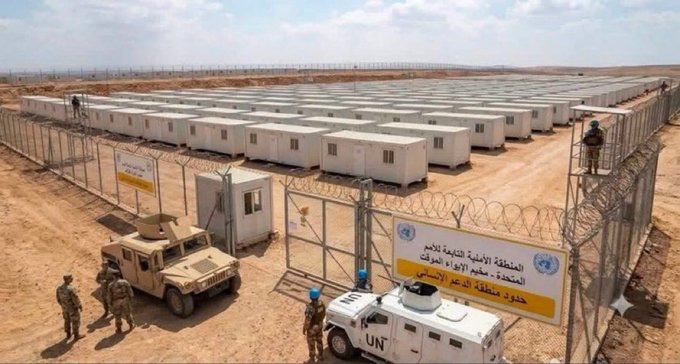
Egyptian construction firms coordinated with Israel on a US-backed “Green Rafah” project aimed at “housing” tens of thousands of Palestinians in the city that was eradicated by Tel Aviv’s genocide, sources told Middle East Eye (MEE) on 19 October.
“Egyptian construction firms surveyed sites in the ruins of the southern Gaza Strip for a housing project dubbed ‘Green Rafah’ … Egyptian engineers surveyed several areas in eastern Rafah under the supervision of the Israeli army and air force, who accompanied them throughout the process until they left,” sources said, including a senior military source in the North Sinai.
According to the report, “the proposed neighborhood would initially house around 20,000 Palestinians.”
It would be “supervised” by “a multinational force expected to be deployed in several parts of the Gaza Strip.”
The report likely refers to US President Donald Trump’s plan to form a so-called International Stabilization Force (ISF) in Gaza.
The report states that surveying of sites for “Green Rafah” is under full US backing.
“Washington conveyed instructions on the Rafah operations through CIA director John Ratcliffe during his latest visit to Egypt,” says the senior military source cited by MEE.
Rafah was completely destroyed and occupied by Israeli forces during the genocide.
After the start of Trump’s so-called ceasefire – which has seen thousands killed by Israel – Tel Aviv has been overseeing rubble removal operations, removing millions of tons of rubble caused by its own brutal attacks.
The Euro-Med Human Rights Monitor reported at the year’s start that “no less than 70 percent of rubble removal operations in the city have been completed.”
“Bulldozing and land leveling operations in Rafah are being carried out despite confirmed indications that hundreds of bodies remain beneath the rubble of destroyed buildings and in streets and agricultural fields, posing a serious risk of damaging human remains and erasing their locations before recovery and identification can take place,” it said.
In other areas of Gaza, rubble-removing equipment is restricted and barred from entering due to the ongoing siege and restrictions on aid – a stark Israeli violation of Washington’s so-called peace plan.
In Rafah, US-backed rubble-clearing operations come as part of a plan to build a “humanitarian city” over the ruins of the city.
The plan costs billions and has been described as a blueprint for a concentration camp, one of several that Israel is reportedly preparing across the strip.
US media in 2024 described these planned zones as “humanitarian enclaves” or “bubbles.”
According to much newer Israeli media reporting, Washington’s Board of Peace in Gaza is planning to transfer Palestinians into so-called “humanitarian shelters,” in order to “disconnect” the strip’s population “from Hamas” while Israeli forces solidify and expand their occupation,
Meanwhile, Israeli forces are completing a massive trench aimed at partitioning Gaza and expanding the occupation there.
Rising fuel prices and shortages have helped drive ongoing protests and rioting in France
Remix News | October 19, 2026
France’s fuel shortages persisted Monday, with roughly 14 percent of the country’s service stations reporting at least one product out of stock and hundreds completely dry, as diesel prices hovered near multi-year highs and President Emmanuel Macron began a Gulf tour aimed at securing additional supplies.
Official data from the Economy Ministry showed 14 percent of stations nationwide facing shortages of diesel or gasoline as of 9 a.m. Monday, up from 10 percent on Saturday.
Independent trackers drawing on the same government feed reported more than 1,600 stations with at least one temporary shortage and several hundred that had run completely out of the fuels they normally sell. Diesel was among the products affected, with median prices around €2.35–€2.36 per liter.
The disruptions have been most acute at TotalEnergies stations, which have capped prices at €1.99 per liter for gasoline and €2.25 for diesel since July.
More than half of the company’s roughly 2,300 sites have reported shortages in recent days, according to data analyses, as drivers seek the cheapest fuel and inventories run low. Regions including the Grand Est, Île-de-France and Normandy have been among the hardest hit.
The shortages are rooted in global market tightness linked to disruptions in the Strait of Hormuz amid conflict involving Iran, which has constrained refined product flows, particularly diesel. However, Ukraine’s ongoing strikes against Russian refineries have also played a key role.
France and other G7 members agreed earlier this month, under French chairmanship and with International Energy Agency coordination, to release up to 100 million barrels of emergency oil and diesel stocks. France is drawing down 10 million barrels of its own diesel reserves over three months, with the government estimating the move could cut pump prices by 12 to 18 cents per liter starting around Nov. 1.
TotalEnergies has separately pledged reductions of roughly 8 to 12 cents at its stations over the same period.
Macron arrived in Kuwait on Monday for a three-day tour that also includes the United Arab Emirates, Bahrain and Qatar. The Élysée said the goal is to secure additional diesel and oil volumes and explore alternative shipping routes, with senior executives from TotalEnergies and Engie accompanying him.
A presidential adviser said that the aim is “additional volumes and more supplies for the French people, which will indirectly have an effect on prices.” Macron has linked the price surge to the Hormuz disruptions and maintained the trip despite the weekend’s violent cost-of-living protests, during which fuel prices were among the grievances cited by demonstrators.
Prime Minister Sébastien Lecornu has said the reserve release should begin easing prices from Nov. 1 and that electricity bills will not rise this winter. Opposition figures have called the plan insufficient or a “scam,” arguing it does little to address longer-term vulnerabilities or the immediate empty pumps. The government has maintained that strategic stocks remain adequate and that the main issue has been logistics and distribution under high demand.
Drivers across multiple regions reported long searches for open pumps over the weekend, with some stations posting “out of stock” signs for diesel. The combination of high fuel prices and shortages has added to broader cost-of-living pressures that [have fueled] large demonstrations and mass riots on Oct. 17, which turned violent in several cities.
Tokyo protests demand Takaichi’s resignation over support for ‘Israel’
Al Mayadeen | October 19, 2026
Thousands of pro-Palestinian demonstrators gathered outside Japan’s National Diet in Tokyo, demanding Prime Minister Sanae Takaichi’s resignation over her government’s stance on Palestine and its alignment with US and Israeli military policies.
The protesters expressed solidarity with the Palestinian people and condemned the ongoing Israeli war on the Gaza Strip and aggression across West Asia.
Demonstrators criticized Japan’s refusal to recognize the State of Palestine, its failure to impose sanctions on “Israel,” and its continued purchases of weapons from Israeli companies.
Protesters oppose Japan’s military expansion
Participants also voiced opposition to the government’s plans to increase military spending, revise Article 9 of Japan’s Constitution, which renounces war, and ease restrictions on arms exports.
Speakers criticized military cooperation between Tokyo and “Israel”, particularly reports of plans to purchase Israeli-made drones.
Protesters argued that these drones had been developed and tested through operations involving the direct targeting and killing of Palestinians. They called on the Japanese government to end all military partnerships with the Israeli occupation.
Protestors demand closure of Israeli embassy
In September, over 100 pro-Palestine demonstrators gathered outside of the Israeli embassy in Tokyo and called for the expulsion of the newly appointed Israeli ambassador to Japan, Emmanuel Navon, and the closure of the embassy.
The protesters denounced the Israeli war on Gaza and criticized Tokyo’s and Tel Aviv’s military relationship.
Protesters carried Palestinian flags and banners condemning the Israeli aggression, while chanting slogans calling for freedom for Palestine and an end to the war.
The Network Against Japan Arms Trade (NAJAT), one of the main groups organizing the protest, stated that the demonstration was intended to formally convey its demands to the Japanese state.
NAJAT said the appointment of a new Israeli ambassador provided an opportunity to renew calls for his expulsion and urge Japan to take a stronger stance against “Israel.”
Protesters further called on Japanese authorities to arrest Israeli Prime Minister Benjamin Netanyahu and demanded that the government close the Israeli embassy in Tokyo.
Featured Video

Iran’s Next Strike May Not Explode. It Could Shut You Down
or go to
Aletho News Archives – Video-Images
From the Archive
Zionism’s Violent Legacy
By Donald Neff | Washington Report On Middle East Affairs | January 1996
On January 4, 1948, Jewish terrorists drove a truck loaded with explosives into the center of the all Arab city of Jaffa and detonated it, killing 26 and wounding around 100 Palestinian men, women and children.[1] The attack was the work of the Irgun Zvai Leumi – the “National Military Organization,” also known by the Hebrew letters Etzel – the largest Jewish terrorist group in Palestine. The Irgun was headed by Revisionist Zionist Menachem Begin and had been killing and maiming Arabs, Britons and even Jews for the previous ten years in its efforts to establish a Jewish state.
This terror campaign meant that at the core of Revisionist Zionism there existed a philosophical embrace of violence. … continue
Blog Roll
 Aletho News
- Trump’s Iran war is on an Israeli leash
- Saudi oil boss issues global supply warning
- Riyadh Says Its Oil System Is Intact. The Numbers Say Otherwise.
- Trump and Netanyahu Want to “Finish the Job” on Iran
- US ‘one-sided dictation’ not Iran’s beliefs makes rational talks impossible: Baghaei
- Iran’s Next Strike May Not Explode. It Could Shut You Down /Col Doug Macgregor
- Iran: US political targets legitimate if assassinations return
- Iraq shuts key border crossing with Iran under US pressure: Report
- Undersea Internet cables could be targeted in retaliation for attacks on Iran: IRGC deputy chief
- EU sending ‘biased’ observers to interfere in Serbian election – president
- If Americans Knew
- The Israel Lobby’s Changing Fortunes
- AIPAC has become such a political liability that it’s shifting to a more “nimble” approach to buying politicians
- At least 160 Israeli settler attacks in 2 weeks
- Will Gaza’s Ancient Christian Community Disappear Forever?
- Israel’s vision of regional security rests on keeping Arab states weak
- Heidi Levine recounts how Palestinian youths helped save her in settler attack
- DAILY UPDATE: Latest essential news on Palestine, Israel, & region
- Trump’s Intensifying Sabotage of the ICC, for Israel’s Sake
- Israeli military detain US and UK volunteers in West Bank including Democratic NY politician Brad Lander
- Americans at National Conservatism Conference held in Israel this year criticize Israel
- No Tricks Zone
- E-Cars Reduce CO2 Emissions By Only 41% Compared To Internal Combustion Engine Vehicles
- Predictions Made By Renowned Climate Professor Over Past Decades Have Been Proven To Be Poor
- New Study Suggests Large Regions Of The Pacific Ocean Have Been Cooling For The Last 80 Years
- Germany’s Green Energy Debacle: High Energy Costs Force Kahla Porzellan to Close After 182 Years!
- New Study: 50 Years Of The Most Aggressive ‘Net Zero’ Policies Can Only Affect The Global Climate By 0.03°C
- US September “Heat” Was No Record…Many Records Set Decades Ago
- Latest European Green Energy Debacle; Portugal’s Largest Flagship Solar Park Insolvent!
- Green Energy Debacle: German Expert Professor Fritz Vahrenholt Warns Of Severe Economic And Social Consequences
- Two More Paleo Reconstructions Affirm Meters-Higher Sea Levels Across Ireland, Brazil 7000-6000 Years Ago
- New Study: Earth And Venus Surface Warmth Largely Explained By Convection And Lapse Rate, Not CO2 Or Radiation

