Hundreds of Palestinian children ethnically cleansed by Israel as world remains silent

An Israeli soldier detains a Palestinian boy during an anti-Israel protest in al-khalil in the Israeli-occupied West Bank, on November 29, 2019. (Via Reuters)
By Robert Inlakesh | Press TV | October 8, 2020
Israel has demolished hundreds of Palestinian homes, this year, leaving hundreds more without a place to live. Yet despite the fact that Israel is set for a record number of home demolitions in East Jerusalem al-Quds, the International Community not only refuses to act but also remains silent.
In East Jerusalem al-Quds alone, since 2004, Israeli home demolitions have left 3,459 Palestinians homeless (including 1,847 minors), which is concerning enough, without the added stress to local Jerusalemite Palestinians of this year being on track to break all previous records for the number of home demolitions since 1967.
What the refusal to confront this issue shows is the complete lack of care from the international community and also when it is properly investigated, that house demolitions in of themselves, reveal that inside of Israel itself, there is no democracy for Palestinians.
In order to understand the issue of house demolitions, we have to differentiate between the succinctly three different circumstances under which Palestinians experience this form of ethnic cleansing. The three key areas are inside of what is now Israel, inside of East Jerusalem al-Quds and inside of the West Bank. The Gaza Strip is not included due to the fact that these demolitions are not undertaken in the same way, but rather occur primarily due to airstrikes.
House demolitions in East Jerusalem al-Quds
So far this year, according to Israeli Human Rights Group B’Tselem, 89 housing units and 27 non-residential buildings were ordered to be demolished in East Jerusalem al-Quds by the Israeli regime. Israel is in fact on track for a record number of house demolitions in the occupied territory this year, according to Israeli paper Haaretz, which will inevitably cause a record number of homeless cases.
Something key to understanding cases of home demolitions in East Jerusalem al-Quds is the ongoing effort to Judaize the city. Palestinians living in East Jerusalem al-Quds do not have Israeli citizenship or Palestinian citizenship, but rather Jerusalem ID cards. If Palestinians choose to live outside of the territory for more than 7 years or claim citizenship of any country (normally Jordan), they can also be stripped of this right to their ID and be expelled. As a result of such policies, significant numbers of Palestinian Jerusalemites have been forced out of Jerusalem al-Quds. Also on top of this is the issue of illegal settlement expansion, with hundreds of thousands of settlers moving into the area.
Despite the oppressive policies, Palestinians make up 40% of the total population of Jerusalem al-Quds, yet are only granted roughly 7% of the total building permits for the city.
The issue of Israeli issued building permits is the main reason for the forced destruction of Palestinian properties in Jerusalem al-Quds. Palestinians have to pay, often unaffordable, prices to apply for permits, yet the approval is near impossible even when they do pay. The reason it is nearly impossible, is because of Israeli implemented building schemes, under which Israel has designed a system built to bolster Jewish construction and prohibit Palestinian construction.
Israel occupied East Jerusalem al-Quds in 1967, later formally annexing it in 1980, meaning that Israel imposes its own law of Palestinians living in the territory and has even built a wall through areas which constitute part of the East Jerusalem al-Quds territory. However, the Israeli application of its own laws over Palestinians is in violation of International Law as the territory is still considered as occupied territory, meaning that the laws of occupation apply to the area.
When Palestinians build and are not granted a permit, or start construction whilst the permit is processing – sometimes delayed until years later before a decision is made by Israel to destroy the home – or are told an old building has not got updated papers, the building is ordered to be demolished.
When Israel orders a home demolition, the pain does not end there, Palestinians are required to pay for the Israelis to forcibly evict their family and demolish their home. This has forced many to pay for bulldozers themselves in order to destroy their own home, so that they do not have to pay for Israel to do it, which often carries a fee double or triple the amount. For Palestinians who cannot afford demolition costs, they are forced to destroy their own homes by hand.
House demolitions in al-Naqab
According to a report released in June, by ‘The Negev Coexistence Forum for Civil Equality’, during the years 2017, 2018 and 2019, Israel ordered the demolition of 2,000 homes in the al-Naqab (Negev in Hebrew).
Key to this issue is the fact that Bedouin Palestinians living in the Naqab are Israeli citizenship holders, some of which serve in the occupation army, yet are still persecuted and pushed out of their home lands. At this point, Palestinian Bedouin’s can only inhabit 12% of their ancestral homelands and if they live in villages “unregistered” by the Israeli regime, they are “transferred” to overcrowded villages and camps, reminiscent of the way in which native Americans were crowded into reservations.
This year alone, hundreds of Bedouins have been made homeless, compounded by the fact that the pandemic is affecting these communities badly and they are still being crammed into overcrowded camps.
Some villages have even been demolished over 100 times. The 17th of September for instance was the last time an entire village was demolished for the 178th time in a row.
House demolitions inside West Bank
From the start of 2020 until the 31st of August, 78 housing units were demolished in the West Bank, leaving 320 people homeless, including 166 minors according to Human Rights Organization B’Tselem.
In the West Bank, according to the United Nations, roughly 1.5% of building permits are approved by Israel, making it nearly impossible to obtain one. This is despite the fact that Israeli settlements and outposts continue to rapidly expand into West Bank territory. If a Palestinian does wish to attempt to attain a permit, it will often cost roughly around $30,000 US just to file the application, a price most just cannot afford, or even for those who can afford the price, it’s too much of a gamble.
Often used propaganda, by Israel and its supporters, suggests that house demolitions are primarily done as a reaction to “Palestinian terrorism” and therefore they argue it’s justified. However, this is not the case. In fact, when Israel does blow up the homes of Palestinians in the West Bank, after the Palestinian in question has been alleged to have committed a violent attack against an Israeli occupation soldier or illegal settler, it is not him who suffers for it.
Palestinians that either attempt to attack an Israeli, or are wrongly accused of it, are almost always shot and killed by the occupation forces. Following this, the family is not able to even grieve in peace, as family homes, sometimes housing multiple families are blown up leaving the entire family homeless. This policy has been described by Israeli Human Rights Group B’Tselem as follows: “Demolishing the homes of relatives of Palestinians who harmed or attempted to harm Israeli civilians or security personnel is prohibited collective punishment, and is one of the most extreme measures used by Israel. Over the years Israel has demolished hundreds of homes, leaving homeless thousands of people who had done no wrong and were not suspected of any wrongdoing. It is an immoral and unlawful policy. The fact that the High Court of Justice has upheld it does not make it legal, rather, it makes the justices accomplices to the crime.”
Despite the fact that these Israeli policies of house demolitions, ultimately aimed at ethnically cleansing Palestinians, are ongoing and have grown more aggressive over the past year, the story is relatively untouched by West Media and largely ignored by the International Community.
Robert Inlakesh is a journalist, writer and political analyst, who has lived in and reported from the occupied Palestinian West Bank. He has written for publications such as Mint Press, Mondoweiss, MEMO, and various other outlets. He specializes in analysis of the Middle East, in particular Palestine-Israel. He also works for Press TV as a European correspondent.
Opposition parties seize power in Kyrgyzstan amid growing geopolitical rivalry in the region
By Jason Melanovski and Clara Weiss | wsws | October 7, 2020
Opposition forces claim to have seized power over much of Kyrgyzstan’s key government agencies and buildings in the capital of Bishkek on Tuesday after protests broke out in the Central Asian country following parliamentary elections on Sunday.
Over 600 were injured and one protester was killed in protests that have seem to have resulted in the removal of President Sooronbai Jeenbekov.
Jeenbekov, who was first elected in 2017, suggested in a phone interview with BBC that he was prepared to step down and “ready to give the responsibility to strong leaders,” but did not specify to which specific figures or forces he was referring to.
Jeenbekov has fled his government offices and accused opposition forces of “trying to illegally seize power” in a brief video statement released Tuesday. His whereabouts remain unknown. On Wednesday, the parliament initiated impeachment procedures against him.
Sixteen political parties took part in the country’s parliamentary elections held on Sunday. Official results suggested that the majority of votes went to the Birimdik party of President Jeenbekov’s younger brother, Asylbek Jeenbekov, and the Mekenim Kyrgyzstan party led by the powerful Matraimov family which has accrued its fortune through its control of Kyrgyzstan’s customs service. Both parties are considered allies of President Jeenbekov and favor close relations with Russia.
Jeenbekov and his allied political parties are also viewed by the opposition as favoring the country’s agrarian south over the more developed and urban north of the country. The parliamentary elections resulted in giving 100 of the 120 seats to representatives from the south who are aligned with Jeenbekov.
A coalition of 12 political parties refused to accept the results, accusing the government of vote-buying.
Despite accusations of electoral fraud, according to preliminary reports from the Organization for Security and Cooperation in Europe (OSCE), the “voting process was generally efficient, well-organized and peaceful.” Following the protests on Tuesday, the country’s Central Election Commission announced it had invalidated the election’s results and that new elections would be held.
Having quickly seized power, the opposition announced it had set up its own coordination council and was beginning to negotiate among themselves who would fill the country’s key government positions.
The opposition also released several jailed political figures including former President Almazbek Atambayev, who had been imprisoned on an 11-year sentence for corruption involving a deal with a Chinese company. Sadyr Japarov, who was also released by opposition forces from prison, was named the country’s acting prime minister in an emergency parliamentary session on Tuesday.
The US and EU as well as Russia and China have called for a peaceful resolution of the crisis. The US and Chinese governments have urged non-interference from foreign powers. James Dorsey, a senior fellow at the S Rajaratnam School of International Studies, noted that the warnings from China and the US were above all meant for each other.
Kyrgyzstan, a former Soviet Republic of 6 million people, has been the site of increased geopolitical rivalry over the past two decades. It borders China and is close to Russia and Afghanistan, which was invaded by the United States in 2001.

Prior to the current seizure of power, Kyrgyzstan had seen two of its previous presidents overthrown since the fall of the Soviet Union in 1991. In 2005, the US staged a “color revolution” in the country, one of several in the former Soviet Union that were aimed at containing the influence of Russia.
The American press used to tout the country as the United States’ closest ally in Central Asia. For many years, Kyrgyzstan even hosted the United States’ only Central Asian airbase in Manas. The airbase served as the first and last stop for American soldiers entering and leaving Afghanistan. Approximately 5.6 million foreign soldiers passed through the base while it was in operation.
The base was closed in 2014 following the election of former President Atambayev in 2011. Atambayev favored realigning the country with Russia and increasing economic ties to its neighbor, China, which has become Kyrgyzstan’s biggest economic investor and trading partner.
According to Chinese government statistics, bilateral trade amounted to $6.35 billion in 2019. China holds $4 billion of the country’s national debt. Kyrgyzstan only has a GDP of a little over $8 billion. The country is also a central component of Beijing’s Belt and Road Initiative.
Despite the significant economic ties to China, anti-Chinese sentiments in Kyrgyzstan are running high. In 2019, Bishkek became the site of large anti-Chinese protests demanding, among other things, a ban on Kyrgyz-Chinese marriages, and calling for restrictions on the economic influence of China.
The predominantly Muslim country also shares a border with China’s Xinjiang region, which is home to China’s large Muslim minority of the Uygur.
Many Uygurs are ethnic Kyrgyz and have been imprisoned in concentration camps, a situation that has been exploited by the bogus US-led imperialist campaign over human rights abuses against China. In turn, there is a significant Uygur minority in Kyrgyzstan, which is routinely subject to discrimination.
Following the closure of the US Manas airbase in 2014, Kyrgyzstan joined both the Moscow-led Eurasian Economic Union and the post-Soviet military alliance of the Collective Security Treaty Organization. Russia also opened its own military airbase within the country, forgiving $500 million in Kyrgyz debt. The US viewed this as further undermining its geostrategic interests in the region as the war in neighboring Afghanistan has been raging on.
Jeenbekov continued for the most part the close relations with China while seeking to make the Kremlin “the main strategic partner” of the country. By contrast, several of the opposition parties that stormed the parliament have been critical of the country’s ties to Russia, claiming they infringed on Kyrgyzstan’s “independence.”
Reports also surfaced on Tuesday that opposition forces had burned down a Russian-operated factory at Kyrgyzstan’s second-largest gold deposit, Jeruy, causing the site’s owners to suspend operations.
Following the factory burning, Russia put its military base on high-alert and called on “all political forces at this critical moment for the republic to show wisdom and responsibility in order to preserve internal stability and security.”
In addition to the ongoing civil war in Eastern Ukraine, the crisis in Belarus, and the outbreak of actual war between a Russian-allied Armenia and a Turkish-backed Azerbaijan, the crisis in Kyrgyzstan represents yet another major challenge to the Kremlin’s geopolitical position in the former Soviet region. … Full article
Saudi regime forces detain activist during raid against Shia-populated Qatif region
Press TV – October 8, 2020
Saudi regime forces have reportedly arrested a young man in the kingdom’s Shia-populated and oil-rich Eastern Province as the Riyadh regime presses ahead with its brutal clampdown against members of the religious community.
The London-based and Arabic-language Nabaa television news network, citing local sources, reported that Saudi troops arrested Ali al-Awami after they raided Deira neighborhood in the Umm al-Hamam village of Qatif region, located more than 420 kilometers (260 miles) east of the capital, Riyadh, on Thursday.
The report added that regime military vehicles rolled into Umm al-Hamam on Wednesday morning, and imposed a tight cordon on Deira neighborhood without any reasons.
Last month, security forces besieged Umm al-Hamam for three days, carried out raids and arrested a number of young men there.
Activists said at the time that trumped-up charges were leveled against those arrested as part of the Riyadh regime’s scenarios of abuse, marginalization and discrimination against the Eastern Province population.
Eastern Province has been the scene of peaceful demonstrations since February 2011. Protesters have been demanding reforms, freedom of expression, the release of political prisoners, and an end to economic and religious discrimination against the oil-rich region.
The protests have been met with a heavy-handed crackdown by the regime. Security forces have increased security measures across the province.
In January 2016, Saudi authorities executed Shia cleric Sheikh Nimr Baqir al-Nimr, who was an outspoken critic of the policies of the Riyadh regime. Nimr had been arrested in Qatif in 2012.
Ever since Crown Prince Mohammed bin Salman became Saudi Arabia’s de facto leader in 2017, the kingdom has arrested dozens of activists, bloggers, intellectuals and others perceived as political opponents, showing almost zero tolerance for dissent even in the face of international condemnations of the crackdown.
Muslim scholars have been executed, women’s rights campaigners – including Loujain al-Hathloul – have been put behind bars and tortured, and freedom of expression, association and belief continue to be denied.
US Southern Command Chief Admits Plans Against Venezuela
teleSUR- October 7, 2020
Venezuela’s Foreign Affairs Minister Jorge Arreaza Monday denounced that the U.S. Southern Command Admiral Craig Faller openly admitted his country’s plans to violently overthrow President Nicolas Maduro.
On Monday, Faller commented at an online meeting organized by the business forum Council of the Americas that the international attempts to bring down Venezuela’s government have worked, although not quickly enough for the Venezuelan people.
He not only said that such efforts have not worked quick enough but also that it took an entire generation to get to this point and that it will take a while to unblock Venezuela’s democratic framework.
The Admiral also attributed certain external factors such as the help of Cuba, Russia, China and Iran to the alleged slow change within Venezuela.
Arreaza pointed out that this arrogant position of the members of the White House is unacceptable as they insist on violating the Charter of the United Nations and the most basic principles of international law through threats and blockades.
This statement shows Washington’s systematic and widespread attacks on Venezuela, which constitutes a crime against humanity.
Venezuela’s government will add Faller’s confessions to the criminal complaint it filed against the U.S. government on Feb. 13 before the Hague’s International Criminal Court.
In this complaint, President Maduro requests the White House to lift all coercive measures against his country since the U.S. government prevents Venezuela from acquiring food and medicines and from negotiating freely on the international market.
UN Human Rights Council Passes Dual Venezuela Resolutions
One resolution extends UN cooperation and has Caracas’ consent, while the other extends a controversial Washington-backed mission.
By Paul Dobson | Venezuelanalysis | October 7, 2020
Mérida – The United Nations Human Rights Council (UNHRC) passed two resolutions concerning Venezuela on Tuesday.
The first was presented by Peru and endorsed by the right wing governments which make up the Lima Group. It granted a two year extension to a controversial fact finding mission which is investigating the human rights situation in the country. The resolution was passed by 22 votes in favour, three against (including Venezuela), and 22 abstentions.
Amongst those backing it was the center-left government of Argentina, which had previously called for non-intervention in Venezuela’s internal affairs. Influential figures and popular movements from Argentina have since condemned the vote, with the country’s ambassador to Moscow resigning on Wednesday in protest.
The UN’s fact finding mission was constituted one year ago by the UNHRC, with its members Marta Valinas (Portugal), Francisco Cox (Chile) and Paul Seils (UK) presenting their first report at the previous council session in September. The report accused the Caracas government of crimes against humanity through carrying out extrajudicial executions, forced disappearances, arbitrary detentions and torture.
The Maduro government rejected these accusations, and claimed the mission to be“politicised,” “lacking in scientific scrutiny” and that the report was “written from afar.” Days after the report was published, Venezuela presented a counter-report titled “The Truth about Venezuela,” while Attorney General Tarek William Saab also defended the country’s record in matters of human rights.
Hours after the first resolution was passed, a second one presented by Syria, Iran and Turkey was also approved with 14 votes in favour, seven against and 26 abstentions. The second resolution, which was backed by Venezuela, extends the functions of the Venezuela-based office of the UN high commissioner for human rights, as well as promising to “continue UN technical cooperation” with the government.
It also denounced the human rights consequences of Washington’s blockade against the Caribbean country and urged a “constructive dialogue and cooperation with the state” in order to “strengthen its capacity to fulfil its obligations in the matter of human rights,” specifically mentioning efforts to strengthen the judicial system in the country.
Following the two votes, Caracas strongly condemned the Lima Group resolution, vowing that it will “not recognise parallel and unnecessary mechanisms” which express a “cynical concern” for human rights. For his part, Venezuela’s permanent representative at the United Nations, Jorge Valero, added that the resolution “seeks the imposition of monitoring mechanisms which do not have the consent of my country nor my people.”
On the other hand, Caracas celebrated the passing of the Syria-Iran-Turkey resolution, with a Foreign Ministry statement explaining that the resolution “demonstrates the commitment of the Venezuelan state to maintaining dialogue and respectful and constructive cooperation with the office of the High Commissioner for Human Rights.” Foreign Minister Jorge Arreaza also backed the resolution personally, claiming that Venezuela’s commitment to human rights is “absolute.”
Following an inaugural visit to the country in July 2019, the office of the High Commissioner for Human Rights set up a permanent two-person office in Caracas.
Since, UN reps have been granted access to prisons and other sites, and have reportedly worked to strengthen the legal system and “the institutional mechanisms for human rights protection.”
Subsequently, a number of detained right wing activists have been released by the government, and authorities have hinted at a shakeup of the contentious FAES special police forces. The High Commissioner’s office has previously called for the FAES to be dissolved. The special forces have also been denounced by many Venezuelan popular movements and leftwing parties.
Guaidó creates a parallel consulate in Brazil
By Lucas Leiroz | October 8, 2020
A “parallel” Venezuelan Consulate in Brazil was condemned in a recent statement by Venezuelan Foreign Minister Jorge Arreaza. In late September, supporters of the Venezuelan opposition leader, the self-proclaimed “interim president” Juan Guaidó, announced that they would form a new consulate in Brazil. Basically, the objective is to create a parallel Venezuelan diplomatic representation, which meets the interests of the opposition – which is supported by the Brazilian government. The decision has received strong criticism from the Venezuelan government, which considers it illegal. However, despite the criticism, the consulate is starting its operations this week in the Brazilian state of Roraima – a region strategically chosen because it borders Venezuela.
Jorge Arreaza, head of the Bolivarian government’s foreign relations, reinforced his criticism and published an official statement warning the international community against the activities of the opposition, which he classified as fraudulent. According to Arreaza, there is an attempt to usurp the legitimate consular power of the Venezuelan government – which, in legal terms, is correct, considering that Guaidó is not actually the president of Venezuela.
Guaidó’s initiative in Brazil continues a series of clashes between the government of Jair Bolsonaro and representatives of Nicolás Maduro. Last month, the Brazilian Ministry of Foreign Affairs declared Venezuelan diplomats as “persona non grata” after setting a deadline in April for them to leave the country – which did not happen due to a later decision by the Supreme Court. Now, with the appointment of new “diplomats” by Juan Guaidó, the situation between both countries is even more tense, since the Brazilian government will publicly recognize the role of the opposition’s parallel diplomatic service, while denying maintaining relations with the Venezuelan official diplomacy.
No specific date has been set for the opening of the parallel consulate, and it has just been announced that from this week on the agency would be fully operational. In fact, Guaidó’s “diplomats” are already acting freely in Brazil and even distributing documents to Venezuelan citizens in Brazilian territory. The Maduro government has already stated that such documents have no validity, but the Brazilian government recognizes the actions and cooperates with the oppositionist Consulate. It is also important to emphasize that the employees of the parallel consulate have no diplomatic training, being political militants chosen by Guaidó to represent his interests in Brazil.
Brazil is making a serious mistake in accepting the formation of an illegal consulate in its territory. This represents a total violation of good customs in international relations. Although Brazil is directly opposed to the Venezuelan government, recognizing the legitimacy of an illegal “consulate” and allowing parallel diplomats to act in its territory sets an undesirable precedent in bilateral relations between these states. According to the Montevideo Convention, a State is constituted by the presence of territory, government and diplomatic relations. Therefore, when recognizing a new diplomacy, Brazil is, in practice, recognizing the existence of a Venezuelan State parallel to the Bolivarian Republic. The Venezuelan case, moreover, illustrates an absolutely inappropriate international behavior among the nations that oppose Maduro. To recognize a deputy as president for the simple fact that there was political opposition to the legitimate government had already been a serious violation of international customs. Now, with the creation of parallel consulates, the situation is likely to get even worse, mainly due to the fact that Brazil may not be the only country to receive “Guaidó’s diplomats”.
Interestingly, the inauguration of the parallel Consulate in Brazil takes place a few weeks after the visit of US Secretary of State Mike Pompeo to four countries in South America. The head of American diplomacy met with Brazilians including Brazil’s minister of foreign affairs Ernesto Araújo and Venezuelan immigrants precisely in the state of Roraima. The secret talks between Pompeo and Araújo still remain obscure. When called by the Senate to clarify the content of the meeting, Araújo gave no details and mentioned only generic aspects of the conversations he had with Pompeo. The other countries visited by Pompeo were Colombia, Guyana and Suriname – countries strategically chosen to form a siege against Venezuela. Considering that Pompeo’s visit to Brazil was most likely decisive for the Brazilian government to agree to cooperate with Guaidó’s parallel diplomacy, it is possible to foresee that sometime soon some of the other countries visited by Pompeo will also announce a similar decision, receiving “diplomatic missions” coming from the self-proclaimed and illegitimate government of Juan Guaidó.
It remains to be seen what the consequences of these acts will be going forward. The parallel consulate is already acting freely in Brazil, consolidating an historic act of violation of Venezuelan state sovereignty perpetrated by the Brazilian government. However, the US – the world power that promotes the crusade against Maduro – has not yet made such a bold decision and does not publicly have “diplomats” in the service of Guaidó. In fact, Brazil is acting as the laboratory of a great experiment, where the limits of the violation of Venezuelan sovereignty are being tested. Depending on the reaction of Caracas and its allies, other countries will receive – or not – such “diplomats”.
Lucas Leiroz is a research fellow in international law at the Federal University of Rio de Janeiro.
Michael Mann Appeals to, Then Ignores Scientific Consensus on 60 Minutes
By James Taylor – Climate Realism – October 5, 2020
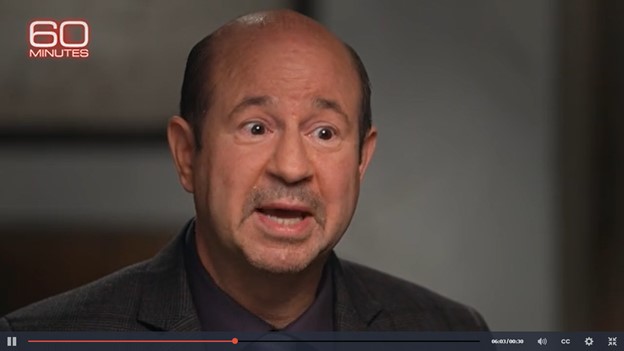
Prominent scientist and climate activist Michael Mann appealed to an asserted scientific consensus to chastise President Donald Trump on CBS’s 60 Minutes program last night. Ironically, Mann himself ignored clear scientific consensus in order to promote his own, out-of-the-mainstream climate change theories.
While interviewing Mann, CBS’s Scott Pelley said, “There have always been fires in the West. There have always been hurricanes in the East. How do we know that climate change is involved in this?” Pelley followed up with, “The president says about climate change, ‘Science doesn’t know.’”
Replied Mann, “The president doesn’t know, and he should know better. He should know that the world’s leading scientific organizations, our own U.S. National Academy of Sciences, and national academies of every major industrial nation, every scientific society in the United States that’s weighed in on the matter. This is a scientific consensus. There’s about as much scientific consensus about human-caused climate change as there is about gravity.”
Mann’s description of the conclusions of the “scientific consensus” however, is exactly the opposite of what scientific bodies report.
As documented in Climate at a Glance: Hurricanes, the United Nations Intergovernmental Panel on Climate Change (IPCC) expresses “low confidence” in any connection between climate change and changes in hurricane activity.
Similarly, as documented in Climate at a Glance: U.S. Wildfires, U.S. wildfires are much less frequent and severe than they were in the first half of the 20th century – 100 years of global warming ago. Moreover, the IPCC reports a decrease in drought conditions – which is the primary climate factor regarding wildfires – in the global region including the U.S. West. Moreover, the IPCC finds no evidence of an increase in drought globally, either.
Ultimately, data, evidence, and scientific facts are far more indicative of scientific truth than a real or imagined consensus of scientists. Yet, to the extent Michael Mann wishes to invoke consensus as a scientific argument, the clear consensus of scientists is that Mann is promoting extreme climate theories that have no basis in reality.
James Taylor is Director of the Arthur B. Robinson Center for Climate and Environmental Policy at The Heartland Institute.
As Boris Johnson announces Britain’s ‘great reset’, were the Covid ‘conspiracy theorists’ right all along?
By Neil Clark | RT | October 7, 2020
The UK Prime Minister’s remote speech to his party conference saw him dismiss the idea of returning to normality. Is he using Covid-19 to follow the World Economic Forum’s ‘Great Reset’ agenda, as many have warned?
‘It’s not really about public health or a virus. They have another agenda.’ That’s what the so-called ‘conspiracy theorists’ have been saying since March, when the first British lockdowns were imposed and our lives were turned upside down.
Those ‘conspiracy theorists’ were denounced, as always, as ‘cranks’ and ‘flat-Earthers’ but here we are in October, and, let’s face it, there is absolutely no sign, despite very low numbers of deaths ‘with’ Coronavirus, that we are returning to anything like normal. In fact, in his keynote speech yesterday, Prime Minister Boris Johnson specifically ruled out a return to normal, not even with a vaccine.
“After all we have been through, it isn’t enough just to go back to normal. We have lost too much. History teaches us that things of this magnitude – wars, famines, plagues, events that affect the vast bulk of humanity, as this virus has – they do not just come and go. They can be the trigger for economic and social change.”
When I heard Johnson utter those words I thought, ‘where have I heard this stuff before?’ Well, the answer is in the book ‘Covid-19: The Great Reset’ by Klaus Schwab, the executive chairman of the World Economic Forum, and Thierry Malleret. They too, like Johnson, invoked the Second World War as the trigger for fundamental changes, not only to the global order and global economy, but to society and the way human beings interact with one another. Like Johnson, they don’t want to return to normal. “Many of us are pondering when things will return to normal. The short response is never.”
Instead, Schwab and Malleret want a world changed forever by a virus which they admit is only ‘mild’ compared to others in history. Covid-19 is seen as the catalyst for the ‘Fourth Industrial Revolution’.
As to where all this is heading, I recommend you read Schwab’s ‘Great Reset’, and his earlier ‘The Fourth Industrial Revolution’, but please don’t do so late at night, because they will probably give you nightmares. Schwab’s elitist Davos-man utopia is a trans-human, socially distanced, utterly soulless dystopia for the rest of us. Think of the most terrifying sci-film you’ve ever watched and that still doesn’t go anywhere near it. And the worst thing is that it is sold to us as some kind of ‘progressive’ vision.
Johnson, in his speech yesterday, showed he’s a fully-signed up ‘Great Resetter’. It was, for me, the most chilling oration ever made by any British prime minister at a party conference.
The man who justified a national lockdown in March on a purely temporary three-week basis to ‘flatten the curve’, and ‘protect the NHS’, and who said in the summer, after the lockdown had lasted three months, that he hoped Britain would return to ‘significant normality’ by November, now tells us: “We have been through too much frustration and hardship just to settle for the status quo ante – to think that life can go on as it was before the plague; and it will not… We are resolving not to go back to 2019.”
For Johnson, using the globalists’ phrase ‘Build Back Better’, this is the time to launch Britain on the ‘Fourth Industrial Revolution’. “From internet shopping to working from home, it looks as though Covid has massively accelerated changes in the world of work… as old jobs are lost and as new ones are created… The Covid crisis is a catalyst for change…” he said.
Did Schwab actually write his speech? It looks like it. Although Johnson didn’t use the phrase ‘The Fourth Industrial Revolution’, he did mention a ‘Green Industrial Revolution’ twice.
Johnson foresees a future in which every home in Britain relies on wind power (he certainly produces a lot of that), and “instead of being dragged on big commutes to the city” people can “start a business in their home town… and bring up their children in the neighbourhoods where they grew up themselves.”
Working from home is here to stay, with “gigabit broadband,” shopping from home, conferencing from home… in fact, let’s do everything from home. Who needs to meet other human beings? Not that there’d be anywhere to meet, with pubs, cinemas and theatres all closed down due to the never-ending coronavirus restrictions.
Johnson pledged to make Britain “the greatest place on Earth” but to me it sounds more like hell. The question, as ever, is who benefits?
The World Economic Forum, founded by Schwab, has been incredibly influential when it comes to the changes we’ve already seen in 2020, and what is being openly planned for the future. It was the WEF which co-hosted the ‘Event 201’ conference in New York in October 2019, which modelled a fictional global pandemic.
It was at the WEF’s annual meeting in Davos on January 24, 2020 that Bill Gates’ Coalition for Epidemic Preparedness and Innovations (CEPI) held a press conference to announce a ‘new partnership’ to develop vaccines for the virus, when the number of confirmed worldwide cases was still in the hundreds.
It was the WEF’s Schwab who declared in June: “The pandemic represents a rare but narrow window of opportunity to reflect, reimagine and reset our world.”
It was the WEF that in July was promoting a Covid-19 ‘Health Passport’ app, the ‘brainchild’ of one of its ‘Young Global Leaders’, as the future for travel and attending events.
And for those who don’t have the app or a ‘negative‘ test result? Well, you can just stay at home.
If you take a look at the ‘founding partners’ of the WEF’s Centre for the Fourth Industrial Revolution you’ll see names such as Microsoft, Palantir, Facebook, Netflix and Gavi, The Vaccine Alliance, founded by the Bill and Melinda Gates Foundation.
Yes, that’s right, hi-tech online giants and hi-tech multi-billionaires supporting a big shift towards a stay-at-home, ‘do everything on the Internet’ society.
Is it a ‘conspiracy theory’ to say that Covid-19 is being used as a convenient opportunity to introduce long-planned changes to the economy and society, when those pushing for such changes like Schwab openly talk of there being a “rare but narrow window” for a major ‘reset’?
Actually, after Johnson’s speech yesterday, the biggest ‘conspiracy theorists’ now are those who DON’T think the British government is working to another agenda.
Neil Clark is a journalist, writer, broadcaster and blogger. His award winning blog can be found at http://www.neilclark66.blogspot.com. He tweets on politics and world affairs @NeilClark66
Marseille to set up own Covid scientific council in a protest over ‘dependency’ on Paris scientists
RT | October 6, 2020
The French city of Marseille has adopted a proposal to form its own scientific council to assess Covid statistics and develop more informed local policies, as it battles against “unjust” lockdown rules imposed by the government.
The proposal was adopted on Monday, having been put forward by outspoken former French senator Samia Ghali, the current second-in-command of the city administration.
The move will see Marseille take a leading role in the assessment of its own health situation and provide the mayor, Michèle Rubirola, and city leaders with the necessary information to manage their own policies on Covid restrictions, Ghali said.
“The mayor must chair a scientific council … to see what the deficiencies are, and so we have a perspective and no longer depend on certain Parisian scientists, but also so we, ourselves, have the capacity to say what is going and what is not, and no longer suffer the thunderbolt of Paris.”
Ghali has been particularly vocal in her criticism of Parisian lawmakers in recent weeks, following the imposition of new Covid restrictions in Marseille and neighboring Aix-en-Provence. The government decreed in September that the southern city would become a ‘maximum alert zone’, causing the closure of all restaurants and bars for 15 days, which was seen by many in Marseille as unjustified. The restaurants were eventually allowed to reopen from Monday under certain conditions, which prompted Ghali to say the earlier strictures were “unfair and therefore not sustainable.”
Paris escaped fresh restrictions in September, leading many elected officials in Marseille to suggest France’s second city was not treated in the same way as the capital. Rubirola had previously shared her disapproval on Twitter, claiming “The announcements of Olivier Véran confirm this evening the unequal treatment suffered by Marseille. Inconsistent and unfair.” Restrictions were eventually introduced in Paris on Monday.
However, the announcement of a scientific council for Marseille has been met with criticism by some political leaders. The president of the Regional Council of Provence-Alpes-Côte d’Azur, Renaud Muselier, said there are already 10 existing and competent health bodies at national and regional level. “In this crisis, each of these structures has its own expertise and role to play. Adding a purely Marseille thing to it can only add confusion and cacophony to an already disturbing disorder,” he noted.
Round up the ‘anti-vaxxers’? Enlist religious leaders? Bill Gates warns US needs to brainstorm ways to reduce ‘vaccine hesitancy’
RT | October 6, 2020
Billionaire software tycoon Bill Gates has urged the US to prepare for a Covid-19 vaccine rollout by deputizing trusted community leaders to “reduce vaccine hesitancy,” bemoaning the rapid spread of “conspiracy theories” online.
The Microsoft founder-turned-vaccine-evangelist painted a mostly rosy picture of a vaccine rollout getting “rich countries” back to normal by the end of 2021 in an interview during the Wall Street Journal’s CEO Council on Tuesday.
However, with less than half of Americans saying they’d get a Covid jab – even if paid $100 for it – in a recent survey, Gates then focused his talk on enlisting the nation’s “trust network” to overcome the skeptics.
Lamenting that “vaccine hesitancy is in all countries and predates the pandemic,” Gates suggested American health officials start “thinking about which voices will help reduce the hesitancy, so we can get a level of vaccination that really has a chance of stopping” the virus.
Gates provided the example of challenges the polio vaccine faced in some countries – and the cunning lengths some were willing to go to get their populations jabbed.
“In places like Nigeria we had to go to the religious leaders, talk to them, have them speak out, you know, vaccinate their children. So [it is about] understanding the trust network – who is it that you view as an expert. Very few people can look at the formulation or data directly.”
Coronavirus czar Anthony Fauci hinted back in June that he was already on the task, revealing the government had a PR blitz planned in which “people [vaccine-hesitant Americans] can relate to in the community – sports figures, community heroes, people that they look up to” – will spread the pro-vaccine gospel.
Gates had typically harsh words for both conspiracy theorists and the social media platforms he believes enable them, complaining that “very titillating things” like the notion that “somebody intentionally made this virus, or that there’s some conspiracy” spread online “so much faster than the truth, which is that it comes from a bat.” Gates called on social media to “slow down or annotate things that actually cause huge damage, like not wearing masks or not being willing to take the vaccine if it proves that it is this key tool to getting back to normal.”
While he stressed he wasn’t suggesting Facebook and its peers go for “the Chinese solution” of telling companies what they must censor, the billionaire has previously called conspiracy theories about his funding of global vaccination schemes “a big problem,” and on Tuesday he slammed platforms for the absence of “smart solutions” to that problem.
Gates saved some barbs for the Trump administration, disparaging the government’s preparation for and response to the pandemic, accusing it of creating a “vacuum of leadership” by pulling out of the World Health Organization. Among other failings, “we didn’t do [pandemic] simulations” like some countries, he complained, referencing his now-famous 2015 TED Talk about the importance of comprehensive state-level planning for epidemics.
However, his Bill and Melinda Gates Foundation actually staged one of the best-known pandemic simulations, Event 201, in conjunction with the World Economic Forum and Johns Hopkins University in New York last October. The barely-fictional scenario involved a deadly coronavirus originating in geese spreading around the world, devastating economies and triggering the imposition of strict behavioral controls while leaving a trail of 65 million bodies in its wake. The narrative was so close to the subsequent outbreak of the novel coronavirus that Johns Hopkins was forced to include a disclaimer on the event website.
Indeed, the US government has run several such simulations in conjunction with representatives of local governments, hospitals, and various other private sector interests over the years. “Crimson Contagion,” one such exercise held from January to August last year, predicted the US would respond in a chaotic and disorganized fashion to an outbreak, exposing weaknesses that were apparently not remedied in time for Covid-19. A 2017 Pentagon report similarly warned that a “novel respiratory disease” emanating from, among other places, a Chinese wet market could spread throughout the world, hurting the military’s readiness and national security for as long as two years and prescribing correctives – which apparently fell on deaf ears.
Gates has previously warned that the “final hurdle” to a vaccine-fueled return to normalcy is convincing the population to actually roll up their sleeves and take the jab(s), and the World Health Organization – of which his foundation is the single largest funder, following the US’ departure – declared “vaccine hesitancy” one of the biggest threats to world health last year. The billionaire has stated he hopes to have seven billion humans vaccinated with whatever formula proves safe and effective, but has suggested a mandate would be counterproductive and actually increase resistance to vaccines.
Gates is far from the only voice urging governments to soft-pedal their inoculation demands. Noting that a straight-up mandate would probably be challenged and nullified in court, a paper published earlier this month in the New England Journal of Medicine instead suggested at-risk populations be threatened with “penalties” like job loss for failure to get vaccinated. Australian PM Scott Morrison similarly had to walk back comments that vaccination should be “as mandatory as possible” after intense public outcry, and US President Donald Trump has promised the shot will be optional even as he tasked the military with delivering it.
Gates is funding the development of six leading Covid-19 vaccine candidates, and told the conference Phase III clinical trial data would be in before the year’s end. Acknowledging “we still don’t know whether these vaccines will succeed,” he nevertheless pooh-poohed Russian and Chinese vaccine development efforts, predicting that once ‘his’ – the Western – jabs were widely available at low cost, “I doubt there will be a lot of Russian or Chinese vaccine going outside these countries.”
Featured Video

Penguins, Polar Bears and Sea Ice
or go to
Aletho News Archives – Video-Images
Book Excerpt
Measles and Mortality
Informed with Aaron Siri| November 19, 2026
Given the news coverage around measles and mortality, I decided to share the section of my book, Vaccines, Amen, that covers precisely this topic. Help me spread a bit of reality into the media hysteria around this issue. Here is that section of the book… continue
Blog Roll
 Aletho News
- ‘Chinagate’ Is Here
- Iran, four other countries condemn US plans to deploy weapons in outer space
- US media brings back the Iraq war playbook and why it won’t work
- Zakharova schools German FM on history basics
- Germany to produce drones for Ukraine
- Merz takes a swipe at Merkel over Ukraine’s NATO bid
- Measles and Mortality
- New York State Demands Amish Adopt Its Beliefs or Leave
- Saudi Arabia turns to South Korea, Ukraine to bolster air defenses
- Who pays for the war on Iran? The Gulf states had an answer in 1991
- If Americans Knew
- The revolution against Israeli control of America is HERE! (Video)
- Why Iran Hawks Are Now Hyping ‘Radical Shiite’ Threats
- Israel is still displacing Palestinians in Gaza, expanding its ‘yellow line’ deeper into the strip every day
- DAILY UPDATE: Latest essential news on Palestine, Israel, & region
- US Military Airlift to Israel continues
- “Israel Should Exist” Is An Extremist Position
- Israel Is Using All-Expenses-Paid Trips to Turn U.S. Americans Into Israel advocates
- Oxfam: Israel has turned Gaza into a toxic wasteland, threatening human survival
- Is environmental destruction part of Israel’s displacement playbook in the West Bank and Lebanon?
- Trump’s Cyber Director Pick Has Deep Ties To Israeli Intelligence
- No Tricks Zone
- Alarmist Climatologists In Shock! 2026 Atlantic Hurricane Season Sees Lowest Count In 101 Years
- New Study: Modern Temps Are Among The Coldest Of The Last 10,000 Years In East Central Europe
- Germany’s Renewable Energies Lead to 1.4 Billion Euro Electric Power Trade Deficit
- Argentina’s Perito Moreno Glacier Joins Antarctica and Arctic In Defying Doomsday Melt Claims
- New Study: Barents Sea Temperatures Were Warmer And Sea Ice Less Extensive In The 1700s Than Today
- German Authorities Start Initiative To Evaluate Public Register For Climate “Disinformation” Spreaders!
- Zonal Asymmetry of Temperature Change in the Antarctic Circumpolar Current
- New Study: The Net Fossil Fuel Contribution To Rising Atmospheric CO2 Has Been Zero For 500 Years
- Germany’s Green Energy Transition Becoming Increasingly Expensive…Another 6 Trillion Euros!
- Sudden Stratospheric Warming, Powerful El Niño Combination May Lead To Extreme Europe Cold, Energy Crisis!

