Israel lobby in Canada

By Yves Engler · June 7, 2020
The Trudeau government has been campaigning aggressively for a seat on the Security Council, but its bid to win a place on the UN’s most powerful decision-making body will be hampered by Canada’s decidedly anti-Palestinian voting record. Despite claiming to support the “international rules based order”, the Trudeau government has voted against more than 50 resolutions upholding Palestinian rights. The extent to which the Liberals have mimicked the Stephen Harper Conservative’s position regarding General Assembly resolutions, which are little more than symbolic acts of solidarity with the long-beleaguered Palestinians, highlights the power of the Israel lobby in Canada.
Together the United Jewish Appeal/Combined Jewish Appeal of Toronto, Montréal, Winnipeg, Windsor, Calgary, Edmonton, Hamilton, London, Ottawa, Vancouver and Atlantic Canada raise over $100 million annually and have about $1 billion in assets. For half a century UJA Toronto has organized an annual Walk with Israel and the Montréal branch organizes an annual Israel Day march. Many thousands march each year. The lobbying arm of the UJA/CJA, the Centre for Israel and Jewish Affairs has over 40 staff and a $10 million budget. In addition, B’nai B’rith has a handful of offices across the country. For its part, Friends of Simon Wiesenthal Center Canada’s budget is $7-10 million annually. These groups work closely with StandWithUs Canada, CAMERA, Honest Reporting Canada and other (often extreme right wing) Israeli nationalist political organizations. Dozens of registered Canadian charities, ranging from the Jewish National Fund to Christians United for Israel also engage in at least some pro-Israel campaigning.
Since 2013 the chief fundraiser for the Trudeau Liberals has been Stephen Bronfman, scion of an arch Israeli nationalist family. Bronfman has millions invested in Israeli technology companies and over the years the Bronfman clan has secured arms for Israeli forces and supported its military in other ways.
Other notable Canadian moguls have long histories of ensuring ties between Israel and Canada.
Worth more than $3 billion prior to his death, David Azrieli was among the richest Canadians. In his youth he served in the paramilitary Haganah group during the 1948 war. His unit was responsible for the Battle of Jerusalem, including forcibly displacing 10,000 Palestinians. Azrieli was also a real estate developer in Israel and in 2011 he made a controversial donation to Im Tirtzu, a hardline Israeli-nationalist organization (deemed a “fascist” group by an Israeli court).
Worth $1.6 billion, Gerald Schwartz and his wife Heather Reisman created the Heseg Foundation for Lone Soldiers, which provides millions of dollars annually for non-Israelis who fight in the IDF.
In recent years Canadian-Israeli billionaire Sylvan Adams has plowed tens of millions of dollars into various sports and cultural initiatives to rebrand Israel.
Other Canadian billionaires Larry Tanenbaum, Mark Scheinberg, David Cheriton, Daryl Katz, Seymour Schulich, as well as the Zekelman, Reichmann and Sherman families, all back Israel.
In “A story of failed re-engagement: Canada and Iran, 2015–2018” University of Ottawa professor Thomas Juneau highlighted the Israel lobby’s role in deterring the government from re-establishing diplomatic relations with Iran:
“Initially, Cabinet and most caucus supported re-engagement. Dion, who was actively lobbied by Bombardier (whose headquarters were in his riding) and the Montreal Chamber of Commerce, was especially keen. Other senior ministers such as Freeland (International Trade) and Harjit Sajjan (Defence) also supported. With time, however, opposition within caucus grew. It was led by Michael Levitt, the influential MP for York-Center and chair of the Canada-Israel Interparliamentary Group, and also included Anthony Housefather (MP for Mount-Royal). These MPs had support from former minister Irwin Cotler, who had long argued for harsher policies towards Iran.”
Juneau continued, “other interviewees also highlighted the differences in organization among pressure groups. Between the tabling of the motion [to oppose reengaging with Iran] and the vote four days later, groups opposing reengagement, such as the Center for Israel and Jewish Affairs, rapidly launched an effective campaign to pressure MPs. Groups favoring reengagement, however, such as the Iranian Canadian Congress, were unable to match these lobbying efforts.”
For a movement defending open racism and colonialism the Israel lobby wields a unique and powerful stick: The ability to play victim and smear those advocating for justice as racist.
The Liberals ousted high-profile Imam Hassan Guillet as a candidate to run for the party in 2019 after B’nai B’rith attacked him for challenging Israeli expansionism. The winner of the Saint-Leonard-Saint-Michel riding nomination gained global notoriety for his sermon at the memorial for the victims of the 2017 Québec City mosque attack, but when B’nai B’rith twisted his pro-Palestinian statements to imply he was anti-Semitic the Liberals dumped their star candidate.
Similarly, when members of the extremist Jewish Defence League attacked peaceful pro-Palestinian activists protesting a presentation by Israeli military reservists at York University Trudeau sided with the thugs crying anti-Semitism. Following a statement by B’nai B’rith, CIJA and the Israel lobby’s point person in the Liberal government, Michael Levitt, Trudeau denounced “anti-Semitism” by pro-Palestinian demonstrators.
The influence of CIJA, B’nai B’rith, Bronfman, Schwartz, etc. largely explains the Trudeau government’s anti-Palestinian voting record at the UN. Whether that will scuttle Canada’s bid for a seat on the Security Council is to be determined.
But, we should hope so. Please join over 100 organizations and dozens of prominent individuals that have signed an open letter calling on UN member states to vote for Canada’s competitors, Norway and Ireland, for the two non-permanent Security Council spots open for Western countries.
Palestinian Christians
By Jonathon Cook | Americans for Middle East Understanding | Volume 53 2020
It was inevitable that when the coronavirus pandemic reached the occupied Palestinian territories, as it did in early March, it would find its first purchase in Bethlehem, a few miles south-east of Jerusalem in the occupied West Bank.
Staff at the Angel Hotel in Beit Jala, one of Bethlehem’s satellite towns, tested positive after they were exposed to a group of infected Greek tourists. Israel worked hurriedly with the Palestinian Authority – the Palestinians’ permanent government-in-waiting in the occupied territories – to lock down Bethlehem. Israel was fearful that the virus, unlike the city’s Palestinian inhabitants, would be difficult to contain. Contagion might spread quickly to nearby Palestinian communities in the West Bank, then to Jewish settlements built illegally by Israel on Bethlehem’s lands, and finally on into Israel itself.
The Palestinian territories were under a form of lockdown long before the arrival of the coronavirus, however. Israel, the occupying power, has made sure that the entire Palestinian population is as isolated from the world as possible – their voices silenced, their experiences of oppression and brutality at Israel’s hands near-invisible to most of the Israeli public and to outsiders.
But Bethlehem, the reputed site of Jesus’s birth 2,000 years ago, is the one Palestinian area – outside East Jerusalem, which has been illegally annexed by Israel – that has proved hardest for Israel to hermetically seal off. During visits to the Church of the Nativity, tourists can briefly glimpse the reality of Palestinian life under occupation.
Some 15 years ago Israel completed an 26 foot-high concrete wall around Bethlehem. On a typical day – at least, before coronavirus halted tourism to the region – a steady stream of coaches from Jerusalem, bearing thousands of Christian pilgrims from around the world, came to a stop at a gap in the concrete that served as a checkpoint. There they would wait for the all-clear from surly Israeli teenage soldiers. Once approved, the coaches would drive to the Nativity Church, their passengers able to view the chaotic graffiti scrawled across the wall’s giant canvas, testifying to the city’s imprisonment and its defiance.
Like the plague-bearing Greeks, visitors to Bethlehem could not avoid mixing, even if perfunctorily, with a few locals, mostly Palestinian Christians. Guides showed them around the main attraction, the Church, while local officials and clergy shepherded them into queues to be led down to a crypt that long ago was supposedly the site of a stable where Jesus was born. But unlike the Greek visitors, most pilgrims did not hang around to see the rest of Bethlehem. They quickly boarded their Israeli coaches back to Jerusalem, where they were likely to sleep in Israeli-owned hotels and spend their money in Israeli-owned restaurants and shops.
For most visitors to the Holy Land, their sole meaningful exposure to the occupation and the region’s native Palestinian population was an hour or two spent in the goldfish-bowl of Bethlehem.
In recent years, however, that had started to change. Despite the wall, or at times because of it, more independent-minded groups of pilgrims and lone travelers had begun straying off grid, leaving the Israeli-controlled tourism trail. Rather than making a brief detour, they stayed a few nights in Bethlehem. A handful of small, mostly cheap hotels like the Angel catered to them, as did restaurants and souvenir stores around the church.
In tandem, a new kind of political tourism based in and around Bethlehem had begun offering tours of the wall and sections of the city, highlighting the theft of the city’s land by neighboring Jewish settlements and the violence of Israeli soldiers who can enter Bethlehem at will.
 A few years ago, the famous anonymous British graffiti artist Banksy gave a major boost to this new kind of immersive tourism by allying with a Bethlehem tour guide, Wisam Salsa, to open the Walled-Off Hotel. They converted an old building boxed in by the wall, liberally sprinkling it with Banksy’s subversive artworks about the occupation, as well as installing a gallery exhibiting the work of Palestinian artists and a museum detailing the occupation’s history and Israel’s well-tested methods of control and repression.
Admittedly, few visitors managed to get a room in Banksy’s small hotel, but many more came to sit in the lobby and sip a beer, produced by one of a handful of newly emerging breweries run by Christian Palestinians, or add some graffiti to the wall just outside with the help of a neighboring art supplies shop.
Before coronavirus, the Walled-Off offered daily tours of Aida, a refugee camp attached to Bethlehem, whose inhabitants were expelled from some of the more than 500 Palestinian communities Israel erased in 1948 – in the Nakba, or Catastrophe – to create a Jewish state on their homeland. There, visitors not only learned about the mass dispossession of Palestinians, sponsored by the western powers, that made Israel’s creation possible, but they heard the camp’s inhabitants tell of regular violent, night-time raids by Israeli soldiers and of the daily struggle for survival when Israel tightly controls and limits essentials like water.
Until the coronavirus did Israel’s work for it, Israeli authorities had noted with growing concern how more tourists and pilgrims were staying in Bethlehem. According to Israeli figures, there are about a million tourist overnights annually in Bethlehem. And that figure was growing as new hotels were built, even if the total was still a tiny fraction of the number of tourists staying in Israel and Israeli-ruled East Jerusalem.
The new trend disturbed the Israeli authorities. Bethlehem was proving an Achilles’ heel in Israel’s system of absolute control over the Palestinians for two reasons.
First, it brought money into Bethlehem, providing it with a source of income outside Israel’s control. The Israeli authorities have carefully engineered the Palestinian economy to be as dependent on Israel as possible, making it easy for Israel to punish Palestinians and the PA economically for any signs of disobedience or resistance. Aside from its tourism, Bethlehem has been largely stripped of economic autonomy. After waves of land thefts by Israel, the city now has access to only a tenth of its original territory, and has been slowly encircled by settlements. The city’s residents have been cut off from their farmland, water sources and historic landmarks. Jerusalem, once Bethlehem’s economic and cultural hinterland, has become all but unreachable for most residents, hidden on the other side of the wall. And those working outside the tourism sector need a difficult-to-obtain permit from Israel’s military authorities to enter and work in low-paying jobs in construction and agriculture inside Israel, the settlements or occupied Jerusalem. Israel’s second ground for concern was that foreign visitors staying in Bethlehem were likely to learn first-hand something of the experiences of the local population – more so than those who simply made a brief detour to see the church. A self-serving narrative about Palestinians central to Israeli propaganda – that Israel stands with the west in a Judeo-Christian battle against a supposedly barbaric Muslim enemy – risked being subverted by exposure to the reality of Bethlehem. After all, anyone spending time in the city would soon realize that it includes Palestinian Christians only too ready to challenge Israel’s grand narrative of a clash of civilizations.
From Israel’s point of view, a stay in Bethlehem might also open tourists’ eyes in dangerous ways. They might come to understand that, if anyone was behaving in a barbaric way and provoking an unresolvable, religiously inspired clash, it was not Palestinians – Muslim or Christian – but Israel, which has been brutally ruling over Palestinians for decades.
For both reasons, Israel wished to prevent Bethlehem from becoming a separate, rival hub for tourism. It was impossible to stop pilgrims visiting the Church of the Nativity, but Israel could stop Bethlehem developing its own tourism industry, independent of Israel. The wall has been part of that strategy, but it failed to curb the development of new tourism ventures – and in some cases, as with the Banksy hotel, had actually inspired alternative forms of tourism.
In early 2017 the Israeli authorities finally acted. The daily Haaretz newspaper revealed that the interior ministry had issued a directive to local travel agencies warning them not to allow their pilgrimage groups to stay overnight in Bethlehem, with the implication that the firms risked losing their licenses if they did so. According to Haaretz, the government claimed that “potential terrorists were traveling with groups of tourists”.
Bethlehem is lucky that, unlike other Palestinian communities, it has allies Israel cannot easily ignore. Haaretz’s exposure of the new policy led to a rapid backlash. International churches, especially the Vatican, were worried that it was the thin end of a wedge that might soon leave the City of the Nativity off-limits to its pilgrims. And Israeli travel agencies feared their business would suffer. Pilgrim groups from poorer countries that could not afford Jerusalem’s high prices, especially for accommodation, might stop coming to the Holy Land.
As one agent told Haaretz : “The meaning of a letter like this is the end of incoming tourism from India, Sri Lanka, Indonesia and eastern European countries like Poland, Slovakia and Ukraine. All the tourists who visit Israel and sleep in Bethlehem are doing that primarily to reduce costs.” The loss of such tourists not only threatened to deprive Bethlehem of the benefits of tourism but threatened Israel’s much larger tourism sector. Soon afterwards, the Israeli authorities backtracked, saying the directive had been a draft issued in error.
Why the Shrinkage?
Bethlehem’s plight – a microcosm of the more general difficulties faced by Palestinians under occupation – offers insights into why the region’s Palestinian Christian population has been shrinking so rapidly and relentlessly.
The demographics of Bethlehem offer stark evidence of a Christian exodus from the region. In 1947, the year before Israel’s creation, 85 percent of Bethlehem’s inhabitants were Christian. Today the figure stands at 15 percent. Christians now comprise less than 1.5 percent of the Palestinian population in the West Bank – some 40,000 of a population of nearly 3 million – down from 5 percent in the early 1970s, shortly after Israel occupied the territory in 1967.
In 1945 Bethlehem had nearly 8,000 Christian residents, slightly more than the 7,000 who live there today. Natural growth should mean Bethlehem’s Christian population is many times that size. There are, in fact, many times more Palestinian Christians overseas than there are in historic Palestine. The 7,000 Christians of Beit Jala, next to Bethlehem, are outnumbered by more than 100,000 family members who have moved to the Americas.
Israel ostensibly professes great concern about this decline, but actually it is only too happy to see native Christians depart the region. Their exodus has helped to make Israel’s clash of civilizations narrative sound more plausible, bolstering claims that Israel does indeed serve as a rampart against Muslim-Arab terror and barbarism. Israel has argued that it is helping Christian Palestinians as best it can, protecting them from their hostile Muslim neighbors. In this way, Israel has sought to mask its active role in encouraging the exodus.
The rapid decline in the numbers of these Christians reflects many factors that have been intentionally obscured by Israel. Historically, the most significant is that Palestinian Christians were nearly as badly impacted as Palestinian Muslims by the mass expulsions carried out by Zionist forces in 1948. In total, some 80 percent of all Palestinians living in what became the new state of Israel were expelled from their lands and became refugees – 750,000 from a population of 900,000. Those forced into exile included tens of thousands of Christians, amounting to two-thirds of the Palestinian Christian population of the time.
Palestinian Christians who remained in historic Palestine – either in what had now become Israel or in the territories that from 1967 would fall under Israeli occupation – have naturally shrunk over time in relation to the Muslim population because of the latter’s higher birth rates. Palestine’s Christians mostly lived in cities. Their urban lifestyles and generally higher incomes, as well as their greater exposure to western cultural norms, meant they tended to have smaller families and, as a result, their community’s population growth was lower.
But rather than acknowledge this historical context, Israeli lobbyists seek to exploit and misrepresent the inevitable tensions and resentments caused by the mass displacements of the Nakba, developments that had a significant impact on traditionally Christian communities like Bethlehem. During the events of 1948, as rural Palestinian villages were ethnically cleansed by Zionist forces, the refugees sought shelter either in neighboring states like Lebanon, Syria and Jordan, or in West Bank cities.
Bethlehem found its demographics transformed: an 85 percent Christian majority before the Nakba has been reversed into an 85 percent Muslim majority today. These dramatic social and cultural upheavals – turning the city’s majority population into a minority – were not easy for all Bethlehem’s Christian families to accept. It would be wrong to ignore the way these changes caused friction. And the resentments have sometimes festered because they are incapable of resolution without addressing the source of the problem: Israel’s mass dispossession of Palestinians, and the continuing tacit support for these abuses by the international community.
Given this context, it has been easy for inter-family rivalries and conflicts that are inevitable in a ghettoized, overcrowded community like today’s Bethlehem to be interpreted by some members of the minority group as sectarian, even when they are not. The lack of proper law enforcement in Palestinian areas in which Israel rather than the PA is the ultimate arbiter of what is allowed has left smaller Christian families more vulnerable in conflicts with larger Muslim families. In the competition for diminishing resources, family size has mattered. And whereas globalization has tended to encourage increased identification among Palestinian Christians with the west and its more secular norms, the same processes have entrenched a religious identity among sections of the Muslim population who look to the wider Middle East for their ideas and salvation. Consequently, a cultural gap has widened.
These problems exist but it would be wrong to exaggerate them – as Israel’s loyalists wish to do – or to ignore who is ultimately responsible for these tensions. That is not a mistake most Palestinian Christians make. In a recent survey of Christians who have emigrated, very few pointed to “religious extremism” as the reason for leaving the region – just 3 percent. The overwhelming majority cited reasons relating in some way to Israel’s continuing malevolent role in controlling their lives. A third blamed a “lack of freedom”, a quarter “worsening economic conditions”, and 20 percent “political instability.”
To make sense of the specific problems faced by the Christian community, other historical contexts need to be understood. Palestinian Christians break down into four broad communities. The first is the Eastern Orthodox Churches, dominated by the Greek Orthodox. The second is the Catholic Churches, led by the “Latin” community that looks towards Rome, although they are outnumbered among Palestinians by Greek and Syrian Catholics. The third category is the Oriental Orthodox churches, which include the Copts, Armenian and Syrian Orthodox. And finally, there are various Protestant Churches, including the Anglicans, Lutherans and Baptists.
Long before Israel’s creation on most of the Palestinians’ homeland, Christians were concentrated in and around Palestine’s urban centers. In Jerusalem, Bethlehem and Nazareth, large numbers of Christians coalesced around sites associated with Jesus’s life. This tendency was reinforced as Palestine’s cities flourished and expanded from the 18th century onwards under Ottoman rule. The Ottomans encouraged the immigration of Christians to these centers of worship and cultivated a confessional system that made conditions attractive for the foreign Churches.
The result was a relatively privileged urban Christian population that consisted largely of merchants and traders, and benefited from the resources poured in by the international Churches as part of their missionary work, including schools and hospitals. Christians were typically wealthier, better educated and healthier than their Muslim counterparts often living nearby in isolated rural communities as peasant farmers. In addition, Christian families had good connections to the international Churches through local clergy, as well as the staff of Church-run schools and hospitals.
Those differences have proved significant as Palestinian Christians and Muslims alike have struggled under Israeli colonization, whether inside Israel’s internationally recognized borders or in the occupied territories.
Israel’s institutionalized racism towards Palestinians – systematic land thefts, uninhibited state and settler violence, as well as restrictions on movement and the denial of educational and employment opportunities – have put pressure on all Palestinians to leave. But Christians have enjoyed significant advantages in making their escape. They could tap their connections in the Churches to help them settle abroad, chiefly in the Americas and Europe. And that path was made easier for many given that relatives had already established lives overseas following the mass expulsions of 1948. As a result, the emigration of Palestinian Christians is generally reckoned to have been around twice that of Muslims.
Israel’s oft-repeated claim that Hamas and the Palestinian Authority are responsible for the exodus of Christians out of the Holy Land is given the lie simply by examining the situation of Palestinian Christians both inside Israel, where neither Hamas nor the PA operate, and in East Jerusalem, where the influence of both has long been negligible. In each of those areas, Israel has unchallenged control over Palestinians’ lives. Yet we can see the same pattern of Christians fleeing the region.
And the reasons for Gaza’s tiny Palestinian Christian population, today numbering maybe only 1,000, to leave their tiny, massively overcrowded enclave, which has been blockaded for 13 years by Israel, barely needs examining. True, it has been hard for these Christians – 0.0005 percent of Gaza’s population – to feel represented in a territory so dominated by the Islamic social and cultural values embodied by the Hamas government. But there is little evidence they are being persecuted.
On the other hand, there is overwhelming proof that Gaza’s Christians are suffering, along with their Muslim neighbors, from Israel’s continuing violations of their most fundamental rights to freedom, security and dignity.
The picture in the West Bank, meanwhile, needs closer study. As noted, Palestinian Christians have generally enjoyed historic privileges over their Muslim compatriots that derive from their historic connections to the Churches. They have been able to exploit tourism as guides, drivers and guesthouse owners. They enjoy greater access to church-run schools and, as a consequence, improved access to higher education and the professions. They possess more valuable urban land, and many own shops and businesses in the cities. There are both Muslim and Christian lawyers, shopkeepers and business owners, of course, but proportionately more Christians have belonged to the middle classes and professions because of these various advantages.
While Israel’s occupation policies have harshly impacted all Palestinians, some have been hit harder than others. And those who have tended to suffer most live not in the main cities, which are under very partial Palestinian rule, but in rural areas and in the refugee camps. Those in the camps, in places such as Aida, next to Bethlehem, lost their lands and property to Israel and have had to rebuild their lives from scratch since 1948. Those living in isolated farming communities designated by the Oslo accords as “Area C” (a temporary designation that has effectively become permanent) are fully exposed to Israel’s belligerent civil and military control.
The residents of these communities have few opportunities to earn a living and have been most vulnerable to Israeli state and settler violence, as well as land thefts and the severe water restrictions imposed by Israel. In practice, these precarious conditions are endured disproportionately by Muslim Palestinians rather than Christians.
Nonetheless, Israel’s policies have increasingly deprived urban Christian families of the opportunities they had come to expect – the kind of opportunities westerners take for granted. And significantly, unlike many Muslim Palestinians, Christians have continued to enjoy one privilege: an escape route out of the region to countries where they have a chance to live relatively normal lives.
The damage to Christian life has been felt particularly keenly in relation to movement restrictions – one of the ways Israel has established a system of near-absolute control over Palestinian life. Those involved in trade and business, as many Christians are, have struggled to succeed as those restrictions have intensified over the past quarter-century, since the introduction of measures under the Oslo accords. An elaborate system of checkpoints and permits was established to control Palestinians’ freedom to move around the occupied territories and to enter Israel in search of work. Over time the system was enforced by a lengthy steel and concrete “separation barrier” that Israel began building nearly two decades ago.
Taybeh’s Beer Challenge
Typifying the difficulties of trading under these circumstances is the Taybeh micro-brewery in a West Bank village of the same name, in a remote location north of Ramallah overlooking the Jordan Valley. Taybeh is exceptional: its 1,300 inhabitants comprise the last exclusively Christian community in the occupied territories. The village – its name means both “good” and“delicious” in Arabic – is reputedly on the Biblical site of Ephraim. A small church marks the spot where Jesus reputedly retired with his disciples shortly before heading to Jerusalem, where he would be crucified. Taybeh has its own Roman Catholic and Greek Orthodox schools, and a Catholic nursing home.
 Nonetheless, Taybeh has long been in demographic meltdown. Today, its population is dwarfed by those of its diaspora: some 12,000 former residents and their descendants live abroad, mostly in the United States, Chile and Guatemala. Daoud and Nadim Khoury, two brothers who were themselves raised in the US, established the Taybeh brewery shortly after their return to the West Bank village under the Oslo accords. The business depended on the experiences and connections they had gained abroad.
For them, developing a sustainable business like the brewery was a way to halt and reverse the gradual demise of their village and the loss of its Christian heritage. They feared that any further decline in numbers would leave Taybeh’s lands and its ancient olive groves vulnerable to takeover by the three Jewish settlements that surround the village. The business was seen as a way to save Taybeh.
Maria Khoury, Daoud’s Greek wife, whom he met at Harvard, says the conditions of village life have continued to deteriorate. Unemployment stands at 60 percent, and Israel shuts off the water four times a week to preserve supplies for the Jewish settlements. The drive to the nearest Palestinian city, Ramallah, takes five times longer than it did 20 years ago – when it took little more than 15 minutes. That was before checkpoints and roadblocks were established on local roads to protect the settlers.
The Khourys have succeeded in their ambition to develop a range of award-winning beers made to the highest purity standards. The family has expanded into making boutique wines, and has built a prestige hotel in the village center, belying Taybeh’s small size. An annual Oktoberfest, modeled on German beer-drinking celebrations, has helped to put the remote village on the map. And a few restaurants have opened as Taybeh has tried to reinvent itself, with limited success, as a weekend-break destination.
But despite all these achievements, their larger ambitions have been foiled. Movement restrictions imposed by Israel’s military authorities have stymied efforts at growing the business. With a domestic market limited by opposition to alcohol consumption among most of the Palestinian population, Taybeh brewery has depended chiefly on exports to Europe, Japan and the US. But the difficulties of navigating Israel’s hostile bureaucracy have sapped the business of money, time and energy, making it hard to compete with foreign breweries.
Daoud told me at one Oktoberfest that the brewery faced Israeli “harassment in the name of security.” He noted that even when the crossing points were open, Israel held up the company’s trucks for many hours while bottles were unloaded and individually inspected with sniffer dogs. Then the bottles had to be reloaded on to Israeli trucks on the other side of the checkpoint. Apart from local spring water, all the beer’s ingredients and the bottles have to be imported from Europe, adding further logistical problems at Israeli ports. The ever-creative Khourys have been forced to circumvent these problems by licensing a plant in Belgium to produce its beers for foreign export. But that has deprived the village of jobs that could have gone to local families.
And while the Khourys struggle to get their products into Israel, Israel has absolute freedom to flood the occupied territories with its own goods. “The policy is clearly meant to harm businesses like ours. Israel freely sells its Maccabee and Goldstar beers in the West Bank,” Daoud told me.
Such experiences are replicated for Palestinian businesses, big and small, across the West Bank.
In Jerusalem, the Christian population has been shrinking too, even though the city has been entirely under Israeli control since its eastern neighborhoods were occupied and illegally annexed by Israel in 1967. The Palestinian Authority was briefly allowed a minimal presence in East Jerusalem in the late 1990s, but was effectively banished when the second intifada erupted a few years later, in 2000. A similar fate soon befell Jerusalem’s politicians associated with Hamas. After they won the Jerusalem seats in the 2006 Palestinian legislative elections, Israel expelled them to the West Bank.
Perhaps unsurprisingly, Israel has not been keen to provide official figures for the exodus of Christians from Jerusalem. However, rather than growing, as one would have expected over the past five decades, the numbers have dropped significantly – from 12,000 in 1967 to some 9,000 today, according to Yousef Daher, of the Jerusalem Interchurch Center, located in Jerusalem’s Old City. Of those, he estimated that no more than 2,400 remained in the Christian Quarter of the Old City, where Israel has made life especially difficult.
Jerusalem is historically, symbolically, spiritually and economically important to the Palestinian people, and houses key Muslim and Christian holy sites. It has long been regarded by Palestinians as the only possible capital of their future state. But Israel views the city in much the same terms – as the religious and symbolic heart of its hybrid religious and ethnic national project. It has shown no interest in sharing the city as a capital, and has instead viewed it in zero-sum terms: whatever benefits Israel requires a loss to the Palestinians.
Gradually Israel’s stranglehold over Jerusalem has become complete. The wall it began building through the city more than 15 years ago has not only separated Palestinians in Jerusalem from Palestinians in the West Bank but has divided the city itself, placing more than 100,000 Palestinians on the wrong side, cutting them off from the city of their birth.
Two years ago, President Donald Trump added a US seal of approval by recognizing Jerusalem as Israel’s capital and moving the US embassy there.
Those Palestinians in occupied East Jerusalem still on the “Israeli” side of the wall have found themselves isolated and ever more vulnerable to the abuses inherent in Israel’s system of control. They have suffered planning restrictions that make it almost impossible to build homes legally. Israel demolishes dozens of Palestinian houses every year in the city, leading to ever greater overcrowding. Meanwhile, Israel has seized vast tracts of land in East Jerusalem for its illegal settlements and has helped Jewish settlers take over Palestinian homes.
The city’s security forces act as an occupying power in Palestinian neighborhoods, while city authorities pursue an official policy of “Judaization,” making Jerusalem more Jewish. Israel has accorded the city’s native Palestinian population a “residency” status that treats them as little more than immigrants. Many thousands who have left the city for extended periods to study or work abroad have returned to find their residency permits revoked.
The city’s Christian residents face similar problems to Muslims. But as a very small community, they have also faced specific pressures. Israel’s policy of cutting off Jerusalem from the West Bank, and especially from the nearby cities of Bethlehem and Ramallah, has left the city’s Christians particularly isolated. With many working as merchants and traders, the so-called “separation” policy has hit them hard economically.
Similarly, because the communal marriage pool is small for Christians in Jerusalem, many have been forced – at least, before the wall was erected – to search for a spouse among Christian populations nearby in the West Bank. That now leaves them disproportionately exposed to Israel’s increasingly draconian family unification policies. Typically Jerusalem’s Palestinians are denied the right to live with a West Bank spouse in the city, or to register the children of such marriages as Jerusalem residents. That has forced many to move into the West Bank or abroad as the only way to stay together.
As in Bethlehem, many of Jerusalem’s Christians work in tourism, either as tour guides or as owners of souvenir shops in the Old City’s Christian Quarter. That has proved a particularly precarious way to make a living in recent decades, with tourism collapsing on repeated occasions: during two lengthy intifadas, during Israel’s attacks on Gaza, and now from the coronavirus.
Israel will soon make it even harder for the Old City traders to make a living, when it completes a cable car into East Jerusalem. Currently many tourists enter via Jaffa Gate into the Christian Quarter, where shopkeepers have a chance to sell them goods and souvenirs. But the cable car will “fly in” tourists from a station in West Jerusalem directly to an illegal settlement complex at the City of David in Silwan, just outside the Old City walls. From there, either they will be guided straight into the Jewish Quarter through Dung Gate or they will pass through a network of underground passages lined with settler-owned shops that will take them to the foot of the Western Wall. The aim appears to be not only to make the Old City’s Palestinian population invisible but to deprive them of any chance to profit from tourism.
Land Sales by Churches
But the problem runs deeper still for Palestinian Christians – and is felt especially acutely in Jerusalem. Local Christians have found themselves effectively pawns in a three-way international power-play between Israel, the established, land-owning Churches in the region, primarily the Vatican and Greek Orthodox Churches, and the evangelical movements. None of the parties represent their interests.
It is easy for pilgrims to ignore the fact, as they tour the Holy Land, that the Roman Catholic and Greek Orthodox Churches are not local. They are vast foreign enterprises, based out of the Vatican and Greece, that are as concerned with their commercial viability and diplomatic influence on the global stage as they are with the spiritual needs of any specific flock, including Palestinian Christians. And in recent years that has become increasingly evident to local congregations.
The problems were symbolized two years ago when, for the first time in living memory, the main Churches shuttered the doors of the Church of the Holy Sepulcher, the presumed site of Jesus’ crucifixion in Jerusalem. Church leaders said their actions were in response to Israel launching a “systematic and unprecedented attack against Christians in the Holy Land.” In that way, they mobilized international sympathy, and Israel quickly backed down. But only in the most tangential sense were the Churches looking out for the interests of local Christians. Their show of force was actually motivated by concern for their business interests.
The then mayor of Jerusalem, Nir Barkat, had sought to impose back taxes on the Churches’ substantial land-holdings in Jerusalem, hoping to recoup $180 million. Despite the impression presented by Church leaders, the row was not really about holy sites. Over the centuries, the Churches have become major real-estate enterprises in the Holy Land, benefiting from donations of land and properties in Jerusalem and elsewhere that have been made by Palestinian Christians and overseas pilgrims. The Greek Orthodox Church, for example, is the largest land-owner in the region after the Israeli state.
Historically, the Churches enjoyed a tax exemption derived from the charitable status of their spiritual mission and outreach work with Palestinian communities, including the provision of schools and hospitals. But increasingly the Churches have downgraded their charitable works and diversified into other, more clearly commercial ventures, such as shops, offices and restaurants. Pilgrimage hostels have been redeveloped into well-appointed and profitable hotels. Part of the income has then been siphoned off to the Church authorities in the mother countries rather than reinvested in strengthening local Palestinian communities.
That was why Aleef Sabbagh, a Palestinian member of the Orthodox Central Council, described the Holy Sepulcher protest as a “charade.” The Church had not been closed to protest Israel’s savagery towards Palestinians during either of the two intifadas, or in protest at the exodus of local Christians from the region. The foreign Churches found their voice only when they needed to protect their profits from real-estate and investment deals.
That does not, however, mean that Palestinian Christians have no reason to be concerned about Israel’s efforts to bully the Churches’ into paying more taxes, or that they were indifferent to the brief stand-off at the Sepulcher Church. The Vatican and Orthodox Patriarchate have become increasingly cowed in relation to Israel in recent decades, both as Israel has become ever more assertive of its powers in the region and as western states have shown they will support Israel however badly it treats Palestinians.
Israel has many points of leverage over the international Churches. It can, and has, frozen clerical work visas needed by their thousands of staff in the Holy Land. Israel regularly obstructs planning permits for the Church needed to build or renovate properties. And far-right groups close to Israel’s governing coalition regularly menace clergy in the streets and vandalize Church property, including cemeteries, under cover of dark. Israeli police have rarely caught or punished the perpetrators of such attacks.
 Most notable of these attacks was a fire set by arsonists in 2015 that gutted sections of the Church of the Multiplication, the site on the shore of the Sea of Galilee where Jesus is reputed to have fed a large crowd with loaves and fishes. Graffiti in Hebrew scrawled on a church wall read: “Idol-worshippers will have their heads cut off.”
This strategy of weakening and intimidating the international Churches has been particularly glaring in relation to Orthodoxy. Each new Patriarch, the highest Orthodox figure in the region, must be jointly approved by the Palestinian Authority, Jordan and Israel. And in the case of the last two Patriarchs, Irineos I and Theophilos III, Israel, unlike the PA and Jordan, has dragged its heels before approving their appointment. Irineos had to wait nearly four years, and Theophilos two and a half. The reason why has gradually become clear to local Christians.
Shortly after each Patriarch has belatedly received approval, evidence has come to light that his advisers have overseen the sale of some of the Churches’ vast landholdings in Israel and the occupied territories. These shadowy deals, usually selling invaluable land for a comparative pittance, have been made to Israeli companies or overseas organizations that it has later emerged acted as a front for Jewish settler groups.
The most infamous case concerns the sale to settlers of two large properties, serving as Palestinian-run hotels, at a highly strategic location by Jaffa Gate, the entrance into the Christian Quarter of Jerusalem’s Old City. These sales appear to be part of the price paid for Irineos to win Israeli approval. Israel has long been keen to Judaize Jaffa Gate because it effectively serves as a bridge between West Jerusalem, in Israel, and the Jewish Quarter, the main settler colony in the occupied Old City. Reporting on the land sales at Jaffa Gate, the Haaretz newspaper revealed tape recordings of a Jerusalem settler leader boasting that his organization, Ateret Cohanim, had a veto over the appointment of each Patriarch. He said Ateret Cohanim would only give its blessing once the Patriarch had sold it land.
The pattern appears to have repeated with Theophilos, who is accused of selling numerous plots of land near Bethlehem, West Jerusalem, Jaffa, Haifa, Nazareth and Caesarea. The Church is reported to have pocketed more than $100 million from the deals. In 2017 some 300 Palestinian Christians filed a criminal complaint to the Palestinian attorney general in Ramallah, accusing the Patriarch of “treason.” The same year, 14 local Orthodox institutions – representing many of the half a million Greek Orthodox Christians in the occupied territories, Israel and Jordan – severed ties with Theophilos and his synod, and demanded his removal.
Palestinian Christians have increasing grounds for concern that the Churches are not looking out for their interests when they make these deals. Historically, lands were donated to the Greek Orthodox Church as an endowment, and the income used for the collective good of the Orthodox community in the Holy Land. But local communities say the money is nowadays siphoned off to the foreign Church authorities.
Further, nearly a quarter of land in East Jerusalem is reported to be Church-owned, including the Mount of Olives, Sheikh Jarrah and large swaths of the Old City. Many Palestinian Christians live in these areas, which are being aggressively targeted by the settler movement. Local Christians have little faith that the Church will not sell these lands in the future, leaving them vulnerable to eviction by settlers.
Atallah Hanna, the only Palestinian serving as a Greek Orthodox archbishop, has been repeatedly punished for speaking out against the Patriarch’s policies. He issued a statement about the land sales at Jaffa Gate: “Those who sell and forfeit our real estate and Orthodox endowments do not represent our Arab Church, its heritage, identity and historical presence in this holy land.”
The effort to financially “squeeze” the Churches by the Jerusalem mayor in 2018 should be seen in this light. If the Churches face big new tax bills, the pressure will increase on them over the longer term either to be more submissive to Israel, for fear of attracting additional taxes, or to sell off yet more land to cover their debts. Either way, Palestinian Christians will suffer.
An Obstacle to the End-Times
A separate essay could be written about the role of overseas Christian evangelical movements in damaging the situation of Palestinian Christians. Suffice it to point out that most evangelical Christians are largely indifferent to the plight of the region’s local Christian population.
In fact, Zionism, Israel’s state ideology, draws heavily on a Christian Zionism that became popular among British Protestants more than 150 years ago. Today, the heartland of evangelical Zionism is the United States, where tens of millions of believers have adopted a theological worldview, bolstered by prophecies in the Book of Revelation, that wills a Jewish “return” to the Promised Land to bring about an apocalyptic end-times in which Christians — and some Jews who accept Jesus as their savior — will be saved from damnation and rise up to Heaven.
Inevitably, when weighed against a fast-track to salvation, the preservation of Palestinian Christians’ 2,000-year-old heritage matters little to most US Christian Zionists. Local Christians regularly express fears that their holy sites and way of life are under threat from a state that declares itself Jewish and whose central mission is a zero-sum policy of “Judaization”. But for Christian Zionists, Palestinian Christians are simply an obstacle to realizing a far more urgent, divinely ordained goal.
US evangelicals have, therefore, been pumping money into projects that encourage Jews to move to the “Land of Israel,” including in the settlements in the occupied West Bank and East Jerusalem. Their leaders are close to the most hawkish politicians in Israel, such as Prime Minister Benjamin Netanyahu.
The political clout of the evangelical movements in the US, the world’s only superpower and Israel’s chief patron, has never been more evident. The vice-president, Mike Pence, is one of their number, while President Donald Trump depended on evangelical votes to win office. That was why Trump broke with previous administrations and agreed that the US would become the first country in modern times to move its embassy from Tel Aviv to Jerusalem, effectively killing any hope for the Palestinians of securing East Jerusalem as their capital.
Given this international atmosphere, the isolation of Palestinian Christians and their leaders is almost complete. They find themselves marginalized within their own Churches, entirely ignored by foreign evangelical movements, and an enemy of Israel. They have therefore tried to break out of that isolation both by forging greater unity among themselves and by setting out a clearer vision to strengthen ties to Christians outside the Holy Land.
One important milestone on that path was the publication of the Kairos Palestine document in December 2009, drawing on a similar document drafted by mainly black theologians in apartheid South Africa in the 1980s. Kairos Palestine, which describes itself as “the Christian Palestinians’ word to the world about what is happening in Palestine,” has been signed by more than 3,000 leading Palestinian Christian figures, including Atallah Hanna, the Greek Orthodox Archbishop for the Sebastiya diocese; Naim Ateek, a senior Anglican priest; Mitri Raheb, a senior Lutheran pastor; and Jamal Khader, a senior figure in the Latin Patriarchate.
The Kairos document calls unequivocally on “all the churches and Christians in the world … to stand against injustice and apartheid” and warns that “any theology, seemingly based on the Bible or on faith or on history, that legitimizes the occupation, is far from Christian teachings”. It asks Christians abroad to “revisit theologies that justify crimes perpetrated against our people and the dispossession of the land”. And further, it supports the wider Palestinian BDS call to boycott, divest and sanction Israel and those who conspire with the oppression of Palestinians. It describes non-violent resistance as a “duty” incumbent on all Palestinians, arguing that such resistance should end only when Israeli abuses end, not before.
Faced with inevitable accusations of antisemitism from Israel partisans in the west, most of the overseas Churches – including importantly, the World Council of Churches – have failed to respond to this Palestinian Christian call. Only the Presbyterian Church in the US has endorsed the document, while the United Church of Christ has praised it. Predictably, Israel lobbyists have tried to undermine the document’s significance by correctly highlighting that the foreign Church leaderships in Palestine, such as the Greek Orthodox Patriarch, have refused to endorse it. But then, these kind of Church leaders have rarely had the interests of their Palestinian congregations foremost in their minds.
Nonetheless, Israel is deeply concerned by the document. Were it to be accepted, it would bring the international Churches onboard with the wider Palestinian BDS movement, which calls for an international boycott of Israel. Israeli leaders deeply fear the precedent set by the international community’s treatment of apartheid South Africa.
Of the three planks of the BDS campaign, the most troubling for Israel are not the boycott or sanctions components, but the threat of divestment – the withdrawal of investments from Israel by Churches, civil society organizations, trade unions and pension funds. Were the Churches to adopt BDS, such actions could quickly gain a moral legitimacy and spread. The Kairos document is therefore viewed as the thin end of a very dangerous wedge.
 Atallah Hanna, as the most senior cleric to have signed the document, has found himself particularly in the crosshairs from Israel. In December last year he ended up in hospital in Jordan, treated for “poisoning by chemical substance,” after a tear gas canister was reportedly thrown into the grounds of his church in Jerusalem. In the circumstances, Hanna’s claim that Israel had tried to “assassinate,” or at the very least incapacitate, him resonated with many Palestinians.
Certainly Hanna has found himself repeatedly in trouble with the Israeli authorities for his Palestinian activism. In 2002, during the second intifada, for example, he was seized at his home in the Old City of Jerusalem and charged with “suspicion of relations with terrorist organizations,” a trumped-up allegation relating to the fact that he had spoken in favor of the popular uprising against Israeli occupation.
In a meeting with a foreign delegation last year, Hanna warned that Israel, with the support of the international community, was being allowed to gradually transform Jerusalem: “The Islamic and Christian holy sites and endowments are targeted in order to change our city, hide its identity and marginalize our Arabic and Palestinian existence.”
Unwelcome Israeli Citizens
The final community of Palestinian Christians to consider is the largest group, and the one most often overlooked: the 120,000 living in Israel with a degraded form of citizenship. These Palestinians have been exclusively under Israeli rule for more than 70 years. Israel falsely trumpets the claim that its Palestinian minority enjoys exactly the same rights as Jewish citizens. And yet the decline in the number of Palestinian Christians in Israel closely mirrors the situation of those in the occupied territories.
The Palestinian Christian population emerged from the events of 1948 in relatively better shape than their Muslim compatriots inside the territory that was now considered Israel. Aware of western states’ priorities, Israel was more cautious in its approach to the ethnic cleansing of communities with large numbers of Christians. As a result, the 40,000 Christians in Israel at the end of the Nakba comprised 22 per cent of the country’s new Palestinian minority. A few years later members of this minority would gain a very inferior form of Israeli citizenship.
Israel’s early caution in relation to Palestinian Christians was understandable. It feared antagonizing the western, largely Christian states whose backing it desperately needed. That policy was typified in the treatment of Nazareth, which was largely spared the wider policy of expulsions. However, as with Bethlehem, Nazareth’s Christian majority began to be overturned during 1948, as Muslims from neighboring villages that were under attack poured into the city, seeking sanctuary. Today, Nazareth has a 70 per cent Muslim majority.
The proportion of Christians among the Palestinian population in Israel has fallen more generally too – from nearly a quarter in the early 1950s to about 9 percent today. There is a similar number of Druze, a vulnerable religious sect that broke away from Islamic orthodoxy nearly 1,000 years ago. The rest of Israel’s Palestinian population – over 80 per cent – are Sunni Muslim.
The Christian exodus has been driven by similar factors to those cited by Palestinians in the West Bank. Within a self-declared Jewish state, Christians have faced diminished educational and employment opportunities; they must deal with rampant, institutional discrimination; and, after waves of land confiscations to Judaize the areas they live in, they can rarely find housing solutions for the next generation. Israel has encouraged a sense of hopelessness and despair equally among Christians and Muslims.
Problematic for Israel has been the fact that Palestinian Christians have played a pivotal role in developing secular Palestinian nationalism in both the occupied territories and in Israel. For obvious reasons, they have been concerned that Palestinian national identity should not deform into a divisive Islamic identity, mirroring Israel’s own hybrid ethnic and religious nationalism.
Given the difficulties of political activism for Palestinians inside Israel — for decades it could lead to jail or even deportation — many, especially Christians, joined the joint Jewish-Palestinian Communist party, on the assumption that its Jewish cadre would ensure protection. The most prized benefit of membership of the Communist party were scholarships to universities in the former Soviet bloc. Israel’s segregated school system, which included a near-dysfunctional state system for Palestinians, ensured higher education in Israel was mostly off-limits.
The scholarships were a boon to Christians because they enjoyed access to surviving, private Church-run schools in cities like Nazareth, Haifa and Jaffa that offered a better education. But Israel’s hope was that, once outside the region, many would never return — and indeed, this did become an additional factor in the decline of Israel’s Palestinian Christian population.
Onward Christian soldiers
But the advantages enjoyed by Palestinian Christians soon came to be seen by Israel as a liability. The Christians lived mostly in cities. Many had the advantages of access to good schools and higher education. Some had been exposed to the wider world through attending universities abroad. And Christians enjoyed connections to sympathetic communities abroad. Their continuing presence in the Holy Land, as well as their articulation of Palestinian nationalism to outsiders, served to undermine Israel’s claims of a simple Judeo-Christian clash of civilizations with Islam.
It was in this context that in late 2012 Israel secretly revived plans to recruit into the Israeli army Christian youth in Nazareth and its environs, using Christian Scout groups as the vehicle. Neither Muslims nor Christians in Israel are drafted into the army on leaving school, unlike Jewish and Druze youngsters. However, they can volunteer, though in practice only a tiny number do. Figures suggest there are a few dozen Christian families, typically poorer ones, whose sons join the army. But from 2012 onwards, the Netanyahu government worked hard to introduce a draft for Christians, hoping to drive a wedge between Christians and Muslims in Israel.
Netanyahu schemed on several fronts. He aggressively promoted the small number of Christian families with children in the army to suggest that they were representative of the wider community. Meanwhile, he claimed that the overwhelming majority of Christians who publicly opposed his plan did so only because they had been intimidated by their Muslim neighbors.
 The Israeli media trumpeted too the fact that Netanyahu had recruited a “religious leader” – Jibril Nadaf, a Greek Orthodox bishop in Nazareth – to support the draft of Christians. In fact, it was widely rumored in Nazareth at the time that Nadaf was being pressured by Israel’s secret police, the Shin Bet, to offer his support. Only much later did the Israeli media report that Nadaf had been investigated for sexual assaults on young men, and that the Shin Bet had hushed up his case.
At around the same time Israel introduced the option of registering a new nationality, “Aramaic”, on Israeli identity cards. Israel has always refused to recognise an “Israeli” nationality because it would risk conferring equal rights on all Israeli citizens, Jews and Palestinians alike. Instead many rights in Israel are accorded to citizens based on their assigned nationalities – with the main categories being “Jewish”, “Arab” and “Druze”. “Jewish” nationals receive extra rights unavailable to Palestinian citizens in immigration, land and housing, and language rights. The new “Aramaic” category was intended to confer on Christians a separate nationality mirroring the Druze one.
The obscure “Aramaic” identity was chosen for two reasons. First, it referred to a time 2,000 years ago when Jews like Jesus spoke Aramaic – now almost a dead language. Aramaic therefore fused Jewish and Christian identities, replicating the claim of “blood ties” Israel had fostered with the Druze community. And second, Aramaic had already been cultivated as an identity by the handful of Palestinian Christian families that volunteered to serve in the army. For them, Aramaic lay at the heart of a pure, proud, supposedly original Christian nationalist identity. They argued that their forefathers’ Aramaic heritage and language had been usurped and corrupted by the arrival of Arab and Islamic identities in the region during the Arab conquests in the seventh century.
For those who promoted it, including the Israeli government, “Aramaic” was not a neutral Christian identity but consciously intended as an anti-Arab, anti-Muslim identity. It was intimately tied to the government’s larger, fanciful agenda of turning the local Christian population into Palestinian Christian Zionists.
In tandem with these developments, Netanyahu’s government also began aggressively squeezing the resources available to Church schools operating in Nazareth and elsewhere. An arrangement that had historically provided partial state funds for private religious schools, primarily to help the Jewish ultra-Orthodox, began to be progressively withdrawn from Church schools. Pupils in the dozen such schools in Nazareth, which serve both Christians and Muslims, staged an unprecedented strike in 2014 as it became harder for the schools to cover costs. The government offered a way out: the schools, it proposed, should come under the umbrella of the state education system. So far the Church schools have managed to resist.
Although the policy has not been implemented yet, there are indications of what Israel ultimately hoped to achieve. The aim, it seems, was to reinvent the Church schools as “Aramaic” schools, limiting the intake to Christians and teaching a curriculum, as with the Druze, that emphasized the “blood ties” between Jews and Christians and prepared pupils for the army draft. The first such school, teaching in Aramaic, has opened in Jish, a village in the central Galilee that is home to some of the main families that volunteer to serve in the Israeli army.
In fact, Israel failed dismally in its efforts to persuade Christians to accept the draft, and appears to have largely abandoned the plan, even after dedicating several years to bringing it to fruition. Israel should have guessed that such a scheme was unlikely to succeed. In a city like Nazareth, too many Christians are professionals – doctors, lawyers, architects and engineers serving their community – and have no interest in gaining the sole advantage of military service the poorer Druze have depended on: lowly jobs after the draft in the security sectors, as prison wardens or security guards.
But that may not have been Israel’s only goal. In line with its long-standing ambitions, Israel also doubtless wanted to intensify sectarian tensions between Christians and Muslims in places where the two communities live in close proximity, especially Nazareth. And for a variety of reasons, sectarian divisions have started to emerge over the past few years. The causes are manifold, but Israel’s efforts to recruit Christians to the army – to divide them from Muslims – undoubtedly exacerbated the problem.
Another significant factor was the gradual demise of the Communist party, especially in Nazareth, after it came to be too closely identified with Christians and was seen as playing a role in maintaining their relative privileges. That led to a backlash in Nazareth that saw Ali Salam, a populist politician who revels in comparisons with Donald Trump, becoming mayor after subtly exploiting these sectarian tensions.
It also did not help that for nearly two decades nihilistic Islamic movements edged ever closer to Israel’s borders – first with al-Qaeda, and later with Islamic State. That has unnerved many Palestinian Christians and Muslims in Israel. In recent years it has provoked a political reaction from some who have begun to wonder whether a militarily strong, western-backed Israel was not the lesser regional evil.
Israel has every interest in reinforcing such developments, exploiting tensions that shore up its clash of civilizations narrative. Paradoxically, it is Israel’s long-term interference in the region and a more recent policy of direct military intervention by the US in places such as Iraq, Afghanistan, Libya, Syria and Iran that has created the very conditions in which Islamic extremism has prospered. Between them, Israel and the US have sown despair and generated political voids across the Middle East that groups like Islamic State have filled with their own narrative of a clash of civilizations.
For Israel, recruiting Palestinian Christians to its side of this self-serving clash narrative – even if it is only a few of them – is helpful. If Israel can muddy the waters in the region by finding enough allies among local Christians, it knows it can further dissuade the international Churches from taking any substantive action in addressing the crimes it has perpetrated against Palestinians unhindered for more than seven decades.
Israel’s great fear is that one day the international Churches may assume moral leadership in resolving the Israeli-Palestinian conflict and ending the traumas set in train by the Nakba.
Judging by the Churches’ current record, however, Israel appears to have little reason to worry. ■
Netanyahu Calls on World to Impose ‘Paralyzing’ Sanctions on Iran Over Nuclear Deal ‘Violations’
Sputnik – 07.06.2020
On Friday, a confidential International Atomic Energy Agency report indicated that Iran is continuing to build up enriched uranium stockpiles beyond limits set out in the 2015 nuclear deal. Tehran has vowed to continue reducing commitments to the treaty until other signatories find a way to bypass crippling US sanctions.
Israeli Prime Minister has called on the international community to join the US in applying “paralyzing” sanctions on Iran over the alleged violation of its obligations under the Joint Comprehensive Plan of Action (JCPOA) nuclear deal.
“Over the weekend, the IAEA determined that Iran had refused to allow IAEA inspectors access to clandestine sites at which Iran had carried out secret military nuclear activity. Iran has systematically violated its commitments by hiding sites and enriching fissionable material, and has committed other violations,” Netanyahu said, speaking at a cabinet meeting on Sunday.
“I believe that the time has come, and I think that the time has passed, but reality certainly requires it in the light of these revelations, for the international community to join the US and reimpose paralyzing sanctions on Iran,” the prime minister said.
Netanyahu stressed that Israel “will not allow” Tehran to achieve nuclear weapons capability, and would “continue to act methodically against Iran’s attempts to militarily entrench on our borders.”
Netanyahu’s comments follow the release of a confidential report Friday indicating that Iran has continued to grow its stockpile of enriched uranium, registering 1,571.6 kg of the nuclear fuel as of May 20, up from 1,020.9 kg on February 19. According to the report, Tehran has also refused to allow inspectors to access two shuttered nuclear facilities. Enrichment levels, meanwhile, are said to have increased to 4.5 percent, up from the 3.67 percent limit outlined in the JCPOA.
Iran maintains that it has no intention to produce nuclear weapons, or weapons of mass destruction of any kind, and that its atomic program is aimed strictly at producing nuclear energy.
For the moment, the country’s uranium enrichment levels as reported by the IAEA remain far below the purity levels required to build a nuclear bomb. The nuclear bomb the US dropped on Hiroshima in August 1945, for instance, had an enrichment level of about 80 percent.
Iran’s uranium stockpiles are also far below the estimated 7,000 kg that the country had in 2013, before the signing of the JCPOA. At that time, enrichment levels reached up to 20 percent purity.
Tehran began reducing its commitments under the nuclear deal in May 2019, a year after the US unilaterally withdrew from the agreement and slapped the country with tough energy and banking sanctions. The nation’s leaders promised to continue to abandon certain of the deal’s components until the JCPOA’s European signatories found a way to bypass the crushing economic impact of Washington’s sanctions, which include secondary sanctions against foreign companies doing business with the Islamic Republic.
Officials in Tel Aviv and Tehran have been engaged in a years-long debate on one another’s nuclear intentions, with Israeli officials accusing Iran of seeking to build a nuclear weapon to target Israel, while Iranian officials have pointed out that Israel is the only nation in the Middle East with an actual nuclear arsenal.
George Floyd protests are just like US-backed color revolutions abroad, says leading Russiagate journalist

By Nebojsa Malic | RT | June 7, 2020
There is no need to speculate any longer about the odd similarities between ‘color revolution’ regime change operations overseas and the current protests across the US, when a leading purveyor of ‘Russiagate’ outright admits it.
What the US is experiencing now is “more like the nonviolent movements that earned broad societal support in places such as Serbia, Ukraine, and Tunisia,” the Atlantic’s Franklin Foer said on Saturday, in a piece titled ‘The Trump Regime Is Beginning to Topple’.
Foer doesn’t go into the details of the events in Serbia and Tunisia, and he only brings up Ukraine in the context of the 2013-14 protests that turned violent and resulted in armed militias taking control in Kiev. In his telling, these were all genuine popular movements that overthrew ‘dictators’, which just so happened to be guided by a 93-page pamphlet written by US political scientist Gene Sharp.
He makes no mention of the US government’s role in any of these events – even in Ukraine, where US diplomats handed out cookies to “protesters,” and senators like John McCain shared the stage with their leaders.
Nor does he gush about a US operation of “engineering democracy through the ballot box and civil disobedience” emerging as a “template for winning other people’s elections,” as the Guardian described the 2004 turmoil in Kiev, and directly linked with the 2000 events in Serbia.
Instead, Foer says it’s “astonishing” that the events in the US over the past week have “traced the early phases” of Ukraine’s 2014 Maidan revolt. He cites Sharp’s advice to revolutionaries to focus on destroying the “regime” by turning the media, business elites, and police against it. Twitter’s censorship of Trump was a “hinge moment,” he says, and other major corporations followed when it turned out “there was little price to pay for the choice.”
This was then followed by state and local authorities rejecting Trump’s call to bring out the National Guard, the public denunciation by former generals, culminating when Trump’s own secretary of defense “explicitly rejected” the threat of deploying the military to the streets. (Fact check: Not true.)
Foer’s self-professed astonishment is interesting, given that the Atlantic actually provided the platform for retired Admiral Mike Mullen and retired General Jim Mattis to denounce the president.
Then again, he is not just any ordinary journalist, but the famous author of the article (published by Slate in October 2016, just before the election) alleging that communications between a Trump Organization email server and Russia’s Alfa Bank were proof of his “collusion” with the Kremlin.
Alfa Bank and Donald Trump both denied it right away. The FBI actually said in February 2017 there was nothing to it. The Mueller Report, published in April 2019, said there was nothing to it. No matter: the Alfa Bank story kept turning up in ‘Russiagate’ circles, like a bad penny.
Though it was eventually revealed that the Alfa Bank story was sourced from the infamous Steele Dossier, the salacious but entirely unverified document authored by a British spy paid by the Hillary Clinton campaign through a series of proxies, Foer was never called out on it.
As late as last month, he was still insisting Russia meddled in the 2016 election and will do so again in 2020.
So when someone with such connections in the circles of Trump’s political and media critics says the current protests are really about overthrowing the president, and writes approvingly of the tactics involved without once noting they are a weapon previously wielded by both Democrat and establishment Republican administrations overseas, there is no reason not to believe him.
Nebojsa Malic is a Serbian-American journalist, blogger and translator, who wrote a regular column for Antiwar.com from 2000 to 2015, and is now senior writer at RT. Follow him on Twitter @NebojsaMalic
Saudi Arabia exempts Western arms purchases from austerity plan: FT
Press TV – June 7, 2020
Saudi Arabia is reportedly continuing to import weapons from Western countries, especially the United States, despite austerity measures taken recently to handle the kingdom’s worst financial crisis in decades.
Saudi Arabia posted a $9 billion budget deficit in the first quarter of 2020 due to plummeting oil prices and the novel coronavirus (COVID-19) pandemic.
Riyadh announced last month that it will suspend the cost of living allowance for state workers and raise the value added tax threefold in a bid to boost state finances.
However, the Financial Times reported on Sunday that the kingdom’s military expenditure emerged unscathed from the tough austerity measures, citing military contracts signed with American arms giants.
A Western arms industry executive based in the Persian Gulf quoted top Saudi officials as saying that there would be no military cuts.
“I was fully expecting there to be a cut, but the information from very senior levels and princes is ‘no, we’re not going to do it. In fact, don’t come and ask me if your program is going to slip, keep working hard at it, because we are just carrying ahead,’” the executive said.
“We’ve got a large number of requirements popping in through the door.”
The report cited the Pentagon’s contracts worth more than $2.6 billion for the delivery of more than 1,000 air-to-surface and anti-ship missiles to Saudi Arabia.
The US arms manufacturer Lockheed Martin, which supplies THAAD missiles to Riyadh, also told the Financial Times that it had “not seen a backing off of expenditures on defense” by any of its main Middle Eastern customers.
Robert Harward, chief executive of Lockheed’s Middle East unit, said although it was too early to judge, he expected that customers, including Saudi Arabia, “will continue with their procurement”.
“Regional threats are not receding and are more unpredictable than ever,” he said. “Countries will have to make choices on budgets, as countries always have to do.”
Another Persian Gulf-based military executive confirmed that his company had not witnessed “any shift in attitudes from the customers,” but suggested that it could still change, the FT added.
Meanwhile, the Saudi Finance Ministry stressed that the kingdom would “continue to support our military needs.”
The ministry said it had been working to rationalize spending to ensure the country got military equipment “for the right cost for the right quantity with the right specification”.
Saudi Arabia was the world’s largest weapons importer in 2015–19, according to the Stockholm International Peace Research Institute (SIPRI). The regime’s imports of major arms increased by 130 percent compared with the previous five-year period.
The kingdom is stuck in a costly war on Yemen it launched in March 2015 in a bid to reinstall the former Saudi-backed regime and crush the popular Houthi Ansarullah movement.
However, over five years into the Western-sponsored war, Saudi Arabia has achieved neither of its objectives and instead plunged Yemen into what the UN says is the world’s worst humanitarian crisis.
Riyadh is the largest buyer of American-made weaponry. US President Donald Trump signed an arms deal worth $110 billion with Saudi Arabia in May 2017 on his first foreign trip since becoming president.
Before his presidency, he had described the kingdom as “a milk cow” which would be slaughtered when its milk ran out.
Russia to buy $1.5 billion worth of pipes to develop Arctic projects & pump gas to China
RT | June 7, 2020
Russia’s energy major Gazprom has announced a record tender to purchase almost 100 billion rubles worth of pipes ($1.5 billion) for its natural gas projects, including the Power of Siberia mega pipeline.
Deliveries are expected to start this year and continue till the end of 2022, according to the data published on state trading platforms. They will be overseen by Gazprom Invest, the company arm in charge of its largest investment projects.
Around 1.3 million tons of pipes are meant to be used for both domestic gas routes and supplies to Russia’s trading partners. According to Russian media, some deliveries are meant for the Power of Siberia pipeline, the largest gas transmission system in Russia’s East. While the project, meant to annually deliver 38 billion cubic meters of gas to China, has been operational since the end of last year, Gazprom plans to connect one more gas field to the pipeline by the end of 2022.

© gazprom.com
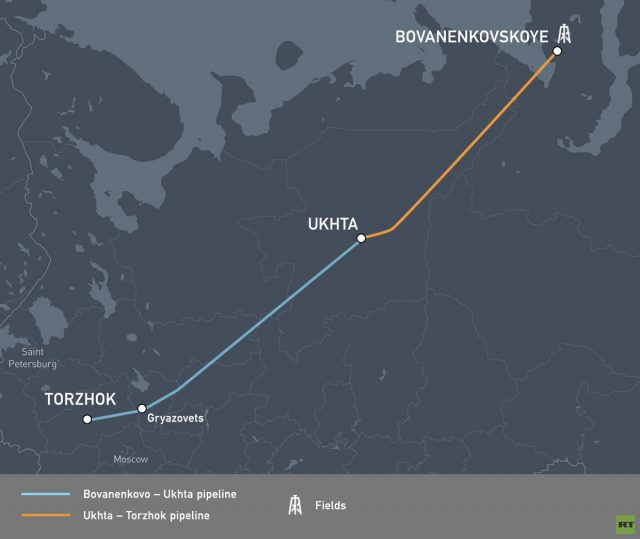
While it is not clear how much of the purchases are meant for the Russian-Chinese project, part of the supplies will go to the Ukhta–Torzhok and the Bovanenkovo–Ukhta gas trunklines. The two lines are connected, with the latter conveying gas from Siberia’s Yamal Peninsula into Russia’s Unified Gas Supply System. From Torzhok, gas is delivered to northwestern Russia to cover domestic demand and further into Europe.
FBI launches open attack on ‘foreign’ alternative media outlets challenging US foreign policy
By Gareth Porter | Grayzone Project | June 5, 2020
The FBI has publicly justified its suppression of dissenting online views about US foreign policy if a media outlet can be somehow linked to one of its adversaries. The Bureau’s justification followed a series of instances in which Google and other social media platforms banned accounts following consultations with the FBI.
In a particularly notable case in 2018, the FBI encouraged Facebook, Instagram and Google to ban the American Herald Tribune (AHT), an online journal that published critical opinion articles on US policy toward Iran and the Middle East. The bureau has never offered a clear rationale, however, despite its private discussions with Facebook on the ban.
The FBI’s first step toward intervening against dissenting views on social media took place in October 2017 with the creation of a Foreign Influence Task Force (FTIF) in the bureau’s Counterintelligence Division. Next, the FBI defined any effort by states designated by the Department of Defense as major adversaries (Russia, China, Iran and North Korea) to influence American public opinion as a threat to US national security.
In February 2020, the FBI defined that threat in much more specific terms and implied that it would act against any online media outlet that was found to fall within its ambit. At a conference on election security on February 24, David K. Porter, who identified himself as Assistant Section Chief of the Foreign Influence Task Force, defined what the FBI described as “malign foreign influence activity” as “actions by a foreign power to influence US policy, distort political sentiment and public discourse.”
Porter described “information confrontation” as a force “designed to undermine public confidence in the credibility of free and independent news media.” Those who practice this dark craft, he said, seek to “push consumers to alternative news sources,” where “it’s much easier to introduce false narratives” and thus “sow doubt and confusion about the true narratives by exploiting the media landscape to introduce conflicting story lines.”
“Information confrontation”, however, is simply the literal Russian translation of the term “information warfare.” Its use by the FTIF appears to be aimed merely at justifying an FBI role in seeking to suppress what it calls “alternative news sources” under any set of circumstances it can justify.
While expressing his intention to target alternative media, Porter simultaneously denied that the FBI was concerned about censoring media. The FITF, he said “doesn’t go around chasing content. We don’t focus on what the actors say.” Instead, he insisted that “attribution is key,” suggesting that the FTIF was only interested in finding hidden foreign government actors at work.
Thus the question of “attribution” has become the FBI’s key lever for censoring alternative media that publishes critical content on US foreign policy, or which attacks mainstream and corporate media narratives. If an outlet can be somehow linked to a foreign adversary, removing it from online platforms is fair game for the feds.
The strange disappearance of American Herald Tribune
In 2018, Facebook deleted the Facebook page of the American Herald Tribune, a website that publishes commentary from an array of notable authors who are harshly critical of US foreign policy. Gmail, which is run by Google, quickly followed suit, along with the Facebook-owned Instagram.
Tribune editor Anthony Hall reported at the time that the removals occurred at the end of August 2018, but there was no announcement of the move by Facebook. Nor was it reported by the corporate news media until January 2020, when CNN elicited a confirmation from a Facebook spokesman that it had indeed done so in 2018. Furthermore, the FBI was advising Facebook on both Iranian and Russian sites that were banned during that same period of a few days. As Facebook’s chief security officer Alex Stamos noted on July 21, 2018, “We have proactively reported our technical findings to US law enforcement, because they have much more information than we do, and may in time be in a position to provide public attribution.”
On August 2, a few days following the removal of AHT and two weeks after hundreds of Russian and Iranian Pages had been removed by Facebook, FBI Director Christopher Wray told reporters at a White House briefing that FBI officials had “met with top social media and technology companies several times” during the year, “providing actionable intelligence to better enable them to address abuse of their platforms by foreign actors.” He remarked that FBI officials had “shared specific threat indicators and account information so they can better monitor their own platforms.”
Cybersecurity firm FireEye, which boasts that it has contracts to support “nearly every department in the United States government,” and which has been used by Department of Homeland Security as a primary source of “threat intelligence,” also influenced Facebook’s crackdown on the Tribune. CNN cited an unnamed official of FireEye stating that the company had “assessed” with “moderate confidence” that the AHT’s website was founded in Iran and was “part of a larger influence operation.”
The CNN author was evidently unaware that in US intelligence parlance “moderate confidence” suggests a near-total absence of genuine conviction. As the 2011 official “consumer’s guide” to US intelligence explained, the term “moderate confidence” generally indicates that either there are still differences of view in the intelligence community on the issue or that the judgment ”is credible and plausible but not sufficiently corroborated to warrant higher level of confidence.”
CNN also quoted FireEye official Lee Foster’s claim that “indicators, both technical and behavioral” showed that American Herald Tribune was part of the larger influence operation. The CNN story linked to a study published by FireEye featuring a “map” showing how Iranian-related media were allegedly linked to one another, primarily by similarities in content. But CNN apparently hadn’t bothered to read the study, which did not once mention the American Herald Tribune.
Finally, the CNN piece cited a 2018 tweet by Daily Beast contributor Josh Russell which it said provided “further evidence supporting American Herald Tribune’s alleged links to Iran.” In fact, his tweet merely documented the AHT’s sharing of an internet hosting service with another pro-Iran site “at some point in time.” Investigators familiar with the problem know that two websites using the same hosting service, especially over a period of years, is not a reliable indicator of a coherent organizational connection.
CNN did find evidence of deception over the registration of the AHT. The outlet’s editor, Anthony Hall, continues to give the false impression that a large number of journalists and others (including this writer), are contributors, despite the fact that their articles have been republished from other sources without permission.
However, AHT has one characteristic that differentiates it from the others that have been kicked off Facebook: The American and European authors who have appeared in its pages are all real and are advancing their own authentic views. Some are sympathetic to the Islamic Republic, but others are simply angry about US policies: Some are Libertarian anti-interventionists; others are supporters of the 9/11 Truth movement or other conspiracy theories.
One notable independent contributor to AHT is Philip Giraldi, an 18-year veteran of the CIA’s Clandestine Service and and an articulate critic of US wars in the Middle East and of Israeli influence on American policy and politics. From its inception in 2015, the AHT has been edited by Anthony Hall, Professor Emeritus at University of Lethbridge in Alberta, Canada.
In announcing yet another takedown of Iranian Pages in October 2018, Facebook’s Gleicher declared that “coordinated inauthentic behavior” occurs when “people or organizations create networks of accounts to mislead others about who they are what they’re doing.” That certainly doesn’t apply to those who provided the content for the American Herald Tribune.
Thus the takedown of the publication by Facebook, with FBI and FireEye encouragement represents a disturbing precedent for future actions against individuals who criticize US foreign policy and outlets that attack corporate media narratives.
Shelby Pierson, the CIA official appointed by then director of national intelligence in July 2019 to chair the inter-agency “Election Executive and Leadership Board,” appeared to hint at differences in the criteria employed by his agency and the FBI on foreign and alternative media.
In an interview with former acting CIA Director Michael Morrell in February, Pierson said, “[P]articularly on the [foreign] influence side of the house, when you’re talking about blended content with First Amendment-protected speech… against the backdrop of a political paradigm and you’re involving yourself in those activities, I think that makes it more complicated” (emphasis added).
Further emphasizing the uncertainty surrounding the FBI’s methods of online media suppression, she added that the position in question “doesn’t have the same unanimity that we have in the counterterrorism context.”
Gareth Porter is an independent investigative journalist who has covered national security policy since 2005 and was the recipient of Gellhorn Prize for Journalism in 2012. His most recent book is The CIA Insider’s Guide to the Iran Crisis co-authored with John Kiriakou, just published in February.
MSNBC hires former FBI attorney Lisa Page as legal analyst
RT | June 6, 2020
Lisa Page, the FBI lawyer whose leaked anti-Trump text messages with another federal agent indicated deep-seated bias in the Russiagate probe, has been hired as an analyst at MSNBC, drawing jeers and praise alike.
Announcing the move on Friday, MSNBC said Page had been brought on as a national security and legal analyst after making her debut on the channel’s ‘Deadline: White House’ program. Wasting little time before weighing in on the decision, President Donald Trump deemed it a “total disgrace!”
Page rose to fame in 2017 after a series of text messages with FBI agent Peter Strzok – with whom she was then having an affair – were leaked, showing the two bureau employees disparaging Donald Trump, who had not yet won the Oval Office at the time. In one of the messages, Strzok told Page that “we can’t… risk” a Trump presidency, describing an “insurance policy” that was apparently meant either to guarantee he never got elected or to have a back-up plan in case he did. Due to his apparent bias, Strzok was removed from the special counsel probe into Trump’s alleged ties to Moscow following the leaks, while Page later left the bureau on her own accord.
Much like the president, critics online have also castigated MSNBC for the hiring decision, with some poking fun at her credentials as a “non-partisan” and “impartial” analyst.
Page is not the first MSNBC hiree to feature prominently in the Trump-Russia probe following the 2016 election, with jobs also handed to Obama-era CIA Director John Brennan and Andrew Weissmann – who the New York Times described as former special counsel Robert Mueller’s “pit bull.”
Rep. Ilhan Omar Surrenders to Israel Lobby

By Philip Giraldi | American Free Press | June 1, 2020
The nearly complete corruption of the U.S. republican form of government has largely come about due to the Citizens United decision by the Supreme Court in January 2010 that basically permitted unlimited donor-spending on political campaigns based on the principle that providing money, normally through a political action committee (PAC), is a form of free speech. The decision paved the way for agenda-driven plutocrats and corporations to largely seize control of the formulation process for certain policies being promoted by the two national parties.
No one has benefited from the new rules more than the state of Israel, whose hundreds of support organizations and principal billionaire funders euphemized as the “Israel Lobby” have entrenched pro-Israel donors as the principal financial resources of both major political parties. Las Vegas casino magnate Sheldon Adelson has become relatively well known as the major funder of the Republican Party, having contributed an estimated $100 million to the 2018 midterm election, while Haim Saban, a billionaire Israeli/ American movie producer has filled a similar role for the Democrats. Adelson, who once upon a time served as a draftee in the U.S. Army, has described how he wishes it had been the Israel Defense Force instead. He has also stated that he would be proud to have a son who is an Israeli Army sniper. Haim Saban in a somewhat similar vein has said that he is a one-issue guy, and his issue is Israel.
No one should be surprised that the Jewish donor and activist base is paying particular attention to certain congressional races in 2020, most particularly of the three of the four women comprising the so-called “squad,” namely Rashida Tlaib, Ilhan Omar, and Alexandria Ocasio- Cortez, who have been most critical of the U.S.- Israeli connection. Tlaib, a congresswoman representing Detroit who is of Palestinian descent, is already being targeted by fellow Democrat Brenda Jones, who is currently the Detroit City Council president.
Jones almost certainly has made her positive views of Israel known to Anti-Defamation League (ADL) inquisitors, and she will be showered with money and favorable press in a possibly successful bid to overthrow Tlaib. Prospective candidates for Congress and even state level offices are approached by supporters of Israel and are routinely asked to fill out a form explicitly detailing their view of Israel. It is frequently fatal in political terms to respond incorrectly. Play the game and one has money and press support. Do otherwise, and all that vanishes.
The highly controversial Alexandria Ocasio-Cortez, also no friend of the Israel Lobby, is likewise being challenged by her own party in the Bronx. She is being confronted by no fewer than five Democratic Party challengers but is well placed to prevail due to her popularity in her district.
The red lines established around the issue of Israel are something that every American politician understands. But perhaps the biggest surprise, and an indication of the reach of Jewish power in the United States, is the flip-flop recently performed by Ilhan Omar, the ethnic Somali congresswoman who represents Minneapolis.
Omar clearly would like to remain in Congress but, not surprisingly, a strong and well-funded Democratic primary candidate named Antone Melton-Meaux, an African-American lawyer, has surfaced. He has raised $500,000 for his campaign chest, much of it coming from outside sources. He has publicly stated that Omar is not connected to her district, has done nothing for Minnesota, and, perhaps the biggest sin of all, she “… has repeatedly made divisive statements that have been hurtful to members of our Jewish community. She creates distraction and drama, not results. Rep. Omar believes that sanctions are economic warfare and is a vocal advocate for abolishing them, particularly for Iran. Yet she supports sanctions on Israel. She has repeatedly refused to explain this inconsistency. That doesn’t work for us.”
Not surprisingly, Melton-Meaux has been described by the Jewish Insider as having the endorsement of “pro-Israel America.” Decisively progressive Muslim-American Omar is indeed a magnet for controversy. She is certainly not everyone’s cup of tea on specific issues, but she has up until now been one of the most powerful voices criticizing the lopsided relationship of the United States with the Jewish state. She was the one who coined the phrase “It’s the Benjamins” when linking Israel’s grip over Congress to hundred-dollar bills, implying very clearly that it is Jewish money that has bought America’s legislators as well as the White House. Omar also dared to condemn her fellow congressmen as having “dual loyalty” when they supported legislation abridging freedom of speech for anyone who criticizes Israel. For her pains, she was accused of being an anti-Semite by both President Trump and Nancy Pelosi as well as by numerous Republicans and other members of her own party in Congress. Under intense pressure, she apologized to Pelosi and expressed appreciation to her “Jewish allies and colleagues who are educating me on the painful history of anti-Semitic tropes.”
To her discredit, Omar has recently surrendered to force majeure, joining 389 of her colleagues in signing on to a House of Representatives letter supported by the American Israel Public Affairs Committee (AIPAC) that demands the continuation of the United Nations sanctions regime against Iran, a policy that essentially treats the Persians as if they were a country having no rights beyond what Washington will allow them. Secretary of State Mike Pompeo has called the overall policy one of “maximum pressure,” punishment of the Iranian people to compel them to rise up against their rulers.
Ironically, the continuation of the embargo on arms sales, which is what the letter deals with, would seem to be superfluous currently, as Iran has been suffering for some time due to U.S. pressure, a process that has been exacerbated by the arrival of the COVID virus. The U.S. has already effectively blocked Iranian oil sales, the country’s only major source of income, and the medical system is broken, with no money for medical equipment and pharmaceuticals as the virus continues to rage.
Omar’s reversal, for such it is, is particularly remarkable as she denounced on humanitarian grounds the U.S. use of sanctions to pressure other governments as recently as late April. After the story of the letter broke, Omar tried to justify her action by stating that she “has consistently, for a long time, supported arms embargoes against human rights abusers. . . . It was just a narrow ask that we couldn’t find anything wrong with.”
What is wrong with the narrow ask is that it is aimed at allowing the U.S. to intercede to block the sunset provision of the Joint Comprehensive Plan of Action (JCPOA) that kicks in this fall, which will again allow Iran to buy weapons. Ironically, of course, the U.S. withdrew from the agreement in 2017 but Secretary of State Mike Pompeo is now claiming that it is still part of the arrangement, allowing it to press a case against Iran for non-compliance. Even if the U.S. fails in its gambit to interfere directly, the JCPOA will likely come apart, leaving the sanctions in place. Either way AIPAC and Israel win.
Omar’s signature on the AIPAC letter was in reality little more than a surrender to the Israel Lobby by a congresswoman who is under siege and wants to get re-elected. She has undoubtedly done so against her better judgement, as do many of the congressmen who blindly support Israel, because she doesn’t want any problems. In this case, she is aiding the hawks in Congress and the administration who want unrelenting extreme pressure on the Iranian people until the government falls. Or alternatively, an Iran driven against the wall to the point where it does something foolish, enabling the United States and Israel to attack and destroy it. Either way, Ilhan Omar will almost certainly regret placing her signature on the AIPAC letter.
All Tom Cotton has to do to get back in the NYTimes’ good graces is call for the US military to bomb ANOTHER country’s civilians

The war comes home… literally © Reuters / Andy Sullivan
By Helen Buyniski | RT | June 6, 2020
Republican senator Tom Cotton’s controversial op-ed demanding US troops be deployed against American protesters would have been embraced by the New York Times if he’d just stuck to cheering on military actions abroad.
The Times has been consumed with angst over the backlash to the Arkansas senator’s piece, which called for the military to be turned loose in US cities as an “overwhelming show of force to disperse, detain and ultimately deter lawbreakers.” Hundreds of the outlet’s staffers have slammed management’s decision to publish, insisting Cotton’s words somehow put them in danger.
Yet the Paper of Record has a long, colorful history of publishing op-eds (and even news pieces) supporting the deployment of the US military against civilian populations. Sure, those populations generally live outside the US – maybe they’re in Iraq, or Venezuela, or Iran – but the Times can almost always be relied upon to support the idea that the US military is a force for good, bringing sweetness and light (and, of course, democracy) wherever it goes.
That the Times would then balk at Cotton’s call to send those same troops into American cities is a bit surprising. Are these writers suggesting military activity in civilian areas isn’t limited to building schools for needy children, or freeing kittens trapped up tall trees?
And if they are aware of the destruction that takes place when US troops invade a country – civilian casualties, terrorism, drug and human trafficking – what’s their excuse for declaring, again and again, that military intervention is the answer to any nation’s problems?
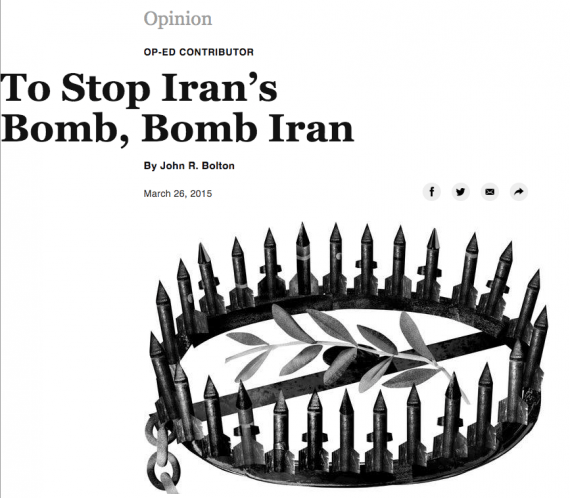
© New York Times
For the paper to cry fascism now – when its pages have been used to manufacture consent for war after war among the American people, facilitating the decimation of Afghanistan, Iraq, Libya, and Syria – is the pinnacle of hypocrisy. The time to speak up, morally, was long ago. Putting their foot down now is utter cowardice, motivated not by concern over a fascist takeover – that ship has sailed – but by a desire to keep Uncle Sam’s enforcers from stomping back home.
Michelle Goldberg, given the task of refuting Cotton’s ‘dangerous’ views on the op-ed page on Friday, cut to the heart of the matter when she pointed out that Cotton’s recommendations would “almost certainly amount to massive violence against his fellow citizens.” Massive violence, then, is only acceptable when it happens to civilians outside the US.
The rest of the world still has to deal with the fallout from the Times’ warmongering. If Cotton wants to make nice with the Times, all he has to do is write a piece explaining how the children of Hong Kong (or Pyongyang, or Tehran) are crying out for the kind of freedom that can only be delivered from the barrel of a made-in-USA M-16. All will be forgiven.
Helen Buyniski is an American journalist and political commentator at RT. Follow her on Twitter @velocirapture23
Featured Video
What Does Russian Retaliation Look Like? | Col Doug Macgregor
or go to
Aletho News Archives – Video-Images
From the Archives
A Climate Scientist Who Engages Skeptics
By Judith Curry | November 27, 2009
An open letter to graduate students and young scientists in fields related to climate research:
Based upon feedback that I’ve received from graduate students at Georgia Tech, I suspect that you are confused, troubled, or worried by what you have been reading about ClimateGate After spending considerable time reading the hacked emails and other posts in the blogosphere, I wrote an essay that calls for greater transparency in climate data and other methods used in climate research. The essay is posted over at climateaudit.org.
What has been noticeably absent so far in the ClimateGate discussion is a public reaffirmation by climate researchers of our basic research values: the rigors of the scientific method (including reproducibility), research integrity and ethics, open minds, and critical thinking. Under no circumstances should we ever sacrifice any of these values; the CRU emails, however, appear to violate them. … continue
Blog Roll
 Aletho News
- Why Iran Hawks Are Now Hyping ‘Radical Shiite’ Threats
- What Does Russian Retaliation Look Like? | Col Doug Macgregor
- Araghchi: ‘Israel’ seeks to drag US into war on Iran
- NYT’s Iran dam-missile narrative crumbles under statistical scrutiny and engineering evidence
- USAID Files: The Trusted Flaggers Nobody Can Audit
- How Western media weaponizes unverified claims to justify military aggression
- Content control: USAID docs expose Biden admin’s grip on Ukraine coverage
- Ukraine destroying itself: every attack on the Crimean Bridge will come at a price
- NATO capital under protest siege, so NATO escalates war
- A Climate Scientist Who Engages Skeptics
- If Americans Knew
- An error has occurred; the feed is probably down. Try again later.
- No Tricks Zone
- Alarmist Climatologists In Shock! 2026 Atlantic Hurricane Season Sees Lowest Count In 101 Years
- New Study: Modern Temps Are Among The Coldest Of The Last 10,000 Years In East Central Europe
- Germany’s Renewable Energies Lead to 1.4 Billion Euro Electric Power Trade Deficit
- Argentina’s Perito Moreno Glacier Joins Antarctica and Arctic In Defying Doomsday Melt Claims
- New Study: Barents Sea Temperatures Were Warmer And Sea Ice Less Extensive In The 1700s Than Today
- German Authorities Start Initiative To Evaluate Public Register For Climate “Disinformation” Spreaders!
- Zonal Asymmetry of Temperature Change in the Antarctic Circumpolar Current
- New Study: The Net Fossil Fuel Contribution To Rising Atmospheric CO2 Has Been Zero For 500 Years
- Germany’s Green Energy Transition Becoming Increasingly Expensive…Another 6 Trillion Euros!
- Sudden Stratospheric Warming, Powerful El Niño Combination May Lead To Extreme Europe Cold, Energy Crisis!

