The German government is developing a “secret plan” to prevent regional authorities from potentially obstructing the deployment of NATO troops to the Russian border, according to a joint investigation by The Telegraph and Die Welt.
The “contingency” measures are reportedly driven by fears that the Alternative for Germany (AfD) party could secure enough support in upcoming regional elections in two eastern states to form local governments.
Known for criticizing Berlin’s anti-Russia policies as harmful to Germany’s national interests, the right-wing party has grown to become the country’s most popular political force after once again being excluded from last year’s federal coalition talks.
In the state of Saxony-Anhalt, the AfD currently enjoys the support of 41% of voters, a recent survey suggested, compared with only 24% for Chancellor Friedrich Merz’s Christian Democratic Union (CDU). In the northeastern state of Mecklenburg-Western Pomerania, the AfD is polling at 36%, seven points ahead of its closest competitors, the Social Democratic Party.
Berlin has long accused the AfD of extremism, while Defense Minister Boris Pistorius has claimed that the party has “undeniable” ties to Russia and must be deprived of access to classified information if it comes to power.
The federal government is now seeking a way to rein in what The Telegraph bluntly described as “pro-Kremlin traitor states” in the event that NATO decides it is time to go to war with Moscow.
NATO roundabout
The scenario centers on NATO’s Reinforcement and Sustainment Network, which involves moving large troop contingents, heavy equipment, and logistical supplies to bloc members in Eastern Europe and the Baltic. Germany is set to play the role of what The Telegraph and Die Welt described as NATO’s “roundabout,” with its geographical location making it a central logistics hub.
The head of Germany’s Joint Operations Command, Lieutenant General Alexander Sollfrank, stated last year that Berlin is prepared for a war with Moscow and stands ready to facilitate the deployment of 800,000 NATO troops toward the Russian border in less than six months.
Moscow has repeatedly stated that it has no intention of attacking NATO unless attacked first and has dismissed such allegations as “nonsense” designed to justify Russophobic hysteria and rampant militarization.
Nevertheless, the NATO mechanism could be triggered without any hostile move by Russia, “at the first sign” reported by a Western intelligence service that Moscow was preparing an attack, according to The Telegraph.
Protests and obstructionism
The issue poses significant challenges for Berlin because such a deployment would technically take place before any conflict with Russia had actually broken out, while regional authorities enjoy broad powers over activities on their territory during peacetime.
An uncooperative regional government could potentially delay troop movements through “bureaucratic obstructionism” by withholding the necessary permits or refusing to provide NATO troops with police escorts and priority access to local roads.
Merz’s government also reportedly expects the deployment to trigger protests among local residents and debates within regional authorities about the extent to which they want to become involved in a process that could “expose them as part of NATO’s logistical hub.”
Bending the rules
Under German law, the federal government has very few ways to limit states’ independence short of declaring a state of emergency or imposing martial law. “The key question is how to circumvent a state not adhering to the federal idea without violating the constitution,” Roderich Kiesewetter, an MP from Merz’s CDU, told The Telegraph and Die Welt, adding that the Interior Ministry is drawing up relevant plans.
Berlin has already set the secret plan in motion to “create mechanisms that would make it possible to overrule individual states or to take the necessary measures,” added Tobias Krull, deputy chairman of the Saxony-Anhalt parliament’s Interior Committee.
Few details have emerged about what such plans could entail, but nationwide emergency regulations are reportedly being revised as part of the scheme. “Federal law takes precedence over state law – it’s as simple as that,” an unnamed lawmaker told the outlets.
Germany’s Basic Law allows for so-called “federal enforcement” if a regional government violates an obligation under federal law, but the clause has never been invoked.
During a state of emergency or under martial law, the federal parliament could also activate certain provisions allowing the government to intervene in state affairs and simplify military logistics. This would still require a two-thirds majority – something Merz’s government would be unlikely to secure, given that the AfD controls more than 23% of the seats in the Bundestag, while another 10% are held by the Left – another party the chancellor has ruled out cooperating with.
The most important question we should be asking after Karim Khan’s dismissal last week as chief prosecutor of the ICC – the international war crimes court in The Hague – is not whether he is guilty of “sexual misconduct” against another staff member, identified as “Sarah”.
That can only be decided through a legal process – one, let us note, that has already taken place. A fact-finding body carried out a lengthy investigation of Sarah’s allegations over more than a year; its thousands of pages of evidence were then evaluated in detail by three senior judges.
Though you would not know it from the media coverage, they concluded that there was no evidence to suggest any kind of misconduct by Khan, sexual or otherwise.
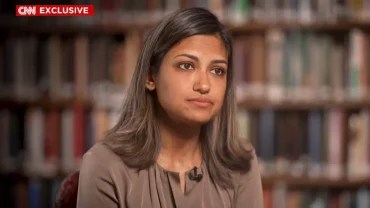
Strangely, that determination was largely confirmed by an extraordinarily deferential “exclusive” CNN interview with Sarah, aired earlier this month.
She declined to give any meaningful details of what Khan had allegedly subjected her to, and celebrity interviewer Christiane Amanpour delicately avoided pressing her for any clarification.
No matter. The purpose of the CNN interview was never about excavating facts. It was designed to offer face-saving cover as an entirely political body called the Assembly of States Parties, comprising diplomatic representatives of the 125 states signed up to the ICC, entirely ignored the legal findings and dismissed Khan.
Paradoxically, it was the Assembly of States Parties that appointed the judges who had concluded that there was no evidence of misconduct or breach of duty by Khan. That inconvenient judgment was simply reversed, despite the Assembly members being in no position to weigh the evidence themselves.
We should not forget that many of these states have an investment in weakening the only international court that can bring their own senior officials to trial for war crimes.
In May 2024 – shortly before Sarah made her allegations – the ICC demonstrated that it was finally ready to prosecute western leaders for war crimes, not just those from the Global South or from the West’s official enemies, such as Russia’s Vladimir Putin.
Khan issued an arrest warrant for Israeli prime minister Benjamin Netanyahu and his former defence minister Yoav Gallant. Both are accused of crimes against humanity for starving the people of Gaza through a prolonged blockade of food, water and power.
Were Netanyahu ever to face trial – and found guilty, as he almost certainly would be – a lot of other leaders would have good reason to fear they might be found culpable next, not least for their complicity in Israel’s mass slaughter of Palestinians in Gaza.
The question that needs answering now is not whether Khan is guilty of misconduct – that has been decided at a political level, not a legal one. No, we need an answer to an equally political, and far more troubling, question.
“Cui bono?” Or “Who benefits?”
The evidence is hiding in plain sight. The evidence is revealed both in the deeply politicised process that led to Khan’s downfall, and in what that process means for the future of the court.
Covert war
Khan is not the first ICC chief prosecutor to face extreme pressures – and, as with Khan, those pressures surfaced at the very moment Khan’s predecessor tried to take on Israel over its war crimes.
Fatou Bensouda faced a “covert war” waged against her by Israel for the best part of a decade, according to an investigation by the Guardian in May 2024, just as Khan issued his arrest warrant for Netanyahu.
The Guardian’sreport, published nearly three years after Bensouda had completed her nine-year term at the ICC, revealed that, during that time, she had faced threats to herself and her family, the monitoring of her communications, and an intimidating visit to her home.
More recently, Bensouda has confirmed these accounts in an interview with Al Jazeera. Bensouda notes that she repeatedly reported Israel’s campaign of intimidation to the Dutch authorities, but they did nothing to investigate the threats or protect her.
She also says certain “authorities” – she does not name them – warned her that she was going too far in investigating Israeli crimes and that “you could be harmed or you could be killed, or family members could be harmed in some way.”
The campaign of threats – instigated by Yossi Cohen, then the director of Israel’s spy agency, Mossad – intensified as Bensouda considered whether to open a formal investigation into Israeli war crimes and crimes against humanity in the illegally occupied Palestinian territories.
Israel’s crimes against the Palestinian people, we should remember, predate – by decades – Hamas’ attack on 7 October 2023. In fact, though no one is supposed to mention it, Israel’s sustained crimes of occupation are the self-evident cause of that Hamas attack.
An Israeli source told the Guardian that “the Mossad’s objective was to compromise the prosecutor or enlist her as someone who would cooperate with Israel’s demands”– that is, scrap the ICC’s investigation into Israeli crimes. Another source admitted that Cohen was acting on Netanyahu’s instructions.
During one contact, Cohen reportedly issued a Mafia-style threat to Bensouda: “You don’t want to be getting into things that could compromise your security or that of your family.”
The Guardian reported that the Mossad “took a keen interest in Bensouda’s family members and obtained transcripts of secret recordings of her husband, according to two sources with direct knowledge of the situation. Israeli officials then attempted to use the material to discredit the prosecutor”.
The paper also noted that there were fears among senior ICC officials that “Israel had cultivated sources within the court’s prosecution division” – the division Khan would inherit from Bensouda.
Cohen was described as “stalking” Bensouda, and personally “ambushed” her in a hotel room in New York in 2018. Afterwards he repeatedly phoned her, in a threatening manner that was said to have escalated over time. When Bensouda asked Cohen how he had obtained her phone number, he reportedly replied: “Did you forget what I do for a living?”
According to the Guardian :
On one occasion, Cohen is said to have shown Bensouda copies of photographs of her husband, which were taken covertly when the couple were visiting London. On another, according to sources, Cohen suggested to the prosecutor that a decision to open a full investigation would be detrimental to her career.
Between 2019 and 2020, the Mossad had been actively seeking compromising information on the prosecutor and took an interest in her family members.
The spy agency obtained a cache of material, including transcripts of an apparent sting operation against her husband.
Israel used the materials to mount a “smear campaign” against her, but one that ultimately proved unsuccessful.
Concerted backlash
When Khan took up the role of ICC chief prosecutor in June 2021, he proved reluctant to pick up where Bensouda had left off on the Palestine case. Presumably, he was only too aware of the retaliation from Israel against her.
Bensouda had announced in December 2019 that she had grounds to open a full criminal investigation into allegations of war crimes in Gaza, the West Bank and East Jerusalem.
However, in the face of a concerted backlash from western states, she delayed opening the investigation. She first sought a ruling from a pre-trial chamber of ICC judges – presumably in the hope it would serve as some kind of insurance policy – on whether the court had jurisdiction over the occupied Palestinian territories.
By February 2021 the judges confirmed what was already self-evident. The court did have such jurisdiction because Palestine had been signed up to the court since 2015.
Bensouda stepped down a few months later.
The door was now open for Khan to prosecute Israeli officials for war crimes. However, the new chief prosecutor gave every appearance – perhaps understandably – of preferring to sit on his hands.
It was not just Israel that had been fearsomely opposed to its officials being tried for war crimes. Washington was equally incensed at the prospect – sometimes, it seemed, more so than over the possibility that US officials might also face arrest warrants for crimes committed by the US military in Afghanistan and Iraq.
Between 2019 and 2020, during Trump’s first presidency, the US imposed severe visa restrictions and financial sanctions on Bensouda. Mike Pompeo, then US secretary of state, linked the sanctions to the Palestine case: “It’s clear the ICC is only putting Israel in [its] crosshairs for nakedly political purposes.”
Khan might well have avoided pursuing Israel indefinitely had it not been for the events that followed 7 October 2023.
Israel’s mass slaughter of Palestinian civilians in Gaza, its devastation of the enclave’s homes and infrastructure, and its starvation of the entire population were actions so criminally abhorrent that UN agencies, major human rights groups and Holocaust scholars were soon all in agreement that they amounted to genocide.
In May 2024, Khan announced arrest warrants against Netanyahu and Gallant, as well as three Hamas leaders subsequently killed by Israel.
Tsunami of threats
Shortly before Khan made that announcement, 12 senior US Senators had sent a threatening letter to the ICC: “Target Israel and we will target you.” The letter ended: “You have been warned.”
Describing Israeli and US sovereignty as inseparable, the senators reminded Khan that Washington had demonstrated “the lengths to which we will go to protect [our] sovereignty.”
A 2002 law, popularly known as “The Hague Invasion Act”, authorises the US president “to use all means necessary and appropriate” to bring about the release US persons and any allies imprisoned or detained by the ICC. Those allies, it goes without saying, include Israeli leaders.
Such threats, it should be noted, are a violation of Article 70 of the Rome Statute.
Following the issuing of the arrest warrants, there followed a tsunami of similar threats – and presumably more that have yet to become public – against Khan and the ICC.
A British-Israeli lawyer within the ICC – one known to have ties to Netanyahu’s legal adviser – warned Khan “they will destroy you and they will destroy the court” if the warrants were not rescinded. He urged Khan to “climb down the tree” and drop the case.
The UK’s foreign secretary of the time, David Cameron, phoned Khan to tell him Britain would defund the court and withdraw from the Rome Statute that founded the ICC if Khan did not back down.
Cameron warned Khan that he was “on the brink of making a huge mistake” and urged him to “take a step back and consider things”. He added that applying for arrest warrants for Israeli officials was tantamount to “dropping a hydrogen bomb”.
Meanwhile, Trump issued an executive order imposing aggressive financial sanctions against Khan and other ICC officials, including several of its judges.
Khan himself received warnings that Israel’s Mossad was continuing its operations in The Hague, where the ICC is located, to monitor and compromise the court’s investigators as they compiled evidence on Israel – just as it had done earlier under Bensouda.
Khan publicly stated that retaliatory threats and intimidation were explicitly targeting members of his own family.
Untouchable criminals
What conclusions should we draw from all of this?
Quite aside from the matter of whether Sarah’s allegations of “sexual misconduct” are true or not, it is clear that Israel and the US have been digging for dirt – and apparently ready to fabricate such dirt – on any chief prosecutor who tries to hold them to account for their crimes.
Both have indicated that they are ready to manipulate legal and political processes to ensure the outcome they desire: that they remain untouchable.
We have a template for how this plays out. Julian Assange, founder of the whistle-blowing site Wikileaks, published details in 2010 of US and British war crimes in Afghanistan and Iraq. Almost immediately he found himself entangled in accusations of sexual misdemeanours – in his case in Sweden – that were similarly amplified by an uncritical western media.
Assange faced years in various forms of confinement while the US and UK pressured Sweden to keep alive an investigation against him Swedish prosecutors at least twice sought to drop for lack of credible evidence.
In fact, the US and UK never wanted the evidence tested – they were quite happy with a permanent, unresolved “investigation” – precisely because they knew it would have been unlikely to withstand judicial scrutiny.
The point was simply to generate constant headlines about “rape”, turning Assange into a pariah, justifying his effective disappearance from public life, severely weakening Wikileaks as a whistleblowing platform, deflecting attention from the all-too-real crimes committed by the US and Britain, and paving the way to a political show trial to extradite him to the US on entirely confected “espionage” charges.
This has been repeated in the case of Khan and the ICC. In Khan’s case, the evidence was tested and found inadequate. So the legal process has been replaced by a flagrantly political one.
Khan has been turned into a legal pariah, even stripped of his right to work as a lawyer in the UK by the British Bar Association.
The ICC has been further weakened, just as Israel and the US have expressly stated they wanted it to be. Marco Rubio, Trump’s secretary of state, has recently launched an official campaign to dismantle the ICC “brick by brick”.
He says: “Now they [the ICC] are going to see the consequences”. Consequences of what? Of seeking to enforce international law against a key US client state.
Meanwhile, accountability for the all-too-real crimes being committed by Israel in Gaza, Lebanon and the West Bank – and actively supported by western states like the US, Germany and Britain – recedes yet further into the background
As each brick protecting the ICC is dismantled, a brick is added to the wall of protection around Netanyahu and Israel’s genocidal war machine.
Israel, meanwhile, is barely concealing that it has been masterminding the effort to destroy the ICC.
According to Guy Azriel, the diplomatic correspondent for i24 News, Israeli foreign Minister Gideon Sa’ar “oversaw a dedicated task force and employed intensive diplomatic efforts aimed at securing Khan’s removal from office”.
Hillel Neuer, director of the Israel apologist group United Nations Watch, cheered what he called “our campaign to remove” Khan, and warned Francesca Albanese, the UN’s legal expert on the occupied Palestinian territories, “you’re next”.
Like Khan, Albanese has been searching for practical, legal ways – not just rhetoric – to hold Israel and its western allies to account for the crimes in Gaza.
Predatory states
The ICC claims its work will not be affected by Khan’s removal and that the arrest warrants against Netanyahu and Gallant will still be pursued under new stewardship. That seems doubtful.
Israel and the US are cranking up the intimidation of the ICC, which has no tools – beyond the support of members states – to enforce its rulings or protect itself from the hostility of a rogue superpower.
Currently the court appears paralysed, allowing Israel to muddy the waters with interminable, and vexatious, appeals against the arrest warrants.
Any lawyer who takes up the post of ICC chief prosecutor will be only too aware of the fate that befell Khan and the campaign of intimidation against Bensouda as soon as each tried to enforce accountability on Israel and its western patrons.
It will take a very brave individual indeed to renew that task. Khan’s successor will understand that, in any further confrontation with Israel and Washington, the US will not hesitate to crush the ICC and, with it, remove the only effective restraint on criminality by powerful states.
More likely, however, the Assembly of States Parties – the political body that ousted Khan – will privately require from his successor reassurances that the new chief prosecutor reliably defer to the principle of Israeli and western impunity. Only someone less willing to ruffle feathers stands any chance of being appointed.
That was the clearest of messages sent by the Assembly when a majority of member states voted to be rid of Khan. The short-lived experiment in creating a mechanism for enforcing international law is over. We are back to the law of the jungle.
Hundred of thousands of people around the world – more likely millions – will now find themselves even more exposed to the criminal actions of predatory states. Unlike Khan’s accuser, they are unlikely to ever get their day in court.
British authorities listed the cases of 1,579 people at Westminster Magistrates’ Court on 30 July, holding cardboard signs opposing Israel’s genocide of Palestinians in Gaza, according to the campaign group Defend Our Juries.
The group said the hearing had been pushed back to October, but that hundreds of defendants were never told, leaving them unsure whether they were required to appear, pointing to the confusion as evidence of a crisis the courts cannot absorb.
One court notice seen by Middle East Eye told the recipient they must attend on 30 July, then instructed them in the same letter not to come to court.
Defendants who arrived were handed a further letter addressed to whomever it may concern, adjourning all cases to 26 October.
The chaos came on the same day the Supreme Court ruled that Palestine Action can challenge its proscription.
Over 3,500 arrests have been made under Section 13 of the Terrorism Act 2000 of people holding cardboard signs reading, “I oppose genocide, I support Palestine Action,” Defend Our Juries said.
Those cases are tried summarily and carry a maximum of six months in prison, and include senior citizens, faith leaders, and first-time protesters.
In the past two months, 96 people have filmed videos inviting support for Palestine Action, with many also declaring membership.
The declaration of membership exposes them to Sections 11 and 12 of the same act, which are heard before juries and carry sentences of up to 14 years.
Eight of those who filmed have been arrested, seven in dawn raids on people’s homes, with another 14 detained outside New Scotland Yard on 5 July.
Home Office figures cited by the group show 92 percent of terrorism arrests in the year to March 2026 were linked to alleged support for Palestine Action, with the average demographic profile of the suspect being a 59-year-old white British woman.
A spokesperson for Defend Our Juries said UK Prime Minister Andy Burnham had inherited the crisis, asking “does he really want to be seen locking up pensioners, priests and 84-year-old Reverend Sue Parfitt while people convicted of violent offenses are released early?”
On 15 June 2026, the Court of Appeal ruled the government’s classification of Palestine Action as a terrorist entity was lawful, overturning the February 2026 High Court judgment that had called it unlawful and disproportionate.
The Palestinian Islamic Jihad movement said Friday that the announced agreement between Palestinian factions and Israel was “inaccurate,” adding that it has reservations over the deal in its current form, Anadolu reports.
In a statement, the movement’s spokesperson said: “What has been announced regarding an agreement between the Palestinian factions and the enemy (Israel) is inaccurate, and we have reservations about it in its currently circulated form.”
The Palestinian group’s statement came after US President Donald Trump announced that an agreement had been reached for the complete disarmament of Hamas and other armed groups in Gaza, with Israeli forces set to withdraw in phases as the process moves forward.
Trump also credited Egypt, Qatar, and Turkiye for helping broker what he described as a “historic breakthrough,” saying the agreement would be implemented gradually, with an International Stabilization Force working alongside a new Palestinian police force to assume responsibility for security in Gaza.
Israel’s genocidal war on Gaza has killed more than 73,000 Palestinians and injured over 174,000 others, most of them women and children, while destroying about 90% of the enclave’s infrastructure.
The ceasefire was brokered under Trump’s 20-point plan for Gaza, which is being overseen by the Board of Peace, which he chairs.
Despite the ceasefire, which took effect on Oct. 10, 2025, Israel has continued daily attacks across Gaza, killing 1,214 Palestinians and injuring 3,977 others, most of them women and children, while causing widespread destruction.
Israel carried out massive detonations involving around 700 tons of explosives around Lebanon’s historic Beaufort Castle – a UNESCO World Heritage site – with the huge blasts being heard across large parts of the country’s south late on 30 July.
The violent detonations were carried out under the pretext of alleged Hezbollah infrastructure under the Crusader-era fortress. This has been denied by Lebanese authorities.
“Israeli forces carried out unprecedented bombardment in southern Lebanon, triggering a series of powerful explosions that residents said were unlike anything heard in recent years,” Al Manar TV reported on Friday.
Lebanon’s National News Agency(NNA) also reported the blasts, calling them “massive” and “unprecedented,” while confirming that they were heard across the whole south.
“The blasts echoed across all of south Lebanon with unprecedented intensity, and their shockwaves reached the Iqlim al-Kharroub and Khaldeh regions,” the report said, adding that “violent explosions in the Beaufort Castle area shattered the glass of several windows in homes in the town of Qlayaa.”
Lebanese Parliament Speaker Nabih Berri condemned the violent detonations.
“The shockwaves from these terrorist explosions, caused by 700 tons of explosives, registered 3.8 on seismic monitoring scales and were felt by Lebanese citizens from the South and Mount Lebanon all the way to the outskirts of Beirut,” he said.
Lebanon’s Culture Ministry released a statement saying Beaufort Castle was unharmed.
However, it stressed that because the area remains under Israeli occupation, specialized technical teams have been prevented from accessing the site in order to conduct a proper assessment of any potential damage.
Earlier in July, the castle had been placed on UNESCO’s list of sites “in danger.”
The massive detonations were announced by Israeli Prime Minister Benjamin Netanyahu and Israel’s War Ministry late on Thursday evening.
In a joint statement, Netanyahu and War Minister Israel Katz claimed a Hezbollah tunnel network under the castle was destroyed.
They also confirmed the unprecedented amounts of explosives used in their “operation.”
Israeli occupation forces will “remain in the security zone in southern Lebanon and will continue to destroy all terror infrastructure to prevent any attempt by Hezbollah to restore its capabilities,” they added.
Lebanon’s Directorate General of Antiquities has previously rejected Israeli claims that the site contained Hezbollah infrastructure.
Israeli maps and videos detailing “terrorist infrastructure” are fabricated, and the fortress has been under Lebanese state administration since 2000, placing under enhanced protection in line with the 1954 Hague Convention.
Lebanese geologists have warned that demolitions of this scale near major fault lines could potentially trigger human-induced seismic activity.
Israeli forces occupied the castle in May 2026 and framed the move as a major strategic victory. Hebrew media challenged this narrative at the time.
Israeli forces were unable to maintain a consistent presence in the historic site due to constant resistance operations – namely Hezbollah’s FPV drone strikes that have inflicted heavy casualties and losses on the Israeli occupation forces since March.
Since the violent detonations near the castle on Thursday night, Israel has continued destroying civilian infrastructure across south Lebanon.
Heavy explosions were recorded in Deir Siryan on Friday, while Israeli shelling continued to target the Ali al-Taher Hill.
Over 4,300 have been killed and more than a million displaced by Israel in Lebanon since 2 March.
Tens of thousands of civilian homes and buildings – amounting to practically all of south Lebanon’s border villages – have been eradicated.
Israeli occupation forces refuse to withdraw, and the Lebanese government has signed a US-brokered deal allowing Tel Aviv to maintain its illegal presence in the country.
The emergency in Spain’s North African enclave of Ceuta has sparked an intense online debate over Israel’s possible role in efforts to punish Madrid over its outspoken support for Palestine.
The speculation intensified after social media users resurfaced articles published earlier this year by pro-Israel analysts who argued that Israel and the US should aid Morocco over its claim to Ceuta and Melilla as a means of pressuring Spain.
Israeli sources revealed that in March, Michael Rubin, a senior fellow at the American Enterprise Institute, called on Morocco to organise a new “Green March” into the Spanish enclaves. Writing for the US-based Middle East Forum, Rubin suggested that Moroccans approach Ceuta and Melilla with bulldozers, cross into the territories unarmed and raise the Moroccan flag. He framed the proposal as a response to what he portrayed as Spain’s anti-colonial hypocrisy.
A separate article published by the Israeli outlet Ynetin April recommend that Israel could use its influence in Washington to help Morocco “recover” Ceuta and Melilla. The author, Middle East Forum fellow Amine Ayoub, presented support for Rabat’s territorial claim as a means of punishing Spain for challenging US and Israeli policies.
Ayoub proposed three ways for Israel to apply pressure: direct diplomatic signals to support Morocco, lobbying through Washington and repeatedly accusing Spain of hypocrisy over its recognition of Palestine. He concluded that helping Morocco “recover” Ceuta and Melilla would “punish” a NATO member which had challenged US and Israeli policies.
These earlier proposals have fuelled online debate over the latest crisis. Commentator Bruno Maçães drew attention to the April article, noting that pro-Israel analysts had urged Israel to help Morocco take control of Ceuta as a way of punishing Spain for its support for Palestine.
Social media users also shared a 2019 tweet by Yair Netenyahu the son of Israeli Prime Minister Benjamin Netenyahu. “If the situation in Ceuta is the result of the “anti-Israel Spanish Left” why was Yair Netanyahu calling for Arabs and Muslims to “free Ceuta” in 2019?” asked a popular commentator on X sharing Netanyahu’s tweet calling for Muslims to take over Ceuta.
“This entire charade was orchestrated by Zionists to teach Spain a lesson and set an example for other nations if they don’t get in line.”
Details also emerged of Israel’s top diplomat in Spain, Dana Erlich, denying in April that the Israeli government was considering supporting Morocco’s claims over Ceuta and Melilla. She maintained that the matter was not among the Netanyahu government’s priorities.
The resurfacing of the articles coincided with thousands of people crossing from Morocco by land and sea, overwhelming the enclave’s reception system and prompting Spain to deploy police and military reinforcements. At least 19 bodies were recovered from the water as Spanish and Moroccan forces moved to halt further crossings.
These suspicions also drew heavily on a May 2021 row, when around 8,000 people entered Ceuta after Moroccan border controls appeared to have been relaxed during a diplomatic dispute with Spain. Spain’s defence minister at the time accused Morocco of “blackmail”, while the influx was widely interpreted as retaliation for Madrid’s decision to provide medical treatment to Western Sahara’s Polisario Front leader, Brahim Ghali.
Spain, meanwhile, has become one of Israel’s most vocal critics in Europe. Madrid recognised the State of Palestine in May 2024 and subsequently imposed an arms embargo on Israel, prohibited vessels carrying fuel for the Israeli military from using Spanish ports and barred aircraft transporting weapons to Israel from Spanish airspace. Israel denounced the measures as anti-Semitic, prompting Spain to recall its ambassador for consultations.
Saudi Arabia is “preparing” for a massive and “major” military assault against Yemen, which would involve both land and sea operations aimed at breaking the Ansarallah-led Yemeni Armed Forces (YAF) blockade on Saudi shipping, The Guardian reported on 30 July.
Yemeni sources claimed Saudi military troops have been “withdrawing from the east of Yemen in what could be preparation for a land offensive.”
“The troop movements inside Yemen involve concentrating forces for what could be an attack on Al-Bayda, a governorate in central southern Yemen captured by [Ansarallah]” between 2020 and 2021, the sources added.
The report coincided with a Saudi Defense Ministry statement saying the kingdom was preparing to form a multinational naval coalition for the Red Sea.
“The Ministry of Defense is hosting an international meeting to discuss the Kingdom’s initiative to establish a multinational maritime defense coalition,” it said, adding that “the meeting was attended by chiefs of staff and their representatives from 43 countries, along with the EU Delegation … out of a total of 51 invited countries and organizations.”
“The participation reflected the international community’s commitment to strengthening maritime defense cooperation and unifying efforts to safeguard the security of maritime routes.”
It added that 14 countries, including Turkiye, Pakistan, Egypt, Sudan, and Djibouti, issued a joint statement backing the Saudi-proposed multinational “maritime defense coalition,” as it is being called.
“Membership will remain open to all countries wishing to join the coalition,” the Saudi Defense Ministry statement went on to say.
The kingdom has reportedly asked the US, UK, France, Germany, Italy, and others to join.
But international naval forces are “overstretched,” western diplomats were cited as saying in a Reuters report on 29 July.
Eleven days ago, the YAF announced a naval blockade on Saudi shipping in response to over a decade of war and siege imposed on Yemen by the kingdom. Saudi tankers have already been struck multiple times in recent days.
Sanaa has also struck a Saudi airport and a major Aramco energy facility in response to new Saudi airstrikes on Yemen this month – the kingdom’s first major attacks against Yemeni civilian infrastructure in years.
The Aramco facility was set ablaze and has been forced shut by Yemen’s operations.
Data released on 26 July revealed that Saudi crude oil loading volumes at the Red Sea port of Yanbu have plummeted by 40 percent due to Yemen’s blockade and retaliatory strikes.
Saudi Arabia waged war against Yemen in 2015 at the head of an Arab coalition, after Ansarallah seized the capital and ousted the Saudi-backed president from Sanaa. The UAE was a major part of this war, which was also supported logistically by the UK, US, and Israel.
A 2023 Saudi–Yemeni peace process nearly resulted in an agreement between the two sides. The peace talks stalled, yet prevented a major escalation from erupting.
The kingdom for years continued to attack Yemen and impose its illegal and deadly blockade on Yemeni ports and airports.
The Saudi-led war on Yemen that began over a decade ago resulted in an unprecedented famine and the deaths of hundreds of thousands.
Yet the war failed to bring about a defeat of Ansarallah as Riyadh had expected.
Following 7 October 2023, Ansarallah launched military operations against Israel and a naval blockade on ships heading to Israeli ports in response to the genocide.
It also carried out operations in support of Lebanon, which has been under Israeli attacks and occupation since Operation Al-Aqsa Flood.
Major EU naval operations, as well as the former US administration’s attempt to form a maritime coalition against Ansarallah following the start of the Gaza genocide, failed blatantly.
A summer 2025 campaign of US strikes against Ansarallah, under US President Donald Trump, also failed to impact the Ansarallah-led YAF.
The Iranian Army says it has targeted key facilities at US-run Ahmad al-Jaber Air Base in Kuwait, as newly analyzed satellite imagery also points to fresh damage at another US-operated base in the Persian Gulf state.
The Army’s Public Relations Office said the strike marked the 27th phase of Operation Sa’eqeh and was carried out in response to recent US military attacks on Iran, including an airstrike on a residential home on Qeshm Island.
According to the statement, loitering drones targeted aircraft shelters, satellite communications systems and equipment storage facilities at Ahmad al-Jaber Air Base. It described the installation as a major hub for US air and surveillance operations and a vital center for the logistical support of American forces.
The retaliation comes as the US has been targeting southern Iranian provinces since earlier in July after violating the terms of the Islamabad Memorandum of Understanding.
Tehran has responded with repeated missile and drone attacks targeting US-operated military facilities across the region under Operation Nasr 2 and Operation Sa’eqeh (Lightning).
The Army condemned the US strike on civilian homes in Qeshm, calling it “a clear violation of humanitarian principles and another example of the enemy’s war crimes.”
It added that “crimes, sanctions and threats will only make Iran more united and cohesive in its sacred defense.”
The statement further said the “decisive, extensive and heavy” attacks carried out by the Army and the Islamic Revolution Guards Corps have made it “very costly and difficult” for the United States to intercept Iranian drones and missiles despite deploying advanced air defense systems and reinforcing them.
It also noted that Washington has imposed strict censorship to prevent information about damage, casualties and injuries from becoming public.
The operation followed a deadly US strike on a residential building on Iran’s southern Qeshm Island on Thursday. A local official said three members of a family—a mother, a father and their two-year-old son—were killed in the attack. Two other children were pulled alive from the rubble and taken to hospital after receiving emergency treatment at the scene. The father was identified as a taxi driver, and the neighborhood was a working-class residential area.
Satellite imagery shows damage to US-run base in Kuwait
Meanwhile, satellite imagery has indicated new damage at another US-operated military installation in Kuwait.
Soar Atlas, specializing in maps and satellite imagery, said its assessment of newly released satellite images suggested fresh damage at Ali Al Salem Air Base.
According to the analysis, part of a storage area used by US forces appeared blackened in the latest imagery, indicating that the facility may have sustained damage.
The developments come as The Wall Street Journal reported on Thursday that Washington is reassessing the scale of its military presence in Kuwait.
Citing US officials familiar with the deliberations, the newspaper said the Pentagon had already been considering reducing its troop presence before the war on Iran began and has since scaled back personnel in Kuwait to minimize the risk posed by Iranian attacks on US military bases.
Analysts quoted by the newspaper said US officials increasingly believe that maintaining a large permanent force in Kuwait is no longer militarily necessary.
The latest discussions between Egypt and the United Arab Emirates on expanding natural gas production in the Nile Delta represent more than another investment agreement in the energy sector. They illustrate a broader transformation underway across the Middle East and North Africa (MENA), where energy security, technological capability and regional capital are increasingly being mobilised from within the Global South rather than relying exclusively on Western financing and expertise.
For decades, energy partnerships in the MENA region largely followed a familiar pattern. Resource-rich states exported hydrocarbons while multinational energy companies from Europe and North America supplied technology, finance and operational expertise. That model is gradually evolving. Today’s agreements increasingly reflect cooperation between emerging economies that possess complementary strengths and shared strategic interests.
Egypt occupies a unique position in this transition. It is simultaneously an African, Arab and Mediterranean nation, giving it significant geopolitical value. While its domestic gas production has fluctuated in recent years because of declining output from mature fields and rising domestic consumption, Cairo remains determined to restore its status as a regional energy hub. The country’s existing liquefied natural gas (LNG) export infrastructure, strategic location along the Suez Canal and established pipeline connections position it as a gateway linking African producers with European and Asian markets.
The UAE, meanwhile, has become one of the Global South’s most influential sources of investment capital. Emirati sovereign wealth funds and state-backed energy companies are increasingly deploying finance across Africa and the wider Middle East, extending beyond traditional oil investments into renewable energy, logistics, ports and advanced extraction technologies. This reflects Abu Dhabi’s long-term strategy of securing energy assets while diversifying its international investment portfolio.
The proposed expansion of geological exploration in Egypt’s Nile Delta therefore serves multiple strategic purposes. It seeks to increase Egypt’s domestic gas output, reduce reliance on costly imports and strengthen export capacity. Equally important, it demonstrates how regional investors are assuming greater responsibility for financing critical energy infrastructure within their own neighbourhood.
For the MENA region, such cooperation strengthens economic resilience during a period of heightened geopolitical uncertainty. Conflicts across the Middle East, disruptions to shipping routes and volatile commodity prices have reinforced the importance of reliable regional supply chains. Expanding domestic production reduces vulnerability to external shocks while allowing countries greater flexibility in balancing domestic demand with export commitments.
The initiative also reflects the growing importance of technological modernisation in hydrocarbon production. Advanced drilling techniques, digital reservoir management and improved recovery methods are enabling countries to maximise output from existing fields without relying solely on new discoveries. Technology transfer has become as strategically valuable as financial investment, particularly for countries seeking to optimise mature energy assets.
The implications extend well beyond North Africa. Across the Global South, governments are increasingly pursuing development strategies centred on South-South cooperation. Rather than depending exclusively on traditional development partners, countries are building networks of investment, expertise and infrastructure with fellow emerging economies. This approach aligns with a broader effort to reshape international economic governance around more diversified partnerships.
For BRICS, the Egypt-UAE partnership reinforces several long-standing objectives. Egypt’s accession to BRICS expanded the grouping’s presence in Africa and the Arab world, strengthening its representation across key energy-producing regions. Although the UAE is not geographically located within North Africa, its growing investment footprint across the continent complements BRICS’ broader emphasis on infrastructure financing, industrial development and economic integration among developing economies.
The partnership also supports BRICS’ vision of enhancing energy security through diversified production and investment channels. As global energy markets become increasingly fragmented by geopolitical tensions, emerging economies are seeking to reduce exposure to concentrated supply chains and external political risks. Regional cooperation between BRICS members and partner economies helps create a more distributed and resilient energy architecture.
However, challenges remain. Expanding natural gas production requires sustained investment, regulatory certainty and environmental stewardship. Natural gas is frequently presented as a transition fuel capable of supporting economic development while renewable energy capacity expands, yet long-term climate commitments will continue to shape investment decisions. Egypt and the UAE will therefore need to balance immediate energy security objectives with growing international pressure to accelerate decarbonisation. [emphasis added]
Ultimately, the significance of the Egypt-UAE energy discussions lies not simply in additional gas wells or increased reserves. They reflect a deeper shift in how emerging economies are organising capital, technology and political partnerships. As the Global South assumes a more active role in financing its own development, regional cooperation is becoming an increasingly important pillar of economic resilience. In that sense, the Nile Delta may represent not only a source of natural gas, but also a symbol of a changing global economic order in which the future of energy is being shaped as much by cooperation within the Global South as by traditional centres of power.
Dr Iqbal Survé is a past chairman of the BRICS Business Council and co-chairman of the BRICS Media Forum and the BRNN.
Chloe Maluleke is an Associate at BRICS+ Consulting Group, Russia & Middle East Specialist.
On Wednesday July 29, 2026, at roughly 3:20 pm CET, a drone struck the Energos Winter — a Marshall Islands-flagged floating storage and regasification unit (FSRU) owned by US company New Fortress Energy — on its starboard side at Egypt’s Mediterranean port of Damietta, in the northern Nile Delta. The fire spread to a nearby Bermuda-flagged LNG carrier, the Gaslog Salem. Both crews were evacuated, the blaze was brought under control, and no injuries were reported. Both vessels were subsequently moved offshore for assessment; the Energos Winter was pulled off the quayside before the fire was fully out.
Egyptian harbor responders got on scene fast from both the land side and with fire and rescue tugs, which several accounts credit with preventing a much larger disaster — a fire spreading to the terminal infrastructure or fully involving either LNG hull would have been catastrophic. Egypt’s Petroleum Minister Karim Badawi traveled to the port personally to oversee the response.
CNBC and CNN framed this attack as part of a widening campaign on energy infrastructure, implicitly blaming Iran: Iran, the Houthis, and Iraqi militias have all broadened strikes, with Iraqi Iran-aligned militias launching drones at oil infrastructure in Riyadh and Saudi Arabia’s Eastern Province this same week. The Damietta strike was viewed by many in the West as extending that campaign from Gulf oil into Mediterranean gas.
I think the attack at Damietta was an Israeli false flag that was intended to stir tensions between Cairo and Tehran. Iran inadvertently set the stage for such a narrative. Two days prior to the drone attack Iranian state TV ran a segment headlined about revenge against Ukraine, showing a multi-target map of European-energy-linked infrastructure, which included Damietta, marked with a pin, citing its LNG capacity (5.2M tons/yr) as a “gateway for gas exports to Europe” descriptor. Damietta was not the focus of the broadcast and was merely identified as one of several possible targets. Everything beyond that — i.e., that the map amounts to Iran claiming or committing the strike at Damietta — is inference layered on top. The critical point about the framing: the stated enemy was Ukraine, not the US or Egypt.
Many in the West were quick to point the finger of blame at Iran. Yet Egypt’s Minister of Information, in an interview with Al Arabiya, denied the Wall Street Journal’s claim that the Egyptian government considered Iran responsible for the drone attack on two ships in Damietta port.
Iran’s Foreign Minister Aragchi issued a statement insisting that it wasn’t Iran and that it was an Israeli false flag operation to try to drag Egypt into an anti Iranian coalition. I think Aragchi is correct.
Give credit to Mossad for monitoring Iranian media and taking advantage of the news broadcast to quickly create an incident that would cast the shadow of blame on Iran by virtue of the news broadcast that had listed Damietta as one of many possible targets for retaliation against Ukraine. It is very easy for an organization like Mossad to mount such a drone attack in two days… Guilt by association.
Prof. John Mearsheimer discusses how the dramatic developments in the Ukraine War conflict with NATO’s “Ukraine is winning” narrative. Prof. Mearsheimer is the R. Wendell Harrison Distinguished Service Professor in the Political Science Department at the University of Chicago
Eurocontrol, an intergovernmental organization that coordinates air traffic control management across Europe, notified Poland and Romania’s air traffic control agencies earlier this month that it was freezing the funds after Pfizer enforced an April court ruling in Brussels.
The April 1 ruling requires Poland and Romania to pay Pfizer about $1.5 billion and $640 million, respectively, plus interest and fees, for additional vaccine doses, per a 2021 contract signed between the European Commission — the EU’s executive branch — and Pfizer.
Poland and Romania refused further COVID-19 vaccine deliveries in 2022, citing falling demand for the shots, according to Bloomberg. Poland also cited financial pressures it was facing after taking in refugees fleeing the conflict in Ukraine.
Brussels Signalreported Poland sold or donated some of its surplus vaccine doses. According to Romanian political scientist Dragos Moldovean, “Romania was among the European countries with the lowest COVID-19 vaccination rates.”
These actions led Pfizer to sue the countries in 2023, resulting in the April 1 ruling.
In a statement provided to The Defender, the Warsaw Enterprise Institute (WEI) said that the case, which is still ongoing pending the two countries’ appeal, is being heard in Belgium because the EU’s contract is governed by Belgian law.
Polish and Romanian authorities have said they will appeal the ruling. Polish public broadcaster TVP World reported that Poland sought a delay in the enforcement of the April 1 ruling pending its appeal, but that the Belgian court rejected this request.
Dutch attorney Meike Terhorst, who is not involved in the lawsuit, called Pfizer’s actions “outrageous and unethical,” arguing that “it could potentially endanger the safety of flights to or from Poland and/or Romania” by depriving those countries’ air traffic control authorities of funding required for their operations.
Łukasz Wojdyga, director of the WEI’s Center for Strategic Studies, took a different view. He said that while Pfizer is exercising its rights under the law, which allow it to freeze the disputed funds even despite the expected appeals, the focus should be on the flaws in the EU’s contract. He said:
“Even if this form of enforcement is allowed under Belgian law, targeting the main source of funding for an institution responsible for air-traffic safety strikes me as disproportionate and irresponsible.
“At the same time, a creditor has the right to enforce a court judgment and protect the interests of its shareholders through any lawful means.
“For that reason, the main focus should not be on blaming Pfizer for pursuing its claim. It should be on how the contract was negotiated, approved, and signed in the first place.”
Some legal and policy experts who spoke with The Defender suggested that Pfizer had other options available to it rather than immediately freezing the two countries’ funds held in Belgium. Other experts suggest that the EU’s contract with Pfizer is, itself, invalid, as it was signed through a dubious and potentially illegal process.
EU hasn’t revealed Pfizer CEO text messages, despite ruling
The EU-Pfizer contract has long faced scrutiny. For Wojdyga, the central question isn’t whether Pfizer is entitled to collect what it is owed. It’s how European and national authorities allowed such a “large, expensive and one-sided agreement to be signed, leaving taxpayers to carry most of the risk.”
According to Brussels Signal, the 35 billion euro ($40 billion) contract between the EU and Pfizer “was one of the largest in EU procurement history.” It was signed amid “claims that the EU may have paid up to fifteen times the production cost per dose, raising concerns that billions in taxpayer funds were overpaid.”
There are also questions about how European Commission President Ursula von der Leyen negotiated the contract with Pfizer CEO Albert Bourla, and about potential conflicts of interest between the two parties.
Last year, the European Court of Justice ruled that the European Commission violated EU law by denying The New York Times’ request to review text messages related to the contract between von der Leyen and Bourla.
The European Commission claimed it didn’t have the text messages. But according to the ruling, the commission did not provide “plausible explanations” to justify “the non-existence or non-possession” of the documents. The commission previously claimed the texts didn’t qualify as documents, according to Politico.
In 2023, the European Parliament blocked an attempt to cross-examine von der Leyen regarding the text messages. The previous year, Bourla refused to testify before the European Parliament about the contract terms.
According to Brussels Signal, “scrutiny has been directed at potential conflicts of interest involving von der Leyen’s family,” as her husband Heiko “is the medical director at Orgenesisi, a biotech company that received EU funds and partnered with Pfizer.”
According to activist Frederic Baldan, CEO of CEBiz:
“Ursula von der Leyen, without any mandate, bypassed the committees and negotiated directly with Albert Bourla via Signal messages programmed to self-destruct. She thus circumvented the anti-corruption safeguards of her own Commission. The price increased in an inexplicable manner and the quantities ordered became insane.”
Wojdyga noted that the commission did not appeal the 2025 ruling in time, “making the ruling final.” Yet, the text messages still haven’t been released. Gheorghe Piperea, a member of the European Parliament, said that “the content of those messages remains secret to this day.”
According to Romanian political scientist Dragos Moldoveanu, questions remain over how the parties determined the number of doses each country would receive under the contract.
“Romania ordered 120 million doses of the vaccine, based on a ‘strategy adopted at the EU level,’ even though Romania’s population is less than 20 million people,” Moldoveanu said.
For Piperea, the EU-Pfizer contract “ought never to have existed” in the first place, because the EU took on powers it doesn’t have under the treaties of the European Union.
“The Commission violated the principle of subsidiarity that governs the shared competences of the Commission and the member states. Health policy falls within the competence of the member states, not of the Commission. The member states may be supported in these health policies, but they may not be supplanted by the Commission,” Piperea said.
This also means that if Pfizer believed the contract terms were violated, it should have sought damages from the EU, not from individual states like Romania and Poland.
However, suing the EU would have revealed “that the exceedingly narrow circle of persons who conducted the negotiations — von der Leyen … together with two or three anonymous directors from the European Medicines Agency — possessed neither the competence nor the mandate to bind the member states to payments,” Piperea said.
Wojdyga said all 27 EU governments were represented on the steering board, while the joint negotiating team with Pfizer “included the Commission and seven member states, including Poland.”
The member states were responsible for placing orders, making payments and accepting delivery under the terms of the deal.
However, “the decision-making process matters,” Wojdyga said. “Once the terms of an agreement were presented, a member state had only five working days to opt out,” after which its acceptance was considered legally binding.
He added:
“So, governments technically had a choice. In reality, they had only a few days to assess complex, multiyear financial commitments in the middle of a pandemic, under intense political pressure and amid fears of vaccine shortages. That put national governments under considerable time pressure and limited their ability to carry out a full legal, financial, and public health review.”
Baldan, who initiated a 2023 criminal case against Pfizer challenging the contract, said that in closed session, lawyers for Hungary and Poland confirmed they had “never given any negotiating mandate to von der Leyen” and that the vaccine orders were placed at the EU level and were “inexplicable” to them.
Baldan said the case resulted in a 1,000-page report by the Belgian Federal Police’s anti-corruption unit, finding that “there are sufficient elements to establish the offenses.”
However, the Belgian police handed over the investigation to the European Public Prosecutor’s Office, which moved to have it annulled.
“This is what allowed Pfizer to resume its civil proceedings and obtain judgments against the member states that refused to pay,” Baldan said.
Has Pfizer endangered air traffic and public safety in Poland and Romania?
Questions remain over whether Pfizer’s freezing of Poland and Romania’s air traffic control funds held by Eurocontrol will put air travel and public safety in question.
According to TVP World, the frozen funds “are critical” because they make up more than 80% of the revenue of the country’s air traffic control agency, Polish Air Navigation Services Agency (PANSA, or PAZP).
Without the funds, the agency “could quickly lose financial liquidity, making it impossible to pay hundreds of air traffic controllers, whose work is essential for every passenger aircraft taking off, landing or safely flying through Polish airspace,” Brussels Signal reported.
PANSA could also lose the ability to maintain critical infrastructure, including radar installations and communication systems. “For ordinary citizens, this could mean cancelled flights and even the closure of Poland’s airspace,” Brussels Signal reported.
Romania Insiderreported that the frozen funds equate to 0.2% of its GDP, posing “a significant burden at a time when the government is attempting to reduce the fiscal deficit.”
Piperea said the April ruling “arrived at a most inopportune moment in Romania, in the midst of recession and a major budgetary deficit.”
“Pfizer places the public in danger by leaving without funds the air-traffic control agency ROMATSA, and the state budget, which is already insufficient and cannot meet pensions, allowances, indemnities for persons with disabilities, and the like.”
Wojdyga said Pfizer’s actions are legal — but raise questions.
“I would not automatically equate the freezing of funds owed to Poland’s and Romania’s air navigation agencies with an immediate threat to passenger safety. Both agencies are still operating, and both governments have said they will protect their financial stability and keep services running. Pfizer also has the right to enforce its claims through lawful means.
“That said, targeting the main source of funding for agencies responsible for air traffic safety is bound to raise concerns, especially since neither agency was a party to the vaccine contract.”
“Pfizer is unlikely to close Poland’s airspace. By targeting PAZP’s revenue, however, it has shown how a poorly designed public contract can create problems far beyond the original subject of the agreement,” the WEI wrote.
Almost immediately after the proxy war erupted, ISIS-tier footage of the torture and murder of Russians in Ukrainian custody emerged.
On July 6th, the New York Times published an astonishing investigation: In Ukraine, Killings of Surrendering Russians Divide an American-Led Unit. The article documents in grim detail how Chosen Company, an international volunteer battalion for Kiev, routinely executes Russian prisoners of war. It is the very first mainstream admission that this practice – a brazen breach of the Geneva Conventions, and a grave war crime – is widespread among Ukraine’s fighters, both foreign and homegrown. … continue
This site is provided as a research and reference tool. Although we make every reasonable effort to ensure that the information and data provided at this site are useful, accurate, and current, we cannot guarantee that the information and data provided here will be error-free. By using this site, you assume all responsibility for and risk arising from your use of and reliance upon the contents of this site.
This site and the information available through it do not, and are not intended to constitute legal advice. Should you require legal advice, you should consult your own attorney.
Nothing within this site or linked to by this site constitutes investment advice or medical advice.
Materials accessible from or added to this site by third parties, such as comments posted, are strictly the responsibility of the third party who added such materials or made them accessible and we neither endorse nor undertake to control, monitor, edit or assume responsibility for any such third-party material.
The posting of stories, commentaries, reports, documents and links (embedded or otherwise) on this site does not in any way, shape or form, implied or otherwise, necessarily express or suggest endorsement or support of any of such posted material or parts therein.
The word “alleged” is deemed to occur before the word “fraud.” Since the rule of law still applies. To peasants, at least.
Fair Use
This site contains copyrighted material the use of which has not always been specifically authorized by the copyright owner. We are making such material available in our efforts to advance understanding of environmental, political, human rights, economic, democracy, scientific, and social justice issues, etc. We believe this constitutes a ‘fair use’ of any such copyrighted material as provided for in section 107 of the US Copyright Law. In accordance with Title 17 U.S.C. Section 107, the material on this site is distributed without profit to those who have expressed a prior interest in receiving the included information for research and educational purposes. For more info go to: http://www.law.cornell.edu/uscode/17/107.shtml. If you wish to use copyrighted material from this site for purposes of your own that go beyond ‘fair use’, you must obtain permission from the copyright owner.
DMCA Contact
This is information for anyone that wishes to challenge our “fair use” of copyrighted material.
If you are a legal copyright holder or a designated agent for such and you believe that content residing on or accessible through our website infringes a copyright and falls outside the boundaries of “Fair Use”, please send a notice of infringement by contacting atheonews@gmail.com.
We will respond and take necessary action immediately.
If notice is given of an alleged copyright violation we will act expeditiously to remove or disable access to the material(s) in question.
All 3rd party material posted on this website is copyright the respective owners / authors. Aletho News makes no claim of copyright on such material.