Nearly one million Syrian refugees have so far returned from Lebanon since June 2018, the pro-government al-Watan newspaper reported on Thursday.
Their return is a result of conveniences provided by the Syrian government, Hussain Makhlouf, the minister of local administration said as quoted by the Syrian paper.
Makhlouf said Syrian President Bashar al-Assad has ordered all ministries to provide all necessary help for the returnees to start a new life.
The newspaper, meanwhile, said that as many as 1,400 refugees have returned home over the past few days from Lebanon.
More than one million Syrian refugees are registered with the UN High Commissioner for Refugees in Lebanon, while the Lebanese government estimated that the true number of Syrians in the country is 1.5 million.
December 5, 2019
Posted by aletho |
Aletho News | Lebanon, Syria |
Leave a comment
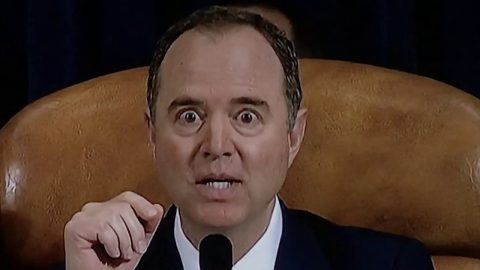
There were two especially notable testimonys made during the recent House impeachment inquiry that should have been ‘nothing to see here folks, let’s move on’ except that The Grand Poo-bah of the Intel Committee Chair Adam Schiff, haughty in his own insecurity and full of his usual self-regard, bugging his eyes in anticipation, continues to act as if he is living in a reality where facts and evidence are non existent.
In a series of mental meanderings, House Speaker Nancy Pelosi’s statement that two career diplomats had provided “corroborated evidence of bribery” was little more than off-hand ramblings with no evidence of exactly what was corroborated.
Upon questioning, Pelosi defined ‘bribery’ as the President’s alleged withholding of military aid to Ukraine in exchange for an investigation into the Biden’s financial bonanza.
In contrast to Pelosi’s allegation, neither of the career diplomats aforementioned presented any “corroborated evidence of bribery” nor has any testimony confirmed that bribery occurred.
As Lord High Justice of the Misguided Society of Wild Goose Chases, the myopic Schiff Show moves on this week to the House Judiciary Committee with more disgruntled witnesses on Wednesday who have, as of the 2016 election, lost any objectivity or claim to legal scholarship.
In a recent WSJ op ed, GW University law professor Jonathon Turley referred to the impeachment inquiry as the “shortest investigation producing the thinnest record of wrongdoing for the narrowest impeachment in history.”
On the first day of the Intel Committee hearings, Rep. Jim Jordan questioned ‘star’ witness former Ambassador Bill Taylor who was expected to drop a “bombshell.”
Instead, channeling his best Clarence Darrow, Jordan caught Taylor in the admission that after Ukraine aid was held up until September 11, Taylor had three meetings with Ukraine President Volodymyr Zelensky (July 26, August 27 and September 5); during which, Taylor agreed, that the subject of US financial assistance as a Quid Pro Quo for a Ukraine investigation into the Bidens or Burisma was never discussed.
Up against the wall with no place to go, Taylor identified former US Ambassador to the EU Gordon Sondland as the source of his ‘clear’ understanding which turned out to be third or fourth hand hearsay and would be inadmissible in court.
Two days later, Jordan took his turn with another ‘star’ witness when Sondland testified that, contrary to his earlier statement that the White House required a QPQ with a public statement from Zelinsky for an investigation to occur, Sondland confessed there was no such agreement or public announcement by Zelensky.
As the only witness who had direct personal contact with President Trump on the subject of Ukrainegate, Jordan related Sondland’s earlier statement to Republican staff counsel that:
The President never told you that the announcement had to happen to get anything”
… and then Sondland’s personal verbatim conversation with Trump:
Sondland: What do you want from Ukraine, Mr. President.
Trump: I want nothing, I want no QPQ. I want Zelensky to do the right thing. I want him to do what he ran on.
When Jordan asked why his conversation with the President of the United States had not been included in Sondland’s prepared 23 page statement, Sondland replied
“it wasn’t purposeful, trust me.” By then, Sondland looked ready for a cold brewski.
As the entire witness script played out during the last two weeks before the Intel Committee, one common theme of almost all the witnesses was that they are (or were) long-standing (albeit unelected) veteran State Department bureaucrats.
Given their decades of experience and seniority, it became clear during their testimony that they are convinced of their own infallibility as better informed with a divine right to make foreign policy decisions more than a duly elected President of the US; especially Donald Trump.
How exactly do unelected, uninspiring State Department bureaucrats (or any Federal bureaucrats) become so deeply entrenched and so powerful to assume that their view on foreign policy is beyond reproach and matters more than a hill of beans? Therein lies a Separation of Powers conundrum of historic proportions for our teetering constitutional democracy to address.
James Madison had a considerable amount of concern about the potential for abuse of the Separation clause as articulated in five essays he contributed to The Federalist Papers (#47, #48, #49, #50, #51).
As the Intel Committee’s Democratic majority has not yet publicly released its report on the impeachment inquiry, the Republican minority staff report was released on Monday.
As the Inquiry moves to the Judiciary Committee, it will be essential to identify the specific Constitutional grounds for impeachment as set forth by the Grand Poo Bah.
December 5, 2019
Posted by aletho |
Aletho News | Ukraine, United States |
Leave a comment
By Paul Antonopoulos | December 4, 2019
Tensions in the Eastern Mediterranean are rapidly rising after Turkish President Recep Tayyip Erdoğan met with a Libyan official of the internationally recognized Government of National Accord (GNA), based in the Libyan capital of Tripoli, in Ankara last week. They agreed on their own Economic Exclusive Zone that penetrates into Greek and Cypriot waters, in violation of the United Nations Convention Law of the Sea (UNCLOS) that favors Cypriot and Greek claims, a major reason why Turkey is only one of 15 UN members, out of 193, that has not signed it. Although Turkey claims it is acting within international law to enter the oil and gas-rich Greek and Cypriot waters, it never references which international law. This leads to the simple question of why Turkey has not signed UNCLOS if international law supposedly favors their claim?
The Turkish-GNA provocation against Greece comes as only last month Pakistan and Turkey conducted naval exercises where Pakistan violated Greek and Cypriot air and maritime space several times and harassed Cypriot merchant ships. This demonstrates that Turkey is bolstering its alliances to force its complete hegemony over the Eastern Mediterranean. This is to expand their maritime space in violation of international law to exploit the rich deposits of gas and oil in the region.
However, Turkey has once again defied international law, remembering the illegal invasion of northern Cyprus and Syria among many. This has now opened up a new quagmire that Erdoğan has probably not expected. With the NATO destruction of Libya in 2011, in which both Greece and Turkey took a minor part, the country has been plagued by tribalism, feudalism and Islamic radicalism, with two major forces emerging from the mess – the GNA in coalition with the Muslim Brotherhood, and the Libyan National Army (LNA) led by General Khalifa Haftar and based in eastern Libya. This is unsurprising since Turkey has a long history of supporting the Muslim Brotherhood.
Erdoğan has opened up a pandora’s box in Libya that will now surely backfire on him and see the dismantlement of the GNA. The GNA is now becoming increasingly isolated since Saudi Arabia, the United Arab Emirates and Egypt have sworn to back General Haftar with weapons and money. It is expected that with the arrival of new funds and weapons, Haftar will continue his assault to take Tripoli which he began in March. One major reason for this new support for the LNA is that Greece, Cyprus and Egypt are in a strategic regional alliance to protect their respective EEZ against Turkish aggression.
Haftar has also controversially announced that he wants relations with Israel. His desires for relations with Israel, a rarity among Muslim-majority countries, will surely bring Haftar more international recognition and legitimacy as a “reward,” especially crucial as the majority of the world recognizes the Tripoli government.
A delegation of U.S. diplomats recently asked Haftar to halt military operations, citing that it will supposedly allow Russia’s military invasion of Libya. Haftar refused. Haftar’s Secretary of State said that the United States is completely wrong, as Libya has become a huge arena for settling accounts among regional powers – and this is true if we consider that the Saudis, Emirates and Egyptians are backing the LNA, while the Turks and Qataris backs the GNA.
Rather than being in compliance with international law, Erdoğan signed with the GNA an illegal agreement to carve out the Eastern Mediterranean for its own plans. Greece has given the GNA time until today to retract their deal with Turkey. Although Greece on the international scene is a minor player, it does wield significant influence in the Eastern Mediterranean and will use NATO and EU mechanisms to convince member states to retract their recognition of the GNA, which will only further isolate Turkey as it has attempted to build an alliance to counter the Greek-Cypriot-Egyptian military partnership.
In a rare occurrence, both the U.S. and Russia have criticized Turkey’s aggression and escalation in the Eastern Mediterranean, with the US State Department describing the Turkish and GNA move as “unhelpful” and “provocative.”
It is unlikely this will make a difference as it is expected that the GNA will adamantly refuse to renounce its agreement with Turkey, which will push Greece to back the LNA and encourage NATO and EU members to do the same. At the very minimum, the Saudi-Emirati-Egyptian tripartite has used Turkey’s aggression in the Eastern Mediterranean as an excuse to back the LNA, providing him with the money, weapons, intelligence and other resources to overcome the Turkish-backed GNA.
With Saif Gaddafi, the second son of Muammar Gaddafi, also announcing his support for Haftar, there is every potential that the internationally recognized GNA will have a multitude of pressure from NATO, the EU, the Saudi-Emirati-Egyptian alliance, and from Haftar and Gaddafi supporters. Erdoğan’s desperate pursuit for regional hegemony was first received with applause domestically, but it appears he has now opened a pandora’s box in Libya that is now likely to backfire on him.
Paul Antonopoulos is a Research Fellow at the Center for Syncretic Studies.
December 4, 2019
Posted by aletho |
Aletho News | Egypt, Libya, Saudi Arabia, Turkiye |
Leave a comment
China says it has never been interested in meddling in the internal affairs of other countries amid claims that the Chinese Communist party sought to infiltrate Australia’s parliament.
Chinese Foreign Ministry spokesman Geng Shuang said at a daily news briefing on Monday that some Australian media outlets had fabricated such allegations as China’s interference.
Some Australian politicians, organizations, and media, the official added, had “become seized with imaginary fears” on issues related to China.
“They constantly fabricate cases of so-called Chinese spies infiltrating Australia.”
“However bizarre the story, lies are still lies in the end, whatever new guise they wear.”
The allegations, first aired by local network Nine, claim that a suspected Chinese espionage ring approached a Chinese-Australian man to run as a member of parliament.
The channel report alleged that Chinese operatives offered one million dollars to Liberal party member Nick Zhao to run for federal parliament in the Melbourne suburban seat of Chisholm, now held by Hong Kong-born Liberal lawmaker Gladys Liu.
Zhao was found dead in a Melbourne hotel room after he reportedly approached the Australian Security Intelligence Organization (ASIO) to discuss the plot.
On Sunday, Australia’s 60 Minutes program and affiliated newspapers said a suspected Chinese espionage ring had offered money to pay for a Melbourne luxury car dealer to run for a seat in the federal parliament.
The ASIO said it was investigating an alleged plot by China to install an agent in the parliament.
Following the report on Sunday, the ASIO director general, Mike Burgess, said the domestic spy agency “was previously aware of matters that were reported today, and has been actively investigating them.”
Describing the alleged plot as “deeply disturbing and troubling,” Australian Prime Minister Scott Morrison said the government was determined to protect Australians from foreign interference and had bolstered laws to strengthen the powers of intelligence agencies.
However, he said he would not draw conclusions on an alleged Chinese plot.
The episode involving China and Australia comes at a time of friction between the West and Beijing.
China’s Foreign Minister Wang Yi recently minced no words when he lashed out at the United States over Washington’s one-sided approach to world politics and its adversarial attitude towards Beijing.
“It (the US) has already become the world’s biggest destabilizing factor,” China’s Foreign Ministry cited the top diplomat as saying on the sidelines of a Group of 20 ministerial meeting in the city of Nagoya in southern Japan on Saturday.
November 25, 2019
Posted by aletho |
Aletho News | Australia, China |
Leave a comment
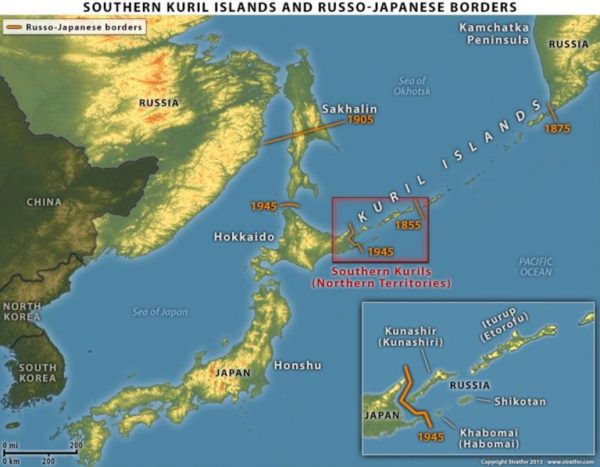
Russia-Japan territorial disputes surged at a meeting of foreign ministers of the two countries, Toshimitsu Motegi and Sergey Lavrov, at Nagoya, Japan, on November 22 on the sidelines of a G20 foreign ministers’ gathering.
Lavrov publicly threw cold water on the Japanese spin that Tokyo is engaged in “persistent talks” with Russia on a peace treaty bringing the two countries’ World War 2 hostility to a formal ending.
Lavrov emphatically stated that any forward movement on a peace treaty will have to be within the ambit of the Russia-Japan 1956 joint declaration, which, as he put it, “clearly states that first Russia’s territorial integrity and sovereignty over all our lands, including those territories, are recognised, thus recognising the results of World War II, and then everything else will possibly be discussed.”
In plain terms, according to Lavrov, Moscow may consider discussing a peace treaty only after Tokyo unequivocally recognises Russian sovereignty over Kuril islands and territories that came under Russian control in the Far East during World War 2.
Japan’s stance, on the contrary, can never converge on that point. Wouldn’t Moscow have known it already? Of course, Lavrov has only reiterated a consistent Russian stance.
Tokyo has been baiting Moscow with the proposition that a peace treaty will open the door to large-scale investments by Japanese companies for the development of the Russian Far East (which is a national priority for the Kremlin.)
Tokyo has also been smart, projecting Russian President Vladimir Putin as a strong but pragmatic statesman who is willing to make territorial concessions to attract Japanese investments.
But it takes two to tango and up to a point Moscow acquiesced with the Japanese enthusiasm that the two countries could be settling the Kuril issue — although making territorial concessions will be a highly emotive issue for the Russian public opinion.
Moscow probably pinned hopes that a relaxed climate of relations might wean Tokyo away from the US strategic orbit — although the likelihood of Japan shaking off the US security umbrella will remain zero for the conceivable future.
At any rate, that tango has ended and realism prevails, with the regional security climate in the Far East visibly darkening with the recent US cruise missile tests and the Pentagon’s plan to deploy new missiles in Japan following its exit from the INF Treaty (which had banned the intermediate-range missiles previously.)
Moscow is alert to the emergent threats to its strategic assets in the Russian Far East due to the US deployment. Importantly, Tokyo appears to be open to the proposed US missile deployments, which would further cement the US-Japan military alliance.
Unsurprisingly, Moscow has linked the regional security scenario to its territorial disputes with Japan. To quote Lavrov, “The military alliance with the US, of course, represents a problem when it comes to taking Russian-Japanese relations to another level. I will remind you that when the 1956 declaration was being coordinated, the USSR said back then that everything may be implemented, and this declaration may be fully implemented only in the context of discontinued US military presence on Japan’s territory.”
Lavrov added, “Japanese colleagues have received a list of Russia’s specific security concerns which emerge because of the increasing and strengthening Japanese-US military-political alliance. So our Japanese colleagues promised to react to those concerns. We will wait for their response and continue discussions.”
Lavrov also chose the G20 FMs’ forum at Nagoya to present Russian concerns over the security climate in the Far East. He said, “As for the US behaviour in the world, including in the Asia-Pacific region, in its relations with Japan, the United States does not hesitate to publicly acknowledge that Russia and China are the main threat to it and that all its military alliances with Japan, Australia and the Republic of Korea will be built proceeding from these threats and challenges.
“But, of course, we pointed out at a meeting with the Japanese foreign minister that this ran counter to the assurances, which Japan gives us that the Japanese-US military and political alliance is not aimed against the Russian Federation.” (TASS )
Meanwhile, Russia is speeding up the construction of military dormitories on the Southern Kuril Islands. A spokesman for Russia’s Eastern Military District said this week that military personnel would settle into the dormitories on Iturup and Kunashir by the end of 2018 and that more dormitories would be built and commissioned in 2019.
The Eastern Military District, which was formed in 2010 under a presidential decree, is headquartered at Khabarovsk in Siberia near the Chinese border and is one of the four operational strategic commands of the Russian Armed Forces.
The new US missile deployments in the Far East are of common concern to Russia and China. In August, Russia and China sought a meeting of the UN Security Council over “statements by US officials on their plans to develop and deploy medium-range missiles”.
Last month, Putin disclosed that Moscow is helping China build a system to warn of ballistic missile launches. Putin said “this is a very serious thing that will radically enhance China’s defence capability”. Since the cold war, only the US and Russia have had such systems, which involve an array of ground-based radars and space satellites. The systems allow for early spotting of intercontinental ballistic missiles.
China will find Lavrov’s remarks at Nogaya to be very reassuring. It is a safe bet that the Russia-Japan normalisation will be an excruciatingly slow process, which in turn works fine for China in geopolitical terms. Lavrov also had a meeting with Wang Yi, Chinese Councilor and Foreign Minister, at Nogaya.
November 23, 2019
Posted by aletho |
Aletho News | INF treaty, Japan, Russia, United States |
Leave a comment
Jason Rezaian, 43, the chief of The Washington Post’s Tehran bureau, was detained for over 18 months in Iran. along with his wife, who was released after two months of detention.
Washington DC federal Judge Richard Leon has ordered the government of Iran to pay Washington Post journalist Jason Rezaian and his family “compensatory damages” in the amount of $180 million, according to The Washington Post.
“Holding a man hostage and torturing him to gain leverage in negotiations with the United States is outrageous, deserving of punishment, and surely in need of deterrence”, the judge wrote in a 30-page ruling.
The federal judge distributed the amount between Rezaian and his family members as $23.8 million to the journalist in compensatory damages for pain, suffering, and economic losses; $2.7 million to his brother, Ali; $2.7 million to his mother, Mary; and $150 million for the whole family in punitive damages, according to WaPo.
Rezaian’s then-newlywed wife, fellow journalist and Iranian citizen Yeganeh Salehi, was not a plaintiff in the lawsuit against Iran, although she was detained together with her husband before being released after two months.
Rezaian, who served as The Washington Post’s Tehran bureau chief, was arrested on 22 July 2014 and was charged with espionage and three other security-related crimes, including “collaborating with hostile governments” and “propaganda against the establishment”. The administration of US President Barack Obama urged Tehran many times to free the journalist, accusing Iran of violating international law.
In 2015, Rezaian was sentenced to several years in jail after being indicted on all four charges, including espionage and propaganda against the establishment.
Rezaian, along with three other Americans, was released in January 2016 under a prisoner-swap deal with the United States, in exchange for seven Iranian-US nationals serving jail time in the US.
The swap agreement also envisaged that the international criminal police group Interpol would cease prosecuting 14 other Iranian nationals.
Following the prisoner swap exchange, The Wall Street Journal alleged that the US had paid a ransom for the US nationals, allegations that were denied by the Obama administration.
November 23, 2019
Posted by aletho |
Aletho News | Iran, United States, Washington Post |
Leave a comment
At least seven protesters were killed and more than 50 people injured during anti-government demonstrations in Baghdad on Thursday. Despite previous concessions by the Iraqi government, an anticipated end to the protests seems further away than ever before as the protesters’ messaging now appears more and more fractured, an expert told Sputnik.
In the last few weeks, waves of protests in Iraq has seen the deaths of some 325 individuals and injuries to thousands more. Citing police and hospital sources, Reuters reported that police have killed protesters using live ammunition and also fatally fired tear gas canisters at people’s heads.
According to Al Jazeera, another three individuals were killed on Friday and at least 27 were injured.
Massoud Shadjareh, founder of the Islamic Human Rights Commission, joined Radio Sputnik’s Loud and Clear on Friday to provide his thoughts on why demonstrations are taking a turn for the worse.
Shadjareh told hosts Brian Becker and John Kiriakou that while there appeared to be hope and room for demonstrators voices to be heard by the government in the beginning of the protests, “demands are changing” and “the whole nature of the demonstrations [is] changing.”
Initially, demonstrators were rallying around the common goal of ridding the Iraqi government of “corruption,” highlighting officials’ “failure [to] look after everyone” and creating “an infrastructure that was supportive of the people,” he explained.
In addition to protestors having a common goal, strides were made to change the Iraqi government earlier this month when Prime Minister Adel Abdul Mahdi pledged to step down after his successor was named.
Shadjareh pointed out that Grand Ayatollah Ali al-Sistani, Iraq’s head Shia cleric, also recently expressed support for the protesters as said that “new faces” were necessary to restore the public’s trust in the government.
“If those in power think they can evade dealing with real reform by procrastination, they are mistaken,” the Shia leader said on November 15, as reported by Al Jazeera. “What comes after the protests is not the same as before, so be careful.”
This formerly cohesive message has now become skewed, and according to Shadjareh, larger, more complex issues such as sectarianism are being pushed as primary issues by select groups of demonstrators.
“We need to recognize that there are interests in Iraq,” Shadjareh asserted. “Those interests are going to be … pushed on the back of these genuine concerns of the Iraqis, and there will be manipulation.”
However, he argued, it is essential to remember that the problem with Iraq, in addition to Daesh and the lack of military assistance, “was the invasion” by the US in 2003. “The whole of the infrastructure of Iraq was shattered,” Shadjareh said. “Iraq had to rebuild” with the help of Iran, and now, Tehran’s positive relationship with Baghdad is being reframed by “colonial powers” as a malign influence.
November 23, 2019
Posted by aletho |
Aletho News | Iraq |
Leave a comment
Hezbollah calls the US the most prominent obstacle lying in the way of formation of a government in Lebanon, which is direly in need of political stability.
The Lebanese resistance movement’s Deputy Secretary-General Sheikh Naim Qassem made the remarks in an interview with Reuters on Friday.
“The first obstruction in the formation of the government is America, because it wants a government that resembles it and we want a government that resembles the Lebanese people,” he said.
US officials had been in direct contact with Lebanese politicians and officials, the official noted, saying, “Let them leave us alone so we can reach an understanding among ourselves. The more they intervene the more they delay the solution.”
The country — where coexistence of various religious sects has turned unity into the leading means of preventing internal strife — would not be rid of its ongoing economic and political woes unless foreign vested interests stopped tugging away at it, Qassem said.
Prime Minister Sa’ad Hariri resigned in late October amid nationwide protests against corruption and economic adversity that had begun earlier that month.
On Tuesday, protesters blocked roads leading to the parliament in the capital Beirut, forcing the legislature to postpone what was supposed to be its first session in two months. Heavy clashes were reported later that day between security forces and a group of protesters attempting to make their way into the parliament.
November 22, 2019
Posted by aletho |
Aletho News | Hezbollah, Lebanon, United States |
Leave a comment
The UAE has said it is interested in de-escalating the tension in the Gulf region and is studying Russian proposals in this regard, TASS reported.
In an interview the Russian Ambassador to the UAE Sergei Kuznetsov said: “Our Emirati friends are interested with us in easing the tensions in the Persian Gulf.”
He added: “They are carefully studying the corresponding Russian proposals as part of our strategy aimed at establishing a framework to launch equal dialogue between countries in order to ensure stability and security in this region of strategic importance.”
Kuznetsov stated that the main point is that Russia’s partners in the UAE “understand the dangers of artificially instigating tensions in the Persian Gulf fraught with unpredictable ramifications.”
Last month it was reported that the US was planning to send “thousands” of additional troops to bolster its military presence in Saudi in the wake of the Aramco attacks, which Washington and Riyadh blamed on Iran despite Yemen’s Houthi movement claiming responsibility.
November 21, 2019
Posted by aletho |
Aletho News | Middle East, Russia, Saudi Arabia, UAE |
Leave a comment
Washington officials are reportedly demanding that Turkey “destroy or return” its Russian-made S-400 air defense systems to get back in the good books and rejoin the F-35 fighter program – but Ankara has no intention of complying.
After a meeting between President Donald Trump and Turkish President Recep Tayyip Erdogan at the White House last week, Erdogan noted that Trump’s attitude to resolving the F-35 standoff was “positive,” but offered no specifics. An unnamed State Department official, however, told Reuters on Thursday that ditching the S-400 is a precondition for rejoining the F-35 program.
“There is room for Turkey to come back to the table,” the official said at a briefing. “They know that to make this work they need to either destroy or return or somehow get rid of the S-400.”
However, far from scrapping the Russian missiles, Turkey is pressing ahead and activating them as planned, the country’s defense minister, Hulusi Akar, told lawmakers in parliament on Thursday. Akar said that the relevant personnel are still undergoing training, after which “we will conduct our planned activities” with the new missiles.
Akar’s comment’s build on Erdogan’s promise last week not to ditch the S-400, and Foreign Minister Mevlut Cavusoglu’s earlier statement that “we didn’t buy these systems as a prop.”
Though itself a NATO country, Turkey’s purchase earlier this year of the Russian-made S-400 air defense system made it the black sheep of the alliance. After taking delivery of the missile launchers, Turkey was swiftly booted from the F-35 jet fighter program – a big deal considering Ankara was both a buyer and a producer of the fifth-generation warplane.
Washington maintains that by operating the S-400 alongside the F-35, Turkey will give Russia a chance to learn the stealthy jet’s secrets. This strategic worry means that the US is unlikely to give in and sell the planes to Ankara any time soon. Erdogan has meanwhile teased the possibility of buying Russian-made Sukhoi jet fighters if the F-35 deal cannot be revived, a move that would likely further inflame tension between the NATO allies.
November 21, 2019
Posted by aletho |
Aletho News | Turkiye, United States |
Leave a comment
By Paul Antonopoulos | November 21, 2019
An ‘internal memo’ that was intentionally leaked has blasted U.S. President Donald Trump’s decision for the U.S. military to withdraw from Syria, or more accurately, relocate from northern Syria to the oilfields in the east, as well as his complacency as Turkey commits “war crimes and ethnic cleansing” against the Kurdish minority.
The author of the memo, diplomat and former ambassador to Bahrain, William V. Roebuck, took every opportunity to lambast Trump as he faces impeachment 12 months before the next U.S. presidential elections. Roebuck questioned whether the U.S. could have prevented the Turkish military operation in northern Syria by increasing military patrols, sanctions and threats, but conceded that “the answer is probably not,” citing Turkey’s membership in NATO and its large army against the small American presence in the region. “But we won’t know because we didn’t try,” Roebuck added.
The New York Times claims that Roebuck’s memo was delivered to the State Department’s special envoy on Syria, James F. Jeffrey, and to dozens of officials focusing on Syria in the State Department, White House and Pentagon. However, the entirety of the 3,200-word memo failed to mention Ankara’s motivation in conducting this operation.
The Syrian perspective is that this is part of a project for a Greater Turkey. Turkish Foreign Minister Mevlüt Çavuşoğlu emphasized in an October interview that Turkey is not interested in territorial expansionism, stating “Russia is concerned about some sensitive issues, such as territorial integrity and the unity of the country [Syria]. We are also worried. If we look at all the joint statements of Turkey, Russia and Iran, we emphasize it.”
Although it may sound conspiratorial, this statement would have done little to alleviate this fear as Turkey has controlled large swathes of northern Syria since 2016 without any process to negotiate the return of these regions to Syrian government administration. In conjunction, Damascus would also remember the 1939 Turkish annexation of its Hatay province, Turkey’s invasion of neighboring Cyprus in 1974, and Turkish President Recep Tayyip Erdoğan invoking an early 20th-century irredentist document that claims northern Syria, northern Iraq, most of Armenia, the entirety of Cyprus, much of Bulgaria and Greece’s northern and eastern Aegean islands as under Turkish sovereignty.
Although territorial expansionism may be a motivating factor for many in the Turkish political and military leadership, it would be a secondary motivating factor. What Roebuck’s memo failed to mention is that Turkey’s Syria policy today is motivated by security concerns.
In an academic article titled “Turkey’s interests in the Syrian war: from neo-Ottomanism to counterinsurgency,” I first made the argument that Turkey’s initial interests in Syria was to expand its influence, and perhaps territory. What was not envisioned by the Turkish leadership was the re-emergence of the Kurdistan Workers Party (PKK) in Syria, recognized as a terrorist organization by Turkey, Syria and the U.S., but not by Russia. The PKK in Syria fight under the banner of the People’s Protection Units (YPG), who comprise the majority of the Syrian Democratic Forces (SDF).
Washington confusingly recognizes the PKK as a terrorist organization, but has directly funded, armed and supported the YPG in Syria. Ankara makes no distinction between the PKK and the YPG, and this has been a primary source of recent hostilities between Turkey and the U.S. Although Syria once supported the PKK against Turkey, it has recognized the group as a terrorist organization since 1998, initially easing the tense relations between Damascus and Ankara, with Erdoğan even describing his Syrian counterpart Bashar al-Assad as his “brother.”
Former Turkish Foreign Minister (2009–2014), Ahmet Davutoglu, adopted a “zero problems with neighbors” policy that saw his country strengthen economic and political ties with the Islamic World by lifting visa restrictions and taking a larger active role in critical Islamic issues like the fallout between the Palestinian Hamas and Fatah groups, Afghanistan and Pakistan, and Syria and Israel. However, this new doctrine was taken to the test when the Syrian war began in 2011, with Ankara immediately contradicting the “zero problems with the neighbours” policy by supporting terrorist organizations and getting itself into disputes and hostilities with not only Syria, but also Iraq, Greece, Cyprus and Armenia.
The Arab Spring changed the status quo in the Middle East and provided an opportunity for Turkey to engage in power projections within a new regional order where Ankara would be the center of power. However, what Ankara had not calculated is that by abandoning the “zero problems with neighbors” policy and flooding Syria with tens thousands of terrorists, it was creating the very conditions for the PKK to return to Syria after a more than 20-year hiatus under the guise of protecting Syria’s Kurds.
Essentially, the project for a Greater Turkey has become secondary in the case of Syria, with Ankara’s current focus on what it calls a counterterrorist operation against the PKK/YPG, after they created the very conditions for them to return to Syria. Although Trump has whole teams dedicated to Syria, it appears that Washington refuses to acknowledge Turkey’s security concerns, just as Roebuck’s memo demonstrates.
The rise of the YPG brought questions of Kurdish independence or autonomy in northern Syria, which can also find justification for an autonomous or independent Kurdish state in eastern Turkey as the PKK, militarily and politically, has struggled for decades to achieve this. A Kurdish push for independence or autonomy in northern Syria not only threatens Turkey’s desire to illegally annex this region, but destabilizes Turkey as the Kurds can make a greater push for independence or autonomy in eastern Anatolia.
As Turkey strengthens its relations with Russia, the question remains whether the country will formally leave NATO or not. It is unlikely that the U.S. will push for Turkey’s expulsion from NATO as it has the second largest military in the alliance and occupies one of the most strategic spots on the planet.
Although the U.S. has turned to Greece as its Plan B to contain Russia in the Black Sea in any hypothetical war, Washington would know there is a great possibility that the next general election in Turkey could see Erdoğan out of power and replaced by a more Washington-friendly leader. Not only is Erdoğan’s popularity diminishing because of the economic crisis and his unpopular Syria policy, but the highly popular ex-economy minister Ali Babacan and ex-Prime Minister Ahmet Davutoğlu have both recently left Erdoğan’s Justice and Development Party (AKP) to establish their own respective political parties, which will only further weaken AKP who have lost over 840,000 members in one year alone.
The U.S. would be hoping that by continuing to apply military, diplomatic and economic pressure against Turkey, the tense situation in Turkey will see Erdoğan’s popularity diminish, and the return of a pro-U.S. leader. The difficult economic situation, the millions of refugees and the increased terror attacks in Turkey can all be directly attributed to Erdoğan’s Syria policy, and the U.S. will continue to use these means to pressure Turkey until it conforms to Washington’s desires and reverse its strengthened ties with Russia.
Many within Washington are unsatisfied with Trump’s Turkey policy and feel that they are not utilizing their advantages to pressure Erdoğan. Roebuck’s memo however appears to be a potential gamechanger as it has critically expressed opposition to Trump’s policy at a formal, and now public, level.
Roebuck publicly revealed that Turkey’s military operation in northern Syria is “spearheaded by armed Islamist groups on its payroll” who are committing what can “only be described as war crimes and ethnic cleansing.” The same jihadist forces utilized by Turkey are no different to the ones the U.S. supported against Assad, who not only ethnically cleansed Kurds, but also Shi’ites, Alawites, Antiochian Greeks, Assyrians and Armenians.
Roebuck also suggested that the U.S. must maintain relations with Turkey. As Turkey is at a crossroads with its political leadership, Washington knows there is a strong possibility that Erdoğan might not be around by the time the next general election is scheduled in 2023, although it appears likely that these elections will take place years earlier. With Roebuck’s ‘leak,’ it is likely that Trump will start receiving stronger domestic political pressure to deal with Turkey in a much tougher way and continue to make every destabilizing effort to remove Erdoğan and have him replaced with a pro-U.S. leader.
Paul Antonopoulos is a Research Fellow at the Center for Syncretic Studies.
November 21, 2019
Posted by aletho |
Aletho News | Middle East, Syria, Turkiye, United States |
Leave a comment
he low-key coverage by the Pakistani media on the 2-day visit of the army chief General Qamar Bajwa to Iran notwithstanding, the event signifies a surge in the tempo of ‘mil-to-mil’ exchanges between the two countries.
The Iranian side gave the event a distinct political colouring with the Pakistani COAS having meetings with President Hassan Rohani, Foreign Minister Mohammad Javad Zarif and the Secretary of the Supreme National Security Council Ali Shamkhani, apart from talks with his host, Chief of Staff of the Iranian Armed Forces Major General Mohammad Hossein Baqeri.
Border security and counter-terrorism are key issues for Iran. But Gen. Bajwa’s talks extensively covered regional developments and even dwelt on the two countries’ “coordination on the major issues of the Muslim world”.
The Iranian reports did not make any references to the Kashmir issue or India-Pakistan tensions, but it is inconceivable that Gen. Bajwa sidestepped the topic.
In fact, even as Gen. Bajwa headed for Tehran on Monday, Pakistan conducted a training launch of the surface-to-surface ballistic missile Shaheen-1, a day after India conducted the first night trial of its Agni-II missile.
The Iranian news agency IRNA took note that the launch of Shaheen-1 “aimed at testing operational readiness of Army Strategic Forces Command, ensuring Pakistan’s credible minimum deterrence.”
The Pakistani army spokesman tweeted that Gen. Bajwa discussed with Rouhani the “regional security environment and matters of mutual interest”. According to the Iranian agency IRNA, Gen Bajwa told Rouhani that Pakistan was prepared to strengthen bilateral relations “in all spheres”.
Rouhani in turn hailed Pakistan’s role towards regional peace and called the relations between the two Muslim nations as “an invaluable asset” which should be used to further boost mutual cooperation.
Iranian reports quoted Gen. Bajwa as saying Pakistan and Iran face “common threats and have common interests”, calling for close cooperation and interaction.
An IRNA commentary said, “In recent years, Tehran and Islamabad have witnessed high level exchanges from top military officials and the recent visit of Pakistan Army Chief to Iran demonstrates the commitment of the two sides to consolidate defense ties through active diplomacy.”
The semi-official Fars agency reported that Gen. Bajwa and Gen. Baqeri discussed “different issues ranging from security partnership, regional developments and maintaining stable security at the regional level” and “explored avenues for bolstering and reinvigorating defence relations”.
Notably, Admiral Shamkhani, who reports to Supreme Leader Ali Khamenei, called for “all-out expansion of ties” with Pakistan “in a bid to provide regional security.” Equally, Foreign Minister Zarif and Gen. Bajwa “discussed a broad range of issues, including the political, economic and military relations” between Iran and Pakistan as well as “regional cooperation and the ongoing developments in the region, including the situation in Afghanistan.”
Without doubt, the Iranian reports uniformly underscored Tehran’s high expectations that a new phase of Iran-Pakistan relations may be commencing.
Gen. Bajwa’s visit tops up an intensification of high-level exchanges between the two countries during the past two-year period since his pathbreaking trip to Iran in 2017, which was the first by a Pakistani COAS in over two decades.
During the 2017 visit, Gen. Bajwa had told Rouhani that Pakistan was determined to expand its ties with Iran in all spheres and hoped that the two neighbours could collaborate for regional peace and security. To be sure, the shifts in the geopolitics of the region acted as catalyst in injecting new verve into the relationship.
Principal among them would be Delhi’s ‘pivot to Saudi Arabia’ in its Gulf strategy, markedly deviating from the traditional course of walking a fine line in the intra-Gulf discords and rivalries from a standpoint of benign neutrality.
Even as US-Iranian tensions began accelerating, the Modi government unceremoniously complied with Washington’s diktat to roll back ties with Iran by terminating all its oil imports from that country. The pusillanimous attitude of the self-styled nationalist leadership in Delhi took Tehran by surprise.
Tehran put its deep disappointment on display once it became apparent that the Modi government retracted even from its commitments at the highest level of leadership to cooperate with Iran on the development of Chabahar Port, which was a key underpinning of regional connectivity and security linked to the stability of Afghanistan. (See my column in Rediff, Why Iran is upset with India.)
The Indian U-turn on Chabahar has come to symbolise the phenomenal shift in Indian regional policies in the direction of harmonising with the US strategy at a critical juncture when Washington’s maximum pressure approach is fuelling tensions in the Gulf and leading to a steady augmentation of the American military deployments in Saudi Arabia that could well be the prelude to confrontation with Iran.
The unkindest cut of all is that Iran’s Sistan-Baluchistan province is also targetted by terrorist groups that are allegedly backed by Saudi Arabia. Tehran senses that the Modi government is inexorably gravitating toward the US-Israeli-Saudi axis, jettisoning India’s traditional independent Gulf policies.
The ardour of PM Modi’s personal friendships with the Saudi Crown Prince Mohammed bin Salman and Israeli PM Benjamin Netanyahu must have set alarm bells ringing in Tehran.
On the other hand, Pakistan is closely gauging the downhill slide in the India-Iran relationship and estimating that the 40-year old Indian strategic embrace of Iran as a “second front” is ending. Meanwhile, for the first time since the Islamic revolution in in 1979, Iranian leadership is appreciating Pakistan’s independent foreign foreign policies.
Tehran would estimate that conditions are getting ripe for a breakthrough in Pakistan-Iran military cooperation. Importantly, the UN’s five-year time frame for embargo on arms trade with Iran expires next year, while the eight-year limit on Iran’s missile activities ends in 2023. (See a recent IRNA commentary titled JCPOA, Sunset Clauses and struggle of Americans.)
Of course, Tehran’s willingness to support Pakistan on the Kashmir issue could be the ultimate clincher.
In geopolitical terms, Iran’s overarching foreign-policy agenda of Eurasian integration brings Tehran and Pakistan more or less onto the same page in regional politics.
Zarif acknowledged at a recent meeting in Tehran with a group of visiting Indian writers and journalists that US economic and political actions had created “an understanding” between China, Russia and Iran “that we’re all (US) targets” and there was “a commonality being felt” by the leaderships of the three countries. Of course, Islamabad is well aware of it, having been a “target” itself.
November 20, 2019
Posted by aletho |
Aletho News | India, Iran, Pakistan |
Leave a comment


 Aletho News