Argentina: Milagro Sala to Run for Governor of Jujuy in 2019

teleSur | December 28, 2018
Sala was recently acquitted of attempted murder, an accusation she claims is politically motivated.
Activist and Indigenous leader Milagro Sala, now in detention, has announced she will run in the 2019 regional elections for governor of Jujuy province, northern Argentina.
“I have the intention of competing against Gerardo Morales in the elections,” said Sala during a radio interview on Thursday.
Sala said she wants to improve the living conditions of the people of Jujuy, where she says there’s “no democracy or freedom, only hunger.”
The activist was unanimously acquitted of attempted murder on Thursday in the ‘Shooting of Azopardo’ case, from October 27, 2007. Sala celebrated the verdict and thanked the judges for not succumbing to government pressure.
Morales, Jujuy’s incumbent governor, described the court’s decision to acquit the activist as “shameful.”
“The ruling acquitting two criminals such as Milagro Sala and Beto Cardozo is shameful,” Morales wrote on Twitter.
“If there’s something that the people of Jujuy know about is the violence they committed and how much they stole. The struggle against impunity continues.”
Sala is one of the founders and leaders of the Tupac Amaru Neighborhoods’ Organization, providing housing and other services to informal workers and working-class sectors since 1999.
She is also being investigated for alleged illicit association, fraud and extortion, crimes she was charged with days after being detained in early 2016 for allegedly instigating violence during a protest against Jujuy Governor Gerardo Morales, which she didn’t attend.
The case is known as the “Pibes Villeros” and Sala claims it’s political persecution “to discipline the leaders and the opposition,” as she told teleSUR in October.
Tupac Amaru Neighborhoods’ Organization claims the persecution against Sala is “politically motivated.”
The activist has expressed multiple times her intentions to participate in the regional elections in Jujuy. In 2017, while she was under house arrest, Sala said she would like to run against Morales “as equals, not from prison while he is ruling over everything here in Jujuy.”
Sala served as an Argentine legislator between 2013 and 2015 and was later elected to Mercosur’s Parliament (Parlasur), prior to her arrest in 2016 for allegedly instigating violence against the state.
Turkey Won’t Drop S-400 Deal Despite Trump’s Promise to Sell Patriots – Report
Sputnik – 22.12.2018
The US has been attempting to thwart the Russian S-400 air defence systems’ sale to Turkey ever since the contract was signed in December 2017, threatening to halt F-35 jet shipments to Ankara. In its latest attempt to dismantle the deal, the US State Department approved the sale of US-made Patriot systems to Turkey.
Turkey has “zero chance to drop S-400” deal with Russia despite the US planning to sell its Patriot defence systems to Ankara, Hürriyet Daily News reported citing an anonymous diplomatic sources. The source added that Turkey is going to try and convince Washington that it will take all measures to develop its own software to prevent any alleged problems over the S-400 deployment.
Hürriyet’s source also shared that US President Donald Trump assured his Turkish colleague Recep Tayyip Erdogan that the Congress will not thwart the proposed sale of Patriot missile systems to Ankara, which received a green light from the US State Department earlier this week. Trump reportedly didn’t elaborate how he was going to ensure the fulfilment of this promise.
The media’s diplomatic source also added that apart from his promise on the Patriot sale, Trump vowed that there will be no problem with F-35 jet deliveries, which came into question after Turkey struck a deal with Russia to buy the S-400 systems.
The supplies of the newest fifth generation jets to Turkey are being threatened by a bill, adopted earlier by the US Congress, requiring the US Defence Department to present a report on the possibility of Russian defence systems in Turkey revealing sensitive data about the F-35s and sending it to Moscow. Without a report from the Defence Department, the F-35 deliveries to Turkey will be impossible.
The issue was raised in the US Congress after Turkey signed a $2.5 billion contract with Russia to buy its S-400 air defence systems in December 2017. Ankara pointed out then that it would gladly buy missile systems produced by the US and its allies, if it would have been given such an option.
Afghan forces abandon western district after Taliban pressure
RT | December 12, 2018
Afghan forces have abandoned a remote district in the west of the country, leaving the area to Taliban insurgents. The government had failed to re-supply dozens of troops stationed there, provincial officials said on Wednesday.
The Shebkoh district of Farah province, bordering Iran, has been under Taliban siege for months.
Mosa Nazari, deputy governor of Farah, said Afghanistan’s military leadership faced difficulty reinforcing the troops and it had been decided to withdraw in order to avoid casualties.
“The plan to leave the district was there for months and it was finally decided,” Nazari told Reuters.
The forces withdrew all ammunition and vehicles to the provincial capital of Farah, he said.
The Taliban said in a statement the government abandoned the district after a heavy firefight overnight, and the group seized an amount of ammunition.
Robber barons kidnap Chinese princess for ransom

Huawei HQ, Shenzhen, China
By M. K. BHADRAKUMAR | Indian Punchline | December 12, 2018
The best thing about US President Donald Trump is his transparency. It immensely helped the world community through this past two-year turbulent period to see America’s real face. Behind the veil of ‘exceptionalism’, the US statesmen right down to Barack Obama took care to camouflage American intentions and motivations. But Trump doesn’t waste breath making false pretensions about American exceptionalism and rule of law.
Trump’s latest remarks during an interview with Reuters testify to this. He is frank about the sensational case of the arrest of Meng Wanzhou, the deputy chairperson of the Chinese smart phone giant Huawei, in Vancouver, Canada, on December 1, where she was on a 12-hour transit, on charges brought by US prosecutors of violating American sanctions against Iran and calling for her extradition to the US.
The Reuters quoted Trump as saying that he could intervene in the case against Meng, who is also the Huawei’s Chief Financial Officer and the daughter of the owner of Huawei, the flagship hi-tech company with an annual revenue of $92.55 billion in 2017, linked to the Chinese communist party. Trump said, “Whatever’s good for this country, I would do. If I think it’s good for what will be certainly the largest trade deal ever made – which is a very important thing – what’s good for national security – I would certainly intervene if I thought it was necessary.”
Trump also told Reuters that the White House has spoken with the Justice Department about the case, as well as Chinese officials. “They (Chinese) have not called me yet. They are talking to my people. But they have not called me yet,” he said when asked if he has spoken to Chinese President Xi Jinping about the case. In effect, Trump has brought in the Art of the Deal by linking the Meng case with the ongoing US-China negotiations over a trade dispute. This linkage demolishes the stance by the US officials that the Meng case is not political and has “nothing to do with a trade war.”
An intriguing aspect is that the detention of Meng coincided exactly with the highly publicized meeting between Trump and Chinese President Xi in Argentina. Curiously enough, Trump has been exuding great optimism after the meeting with Xi in a series of tweets:
“My meeting in Argentina with President Xi of China was an extraordinary one. Relations with China have taken a BIG leap forward! Very good things will happen. We are dealing from great strength, but China likewise has much to gain if and when a deal is completed. Level the field!” (3/12/2018)
“President Xi and I have a very strong and personal relationship. He and I are the only two people that can bring about massive and very positive change, on trade and far beyond, between our two great Nations. A solution for North Korea is a great thing for China and ALL!” (3/12/2018)
“Very strong signals being sent by China once they returned home from their long trip, including stops, from Argentina. Not to sound naive or anything, but I believe President Xi meant every word of what he said at our long and hopefully historic meeting. ALL subjects discussed!” (5/12/2018)
“Statement from China: “The teams of both sides are now having smooth communications and good cooperation with each other. We are full of confidence that an agreement can be reached within the next 90 days.” I agree!” (6/12/2018)
“China talks are going very well!” (7/12/2018)
“Very productive conversations going on with China! Watch for some important announcements!” (11/12/2018)
A stunning report in the New York Times last week claimed that when Trump was sitting down to dinner with Xi Jinping in Argentina to arrange a “truce” in the US-China trade war, he was actually unaware that the unprecedented arrest was about to take place in Vancouver. Reuters, in a subsequent report quoting US officials, also claimed that Trump indeed didn’t know about the plans to arrest the high-flying CEO of Huawei. One US official admitted nonetheless to Reuters that while it was a US Justice Department matter and not orchestrated in advance by the White House, Meng’s arrest could complicate efforts to reach a broader US-China trade deal but would not necessarily damage the process.

Meng Wanzhou out on bail on Dec 11, Vancouver
Meng was released on bail on Tuesday. But Meng is a Chinese princess, ranked 12th on Forbes’ list of top Chinese businesswomen, and her bail conditions include a $10 million surety (including $7 million in cash). Besides, Meng must stay indoors from 11 p.m. to 6 a.m, must remain within the Vancouver region (but away from the airport in Richmond), surrender her passports, wear an ankle bracelet monitor for GPS tracking, as well as obey security detail that follows her whenever she leaves one of her multi-million dollar Vancouver homes where she must reside in the interim—all at her own expense.
The intention seems to be to humiliate Chinese national pride and wreak trade concessions. A VOA commentary quoted Ming Xia, a professor of political science and global affairs at City University of New York, as drawing satisfaction that Meng’s arrest was another example of how members of Trump’s trade team know how to use very sharp, pinpoint moves to teach China a lesson. “This is one of the U.S.’s many tactics and tools used in its trade war with China to maximize its gains. The arrest of Meng Wanzhou, I believe, should be seen in the context of the Sino-U.S. trade war,” Ming said.
Today, indeed, a substantial section of not only Trump’s administration, but of the “deep state” of the US intelligence bureaucracy and leading lawmakers seem to be pushing for an aggressive anti-China policy. Former Trump political adviser Steve Bannon praised Meng’s arrest as part of a “whole of government” approach to countering China. “Under Trump,” Bannon told the Financial Times newspaper, “you’re seeing for the first time all forces of US state power finally come together to confront China.”
Bannon’s words echoed a recent Pentagon study on the US defence industrial base, which called for a “whole-of-society” American approach to prepare for conflict with China. But the times have changed. The gunboat diplomacy of the 19th century is no longer feasible. Succinctly put, what is unfolding is plain gangsterism of the kind that calls to mind the great robber barons of American history — John Jacob Astor (real estate, fur), Andrew Carnegie (steel), William A. Clark (copper), Charles Crocker (railroads), Daniel Drew (finance) –- who demonstrated the protean nature of American capitalism.
The gulf within GCC is only widening
By M. K. BHADRAKUMAR | Indian Punchline | December 10, 2018
The annual summit meeting of the Gulf Cooperation Council (GCC) in Riyadh on Sunday was particularly important for Saudi Arabia as a display of its regional leadership. But the short meeting of the GCC leaders behind closed doors, lasting for less than an hour, ended highlighting the huge erosion of Saudi prestige lately.
The litmus test was the participation by Qatari Emir Sheikh Tamim bin Hamad al-Thani. King Salman’s letter of invitation to the emir was perceived as some sort of an olive branch for reconciliation. But Qatar’s Minister of State for Foreign Affairs Sultan bin Saad Al Muraikhi represented the country at the summit.
The calculation by the hot headed crown princes of Saudi Arabia and the UAE that Qatar would pack up is turning out to be a historic blunder. Qatar had some trying times but it has successfully weathered the harsh embargo by Saudi Arabia and the UAE, and the boycott is now hurting its enforcers. Qatar “celebrated” the anniversary of the boycott in June by banning the import of goods from the UAE, Saudi Arabia, Bahrain and Egypt (which had cut diplomatic and transport ties on June 5, 2017.) Ironically, Iran has been a beneficiary as Qatar established diplomatic relations with Tehran and began importing Iranian products.
Qatar also strengthened its alliance with Turkey, which stepped in as provider of security for Doha. And Turkey checkmated any plans that Saudis and Emiratis might have had to use force to bring the Qatari emir down on his knees.
The emir’s absence from the summit in Riyadh yesterday underscores that he is not in a mood to forget and forgive. Equally, Kuwait and Oman also have issues to settle with Saudi Arabia and the UAE. There is tension between Kuwait and Saudi Arabia over two oil fields – Khafji and Wafra – that are jointly owned by the two states, which have a capacity to produce more than half a million barrels per day, but have been closed since 2014 and 2015, respectively. The dispute is over the sovereignty over the so-called Neutral Zone on their border, which has been undefined for almost a century.
The Saudis are not relenting. “We’re trying to convince the Kuwaitis to talk about the sovereignty issues, while continuing to produce until we solve that issue,” Saudi Crown Prince Mohammed bin Salman told Bloomberg in an interview in October. Similarly, Saudis and Emiratis have stationed troops in Yemen’s southern province of al-Mahra that borders Oman although the region has no presence of Houthi rebels. Oman considers the move an infringement on its national security. Interestingly, instead of the Sultan of Oman, Deputy Prime Minister for the Council of Ministers Sayyid Fahd bin Mahmood Al Said represented the country at the GCC summit.
To be sure, like Banquo’s ghost at Macbeth’s banquet in Shakespeare’s play, the killing of Jamal Khashoggi provided the backdrop to the GCC summit. The GCC states (including Qatar) have not criticized the Saudi Crown Prince Mohammed bin Salman (MBS) but they would know this is a developing story and it has dented Saudi prestige irreparably, especially with the US Senate is at loggerheads with the Trump administration. The big question for the Gulf region would be as to where Saudi Arabia is heading. (See the blog by Thomas Lippman What Now For U.S. Policy And The Crown Prince?)
Of course, if the GCC disintegrates due to these contradictions, Saudi Arabia will be the big loser, because it will be a reflection on its regional leadership. But do the Saudis understand it? The remarks by the Saudi Foreign Minister Adel Al-Jubeir at the end of the GCC summit showed no sign of remorse.
He said, “The members of the Gulf Cooperation Council are keen that the crisis with Qatar will have no impact on the Council (GCC). But this does not mean relinquishing the conditions imposed on Qatar.” Doha should stop supporting terrorism and extremism and avoid interfering in other countries’ affairs and needed to fulfill the Arab countries’ conditions to open the way for its return to the full-fledged work in the GCC. “The stance towards Qatar came to push it to change its policies,” he added.
The leading Saudi establishment writer Abdulrehman al-Rashed fired away at Qatar on the day of the GCC summit. In a column entitled Is it Time to end the GCC? in the Saudi daily Asharq Al-Awsat (owned by royal family members) he wrote:
“Qatar… has been putting obstacles in the GCC path and it has succeeded where Saddam and Iran have failed: It managed to destroy and rip it [GCC] apart… It organized an internal and external opposition against the United Arab Emirates. It is now the primary financier of the greatest attack against Saudi Arabia and it stands behind the politicization of Khashoggi’s murder… Today’s [GCC] summit could not conceal the dark political cloud hanging over its head. It also strongly poses a question over the future of the GCC as doubts rise over the value of this union… A wedge has been driven in the GCC.”
The disarray within the GCC undoubtedly calls attention to the decline of US influence in the Middle East region. At the end of the day, the Gulf states have not paid heed to repeated US entreaties for GCC unity. Ideally, GCC should have provided today for the US strategy a strong platform for launching the regime change project against Iran. On the contrary, GCC is split down the middle, with Qatar, Oman and Kuwait getting along just fine with Tehran. While addressing the summit in Riyadh on Sunday, the Emir of Kuwait, Sheikh Sabah Al Ahmad hit the nail on the head when he said, “The most dangerous obstacle we face is the struggle within the GCC.”
Yemen: Houthis Urge Transitional Gov’t With All Parties
teleSUR | December 10, 2018
The Houthi’s main negotiator, Mohammed Abdusalam, said Saturday that any political solution to the Saudi-led war on Yemen should start with outlining a transitional period with an exact timeframe that should include all political parties.
Abdusalam also said the city of Hodeidah should be declared a “neutral zone” and that the United Nations could play a role in managing the Sanaa airport. His comments were made in the context of U.N.-sponsored peace talks that seek to put an end to almost four years of conflict.
The Houthis control major population centers in Yemen, including the capital Sanaa and the Red Sea port of Hodeidah, a lifeline for millions of people. The Saudi coalition’s siege on the port this year has caused food and medicine shortages, leading to widespread cases of starvation.
“It (Hodeidah) should be a neutral zone apart from the conflict, and the military brigades that came from outside Hodeidah province should leave,” Abdusalam told Reuters.
Asked if Houthi forces would then withdraw from Hodeidah, Abdusalam said: “There will be no need for military presence there if battles stop … Hodeidah is an economic hub and it should stay that way for the sake of all Yemenis.”
“We have proposed to the U.N. to oversee the port and supervise its logistics… inspections, revenues, and all the technical issues,” he said.
It is unclear who will control the city if both forces leave but Yemen’s internationally-recognized government of President Abd-Rabbu Mansour Hadi is sticking to its position that Hodeidah should be under its control.
On the issue of reopening the Sanaa airport, Abdusalam said the Houthis were open to the possibility of a U.N. role at the airport to secure an agreement to reopen it. The Houthis hold control of the airport, but Saudi-led forces have secured control of the airspace and have bombed the facility several times.
Yemen’s Saudi-backed government has proposed reopening the Houthi-held airport in the capital Sanaa on condition planes are inspected in the airports of Aden or Sayun which are under its control, two government officials said Friday.
The Houthi delegation rejected the proposal but insist they are open to a U.N. role.
Many Yemeni factions are involved in the war that pits the Houthis against a Saudi-led coalition that intervened in Yemen in 2015 to restore the government of Abd-Rabbu Mansour Hadi.
Yemen’s war and the ensuing economic collapse has left 15.9 million people, 53 percent of the population, facing “severe acute food insecurity.” According to a recently-published study by the Armed Conflict Location and Event Data Project (ACLED), the armed conflict has claimed the lives of over 50,000 people.
Humanitarian groups say peace is the only way of ending the world’s largest humanitarian crisis. The areas hit with extreme hunger are also the areas where there is active fighting.
No peace talks have been held since 2016, and the last attempt in Geneva in September failed when the Houthis did not attend [*]. These peace talks are due to last until Dec. 13.
* Saudi-backed delegates leave Yemen peace talks
Press TV – September 8, 2018
A delegation from Yemen’s former government has left UN-brokered talks in Geneva after representatives of the Houthi movement were prevented by Saudi Arabia from attending the negotiations.
“The government delegation is leaving today,” said an official from the Saudi-backed team on Saturday, referring to the former Yemeni administration. “There are no expectations the Houthis are coming,” he added.
UN envoy to Yemen Martin Griffiths told a news conference that the Houthis were “keen” to get to Geneva.
“They would have liked to get here. We didn’t make conditions sufficiently correct to get them here,” he said.
Ansarullah accused the Saudis of planning to strand the delegation in Djibouti, where their plane was to make a stop en route to Geneva.
The Saudis were “still refusing to give permission to an Omani plane” to land at the Yemeni capital Sana’a and take the delegation to Geneva, the movement said.
It posted a statement, saying the Houthis needed to “ensure the safety of the delegation” and require a guarantee that they would be allowed to return “smoothly” to Sana’a airport. … Full article
What Foreign Threats?
The biggest threats to America come from its “friends”
By Philip Giraldi • Unz Review • December 4, 2018
One of the local Washington television stations was doing a typical early morning honoring our soldiers schtick just before Thanksgiving. In it soldiers stationed far from home were treated to videolinks so they could talk to their families and everyone could nod happily and wish themselves a wonderful holiday. Not really listening, I became interested when I half heard that the soldier being interviewed was spending his Thanksgiving in Ukraine.
It occurred to me that the soldier just might have committed a security faux pas by revealing where he was, but I also recalled that there have been joint military maneuvers as well as some kind of training mission going on in the country, teaching the Ukrainian Army how to use the shiny new sophisticated weapons that the United States was providing it with to defend against “Russian aggression.”
Ukraine is only one part of the world where the Trump Administration has expanded the mission of democracy promotion, only in Kiev the reality is more like faux democracy promotion since Ukrainian President Petro Poroshenko is clearly exploiting a situation that he himself provoked. He envisions setting himself up as a victim of Moscow to aid in his attempts to establish his own power through a security relationship with Washington. That in turn will help his bid for reelection in March 2019 elections, in which his poll numbers are currently running embarrassingly low largely due to the widescale corruption in his government. Poroshenko has already done much to silence the press in his county while the developing crisis with Russia has enabled him to declare martial law in the eastern parts of the country where he is most poorly regarded. If it all works out, he hopes to win the election and subsequently, it is widely believed, he will move to expand his own executive authority.
There also has to be some consideration the encounter with the Russians on the Kerch Strait was contrived by Poroshenko with the assistance of a gaggle of American neoconservative and Israeli advisers who have been actively engaged with the Ukrainian government for the past several years. The timing was good for Poroshenko for his own domestic political reasons but it was also an opportunity for the neocon warmongers that surround Trump and proliferate inside the Beltway to scuttle any possible meeting between a vulnerable Donald Trump and Vladimir Putin at the G20 gathering in Argentina.
The defection of Trump’s lawyer Michael Cohen, together with the assumption that a lot of anti-Trump dirt will be spilled soon, means that the American president had to be even more cautious than ever in any dealings with Moscow and all he needed was a nod of approval from National Security Adviser John Bolton and Secretary of State Mike Pompeo to cancel the encounter. A heads-of-state meeting might not have solved anything but it certainly would be better than the current drift towards a new cold war. If the United States has only one vitally important relationship anywhere it is with Russia as the two countries are ready, able and apparently willing to destroy the world under the aegis of self-defense.
Given the anti-Russian hysteria prevailing in the U.S. and the ability of the neocons to switch on the media, it should come as no surprise that the Russian-Ukrainian incident immediately generated calls from the press and politicians for the White House to get tough with the Kremlin. It is important to note that the United States has no actual national interest in getting involved in a war between Russia and Ukraine if that should come about. The two Eastern European countries are neighbors and have a long history of both friendship and hostility but the only thing clear about the conflict is that it is up to them to sort things out and no amount of sanctions and jawing by concerned congressmen will change that fact.
Other Eastern European nations that similarly have problems with Russia should also be considered provocateurs as they seek to create tension to bind the United States more closely to them through the NATO alliance. The reality is that today’s Russian Federation is not the Soviet Union and it neither aspires to nor can afford hegemony over its former allies. What it has made very clear that it does want is a modus vivendi where Russia itself is not being threatened by the West.
Recent military maneuvers in Poland and Lithuania and the stationing of new missiles in Eastern Europe do indeed pose a genuine threat to Moscow as it places NATO forces on top of Russia’s border. When Russia reacts to incursions by NATO warships and planes right along its borders, it is accused of acting aggressively. One wonders how the U.S. government would respond if a Russian aircraft carrier were to take up position off the eastern seaboard and were to begin staging reconnaissance flights. Or if the Russian army were to begin military exercises with the Cubans? Does anyone today remember the Bay of Pigs?
When it comes to international conflicts context is everything. Seeing the incident between Russia and Ukraine in Manichean terms as an example of Moscow’s aggressive instincts is satisfying in some circles, but it does not in any way reflect the reality on the ground. Internal politics of the two countries combined with deliberate fabrications that are expected to generate a certain response operate together to create a largely false narrative for both international and domestic consumption. Unfortunately, narratives have consequences: in this case, the sacrifice of the possibly beneficial meeting between Trump and Putin.
The same dynamic works vis-à-vis Washington’s other enemy du jour Iran. In the case of Russia, useless “friend” Ukraine is pulling the strings while regarding Iran it is conniving Israel and Saudi Arabia. Iran has been accused of being the world’s leading sponsor of terror, of destabilizing the Middle East, and of having a secret nuclear weapon program that will be used to attack Israel and Europe. None of those assertions are true. The terrorism tag comes from the country’s relationship with Hezbollah, which is only a terrorist group insofar as it is hostile to Israel and pledged to resist any future Israeli invasion of Lebanon. Washington and Israel have pushed the terrorism label for Hezbollah, but most Europeans have begun to disregard the designation since the group has become a part of the Lebanese government.
And regarding destabilizing the Middle East, that has largely been the end result of actions undertaken by the United States, Israel and the Saudis, while the alleged Persian nuclear weapons program is a fantasy. If someone in the U.S. national security apparatus had any brains the United States would work to improve relations with Iran real soon as the Iranians would in the long run quite likely prove to be better friends than those rascals who are currently running around using that label.
And there are other friends in unlikely places. Beleaguered British Prime Minister Theresa May is wailing loudly against a Trump threat to reveal classified documents relating to Russiagate. The real problem is that the documents apparently don’t expose anything done by the Russians. Rather, they seem to appear to reveal a plot by the British intelligence and security services working in collusion with then CIA Director John Brennan to subvert the course of the 2016 election in favor of the Deep State and Establishment favorite Hillary Clinton. How did that one work out?
So how about it? Teenagers who get in trouble often have to ditch their bad friends to turn their lives around. There is still a chance for the United States if we keep our distance from the bad friends we have been nurturing all around the world, friends who have been convincing us to make poor choices. Get rid of the ties the bind to the Saudis, Israelis, Ukrainians, Poles, and yes, even the British. Deal fairly with all nations and treat everyone the same, but bear in mind that there are only two relationships that really matter – Russia and China. Make a serious effort to avoid a war by learning how to get along with those two nations and America might actually survive to celebrate a tricentennial in 2076.
Iran rejects ‘ridiculous’ US claims against its missile program
Press TV – December 2, 2018
Iran has rejected US Secretary of State Mike Pompeo’s claims against its missile capabilities, saying the program is defensive and does not violate the international agreement on Tehran’s nuclear program.
“Iran’s missile program has a defensive nature and is designed according to the needs of the country,” Foreign Ministry spokesman Bahram Qassemi said Sunday, responding to Pompeo’s claim that Tehran had tested a medium-range ballistic missile.
Pompeo claimed in a statement released on Twitter Saturday that Iran was increasing its “testing and proliferation” of missiles and called on the Islamic Republic to “cease these activities.”
The test, he said, “violates UNSCR 2231,” citing the United Nations Security Council’s endorsement of the international nuclear agreement which the United States abandoned in May.
“No resolution at the Security Council has banned Iran’s missile program or missile tests,” Qassemi said as he roasted Washington over its decision to pull out of the Joint Comprehensive Plan of Action (JCPOA).
“What is interesting and, of course, ridiculous is that you are citing a resolution which you have not only violated with your unilateral and illegal withdrawal from the JCPOA, but also are encouraging others to violate it or even threaten to punish and sanction those who implement it,” he added.
UN Security Council Resolution 2231 “calls on” Iran “not to undertake any activity related to ballistic missiles designed to be capable of delivering nuclear weapons, including launches using such ballistic missile technology.”
Tehran has always emphasized that it has no nuclear warheads and that none of its missiles have been designed to carry nuclear weapons.
The International Atomic Energy Agency (IAEA) has repeatedly confirmed Iran’s compliance with the accord.
Back in May, US President Donald Trump pulled his country out of the JCPOA despite objections from the other signatories to the nuclear deal.
Since then, Washington has imposed “toughest ever” sanctions against Iran. It has also warned of severe penalties for the companies that evade the bans and engage in business with Iran.
However, the European parties to the JCPOA have vowed all-out efforts to save the agreement and protect their firms in the face of American bans.
They are now working to set up the so-called Special Purpose Vehicle (SPV) in a bid to circumvent the US sanctions against Iran and facilitate non-dollar trade with Tehran.
US: Nicaragua is An ‘Enemy to Regional Stability’, ‘Extraordinary Threat to National Security’
teleSUR | November 28, 2018
U.S. President Donald Trump signed an executive order, on Tuesday, declaring that the Nicaraguan Government “constitutes an unusual and extraordinary threat to the national security and foreign policy of the United States.”
Trump’s Administration claims that sanctions, which the Nicaraguan Government has sternly rejected, were put in place due to alleged human rights violations.
“We categorically reject the historical continuity of the interference and the interventionist policy of the U.S. imperial power against Nicaragua,” the Nicaraguan government stated, adding that “we declare all accusations that ratify the imperialist perspectives and practices of the United States of America as inadmissible, disrespectful, false and illegitimate.”
Trump also authorized the Department of the Treasury to act against Nicaragua’s Vice President Rosario Murillo, and aide Nestor Moncada Lau.
An ‘executive order on blocking property of certain persons contributing to the situation in Nicaragua’ will effect the seizure of any property owned by Murillo and Moncada that falls under U.S. jurisdiction. The order will also effectively bar any U.S. individuals, banks and other entities from carrying out any transactions with either party.
Hours after President Trump signed off on the executive order, the U.S. Senate approved an additional instrument against the government of Nicaragua.
The ‘Nicaraguan Investment Conditionality Act’ (Nica Act) facilitates the United States dictating that the Latin American country implement specific U.S.-approved political reforms. The bill also seeks to sanction any government that extends assistance to the administration of President Daniel Ortega, who is open to meeting Trump.
“As Ortega expands his cooperation with Venezuela, Cuba, Russia and other [governments], Nicaragua is both a security threat to the U.S. and an enemy to regional stability,” Ileana Ros-Lehtinen, a U.S. representative, who presented the Nica Act, stated.
US tried to get classified data on Russian missiles with claims of INF Treaty violation – deputy FM
RT | November 26, 2018
Accusations by Washington that Moscow had violated the INF Treaty were actually an attempt by the US to obtain classified data on missile projects that were developed by Russia, the country’s deputy foreign minister has said.
In view of those accusations, Moscow “received several question lists” from the US, according to Sergey Ryabkov.
“The subject of many questions by the Americans far exceeded Russia’s obligations as part of the treaty, and were rightly perceived by us as an attempt to ‘scan’ our newest missile developments,” he told a briefing in Moscow.
The Americans even pressed Russia to reveal the dates on which tests of a certain class of missile were carried out, “so that the US side could themselves pinpoint the questionable launches,” he added.
In other words, for a long time we were asked to ‘solve the puzzle’ from various scattered elements and then to name the missile, which the US believed didn’t conform with the INF Treaty.
The deputy foreign minister said that such an approach was about making Russia “confess to the violation, which it did not commit.” Moscow had no other choice but to “reject such an intrusive attempt.”
At the same, the Americans “haven’t presented any real piece of evidence confirming our violations of the INF Treaty,” Ryabkov pointed out.
Russia has no munitions that violate the INF Treaty, he confirmed. The 9М729 missile, which was the subject of concern from Washington, wasn’t developed or tested to reach the distances outlawed by the accord, he added.
Despite the US clearly being out of line, Moscow still “showed some transparency in the spirit of good will,” but this didn’t change the American stance in any way, the Russian diplomat said.
“They have decided everything for themselves a long time ago, the only thing they wanted from Russia is a confession of its guilt,” he added.
In late October, Donald Trump warned that Washington was considering unilateral withdrawal from the INF Treaty because “Russia has not adhered to the agreement,” either in form or in spirit. However, the announcement hasn’t yet been followed by any concrete steps. The US leader also promised that the country would keep boosting its nuclear arsenal until Russia and China “come to their senses.”
Ryabkov warned that, with the course of action chosen by the US administration, “we can’t exclude a collapse of the whole system of arms control, which took decades to build.”
However, the deputy FM affirmed that Russia’s nuclear doctrine remains unchanged and is purely defensive in nature. There are only two “hypothetical scenarios” in which nuclear arms could be used by Russia, he explained. “The first one is the use of nuclear weapons or other types of weapons of mass destruction against Russia. The second is an [act of] aggression against Russia with the use of conventional weapons on such a scale that the very existence of our state is threatened.”
The situation around the INF Treaty will be discussed by Russian President Vladimir Putin and Donald Trump when they meet on the sidelines of the upcoming G20 summit in Argentina, Ryabkov said.
Russia calling urgent UN Security Council meeting over clash with Ukrainian ships in Azov sea
RT | November 26, 2018
Moscow is calling an emergency UN Security Council meeting following the incident near Crimea that saw the Russian military detain Ukrainian warships for breaking into its territorial waters in violation of the UN convention.
Russia has called for a meeting “in connection to the dangerous developments in the Azov sea and subsequent events,” Russia’s First Deputy Permanent Representative at the UN, Dmitry Polyanskiy, told media late on Sunday.
The meeting is preliminarily scheduled for 11.00 am Monday New York time, he said. “Maintenance of international peace and security” will be the sole item on its agenda.
The Russian military opened fire and seized three Ukrainian Navy vessels after they entered Russian territorial waters while heading to the Kerch Strait, which separates Crimea from mainland Russia.
Three Ukrainian crew members were injured during the altercation and have received medical assistance from Russian medics. Moscow says that the vessels, the ‘Berdiansk’, the ‘Nikopol’ and the ‘Yany Kapu’, did not respond to repeated Russian coast guard warnings as they were violating the Russian territorial sea. Kiev claims that it had given advance notice to the Russian side that the ships were sailing through the waterway towards the Ukrainian port of Mariupol, as per the established procedure. Russia says there was no such warning.
Russia has labeled the incident a deliberate provocation by the Ukrainian authorities, while Kiev denounced it as an “act of military aggression” and is about to declare martial law, pending approval from Ukrainian lawmakers.
Both parties accuse each other of violating international law, namely the UN Convention on the Law of the Sea. Ukrainian President Petro Poroshenko has already appealed to NATO and the EU, asking them to coordinate efforts for a potential rebuke to Russia.
“THE CHIMERA OF DONALD TRUMP, RUSSIAN MONEY LAUNDERER”
Sic Semper Tyrannis | November 23, 2018
Is Donald Trump guilty of money laundering? If you ask most Democrats and anti-Trump Republicans, they fervently believe that he has been moving money for Russian mobsters for more than twenty years and that an investigation of this will bring Trump’s Presidency to an end. Don’t count on it. Although there is clear evidence of Trump’s past relationship with Russian/American mobsters, knowing someone or collaborating on a business deal is not proof of money laundering. I have spent three decades investigating money laundering cases (I helped develop the civil money laundering case against Philip Morris—click here) and it is clear to me that those who are earnestly accusing Trump of such a crime do not understand what constitutes money laundering.
Apart from not understanding how to make a money laundering case, the anti-Trumpers have failed to grasp another key element to the narrative that Trump was a puppet to the Russians—one of his longtime Russian business associates, Felix Sater, was an FBI informant during the entire time that Robert Mueller was FBI Director. Since Sater was a fully signed up FBI informant or asset, he was in a unique and powerful position to implicate Trump. But none of the “evidence” uncovered or planted by Sater ever produced an indictment of Donald Trump. With the benefit of hindsight it appears that the FBI, relying on Sater, used Trump and his organization as bait to go after Russian mobsters.
The Democrat case for Trump’s money laundering is laid out in a complaint the Democratic National Committee filed in April 2018 against the Russians, Julian Assange and Trump:
Beginning in 2003, Trump engaged in multiple real estate deals with the Bayrock Group, a firm founded and run by Soviet emigres, who reportedly had close ties to the Russian government and Russian organized crime. In 2004, Trump negotiated with the Deputy Mayor of Moscow over a potential real estate development. In the mid-2000s, Trump partnered with wealthy Russian-Canadian businessmen to develop real estate in Toronto. And in 2006, Trump contracted with the Russian Standard Corporation, a Moscow-based entity that owns and operates the Miss Russia beauty pageant, to allow the winner of the pageant to compete in Trump’s Miss Universe pageant, an action that had not been taken since at least 2002. In 2008, Trump sold a Palm Beach, Florida mansion to a Russian oligarch for a $54 million profit. In 2013, Trump established a business relationship with Russian oligarch Aras Agalarov, a close ally of Putin, to bring the Miss Universe pageant to Russia and work on plans to develop a Trump-branded project in Moscow. . . .
As Trump, Jr. explained, the Trump Organization “s[aw] a lot of money pouring in from Russia,” and “Russians make up a pretty disproportionate cross-section of our assets.” And Trump’s son Eric Trump has reportedly stated that substantial funding for Trump’s golf courses comes from Russian investors.
I do not know who was advising the DNC on this complaint, but it is clear that the drafter or drafters do not have a clue about money laundering. Money laundering is very easy to define:
The act of disguising the source or true nature of money obtained through illegal means.
The key element is the phrase, “illegal means.” If you are going to be charged as a participant or accessory in a money laundering case, you must be handling or receiving money that came from a criminal activity, such as trafficking in drugs, arms or people. So here’s the critical question with respect to Donald Trump and money laundering—what was the predicate crime?
In the world of real estate, the money laundering component is always in the financing. That is, you want to trade the bad money for good bank money by using the property as the chattel to do it. But when this is done as part of a money laundering scheme, it almost always involves the financing of major building projects. Someone with dirty money is not going to waste time purchasing individual condos or homes as their primary means of cleaning the money. When the dirty money comes from activities like drug trafficking, the amount of cash generated is enormous. You need big money projects to launder large quantities of cash.
Given Donald Trump’s extensive and controversial real estate ventures over the last thirty years, which have involved several Russians, it is understandable why those opposed to Trump seize on these transactions as evidence of “money laundering.” Unfortunately, the journalists who have tried to make the case that Donald Trump was “laundering” money for the Russian mob, have failed to provide actual evidence of such activity. Instead, they have relied on innuendo and guilt by association.
Yes, it is true that Russians with ties to organized crime purchased condos in Trump Towers in New York City. But there is no evidence that the sales of these condos were an organized, structured transaction. Individual Russians, acting in person or through shell companies, purchasing a condo is not proof of criminal activity. The fact that those who have made such purchases have not been arrested or indicted undermines the claim that their mere presence in a Trump building is proof of criminal activity.
As Shakespeare wrote, “Ay, there’s the rub.” Association with unsavory characters is not a criminal offense. While it is quite true that Trump associated with several Russians with links to organized crime it is also true that Trump has never been indicted or charged with such criminal activity. Is he really that good in hiding his trail?
One of the loudest voices claiming that Trump is in bed with the Russians is Craig Unger. Craig was known as a good reporter at one point in his life, but I think his work on Trump is both shoddy and incomplete. To be fair, Craig is not the only one claiming Trump is facilitating Russian money laundering. Other prominent journalists, including Richard Behar, Tom Burgis of the Financial Times and John Harwood of CNBC, also have echoed Unger’s thesis.
All four focus much of their reporting on a Russian born American “mobster”, Felix Sater, to implicate Trump as a Russian money laundering chump. The following snippet from an interview Unger did with Vox about his book, House of Trump, House of Putin is representative of how Sater is used as some sort of proof that Trump is part of a money laundering scheme:
Bayrock was a real estate development company located on the 24th floor of Trump Tower. The founder was a guy named Tevfik Arif and the managing director was Felix Sater, a man with numerous ties to Russian oligarchs and Russian intelligence. Bayrock proceeded to partner with Trump in 2005 and helped him develop a new business model, which he desperately needed.
Recall that Trump was $4 billion in debt after his Atlantic City casinos went bankrupt. He couldn’t get a bank loan from anywhere in the West, and Bayrock comes in and Trump partners with other people as well, but Bayrock essentially has a new model that says, “You don’t have to raise any money. You don’t have to do any of the real estate development. We just want to franchise your name, we’ll give you 18 to 25 percent royalties, and we’ll effectively do all the work. And if the Trump Organization gets involved in the management of these buildings, they’ll get extra fees for that.”
It was a fabulously lucrative deal for Trump, and the Bayrock associates — Sater in particular — were operating out of Trump Tower and constantly flying back and forth to Russia. And in the book, I detail several channels through which various people at Bayrock have close ties to the Kremlin, and I talk about Sater flying back and forth to Moscow even as late as 2016, hoping to build the Trump Tower there.
Tom Burgis, writing in the Financial Times, provides additional details on the relationship between Sater and Trump and implies something nefarious, perhaps even illegal, was afoot:
As work on Trump Soho got under way in 2007, the partnership between Mr Trump and Bayrock was gathering momentum. Another tower, in Fort Lauderdale, was rising. A 2008 Bayrock presentation includes a picture of Mr Trump grinning beside Mr Arif and names him as a referee. Bayrock had its office on the 24th floor of Trump Tower and calls the Trump Organization a “strategic partner”.
The same presentation says Bayrock was one of the backers of the redevelopment of the 101-year-old Hotel du Parc on the shores of Lake Geneva, owned by Swiss Development Group, a Geneva-based company. In May this year, Nicolas Bourg, a Belgian businessman who says he worked with Viktor Khrapunov’s son Ilyas on US real estate deals, claimed in a separate dispute that Swiss Development Group was “owned and controlled by Ilyas and his family and used to conceal the movement and investment of his family’s money”.
All of this sounds pretty bad on the surface until you examine what Sater actually did. Messrs. Unger and Burgis neglected to analyze the critical fact that Felix Sater was an FBI informant since 1998. If Trump was taking dirty money or engaged in criminal activity with Russians then he was doing it with Felix Sater, who was under the control of the FBI. Felix Sater was proposing deals and making contacts with Russian criminals overseas and this activity surely was known by the FBI. If there was any suspicion on the part of the FBI that Trump was taking bad money, they would have recorded such activity in detail and he would have been indicted. Instead of running around in an orange jump suit, Donald Trump ran for President.
Given Sater’s relationship with the FBI, one needs to look at Trump’s relationship with Russians, especially those facilitated by Sater, in a different light. Put simply, were Trump’s real estate deals being used as bait to attract targets of interest for the FBI. Was Trump a witting cooperator with the FBI or unwitting?
We do know that Sater was trying to put together real estate deals overseas while serving as a FBI informant and working from Trump Tower in New York City. This was reported in a March 2017 Los Angeles Times piece:
Working from a 24th-floor office in Manhattan’s Trump Tower, Felix Sater spent years trying to line up lucrative deals in the United States, Russia and elsewhere in Europe with Donald Trump’s real estate organization.
For much of that time, according to court records and U.S. officials, Sater also worked as a confidential informant for the FBI, and — he says — U.S. intelligence.
“I was building Trump Towers by day and hunting Bin Laden by night,” Sater, now 50, told the Los Angeles Times in a phone interview from New York.
As managing director of Bayrock Group LLC, a real estate development firm, the Russian-born businessman met Trump in 2003, court records show, when Trump was looking to expand his business and branding organization around the globe.
Why are the anti-Trump forces failing to grasp the import of Sater and his role as an FBI informant as undermining the claim that Trump was conspiring with the Russians? Sater’s role with the FBI has been widely reported:
There is no question that Sater led a double life during the years he worked with the Trump Organization.
In 1998, Sater pleaded guilty to a federal charge of racketeering for his role in a Mafia-linked $40-million stock fraud scheme. He quickly cut a deal, agreeing to become a secret FBI informant in hopes of getting a lenient sentence.
Court records were sealed to protect Sater’s identity, so his role in the fraud case stayed secret for a decade while he was at Bayrock. After a court hearing in 2009, he was fined $25,000 but was not sent to prison or ordered to pay restitution.
Along with press reports regarding Sater’s role with the FBI, we have Sater’s attorney, in a letter sent to Judge Leo Glasser of the Eastern District of NY on 1 September 2005, telling the court that:
. . . Mr. Sater has been involed in on-going cooperation activities with law enforcement agents, and has provided truthful and credible information on a wide variety of criminal activities, some of which has already led to criminal prosecution of others.
Even Obama’s Attorney General, Loretta Lynch, provided Sater cover :
At his sentencing hearing, several FBI officials vouched for Sater’s help. He got his biggest endorsement in January 2015 when Loretta Lynch was asked at her Senate confirmation hearing for U.S. attorney general why court records had been sealed in the fraud case.
If Trump was the target of the FBI, then fair observers must concede that the Bureau has failed during an 18 year period to obtain any incriminating information about Trump and his business practices. Had the FBI been successful, Trump surely would have already been indicted by now in the Southern District of New York and charged with criminal conduct.
Sater’s status as an FBI informant is not an honorary position. It is not a job that entitles the informant to regular social chats with an FBI agent. It is a job that puts the informant in the position of having to help the FBI make criminal cases, including entrapping folks willing to engage in illegal acts. The FBI website describes the informant role:
The courts have recognized that the government’s use of informants is lawful and often essential to the effectiveness of properly authorized law enforcement investigations. However, use of informants to assist in the investigation of criminal activity may involve an element of deception, intrusion into the privacy of individuals, or cooperation with persons whose reliability and motivation may be open to question. Although it is legally permissible for the FBI to use informants in its investigations, special care is taken to carefully evaluate and closely supervise their use so the rights of individuals under investigation are not infringed. The FBI can only use informants consistent with specific guidelines issued by the attorney general that control the use of informants.
And who was in charge of the FBI during all of the time that Sater was a signed up FBI snitch? You got it—Robert Mueller. Let us just stick with the facts—during Mueller’s term (2001 thru 2013) the FBI did not make or bring a case of money laundering against Donald Trump. Yet, during this period, Felix Sater, a fully signed up and operating FBI informant, was trying to cobble together real estate deals with Russians of questionable character. Trump and his organization were not implicated in any of this activity in a way that led the FBI to seek an indictment against them.
Many House Democrats are convinced that there is untapped evidence implicating Trump in a variety of money laundering schemes. But their belief, in my view, is based on a fundamental ignorance about money laundering and financial crimes in general. Tax avoidance, for example, is not money laundering. Highly publicized real estate deals are not the kind of cleaning operation that genuine money launderers embrace. Why? Those kind of deals come with scrutiny and the last thing that criminals with dirty money want is a high profile and public attention.
If you hate Trump and are betting that the Democrat investigative tsunami will bring Trump down, I have a word of advice—don’t bet your house. Donald Trump may be guilty of boorish behavior and brash comments, but the evidence of laundering money for the Russians is not there.
Featured Video
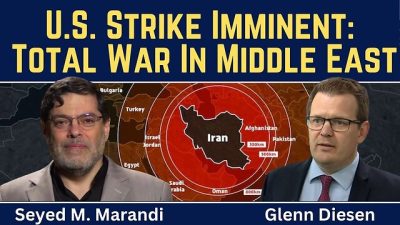
Seyed M. Marandi: Toward Total War in the Middle East
or go to
Aletho News Archives – Video-Images
From the Archives
The Geopolitics behind the War in Yemen (I)
By Mahdi Darius NAZEMROAYA | Strategic Culture Foundation | 30.03.2015
The United States and the Kingdom of Saudi Arabia became very uneasy when the Yemenese or Yemenite movement of the Houthi or Ansarallah (meaning the supporters of God in Arabic) gained control of Yemen’s capital, Sanaa/Sana, in September 2014. The US-supported Yemenite President Abd-Rabbuh Manṣour Al-Hadi was humiliatingly forced to share power with the Houthis and the coalition of northern Yemenese tribes that had helped them enter Sana. Al-Hadi declared that negotiations for a Yemeni national unity government would take place and his allies the US and Saudi Arabia tried to use a new national dialogue and mediated talks to co-opt and pacify the Houthis.
The truth has been turned on its head about the war in Yemen. The war and ousting of President Abd-Rabbuh Manṣour Al-Hadi in Yemen are not the results of «Houthi coup» in Yemen. It is the opposite. Al-Hadi was ousted, because with Saudi and US support he tried to backtrack on the power sharing agreements he had made and return Yemen to authoritarian rule. The ousting of President Al-Hadi by the Houthis and their political allies was an unexpected reaction to the takeover Al-Hadi was planning with Washington and the House of Saudi. … continue
Blog Roll
 Aletho News
- Israeli lobby seeks to bind US fate to ‘Israel’: Araghchi
- Pakistan-Iran talks secure LNG shipment to Islamabad through Hormuz
- Black Sea grain crisis puts global wheat supplies under pressure
- IRGC air defenses destroy another US MQ-1 drone over Strait of Hormuz
- Imran Khan’s entire immediate family detained in Pakistan ahead of mass protest demanding his release
- EU nation detains former presidential frontrunner
- Leaked: Britain’s Sham Conviction Of Hashim Thaci
- Seyed M. Marandi: U.S. Strike Imminent – Toward Total War in the Middle East
- Russia Voted Under Fire. Washington Is Loading the Tankers.
- 12 Things Your Oncologist Was Trained Not to Tell You
- If Americans Knew
- Israeli Attacks in Gaza Kill at Least Seven Palestinians Over Three Days, including Woman and Child
- Trump’s militarization of Washington DC as he pursues Israel’s war against Iran
- Why Israel Fears This Searing New Documentary
- Huckabee aide solicited cash gifts from Israelis
- This isn’t sci-fi, AI is already killing people
- ‘The Most Brutal Thing’: Investigation Reveals Execution of Elderly Woman in Rafah
- Inside Israel’s ‘soft’ ethnic cleansing plan for Gaza through the eyes of its victims
- New online database tracks pro-Israel political donations in the United States
- Israeli president pardons soldier convicted for killing wounded Palestinian
- Singer Ed Sheeran says his ‘heart broken’ by Gaza devastation, addresses Macklemore controversy
- No Tricks Zone
- 2025 Nature Paper Claiming Worsening Global Drought Gets RETRACTED …Heavily Flawed
- New Study: ‘Global Drought Shows No Detectable Recent Acceleration Under Climate Warming’
- Economic Masterminds: German Socialists Suggest Taxing Productivity Gains Stemming From Using AI
- The South China Sea Has Not Been Cooperating With The Climate Change Narrative
- Energy Crisis: Germany Enters Heating Season With Historically Low Gas Reserve Fill Levels
- New Study: The Antarctic Ice Sheet Gained Mass From 2020-2024 Due To Staggering Snow And Ice Accumulation
- Study: Ocean Heating Rates From Thousands Of Years Ago ‘Dwarf’ Modern Ocean Heating Rates
- Climate Extremists Target, Attack Large-Scale Power Grid Infrastructure In Germany!
- New Study: Antarctic Ice Melt Has Contributed Less Than 1 Centimeter To Sea Level Rise In The Last 30 Years
- Fear Of Debate: Alarmist German Climate Scientist Calls On Mainstream Media To Discredit Skeptic Voices
 Aletho News