CONFIRMED: Russia negotiates with Turkey for surrender of Jihadis in east Aleppo
By Alexander Mercouris | The Duran | December 1, 2016
The Financial Times provides confirmation that as claimed by The Duran in early November Turkey is brokering talks between Russia and the Jihadis in eastern Aleppo for them to surrender the eastern districts of the city.
Back on 2nd November 2016 I wrote a piece for The Duran in which I said that all diplomatic contacts with the US over Syria having completely failed, the Russians were trying to negotiate the surrender of eastern Aleppo with Turkey.
This is what I said:
“Having despaired of getting the US to separate Al-Qaeda/Jabhat Al-Nusra from the other Jihadis in Aleppo, and getting them to withdraw, it is likely the Russians are trying to agree the same thing with the Turks. Indeed [General] Gerasimov’s [Russia’s Chief of General Staff] comments today essentially say as much.”
Today there is confirmation from the Financial Times that such talks in Ankara are indeed underway. Here is what it reports:
“Syrian rebels are in secret talks with Russia to end the fighting in Aleppo, according to opposition figures, a development that shows how the US could become sidelined in some of the Middle East’s most pivotal conflicts.
Four opposition members from rebel-held northern Syria told the Financial Times that Turkey has been brokering talks in Ankara with Moscow, whose military intervention last year on the side of President Bashar al-Assad helped turn the five-year civil war in the regime’s favour. Russia is now backing regime efforts to recapture the rebel’s last urban stronghold in Syria’s second city of Aleppo.
“The Russians and Turks are talking without the US now. It [Washington] is completely shut out of these talks, and doesn’t even know what’s going on in Ankara,” said one opposition figure, who asked not to be identified because of the sensitivity of the negotiations.”
Importantly the Russians are not denying the talks. Maria Zakharova, the Russian Foreign Ministry’s formidable spokeswoman, responded to questions by the Financial Times about the talks as follows
“Washington isolated itself. We’ve been negotiating with the [Syrian] opposition in Turkey for years — it’s not news.”
The Financial Times misunderstands the negotiations which are underway. It quotes Charles Lister, a Syria expert at the Middle East Institute in Washington, as explaining Russia’s intentions in this way
“Russia is hedging its bets. It would prefer to make a deal with the opposition. If Aleppo were to fall, the Syrian regime would need so many troops to hold the city that its forces would be left thin elsewhere in the country — or dependent on Iranian help, which Moscow would prefer to avoid.”
This is certainly wrong. As The Duran has been reporting ever since September, the consistent Russian demand, and the key provision of the unsuccessful Kerry-Lavrov agreement of September, is that all the Jihadis fighters must quit eastern Aleppo, which must be surrendered to the government.
It should hardly need saying that Aleppo would be far more defensible without any Jihadi fighters there, rather than with Jihadi fighters owing allegiance to terrorist organisations like Al-Qaeda and ISIS still in control of some of the eastern districts of the city.
Charles Lister’s analysis is I am sorry to say just another example of the wishful thinking and failure to assess realities in Syria objectively which has beset Western understanding of the conflict in Syria since its start. … Full article
Twenty Buses Carrying Militants Go out of Western Ghouta towards Idlib

Buses carrying militants in Homs
Al-Manar | November 29, 2016
Twenty buses carrying militants left Khan El-Sheikh area in western Ghouta of Damascus toward Idlib city on Monday after they handed over their weapons, Hezbollah Military Media Bureau said in a statement.
“300 Kalashnikov guns were handed over to the Syrian army as another five buses transferred families from the same area toward Zakiya region,” the statement read.
The Military Media said that all gunmen will be gradually transferred by Tuesday in accordance with the deal between the national military and allied forces, and the armed groups operating in Khan El-Sheikh, Zakiya, Moqailabiyah and Taibeh.
Kerry makes ‘unbelievable effort’ to save Syrian rebels from Trump, Russia confirms
RT | November 28, 2016
US Secretary of State John Kerry has significantly intensified contacts with Russia on Syria, the Kremlin confirmed, substantiating a report that Kerry wants to seal a deal with Moscow before Donald Trump assumes the US presidency in January.
The report, by Washington Post columnist Josh Rogin, says Kerry is taking a last-ditch effort to stop the Syrian operation in eastern Aleppo, because the Trump administration may be “squarely on the side of dictator [Syrian President] Bashar al-Assad.”
Russian presidential aide Yury Ushakov confirmed that Kerry has lately intensified contacts with his Russian counterpart Sergey Lavrov on Syria.
“This [effort] could be called unbelievable, in terms that there have never been so many phone calls between the Secretary of State and Russia’s FM which were focused on discussing a single issue – Syria,” he told journalists. Ushakov refrained from commenting on whether there was any progress on it.
According to the Post piece, which cites four unnamed US officials with the knowledge of the situation, Kerry hopes to seal a localized ceasefire in Aleppo by offering to separate members of the so-called moderate opposition from terrorist groups like Jabhat Fatah al-Sham (formerly Al-Nusra Front). The report says Kerry brought in other nations like Turkey, Saudi Arabia, Qatar and at times Iran in a bid to seal the deal.
“Officials acknowledge that a frustrated Kerry still has not been given authority by the White House to bring any meaningful pressure to bear against Assad or Russia, placing him in a weak negotiating position. The prospect of Hillary Clinton being elected president gave Kerry some leverage, because she was expected to pursue a more hawkish Syria policy,” Rogin wrote.
A ceasefire in Aleppo on Kerry’s terms may be a hard bargain to sell. For once, Russia insists that US failure to separate moderates from terrorists, which was a key point of the truce negotiated by Moscow and Washington in September, was the reason that ceasefire collapsed.
The Syrian government operation to retake eastern Aleppo from armed groups also appears to be progressing, with latest reports saying that the militants lost a third of their territories to the advancing army. Stopping the siege now may give those fighters time to regroup, rearm and mount a counteroffensive.
Moscow appears to be reluctant to strike any significant deal with the outgoing administration and is waiting for Trump to present all the key figures in his future government.
“We will patiently wait for that team to take their seats and then we are interested in having intensive dialogue with them,” Ushakov said.
Trump taps school vouchers proponent Betsy DeVos to be secretary of education
RT | November 23, 2016
President-elect Donald Trump will nominate Michigan philanthropist and chair of the education organization American Federation of Children Elisabeth ‘Betsy’ DeVos to be his secretary of education.
Trump called his pick “a brilliant and passionate education advocate.”
“Under her leadership we will reform the U.S. education system and break the bureaucracy that is holding our children back so that we can deliver world-class education and school choice to all families,” the president-elect said in a statement.
DeVos is a former chair of the Michigan Republican Party who has never worked in public education. Her children attended private Christian schools. As the chairwoman of American Federation of Children, she is a proponent of the school choice movement, which calls for vouchers that allow families to use federal funds to cover the cost of education at private schools. She is also in favor of charter schools, but not of state regulation of them. Michigan’s charter schools are among the least regulated in the country, thanks to the DeVos family influence, Chalkbeat reported.
“There are a lot of schools that are doing poorly and charter authorizers do not seem to be taking the necessary actions to either improve performance or close those underperforming charters,” current US Secretary of Education John King told Chalkbeat about Michigan in October.
If confirmed, DeVos would replace King, who was confirmed in March 2016.
Although Trump has vocally stated his opposition to the Common Core curriculum ‒ shared learning standards adopted by most states ‒ DeVos says she supports “high standards, strong accountability, and local control,” but is opposed to how the curriculum got turned into “a federalized boondoggle.” However, she is on the board of the Foundation for Excellence in Education, a group founded by former Florida Governor Jeb Bush that promotes both school choice and Common Core.
DeVos met with Trump on Saturday in New Jersey, and the president-elect’s team said that the conversation “focused on the Common Core mission, and setting higher national standards and promoting the growth of school choice across the nation,” according to Education Week.
Her brother is Erik Prince, the founder of Blackwater, a notorious mercenary company. Her father-in-law, Richard DeVos, co-founded Amway ‒ a multi-level marketing company that mainly sells health, beauty and home care products ‒ and also owns the Orlando Magic basketball team in Florida.
In 1980, the Department of Education was spun off from the Department of Health, Education, and Welfare, which was created in 1953. Its mission is “to promote student achievement and preparation for global competitiveness by fostering educational excellence and ensuring equal access.”
Agencies under its purview include Federal Student Aid, the Center for Faith-based and Neighborhood Partnerships, and several White House initiatives. Notable secretaries of education include William Bennett (1985-1988), now Senator Lamar Alexander (R-Tennessee; 1991-1993) and Arne Duncan (2009-2016). The secretary of education is 16th in the presidential line of succession.
The National Education Association decried the nomination, arguing that DeVos “has consistently pushed a corporate agenda.”
DeVos’ “efforts over the years have done more to undermine public education than support students,” NEA President Lily Eskelsen Garcia said in a statement. “She has consistently pushed a corporate agenda to privatize, de-professionalize and impose cookie-cutter solutions to public education. By nominating Betsy DeVos, the Trump administration has demonstrated just how out of touch it is with what works best for students, parents, educators and communities.”
Read more:
EU Seeks to Make European Citizens Aware of ‘Sneaky’ Russian Propaganda
Sputnik – 21.11.2016
 The EU leadership seems to be very anxious about the fact that some Europeans might not notice the influence of “sneaky” Russian war propaganda. Therefore, the EU politicians have something very special to offer to its citizens in order to make sure they “are aware of existing danger.”
The EU’s “East Stratcom Task Force” has prepared the so-called “disinformation review” that explains to simple-hearted Europeans how exactly “sneaky” Russian propaganda spreads on European soil, German politician and former CDU party member Holger Eekhof wrote for Sputnik Germany.
“The expert group, that includes 400 freelancers, […] sends weekly newsletters to journalists and political PR-specialists to remind them of the mayhem caused by Russia,” Eekhof wrote.
According to the expert, these newsletters are used by the European Union and the European Parliament as a proof that “Russia wages a hybrid war against Europe and European values.” At the same time, they also serve as legitimization of the EU’s political agenda aimed at the protection against alleged Russian aggression.
The latest edition of the review refers to several European websites which it labels as “pro-Kremlin propaganda outlets,” Eekhof wrote. For instance, the latest newsletters referred to the Czech web platform ac24.cz and US-based website conservativedailypost.com.
The first one was created in 2011 by Prof. Dr. Petr Zantovsky with the aim of providing readers with alternative information on global political events. The second one is a conservative US media source which recently released an article on the protests against newly elected US President Donald Trump and assumed that the campaign could be organized with the help of oppositional forces.
How these websites are related to Russia, remains unclear. However, the EU task force seems to be more than eager to promote the idea of Russia’s involvement in every sphere of Western life.
Earlier, Eekhof recalled in an interview with Sputnik that the EU Parliament is set to vote on a report on countering third-party information warfare that puts Russian media and Daesh propaganda on the same level. It says that Russia is using think tanks and “pseudo news agencies” to “challenge democratic values” and “divide Europe.”
The task force was established in September 2015 and is a part of the “strategic communications” sector of the European External Action Service (EEAS). The purpose of this department is to promote the EU’s political ideas in the eastern neighboring states, including Russia, Ukraine, Georgia, Moldova, Belarus, Armenia and Azerbaijan, Eekhof wrote.
Iran fulfilling heavy water obligations under JCPOA: AEOI
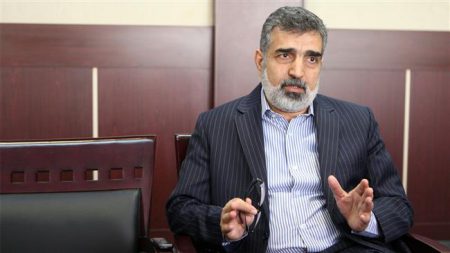
Spokesman for the Atomic Energy Organization of Iran (AEOI), Behrouz Kamalvandi
Press TV – November 18, 2016
Iran has remained committed to its obligations, including those concerning its heavy water stockpiles, under last year’s landmark nuclear agreement signed between the Islamic Republic and the P5+1 group of countries, a senior Iranian nuclear official says.
“The Islamic Republic of Iran has fulfilled its obligations on heavy water stockpiles based on the JCPOA (the nuclear deal known as the Joint Comprehensive Plan of Action), and remains committed to it,” the spokesman for the Atomic Energy Organization of Iran (AEOI), Behrouz Kamalvandi, told IRIB on Friday.
Kamalvandi made the comments in reaction to a report by the International Atomic Energy Agency (IAEA) last week that claimed that Iran’s stocks of heavy water had slightly exceeded the 130-tonne level set out in the JCPOA.
IAEA Director General Yukiya Amano on Thursday chided Iran for exceeding the agreed limit on its stockpiles and said, “It is important that such situations should be avoided in future in order to maintain international confidence in the implementation.”
Iran and the five permanent members of the United Nations Security Council – the United States, France, Britain, Russia and China – plus Germany signed the JCPOA in July 2015 and started implementing it in January 2016.
Under the JCPOA, Iran undertook to put limitations on its nuclear program in exchange for the removal of nuclear-related sanctions imposed against Tehran.
The deal requires Iran’s storage of uranium enriched to up to 3.67 percent purity to stay below 300 kilograms. Tehran has also agreed to keep its heavy water stockpile below 130 metric tonnes.
“According to the JCPOA, we were required to offer on the international market any excess over 130 tonnes of heavy water and we have so far sold 70 tonnes,” Kamalvandi said.
He added, “Negotiations are under way with interested countries, the Europeans in particular,” to sell the rest.
The nuclear official emphasized that Iran would remain committed to its undertakings under the JCPOA on heavy water restrictions “so long as the JCPOA is in place.”
Last week, US State Department spokesman Mark Toner played down concerns about Iran exceeding the heavy water stockpile limit.
He said it was “important to note that Iran made no effort to hide this” and that he was “not sure whether that constitutes a formal violation.”
The AEOI head Ali Akbar Salehi said in October that the Islamic Republic had sold 32 tonnes of heavy water to the United States and delivered 38 tonnes of the nuclear substance to Russia.
“European firms, including German and French ones, seek to purchase Iran’s heavy water and we have expressed our readiness in this regard,” Salehi added.
Russia set to break grisly stalemate in Syria
By M K Bhadrakumar | Indian Punchline | November 19, 2016
There are distinct signs that the discussion regarding the Syrian conflict between Russian President Vladimir Putin and the US President-elect Donald Trump last Monday has been a defining moment. At the very least, it creates a firewall against the present US administration of President Barack Obama creating new facts on the ground that vitiates the climate for US-Russian cooperation in Syria after Trump takes over.
The US Defence Secretary Ashton carter had openly stated a week ago that he’d advise the president-elect firmly against taking any cooperation from Russia in addressing the Syrian situation. On the contrary, the remarks in Beirut on Thursday by the Russian presidential envoy on the Middle East and Deputy Foreign Minister Mikhail Bogdanov suggest that there are contacts below the radar with Trump’s transition team. Bogdanov said:
- We are at an important turning point; a new team is coming in with president-elect Donald Trump. We are now already beginning contact with people who will likely assist the new president. We hope the outgoing and incoming administration will accept that without Russia it is impossible to solve the Syrian issue, we are ready for open dialogue.
It is highly significant that soon after Monday’s phone conversation, Russian jets have resumed bombing missions in Syria. Jets from the aircraft carrier Admiral Kuznetsov and ship-launched cruise missiles joined attacks on Idlib and Homs. On Thursday, long-range strategic bombers flew an 11,000 kilometre mission from bases in Russia to fire missiles at targets in Syria. Syrian jets have also operations against rebel targets in Aleppo.
Even as the Obama administration is reduced to a mute witness, a dramatic change in the US policy in Syria seems to be unfolding. To quote Prof Malcolm Chalmers, deputy director-general of Britain’s respected think tank, Royal United Services Institute, Trump’s “evident sympathy” for Vladimir Putin and his scepticism for America’s military alliances “cannot be assumed to be passing fancies”. (See a sensational report in Telegraph newspaper titled Downing Street warned to prepare for Donald Trump reversal on Syria and military support for the UK.)
Something of all this is most certainly emboldening Turkey to make a grab for the strategic northern Syrian city of Al-Bab, which aims at pre-empting any Kurdish enclave forming along Syria’s border with Turkey. The Syrian Kurds will be furious at the Turkish move, and they have been the US’ best allies so far in Syria. (Reuters )
Turkey’s intention is to break the backbone of the US-Kurdish alliance in northern Syria and pick up the pieces to put together a new Turkish-American paradigm by the time Trump takes office. By the way, retired Lt. Gen. Michael Flynn, a contender to be Trump’s national security advisor, has been a staunch backer of Turkish President Recep Erdogan’s government.
The Turkish offensive on Al-Bab cannot happen without a tacit Russian nod. Obviously, Turkey has reached out to [Russia] and Moscow is not standing in Erdogan’s way. Turkish Prime Minister Binali Yildirim is due to travel to Moscow for talks about Syria and deepening bilateral relations. A Voice of America commentary said on a sombre note, “Deepening ties with Moscow is leading to some of Turkey’s NATO allies starting to question where Ankara’s loyalties lie… Ankara’s diversifying of its relations coincides with severe, if not unprecedented, strains with its Western allies.”
“Ankara remains at loggerheads with Washington over the latter’s support of Syrian Kurdish forces and Turkey’s demand for the extradition of U.S.-based Turkish cleric Fethullah Gulen… Those ties could be further strained over rising speculation that Gulen could be allowed to leave the United States for a third country.”
“Another key anchor with the West, Turkey’s decades-long bid to join the European Union, is on the verge of being severed, with its effort facing collapse, amid mutual recriminations.”
Similarly, the Iraqi Shi’ite militia supported by Iran is making a bid to capture Tal Afar, some 60 kilometres to the west of Syria. Control of Tal Afar will facilitate a direct land route for Iran to Syria and to Lebanon. The capture of Tal Afar by the pro-Iranian militia will be a serious blow to Israel.
Where does Trump stand on Syria? Actually, there is remarkable consistency in Trump’s pronouncements on the Syrian conflict over a considerable period of time. Deutsche Welle put together ‘fragments of a blueprint’ for Trump’s ‘vision’ of the conflict. Read the revealing ‘fragments’ here.
Michael Flynn named Trump’s next national security adviser – source
RT | November 18, 2016
President-elect Donald Trump has named retired Lieutenant General Michael Flynn as his new national security adviser, according to a close source. The former DIA chief has been criticized in US circles for refusing to take an anti-Russian stance.
The 57-year-old three-star general, who once ran the Defense Intelligence Agency (DIA), is considered a controversial figure in US circles for a number of reasons. In May, he claimed in an Al Jazeera interview that the rise of Islamic extremism in the Middle East, including the emergence of Al-Nusra Front and Islamic State (IS, formerly ISIS/ISIL) in Syria, was not the result of chance or ignorance – but of calculated thinking.
General Flynn dismissed Al Jazeera’s suggestion that the Obama administration had simply overlooked the DIA’s analysis, instead arguing that the government had “turned a blind eye” on his agency on purpose.“I think it was a decision. I think it was a willful decision,” the former DIA chief said, referring to a highly-contentious 2012 DIA memo.
The Pentagon veteran, who was a key figure in the Bush administration’s War on Terror, also lambasted Washington for criticizing Russia’s plans to fight Islamic State in Syria. Flynn told RT in October that he strongly believes that “Russia and the United States working together and trying to work with the other partners that we all have in this region can come up with some other solutions.”
“We have to understand as Americans that Russia also has foreign policy; Russia also has a national security strategy. And I think that we failed to understand what that is,” said the former DIA chief.
Flynn was heavily criticized for taking this position. In a Washington Post interview, Dana Priest tried to portray him as a supporter of Russia, and therefore the antithesis of everything Washington stands for. The interviewer grilled Flynn about a trip he had taken to Moscow, when he was among the speakers and panel guests at an RT conference celebrating its first 10 years on air, and met with President Vladimir Putin. When Priest questioned Flynn about his opinion of RT, the general replied that he didn’t see a difference between the work of RT and US news networks like MSNBC and CNN.
In US circles, the Pentagon veteran is seen by some as representing the legacy of firebrand former Secretary of Defense, Donald Rumsfeld. As the former commander of special ops in Iraq and Afghanistan, he is considered to be “one of the most influential figures in the dramatic post-9/11 expansion of the role of US Special Operations forces globally,” the Intercept’s Jeremy Scahill wrote in September.
Appointment to the post of national security adviser does not require confirmation by the Senate, and the choice of the former DIA chief was merely a rumor until it was confirmed on November 18 by NBC, which spoke to an official close to the transition.
Flynn will be replacing Susan Rice, and is considered to be part of Donald Trump’s cabinet reshuffle that aims to reflect a tougher stance toward both friends and rivals. Flynn was DIA chief in 2012-2014, but reportedly left early due to clashes with senior Obama officials. He is also known for proposing an overhaul of the DIA that was met with opposition.
The controversial figure and Trump loyalist is perhaps best known to the American public for making incendiary remarks about Islam in past tweets, such as the one claiming that it is “rational” to fear Muslims.
There continues to be anxiety about what the new US president will do on a whole series of issues, including, but not limited to, Syria, Iran, and Russia. Trump is expected to make his first international appearance at this summer’s G20 and NATO summits.
Read more:
Houthis say ready to stop fighting, join unity government
Press TV – November 16, 2016
Yemen’s Houthi Ansarullah movement has expressed its readiness to end fighting and join a national unity government in the conflict-ridden country suffering from a deadly Saudi aggression.
“Ansarullah’s position has been and still is with stopping the war and the establishment of a national unity government that incorporates all political components,” Mohammed al-Bukhaiti, member of Ansarullah’s Political Council, told Reuters on Wednesday.
He made the announcement in response to a question on recent remarks by US Secretary of State John Kerry, who said that Saudi Arabia and the Houthis had agreed to observe a cessation of hostilities from November 17.
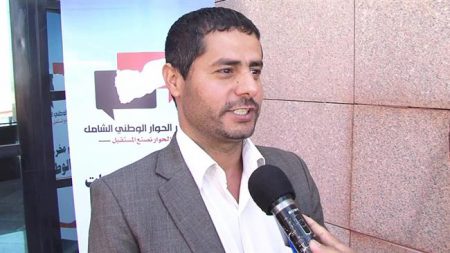
Mohammed al-Bukhaiti, member of the Political Council of Yemen’s Houthi Ansarullah movement
Speaking after talks in Oman on Tuesday, Kerry said that he had presented Houthi delegates with a document outlining a ceasefire and peace deal.
The Houthis had agreed to observe the truce, provided the other side implemented it, he said, adding, “And thus far the Emiratis and the Saudis… they have both agreed to try to move forward with this.”
Yemen’s warring sides had further reached a consensus to work out a “national unity government in a safe and secure Sana’a… as a goal towards the end of the year,” the top Us diplomat pointed out.
Elsewhere in his comments, Bukhaiti confirmed that the Riyadh regime had agreed to end its offensive against Yemen.
“The new thing is in the position of Saudi (Arabia), which has agreed in principle to stop the war as one of the parties to the conflict,” he said.
On Tuesday, however, Yemen’s former foreign minister, Abdel Malek al-Mekhlafi, complained that Kerry’s announcement had not been coordinated with the country’s resigned government.
Saudi Arabia has come under international opprobrium for the sheer size of the casualties from the war it is leading since March 2015 to crush the Houthis and reinstate the former Yemeni administration.
The war has killed at least 11,400 civilians, according to a recent tally by a Yemeni monitoring group. There have also been countless reports about the deliberate and indiscriminate targeting of civilian infrastructure by the Saudi forces and mercenaries.
The Houthi Ansarullah movement took state matters into their own hands in the wake of Abd Rabbuh Mansur Hadi’s resignation and escape, which threw Yemen into a state of uncertainty and threatened a total security breakdown in the country.
Moscow Hopes New US Administration to Stop Extraterritorial Arrests of Russians
Sputnik – 16.11.2016
MOSCOW – Russia hopes that the new US administration will show political will and will end the practice of extraterritorial arrests of Russian nationals, Russian Foreign Ministry Commissioner for Human Rights, Democracy and the Rule of Law Konstantin Dolgov said Wednesday.
“We shall continue seeking the return of our nationals to their motherland. We intend to make these efforts, of course, in our work with the new US administration. We hope that it will show political will and put an end to the aforementioned illegal practice,” the statement read.
Dolgov added that Russia would continue working with the outgoing US administration to ensure the rights of the Russian nationals that have been detained abroad.
‘Trump effect’ divides European opinion
By M K Bhadrakumar | Indian Punchline | November 14, 2016
The results of the two presidential elections held on Sunday in Bulgaria and Moldova underscore the winds of change blowing over the western edges of Eurasia. To an extent they can be called the early signs of the ‘Trump effect’. In both elections, ‘pro-Russian’ candidates won convincingly. (here and here)
In both cases, the contestation essentially boiled down to whether Bulgaria and Moldova would be better off casting their lot with the European Union or whether they need to realign with Russia. The answer is clear.
The open-ended quest for EU membership no longer holds attraction for Moldova, whereas, Bulgaria appears to be disheartened with its EU membership. On the other hand, Russia is real and it is next-door. The election results yesterday constitute a blow to the EU’s prestige. Indeed, Moscow’s influence is spreading in Eastern Europe.
This is also a swing to the Left in political terms. There is much discontent with ‘reforms’, rampant corruption, etc. in both countries. The Russophile sentiment is very substantial, and there is eagerness to boost trade with Russia to overcome economic difficulties. Also, the local partisans of the West and EU stand discredited in both countries.
In Moldova, only around 30% of population find EU attractive, while 44% would support their country joining the Moscow-led Eurasian Economic Union. Curiously, 66% of Moldovans trust Vladimir Putin; in comparison, only 22% place trust in Barack Obama’s words.
Against the backdrop of the election victory of Donald Trump in the US, how these trends are going to play out will be interesting to watch. Bulgaria’s president-elect Rumen Radev has called for an end to the EU sanctions against Russia. He argues that Sofia should be pragmatic in its approach to Russia’s annexation of Crimea. (This is notwithstanding Bulgaria’s long history of divided loyalties between Russia and Europe.)
The Obama administration in its lame duck phase will endeavour to pressure the EU to extend the sanctions against Russia for yet another 6-month period beyond December. But will Trump follow Obama’s footfalls when the issue crops up again toward the middle of next year? He is unlikely to show Obama’s messianic zeal to ‘contain’ Russia. That is how the EU consensus on sanctions against Russia can break down because many countries in Europe resent the American pressure and prefer to restore trade and economic ties with Russia.
Interestingly, Trump may get resonance in Old Europe as well. The Labour leader in Britain, Jeremy Corbyn made a stunning call in the weekend for Western leaders to ‘demilitarize’ the border between Eastern Europe and Russia or risk a New Cold War. He said the West didn’t have to pile up forces on Russia’s border. Corbyn told the BBC:
I have many, many criticisms of Putin, of the human rights abuses in Russia, of the militarisation of society. But I do think there has to be a process that we try –demilitarise the border between what are now the NATO states and Russia, so that we drive apart those forces and keep them further apart in order to bring about some kind of accommodation. We can’t descend into a new Cold War.
Corbyn also made a thoughtful suggestion that that the Organisation for Security and Co-operation in Europe, which includes Russia, could replace NATO as a forum for solving issues in the region.
Indeed, some churning has already begun regarding European security even before Trump takes over in the Oval Office. By the way, Czech Prime Minister Bohuslav Sobotka said on Sunday that American statements about possible deployment of a U.S. global missile shield’s radar in the Czech Republic are pure fiction.
He said, “A radar in the Czech territory would mean further escalation in relations with Russia. We need to use the window opening after Donald Trump’s election to have the United States and Russia sit down at one table.” Sobotka pointed out that Eastern Europe’s main security problem today is about putting an end to the war in Syria.
“The United States has considerable influence on the situation in Syria, Russia has considerable influence. So, it is necessary to use this,” he said, adding that Donald Trump can establish more efficient cooperation with Russia on Syria.
However, the fact of the matter is that neither has Trump taken his position yet on NATO nor is it going to be easy for him to seek a separation for America from the western alliance. Simply put, Europe is not ready for a post-NATO future. There is palpable fear in many quarters (both in the US and in Europe) that if the US were to withdraw from Europe, Russia would advance and exercise more assertive behaviour in Eastern Europe.
In an article in the weekend, NATO secretary-general Jens Stoltenberg made an impassioned appeal to Trump that now is not the time for the US to abandon NATO. He pointedly invoked the threat perceptions from “a more assertive” Russia. Read the opinion piece here.
The bottom line is that European opinion stands divided. Britain, France and Hungary refused to attend a contentious EU ministerial meeting last night in Brussels, backed by Germany, to align the bloc’s approach to Trump’s election. The rift within the EU on the US vote stands exposed. The irrepressible British Foreign Secretary Boris Johnson has publicly chided EU politicians to end their ‘whinge-o-rama’ over Trump. (Daily Mail )
Interestingly, the first politician from abroad whom Trump met after the election has been Nigel Farage, the populist Brexit campaigner.
Who Said “Assad Must Go” And Where Are They Now?
Oh the irony of it all.
Who is still President of his country…

Who is next on the neo-liberal warmonger regime change list…

Time for forces to unite to beat a common enemy…

Featured Video

Trita Parsi: Middle East Unraveling — Are We on the Path to World War?
or go to
Aletho News Archives – Video-Images
New Book
Trans agenda is ‘normalization of sadism’ – US author

RT | September 23, 2026
The US Democratic Party has embraced a transgender agenda that amounts to “the normalization of sadism,” author A.J. Rice has said, warning that radical trans policies would return if the party is allowed to regain power.
Speaking to RT’s America First host Scotty Nell Hughes about his new book, ‘The Curse of the Bearded Lady: How the Trans Mafia Whacked American Sanity’, Rice argued that activists have gained significant influence in schools, medicine, and corporate America while people who questioned the agenda have faced pressure to stay silent.
The author described the “trans mafia” as the sprawling network of people and institutions that have helped the movement gain influence. He singled out parts of academia, wealthy backers, and corporations, and stated that providers of transition-related treatment also have a financial incentive to keep young people in their care indefinitely.
Rice argued that the consequences of these policies ultimately fall on children who are being drawn toward gender-affirming medical treatments and on girls who are expected to share locker rooms or compete in sports with biological males.
He noted that while voters rejected the Democrats’ approach to gender in 2024, the party, which has been “captured by madness,” has since only doubled down and is seeking what is effectively “the normalization of sadism.” … Full report
Blog Roll
 Aletho News
- NATO chief wants Europeans to fight American wars [for Israel]
- German chemicals giant reveals details of downsizing
- Refaat Al-Areer Was The Canary In The Coal Mine In Israel’s War On The Truth
- Israeli election committee bars candidate from Knesset race over Gaza war opposition
- French-Lebanese man files war crimes complaint over Israeli attacks
- Mahan Air Flight Lands in China Despite US Threat against Iranian Airlines
- US eyes $10bn fund to rebuild war-battered Gulf infrastructure
- Trump meets Rodríguez near Maduro’s prison as Venezuela’s oil flows to US
- Trita Parsi: Middle East Unraveling — Are We on the Path to World War?
- Iran FM meets with US envoy on UN meeting’s sidelines at American side’s insistence: Report
- If Americans Knew
- Caught on Tape: AIPAC CEO Boasted of Controlling Trump’s National Security Officials
- Why Hamas Attacked Israel in October 2023 – Israeli professor Ilan Pappé
- They see them, then kill them: Israeli quadcopters track, deliberately target civilians in Gaza
- Winter could turn Gaza’s treacherous, war-damaged buildings into deathtraps
- Majority of Democratic Voters Want to Prosecute Both Biden and Trump Administration Officials Over Gaza
- As Gaza languishes, world leaders gather at the UN – Daily Update
- Sanctions are collective punishment: immoral and self-defeating
- Phosphorus Munitions Fired by Israel Burn Groves, Orchards in Southern Lebanon
- Israel Carries Out New Ceasefire Violations Across Gaza
- AI – Emphasis on the ‘I’: Israel Is Funding AI Chatbot Propaganda
- No Tricks Zone
- New Study: Earth And Venus Surface Warmth Largely Explained By Convection And Lapse Rate, Not CO2 Or Radiation
- 2025 Nature Paper Claiming Worsening Global Drought Gets RETRACTED …Heavily Flawed
- New Study: ‘Global Drought Shows No Detectable Recent Acceleration Under Climate Warming’
- Economic Masterminds: German Socialists Suggest Taxing Productivity Gains Stemming From Using AI
- The South China Sea Has Not Been Cooperating With The Climate Change Narrative
- Energy Crisis: Germany Enters Heating Season With Historically Low Gas Reserve Fill Levels
- New Study: The Antarctic Ice Sheet Gained Mass From 2020-2024 Due To Staggering Snow And Ice Accumulation
- Study: Ocean Heating Rates From Thousands Of Years Ago ‘Dwarf’ Modern Ocean Heating Rates
- Climate Extremists Target, Attack Large-Scale Power Grid Infrastructure In Germany!
- New Study: Antarctic Ice Melt Has Contributed Less Than 1 Centimeter To Sea Level Rise In The Last 30 Years

