Lavrov: Hezbollah, Lebanese govt. avoid full-scale war with Israel, but some within regime seek conflict
Press TV – July 18, 2024
Russian Foreign Minister Sergei Lavrov says Lebanon’s Hezbollah resistance movement and the Lebanese government do not want a “full-blown war” with Israel but “some” within the regime are seeking it.
Speaking at a press conference at the UN headquarters in New York on Wednesday, the top Russian diplomat said “there’s a suspicion that some circles in Israel are trying to achieve just that.”
Lavrov, citing some American and European analysts, stressed that “escalation, as the practical developments show, is something which Israel is interested in.”
Hezbollah and Israel have been exchanging deadly fire since early October, shortly after the regime launched a genocidal war on Gaza following a surprise operation by the Palestinian Hamas resistance group.
Hezbollah has vowed to keep up its retaliatory attacks as long as the Tel Aviv regime continues its Gaza onslaught.
“Hezbollah has been very much restrained in its actions,” Lavrov further said, adding that its leader, Sayyed Hassan Nasrallah, has already “delivered a number of public statements which reaffirmed that position.”
“However, the sentiment is that there’s an attempt to provoke them, and to provoke them into a full-blown engagement,” the top Russian diplomat warned.
According a tally by the Associated Press, Israeli airstrikes on southern Lebanon since October have killed more than 450 people while Hezbollah’s retaliatory attacks have claimed 34 lives.
Israeli media say Hezbollah’s retaliatory strikes have displaced around 60,000 Israeli settlers from northern parts of the occupied lands.
Israel’s war on Gaza slammed as ‘collective punishment’
Elsewhere in his remarks on Wednesday, Lavrov stressed that Israel’s war on the besieged Gaza Strip has crossed the line and is now a form of “collective punishment” on the territory’s 2.3 million Palestinians.
“When it comes to collective punishment in violation of international humanitarian law, one cannot fight against one form of violation through other violations. It’s the same principle here,” he said.
The Tel Aviv regime has killed about 38,800 Palestinians, mostly women and children, in Gaza, since October 7.
Since the start of the war, the United States has supplied Israel with more than 10,000 tons of military equipment and used its veto power against all UN Security Council resolutions that called for an immediate ceasefire in Gaza.
Despite the unabated campaign of bloodletting, the occupying regime has so far fallen short of realizing its two main “goals”, namely defeating and eliminating Hamas, and releasing Israeli captives.
Too Little, Too Late, Wrong Science: A Critique of Salmon et al.
40 years of failed science is enough. I’m asking Siri, Kennedy and Bigtree to make the right science happen. They can do it.
By James Lyons-Weiler | Popular Rationalism | July 11, 2024
In their recent publication in the New England Journal of Medicine, Salmon et al. finally acknowledge what many of us have known for years: the so-called comprehensive vaccine safety studies have been woefully inadequate. However, their proposed solution—relying on post-market surveillance—misses the mark entirely in a stunning manner that cannot stem from a lack of self-awareness – and raises more questions than it answers. This critique will expose the fundamental flaws in their approach and underscore the urgent need for long-term, randomized clinical trials.
Historical Context: Decades of Malfeasance and Fraud
For over three decades, the medical establishment, spearheaded by figures like Dr. Stanley Plotkin, has assured the public that vaccines are the most rigorously tested medical products using retrospective studies. Yet, Salmon et al. now concede that prelicensure clinical trials often have “limited sample sizes and follow-up durations” and that there are “no resources earmarked for post-authorization safety studies.” This admission not only undermines the credibility of these long-standing claims but also highlights a systemic failure to prioritize safety.
They ignore, however, all of the work done over the years by critics like Brian Hooker, Mark Blaxill, myself, and many, many others that not only demonstrate the fatal flaws in reliance on retrospective studies, but their intentional and therefore criminal abuse in the hands of people working in and for the CDC bent on hiding vaccine risk.
The Mirage of Distorted Retrospective Studies
Retrospective observational studies, the cornerstone of Salmon et al.’s proposed solution, are a poor substitute for robust, prospective research. These studies are rife with potential biases, including selection bias, selective reporting, recall bias, and confounding variables. The findings of such studies are highly dependent on who conducts them, the study design, and adherence to the data analysis plan. Repeated analyses and adjustments for presumed confounders often lead to the convenient disappearance of associations with adverse events via p-hacking.
The Case of Aluminum and Asthma
Consider the association between aluminum exposure from vaccines and persistent asthma, as detected and reported by Daley et al. Despite identifying a positive association, the authors acknowledge the potential for residual confounding and the small effect sizes. This illustrates the inherent limitations of retrospective studies. Moreover, Frank DeStefano’s study on his way out of the CDC linked aluminum to asthma, raising serious questions about the integrity of the surveillance data. Denialists like Paul Offit tried to arm-wave away the result, preventing the next necessary steps, and 1) Finding safe ways to help patients remove aluminum, and 2) Removing aluminum from vaccines.
Ignored Historical Evidence
Before the Vaccine Injury Compensation Program (VICP) was established in 1986, adverse events like eczema were recognized following vaccinations. Post-1986, it seems there was a collective amnesia within the medical community regarding these associations. Similarly, Guillain-Barré syndrome (GBS) was first noticed after the swine flu vaccination campaign in 1976. It took 30 years for HHS to put GBS on the table of vaccine injuries. This pattern of intentional lost knowledge is unforgivable. These historical data points should not be ignored or downplayed, yet they have been consistently overlooked in favor of maintaining the vaccination status quo.
The Mechanistic Black Box
One of the most glaring deficiencies in vaccine safety research is the lack of understanding of the biological mechanisms underlying vaccine-related adverse events. Salmon et al. admit this gap, yet they continue to rely on epidemiological data without pushing for mechanistic studies. Yet, in my experience, in reading the literature, these claims result in appeals to ignorance. It is almost certain that knowledge exists that can link vaccines to these conditions; the same authors use argumentation and influence to cast doubt on such studies, or, again, in my experience, they ignore them altogether.
This approach is akin to trying to solve a puzzle with half the pieces missing. Without a thorough understanding of the mechanisms at play, we cannot develop safer vaccines or provide accurate risk assessments. By arguing from ignorance, they reveal their goal.
The Danger of Mandates
The insistence on full-population vaccination mandates, without adequately addressing safety concerns, puts public health and public trust at risk. The denial of potential vaccine risks and the imposition of mandates ignore the very real experiences of vaccine-injured individuals and, of course, studies that have found associations. Found associations via retrospective studies become “mere associations”, and are dismissed. In Popperian terms, the retrospective studies fail to provide a critical test. This approach not only fuels vaccine hesitancy but also undermines the credibility of health authorities. Mandating vaccines without comprehensive safety data is a reckless disregard for individual health and autonomy.
Call for Accountability
It is high time we hold those who have held the keys to databases and conducted sham studies accountable for decades of inadequate safety surveillance and research, as well as for scientific fraud. A prosecutorial investigation into potential scientific fraud at the CDC over the past 40 years is warranted. This investigation should focus on whether there has been success at efforts designed to provide systematic destruction of scientific findings via study manipulation and records destruction, a systematic failure to conduct and report comprehensive safety studies, and whether conflicts of interest have influenced vaccine policy and research. I would also investigate the VSD for data manipulation; the CDC and the vaccine industry have had exclusive control over that dataset far too long.
By exposing these issues and demanding scientific rigor, we can begin to rebuild public trust and ensure that our vaccine policies genuinely serve the best interests of public health. In a sane world, readers would be encouraged to contact their congressional representatives and the Office of Inspector General (OIG) to demand an investigation into these long-standing issues.
A New Approach: Independent, Prospective RCTs
Recognizing the failures of the current system, independents and advocates have long proposed an alternative: a large, prospective randomized controlled trial (RCT) funded by the government. I disagree. Such studies should only be done by independent research institutions funded through grassroots fundraising. These trials would run for four years and match vaccinated and unvaccinated children to avoid confounding variables and isolate the effects of childhood vaccines on chronic health conditions. This rigorous approach is necessary to provide definitive answers about vaccine safety and to restore public trust. I’m calling on well-funded individuals and organizations like those run by my friends Siri, Kennedy, and Bigtree to pull together, perhaps under the Vaccine Safety Foundation, and fund the studies needed.
We’ve built the infrastructure to do it, including independent journals and an independent IRB. Siri, Kennedy, and Bigtree have sufficient limelight to raise the millions needed to conduct these studies. Lawsuits, reporting, and campaigns are priorities, but I will never trust a study conducted by or funded by CDC. Neither should you.
Aaron, Bobby, and Del – Let’s hold a podcast and raise the funds. I’d be happy to participate in the design of the study and design of analysis.
I’ve tried for ten years to raise funds for such studies via IPAK. I’ve done my part for the sake of objectivity and science for the kids. You guys have the public’s attention. Use the systems we’ve built to safeguard objective science.
Conclusion: A Demand for Real Science
Salmon et al.’s admissions are too little, too late. Their reliance on flawed retrospective studies and post-market surveillance is inadequate. What we need are long-term, randomized clinical trials that can provide definitive answers about vaccine safety. The public deserves transparency, accountability, and a commitment to rigorous, unbiased research. Anything less is an abdication of our responsibility to protect public health.
References
1. Daley MF, et al. Association Between Aluminum Exposure From Vaccines Before Age 24 Months and Persistent Asthma at Age 24 to 59 Months. Acad Pediatr. 2023;23(1):37-46.
2. DeStefano F, et al. Childhood vaccinations and risk of asthma. Pediatr Infect Dis J. 2002;21:498-504.
3. Institute of Medicine. Adverse Effects of Vaccines: Evidence and Causality. Washington, DC: National Academies Press; 2011.
4. McNeil MM, et al. The Vaccine Safety Datalink: successes and challenges monitoring vaccine safety. Vaccine. 2014;32:5390-5398.
5. Glanz JM, et al. Cumulative and episodic vaccine aluminum exposure in a population-based cohort of young children. Vaccine. 2015;33:6736-6744.
US Unable or Unwilling to Stop Supporting Israel – Lavrov
Sputnik – 17.07.2024
UNITED NATIONS – The United States is unable or unwilling to stop supporting Israel, Russian Foreign Minister Sergey Lavrov said on Wednesday, adding that the bloodshed will stop if there is no US support.
“However, the US is either unwilling or unable to do so,” Lavrov said at the UN Security Council session.
By supplying arms and ammunition, the US became directly involved in the conflict in the Middle East, “just like in the situation with Ukraine,” Lavrov added.
It seems that Israel does not need any plan that includes reaching a peaceful solution to the conflict, the foreign minister noted.
“Israel doesn’t need any plan with a hint of peace, we saw that again today,” he said.
Russia’s proposal on organizing a meeting of external players that have influence on armed groups in the Gaza Strip is still in force, Minister Lavrov pointed out.
“Our proposal for a meeting of all external players who have influence over the various groups in Gaza and the West Bank, and who can, if they speak with one voice, help overcome the divisions within the Palestinian factions, remains valid,” he emphasized.
Russia supports the admission of Palestine to the United Nations in exactly the same way as it supported Israel joining the organization in 1949, the Russian diplomat highlighted.
“In 1949, we supported Israel’s application for UN membership, provided that it implemented the General Assembly resolutions 181 and 194 on the Partition Plan for Palestine and granted Palestinian refugees the right to return home. This was clearly stated when we voted for Israel’s admission to the UN. Similarly, today we support the admission of Palestine, whose sovereignty has already been recognized by nearly 150 countries, to this world organization,” Lavrov said.
As of June 2024, Palestine is recognized as a sovereign state by 145 of the 193 UN members. It has been a non-member observer state of the United Nations General Assembly since November 2012.
The admission of new members to the UN is decided by the General Assembly upon the Security Council’s recommendation, which requires favorable votes from at least nine of the 15 members of the council and no vetoes from the five permanent members (China, France, Russia, the United Kingdom and the United States).

Kremlin Saw Nothing ‘Particularly Good’ for Russia in Trump Presidency, But Dialogue Existed
Sputnik – 17.07.2024
MOSCOW – During the presidency of Donald Trump in the United States, nothing particularly good was done for Russia, new restrictions were introduced, but there was a dialogue between the two countries, Kremlin spokesman Dmitry Peskov said on Wednesday.
“Under Trump, nothing particularly good was done for Russia; on the contrary, more and more restrictions were introduced under Trump. But, nevertheless, there was a dialogue,” Peskov told reporters.
The topics of Russia and personally Russian President Vladimir Putin became an integral part of the US election campaign, Kremlin spokesman said.
“Traditionally, during the election campaign of the United States, especially in recent years, Russia and President Putin personally are an integral part of this election campaign. The topic of Putin and the topic of Russia is always on the agenda in election debates,” Peskov told reporters.
The Kremlin does not share the forecasts of Polish President Andrzej Duda that Russia’s victory in Ukraine could lead to a war against the West, Peskov said.
“No, we do not share such forecasts,” he told reporters.
Two Infants Died Within Hours of Receiving RSV Shots, CDC Internal Emails Show
By Brenda Baletti, Ph.D. | The Defender | July 8, 2024
At least two infant deaths reported to the Vaccine Adverse Event Reporting System (VAERS) as occurring after the babies mistakenly received Pfizer’s adult respiratory syncytial virus (RSV) vaccine were likely caused instead by nirsevimab, the monoclonal antibody shot approved for infants and meant to prevent RSV.
Freedom of Information Act (FOIA) documents obtained by Children’s Health Defense (CHD) from the Centers for Disease Control and Prevention (CDC) show that both babies died on the day they received the shots.
According to the reports in VAERS, a 27-day-old boy died immediately upon receiving the shot in the doctor’s office and an infant girl was found not breathing by her father seven hours after receiving the shot. The infant was pronounced dead soon after.
The deaths were reported in VAERS as resulting from mistaken administration of Pfizer’s adult RSV vaccine, but the CDC internal emails obtained by CHD indicate the babies had been administered Beyfortus, the brand name for nirsevimab, manufactured by AstraZeneca and Sanofi.
The U.S. Food and Drug Administration (FDA) approved the drug in July 2023 and the CDC recommended it in August 2023 for infants under 8 months or high-risk infants up to 24 months of age.
In clinical trials for the drug, 12 infants died, but an FDA spokesperson told CNBC when the drug was approved that “none of the deaths appeared to be related to nirsevimab.”
After the CDC recommended the drug, it expanded the 2024 childhood vaccine schedule and included nirsevimab for infants whose mothers did not receive the RSV vaccine — also recently approved — during pregnancy.
The CDC’s childhood immunization schedule lists the CDC-recommended shots for children from birth through age 18. Pediatricians and other clinicians typically use the schedule to make recommendations to parents, and schools use it to set vaccine requirements.
Monoclonal antibodies are not technically vaccines. Vaccines stimulate the individual’s immune system to trigger an immune response. Monoclonal antibodies are proteins cloned in a lab that act like antibodies, seeking out antigens in the body to destroy them just like people’s own antibodies do, according to the Cleveland Clinic.
When the CDC expanded the 2024 vaccine schedule, it changed the description of the schedule to be for “vaccines and other immunizing agents,” before adding the RSV monoclonal antibodies to the list.
Even professionals confused about how to report injuries related to infant RSV shots
When people experience vaccine injuries, they can report them to the CDC using VAERS, a passive surveillance system available to anyone — including doctors, other vaccine administrators and the public — for reporting adverse events.
The CDC also has other systems for monitoring vaccine safety. It monitors COVID-19 and adult RSV vaccines through the V-safe system, a different voluntary reporting system, and most vaccines through the Vaccine Safety Datalink (VSD), which analyzes healthcare data, often investigating concerns initially raised in VAERS.
However, according to the internal emails obtained by CHD, and reported by the CDC to its advisory committee, the CDC doesn’t monitor injuries from medications that are not vaccines. The FDA recommends those injuries be reported to MedWatch, the FDA’s adverse event reporting system.
That means adverse events from all medical treatments on the immunization schedule are not monitored through the same system. This can generate confusion, even among medical professionals, who treat monoclonal antibodies as vaccines.
For example, even people at the CDC in internal emails referred to the monoclonal antibodies as the “RSV (Sanofi Pasteur) Vaccine.”
Data analyst and VAERS expert Albert Benavides told The Defender this also presents a challenge to people who want to report nirsevimab injuries, because VAERS does not have a category for the drug, so people have submitted their claims as “unknown vax type” or selected one of the existing RSV vaccines, which are different drugs.
In analysis, they may fall through the cracks or be underreported, rather than forwarded to the FDA’s MedWatch system.
The emails obtained by CHD support Benavides’ claims that there is confusion between RSV vaccines approved for adults and RSV monoclonal antibodies approved for infants.
For example, Carol Ennulat, VAERS project coordinator, on March 21 emailed Pedro Moro, M.D., M.P.H, who headed up the accidental infant RSV vaccination study, informing him that one of the infants — a 1-month-old girl in Texas — died after receiving the “RSV (Sanofi Pasteur) Vaccine,” which is actually Beyfortus, the monoclonal antibody.
She told Moro the baby had been misclassified and therefore mistakenly assigned to the adult RSV project.
Moro forwarded the email to others and said the FDA was following up on nirsevimab reports, so they should take no action on the report.
In a second email the following day, Ennulat informed Moro that a second infant death — a 27-day-old New York boy — was misclassified as having received the Pfizer Abrysvo vaccine according to documents that had become available.
“The case was misclassified,” Ennulat wrote. Although the sentence indicating what drug he received was redacted, she added, “I assume FDA follows this,” which would indicate the drug administered to the infant and then reported to VAERS was likely also nirsevimab.
500 pages of FOIA documents largely redacted
CDC researchers in May published an article in Pediatrics reporting that at least 34 babies were mistakenly given the RSV vaccine — made by either Pfizer or GSK and authorized for adults — and one of those babies was hospitalized.
Thirty-one of the children under age 2 identified in the study who were mistakenly vaccinated between Aug. 21, 2023, and March 18, 2024, were less than 8 months old. Seven reports described adverse health events including fevers, vomiting, coughing and injection site swelling.
One baby was hospitalized for cardiorespiratory arrest within 24 hours of receiving the GSK RSV vaccine. The baby had a history of congenital heart disease and was hospitalized at the time of the VAERS report.
When the paper was published, The Defender worked with Benavides and identified at least two other babies in the VAERS system reported to have received the RSV vaccine and died within hours of vaccination.
The Defender reached out to the CDC in a series of emails inquiring about why the babies were not included in the study, but the CDC declined to provide details about its knowledge of the reports.
The agency said only that the VAERS reports were mistaken — neither infant had received the shot.
In response, CHD filed FOIA requests with the CDC for communications related to the two reports.
The CDC recently responded to the request, sending 556 pages of largely redacted response materials. Redactions included portions of emails sent by The Defender to the CDC and the agency’s responses — which CHD clearly already had in its possession.
Two largely unredacted emails included in the documents, however, did pertain to the babies’ deaths.
No mention of infant deaths in CDC advisory committee meeting
In the last research presentation session of the June 26-28 meeting of the CDC’s vaccine advisory committee, the RSV work group presented data on nirsevimab, touting its effectiveness — how well it prevents disease under real-world conditions — with limited discussion of safety issues.
The CDC reported in the presentation that 41% of eligible infants received the nirsevimab shot as of March 2024, 24% of parents indicated they would definitely get the shot for their children and 23% indicated they would probably get it or were unsure. Twelve percent indicated they would never give their children the shot.
The agency also said it was meeting with manufacturers to ensure they would ramp up production for the coming year after shortages of the drug were reported last year.
The committee presented a range of different effectiveness numbers from different observational studies. Overall, real-world data found the shot was “well above 50%” effective against RSV infection. Committee members said this corresponded to the European published literature that found effectiveness against hospitalization of 70-89% and against emergency room visits of 55-88%.
They said observational data showed the duration of protection was unknown.
In the presentation on nirsevimab safety, the CDC’s Dr. Jefferson Jones informed the committee that VAERS is not the primary system for monitoring the drug’s safety, because it is not a vaccine, so the data had not been previously presented. Instead, he said, adverse events should be reported to MedWatch.
Same-day events are reported to VAERS, he said, and then reviewed by the FDA.
He did, however, review the adverse events reported to VAERS.
Jones said the most frequently reported adverse events were RSV breakthrough infections. He also said, “Cases of serious hypersensitivity reactions with nirsevimab were identified and the product labeling was updated in February 2024” to indicate that.
The reactions include hives, shortness of breath, low blood oxygen levels causing blue skin, lips and nailbeds and muscle weakness. “And no additional safety signals have been identified at this time,” he said.
Jones did not mention the two infant deaths that the FOIA documents obtained by CHD reveal happened immediately following the shots.
The committee did emphasize several times that newborn deaths reported to VAERS “is of course devastating for that family, but reporting to VAERS does not necessarily mean that vaccine caused that.”
However, in that case, they were discussing neonatal death associated with the maternal RSV vaccine.
Jones concluded that the RSV work group was “very happy and pleased with the evidence that shows nirsevimab to be highly effective.”
Known safety Issues with nirsevimab/Beyfortus
RSV is a common respiratory virus that usually causes mild cold-like symptoms but can lead to hospitalization and, in rare cases, death in infants and the elderly.
By age 2, 97% of all babies have been infected with the RSV virus, which confers partial immunity, making any subsequent episodes less severe.
Yet last year as the media hyped a dangerous “tripledemic” of COVID-19, flu and RSV, new RSV vaccines were approved and recommended for pregnant women and older adults, and nirsevimab was approved for infants.
The Biden administration rushed to work with Sanofi and AstraZeneca to make hundreds of thousands of doses of the antibodies available.
According to the CDC, approximately 58,000 to 80,000 children younger than age 5 are hospitalized due to RSV infection annually and 100 to 300 deaths occur annually in that group.
Those numbers are also disputed within the CDC’s own data.
In an Aug. 4, 2023, Substack post, Dr. Meryl Nass, an internist and biological warfare epidemiologist, cited 2021 CDC data showing that over 12 years, on average 25 babies up to age 1 die annually in the U.S. from RSV.
Although RSV can be a serious event for infants, with so few deaths among that age group, both researchers and practitioners have raised questions about administering vaccines to pregnant mothers and monoclonal antibodies to babies, especially given the serious risks evident in clinical trials, and now, in post-trial follow-up.
According to the Cleveland Clinic, reactions to monoclonal antibody treatments are common and occur during or shortly after they are administered. There are also “more serious but less common risks linked to unwanted immune system reactions, such as acute anaphylaxis, cytokine release syndrome (CRS) and serum sickness.”
Nass noted that no monoclonal antibody product has ever been given on a mass scale to children. She also said that the Beyfortus label doesn’t provide information about side effects and don’t address the infant deaths in the clinical trials.
Of the 12 infants that died in the nirsevimab trials, “four died from cardiac disease, two died from gastroenteritis, two died from unknown causes but were likely cases of sudden infant death syndrome, one died from a tumor, one died from Covid, one died from a skull fracture and one died of pneumonia,” CNBC reported.
“Most deaths were due to an underlying disease,” the FDA’s Dr. Melissa Baylor said.
According to the drug’s label, no drug interaction studies — that, for example, might identify safety risks if the antibodies are given with other vaccines — have been done for Beyfortus.
Researchers have been trying and failing to develop an RSV vaccine for children for 60 years, but have encountered serious safety issues. One version developed in the 1960s worsened symptoms for children. In that case, when two infants died, the vaccine distribution was stopped.
Beyfortus is being promoted for babies by governments globally, particularly in Europe, where it was first approved in November 2022.
French independent scientist and author Hélène Banoun, Ph.D., and French statistician Christine Mackoi found that data from France’s National Institute of Statistics and Economic Studies indicates an improbably high rate of deaths of babies between 2 and 6 days old in France during September and October 2023.
Those dates correspond with the introduction of Beyfortus in French hospitals, which began on Sept. 15, 2023, The Defender reported.
Beyfortus costs $519.75 per dose for 50-milligram (mg) and 100-mg doses and $1,039.50 for a 200-mg dose. That doesn’t include administration costs.
This article was originally published by The Defender — Children’s Health Defense’s News & Views Website under Creative Commons license CC BY-NC-ND 4.0. Please consider subscribing to The Defender or donating to Children’s Health Defense.
Republika Srpska’s leader won’t allow Bosnia, Herzegovina to join NATO
Al Mayadeen | July 7, 2024
President Milorad Dodik states he will not allow Bosnia and Herzegovina to join NATO, emphasizing that Republika Srpska supports maintaining neutrality.
Republika Srpska will not allow Bosnia and Herzegovina (BiH) to join NATO due to the Serbs’ memory of past suffering, Republika Srpska President Milorad Dodik told Sputnik.
“I will be very clear: Bosnia and Herzegovina will not join NATO, referring to the procedure and the law by which the Parliamentary Assembly must reach an agreement on this issue on the basis of a majority of the decisions envisaged for adoption. So this agreement cannot and will not be reached. Serbs will never forget the suffering of innocent civilians, so we will never give our consent for Bosnia and Herzegovina to join NATO,” Dodik stated.
In the spring, Denis Becirovic, the Bosniak member of the BiH Presidency, told NATO Secretary General Jens Stoltenberg that BiH’s strategic goal is to join NATO. In January, Dodik expressed that while Republika Srpska allows cooperation with NATO, it opposes BiH’s membership in the alliance.
Russian Experts Gain Access to Storm Shadow Missile Warhead
Sputnik – July 7, 2024
Russian specialists have studied the cumulative warhead of European Storm Shadow/SCALP missiles, determining the penetration depth and detonation distance above the ground, an engineer and weapons specialist told Sputnik.
“The primary cumulative projectile of the Storm Shadow/SCALP missile consists of the nose cap, the primary charge, and then the main warhead. It is necessary for the initial penetration of an obstacle. It creates holes using the cumulative effect, through which the inertial warhead penetrates, causing an explosion. We understand the penetration depth, the detonation distance from the surface, the types of target sensors used, and the potential penetration depth,” the specialist said.
The cumulative warhead of the Storm Shadow/SCALP missile is a cylindrical object about half a meter in length with approximately the same diameter. The nose section is shaped like a cone, directed inward towards the body.
The study of the missile by Russian specialists will enable the implementation of countermeasures to protect against such weapons, including the creation of shelters with the necessary characteristics, the specialist explained.
The Storm Shadow is a low-observable, air-launched cruise missile. It is launched from aircraft and has a strike range of 250 to 560 kilometers, depending on the modification. It was developed jointly by France and the United Kingdom (in France, it is named SCALP and is produced by the MBDA consortium). The Ukrainian Armed Forces have been actively using the Storm Shadow since last year.
The Storm Shadow and SCALP-EG cruise missiles can approach their targets stealthily by using navigation correction via American satellites, Lieutenant General Andrey Semenov, Commander of the Air Defense and Missile Defense Forces and Deputy Commander of the Russian Aerospace Forces earlier said.
Russian President Vladimir Putin has warned that Moscow may respond asymmetrically to the supply of long-range weapons to Ukraine. The transfer of high-precision long-range weaponry to Kiev is a path to very serious problems, he emphasized.
US scraps military drills with Georgia
RT | July 6, 2024
The US has suspended this year’s ‘Noble Partner’ military exercise with Georgia due to a “comprehensive review” of bilateral relations by Washington. The maneuvers, which have previously involved troops from multiple NATO member states, had been held annually since 2015.
In early June, the legislation – officially known as the Transparency of Foreign Influence Act – came into force, after the ruling Georgian Dream party overrode a veto by President Salome Zourabichvili. The law requires NGOs, media outlets and individuals which receive more than 20% of their funding from abroad to register as entities “promoting the interests of a foreign power” and disclose their donors. Failure to comply will result in a fine of up to $9,500.
Opponents of the bill, who denounce it as an attack on democracy, have held multiple protests. Prime Minister Irakli Kobakhidze insists the legislation is similar to laws in several Western nations, and is meant to improve transparency.
The adoption of the law drew condemnation from the US and European Union. Washington has announced plans to restrict visas for Georgian politicians who supported the legislation.
In a press release on Friday, the US Department of Defense announced that the “United States will indefinitely postpone this iteration of exercise NOBLE PARTNER in Georgia, originally scheduled for July 25 – August 6, 2024.”
According to the statement, the decision was made “due to the Georgian government’s false accusations against the United States and other western entities.” The Pentagon cited several remarks made by Prime Minister Kobakhidze in recent months.
In early May, the official claimed that “two revolution attempts of 2020-2023 [were] supported by the former US ambassador.”
Later that month, he doubled down on the accusations, saying that “Georgian-American relations need to be reconsidered.”
Speaking to Georgia’s Channel 1 around the same time, Kobakhidze alleged that “some people want muddy water here… people want a second front [against Russia]. We don’t want a second front.”
In light of those allegations, “the United States Government has determined that this is an inappropriate time to hold a large-scale military exercise in Georgia,” the Pentagon’s press release concluded.
Commenting on the adoption of the ‘foreign agent’ law in Georgia in early June, US State Department spokesman Matthew Miller warned that the developments “fundamentally alter the US relationship with” the South Caucasus nation, which has long been seeking to join the EU and NATO. The official stressed that Washington “would not hesitate to impose” sanctions on Tbilisi.
Putin affirms Taliban as allies against terrorism
Al Mayadeen | July 4, 2024
Russian President Vladimir Putin affirmed the Taliban’s role as allies in the fight against terrorism during a press briefing on Thursday.
Despite the Taliban being under UN sanctions for terrorism, Putin acknowledged their control over Afghanistan and stressed the necessity of maintaining relations with the country’s real political forces.
“The Taliban movement have made certain commitments … but in general we have to assume that the Taliban control the power in the country. And in that sense, the Taliban are certainly allies for us in fight against terrorism,” Putin stated, noting ongoing signals of cooperation from the Taliban on counterterrorism efforts.
Regarding Afghanistan’s potential full membership in the Shanghai Cooperation Organization (SCO), Putin remarked that this decision concerns all SCO members, and not solely Russia.
Russia-Belarus Union State Unified Parliament
Switching focus, Putin addressed internal matters, including the creation of a unified parliament for the Union State of Russia and Belarus.
He described it as a matter of time, suggesting readiness for deeper integration, potentially including a common currency in the future.
“We also have intra-parliamentary structures and intergovernmental ones. Is it necessary now to move, as it was initially stated, to the creation of a unified parliament? It is a matter of time,” Putin told reporters.
Turko-Russian Relations
Furthermore, Putin expressed Russia’s keen interest in developing relations with Turkey, despite challenges.
“In general, on both sides there is interest in this… natural [interest], related not to the fact that someone is standing in our way, but to the real development of events in Turkey,” Putin told reporters, acknowledging Turkish President Recep Tayyip Erdogan’s political will as conducive to strengthening Ankara-Moscow ties.
Ending Ukraine Conflict
Conclusively, on the topic of resolving the Ukraine conflict through mediators, Putin asserted that while Russia remains open to negotiations, a resolution solely through mediation appears unlikely due to the complexities involved.
“We have always been in favor of negotiations, you know it well, we have never given up on them. The question of finalizing the conflict with the help of mediators and only through them seems to me unlikely. First of all, because it is unlikely that a mediator will be empowered to sign final documents,” Putin told reporters.
Slovakia’s Fico ‘Getting Closer’ to Resuming Work After Assassination Attempt – Minister
Sputnik – 01.07.2024
Slovak Prime Minister Robert Fico is likely to have permanent health problems following an assassination attempt in May, although he is now getting closer to returning to his job and working at “full potential,” Slovak Deputy Prime Minister and Defense Minister Robert Kalinak said.
“His health is still far from ideal. After a gunshot wound to the abdomen, those organs don’t work the way they did when you were 17 or 30. It’s still very erratic. As part of his regular rehab, doctors are doing everything they can to make sure he can do his job to his full potential, and we’re getting close to that,” Kalinak was quoted by the Euronews news portal as saying.
Fico is likely to have musculoskeletal problems even after the rehabilitation, the minister added.
In the coming days, Fico is expected to address the public once again, the Slovak defense minister said, adding no details on the format of the speech.
In early June, Fico gave his first video address after the assassination attempt, saying he planned to return to work in late June or early July.
Fico, a 59-year-old politician who took office in October 2023, was left fighting for his life after a man shot him multiple times at close range as he greeted supporters following an off-site cabinet meeting in the town of Handlova on May 15. He underwent two abdominal surgeries as part of intensive medical treatment.
The gunman was charged with premeditated attempted murder for what Slovak officials described as a “politically motivated” assassination attempt.
Turkish, Syrian officials to meet in Baghdad for rapprochement: Report
Press TV – June 30, 2024
Turkish and Syrian officials are expected to meet in the Iraqi capital Baghdad for potential rapprochement between their respective countries, and restoration of diplomatic relations which were severed more than 12 years ago.
Syria’s al-Watan daily newspaper, citing informed sources who asked not to be named, reported that the upcoming meeting will be the first step on the path of a long process of negotiations that would result in political understandings.
The sources added that Ankara has called on Moscow and Baghdad to prepare the ground for Turkish diplomats to sit at the negotiating table with the Syrian side without any third party or members of the press present.
Al-Watan noted that the initiative for Turkey-Syria rapprochement, and restoration of their diplomatic ties has received broad support from Arab states, especially from Saudi Arabia and the United Arab Emirates, as well as from Russia, China and Iran.
On Friday, Turkish President Recep Tayyip Erdogan said there is no reason for his country not to forge renewed ties with neighboring Syria.
“There is no reason not to establish (relations with Syria),” Erdogan told reporters after Friday prayers in Istanbul.
He emphasized that Ankara has no plans or goals to interfere in Syria’s internal affairs.
“Just as we once developed relations between Turkey and Syria, we will act together in the same way again,” he added.
Turkey severed its relations with Syria in March 2012, a year after the Arab country found itself in the grip of rampant and deadly violence waged by foreign-backed militants, including those allegedly supported by Ankara.
The process of normalizing ties between Ankara and Damascus kicked off on December 28, 2022, when the Russian, Syrian and Turkish defense ministers met in Moscow, in what was the highest-level meeting between the two sides since the outbreak of the Syria conflict.
Since 2016, Turkey has conducted three major ground operations against US-backed militants based in northern Syria.
The Turkish government accuses the US-backed Kurdish People’s Protection Units (YPG) militants of bearing ties with the Kurdistan Workers’ Party (PKK) militant group.
Syria considers the Turkish presence on its soil to be illegal, saying it reserves the right to defend its sovereignty against the occupying forces.
Syrian President Bashar al-Assad has tied rapprochement with Turkey to Ankara’s ending its occupation of the northern parts of the Arab country and its support for militant groups wreaking havoc and fighting against the Damascus government.
National Rally Leads 1st Round of French Parliamentary Elections

Sputnik – 30.06.2024
Marine Le Pen’s’s right-wing National Rally is preliminary winning the first round of snap parliamentary elections in France with 34.2%.
The French Interior Ministry announced preliminary results for the first round of the parliamentary elections:
- the National Rally (RN) party leads with 34.2% of the votes;
- the New Popular Front leftist coalition is in second place with 29.1%;
- and President Emmanuel Macron’s centrist coalition is third with 21.5%.
Based on these initial results, the National Rally is expected to secure between 240 to 270 seats in Parliament, achieving a relative majority, according to national TV calculations. Macron’s coalition is projected to lose over 160 seats, potentially receiving only between 60 to 90 of the 577 total seats.
Marine Le Pen declared victory over Macron’s supporters and called for vigorous support for her party in the second round of France’s parliamentary elections.
The French Interior Ministry noted a record high turnout of 59.39% an hour before the polling stations’ closure.
France is holding the first round of snap parliamentary elections on Sunday. The second round will take place on July 7.
Featured Video
“Historic Russia”: The Land Putin Will Not Give Back
or go to
Aletho News Archives – Video-Images
Book Review
Why the War on Conspiracy Theories Is Bad Public Policy
By Kevin Barrett • Unz Review • February 1, 2019
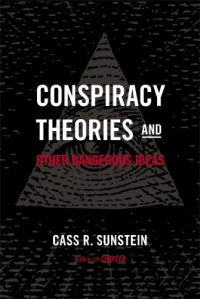 A Review of Conspiracy Theories and Other Dangerous Ideas by Cass Sunstein (based on an earlier paper co-authored with Adrian Vermeule); In Defense of Troublemakers: The Power of Dissent in Life and Business by Charlan Nemeth; and Conspiracy Theories and the People Who Believe Them, edited by Joseph E. Uscinski
On January 25 2018 YouTube unleashed the latest salvo in the war on conspiracy theories, saying “we’ll begin reducing recommendations of borderline content and content that could misinform users in harmful ways—such as videos promoting a phony miracle cure for a serious illness, claiming the earth is flat, or making blatantly false claims about historic events like 9/11.”
At first glance that sounds reasonable. Nobody wants YouTube or anyone else to recommend bad information. And almost everyone agrees that phony miracle cures, flat earthism, and blatantly false claims about 9/11 and other historical events are undesirable.
But if we stop and seriously consider those words, we notice a couple of problems. First, the word “recommend” is not just misleading but mendacious. YouTube obviously doesn’t really recommend anything. When it says it does, it is lying. … continue
Blog Roll
 Aletho News
- “Historic Russia”: The Land Putin Will Not Give Back
- How the Cambridge Analytica scandal still haunts Mark Zuckerberg
- The Ongoing Cancellation Campaign Against a Dissenting Academic in Norway
- Yemen and ‘the Houthis’: Challenging Sami Hamdi’s Narrative
- No, Christians did not invent Zionism
- AIPAC-led lobbying network opens branches in Cypriot, Greek parliaments
- Araghchi blasts ‘parasitic’ alliance as US taxpayers pay for Israel’s war on Iran
- Easy fix for Europe’s chaos? Stop fueling war against Russia
- Putin’s key remarks on peace talks and Europe’s ‘schizophrenia’
- Trita Parsi: Israel Set a Trap for Total War in the Region
- If Americans Knew
- An error has occurred; the feed is probably down. Try again later.
- No Tricks Zone
- Two New Studies Find Thwaites Glacier Melt Cannot Be Driven By Human Activity Or A Warming Ocean
- E-Cars Reduce CO2 Emissions By Only 41% Compared To Internal Combustion Engine Vehicles
- Predictions Made By Renowned Climate Professor Over Past Decades Have Been Proven To Be Poor
- New Study Suggests Large Regions Of The Pacific Ocean Have Been Cooling For The Last 80 Years
- Germany’s Green Energy Debacle: High Energy Costs Force Kahla Porzellan to Close After 182 Years!
- New Study: 50 Years Of The Most Aggressive ‘Net Zero’ Policies Can Only Affect The Global Climate By 0.03°C
- US September “Heat” Was No Record…Many Records Set Decades Ago
- Latest European Green Energy Debacle; Portugal’s Largest Flagship Solar Park Insolvent!
- Green Energy Debacle: German Expert Professor Fritz Vahrenholt Warns Of Severe Economic And Social Consequences
- Two More Paleo Reconstructions Affirm Meters-Higher Sea Levels Across Ireland, Brazil 7000-6000 Years Ago

