Dozens wounded in Beirut blast on the eve of Ramadan
Al-Akhbar | July 9, 2013
At least 53 people were wounded after a bomb exploded Tuesday morning in a parking lot in the densely-populated area of Dahiyeh in Beirut’s southern suburb.
The bomb went off around 10:15 am local time.
Al-Manar television station said the explosion was from a car rigged with explosives stationed in a public parking lot of the Islamic Coop supermarket. The blast comes on a busy shopping day on the eve of the holy month of Ramadan.
Live footage from the station showed at least a dozen cars in the parking lot charred from the fire, as firefighters attempted to put out the flames.
Local news channels aired images of heavy black smoke rising over buildings on Muawad street in the Bir al-Abed neighborhood.
Residents of the area attempted to disperse the crowd gathered around the scene for fear of second bomb nearby, el-Nashra said.
Of the 53 people who were admitted to hospitals, 41 have been released while another 12 are still receiving treatment, Minister of Health Ali Khalil told reporters.
Politicians of all stripes quickly issued statements condemning the blast.
Prime Minister-designate Tammam Salam called on Lebanese to remain “vigilant.”
“The ugly crime that took place in the Southern Suburb of Beirut is part of an evil scheme targeting Lebanon’s stability and the security of the Lebanese,” he said in a statement. “It is a barefaced attempt to foment strife.”
It remains unclear who was behind Tuesday’s blast, but there is no shortage of suspects.
Hezbollah MP Ali Ammar pointed the finger at Israel, which launched a 34-day war on Lebanon in 2006 which reduced much of Dahiyeh to rubble.
But Salafi radicals affiliated with Syria’s anti-government rebels are also suspected to have been behind a series of recent attacks on Lebanon.
The bomb was the second major attack on Beirut’s southern suburbs, where Hezbollah maintains strong support, in recent weeks.
Suspected rebels have upped a campaign against Lebanon in what they claim is retaliation for Hezbollah’s intervention in the Syrian conflict.
In May, two rockets launched from hills above the capital struck Beirut’s southern Chiyah district, injuring four Syrian workers.
Dozens of rockets fired from Syria have hit Lebanon in recent weeks, killing and wounding a number of people since they began over the course of the Syrian conflict, now over two years old.
And two roadside bombs detonated late last month targeted a convoy that reportedly belonged to Hezbollah in East Lebanon near the Syrian border.
The last deadly car bomb in Beirut occurred on 19 October 2012, when Internal Security Forces Brigadier General Wissam al-Hassan was killed in a massive blast in the Ashrafieh neighborhood.
In the summer of 2006, the Bir al-Abed area in Beirut’s southern suburb received the heaviest air bombardment during the Israeli war on Lebanon.
One of the deadliest attacks in Bir al-Abed history was the 1985 attempted assassination of Sayyid Mohammed Hussein Fadlallah, which killed more than 80 civilians.
A string of bombings between 2004 and 2008 killed a number of high-profile military and political figures in Lebanon.
‘German government sells the privacy of German citizens to the US’
RT | July 08, 2013
The recent NSA spying scandal showed the German government behaves towards US like a puppet regime, involving all major political parties just before the September elections, German journalist Manuel Ochsenreiter told RT.
RT: Let’s just discuss it now with the journalist Manuel Ochsenreiter who is joining us from Berlin. Mr. Ochsenreiter, to what extent do you think Germany may have cooperated with the NSA?
Manuel Ochsenreiter: Well, I think it’s a matter of fact that we know that the German authorities, the German mainstream politicians, the German government they all cooperate in a very intense way with US intelligence. I feel a little bit weird to use the term “cooperation” for this because when we look exactly at what is going on that they were spying on German citizens we have to say that the German government behaves towards the US government in this question more or less like a US puppet regime. No claim of sovereignty. No claim of independence. Of course, no claim of privacy, for the right to privacy of their own citizens. So, the German citizens are not at all protected by their own government. The German government sells the privacy of German citizens to the US government. And this is the really, really serious case, it’s a big scandal.
RT: Snowden claims top politicians were insulated in case of a scandal – yet now they seem to be outraged. What you are saying is that they might be doing this because of the public outrage. What’s got them more angry then, if that’s the case that they did not know, or that they did not know about the scale of the operations that they would too be spied on?
MO: To be honest I believe that they are angry that it became public, that now all the facts are open and the citizens can see what’s going on because I wouldn’t believe any word right now of a government politician. By the way, I’m also not fond of opposition politicians in the German parliament. We have to know that the government before the Merkel government was built by the GPD opposition. And they cooperated as well with the Americans as today’s government is doing. And when we listen very well to the words of mainstream politicians in Germany we hear right now a lot of justifications of this. Yes, let us say cooperation as they call it. They say it’s for our security, they say that this is a partnership, that this is a friendship but, of course, it’s not. It’s pure spying. And we have to watch a little bit back in the past we had in the 1990s the ECHELON project. It was also a USA spy project especially on Germany. And this spying project was especially for economic espionage. The German companies, the German economy was monitored by the US secret service. So, what we see here is that Germany is behaving more or less like, well, let me say like a state fully under control of the US without any independence. And the scandal’s not that US are doing that. The real scandal’s that the German politicians are not doing something against it…
‘German politicians should expel the US American military bases’
RT: Snowden did say that this went beyond agreements between the countries in terms of what they can share, what they can… in terms of sharing information. So, how is this affecting the politicians knowing that. They have been spied on far more than the agreement they had. So, yes, so, we say “yes” they did know about this. But to the extent that they have been spied on, I mean, this is going beyond spying on just their own citizens. It goes it is spying within politicians as well. How are they reacting to that? Is it going to create tension between the US and its allies now? Are they not seeing this? Are we just reading too much into something which is been happening anyway?
MO: We are knowing a very interesting time Germany because we have in September the elections. And I think the spying scandal is really really disturbing the election campaigns of all the mainstream parties because they all are involved in the scandal. So, what they are doing now is that they all try to give the impression that on the one side they knew about so-called cooperation but that they are completely surprised about how far it went. And to be honest I wouldn’t believe any word because we had already the experience in the past about how far the US governments go and how they treat their so-called allies or their so-called partners. So, if the German politicians… Let me finish with one sentence. If they are really so upset and so surprised as they act now then we have to see the consequences. And there are many consequences we could do with. For example, that the US ambassador is summoned to the Chancellor and is so criticized that there is diplomatic protest, that, for example, we make it to initiate that we have until today US barracks and US army troops on Germans soil. And we know that those military bases are also used for the NSA projects. So we invite the Americans to our country or our politicians invite them in our country to establish their military and intelligence bases there. So, if the German politicians want to do something it’s very easy to them just expel the US American military bases. Don’t make Germany any more do the military aircraft carried out in Europe of the US Americans. It would be easy but they will not do it, because they believe in this partnership which is not a partnership.
RT: So, how does the spying on the EU leaders sit, with the intelligence community cooperating. I mean, is that a sign that the US doesn’t trust its allies? Or it’s just keeping a close eye on its allies?
MO: I think this shows a lot about the attitude that the American government has towards the allies because we are never talking about the partnership we are talking about hegemonic politics. They want to be able to control a partnership or something else. Partnership is when two countries make an agreement with each other. But what we see here is that the US have gained control of those countries. I’m not sure that it will really bring mistrust in the EU bureaucracy because these people are used to that and I’m not sure if they are really upset about this because they know about this. But the interesting question is how long will the population be so tolerant to bear those problems. This is the interesting question.
RT: Just one more from you. In terms of destroying itself, I mean, we now have been focusing a lot on Snowden instead of what he’s actually been leaking. Do you think we are just kind of missing why politicians in the EU are trying to cover all of this up, by focusing on him rather then what actually Snowden keeps on releasing?
MO: Why? I don’t know. Perhaps, it might be interesting what Snowden has on his four laptops he took with him and I’m pretty much sure the information we got until now is not really 100% percent of what he has with him. I think you know he is in Moscow. Now, I think, the Russians are very interested in the content and the Germans again (I’m from Germany) my politicians, my government, they should be really interested in the content of the full-scale, of these espionage practices if they really want to know this. But I don’t see that right now. But I think in the near future we will get may be a lot of surprises how intense the spying is really.
Related articles
- Snowden: West ‘in bed with NSA’… (spiegel.de)
- European anger growing over extent of alleged U.S. electronic surveillance (mcclatchydc.com)
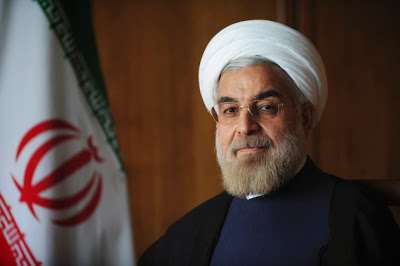
Rohani vows to pursue a moderate foreign policy based on detente
Tehran Times | June 29, 2013
TEHRAN – Iran’s President-elect Hassan Rohani has said that he will pursue a moderate foreign policy based on detente and constructive interaction with the world to help resolve the problems facing the country.
“Moderation in foreign policy is neither surrender nor conflict, neither passiveness nor confrontation, but rather is interaction,” Rohani said in Tehran on Saturday during his first live televised speech since winning the election on June 14.
“Moderation in foreign policy should be achieved through realism based on idealism, values, self-esteem, reliance on national might, domestic capacity, and effective and constructive interaction with the world. But interaction and dialogue should take place on equal terms,” added Rohani, who has repeatedly emphasized that the tension between Iran and the West over the country’s nuclear program should be defused only through logical dialogue and active interaction.
The West suspects Iran’s nuclear program may have military dimensions. But Iran says it is entirely for peaceful purposes, such as electricity generation and medical uses.
Rohani added that engagement with the world should be based on “mutual respect, mutual detente, and interaction with the aim of building trust, but mutual confidence-building based on the rights of all Iranian people and national demands and dignity.”
Enemy seeking to portray Iran as a police state
Elsewhere in his speech, Rohani, who will take office in August, also said, “The Islamic Republic of Iran, as a great regional power or the greatest regional power at this juncture, should play its role efficiently, and this necessitates moderation.”
“The enemy is seeking to portray the Islamic Republic of Iran as a police state to the world, and we should scuttle the enemy’s plan, and we need prudence and planning and firm but fundamental steps,” he added, referring to what he had previously called a “securitized atmosphere” in the society.
Rohani promises to form an extra-factional cabinet
Commenting on the composition of his cabinet, Rohani said, “My cabinet will be completely extra-factional, and its reliance will be on merit. And given that the administration has given no commitment to any party or faction, it is not indebted to any party or faction.”
On the freedom of the press, the new president said, “A government which has its roots in the people’s support and derives its legitimacy from the participation of voters, not only is not afraid of a free press but also becomes stronger by a free press that obeys the law.”
Rohani hailed the high voter turnout in the presidential election, saying, “The election provided a unique opportunity for all. Everyone should get the message of the election, respect it, and act based on it.
“Parties, groups, the people, each and every person, and others outside Iran in other countries, should properly appreciate the message of the election and respond to it appropriately.”
The people chose a new path in the election, he said, adding, “The people said that they love their country (and care about its) destiny and national goals. The people said in the election, ‘We want change and evolution.’”
Rohani also said, “The next administration will honor the promises it has made.”
New Jersey hospital deports unconscious stroke victim
RT | June 26, 2013
A US hospital deported an unconscious stroke victim after noticing that the patient was an undocumented immigrant from Poland. Polish health officials are furious that the man was “dumped on their doorstep” before the transfer was approved.
“Imagine being carted around like a sack of potatoes,” Polish Consul General Ewa Junczyk-Ziomecka told New York Daily News, describing the incident in which 69-year old Wladyslaw Haniszewski was unconsciously deported to his homeland.
Haniszewski, who suffers from a blood disease, lived in Perth Amboy, N.J., for 30 years. He recently lost his job, apartment, and health insurance, and was forced to move into a homeless shelter, the Daily News reports.
After the man suffered a dangerous stroke, a friend named Jerzy Jedra took him to the New Jersey hospital for treatment. When officials at the Robert Wood Johnson University Hospital noticed that the patient had no health insurance and lived in the US without documentation, they sent the comatose man to Poland. US hospitals are legally required to provide emergency care to anyone who needs it, but are allowed to deport stabilized undocumented immigrants.
But in order to deport someone, a US hospital must first get consent from either the patient, a family member, or a court guardian. Officials at the Polish consulate claim that no one was contacted, and that Haniszewski’s family was never informed that the man was deported.
Meanwhile, Haniszewski was left at the doorstep of a hospital in Boleslawiec, Poland. The facility is now being forced to take care of the man’s medical payments, which have cost “a few hundred dollars” a day, the hospital’s deputy director told TVN.
Junczyk-Ziomecka, who works at the Polish consulate in New York City, said she was trying to help the comatose man, only to realize last week that he was gone. Polish officials are furious about the deportation, especially since the 69-year-old patient was not in a healthy state to sign off on the transfer.
“Behind our backs they transported the unconscious man to Poland,” she told TVN, noting that she was most furious about the hospital’s decision to dump the man at the facility. “I cannot imagine such a situation that the decision about transporting an unconscious person could be made without agreement. Between the two institutions must be a contract, there must be documents. You cannot simply leave a patient at the door and drive away.”
At least 800 people have been deported from US hospitals without consent over the past six years in 15 states, the Associated Press reported in April. Medical repatriation has become increasingly common, but AP suggests that the actual number of such hospital deportations is much higher than figures show. Some health advocates are afraid that repatriations will occur more frequently after major components of Obamacare are implemented in 2014, since the US government will reduce its payments to hospitals that care for large numbers of uninsured patients.
Shena Erlington, director of the Health Justice Program, told the Daily News that although hospitals may face the burden of paying for uninsured patients, medical care providers should not have the ability to deport patients.
“It’s an incredibly disturbing case,” Lori Nessel, director of the Center for Social Justice at Seton Hall University School of Law, said about the Haniszewski repatriation. “This kind of action seems clearly illegal and also not ethical, but it’s hard to bring forth a legal action.”
The New Jersey hospital denies any wrongdoing and claims that the patient was informed of his discharge and care plan. The patient is awake, but unable to speak or communicate with doctors.
Hours before death, Hastings claimed the FBI was on his tail
RT | June 24, 2013
The death of journalist Michael Hastings is raising new questions after an email he sent hours before last week’s fatal car crash has surfaced showing a possible FBI probe into the reporter.
KTLA News in Los Angeles received an email on Friday that was forwarded to them by a friend of the 33-year-old reporter.
Hastings, who wrote for Rolling Stone and the website BuzzFeed, perished after an auto wreck in L.A. early Tuesday last week.
According to an email Hastings sent Monday afternoon to a handful of friends, he believed his colleagues could be visited by Federal Bureau of Investigation officers due to an article he was working on.
“Hey [redacted}, the Feds are interviewing my ‘close friends and associates,’” Hastings wrote, before recommending to his colleagues that they seek legal advice if approached by investigators.
“Also: I’m onto a big story, and need to go off the rada[r] for a bit,” he added. “All the best, and hope to see you all soon.”
Hastings was reportedly working on an article about Florida socialite Jill Kelley at the time of his death. Kelley made headlines last year after she became entangled in a high-profile scandal involving then-CIA Director David Petraeus and Gen. George Allen, who then commanded US troops in Afghanistan. A federal probe of suspicious emails sent to Kelley later unearthed an extramarital affair between Gen. Petraeus and his biographer, Paula Broadwell, which led to the CIA director’s resignation.
Before taking the helm as CIA director, Petraeus commanded US troops in Afghanistan — the same role that later went to Gen. Allen. Petraeus had inherited that role from Gen. Stanley McChrystal. On his part, McChystal resigned from that position after a 2010 Hastings-penned article from Afghanistan raised questions about the commander’s remarks about the Obama administration. He was forced to apologize for comments he made in the article that led to his resignation, and Hastings was presented with a Polk journalism award for his report.
Staff Sgt. Joseph Biggs, who met Hastings when the journalist was embedded in Afghanistan in 2008, said he received the email less than a day before the auto accident and told KTLA it sounded “very panicked.”
“It alarmed me very much,” Biggs said. “I just said it doesn’t seem like him. I don’t know, I just had this gut feeling and it just really bothered me,” he said.
“He was a good friend of mine,” Biggs wrote in a tweet sent after Hastings’ death.
According to the soldier, Biggs was blind-copied on the email sent mid-day Monday, which was addressed to a handful of Hastings’ colleagues. He died around 15 hours after the email was sent.
One week after his death, speculations continue to surround Hastings’ death. The other recipients of the email obtained by Higgs have yet to address the correspondence, but the soldier said it’s unlikely because others are worried of what will happen next.
“The reason I released the email is because those people were too scared. I’m not,” Higgs tweeted over the weekend.
“I won’t let a man die in vein [sic] because I’m too scared of what will happen to me. If I sent that email to Mike he wouldn’t rest,” Higgs wrote, “He would fight.”
On the eve of Hastings’ funeral this Monday in Vermont, Higgs said the deceased journalist’s wife thanked him for releasing the email.
“She’s vowing to take down whoever did this. She’s a fighter,” he wrote.
The Los Angeles Police Department says they do not suspect foul play in Hastings’ death, and the FBI said he was not the target of an investigation.
Appearing on Fox News on Monday, Ali Gharib, a journalist and friend of Hastings, said “I don’t think he was a reckless a person.”
“That doesn’t mean he might not have been driving excessively fast,” added Gharib, who said it wouldn’t be “a wild situation” to imagine Hastings driving quickly through Los Angeles late last week.
Speaking to Yahoo News last week, eyewitness Michael Carter wrote that he was nearby at the time of impact and “saw a giant fireball at the base of one of the palms that line the medians” on the road Hastings’ Mercedes was traveling down. “It was surreal. Even from as far away as I was, I could see how violent an impact it had been.”
After losing disarmament debate, Likud hawk concedes Iranian position on nuclear weapons is better for the world
Israeli and Turkish parliamentarians learn about nuclear famine
International Physicians for the Prevention of Nuclear War | June 24, 2013
On June 18, 2013, IPPNW Co-President Ira Helfand participated in an unprecedented debate about nuclear weapons in Israel’s parliament, the Knesset. At an event organized by ICAN-Israel and the Israeli Disarmament Movement, Dr. Helfand presented the scientific findings about the global climate effects of a limited nuclear war, and made a compelling case for the abolition of nuclear weapons. The next day, he traveled to Ankara, where he gave a similar talk about nuclear famine and the medical consequences of nuclear war to the Turkish parliament. The following is Dr. Helfand’s report.
by Ira Helfand
Sharon Dolev, the ICAN campaigner in Israel, and the Director of the Israeli Disarmament Movement (RPM), ICAN’s partner organization in Israel, organized an enormously successful series of events to publicize the nuclear famine report, build support for the upcoming Mexico conference on the humanitarian impact of nuclear weapons, and promote a WMD-Free Zone in the Middle East.
The centerpiece of the event was a discussion of these issues, including open discussion of Israel’s nuclear arsenal, in the Israeli Parliament, the Knesset. This session was the first ever discussion of nuclear weapons in the Knesset and broke a long-standing taboo against raising this subject in any official forum. The session was held in the conference room of the Knesset’s Science and Technology Committee and was hosted by two members of the Knesset, MK Tamar Zangberg of the Meretz Party and MK Dov Khenin of the Hadash Party. Equally important, MK Moshe Feiglin of the ruling Likud Party—one of the pre-eminent hawks in the Knesset—also came and debated nuclear policy for nearly 20 minutes after my presentation on the medical effects of nuclear war. He put forth the argument, common in Israel and other nuclear weapons states, that it is OK for “the good guys” to have nuclear weapons because they need them to protect themselves from “the bad guys.” Nevertheless, he seemed genuinely disturbed by the data showing that even a limited use of nuclear weapons, even by the “good guys,” would cause catastrophic consequences around the world that would affect the “good guys” themselves. He ultimately conceded that the world would be better off without any nuclear weapons and said that there needed to be further reductions in the current nuclear arsenals.
The Knesset session was attended by 20 antinuclear activists, including IPPNW’s Dr. Ra’anan Friedman, as well as by members of the press. It was videotaped and the two host members of the Knesset posted to their large Facebook followings throughout the presentation and debate.
MKs Zangberg and Khenin indicated a desire to continue working on this issue with RPM and are talking now about forming a lobby in the Knesset. MK Feiglin agreed to meet for further discussion about the issue. The meeting was viewed as an historic breakthrough by former MK and RPM Chair Mossi Raz.
RPM also organized a meeting with a senior government official who, previously unaware of the nuclear famine study, seemed deeply disturbed by the data, asked many detailed questions, and requested copies of the report in both English and Hebrew (prepared in advance by RPM) so that he could study it more closely. Most significantly, he said Israel might consider participating in the Mexico conference as long as it did not anticipate being singled out for attack, as it has been at many other international meetings. We urged Israeli participation at the side events that ICAN will organize at the UN this fall and he agreed to continue meeting with RPM over the coming months.
In addition to the government meetings, Sharon and her colleagues in RPM organized interviews with the English-language Jerusalem Post, Ha’Aretz, and the religious paper Hamevaser. They also arranged for me to appear on Sharon’s weekly radio show, All for Peace, and arranged extended press briefings with Or Heller, the well known defense correspondent for Channel 10, one of the major Israeli TV stations; with Ami Rokheks, who writes for Israel Defense a publication and web site devoted to security issues; and with Aviv Lavi, a leading environmental correspondent with a column in the business daily Globes and a weekly national radio program.
Arife Kose, the ICAN campaigner in Turkey, organized an extremely successful meeting at the Turkish Parliament on June 19, hosted and sponsored by Professor Aytug Atici, Member of Parliament, a pediatrician, and a member of IPPNW. The hour-long event attracted 18 members of parliament and consisted of a one-hour presentation and discussion of nuclear famine and the medical consequences of nuclear war. The event was also attended by IPPNW-Turkey General Secretary Derman Boztok, IPPNW-Turkey President Ozen Asut, five other members of the affiliate, and representatives of the Platform Against Nuclear, an umbrella group uniting dozens of NGOs opposed, originally to nuclear power, but now working on nuclear weapons as well. At the conclusion, Prof. Atici expressed interest in organizing a Turkish parliamentary delegation to attend the Mexico conference next year. Parliamentarians will be asked to sign a statement endorsing the Mexico conference.
Later in the day, Arife, Derman, and I met with Volkan Oskiper, the Head of Department for Arms Control and Disarmament. Turkey had attended the Oslo conference in March but did not sign on to the joint appeal of 80 NPT member states in May. He indicated, however, that Turkey plans to attend the Mexico conference and is encouraging other states to attend as well. He expressed some skepticism about the value of the ban treaty but was sympathetic to the argument that the nuclear-weapon states need to be pushed from the outside and agreed that their strong aversion to a ban treaty suggests that they are feeling pressured simply by the prospect of its being negotiated.
Oskiper was very familiar with the nuclear famine study from the Oslo presentation, and quoted several of the findings back to us. He is meeting with counterparts in Islamabad next week and agreed to bring a copy of the report to them for us. He will meet further with Arife and Derman in the lead up to Mexico.
Finally, Derman hosted a reception for IPPNW colleagues at the Turkish Medical Association office. The TMA issued a press release on June 19 about the situation in Turkey, specifically addressing the victims of police violence, but also referencing the presentation on humanitarian consequences of nuclear weapons at the Parliament. A press conference held at the Medical Association dealt with both issues.
Related articles
- Upcoming nuclear arms reduction treaties must involve all countries that have atomic weapons at their disposal – Lavrov (alethonews.wordpress.com)
- Nuclear weapon reductions will reduce risks, but prohibition treaty urgent (alethonews.wordpress.com)
- US obstructing global disarmament: Iran (alethonews.wordpress.com)
Russia Offers Iran New Replacement for S-300 – Paper
RIA Novosti | June 22, 2013
MOSCOW – Moscow made a new attempt to dodge a $4-billion lawsuit from Tehran over a failed deal to supply S-300 missile systems by offering another type of air defense system to Iran, Kommersant daily said Saturday.
The new offer on the table is Antei-2500, aka S-300VM, or SA-23 Gladiator in NATO nomenclature, the newspaper said, citing unnamed sources in the Russian arms trade industry. The missile defense system can simultaneously destroy up to 24 aircraft within the range a range of 200 kilometers or intercept up to 16 ballistic missiles.
The deal can be formalized during the visit of outgoing Iranian President Mahmoud Ahmadinejad to Moscow on July 1, an unnamed Iranian diplomat told Kommersant.
Iran was initially interested in the S-300 missile complexes, signing in 2007 a contract worth $800 million for five missile defense systems of this make.
But the deal was scrapped in 2010 by then-Russian President Dmitry Medvedev, who was unilaterally expanding on sanctions against Iran imposed by the UN Security Council.
Iran filed a $4-billion lawsuit against Russia in the international arbitration court in Geneva, which is currently pending review.
Moscow has struggled to have the lawsuit dropped, including by offering the Tor anti-aircraft systems as replacement, media reported earlier this month, adding that the offer was rejected by Tehran.
The Antei-2500, however, may be a better solution. The system does not formally fall under the existing sanctions against Iran while still being useful for the Middle Eastern country, which wants to have protection against a possible missile strike by its enemy Israel, Kommersant said.
While the S-300 was developed for the use by missile defense forces, the Antei-2500 was specifically tailored for the needs of ground forces, which could also be an advantage for Iran, known for its large land force.
Russia is already exporting the Antei-2500, having delivered two missile systems to Venezuela earlier this year. India and Turkey were also named as potential buyers, though no deals were formalized so far.
Upcoming nuclear arms reduction treaties must involve all countries that have atomic weapons at their disposal – Lavrov
RIA Novosti | June 22, 2013
MOSCOW – Any upcoming treaties on nuclear arms reductions will have to involve all countries that have atomic weapons at their disposal, Russian Foreign Minister Sergei Lavrov said Saturday.
Lavrov was commenting on US President Barack Obama’s proposal from earlier this week to slash US and Russian nuclear arsenals by one third from the limit imposed by the bilateral New START treaty in 2010.
The New START limits deployed nuclear warheads to 1,500 per country, though the actual slashing of nuclear arsenals is still ongoing.
Moving beyond the New START will make nuclear arsenals of the United States and Russia comparable to those of other countries with nuclear weapons, Lavrov said.
“This means that further moves possibly proposed for reduction of actual strategic offensive arms will have to be reviewed in a multilateral format,” Lavrov said on Rossia-1 television.
“And I’m talking not just official nuclear powers, but all countries that possess nuclear weapons,” the minister said.
In addition to the United States and Russia the list of confirmed nuclear powers currently includes Britain, China, France, India, Pakistan and North Korea. Israel is often accused of possessing nuclear weapons, and Iran of developing them, but neither confirmed the allegations.
The number of atomic weapons at the disposal of nuclear powers other than Russia and the United States is considered to be between 100 and 300 per country, according to the Federation of American Scientists.
Lavrov also said that Russia will be taking into account US plans for a missile defense shield in Europe when deciding on further nuclear arms reduction. He added that Obama acknowledged the “necessity” of this approach.
Russia has argued for years against the US missile defense shield plans, insisting that it could disrupt the strategic parity between the two former Cold War rivals.
Related articles
UN committee slams Israeli forces’ torture of Palestinian children

A child sits in front of a destroyed home in Rafah. (Photo: European Commission DG ECHO/cc/flickr)
Al-Akhbar | June 20, 2013
A United Nations human rights body accused Israel on Thursday of mistreating Palestinian children, including by torturing those in custody and using others as human shields.
Palestinian children in the Gaza and the West Bank, captured by Israeli forces in the 1967 war, are routinely denied registration of their birth and access to health care, decent schools and clean water, the UN Committee on the Rights of the Child said.
“Palestinian children arrested by (Israeli) military and police are systematically subject to degrading treatment, and often to acts of torture, are interrogated in Hebrew, a language they did not understand, and sign confessions in Hebrew in order to be released,” it said in a report.
The Israeli Foreign Ministry said it had responded to a report by the UN children’s agency UNICEF in March on ill-treatment of Palestinian minors and questioned whether the UN committee’s investigation covered new ground.
“If someone simply wants to magnify their political bias and political bashing of Israel not based on a new report, on work on the ground, but simply recycling old stuff, there is no importance in that,” spokesman Yigal Palmor said.
The report by the UN Committee on the Rights of the Child noted that, while both Israeli and Palestinian children end up killed and wounded, Palestinians constitute a much larger proportion of these casualties.
Most Palestinian children arrested are accused of having thrown stones, an offense which can carry a penalty of up to 20 years in prison, the committee said. Israeli soldiers had testified to the often arbitrary nature of the arrests, it said.
The watchdog’s 18 independent experts examined Israel’s record of compliance with a 1990 treaty as part of its regular review of a pact signed by all nations except Somalia and the United States. An Israeli delegation attended the session.
The UN committee regretted Israel’s “persistent refusal” to respond to requests for information on children in the Palestinian territories and occupied Syrian Golan Heights since the last review in 2002.
“Hundreds of Palestinian children have been killed and thousands injured over the reporting period as a result of the state party military operations, especially in Gaza where the state party proceeded to (conduct) air and naval strikes on densely populated areas with a significant presence of children, thus disregarding the principles of proportionality and distinction,” the report said.
The 10-year period examined by the committee included the second Intifada, which took place between 2000 and 2005.
Israel withdrew its troops and settlers from the Gaza Strip in 2005, but maintains a heavy blockade on the Hamas-run enclave.
During the 10-year period, an estimated 7,000 Palestinian children aged 12 to 17, but some as young as nine, had been arrested, interrogated and detained, the UN report said.
Many are brought in leg chains and shackles before military courts, while youths are held in solitary confinement, sometimes for months, the report said.
It voiced deep concern at the “continuous use of Palestinian children as human shields and informants”, saying 14 such cases had been reported between January 2010 and March 2013 alone.
Israeli soldiers had used Palestinian children to enter potentially dangerous buildings before them and to stand in front of military vehicles to deter stone-throwing, it said.
“Almost all those using children as human shields and informants have remained unpunished and the soldiers convicted for having forced at gunpoint a nine-year-old child to search bags suspected of containing explosives only received a suspended sentence of three months and were demoted,” it said.
Israel’s illegal occupation of Palestinian territory and the Syrian Golan Heights, continued expansion of Jewish settlements, construction of the apartheid wall into the West Bank, land confiscation and destruction of homes and livelihoods “constitute severe and continuous violations of the rights of Palestinian children and their families,” it said.
Israeli settlements in the West Bank are deemed illegal by international law, a charge the Zionist state disputes.
The UNICEF report in March showed that Israel was the only country in the world where children were “systematically tried” in military courts.
Over the past decade, Israeli forces have arrested, interrogated and prosecuted around 7,000 children between between 12 and 17, mostly boys, UNICEF found, noting the rate was equivalent to “an average of two children each day.”
Figures from the end of January show that 233 children are currently being held in custody, 31 of them under the age of 16.
(Reuters, Al-Akhbar)
Related article
NGOs find loopholes in Foreign Agents’ Law, officials urge corrections
RT | June 13, 2013
Russian NGOs that receive funding from abroad have developed several methods that allow them to bypass the obligatory registration as ‘foreign agents’.
Currently the law obliges all NGOs engaged in political activities and receiving funding from abroad to register as “foreign agents”under threat of fines.
One possible option is to register an ordinary commercial company that would receive funds from abroad and employ NGO staff as workers to pay their salaries, Kommersant daily wrote quoting the head of a Russian NGO who spoke on the condition of total anonymity.
The source noted that about 15 Russian groups had already switched to this method.
Another possible loophole, suggested by the daily itself, is to set up an endowment that would properly register as a foreign agent and receive foreign funding which would then be transferred to one or several Russian groups, allowing them to skip the registration as they are formally sponsored by a Russian company.
The third way has been outlined in a recent report by the Civil Initiatives Committee, an influential expert group chaired by former finance minister Aleksey Kudrin, which said that under growing pressure Russian NGOs could re-register in neighboring states.
Some Russian officials already called for changes in the recently approved law, saying that the flaws of the original bill are being exposed as it is applied. Mikhail Fedotov, chairman of the Presidential Council on Human Rights, said that the practice was only showing one thing – that the law had been poorly written and that it was in need of corrections.
Fedotov added that the council had already prepared several suggestions on corrections, but he did not go into detail.
Deputy Prime Minister Arkady Dvorkovich has said that the law needs changes and called for activists to draft their amendments. But Dvorkovich added that the law is in force and must be observed by all members of the community until it is altered in the desired way.
Russia introduced the so-called Foreign Agents Law in November last year.
Prosecutors and the Justice Ministry launched a major nationwide program in March this year in order to check how the fresh law is being applied. The inspections caused protests from NGOs, rights activists and the international community, which claimed they were a form of government pressure on independent critics.
Russian officials, including the president, have repeatedly stated that the law is not banning any NGOs and simply requires disclosure of the sources of their income. Such transparency would give Russian citizens and voters some clues about possible motives of the groups’ political actions, the officials added.
Currently no organization is registered as a foreign agent in Russia.
Hospital Drugs Patients & Dumps Them Onto Buses, Suit Claims
By MEGAN GALLEGOS | Courthouse News | June 13, 2013
LAS VEGAS – Calling it “Greyhound therapy,” a Las Vegas psychiatric hospital drugs patients and sends them on buses out of state to cities where they know no one, without medical instructions or anyone to care for them, one such patient claims in a federal class action.
Lead plaintiff James Flavy Coy Brown claims the hospital’s illegal policies are “sometimes referred to as ‘Greyhound therapy.'”
He sued Rawson-Neal Psychiatric Hospital, Southern Nevada Adult Mental Health Services, the Nevada Bureau of Health Care and Quality and Compliance, Dr. Anurag Gupta, his psychiatrist at Rawson-Neal, and others.
The complaint states: “Plaintiffs are former psychiatric patients at defendant Rawson-Neal Psychiatric Hospital (hereinafter ‘Rawson-Neal’) who, while still in need of psychiatric care, were involuntarily discharged from the facility by defendants and their agents and employees, and sent to out-of-state destinations where defendants knew said patients would be unable to obtain proper treatment, care and housing. Plaintiffs were medicated before their discharge and required to leave the facility under the influence of powerful anti-psychotic/tranquilizing medication. While plaintiffs were in a drugged state, and incompetent to give informed consent, the standard procedure was for institution staff to physically escort plaintiffs from the facility and place them in taxis bound for the Greyhound Bus Station in Las Vegas, Nevada. They were directed and required to travel on pre-paid tickets which had been previously ordered and paid for by Defendants Southern Nevada Adult Mental Health Services (hereinafter ‘SNAMHS’) and Rawson-Neal.”
Brown, 48, says he was admitted to Rawson-Neal on Feb. 9. The hospital is run by Southern Nevada Adult Mental Health Services. He was given “a diagnosis of psychosis, hearing voices, and thinking of suicide,” he says in the complaint.
He was discharged on Feb. 11.
“Defendants knew he was penniless and homeless and defendant Rawson-Neal knew or acted in reckless disregard of the fact that he would be unable to care for himself during the journey or upon his arrival,” the complaint states. “Before he was discharged, he was started on Thorazine, Cymbalta and Klonopin, all psychotropic medications which affect thinking and judgment. While Defendant Rawson-Neal had developed a written treatment plan which included assisting him to locate a group home placement and locating a case worker for him, this treatment plan was intentionally disregarded and violated by his involuntary discharge contrary to the plan.
“On February 13, defendant psychiatrist Dr. Anurag Gupta (hereinafter ‘Gupta’) ordered Brown discharged, physically escorted from the facility, and placed in a taxi which had been ordered by the defendants. Plaintiff Brown was then transported to the Greyhound Bus Station, where a pre-paid ticket had been purchased by the defendants to take Brown to Sacramento, California, a city which he had no prior contact, and where he knew no one. There was no follow-up plan and no prior contact had been made with any institutions in Sacramento from which Brown could obtain medical and psychiatric care. He was given three days of powerful anti-psychotic medications and bottle of Ensure for the 15 hour bus ride.
“Plaintiff Brown arrived in Sacramento, homeless, confused and anxious. He was taken by police to a local homeless service center, Loaves and Fishes, which could provide no housing, medical care or transportation. After his arrival at that location, he was directed to the U.C. Davis Medical Center’s emergency department which, after three days, arranged for Brown to be treated by Heritage Oaks psychiatric facility. From there he was discharged to a group home in Sacramento.”
Brown claims he’s one of more than 1,500 patients the defendants have treated this way, sent dazed and confused to nearly every state in the union.
“After learning of the ‘dumping’ of Brown in Sacramento by defendants, the Sacramento Bee newspaper began to investigate the circumstances which led to Brown’s arrival in Sacramento and discovered that since the year 2008 approximately 1,500 patients of the Rawson-Neal Psychiatric Hospital in Las Vegas, Nevada, have been transported by Greyhound Bus to almost every state in the country, all with minimum provisions to sustain them during protracted bus rides.
“A random survey by Nevada’s Bureau of Health Care Quality and Compliance of 30 discharges of psychiatric patients from Rawson-Neal revealed discharges in violation of policy and procedures of the Centers for Medicare and Medicaid and the facility’s own policies occur frequently. Patients, such as Brown, were involuntarily placed on Greyhound buses and sent out of state without prior arrangements having been made for follow-up care. These patients were not informed where they should go to receive continuing care upon arrival at their destinations. Discharge orders did not specify the amount of nutritional supplements to be provided to the patients for their extended bus trips; and appropriate and necessary prescription medications were not provided. Furthermore, necessary information was not provided on discharge documentation.”
Brown seeks punitive damages for civil rights violations, constitutional violations including cruel and unusual punishment, medical malpractice, negligence, gross negligence and breach of fiduciary duties.
He is represented by Allen Lichtenstein with the ACLU of Nevada.
Featured Video
Integrity Initiative: UK-funded network framed dissent as Russian disinformation for years
or go to
Aletho News Archives – Video-Images
From the Archives
Why Saudi Ties to 9/11 Mean U.S. Ties to 9/11
By Kevin Ryan | Dig Within | September 27, 2015
Media interest in Saudi Arabian connections to the crimes of 9/11 has centered on calls for the release of the 28 missing pages from the Joint Congressional Inquiry’s report. However, those calls focus on the question of hijacker financing and omit the most interesting links between the 9/11 attacks and Saudi Arabia—links that implicate powerful people in the United States. Here are twenty examples. … continue
Blog Roll
 Aletho News
- IAEA inspectors cannot return to Iran amid US threats: Russia
- Senate Rejects Iran War Powers Resolution Passed By House
- ‘We did not attack Pakistan with drones’: Afghan sources
- Iraqi Resistance faction links arms to sovereignty, questions US exit
- Cannon fodder no more… South Korea rejects Trump’s pressure to join his criminal war on Iran
- Neria Leiter Was A Legitimate Military Target
- Integrity Initiative: UK-funded network framed dissent as Russian disinformation for years
- ‘We don’t seek permission to defend our country’: Snippets from President Pezeshkian’s UNGA address
- NATO chief wants Europeans to fight American wars [for Israel]
- German chemicals giant reveals details of downsizing
- If Americans Knew
- Israel displaces hundreds of Palestinians amid wave of demolitions in West Bank
- Aid, reconstruction, and Israel’s history of obstruction in Gaza
- Trump administration digs an ever-deeper hole of complicity in genocide – Daily Update
- US-Israel $2.8 Billion Arms Deal, 40,000-Bomb Supply Faces New Gaza Complicity Accusations
- Caught on Tape: AIPAC CEO Boasted of Controlling Trump’s National Security Officials
- Why Hamas Attacked Israel in October 2023 – Israeli professor Ilan Pappé
- They see them, then kill them: Israeli quadcopters track, deliberately target civilians in Gaza
- Winter could turn Gaza’s treacherous, war-damaged buildings into deathtraps
- Majority of Democratic Voters Want to Prosecute Both Biden and Trump Administration Officials Over Gaza
- As Gaza languishes, world leaders gather at the UN – Daily Update
- No Tricks Zone
- New Study: Earth And Venus Surface Warmth Largely Explained By Convection And Lapse Rate, Not CO2 Or Radiation
- 2025 Nature Paper Claiming Worsening Global Drought Gets RETRACTED …Heavily Flawed
- New Study: ‘Global Drought Shows No Detectable Recent Acceleration Under Climate Warming’
- Economic Masterminds: German Socialists Suggest Taxing Productivity Gains Stemming From Using AI
- The South China Sea Has Not Been Cooperating With The Climate Change Narrative
- Energy Crisis: Germany Enters Heating Season With Historically Low Gas Reserve Fill Levels
- New Study: The Antarctic Ice Sheet Gained Mass From 2020-2024 Due To Staggering Snow And Ice Accumulation
- Study: Ocean Heating Rates From Thousands Of Years Ago ‘Dwarf’ Modern Ocean Heating Rates
- Climate Extremists Target, Attack Large-Scale Power Grid Infrastructure In Germany!
- New Study: Antarctic Ice Melt Has Contributed Less Than 1 Centimeter To Sea Level Rise In The Last 30 Years

