Lebanon SITREP: Letter from a Lebanese friend
The Saker | August 4, 2020
This was just sent to me by a good Lebanese friend:
Huge disaster, investigation underway, on face value was caused by utter negligence, corruption and incompetence of Lebanese state, but I am one of those that has been stressing that the enemies could have exploited this state negligence and corruption to trigger this disaster through sabotage. Few simple reasons for this, including:
a) this disaster completely serves current US-Israeli efforts to pressure Lebanon economically to bow down to their demands
b) the site of the explosion, Port of Beirut, was the transit through which 50-80% of Lebanon’s commodity and trade needs were met
c) the explosions struck wheat reserves stored there as well, exacerbating the dire economic situation and inflation further
d) Israeli officials few days ago were warning the Resistance that if they struck Israeli army targets (a response to recent Israeli crimes by Resistance was imminent), Lebanon’s infrastructure will be targeted
e) one year ago exactly Israel’s ambassador to UN said at the Security Council that the Port of Beirut had become ‘Hezbollah’s Port’. Lebanese ambassador said this was a direct threat to Lebanon’s civilians and security
f) last but not least, the 2,750 tonnes of ammonium nitrate (that exploded) were reportedly stored there 6 years ago, and they have been described as a ticking time bomb considering the irresponsible way that they were stored. Is it really coincidental that this ticking time bomb goes off today, at the worst possible moment for Lebanon (Country is falling on all levels, coronavirus, US siege at its peak etc)?
So, while initial reports have said this disaster was caused by the utter negligence, corruption and lack of accountability of Lebanese state institutions, an official investigation is currently underway, and the Resistance will certainly be doing its own investigation, because there was no worse possible time for this disaster to occur to Lebanon than today. Sabotage by the enemy must remain a strong possibility (though actually proving that may be difficult).
Guaido-supporting opposition block to snub Venezuela’s parliamentary election, allege rigging in Maduro’s favor
RT | August 2, 2020
A coalition of over two dozen parties, all backing opposition figurehead Juan Guaido, have announced they will not take part in the upcoming parliamentary vote in December, claiming any outcome is an “electoral fraud” by default.
Although the election is to be held five months from now, on December 6, the block has already denounced it as fraudulent, arguing that the electoral system itself is unfair. The coalition at the same time rejected the notion that they are abstaining from the vote, arguing that it was “not an election” they have refused to participate in.
The statement, which was signed by 26 parties, comprising the coalition, accuses the Venezuelan President Nicolas Maduro government of cracking down on the deputies and having the Supreme Court to appoint members of the electoral board that favour Caracas.
The parties also claim that the government violated the constitution by increasing the total number of deputies from the current 167 to 277.
The coalition allege that they represent “the voice of the vast majority of the people of Venezuela,” calling on the international community to denounce the election as a fraud.
While critics have accused Guaido of foregoing an election so he can claim he still commands broad support among those opposing Maduro, there is not even a single opinion as to who leads the National Assembly in the country, plagued by a political crisis exacerbated by biting US sanctions.
Well, what a surprise. US puppet @jguaido and fellow puppets decide not to participate in the December parliamentary elections. It makes sense. Why run in elections when you can just proclaim stuff? https://t.co/eKFFni0zRy
— venezuelanalysis.com (@venanalysis) August 2, 2020
Guaido, who declared himself ‘interim president’ in early 2019, while being a leader of the opposition-led National Assembly, was ousted as the head of the legislature this January in a vote by fellow MPs. Guaido claimed that he was barred from entering the assembly, with a dramatic video showing him climbing a fence to get into the parliament. However, other footage showed that Guaido in effect himself refused to enter the building, unless several other MPs, stripped of parliamentary immunity, would be allowed in. Subsequently, Guaido convened his own “national assembly” at the headquarters of El Nacional newspaper, with its members electing him a “leader” of the de-facto parallel structure.
While the Venezuelan Supreme Court ratified another opposition lawmaker, Luis Parra, as the head of the National Assembly in May, the US and its allies as well as the EU still back Guaido as the congressional president despite his push for a regime change somewhat losing momentum.
Despite the West’s continuous support of Guaido, Maduro has managed to withstand every US-backed forces attempt to overthrow him so far, including the failed military coup by Guaido supporters in April 2019 as well as sanctions on oil exports and the seizure of Venezuelan gold and oil assets. In May, a group of militants led by two Americans attempted to infiltrate Venezuela and kidnap Maduro. While there have been documents leaked to the media that appear to link Guaido to the group, the opposition leader has denied the Maduro government’s accusations of being the mastermind behind the op.
Taliban Group Says Completed Release of 1,000 Afghan Prisoners Under Agreement With US
Sputnik – 31.07.2020
KABUL – The Taliban movement has completed the release of 1,000 Afghan prisoners as per the Doha deal agreed with Washington, Suhail Shaheen, a spokesman for the Taliban’s political office in Qatar, said on Friday.
“According to the Doha Agreement, in which the Islamic Emirate promised to release 1000 prisoners in exchange for 5,000 prisoners, this number was completed by us today,” Shaheen said.
Earlier in the day, the Taliban completed the process by releasing 82 prisoners in the Afghan provinces of Herat, Farah, Ghor, Nimroz, Zabul and Balkh, the spokesman added.
The Afghan government and the Taliban committed to releasing each other’s prisoners — 5,000 and 1,000, respectively — as part of a peace deal negotiated by the group and the United States in the Qatari capital of Doha on 29 February, with the outlook to launch intra-Afghan talks. Kabul has so far freed only 4,400 detainees, according to the Taliban.
Earlier this week, Shaheen said that the Taliban would release the remaining Afghan prisoners before the Muslim sacrifice festival of Eid al-Adha, which starts on Friday, as a goodwill gesture. The movement expects the peace talks with the Afghan government to start in August following the release of the prisoners.
New ceasefire reached in Donbass, but for how long?
By Uriel Araujo | July 31, 2020
The war in Donbass (part of a broader Russo-Ukrainian conflict) is often called the “forgotten war” in Europe. It has killed over 13,000 people since 2014. The conflict has been described as “frozen” since Minsk II agreement (February 2015). Such did not put an end to war itself – periodic shelling and fighting along the line of contacts never stopped – but since then, the number of casualties decreased and no further territorial changes occurred.
There have been other ceasefires: 2017, for example, was a year of intense fighting and quite a few failed ceasefires. In 2019, an agreement (often described as the “Steinmeier formula” after its German proposer) was signed between the OSCE, Russia, Ukraine, and both “rebel republics”: the Luhansk People’s Republic (LNR) and the Donetsk People’s Republic (DNR). It came of course after intense negotiation and it basically proposes that free election be held in the LPR and DPR territories – observed and verified by OSCE officials. Subsequently, these territories could be reintegrated into Ukraine with special “autonomous” status. Some Ukrainian and rebel troops did withdraw after this agreement.
Unfortunately the Coronavirus pandemic has caused the Donbass situation to go backward. However, on Sunday, a new ceasefire was decided by the Minsk Trilateral contact group (backed by Putin and Zelenskiy), starting on Monday and that has generated some hope. However, two breaches have already been claimed by the Ukraine military on Monday, minutes after midnight, involving grenades and machine guns (no casualties were reported). Besides, other issues still linger such as the situation of war prisoners.
It is indeed too early to speculate on what will be the outcome of it. For many Donbass residents, being once again a part of Ukraine became unthinkable. The Ukrainian government’s offensives did take a large toll on civilians in Donbass. Hospital, schools, the local energy company’s office and many other buildings in the city of Horlivka (Donetsk), for example, were destroyed or damaged by shelling (in 2014). Many struggled without electric power and water cut off. Such wounds take some time to heal. Furthermore, on February (2019), Ukrainian legislators repealed a bill which would have made it possible for people living in both rebel republics to get their pensions without needing to take difficult trips outside of the conflict zone and then back home.
On the other hand, experts have noted that after the hottest phase of the war, so far there have not been large-scale civilian atrocities. It could indicate neither side has an interest in further fomenting “ethnic” divisions for political gain: there have not been mass rapes, mutilations or other such type of civil war tactics.
According to a key Luhansk official, the main challenges of Donbass now are not of a humanitarian nature but rather mostly political. There is no hunger, but there are indeed economical problems, most of which would be at least ameliorated if it were not for the lack of recognition from the international community. Both rebel republics are currently recognised only by each other and by South Ossetia, which in its turn, is itself a partially-recognised state.
This being so, neither of the two republics have embassies abroad. However, some representation bureaus have been opened, in Russia, Italy, France and a few other European nations. Last year, the LNR opened its first bureau outside of Europe: a “Cultural Representation Office” in Congo. This was a “foreign policy” win for the LNR, which is increasing dialogue with Congo and seeking other potential interlocutors.
It is hard to tell whether either of the two republics would be “viable” (both are heavily dependent on Russia as of now) without gaining international recognition. And the Russian Federation in its turn shows no intent of integrating Donbass into its territory – Donbass is not Crimea.
Professor Jesse Driscoll at the School of Global Policy and Strategy at UC San Diego sees the conflict as a civil war and not merely as a proxy war between Russia and Ukraine. In his view, describing it as a “civil war” – thus emphasizing internal Ukrainian political problems – should not be confused with a “capitulation to Russia” of some sort. It is rather about recognizing some of the valid concerns of the Russian-speaking and pro-Russian Ukrainian population (this region after all has historical and cultural ties to Russia).
To further complicate things, one should not think of the Donbass war as an ethnic conflict plain and simple. Ukraine is of course a strongly bilingual society (both Russian and Ukrainian, with a high degree of intermarriage). Furthermore, many people may declare themselves ethnically as either Russian or Ukrainian, depending on context. In fact, many self-declared “ethnic Ukrainians” are Donbass separatists (“pro-Russian”) while there were and are “ethnic Russians” fighting on the Ukrainian side – on the Azov battalion, even. The truth is that one’s political stance is often a better predictor – regarding one’s attitude towards the conflict – than language or ethnicity. And the main dividing issue was and is of course Maidan. It is about 2 possible Ukraines: one is an European nation, closer the West and the US. The other is a natural ally of Russia and part of the “Russian world” (culturally) and is also proud of its Soviet heritage.
These are the two world-views currently clashing in Ukraine. Meanwhile, the plight of the civilian population of Donbass remains.
Uriel Araujo is a researcher with a focus on international and ethnic conflicts.
Neither Trump Nor Biden Really Matter to China or Russia
By Finian Cunningham | Strategic Culture Foundation | July 30, 2020
Well, according to the Trump campaign, Democrat rival Joe Biden is the candidate whom Chinese leaders are rooting for to win the presidential election in November. “Beijing Biden” or “Sleepy Joe” would be a gift to China, so it goes.
In turn, trying to out-hawk the Republican incumbent, the Biden campaign paints Trump as being “soft” on China and having been “played” by Chinese counterparts over trade, the corona pandemic and allegations about human rights.
Biden, the former vice president in the previous Obama administrations, has vowed to impose more sanctions on China over allegations of rights violations. He claims to be the one who will “stand up” to Beijing if he is elected to the White House in three months’ time.
Last week, Biden declared he was “giving notice to the Kremlin and others [China]” that if elected to the presidency he would impose “substantial and lasting costs” on those who allegedly interfere in U.S. politics. That’s war talk based on worthless intel propaganda.
Trump meanwhile asserts that no-one is tougher than him when it comes to dealing with China (and Russia for that matter).
Given the Trump administration’s reckless policy of ramping up hostility towards China in recent months, that begs the question: how could a future Biden administration begin to be even more aggressive – short of going to war?
Relations between Washington and Beijing have plummeted to their worst levels since the historic detente initiated by President Richard Nixon in the early 1970s. The precipitous downward spiral has occurred under President Trump’s watch. So, how exactly could a prospective President Biden make the relationship more adversarial?
The truth is both Trump and Biden are equally vulnerable to domestic partisan criticism about their respective dealings with China. The belated high-handed approach that both are trying to project is pockmarked with risible hypocrisy.
The Trump campaign scores a valid point when it recalls how former Vice President Biden smooched and feted Chinese leaders with economic opportunities in the American economy.
Likewise, Trump stands accused of lavishing praise on Chinese President Xi Jinping while ignoring the impending coronavirus pandemic because Trump’s top priority was getting a trade deal with China.
The fact that both American politicians have U-turned with regard to China in such nasty terms must leave the authorities in Beijing with a deep sense of distrust in either of the would-be presidents.
Biden at one time waxed lyrical about his close relationship with Xi, but as his bid for the presidency heated up, Biden stuck the proverbial knife in the Chinese leader calling him a “thug”.
For his part, Trump previously referred to Xi as a “dear friend” while dining him with “beautiful chocolate cake” at his Mar-a-Lago resort in Florida, but his administration has since slammed the Chinese leader as “authoritarian”. Trump’s racist slurs over the pandemic being “Kung Flu” and “Chinese plague” must give President Xi pause for disgust with the falseness.
At the end of day, can either of these presidential candidates be trusted to pursue principled U.S.-China relations going forward? The toxic anti-China campaigning by both indicates a level of puerile treachery which foreshadows no possible return to any kind of normalcy.
One distinction perhaps between Trump and Biden is the latter is promising to repair relations with Western allies to form a united front against China. To that end, a hawkish confrontational policy under Biden may have more impact on U.S.-China relations than under Trump. Trump has managed to alienate European allies with his broadsides over trade tariffs and NATO spending commitments. Although Trump’s Secretary of State Mike Pompeo has recently urged “an alliance of democracies” to confront China, that rallying call is likely to fall on deaf ears with European allies irked by Trump’s brash style. Biden on the other hand could bring a more unified Western policy of hostility towards Beijing (and Moscow) by affecting a more appeasing attitude towards Europe. In that way, Biden would be more preferred by the Pentagon and foreign policy establishment than Trump, just as Hillary Clinton was in 2016.
However, it is doubtful that Beijing is paying too much attention to what either candidate is saying or posturing at. If both of them can flip so much from talking softly to shouting loud anti-China profanities then their individual characters may be deemed malleable and unscrupulous. Both have shown a shameless streak in stoking anti-China bashing for electioneering gain. Trump pulled that trick last time out in 2016 when he railed against China for “raping America” only for him to discover “deep friendship” with Xi following that election. Now he has reverted to hostility out of self-serving calculation to whip up anti-China sentiment among voters. And Biden is apt to do the very same.
Forget about such fickle personalities when it comes to reading U.S. policy towards China. Beijing will be looking at the longer trajectory of how U.S. policy turned towards a more militarized approach with the “Pivot to Asia” under the Obama-Biden administration in 2011. Indicating how Deep State continuity transcends Democrat or Republican occupants of the White House, the next major indicator was in the Pentagon planning documents of 2017 and 2018 under Trump which labelled China and Russia as “great power rivals”. The American “ship of state”, it may be concluded, is therefore set on a collision course with both Beijing and Moscow in terms of ramping up a confrontational agenda. Who sits in the White House scarcely matters.
For Trump and Biden to trade barbs about which one is “softer” on China or Russia is irrelevant in the bigger picture of U.S. imperialist ambitions for global dominance. The logic of a waning American empire and the concomitant inherent belligerence to compensate for the perceived loss of U.S. global power are the issues to follow, not whether Trump or Biden clinch the dog-and-pony race to the White House.
Taliban say will free Afghan government inmates before Eid al-Adha
Press TV – July 30, 2020
The Taliban militant group says it will release the remaining Afghan government prisoners before Eid al-Adha (the Feast of Sacrifice) as a “goodwill gesture.”
Suhail Shaheen, a spokesman for the Taliban’s office in Qatar, said in a statement on Twitter on Thursday that the militant group had decided to release the 1,000 prisoners before Eid al-Adha, which marks the culmination of the annual Hajj pilgrimage.
Shaheen called on the Afghan government to complete the release of the 5,000 Taliban prisoners that has been underway in a gradual format as part of a prisoner swap between the two sides.
Afghan President Ashraf Ghani said on Tuesday that his government would soon complete the release of the 5,000 Taliban prisoners in order to demonstrate its commitment to peace.
He also said negotiations between the Afghan government and the Taliban militant group were expected to begin “in a week’s time,” following the completion of the prisoner exchange.
The prisoner swap has been an Afghan government obligation under a deal between the United States and the Taliban that was struck in February. The Afghan government, which was not a signatory to the accord, was required to release up to 5,000 Taliban prisoners. The militants, for their part, were obliged to free 1,000 government captives.
The exchange has been regarded as a first step toward broader talks between the government and the militants. Its implementation had faced hurdles since the deal was signed.
The deal envisages a complete withdrawal of US forces from Afghanistan, and the Taliban pledged not to attack American and other foreign forces. They made no such pledge in relation to the Afghan government and people.
The Taliban on Tuesday declared a three-day ceasefire for the Muslim holiday of Eid al-Adha, starting Friday. Kabul welcomed the announcement with a note of caution.
The truce announcement has been welcomed by the public and officials in Afghanistan and they have called for a lasting ceasefire in the war-ravaged country.
The militants declared a similar three-day ceasefire at the end of the holy fasting month of Ramadan in May. That truce prompted widespread relief across Afghanistan, but it was short-lived, with the militants resuming deadly attacks straight afterwards.
Official data shows that bombings and other assaults by the Taliban have surged 70 percent since the militant group signed the deal with the United States.
Venezuela Sets Parliamentary Election Date, Increases Number of Lawmakers
By Ricardo Vaz | Venezuelanalysis | July 2, 2020
Mérida – Venezuela will hold elections for its National Assembly (AN) on December 6.
National Electoral Council (CNE) President Indira Alfonzo held a press conference on Wednesday to announce the timetable for legislative elections, which are constitutionally mandated to be held before the end of the year.
The timetable includes electoral registry sessions from July 13 to 26, with electoral candidates and lists to be presented from August 10 to 19 and the campaign held from November 21 to December 6. An extensive series of audits will begin on August 14 and extend to January 21, 2021.
Alfonzo added that dates are subject to adjustment due to the COVID-19 pandemic.
This year’s legislative elections will also see important changes in the CNE’s electoral norms as well as in the number of deputies elected to the AN.
Voters will elect 277 deputies for the 2021-2026 period, 110 more than in the current term. The CNE will not change the 87 electoral districts that currently exist. Out of the 277 AN deputies, 48 will for the first time be elected via a national list, and the rest in the 87 constituencies with a 52-48 split between electoral lists and individual nominations.
The reforms follow a ruling by the Supreme Court last month striking down two articles of the country’s electoral law and ordering the CNE to establish new norms for greater proportional legislative representation to ensure more “political pluralism.”
According to the CNE, 28 national political organizations, 52 regional parties and six representing indigenous peoples are currently approved to participate in the December election. The changes to electoral norms had been one of the topics discussed in the National Dialogue Roundtable between the government and a host of small opposition parties.
Following the CNE announcements, President Nicolas Maduro called on Venezuelans to participate in the parliamentary elections, stressing that the government will put safety and healthcare protocols in place.
“We have seen elections held around the world during this pandemic, and Venezuela is no exception,” he said in a televised address. Maduro went on to add that the participation of 86 political organizations “strengthens democracy and peace in the country.”
Leander Perez, an activist with the Homeland for All (PPT) party, told Venezuelanalysis that the new rules can benefit smaller parties and that leftist organizations such as the PPT and the Venezuelan Communist Party had been demanding more proportional representation for years.
“The new rules encourage smaller parties to submit their own national lists and achieve representation in the AN. The previous setup forced them to run in large coalitions, the [government-led] Great Patriotic Pole and the [opposition alliance] MUD,” he explained.
Asked what strategies leftist parties should pursue, Perez urged organizations to take advantage of the more favorable conditions and set up an “independent” bloc in parliament.
“We need to set up a bloc that will act independently from the [ruling] PSUV, in alliance with popular movements, to defend a leftist agenda: demanding higher salaries and the release of imprisoned trade unionists, opposing campesino evictions, denouncing privatizations, among other things,” he said.
Meanwhile, opposition leader Juan Guaido reiterated that he will not take part in the elections, which he called a “farce.”
“There can be no elections in Maduro’s Venezuela,” a statement from Guaido’s press office read.The opposition leader has rejected taking part in elections as long as Maduro remains in office, repeatedly urging Venezuela’s armed forces to oust the president and install him in power.
Major opposition parties Democratic Action and Justice First were subjected to an intervention from the country’s Supreme Court last month, with their new leaders vowing to participate in the December contests. Guaido-aligned leaders have called for a boycott.
For its part, Washington declared it would not recognize the upcoming legislative elections.
Edited and with additional reporting by Lucas Koerner from Santiago de Chile.
Dutch MH17 trial: Court to consider report from Russian missile producer that points to Ukraine as culprit
RT | July 4, 2020
A Dutch court investigating the downing of MH17 has agreed to hear from Almaz-Antey, a Russian arms manufacturer, which argues that the prevailing Western narrative – that rebels in eastern Ukraine shot down the plane – is false.
The hearing in Badhoevedorp, Netherlands says it will explore alternative scenarios in the high-profile trial, in which four anti-Kiev fighters stand accused of using a Russian anti-aircraft missile to destroy the civilian plane, killing 283 passengers – mostly Dutch – and 15 crew on board.
Malaysian Airlines Flight MH17 was flying from Amsterdam to Kuala Lumpur when it was downed over eastern Ukraine on July 17, 2014. It was crossing airspace which had not been closed despite the Ukrainian civil war raging below.
At the time, self-proclaimed republics in the region were involved in an armed conflict with the new Kiev government following the violent, Western-backed ‘Maidan’ which had brought it to power earlier that year. In the weeks preceding the downing of MH17, the Ukrainian military had lost several of its aircraft to its opponents, who had captured shoulder-launched missiles and anti-aircraft guns from Ukrainian arsenals.
Following the tragedy, Kiev and the republics blamed each other for the incident, while almost immediately the US government claimed – without presenting any evidence – that Russia had provided the so-called Donetsk People’s Republic’s (DPR) militia with the missile used to down the aircraft.
Presiding Judge Hendrik Steenhuis accepted a defense request to call more witnesses, including a representative of Almaz-Antey, the Russian producer of Buk air defense systems. A Buk missile is alleged to have caused the downing of MH17 in July 2014, but the model and origin of the projectile are in dispute.
The prosecution maintains that the civilian plane was shot down over the Donbas by rebel forces, which at the time were fighting against the Ukrainian military. The crime was pinned on four men, who they assert obtained the missile system from a Russian military unit and transported it to the rebel-controlled territory to be used for defense against Ukrainian warplanes.
In 2015, Almaz-Antey reported on experiments it conducted when investigating the tragedy. It concluded that the plane was downed with an older variant of the missile that can be fired by Buk systems. This outdated model is no longer in use by the Russian Armed Forces, but Ukraine has plenty of them, having inherited the weapons when the Soviet Union collapsed.
The arms producer also believes that, in order to inflict the kind of damage seen on the debris of the downed aircraft, it had to have been launched from territory controlled by forces loyal to Kiev at the time.
During Friday’s hearing, Steenhuis agreed that Almaz-Antey’s conclusions should be considered. The judge also said an expert witness from the manufacturer can be called to give evidence.
The Dutch court also said it was reasonable to seek disclosure of satellite photos of the area, taken by the US military on the day MH17 was shot down. The Americans have refused to declassify them, citing national security considerations, offering investigators a memo instead. A senior Dutch investigator was allowed to inspect the images but has not yet been questioned during the trial.
The proceedings in the Netherlands are being held without the presence of the defendants. Of the four individuals concerned, only one – Russian citizen Oleg Pulatov – has agreed to engage with the defense team, while the other three have no representation whatsoever.
The trial of the rebel fighters comes after a lengthy probe by the Joint Investigation Team (JIT), which Russia considers politically biased. The JIT excluded Russia but included Ukraine despite the country’s involvement in the armed conflict and its possible role in the downing of MH17.
Kiev is the source of some key evidence, such as alleged intercepts of phone calls by rebel commanders, which are considered important to the trial. Moscow has made numerous offers to assist in the investigation but has been rebuffed.
Other data that could be crucial in establishing the truth about what had happened to the Malaysian plane is notably absent in the case.
This includes primary radar data from Ukraine, which Kiev claims it’s unable to provide because neither civilian nor military stations were operational on the day of the tragedy. “Ukraine has effectively not presented any primary radar data. Ukraine has told the Dutch Safety Board that no primary radar data was registered, as the radar was not operating at that moment,” Dutch prosecutor Thijs Berge said last month.
Russia has also criticized the JIT for relying on so-called ‘open-source evidence’ like videos published on social media, saying that this can be misrepresented or manipulated.
The JIT’s conclusions seem to be closely aligned with those of Bellingcat, a UK-based group of so-called “civilian investigators” with a track record of using open-source materials to pin the blame for various misdeeds on Russia.
Notably, Bellingcat is funded by both the US and Dutch governments. This important point is rarely, if ever, discussed when the outfit’s work on MH17 is reported, or discussed, in the West.
South Korea’s Moon appoints top aides, all advocates of inter-Korean rapprochement
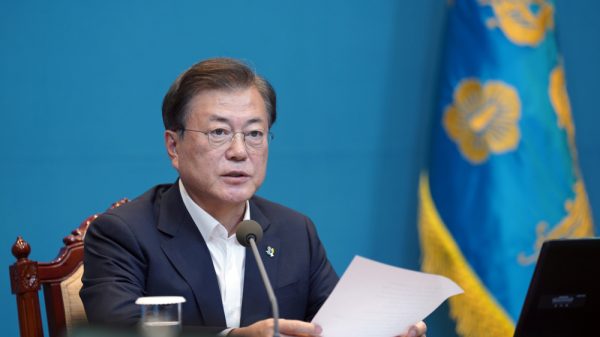
Press TV – July 3, 2020
South Korea’s President Moon Jae-in has appointed officials, all known as supporters of inter-Korean détente, as his new top national security advisors in an effort to revive stalled negotiations with North Korea.
The officials were appointed on Friday to replace the chiefs of national security, intelligence and unification policy.
Lee In-young, a four-term lawmaker, who was nominated to oversee inter-Korean ties as unification minister said, “Reviving inter-Korean dialogue is a top priority.”
He said that he would “look at the issue of restarting humanitarian exchanges and cooperation which can be done immediately.”
The current minister resigned over worsening relations with the North.
Moon appointed Suh Hoon, as his national security adviser and Park Jie-won, to succeed Suh as NIS head.
The president has so far held three summits with North Korean Leader, Kim Jong-un, with whom he signed an agreement in 2018 to take a step closer to peace by turning the Korean Peninsula into a “land of peace without nuclear weapons and nuclear threats.”The two Koreas were on a path of rapprochement beginning in January 2018 before US intransigence to relieve any of the sanctions on the North effectively killed diplomacy.
Earlier this year, Moon said he was making efforts to arrange a visit by Kim to Seoul, saying that both sides are in “desperate need” to improve relations.
The South’s president, who has also been trying to mediate between the North and the United States, urged President Donald Trump and Kim to meet once again before the US presidential election in November.
Trump and Kim have already met three times, mainly on Moon’s auspices.
Citing the coronavirus pandemic, the US’s deputy secretary of state and lead negotiator with North Korea, Steve Biegun, said on Monday that another summit was “probably unlikely between now and the US election.”
Biegun, however, said Washington would “continue to leave the door open to diplomacy.”
He is due to visit South Korea next week for meetings with his South Korean counterparts.
Covid-19 may make men STERILE, Russia’s Health Ministry warns
RT | June 30, 2020
Covid-19 infection leads to drastic reduction in the quality of sperm and can make men infertile, the Russian Health Ministry said citing recent data.
“Today, the problems of infertility, especially male infertility, associated with Covid-19 are revealing themselves on a grander scale,” Elena Uvarova, the Russian Health Ministry’s chief gynecologist for children and youths, told journalists at a press conference in Moscow. The data gathered by Russian medics has shown a “38 percent reduction in quality of sperm” in men who recovered from the coronavirus, she said. It was a worrying discovery, as the overall quality of the sperm in Russian men already wasn’t perfect, the doctor added.
Researchers have been debating the potential impact of Covid-19 on male fertility since the pandemic began in China’s Wuhan in December. Some studies said that the virus affected the male reproductive system, while others discovered no abnormalities. A Chinese-US study in early June warned that the coronavirus could damage testicles without infecting them. It attacked and enlarged sperm-producing cells to the extent that production of semen was affected.
‘Shameless’: Seoul denounces Japan’s objection to Trump’s plan to include South Korea in G7
RT | June 29, 2020
Seoul has accused Japan of brazen behavior after Tokyo objected to Trump’s idea of inviting South Korea into the G7 as a standing member. The proposal may weaken Japan’s political clout within the group, Japanese media claims.
A South Korean parliament official has accused Japan of constantly “harming” its neighboring country, in reaction to a news report published by Japanese news agency Kyodo last week. The report claimed that Tokyo’s administration had opposed US President Donald Trump’s idea of inviting Seoul to participate in the envisioned Group Seven gathering.
“There’s nothing to be surprised anymore by Japan’s consistent attitude not to admit or atone for its wrongdoings,” the official said. “The level of Japan’s shameless (position) is something of the world’s top.”
Kyodo reported that Japan has conveyed its objection to the US with claims that Seoul is not in “lockstep” with G7 – in particular, it does not share the group’s views on Chinese and North Korean issues.
The outlet suggested that Japan’s objection was expected to aggravate its already tense relationship with South Korea, amid ongoing historical and diplomatic disagreements. The two countries have long been locked in a dispute over World War 2 reparations aimed at resolving wartime labor issues. But the bill had heavily influenced controversies within the economic and defense areas in both countries.
The news agency pointed out that South Korea’s participation would mean ending Japan’s status as the lone Asian member within the group, which also includes the United States, United Kingdom, Canada, France, Germany, and Italy. Earlier this month, Japan expressed its hope to take the lead among G7 nations on issuing a statement about the situation in Hong Kong.
At the end of May, Trump suggested inviting Russia, South Korea, Australia, and India to participate at the G7 summit hosted by the US. The president has criticized the group as “very outdated” and pointed out that it no longer represents “what’s going on in the world.” The meeting was initially scheduled for June but had to be postponed until at least September, due to the coronavirus pandemic.
At a media briefing on Monday, Japan’s government spokesman Yoshihide Suga refrained from publicly expressing its opposition to South Korea’s participation. Still, he stressed that it is crucial to maintain the current G7 framework for coordination in tackling global challenges.
US and its allies are leading an arms race in Middle East, not Iran: Scholar
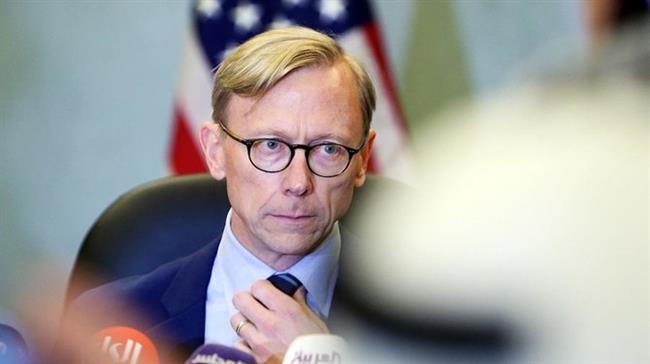
US Special Representative for Iran Brian Hook has said that lifting a UN arms embargo on Iran will trigger an arms race in the Middle East region.
Press TV – June 29, 2020
The United States and its allies, Israel and Saudi Arabia, are leading an arms race in the Middle East region, not Iran, an American scholar has said.
Kevin Barrett, an author, journalist and radio host with a Ph.D. in Islamic and Arabic Studies, made the remarks in an interview with Press TV on Monday, after US Special Representative for Iran Brian Hook said that lifting the arms embargo on Iran will trigger an arms race in the Middle East.
Speaking at a joint news conference with Saudi minister of state for foreign affairs Adel al-Jubeir in Riyadh on Monday, Hook said lifting the ban would “only embolden” Iran and destabilize the region.
“This is not an outcome that the UN Security Council can accept. The council’s mandate is clear: to maintain international peace and security,” Hook added.
Barrett said that “Brian Hook is the US Special Representative to the United Nations and he’s trying to extend the UN weapons embargo on Iran, and he’s claimed to be doing so under provisions of the JCPOA, which the US has withdrawn from.”
“So, this is quite mind-boggling. Why he thinks the US has the right to invoke the JCPOA after it exited the JCPOA is a mystery. Likewise, it’s a mystery why he thinks that the lack of an arms embargo on Iran would lead to an arms race in the Middle East region,” he stated.
“Clearly, the regimes that are arming themselves and initiating an arms race in the region are the US allies, Israel, and Saudi Arabia, and Iran is far from leading an arms race in the region. If we look at population, and so on, Iran is actually relatively under-armed, although it seems to be doing okay despite the fact that it’s essentially been embargoed and so it has to do everything itself, make its own rockets, and it’s managed to put satellites into space despite all of these sanctions, and opposition from other countries including sabotage,” he said.
“We just saw an explosion in Iran maybe some form of sabotage; certainly, we know that Iran’s enemies have been supporting terrorism in Iran, and elsewhere in the region. They’ve killed nearly 20,000 innocent civilians in Iran, through support for some of the world’s worst terrorist groups,” he noted.
“So, this is of course absurd, but it just goes to show that the US Empire is still in its arrogant phase. It has not yet been fully humbled although its reputation in the world has certainly taken a hit after the coronavirus pandemic, which many suspect is a US biological attack, or perhaps a biological attack by the Western international bankers who largely own the US and dictate policy in the US, that the US has had such a terrible response to it,” the analyst said.
“The US now has the worst coronavirus caseload in the world per capita, and it’s still growing here. And yet the US pretends that it’s going to be running around the world dictating policy and telling people what they can do in each region. And of course, if Brian hook really wants to end the arms race in the Middle East, the first thing he should do is stop selling the weapons that Saudi Arabia is using to commit genocide in Yemen and stop handing the Israelis billions of American taxpayer dollars to commit genocide in occupied Palestine,” he said.
“If the US did those two things there would be a much more peaceful Middle East or Muslim east as a result, but don’t hold your breath because decadent empires often become rabid before they die. And that seems to be what’s happening here in Washington,” he concluded.
Washington has stepped up calls for the extension of the UN arms embargo on Iran, which will expire in October under UN Security Council Resolution 2231, which endorses Iran nuclear deal, officially known as the Joint Comprehensive Plan of Action (JCPOA).
The Trump administration has threatened that it may seek to trigger a snapback of all sanctions on Iran if its attempts to extend the arms embargo fail.
Tehran, however, has firmly rejected Washington’s plans as the US is no longer a party to the nuclear deal ever since it withdrew from the multilateral agreement in 2018.
China and Russia, which are both signatories to the JCPOA, echoed Tehran’s position in their recent statements.
“US failed to meet its obligations under Resolution 2231 by withdrawing from Joint Comprehensive Plan of Action,” China’s UN mission said.
Also noting that Washington is in gross violation of Resolution 2231, Russian Deputy Foreign Minister Sergei Ryabkov stressed that “no one is allowed to implement UNSC Security Council resolutions selectively and extremely fragmentarily”.
Featured Video

ARE PATIENTS BEING PROPERLY INFORMED ABOUT OZEMPIC?
or go to
Aletho News Archives – Video-Images
New Book
Breast Cancer: Before You Consent
A new Unbekoming paperback
Lies are Unbekoming | September 18, 2026
Peter Gøtzsche reviewed every randomised mammography screening trial ever conducted for the Cochrane Collaboration. Cochrane’s headline is that, assuming a 15% mortality reduction, one woman in 2000 avoids dying of breast cancer over ten years. Ten are overdiagnosed and treated. Two hundred experience false alarms.
But that headline assumes the reduction. When Gøtzsche looked only at the trials with adequate randomisation — the higher-quality ones — the reduction disappeared. No effect on breast cancer mortality. No effect on all-cause mortality.
This is the Cochrane finding, published in the establishment’s own database of systematic reviews.
No woman being asked to consent to a mammogram this week knows it.
That is why the new Unbekoming paperback exists. … continue
Blog Roll
 Aletho News
- The Truth About the Trump Shootings with Ken Silva
- ARE PATIENTS BEING PROPERLY INFORMED ABOUT OZEMPIC?
- US lawmaker blocks $2.8 billion weapons sale to Israel: Report
- Yemeni army claims responsibility for strikes on sensitive sites in Saudi capital, Aramco facilities in Yanbu
- Iran Judiciary issues indictments against 159 US, Israeli officials for assassination of Leader, commanders
- Turkiye revokes Iranian bank license under US sanctions campaign
- US-Denmark Agreement on Greenland Is ‘PR Stunt’ Ahead of Midterms
- Araghchi: Military intervention cannot create security; coercion cannot bring peace
- Fraud Squared
- Breast Cancer: Before You Consent
- If Americans Knew
- Inside Gaza’s death trap of collapsing, bombed-out buildings
- The everyday items Israel bans from Gaza every day
- Inside the siege, the ruined buildings of Gaza – Daily Update
- Debunking The Claim That Macklemore Has A “History Of Antisemitism”
- CPJ demands release of arrested Palestinian-US journalist near Bethlehem
- Robert Kraft: The Billionaire Friend of Netanyahu Pulling The Strings Behind the Macklemore/Ed Sheeran Blow Up
- Columbia Administered Fund Gives Big Money to Pro-Israel Groups
- Deportation Case of Palestinian Activist Salah Sarsour Tests First Amendment
- ‘We Will Not Forget’: Palestinians Mark 44 Years since Sabra and Shatila
- Why do we let Zionists decide what we can and can’t say?
- No Tricks Zone
- New Study: ‘Global Drought Shows No Detectable Recent Acceleration Under Climate Warming’
- Economic Masterminds: German Socialists Suggest Taxing Productivity Gains Stemming From Using AI
- The South China Sea Has Not Been Cooperating With The Climate Change Narrative
- Energy Crisis: Germany Enters Heating Season With Historically Low Gas Reserve Fill Levels
- New Study: The Antarctic Ice Sheet Gained Mass From 2020-2024 Due To Staggering Snow And Ice Accumulation
- Study: Ocean Heating Rates From Thousands Of Years Ago ‘Dwarf’ Modern Ocean Heating Rates
- Climate Extremists Target, Attack Large-Scale Power Grid Infrastructure In Germany!
- New Study: Antarctic Ice Melt Has Contributed Less Than 1 Centimeter To Sea Level Rise In The Last 30 Years
- Fear Of Debate: Alarmist German Climate Scientist Calls On Mainstream Media To Discredit Skeptic Voices
- End-Of-August Arctic Sea Ice Extent Hasn’t Fallen In 20 Years, Official Data Show!
 Aletho News