Courage to Face COVID-19: Book Trailer
https://rumble.com/embed/v1uk8xs/?pub=4
Written by John Leake and produced by Daniel Hancock | November 25, 2022
At the beginning of 2020, Dr. Peter McCullough was a highly regarded practicing physician, program director, teacher, and clinical investigator at a major academic medical center in Dallas, TX. When COVID-19 arrived in March, he felt a duty to find a treatment for the disease. He wasn’t alone. Other doctors all over the world were also searching for a cure. They followed the longstanding principle that it’s best to tackle a sickness early, before it becomes life threatening. This is the story of how Dr. McCullough and his colleagues developed an early treatment protocol of generic, repurposed drugs and supplements that has saved millions of COVID-19 patients from hospitalization and death.
In spite of their success, their early treatment protocol was not welcomed by public health officials. On the contrary, the news of their promising results was dismissed as soon as it was reported. At first this seemed like conventional skepticism, but then fraudulent papers maligning the protocol’s repurposed drugs were published in academic medical journals. This and other acts of fraud revealed that a coordinated smear campaign against early treatment was being waged. Dr. McCullough and his colleagues soon found themselves censured, censored, vilified in the media, and fired from their jobs. The greatest victims of the smear campaign were COVID-19 patients who were consequently deprived of early treatment. Hundreds of thousands needlessly died of the disease.
At the same time early treatment was suppressed, the US government and mainstream media proclaimed that the cure to COVID-19 lay in a new generation of vaccines that were being developed at warp speed. These were heralded as a forthcoming panacea that would save mankind and restore normalcy. As soon as they were mass deployed, public health officials would lift the restrictions on social and economic life.
While many observers were thunderstruck by this turn of events, there were historical precedents. In his 1961 Farewell Address, President Eisenhower warned, “We must guard against the acquisition of unwarranted influence, whether sought or unsought, by the military-industrial complex. The potential for the disastrous rise of misplaced power exists and will persist. We must never let the weight of this combination endanger our liberties or democratic processes”. As Dr. McCullough and his colleagues learned, Eisenhower’s warning has become equally applicable to the Bio-Pharmaceutical Complex of multinational drug companies, the NIH and other federal agencies, research and virology labs, and the Gates Foundation. Since COVID-19 arrived, this Complex has obtained misplaced power over every aspect of our lives and taken our liberties. The Courage to Face Covid-19 recounts how Dr. McCullough and his colleagues began their work by fighting a novel infectious disease, and then became leaders in fighting the tyrannical regime that endangers our American way of life.
Who is Dr. Asish Jha (President Biden’s Covid Czar)?
Top public health empty suit is a pandemic planner and propagandist

Dr. Ashish Jha
By John Leake · Courageous Discourse · November 25, 2022
At at press briefing on November 22, White House COVID-19 Response Coordinator, Dr. Ashish Jha, reiterated that God gave us two arms in order to receive multiple vaccines and boosters. I write “reiterated” because he made the same stupid remark at a press briefing back in September.
I wasn’t surprised when the Biden Administration appointed Dr. Jha to serve as its Covid Czar. As we recount in our book, Dr. Jha was the minority witness at Senator Ron Johnson’s November 19, 2020 hearing on Early Outpatient Treatment. This hearing began with testimony from Drs. Peter McCullough, Harvey Risch, and George Fareed on the safety and efficacy of repurposed, FDA-approved drugs for treating COVID-19—especially in the disease’s early stage—to prevent hospitalization and death.
Following their testimony, Dr. Jha testified that their observations and findings were erroneous. In fact, he claimed, there were no effective early treatments for COVID-19, and that our best and only hope was the vaccine that was then in development.
An especially dramatic and somewhat comical moment in the hearing occurred when Dr. George Fareed said, “I wonder if Dr. Jha actually treats patients by the way he talks.” Senator Johnson took this remark as a cue for querying Dr. Jha.
“Have you treated any Covid patients,” Senator Johnson asked.
“I have not, sir,” Dr. Jha replied. We recount this scene in the following excerpt from The Courage to Face COVID-19: Preventing Hospitalization and Death While Battling the Bio-Pharmaceutical Complex:
Dr. Jha had splendid academic credentials to match his splendid manners, but at this moment he lost a lot of credibility. It was perhaps the equivalent of an aeronautical engineer admitting that he’d never flown in a plane, or a marital counselor admitting he’d never been married.
He implied that Professor Risch—a distinguished epidemiologist twenty years his senior—was categorically wrong in his interpretation of the data. Then he implied that Dr. Fareed’s observations as a treating physician were an illusion—that the high-risk patients who received the Zelenko Protocol would have recovered in the same dramatic way without the intervention.
This was probably the most notable moment in the hearing. Since graduating from medical school in 1970, Dr. Fareed had logged fifty years as a medical researcher and treating physician. It would be hard to find a doctor in the entire country with more clinical experience. He testified to the U.S. Senate that he’d successfully treated 1,000 high-risk COVID-19 patients. A few minutes later, a doctor 25 years his junior—one who’d never treated a single COVID-19 patient—asserted that “there is now clear consensus in the medical and scientific community” that a key ingredient of Dr. Fareed’s treatment protocol doesn’t work. In effect, Dr. Jha told Dr. Fareed to reject the evidence of his own eyes and ears.
Shortly after the hearing, Dr. Jha published an opinion piece for the November 24, 2020, edition of the New York Times titled “The Snake-Oil Salesman of the Senate.” He opened with likening the event to a contagion.
There was a super-spreader event last week in the United States Senate. It wasn’t the coronavirus, however, that was spreading, but misinformation. … The Senate Homeland Security and Governmental Affairs Committee held a hearing about early treatment for COVID-19. Yet instead of a robust discussion about promising emerging therapies or what Congress might do to accelerate such treatments, the conversation was all about the malaria drug hydroxychloroquine. … Neither Ron Johnson, the Wisconsin Republican senator nor his chosen witnesses—three doctors who have pushed hydroxychloroquine—displayed more than a passing interest in evidence. Intuition and personal experiences of individual doctors were acclaimed as guiding principles.[i]
Dr. Jha didn’t mention that he himself had focused his Senate remarks on hydroxychloroquine and hadn’t mentioned any “promising emerging therapies” apart from vaccines. He also didn’t state the names or credentials of the hearing’s witnesses or a summary of their findings or experiences. He compared them to the snake oil salesmen from the frontier past with their advocacy of the drug that President Trump had touted in the spring, implying they were equally lacking in medical sophistication.
“I was called reckless because I pointed to facts that could prevent people from getting the treatment,” he wrote, but he didn’t state these facts. The online version of his essay hyperlinked the word “reckless” to a similar hatchet job report on the hearing in the Washington Post. He claimed the witnesses had expressed a distrust of science and had even “suggested that scientists were part of a ‘deep state’ conspiracy to deny Americans access to lifesaving therapies.” This was, he asserted, “a powerful reminder that not even Congress is immune to toxic conspiracy theories…”
Dr. Jha’s New York Times opinion was, itself, evidence that early treatment of COVID-19 was the subject of a well-orchestrated smear campaign. Why else would such a distinguished academic pen such rank propaganda against his colleagues and their work? That he was personally stung by the revelation that he’d never treated a single COVID-19 patient could only partly account for it.
A possible answer to this question may be gleaned from Dr. Jha’s remarks at a January 10, 2017, Georgetown University conference titled “Pandemic Preparedness in the Next Administration.”
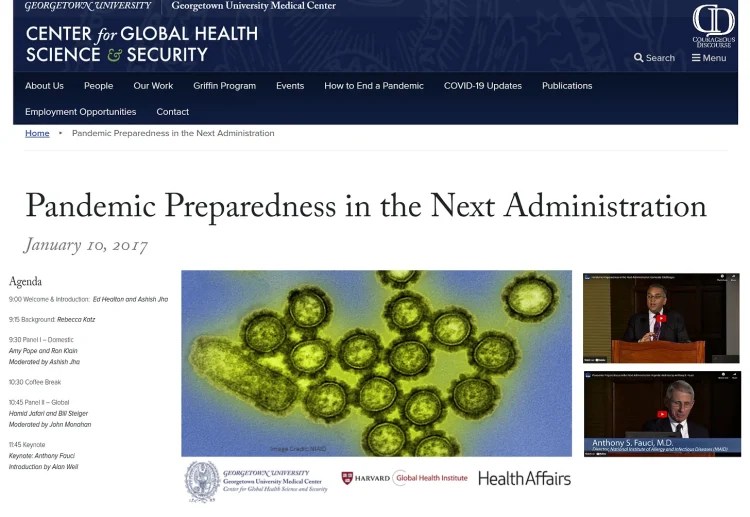
Like the participants at the October 2019 Pandemic Simulation Exercise at Johns Hopkins, Dr. Jha predicted that a devastating pandemic “is going to come at some point.” Dr. Fauci, the keynote speaker, made a more precise prediction.
“There is no question that there will be a challenge to the coming administration in the arena of infectious diseases,” he proclaimed. “The thing we’re extraordinarily confident about is that we’re going to see this in the next few years.”[ii]
As psychiatrist and author Peter Breggin, MD, remarked in his extraordinary book COVID-19 and the Global Predators: We Are the Prey, Dr Jha did not speak in a somber tone about the coming devastation. On the contrary, he emphasized that he was excited about the ambitious project of helping the U.S. and other governments, and equally excited about the many pandemic preparation events in Georgetown and Cambridge that lay ahead. The conference was, he said, the “beginning of a journey.”[iii]
Dr. Jha and his colleagues were animated with the same excitement that denizens of the military-industrial complex would feel at the prospect of a coming war in which they would assume leadership positions. At last, they would be able to deploy all of their forces. With the recognition that the coming war was inevitable, they could call upon the government to allocate far more resources for new technologies, weapons systems, bases, and military organizations. In an atmosphere of such heady excitement, the suggestion of defusing the coming war with diplomacy wouldn’t be received with much enthusiasm.
The irony of Dr. Jha’s excitement is that, when the pandemic he predicted arrived three years later, he didn’t attempt to treat patients or scramble to find consultants to intervene against the disease before it wrecked bodies and imprisoned people in hospitals. Instead, he penned propaganda against hydroxychloroquine and against Drs. McCullough, Risch, and Fareed. Why was the New York Times Editorial Board compelled to publish his misleading account of the Senate hearing? Did the editors even watch the C-SPAN recording of it?
It’s not plausible that their motive was a concern about hydroxychloroquine’s safety. Dr. Jha himself conceded in his testimony that he wasn’t particularly concerned about safety, so why the vast and ceaseless quibbling about whether its efficacy for outpatients had been proven? As Senator Johnson had said in the hearing, this makes no sense.
[i] Jha, Ashish, MD. The Snake Oil Salesmen of the Senate. New York Times, Nov. 24, 2020. https://www.nytimes.com/2020/11/24/opinion/hydroxychloroquine-covid.html
[ii] Georgetown University Center for Global Health Science & Security, Pandemic Preparedness in the Next Administration. January 10, 2017. https://ghss.georgetown.edu/pandemicprep2017/
[iii] Breggin, Peter R, MD and Ginger Ross Breggin, COVID-19 AND THE GLOBAL PREDATORS: WE ARE THE PREY. Ithaca: Lake Edge Press, 2021, p. 259.
The Road to Fascism: For a Critique of the Global Biosecurity State
A New Book by Simon Elmer
OffGuardian | November 24, 2022
With the lifting of the thousands of regulations by which our lives were ruled for two long years there has been an understandable desire to believe that the coronavirus ‘crisis’ is over and we will return to something like an albeit new normal.
But as new crises have sprung up to take its place — war in the Ukraine, the so-called ‘cost of living crisis’ and the return of the environmental crisis — it’s increasingly difficult not to look back on ‘lockdown’ as the first campaign in a war that has not been declared by any government but is no less real for that.
The willingness of our governments to use the forces of the state against their own populations on the justification of protecting us from ourselves signals a new level of authoritarianism — and something like the return of fascism — to the governmental, juridical and cultural forms of the formerly neoliberal democracies of the West, and one of the aims of this book is to examine the validity of this thesis.
Its purpose in doing so, however, is not to contribute to an academic debate about the meaning of the term ‘fascism’, but rather to interrogate how and why the general and widespread moral collapse in the West over the past two-and-a-half years has been effected with such rapidity and ease, and to examine to what ends that collapse is being used.
The more deliberate is the immiseration of the populations of Western democracies, the clearer it becomes that the war started by COVID-19 is not between nation states but a civil war waged against our institutions of democratic governance and the division of powers between executive, legislature and judiciary.
Insofar as these institutions and this division are being dismantled and replaced by the rule of international technocracies that, under the cloak of the ‘pandemic’, have assumed increasing power over our lives since March 2020, this war represents a revolution in Western capitalism from the neoliberalism under which we have lived for the past forty years.
Where it is heading with ever greater speed and finality, and which The Road to Fascism sets out to demonstrate, is the new totalitarianism of the Global Biosecurity State.
Simon Elmer is the founder of Architects for Social Housing (ASH), you can follow them on twitter. The Road to Fascism was published by ASH on 28 September, and is available in hardback, paperback and e-book. Click on the link for purchase options, the contents page and preface. Excerpts have been published in The Daily Sceptic and The Exposé; and you can hear Simon discussing his book in an interview on The Delingpod.
“I had to stand by idly, watching these people die.”
The crime committed against Dr. Paul Marik and his patients
By John Leake | Courageous Discourse | November 14, 2022
The following post is from The Courage to Face COVID-19: Preventing Hospitalization and Death While Battling the Bio-Pharmaceutical Complex, by John Leake and Peter A. McCullough. MD, MPH.
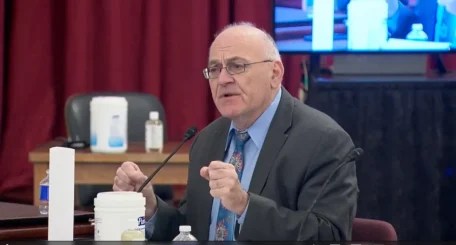
Dr. Paul Marik testifying at the US Senate on January 24, 2022
At the same time that Dr. McCullough was stripped of his job and professorships, his colleague and kindred spirit, Dr. Paul Marik, experienced a similar fate. On October 15, 2021, his hospital’s administration circulated a memo to the entire healthcare system stating that its doctors were authorized to administer remdesivir to COVID-19 patients, but not ivermectin or a host of other repurposed drugs. As Dr. Marik read the memo, he marveled at the sheer perfidy of it. Especially grotesque was the inclusion of “Ascorbic acid” (vitamin C) on the list of banned substances.
The administration issued this directive at a time when seven COVID-19 patients were in the ICU, desperately in need of Dr. Marik’s care. He, in turn, desperately wanted to treat them with the drug regimen that he knew would give them a good chance of recovery. Three months later, at the January 24, 2022 panel discussion (COVID-19: A Second Opinion),hosted by Senator Ron Johnson, Dr. Marik recounted his helplessness. His heart-wrenching testimony (starting at 4:19:30) was probably the most dramatic moment in the extraordinary conference.
This system was effectively preventing me from treating my patients according to my best clinical judgement. … As a clinician for the first time in my entire career, I could not be a doctor. I could not treat patients. I had seven Covid patients [he holds up his hands showing seven digits] including a 31-year-old woman. I was not allowed to treat these people. I had to stand by idly [he clenches and raises his fists with anguish and begins to weep]. I had to stand by idly, watching these people die.
I then tried to sue the system, so then they did something called peer sham review. It is a disgusting and evil concept. They then accused me of seven most outrageous crimes … and [claimed] that I was such a severe threat to the safety of patients, they immediately suspended my hospital privileges because I posed such a threat to these patients—ignoring the fact that under my care, mortality was 50% less than it was under my colleagues. I then went on to this sham peer review. I went to a Kangaroo Court, where they continued this, and the end result was that I lost my hospital privilege and was reported to the National Practitioner Databank. So here I was standing up for my patients’ rights, and this hospital, this evil hospital, ended my medical career.
Eventbrite could face lawsuit after banning debate on trans ideology
By Christina Maas | Reclaim The Net | November 13, 2022
A British lawyer plans to sue US-based ticket-selling firm Eventbrite for banning her from selling tickets to a debate event because it alleged the event would create a platform for “dangerous” views.
Sarah Philimore is fundraising legal fees to sue Eventbrite for pulling tickets to the launch of her book “Transpositions: a personal journey into gender criticism.” Comedy writer Graham Linehan co-authored the book.
Philimore argued that Eventbrite has to obey UK laws, adding that gender critical belief should be respected in a democratic society. She sent several letters asking for clarification on why her event violated Eventbrite’s terms. She has not received any meaningful reply, so she decided to sue.
“I want the court to confirm that what Eventbrite have done is unlawful.
“I think there is a clear breach of the Equality Act here, in that my event was removed from the platform because it was decided it promoted ‘violent’ or ‘hateful’ content.
“It does not. It was removed because people complained – falsely – that it was ‘transphobic,’” Philmore told The Telegraph.
She added: “My point is simple. If Eventbrite wishes to operate in the UK, it must obey UK laws.
“In particular it cannot ignore the will of Parliament which has made it clear via the Equality Act and the EAT decision in Forstater, that ‘gender critical’ belief is worthy of respect in a democratic society.
“I believe my claim raises interesting and important issues that go beyond just the Equality Act.
The event will go ahead as scheduled, on December 2, and tickets will be sold at the door.
Linehan, a critic of gender ideology and is also scheduled to speak at the book launch, said: “This is the latest attempt to make feminism a hate crime. For some time, people have been attempting to reframe feminist statement as hate crimes; as attacks on transgender people.’
“The companies just follow along because they are cowards, or because they are in the grip of ideological capture, and believe truly in this stuff. The problem is we’re having our morality dictated to us by companies in the US according to their prevailing obsessions.”
Band of Brothers
Dr. Paul Marik and his fellows in the FLCCC fight for patients’ rights. All have paid a heavy price for taking care of patients and telling the truth.
By John Leake | Courageous Discourse | November 12, 2022
Part I in a series on Dr. Paul Marik—a magnificent doctor who was fired from his job and professorship because he successfully treated his COVID-19 patients with FDA-approved drugs and high-dose Vitamin C.
The following post is from The Courage to Face COVID-19: Preventing Hospitalization and Death While Battling the Bio-Pharmaceutical Complex, by John Leake and Peter A. McCullough. MD, MPH.
Dr. Paul Marik is to critical care medicine what Dr. McCullough is to cardio-renal medicine. The 65-year-old native of South Africa has published over 500 peer-reviewed papers and books, which made him the second most published critical care doctor in the history of medicine.
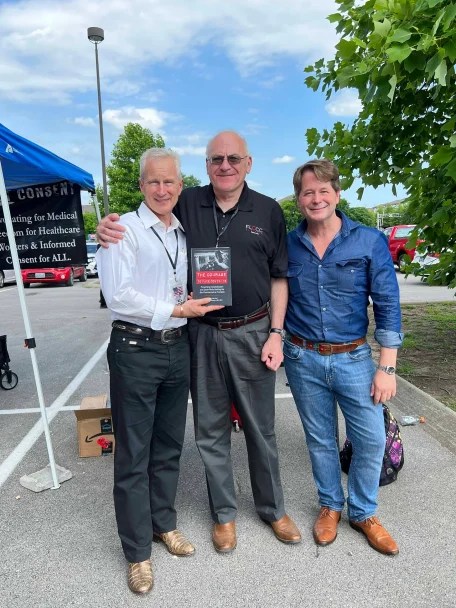
Dr. Paul Marik with Dr. Peter McCullough and John Leake at the Nurses Freedom Network Conference in Franklin, TN, June 12, 2022
Upon meeting Dr. Marik, one is overwhelmed by the impression of his vast physical stature. His gentle manners and elegant South African accent conjure accounts of 19th century British gentleman explorers. Since the early days of his career, he’d been keenly interested in discovering how to treat sepsis—the body’s extreme, life-threatening response to an infection. Well into the 21st century, sepsis continued to be a major cause of death. According to the CDC, approximately 1.7 million American adults fall ill with sepsis every year, of which approximately 270,000 die in hospital. Globally, the sepsis burden is estimated at 15 to 19 million cases annually, with a mortality rate approaching 60% in low-income countries.
Dr. Marik knew the literature on sepsis treatment. Several studies had indicated that large doses of IV-administered Vitamin C and Vitamin B1 (thiamine) showed some benefit. Other studies indicated that hydrocortisone showed promise. Dr. Marik reasoned that combining the three into a cocktail could amplify their benefit. As had often been observed in medicine, combining agents seems to affect multiple pathways, causing an overlapping and synergistic effect.
In 2016, he and his colleagues conducted a study in which they compared 47 sepsis patients who received the cocktail to a control group of 47 patients who received sepsis standard of care at the time. The mortality rate of the treatment group was 8.5% compared to 40.4% of the control group—a stunning difference. Skeptics claimed the study was too small and nonrandomized. Nevertheless, what became known as the “Marik Cocktail” was adopted by critical care units all over the world, which reported excellent results with the therapy.
When COVID-19 struck and Dr. Marik’s critical care unit at the Sentara Norfolk General Hospital received its first patients, he observed they were suffering from an inflammatory lung reaction, and he suspected this could be treated with a corticosteroid. He contacted four other critical care specialists—Professor Joseph Varon at United Memorial Medical Center in Houston (who, in the year 2020, would work 268 days straight treating COVID-19 patients in his ICU) Professor Gianfranco Umberto Meduri at the University of Tennessee Health Science Center in Memphis, Professor Jose Iglesias at the Hackensack Meridian School of Medicine in Seton Hall, New Jersey, and Professor Pierre Kory at the University of Wisconsin-Madison. As author Michael Capuzzo pointed out in his marvelous story about these doctors, it would be hard to imagine a more experienced and scholarly team of pulmonary critical care doctors.
Together they formed the Frontline COVID-19 Critical Care Consortium (FLCCC) and got to work on a protocol for saving hospitalized patients. They started their work by focusing on the extreme inflammation they were observing. Often called “cytokine storm” after the proteins produced by the immune system, this was an extreme and maladaptive immune response that had often been observed in other viral illnesses, including virulent influenza. It was this inflammation of the lungs, kidneys, and other organs that killed the patient, and not the virus itself. Thus, the key to treating the syndrome was reducing this inflammation.
Professor Meduri was a leading expert on corticosteroid therapy in critical illness. He conducted an exhaustive review of corticosteroid use against SARS-CoV-1, MERS, and H1N1 and found significant evidence that these agents had been lifesaving in their reduction of extreme inflammation. For decades the corticosteroid methylprednisolone had been the standard medication for suppressing cytokine storm. And yet, despite this glaring fact, every US federal health agency recommended against using corticosteroids against COVID-19 from the outset of the pandemic.
Unlike these agencies, the FLCCC concluded that their best bet for tackling the disease in hospitalized patients was a combination of Methylprednisolone and the antioxidant Ascorbic acid (Vitamin C). To these they added Thiamine (Vitamin B1) to optimize cellular oxygen utilization and energy consumption, and the anticoagulant Heparin to prevent and help in dissolving blood clots that appear with high frequency.
There is nothing experimental about these drugs. Methylprednisolone and heparin had long been FDA-approved for treating inflammation and blood clotting. Vitamin C and B1 were available over the counter, though in the hospital setting they were IV-administered in high doses. The FLCCC doctors began giving this “MATH Protocol” to ICU patients and tracked their progress for a case study. By the end of April, they had treated 100. Of these, 98 survived. The two who died were in their eighties and had other advanced chronic illnesses. None of the patients had long durations on ventilators, were ventilator dependent, and or had long hospital stays.
During this period, Dr. Pierre Kory was in daily communication with ICU doctors in his native New York City, where he’d worked in multiple hospitals. His colleagues reported that they turned the tide in the ICUs as soon as they started using methylprednisolone. Other ICU doctors in hard hit New Orleans reported the same. Kory and colleagues therefore sent letters to the White House, the CDC, and the NIH, presenting their real-world evidence of the corticosteroid’s efficacy—all to no avail.
Dr. Kory’s efforts were drawn to the attention of Wisconsin Senator Ron Johnson, who was chairman of the Senate Homeland Security Committee. Since his daughter had been born with a congenital heart defect—successfully corrected by an innovative operation—Senator Johnson had believed that if citizens were faced with a life-threatening condition for which there was no proven treatment, they should have the right to try drugs or operations that seem to offer some benefit, even if these had not yet passed the conventional FDA-approval process. The alternative was to do nothing and accept the high probability of death.
Critics of the right to try claim that unless procedures and medications are carefully regulated by the FDA, unscrupulous doctors will create false hope by offering them to desperate patients, even if there is little trial data to prove their efficacy. Senator Johnson did not find this argument persuasive and he introduced his federal right to try bill in 2017. A companion bill was introduced in the House, ultimately passed in both houses, and was signed into law by President Trump in 2018.
Upon Senator Johnson’s invitation, Professor Kory addressed the Senate Homeland Security Committee on May 6, 2020. Speaking via WebEx, Kory stated the credentials of the FLCCC doctors, and then explained the rationale for using their protocol. He then reported the success they and other doctors were having with it. This was excellent news, and a naive viewer would likely assume that it would be welcomed by the entire medical profession.
And yet, despite the FLCCC’s well-founded rationale for their therapy, broad consensus for the efficacy of its components in related conditions, and their success with it, they continued to get pushback from the CDC and NIH, which refused to change their advisory against using corticosteroids to treat COVID-19. On four occasions, the FLCCC tried to notify the White House of their favorable results, but they received no reply.
Why Did the Left Fail So Utterly to Resist the Global Biosecurity State?
BY SIMON ELMER | THE DAILY SCEPTIC | NOVEMBER 11, 2022
The question that continues to confuse socialists almost to the same degree that it delights their political opponents is why the Left today – not only in the U.K. but across the West – continues to collaborate so willingly and unquestioningly with the authoritarian programmes and regulations of the emerging Global Biosecurity State. As the imminent implementation of Digital ID, Central Bank Digital Currency, Universal Basic Income, Environmental and Social Corporate Governance criteria (ESG), Pandemic Prevention, Preparedness and Response, Social Credit, Smart Cities, and all the other programmes of Agenda 2030 are demonstrating, the New World Order being forced upon us outside of any democratic process is capitalist in its economic infrastructure, fascist in its governmental, juridical and ideological superstructure and totalitarian in its aims. So why do those who, however mistakenly, self-identify as of the political Left continue to be its noisiest and blindest cheerleaders?
If, by the Left, we mean in the U.K. the Labour Party and those trades unions, political organisations and pressure groups that advocate voting Labour every time there’s an election, then the U.K. Left has little or nothing socialist in its principles, politics or practices. For those of us who read its policies and oppose its actions in town halls and local authorities, Labour is irrefutably and even openly a party whose political philosophy is founded in the principles of neoliberalism. This is, perhaps, most demonstrably evident in its collusion in the marketisation of human needs such as housing and the financialisation of those markets by global capital. Moreover, anyone who has knocked around the Left as I have also knows that, whatever its so-called ‘Left-wing’ elements and organisations argue between elections, when it comes to supporting or opposing the policies and practices of Labour in government at municipal or local authority level, they all toe the party line, keep silent and vote Labour.
It has come as no surprise to me, therefore, that the U.K. Left, including not only Labourites but the wide diaspora of people who call themselves ‘Leftists’ and even ‘socialists’, have become fervent ideologues of the biosecurity state. But it’s not, as the followers of Friedrich Hayek argue, because of the inherent authoritarianism of socialism that leads it to impose a totalitarian social model at the first opportunity. There is (it can’t be repeated too often) little or nothing socialist – in the Labour Party nothing, in its affiliates and fellow travellers little – about the policies or practices of the U.K. Left. Even those small groups and independent organisations that are openly critical of Labour have adopted the U.K. Left’s almost universal support for biosecurity restrictions, remain indifferent to the immiseration and suffering of the U.K. working class they are causing, and steadfastly refused to join the millions of U.K. workers who protested against their imposition in the spring and summer of 2021. They instead uncritically accepted and adopted the Government and corporate media’s dismissal of those workers as ‘far-Right conspiracy theorists’.
Undoubtedly, the political naivety of the Left disposed it to welcome the imposition of the regulations and programmes of the biosecurity state in March 2020 as the triumph of the common good over government incompetence and ‘Right-wing’ greed. But that was nearly three years ago, and naivety has become bad-faith and denial in the face of the vast apparatus of global biosecurity that’s been constructed around, between and within us. That doesn’t mean, however, that the Left now regrets its collaboration, which of course continues today, or that it hasn’t obstinately confined its protests to the erasure of our rights and freedoms being enacted by the wave of new legislation introduced in 2022 on the back of 582 coronavirus-justified Statutory Instruments, without admitting any relationship between them. The betrayals and duplicities of the Left are legion, but many socialists are still asking how it came to this.
What all the Left shares – and the origin of its otherwise inexplicable collusion with the implementation of the U.K. biosecurity state – is a decades-long infiltration by the neoliberal ideologies of multiculturalism, political correctness, identity politics and, most recently, the orthodoxies of woke. In some organisations, the infiltration is marginal and exists, under the umbrella of ‘intersectionality’, in an uneasy and usually unexamined co-existence with the slogans – if not the practices – of socialism. In others, such as the Labour Party and its affiliates, what socialist principles they may once have had have been entirely replaced by the values and orthodoxies of these relatively new ideologies, which have manifested themselves in such youthful, energetic and well-funded movements as Momentum, Black Lives Matter, Extinction Rebellion, Just Stop Oil and now the masked-up, jacked-up advocates of the Global Biosecurity State. These are all (whatever they may say themselves) pro-capitalist movements, hostile to the working class – which they consistently and casually denounce as ‘racist’ – and directly if not openly opposed to socialism. It’s by their principles that the Left has operated for some time in the U.K. as in all the former neoliberal democracies of the West.
It can’t be long before we see a similar movement, funded by the same or even more powerful billionaires, formed to support the next stage in the U.K. biosecurity state. This includes the adoption of a Universal Basic Income for those impoverished by lockdown, spiralling inflation, rising energy prices and the mass digitalisation of white-collar jobs by the Fourth Industrial Revolution. And like its predecessors, this movement of the Covid-faithful will claim a position on the U.K. Left by criticising the Conservative Government’s response to this or the next ‘crisis’. In doing so, it will help create an even greater consensus among U.K. youth and ‘liberals’ in the middle-classes for increased online surveillance, stricter laws, harsher sentences, more intrusive technologies of public control and greater police powers to enforce them. As we saw most publicly in the counter demonstrations organised across Canada during the blockade against vaccine mandates in February 2022, the Left didn’t hesitate to align itself with the Government of Justin Trudeau and the riot police he deployed, denounced truckers as ‘white supremacists’ and every other insult in the woke handbook, while waving placards telling working men and women facing unemployment and destitution at the hands of the biosecurity state to ‘check their privilege’.
This largely middle-class, neoliberal Left, which today constitutes a homogeneous force of compliance across the biosecurity states of the West, did not suddenly become devotees of the restrictions and programmes imposed due to a justification of a major threat to public health that never existed. On the contrary, the Left is the Church in which these Covid-faithful have been raised, their guiding religion and cultic practices formed by the same radically conservative beliefs. To state again what should be obvious to all: no-platforming, cancel culture, misogyny disguised as trans-rights, policing of speech and opinion, and all the other symptoms of this woke ideology did not emerge from a politics of emancipation, class struggle or wealth distribution. They emerged from, and are advocates for, authoritarian practices of censorship, suppression of debate and punishment of non-compliance that are culturally inseparable from the technologies of surveillance and control developed by finance capitalism to police and protect its borders. These are not the borders between the nation states that finance capitalism straddles like a colossus and across which the Global Biosecurity State now controls our movements to a degree hitherto unimaginable to the children of multiculturalism. They are rather the borders between, on the one hand, the international corporations and offshore jurisdictions through which global capital flows, and on the other, scrutiny by and accountability to what remains of the public sector in those nation states.
Far from the Left being, as some have claimed, under some form of collective hypnosis or programming – presumably from the propaganda of the Right – it is from the Left that we hear the most Puritanical demands for displays of public virtue, for the harshest punishments to be imposed on unbelievers in the new faith of biosecurity. There is a direct line of ideological influence between the Black Lives Matter slogan that ‘silence is violence’, the ‘rebels’ groomed by Extinction Rebellion and Just Stop Oil offering themselves for arrest, and the ideologues of ‘Zero-Covid’ denying human rights to those who refuse to comply with the dictates of the Global Biosecurity State.
Just as, for the past century and more, trades unions under Labour’s duplicitous leadership have repeatedly sacrificed U.K. workers to the interests of U.K. capital, so the Left has handed over U.K. youth to the U.K. biosecurity state. To claim that this corporate, technocratic, authoritarian, repressive, violent and totalitarian ideology has anything in common with the emancipatory aims of socialism shows just how little the ideologues of the Left know or care about socialist politics, socialist principles or socialist practices, except insofar as it exists to suppress any organisation that attempts to enact them.
Indeed, with such willing compliance from the Left, is there any need anymore for the ideologues of capitalism to extol its supposedly unique ability to defend our freedoms? The declarations of a New World Order made at the concurrent meetings of the World Economic Forum and the World Health Organisation this May strongly suggest not. As an ideological principle, ‘freedom’ is well and truly off the political agenda today. Fascism – although, as Orwell predicted, imposed under another name (‘biosecurity’, ‘Net Zero’, ‘stakeholder capitalism’ etc.), no longer under the authority of a sovereign leader but of new international technocracies like the World Economic Forum and World Health Organisation, and in this country appearing in a slimy Anglicised form — is the new common good to which all of us are being compelled to sacrifice our human rights, our privacy, our bodily autonomy, our freedoms. And the truth the Left continues to refuse to face up to is that none of this could have been achieved with such speed and ease without its collaboration.
But is that all? Can so momentous a historical failure, which may one day equal that of the failure of the Left to defeat the rise of fascism a century ago, be attributed entirely to the ideological erasure of socialism not only from the parliamentary parties and political organisations of the Left but also from the ideology of its membership and fellow travellers? If the psychological structure of fascism is the pull between an almost childlike obedience to the imperious forms of authority that operate above the law, and a visceral hatred of the impoverished, the diseased, the ostracised and the criminalised, what can we say about the psychological structure of the Left in the West in 2022? Is the Left now, in effect, fascist? And if it is, was Hayek right, after all, about socialism being a stepping stone to fascism?
The answer to both these questions must be ‘no’: not only because the past 40 years of neoliberalism in the West have witnessed the outsourcing of public services to the private sector and deferral of economic policy to central banks and international financial institutions; but also because the division of the political spectrum on which Hayek’s argument rested into Left and Right – with social democrats and socialists, respectively, one and two steps to the Left, and liberals and conservatives one and two steps to the Right – no longer has any descriptive purchase on the political paradigm of the Global Biosecurity State.
The orthodoxies of woke ideology have been employed by self-styled ‘liberal democracies’ under some of the most authoritarian and anti-working-class governments in recent history – including those of Boris Johnson in the U.K., Emmanuel Macron in France, Mario Draghi in Italy and Karl Nehammer in Austria – in order to subordinate the Left to the Global Biosecurity State. ‘Subordinate’ is perhaps the wrong word, because, at the same time, notionally Left-wing governments – including those of Pedro Sánchez in Spain, António Costa in Portugal and Magdalena Andersson in Sweden – as well as Left political parties in opposition such as U.K. Labour, have been just as ready to embrace the Global Biosecurity State on the woke principles of safety, censorship and a paternal state. And, of course, liberal and conservative governments – including those of Olaf Scholz in Germany, Mateusz Morawiecki in Poland, Alexander de Croo in Belgium, Mark Rutte in the Netherlands, Sanna Marin in Finland and Kyriakos Mitsotakis in Greece – have long since made woke orthodoxies the foundation of their political platforms, and rapidly deployed them in their opportunist response to the coronavirus ‘crisis’.
This unity of response by the notionally politically differentiated governments of European nation states, together with their willing subordination to the new technocracies of global governance, has demonstrated – hopefully once and for all – that Left and Right no longer exist as positions within the new biopolitical paradigm of the West.
One could argue that they haven’t for some time. Tony Blair, the former Prime Minister of the U.K. and one of the West’s most influential ideologues of neoliberalism, whose New Labour party did so much to close the Overton Window, replaced Left and Right with what he called ‘Open and Closed’, with the former in favour of neoliberalism, multiculturalism and globalisation, and the latter with protectionism, cultural conservatism and anti-immigration. In this new political spectrum, in which so-called ‘openness’ more accurately describes the ideology of the Left, the socialist values of political emancipation, economic equality and wealth redistribution have been removed altogether, with the middle-classes enjoined to openness and the working class dismissed as closed. Of course, with the current revolution of Western capitalism into the Global Biosecurity State, ‘open and closed’ have taken on very different meanings, with the ‘open’ advocates of neoliberalism now demanding lockdown, the imposition of ‘vaccine’ passports as a condition of travel and mandatory medical intervention as a condition of employment, and the ‘closed’ workers defending their rights and freedoms.
Indeed, insofar as the residual polarity between Left and Right has served to divide opposition to the biosecurity state, with compliance depoliticised as obedience to medical ‘measures’ issued by supposedly non-political technocratic advisory boards (whether SAGE or the WHO), the collaboration of Left and Right has facilitated the imposition of the biopolitical paradigm of the state. Just as Hayek’s The Road to Serfdom allowed neoliberals to reduce politics to economics – most famously expressed in Thatcher’s slogan that “There Is No Alternative” (TINA) – the sanctimoniously repeated mantra of the Covid-faithful that the coronavirus crisis is ‘above politics’ is the dream of a post-political totalitarian world in which, whatever party is elected to administer its dictates, the state and its powers remain at the disposal of the same international organisations of global governance.
The Left of today, therefore, is not fascist, but neither is it socialist in any recognisable sense of the term. As the more than two-and-a-half years since March 2020 have demonstrated more clearly than any other recent event in the history of the West, the Left is a residual but still functioning political form of the power of the nation state to assimilate, through the spectacles of parliamentary democracy and street protest, the potentially subversive elements of society into the homogeneous political order, in order to protect the productive forces of the economy from the increasingly frequent crises of finance capitalism. The coronavirus ‘crisis’, and the collaboration of the Left in constructing the Global Biosecurity State, is the demonstration of this function.
Simon Elmer is the author of The Road to Fascism: For a Critique of the Global Biosecurity State, from which this article is an excerpt.
Another Extraordinary Murder in Washington D.C.
Mary Mahoney was allegedly the victim of a botched robbery in the Georgetown Starbucks
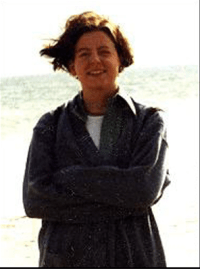
Mary Mahoney, murdered on July 7, 1997
By John Leake | Courageous Discourse | November 6, 2022
When Seth Rich was murdered in Washington D.C. on July 10, 2016, the Metropolitan Police Department immediately proposed that it was a “botched robbery.” The case reminded me of the murder of Mary Mahoney in a Georgetown Starbucks on July 7, 1997.
Mary Mahoney was an intern in Bill Clinton’s White House during his first term. She then got a job working as a manager of Starbucks in Georgetown, which was frequented by many notable figures in the Washington political establishment. Her murder (along with her two coworkers) was the first triple murder in the neighborhood’s history. Prior to the crime, not a single homicide had been committed in Georgetown for eighteen months.
Robbery appeared an unlikely motive, as none of the day’s cash proceeds had been taken from the store. Mahoney’s murder occurred during the same period that Newsweek reporter Mike Isikoff was investigating allegations that President Clinton had sexually harassed White House employees—an investigation that would ultimately lead him to Monica Lewinsky. Attorneys for Paula Jones were also seeking corroborating cases of Clinton’s sexual harassment of young women.
A year after the murder occurred, the police received a tip to examine a man named Carl D. Cooper from a woman who had just watched an America’s Most Wanted episode on the triple homicide. For several months, investigators found no evidence linking Cooper to the crime. Then another informant came forth—a former drug addict named Eric Butera, who was himself later murdered in “a robbery gone wrong.”
Based on information gleaned from Butera’s associates, Carl Cooper was arrested. After a grueling four-day interrogation, Cooper confessed, stating that the triple homicide was a “botched robbery” (which just happened to be the official working hypothesis). While held at gunpoint, Mary, refused to give Cooper the keys to the safe—a heroic act to save her 50 billion market cap employer from losing a few thousand dollars. Because Mary refused to give Cooper the keys, he shot her five times, including a shot to the back of the head. He then shot her two coworkers, and then left the store without taking a dime.
Cooper was convicted on the grounds of his confession to the Metropolitan Police. However, in a subsequent interview with an FBI investigator, Cooper recanted his confession. Although the FBI investigator unequivocally stated this in his testimony, the court concluded that Cooper’s initial confession was sufficient for his conviction. Cooper was initially represented by a court-appointed attorney, but after his trial began, his court-appointed attorney was joined by the prominent Washington D.C. defender, Francis D. Carter, who initially represented Monica Lewinsky when Monica stated her willingness to remain silent about her affair with Clinton. Carter drafted an affidavit for Monica in which she stated that she had NOT had an affair with the president. Carter was forced to withdraw this affidavit after Monica made statements to Lynda Tripp (equipped with a secret recording device) confirming her affair with Clinton.
That Carter joined the Carl Cooper defense team strikes me as very peculiar, especially given that Carter did not change the defense strategy. I wonder if Carter’s primarily job was—under cover of client-attorney confidentiality—to deliver a message to Carter pertaining to his sentencing prospects and what he might reasonably expect for his wife (to whom he was apparently very attached) if he stuck with his confession.
Clinton Attorney General Janet Reno initially sought the death penalty for Cooper— the first death-penalty matter brought to trial in the District in nearly 30 years, but federal prosecutors later withdrew this request. To date, no evidence has been found linking Cooper to the triple homicide.
In a related case, the District of Columbia was successfully sued for the wrongful death of Metropolitan Police informant, Eric Butera, as the jury concluded the police had been negligent in protecting him during an undercover operation to obtain more information about the Starbucks triple slaying. The woman who gave the initial tip to America’s Most Wanted later publicly accused the police of refusing to protect her and fell under suspicion for being motivated primarily by the reward money offered by the show.
Since the murders occurred, the crime has been the subject of extensive media coverage, several documentary television features, and hundreds of online commentators. Conventional newspaper coverage of the crimes—primarily conducted by the Washington Post and the Washington Times—consisted entirely of straightforward reporting of information provided by police and judicial officers.
Given the controversial nature of the police investigation and judicial proceedings against the man who was charged for committing the crime, it is surprising how little the mainstream media questioned official accounts. Likewise, the TV documentaries simply presented narratives provided by law officers as though they contained nothing that was questionable. This is particularly notable given that substantial details of the official narrative, provided by the same investigating officers, are represented differently in different documentaries. Moreover, some of officers’ statements in the documentaries pertaining to Starbucks procedures and security protocols are NOT consistent with what a veteran Starbucks manager told me.
I would like to interview Carl D. Cooper in prison, but I cannot find him in the federal prison system. Though I have not had the time and resources to dig deep into this component of the story, my preliminary research suggests that his whereabouts in the federal prison system have been concealed.
In 2016, the lead homicide detective in the Mary Mahoney case — Detective James Trainium — published a book titled How the Police Generate False Confessions. It’s a detailed examination of how the police obtain false confessions, and the author is clearly writing from personal experience.
How the West Brought War to Ukraine: A Review

By C.B. Forde | The Postil Magazine | November 1, 2022
It can be rather effectively argued that the greatest export commodity of the USA is war, commonly known as the Military Industrial Complex, which has spent the bloody decades after WWII bringing “democracy” to the benighted of the world—by bombs and sanctions, if necessary.
The latest such grand crusade is the war in Ukraine, which we have all been told to think of as “us” defending a fragile “democracy,” invaded out of the blue by the latest manifestation of Attila the Hun. Here was Ukraine happily minding its own business, until one day Putin woke up and decided that he needed to be a world-conqueror and off he went to “invade” Ukraine. The simplistic narrative of the “innocent” and the “criminal” has deep appeal in the Western psyche, conditioned no doubt by Hollywood. Thus, all the media had to do was point out the “criminal,” and the rest took care of itself. Out came all the virtue-signaling that the West is now so good at mustering. Now, there is not a shred of doubt in the minds of the majority in the West that this is a war between the “good guys” and the “Great Villain,” with the likes of Biden, Justin Trudeau, Britain and all the other cheerleaders for “democracy” constantly handing David’s loaded sling-shot to Ukraine to get the job done—but which the likes of Zelensky keep dropping. This is what fighting villainy to the last Ukrainian actually looks like.
But there is a far worse invasion that was completed a long time ago—that of the Western mind, addled by what is euphemistically known as “the mainstream media,” which knows that spin is the most effective form of victory in any war.
This is why Benjamin Abelow’s book, How the West brought War to Ukraine is a must-read, for it shows that this war is not about Ukraine, but about Russia, which needs to be brought to heel and become “democratic”: “…the vaunted goal of ‘regime change,’ which in the United States is sought by an informal alliance of Republican neoconservatives and Democratic liberal interventionists” (p. 5).
Abelow is careful in his analysis and gives a thorough and balanced account of what led Russia to undertake an attack on Ukraine on February 24, 2022. Despite mainstream narratives, the attack was carefully provoked (orchestrated comes to mind). So, unlike “settled history,” which would have us believe that Ukraine is the “innocent bystander” in all this, Abelow undertakes a meticulous unpacking of the various provocations (Ukrainian and Western), which began in 1990 and finally came to a head on February 24, 2022. Wars don’t just happen; they are the result of a long series of failures and outrages. In the words of Professor Richard Sakwa: “In the end, NATO’s existence became justified by the need to manage the security threats provoked by its enlargement. The former Warsaw Pact and Baltic states joined NATO to enhance their security, but the very act of doing so created a security dilemma for Russia that undermined the security of all” (p. 51).
Given that Russia is a nation-state, it must look after its geopolitical interests and defend what is crucial to what it deems necessary to continue, as Jacques Baud has so often pointed out in this magazine. Not to recognize these interests is to be blind to reality: “The underlying cause of the war lies not in an unbridled expansionism of Mr. Putin, or in paranoid delusions of military planners in the Kremlin, but in a 30-year history of Western provocations, directed at Russia, that began during the dissolution of the Soviet Union and continued to the start of the war. These provocations placed Russia in an untenable situation, for which war seemed, to Mr. Putin and his military staff, the only workable solution” (p. 7).
These provocations are now well-known, and thus rigorously ignored, denied or glossed over as “Russian propaganda.” These include bringing arms as close to the Russian border as possible; the expansion of NATO, despite promises given to Russia that that would never happen; the withdrawal of the US from the Antiballistic Missile Treaty and the Intermediate Range Nuclear Forces Treaty (which now gives the US first-strike capability); the ousting of a democratically elected Ukrainian government and installing neo-Nazis into power in 2014; NATO military exercises along the Russian border; pushing Ukraine to join NATO, despite warnings from Russia that that would mean war; since 2014, training and arming the Ukrainian military, in which many of the units are openly neo-Nazi; actively nurturing Russophobia in Ukraine; encouraging the bloody war in the Eastern portions of Ukraine, which were seen as “pro-Russian” and therefore hostile. There are many others that can be listed.
Of course, the last provocation was telling Zelensky not to negotiate when Russia attacked on February 24. He was ready to do so, and a war would have easily have been avoided, and many helpless lives saved. But Boris Johnson flew out, met the Ukrainian president, and negotiation was off the table.
And this is the most baffling thing—the West does not want peace at all. It wants a war of total annihilation for Russia, which will never happen, of course, but which the West so far seems not to understand (perhaps because it is now governed by leaders who have little understanding of warcraft). No Western politician bravely calls for negotiations, for a ceasefire, for peace, for even a little breather. It’s war and more war, and the billions and arms keep pouring in: “To my knowledge, Zelensky never received any substantial American support to pursue his peace agenda. Instead, he was subjected to repeated visits by leading American politicians and State Department officials, all of whom spouted a theoretical principle of absolute Ukrainian freedom, defined as the “right” to join NATO and to establish a U.S. military outpost on Russia’s border. In the end, this “freedom” was worse than a pipe dream. Although it advanced the aims of the United States—or, more accurately, the interests of certain American political, military, and financial factions—it destroyed Ukraine” (p. 60).
The military historian Bernard Wicht, whose interview appears elsewhere in this magazine, very astutely observes that the West no longer has the ability to wage conventional war—not even the United States; this is why armed conflict in the 21st century is now “farmed” out to modern-day condottieri, who bring their private armies wherever their paymasters tell them to go. Is this is why billions are being sent to Ukraine, to pay for all the mercenaries? The war machine chugs along, indeed.
The strength of Abelow’s book is that it makes complexity accessible. Wars have so many moving parts, and Abelow with a deft hand guides the reader along. As is true of all good writers, this book is filled with clarity and insight, with an eye for the bigger picture, and all the while letting facts lead where they will. This is a rare talent nowadays.
Given the much-mentioned threat of nuclear war, the book ends with a prescient warning: “Policy makers in Washington and the European capitals—along with the captured, craven media that uncritically amplify their nonsense—are now standing up to their hips in a barrel of viscous mud. How those who were foolish enough to step into that barrel will find the wisdom to extricate themselves before they tip the barrel and take the rest of us down with them is hard to imagine” (p. 62).
Finally, as professor Sakwa pointed out, this entire tragedy would have been easily avoided if Zelensky had been encouraged to say just five little words: “Ukraine will not join NATO.” Why he could not say that lays the entire blood-guilt upon the collective leadership of the West.
How the West brought War to Ukraine is satisfying to read because it brings truth to light—and that is the highest calling any worthy writer can pursue. Rush out and buy it; and after you’ve read it, you will be both amazed and infuriated. The condottieri now run the show—but perhaps we the decent folk of this world will learn once again how to get rid of them. Perhaps this will be this war’s silver lining.
Dr. McCullough Fights to Keep his Board Certifications
A doctor who publicly questions COVID-19 vaccine orthodoxy is severely punished
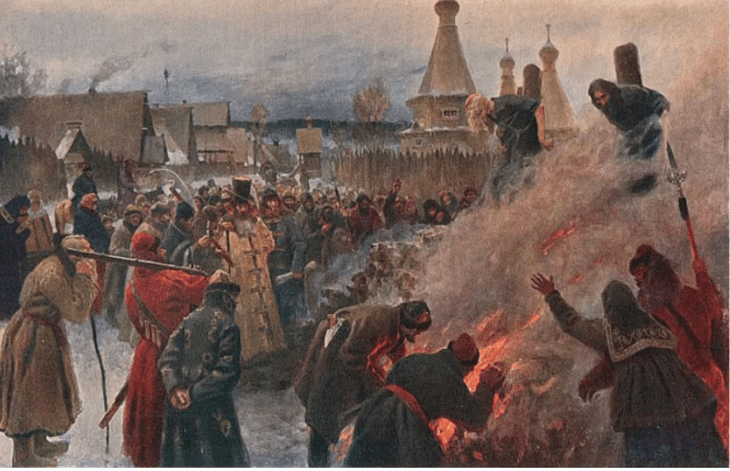
Giordano Bruno is burned at the stake for heresy on the Campo de Fiori in Rome, February 17, 1600.
By John Leake | Courageous Discourse | October 30, 2022
Imagine the history of medicine if—every time a new disease emerged or was described for the first time—an Official Cure was quickly imposed by government authorities, and any doctor who questioned this Official Cure was branded a dangerous spreader of misinformation.
To students of history, such a scenario is reminiscent of the Roman Catholic Church’s Holy Office of the Inquisition, founded to prosecute anyone in the church’s jurisdiction deemed to have publicly uttered or written statements that questioned Church orthodoxy on spiritual and temporal matters. In the scientific realm, the Inquisition’s most notorious prosecutions were of Giordano Bruno (1548-1600) and Galileo Galilei (1564-1642). Both were convicted of heresy for their heterodox views. The former was first publicly humiliated by being hanged upside down on Rome’s Campo de Fiori and then burned at the stake. His ashes were then thrown in the Tiber River. The latter spent the last nine years of his life under house arrest.
For a while I lived in Rome in the Via Tor di Nona, in an apartment on the site of the Tor di Nona prison in which Giordano Bruno was incarcerated for seven years before he was put to death, and I often walked past his stately monument on the Campo de Fiori—a monument to his life and death, and also to the inhumanity, illiberality, and shame of the Holy Office.
By all accounts, Bruno was an exceedingly adventurous and courageous man. At his trial, upon receiving his dreadful sentence, he reportedly gazed directly into the eyes of his judges and said, “Perhaps you pronounce this sentence against me with greater fear than I receive it.”
Because the US Constitution was so ingeniously framed, the American people lived in a free republic for over two centuries. Sometime during the last ten years or so, we lost sight of the fact that the great advances our people have made in science, technology, and medicine were entirely predicated on free speech and the free exchange of ideas. James Madison, the author of our constitution, understood that the danger of infringing free speech greatly exceeded the danger of people making erroneous utterances. The reason for his conclusion is simple: The only way to correct erroneous perceptions and beliefs is to discuss and debate them.
Six months ago, Dr. Peter McCullough received a letter, dated May 26, 2022, from Richard J. Baron, M.D., who is President and CEO of the American Board of Internal Medicine. The letter was a formal notice that the ABIM was considering potential disciplinary sanction of Dr. McCullough. As Dr. Baron stated:
ABIM has learned that you have made numerous, widely reported and disseminated public statements about the purported dangers or lack of justification for Covid-19 vaccines.
Because of Dr. McCullough’s statements—which the Board deemed to be misinformation—the Board was considering revoking Dr. McCullough’s ABIM certifications in Internal Medicine and Cardiovascular Disease. In other words, the ABIM has assumed the function of maintaining/defending the official orthodoxy of Covid-19 vaccines.
It doesn’t matter that these are a based on a novel gene transfer technology, developed at Warp Speed, and deployed on the public by means of an Emergency Use Authorization. According to Dr. Baron, the ABIM’s understanding of these products and how the body reacts to them is a completely settled matter. Therefore, doctors who question the safety and efficacy of these products are, in effect, committing scientific heresy and subject to disciplinary action.
As Dr. McCullough and I document in our book, the COVID-19 vaccines—especially the mRNA products developed by Moderna and PfizerBioNTech—were (already in March of 2020) heralded as the solution to the pandemic, even before they were tested. As Bill Gates proclaimed in a press interview on April 6, 2020, he considered it imperative that mass manufacturing of these vaccines commence even before they were tested. This and countless other statements by Gates and his friends in public health agencies and the mainstream media indicated that the forthcoming vaccines and their mass deployment were a fait accompli.
As a medical scientist and treating physician, Dr. McCullough knew all too well the history of drugs that initially seemed safe and effective, but were later revealed to cause adverse reactions. OxyContin is a notorious recent example. Since SARS-CoV-2 arrived in the United States, Dr. McCullough has been at the forefront of researching the COVID-19 syndrome it causes and how to treat it. When the new vaccines were rolled out, he was at the forefront of investigating their safety and efficacy in the general public.
In the late spring of 2021, Dr. McCullough grew increasingly alarmed about the emerging vaccine safety data. According to the CDC, 6,207 deaths of people who’d received the COVID-19 vaccine were reported to the Vaccine Adverse Events Reporting System (VAERS) up to July 26, 2021. This was a staggering number. By comparison, the 1976 Swine Flu mass vaccination program was shut down after about 25 deaths and 550 cases of Guillain-Barré syndrome were reported.
McCullough pointed this out in his media interviews to the consternation of his hospital administrators who regarded his statements as grounds for termination. Since then, he has been systematically stripped of three professorships, multiple editorial positions at academic medical journals, and a host of other professional memberships and benefits. All that remains of his long and distinguished career are his Texas Medical License and his Board Certifications in Internal Medicine and Cardiovascular Disease. Now the ABIM wants to strip him of his certifications.
In a letter dated October 18, 2022, the ABIM gave Dr. McCullough notice that its Credentials and Certification Committee (CCC) had “determined to recommend that your board certifications be revoked.”
The ABIM’s CCC claimed that Dr. McCullough’s primary offenses were:
1). Understating the risk of COVID-19 death for people under the age of 50.
2). Overstating the risk of death from COVID-19 vaccines.
In making this determination, the ABIM ignored the obvious fact that both of these risks are highly complex and multifactorial and are therefore matters of ongoing inquiry and debate. Again the ABIM made the erroneous assertion that its understanding of these complex phenomena is final, settled, and therefore codified in official orthodoxy.
By inflicting this grave punishment, the ABIM ignores the other salient fact that Dr. McCullough has, in the course of his career, achieved decades of perfect clinical performance, board scores, and hundreds of peer reviewed publications. His patients—including a growing body of vaccine injured patients—consistently give him glowing reviews as a healer.
Since I started working with him over two years ago, I have gotten to know him not only as a compassionate doctor (who frequently takes calls from sick patients in the evening and makes house calls) but also as a devoted family man and loyal friend. Beyond his boundless passion for medical scholarship, he is deeply interested in the entire human condition and the integrity of our Constitutional Republic. In the two years I’ve known him, I’ve never once heard him complain. He has borne his ongoing persecution with perfect stoicism and dignity.
He and his lawyer are doing everything they can to challenge the ABIM’s determination, but doing so is an extremely time-consuming and costly endeavor. If his stripping is finalized, it will impair his status with medical insurers and therefore his ability to be paid for his services as a physician. Welcome to the New American Inquisition.
Featured Video
Houthis Don’t Have to Conquer Saudi Arabia to Make It Pay
or go to
Aletho News Archives – Video-Images
From the Archives
A Lesser “Grade” of Human
By Michael Hoffman | Revelation of the Method | January 3, 2024
Will the more than 100 Iranians killed by terrorist bombs today be mourned in the West as victims of terrorism? Certainly not. Allied doctrine has it that the killing of Israeli or American civilians is a crime of cosmic proportions, while shedding the blood of “enemy” women and children is perfectly acceptable; indeed commendable.
The West does not memorialize the hundreds of thousands of civilians bombed by the U.S. in Serbia, Iraq, Afghanistan and every major German city 1943-1945. America’s fire-bombing of the city of Tokyo by General Curtis LeMay in March 1945 was followed by Harry Truman’s atomic incineration of Hiroshima and Nagasaki in August of that year. Truman never had a moment of doubt or regret over the murder of more than a 100,000 Asian children, mothers and non-combatant boys and men. It was business as usual for the “noble” Allies during the “Good War.”
In the West human rights signifies passionate concern only for civilians designated as truly human: Israelis first, then Americans and British, followed by their satraps.
This inhumanity is the legacy of Talmudic ideology, beginning with tractate Sanhedrin 57a from 400 A.D., concerning liability for capital punishment: “If a Jew murders a gentile, he is exempt.”
This teaching of contempt was reiterated in the dogma of Chabad Lubavitch founder Rabbi Shneur Zalman in the 18th century. … continue
Blog Roll
 Aletho News
- Houthis Don’t Have to Conquer Saudi Arabia to Make It Pay
- MOE: Nearly 22,000 Students and Education Workers Killed
- Guterres in Islamabad: Genocide, cowardice, and the cage of Imran Khan
- Johnson, Marandi say Yemen holds upper hand over Saudi Arabia
- False flags won’t save aggressors, Iran FM spokesman says
- The Makkah Pact Enters Into Force: The End of American Dominance or Its New Form?
- NATO’s top generals gather in Kiev
- EU’s continuing expansion – greater threat to Russia
- US Senator Murphy says Pentagon denied him entry to US base in Qatar
- Israel expands “incitement” charge to target Palestinian education and memory
- If Americans Knew
- Three Years of Genocide: How America’s Israel-First Media Filtered Out the Truth
- Israeli war chief briefs ministers on potential war against Palestinian Authority
- New Report: Israel Killed nearly 21,000 Palestinian Students and Education Workers in Past Three Years
- Israel’s flailing chatbot army
- Five Palestinians Killed, Others Injured by Israeli Fire in Gaza
- Israel is rewriting the Palestinian curriculum in East Jerusalem to erase Palestinian identity
- Three years of genocide: Israel turned prisons into killing grounds and torture sites
- Three years of genocide. Words fail. Daily Update
- ‘I’d rather die than go back’: A Palestinian teen’s 10-month nightmare in Israeli jail
- How Jared Kushner’s firm’s investment in an Israeli company could be a major conflict of interest
- No Tricks Zone
- New Study: 50 Years Of The Most Aggressive ‘Net Zero’ Policies Can Only Affect The Global Climate By 0.03°C
- US September “Heat” Was No Record…Many Records Set Decades Ago
- Latest European Green Energy Debacle; Portugal’s Largest Flagship Solar Park Insolvent!
- Green Energy Debacle: German Expert Professor Fritz Vahrenholt Warns Of Severe Economic And Social Consequences
- Two More Paleo Reconstructions Affirm Meters-Higher Sea Levels Across Ireland, Brazil 7000-6000 Years Ago
- New Study: Earth And Venus Surface Warmth Largely Explained By Convection And Lapse Rate, Not CO2 Or Radiation
- 2025 Nature Paper Claiming Worsening Global Drought Gets RETRACTED …Heavily Flawed
- New Study: ‘Global Drought Shows No Detectable Recent Acceleration Under Climate Warming’
- Economic Masterminds: German Socialists Suggest Taxing Productivity Gains Stemming From Using AI
- The South China Sea Has Not Been Cooperating With The Climate Change Narrative

