Buck-Dancing for Zion: Hakeem Jeffries
How Brooklyn’s point man in Congress was groomed to serve Jewish interests over his own constituents

José Niño Unfiltered | September 7, 2026
Jared Kushner and Hakeem Jeffries met privately in New York City in recent weeks, and neither man wanted to discuss it afterward.
The New York Times reported the encounter on August 23, citing five people with knowledge of a session held in a New York City space a mutual friend provided. The two men discussed housing, immigration, and the cost of living. Kushner urged Jeffries to sit down with White House chief of staff Susie Wiles as a follow-up. NBC News confirmed the account the same day. Jeffries’s initial statement never acknowledged the meeting at all, insisting only that “the affordability crisis is not a hoax and nothing short of transformational policy change is acceptable.” He later posted a video on X acknowledging that “Kushner asked for a meeting.”
The timing carried its own message. Democrats lead in nearly every midterm poll, and Jeffries becomes speaker if they capture the House in November. Kushner has told associates that Jeffries ranks as “the most serious” Democratic leader. House Speaker Mike Johnson shrugged at the news on Fox News, saying “I don’t know what that’s about.” Crooked Media co-founder Tommy Vietor was less charitable, posting on X: “Jared Kushner has no actual government job; he just uses his family connections to get money from gulf autocrats and fund corrupt deals. The only way Jeffries should work with him is with demands for documents and subpoenas.”
That reaction captures a long-standing problem with Jeffries. Namely, the qualities that make Jeffries someone Trump’s inner circle can work with are the same qualities that have made him a target inside his own party and nowhere is more apparent than on the issue of Israel.
Jeffries reached that position by a steady ascent through the House. He won New York’s 8th Congressional District in 2012, succeeding Ed Towns, and quickly built a legislative profile around criminal justice reform. He introduced legislation to criminalize chokeholds after Eric Garner’s death and served as the lead Democratic sponsor of the bipartisan First Step Act of 2018, a jailbreak bill that became one of Donald Trump’s most significant legislative accomplishments of his first term.
House Democrats unanimously elected Jeffries to succeed Nancy Pelosi as House minority leader on November 30, 2022, making him the first Black American to lead either party in either chamber of Congress. He was re-elected to the post in 2024. In July 2025 he set the record for the longest House floor speech in modern history, speaking for eight hours and 44 minutes against the One Big Beautiful Bill Act and breaking the mark Rep. Kevin McCarthy (R-CA) set in 2021. Heading into the 2026 midterms, Jeffries is widely positioned to become speaker if Democrats retake the House.
With Jeffries potentially becoming House Speaker, American Jewry could breathe a sigh of relief knowing that they have a safe pair of hands wielding the speaker’s gavel. Jeffries represents Brooklyn’s 8th District, which Jewish Currents has described as the 15th most Jewish congressional district in the country, and he was raised in Crown Heights, home to the global headquarters of the Chabad-Lubavitch movement. He has extolled that constituency, telling reporters and audiences that “in New York City we consider Jerusalem to be the sixth borough.”
His public language and, more importantly, his legislative record on Israel have been reliably pro-Zionist throughout his congressional career. Jeffries backed the $1 billion Iron Dome replenishment in September 2021, which passed 420 to 9 over objections from eight progressive Democrats. He voted in favor of the $26.4 billion Israel Security Supplemental, H.R. 8034, in April 2024, which split House Democrats 173 to 37. He voted no on a GOP standalone Israel aid bill, H.R. 6126, in February 2024 that Democrats viewed as a partisan maneuver, and he supported the 2019 anti-BDS resolution H.Res.246 as well as the Antisemitism Awareness Act in May 2024. By 2022 alone, Jewish Currents documented Jeffries raising $440,000 from Israel-advocacy groups—the sixth-highest total among House members that cycle, per OpenSecrets—and he has traveled to Israel five times on AIPAC-sponsored trips since entering Congress in 2013. Jeffrie’s pro-Israel funding surged to over $1 million by the 2024 election cycle.
In July 2026, Jeffries continued his pro-Israel antics. Rep. Thomas Massie (R-KY) offered an amendment stripping $3.3 billion in Foreign Military Financing for Israel from the fiscal 2027 State Department bill. It failed 104 to 314. Among Democrats, 103 voted yes, 98 voted no, and 10 voted present, with Massie the lone Republican supporter. Jeffries voted no. In a Dear Colleague letter, he called the measure “overly broad,” arguing it would hinder humanitarian aid efforts, refugee resettlement, and efforts to undermine resistance groups like Hamas. Notably, he declined to whip the vote, telling members there would be “good faith reasons that will result in members voting in a variety of different ways.”
They would proceed to do so, with his own deputy, Minority Whip Katherine Clark (D-MA), announcing she would vote yes because “the status quo is not tenable.” Former Speaker Nancy Pelosi voted yes as well, saying “the Netanyahu government cannot maintain its current course.” Caucus Chair Pete Aguilar (D-CA) stayed with Jeffries. The party’s top two leaders had split publicly on the defining foreign policy question of the cycle, and Jeffries found himself on the shrinking side.
The money surrounding that vote drew immediate scrutiny. Sludge reported that on May 20, AIPAC’s PAC routed two earmarked payments totaling $149,300 to the Jeffries Battleground Protection Fund, the largest earmarked disbursement in the PAC’s history, listed in Federal Election Commission records as an earmark of Jewish billionaire investor Daniel Och.
The AIPAC money flowing into Jeffries’ coffers has raised concerns among progressives. When Jeffries told WNYC’s Brian Lehrer Show in November 2025 that AIPAC’s PAC could give only “$5,000 or $10,000 per cycle, that’s it,” Sludge called the characterization misleading, noting the group’s conduit system has funneled more than a million dollars in earmarked donations to his campaigns.
That financial relationship has fueled further backlash. When AIPAC’s United Democracy Project super PAC spent $14.5 million in June 2024 to defeat Rep. Jamaal Bowman (D-NY), Jeffries offered only a muted response, telling Punchbowl News that “pro-Israel groups are going to support pro-Israel members of Congress.” Radio host Charlamagne tha God has mockingly nicknamed Jeffries “AIPAC Shakur” for his close alignment with pro-Israel donors.
Other leftist outlets have taken Jeffries to task for his devotion to Israeli interests. His 2026 partnership with liberal Zionist organization J Street to oppose the Massie-sponsored arms amendment drew a pointed critique from CounterPunch, which accused him of coupling rhetoric about restraint with continued support for weapons transfers amid allegations of Israeli conduct in Gaza.
Jeffries’s financial entanglements do not end with AIPAC. Sam Bankman-Fried, the FTX founder later convicted of fraud, donated to Jeffries’s campaign, and Jeffries pledged to donate the funds after FTX’s collapse, according to Bloomberg. Separately, 2026 reporting found that committees tied to Jeffries and other Democratic leaders donated to candidates who had pledged to reject corporate PAC money, even as those same committees accepted funds from corporations including Barclays, CVS and UnitedHealthcare, raising accusations of an indirect funding workaround.
The financial ties only reinforce a rhetorical record that consistently delegitimized Palestinian resistance to Israeli transgressions. In February 2022, he called claims that Israel is an apartheid state “demonstrably false, dangerous and designed to isolate Israel in one of the toughest neighborhoods in the world,” responding directly to Amnesty International’s report on Israeli apartheid. After October 7, 2023, he declared in a press release that “America stands firmly and unequivocally with Israel” and that Congress “must stand with Israel until the invasion by Hamas has been crushed.” He also criticized the phrase “from the river to the sea” in a November 2023 statement as a call for “the complete destruction of Israel,” and stressed in February 2025 that “our commitment to Israel’s right to exist as a Jewish and Democratic state and eternal homeland for the Jewish people is ironclad.”
The most recent flashpoint in Jeffries’s career came in August 2026 with a private meeting with Jared Kushner, President Trump’s son-in-law and top outside adviser, to discuss “potential areas of common ground” on housing, immigration, and the cost of living. The New York Times noted the meeting’s timing “underscored that those around Mr. Trump were well aware of the likelihood of a Democratic-led House,” and that Kushner suggested Jeffries also meet with White House Chief of Staff Susie Wiles. Kushner reportedly told associates that if anything bipartisan gets done with Congress, Jeffries is “the most serious person among Democratic leaders.”
Despite the criticism he received from progressives, Jeffries defended the meeting on CNN and in a video posted to X, insisting “no one from the Trump cartel is getting a pass” and that he agreed to the sit-down only to “discuss the affordability crisis that exists, that is not a hoax.” This was not the first time Jeffries and Kushner had found common ground. He and Kushner have a prior working relationship dating to their collaboration on the 2018 First Step Act.
Taken together, Hakeem Jeffries is a reliable servant of Israel and the broader Jewish community. Both Trump terms have been Judeo-accelerationist to the core, with Israel getting nearly everything it wants. Naturally, the American public has grown tired of these escapades that only advance Jewish interests and are now prepared to vote the bums out in the upcoming midterms.
Though it should be stressed that in the Jewish-dominated plutocracy we live in there is no meaningful opposition to the Pan-Judah. At best, voters will have to pull the lever for another competing faction of Jewish proxies.
Enter Hakeem Jeffries and his minions.
Regardless of how the political pendulum swings later this year, the Jewish donor networks and political action committees backing Israel face no real downside, secure in the knowledge that a Democratic flip merely elevates Jeffries, an empty suit who is a certified coon for the Cohens in word and in deed.
The Fall of Brazil’s Tyrannical Judge May Be Imminent: Moraes and His Sleaze Are Exposed

By Glenn Greenwald | September 4, 2026
Alexandre de Moraes spent months denying corrupt profits from a collapsed bank. The proof is now overwhelming, and his desperate moves to survive may imperil Lula’s re-election and Brazil’s democracy.
Exactly one month before Brazil holds its presidential election, the country is drowning in a corruption scandal and institutional civil war, the gravity of which is impossible to overstate. At the center of it is Brazil’s authoritarian and increasingly unhinged Supreme Court Justice Alexandre de Moraes, who was sanctioned by the U.S. as a human rights abuser in 2025 after he banned X from Brazil for one month over its refusal to censor at his behest, then ordered money removed from Starlink’s accounts to pay for X’s fines.
While polls all year have shown that the incumbent left-wing president, 80-year-old Lula da Silva, has a modest lead to win his fourth term, more recent polls have shown him tied with his primary adversary, Senator Flavio Bolsonaro. Bolsonaro is the son of former President Jair Bolsonaro, now imprisoned for 28 years by Judge Moraes on charges of plotting a coup after losing the 2022 election to Lula.
Despite once being affiliated with the center-right, Moraes has become Lula’s closest and most important ally, and the left’s most beloved hero. For that reason, Moraes’ exploding scandal can only further weaken Lula heading into the election. Other than Uruguay, Brazil is the last country in South America still governed by a left-wing or center-left government, with one country after another electing leaders on the right: Argentina, Colombia, Peru, Ecuador, Chile, etc.
Moraes’ conduct is so unprecedentedly sleazy and corrupt that it is difficult to report without provoking understandable doubt. How could it be possible that a democratic country is tolerating, for even one day, a Supreme Court judge remaining in power if his personal corruption and grave abuses of power are really this manifest? Over the past 48 hours, Brazil’s leading newspapers, previously virtually unanimous in their support of Moraes, have demanded his immediate resignation.
At the center of the scandal is a collapsed, fraudulent bank called Banco Master. In 2025, the Central Bank ordered its liquidation after it was revealed to be essentially a Ponzi scheme funding the libertine, Dubai- and Miami-based billionaire lifestyle of its Brazilian president, Daniel Vorcaro. It quickly became the worst banking loss in Brazil’s history by far, with estimated losses of at least $40 billion. Vorcaro was arrested last November at São Paulo’s international airport as he tried to board his private jet to Dubai to flee justice.
The bank’s collapse, Vorcaro’s arrest, and the ensuing criminal investigation have produced a tsunami of evidence showing how Vorcaro — as he was stealing from depositors, including retirees and civil servants — was secretly shoveling huge sums of money and other assets of value to Brazil’s leading politicians and judges, on both the left and right, with the expectation of protection. One of those most enriched by Banco Master is Lula’s longtime Workers’ Party ally in the Senate, Jaques Wagner; Vorcaro also furnished large sums to the Bolsonaro family, including to Flavio, nominally to finance a film about the former president.
But nobody has been as enriched — or as implicated — by Vorcaro and Banco Master as Justice Moraes. Late last year, Brazil’s Globo media empire — for years Moraes’ loyal supporter — revealed that the bank had given an undisclosed 18-month contract to Moraes’ wife worth $27 million.
While Moraes’ wife is an attorney, and the obscene sums under the contract were for “legal services,” she is an ordinary and mediocre one at best. Even Brazil’s best and largest law firms said that such a sum would be unthinkable for vague “legal services,” let alone that kind of generational wealth paid to the small family law firm composed of Moraes’ wife and their two lawyer children. In other words, there would be no rational reason why this bank would enter into such a lavish multi-million dollar contract with Moraes’ wife absent an agreement to secure the influence and protection of her very powerful husband.
More incriminating revelations about Moraes came fast and furious in the first two months of the year. He called the Central Bank to intervene on behalf of the corrupt bank that had just bestowed on him generational wealth. He and Vorcaro were communicating with each other in the days leading up to Vorcaro’s arrest. At least $17 million had been paid by the bank to Moraes’ wife under the original contract. Facing intense public pressure, she could not provide any documentation or explanation of what “legal services” she furnished that would remotely justify this bizarre contract.
In the face of all these media reports, Moraes denied essentially everything. Even though Globo had the text messages between him and Vorcaro, verified by the Federal Police, he simply lied and said they were not on his phone. That had the effect of somewhat stifling the scandal — until this week, when it exploded in a way that few scandals have.
When the Banco Master criminal case first arrived at the Supreme Court, it was conveniently assigned to a judge who had as much incentive as Moraes to hide it all. That judge immediately put the entire case under “absolute secrecy,” meaning nothing would be disclosed to the public. But when it was revealed that this judge and his family had their own massive, hidden financial ties to Vorcaro and the bank, he was forced to step aside, and the case was then randomly reassigned to Justice André Mendonça, one of only two judges on the 11-member court appointed by Bolsonaro.
Last week, Vorcaro told Mendonça that he was being physically and psychologically tortured in prison and threatened with death at the hands of the Lula-appointed head of the Federal Police. Mendonça thus ordered the Federal Police to turn over to him the results of their investigation into Vorcaro’s communications with anyone on the Supreme Court or Federal Police. On Monday, key excerpts of the 218-page report on Moraes’ genuinely shocking behavior, and then the full report itself, were disclosed by the daily newspaper Estadão.
Among the revelations: the wealth lavished on the Moraes family by Vorcaro was not limited to a $27 million contract, but also included a separate $10 million contract for his wife, free use of Vorcaro’s private jets and helicopters, and even credit cards for each of their children with a monthly limit of $70,000, with a total value of close to $40 million. Over the last two years, the Moraes family has acquired a virtual real estate empire, including a new $3.5 million mansion in the nation’s capital, Brasília, as well as other residences.
Just as one would expect, the generational wealth bestowed on the Moraes family from Vorcaro and the bank’s stolen deposits was not for free. Moraes was expected to do a great deal for the corrupt billionaire, and he did.
When conversing via WhatsApp, Moraes and Vorcaro both sent their messages using the app’s “one-time visualization” feature to ensure that their messages would be destroyed after they were read once. In several cases over which he presided, Moraes himself has classified the use of this feature as intentional obstruction of justice when he cited it to justify sending people to prison before trial.
Unfortunately for Moraes, the Federal Police were able to recover Vorcaro’s deleted messages to him (but not yet Moraes’ texts to Vorcaro, because they have not yet seized Moraes’ phone). Those recovered deleted messages show Vorcaro speaking extensively with Moraes about how he could escape and/or block prosecution, including asking Moraes about which dates he should flee the country to avoid imminent arrest, along with extensive discussions about Moraes’ efforts to have the chief prosecutor and the head of the Federal Police block criminal investigations. In several messages, Vorcaro proclaimed himself to be “in debt for life” to Moraes and with “life-long gratitude” to the judge for everything he did for him.
And, of course, Vorcaro appeared to have known exactly when the police were coming for him since they arrested him at the airport as he tried to flee to Dubai. Just two weeks ago, Moraes, along with the rest of the Supreme Court, ordered two Rio de Janeiro politicians indicted and arrested for having allegedly leaked details of an imminent police operation in advance to arrest criminals with whom they are associated.
Some of Moraes’ efforts to reward Vorcaro and the bank for the generational wealth bestowed on his family were out in the open. In one case highlighted by CNN Brasil, Moraes used his power as a Supreme Court judge to pause a criminal case against the bank that threatened its value, doing so shortly after the bank signed the $27 million contract with Moraes’ wife.
With these facts confirmed, this is about as clear-cut a case of proven abuse of power and massive corruption as one can imagine. On top of all of that, this shows that Moraes lied constantly to the public when denying these interactions when they were first reported: a rather significant finding given that he has been censoring and even imprisoning political enemies of Lula’s government and his own critics for years by accusing them of spreading “fake news.”
But one does not acquire and exercise authoritarian power for years without a network of powerful enablers and an entrenched tyrannical mindset that believes any criticism, questioning, or challenge of his power is, by definition, criminal. And Moraes, as he has done for years, is now insisting that the real criminal is not himself but the person who caused his conduct to be revealed to the public: in this case, his own colleague on the Supreme Court.
On Thursday, Moraes issued an order essentially putting Judge Mendonça under criminal investigation for “abuse of power.” Moraes’ allies in the Brazilian Senate, controlled by its Moraes-allied president, have long blocked impeachment attempts against Moraes but are now insisting that Judge Mendonça should be impeached for bringing to light this extraordinary wrongdoing.
Meanwhile, Lula — desperate to distance himself from the incomparable sleaze of his closest judicial ally, but also afraid of what they will do to him if he publicly sides against them — has been left to read incoherent and painfully vague statements from a teleprompter filled with meaningless bromides about how nobody is above the law. One strong weapon of leverage Moraes and his allies hold over Lula’s head is that Lula’s son is enmeshed in an extremely serious corruption scandal involving his alleged trading of influence for lobbyist profit, which Lula’s party is desperately trying to suppress until after the election.
What has happened here is a lesson for all Western democracies. The Brazilian establishment purposely vested Moraes with unlimited and unconstitutional powers in the name of “saving democracy” from Bolsonaro. They watched for years, with some growing discomfort, as Moraes went further and further in his authoritarian zeal. They assumed — or at least hoped — that once the Bolsonaro movement was smashed and prevented from contesting future elections, Moraes would then voluntarily return those powers and everything would return to normal.
But anyone with an even fleeting knowledge of history, or human nature, would have known that this would not have happened. Many of us spent years warning that these “emergency powers” would become permanent, citing the model of post-9/11 “emergency powers” in the U.S. that are now permanent. But all to no avail: Moraes was too valuable to try to rein him in any way.
So, now, the establishment forces in media and politics that created this tyrannical Frankenstein are trying to do everything possible to constrain their monster. But in many ways, he has become far more powerful than his creators. He is also clearly inebriated with his own power and righteousness, making him willing to do literally anything to preserve it and ensure his survival. All of this is leaving the outcome of this remarkable scandal, the ensuing constitutional crisis, and even Brazilian democracy itself very much in doubt.
Three other points:
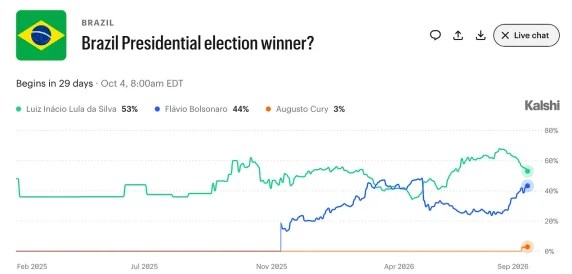
(1) As noted, polls in Brazil basically now show a tie between Lula and Flavio Bolsonaro in the expected run-off election between the two. Kalshi has begun to reflect the rapidly changing expectations;
(2) I was on Piers Morgan’s program this week to discuss a wide range of issues, including the Iran War. You can watch that here.
(3) We conducted our live weekly Q&A last night, as we always (or almost always) do on Thursday night, where we respond to and interact with the questions, comments, and critiques of our subscribers. You can watch that here.
West not safe from Ukrainian terror – Moscow
RT | September 4, 2026
Kiev’s Western backers cannot guarantee that Ukrainian terrorist attacks will not endanger their own citizens, Russian Foreign Ministry spokeswoman Maria Zakharova has warned.
Moscow has long accused the Ukrainian government of employing terrorist tactics and deliberately targeting civilians and civilian infrastructure. President Vladimir Putin has described Vladimir Zelensky’s recent threat against foreign airlines operating in Russia as “state terrorism.”
“They (Western nations) have created a monster, and we always said that this monster will go rogue, as did all the monsters they created before,” Zakharova told Izvestia on Friday.
“What guarantee do they have that Zelensky won’t strike their own citizens when carrying out those terrorist attacks?” she added. “Nobody could ever guarantee that.”
In June, a female Ukrainian national carried out a bomb attack in Monaco that seriously injured exiled Ukrainian businessman Vadim Ermolaev and members of his family. After returning to Ukraine, she was allegedly murdered by two suspected masterminds of the plot – an active operative of Ukraine’s HUR military intelligence agency and a police officer suspected of secretly working for the domestic security service SBU.
The same agencies were involved in firefights in Kiev this week in what appeared to be a dispute over custody of an HUR operative whom the SBU has accused of involvement in a for-profit plot to organize a political assassination.
German investigators have accused Ukrainian citizens of carrying out the September 2022 bombing of the Nord Stream gas pipelines, which caused one of the most serious incidents of damage to energy infrastructure in recent history.
Media reports have also described clandestine Ukrainian operations in Africa and the Middle East purportedly intended to undermine Russian interests, including the training and arming of local militant groups.
Kiev has also been blamed for dozens of drone attacks targeting commercial vessels involved in Russian maritime trade, a practice Moscow has denounced as outright piracy.
Putin criticized Ukraine’s Western backers in remarks on Thursday, arguing that by failing to condemn Kiev’s criminal actions, they effectively become accomplices.
FAUCI’S INNER CIRCLE JUMPING SHIP
The HighWire with Del Bigtree | August 27, 2026
The legal pressure surrounding the COVID origins controversy continues to build. Jefferey follows newly surfaced emails, shifting alliances, and the growing list of figures facing uncomfortable questions about what happened behind the scenes.
Seymour Hersh: Jeffrey Epstein May Have Been A Mossad And FBI Asset
By Justin K.P. | The Dissident | August 27, 2026
Legendary Journalist Seymour Hersh just published another major story on his Substack quoting sources who alleged the possibility that the late child sex trafficker Jeffrey Epstein was an asset of the Israeli Mossad, as well as the U.S. F.B.I., potentially for blackmail operations.
According to Hersh, “I have been told that specific evidence about Epstein’s connections to foreign and domestic intelligence services, particularly Mossad and the FBI, though they do exist in government files, have yet to be the subject of materials made public by the Trump administration’s Justice Department and have not come under scrutiny by Congress and the media.”
One “well-informed international source I’ve known for a long time” told Hersh that “if all the details were to come out about Epstein and Israel it could cause problems for the past and present members of some in the Trump administration, as well as for senior officials in prior Democratic administrations”.
According to the source, in the 1980s, a Mossad agent was sent “to fly to New York City, buy off-the-shelf listening devices and cameras and covertly install them in a room of Epstein’s apartment in New York City.”
He reportedly “was explicitly told to purchase off-the-shelf camera equipment in New York for the risky mission, but, as he sadly related to his friends, he didn’t follow those instructions and instead relied on the high-end equipment on which he had trained for Mossad.”
The Mossad agent reportedly said, “that his operation had been compromised and the FBI caught him and immediately realized—given his nationality and the use of expensive Israeli gear—that Israel was aware of Epstein’s client list and its obvious blackmail and extortion potential in the world of international trade and intelligence collection”.
Hersh’s source raised the possibility that following the FBI uncovering the Israeli plot, Epstein “provided the FBI with any of the tape recordings or videos” and may have even gone “further, and supplied both Israel and the FBI with films and recordings”.
Hersh reported that “Epstein’s ties as an ongoing asset to the FBI kept him out of trouble and also left a large and politically devastating collection of recordings and films that have yet to be discussed publicly or even acknowledged by the Justice Department or the FBI, as well as by the Trump White House” though he added the caveat that “no one I spoke to for this report mentioned any specific information linking Trump to the Epstein whorehouse”.
One senior U.S. official told Hersh that, “there was yet to be a serious nonpartisan investigation of the role of some senior members of the FBI who knew of and abetted Epstein’s collection of compromising videos.”
Hersh’s source’s allegation of the Mossad using Jeffrey Epstein for blackmail purposes has long been echoed by the former Mossad agent Ari Ben-Menashe who has argued that “Epstein was recruited by (Ghislaine and Robert) Maxwell and then by Ehud Barak who was director of military intelligence at the time then Prime Minister … and then they started work compromising people … and my understanding is they compromised quite a number of American politicians and other politicians as well”.
Giving a specific example, Ari Ben Menashe alleges that the Mossad used compromising material on then-President Bill Clinton obtained from Jeffrey Epstein to sabotage a U.S. deal with Iran.
Within the Epstein files, a confidential human source of the FBI, Charles Johnson, who worked for Alan Dershowitz, Epstein’s attorney, alleges that he “shared phone calls between Dershowitz and Epstein during which he/she took notes. After these calls, Mossad would then call Dershowitz to debrief. Epstein was close to the former Prime Minister of Israel, Ehud Barak and trained as a spy under him.”
The possibilities become even broader after the allegations from Seymour Hersh’s sources.
They raise the possibility that not only was Epstein recruited by Mossad, but the FBI learned of its plot to use compromising material on powerful figures and joined the Mossad in the blackmail operations, instead of stopping it.
Pro-‘Israel’ Dems win key panel posts, influence over West Asia policy
Al Mayadeen | August 26, 2026
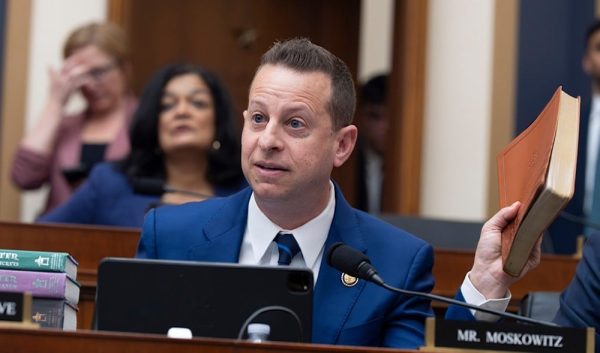
Three vocally pro-“Israel” House Democrats were given influential posts on the House Foreign Affairs Committee on Tuesday, with Rep. Jared Moskowitz taking the reins of the subcommittee that oversees US policy toward West Asia, according to Axios.
The appointments represent a significant win for the Democratic Party’s pro-“Israel” wing despite growing pro-Palestinian sentiment among the party’s grassroots.
“If Democrats take control of the House, I’ll be in a position to help steer US policy on Israel and the Middle East,” he told Axios.
In addition to Moskowitz leading Democrats on the West Asia and North Africa subcommittee, pro-“Israel” Reps. Debbie Wasserman Schultz and Wesley Bell were appointed to the Foreign Affairs Committee on Tuesday. They all defeated left-wing primary challengers during this election cycle who targeted their support for “Israel”.
Rep. Mark Pocan, a pro-Palestinian progressive and outspoken critic of AIPAC, was also appointed to the panel.
Pro-Israeli lawmakers overtake committee
Rep. Greg Meeks, the ranking member of the Foreign Affairs Committee, said the appointees’ “experience, commitment, and expertise will strengthen our work and help guide the committee as it addresses urgent challenges in national security and diplomacy.”
“I look forward to working closely with all of our members during this turbulent time when Congressional oversight is most needed,” added Meeks, who is also a vocal supporter of “Israel”.
AIPAC punishes Democrats over ‘Israel’, ends their fundraising
This notably comes after AIPAC suspended campaign fundraising support for more than two dozen House Democrats who voted in July in favor of reducing billions of dollars in US military funding to “Israel”.
On Wednesday, more than 100 Democrats in the House backed an amendment to the fiscal 2027 State Department and national security appropriations bill introduced by Rep. Thomas Massie (R-Ky.). The measure would have barred funds in the legislation from being used to assist “Israel” and cut the Foreign Military Financing program by $3.3 billion.
The amendment was defeated in a 104-314-10 vote. Democrats were nearly evenly divided on the proposal, while Massie was the only Republican to support it. The vote underscored an increasingly visible shift within the Democratic Party regarding the United States’ closest ally in West Asia.
Former CDC Scientist Whose Studies Were Used to ‘Debunk’ Vaccine-Autism Link Will Plead Guilty
By Michael Nevradakis, Ph.D. | The Defender | August 24, 2026
A former Centers for Disease Control and Prevention (CDC) scientist who played a crucial role in research rebutting any link between vaccines and autism is expected to plead guilty next week to wire fraud and money laundering.
Poul Thorsen, 65, is finalizing a plea deal with prosecutors relating to charges stemming from a 2011 federal indictment, Nathan Kitchens, assistant U.S. Attorney for the Northern District of Georgia, told The Defender.
Thorsen, who began working for the CDC in the late 1990s, faces two counts of wire fraud and nine counts of money laundering related to over $1 million in CDC grant money. The funds were earmarked for autism and public health research, but Thorsen allegedly used them to buy a home, two cars and a motorcycle.
Kitchens declined to comment on whether Thorsen will plead guilty to all or some of the charges.
Thorsen has been held in federal custody without bail since his extradition from Germany to the U.S. in May. The case is being heard at a federal court in Georgia, where the CDC is headquartered.
Researcher James Grundvig, the parent of a child with autism who was vaccine-injured, called the expected guilty plea “a very big deal.”
Grundvig, who wrote “Master Manipulator: The Explosive True Story of Fraud, Embezzlement, and Government Betrayal at the CDC,” which focused on the Thorsen case, praised U.S. Health Secretary Robert F. Kennedy Jr. for extraditing Thorsen “in record speed.”
He said Thorsen likely understands that the FBI and U.S. Department of Justice have “all the goods” to prosecute him.
“I guess Thorsen’s realizing, since he’s in American jail already and has no chance for bail, he might as well make a plea deal,” Grundvig said.
Dr. Dave Weldon, a physician and Republican member of the U.S. House of Representatives between 1994 and 2009 — and who President Donald Trump nominated to lead the CDC in late 2024 before retracting his nomination in March 2025 — welcomed the plea agreement but said it isn’t enough.
“It would be a miscarriage of justice if a plea deal failed to include a thorough investigation of allegations of scientific fraud,” Weldon said.
Danish independent vaccine safety researcher Vibeke Manniche, M.D., Ph.D., said some of the federal funds Thorsen is said to have misused may have been intended for vaccine-autism studies. Manniche said the guilty plea calls Thorsen’s research into question.
“An obvious question is whether he also has been cheating with data to achieve the results he sought,” Manniche said. “That we don’t know. A good rule in gold-standard science is replication, and it would be wise, for so many reasons, to replicate his work,” independently of the institutions Thorsen had been affiliated with.
Grundvig noted that the Thorsen indictment included unnamed co-conspirators, suggesting that the investigation may implicate more people — and also the controversial autism research that Thorsen helped publish in 2002 and 2003 that was cited as proof of no link between vaccines and autism.
“I think that’s going to be the second part of the story,” Grundvig said. “It could be an avalanche of bad news for both pharma and the CDC.”
Thorsen studies cited in dismissing over 5,000 vaccine injury claims
Despite questions around how those studies were conducted, the Madsen-Thorsen papers were used in 2011 to dismiss over 5,000 claims filed by the parents of autistic, vaccine-injured children. The claims were part of the Omnibus Autism Proceeding pending before the Vaccine Injury Compensation Program.
In “Master Manipulator,” Grundvig — whose son’s case was one of the claims dismissed as a result of Thorsen’s research — described Thorsen as “a world-class villain whose manipulation of health data gave CDC and big pharma what they wanted: a report clearing thimerosal of any possible role in the autism crisis.”
According to Weldon:
“The real crime is not absconding with research dollars, but unresolved allegations around his research which served as the basis for the CDC and the U.S. government dismissing vaccine injury claims by thousands of injured children. These actions set back vaccine safety research by more than two decades.”
Grundvig suggested the Thorsen investigation and his guilty plea may call into question the dismissal of the omnibus cases, as it would “then make all of those vaccine omnibus proceedings completely fraudulent because it was based on a fraud, and that should reopen the cases.”
Hooker, whose omnibus claim for his son was also dismissed, said Thorsen likely didn’t act alone in misusing federal money or misrepresenting vaccine-autism research — and that the role of some of his key collaborators should be examined.
“There should be a separate investigation against Dr. Diana Schendel, who was Thorsen’s direct grant supervisor and lover and approved all of his invoices for expenditures from his CDC grant money. Dr. Schendel undoubtedly knew of Thorsen’s activities but did not report them to the authorities and could have spent some of the stolen grant money as well,” Hooker said.
Schendel maintained an inappropriate romantic relationship with Thorsen and later accepted a position at Denmark’s Aarhus University to lead autism research there. She remains employed at Aarhus University — and at Drexel University — today.
Thorsen continued to live in Denmark for years after the 2011 U.S. indictment. He worked there as a gynecologist despite an extradition treaty between the two countries and an INTERPOL warrant for his arrest.
Hooker added:
“Other co-conspirators who knew of the inappropriate relationship between Thorsen and Schendel over the seven-year grant history at CDC include Coleen Boyle, Ph.D., former director of the National Center for Birth Defects and Developmental Disabilities), and Dr. Marshalyn Yeargin-Allsop, former branch chief of the Developmental Disabilities Branch at the CDC.
“These individuals at a minimum should be brought in for questioning. Both have also been implicated in the MMR-autism fraud from the DeStefano et al. 2004 paper, where data showing a strong relationship between MMR timing and autism in Black boys was illegally destroyed.”
Thorsen’s vaccine-autism studies full of ‘irregularities’
When he first joined the CDC as a visiting scientist, Thorsen’s research focused on birth defects and developmental disabilities.
However, by the early 2000s, Thorsen shifted his focus to autism research. His work in this area left a strong imprint, fueling future narratives that autism isn’t linked to vaccines.
According to a 2017 report by the World Mercury Project — predecessor to Children’s Health Defense (CHD) — Thorsen’s influence on U.S. vaccine projects and policies “is extensive” because his studies were used to dismiss a possible link between vaccines and autism.
One of the most influential studies became known as the “Madsen study,” a population-based study of the measles-mumps-rubella (MMR) vaccine and autism.
Published in 2002 in The New England Journal of Medicine and co-authored by Thorsen, the Madsen study concluded that there is “strong evidence against the hypothesis that MMR vaccination causes autism.”
However, according to the 2017 World Mercury Project report, the Madsen study was “flawed” from the outset because the researchers reviewed clinical records of only 40 of the 316 children who had autism in the study’s cohort.
A peer-reviewed analysis published last year cast further doubt on the study’s conclusions.
In 2003, Madsen and Thorsen co-authored another influential study, published in Pediatrics, the journal of the American Academy of Pediatrics. The study did “not support a correlation between thimerosal-containing vaccines and the incidence of autism.”
Thimerosal is a mercury-based adjuvant used in some vaccines, which some scientists and advocates for people with autism have suggested may trigger autism.
Brian Hooker, Ph.D., CHD’s chief scientific officer, said there are “numerous data irregularities” in the Thorsen studies.
In their critique of the 2002 paper, Hooker and Karl Jablonowski, Ph.D., CHD senior research scientist, found significant errors in the paper. They concluded the study’s unadjusted results “do not support rejecting the causal link” between the MMR vaccine and autism.
In a critique of the 2003 Madsen-Thorsen study, Hooker and researcher Jeffrey Allen Trelka concluded that the study’s findings “may have been skewed by participant selection and changes in diagnostic groupings.”
Other critiques of the 2002 and 2003 studies raised concerns about ethical considerations. Both studies relied on Danish population data. According to the 2017 World Mercury Project report, the studies bypassed ethical reviews required for this category of research, as required by federal law.
When the CDC discovered Thorsen hadn’t obtained the required ethics approvals, the agency didn’t report the errors, and the studies weren’t retracted. Instead, CDC officials engaged in a cover-up, the 2017 report states.
“Given these irregularities, Thorsen should also be under investigation for data fraud as he clearly withheld data and could have altered data” from Danish official sources, Hooker told The Defender.
Manniche said that if it is proven Thorsen tampered with the data in his studies, it would be a “terrible tragedy,” because “parents were told that the MMR vaccine was safe and sound and that it couldn’t harm the child.”
As of July 31, there were 1,931 reports claiming onset of autism or autism spectrum disorder following MMR vaccination contained within the federally run Vaccine Adverse Event Reporting System (VAERS).
Will Thorsen sing?
Grundvig suggested that, as part of his plea agreement with prosecutors, Thorsen may have an incentive to provide testimony or information targeting other CDC figures.
“Thorsen’s 65 years old, born in 1961 … does he want to die in an American jail?” Grundvig asked. “I don’t think so. So, I think he wants to make, and will make, a plea deal. The only way he’s going to make a plea deal is with someone like Kennedy and maybe others in the Department of Justice that look at a bigger case,” Grundvig said.
Grundvig suggested this “bigger case” may involve the Racketeer Influenced and Corrupt Organizations Act or RICO Act.
“There’s a bigger fraud involved than just stealing money, and I think it goes back to the vaccines, it goes back to the studies that the CDC cooked up,” potentially implicating Schendel and Madsen.
“Will he be used as a star witness against the CDC old guard and all of the shenanigans that went on massaging of science, of science papers, influence on Pediatrics and other journals, in order to get all of this done back in the early 2000s in order to exonerate vaccines and erase the autism signal?” Grundvig asked.
This article was originally published by The Defender — Children’s Health Defense’s News & Views Website under Creative Commons license CC BY-NC-ND 4.0. Please consider subscribing to The Defender or donating to Children’s Health Defense.
Newsom Signs Content Takedown Law Following Nick Shirley Investigations
The precedent is that a legislature can keep inventing new categories of people entitled to content removals
By Dan Frieth | Reclaim The Net | August 24, 2026
California Governor Gavin Newsom has signed into law a bill that critics say is designed to silence citizen journalists like Nick Shirley and let taxpayer-funded organizations, some of them suspected of fraud, remove documentation of their activities from the internet.
The law, which was signed on Saturday and goes into effect on October 1, 2027, is officially there to protect the privacy of employees and volunteers working in organizations serving immigrants, but the way it does it is by giving them the power to demand that their images and personal information be deleted from the internet, based on a claim of “reasonable fear.”
No police report or court approval is needed for this, only the claim. There is no exemption for journalists or journalism.
The bill, which was authored by Democrat Assemblywoman Mia Bonta, was dubbed the “Stop Nick Shirley Act” by those opposing it, as it is seen as a direct attack on his work.
Shirley has been investigating and documenting alleged fraud in programs meant to help immigrants, and has had millions of views on X for his videos, including one showing empty buildings in Minnesota registered as daycares that he said were used to defraud the system of $110 million.
The new law in California will apply to all organizations providing legal representation, advocacy, case management, humanitarian relief, translation, counseling, and healthcare to immigrants. It also sets up an address confidentiality program, modeled on California’s Safe at Home program.
Those who don’t comply with the demands for content removal can be fined $10,000 and also face civil and criminal liability and imprisonment.
Shirley responded to the signing of the bill into law by saying that it was created only after he exposed fraud in immigrant communities, and accused Newsom and California politicians of showing their true face as “corrupt politicians” who, “when the fraud is exposed, create new laws to protect the fraudsters and penalize those who expose it.”
He also said that the law makes “immigration support service providers” a protected class in California, and noted that thanks to this, if he films a hospice “with no patients that are receiving millions through Medicaid,” the owner can prevent him from publishing the footage, and if he does anyway, he could get a huge fine.
Dozens of ex-lawmakers, staff landed at military firms since 2015
By Julian Cooper | Responsible Statecraft | August 24, 2026
In the last decade, 31 former members of Congress and top staff have left Capitol Hill and joined the military-industrial complex as lobbyists or contractors, according to a new report from the Bulletin of the Atomic Scientists.
The 21 lawmakers named in the report served on either the House or Senate Armed Services Committee, the legislative bodies that set the Pentagon’s annual policies through the annual National Defense Authorization Act. In addition, the report names 10 former senior committee staffers who transitioned to working as weapons industry government liaisons or lobbyists.
These 31 former officials represent a snapshot of the military-industrial complex’s “revolving door,” through which ex-policymakers transition from setting the Pentagon’s agenda in Congress to cashing in on those same policies in the private sector. “That report we published is the most direct explanation we’ve ever seen of why the defense budget always goes up,” said John Mecklin, the author of the report and former editor-in-chief of the Bulletin of the Atomic Scientists.
The report highlighted a variety of potential ethics conflicts, focusing in particular on the growing path between Congress and Silicon Valley defense tech startups.
Chris Vieson, the former staff director of the House Armed Services Committee (HASC), was appointed earlier this year to the National Commission on the Future of the Navy, established to advise Congress on everything “from shipbuilding and acquisition to maintenance and repair, workforce, training, and modernization.” Vieson is also an active registered lobbyist for two defense startups: Saronic Inc., a manufacturer of unmanned maritime vehicles; and watercraft builder Whiskey Project Group. Previously, Vieson worked as a lobbyist for Andreessen Horowitz, the venture capital firm gaining influence in the Pentagon and pushing AI integration.
According to its executive director, the National Commission on the Future of the Navy aims to modernize the Navy to prepare for conflict with China and Iran. As part of this goal, the Commission will “test emerging ideas such as a hybrid fleet and expanded use of unmanned systems.” Vieson’s lobbying client, Saronic Inc., is one manufacturer of such unmanned systems.
While the revolving-door phenomenon is not new, the report captures the increasing influence of a new generation of Silicon Valley military firms. Former HASC member Mike Gallagher and staffer Jeff Miller have taken up jobs as an executive and a lobbyist, respectively, for Palantir. Former Republican staff director of the Senate Armed Services Committee (SASC) Christian D. Brose is now the Chief Strategy Officer for Anduril, an autonomous weapons startup valued at $61 billion in its latest round of fundraising.
According to Mecklin, Congress is eager to let Silicon Valley officials into their bureaucracy. “It takes the Pentagon many, many years to acquire a new defense system like a fighter plane. With a high-tech system, you just can’t wait that long,” he said. “So they found a way around the complicated acquisition processes of the Defense Department.”
Likewise, Silicon Valley weapons startups that wish to challenge prime contractors like Boeing and Lockheed Martin are desperate to hire former politicians. “If you’re a company that wants to get into defense contracting, it’s highly beneficial to hire people that understand the process of federal appropriations in the defense sector,” Mecklin explained.
The Bulletin’s revolving-door report also details a who’s-who of top congressional stock traders. Rep. Austin Scott (R-Ga.), who has served on HASC since 2015, has been trading GE Aerospace stock via his spouse since 2023. Scott’s trades this year violated the STOCK Act, a bill passed in 2012 to curb insider trading. That makes Scott one of seven Armed Services Committee members to violate the STOCK Act this year, generally for failing to disclose trades within 45 days, as the law mandates.
Rep. Lisa McClain (R-Mich.) is another HASC member who has benefited from military contractor stocks. In December 2025, she disclosed her husband’s $100,000-$250,000 purchase of stock in Elon Musk’s xAI, which merged with SpaceX soon after in February. McClain’s husband’s xAI shares were converted into SpaceX shares months before the company’s historic IPO in June. McClain previously violated the STOCK Act for her delayed disclosure of a trade worth up to $450,000 in Palantir stock.
The report also makes note of Sen. Tommy Tuberville (R-Ala.) trading stock for prime defense contractor Lockheed Martin and aerospace manufacturer Honeywell. Tuberville, one of the most active stock traders in Congress, has served on SASC since 2021. When President Donald Trump faced criticism this spring for his own portfolio of weapons stocks, Tuberville told a reporter for MeidasTouch, “I do the same thing.”
Mecklin believes that laws like the STOCK Act are insufficient to curb members of Congress cashing in on defense spending. “The way you really stem this kind of behavior is to have inspectors general and law enforcement agencies that are on the lookout for them. Occasionally, take up one of these egregious cases and just prosecute it,” said Mecklin.
“Unless you have a system that actually scares these people so they cut it out, it’s going to continue.”
Julian Cooper is a Chicago-based journalist, an editorial intern for The Progressive, and a research intern for the Quincy Institute’s Democratizing Foreign Policy program.
Ukraine’s External State Debt Explodes 24-Fold Since West-Fomented Euromaidan
Sputnik – 23.08.2026
Sputnik’s analysis of statistical data exposes the staggering math of Ukraine’s post-Maidan borrowing binge.
According to Ukraine’s Ministry of Finance, at the end of 2013 – amid the ongoing West-instigated protests and still before the overthrow of then-President Viktor Yanukovych – the country’s external state debt stood at the equivalent of $6.71 billion.
- By June 2026, this figure had grown 24 times, amounting to roughly $166.04 billion
- The country’s external debt continues to soar: in June of this year alone, it increased by $1.76 billion
- External indebtedness currently accounts for 78.5% of total state debt
Statistical data previously examined by Sputnik shows that Ukraine’s overall debt – both external and domestic – has also ballooned since the end of 2013.
- At that time, it stood at about $13.08 billion
- By June 2026, the total debt had increased 16.2 times, exceeding $211.6 billion
The Ukraine regime has been scrambling to plug holes in the budget with external financing, yet Western aid packages come increasingly unwillingly to the corruption-mired regime.
Israel is sponsoring ads on Ted Cruz’s podcast. Is that legal?
By Connor Echols and Nick Cleveland-Stout | Responsible Statecraft | August 22, 2026
The Israeli government is running advertisements on a popular podcast hosted by Sen. Ted Cruz (R-Texas), raising questions about whether the staunchly pro-Israel lawmaker is indirectly receiving campaign funding from a foreign country.
Radio and podcast giant iHeartMedia has syndicated Cruz’s show, “Verdict with Ted Cruz,” since 2022. Because of lobbying-related restrictions, the company cannot legally pay the senator for ad revenue. But, it turns out, that’s not the only way to ensure the money benefits Cruz.
Under an unusual licensing deal, iHeartMedia agreed to donate revenue “associated with (the show’s) advertising sales” to the Truth and Courage PAC, a super PAC dedicated to “ensuring that Ted Cruz is re-elected to the United States Senate.” The company has given at least $1,738,000 of “digital revenue” to the Truth and Courage PAC since 2023, according to Federal Election Commission filings.
The agreement has drawn significant scrutiny from watchdog groups, some of which filed a complaint against Cruz with the FEC alleging he “brazenly violated” laws that bar candidates from receiving corporate donations. Though the senator admitted to having met with representatives from the company to discuss the acquisition of the show, the agency ruled in his favor, finding that there was “no available information to indicate that Cruz solicited, directed, received, transferred, or spent the funds iHeart paid to the PAC.”
“Cruz’s role was limited to hosting the Podcast and he does not appear to have been involved with the decision for iHeart to pay the PAC, meaning that he did not direct or solicit any funds,” the commission found.
The Israeli government-funded ad revenue appears to operate in a similar gray area. The advertisements, which are part of the $7 million “I am Israel” campaign launched in June, are geared toward encouraging Christians to visit the country and see biblical sites for themselves.
“Israel isn’t a destination; it’s a revelation, where every site you’ve studied, every scripture you’ve memorized, every sermon that ever moved you suddenly has an address, a landscape, a heartbeat,” Ben Ferguson, Cruz’s co-host, says in one ad. “This is the trip that changes not just how you see the Holy Land, but how you see everything.”
Ferguson then urges listeners to “start planning your trip today” and tells them to follow “Visit Israel” accounts on social media. The ads do not disclose that Visit Israel is a public-facing entity of the Israeli ministry of tourism.
The campaign appears to exploit a loophole in election financing laws. Candidates and PACs are banned from receiving any funding “directly or indirectly” from foreign nationals, according to the FEC. But Cruz would only run afoul of campaign finance laws if Israel explicitly earmarked its contribution to go to the PAC, said Craig Holman, a leading expert on campaign finance laws and an ethics lobbyist at Public Citizen.
“Assuming there is no formal agreement, then the money is considered iHeartRadio funds, with which it can do as it pleases,” Holman said.
Holman blamed court decisions like Citizens United for opening the path to Cruz’s “surreptitious financial arrangement” with iHeartMedia.
Subscribe now to our weekly round-up and don’t miss a beat with your favorite RS contributors and reporters, as well as staff analysis, opinion, and news promoting a positive, non-partisan vision of U.S. foreign policy.
“The courts have fabricated a myth that outside groups are ‘independent’ of candidates and therefore fall outside the campaign finance limits and disclosure laws,” Holman told RS. “So, wealthy interests and even foreign governments launder money to outside groups with the explicit intent of the outside group spending that money to support a specific candidate. Israel is exploiting this court-created loophole.”
Neither Cruz nor iHeartMedia responded to requests for comment about whether the Truth and Courage PAC has received or will receive money from the “I am Israel” campaign. RS also reached out to a representative of the PAC, who did not respond.
iHeartRadio’s last publicly disclosed donation to the PAC was in May. The PAC does not share detailed information about the ad revenue it receives from iHeartMedia, and it does not have to reveal any further donations until the end of the third fiscal quarter in September.
The “I am Israel” campaign is part of the Israeli government’s efforts to reinvigorate the country’s tourism industry after years of war. In May 2019, 105,700 American tourists visited Israel. In May of this year, that number was only 22,600.
At the campaign’s June launch event in New York, which was hosted by the Jerusalem Post, Israeli Ambassador to the United Nations Danny Danon encouraged attendees to help boost these numbers. “We have accomplished so much in the last 3 years. We have defeated our enemies,” said Danon. “Now it’s your turn… Now you have to start again, bring the groups to Israel.”
The ads on Verdict target Christians in particular. The Israeli government has invested significantly in efforts to bolster support for Israel among Christians, including greenlighting a proposal to target churchgoers with pro-Israel ads during services and funding a Bible study program taught by IDF soldiers and West Bank settlers, as RS has previously reported. The Israeli government also secretly funneled $245,000 to Eagles’ Wings, a Christian Zionist organization based in New York, to lobby over 100 congressional offices for more military aid to Israel.
These initiatives reflect Israel’s concerns that it is losing influence among American evangelicals. While they have long been one of the most influential pro-Israel constituencies in the U.S., that support is now slipping; a 2025 poll found that only 24% of evangelicals under 35 years old support the Israelis over the Palestinians.
The Israeli ministry of tourism hinted at this dwindling support in a procurement document for the campaign. The goal of the June launch event was to broadcast “a message of ‘business as usual,’” according to the document, signed by Michael Yitzhakov, chief of staff of the Israeli ministry of tourism. The Israeli government agreed to pay the Jerusalem Post around $195,000 for the event.
Cruz is among Israel’s most zealous allies in Congress. “There is no military on the face of the planet, including the U.S. military, that goes to the lengths that the Israeli military goes to avoid civilian casualties,” he said in November 2023. Just last week, Cruz lauded Israeli companies for “betting big on Texas, investing $3.2 billion and creating more than 4,200 jobs across our state.”
Cruz is an adherent to Christian Zionism, a theological belief that Christians have a religious obligation to support the modern state of Israel. “I was taught from the Bible, those who bless Israel will be blessed, and those who curse Israel will be cursed,” he told podcast host Tucker Carlson last year. “And from my perspective, I want to be on the blessing side.”
Over the years, Cruz has received significant financial support from pro-Israel donors, including Israeli-American billionaire Miriam Adelson, who gave $1 million to the Truth and Courage PAC in 2024. And, as he told Carlson last year, the pro-Israel lobbying group AIPAC “raises a lot of money for me.”
Connor Echols is the managing editor of Responsible Statecraft. He was previously the managing editor of the NonZero Newsletter.
Some Shattering Illusions of Our Declining Empire
Americans are waking up to ugly truths
By George D. O’Neill Jr. | The American Conservative | August 19, 2026
Now that the lofty 250th-anniversary rhetoric about the greatness of our country has faded, it is time to face the reality of our country’s actual behavior. The U.S. fashions itself as a generous and benevolent world leader enforcing the “rules-based order”—a deceptive construct used by globalist elites to bully other countries. The rules are arbitrarily changed to suit the bullies and are regularly fashioned into pretexts for military action against uncooperative nations. In short, it is a hoax, untethered from the principles and ideals of our founders.
Almost daily we witness some spectacle illustrating the appalling corruption of our country’s leadership. The recent release of Anthony Fauci’s diary entries confirms long-held suspicions about the Covid-19 narrative, which we now know even Fauci himself did not fully believe. Think of the millions of lives ruined and harmed by that corruption. Yet this vain phony, when asked to testify before Congress, hid behind half a dozen lawyers and refused to answer any questions. What a fine example of transparency from one of our leading scientists and civil servants! What else are our leaders still hiding about the worldwide disaster caused by Covid-related deceptions and manipulations? There has not yet been any meaningful examination of our medical profession, which largely acted as cowards during the pandemic, adhering to the bogus official narrative at the expense of the welfare of their patients.
Our leadership has not even begun to scratch the surface of the horrors created by the many secret—and potentially illegal—biolabs scattered around the globe, supported by funds often hidden from voters under the guise of “national security.” The Fauci crowd appears to have been deeply involved in that dark world.
America’s Middle East policy remains a source of shame. The U.S. Treasury secretary brags about ruining the currency of the Iranian people, against whom we have waged a war of aggression. In Gaza, Washington has enabled a brutal assault on a vulnerable population. Not many years ago, most Americans considered standing up for the vulnerable and innocent an honorable act of a true American. Not our leaders. These days, opposing the harm of politically inconvenient innocents attracts name-calling, ostracism, and sanctions. What would our Founding Fathers have thought of that?
The current wars have exposed the shortcomings of our nearly trillion-dollar military and its multi-billion-dollar weapons systems. If the Covid mess is any indication, we should assume there is hidden and shockingly ugly information about the behavior and practices of the military-industrial complex. The failure of our various expensive defense systems to protect our Persian Gulf “allies” from Iranian missile and drone attacks is a tragic example of government dishonesty. Despite repeated failures, the administration continues to brag of its ability to destroy Iran’s military and shoot down its remaining missiles and drones. After years of being told we possess the “most powerful military” in history, Americans are beginning to realize it is a fantasy. The success of that false narrative rests on decades of fighting people riding donkeys and bicycles.
Our government classifies and redacts documents as a matter of course. Think of the billions of pages we are still not allowed to see—especially information about the most important events in our country’s history. Many significant, history-changing events remain shrouded in secrecy. How is it that information is still being withheld about the assassination of President John F. Kennedy? After six decades, what bad behavior are they still “protecting” from the public? Most Americans suspect the official government narrative was false, yet officials continue to withhold information that might shed light on that crime. The same is true for the assassinations of Robert F. Kennedy and Martin Luther King Jr., our government’s willful abandonment of U.S. prisoners of war in Vietnam, the September 11 attacks, and the late, disgraced financier Jeffrey Epstein. Not to mention the disgusting manipulations and secret operations used to drag our country into the long list of dishonest, illegal, and failed wars we have “fought.”
Our political leadership’s frenzied efforts to hide the Epstein files make it look as though the “national security” excuse is merely a convenient tool to obscure malfeasance, rape, blackmail, bribery, and plain old corruption. They clearly believe they are not subject to the same pesky and inconvenient laws as the rest of us who live in the country. So much for equal protection under the law and the “rules-based order.”
We watch with horror the chaos, death, and destruction currently being wreaked on the world—and on our own country—by our “exceptional nation.” Why has the second Trump administration bombed at least seven countries and engaged in underhanded efforts to weaken and harm the political systems of others? None of this serves the interests of the American people; it serves only the special interests of our elites. All this from a president who campaigned on an America First policy, an end to forever wars, and the promotion of peace. It looks like we were fooled again. Presidential candidate after presidential candidate promises peace, and we get war after war. The system is subverted by corruption.
As the failure of the illegal war against Iran becomes increasingly obvious, more Americans are realizing that it in no way serves their interests. As the war against Russia in Ukraine grinds toward failure, American and European leaders continue more frantically than ever to promote the fantasy that Ukraine can defeat Russia in that sad and disastrous conflict.
There is one positive development: The American people, especially the younger generation, are beginning to recognize the corruption at the top of our country and the magnitude of the war lies. They understand that the special interests driving these belligerent policies care nothing about the well-being of the general populace or of our nation. There has always been skepticism toward powerful special interests, but we are moving past skepticism into righteous fury.
This is also true of our “allies,” who watched U.S. elites prioritize Israel over American security when the missiles started flying.
Ours is not an “exceptional nation.” It is not the “shining city on a hill.” It is not “a thousand points of light.” Not anymore. It is a declining empire with a declining military—one unable to protect its allies, yet still seeking to bully and harm any country that angers its corrupt elites.
Our military defenses are so ineffective that Iran—a country one-fourth our size, with an economy smaller than our bloated military budget—can practically name its next round of targets knowing our mighty military can do little to stop them.
With a governing elite that serves foreign and special interests rather than the people and a sweeping surveillance state that stretches from sea to shining sea, Americans are becoming increasingly disillusioned. A sobering question to consider: When the illusion finally shatters, who will be left willing to defend a government that wouldn’t defend its own?
George D. O’Neill, Jr., is a member of the board of directors of the American Ideas Institute, which publishes The American Conservative, and an artist who lives in rural Florida.
Featured Video

Iran’s Next Strike May Not Explode. It Could Shut You Down
or go to
Aletho News Archives – Video-Images
From the Archive
Zionism’s Violent Legacy
By Donald Neff | Washington Report On Middle East Affairs | January 1996
On January 4, 1948, Jewish terrorists drove a truck loaded with explosives into the center of the all Arab city of Jaffa and detonated it, killing 26 and wounding around 100 Palestinian men, women and children.[1] The attack was the work of the Irgun Zvai Leumi – the “National Military Organization,” also known by the Hebrew letters Etzel – the largest Jewish terrorist group in Palestine. The Irgun was headed by Revisionist Zionist Menachem Begin and had been killing and maiming Arabs, Britons and even Jews for the previous ten years in its efforts to establish a Jewish state.
This terror campaign meant that at the core of Revisionist Zionism there existed a philosophical embrace of violence. … continue
Blog Roll
 Aletho News
- Trump’s Iran war is on an Israeli leash
- Saudi oil boss issues global supply warning
- Riyadh Says Its Oil System Is Intact. The Numbers Say Otherwise.
- Trump and Netanyahu Want to “Finish the Job” on Iran
- US ‘one-sided dictation’ not Iran’s beliefs makes rational talks impossible: Baghaei
- Iran’s Next Strike May Not Explode. It Could Shut You Down /Col Doug Macgregor
- Iran: US political targets legitimate if assassinations return
- Iraq shuts key border crossing with Iran under US pressure: Report
- Undersea Internet cables could be targeted in retaliation for attacks on Iran: IRGC deputy chief
- EU sending ‘biased’ observers to interfere in Serbian election – president
- If Americans Knew
- The Israel Lobby’s Changing Fortunes
- AIPAC has become such a political liability that it’s shifting to a more “nimble” approach to buying politicians
- At least 160 Israeli settler attacks in 2 weeks
- Will Gaza’s Ancient Christian Community Disappear Forever?
- Israel’s vision of regional security rests on keeping Arab states weak
- Heidi Levine recounts how Palestinian youths helped save her in settler attack
- DAILY UPDATE: Latest essential news on Palestine, Israel, & region
- Trump’s Intensifying Sabotage of the ICC, for Israel’s Sake
- Israeli military detain US and UK volunteers in West Bank including Democratic NY politician Brad Lander
- Americans at National Conservatism Conference held in Israel this year criticize Israel
- No Tricks Zone
- E-Cars Reduce CO2 Emissions By Only 41% Compared To Internal Combustion Engine Vehicles
- Predictions Made By Renowned Climate Professor Over Past Decades Have Been Proven To Be Poor
- New Study Suggests Large Regions Of The Pacific Ocean Have Been Cooling For The Last 80 Years
- Germany’s Green Energy Debacle: High Energy Costs Force Kahla Porzellan to Close After 182 Years!
- New Study: 50 Years Of The Most Aggressive ‘Net Zero’ Policies Can Only Affect The Global Climate By 0.03°C
- US September “Heat” Was No Record…Many Records Set Decades Ago
- Latest European Green Energy Debacle; Portugal’s Largest Flagship Solar Park Insolvent!
- Green Energy Debacle: German Expert Professor Fritz Vahrenholt Warns Of Severe Economic And Social Consequences
- Two More Paleo Reconstructions Affirm Meters-Higher Sea Levels Across Ireland, Brazil 7000-6000 Years Ago
- New Study: Earth And Venus Surface Warmth Largely Explained By Convection And Lapse Rate, Not CO2 Or Radiation

