BBC ‘disinformation’ correspondent busted spreading disinfo on her own bio

BY KIT KLARENBERG · THE GRAYZONE · SEPTEMBER 9, 2023
The BBC’s Marianna Spring specializes in branding average citizens as conspiracy theorists and potential terrorists for questioning official claims. When caught lying about her own professional record to advance her ambitions, she says she thought her deceit “wouldn’t be a big deal.”
On September 6th, The New European reported that BBC’s “specialist disinformation correspondent” Marianna Spring lied on her résumé in a failed attempt to bag work with Coda Story back in 2018.
While posing as an independent outlet, Coda Story is funded by the National Endowment for Democracy, the US government’s regime change arm, as well as the European Union.
Spring had submitted an application to Coda Story editor-in-chief Natalia Antelava containing a CV in which she claimed to have worked alongside BBC correspondent Sarah Rainsford on the British state broadcaster’s reporting on that year’s World Cup in Russia.
An entry read: “June 2018: Reported on International News during the World Cup, specifically the perception of Russia, with BBC correspondent Sarah Rainsford.”
This claim was the textbook definition of “disinformation.” In truth, Spring had met Rainsford in a handful of social settings, and they never worked together. Antelava easily ascertained Spring was lying, and admonished her for the fabrication. The future BBC apparatchik responded with a grovelling apology, expressing contrition for her “awful misjudgment”, while somewhat amazingly still professing to be a “brilliant reporter”:
“I’ve only bumped into Sarah whilst she’s working and chatted to her at various points, but nothing more. Everything else on my CV is entirely true. There’s absolutely no excuse at all, and I’m really sorry again. The only explanation at all is my desperation to report out in Moscow, and thinking that it wouldn’t be a big deal, which was totally naive and stupid of me. I’m really sorry again for this awful misjudgment on my part.”
Antelava did not respond well, rejecting Spring’s application outright, and remarking, “telling me you are a brilliant reporter who exercises integrity and honesty when you have literally demonstrated the opposite was a terrible idea.”
Spring’s fabrication may have also been illegal. In Britain, her country of birth, lying on one’s résumé is a serious criminal offense under the 2006 Fraud Act. If an individual exaggerates their qualifications with the intention of gaining employment, they can face hefty fines, and a possible jail sentence of up to 10 years.
Why it took so long for Spring’s deceit to be publicly exposed is unclear. In the years since she attempted to lie her way into a flashy reporting job, her career has soared meteorically, placing her in the spotlight of mainstream British media.
Not long after her CV falsification, Spring joined the flagship BBC political program Newsnight, and was then promoted as the broadcaster’s “specialist disinformation correspondent” in March 2020. Coincidentally, the British government had just passed its Coronavirus Act, placing the country’s population under lockdown, and psychologically bludgeoning it into compliance with pandemic restrictions.
As The Grayzone has documented, Spring was at the forefront of an aggressive effort to frame critics of lockdowns, pandemic restrictions, mask and vaccine mandates, and vaccine passports as a vast, fascistic, potentially violent fifth column infesting both on and offline spaces – and who deserved to be crushed with a repressive state response. She frequently relied on the Institute for Strategic Dialogue, a NATO state-funded information warfare operation, to reinforce her dubious reporting.
Spring’s connection to a constellation of state-backed propaganda outfits wound her up on the invite list for a secret May 2022 summit aimed at destroying The Grayzone. A Foreign Office-funded intelligence operative named Amil Khan suggested she be invited to the gathering.
The disclosures about Spring come mere days after The Guardian published a fawning profile of Spring and her crusading work “battling cranks, extremists – and Elon Musk,” while campaigning for integrity and honesty on social networks and in alternative media. While for the most part an unctuous hagiography, it ended on a surprisingly critical note, asking its subject why she was solely focused on purported “disinformation” spread by citizens and independent journalists, rather than governments or powerful organizations.
This query led Spring to reportedly lose her patience, in a quintessentially British way. She admonished her interviewer:
“I constantly get, ‘Marianna, why have you not BBC-verified this?’ Every single thing. It’s like, I’ve become the complaints person. I think they think I’m Superwoman. I can’t do everything. We all have to think about how ecosystems work – I deal with the extreme stuff.”
It is certainly true Spring “can’t do everything.” When applying for a job, she could not even tell the truth about her own record. Instead, Spring may have committed a criminal offense by lying on her CV in an admittedly “desperate” bid to climb the NATO-state sponsored media ladder.
Did Musk really prevent ‘Crimean mini-Pearl Harbor’?
By Drago Bosnic | September 11, 2023
Elon Musk is often portrayed as a controversial figure by the mainstream propaganda machine, while the more alternative media try to present him as some sort of an “anti-establishment hero”. He was previously even targeted by the Kiev regime for allegedly refusing to provide his Starlink network assets for military purposes. It’s unclear what his exact motivation to do so was (or whether he even did it in the first place), but it can be assumed that he was afraid of stoking the anger of Russia, a military superpower armed with anti-satellite (ASAT) weapons. What’s more, China, one of the largest and most important markets (as well as the base of operations) for several of Musk’s companies, also threatened to deploy its own ASAT weapons in case the Starlink network were to be used against Beijing’s forces in a potential confrontation in the Asia-Pacific.
In recent days, several media outlets claimed that Musk allegedly ordered SpaceX engineers to covertly turn off the Starlink network near the coast of Crimea last year to disrupt what is being described as a “mini-Pearl Harbor” sneak attack on the Russian Black Sea Fleet. The theory is based on an excerpt adapted from Walter Isaacson’s new biography titled “Elon Musk”. According to Isaacson’s writings, sea drones launched by the Neo-Nazi junta were about to approach the ships of Russia’s Black Sea Fleet, but “lost connectivity and washed ashore harmlessly”. Musk’s reasoning was allegedly based on “an acute fear that Russia would respond to a Ukrainian attack on Crimea with nuclear weapons, a fear driven home by Musk’s conversations with senior Russian officials”. There is no solid evidence for Isaacson’s claims or that Musk ever spoke to any Russian officials.
The idea that Russia would respond with nuclear weapons is a very common trope used by the mainstream propaganda machine which is trying to present Moscow as incapable of accomplishing anything without using the “nuclear card”. However, the Eurasian giant has already demonstrated its ability to disrupt Musk’s much-touted Starlink network with electronic warfare (EW) assets. On the other hand, even Western media admitted that NATO’s ISR (intelligence, surveillance, reconnaissance) platforms were to provide direct support to Kiev regime forces during this “mini-Pearl Harbor”. It was due to this that Musk allegedly pulled the plug, as he believed it would’ve caused World War Three. However, had he truly disrupted such an important military operation led by the United States and NATO, the likelihood of him walking free is near zero.
In simpler terms, no sovereign country would allow a civilian to interfere with (let alone prevent) military operations, especially not those of such a scale. Thus, Musk’s claims about this “mini-Pearl Harbor” are questionable, at best. According to CNN, Musk did not respond to their request for comment, although he responded to the excerpt from Isaacson’s book on Twitter (now officially known as X). Namely, he stated that Starlink was never active over Crimea and that the Neo-Nazi junta supposedly made an “emergency request” to SpaceX, asking them to turn it on.
“There was an emergency request from government authorities to activate Starlink all the way to Sevastopol,” Musk stated, adding: “The obvious intent being to sink most of the Russian fleet at anchor. If I had agreed to their request, then SpaceX would be explicitly complicit in a major act of war and conflict escalation.”
Not wanting to cause escalation that could turn into a world-ending thermonuclear conflict is certainly commendable – if that’s what actually happened. However, Musk’s close cooperation with the Pentagon casts serious doubts on the claims that he’s trying to “save the world”. In fact, even Musk’s insistence that SpaceX was supposedly “donating” tens of thousands of Starlink terminals to the Neo-Nazi junta proved to be bogus, as several sources revealed that the US government covertly paid for them, specifically through USAID, a State Department agency that regularly serves as a regime-change tool used by Washington DC’s extensive global intelligence network.
What’s more, even Isaacson himself admitted that SpaceX made a deal with the US and EU that resulted in another 100,000 new satellite dishes being sent to the Kiev regime in early 2023. However, as the Russian military finds new ways to disrupt the network, SpaceX signed new contracts with the Pentagon, including the official militarization of the network that is supposed to turn it into Starshield. And this is far from the only military contract Musk has. SpaceX itself relies almost solely on government contracts, particularly when it comes to putting satellites in orbit. Expectedly, civilians aren’t exactly interested (or legally allowed) to launch rockets strapped with spy satellites. But governments, especially their ministries of defense, certainly are.
SpaceX is also engaged in close cooperation with other companies from the infamous US Military Industrial Complex (MIC), such as its current flagship, the notorious Lockheed Martin. Namely, back in 2018, SpaceX was contracted to launch Lockheed Martin’s GPS satellites into orbit, a project worth over half a billion dollars. The USAF claimed that the project would supposedly benefit civilians, increasing the accuracy of GPS devices, but the very fact that one of the most powerful branches of the US military was behind it tells us all we need to know. The very idea that an organization whose main purpose is killing people with its numerous airborne platforms is solely interested in providing us with better Google Maps accuracy is simply laughable.
Drago Bosnic is an independent geopolitical and military analyst.
CDC’s New ‘Wild to Mild’ Ad Campaign Hypes Flu Vaccines for Kids, Pregnant Women
John-Michael Dumais | The Defender | September 8, 2023
The Centers for Disease Control and Prevention (CDC) this week launched a new “Wild to Mild” ad campaign to “tame skepticism about flu vaccines,” CNN Health reported.
The campaign, which will run on the radio and social media platforms starting this week, targets pregnant women and parents of young children “because vaccination rates are down in both of those high-risk groups,” said CNN.
Experts who spoke with The Defender, however, questioned the efficacy of flu vaccines and cautioned about their potential harms.
The CDC ads feature cute animal images, including one that depicts a tiger (“a ferocious animal”) and a kitten (“something that’s not scary”) designed to promote the idea that the flu vaccine, rather than preventing influenza altogether, will inhibit severe symptoms and yield a milder course of the illness.
The CNN article cited CDC data showing flu vaccination rates for pregnant women are down more than 16% since 2019 and 7% for children under 18. “That means more than 3.7 million people were unprotected during pregnancy over the past winter” along with “an estimated 32 million children,” CNN reported.
Erin Burns, M.A., associate director for communications for the Influenza Division at the CDC, told CNN the progress made to vaccinate pregnant women after the 2009 H1N1 pandemic has been “completely wiped out in the years since COVID-19.”
Focus groups run by the CDC showed that “most of the pregnant women had no intention of getting a flu vaccine and no awareness of the benefits it could bring them or their baby,” Burns said.
Dr. William Schaffner, infectious disease specialist at Vanderbilt University and a member of the CDC’s Advisory Committee on Immunization Practices, told CNN that “something was amiss” if doctors were not adequately informing pregnant women about the risks of the flu.
“Women who get influenza who are pregnant may have rates of complication that rival that of senior citizens,” Schaffner said, adding “They [doctors] have to get these messages out to women who come to them right now.”
Burns said mothers in focus groups found it “extremely motivating” when health educators explained that antibodies induced by flu shots could transfer to their babies and protect them after birth.
While seniors tend to understand their higher risk from the flu and therefore keep up with their shots, moms need more nudging, CNN reported.
Ad campaign tempers expectations about respiratory vaccines
According to CNN, Burns said the CDC felt cautious about claiming flu vaccines could attenuate illness, but since deepening its vaccine surveillance network, it found “strong and growing evidence” that the vaccine could “blunt a bout with the flu” and reduce doctor visits.
Schaffner said comparing the effectiveness of the flu vaccine to vaccines designed to eradicate diseases like measles, polio and whooping cough confuses people about what flu shots can do.
“With these respiratory viruses,” he said, “the vaccines aren’t very good at preventing milder disease. [But] we have to say … ‘here’s the benefit.’”
According to the CDC, all flu vaccines for the 2023-2024 season will be quadrivalent (i.e., targeting four different strains).
“Most will be thimerosal-free or thimerosal-reduced vaccines (91%), and about 21% of flu vaccines will be egg-free,” states the CDC website.
Hundreds of peer-reviewed studies show that thimerosal is a developmental neurotoxin.
The CDC is recommending the flu and respiratory syncytial virus, or RSV, vaccines this fall for everyone, and also the COVID-19 vaccine or booster for people 6 months and older.
‘Basically, it does not work’
The CDC states that flu vaccine effectiveness can vary, citing studies over the past 10 years showing between 19% and 54% effectiveness. The major factors influencing vaccine effectiveness are a person’s age and health and how well the vaccines match the circulating virus strains.
Dr. Meryl Nass told The Defender the CDC claims that flu shots reduce flu severity “cannot be relied on” when the shots “fail to work to prevent infection.”
Nass pointed to four studies the CDC uses to support its new contention that flu shots reduce flu severity even if they do not prevent flu. “All four published studies have CDC authors, so the CDC cites itself to make this claim.”
Two of the papers, published in the journal Vaccine in 2018 and 2021, said Nass, start by acknowledging that the effect of influenza vaccination on influenza severity remains uncertain.
Dr. Anthony Fauci, former head of the National Institute for Allergy and Infectious Diseases, in a paper published in January with co-authors Dr. David M. Morens and Jeffery K. Taubenberger, M.D., Ph.D., said that vaccines for respiratory diseases are “decidedly suboptimal” and that new types of vaccines need to be developed.
“’Wild to Mild’ is a propaganda strategy to throw up against the facts,” Nass said, “that efficacy is often poor, that flu shots have never been shown to prevent deaths and that even Fauci has now admitted this.”
Commenting on the campaign, Dr. Peter McCullough told The Defender, “In the last several years the estimated vaccine efficacy of the influenza vaccine was statistically insignificant. Basically, it does not work.”
‘No data’ on safety of flu shots for pregnant women and their babies
According to Nass, in the past flu shots were not approved for pregnancy.
“They used to be labeled ‘Category C,’ which meant ‘no data in pregnancy,’” she said. “That system of specifying the pregnancy risk was junked to make way for verbiage instead.”
As an example of this “verbiage,” Nass referred to the U.S. Food and Drug Administration’s (FDA) risk summary for the flu vaccine FLULAVAL, which states:
“All pregnancies have a risk of birth defect, loss, or other adverse outcomes. In the U.S. general population, the estimated background risk of major birth defects and miscarriage in clinically recognized pregnancies is 2% to 4% and 15% to 20%, respectively.
“There are insufficient data on FLULAVAL in pregnant women to inform vaccine-associated risks.”
The flu vaccines’ effect on lactation also is unknown, according to Nass. “Despite CDC recommending use in pregnancy for well over 10 years, they just have not looked,” she said.
According to the FDA, “Data are not available to assess the effects of FLULAVAL on the breastfed infant or on milk production/excretion.”
Brian Hooker, Ph.D., senior director of science and research at Children’s Health Defense and co-author of “Vax-Unvax: Let the Science Speak,” reviewed a 2021 study published in JAMA Network on flu vaccination during pregnancy.
The retrospective cohort study reviewed live births in Nova Scotia, Canada, from 2010-2014, with a follow-up in 2016. The authors concluded that “maternal influenza vaccination during pregnancy was not significantly associated with an increased risk of adverse early childhood health outcomes.” But, according to Hooker, the study failed to consider several key points.
The first shortcoming was that diagnoses considered in the study were based on emergency visits and hospitalizations only, not outpatient settings such as practitioner offices, where most diagnoses are made.
To support his criticism of this diagnostic bias, Hooker noted the study found only 1.1% cases of asthma while for the overall Canadian population, the asthma rate was 9.5%.
The study also inaccurately reported on the rates of ear infections in unvaccinated versus vaccinated groups, with the latter experiencing significantly higher rates.
The study showed a significant association between lower respiratory infection in babies for mothers vaccinated in the third trimester versus unvaccinated mothers, but “these results were summarily ignored by the study authors,” Hooker said.
Finally, the study’s “control diagnosis,” which it defined as “all-cause injuries,” showed a significantly higher incidence for children whose mothers were vaccinated, which, Hooker said, “casts a shadow of doubt on any conclusions made from this study.”
Hooker expressed concern that physicians would use the study to provide a “false assurance of safety” to pregnant women considering the flu vaccine.
Nass said the majority of claims filed and compensated in the National Vaccine Injury Compensation Program (NVICP) — which has paid out over $4 billion to date — are for injuries from the flu vaccine.
NVICP is part of the 1986 National Childhood Vaccine Injury Act. It was passed to exempt vaccine manufacturers from product liability, based on the legal principle that vaccines are “unavoidably unsafe” products.
John-Michael Dumais is a news editor for The Defender. He has been a writer and community organizer on a variety of issues, including the death penalty, war, health freedom and all things related to the COVID-19 pandemic.
This article was originally published by The Defender — Children’s Health Defense’s News & Views Website under Creative Commons license CC BY-NC-ND 4.0. Please consider subscribing to The Defender or donating to Children’s Health Defense.
The CIA’s Continued Secrecy on Chile and JFK
By Jacob G. Hornberger | FFF | September 8, 2023
On August 31, the Nation magazine published an article entitled “Chile: The Secrets the US Government Continues to Hide,” which details the CIA’s continued steadfast insistence on keeping its records secret that relate to the agency’s 1970-1973 efforts to bring regime change to Chile.
The CIA’s continued secrecy, of course, brings to mind the agency’s equally steadfast insistence on keeping its JFK-assassination related records secret into perpetuity.
The CIA, needless to say, cites the two magic words — “national security” — to justify its continued secrecy in both events.
I suggest that two other words are the real reason for the CIA’s continued secrecy in both events: “criminal cover-up.”
After all, the JFK assassination took place 60 years ago and the Chilean coup took place 50 years ago. The notion that the release of CIA assassination-related and coup-related records would threaten “national security,” no matter what definition is used for that ridiculous, meaningless term, is laughable to the extreme.
Actually, the Chilean coup bears a relationship to the JFK assassination. That’s because the national-security establishment’s mindset toward its regime-change operation in Chile reflected its mindset toward its regime-change operation in Dallas. My hunch is that those still-secret records relating to Chile would provide further circumstantial evidence pointing toward the reasons for the operation in Dallas.
In 1970, Chilean voters delivered a plurality of vote to Salvador Allende in the presidential election. Since Allende had not received a majority of votes, the election was thrown into the hands of the Chilean congress.
U.S. officials deemed Allende a grave threat to U.S. national security, on two grounds: that he was a socialist but, more important, that he was befriending the communist world, including Cuba and the Soviet Union, something that Kennedy had done as well in his famous Peace Speech at American University a few months before he was assassinated.
The CIA embarked on a campaign of bribing the members of the Chilean congress to vote against Allende (which, of course, is somewhat ironic given the fierce U.S. reaction to supposed Russian involvement in U.S. elections).
At the same time, the U.S. national-security establishment made plans for a Chilean military takeover. What’s interesting is that the CIA did not assassinate Allende. Instead, it convinced the Chilean national-security establishment that Allende posed a grave threat to Chilean national security and, therefore, that the Chilean national-security establishment had a moral duty to violently prevent Allende from assuming the presidency.
That’s a very important and very revealing point, one that undoubtedly comes across loud and clear in those still-secret CIA records relating to the Chile coup. The point reveals the U.S. national-security establishment’s conviction that it had the moral duty to violently remove JFK from power in order to protect America from a president whose policies, they concluded, posed a grave risk to “national security.” (See FFF’s book JFK’s War with the National Security Establishment: Why Kennedy Was Assassinated by Douglas Horne.)
Much to the chagrin of the U.S. national-security establishment, however, the commanding general of Chile’s armed forces, Gen. Rene Schneider, opposed the idea of a coup. His position was that the Chilean constitution did not permit a coup as a way to remove a democratically elected president from office. He said that Chileans would have to wait until the next election.
Therefore, the CIA simply orchestrated a violent kidnapping of Schneider which left him dead from gunshot wounds on the streets of Santiago. Ironically, the CIA’s kidnapping and assassination of this innocent man boomeranged because the Chilean congress, faced with tremendous anger over Schneider’s murder among the Chilean citizenry, rejected the CIA’s bribes and installed Allende into power.
Three years later, however, the U.S. national-security establishment prevailed in its efforts and helped military strongman Gen. Augusto Pinochet violently take over the reins of power. By the end of the war between the executive and national-security branches of the government, Allende was dead, just as Kennedy was ten years before.
With the full support of the Pentagon and the CIA, Pinochet’s henchmen rounded up some 60,000 innocent people and proceeded to torture and/or rape most of them. They also killed or disappeared around 3,000 of them.
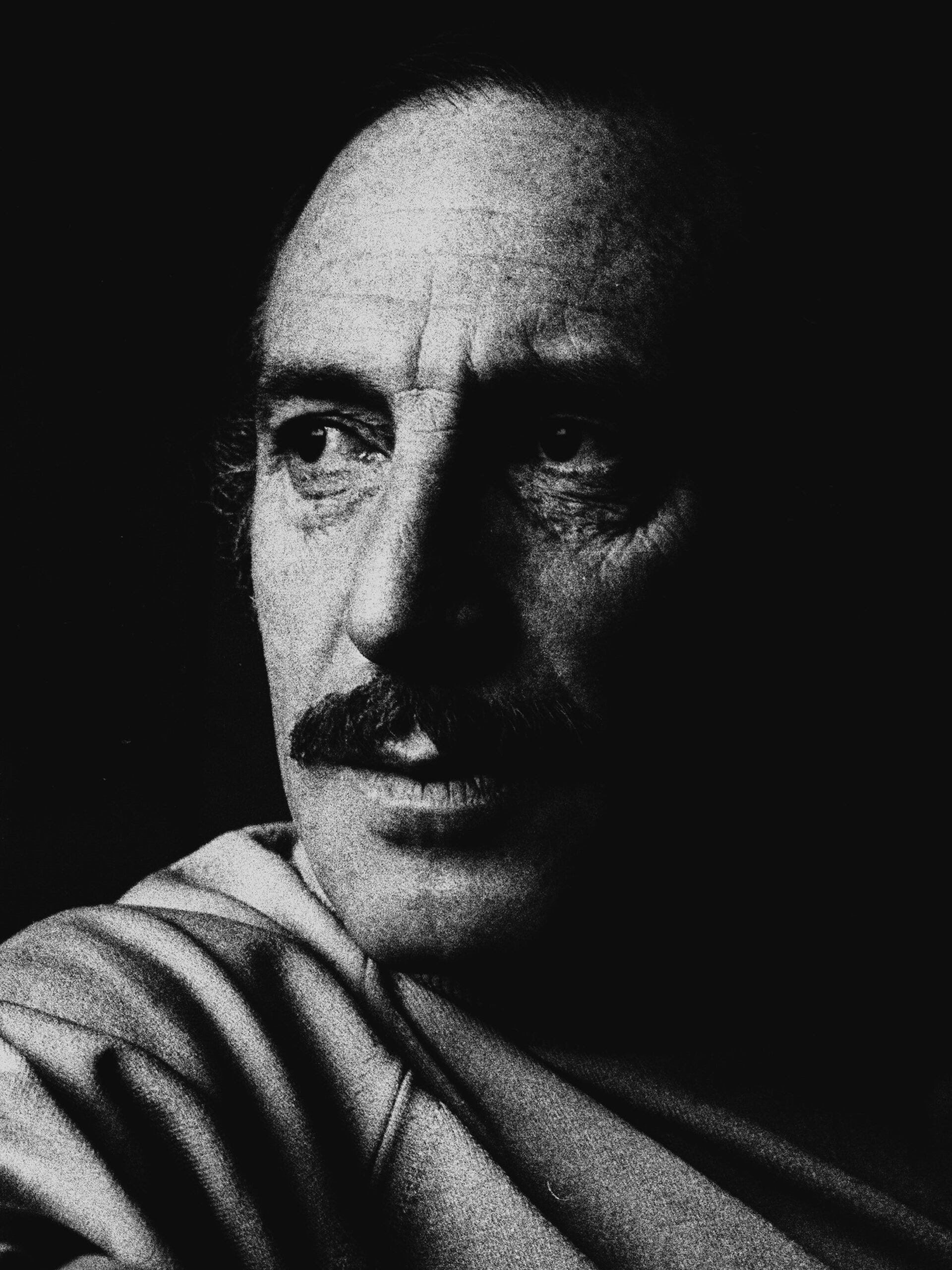
Orlando Letelier
Among those rounded up was Orlando Letelier, a highly respected man who had served in the Allende administration as ambassador to the United States, minister of foreign affairs, minister of the interior, and minister of defense. After being tortured in captivity, world pressure forced Pinochet to release him.
Letelier moved to Washington, D.C., where he joined a leftist think tank and began lobbying against the Pinochet regime. Pinochet and his national-security establishment deemed Letelier to be a grave threat to Chilean “national security.”
On September 21, 1976, Letelier was killed by a car bomb on the streets of Washington, D.C., along with his young assistant Ronni Moffitt.
It was determined that Pinochet’s secret Gestapo-like internal police force, which was called DINA and which worked with the CIA, had orchestrated and carried out the Letelier assassination. Among those convicted of the crime was a DINA agent named Michael Townley, who was a U.S. citizen.
As part of what was clearly a sweetheart deal, Townley pled guilty in U.S. District Court as part of a plea bargain with U.S. officials. Get this: He was sentenced to only ten years in jail for what amounted to the cold-blooded murder of two innocent people. To put that in perspective, compare it to the 22-year jail sentence that a U.S. District Judge recently meted out to a man convicted of simply participating in the January 6 protests. Townley was also given immunity from prosecution in Chile for another national-security assassination in which he had allegedly been involved.
But that’s not all. After serving only 62 months in jail, get this: He was admitted into the federal witness protection program! That meant that the feds gave him a secret identity and let him live a normal life somewhere in the world.
The Letelier assassination has always been blamed on Pinochet. Is it possible that the CIA, working with DINA, was also embroiled in that assassination, on grounds of “national security”? My hunch is that those records relating to Chile that the CIA steadfastly continues to keep secret would help provide an answer to that question, which, needless to say, would be a good reason for wanting them to kept secret.
Bio-Pharmaceutical Censorship Complex Attacks Spike Detoxification Protocol
Syndicate Fact Checkers Confirm Empiric Regimen is Valuable for Post-Acute Sequelae after SARS-CoV-2 Infection and COVID-19 Vaccination
By Peter A. McCullough, MD, MPH | Courageous Discourse | August 31, 2023
It took less than a day since our Base Spike Protein Detoxification Protocol was published for the Biopharmaceutical Complex to come out with syndicate social media allies discrediting the most hopeful news long-COVID and vaccine suffers have heard since the start of their misery.
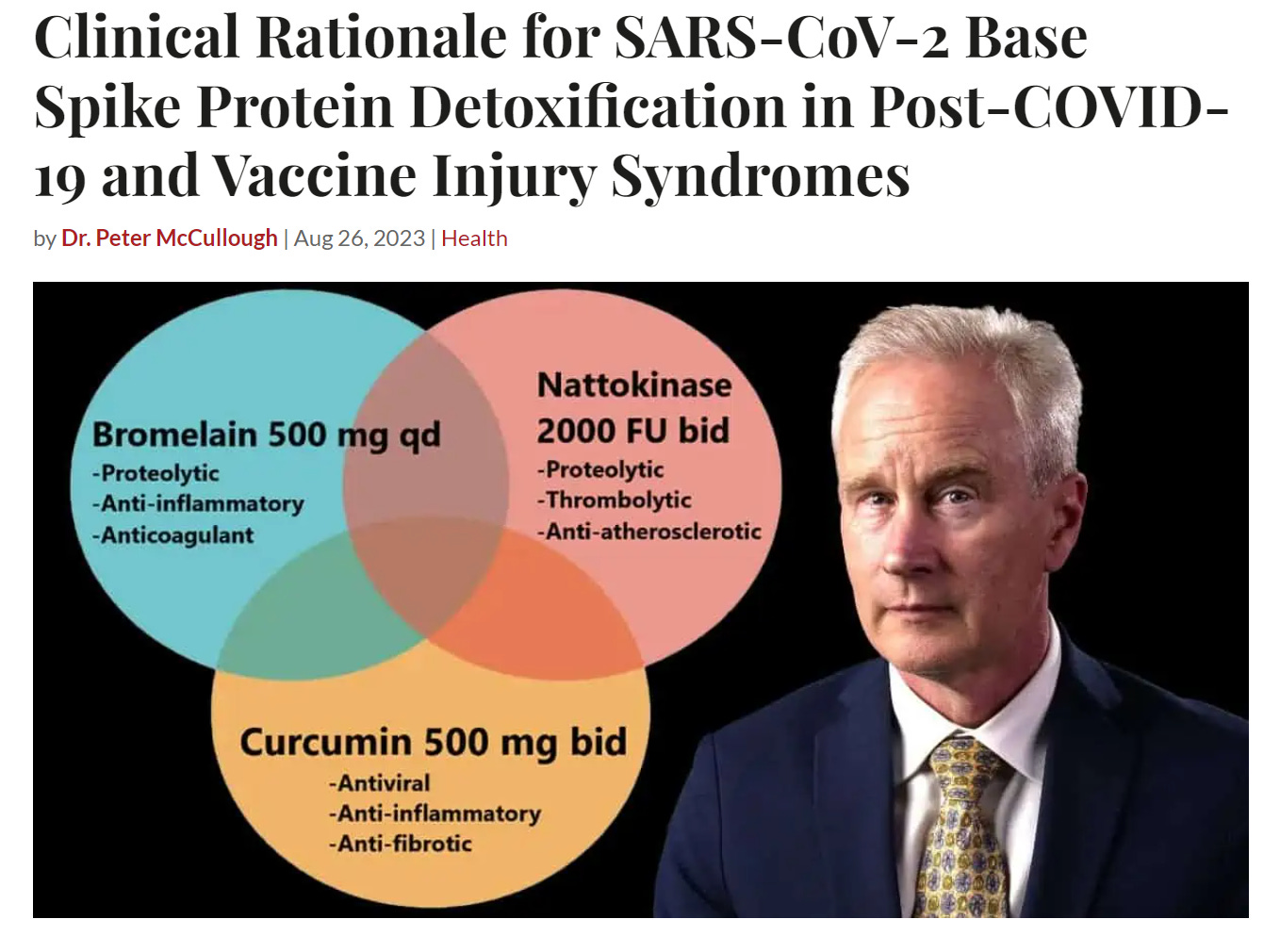
Syndicate fact checker Science Feedback, issued an unsupported false counterclaim on Instagram given below.
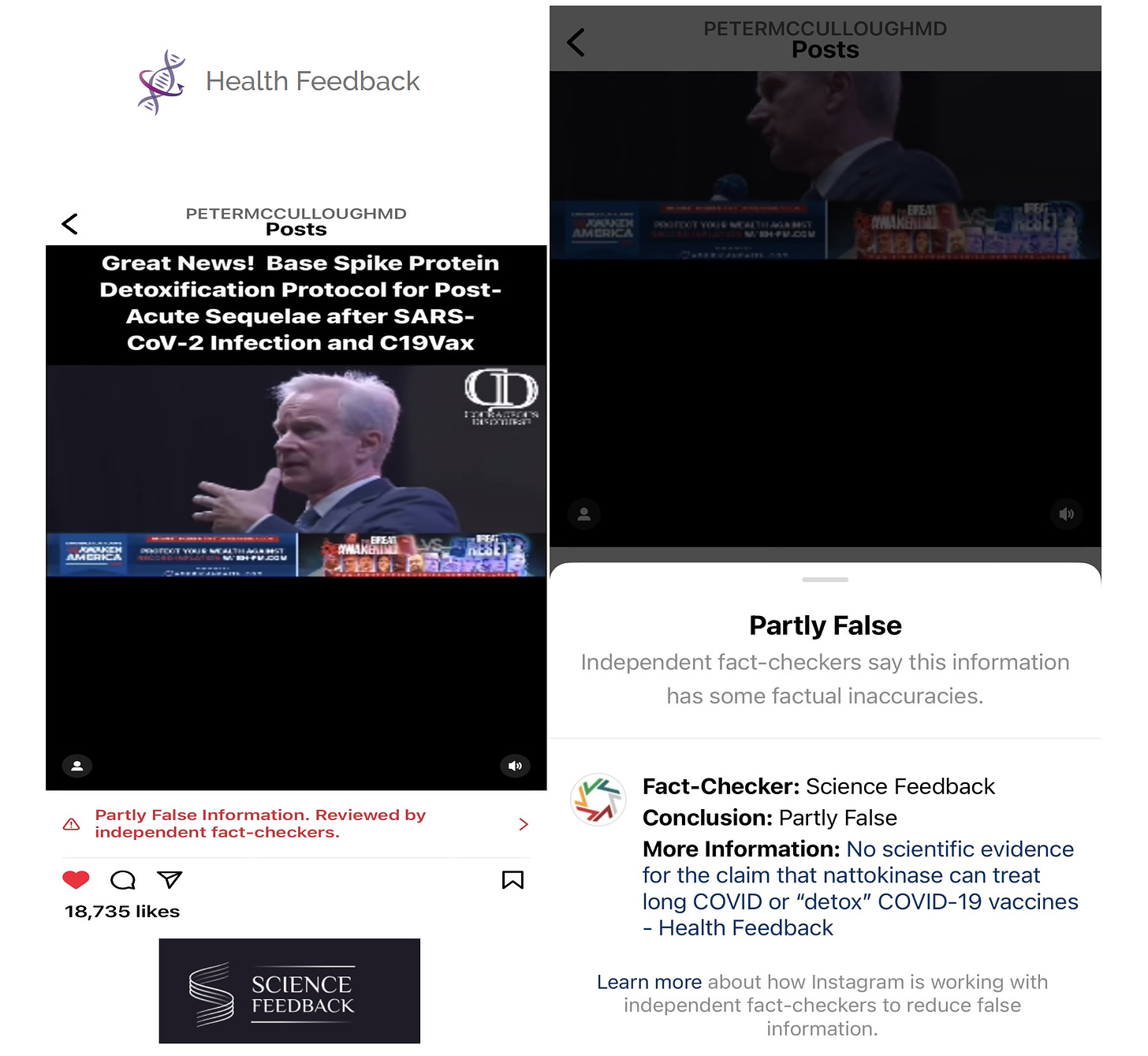
Science Feedback, a science and climate blogging organization with no foundation in peer-reviewed medical publications, is not advised by prominent physicians working in the COVID-19 field. Their major donor is former Microsoft and Apple executive Eric Michelman who is also a noted Democrat supporter, donating money to the Presidential campaigns of Barack Obama and Joe Biden. Michelman is also a climate change activist, founding a climate change advocacy organization and publicly supporting a carbon tax.
LinkedIn pulled a post indicating the COVID-19 vaccine causes more post-acute sequelae than SARS-CoV-2 which is my clinical opinion supported by the data. Base Spike Detoxification is an approach a to both problems. LinkedIn uncredentialed anonymous content moderators obviously disagreed and continue to push the false narrative indicating that long-COVID is unassailable and the only answer is more genetic shots.

I have found it interesting that the fact checkers have never made claims against a myriad of drugs or supplements that were ineffective during the pandemic. They have exclusively targeted therapies with preclinical and clinical studies demonstrating signals of benefit and acceptable safety (iodine/xylitol nasal washes, vitamin D, hydroxychloroquine, ivermectin, budesonide). In a perverted way, the Biopharmaceutical Complex has confirmed Base Spike Detoxification is the path forward for so many patients suffering from long-COVID and or regretting the jab.
Peter A. McCullough, MD, MPH
President, McCullough Foundation
Dr. Pierre Kory: New York Times Guide to Fall Vaccine Shots Is ‘Disinformation’
By Michael Nevradakis, Ph.D. | The Defender | September 6, 2023
The New York Times on Sept. 1 published a “guide to fall vaccine shots,” which included recommending the general public get COVID-19, flu and RSV (respiratory syncytial virus) vaccines, and infants 6 months and older receive COVID-19 shots this fall.
Written by Times senior writer David Leonhardt, the guide warns about rising COVID-19 cases and the approaching flu season, before offering, “The good news is that there are vaccines and treatments that reduce risks from all major viruses likely to circulate this season.”
According to the Times, “This year, we should take a broader approach,” rather than “obsess over COVID.”
Peter Hotez, M.D., Ph.D., dean of the National School of Tropical Medicine at the Baylor College of Medicine — described by the Times as a “vaccine expert” — echoed that appeal. “It’s not only COVID you have to think about,” he said.
Hotez, Nirav Shah, M.D., J.D., principal deputy director of the Centers for Disease Control and Prevention (CDC), and other public health officials and experts quoted by the Times recommended Americans prepare for the upcoming fall and winter by getting the trio of COVID-19, flu and RSV vaccines.
None of these experts, however, addressed any of the potential safety risks posed by these vaccines.
Medical and public health experts who spoke with The Defender took a different view and questioned the Times’ guide, citing concerns about the safety and efficacy of vaccines for respiratory illnesses.
“Vaccines against respiratory illnesses have failed miserably,” said cardiologist Peter McCullough M.D., MPH. “America is wary of vaccines at this point, wanting to get on with life free of menacing vaccines, and are willing to seek early treatment, which is always the best way to handle infections, vaccinated or not.”
Pediatrician Dr. Liz Mumper, president and CEO of the Rimland Center for Integrative Medicine, told The Defender, “There have been no studies examining the effects of giving RSV vaccine, flu vaccine and COVID vaccine at the same time.”
“If you follow the advice in The New York Times article,” Mumper said, “be aware that your child will be part of post-marketing experimentation.”
Times still pushing vaccine propaganda
According to the Times, “The best defenses against COVID haven’t changed: vaccines and post-infection treatments,” which are “especially important for vulnerable people, like the elderly and immunocompromised.”
The federal government is “on track” to approve updated COVID-19 shots, designed to combat recent variants, in mid-September, the Times reported. Once they are available, “all adults should consider getting a booster shot.”
“COVID can still be nasty even if it doesn’t put you in the hospital,” the Times states. “A booster shot will reduce its potency.”
Hotez resurrected a claim heard often during 2021 and 2022, telling the Times, “Overwhelmingly, those who are being hospitalized are unvaccinated or undervaccinated.”
Experts who spoke with The Defender disagreed.
Harvey Risch, M.D., Ph.D., professor emeritus and senior research scientist in epidemiology (chronic diseases) at the Yale School of Public Health, citing data from U.K. Public Health, said, “All-cause deaths ages 18+ are disproportionately among vaccinated people, whether one, two or three doses, compared to unvaccinated people.”
“The statistic quoted by Dr. Hotez is false,” Risch said.
Brian Hooker, Ph.D., senior director of science and research for Children’s Health Defense (CHD) said, “The new booster simply hasn’t been tested to affirm any assertion of protection. The original trials on children were laughable as they looked at antibody titers rather than actual disease prevention.”
McCullough told The Defender, “The COVID-19 vaccines have been a safety debacle with record cases of myocarditis, blood clots, stroke, and all-cause mortality.”
Despite the injury and mortality reports and the Times’ admission that the risk of COVID-19 to young children is “very low,” Shah nonetheless recommended children as young as 6 months of age get the COVID-19 booster shots this fall.
“Do you want to see your grandpa … [and] grandma?” Shah asked in the Times. “Are you really sure you’re not going to give COVID to them?”
Experts who spoke with The Defender refuted Shah’s advice.
Dr. Pierre Kory, president and chief medical officer of the Front Line COVID-19 Critical Care Alliance (FLCCC), said “There is no medical justification for a healthy 6-month-old or older child to be vaccinated for COVID-19,” adding:
“There is so little data available on the safety of the COVID-19 vaccine in children that to give blanket recommendations like Shah is doing creates an unnecessary risk to children’s health.
“We simply do not know enough about the COVID-19 vaccines to make such broad recommendations. Additionally, COVID-19 is highly treatable in children and poses very little risk to a healthy child.”
Mumper told The Defender, “Any official who advocates that children take a vaccine to protect grandparents has not read the medical literature carefully.” She said, “After doing a deep dive on the risks and benefits of COVID vaccines in children, I remain steadfastly opposed to their use in healthy children,” adding:
“Any immunity from COVID shots is short-lived and follows a period of immune suppression. Very worrisome adverse events like inflammation of the heart, triggering autoimmunity, interfering with autonomic functions and reproductive toxicity are well described in the medical literature.”
Not all countries following suit
Some countries began limiting COVID-19 vaccination for children last year. In April 2022, Denmark ended its blanket COVID-19 vaccination recommendation, including for children.
Now, Denmark recommends “booster-vaccination” only for people “aged 50 years and above and selected target groups.”
Earlier in 2022, public health authorities in Sweden and Norway opted not to recommend COVID-19 vaccines for children between the ages of 5 and 11.
Sweden now recommends COVID-19 vaccination only for those 50 and above (18 and above for high-risk groups), while Norway is still only recommending COVID-19 vaccines for those 65 and older (and as young as 5 for high-risk groups).
In March of this year, the World Health Organization (WHO) said healthy children and adolescents ages 6 months to 17 years have a “low disease burden” and are therefore low priority for vaccination.
In June, Australian public health officials said Moderna’s COVID-19 vaccine is “no longer available” for children under 12, and in January, U.K. public health authorities ended their booster program for those under 50.
COVID vaccine recommendations ‘not science, not medicine, not public health’
Dr. Meryl Nass, an internist and member of CHD’s scientific advisory committee, told The Defender that while public health authorities and the media continue to recommend COVID-19 vaccines, none of them have been fully licensed in the U.S., as all such vaccines are available under Emergency Use Authorization (EUA) only.
In May 2022, the U.S. Food and Drug Administration (FDA) said that COVID-19 vaccines for kids under 6 would not have to meet the agency’s 50% efficacy threshold required to obtain an EUA.
CDC data released in September 2022 showed that more than 55% of children between 6 months and 2 years old had a “systemic reaction” after their first dose of the Pfizer-BioNTech or Moderna COVID-19 vaccines.
“The CDC, criminally, claims the (authorized) vaccines are ‘safe and effective,’” Nass said, adding:
“That is a term of art that is only allowed to be used for licensed vaccines and drugs. No licensed COVID-19 vaccine is available in the U.S. Public health is supposed to balance benefit and risk.
“This is not science. Not medicine. Not public health.”
Flu vaccines have demonstrated ‘declining efficacy’
According to the Times, “The most immediate step worth considering involves R.S.V.” On Sept. 5, the CDC issued a health advisory warning of rising RSV cases in parts of the U.S., particularly among children and babies.
Last month, the CDC signed off on the first-ever monoclonal antibody vaccine Beyfortus for the prevention of RSV, for babies up to 8 months old.
Also last month, the FDA approved an RSV vaccine for pregnant women, despite concerns raised by some medical experts about premature births identified during clinical trials. In May, the FDA approved Pfizer’s Abrysvo and GlaxoSmithKline’s Arexvy RSV vaccines for people 60 and older.
The Times quoted Ashish Jha, M.D., MPH, former White House COVID-19 adviser and now dean of Brown University’s School of Public Health, who said, “If you’re 60 or over, you don’t want to get into November without having an RSV vaccine.”
And though there is no RSV vaccine approved for administration to children, the Times said that “parents may want to ask their pediatrician” about monoclonal antibody treatment for children under 8 months of age.
According to Hooker, “the RSV vaccine given to pregnant women could not even make a 20% threshold for protection (as specified by the FDA) against lower respiratory RSV infection.”
Supporting the push for the flu vaccine, the Times and experts such as Jha said, “The flu officially kills about 35,000 Americans in a typical year,” but “the flu’s toll would be lower if more people got a vaccine shot,” noting that “In recent years, less than half of Americans have done so.”
Jha added, “We underestimate the impact that respiratory viruses have on our population. The flu can knock people out for weeks, even younger people.” Jha pointed out that flu can make heart attacks and strokes more common as well.
Kory, however, told The Defender that the COVID-19 vaccines have made people more susceptible to other respiratory illnesses, like the flu and RSV:
“In my practice, we treat many vaccine-injured patients who are now more susceptible to the flu, RSV and many other viruses. The COVID vaccines cause many to present as if they have an autoimmune disease and now respond with more severe symptoms to common viruses like the flu.”
Risch, meanwhile, said, “Traditional flu vaccines are considered to be safe for most people” and may be a “reasonable” option for them, but “this should be discussed with one’s healthcare provider.”
“The flu vaccines seem to have had declining benefit over the last 10-15 years, to the point now that they may confer only a 30% benefit,” Risch added.
And according to Hooker, “The flu shot is also notoriously bad at protection against the flu and there are very few data regarding this season’s flu shot efficacy.”
‘Ludicrous’ public health messaging
Shah’s recommendation that children as young as 6 months get a COVID-19 shot this fall follows in a long line of questionable advice and claims disseminated by public health officials, some of which were later contradicted.
In a May 2021 MSNBC interview, Dr. Anthony Fauci, then-head of the National Institute of Allergy and Infectious Disease (NIAID), said:
“Although you don’t like to see breakthroughs, the fact is, this is one of the encouraging aspects about the efficacy of the vaccine. It protect you completely against infection. If you do get infected, the chances are that you’re going to be without symptoms, and the chances are very likely that you’ll not be able to transmit it to other people.”
Fauci’s statements, however, failed to account for the many examples of breakthrough infections with severe symptoms and hospitalization.
After years of official “safe and effective” claims, in YouTube’s new “medical misinformation” policy introduced Aug. 15, “Claims that any vaccine is a guaranteed prevention method for COVID-19” are prohibited. Fauci’s videos from 2021, notably, are still up on YouTube.
In April 2020, Fauci said that remdesivir will become the “standard of care” for treating COVID-19. But numerous victims of COVID-19 hospital protocols prescribed by the CDC have come forward in recent months claiming that remdesivir was administered without permission of the patients or their families and contributed to further injury or death.
Similarly, former CDC Director Rochelle Walensky said in March 2021 “Our data from the CDC today suggests … that vaccinated people do not carry the virus, don’t get sick … can’t transmit it to others.” She doubled down on these statements during a House Select Subcommittee on the Coronavirus Pandemic hearing in June, asserting that her statement “was generally accurate.”
Hooker said these statements were “obviously patently false, as the vaccines distributed in the U.S. at that time [in 2021] were not tested for transmission and there was evidence of ‘breakthrough’ infections even in the clinical trials.”
“This obviates any protection to ‘Grandma and Grandpa’ through children getting vaccinated against COVID-19,” Hooker added.
Also in 2021, Walensky recommended wearing pantyhose over a mask to ensure a tight fit.
Nass called such public health messaging “ludicrous,” noting that Walensky’s pantyhose recommendation “quickly disappeared” because it “had connotations the CDC was not willing to deal with.”
Kory criticized the Times’ fall vaccine guide, characterizing it as an example of “disinformation.”
“The New York Times is carrying the disinformation that continues to come from the CDC and other government health agencies,” he said. “This is one of the reasons that the public continues to lose trust in the media and our government.”
As a result, public health officials “create a mockery of how medical and scientific evidence is used to inform patient care decisions and public health policy,” Kory said.
Other experts who spoke with The Defender suggested taking vitamins to boost one’s immune system, rather than a series of vaccinations.
“For the immune system to defend against respiratory viruses, all people should take daily vitamin D to achieve blood levels of 50 or greater,” Risch said. “This is typically 5,000 units per day for a 150-lb person, but can be adjusted up or down according to body weight.”
“Serious RSV infections generally occur only in the youngest young and the oldest old. People in these categories should discuss this with their doctors,” he added.
Michael Nevradakis, Ph.D., based in Athens, Greece, is a senior reporter for The Defender and part of the rotation of hosts for CHD.TV’s “Good Morning CHD.”
This article was originally published by The Defender — Children’s Health Defense’s News & Views Website under Creative Commons license CC BY-NC-ND 4.0. Please consider subscribing to The Defender or donating to Children’s Health Defense.
Tactics for shutting down debate: Pandemic Preparedness narratives in the UK Parliament
During the UK Parliamentary debate on the WHO Treaty there was a noticeable contrast between those supporting the petition and those opposing it. This article analyses the arguments made by those rejecting the petition, drawing on insights from Behavioural Science.
BY ALICE ASHWELL, SINEAD STRINGER, DR DAVID BELL | PANDA | AUGUST 25, 2023
On 17 April 2023, a petition [1] was debated in the UK Parliament calling for the Government “to commit to not signing any international treaty on pandemic prevention and preparedness established by the WHO, unless this is approved through a public referendum.” The petition had received 156,086 signatures. Of the thirteen Members of Parliament (MPs) who spoke during the debate [2] four strongly supported the motion, three took a more neutral stance, and six strongly opposed the petition or elements of the argument. Examples of arguments in support of the petition can be viewed in a collation of clips taken from the video of the debate [3].
There was a noticeable contrast between the arguments presented by MPs supporting the petition — who exhibited concern for the constituents who had signed the petition and approached them directly — and those opposing it. All those who, like the petitioners, were concerned about the growing power and influence of WHO and threats to national sovereignty were familiar with the contents of the so-called ‘pandemic treaty’ [4], since labelled the WHO CA+, as well as proposed amendments to the International Health Regulations (IHR) [5]. While some opposing the petition were also familiar with the document, others had not even read it, prompting Andrew Bridgen (MP for North West Leicestershire) to plead with members to do so.
Those concerned about these proposals presented well-reasoned arguments reflecting an understanding of the history of WHO [6], its many failures during Covid-19, and its current problematic relationships with non-state funders [7,8]. Those supporting WHO’s proposals uncritically supported WHO, focusing on its public health successes and ignoring obvious concerns. Perturbed by the lack of parliamentary scrutiny of the Covid response measures, some MPs worried that the UK government, having played a leadership role in drafting the treaty, might ratify it without parliamentary debate. This reservation was flatly denied by those opposing the petition, with some denying that WHO would in any way threaten UK sovereignty, that its role would remain advisory in nature, and that those opposing the treaty were in effect opposing international cooperation.
This article analyses the arguments made by those rejecting the petition, drawing on insights from Behavioural Science. During the debate, these MPs tended to rely on the following tactics:
- Using derogatory language or false claims to discredit speakers and their arguments
- Making inaccurate and unsubstantiated statements
- Using globalist slogans
- Patronising the petitioners
- Using the debate as an opportunity for party-political point-scoring
- Downplaying or normalising threats to sovereignty
- Promoting internationalism over sovereignty.
The debate was a sad reminder that it is not necessarily the quality of arguments, or even the sincerity of the individuals making them, that wins the day.
1. Using derogatory language and labels to discredit speakers and their arguments
A tactic used to shut down discussion and debate was to attach derogatory labels to those supporting the petition. In the debate, two such labels used in relation to the Covid event and the pandemic treaty were ‘conspiracy theory/theorist’ (ten references made by four speakers) and ‘anti-vax’ (one speaker). Some opposing the petition used these labels early in their presentations, their comments and tone indicating that these were untenable positions that no sane person could possibly subscribe to.
Using such labels at the beginning of the debate set the scene, immediately employing a behavioural science tactic to prime the participants and the wider audience. Priming is a ‘nudge’ [9] tactic; techniques that are used to modify people’s behaviours or emotions in a way that is unconscious and therefore difficult to identify or counter. Priming [10] occurs when the emotional attachment or views held about one issue are then used to influence the emotional attachment on a separate and unrelated issue; an emotional contagion if you like. This can be utilised to produce a positive or negative relationship. Over the past three years in particular, the phrase ‘conspiracy theorist’ has become strongly and negatively associated with an archetype of someone whose views are not based in fact and who are not community minded, and therefore not socially acceptable. By stating in his introductory comments that “I have no time for conspiracy theories”, leader of the debate Nick Fletcher (MP for Don Valley) activated this already negative mental construct and associated it with the question of the WHO pandemic treaty. Whether this was purposeful or not is debatable but concerns about conspiracies do seem strangely placed in a debate which should be about publicly documented proposals, and UK and international legislation.
Similarly, Sally-Ann Hart (MP for Hastings and Rye), who herself was committed to representing the concerns of constituents who had signed the petition, warned that, “We must be wary of … conspiracy theories distorting the facts and scaring people. Transparency of debate is therefore needed to squash those conspiracy theories.”
Some comments could only be described as invective. Language such as that used by John Spellar (MP for Warley) was entirely inappropriate in the context of a Parliamentary debate:
… the poisonous cesspit of the right-wing conspiracy theorist ecosystem in the United States … an appalling subculture of those who live by conspiracy theories … Unfortunately, we have some people — a very limited number … who wallow in the realm of conspiracy theories.
The ‘conspiracy theorist’ label has become a catch-all term used to discredit numerous perspectives that disagree with the dominant narrative. It has also taken on the power of a curse, which those who hope to remain accepted by their peers must protect themselves from by declaring their immunity.
Another such label is ‘anti-vax’, used by Mr Spellar who interjected early in Mr Fletcher’s introduction:
I thank the hon. Gentleman … for highlighting both smallpox and polio. Is the fact of the matter not that it has been a worldwide vaccination programme that has enabled us to achieve that? Does that not demonstrate the falseness of the anti-vax campaigns?
This is another example of priming, where an exceptionally negative construct (anti-vax), which was set up in mainstream and social media over the past few years, is associated with those who may have genuine concerns about the powers being delegated to a non-elected body. When attached to a person, the related term ‘anti-vaxxer’ is an example of an ad hominem attack [11], which is an example of a false argument. Instead of the argument being discussed on its own merit in terms of data or facts, the audience and other participants are misdirected toward a perceived ‘failing of character’ in those who might have a different view and legitimate questions.
Mr Spellar used this terminology to discredit those wary of vaccinations, in particular the Covid-19 genetic therapy. He continued his interruption of Mr Fletcher’s introductory remarks with the following tirade against academic gastroenterologist Dr Andrew Wakefield who, in 1998, co-authored a research study in The Lancet, linking inflammatory bowel symptoms in 12 autistic children to the Measles-Mumps-Rubella (MMR) vaccine:
Part of this argument has been about vaccination. We go back to Dr Wakefield and that appalling piece of chicanery that was the supposed impact of the measles, mumps and rubella vaccine, which has now been completely exposed and discredited. Indeed Mr Wakefield is now no longer a recognised doctor.
This argument is an example of ‘false equivalence’ [12], another propaganda tool that has the effect of misdirecting the audience away from the key facts of the debate. Those who doubt the safety and efficacy of the novel Covid ‘vaccine’ have not necessarily questioned the safety and efficacy of all other vaccines, and should therefore not be considered ‘anti-vaxxers’. By associating arguments against the Covid shot with the MMR vaccine debacle, the purpose is to tar objections to this entirely novel and inadequately tested therapy with the same brush as arguments levied against an earlier, unrelated, conventional vaccine.
Mr Spellar’s interjection also reflects another tactic of those who wish to quash debate, namely the use of threats to intimidate those who might be inclined to consider alternative narratives. The story of the suppression of harms caused by the MMR vaccine has much in common with the current censorship of reports of serious adverse events and deaths following the Covid injections. Raising the 25-year-old case of Dr Wakefield who is “no longer a recognised doctor” represents a threat, already a reality for many ethical doctors and scientists, that those who speak out against the harms caused by the Covid injections face being dismissed and deregistered.
2. Using inaccurate and unsubstantiated statements
Justin Madders (MP for Ellesmere Port and Neston) also used derogatory language in denying concerns about threats to national sovereignty posed by global organisations such as WHO:
On the absurd side, a narrative has been created that the World Health Organization is a body intent on world domination. Borrowing tropes from conspiracy theories, I found one website referring to the WHO as ‘globalists’ … That sentiment is clearly ludicrous, as is the reference to the WHO being owned by Bill Gates or the Chinese Government.
The treaty has nothing to do with Bill Gates, and it is not the first step in creating a world-dominating authoritarian state.
The first sentence in the quote above is an example of a behavioural science nudge tactic called ‘framing’. In framing, words, metaphors and perspectives are used in a way that makes the message more attractive and activates certain emotional reactions. The image created by the MP’s statements is quick to evoke a mental picture of a film-like villain plotting to take over the world. Being ‘absurd’ (untrue) and a ‘narrative’ (story), this should clearly be discounted.
Beyond the language used, Mr Madders’s claims are not substantiated and as such are simply opinions. Firstly, as the United Nations (UN) agency responsible for global public health, WHO can indeed be considered a ‘globalist’ organisation, along with numerous other international bodies such as other UN agencies, the World Bank and International Monetary Fund, the World Economic Forum (WEF), and international corporations and foundations. But, largely due to the growing influence exerted over national governments by WHO and other unelected supra-national bodies during Covid, the term ‘globalist’ has taken on more sinister connotations. Its use by those critical of the dominant narrative may account for Mr Madders treating the term as a ‘red flag’.
Secondly, Mr Madders may be unaware of the significant changes to WHO’s funding model that have taken place in recent years, with assessed contributions [13] from Member States having declined to less than 20% of WHO’s financing, and Bill Gates now being one of its major funders. WHO’s own website records that, as of Quarter 4 of 2021, the Bill and Melinda Gates Foundation (BMGF) was their second-largest donor (9.49%) after Germany [14]. While on this point, Steve Brine (MP for Winchester) asserted that “the UK is the second-largest contributor to the WHO”, which is incorrect; in fact, the UK is the sixth-largest contributor (5.99%). Gates is also a founding partner and second-largest contributor to Gavi, the Vaccine Alliance, which is the fifth-largest funder of WHO (6.43%). And with 56.14% of BMGF’s funding going to support WHO’s Headquarters [15], it is unlikely that “The treaty has nothing to do with Bill Gates”, as asserted by Mr Madders.
Many unsubstantiated statements regarding Covid ‘vaccine’ safety and effectiveness were also made during the debate. Anne-Marie Trevelyan (Minister of State, Foreign, Commonwealth and Development Office) asserted that “AstraZeneca saved lives worldwide”, despite the use of this adenovirus viral vector vaccine being restricted or suspended in numerous countries due to many reports of recipients suffering blood clots [16].
Similarly, Mr Spellar, referring to the Pfizer mRNA ‘vaccines’, stated that it “certainly was not unproven or unsafe, and it had a huge beneficial impact across the world.” There is, in fact, mounting evidence showing that the Covid injections, released under emergency use authorisation before adequate testing could be undertaken, have been neither safe nor very effective. All vaccine adverse events tracking systems, including the Medicines and Healthcare products Regulatory Agency (MHRA) Yellow Card system in the United Kingdom, the European Medicines Agency’s EudraVigilance system in the European Union, and the Vaccine Adverse Events Reporting System (VAERS) in the United States, have recorded unprecedented numbers of serious adverse reactions, including deaths. Furthermore, an increasing number of studies are reporting evidence of a broad range of serious adverse events [17]. An independent systematic review of serious harms of the Covid-19 vaccines, currently in pre-print, adds significant weight to these findings [18].
Furthermore, after a group of scientists and medical researchers successfully sued the United States Food and Drug Administration (FDA) under the Freedom of Information Act (FOIA) [19] to release many thousands of documents related to licensing of the Pfizer-BioNTech Covid-19 vaccine, it was revealed that early trials had resulted in hundreds of adverse reactions [20 (Appendix 1)]. This information had been withheld from the public by the authorities.
The injections have also been been unable to stop SARS-CoV-2 infection or transmission, with Dr Peter Marks of the FDA admitting in a letter responding to a citizens’ petition that proof of efficacy had not been required for authorisation [21]:
It is important to note that FDA’s authorization and licensure standards for vaccines do not require demonstration of the prevention of infection or transmission. (p.11)
Furthermore, the applicable statutory standards for licensure and authorization of vaccines do not require that the primary objective of efficacy trials be a demonstration of reduction in person-to-person transmission. (p.13)
In addition, there is growing concern that claims that the boosters prevent severe illness and deaths amount to a “wishful myth” [22].
Three years of pro-vaccine propaganda and ongoing efforts to censor reports of vaccine harms have effectively blinded many people to the possibility that the rollout of Covid injections may be related to the sharp rise in excess deaths now being experienced in many countries [23; 24]. This is despite the fact that many vulnerable people, such as the elderly and those with multiple comorbidities, had died previously as a result of Covid-19, lockdown measures and medical interventions.
Despite having had the opportunity to peruse the evidence presented by the petitioners, Mr Spellar was still sure that the vaccination campaign had been a huge success, stating:
… mobilisation of [the] intellectual power and production capacity [of the major pharmaceutical companies] in producing a vaccine in record time to stem the tide of covid was absolutely magnificent.
3. Using globalist slogans
Just as certain terms (conspiracy theorist, anti-vaxxer) have become modern-day curses causing those so labelled to be socially shunned, so have other terms and slogans become the mantras of those wishing to demonstrate their membership of the mainstream. These catchy but often meaningless slogans are building blocks of a collective reality, introduced and normalised through the presentations, publications and public relations communications of powerful individuals, and globalist organisations such as the UN, WHO, WEF and BMGF.
Mr Madders, for example, echoed Bill Gates [25] when he stated: “We need to be better prepared for the next pandemic.” This also represents an unsubstantiated claim, as it ignores the reality that pandemics are actually extremely rare. Since 1900, only five pandemics, each responsible for over one million deaths, have broken out, namely the Spanish flu (1918-1920), the 1957-1958 influenza pandemic, the Hong Kong flu (1968-1969), the AIDS pandemic (ongoing since 1981), and Covid-19 [26]. It also powerfully illustrates the effectiveness of presupposition, where the speaker inserts a statement or assumption as a fact agreed by all and therefore requiring no evidence of its own. The phrase “the next pandemic” provides a nudge by inserting itself unconsciously into the psyche of the listener and readily bypassing the conscious thought process [27].
The Covid event did, however, demonstrate that a pandemic can mean big gains for certain people. It can literally be used to “reset our world” [28], creating unprecedented numbers of billionaires while destroying the lives of billions or others, stripping citizens of their rights and freedoms, unleashing a tyrannical and repressive security apparatus, and creating a ‘polycrisis’ [29], in response to which governments and even citizens will beg for unprecedented levels of global control.
One of the most meaningless slogans, which appears to have been invented by the UN at the beginning of the Covid event, and which has become a mantra reiterated by countless organisations and individuals, is ‘nobody is safe until everyone is safe’. It is not clear what this unsubstantiated statement even means, but what is clear is that it is demonstrably untrue. Nonetheless, this mantra was recited in some form by four speakers, with Anne McLaughlin (MP for Glasgow North East) stating, “It is only when the world is safe from Covid-19 that any of us are truly safe.”
Not only does such an obvious fallacy, a propaganda trope, have no place in a parliamentary debate, its use as some type of rational fact by four MPs across the political spectrum does bring into question the quality and independence of any literature provided to them ahead of this event. It is worth considering this much-used slogan and its ramifications in terms of any safety incident. The ideology underpinning it is one of collectivism, even socialism, in that the individual and their relative safety is merely incidental compared to the safety of all. Some might argue that this contradicts the fundamental principles of the International Declaration of Human Rights, which puts the individual at its core. Certainly, it is not an idle statement and reflects the underlying changes being proposed by WHO, which is seeking under their ‘One Health’ initiative [30] a more far-reaching remit where ‘everyone’ will include not only all sovereign citizens of participating nations, but animals and the environment as well.
Slogans infuse documents produced by UN agencies such as WHO. In referring to the zero-draft of the Pandemic Treaty, Preet Kaur Gill (MP for Birmingham, Edgbaston) used a number of them, including: ‘leave no country behind’, ‘global health is local health’, ‘we are stronger together’, and ‘vaccine equity’. Trotting out vacuous statements like this might be appropriate at a protest rally but should have no place in a parliamentary debate. Slogans are rallying cries. They are right-sounding and apparently well-meaning, even moral, in nature. Their repetition is quite hypnotic and they seem to act as spells, potentially binding those who faithfully recite them to an outcome they may live to regret [31].
The repetitive nature of any phrase or slogan is a tool of both behavioural science and propaganda. Both the repetitive effect and the rhythmic phrasing allow such phrases to easily enter the unconscious. Over time we simply accept the statement as true, as it bypasses our conscious thought processes that might critically assess such a phrase and see it as false or simply nonsensical. The use of such tactics, particularly by people in positions of authority or trust, allow the effect to be amplified. This is known as the ‘messenger effect’. Simply put, we are more likely to trust the message because it was issued by someone representing expertise and trust [32].
One such case relates to the slogan ‘vaccine equity’. Referring to the “terrible divide in coverage between richer countries and the global south,” Ms Gill lamented that “just 27% of people in low-income countries have received a first dose of a Covid vaccine.” What she does not go on to say, disappointingly, is that there was no correlation between high vaccination rates and low death rates from Covid-19. Indeed, some low-income countries (especially in Africa) with young populations and low vaccination rates experienced very low death rates due to Covid-19, while the USA, one of the richest and most highly vaccinated countries in the world, had one of the highest Covid-19 death rates [33].
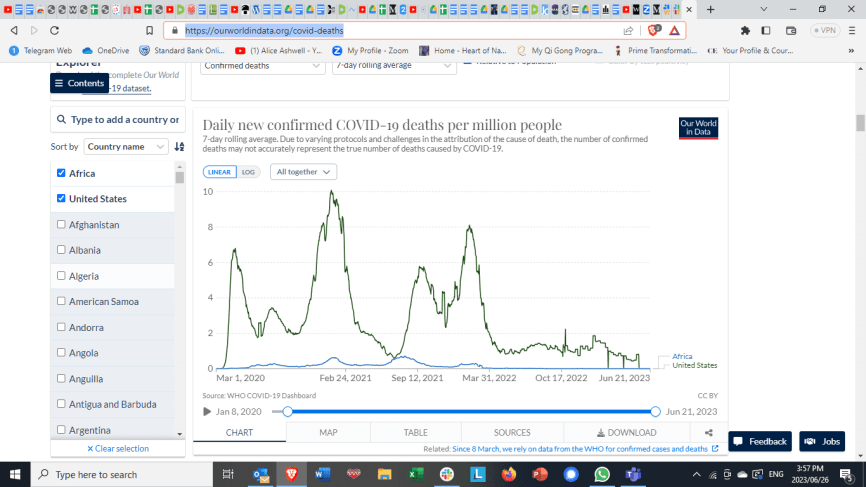
Figure 1: Comparing Covid-19 deaths in Africa and the USA [33]
4. Patronising the petitioners
Regarding the aim of the petition, which was to request that a referendum be held before the Government could agree to signing the pandemic treaty, Mr Fletcher declared:
Referendums are divisive; they polarise positions and leave a lasting legacy of division. Whether a referendum is appropriate is for the Government to decide, and if they think it is, they must make all the facts known. I suggest that petitioners, while playing their part in the education process, must do so in a sensible manner.
The patronising tone of this comment is ironic. While the referendum on Brexit did indeed sharpen the edge between ‘Leavers’ and ‘Remainers’, the UK Government’s Covid-19 response was possibly even more effective at dividing the populace into camps and pitting one side (those who complied with the mandates) against the other (those who chose not to comply). Furthermore, insisting that citizens should be “sensible” ignores the fact that constituents in favour of a referendum contacted their MPs to raise thoughtful, well-researched concerns, while some MPs arguing against the referendum tended to rely on slogans, unfounded generalities, and invective, rather than “sensible”, factual, reasoned arguments.
Mr Spellar not only used disparaging language to deny the request for a referendum, but also predicted that it would be rejected by the House:
We cannot be arguing to have [a referendum] for every bloomin’ issue, every policy and every treaty. … What we are seeing is overreaction and hysteria, and I would argue that we should give the petition a firm rejection, as I am sure we would do if it ever came to the Floor of the House of Commons.
Inasmuch as MPs in the UK are supposed to represent and take seriously the concerns of their constituencies, it is disturbing that an elected Member should respond with such contempt to a petition signed by more than 150,000 people.
5. Party-political point-scoring
Disappointingly, despite the importance of the debate and the number of citizens who had taken the time to express their concerns about the pandemic treaty, Ms McLaughlin and Ms Gill spent much of their time criticising the Conservative Government’s response to the Covid event. Instead of focusing on the debate, they chose to score party-political points by indicating the readiness of the Scottish National Party and Labour Party to implement WHO’s agenda, including enabling vaccine equity; sharing technology, knowledge, and skills; and strengthening global health systems using, ironically, the failing National Health Service as a model.
6. Downplaying or normalising threats to sovereignty
The Covid-19 event has been a classic case of the popular dialectic of ‘Problem-Reaction-Solution’. The engineered over-reaction to the problem of Covid-19 (whether or not there was an engineered virus), and the subsequent societal fall-out, have left traumatised people and their governments desperate to be better prepared for the much-anticipated ‘next one’, and ready to accept a ‘solution’ that few would have countenanced just four years ago.
In her presentation, Ms Gill expressed the need for an international approach to tackle transnational threats and improve global public health:
Negotiating an effective international treaty on pandemic preparedness is an historic task, but, if we can achieve it, it will save hundreds of thousands of lives.
If we can use the WHO to support basic universal healthcare around the world, infectious diseases are less likely to spread and fuel global pandemics.
It is through multilateral efforts, strengthened through international law, that we can ensure that the response to the next pandemic is faster and more effective, and does not leave other countries behind.
… the Opposition absolutely support the principle of a legally binding WHO treaty that sets the standard for all countries to contribute to global health security.
We need a binding, enforceable investment and trade agreement among all participating countries to govern the coordination of supplies and the financing of production, to prevent hoarding of materials and equipment, and to centrally manage the production and distribution process for maximum efficiency and output in the wake of a pandemic being declared.
The last few comments (underlined above) point to one of the most worrying issues for those concerned about sovereignty: if accepted, the pandemic treaty and amendments to the IHR would no longer be non-binding recommendations subject to government oversight but would become legally binding. WHO would be given legislative powers to mandate medical and non-pharmaceutical interventions; to commandeer intellectual property, production capability and resources; and to sanction those who refused to comply.
Some MPs downplayed concerns about these threats to national sovereignty. Mr Madders stated that “creating a global treaty [was] entirely reasonable and responsible” and that it was possible to “both protect our values of freedom and democracy and work more closely with other countries in the face of a global threat.”
Mr Spellar agreed, noting that they were “signatories to hundreds of treaties around the world” and that signing trade treaties was “part of engaging with the world.” He added that during Covid, “international scientific cooperation” had “enabled us to produce a vaccine within something like twelve months instead of the normal ten years … [thus] stabilising the situation.” What was not mentioned is that it was not primarily international collaboration among scientists that allowed the rapid deployment of these Covid-19 countermeasures, but the institution of emergency use authorisations, which allowed inadequately tested products to be dispensed worldwide. Far from “stabilising the situation”, these injectables continue to cause unprecedented numbers of adverse events and deaths, resulting in ongoing destabilisation of society post-Covid.
Steve Brine (MP for Winchester) observed that, “We cede sovereignty through membership of organisations. We cede the sovereignty to go to war by being a member of NATO.” It is true that all manner of treaties exist between countries and that these are essential for international cooperation; but cooperating as sovereign nations is entirely different to taking instructions from an unelected, supra-national body that is unaccountable to populations. Once in place, WHO’s pandemic treaty and the amendments to the IHR threaten to reduce national sovereignty, giving full power to WHO and its director-general to call pandemics and health emergencies and to regulate the responses of member states.
Those in favour of the pandemic treaty provided no evidence that a one-size-fits-all, legally mandated response to future pandemics would actually prove effective. In fact, Covid-19 was an object lesson in the foolishness of imposing the same public health ‘solutions’ on radically different nations and communities. In reality, mandating centralised protocols disrespects human rights, cultural diversity, national sovereignty, the scientific method, and innovation in healthcare. Instead of trusting human ingenuity to create a multitude of locally appropriate responses, it increases the risk of spectacular failure should the single global solution prove ineffective.
In an attempt to counter fears about a loss of sovereignty, Mr Madders stated that “We live in a liberal democracy and … are determined to keep it that way.” He denied people’s:
fears that the treaty will restrict freedom of speech to the extent that dissenters could be imprisoned, that it will impose instruments that impede on our daily life, and that it will institute widespread global surveillance without warning and without the consent of world leaders … [and that] Under this treaty, those things will apparently be done without our Government having a say.
He did, however, acknowledge that the measures mentioned above were “already in the power of the Government under the Public Health (Control of Disease) Act 1984.” Referring, without giving any details, to “fact checkers” and an unnamed “WHO spokesperson”, he reassured citizens that “WHO would have no capacity to force members to comply with public health measures.” The tyrannical actions during Covid of governments worldwide against their own citizens — many of whom assumed that they did, in fact, live in a “liberal democracy” — makes one wonder why these governments would behave any more independently in future, especially if legally required to follow WHO’s dictates. The repressive regulations and laws passed in various countries since 2020 suggest that this is unlikely, as governments seem to have become addicted to the sweeping emergency powers granted them by this convenient global ‘pandemic’.
Mr Madders and Ms Gill also attempted to allay citizens’ fears by pointing out that there was “over a year of negotiations to go” and that the treaty “would still have to be ratified by the United Kingdom”. Ms Gill also commented that:
The draft treaty is primarily about transparency, fostering international cooperation, and strengthening global health systems … the very first statement in the zero draft text reaffirms “the principle of sovereignty of States Parties” [and that] the implementation of the regulations “shall be with full respect for the dignity, human rights and fundamental freedoms of persons.”
Noting the dismissive attitude of the majority of MPs to the petitioners’ concerns, there is little chance that another year of negotiations will convince the UK Government to reject the treaty.
7. Promoting internationalism over sovereignty
The UK, as an erstwhile imperial and colonial power, continues to play a leadership role internationally. This may be why some MPs, such as Ms McLaughlin, could not believe that WHO might threaten UK’s sovereignty:
The treaty would have absolutely no effect whatsoever on the UK’s constitutional function and sovereignty … [Imagine a] terrible situation whereby the UK might be unable to make its own decisions if it is outvoted by other countries … the UK is a leading member of the WHO and a primary architect of the treaty, so that is not what is happening here.
Anne-Marie Trevelyan (Minister of State, Foreign, Commonwealth and Development Office) also stressed that the UK was:
a sovereign state in control of whether we enter into international agreements … with its voice, expertise and wisdom, and our trusted partner status with so many other member states in the UN family, [it] is respected and listened to.
Ms Trevelyan also referred to the UK’s role as “a global leader, working with CEPI, Gavi and the WHO,” stating that she was “proud to lead the fundraising for Gavi and COVAX.”
A deep chasm appears to have formed between the UK Government and its people. The discussions during this debate suggest that a minority of MPs [3] [link to PANDA video] view themselves as representatives whose duty it is to serve their constituents and respond to their concerns. Most, however, appear to have shifted their focus and allegiance to the international sphere, identifying as members of the “UN family”, playing a leading role in developing WHO’s pandemic instruments, and raising funds, which will ultimately benefit vaccine manufacturers and their investors, impoverishing the majority in the process. Under these circumstances, it is clear why Parliament is unwilling to risk a referendum on WHO’s Pandemic Treaty. There are just too many globalist interests at stake.
At home, increasing numbers of UK citizens are growing weary of a government that speaks glibly of ‘no country left behind’, while leaving its own nation in the dust. Where the people are concerned, trust is gone.
As Danny Kruger (MP for Devizes) warned:
At the moment, we do not have a commitment from the Government that they would bring the proposals to Parliament, which is very concerning. They say that in our interconnected world we need less sovereignty and more co-operation, which means more power for people who sit above the nation states. I say that in the modern world we need nation states more than ever, because only nation states can be accountable to the people, as the WHO is not.
Concluding comments
After two-and-a-quarter hours of deliberation, Mr Fletcher concluded the debate by thanking the Minister for assuring Members that UK sovereignty was not at risk, and then delivering the most inconclusive resolution:
That this House has considered e-petition 614335, relating to an international agreement on pandemic prevention, preparedness and response.
For the 156,086 citizens and their representatives who had made the effort to engage Parliament thoughtfully and actively using the relevant democratic process, this ‘resolution’ resolved nothing at all. The exercise amounted to all form and no substance; not only were requests for a referendum dismissed out of hand without adequate discussion, but there were indications that the matter might not even be discussed in the House of Commons.
Illustrating just how little impact was made by those representing the petitioners despite the strength of their arguments, subsequent to the debate and in response to this petition, the government’s official response published on their website [1] commenced with the words:
To protect lives, the economy and future generations from future pandemics, the UK government supports a new legally-binding instrument to strengthen pandemic prevention, preparedness and response.
This ominous response was followed by the now familiar slogan that would sit comfortably in the pages of Orwell’s 1984 but has no place in an official government statement: “Covid-19 has demonstrated that no-one is safe until we are all safe.” Its use further erodes the expectations that such debates will be carried out without bias, undue influence, or ignorance.
MPs have a duty of care to their constituents to ensure that they are as knowledgeable as possible about the issue being debated, and that they consider the facts rationally and honestly; and citizens deserve to have their concerns taken seriously. Yet two critical questions remain unanswered: firstly, having explicitly stated their support for WHO’s pandemic instruments, will the UK Government bring this matter to Parliament to be debated? And secondly, would agreement with these instruments, ‘in effect’ if not legally, mean the relinquishment of sovereignty? After all, if the only way the UK will be able to make a sovereign decision in future is by removing itself from membership of WHO, then why would the country wish to sign this treaty in the first place?
References
- UK Government and Parliament, Petition: ‘Do Not Sign Any WHO Pandemic Treaty Unless It is Approved Via Public Referendum’, (Debated 17 April 2023) <https://petition.parliament.uk/petitions/614335> [accessed 15 June 2023]
- parliamentlive.tv, ‘Video Recording of Westminster Hall Debate: e-petition 614335, Relating to an International Agreement on Pandemic Prevention, Preparedness and Response’, (17 April 2023) <https://parliamentlive.tv/Event/Index/d667d23f-1bd5-4c71-8237-3dd240de0651> [accessed 25 June 2023]
- PANDA Video
- World Health Organization, ‘Bureau’s text of the WHO convention, agreement or other international instrument on pandemic prevention, preparedness and response (WHO CA+)’, (2 June 2023) <https://apps.who.int/gb/inb/pdf_files/inb5/A_INB5_6-en.pdf> [accessed 25 June 2023]
- World Health Organization, ‘Article-by-Article Compilation of Proposed Amendments to the International Health Regulations (2005) submitted in accordance with decision WHA75(9)’, (2022), <https://apps.who.int/gb/wgihr/index.html> [accessed 25 June 2023]
- David Bell, ‘The World Health Organization and COVID-19: Re-establishing Colonialism in Public Health’ Panda, (5 July 2021) <https://pandata.org/who-and-covid-19-re-establishing-colonialism-in-public-health/> [accessed 29 June 2023]
- David Bell, ‘International Health Regulations and Pandemic Treaties – What is the Deal?’ Panda, (19 May 2022), <https://pandata.org/international-health-regulations-and-pandemic-treaties-what-is-the-deal/> [accessed 28 June 2023]
- David Bell, ‘The Myths of Pandemic Preparedness’, Panda, (29 November 2022), <https://pandata.org/the-myths-of-pandemic-preparedness/> [accessed 28 June 2023]
- Richard Thaler and Cass R. Sunstein, Nudge: Improving Decisions about Health, Wealth and Happiness (New Haven: Yale University Press, 2008)
- Psychology Today, ‘Priming’, <https://www.psychologytoday.com/us/basics/priming> [accessed 29 June 2023]
- Pierpaolo Goffredo, Shohreh Haddadan, Vorakit Vorakitphan, Elena Cabrio and Serena Villata, ‘Fallacious Argument Classification in Political Debates’, Proceedings of the Thirty-First International Joint Conference on Artificial Intelligence (IJCAI-22), (2022) 4143-4149 <https://www.ijcai.org/proceedings/2022/0575.pdf>
- Stephanie Sarkis, ‘This is Not Equal to That: How False Equivalence Clouds our Judgment’, Forbes, (19 May 2019) <https://www.forbes.com/sites/stephaniesarkis/2019/05/19/this-is-not-equal-to-that-how-false-equivalence-clouds-our-judgment/?sh=569a0b335c0f> [accessed 29 June 2023]
- World Health Organization, ‘Assessed Contributions’ <https://www.who.int/about/funding/assessed-contributions> [accessed 15 June 2023]
- World Health Organization, ‘Contributors’ <https://open.who.int/2020-21/contributors/contributor> [accessed 15 June 2023]
- World Health Organization, ‘Contributor: Bill & Melinda Gates Foundation’ <https://open.who.int/2020-21/contributors/contributor?name=Bill%20%26%20Melinda%20Gates%20Foundation> [accessed 15 June 2023]
- Reuters, ‘All the Countries That Restricted or Suspended Use of AstraZeneca and J&J Covid-19 Vaccines’, IOL, (24 April 2021), <https://www.iol.co.za/news/world/all-the-countries-that-restricted-or-suspended-use-of-astrazeneca-and-j-and-j-covid-19-vaccines-15e22cb0-3fef-4dab-9176-ebb7862fa6bb> [accessed 25 June 2023]
- Joseph Fraiman, Juan Erviti, Mark Jones, Sander Greenland, Patrick Whelan, Robert M Kaplan and Peter Doshi, ‘Serious Adverse Events of Special Interest Following mRNA COVID-19 Vaccination in Randomized Trials in Adults’, Vaccine 40 (2022), 5798-5805 <https://doi.org/10.1016/j.vaccine.2022.08.036>
- Peter Gøtzsche and Maryanne Demasi, ‘Serious Harms of the COVID-19 Vaccines: A Systematic Review’, Preprint with medRxiv, (2023) <https://doi.org/10.1101/2022.12.06.22283145>
- United States District Court for the Northern District of Texas Fort Worth Division, ‘Case 4:21-cv-01058-P Document 35’, (Filed 6 January 2022), <https://www.scribd.com/document/551589334/FDA-Foia-Request-010722#> [accessed 26 June 2023]
- Worldwide Safety Pfizer, ‘5.3.6 Cumulative Analysis of Post-Authorization Adverse Event Reports of PF-07302048 (BNT162B2)’, (Received 28 February 2021, Approved 30 April 2021), <https://phmpt.org/wp-content/uploads/2021/11/5.3.6-postmarketing-experience.pdf> (Appendix 1) [accessed 26 June 2023]
- Peter Marks (Director, Center for Biologics Evaluation and Research, FDA), Letter sent to Linda Wastila, Coalition Advocating for Adequately Labeled Medicines (CAALM), Re: Citizen Petition, Docket Number: FDA-2023-P-0360, (18 April 2023), <https://www.documentcloud.org/documents/23786932-fda-letter-on-covid-19-vaccine-labeling> [accessed 18 June 2023]
- Yaakov Ophir, Yaffa Shir-Raz, Shay Zakov and Peter A. McCullough, ‘The Efficacy of COVID-19 Vaccine Boosters against Severe Illness and Deaths: Scientific Fact or Wishful Myth?’ Journal of American Physicians and Surgeons, 28(1) (2023), 20-27 <https://jpands.org/vol28no1/ophir.pdf> [accessed 25 June 2023]
- Thomas Fazi and Toby Green, ‘Why Are Excess Deaths Still So High? We Can’t Just Blame a Failing NHS’, Unherd, (30 January 2023) <https://unherd.com/2023/01/why-are-excess-deaths-still-so-high/> [accessed 25 June 2023]
- Martin Neil and Norman Fenton, ‘The Devil’s Advocate: An Exploratory Analysis of 2022 Excess Mortality’, Where are the Numbers? (14 December 2022), <https://wherearethenumbers.substack.com/p/the-devils-advocate-an-exploratory> [accessed 27 June 2023]
- Bill Gates, Bill and Melinda Gates on Preparing for the Next Pandemic, online video recording, YouTube, 10 January 2013, <https://youtu.be/Wn0xzZH1dJA> [accessed 18 June 2023].
- David Bell, ‘The Myths of Pandemic Preparedness’, Panda, (29 November 2022) <https://pandata.org/the-myths-of-pandemic-preparedness/> [accessed 27 June 2023]
- Andrew Mullen, ‘The Propaganda Model after 20 Years: Interview with Edward S. Herman and Noam Chomsky’, Westminster Papers in Communication and Culture, 6(2) (2017), 12-22 <https://doi.org/10.16997/wpcc.121>
- Klaus Schwab, ‘Now is the Time For a “Great Reset”’, World Economic Forum, (3 June 2022) <https://www.weforum.org/agenda/2020/06/now-is-the-time-for-a-great-reset/> [accessed 26 June 2023]
- Simon Torkington, ‘We’re On the Brink of a “Polycrisis” – How Worried Should We Be?’ World Economic Forum, (23 June 2020) <https://www.weforum.org/agenda/2023/01/polycrisis-global-risks-report-cost-of-living/> [accessed 26 June 2023]
- World Health Organization, ‘One Health’, (21 September 2017) <https://www.who.int/news-room/questions-and-answers/item/one-health> [accessed 15 June 2023]
- John T. Cacioppo and Richard E. Petty, ‘Effects of Message Repetition and Negativity on Credibility Judgments and Political Attitudes’, Basic and Applied Social Psychology, 10(1) (1989), 3-12 <https://richardepetty.com/wp-content/uploads/2019/01/1989-basp-cacioppopetty.pdf>
- Christopher J. Anderson and Sara B. Hobolt, ‘Creating Compliance in Crisis: Messages, Messengers, and Masking up in Britain’, West European Politics, 46(2) (2023) 300-323 <https://doi.org/10.1080/01402382.2022.2091863> [accessed 29 June 2023]
- Edouard Mathieu, Hannah Ritchie, Lucas Rodés-Guirao, Cameron Appel, Charlie Giattino, Joe Hasell, Bobbie Macdonald, Saloni Dattani, Diana Beltekian, Esteban Ortiz-Ospina and Max Roser ‘Coronavirus Pandemic (COVID-19)’. Published online at OurWorldInData.org, (2020) <https://ourworldindata.org/covid-deaths> [accessed 25 June 2023]
The ADL’s Jonathan Greenblatt Says The Organization Isn’t Pressuring X Advertisers
Despite telling advertisers to pause spending
By Cindy Harper | Reclaim The Net | September 7, 2023
In an interview this week on CNBC’s show Squawk Box, Jonathan Greenblatt, CEO of the Anti-Defamation League (ADL), steered a conversation toward alleging that criticism of the ADL’s social media censorship efforts were being driven by “white supremacist” factions.
The ADL recently met with Twitter CEO, Linda Yaccarino. It apparently ignited the fuse for a fast-spreading hashtag campaign: “ban the ADL.” According to Greenblatt, the culprit for this viral trend was not those that were tired of the ADL trying to censor online speech but were none other than the “white supremacists” pervading across the online platform.
The spotlight of this segment also fell on the alleged deflation of advertisement revenue on Musk’s platform, X. Musk suggested this was due to the ADL pushing for advertisers to reconsider their commercial placements. Greenblatt asserted, “we are not out there publicly or privately talking to advertisers, they will make the decisions they want to.”
Greenblatt also said that he would challenge Musk “to find a single advertiser on whom we put any pressure, because we’re simply not doing that.”
However, the ADL did call for a pause in ad spending on X following its acquisition in November.
“We did call for a pause back in November after the acquisition. And then since then, since that initial statement, what we are doing is engaging with the management of the company trying to help them make it better,” Greenblatt said of X.
“I understand they have a big business problem. I mean, Elon tweeted something I didn’t know, that the advertising revenues down 60 percent. But look, brands are big boys and girls, they will make their own decisions.”
Greenblatt also presented his stance on the divisive issue of social media censorship. His disbelief in cancel culture was clear, preferring the term “council culture.” In his words: “So someone makes a mistake you help them fix it. So what we’ve tried to do over the years with Twitter, with YouTube, with Facebook and all those platforms, with Reddit, with Discord I can go on and on is to work with them to make those platforms better.”
Viral RFK Jr. Video Gets Deleted By “X”: Here’s What They Didn’t Want You to See
The Pfizer clinical trials were a disaster. Robert F. Kennedy, Jr. explains why.
The Vigilant Fox | September 4, 2023
“Freedom of speech, not reach,” is taking effect more than ever as Twitter (“X”) regresses to its 1.0 days. Ever since Elon Musk hired CEO Linda Yaccarino, who has close ties to the World Economic Forum, things have taken a turn for the worse.
In short, “lawful but awful” accounts and external links (especially Substack) are getting brutally deboosted. And permanent suspensions, which were promised to be reserved for unlawful speech only, have made a big comeback.
Now, Twitter (“X”) is taking further action by making undesirable videos unplayable.
What type of videos in particular? Well, mine…
After this article garnered lots of attention, the video in the tweet is now working for many people, but not everyone. X has not personally reached out or made a comment on why the video became unplayable several hours after it was uploaded.
Users also reported X was “blocking” them from retweeting. Now, that’s something reminiscent of 2021 and early 2022 — BEFORE Elon took over the platform. So, this is concerning.
So, what did Robert Kennedy Jr. say that crossed the line?
The video was a clip of RFK Jr. breaking down the Pfizer clinical trials with podcast host Brian Rose. And what he exposed, according to Pfizer’s own data, was that people who received Pfizer’s COVID vaccine showed a 23.5% GREATER likelihood of dying than the placebo group after six months.
Here’s the full breakdown, per Robert F. Kennedy, Jr.:
• In the Pfizer clinical trials, they gave 22,000 people two COVID injections and 22,000 people fake vaccines.
• Of the 44,000 in total, one person died of COVID in the vaccine group, and two people died of COVID in the placebo group. So Pfizer, with the misleading measure of relative risk reduction, called their vaccine “100% effective” because two is 100% greater than one. But from the angle of absolute risk, it took 22,000 vaccines to save just one life from COVID.
• And over a 6-month period, 21 of the vaccinated people died of all causes, whereas only 17 people died in the placebo group, a 23.5% difference.
So, what was killing those people in the vaccine group?
“It was cardiac arrest,” answered Kennedy.
“There were five cardiac arrest deaths in the vaccine group and only one in the placebo group. What that means is that if you take that vaccine, you’re [five times] more likely to die from a fatal cardiac arrest over the next six months than if you don’t. What it also means is that for every life they save by preventing a death from COVID, they are killing four people from cardiac arrest.”
“The all-cause mortality of the vaccine group was 23% higher than the all-cause mortality of the placebo group. And what do we have today currently running in the US for excess mortality? 23%, according to our numbers. I just find that curious.”
So when Pfizer presented this data to the FDA, the FDA was supposed to assess all-cause mortality, give Pfizer’s vaccine a failing grade, tell them to make a better product, and not come back until they could show it saves more lives than it kills. But instead, they rubberstamped the shots through, gave them the green light, and fast-tracked a vaccination campaign that inoculated the world with 13.46 billion doses of this stuff.
Data analyst Edward Dowd corroborated Kennedy’s findings when he did his own deep dive on the Pfizer clinical trials.
What Surfing Taught Me About Crumbling Concrete
BY DR MARK SHAW | THE DAILY SCEPTIC | SEPTEMBER 6, 2023
The news that so much disruption is being caused by the construction material RAAC (reinforced autoclaved aerated concrete) brings to mind a decision I had to make a couple of years ago as to whether to buy a more modern, so called ‘advanced technology’ epoxy surfboard, or to stick with my more traditional fibreglass ones.
Being typically sceptical I decided to look in depth as to how each type of board was constructed and what the relative pros and cons were. It turned out to be an easy choice but I seemed to be swimming against the tide and could well have been accused by some of being too sceptical.
The epoxy boards are sold as being much lighter, stronger and ‘progressive’. It is true that they have particular advantages for some and allow for more radical surfing – aerial manoeuvres in particular – for those skilful enough, but the major drawback for me was that if you damage your board with just a small ding and you don’t get out of the water immediately, the heavily aerated (98% air) lightweight eps foam can absorb huge amounts of water capable of spreading rapidly through the board and potentially making it economically unviable to repair. As an experienced surfer I know how often surfers can emerge from the sea only then to realise that their board (fibreglass or epoxy) has been cracked during their surf. I also have heard enough reports to know that the epoxy boards are nowhere near as strong or dense as the manufacturers claim and that the manufacturers and retailers don’t inform their customers adequately about the drawbacks of these expensive boards – only the advantages. I speak to surfers about their new purchases and it is clear many of them are unaware.
A similar material science lies behind the retrofitting of insulation (especially cavity wall insulation and external wall insulation) where devastating disruption to people’s lives and thousands of pounds may have been wasted on materials that eventually absorb excessive moisture, rendering them ineffective, and then possibly thousands more being spent to repair the resulting damage. The Grenfell disaster has similar echoes of a complete failure to recognise a very basic link between material science, structural engineering and health and safety. As soon as I looked Into RAAC it became clear that it should never have been used as a load bearing construction material in buildings that people occupy for any reason whatsoever.
And so it was confirmed this week in an interview with Dr. John Roberts, a past President of the Institute of Structural Engineers, on BBC Radio 4’s World at One.
What the mainstream media seem to be focusing on is a lack of funding as a root cause of the whole problem. This allows for a lot of political mudslinging that has diverted attention from the more salient issues that are brought up in the interview:
- RAAC was not properly assessed by those who should have been responsible as a potentially immediate problem rather than a medium to long term one;
- the material never resembled ordinary concrete in the slightest;
- RAAC was not truly designed by structural engineers but bought out of a catalogue by manufacturers;
- the ‘concrete’ wasn’t marketed as a short-life material, should never have been used for the purpose it ended up being used for and was inherently mis-sold.
Known as ‘aerobar’, ‘aircrete’ and RAAC, the cheap lightweight alternative to traditional concrete mixes was used in thousands of U.K. public buildings from the 1950s to 1990s. By the 1980s it had started to fail and buildings had to be demolished.
Through the decades that RAAC has been allowed to be installed, where is there any accountability? The manufacturers have long since gone bust or disappeared and those responsible for signing off the projects seem to be missing. Who can explain why there are no proper records of exactly which public (and private) buildings are involved and thus the true extent of the problem – or should we say scandal?
Schoolchildren and the public at large shouldn’t have to wait until all the affected buildings are demolished and reconstructed, or until the cost of living goes up yet again to pay for repeated mistakes, to realise that those responsible for all these gross failures in due diligence and poor evidence-based risk assessments really haven’t a clue. As with lockdowns and coercive experimental vaccinations, the ignorance and lack of accountability by so-called experts is so extensive and staggering that being a ‘daily sceptic’ should immediately be everybody’s priority for their health and safety in the 21st century.
Dr. Mark Shaw is a retired dentist.
Featured Video

HE SAVED LIVES. NOW HE FACES PRISON.
or go to
Aletho News Archives – Video-Images
From the Archives
NATO Sanctions and the Coming Global Diesel Fuel Disaster
By F. William Engdahl – New Eastern Outlook – 11.04.2022
Amid the ongoing global inflation crisis, NATO heads of state and mainstream media repeat a mantra that high energy prices are a direct result of Putin’s actions in Ukraine since end of February. The reality is that it is the western sanctions that are responsible. Those sanctions including cutting SWIFT interbank access for key Russian banks and some of the most severe sanctions ever imposed, are hardly having an impact on the military actions in Ukraine. What many overlook is the fact that they are increasingly impacting the economies of the West, especially the EU and USA. A closer look at the state of the global supply of diesel fuel is alarming. But Western sanctions planners at the US Treasury and the EU know fully well what they are doing. And it bodes ill for the world economy.
While most of us rarely think about diesel fuel as anything other than a pollutant, in fact it is essential to the entire world economy in a way few energy sources are. The director general of Fuels Europe, part of the European Petroleum Refiners Association, stated recently, “… there is a clear link between diesel and GDP, because almost everything that goes into and out of a factory goes using diesel.” … continue
Blog Roll
 Aletho News
- Trita Parsi: Middle East Unraveling — Are We on the Path to World War?
- Iran FM meets with US envoy on UN meeting’s sidelines at American side’s insistence: Report
- Qatar PM calls for Gulf security framework with Iran, says war must be ‘wake-up call’
- China condemns US extortion of Iranian airlines, rejects Washington’s ‘illegal’ sanctions threats
- Italy to move military personnel from Taif base after missile strike
- Finland’s Stubb tells European leaders to calm down
- Defeating Russia on battlefield impossible – Fico
- Finland’s Gender Clinic Reversal
- Massachusetts Wants Mental Health Visits, Why Does Government Use ‘Health’ to Enter Our Homes & Families?
- US lawmaker admits American people footing bill for Trump’s failed aggression against Iran
- If Americans Knew
- Sanctions are collective punishment: immoral and self-defeating
- Phosphorus Munitions Fired by Israel Burn Groves, Orchards in Southern Lebanon
- Israel Carries Out New Ceasefire Violations Across Gaza
- AI – Emphasis on the ‘I’: Israel Is Funding AI Chatbot Propaganda
- Israel Blocking Hundreds of Wheelchairs for Injured Children From Entering Gaza
- Israel Is Expanding and Upgrading Compounds for Palestinian Militias in Gaza
- The Palestinian-American Residents of This West Bank Town Are Wondering: Where Is Trump?
- Gaza desperately needs tents, wheelchairs, fuel… and everything else (Israel blocks it all) – Daily Update
- Israeli Attacks in Gaza Kill at Least Seven Palestinians Over Three Days, including Woman and Child
- Trump’s militarization of Washington DC as he pursues Israel’s war against Iran
- No Tricks Zone
- New Study: Earth And Venus Surface Warmth Largely Explained By Convection And Lapse Rate, Not CO2 Or Radiation
- 2025 Nature Paper Claiming Worsening Global Drought Gets RETRACTED …Heavily Flawed
- New Study: ‘Global Drought Shows No Detectable Recent Acceleration Under Climate Warming’
- Economic Masterminds: German Socialists Suggest Taxing Productivity Gains Stemming From Using AI
- The South China Sea Has Not Been Cooperating With The Climate Change Narrative
- Energy Crisis: Germany Enters Heating Season With Historically Low Gas Reserve Fill Levels
- New Study: The Antarctic Ice Sheet Gained Mass From 2020-2024 Due To Staggering Snow And Ice Accumulation
- Study: Ocean Heating Rates From Thousands Of Years Ago ‘Dwarf’ Modern Ocean Heating Rates
- Climate Extremists Target, Attack Large-Scale Power Grid Infrastructure In Germany!
- New Study: Antarctic Ice Melt Has Contributed Less Than 1 Centimeter To Sea Level Rise In The Last 30 Years

