Erdogan still firmly in NATO bloc despite blackmailing EU
By Ahmed Adel | July 11, 2023
Turkish President Recep Tayyip Erdogan urged the European Union on July 9 to open the doors for his country to join the bloc if they want to secure support for Sweden’s accession to NATO. His blackmailing of the EU, which ultimately produced results, comes only days after he controversially broke an agreement with Moscow by releasing neo-Nazi Azov Battalion members under Turkey’s custody to Ukraine.
“Turkey has been waiting at the door of the European Union for over 50 years now, and almost all of the NATO member countries are now members of the European Union. I am making this call to these countries that have kept Turkey waiting at the gates of the European Union for more than 50 years,” Erdogan said. “First, open the way to Turkey’s membership of the European Union, and then we will open it for Sweden, just as we had opened it for Finland.”
Turkey has been an EU member candidate since 1999. Since 2016, negotiations on a visa-free regime between Turkey and the EU have been on hold. The country’s bid for EU membership has been stalled due to democratic backsliding and an unrelenting occupation of the northern portion of EU-member Cyprus since 1974.
Ultimately, Erdogan backflipped just mere hours after issuing his blackmail.
“I’m glad to announce … that President Erdogan has agreed to forward the accession protocol for Sweden to the grand national assembly as soon as possible, and work closely with the assembly to ensure ratification,” said NATO secretary general Jens Stoltenberg on the eve of the alliance summit in Vilnius, which will be held on July 11-12.
Finland and Sweden applied to join the bloc in May 2022. Finland gained its membership on April 4, 2023, while the Swedes await approval from Hungary and Turkey. As Turkey will never surrender its occupation of northern Cyprus, its EU membership will be forever stalled, making Erdogan’s ultimatum either a desperate action or a calculated manoeuvre to advance other interests.
Swedish Foreign Minister Tobias Billström told public broadcaster SVT that he expects Turkey will eventually signal that it will let Sweden join the alliance, though he could not say whether that would happen at the NATO summit in the Lithuanian capital. Sweden’s top diplomat said he expects Hungary, which also has not ratified Sweden’s accession, to do so before Turkey.
Turkey and Hungary remain the only NATO members still standing in the way of Sweden becoming the 32nd member of the US-led bloc, with Hungarian Prime Minister Viktor Orban strongly signalling he will follow Erdogan’s lead and approve Sweden’s membership only if Turkey does the same.
Now that Erdogan has reportedly unblocked Sweden’s path, the question is what was offered to appease the Turkish leader. Presumably, Erdogan would have only unblocked the accession process with the promise of receiving F-16 fighter jets, advancing EU membership talks without altering domestic oppression and ethnic cleansing abroad, or securing Western funding as the Turkish economy continues to tank with Gulf money all dried up.
The NATO summit will be dominated by how the alliance will see its future relationship with Kiev amid endless efforts by President Volodymyr Zelensky for Ukraine to become a member and a signatory to the mutual defence pact. Evidently, though, Sweden’s situation will also be discussed since Turkey is the main hindrance to their accession.
German Chancellor Olaf Scholz, for his part, joined a chorus of other European leaders and officials who said Sweden’s NATO membership should not be tied to Ankara’s stalled EU membership bid.
“Sweden meets all the requirements for NATO membership. The other question is one that is not connected with it. And that is why I do not think it should be seen as a connected issue,” the German chancellor said.
Stoltenberg also expressed before announcing Erdogan’s unblocking that the two issues have nothing to do with one another, reminding that while he supports Ankara’s bid for EU membership, it was not one of the conditions in the agreement signed by Turkey, Sweden, and Finland in 2022 at the NATO summit in Madrid.
Despite Erdogan initially adding another condition to Sweden’s accession, it is not a sign that Turkey has gone rogue within NATO, but rather it is the Turkish president blackmailing the alliance and EU to gain advantages for his country – what they are specifically since EU membership is not realistic, remains to be seen.
Erdogan broke a deal he had with Moscow by releasing on July 8, only days before the NATO summit, five Ukrainian Azov Battalion officers, who returned to Ukraine on a presidential plane. The Azov Battalion militants had been prisoners since the battle of Azovstal following the Russian liberation of the port city of Mariupol. Erdogan had no obvious reason for breaking the deal, meaning that he will now want something at the NATO summit for doing this.
Although it may appear that Erdogan has gone rogue by attaching an impossible condition for Sweden to become a NATO member, he is just leveraging to gain some advantage for Turkey. The release of the Azov Battalion members for seemingly no good reason demonstrates that Turkey is still firmly within the NATO bloc.
Ahmed Adel is a Cairo-based geopolitics and political economy researcher.
White House opposes independent oversight of Ukraine aid
RT | July 11, 2023
President Joe Biden’s administration has objected to plans by US lawmakers to establish an independent inspector general who would scrutinize Washington’s massive military and economic aid packages for Ukraine.
At issue is a provision added to the $874 billion US defense budget for the government’s next fiscal year, calling for an additional oversight layer on Ukraine aid modeled after the inspector general established for reconstruction in Afghanistan. Conservative lawmakers, including Representative Matt Gaetz, a Republican from Florida, have argued that the White House lacks adequate controls to prevent fraud and other misuse of the $113 billion in aid approved by Congress to support Ukraine in its conflict with Russia.
However, the administration argued on Monday that the Pentagon inspector general and the Government Accountability Office (GAO) are already working with relevant congressional committees to “ensure accountability” for Ukraine aid. The Pentagon inspector general and the GAO are currently conducting investigations of “every aspect of this assistance,” the White House Office of Management and Budget (OMB) said in a statement.
The White House also opposes an amendment to the defense bill that would expand the authority of the Afghanistan reconstruction inspector general. “This expansion is both unnecessary and unprecedented” because inspectors from both the US State Department and the US Agency for International Development already oversee the aid, the OMB said.
John Sopko, the independent inspector general for Afghanistan reconstruction, warned in February that strong safeguards were needed to prevent corruption from undermining Washington’s aid packages for Ukraine. Failure to learn from the US mistakes in Afghanistan, where much aid was “diverted or stolen,” could lead to a repeat in Ukraine.
“You’re bound to get corrupt elements of not only the Ukrainian or host government, but also of US government contractors or other third-party contractors to steal the money,” Sopko told Fox News.
Last year, Congress blocked an initiative spearheaded by Representative Marjorie Taylor Greene, a Republican from Georgia, to audit the aid to Kiev.
Ukraine consistently ranks as one of the most corrupt countries in Europe. Ukrainian President Vladimir Zelensky fired a number of top officials earlier this year for profiteering. An August 2022 report by CBS News indicated that only about 30% of the Western weaponry sent to Kiev was actually making it to the front lines because of waste and corruption.
Hunter Biden Reportedly Has Extensive Ties With a Dozen Senior US Officials
Sputnik – 10.07.2023
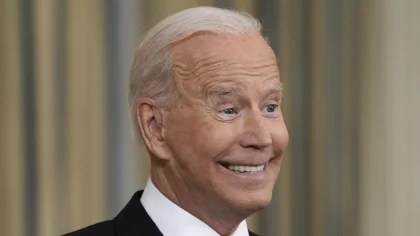
WASHINGTON – US President Joe Biden’s son, Hunter Biden, has reportedly maintained “extensive ties” with almost a dozen of current and former senior government officials since the time when his father served as vice president under the Obama administration.
A digital analysis carried out by Fox News detailed a list of officials with whom Hunter Biden was or continues to be in close contact, and includes US Secretary of State Antony Blinken, national security adviser Jake Sullivan, senior Biden adviser Michael Donilon, and a close aide to Defense Secretary Lloyd Austin, among several other people.
Hunter Biden and Sullivan were cooperating with each other during their joint work on the board of the Truman National Security Project, a liberal foreign policy think tank. Sullivan worked there in 2017-2019, while Hunter was also serving on the board of Ukrainian energy company Burisma Holdings and the Chinese private equity fund BHR Partners. The US is currently investigating those and his other foreign business activities.
The outlet noted that former White House official Mike McCormick accused Sullivan of being a “conspirator” in the Biden family’s “kickback scheme” in Ukraine at the time.
The report also cites an extensive email exchange between Hunter Biden, at the time when he was with Burisma, and then-Deputy Secretary of State Antony Blinken. That correspondence shows the two men scheduled at least one meeting with each other.
Moreover, their communications go back at least a decade. For instance, Hunter contacted Blinken’s wife, Evan Ryan, in June 2010 asking for Blinken’s non-government email address, the report said. “Can I get Toni’s non-govt email? I wanted to send him something,” the message read.
Ryan is currently serving as White House cabinet secretary.
The report also mentioned email exchanges between Hunter Biden and several other cabinet members.
US House Oversight Committee launched an investigation into alleged criminal acts committed by the Biden family, including corruption and influence peddling. Earlier this month, panel chairman Rep. James Comer (R-KY) characterized the alleged actions as “organized crime.”
The committee’s probe is partially based on accusations from a confidential FBI informant, who alleges Joe and Hunter Biden received millions of dollars from a Ukrainian energy company. Lawmakers are also investigating deals tied to China.
In June, Hunter Biden’s attorneys and the US Justice Department announced an agreement under which he will plead guilty to misdemeanor tax charges and enter a pretrial diversionary agreement on a felony firearms offense in an effort to resolve the criminal probe against him and avoid prison time.
Elizabeth Tsurkov Was Up To No Good When She Went Missing In Iraq
BY ANDREW KORYBKO | JULY 10, 2023
It was just reported that US-based Russian-Israeli academic Elizabeth Tsurkov went missing in Iraq, where she was conducting fieldwork as part of her research at Princeton. She reportedly arrived in the country on her Russian passport since Iraq doesn’t allow Israeli citizens to enter. Iran is accused of organizing her kidnapping via its local allies, which one outlet speculated was to set up a high-profile prisoner exchange for an IRGC operative who Israel claimed last month was captured inside the Islamic Republic itself.
The Mainstream Media is portraying Tsurkov as an innocent victim after an unnamed senior Israeli official denied that she’s a member of Mossad like some had begun to suspect. Regardless of whatever her ties with that country’s intelligence agency may or may not be, she was up to no good when she went missing in Iraq. From the perspective of local patriotic groups, it would have been legitimate to detain Tsurkov for the five reasons that will now be explained.
For starters, she should never have entered a country that prohibits entry to Israeli citizens like herself. By arriving in Iraqi on her Russian passport, she deliberately deceived the authorities. Once this was discovered, it immediately put her and everyone who she’d hitherto come into contact with there under suspicion of being spies. She therefore behaved highly irresponsibly, which is unbecoming of an Ivy League researcher like she presents herself as and thus casts further doubt on her credibility.
The second point is that the very nature of her work makes her suspicious. According to the New Lines Institute for Strategy and Policy where she’s a Non-Resident Fellow, “Her research is based on a large network of contacts – ordinary civilians, activists, combatants and communal, political and military leaders – which she has established across the Middle East and particularly in Syria, Iraq and Israel-Palestine.” The Iraqi counterintelligence service therefore had grounds to be concerned by her activity.
Third, she was clandestinely cultivating her vast regional network with sources whose countries prohibit their people from having any ties with her country or its nationals. She as an Israeli would have certainly known this, which means that she purposely put these people at risk for reasons that only she herself can account for. Researchers are supposed to operate according to a code of ethics whereby they never do anything that could bring harm to their subjects, though Tsurkov did precisely the opposite.
The fourth point is that she was conscious of her work advancing Israeli interests, whether the way she subjectively understands them as being or per speculative orders from suspected handlers, as evidenced by the fact that her Twitter handle @Elizrael explicitly references that country. She has the right to publicly self-identify with any country and thus be associated with it by others, especially if she’s its national, but this just goes to show that she knew that everything she was doing put her sources at risk.
And finally, local patriotic groups might not have trusted their corrupt country’s security services to properly deal with the counterintelligence threat posed by Tsurkov upon discovering her ties to Israel and the suspicious nature of her work, which is why they might have acted unilaterally as vigilantes. No value judgement is being made either way about the scenario in which such groups might have been responsible for her disappearance, but just to point out why they might have acted outside legal bounds.
Tsurkov should have known better than to visit Iraq seeing as how it’s illegal for Israeli citizens to do so, yet she still went anyway in order to expand her network of sources there on the pretext of conducting fieldwork as part of her research at Princeton and deceptively entered on her Russian passport. Even if she had nothing to do with Israel, her work would have still placed her on the radar of regional counterintelligence services, who investigate foreign-connected networks inside their countries.
Nobody who’s truly up to any good would ever enter a country where they’re legally prohibited from visiting by using another passport, let alone to clandestinely expand their network of sources there. She knowingly misled the authorities and then put her contacts at risk by meeting with them in person afterwards. Even worse, she did all this while publicly self-identifying on social media with the same country that they’re legally prohibited from having any ties.
One can still support Tsurkov and remain convinced that she’s supposedly an innocent victim exactly as the Mainstream Media claims, but it’s dishonest to deny that she behaved highly irresponsibly at great risk to herself and her sources inside Iraq, which contradicted expectations of an Ivy League researcher. For that reason, there are indeed plausible reasons to suspect her of conducting espionage under that cover, though whether or not she should have reportedly been detained remains a matter of debate.
Biden Admin Lying to Americans ‘About Everything to Do With Ukraine’ – RFK Jr
Sputnik – 08.07.2023
Robert F Kennedy Jr, the present 2024 presidential hopeful and nephew to assassinated former US President John F Kennedy, previously said at a town hall event that the Ukraine crisis had been turned by Washington into “a proxy war between Russia and the United States”.
The federal government under the Joe Biden administration has been blatantly lying to the Americans “about everything to do with Ukraine”, said Robert F Kennedy Jr, in an interview for Judge Andrew Napolitano on his Judging Freedom podcast.
“This was a sell job that they gave us on Ukraine,” insisted the 2024 Democratic candidate for US President.
“The Russians tried to avoid a war… wanted to sign the Minsk Accords – a reasonable document – to keep NATO out of Ukraine, with Ukraine remaining neutral… That [US] remove the Aegis missile systems from Romania, Poland, and that the murder… the wholesale killing of ethnic Russians in the Donbass by the Ukrainian government that America put in power stop. Those are all things that we should have agreed to,” stated the nephew of assassinated former US President John F Kennedy.
He added that Ukraine’s President Volodymyr Zelensky won in 2019 by promising to sign the Minsk accords. The complex series of measures negotiated by Russia, France, Germany and Ukraine in 2014-2015 in a bid to put an end to the armed conflict between the Kiev authorities and the breakaway region of Donbas. Moscow repeatedly stated that Kiev was not fulfilling the deal, for example not granting self-government to the Russian-speaking region of Donbass. In February, Ukrainian President Volodymyr Zelensky admitted he never intended to implement the Minsk agreements, with former German Chancellor Angela Merkel and Former French President Franсois Hollande, who participated in the Normandy format, admitting the same.
“It is existential for the Russians… they have a legitimate national security interest,” Robert F Kennedy Jr pointed out, referring to Moscow’s ongoing special military operation in Ukraine.
“[The US] wanted the war, for the reasons that Biden has said… The real reason for the war in Ukraine is regime change in Russia,” Kennedy emphasized in the interview on the Judging Freedom podcast.
Kennedy previously slammed decades of policy conducted by the US and NATO toward Ukraine and Russia for fueling the current conflagration.
“We have neglected many, many opportunities to settle this war peacefully,” Kennedy said in June during a live town hall event with NewsNation. He added that Washington had turned the ongoing conflagration in Ukraine into a proxy war waged by the United States against Russia.
“We were told this was a humanitarian exercise… But when President Biden was asked why we are over there, he said for regime change of [Russian President] Vladimir Putin,” the 2024 White House hopeful underscored.
Weighing in on remarks by US Defense Secretary Lloyd Austin, who said last year that Washington wanted “to see Russia weakened,” Kennedy scathingly remarked:
“That is the opposite of a humanitarian mission, that is a mission about a war of attrition.”
‘What Are They Hiding?’: RFK Jr. Unhappy Biden Delayed Release of JFK Documents
By Ian DeMartino – Sputnik – 07.07.2023
Despite a 1979 House review that concluded two or more shooters and co-conspirators were likely involved in the assassination, only Lee Harvey Oswald was accused of killing former US President John F. Kennedy. Oswald maintained his innocence until he was gunned down by Mafia-connected nightclub owner Jack Ruby before his trial.
Robert F. Kennedy Jr., the current 2024 presidential hopeful and nephew to assassinated former US President John F. Kennedy, is not happy that current President Joe Biden decided to delay the release of government documents related to the 1963 assassination.
On June 30, the Biden Administration quietly released a memo before the holiday weekend, announcing that some government documents related to the assassination would not be released as planned, a decision that angered Kennedy Jr. The White House has stated that to date, some 99% of the records have been released; however, multiple records include redactions.
“It’s not about conspiracy – it is about transparency,” the environmental and anti-vaccination figure said on Twitter on Sunday. “In a midnight Friday night announcement the White House has delivered the bad news that President Biden will be maintaining secrecy indefinitely on some JFK assassination related records.”
The 1992 John F. Kennedy Assassination Records Collection Act mandated the release of all government documents related to the killing by October 2017. However, the bill included a clause that allowed the release of documents to be delayed if it was “made necessary by an identifiable harm to the military defense, intelligence operations, law enforcement, or conduct of foreign relations.”
Biden said in his memo that the “postponement of public disclosure of that information is necessary to protect against identifiable harms to the military defense, intelligence operations, law enforcement, and the conduct of foreign relations that are of such gravity that they outweigh the public interest in disclosure.”
That explanation, which was the same justification used by former President Donald Trump when he delayed the release of the records, was not enough to satisfy Kennedy Jr., who called the postponement “unlawful.”
“The assassination was 60 years ago. What national security secrets could possibly be at risk? What are they hiding?” he questioned.
Kennedy Jr. has become more vocal about the alleged involvement of the CIA in his uncle’s assassination. He recently said ex-CIA Director Allen Dulles helped cover up the CIA’s role in the former president’s death. Dulles was fired by President Kennedy, and was a member of the Warren Commission, which was established to investigate the fatal shooting.
He also recently stated that the first instinct of his father was that the CIA was behind the murder.
Bizarre New Attack on Robert F. Kennedy, Jr: He Promotes the ‘Ugly Message that Being Autistic is Bad’
By Adam Dick | Ron Paul Institute | July 7, 2023
It seems clear that most parents of autistic children in America love the children and see great value in the children’s activities and thoughts. It also seems clear that most of these parents also would prefer that their children could live free from the effects of autism and that a way is found to prevent autism from developing in other children.
That is commonsensical.
But, when people in the media are looking for any and every basis to tar Robert F. Kennedy, Jr. and his presidential campaign, his dedication to the ordinarily perceived of as admirable goal of seeking to reduce the prevalence of autism is twisted by opponents into a vicious perspective.
MSNBC columnist Eric Garcia wrote in Sunday editorial focused on Kennedy that “the crux of his baseless claim that vaccines cause autism is the ugly message that being autistic is bad.”
Notice the language Garcia uses. He does not write that Kennedy says people with autism are bad people. Yet, it is just that misreading that would make the “ugly message” designation make any sense. What we have here is nonsense that many readers will fix in their minds into a condemnation of Kennedy for something the author did not state and offered no evidence to support.
Working to prevent autism is an activity rooted in the promotion of human happiness and health. If it is condemnable as an “ugly message,” it would seem that individuals working to prevent cancer, heart attacks, Alzheimer’s, and other serious medical problems should be similarly condemned.
Kennedy is a candidate for president, so it is right that he be criticized. But, media people, can you at least keep the criticism rational and not rooted in deception?
Copyright © 2023 by RonPaul Institute
How the Taliban crushed the CIA’s heroin bonanza in Afghanistan
The Taliban has not once, but twice eradicated Afghanistan’s poppy cultivation, the world’s largest source of heroin.
By William Van Wagenen | The Cradle | July 7, 2023
In the aftermath of the chaotic US and UK withdrawal from Afghanistan in August 2021, Pakistani journalist Hamid Mir warned in the Washington Post of the dangers of “ignoring one important consequence of the Taliban takeover: the coming boom in Afghanistan’s narcotics trade.”
Mir then boldly predicted that, “in the next few years, a flood of drugs from Afghanistan may become a bigger threat than terrorism.”
This projection of an international drug trade boom seemed plausible, considering the longstanding accusations that the Taliban funded their two-decade insurgency against the occupying forces by controlling opium production. In fact, it was believed that 95 percent of heroin used in Britain originated from Afghan opium.
It comes as a surprise then, that a June 2023 report published by Alcis, a British-based geographic information services firm, revealed that the Taliban government had all but eliminated opium cultivation in the country, wiping out the base ingredient needed to produce heroin. This outcome mirrored a similar move by the Taliban in 2000 when they were in power the first time.
Ironically, instead of praising Kabul’s new leaders for quashing the source of illicit drugs, the international community responded to this development with criticism. Even the US Institute for Peace (USIP), which is funded by the US government, argued that “The Taliban’s successful opium ban is bad for Afghans and the world.”
Such western displeasure towards the Taliban’s efforts to dismantle the global heroin trade may seem perplexing at first glance.
However, a closer examination of events in Afghanistan reveals a different perspective. Under the guise of the “War on Terror,” the 2001 US and UK invasion was driven in part by the desire to restore the heroin trade, which the Taliban had abruptly terminated just a year earlier.
The western powers sought to reestablish the lucrative flow of billions of dollars that the heroin trade provided to their financial systems. In fact, “For 20 years, America essentially ran a narco-state in Afghanistan.”
‘Dollar for Dollar’
To understand the origins of the Afghan heroin trade, a review of US involvement in the central Asian nation is necessary, beginning in 1979 when the CIA embarked on a covert program to undermine the pro-Soviet Afghan government in Kabul.
The US covertly supported an umbrella of Muslim guerrilla fighters known as mujahideen, with the hope that provoking an insurgency would entice the Soviet Army to intervene. This calculated move would force the Soviets into occupying Afghanistan and engaging in a protracted and costly counter-insurgency campaign, thereby weakening the Soviet Union over time.
To accomplish this, the CIA turned to its close allies, Saudi Arabia and Pakistan, for help. Saudi Prince Bandar bin Sultan facilitated a meeting between CIA Director William Casey and Saudi King Fahd, in which the Saudis committed to matching “America dollar for dollar supporting the mujahedeen.”
The US and Saudi Arabia, with help from Pakistani’s Inter-Services Intelligence (ISI), set up training camps for the mujahideen in Pakistan, and supplied them with advisors, weapons, and cash to fight the Soviets.
Gulbaddin Hekmatyar, the founder of the Hizb-i-Islami militia, was among the most prominent mujahideen leaders, receiving some $600 million in aid from the CIA and its allies.
Journalist Steve Coll writes in his Pulitzer Prize-winning book Ghost Wars that Hekymatyar recruited from the most radical, anti-western, transnational Islamist networks to fight with him, including Osama bin Laden and other Arab volunteers. CIA officers “embraced Hekmatyar as their most dependable and effective ally,” and “the most efficient at killing Soviets.”
Caravans of opium
Aid to Hekymatyar and other mujahideen leaders was not limited to cash and weapons. According to renowned historian Alfred McCoy:
“1979 and 1980, just as the CIA effort was beginning to ramp up, a network of heroin laboratories opened along the Afghan-Pakistan frontier. That region soon became the world’s largest heroin producer.”
The process involved smuggling raw opium gum to Pakistan, where it was processed into heroin in laboratories run by the ISI. The finished product was then discreetly transported via Pakistani airports, ports, or overland routes.
By 1984, Afghan heroin supplied a staggering 60 percent of the US market and 80 percent of the European market, while devastatingly creating 1.3 million heroin addicts in Pakistan, a country previously untouched by the highly-addictive drug.
McCoy states further that, “caravans carrying CIA arms into that region for the resistance often returned to Pakistan loaded down with opium.” Reports from 2001 cited by the New York Times confirmed that this occurred “with the assent of Pakistani or American intelligence officers who supported the resistance.”
In May 1990, the Washington Post reported that the US government had for several years received, but declined to investigate, reports of heroin trafficking by its allies, including “firsthand accounts of heroin smuggling by commanders under Gulbuddin Hekmatyar.”
Rise of the Taliban
When the Soviets did finally withdraw in 1989, the country fell into civil war as the major CIA-backed factions began fighting among themselves for control of the country. Mujahideen leaders became warlords and committed terrible atrocities against the local population while fighting amongst themselves.
It was during this anarchy that religious students from the madrassas (seminary schools), the Taliban, emerged with the help of Pakistani intelligence to take control of the country in 1996, subsequently inheriting the opium trade, which continued unhindered for several years.
In July 2000, however, Taliban leader Mullah Omar ordered a ban on all opium cultivation. Remarkably, the Taliban successfully slashed the opium harvest by 94 percent, reducing yearly production to only 185 metric tons.
Five months later, in December 2000, the US and Russia used the UN Security Council to impose harsh new sanctions on Afghanistan, citing the Taliban’s refusal to hand over Al-Qaeda leader Osama bin Laden following the bombing of the USS Cole in Yemen, in which 17 US sailors were killed. Bin Laden had taken refuge in the Islamic Emirate in 1996 after he was expelled from Sudan.
The New York Times reported that US officials sought to impose the new sanctions, despite warnings from the UN that “a million Afghans could face starvation in coming months because of a drought and continued civil war.”
Following the attacks on 11 September, 2001, Bush administration officials demanded the Taliban hand over Bin Laden once again. Mullah Omar insisted the US first provide evidence of Bin Laden’s guilt, but President Bush refused this request and ordered the US air force to begin bombing Afghanistan on 7 October.
In the wake of the bombing, Mullah Omar dropped the demand for evidence, and offered to hand over Bin Laden to US ally Pakistan for trial. Bush administration officials once again refused.
Journalist and author Scott Horton highlights in his book Fool’s Errand a peculiar aspect of the US campaign: the lack of a clear focus on capturing or eliminating Bin Laden. In fact, President Bush had already stated on 25 September that success or failure should not be defined solely by capturing Bin Laden.
Horton notes further that US planners made no initial effort to hunt down Bin Laden and the foreign Arab fighters supporting him. Instead, head of US Central Command, General Tommy Franks prioritized partnering with Afghan warlord Rashid Dostum to take control of the north of the country, and establish a “land link” to Uzbekistan.
Turning to the warlords
To also capture the capital, Kabul, and other key cities in the south, Alfred McCoy notes the CIA:
“Turned to a group of rising Pashtun warlords along the Pakistan border who had been active as drug smugglers in the south-eastern part of the country. As a result, when the Taliban collapsed, the groundwork had already been laid for the resumption of opium cultivation and the drug trade on a major scale.”
Though US forces were too late to prevent Bin Laden’s escape to Pakistan, the US bombing campaign came just in time for the beginning of poppy planting season. Poppies are planted in the autumn so that the juice from the plant, from which opium is extracted, can be harvested in spring.
McCoy clarified further that, “the Agency (CIA) and its local allies created ideal conditions for reversing the Taliban’s opium ban and reviving the drug traffic. Only weeks after the collapse of the Taliban, officials were reporting an outburst of poppy planting in the heroin-heartlands of Helmand and Nangarhar.”
In December, one of these rising Pashtun warlords, Hamid Karzai, was appointed Chairman of the Afghan Interim Administration and later president.
By the spring of 2002, large amounts of Afghan heroin were once again being transported to Britain via daily flights from Pakistani airports. The Guardian observed the case of a 13-year-old girl who was stopped after she stepped off a Pakistan International Airlines flight from Islamabad to London carrying 13kgs of heroin with a street value of £910,000.
Industrial scale
Thanks to the “land link” established by General Franks, heroin also immediately began flowing north from Mazar-e-Sharif, under CIA ally Rashid Dostum’s control, to Uzbekistan and then to to Russia and Europe.
The flow of heroin was witnessed by Craig Murray, the British Ambassador to Uzbekistan, who explained that Dostum, an ethnic Uzbek, facilitated the smuggling of heroin from Afghanistan to Uzbekistan, where it was then shipped up the railway line, in bales of cotton, to Moscow and then Riga. As Murray noted:
“Opium is converted into heroin on an industrial scale, not in kitchens but in factories. Millions of gallons of the chemicals needed for this process are shipped into Afghanistan by tanker… The four largest players in the heroin business are all senior members of the Afghan government – the government that our soldiers are fighting and dying to protect.”
‘A hands off approach’
In addition to Dostum, Afghan President Hamid Karzai’s younger brother, Ahmed Wali Karzai, quickly secured a prominent role in the Afghan heroin trade.
Credible reports emerged that Wali Karzai was deeply involved in the heroin trade, however, according to the New York Times, the incidents were never investigated, “even though allegations that he has benefited from narcotics trafficking have circulated widely in Afghanistan.”
Senior officials at the US Drug Enforcement Agency (DEA) and the office of the Director of National Intelligence (DNI) complained that the Bush “White House favored a hands-off approach toward Ahmed Wali Karzai because of the political delicacy of the matter.”
The Times later reported that according to a top former Afghan Interior Ministry official, a major source of Wali Karzai’s influence was his control over key bridges crossing the Helmand River on the route between the opium-growing regions of Helmand Province and Kandahar. This allowed Karzai to charge huge fees to drug traffickers to allow their drug-laden trucks to cross the bridges.
Like Dostum and Hekmaytar, Wali Karzai built his heroin empire while on the CIA payroll. The agency began paying Karzai in 2001 to recruit an Afghan paramilitary force that operated at the agency’s direction in and around Kandahar and to rent a large compound for use as the base of the Kandahar Strike Force. The CIA also appreciated Karzai’s help in communicating and sometimes meeting with Afghans loyal to the Taliban.
Karzai also served as the head of Kandahar’s elected provincial council. According to a senior US military officer in Kabul quoted by the Times, “Hundreds of millions of dollars in drug money are flowing through the southern region, and nothing happens in southern Afghanistan without the regional leadership knowing about it.”
The blame game
In late 2004, as reports of Karzai’s involvement in the heroin trade were emerging, Alfred McCoy writes that “the White House was suddenly confronted with troubling CIA intelligence suggesting that the escalating drug trade was fueling a revival of the Taliban.”
A proposal from Secretary of State Colin Powell to fight the heroin trade was resisted by US ambassador to Afghanistan, Zalmay Khalilzad, and then-Afghan finance minister Ashraf Ghani. As a compromise, the Bush administration used private contractors for poppy eradication, an effort that New York Times journalist Carlotta Gall later described as “something of a joke.”
Additionally, reports of a 2005 cable sent by the US embassy in Kabul to Powell’s successor, Secretary of State Condoleezza Rice, viewed Britain as being “substantially responsible” for the failure to eradicate poppy cultivation. British personnel chose where the eradication teams worked, but those areas were often not the main growing areas, and “the British had been unwilling to revise targets.”
The cable also faulted President Karzai, who “has been unwilling to assert strong leadership.” The State Department nevertheless defended him, saying, “President Karzai is a strong partner, and we have confidence in him,” despite reports of his brother’s key role in the heroin trade.
But the problem went beyond Wali Karzai. A UN report for the World Bank published in February 2006 concluded the Afghan heroin trade was operating with the assistance of many top Afghan government officials and under the protection of the Afghan Ministry of Interior.
As evidence of CIA and Afghan government involvement in the heroin trade grew, the focus of the western media shifted towards blaming the Taliban for using drug profits to fund their insurgency against foreign forces.
However, historian Peter Dale Scott challenged this narrative, citing UN estimates that the Taliban’s share of the Afghan opium economy was a fraction compared to that of supporters of the Karzai government. Scott emphasized that the largest share of the drug trade was controlled by those aligned with the Afghan government.
The surge
In early 2010, the Obama administration announced a “surge” of 33,000 US troops to help pacify the country, with a particular focus on key districts known for poppy cultivation. One such district was Marja in Helmand province, which McCoy referred to as “the world’s heroin capital.”
Despite the surge’s mission, US commanders seemed unaware of Marja’s significance as a hub for heroin production, fueled by the surrounding opium fields that accounted for 40 percent of the world’s illicit opium supply.
In September 2010, eight months after the start of the surge, “unsubstantiated” reports emerged that British soldiers were involved in trafficking heroin out of Afghanistan using military aircraft at airports in Camp Bastion and Kandahar.
Camp Bastion, jointly operated by the UK and the US, was located near Lashkar Gah, another major center of poppy cultivation. In 2012, it was alleged that poppy cultivation was taking place just outside the base’s perimeter, with British soldiers providing protection to farmers against Afghan security forces.
By late 2014, British and US forces withdrew from Camp Bastion, handing it over to Afghan forces, who renamed it Camp Shorabak. However, according to a UN report, “the opium-growing area around Britain’s main base in Afghanistan nearly quadrupled between 2011 and 2013.”
Despite the withdrawal, opium exports from Camp Shorabak apparently continued, and a small number of British military personnel returned in 2015 in what was described by the Ministry of Defense as an advisory role.
In 2016, Obaidullah Barakzai, a member of the National Assembly of Afghanistan, claimed, “It’s impossible for a few local drug smugglers to transfer opium in thousands of kilos. This is the work of the Americans and British. They transport it by air from Camp Shorabak.”
After US forces chaotically withdrew from Afghanistan in August 2021, the Taliban once again succeeded in eliminating poppy cultivation, showing it was far from a “dedicated drug cartel” after all.
Follow the money
In November 2021, an opium merchant claimed that “All the profits go to the foreign countries. Afghans are just supplying the labor.”
Peter Dale Scott noted that according to the UN, some $352 billion in drug profits had been absorbed into the western financial system, including through the US’ largest banks in 2009. As a result, Scott said the “United States involvement in the international drug traffic links the CIA, major financial interests, and criminal interests in this country and abroad.”
In 2012, the Daily Mail reported that HSBC, Britain’s biggest bank, faced up to £640million in penalties for allowing “rogue states and drugs cartels to launder billions of pounds through its branches,” and for becoming “a conduit for criminal enterprises.”
The billions in profits flowing from the Afghan heroin trade into western banks have now been eliminated by the Taliban not once, but twice in the past two decades.
Taliban leader Mullah Omar’s pronouncement in July 2000 that poppy cultivation was “un-Islamic” was, therefore, a more likely cause of the US sanctions imposed in December of the same year, and of the US invasion of Afghanistan a year later, than was any US desire to apprehend Bin Laden and dismantle Al-Qaeda.
In March 2002, just six months after the bombing and invasion of Afghanistan, a journalist asked President Bush, “Where’s Osama bin Laden?” Bush replied, ‘I don’t know. I don’t really think about him very much. I’m not that concerned.”
The Afghan drug trade serves as a stark reminder of the intricate connections between geopolitics, illicit economies, and global finance, and the need for greater transparency and accountability in addressing these complex issues.
The historical evidence also challenges the simplistic narrative that the Taliban largely controlled the Afghan drug trade, highlighting the dominant role played by the US-backed Afghan government and its allies in the CIA.
“Fake News” from NBC on US-Russian talks about an ‘off ramp’ to the Ukraine war in April 2023 that never took place
By Gilbert Doctorow – July 6, 2023
News portals in Ukraine and elsewhere in Europe were quick to pick up a feature item today on NBCNews.com entitled “Former U.S. officials have held secret Ukraine talks with prominent Russians.” The subtitle goes on: “The aim of the discussions is to lay the groundwork for potential negotiations to end the war, people briefed on the talks tell NBC News.”
The very notion that such talks could have taken place elicited disparaging comments from the usual suspects who would not miss a chance to be in the public eye: former U.S. ambassador to Russia, Michael McFaul, and Matt Dimmick, a former Russia and Eastern Europe director at the National Security Council. Said comments form part of the NBC report.
This news item also surfaced on Russian state television in the early evening edition of Sixty Minutes under the heading “Fake News.” Their panel discussion opened with an announcement from the RF Ministry of Foreign Affairs, responding to what is said in the second paragraph in the NBC article, which reads:
“In a high-level example of the back-channel diplomacy taking place behind the scenes, Russian Foreign Minister Sergey Lavrov met with members of the group for several hours in April in New York, four former officials and two current officials told NBC News.”
Per Lavrov, no such meeting ever took place and there are no back channels.
And then the Sixty Minutes panel was off to the races, as we say.
They listed the former U.S. officials who were said to have taken part in the meeting – Charles Kupchan, Richard Haass, and Thomas Graham, all members of the Foreign Relations Council and, as they stressed with truculent humor, all are decidedly very former. Their heyday was decades ago and today none of them holds a rank that would justify Lavrov’s spending any time with them, let alone discussing the basic principles for some negotiated settlement of the Russia-Ukraine war. They are just a bunch of old academics who get together to reminisce about the arms control negotiations of the distant past and similar issues long ago laid to rest.
After breaking its fake news story, NBC spent the greater part of its article talking about how back channel communications, dubbed Track Two talks, function and what utility they have in general.
To be sure, backchannels have served a constructive purpose in U.S. – Russian relations in the not too distant past, though I doubt that journalist Josh Lederman has a clue about this. Thomas Graham’s former mentor and associate, Henry Kissinger, had been an important initiator of such an outreach back in the summer-early autumn of 2008 when he, too was a former, not active political actor. But then Kissinger was and is Kissinger, not some flunky. That was in the time just after the Russia-Georgia war, when relations between the two countries were very tense, almost as seriously as today. And, most importantly, at the time Kissinger’s was not the only backchannel operating. In parallel there was another channel headed by a couple of members of the U.S. Senate. The end result was a paper on steps to improve bilateral relations that became known as the ‘re-set’ in the early days of the first Obama administration. Whether that initiative was creative enough to go beyond atmospherics and set the groundwork for a real change in the relationship is a different matter. The answer to that, of course, is ‘no.’
The likes of Kupchan, Haass and Graham cannot be compared to the operators of the 2008 backchannel and it was no wonder that the Sixty Minutes panel thumbed its noses at them. I, for one, have in the past taken the measure of two of these three as thinkers and found that Haass and Kupchan are muddle headed and their writings are mired in contradictions. Supposedly what they write and publish in the house organ Foreign Affairs magazine is peer vetted, but it helps not a whit. When everyone is aligned and no one disagrees, when there are no debates, only back slappers, then the quality of thinking sinks.
See my critique of Kupchan’s article ‘Nato’s final frontier: Why Russia should join the Atlantic Alliance” in Stepping out of Line (2012) pp. 199 -208 and my piece “Richard Haass: the Absent Voice at Valdai-Sochi” in Does Russia Have a Future (2015) pp 259-262
©Gilbert Doctorow, 2023
Walensky Warns Public to Beware of ‘Misinformation’ and ‘Politicized Science’
By Brenda Baletti, Ph.D. | The Defender | July 5, 2023
As she ended her tenure last week as director of the Centers for Disease Control and Prevention (CDC), Dr. Rochelle Walensky warned the American public to be on guard against “misinformation” and the “politicization of science.”
Walensky told The Wall Street Journal she hopes Americans will make health decisions based on “their own risk assessment and their own personal risks, but not through politics,” emphasizing that public health recommendations also shouldn’t be politicized.
“Ironically, this comes after two-and-a-half years of Walensky misinforming the public and politicising the science,” investigative journalist Maryanne Demasi, Ph.D., wrote on her Substack.
Demasi and many others took to Twitter to remind people of Walensky’s false statements and politicized decision-making.
Walensky last week published a farewell op-ed in The New York Times, in which she wrote that public health is critically important in the U.S., and yet she “fear[s] the despair from the pandemic is fading too quickly from our memories.”
She complained that “the agency [CDC] has been sidelined, chastened by early missteps with Covid and battered by persistent scrutiny.”
She also told the WSJ that public health shouldn’t fall along partisan lines.
Yet stark political partisanship defined her time at the CDC. The WSJ reported that a recent KFF poll showed political affiliation was the strongest demographic predictor of COVID-19 vaccination. And about one-quarter of Americans don’t trust the CDC’s health recommendations, according to a 2022 survey published in the journal Health Affairs.
Walensky acknowledged “missteps in communicating” by the CDC, which, she said, “could have done a better job” making it clear to the public that the agency’s message could change during the pandemic.
But, she told the WSJ, the CDC has a plan to regain public trust in the future — by working directly with media organizations to discuss how to best shape public opinion prior to releasing scientific information to the public.
She said the CDC plans to use a method called “prebunking,” where they will communicate directly with media organizations before they release information to let the media know which details about public health might be “misconstrued.”
According to The Associated Press (AP) “prebunking” by public health agencies allows the agencies to define something as “misinformation” before readers have an opportunity to encounter it elsewhere as possibly true.
Then search engines such as Google prioritize “credible websites” like the U.S. Food and Drug Administration’s (FDA) or the CDC’s in its searches.
FDA Commissioner Robert Califf, the Virality Project and Google are among those who have promoted prebunking as a way to combat misinformation.
Journalist Kim Iversen proposed a different approach Walensky might take to restoring public trust in the CDC.
She said:
“Well, the way to do it is to apologize, to own up to your lies, to own up to the mistakes that you made and to discuss why you did that, why the agency followed such political partisanship when they should have been following science, why they ignored the science that was right in front of them.”
CDC broadcast a long list of ‘misinformation’ during Walensky’s tenure
Throughout her tenure at the CDC, which began when Biden took office in January 2021, Walensky made a series of public statements that have proven to be false.
Evidence has since emerged that Walensky knew many of these statements were false when she made them.
In March 2021, Walensky famously told Rachel Maddow, that “vaccinated people do not carry the virus, don’t get sick.”
The CDC was forced to walk back her statements a few days later. But that message was the basis for vaccine mandates imposed later that year by the Biden administration, businesses, universities and public venues throughout the country.
In a mid-June congressional hearing, Walensky defended her March statements, claiming they were true at the time.
But the Washington Examiner reported on June 20 that emails obtained through a Freedom of Information Act request showed Walensky and Dr. Francis Collins were aware of and discussed “breakthrough cases” of COVID-19 in January 2021 — just before the vaccines became widely available — and yet continued to tell the public the vaccines would prevent transmission.
In that same congressional testimony, Walensky also defended the mask mandates, saying that the summary of Cochrane’s review — which found wearing masks in the community “probably makes little to no difference” in preventing viral transmission — had been “retracted.”
But it was neither retracted nor had the authors of the review changed the language in the summary, Demasi reported.
In June 2021, Walensky told “Good Morning America” that the risk of myocarditis was extremely rare, and there was overwhelming data the vaccines were safe for children — even after hundreds of cases of myocarditis had been reported and the CDC had been aware of a safety signal since February.
Under Walensky, the CDC also gave false information on vaccine safety monitoring, added the COVID-19 vaccines to the childhood vaccine schedule despite known harms, withheld data on boosters from the agency’s own advisers and told pregnant women the vaccine was safe — just days after Pfizer reportedly finalized a report demonstrating it wasn’t.
In a March study by Krohnert and others, researchers compiled instances of errors in data presented by the CDC during the COVID-19 pandemic in publications, press releases, interviews and Twitter. The authors reported 25 instances where the agency under Walensky promoted demonstrably false numbers.
In most (80%) cases, the CDC exaggerated the severity of the pandemic. For example, Walensky gave a briefing on June 23, 2022, during which she claimed COVID-19 was a “top 5 cause of death” in children, which was untrue.
Most recently, the House Select Subcommittee on the Coronavirus Pandemic gave Walensky until July 12 to turn over phone records involving American Federation of Teachers (AFT) President Randi Weingarten. The House is investigating potential political interference on the part of AFT with the CDC’s school reopening recommendations during the COVID-19 pandemic, The Defender reported.
Walensky warns of ‘future threats’
Walensky warned at the end of her Times op-ed:
“I want to remind America: The question is not if there will be another public health threat, but when. The C.D.C. needs public and congressional support if it is going to be prepared to protect you from future threats.”
To take on these “future threats” the Biden administration nominated Dr. Mandy Cohen, an internal medicine physician and former state health secretary of North Carolina, to replace Walensky.
But critics warn Cohen is “a public health COVID authoritarian” who is “fully entrenched in the ‘bio-pharmaceutical complex.’”
Dr. Peter McCullough told The Defender that during the COVID-19 pandemic, Cohen failed to recognize therapeutics and natural immunity, and supported lockdowns, vaccine mandates and masking.
Cohen comes to the CDC from the private sector, where she is executive vice president of Aledade and CEO of Aledade Care Solutions, whose executive leadership and board of directors includes people with connections to the World Economic Forum and the Bill & Melinda Gates Foundation.
Walensky congratulated Cohen on her nomination, describing her as “a respected public health leader who helped North Carolina successfully navigate” COVID-19, and whose “unique experience and accomplished tenure in North Carolina … make her perfectly suited to lead CDC as it moves forward by building on the lessons learned from COVID-19 to create an organization poised to meet public health challenges of the future.”
Brenda Baletti Ph.D. is a reporter for The Defender. She wrote and taught about capitalism and politics for 10 years in the writing program at Duke University. She holds a Ph.D. in human geography from the University of North Carolina at Chapel Hill and a master’s from the University of Texas at Austin.
This article was originally published by The Defender — Children’s Health Defense’s News & Views Website under Creative Commons license CC BY-NC-ND 4.0. Please consider subscribing to The Defender or donating to Children’s Health Defense.
Featured Video

Trita Parsi: Middle East Unraveling — Are We on the Path to World War?
or go to
Aletho News Archives – Video-Images
New Book
Trans agenda is ‘normalization of sadism’ – US author

RT | September 23, 2026
The US Democratic Party has embraced a transgender agenda that amounts to “the normalization of sadism,” author A.J. Rice has said, warning that radical trans policies would return if the party is allowed to regain power.
Speaking to RT’s America First host Scotty Nell Hughes about his new book, ‘The Curse of the Bearded Lady: How the Trans Mafia Whacked American Sanity’, Rice argued that activists have gained significant influence in schools, medicine, and corporate America while people who questioned the agenda have faced pressure to stay silent.
The author described the “trans mafia” as the sprawling network of people and institutions that have helped the movement gain influence. He singled out parts of academia, wealthy backers, and corporations, and stated that providers of transition-related treatment also have a financial incentive to keep young people in their care indefinitely.
Rice argued that the consequences of these policies ultimately fall on children who are being drawn toward gender-affirming medical treatments and on girls who are expected to share locker rooms or compete in sports with biological males.
He noted that while voters rejected the Democrats’ approach to gender in 2024, the party, which has been “captured by madness,” has since only doubled down and is seeking what is effectively “the normalization of sadism.” … Full report
Blog Roll
 Aletho News
- Refaat Al-Areer Was The Canary In The Coal Mine In Israel’s War On The Truth
- Israeli election committee bars candidate from Knesset race over Gaza war opposition
- French-Lebanese man files war crimes complaint over Israeli attacks
- Mahan Air Flight Lands in China Despite US Threat against Iranian Airlines
- US eyes $10bn fund to rebuild war-battered Gulf infrastructure
- Trump meets Rodríguez near Maduro’s prison as Venezuela’s oil flows to US
- Trita Parsi: Middle East Unraveling — Are We on the Path to World War?
- Iran FM meets with US envoy on UN meeting’s sidelines at American side’s insistence: Report
- Qatar PM calls for Gulf security framework with Iran, says war must be ‘wake-up call’
- China condemns US extortion of Iranian airlines, rejects Washington’s ‘illegal’ sanctions threats
- If Americans Knew
- An error has occurred; the feed is probably down. Try again later.
- No Tricks Zone
- New Study: Earth And Venus Surface Warmth Largely Explained By Convection And Lapse Rate, Not CO2 Or Radiation
- 2025 Nature Paper Claiming Worsening Global Drought Gets RETRACTED …Heavily Flawed
- New Study: ‘Global Drought Shows No Detectable Recent Acceleration Under Climate Warming’
- Economic Masterminds: German Socialists Suggest Taxing Productivity Gains Stemming From Using AI
- The South China Sea Has Not Been Cooperating With The Climate Change Narrative
- Energy Crisis: Germany Enters Heating Season With Historically Low Gas Reserve Fill Levels
- New Study: The Antarctic Ice Sheet Gained Mass From 2020-2024 Due To Staggering Snow And Ice Accumulation
- Study: Ocean Heating Rates From Thousands Of Years Ago ‘Dwarf’ Modern Ocean Heating Rates
- Climate Extremists Target, Attack Large-Scale Power Grid Infrastructure In Germany!
- New Study: Antarctic Ice Melt Has Contributed Less Than 1 Centimeter To Sea Level Rise In The Last 30 Years

