Dr. Paul Offit Lets Us Know ‘the Experts’ Have Officially Lost Their Minds
By Madhava Setty, M.D. | The Defender | July 5, 2023
I don’t have a big presence on Twitter. I don’t find the platform suitable for exploring and critiquing interesting ideas. You can say only so much in 280 characters. It’s great for inciting someone or dropping a witty comeback or link without much context.
At least that’s what I thought. Then I stumbled upon a tweet from Dr. Paul Offit. He’s taught me that you can convey a lot in a few short sentences.
Who is Dr. Paul Offit?
Offit is a big name in vaccines. Beyond what is listed below, he also sat on the Advisory Committee on Immunization Practices for the Centers for Disease Control and Prevention (CDC) and is presently a member of the Vaccines and Related Biological Products Advisory Committee for the U.S. Food and Drug Administration (FDA).
He’s had a say in the approval and/or authorization of many biologics, including the COVID-19 mRNA products.
Briefly, Offit is:
- Director of the Vaccine Education Center and professor of pediatrics in the Division of Infectious Diseases at Children’s Hospital of Philadelphia.
- Maurice R. Hilleman Professor of Vaccinology at the Perelman School of Medicine at the University of Pennsylvania.
- An internationally recognized expert in the fields of virology and immunology.
- A founding advisory board member of the Autism Science Foundation and the Foundation for Vaccine Research.
- A member of the Institute of Medicine and co-editor of the foremost vaccine text, “Vaccines.”
- The author or co-author of more than 150 papers in medical and scientific journals in the areas of rotavirus-specific immune responses and vaccine safety.
- The co-inventor of the rotavirus vaccine, RotaTeq®, recommended for universal use in infants by the CDC.
- A recipient of the Charles Mérieux Award from the National Foundation for Infectious Diseases.
His list of accomplishments goes on.
I don’t pretend to know more about vaccines than he does. I’m just an anesthesiologist and engineer. He must be a very smart person. Which is why this tweet is so baffling:
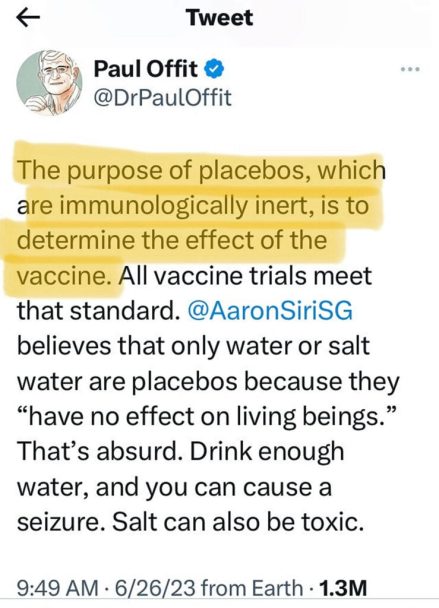
Why is Offit tweeting about placebos and saltwater right now?
It has to do with a truth bomb Robert F. Kennedy Jr. dropped at a town hall event last week.
According to Kennedy, chairman on leave from Children’s Health Defense, he and attorney Aaron Siri sued the U.S. Department of Health and Human Services (HHS) after HHS refused to meet their demand to produce at least one study comparing the safety of a vaccine on the childhood immunization schedule with a true placebo.
In a written response received more than a year later, the HHS did not cite a single such study, instead claiming:
“Inert placebo controls are not required to understand the safety profile of a new vaccine, and are thus not required.”
This stupefying claim made by Melinda Wharton, M.D., MPH, acting director of the National Vaccine Program Office, should be attacked on podcasts and publications everywhere.
How do you know that a new vaccine is safe if it isn’t tested against an inert placebo, Dr. Wharton?
If you are someone who is willing to abandon basic logic and trust every single word spewed by our public health agencies, ask yourself, why then does the FDA demand that medicines be tested against a placebo to ensure safety prior to licensure?
Twitter lit up around this pivotal topic. The tweet from one of the foremost vaccine experts in the world (Offit) was in response to Siri, who, according to Offit, asserted that virtually all vaccines on the childhood vaccination schedule, including RotaTeq (Offit’s brainchild), were not licensed by the FDA based on a placebo-controlled clinical trial.
Let’s break down Offit’s attack on Siri. Offit states: “The purpose of placebos, which are immunologically inert, is to determine the effect of the vaccine.”
Yes, Dr. Offit, one purpose of a placebo is to determine the effect of the vaccine. In order to prove that it works, it must do better than an immunologically inert substance. In other words, it must exceed the so-called placebo effect.
But that’s not the only purpose placebos serve. With regard to safety, a new vaccine has to be compared to something that has the least possible chance of causing deleterious effects.
To be clear, those who eschew a vaccine do not get in line for a shot of an “immunologically inert substance.” They stay away from the vaccine clinic altogether and take their chances.
This is why the placebo must be a true placebo. The best we can possibly do is use saline, a saltwater solution that reasonably matches the sodium concentration in our plasma. It is what is used to dilute medications and replenish blood volume. It’s what you use to store your contact lenses.
Offit then adds this:
“[Aaron Siri] believes that only water or salt water are placebos because they ‘have no effect on living beings.’ That’s absurd. Drink enough water, and you can cause a seizure. Salt can also be toxic.”
Offit is saying that by drinking a large amount of water the plasma sodium concentration in a person can abruptly decrease which, in fact, can lower the seizure threshold. He’s not wrong, it does happen in pathological conditions, especially in the critically ill.
Can salt be toxic? Yes. Ingestion of a large amount of salt will stimulate properly functioning kidneys to increase the absorption of free water, thus mitigating the effect of the salt load. This can cause volume overload and put a person at risk for heart failure and pulmonary edema.
So what — if not 0.2 ml of saline — should we use for a placebo, Dr. Offit? A tiny aliquot of adjuvants (that can include elements like aluminum)? Pro-inflammatory lipid nanoparticles? Viral or toxin deactivators like formaldehyde? Preservatives like thimerosal that contain mercury, one of the most potent neurotoxins known (yes, mercury in this form is still in some flu vaccines according to the CDC)?
All of these substances are “immunologically inert.”
But why would you consider using them as a placebo control if not to mask the potential harm of the vaccine in question?
Is that how inventors of vaccines for our children view placebos? Is that how advisory committee members on the FDA view them? What about the other advisory board members of the Autism Science Foundation? Why would anyone trust any vaccine on the childhood immunization schedule after such comments?
You don’t have to be Maurice R. Hilleman Chair of Vaccinology at the Perelman School of Medicine to see that your comments here are misleading, disingenuous and purposefully inciting.
Moreover, they don’t make any sense.
What would other recipients of your long list of awards have to say about your comments on placebos? I don’t think they would approve, sir.
Your public statements also sully the excellent reputation of the Children’s Hospital of Philadelphia and those who were lucky to train there, like me.
Dr. Setty has been a board certified anesthesiologist since 2002 and has held various leadership positions in his clinical practice.
This article was originally published by The Defender — Children’s Health Defense’s News & Views Website under Creative Commons license CC BY-NC-ND 4.0. Please consider subscribing to The Defender or donating to Children’s Health Defense.
Exposed, the multi-billion-dollar illusion of ‘HIV’: Part 1
Readers of TCW will be familiar with Neville Hodgkinson’s critical reporting of the ‘Covid crisis’ since December 2020, notably his expert, science-based informed alarm about the mass ‘vaccine’ rollout, so absent from mainstream coverage. What they may be less aware of is the international storm this former Sunday Times medical and science correspondent created in the 1990s by reporting a scientific challenge to the ‘HIV’ theory of Aids, presaging the hostile response to science critics of Covid today. In this series, written exclusively for TCW, he details findings that form the substance of his newly updated and expanded book, How HIV/Aids Set the Stage for the Covid Crisis, on the controversy. It is available here.
By Neville Hodgkinson | TCW Defending Freedom | July 3, 2023
Three years into the Covid crisis, many are now aware of the disastrous advice on which so many governments blindly acted. False predictions of spread, fearmongering propaganda, lockdowns damaging young and old, suppression of cheap treatments to make way for a dangerous, experimental vaccine . . . so much of ‘the science’ turned out to be fiction, hugely profitable for a few but harmful for billions.
These failures have brought back into focus claims that the syndrome known as HIV/Aids was – and still is – being similarly mishandled and exploited by the worlds of medical science, public health and Big Pharma. Robert Kennedy Jr documents this in detail his best-selling 2021 book The Real Anthony Fauci: Bill Gates, Big Pharma, and the Global War on Democracy and Public Health.
What few people know however is that for almost 40 years a small group of scientists has deconstructed almost every aspect of the theory that Aids is caused by a lethal, sexually transmitted virus known as HIV. Their critique goes beyond questioning HIV as the cause of Aids. They say ‘HIV’ has never even been proved to exist. And the reason you have probably never heard of their work is that, like the doctors and scientists who challenged Covid insanities, they have been silenced at every turn.
With Covid, pressure to conform came through government-directed appeals to our higher nature through slogans such as ‘Stay at home. Protect the NHS. Save Lives’ and ‘Every vaccination gives us hope’. The implied claim was that anyone who thought differently was either an idiot or a murderer.
Similarly with Aids, advocates of the deadly virus theory sought to make those who questioned it sound as though they were lacking in compassion, irresponsible or stupid.
I was working as medical correspondent of the London Sunday Times in the 1980s when Aids suddenly became big news after American government scientists claimed to have identified a previously unknown virus as the cause of a mysterious cluster of symptoms related to severely depleted immunity. They included Kaposi’s sarcoma, a cancer affecting the skin and internal organs; severe candidiasis; and pneumonia caused by an out-of-control fungus. The symptoms proved resistant to treatment, and fatal in a number of cases.
The first victims were groups of gay men who were challenging long-standing homophobic attitudes in American society through what came to be known as the ‘fast-track’ gay lifestyle. This involved multiple sex partners and heavy drug use.
The partying was fun, I was later told, but it caused disease microbes to become pooled among participants such that almost every encounter carried a risk of infection. Prophylactic use of antibiotics staved off some illnesses but contributed to an underlying deterioration, and in some cases complete collapse, of the immune system.
The crisis at first met an unsympathetic response from the right-wing Reagan administration. The common histories of the victims led to dismissive descriptions of Aids as a ‘gay plague’. As numbers increased, however, outrage and anger grew. Those involved had often already suffered greatly from discriminatory attitudes and behaviour, and their efforts to end this bigotry through the Gay Lib movement looked to be under threat.
That was the context in which US biomedical researcher Robert Gallo found immediate acceptance when in 1984 he claimed to have identified a deadly virus, new to humanity, as the cause of Aids. The theory took off like wildfire and by the end of 1984 had come to be accepted by virtually everyone. The microbe Gallo said he had found became known as the Human Immunodeficiency Virus, or HIV.
It brought virologists, drug companies and public health experts to centre stage. Taxpayer dollars, eventually reaching hundreds of billions, were poured into Aids research and treatment through the US National Institutes of Health, in particular the National Institute of Allergy and Infectious Diseases (NIAID) under the leadership of Dr Anthony Fauci. Well-funded NGOs and activist groups sprang up with the aim of contributing to the fight against the disease.
Religious leaders warmed to the theory because it discouraged sleeping around. Politicians liked it because it put in place a new ‘enemy within’ against which they could claim to offer protection with advertising campaigns such as the UK’s ‘Aids: Don’t Die of Ignorance’ – a precursor of the intense propaganda inflicted on us with the advent of Covid-19.
Media people – including me, I am ashamed to say – vigorously promulgated warnings that the virus put at risk everyone and anyone who had sex. It felt good to be not just selling newspapers, but helping to sound the alert.
Young people were less readily taken in. James Delingpole has recalled how the ad campaign put a dampener on his sex life, though after the initial shock it became increasingly clear to him that the government had been overstating the case.
In fact, as the late Nobel Prize-winning chemist Kary Mullis and other scientists were to point out, there never was a body of scientific evidence demonstrating the validity of the ‘deadly new virus’ idea. That remains the case today, despite hundreds of thousands of papers having been published over the years predicated on the HIV belief system.
Henry Bauer, a retired professor of science studies who has drawn on numerous sources in documenting The Case Against HIV, says: ‘Anyone open to looking at the actual data . . . can find an enormous amount of evidence that the diagnosis of HIV as cause of AIDS is simply wrong.’
One lasting outcome of the theory was that by ‘democratising’ Aids, with the message that the disease did not discriminate and so everyone was at risk, it prevented the feared setbacks for the Gay Lib movement. Lesbian and gay rights became firmly established in American society, and in some other parts of the world.
In many other ways, however, the global hysteria to which the theory gave rise has had disastrous consequences, some of which continue to this day.
A failed cancer drug called AZT, pulled off the shelf by American government researchers because of an apparent anti-HIV effect, killed and injured thousands. It was administered in high doses not just to people with Aids but to gay men, haemophiliacs and others thought to be HIV-infected, earning hundreds of millions of pounds for the US drug company Burroughs Wellcome and its British parent, the Wellcome Foundation (later taken over by Glaxo). American and British government institutions promoted it vigorously as the ‘gold standard’ of Aids treatment. Doctors who stepped publicly out of line were hounded out of the profession.
Although later generations of drugs can genuinely help to support a failing immune system, 40 years of research has failed to bring either a vaccine or cure for the purported ‘HIV’ infection. Taken over long periods, the drugs themselves can kill, contributing significantly to the 800 or so deaths reported annually of ‘people living with HIV’ in the UK.
The most widespread and long-lasting harm, however, has been to the countless people around the world, especially in Africa and of African descent, terrorised with a false belief that they are victims of a sexually transmitted virus which only Western medicine has the means to hold at bay. The World Health Organization (WHO) claims that more than 80million people have been infected, and that about 40million have died from HIV. Three-fifths of purported new HIV infections are said by WHO to be in the African region. African Americans are eight times more likely to be diagnosed with HIV infection compared with the white population.
American taxpayers in particular have been burdened with the huge expense of maintaining an industry that has grown up around HIV/Aids. The US government spends more than $28billion a year on the domestic response, and expenditure globally between 2000 and 2015 totalled more than half a trillion dollars ($562.6billion), according to a University of Washington study. Yet the Joint United Nations Programme on HIV/AIDS (UNAIDS), in a never-ending plea for more money, says the pandemic continues to take a life every minute.
In this series of articles I am going to describe the fruits of years of painstaking work by scientists based in Perth, Western Australia, collating evidence challenging almost every aspect of the ‘HIV’ theory. The essence of their case is that there is no ‘HIV’ epidemic, and there never will be a vaccine or cure, because there is no ‘HIV’.
If you find this hard to believe, I am with you entirely in the sense that it took me years to accept fully how wrong I had been in my early reporting on Aids. I documented this painful journey of discovery in my book AIDS: The Failure of Contemporary Science, published in 1996 by Fourth Estate.
If you ask how it could be possible that for 40 years the scientific and medical worlds have failed to correct a belief in a mythological virus, the answer is more sociological than scientific.
Solidarity with the suffering of the gay community played a part – although genuine kindness, such as Louise Hay demonstrated in her early healing work with people with Aids, strongly and successfully challenged the medical view that they were certain to die. An arrogant, but ill-informed, neocolonial drive by countless NGOs to ‘do good’ in poorer parts of the world also contributed. But probably the most powerful and detrimental element in maintaining the deception was the money and influence involved, as governments went into partnership with the hugely profitable pharmaceutical industry. The resources poured into HIV/Aids created thousands of jobs, buying loyal collaboration and stifling dissent.
Highly experienced scientists who spoke out against the theory were ridiculed, defunded, gaslighted, and accused of killing people by weakening the public health message.
I experienced this pressure myself when I began to examine alternative ways of looking at Aids in the early 1990s, when I was working as Sunday Times science correspondent. Joan Shenton of Meditel, producers of prize-winning but much criticised documentaries on the issue, alerted me to the fact that several distinguished scientists had challenged the idea that HIV could be doing all the damage attributed to it.
Andrew Neil, editor of the Sunday Times, which had serialised Michael Fumento’s 1990 book The Myth of Heterosexual Aids, supported my reports on an ever-deepening scientific challenge to the theory. Over a three-year period, condemnation came from just about every quarter. The deeper the critique went, the shriller the protests became.
In 1993, with the HIV/Aids industry still pointing to Africa as proof of how millions could become infected, Neil told me to go there to find out what was happening. Over six weeks, travelling through Kenya, Zambia, Zimbabwe and Tanzania, it became increasingly plain to me that the entire pandemic was an illusion arising from diseases of poverty being reclassified as ‘HIV/Aids’.
My reports to this effect proved too much for the scientific establishment, and Nature – supposedly one of the top scientific journals in the world – declared that we must be stopped. Having decided that picketing our offices would be impractical, the magazine mounted a campaign of ridicule. The UK’s Health Education Authority started an Aids journalism award specifically in my dishonour. They said it was to counter the newspaper’s dangerously misleading coverage. There was incomprehension and abuse from all three main political parties, as well as from scientific and medical chiefs.
But we also heard from many doctors, health workers, gay men, and specialists on Africa, thanking the newspaper for its challenging coverage. An ‘HIV’ diagnosis at that time could still have the power of a witch-doctor’s hex, and people who had tested positive wrote to say that our reports were like a breath of fresh air.
Andrew Neil was undeterred by the hostile bluster, while insisting the paper was ready to publish any evidence that countered the dissident case we were presenting. In 1994 he left the paper for New York, and I left too after his successor John Witherow made it plain that he did not want me to continue this line of reporting. The literary agent David Godwin had been in touch, suggesting a book on the controversy, and this took shape over the following year.
When Fourth Estate published it in 1996, however, it became an early victim of ‘cancel culture’. The late American gay activist Larry Kramer, at first a bitter critic of Fauci but later his friend and ally, was in the UK at the time of publication to address a conference on Aids. He picked up a copy at a pre-conference gathering, tore several pages, and spat in it, telling his audience: ‘Do the same if you come across this book. They will soon stop stocking it.’ It quickly disappeared from view, subsequently topping a list of ‘Books You’re Not Supposed to Read’ in a work on political incorrectness in science.

(From The Politically Incorrect Guide to Science, by Tom Bethell, Regnery, 2005)
I am republishing it now, with additional material including a summary of where the science of ‘HIV’ went wrong, because the story is so redolent of the misunderstandings, mishandling and downright lies surrounding Covid-19. As with Aids, huge grants from Big Pharma and ‘philanthropic’ foundations to researchers, medical associations, consumer groups, and civil rights organisations fuelled the Covid illusions.
There is one important difference. At first I thought the Covid fearmongering was as ill-conceived as that over ‘HIV’ and Aids. It soon became clear, however, that unlike ‘HIV’ this was a genuine pathogen. A disgracefully suppressed paper by the UK’s Professor Angus Dalgleish, working with Norwegian colleagues including a biowarfare expert, demonstrated beyond reasonable doubt the genetically-engineered nature of SARS-CoV-2 (see here and here).
Panic measures to try to hide its laboratory origin confirm that view. These were led by the Chinese, from whose Wuhan laboratory the virus almost certainly escaped, and by Fauci, whose NIAID had part-funded the work. Sir Jeremy Farrar, then director of the UK’s Wellcome Trust and now WHO chief scientist, also played a leading role in the cover-up.
Many are now aware of the adverse social, economic and health consequences of the Covid hysteria into which Fauci and others led us. Billions of people meekly accepted and even welcomed unprecedented lockdowns and other fearmongering measures, along with mass administration of the mRNA gene products. TCW Defending Freedom has been one of few voices constantly critical of the mishandling of Covid over the past three years, despite high-level, far-reaching efforts to silence and defund the site.
Much less widely understood is the way Aids became subject to similar mismanagement 40 years ago, with adverse consequences lasting until today.
Government Contracts With COVID Vaccine Makers Let Federal Agencies Bypass Normal Regulatory Process: FOIA Docs
By Brenda Baletti, Ph.D. | The Defender | June 30, 2023
A little-known federal agency called BARDA dedicated to countering “health security threats” was responsible for conducting the quality review of every COVID-19 vaccine dose administered in the U.S., Sasha Latypova reported on her Substack.
But BARDA, the Biomedical Advanced Research and Development Authority, which has a “militarized” purpose according to Latypova, is not subject to the same regulations as typical pharmaceutical manufacturers, distributors or regulatory agencies.
Distribution through BARDA was part of the “bait and switch” the federal government subjected the American people to with the COVID-19 vaccines, Latypova — a former pharmaceutical industry executive who now exposes fraud in COVID-19 countermeasures — told The Defender in an interview.
“The public was told these vaccines are made by Pfizer and Moderna and rigorously approved by the FDA.” That, she said, would mean that the “consumer protections we expect from pharmaceutical products, medical devices and even food — which are huge and extensive — we expect them to be in place.”
But in fact, countermeasures contracts made available through Freedom of Information Act (FOIA) requests by various parties and U.S. Securities and Exchange Commission disclosures show the U.S. Department of Defense (DOD) and BARDA contracts with the pharmaceutical companies were structured such that these protections weren’t required, according to Latypova.
The contracts also specified that manufacturers and federal agencies were protected by the Public Readiness and Emergency Preparedness (PREP) Act, which shields “covered persons” — such as pharmaceutical companies, or the DOD/BARDA — from liability for injuries sustained from “countermeasures,” such as vaccines and medications administered during a public health emergency.
Latypova posted a video of a November 2022 presentation during which BARDA’s then-director of Regulatory and Quality Affairs (RQA) Tremel Faison bragged that before the U.S. government could purchase and release any COVID-19 product, the RQA team had to perform a review and acceptance.
“I thought it was very strange, given that this is technically the FDA’s [U.S. Food and Drug Administration] job,” Latypova wrote, so she investigated BARDA.
BARDA is housed within the U.S. Department of Health and Human Services, but its purpose is “to develop medical countermeasures that address the public health and medical consequences of chemical, biological, radiological, and nuclear (CBRN) accidents, incidents and attacks, pandemic influenza, and emerging infectious diseases.”
BARDA now functions as part of the Office of the Assistant Secretary for Pandemic Preparedness and Response, elevated by the Biden administration in 2022 to coordinate the nation’s response to health emergencies.
BARDA reports that it has 77 products on the market.
This is concerning, Latypova said, because typically pharmaceutical products are subject to regulations that govern the clinical trial and manufacturing process and then the licensed pharmacy distribution system monitors for consumer safety.
They are subject to “cGxP” regulations, a suite of “current good practice” processes and procedures with the “x” standing in for a variety of life sciences areas, including manufacturing, laboratory, clinical and distribution.
Those regulations create tight control over pharmaceutical products ensuring, for example, that labeling is accurate, dosage is accurate, there are no impurities, and the active ingredients are active and present in the proper amounts.
The regulations also establish supply chain regulations so the products are tracked during transportation and distribution and are traceable, and they protect consumers from drugs being counterfeit, stolen, contaminated or otherwise harmful.
According to Latypova, the fact that BARDA receives and quality checks the vaccines means the vaccines and COVID-19 countermeasures are subject to different protocols than typical FDA-approved or FDA-authorized products.
According to BARDA’s Standard Operating Procedure (SOP) documents outlining its procedures for receiving and inspecting medical countermeasure products, which Children’s Health Defense obtained through a FOIA request, materials ordered by BARDA have their own process of approval.
Products are shipped from the manufacturer to BARDA. Prior to delivery, BARDA receives the lot number and a certification from the producer that says the product meets its established specifications and contains other technical information such as lot number, etc.
BARDA’s RQA team then receives sealed trucks, makes sure documentation is in order and temperature control is maintained, watches the unloading, and “conducts a cursory examination of obvious physical damage.”
BARDA does not test or verify the contents of the vials it receives. It simply accepts the claims in the manufacturers’ paperwork.
And the products from BARDA, according to the SOP, go into storage at a Strategic National Stockpile site, which, unlike typical pharmaceutical storage sites, is also not subject to regulations.
Pharmacy distribution is licensed on a state-by-state basis. Those regulations are typically extensive as seen, for example, in the Pharmacy Lawbook for the state of California that Latypova posted.
It was previously known that the FDA exempted COVID-19 countermeasures from many of these requirements, justifying that exemption based on the public health emergency.
In May, the FDA extended that exemption beyond the May 11 end of the COVID-19 public health emergency.
But the BARDA documents reveal how limited the oversight provided for the receipt and inspection of countermeasures is in practice.
Brenda Baletti Ph.D. is a reporter for The Defender. She wrote and taught about capitalism and politics for 10 years in the writing program at Duke University. She holds a Ph.D. in human geography from the University of North Carolina at Chapel Hill and a master’s from the University of Texas at Austin.
This article was originally published by The Defender — Children’s Health Defense’s News & Views Website under Creative Commons license CC BY-NC-ND 4.0. Please consider subscribing to The Defender or donating to Children’s Health Defense.
Three Typhoon Jets Landed Next to Thermometer When Britain’s ‘Record’ Temperature of 40.3°C Was Recorded
BY CHRIS MORRISON AND IAN RONS | THE DAILY SCEPTIC | JUNE 28, 2023
At least three Typhoon fighter jets were landing at RAF Coningsby around the time when the brief U.K. temperature record was declared at 15:12 on July 19th last year from a measuring device situated halfway down the runway. Following a Freedom of Information request, the Daily Sceptic has obtained portions of the log books of four pilots flying from the base that afternoon, casting considerable doubt on the record that made headlines around the world.
The pilots’ log books record three of the four Typhoons landing at 15:10, 15:15 and 15:15. However, since these log books round off all times to the nearest five minutes, we can interpret this to mean the three jets landed between about 15:07:30 to 15:17:30 at the latest. But pilots want to rack up the most possible flying hours, so a landing at 15:12:30 would be written down as 15:15 and not 15:10, and there is always wiggle room.
In reality, it’s likely that the three jets actually landed in very quick succession, rather than over the space of several minutes. Many videos are available online showing operations at Coningsby, with Typhoons flying (and landing) close to each other, and a very recent video shows three jets landing within 30 seconds. The lead jet of the three landing on July 19th was ZJ914 – the RAF’s primary display aircraft – suggesting the others were experienced pilots who may well have landed in close formation. Taken in context with the log books, this points to the three aircraft landing together at some point very close to when the record was set at 15:12, and likely a little before.
At 15:10, the temperature suddenly jumped by 0.6°C to hit the 40.3°C record at 15.12. Within 60 seconds, the record temperature dropped back by 0.6°C. At the time, the Met Office claimed that verifying the record had been a “rigorous process” and that all data was accurate.
The Daily Sceptic has published a number of articles about the Coningsby incident and the general recording of surface temperatures by the Met Office. Last November, we asked the Met Office if its “rigorous process” confirming the validity of the 40.3°C record had ruled out all non-climatic causes such as jet aircraft operating near the measuring device, since RAF Coningsby is a major jet pilot training centre and home to two squadrons of Typhoons. We received no reply. Earlier, Lincolnshire Live was told the rise in temperature might have been due to a break in thin cloud. Last November, the Daily Sceptic published a satellite photo showing cloudless skies at 15:00 on July 19th across London and most of eastern England.
In the light of our latest revelations, it’s time the Met Office made a statement about its claimed record at RAF Coningsby. It should either withdraw it, or provide convincing evidence as to why the record should be retained. If it does not take public action, it risks the ‘record’ becoming a national joke.
Last year was a warm year in the U.K. and July 19th was undoubtedly a very hot day, although the mini-heatwave had broken by 22:00, with rain in London and a 20°C drop in temperature. Five English places declared temperatures over 40°C, but all have problems with non-climatic heat corruptions.
The World Meteorological Organisation (WMO) grades weather stations and gives lower classifications to those surrounded by tarmac and buildings. An interesting article in the blog Climate Scepticism looked at the five U.K. 40°C sites and found problems at all of them. According to the WMO, the classification set for Coningsby suggests a temperature margin of error of up to 1°C. The second place at London’s St. James’s Park is sited next to a metalled path, suggesting a 2°C uncertainty. Heathrow and Northolt are busy London airports with the same problems as Coningsby. The last site in Kew Gardens is marginally better, but it is sited near one of the largest tropical greenhouses in the world, and breezes wafting over the vast glass structure could corrupt surrounding measurements.
For the purpose of taking temperature measurements to build a picture of long-term climate change, there are few places more unsuitable than an airport runway. But all airports measure temperature for operational purposes, and the easily-available data from numerous locations is embedded in both national and international datasets. In the U.K., the Met Office is fully signed up to the ‘climate crisis’ narrative. One-off weather events and measurements are fed to the unquestioning mainstream media by the Met Office and this helps promote alarm in the cause of the collectivist Net Zero agenda. The Met Office is particularly busy in the summer months where it seems to have decided to catastrophise what was once considered normal summer weather. Three balmy days of 25°C on the Cornish Riviera are now termed a ‘heatwave’, while national weather maps turn blood-red as temperatures climb through the 20s. On a global scale, the Met Office has retrospectively added over 30% warming to the last 20 years, removing a 2000-2012 pause clearly still seen in satellite data.
At the time of the claimed Coningsby record, Dr. Mark McCarthy from the Met Office told Lincolnshire Live that in a climate unaffected by human-induced climate change “it would be virtually impossible for temperatures in the UK to reach 40°C”. There is no way that McCarthy can know this since it is just an opinion, or to be more accurate, an opinion backed up by computer models. There is not a single science paper that would prove that claim conclusively.
If anything, it would seem that much of the claimed urban heat should be removed, rather than increased. In recent ground-breaking work, two American scientists – Dr Roy Spencer and Professor John Christy – working out of the University of Alabama in Huntsville, have started to separate out the effect of urbanisation on temperature measurements. Over the last 50 years, it was discovered that warming could have been exaggerated by up to 50% across the eastern United States. Interestingly, the largest exaggerations were found at airports. At Orlando International Airport in Florida, the local data showed massive warming of 0.3°C per decade, a figure that fell to just 0.07°C when adjusted for urban heat.
CISA Was Behind the Attempt to Control Your Thoughts, Speech, and Life
Brownstone Institute | June 30, 2023
Keeping up with the corruption of the Covid regime feels like drinking from a firehose. The volume of the fraud, the pace of new discoveries, and the breadth of the operations are overwhelming. This makes it imperative for groups like Brownstone Institute to digest the onslaught of information and communicate salient themes and dispositive facts, particularly given the dereliction of mainstream media.
On Monday, the House Judiciary Committee released a report on how the Cybersecurity and Infrastructure Security Agency (CISA) “colluded with Big Tech and ‘disinformation’ partners to censor Americans,” adding to the informational firehose we work to imbibe.
The 36-page report raises three familiar issues: first, government actors worked with third parties to overturn the First Amendment; second, censors prioritized political narratives over truthfulness; and third, an unaccountable bureaucracy hijacked American society.
- CISA’s Collusion to Overturn the First Amendment
The House Report reveals that CISA, a branch of the Department of Homeland Security, worked with social media platforms to censor posts it considered dis-, mis-, or malinformation. Brian Scully, the head of CISA’s censorship team, conceded that this process, known as “switchboarding,” would “trigger content moderation.”
Additionally, CISA funded the nonprofit EI-ISAC in 2020 to bolster its censorship operations. EI-ISAC worked to report and track “misinformation across all channels and platforms.” In launching the nonprofit, the government boasted that it “leverage[d] DHS CISA’s relationship with social media organizations to ensure priority treatment of misinformation reports.”
The switchboard programs directly contradict sworn testimony from CISA Director Jen Easterly. “We don’t censor anything… we don’t flag anything to social media organizations at all,” Esterly told Congress in March. “We don’t do any censorship.” Her statement was more than a lie; it omitted the institutionalization of the practice she denied. The agency’s initiatives relied on a collusive apparatus of private-public partnerships designed to suppress unapproved information.
This should sound familiar.
Alex Berenson gained access to thousands of Twitter communications that uncovered concrete evidence that government actors – including White House Covid Advisor Andy Slavitt – worked to censor him for criticizing Biden’s Covid policies.
White House Director of Digital Strategy Rob Flaherty privately lobbied social media groups to remove a video of Tucker Carlson reporting the link between Johnson & Johnson’s vaccine and blood clots.
Facebook worked with the CDC to censor posts related to the Covid “lab-leak” hypothesis. Company employees later met with the Department of Health and Human Services to de-platform the “disinformation dozen,” a group including Robert F. Kennedy, Jr.
These were not cherry-picked examples – they were part of an institutional collusion to strip Americans of their First Amendment rights. Journalists Michael Shellenberger and Matt Taibbi exposed the “Censorship Industrial Complex,” a collection of the world’s most powerful government agencies, NGOs, and private corporations that worked together to silence dissent.
The Supreme Court has held that it is “axiomatic” that the government cannot “induce, encourage, or promote private persons to accomplish what it is constitutionally forbidden to accomplish.” Yet, CISA has joined the disturbing tendency of public-private partnerships designed to impede Americans’ right to information and freedom of speech.
- Political Operatives
Second, these programs were not idealistic attempts to promote the truth; they were calculated programs designed to quash inconvenient but truthful narratives.
The report outlines how CISA censored “malinformation – truthful information that, according to the government, may carry the potential to mislead.” Journalist Lee Fang later wrote that the malinformation campaign “highlights not only the broad authority that the federal government has to shape the political content available to the public, but also the toolkit that it relies upon to limit scrutiny in the regulation of speech.”
In this system, uncensored information has a tacit government approval, amounting to a system of widespread propaganda.
“State and local election officials used the CISA-funded EI-ISAC in an effort to silence criticism and political dissent,” the report notes. “For example, in August 2022, a Loudon County, Virginia, government official reported a Tweet featuring an unedited video of a county official ‘because it was posted as part of a larger campaign to discredit the word of’ that official. The Loudon County official’s remark that the account she flagged ‘is connected to Parents Against Critical Race Theory’ reveals that her ‘misinformation report’ was nothing more than a politically motivated censorship attempt.”
The officials supporting the operation remained unrepentant in their aim to advance political agendas. Dr. Kate Starbird, a member of CISA’s “Misinformation & Disinformation” subcommittee, lamented that many Americans seem to “accept malinformation as ‘speech’ and within democratic norms.”
Of course, the program explicitly violated the Constitution. The First Amendment does not discriminate based on the veracity of a statement. “Some false statements are inevitable if there is to be an open and vigorous expression of views in public and private conversation,” the Supreme Court’s controlling opinion held in United States v. Alvarez. But CISA – led by zealots like Dr. Starbird – appointed themselves the arbiters of truth and worked with the most powerful information companies in the world to purge dissent.
This was part of a larger political campaign.
Hunter Biden’s laptop, natural immunity, the lab-leak theory, and side effects of the vaccine were all censored at the government’s behest. The truth of the reports were not at issue; instead, they presented inconvenient narratives for Washington’s political class, who then used the Orwellian label of “malinformation” to lend cover to eviscerating the First Amendment.
- The Terror of the Administrative State
Third, the report exposes the increasing power of the administrative state. Federal bureaucrats rely on anonymity and unaccountability. Private industry employees could never oversee a disaster like the Covid response and maintain their jobs. It’d be like if BP’s head of safety for the Gulf of Mexico received a promotion after the oil spill.
But unelected officilals like CISA officials enjoy ever-increasing power over Americans’ lives without having to answer for their calamities. Suzanne Spaulding, a member of the Misinformation & Disinformation Subcommittee, warned that it was “only a matter of time before someone realizes we exist and starts asking about our work.”
Spaulding’s comment reflects the power that CISA wields and the benefit it derives from its lack of public exposure. Most Americans have never heard of CISA despite its overwhelming influence over lockdowns.
In March 2020, CISA divided the American workforce into categories of “essential” and “nonessential.” Within hours, California became the first state to issue a “stay at home” edict. This began a previously unimaginable assault on Americans’ civil liberties.
The House Report indicates that CISA was a central actor in censoring criticism of the Covid regime in the ensuing months and years. The agency is representative of the cabal of censorial and unaccountable officials engaged in public-private partnerships designed to keep us in the dark.
RFK Jr. Dismantles Doctor’s Pro-Vaccine Stance in Town Hall Meeting
By Madhava Setty, M.D. | The Defender | June 29, 2023
Epistemology is the theory of knowledge. Epistemologists ask the foundational question, “How do we know what we know?”
Robert F. Kennedy Jr. on Wednesday appeared in a town hall meeting hosted by NewsNation and moderated by journalist Elizabeth Vargas.
The exchanges between Kennedy — chairman on leave from Children’s Health Defense — Vargas and Dr. Tariq Butt, a family medicine doctor in the audience, demonstrated the real quagmire the scientific community finds itself in.
Doctors and journalists cannot see the difference between believing and knowing. If we were in a rational world, there wouldn’t be the need for censorship and shadowbanning.
Nor would many of the vaccines on the childhood immunization schedule, as presently formulated and tested, have found their way into the arms of young human beings.
In 13 short minutes, Kennedy deftly demonstrated to the audience that our problem isn’t just a failure of epidemiology — it’s one of epistemology:
Vargas first framed the topic this way:
“The biggest controversy surrounding your candidacy is your stance on childhood vaccines. Nearly every scientific and medical organization including the CDC [Centers for Disease Control and Prevention], the FDA [U.S. Food and Drug Administration], the AMA [American Medical Association], the American Academy of Pediatrics, all say you’re wrong on this issue.”
Vargas opened the door for Kennedy to not only clarify his position — which he said has been distorted and misrepresented no matter how many times he has tried to set the record straight — but she also revealed how little thought and research she has done into the controversy.
Kennedy pointed out the reality of the situation. These are not organizations that have independently arrived at their conclusions. The AMA, the American Academy of Pediatrics and “nearly all scientific and medical organizations” take information coming from the CDC and FDA as gospel.
In other words, if the CDC and the FDA are wrong, the entire medical establishment is wrong.
There’s a difference between consensus and herd mentality — a fact that never seemed to register with Vargas.
Kennedy is immensely knowledgeable about vaccine science and the regulatory process, as well as its corruption by Pharma interests. Moreover, he is a seasoned litigator and is not careless in his delivery. He correctly asks Vargas for clarification: “On what issue?”
Vargas first alludes to the possibility that vaccines could be the cause of autism and harm.
Kennedy immediately asks the obvious, “So you are saying that these organizations claim that vaccines NEVER damage kids?”
Vargas is forced to backpedal:
“I don’t think anyone is saying they never have. There may be a child here [or there], but overall vaccines have saved millions and millions of lives.”
Vargas is demonstrating the lack of understanding the public has about the issue. How can anyone claim that vaccines have saved millions and millions of lives if proper prospective studies with matched unvaccinated controls have never been conducted?
Kennedy makes this abundantly clear in his response to Dr. Butt, who asks Kennedy this question:
“Eradication of chicken pox and polio in the U.S. and in many parts of the world is a result of regular vaccination. MMR [measles, mumps, rubella] and many diseases are preventable. There is little evidence of these diseases in the vaccinated population. Your vaccine stance is dangerous to the health and well-being of millions. Medical experts are deeply concerned about your message. How can we help you come to the side of science?”
Kennedy admits there is evidence that vaccines have reduced the risk of mortality and morbidity from the diseases they target. However, he argued, without long-term prospective studies around all-cause mortality/morbidity in vaccinated populations nobody — no matter how educated or how big an organization you represent, he said — can claim there is an overall benefit.
Kennedy’s answer to the question dismantles the issue to the very core, catching Dr. Butt off guard. His methodical response should have proven to the audience that the family medicine doctor has very little grasp of all the available evidence.
Dr. Butt clearly wasn’t aware of analyses like this one that concluded that a “Mass varicella vaccination is expected to cause a major epidemic of herpes zoster, affecting more than 50% of those aged 10-44 years at the introduction of vaccination.”
Should studies like this guide public policy in the U.S.? They certainly do in the U.K., where health officials do not recommend universal vaccinations against chickenpox for precisely the reason Kennedy states.
Of all the preventable diseases out there, why would Dr. Butt use chickenpox as an example of how Kennedy’s vaccine stance is dangerous to the health and well-being of millions? Could it be that a doctor with a microphone was unaware of the science?
Was Dr. Butt aware of the enormous tragedy caused by the DTP (diptheria, tetanus, pertussis) vaccine in Africa? After 30 years of observation, it was shown that children vaccinated with the DTP shot were dying of other causes at 10 times the rate of the unvaccinated. We would have never known about this if no one actually looked.
The devastation caused by the DTP vaccine is not limited to the continent of Africa. Kennedy informed the audience that the flurry of lawsuits against manufacturers of this vaccine led to the passing of the National Childhood Vaccine Injury Act of 1986, which has protected vaccine manufacturers from any liability.
As a concession to the public, this law also created the Vaccine Adverse Event Reporting System, or VAERS, to “protect” and warn the public of potential vaccine danger; a system that has been shown to underreport injuries as commonly as it gets ignored.
Though Kennedy did not discuss the MMR and polio vaccines, his point was clear: Unless proper, long-term, prelicensure placebo-controlled safety studies are done we cannot determine if more harm than good is being done.
Dr. Butt’s response to the likely damage caused by the varicella and DTP vaccines was all too predictable: “A person can take a medicine and then get involved in a motor vehicle accident.” In other words, correlation does not prove causation!
Dr. Butt has good intentions. He is also particularly skilled at picking the weakest examples to prove his point.
The issue with the varicella vaccine was the resulting increased risk of herpes zoster infection (shingles). The issue with the DTP vaccine was the increased risk of death from other prevalent diseases that proved to be more deadly for the kids who received the vaccine.
We are not talking about random traumatic injuries that have nothing to do with immune modulation.
Furthermore, was Dr. Butt aware that the “correlation does not equal causation” argument can be used to dismiss vaccine benefits as well?
This double standard is mindlessly applied by vaccine proponents. Trials don’t prove causation, only correlation. That goes for efficacy too. On what grounds can one say that a vaccine caused a decrease in the disease it targets while assuring us that it was only correlated with an increase in side effects?
Trials just measure the incidence of things in two (or more) groups of participants. It’s a mathematical comparison. No causation is ever proven.
Vargas took issue with Kennedy’s claim that not one vaccine on the childhood immunization schedule has been subjected to a prelicensured placebo-controlled trial.
Vargas: “Yes they have.”
Kennedy: “No.”
Vargas: “Yeah, they have!”
And later …
Vargas: “The FDA says, and in fact, on its website, you can clearly see vaccines go through three stages of testing against double-blind placebo. They already DO that testing.”
Kennedy: “Elizabeth, you can say that.”
Vargas: “I’m not saying that. The FDA is saying that.”
Kennedy: “The FDA is not saying that.”
Vargas: “Yes they do! They say that on their website!”
Kennedy: “They will not tell you that there’s a vaccine that has ever undergone a long-term placebo-controlled trial prior to licensing because it’s not true.”
The reason why this embarrassing (and mildly entertaining) spectacle is important to dissect is because of what it reveals about the stubbornness we have about being right. Did Vargas actually scour the FDA website prior to this public exchange?
She couldn’t have for the obvious reason that no such statement from them exists on their website as she maintained.
Why is she so sure that she is right? I would venture to say it is because someone whom she trusts more than Kennedy told her that.
But was she really listening to what Kennedy was saying? Kennedy demanded a citation from Dr. Anthony Fauci in a face-to-face meeting with him in 2016. Fauci couldn’t produce one but promised he would.
He never did — so Kennedy (and attorney Aaron Siri) sued him and the U.S. Department of Health and Human Services (HHS). After a year of litigation, they finally obtained a written statement from the HHS which still does not cite a single study but assures us that inert placebos are not required to demonstrate safety in childhood vaccines.
Of course, there is no reason Vargas should trust Kennedy if she has not visited the Children’s Health Defense website where the letter from the HHS is made available.
But at what point should she have paused and honestly asked herself about what she really knew and not just what she thought she did?
In this case, the spectacle arose not because Vargas was wrong, but because she was so sure she was right.
It’s also worthwhile to consider what was on the line for her, personally. Was she able to face the possibility that the vaccines we have been injecting into our own bodies and our children have never been tested against a placebo?
Her argumentative responses to Kennedy’s views, which he defended with several key citations off the top of his head, reflected the real impediments the public has toward seeing reality for what it is. What would it mean if Kennedy has been right all along?
As a veteran journalist for NewsNation and previously for Fox and A&E Networks, Vargas should have come prepared. Kennedy has previously made himself very clear that he is willing to change his mind. “Show me where I got it wrong.”
Kennedy asks Vargas to cite a single prelicensure, placebo-controlled vaccine study. She couldn’t because no one can. There aren’t any.
Kennedy pointed out the real issue: “We have a corrupt federal agency [FDA] that is lying to the AMA and all those agencies and all those doctors. But those agencies are controlled by Pharma. That is the problem.”
Without any studies to cite or any way to refute Kennedy’s damning allegations, Vargas chose to confront Kennedy with the fact that some of his family members disagree with his stance on vaccines.
Kennedy: “Does your family agree with everything that you say?”
Vargas: “Definitely not. You got me on that one.”
Madhava Setty, M.D. is senior science editor for The Defender.
This article was originally published by The Defender — Children’s Health Defense’s News & Views Website under Creative Commons license CC BY-NC-ND 4.0. Please consider subscribing to The Defender or donating to Children’s Health Defense.
Religious Exemption Form for Parents of School-Age Kids in D.C. ‘Intentionally Misleading and Unlawful’
The Defender | June 27, 2023
A form provided by the District of Columbia Department of Health for parents seeking a religious exemption for mandated vaccines on behalf of their minor children is “intentionally misleading and unlawful,” according to Children’s Health Defense (CHD) Senior Staff Attorney Rolf Hazlehurst.
A letter from Hazlehurst and CHD Acting President Laura Bono to D.C. Mayor Muriel Bowser and school and health department officials states there is “no legal basis or requirement” for parents to use the newly revised “2023 Religious Exemption Request Process for Families” posted on the DC Health website.
According to the health department, “In consideration of the COVID-19 vaccine mandate for eligible students, and the need to ensure all students in the District remain up to date with all necessary or required vaccinations to attend school,” health officials revised the religious exemption form “to include a section to document a strongly held religious belief opposing vaccination.”
Parents and guardians are instructed to request the form and return it directly to DC Health/Immunization Division after carefully reading and completing it in its entirety. “incomplete or non-compliant forms will be returned before being sent for review, the department said.
But the updated form contains at least two subsections that are “unlawful as written and applied,” Hazlehurst said.
In the first part of Section 2, parents and guardians are required to initial to acknowledge that “by not vaccinating their child for one or more of the listed vaccinations, they are placing their child at ‘increased risk,’ thus implying that they are unfit parents or guardians.”
And, according to the letter, the second part of Section 2 requires each parent or guardian to:
“Please provide a written statement on a) why you do not get vaccinations based on your sincerely held religious beliefs, b) the religious principles that guide your decision not to get vaccinated, and c) whether you are opposed to all vaccinations, and if not, d) the religious beliefs you follow that will not allow you to get the COVID-19 vaccination.”
In their letter, Bono and Hazlehurst said this language “intentionally misleads those parents or guardians seeking religious exemptions into believing they must comply with these instructions or their request will be denied.”
“Nothing could be further from the truth,” they wrote, adding that according to the law, Code of the District of Columbia §38-506, entitled “Exemption from Certification” states:
No certification of immunization shall be required for the admission to a school of a student:
(1) For whom the responsible person objects in good faith and in writing, to the chief official of the school, that immunization would violate his or her religious beliefs.
In other words, parents and guardians are not required to complete the updated form — they can simply write a letter to the chief official of the child’s school certifying that in accordance with the Code of the District of Columbia §38-506, they object in good faith that immunization(s) violate their sincerely held religious beliefs.
If DC Health officials wanted to create a new process in which parents and guardians must comply to receive a religious exemption, the agency is required by law to promulgate the new rule by complying with the administration process and allowing the public the opportunity to respond — neither of which were done, Hazlehurst and Bono wrote.
D.C. Council weighs bill to remove COVID vaccine mandate for schools
Hazlehurst and Dr. Elizabeth Mumper last week submitted written testimony to D.C. Council members in support of Bill 25-0278, the School Student Vaccination Amendment Act of 2023, which would remove the COVID-19 vaccine mandate for students attending D.C. schools.
Both commended the council members for introducing the amendment. In his written statement, Hazlehurst called on the council to expedite passage of the bill “to avoid parents unnecessarily getting their children the COVID-19 vaccine in order to attend school.”
He also outlined his legal objections to the health department’s newly revised religious exemption form.
Mumper, a pediatrician, also showed support for the bill. In a lengthy written statement, she said:
“As a pediatrician with 43 years of experience in pediatrics and 24 years of experience identifying and treating children with vaccine injuries, I oppose giving COVID-19 vaccines to infants and children.
“Having carefully studied the risks and benefits, I conclude unequivocally that the risk of harm outweighs any potential benefit. Multiple sources of scientifically sound data support my position.”
In July 2022, The Washington Post said the district’s COVID-19 vaccine mandate for schoolchildren was “among the strictest in the nation.”
CHD last year represented a group of parents challenging the D.C. Minor Consent for Vaccination Act, which would have allowed children as young as 11 to consent to vaccination without parental knowledge or consent.
CHD fought, and the court issued a preliminary injunction prohibiting enforcement of the law and the district was forced to repeal it.
In his ruling, Judge Trevor N. McFadden said:
“States and the District are free to encourage individuals, including children, to get vaccines. But they cannot transgress on the Program Congress created. And they cannot trample the Constitution.”
This article was originally published by The Defender — Children’s Health Defense’s News & Views Website under Creative Commons license CC BY-NC-ND 4.0. Please consider subscribing to The Defender or donating to Children’s Health Defense.
EU to renew Iran sanctions under defunct nuclear deal: Report
The Cradle | June 29, 2023
European officials recently informed Iran that they plan to renew EU ballistic missile sanctions set to expire in October, according to sources in the know that spoke with Reuters.
The renewal will be conducted under the parameters of the defunct Joint Comprehensive Plan of Action (JCPOA), which officials say Iran “violated” by moving forward with developing its nuclear energy program after the US unilaterally exited the deal in 2018 and reimposed crushing sanctions.
Other reasons the EU is giving for renewing the sanctions are Russia’s use of Iranian drones in Ukraine and “the possibility of Iran transferring ballistic missiles to Moscow.”
“The Iranians have been told quite clearly [of plans to keep the sanctions], and now the question is what, if any, retaliatory steps the Iranians might take and [how] to anticipate that,” a western diplomat told Reuters on condition of anonymity.
The decision to uphold the sanctions would be the first significant instance of the E3 group of nations — France, Germany, and the UK — not abiding by the terms of the nuclear deal.
EU mediator Enrique Mora, who co-ordinates talks to restore the 2015 deal, raised the issue of keeping the sanctions when he met Iranian nuclear negotiator Ali Bagheri Kani in Doha on 21 June, but the latter reportedly refused to discuss the matter, according to an unnamed Iranian official who spoke with Reuters.
“Maintaining sanctions, in any capacity and form, will not hinder Iran’s ongoing advancements,” the Iranian official is quoted as saying. “It serves as a reminder that the west cannot be relied upon and trusted.”
Since 2017, the Islamic Republic has significantly advanced with its ballistic missile and satellite launch programs. The country last month made waves by revealing a hypersonic missile with a potential 2,000-km range.
This progress, on top of Tehran’s enrichment of uranium at 60 percent purity and a China-brokered détente with Saudi Arabia, set off alarms in the west and pushed Washington to begin ‘de-escalation talks‘ with Iran.
Serious adverse events from Pfizer’s mRNA vaccine are not “rare”
Maryanne Demasi, reports | June 27, 2023
Drug regulators and public health agencies have saturated the airways with claims that serious harms following covid vaccination are “rare.”
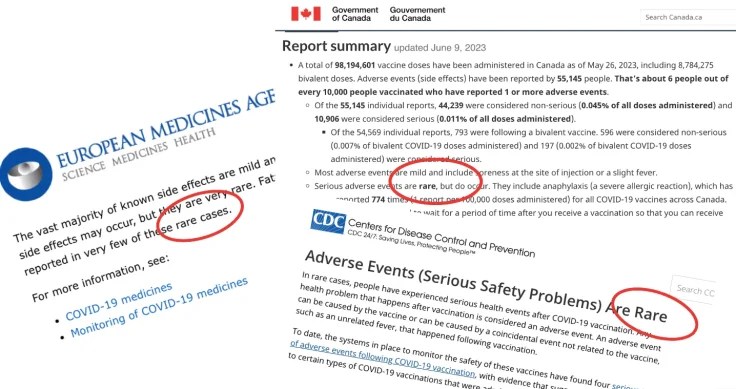
But there has been very little scrutiny of that claim by the media, and I could not find an instance where international agencies actually quantified what they meant by the term “rare” or provided a scientific source.
The best evidence so far, has been a study published in one of vaccinology’s most prestigious journals, where independent researchers reanalysed the original trial data for the mRNA vaccines.
The authors, Fraiman et al, found that serious adverse events (SAEs) – i.e. adverse events that require hospitalisation – were elevated in the vaccine arm by an alarming rate – 1 additional SAE for every 556 people vaccinated with Pfizer’s mRNA vaccine.
According to a scale used by drug regulators, SAEs occurring at a rate of 1 in 556 is categorised as “uncommon,” but far more common than what the public has been told.
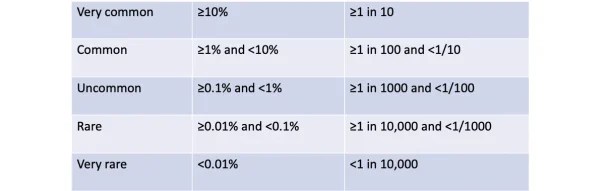
Therefore, I asked eight drug regulators and public health agencies to answer a simple question: what is the official calculated rate of SAEs believed to be caused by Pfizer’s mRNA vaccine, and what is the evidence?
The agencies were FDA, TGA, MHRA, HC, PEI, CDC, ECDC and EMA.
The outcome was startling.
Not a single agency could cite the SAE rate of Pfizer’s vaccine. Most directed me to pharmacovigilance data, which they all emphasised does not establish causation.
The Australian TGA, for example, referred me to the spontaneous reporting system but warned, “it is not possible to meaningfully use these data to calculate the true incidence of adverse events due to the limitations of spontaneous reporting systems.”
Both the German regulator (PEI) and European CDC referred me to the European Medicines Agency which, according to its own report, saw no increase at all in SAEs. “SAEs occurred at a low frequency in both vaccinated and the placebo group at 0.6%.”
The UK regulator MHRA went so far as to state it “does not make estimations of a serious adverse event (SAE) rate, or a rate for adverse reactions considered to be causally related for any medicinal product.”
The US FDA, on the other hand, did conceded that SAEs after mRNA vaccination have “indeed been higher than that of influenza vaccines,” but suggested it was justified because “the severity and impact of covid-19 on public health have been significantly higher than those of seasonal influenza.”
Despite analysing at the same dataset as Fraiman, the FDA said it “disagrees with the conclusions” of the Fraiman analysis. The agency did not give specifics on the areas of disagreement, nor did it provide its own rate of SAEs.
In response to the criticism, Joe Fraiman, emergency doctor and lead author on the reanalysis said, “To be honest, I’m not that surprised that agencies have not determined the rate of SAEs. Once these agencies approve a drug there’s no incentive for them to monitor harms.”
Fraiman said it’s hypocritical for health agencies to tell people that serious harms of the covid vaccines are rare, when they have not even determined the SAE rate themselves.
“It’s very dangerous not to be honest with the public,” said Fraiman, who recently called for the mRNA vaccines to be suspended.
“These noble lies may get people vaccinated in the short term but you’re creating decades or generations of distrust when it’s revealed that they have been misleading the public,” added Fraiman.
Dick Bijl, a physician and epidemiologist based in the Netherlands, agreed. “It goes to show how corrupted these agencies are. There is no transparency, especially since regulators are largely funded by the drug industry.”
Bijl said it’s vital to know the rate of SAEs for the vaccines. “You must be able to do a harm:benefit analysis, to allow people to give fully informed consent, especially in young people at low risk of serious covid or those who have natural immunity.”
Bijl said the mainstream media has allowed these agencies to make false claims about the safety of vaccines without interrogating the facts.
“The rise of alternative media is strongly related to the lies being told by the legacy media, which just repeats government narratives and industry marketing. In the Netherlands, there is a lot of discussion about the distrust in public messaging,” said Bijl.
Merck Knew Its Popular Asthma Drug Could Lead Kids to Commit Suicide, Lawsuits Allege
By Michael Nevradakis, Ph.D. | The Defender | June 27, 2023
Dozens of patients, including many children, died by suicide or suffered from neuropsychiatric problems after taking Singulair, Merck’s allergy and asthma medication, according to lawsuits that are finally proceeding, after decades of delays and legal challenges, Reuters reported.
Merck is accused of downplaying early evidence of Singulair’s impact on the brain. These claims “later faced intense scrutiny,” leading to “a raft of lawsuits alleging [Merck] knew … that the drug could impact the brain and that it minimized the potential for psychiatric problems in statements to regulators.”
Singulair, also known as montelukast, is available to adults and children as a medication for severe allergies and asthma. The drug “blocks chemicals, called leukotrienes, in the body,” according to Dr. Michelle Perro, a pediatrician. Leukotrienes “can be involved in the precipitation of asthma and can cause respiratory symptoms, as well as inflammation of the airways,” Perro told The Defender.
Numerous public comments about Singulair’s side effects were submitted in 2019, prior to the Sept. 27, 2019, joint meeting of the U.S. Food and Drug Administration’s (FDA) Pediatric and Drug Safety and Risk Management Advisory Committees charged with reviewing the drug’s safety.
Many of the comments were submitted by “vocal parents” of children adversely affected by Singulair.
Rolf Hazlehurst, senior staff attorney with Children’s Health Defense (CHD), told The Defender he “worked closely” with several of these parents.
The public comments, along with thousands of reports submitted over several years to the FDA Adverse Event Reporting System (FAERS) plus a 2015 research study finding that a “substantial amount” of Singulair entered the brain, forced the FDA to take action.
On March 4, 2020, the FDA required Singulair to carry a “black box” label — the FDA’s most serious warning, for “serious mental health side effects,” according to Drugwatch.
Black box warnings list “important side effect information surrounded by a thick black border and bold lettering to warn of permanent, serious or fatal side effects.”
In the case of Singulair, the label links the drug to “suicide, depression, aggression, agitation, suicidal thoughts and sleep disturbances.”
The black box label was at least two decades in coming, according to Hazlehurst, who said it “took over a decade’s worth of work by persistent parents, armed with overwhelming evidence of the serious neuropsychiatric side effects, urging the FDA to take action.”
According to Drugwatch, lawsuits now pending against Merck claim the drugmaker “knew or should have known before it started selling Singulair in 1998 that the drug could cause neuropsychiatric injuries during treatment and even after stopping.”
Dr. Liz Mumper, a pediatrician, said she has been “aware of the potential neuropsychiatric side effects of montelukast for many years,” adding that her patients “are instructed to stop the medicine if they notice a change in their mental health.”
“Over the years, parents have reported personality changes in their children, rapid changes in mood and irritability,” Mumper told The Defender. “Typically, these symptoms resolve once off montelukast.”
Since March 2020, when the FDA applied the black box warning to Singulair, numerous lawsuits have been filed against Merck. The lawsuits allege Merck designed “a defective drug,” in addition to claiming “negligence and failure to warn about the risk of mental problems,” according to Drugwatch.
A Reuters investigative report revealed the lawsuits also allege “that the company’s own early research indicated the drug could impact the brain but that Merck downplayed any risks in statements to regulators.”
The Reuters investigation states that plaintiffs faced a legal hurdle commonly used by Big Pharma — known as a “preemption defense” — based on a legal argument that federal law and federal regulations supersede state laws, including state product liability laws that traditionally served as the basis for lawsuits like those against Merck.
As a result, “companies increasingly argue that federally regulated products or services should be immune from lawsuits alleging state-law violations,” and plaintiffs “must often demonstrate that a company failed to disclose safety information to federal regulators — and that the information could have spurred new government restrictions or warnings before the alleged harm occurred.”
This has made it particularly difficult to sue manufacturers of generic versions of Singulair and other drugs, because generic drugmakers simply follow the primary manufacturer’s FDA-approved labeling, while the primary drugmaker can’t be sued by claimants if they or their family members took the generic version.
Perro told The Defender that a combination of an abrogation on the part of federal regulators, a lack of integrity on the part of drugmakers and complex legal maneuvering makes it difficult for doctors to prescribe safe treatments to their patients.
She said:
“A medical practitioner now needs to understand their patient, the illness, any prescribed medications, what Pharma reports about their drug, the real science behind the drug, and unfortunately, the legal doctrine of preemption, which is the principle based on federal law trumping state law.
“It is a dark time in medicine when the physician must question the integrity of what is written on the prescription pad.”
The FDA claims it has “diligently monitored reports of side effects possibly associated with montelukast, as well as communicated findings and taken regulatory action, when appropriate,” and that it “continues to monitor and investigate this important issue.”
Merck’s patent on Singulair expired in 2012, allowing generic drugmakers to begin producing and marketing the drug. Still, according to Reuters, Singulair “has provided Merck with about $50 billion in revenue.”
However, once Merck’s patent expired, “The number of patients prescribed the medicine climbed from about 7 million annually to more than 9 million” — with up to half of recipients age 16 or younger.
At least 82 suicides connected to Singular before FDA added black box warning
The Reuters investigation noted that “in the case of Singulair’s potentially deadly side effects, the FDA waited years, despite thousands of reported psychiatric problems, to require its most serious warning on the drug’s label.”
During this time, dozens of individuals taking Singulair committed suicide or faced other neuropsychiatric problems.
For instance, in 2017, 22-year-old Nicholas England, a Virginia resident, shot himself in the head less than two weeks after starting a generic version of the medication. He had no history of mental health problems — and his family had no legal recourse against Merck due to the preemption defense.
In 2007, a 15-year-old boy in New York committed suicide, 17 days after first taking Singulair. According to Reuters, this incident led Merck to propose — and the FDA to accept — an amendment to the drug’s label to add suicidal thinking and behavior to the product’s listed adverse events.
However, this adverse event “appeared in the middle of a list of more than three dozen side effects,” the Reuters investigation found. “Parent advocates argue the new label was grossly inadequate to warn of such a grave risk.”
“Neuropsychiatric side effects are listed in the documentation of potential side effects, but not always prominently,” Mumper told The Defender. And despite the new label, she said, parents searching for its package insert online will find older versions “without a prominent black box warning.”
According to Drugwatch, the change to Singulair’s label was made in August 2009, when the label was updated to also include other neuropsychiatric events including “postmarket cases of agitation, aggression, anxiousness, dream abnormalities and hallucinations, depression, insomnia, irritability, restlessness … and tremor.”
In 2008, the FDA said it was investigating “a possible association between the use of Singulair and behavior/mood changes, suicidality … and suicide,” Drugwatch reported.
In another example, the 3-year-old son of Jan Gilpin was prescribed Singulair for asthma in 2003. He “soon seemed withdrawn and sullen” and “started talking about death,” according to Reuters.
Gilpin initially did not suspect Singulair — until she discovered online posts by parents stating that their children were exhibiting similar behavior while on this medication. She pulled her son off Singular and soon “noticed he began to skip and laugh,” while his “obsessive thoughts about death disappeared after he quit the medicine.”
Indeed, “reports of related neuropsychiatric episodes piled up on internet forums and in the FDA’s early-warning detection system” starting in 1998, Reuters reported. Yet, by the time of England’s suicide in 2017, the FDA was still “reviewing” this data.
According to Reuters, in 2011, the FDA “rejected a petition from Gilpin and other parents seeking a black box warning, citing what it called insufficient evidence that the drug caused suicidal behavior.”
“Parents who argue Singulair endangered their children view the FDA’s 2020 decision to add a black box warning as vindication, but many still want to sue Merck for not acting sooner,” Reuters also reported.
In 2014, an FDA panel acknowledged that neuropsychiatric side effects among Singulair users were a “known safety issue,” but cited this reason and “feasibility concerns” in its decision not to order new studies, according to Reuters.
Yet, as reports of suicides continued to be filed — with 82 suicides linked to Singulair and its generic versions, including at least 31 involving people age 19 and younger, a new FDA advisory panel was convened in 2019.
According to Reuters, “agency staffers again said there was not enough evidence” to merit this. However, with Merck’s patent having expired, an FDA official told the advisory committee that the company may opt to pull Singulair from the market rather than fund expensive new studies to investigate the product’s safety.
This resulted in the March 2020 decision to add the black box label to Singulair.
‘Substantial amount’ of Singulair enters human brain
In its 2020 decision, the FDA cited independent research conducted in 2015 by cell biologist Julia Marschallinger and other researchers at Austria’s Institute of Molecular Regenerative Medicine.
They found that Singulair’s distribution into the brain was more significant than what was stated on the product label, which described its brain distribution as “minimal.”
Merck had claimed, in documents it submitted to FDA for the drug’s approval in 1998, that “only a trace amount” of the drug could be found in the brain and that its presence “declined over time.” Merck’s public marketing of the product later described side effects as “generally mild” and “similar to a sugar pill.”
However, Marschallinger’s team found that while Singulair’s presence decreased almost everywhere in the body within 24 hours after administration, the opposite was true in the brain, where “a substantial amount” of the drug was identified.
In its 1996 patent application for Singulair, Merck also claimed the drug could be used as a treatment for “cerebral spasms” — indicating “knowledge of the drug’s potential brain impacts.” Lawyers for plaintiffs filing Singulair lawsuits against Merck have cited this argument, as well as Marschallinger’s study.
The FDA has confirmed the study’s findings, acknowledging that claims regarding the declining presence of Singulair in all tissues “did not fully reflect the data.”
However, according to Reuters, the FDA also characterized findings of “a substantial amount” of the drug in the brain “a subjective characterization that is not necessarily incompatible with the ‘minimal’ descriptor in other contexts.”
“The FDA could have asked Merck to repeat the experiment or do it for an even longer period of time,” Marschallinger told Reuters. “It’s not hard to do.”
Perro said, “For those children who have been harmed by this drug,” due to the FDA’s 22-year delay in adding a black box warning, “there will not be any compensation because of pharmaceutical protection by our own government and liability shields.”
The FDA’s inaction has resulted in many deaths, Sue Peters, Ph.D., a CHD science fellow, told The Defender :
“The FDA has placed pharmaceutical profits over the safety and mental health of our children. It’s a never-ending cycle, with increased rates of chronic illness, like asthma, leading to pharmaceutical treatments which have not been properly safety-tested.
“These drugs put young people, with critical brain myelination continuing past 25 years of age, at risk of developing mental health disorders, leading to polypharmacy with psychiatric medications, and contributing to iatrogenic deaths as a leading cause of death in the U.S.”
Perro called for an overhaul of the FDA, telling The Defender :
“It is clear who our government — including the judicial system — is protecting. A solution to the lack of action by regulatory agencies? Overhaul.
“In the meantime, there are safer pharmaceutical alternatives for asthma in children. Not to mention, this is yet another reason to examine the root causes as to why so many children now have asthma, and address the real culprits, such as air pollution.”
For Mumper, a new approach to treating ailments such as asthma is needed. “Although montelukast is a valuable medication in my toolbox for treating allergies, the prescription should come after other measures, including working on gut health,” she said.
Similarly, Peters called for a “careful analysis” of the role of drugs in the treatment of common disorders and their role in precipitating mental health disorders and even deaths. She told The Defender :
“The tragic increase in the rate of mental health disorders in children in the United States, requires careful analysis of the role of iatrogenic death.
“Failing to consider the role of pharmaceutical drugs and medical treatments in the development of mental health disorders in children, has led to the loss of valuable research time, wasted research dollars, and ultimately the loss of life. Clearly, our current system is broken.”
Preemption defense lets Big Pharma avoid directly addressing safety claims
According to the Reuters investigative report, most of the Singulair lawsuits pending against Merck are still in their early stages.
Drugwatch reported that, as of May 16, “there have been no scheduled trials or court-approved global settlement in Singulair litigation.” Many of the suits against Merck were filed in New Jersey, where in January 2022, they were consolidated into multicounty litigation in the Superior Court of New Jersey Law Division: Atlantic County.
And in April, U.S. District Judge Timothy S. Hillman in Massachusetts denied Merck’s motion to dismiss a Singulair lawsuit “for lack of personal jurisdiction,” Drugwatch reported. Judge Hillman argued Merck manufactured, marketed and sold the drug in the state and allowed the case to continue.
Two U.S. Supreme Court rulings in 2011 and 2013 strengthened the preemption defense.
In Pliva, Inc. v. Mensing (2011), the Supreme Court held that state law requiring “generic drug manufacturers to provide adequate warning labels was preempted where federal law required manufacturers to use the same labels as their brand-name counterparts.”
And in Mutual Pharmaceutical Co. v. Bartlett (2013), the Supreme Court held that design-defect claims questioning the adequacy of a drug’s warnings under state law are preempted by the Federal Food, Drug, and Cosmetic Act and the Pliva v. Mensing ruling.
According to Reuters, the preemption doctrine rests on the U.S. Constitution’s Supremacy Clause, which states that the Constitution and federal law take precedence over state laws and state constitutions.
As a result, “Preemption defenses often deliver companies a swift procedural win, allowing them to avoid addressing the substance of plaintiffs’ allegations.”
While the defense has been used across multiple industries, it “has had a particularly profound impact in the pharmaceutical industry,” particularly as FDA data cited by Reuters indicates that generic drugs account for 91% of U.S. prescriptions.
Reuters, in its review of 257 U.S. Supreme Court and federal appeals court rulings since 2001, found that “judges ruled two-thirds of the time to weaken or kill lawsuits alleging deaths or injuries caused by corporate negligence or defective products.”
Moreover, “The number of potential lawsuits that were never filed” serves as “Another industry benefit” that “can’t be quantified,” according to Reuters.
Preemption defenses became a centerpiece of the George W. Bush administration — and FDA policy under his presidency, Reuters reports. This was part of the Bush campaign’s promise to address what it described as “frivolous” lawsuits.
Daniel Troy, the FDA’s chief counsel under the Bush administration, “interpreted preemption to mean that courts can’t undermine federal regulators based on alleged state-law violations,” Reuters reported, adding that he “aimed to make that argument in high-profile lawsuits” and briefed drug industry lawyers on the strategy in 2003.
Troy — who is now a pharmaceutical industry lawyer — told Reuters, “If you believe in a strong FDA, we can’t have state courts, especially juries, second-guessing and undercutting the FDA’s judgments.”
Hazlehurst told The Defender Troy’s argument is the same one used by Wyeth (Pfizer) before the Supreme Court in Bruesewitz v. Wyeth (2011). The Supreme Court’s decision in this case prohibited design defect lawsuits against vaccine manufacturers.
The U.S. Department of Health and Human Services, the parent agency of the FDA and the Centers for Disease Control and Prevention, supported Wyeth’s 2011 argument.
Similarly, Mumper told The Defender that pharmaceutical companies “have a history of avoiding liability through various legislative protection,” including the preemption defense and the National Childhood Vaccine Injury Act of 1986.
And in 2006, “The FDA formally changed its view of preemption in a 2006 regulation, stating the agency now believed that FDA labeling approval ‘preempts conflicting or contrary State law,’” Reuters reported.
Hazlehurst told The Defender, “CHD is proud to have played a role in advocating and assisting these parents on the journey to hold Merck accountable,” but “one thing rings loud and clear: the FDA is a captured agency, and this is a fundamental problem.”
Some parents have questioned whether the black box warning for Singulair was enough to save lives, citing the damage already done, continued legal obstacles, and Merck’s strong marketing campaign for the drug.
“Due to tremendous financial conflicts of interest, the pharmaceutical industry has tremendous influence over the FDA,” Hazlehurst said. “As a result, the FDA protects the pharmaceutical industry first and people second — this story is just one example.”
He added: “One must wonder, how many lives could have been spared if the FDA had timely done its job of properly investigating and regulating the pharmaceutical industry?”
Michael Nevradakis, Ph.D., based in Athens, Greece, is a senior reporter for The Defender and part of the rotation of hosts for CHD.TV’s “Good Morning CHD.”
This article was originally published by The Defender — Children’s Health Defense’s News & Views Website under Creative Commons license CC BY-NC-ND 4.0. Please consider subscribing to The Defender or donating to Children’s Health Defense.
Featured Video

Trita Parsi: Middle East Unraveling — Are We on the Path to World War?
or go to
Aletho News Archives – Video-Images
New Book
Trans agenda is ‘normalization of sadism’ – US author
RT | September 23, 2026
The US Democratic Party has embraced a transgender agenda that amounts to “the normalization of sadism,” author A.J. Rice has said, warning that radical trans policies would return if the party is allowed to regain power.
Speaking to RT’s America First host Scotty Nell Hughes about his new book, ‘The Curse of the Bearded Lady: How the Trans Mafia Whacked American Sanity’, Rice argued that activists have gained significant influence in schools, medicine, and corporate America while people who questioned the agenda have faced pressure to stay silent.
The author described the “trans mafia” as the sprawling network of people and institutions that have helped the movement gain influence. He singled out parts of academia, wealthy backers, and corporations, and stated that providers of transition-related treatment also have a financial incentive to keep young people in their care indefinitely.
Rice argued that the consequences of these policies ultimately fall on children who are being drawn toward gender-affirming medical treatments and on girls who are expected to share locker rooms or compete in sports with biological males.
He noted that while voters rejected the Democrats’ approach to gender in 2024, the party, which has been “captured by madness,” has since only doubled down and is seeking what is effectively “the normalization of sadism.” … Full report
Blog Roll
 Aletho News
- Refaat Al-Areer Was The Canary In The Coal Mine In Israel’s War On The Truth
- Israeli election committee bars candidate from Knesset race over Gaza war opposition
- French-Lebanese man files war crimes complaint over Israeli attacks
- Mahan Air Flight Lands in China Despite US Threat against Iranian Airlines
- US eyes $10bn fund to rebuild war-battered Gulf infrastructure
- Trump meets Rodríguez near Maduro’s prison as Venezuela’s oil flows to US
- Trita Parsi: Middle East Unraveling — Are We on the Path to World War?
- Iran FM meets with US envoy on UN meeting’s sidelines at American side’s insistence: Report
- Qatar PM calls for Gulf security framework with Iran, says war must be ‘wake-up call’
- China condemns US extortion of Iranian airlines, rejects Washington’s ‘illegal’ sanctions threats
- If Americans Knew
- An error has occurred; the feed is probably down. Try again later.
- No Tricks Zone
- New Study: Earth And Venus Surface Warmth Largely Explained By Convection And Lapse Rate, Not CO2 Or Radiation
- 2025 Nature Paper Claiming Worsening Global Drought Gets RETRACTED …Heavily Flawed
- New Study: ‘Global Drought Shows No Detectable Recent Acceleration Under Climate Warming’
- Economic Masterminds: German Socialists Suggest Taxing Productivity Gains Stemming From Using AI
- The South China Sea Has Not Been Cooperating With The Climate Change Narrative
- Energy Crisis: Germany Enters Heating Season With Historically Low Gas Reserve Fill Levels
- New Study: The Antarctic Ice Sheet Gained Mass From 2020-2024 Due To Staggering Snow And Ice Accumulation
- Study: Ocean Heating Rates From Thousands Of Years Ago ‘Dwarf’ Modern Ocean Heating Rates
- Climate Extremists Target, Attack Large-Scale Power Grid Infrastructure In Germany!
- New Study: Antarctic Ice Melt Has Contributed Less Than 1 Centimeter To Sea Level Rise In The Last 30 Years

