The White Helmets, alleged organ traders & child kidnappers, should be condemned not condoned
By Vanessa Beeley | RT | January 22, 2019
The White Helmets, “volunteers” who reportedly “rescue Syrians from rubble.” Never in history has such a group been so feted by the elite, or received so many awards from institutions acting as extensions of US and UK hegemony.
A recent panel at the UN Security Council in New York revealed the shocking evidence of White Helmet involvement in organ trafficking in Syria. The lucrative trade of human body parts, bones, blood and organs is one of the most protected and hidden harvests of war.
The potential of White Helmet involvement in these nefarious activities raises questions that must be answered. Why were the shocking revelations met by a wall of silence from corporate media present at the panel in New York?
Not one media outlet pursued the subject, preferring to divert onto more comfortable issues that did not challenge the iconization of the White Helmets that has been the default position for virtually all state-aligned media since the establishment of the group in 2013 in Jordan and Turkey.

© Screenshot from the presentation of Maxim Grigoriev
Above is one of the slides from the presentation of Maxim Grigoriev, director of the Foundation for the Study of Democracy, given to the panel and audience at the UNSC in New York, December 2018.
In July 2017, I had interviewed residents of the East Aleppo districts that had been under occupation of the various extremist armed groups and the White Helmets. Salaheddin Azazi was a resident of the Jib Al Qubbeh area (also mentioned in Grigoriev’s presentation).
Azazi went through the details of the November 2016 Nusra Front attack on civilians trying to flee via the Syrian and Russian-established humanitarian corridors which had been spun by the White Helmets into a “regime” bombing raid that resulted in a civilian massacre. It was a complete misrepresentation of reality which was seized upon by corporate media with no fact checking. My full report on that incident and the White Helmet involvement in the massacre and subsequent theft of civilian belongings from the dead and dying is here.
“The bodies of the dead and dying were left unattended for ten hours in the street after the Nusra Front rocket attack that killed 15 civilians. The White Helmets did not help them, they stole their belongings,” Salaheddin Azazi, resident of Jib Al Qubbeh and eyewitness to events on 30.11.2016, said.

Discussing the November 2016 events in Jib Al Qubbeh with residents Salaheddin Azazi and Ammar Al Bakr, July 2017 © Vanessa Beeley
Azazi and another resident, Ammar Al Bakr (on the right, in above photo) described how the White Helmets were the “runners” for the organ traffickers.
“The White Helmet drivers would take the injured or dead bodies to the Turkish border. Many of the injured had light wounds, nothing that needed hospitalization but the bodies would come back without organs,” said Ammar Al Bakr.
“The bodies, dead and alive, would be inspected in the towns on the borders with Turkey before being taken by Turkish vehicles to the hospitals but if the injured civilian was a child or young and strong they would be taken directly to the hospital in Turkey because their organs had greater value,” Azazi told me.
According to both of these witnesses, the bodies were worth $2000 dead and $3000 if alive and this market was dominated by the White Helmet operatives who profited from cross-border organ trafficking.
Other civilians I met in July/August 2017 confirmed the threat of organ theft which hung over them during the almost five-year occupation of East Aleppo districts by the armed groups and their White Helmet auxiliaries. Families spoke to me of hiding their children if they were lightly injured to prevent the risk of them being abducted and taken to one of three hospitals – Omar Abdulaziz, Al Quds and Zarzour – that allegedly specialized in organ theft in East Aleppo, all of which had been taken over by militant gangs early on in the conflict. I was told that “foreign doctors” were operating in these three hospitals and were in charge of organ extraction. In post-liberation Eastern Ghouta, similar stories abounded.
In January 2019, I visited survivors from the Jaysh Al Islam controlled Tawbah Prison in Douma, Eastern Ghouta (known as Repentance Prison). I met with former prisoners in Adra Al Balad who spoke of the torture and violent abuse they had received after being kidnapped from Adra Al Ummaliya in 2013 by Jaysh Al Islam and Nusra Front. Familiar descriptions of the White Helmets were forthcoming:
“Regarding the White Helmets, they are terrorists and Takfiris […] they have nothing to do with Humanity […] when they used to see an injured civilian, they used to finish them off. If you come to “rescue” a man would you slaughter them? The White Helmets and the terrorists are one and the same, they are hand in hand,” said Hassan Al Mahmoud Al Othman, one of the survivors I spoke to about their experiences as captives of Jaysh Al Islam and Nusra Front during the six years that Eastern Ghouta was occupied.
The evidence against the White Helmets is mounting on a daily basis and will only increase as Idlib is liberated or a political resolution is achieved in the last Syrian province effectively controlled by Hayat Tahrir Al Sham (HTS) a rebrand of Al Qaeda.
Despite this, Western corporate media and NATO-aligned think tanks, policy influencers and NGOs are stubbornly sticking to the “volunteer hero” script. The Observer recently collaborated with Reader’s Digest to produce a slick homage to the White Helmets “rescued” from Syria by Israel in July 2018, entitled ‘The inside story of Canada’s dramatic rescue of the White Helmets out of Syria.’ It depicts the volunteer “bankers and barbers” as heroes and downtrodden saints fleeing for their lives. A far cry from the image portrayed of organ thieves, child abductors and bone peddlers by the Syrian people who lived under the White Helmet regime of sectarian violence and exploitative abuse.
The White Helmet involvement in the “red market” (a term used to describe the multi-billion-dollar trade in human body parts, tissue and organs) should come as no surprise. James Le Mesurier, the former private security and “democratization” expert who founded the White Helmets in Turkey and Jordan was also present in Pristina, Kosovo in 1999 when he worked under the direction of the notorious Bernard Kouchner, co-founder of MSF (Medecins Sans Frontieres) and former French foreign minister.
Kouchner’s tenure in Kosovo was plagued by controversy and accusations of involvement in human and organ trafficking masterminded by the Albanian mafia gangs within the Kosovo Liberation Army (KLA).
Carla Del Ponte, former chief prosecutor for war crimes in former Yugoslavia, detailed these crimes in her book The Hunt: Me and the War Criminals, which was published in 2008 just after Kosovo declared its independence.
In 2010, an interim report by the Council of Europe vindicated Del Ponte’s claims, which had garnered skepticism and criticism from the NATO-aligned media and spokespeople. Del Ponte persistently complained, at the time, that UN authorities in Kosovo were systematically blocking her investigations into crimes committed by the Kosovo Albanians in the KLA and the rebranded Kosovo Protection Corps (KPC).
James Le Mesurier was responsible for the rebranding of the KLA, linked to Al Qaeda at that stage alongside the Albanian warlords, and their transformation into the Kosovo Protection Corps while they were being accused of running cross-border organ trafficking operations.
A blueprint that Le Mesurier seems to be reproducing with the White Helmets in Syria while attempting to maintain an untarnished White Helmet image, at least in the aligned media and PR circles. In reality, there is an entire billionaire-supported industry of NGOs and influential global transformation institutions protecting the White Helmets’ image.
A network of global carpetbaggers enabling the criminal obfuscation of White Helmet crimes against Humanity and denial of justice to the Syrian people whose accusations against the pseudo humanitarian group are systematically silenced and marginalized by the White Helmet acolytes.
The White Helmets have received an unprecedented number of awards and peace prizes, including the Right Livelihood Award 2016 (RLA), the Atlantic Council Freedom Award 2016, Tipperary Peace Prize 2017, Hollywood Oscar 2017 (one win, one nomination in 2018) and they have been nominated for the Nobel Peace Prize for three years running.
According to the RLA website, they “honour and support courageous people and organisations that have found practical solutions to the root causes of global problems”. There is nothing honourable or courageous about the White Helmet crimes against the Syrian people.
The White Helmets have enabled and participated in organ trafficking, one of the deepest root causes of our global problems but the RLA has made no move to retract their award from this group of criminals, thieves and terrorists. They have ignored petitions and statements from groups of peace activists and academics. Instead, in 2018, they published a counter petition signed by 29 former RLA Laureates calling upon all parties to “stop targeting the White Helmets […] in Syria”.
While blaming Russia for the smear campaign against the White Helmets, the petition informs us that “(White Helmet) work is guided by the inherent dignity of human life.” The RLA claims that the evidence against the White Helmets is “unsubstantiated and does not stand up to scrutiny”. One cannot help but wonder; when did they scrutinize the evidence or listen to the huge number of Syrian civilian testimonies that detail the crimes committed by the White Helmets that are most definitely not guided by the inherent dignity of human life?
What all these US Coalition-aligned organizations fail to understand is that Russian media and UN missions do indeed give a voice to the Syrians who are ignored by media in the West. Russia is not the originator of the claims against the White Helmets.
While these organizations, claiming to support peace in Syria and an end to hostility, continue protecting the White Helmets who are responsible for so much of the misery endured by the Syrian people, they forfeit any credibility and become nothing more than a corrupt extension of US supremacism in the region.
Child exploitation, abuse, human trafficking and organ trafficking – which often goes hand in hand with the former – should never be tacitly condoned or covered up and must always be investigated or we have fallen into a moral vacuum from which there is no escape.
I invite all Western media outlets and “peace” promoting institutions to retract their White Helmet accolades and laurels, and to “scrutinize” the evidence before they too are implicated in one of the most heinous crimes ever committed against victims of war.
Vanessa Beeley is an independent investigative journalist and photographer. She is associate editor at 21st Century Wire.
Read more:
Organ theft, staged attacks: UN panel details White Helmets’ criminal activities, media yawns
Climate Hysterics Skyrocket Even As Weather Disasters Haven’t
By Paul Driessen | Climate Change Dispatch | January 21, 2019
Call it climate one-upmanship. It seems everyone has to outdo previous climate chaos rhetoric.
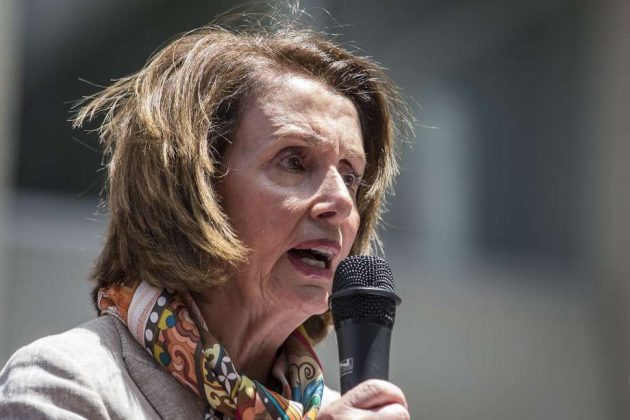
The “climate crisis” is the “existential threat of our time,” Speaker Nancy Pelosi told her House colleagues. We must “end the inaction and denial of science that threatens the planet and the future.”
Former California Governor Jerry Brown solemnly intoned that America has “an enemy, though different, but perhaps very much devastating in a similar way” as the Nazis in World War II.
Not to be outdone, two PhDs writing in Psychology Today declared that “the human race faces extinction” if we don’t stop burning fossil fuels.
And yet “even people who experience extreme weather events often still refuse to report the experiences as a manifestation of climate change.” Psychologists, they lament, “have never had to face denial on this scale before.”
Then there’s Oxford University doctoral candidate Samuel Miller-McDonald. He’s convinced the only thing that could save people and planet from cataclysmic climate change is cataclysmic nuclear war that “shuts down the global economy but stops short of human extinction.”
All this headline-grabbing gloom and doom, however, is backed up by little more than computer models, obstinate assertions that the science is settled, and a steady litany of claims that temperatures, tornadoes, hurricanes, droughts et cetera are unprecedented, worse than ever before, and due to fossil fuels.
And on the basis of these hysterics, we are supposed to give up the carbon-based fuels that provide over 80% of the U.S.’ and global energy, gladly reduce our living standards – and put our jobs and economy at the mercy of expensive, unreliable, weather dependent, pseudo-renewable wind, solar and biofuel energy.
As in any civil or criminal trial, the burden of proof is on the accusers and prosecutors who want to sentence fossil fuels to oblivion. They need to provide more than blood-curdling charges, opening statements and summations. They need to provide convincing real-world evidence to prove their case.
They have refused to do so. They ignore the way rising atmospheric carbon-dioxide is spurring plant growth and greening the planet. They blame every extreme weather event on fossil fuel emissions, but cannot explain the Medieval Warm Period, Little Ice Age or extreme weather events decades or centuries ago – or why we have had fewer extreme weather events in recent decades.
They simply resort to trial in media and other forums where they can exclude exculpatory evidence, bar any case for the fossil fuel defense, and prevent any cross-examination of their witnesses, assertions and make-believe evidence.
Climate models are not evidence. At best, they offer scenarios of what might happen if the assumptions on which they are based turn out to be correct.
However, the average prediction by 102 models is now a full degree F (0.55 C) above what satellites are actually measuring.
Models that cannot be confirmed by actual observations are of little value and certainly should not be a basis for vital energy policymaking.
The alarmist mantra seems to be: If models and reality don’t agree, reality must be wrong.
In fact, even as atmospheric carbon dioxide levels climbed to 405 parts per million (0.0405% of Earth’s atmosphere), except for short-term temperature spikes during El Niño ocean warming events, there has been very little planetary warming since 1998; nothing to suggest chaos or runaway temperatures.
Claims that tornadoes have gotten more frequent and intense are obliterated by actual evidence. NOAA records show that from 1954 to 1985 an average of 56 F3 to F5 tornadoes struck the USA each year – but from 1985 to 2017 there was only 34 per year on average.
And in 2018, for the first time in modern history, not a single “violent” twister touched down in the United States.
Harvey was the first major (category 3-5) hurricane to make US landfall in a record twelve years. The previous record was nine years, set in the 1860s. (If rising CO2 levels are to blame for Harvey, Irma and other extreme weather events, shouldn’t they also be credited for this hurricane drought?)
Droughts differ little from historical trends and cycles – and the Dust Bowl, Anasazi, and Mayan droughts, and other ancient dry spells were long and destructive. Moreover, modern agricultural and drip irrigation technologies enable farmers to deal with droughts far better than they ever could in the past.
Forest fires are fewer than in the recent past – and largely due to failure to remove hundreds of millions of dead and diseased trees that provide ready tinder for massive conflagrations.
Arctic and Antarctic ice are largely within “normal” or “cyclical” levels for the past several centuries – and snow surface temperatures in the East Antarctic Plateau regularly reach -90 °C (-130 F) or lower.
Average Antarctic temperatures would have to rise some 20-85 degrees F year-round for all its land ice to melt and cause oceans to rise at faster than their current 7-12 inches per century pace.
In fact, the world’s oceans have risen over 400 feet since the last Pleistocene glaciers melted. (That’s how much water those mile-high Ice Age glaciers took out of the oceans!)
Sea level rise paused during the Little Ice Age but kicked in again the past century or so. Meanwhile, retreating glaciers reveal long-lost forests, coins, corpses, and other artifacts– proving those glaciers have come and gone many times.
Pacific islands will not be covered by rising seas anytime soon, at 7-12 inches per century, and because corals and atolls grow as seas rise. Land subsidence also plays a big role in perceived sea level rise – and US naval bases are safe from sea level rise, though maybe not from local land subsidence.
The Washington Post did report that “the Arctic Ocean is warming up, icebergs are growing scarcer, and in some places, the seals are finding the water too hot.” But that was in 1922.
Moreover, explorers wrote about the cyclical absence of Arctic ice long before that. “We were astonished by the total absence of ice in Barrow Strait,” Sir Francis McClintock wrote in 1860. “I was here at this time in [mid] 1854 – still frozen up – and doubts were entertained as to the possibility of escape.”
Coral bleaching? That too has many causes – few having anything to do with manmade global warming – and the reefs generally return quickly to their former glory as corals adopt new zooxanthellae.
On and on it goes – with more scare stories daily, more attempts to blame humans and fossil fuels for nearly every interesting or as-yet-unexplained natural phenomenon, weather event or climate fluctuation.
And yet countering the man-made climate apocalypse narrative is increasingly difficult – in large part because the $2-trillion-per-year climate “science” and “renewable” energy industry works vigorously to suppress such evidence and discussion … and is aided and abetted by its media and political allies.
Thus we have Chuck Todd, who brought an entire panel of alarmist climate “experts” to a recent episode of Meet the Press. He helped them expound ad nauseam on the alleged “existential threat of our time” – but made it clear that he was not going to give even one minute to experts on the other side.
“We’re not going to debate climate change, the existence of it,” Todd proclaimed. “The Earth is getting hotter. And human activity is a major cause, period. We’re not going to give time to climate deniers. The science is settled, even if political opinion is not.”
The only thing left to discuss, from their perspective was “solutions” – most of which would hugely benefit them and their cohorts, politically and financially.
Regular folks in developed and developing countries alike see this politicized, money-driven kangaroo court process for what it is.
They also know that unproven, exaggerated and fabricated climate scares must be balanced against their having to give up (or never having) reliable, affordable fossil fuel energy. That is why we have “dangerous man-made climate change” denial on this scale.
That is why we must get the facts out by other means. It is why we must confront Congress, media people and the Trump Administration, and demand that they address these realities, hold debates, revisit the CO2 Endangerment Finding – and stop calling for an end to fossil fuels and modern living standards before we actually have an honest, robust assessment of supposedly “settled” climate science.
Paul Driessen is senior policy advisor for the Committee For A Constructive Tomorrow (CFACT) and author of articles and books on energy, environmental and human rights issues.
Lancet EAT Report Promotes Activism Over Science
By Donna Laframboise | Big Picture News | January 21, 2019
Last week, The Lancet, one of the world’s most prestigious medical journals, officially drove off a cliff. With much fanfare, it released a 47-page report titled Food in the Anthropocene: the EAT – Lancet Commission on healthy diets from sustainable food systems.
That title is the first screaming clue we’re being fed propaganda. As I’ve discussed previously, the Anthropocene doesn’t exist.
A scientific body known as the International Commission on Stratigraphy is tasked with defining and naming geological periods. It decides these matters according to an official, established process.
That body’s website contains a chart updated six months ago. It clearly indicates Earth remains in the Holocene. The term Anthropocene is nowhere to be found.
The notion that we’ve entered a new and distinct geological epoch is 100% activist hogwash. It’s an argument. Made by environmentalists. An argument that has been rejected by the scientific authorities who are experts in such matters.
Food in the Anthropocene, indeed. By naming its new report after this figment of activist imagination, The Lancet has been deliberately deceptive.
Medical journals are supposed to be the opposite of fake news. Now they spread misinformation on purpose.
Soros, Fake News & Italian Media: Journalist Reveals Plot to Put Rome Under Austerity
Sputnik – January 20, 2019
Sputnik Italia contributor Alessio Trovato investigates the purpose of George Soros’ recent closed-door meeting with European Commission vice-president Frans Timmermans, and broader campaign to convince Brussels to put Italy under the supervision of the ‘troika’ (the European Central Bank, the EC and the International Monetary Fund).
George Soros, a sworn enemy of the present right-populist coalition government in Rome, has been on something of a mission to put Italy under austerity, with Italian media reporting on such efforts going back to at least 2011. Last October, in an explosive interview for Italian TV, former Prime Minister Mario Monti revealed that Soros had called him at the height of the European sovereign debt crisis eight years ago, urging Italy to accept ‘assistance’ from the IMF to dig out from under its debt problem. Monti refused at the time, saying following Soros’ advice would have turned Italy into another Greece.
On November 26, 2018, in a meeting in Brussels with Timmermans, along with a representative of EC President Jean-Claude Juncker, Soros was again assumed to have brought up the debt issue, with Italian media speculating heavily regarding the vague comments of an EC spokesperson, who said only that they “cannot confirm or deny whether Italy’s budget was discussed.”
Meanwhile, Sputnik Italia contributor Alessio Trovato writes, Soros’ Open Society Foundations has been cutting paychecks “to a considerable number of journalists and influencers whom (surprise) constantly refer to him as a ‘benefactor’ and ‘spontaneously’ support all of his campaigns, including his support for migration, mondialism, Russophobia and colour revolutions.”
A big part of the problem, according to Trovato, is that the mainstream media continues to completely ignore Soros’ activities, or to report on them only with reluctance, even as the billionaire seeks to interfere in democratic processes and the internal affairs of sovereign nations.
Soros’ Agents in Mainstream Media vs. Italy’s National Interest
“Even journalists who do not receive ‘favours’ from the magnate are either incapable of saying anything on this subject or prefer not to do so,” Trovato wrote. “Hence we come to the case of Ivo Caizzi, Luciano Fontana and Federico Fubini, who are likely to become a classic in the annals of Italian journalism, and show the battle for journalistic independence being waged inside the mainstream media.”
Late last year, Caizzi, the Brussels correspondent of Italy’s highly influential Corriere della Sera newspaper, leaked internal email communications accusing Fubini, the paper’s chief economics commentator, and Fontana, its executive director, of publishing ‘Fake News’ in November about ‘inevitable sanctions’ against Italy for its violation of EU budget legislation. In reality, Rome managed to avoid sanctions, reaching a compromise deal with Brussels in December. However, reports of imminent sanctions from a respectable mainstream newspaper are thought to have threatened the country’s economic stability.Last week, Caizzi wrote an open letter to his employers, asking them to respond to several serious questions in the interests of the newspaper, his fellow journalists, and readers. In the editorial, the journalist asked whether editor-in-chief Fontana’s behaviour has been corrected, and whether it would be appropriate for Fontana to limit himself to expressing his personal opinions to editorials, op-eds and comments. Caizzi asked whether reports of ‘imminent sanctions’ could have adversely affected the financial markets and played in the hands of speculators (who, incidentally, include Soros) betting on the Italy’s destabilization, the collapse of the country’s stock market, and the growth of yields on Italian government obligations.
“Can we hope that in 2019, Corriere will return to its motto of ‘providing independent and high-quality information and ensuring maximum reliability of the news from the first to the last page?” Caizzi asked.
Commenting on the editorial, Trovato suggested that “even the rebellious Caizzi” did not comment on two issues which “he is certainly aware of.”
Specifically, Trovato noted, “Soros met Frans Timmermans behind closed doors in Brussels [in November]. The 88-year-old Soros is not one to head off to Brussels for no reason. If he is talking to someone, it means he has something to ask, or offer. Mr. Timmermans is not just anybody, but the so-called ‘spitzenkandidad’, the lead candidate for the presidency of the European Commission in the event of victory for the socialists and the democrats in the upcoming elections to the European Parliament. What did they talk about? A trifle –Soros seems to have asked Timmermans to take measures so that the European Commission rejects the Italian tax maneuver to allow the troika to be brought to Italy. In effect, Soros essentially asked Juncker’s deputy… to turn Italy into the same kind of hostage to the EU as Greece. In this sense, [Corriere’s reporting] turned Italian media into a sort of fifth column, preparing the markets for the upcoming speculative moves from the inside.”
Secondly, the journalist noted, Federico Fubini is a member of the European Advisory Board of the Open Society Foundations, and, ironically, on the European Commission’s ‘expert group on Fake News’.
“The point is, how can one believe that Europe is struggling against Fake News when it also produces it? Can we believe in the impartially of information published thanks to the ‘donations of generous and disinterested benefactors’?” Trovato asked.
Ultimately, the Sputnik Italia contributor noted, “our only chance for survival lies in being aware of what’s going on and in our own analytical skills. Discuss, doubt and check everything – otherwise you will never understand who you’re up against. Maybe it’s a troll – an agent of the Kremlin, or perhaps someone funded by the Open Society, the Aspen Institute, the Bilderbergs, the Atlantic Council, the CIA, Mossad, the FSB, a proponent of the troika trojan horse, or just about anyone else. Never trust! Even those who tell you not to believe anyone!”
Buzzfeed, Question Time & the purpose of Fake News
Image source
By Kit Knightly | OffGuardian | January 19, 2019
Two days ago BuzzFeed published a front page story, under a “BREAKING” banner, headlined: President Trump Directed His Attorney Michael Cohen To Lie To Congress About The Moscow Tower Project
In the article, Buzzfeed reporters Jason Leopold and Anthony Cormier claim to have been told, by two anonymous sources, that Robert Mueller’s “Russiagate” investigation had evidence Donald Trump had instructed his lawyer to lie to Congress. That would be a felony, and obviously an impeachable offence.
The reaction of the news media and associated twitterati was as quick as it was predictable. MSNCBC, CNN, the BBC, The Guardian… the usual suspects. They were all over it within hours.
But then, less than a day later, Robert Mueller’s spokesperson Peter Carr issued this statement:
BuzzFeed’s description of specific statements to the special counsel’s office, and characterization of documents and testimony obtained by this office, regarding Michael Cohen’s congressional testimony are not accurate,”
Despite this, BuzzFeed is sticking to its guns. Insisting that Mueller’s statement is vague, and therefore does not undercut the heart of their story.
The rest of the mainstream media are sensing the tone though and jumping ship. The Washington Post – not known for their pro-Trump slant – ran an editorial pointing out the scarcity of Mueller’s public comment (this the first statement Mueller has ever issued concerning evidence or claims in the press), and arguing that the rush to refute the BuzzFeed article means it is probably completely false.
Nevertheless, BuzzFeed has not retracted or altered their story in any way – except for putting in one small paragraph reporting that Mueller’s office disputes their story. There is no note of the update, and the rest of the story remains unchanged.
There is a striking parallel here, with a story Luke Harding contributed to The Guardian in late November last year: “Manafort held secret talks with Assange in Ecuadorian embassy”
The article claimed Trump’s campaign manager Paul Manafort had met with Julian Assange at least three times prior to the 2016 Presidential Election. No evidence was produced, save the word of “unnamed intelligence officials”, “secret Ecuadorian documents” and the like. While the predictable news outlets picked up the story and ran with it with the eagerness of a 6-month-old Golden Retriever, we in the alternative media were quick to point out the logical and factual deficiencies in the story.
Within hours, The Guardian had edited its language to be rather more circumspect, and include the denials made by both accused parties. The edits made to the article were not noted or highlighted in any way, we only know they exist because of internet archives. The next day The Guardian released a brief, terse, defensive statement. That statement was itself refuted by both Manafort and WikiLeaks. As of today, WikiLeaks is actively pursuing legal action in this case.
Later, it was revealed that a key contributor to the story had been previously been convicted of forgery.
No apology has been made, and no retraction issued, no explanation given. Both the editor, Katherine Viner, and Luke Harding have been totally silent on the topic.
So, in the last 2 months both Buzzfeed and The Guardian have issued “BREAKING NEWS” stories that made bold claims, but were not backed up with any evidence. Both these stories were shown to be untrue in less than 24 hours.
Anonymous sources are a common area here – both stories rely exclusively on the word of “unnamed sources” from either “the intelligence services” or “government agencies”. Anonymous sources are the batarangs on the propagandist’s utility belt. Flexible, simple, timeless.
Anonymity allows government agencies to leak misinformation on purpose, without hurting their credibility. It allows newspapers to control public opinion without having any actual facts on hand. It allows intelligence agencies to plant narratives they may want to revisit, or to give targets of blackmail operations a warning. And, most obviously, it allows journalists to simply make stuff up.
I don’t know which specific class these two stories fall into – but I do know it’s one or all of them.
So we come to the question of motive: BuzzFeed and The Guardian must have known there was no evidence to back up their assertions (yet, anyway). They must know the “significant minority” of the population who believe “conspiracy theories about their own government” will research and refute these claims.
So why publish them?
Well, in the Guardian’s case, every story demonising Assange discredits WikiLeaks’ future output, whilst also softening public sympathy for Assange in preparation for potential extradition of to the US. All the mainstream press have turned on WikiLeaks, but The Guardian – for some reason – has a particularly strong institutional axe to grind with WikiLeaks, and specifically Julian Assange.
Similarly, every “Russia bad!” story primes the public to accept increased defence spending, increased control of the internet by the government and increased social media censorship. It is very much the gift that keeps on giving in that regard.
In BuzzFeed’s case, it has been apparent for a while now that the Mueller investigation is likely to fizzle. Articles and interviews from various media sources have been prepping the public for a “let down” for a few weeks. At this point, there is no case for impeaching Trump. But the Deep State still needs to keep him over a barrel.
Trump has been a disappointment to his base and is yet to implement half the policies he discussed on the campaign trail, but he’s not fully and totally being controlled by the warhawking Deep State yet, either. His policy of peace with North Korea and decisions to pull out of Syria and Afghanistan show that there is a tug-of-war ongoing inside the administration. It’s probably no coincidence that this latest of many “bombshells” comes so quickly on the heels of Trump’s announcement of the Syria withdrawal.
Careful “leaks”, planted stories and social media witch-hunts remind Trump how precarious his position is, whilst simultaneously distracting the public – both pro-Trump and anti-Trump – from real issues.
The case-specific “why?” doesn’t matter so much as the general aim of this type of manipulation. The important question is: Why does the media tell lies if they know they will be revealed as such?
Clearly, the lies serve a purpose, regardless of their retraction or qualification.
Telling a lie loudly and then taking it back quietly is an old propaganda trick – it allows the paper to maintain a facade of “accountability”. The point of this practice is to propagate lies into the public consciousness. It’s a method that can be used to distract and disseminate and divide.
The accuracy of the statement is immaterial. The point is, once it has been said it cannot be unsaid. There are countless examples: “Assange was working for Russia”, “Trump ordered Cohen to lie to Congress”, “Russia hacked the US election”, “Donald Trump worked for the KGB”, “Assad gassed his own people”, “Jeremy Corbyn is an antisemite”.
The list goes on and on and on. None these have been proven. All were asserted without evidence, fiercely defended as facts, and then discretely qualified.
That is the purpose of “fake news”, to forge the Empire’s “created reality”, and force us all to live in it. These are world-shaping, policy-informing, news-dominating narratives… and are nothing but feathers in the wind.
A perfect examplar of this occurred just two days ago on the BBC’s flagship Political debate show Question Time.
The (notionally impartial) host not only sided with right-wing author Isabel Oakeshott in criticising Labour’s polling, but then joined in mocking the Labour MP Diane Abbott for attempting to correct the record.
Both Oakeshott and Fiona Bruce, the host, were factually incorrect – as shown a hundred times over since. But that doesn’t matter. The lie was told, the audience laughed, the reality was created. “Labour are behind in the polls, anybody who says otherwise is a laughingstock”.
The lie goes around the world while the truth is still putting its boots on.
That’s why fake news is so important to them, and so dangerous us.
Kit Knightly is co-editor of OffGuardian. The Guardian banned him from commenting. Twice. He used to write for fun, but now he’s forced to out of a near-permanent sense of outrage.
We Have A Winner: Climate’s Tallest Tale 2018
Global Warming Policy Forum | January 18, 2019
Before Christmas, we asked GWPF readers to send us nominations for our search to find the tallest climate tale of 2018. It’s fair to say that there was a lot of competition, with the catastrophe mongers across the media clearly working hard to ensure that they were in the running for this much sought-after accolade.
We particularly enjoyed L. Robertson’s ‘Climate change, weather and road deaths’, a paper in the journal Injury Prevention, which declared that rising concentrations of greenhouse gases was going to cause a rising death toll on the roads unless governments put in ‘major mitigating countermeasures’.
We also liked the story from the Daily Mail, which alleged that a small rise in global temperatures would make people more likely to wet the bed and might also trigger plagues of ticks, snakes and… erm… voles.
An honourable mention for creative headline writing goes to the subs at BehaviouralEcology.net, who had the brass neck to write a story about polar bear research and then stick a headline on the top that suggested that global warming was going to make men’s willies shrink. Charles Dickens they are not.
However, the unanimous decision of the judges was that the tallest climate tale of the year was Mark Prigg’s bizarre suggestion, for Mail Online, that ‘Climate change is causing blue whales to sing louder as they struggle to be heard over breaking sea ice”. The judges felt this deserved particular kudos because it was not only daft, but could also be shown to be daft at the time of writing. More circumspect journos like to conjure up catastrophes far into the future. Tall-tale telling of this quality is therefore not something you come across every day.
So many thanks to Mark for writing so entertainingly, and thanks also to reader Andrew K, down under, for sending us the nomination.
A Convenient Killing of US Troops in Syria
By Finian CUNNINGHAM | Strategic Culture Foundation | 18.01.2019
With unseemly haste, US news media leapt on the killing of four American military personnel in Syria as a way to undermine President Donald Trump’s plan to withdraw troops from that country.
The deadly attack in the northern city of Manbij, on the west bank of the Euphrates River, was reported to have been carried out by a suicide bomber. The Islamic State (ISIS) terror group reportedly claimed responsibility, but the group routinely makes such claims which often turn out to be false.
The American military personnel were said to be on a routine patrol of Manbij where US forces have been backing Kurdish militants in a purported campaign against ISIS and other terror groups.
An explosion at a restaurant resulted in two US troops and two Pentagon civilian officials being killed, along with more than a dozen other victims. Three other US military persons were among those injured.
US media highlighted the bombing as the biggest single death toll of American forces in Syria since they began operations in the country nearly four years ago.
The US and Kurdish militia have been in control of Manbij for over two years. It is one of the main sites from where American troops are to withdraw under Trump’s exit plan, which he announced on December 19.
Following the bombing, the New York Times headlined: “ISIS Attack in Syria Kills 4 Americans, Raising Worries about Troop Withdrawal”. The report goes on, “the news prompted calls from Republicans and Democrats for President Trump to reconsider his plans to withdraw troops from the country.”
A more pointed headline in The Washington Post was: “Killing of 4 Americans in Syria Throws Spotlight on Trump’s Policy”.
The Post editorialized, “the bombing showed that [ISIS] is likely to be a force to be reckoned with in Syria for the foreseeable future.” It quoted politicians in Washington claiming the “bombing deaths… were a direct result of a foolish and abrupt departure announcement [by Trump], and made the case for staying.”
Democrat Senator Jack Reed, who sits on the Senate Armed Forces Committee, said: “From the beginning, I thought the president was wrong [in ordering the withdrawal]. It was a strategic mistake for the whole region.”
With macabre smugness, anti-Trump politicians and news media appeared to exploit the death of US troops in Manbij to score points against Trump.
The president’s claims made just before Christmas of having defeated ISIS were widely replayed following the Manbij attack this week by way of ridiculing Trump’s order to pullout US troops from Syria.
Nevertheless, despite the deaths, Trump and his Vice President Mike Pence stated they were still committed to bring the 2,000 or so US troops home. Some military figures also went on US media to defend Trump’s pullout plan in spite of the terror attack in Manbij.
There clearly is a serious division in Washington over Trump’s policy on Syria. For Democrats and supportive media outlets, anything Trump does is to be opposed. But there are also elements within the military and intelligence nexus which are implacably against, what they see as, his “capitulation to Russia and Iran” in Syria. That was partly why his Defense Secretary James Mattis resigned days after Trump made his announced withdrawal at the end of last month.
Having invested years and money in regime-change machinations in Syria, there are bound to be US military and intelligence cabals which are resistant to Trump’s move to pack up. Not that Trump’s move portends a peace dividend for the region. It is more a “tactical change” for how US imperialism operates in the Middle East, as his Secretary of State Mike Pompeo said in Cairo last week.
That is why Trump’s order to take troops out of Syria may not be a clear-cut withdrawal. His National Security adviser John Bolton on a tour of the Middle East last week has already tried to undermine Trump by attaching all sorts of vague conditions to the troop pullout. Bolton and Pompeo have talked about the need to ensure the total defeat of ISIS and of the countering of Iranian presence in Syria.
This brings up the question of who may have carried out the bombing in Manbij? Was it really a suicide bomber? Was it really ISIS? Several observers have pointed out that ISIS have not had any presence in Manbij for the past two years since the Americans and Kurds took control of the city.
As always, the key question arises: who stands to benefit from the killing of the American troops? The scale of the attack suggests it was carried out with a sharp political message intended for Trump.
One potential beneficiary are the Kurdish militants who are being abandoned by the putative US withdrawal. Without their American sponsor on the ground, the Kurds are in danger of Turkish forces launching cross-border operations to wipe them out, as Ankara has vowed to do. A Machiavellian Kurdish calculation could be to “disprove” Trump about “ISIS being defeated”, and that US forces are needed to prevent any resurgence of the terror group in Manbij and northeast Syria.
Another sinister player is the CIA or some other element of US military intelligence. It is certainly not beyond the realm of plausibility that the CIA could facilitate such an atrocity against American personnel in order to discredit Trump’s withdrawal plan.
Certainly, the way the anti-Trump media in the US reacted with such alacrity and concerted talking points suggests there was something a bit too convenient about the massacre.
It would in fact be naive to not suspect that the CIA could have pulled off such a false flag in Manbij. As in 1950s Vietnam, as told by Graham Greene in ‘The Quiet American’, the CIA have been doing such dirty tricks with bombing atrocities and assassinations for decades in order to precipitate wars in foreign countries that the agency calculates are in America’s geopolitical interests.
Featured Video

Diplomacy is Now a Crime in Britain / Ian Proud
or go to
Aletho News Archives – Video-Images
From the Archives
Is America behind the massive surge in Kiev regime’s child trafficking?
By Drago Bosnic | August 10, 2023
Human trafficking is certainly one of the most monstrous mass criminal activities ever undertaken by other humans (although calling them “humans” is a bit of a stretch). And yet, there’s a special kind of this deeply repulsive crime that pushes it to diabolical proportions – child trafficking. Underage kids, particularly those who were abandoned, sold or have very poor/abusive family backgrounds, are by far the most vulnerable group. The depraved criminals who engage in such illicit activities specifically target unfortunate children and given there are millions of them all around the globe, particularly in war-torn areas, the “recruitment pool” is effectively endless. Unfortunately, the demand on the black market also seems to be constant and growing, making it a very lucrative and appealing prospect for criminals. … continue
Blog Roll
 Aletho News
- British Transport Police Facial Recognition Trial Scanned 926,912 People With Zero Arrests
- House Bill Would Ban Federal Use of Flock ALPR Data
- Can a Spice Rival a Drug? 10 Head-to-Head Trials Put It to the Test.
- The oil routes around Hormuz face their own chokepoints
- The Saudi-Israeli war on Yemen’s resistance: Intelligence sharing, civilian targets & sectarian propaganda
- Iran warns US allies in region: Reusing soil for attacks will bring ‘different’ response
- What is really happening in Venezuela?
- Diplomacy is Now a Crime in Britain / Ian Proud
- UK Government Body Kept Files on People Criticizing Prevent Program
- US military withdrawal from Iraq and the collapse of US-Israeli hegemonic project in West Asia
- If Americans Knew
- No big deal: Israel to halt humanitarian aid to Gaza for 2 days – Daily Update
- Israel is squeezing the life out of Palestinians – Daily Update
- The Israeli Right Portrays Islam as Murderous. It Serves a Political Purpose
- Jordan Has Had Enough: King Abdullah’s Scathing Warning to Israel
- Israeli Colonizers (i.e. Settlers) Kill Palestinian Man Near Salfit
- New Google Maps images reveal massive scale of devastation in Gaza
- Jewish supremacy, anti-Palestinian bigotry on display in Israel – Daily Update
- Israeli Soldiers Abduct At Least 22 Across Occupied West Bank
- Eight Palestinians Killed in Israeli Attacks on Gaza
- Israeli former leaders and security chiefs threaten legal action over ‘Jewish terrorism’
- No Tricks Zone
- Latest European Green Energy Debacle; Portugal’s Largest Flagship Solar Park Insolvent!
- Green Energy Debacle: German Expert Professor Fritz Vahrenholt Warns Of Severe Economic And Social Consequences
- Two More Paleo Reconstructions Affirm Meters-Higher Sea Levels Across Ireland, Brazil 7000-6000 Years Ago
- New Study: Earth And Venus Surface Warmth Largely Explained By Convection And Lapse Rate, Not CO2 Or Radiation
- 2025 Nature Paper Claiming Worsening Global Drought Gets RETRACTED …Heavily Flawed
- New Study: ‘Global Drought Shows No Detectable Recent Acceleration Under Climate Warming’
- Economic Masterminds: German Socialists Suggest Taxing Productivity Gains Stemming From Using AI
- The South China Sea Has Not Been Cooperating With The Climate Change Narrative
- Energy Crisis: Germany Enters Heating Season With Historically Low Gas Reserve Fill Levels
- New Study: The Antarctic Ice Sheet Gained Mass From 2020-2024 Due To Staggering Snow And Ice Accumulation

