Bolivia’s TIPNIS Dispute: How Liberal-Left Alternative Media Becomes a Conveyor Belt for US Regime Change Propaganda
Chicago ALBA Solidarity / November 30, 2017
As has become a standard operating procedure, an array of Western environmental NGOs, advocates of indigenous rights and liberal-left alternative media cover up the US role in attempts to overturn the anti-imperialist and anti-neoliberal governments of Rafael Correa in Ecuador[1] and Evo Morales in Bolivia.
This NACLA article[2] provides an excellent example. Bolivia’s TIPNIS (Territorio Indígena y Parque Nacional Isiboro Secure) dispute arose over the Evo Morales government’s project to complete a road through the park, opposed by some indigenous and environmental groups.
As is NACLA modus operandi, the article says not one word about US and rightwing funding and coordination with the indigenous and environmental groups behind the TIPNIS anti-highway protests. (This does not delegitimize the protests, but it does deliberately mislead people about the issues involved).
In doing so, these kinds of articles cover up US interventionist regime change plans, be that their intention or not.
NACLA is not alone in what is in fact apologetics for US interventionism. Include the Guardian, UpsideDownWorld, [3] Amazon Watch, so-called “Marxist” Jeffery Weber,[4] Jacobin, ROAR, [5] Intercontinentalcry, Avaaz, In These Times, in a short list of examples. We can add to this simply by picking up any articles about oil drilling in Ecuador’s Yasuni during Rafael Correa’s presidency, or the protests in Bolivia’s TIPNIS and see what they say about US funding of protests, if they even mention it.
This is not simply an oversight, it is a cover-up.
What this Liberal Left Media Covers Up
On the issue of the TIPNIS highway, we find on numerous liberal-left alternative media and environmental websites claiming to defend the indigenous concealing that:
- The leading indigenous group of the TIPNIS 2011-2012 protests was being funded by USAID. The Confederation of Indigenous Peoples of the Bolivian East (CIDOB) had no qualms about working with USAID — it boasted on its website that it received training programs from USAID. CIDOB president Adolfo Chavez, thanked the “information and training acquired via different programs financed by external collaborators, in this case USAID”. [6]
- The 2011 TIPNIS march was coordinated with the US Embassy, specifically Eliseo Abelo. His phone conversations with the march leaders – some even made right before the march set out — were intercepted by the Bolivian counter-espionage agency and made public.[7]
- “The TIPNIS marchers were openly supported by right wing Santa Cruz agrobusiness interests and their main political representatives, the Santa Cruz governorship and Santa Cruz Civic Committee.” [8] In June 2011 indigenous deputies and right wing parties in the Santa Cruz departmental council formed an alliance against the MAS (Movement for Socialism, Evo Morales’s party). CIDOB then received a $3.5 million grant by the governorship for development projects in its communities.
- Over a year after the TIPNIS protests, one of the protest leaders announced he was joining a rightwing anti-Evo Morales political party.[9]
- The protest leaders of the TIPNIS march supported REDD (Reduce Emissions from Deforestation and Degradation). The Avaaz petition (below) criticizing Evo Morales for his claimed anti-environmental actions also covered this up. As far back as 2009 “CIDOB leaders were participating there in a USAID-promoted workshop to talk up the imperialist-sponsored REDD project they were pursuing together with USAID-funded NGOs.” [10]
REDD was a Western “environmental” program seeking to privatize forests by converting them into “carbon offsets” that allow Western corporations to continue polluting. That REDD would give Western NGOs and these indigenous groups funds for monitoring forests in their areas.
- These liberal-left alternative media and environmental NGOs falsely presented the TIPNIS conflict as one between indigenous/environmentalist groups against the Evo Morales government. (e.g. the TIPNIS highway was “a project universally[!] condemned by local indigenous tribes and urban populations alike”)[11] Fred Fuentes pointed out that more than 350 Bolivian organizations, including indigenous organizations and communities, even within TIPNIS, supported the proposed highway.
CONISUR (Consejo de Indígenas del Sur), consisting of a number of indigenous and peasant communities within TIPNIS, backed by Bolivia’s three largest national indigenous campesino organizations, organized a march to support of the road. They argued that the highway is essential to integrating Bolivia’s Amazonia with the rest of the country, as well as providing local communities with access to basic services and markets. [12]
The overwhelming majority of people in the West who know about the TIPNIS protests, or the Yasuni protests in Ecuador, where a similar division between indigenous groups took place, never learned either from the liberal-left media or the corporate media, that indigenous groups marched in support of the highway or in support of oil drilling.
- The TIPNIS conflict is falsely presented as Evo Morales wanting to build a highway through the TIPNIS wilderness (“cutting it in half” as they dramatically claim). There are in fact two roads that exist there now, which will be paved and connected to each other. Nor was it wilderness: 20,000 settlers lived there by 2010.[13]
- Anti- highway march leaders actually defended industrial-scale logging within TIPNIS. Two logging companies operated 70,000 hectares within the national park and have signed 20-year contracts with local communities.[14]
- They often fail to note that the TIPNIS marchers, when they reached La Paz, sought to instigate violence, demanding Evo Morales removal. Their plot was blocked by mobilization of local indigenous supporters of Evo’s government.
If we do not read Fred Fuentes in Green Left Weekly, we don’t find most of this information. Now, it is true that some of the media articles did mention that there were also TIPNIS protests and marches demanding the highway be built. Some do mention USAID, but phrase it as “Evo Morales claimed that those protesting his highway received USAID funding.”
Avaaz Petition Attacking Evo Morales over TIPNIS
The TIPNIS campaign, which became a tool in the US regime change strategy, was taken up in a petition by Avaaz. It included 61 signing groups. Only two from Bolivia! US signers included Amazon Watch, Biofuelwatch, Democracy Center, Food and Water Watch, Global Exchange, NACLA, Rainforest Action Network.[15] Whether they knew it, whether they wanted to know it, they signed on to a false account of the TIPNIS conflict, placed the blame on the Bolivian government, target of US regime change, and hid the role of the US.US collaborators in Bolivia and Ecuador are painted as defenders of free expression, defenders of nature, defenders of the indigenous. The US government’s “talking points” against the progressive ALBA bloc countries have worked their way into liberal-left alternative media, which echo the attacks on these governments by organizations there receiving US funds. That does not mean Amazon Watch, Upside Down World or NACLA are themselves funded by the US government – if it somehow exculpates them that they do this work for free. Even worse, much of this propaganda against Evo and Correa appears only in the liberal-left alternative press, what we consider our press.
The USAID budget for Latin America is said to be $750 million, but estimates show that the funding may total twice that. [16] Maria Augusta Calle of Ecuador’s National Assembly, said in 2015 the US Congress allocated $2 billion to destabilize targeted Latin American countries.[17]
This information, how much money it is, what organizations in the different countries receive it, how it is spent, ought to be a central focus of any liberal-left alternative media purporting to stand up for the oppressed peoples of the Americas.
Yet, as Fuentes points out: “Overwhelmingly, solidarity activists uncritically supported the anti-highway march. Many argued that only social movements — not governments — can guarantee the success of [Bolivia’s] process of change…. with most articles written by solidarity activists, [they] downplay the role of United States imperialism…. Others went further, denying any connection between the protesters and US imperialism.”[18]
Why do they let themselves become conveyer belts for US regime change propaganda?
Why did this liberal-left media and NGOs let themselves become conveyer belts for US propaganda for regime change, legitimizing this US campaign to smear the Evo Morales government?
Some of it lies in the liberalish refusal to admit that all international issues can only be understood in the context of the role and the actions of the US Empire. As if conflicts related to countries the US deems hostile to its interests can be understood without taking the US role into account. Some liberal-left writers and groups do understand this, just as they do understand they may risk their positions and funding by looking to closely into it.
It seems easier to not see the role the Empire plays and simply present a liberal-left “critique” of the pluses and minuses of some progressive government targeted by the US. That is how these alternative media sources end up actually advocating for indigenous groups and environmental NGOs which are US and corporate funded. They even criticize countries for defending national sovereignty by shutting down these non-governmental organizations, what Bolivian Vice-President Linera exposes as “foreign government financed organizations” operating in their countries.
Some of it lies in the widely held anti-authoritarian feeling in the US that social movements “from below” are inherently good and that the government/the state is inherently bad. The reporting can be informative on social movements in Honduras, Guatemala, Mexico, Colombia where the people struggle against state repression. But when these social movements in Ecuador or Bolivia were able to win elections and gain hold of some real state power, reporting soon becomes hostile and misleading. “Support social movements when they struggle against governmental power; oppose them once they win government power,” they seem to say. Their reporting slides into disinformation, undermining our solidarity with other struggles, and covering up US regime change efforts. UpsideDownWorld is an excellent example of this.
Some of it lies in what many who call themselves “left” still have not come to terms with: their own arrogant white attitude they share with Western colonizers and present day ruling elites: we know better than you what is good for you, we are the best interpreters and defenders of your socialism, your democracy, your human rights. They repeatedly critique real or imagined failures of progressive Third World governments – targets of the US.
Genuine solidarity with the peoples of the Third World means basing yourself in opposition to the Empire’s interference and exposing how it attempts to undermine movements seeking to break free from the Western domination.
Some of it lies in deep-rooted white racist paternalism in their romanticizing the indigenous as some “noble savage” living at one with nature, in some Garden of Eden. Providing these people with schools, health clinics, modern conveniences we have, is somehow felt not to be in their best interests.
A serious analysis of a Third World country must begin with the role the West has played. To not point out imperialism’s historic and continuing exploitive role is simply dishonest, it is apologetics, it shows a basic lack of human feeling for the peoples of the Third World.
A function of corporate media is to conceal Western pillaging of Third World countries, to cheerlead efforts to restore neocolonial-neoliberal governments to power. However, for liberal-left media and organizations to do likewise, even if halfway, is nothing other than supporting imperialist interference.
[1] https://www.counterpunch.org/2016/02/16/propaganda-as-news-ecuador-sells-out-indigenous-tribes-and-the-environment-to-china/
[2] https://nacla.org/blog/2017/08/22/why-evo-morales-reviving-bolivia%E2%80%99s-controversial-tipnis-road
[3] http://upsidedownworld.org/main/bolivia-archives-31/4864-bolivias-conamaq-indigenous-movement-we-will-not-sell-ourselves-to-any-government-or-political-party
[4] https://mronline.org/2011/08/20/separating-fact-from-fantasy-in-bolivia-a-review-of-jeffery-r-webbers-from-rebellion-to-reform-in-bolivia/
http://www.wrongkindofgreen.org/2012/03/28/the-morales-government-neoliberalism-in-disguise/
[5] https://roarmag.org/essays/bolivia-authoritarianism-mas-elections/
[6] Fred Fuentes, Bolivia: Solidarity activists need to support revolutionary process; Rumble over jungle far from over http://links.org.au/node/2611
[7] http://www.strategic-culture.org/news/2012/09/26/end-to-usaid-spying-looms-in-latin-america.html
[8] http://www.wrongkindofgreen.org/2012/03/28/the-morales-government-neoliberalism-in-disguise/
[9] http://www.la-razon.com/nacional/Pedro-Nuni-lideres-regionales-proyecto_0_1946805357.html
[10] http://www.wrongkindofgreen.org/2012/03/28/the-morales-government-neoliberalism-in-disguise/
[11] http://www.coha.org/corrupted-idealism-bolivias-compromise-between-development-and-the-environment/
[12] http://www.wrongkindofgreen.org/2012/03/28/the-morales-government-neoliberalism-in-disguise/
[13] Linda C. Farthing, Benjamin H. Kohl Evo’s Bolivia: Continuity and Change (2014: 52)
[14] http://links.org.au/node/2611
[15] http://amazonwatch.org/news/2011/0921-appeal-to-bolivian-president-evo-morales-protect-the-rights-of-the-indigenous-peoples-of-tipnis
[16] http://www.globalresearch.ca/usaid-spying-in-latin-america/5306679
[17] http://www.hispantv.com/noticias/ecuador/37659/eeuu-destino-$2000-millones-para-desestabilizar-america-latina
Global Temperature Trends Based On Non-Existent Data
By Paul Homewood | Not A Lot Of People Know That | November 28, 2017

https://www.metoffice.gov.uk/hadobs/hadcrut4/diagnostics.html
We are all too familiar with graphs showing how much global temperatures have risen since the 19thC.
The HADCRUT version above is typical, and also very precise, with fairly tight error bars even in the early part of the record.
One wonders where they got the data to work all this out, because it certainly could not have come from thermometers.
All of the major global temperature datasets rely heavily on the Global Historical Climatology Network (GHCN). Yet as the “Overview of the Global Historical Climatology Network-Daily Database”, published by Matthew Menne et al in 2012, rather inconveniently showed, most of the world had little or no temperature data in the 19thC, and even up to 1950.

Density of GHCN-Daily stations with daily maximum and minimum temperature
http://journals.ametsoc.org/doi/full/10.1175/JTECH-D-11-00103.1
Prior to 1950, there were no more than a couple of hundred or so of GHCN stations outside of North America:

There are many competent scientists and statisticians who believe that even now it is not possible to measure the Earth’s average temperature, indeed that it is a meaningless concept.
Whether they are right or not, no serious scientist would claim to know the global temperature a century or more ago.
Honduras in limbo as election results suddenly shift
Press TV – November 29, 2017
Honduras was in a state of limbo on Tuesday as presidential election results began to trickle in after a 24-hour delay, with a TV host’s surprise lead suddenly starting to plunge, prompting him to claim that electoral fraud was taking place.
President Juan Orlando Hernandez, who won US praise for helping tackle the flow of migrants and deporting drug cartel leaders, was favored to win before the Sunday vote in the poor Central American nation with one of the world’s highest murder rates.
But a delayed, partial count on Monday morning pointed toward an unexpected victory for TV entertainer Salvador Nasralla, 64. Inexplicably, election authorities then stopped giving results for more than 24 hours.
When, under mounting criticism from international election monitors over a lack of transparency, the electoral tribunal began updating its website again, the tendency rapidly began to change.
In a television interview on Tuesday evening, an angry Nasralla said the election was being stolen from him and asked his supporters to flock to the capital, Tegucigalpa, to protest.
“We’ve already won the election,” he said. “I’m not going to tolerate this, and as there are no reliable institutions in Honduras to defend us, tomorrow the Honduran people need to defend the vote on the streets.”
Nasralla accused the conservative president of plotting to rig the vote, saying his “survival instinct” was hijacking democracy.
He also said Hernandez was colluding with the army and the electoral authorities to forge new result sheets and give himself the edge in the Sunday presidential election.
“He controls the media. He’s going to have the result sheets he wants validated and change the will of the people.”
“He’s trying to sow chaos so he can declare a state of emergency and take control with the help of his people and the army.”
The Electoral Observation Mission of the Organization of American States (EOM/OAS) in Honduras urged people to remain calm and wait for official results, which it said should be delivered as quickly and transparently as possible.
“The credibility of the electoral authorities and the legitimacy of the future president depend on this,” it said in a statement.
On Tuesday evening, Nasralla’s original five-point lead had thinned to under 2 percentage points, with nearly 71 percent of ballots counted, according to the election tribunal.
Nasralla said in a later television interview that the election tribunal was only counting ballots from regions where Hernandez had won, skewing the results and giving the false sense that the president was heading for victory. He asked the tribunal to include ballots from regions where he was stronger.
The election in this poor, gang-plagued country has turned into a drawn-out showdown between Nasralla, 64, and Hernandez, 49, who is going for four more years in office despite a constitutional limit of just one term.
Both candidates have declared victory, but the results are far from clear.
Hernandez’s conservative National Party — which controls the executive, legislative and judicial branches of government — contends that a 2015 Supreme Court ruling allows his re-election.
Nasralla and his coalition, the Opposition Alliance Against the Dictatorship, have denounced the incumbent’s bid, saying the court does not have the power to overrule the 1982 constitution.
Difficult negotiations
On Tuesday, Hernandez reiterated that he had won, and refused to concede, telling supporters they should wait for final results.
“The result is more than clear,” he said at the presidential residence. “It is important for everyone to be patient, for everyone to be considerate with Honduras.”
After Hernandez spoke, thousands of his blue-clad supporters gathered outside the presidential residence to celebrate his supposed victory.
“We won the election with Juan Orlando Hernandez, and we won’t let them remove him from power,” said 35-year-old housewife Maria Aguirre, who hailed from a rough neighborhood on the outskirts of Tegucigalpa.
Meanwhile, two European diplomats who spoke on condition of anonymity said the election tribunal’s delay was due to difficult negotiations between Hernandez’s National Party and Nasralla’s alliance. Behind closed doors, the parties were discussing immunity from prosecution for current officials and how to carve up positions in government, the diplomats said.
But in an interview on Tuesday, Nasralla denied he was in talks with the National Party.
He vowed to review whether to keep US troops stationed at a base in the country if he wins the election but also promised to deepen security cooperation with the US.
Hernandez’s National Party appears set to retain control of Congress in the election, giving it the second-most important perch in the country.
The European Union’s chief observer for the election, Marisa Matias, urged election officials to maintain an open channel of communication as they finalized the results.
The electoral body had been so certain Hernandez would win that it showed unprecedented transparency during the contest, one of the diplomats said. That left the body with little room to maneuver when Nasralla came from nowhere to take a strong lead.
Nasralla is backed by former president Manuel Zelaya, who was ousted in 2009 after he proposed a referendum on his re-election. The possible return to a position of influence for one-time leftist Zelaya risks fueling concern in Washington.
Situated in the heart of Central America’s “Northern Triangle,” where gangs and poverty are rife, Honduras has one of the highest murder rates in the world Hernandez was credited with lowering the murder rate and boosting the economy, but he was also hurt by accusations of ties to illicit, drug-related financing that he denies.
Canada’s Unraveling Web of Deceit. Terrorism and War Propaganda
By Mark Taliano | Global Research | November 28, 2017
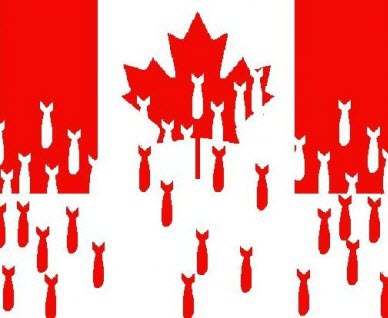
Now that Syria and its allies in the Axis of Resistance have done the world a favour by destroying most of the West’s terror proxies in Syria, the Canadian narrative is falling apart.
In 2016, Prime Minister Trudeau described the terrorists in this manner:
“The so-called Islamic State are terrorists, criminals, thugs, murderers of innocents and children and there’s a lot of labels for them.”[1]
He was right that there are a lot of labels for them. But some labels have been conspicuously absent from the Canadian narrative, and these are the most accurate of all: “proxies”, “assets”, “strategic assets”, “allies”.
These “criminals, thugs, and murderers” are also Canada’s proxies in the Middle East and beyond, and the Canadian government needs to take ownership for its criminality.
Canada’s Public Safety Minister, Ralph Goodale, for his part, recently claimed that chances for rehabilitating these people are “pretty remote”, and that pursuing charges against these people is “difficult”.[2]
Conspicuously absent from Goodale’s explanation of why it is difficult to prosecute these individuals is the previously mentioned stumbling block. If the terrorists are Canada’s assets, as they are, then prosecuting them would necessarily reveal the government’s guilt.
Consider the case of Swedish national Bherlin Gildo.[3] In 2015, Gildo’s terror trial in the U.K. collapsed because the British intelligence agency M16 was supporting the same terrorists that Gildo was reportedly fighting for.
The Canadian government’s web of criminal war propaganda is unraveling at the seams. If the press was free, and not an appendage of the government’s criminal apparatus of deception, more Canadians might be aware of this.
Notes
[1] Bill Graveland, The Canadian Press, “Trudeau: ISIS Just ‘Terrorists’ And ‘Thugs,’ Not A State.” HuffPost, 29 March, 2016.(http://www.huffingtonpost.ca/2016/03/29/trudeau-isis-terrorists-calgary-interview_n_9568642.html) Accessed 27 November, 2017.
[2] Rachel Aiello, Ottawa News Bureau Online Producer,“Chance of reintegrating Canadian ISIS fighters ‘pretty remote’: Goodale.” CTV News, November 26, 2017. (https://www.ctvnews.ca/politics/chance-of-reintegrating-canadian-isis-fighters-pretty-remote-goodale-1.3693559) Accessed 27 November, 2017.
[3] Stuart J. Hooper, “Terror Trial Collapses: Suspect Fighting For MI6 SUPPORTED Fighting Group.”21st Century Wire, 4 June, 2015. (http://21stcenturywire.com/2015/06/04/terror-trial-collapses-suspect-fighting-for-mi6-supported-group/) Accessed 27 November, 2017.
Russian Foreign Ministry Spokeswoman on Syria, Lebanon and Other Issues
By Stephen Lendman | The People’s Voice | November 28, 2017
 Foreign Ministry spokeswoman Maria Zakharova (MZ below) believes the “presence of ISIS in Syria is coming to an end” – maybe so but the US-supported terrorist threat in the country remains, not ending as long as Washington wants war, not peace.
MZ stressed that US-led forces “provid(e) cover to the extremists, ISIS in particular.” Surprisingly, the BBC reported their evacuation from Raqqa under US-led “supervision.”
Russia’s Defense Ministry accused Washington of supporting ISIS and other terrorists while claiming to be combating them.
“(N)ot only (did US-led aerial operations refuse) to launch strikes on the terrorists, but also created obstacles for the Russian Aerospace Forces as they tried to attack the targets in the specified area,” MZ explained.
Russian operations are key to Syria’s liberating struggle – Washington’s rage for endless war and regime change the greatest obstacle.
MZ: “I would like to digress and speak from the heart for a moment. I will say it in plain Russian without any professional jargon.”
“It’s about (Washington) providing cover to the terrorist militants. We provide numbers and facts. We talk about trends in fighting terrorism, and we analyze how the militants and terrorists were withdrawn, shielded and emboldened by the US-led coalition.”
This type straight talk is absent in the West, the BBC report a rare exception, nothing from US media on what’s going on – supporting US aggression, blaming victims for its high crimes.
MZ criticized Defense Secretary James Mattis’ Big Lie – claiming US forces in Syria have UN permission to be there. No such permission exists, no Security Council authorization.
Americans and their rogue allies are hostile invaders, aggressors, massacring civilians, destroying vital infrastructure, pretending to be combating terrorists they support.
Washington “intends to hold part of Syrian territory for as long as (it) wish(es). The goal behind this approach is to achieve the desired settlement result by force,” said MZ – aiming to oust Assad and destroy the country’s sovereignty.
Moscow is following events in Lebanon, in the wake of PM Saad Hariri’s forced resignation and detention under house arrest in Riyadh.
On Friday, Lebanese Foreign Minister Gebran Bassil met with Sergey Lavrov in Moscow.
“Russia’s position on Lebanon remains unchanged. We strongly support the sovereignty, independence and territorial integrity of this friendly country and we believe that the Lebanese people should resolve all issues on their national agenda on their own, and we are against any outside interference that threatens to upset the existing political and religious balance in Lebanon,” said MZ.
US-led NATO troops are cooperating with ISIS in northern Afghanistan, MZ explained, “transporting” them aboard “unidentified helicopters… providing them with weapons…”
“Once again, this raises questions about the true aims of the foreign military presence in Afghanistan,” MZ stressed.
She commented on increasing opium production in the country. A UN Office on Drugs and Crime (UNODC) said it nearly doubled since last year.
Pre-9/11, the Taliban eliminated most of it. Production flourishes in areas under US occupation. ISIS fighters sell it to raise revenues.
“The opiate industry in Afghanistan has become a key source for fueling terrorist activities, which further destabilizes that country and beyond,” said MZ.
Russophobia is active in Madrid, regime officials falsely accusing Moscow of involvement in Catalonia’s declaration of independence.
“Remarks by Spanish Foreign Minister Alfonso Dastis that Russia allegedly seeks to weaken Spain are particularly dismaying,” said MZ.
She blasted his spurious accusation, “picked up from dubious sources,” she said.
Along with other issues, MZ commented on Russia’s lower house State Duma legislation regarding foreign media in the country – creating a legal framework for responding to Washington forcing RT America to register as a foreign agent.
Russia was “forced to… reply to the openly repressive (US) actions,” MZ explained.
US hostility toward Russia is greater than any previous time in memory, risking conflict between the world’s dominant nuclear powers, a potential doomsday agenda Washington appears to be pursuing.
-###-
Stephen Lendman can be reached at lendmanstephen@sbcglobal.net.
Reporters Without Borders seeks to cancel press event critical of White Helmets
RT | November 27, 2017
A press freedom watchdog, Reporters Without Borders, has asked the Swiss Press Club to cancel a panel discussion on the “true agenda” of the controversial White Helmets group. But the club’s director won’t budge, noting that such demands are typically made by oppressive regimes.
Guy Mettan, executive director of the Swiss Press Club, says he was asked by Reporters Without Borders (RSF) in Switzerland to cancel the conference. The press freedom organization, which is a member of the Swiss Press Club, said it did not want to be associated with the event.
“I have never seen such a thing,” Mettan told Tribune de Geneve. “Now an organization that defends freedom of information is asking me to censor a press conference”.
“Usually the pressure to cancel press conferences comes from countries that are known to be dictatorships. RSF’s approach stunned me. It’s taking journalists for fools. As if they were not able to form an opinion for themselves!”
Independent journalist Vanessa Beeley, who has done extensive reporting from inside Syria, will speak at Tuesday’s event alongside French journalist Richard Labeviere, an expert on the Middle East and international terrorism, and Marcello Ferrada de Noli, chair of Swedish Doctors for Human Rights (SWEDHR).
The conference, which will also include a multimedia presentation, is billed as offering “a clear view on what is the real agenda of these Hollywood so-called ‘first responders’ who received an Oscar for their performance.”
In a letter to Mettan published by Tribune de Geneve, Gérard Tschopp and Christiane Dubois, president and director of RSF in Switzerland, dismissed Beeley as a “so-called” journalist cited only by “Russian media propaganda.” They also claimed Swedish Doctors for Human Rights acts as “a tool of Russian propaganda.”
Noting that perhaps Mettan was unaware of this “information,” the letter urged the Swiss Press Club to “abandon” the event or risk tarnishing the club’s image. Mettan wrote back, denying the organization’s request and expressing disbelief that a group dedicated to protecting press freedom would advocate censorship.
“For the 20 years I have been working at the Swiss Press Club, I have always been under pressure to prevent people from expressing themselves. But so far these pressures have always come from authoritarian or dictatorial regimes, such as China, Saudi Arabia, Egypt or Bahrain,” wrote Mettan.
“This is the first time that a defense organization for journalists from a democratic country has sent me such a request. It goes without saying that I cannot act on it. It would dishonor a job that, I hope, is still yours.” Mettan called on RSF to participate in the event and present their point of view, rather than attempt censorship.
A documentary praising Syria’s White Helmets as heroes and saviors in Syria won an Oscar in February. Witnesses have meanwhile accused them of collaborating with terrorist groups, filming staged reports about their rescue work, engaging in looting and other misdeeds. Members of the group have been caught on camera several times performing dubious acts, including assisting with an apparent execution of a prisoner.
Read more:
Hariri Says to Remain Lebanon PM: I Will Keep What Happened in KSA to Myself
Al-Manar | November 28, 2017
Lebanese Premier, Saad Hariri said on Monday he wants to remain Lebanon’s PM, preferring to keep what happened in Saudi Arabia, where he was believed to be held there against his will, to himself.
In an interview with French TV channel CNews, Hariri downplayed talk of his resignation, which he announced from Riyadh, saying that he was “always” the prime minister.
“I want to remain the prime minister of Lebanon and what happened in Saudi Arabia, I will keep to myself,” he said.
“It’s in the interest of Lebanon and other countries for Lebanon to remain stable,” Hariri said.
Asked multiple times whether his decision to announce his resignation in Riyadh was forced, Hariri sidetracked multiple times.
It is believed that Hariri was forced by the Saudi regime to announce his resignation in a bid to topple the Lebanese government. The move was seen by many observers as an attempt aimed against Hezbollah, which is a major partner in the Lebanese government.
Hariri returned to Lebanon in November 21, after President Michel Aoun launched a diplomatic campaign, led by Foreign Minister Gebran Bassil, in which the president voiced rejection of any interference in Lebanese affairs.
Meanwhile on Monday, Hariri said he would resign from his post if Hezbollah refuses to accept changes to the current status quo, in remarks seen as an attempt to cover up ambiguity which surrounded his previously announced resignation.
“Hezbollah intervened in all Arab countries and [my] resignation sent a positive shock,” Hariri said.
“I am waiting for neutrality in the government and inside Lebanon – not just saying one thing and doing something else,” he added.
However, the Lebanese PM noted that Hezbollah is a regional issue that can’t be solved in Lebanon, but rather through a regional settlement.
The big slide in renewable energy tells the real story
No, renewables are not taking over the world anytime soon.
By Bjørn Lomborg | Watts Up With That? | November 26, 2017
We have spent the last two centuries getting off renewables because they were mostly weak, costly and unreliable. Half a century ago, in 1966, the world got 15.6% of its energy from renewables. Today (2016) we still get less of our energy at 13.8%.
With our concern for global warming, we are ramping up the use of renewables. The mainstream reporting lets you believe that renewables are just about to power the entire world. But this is flatly wrong.
The new World Energy Outlook report from the International Energy Agency shows how much renewables will increase over the next quarter century, to 2040. In its New Policies Scenario, which rather optimistically expects all nations to live up to their Paris climate promise, it sees the percentage increase less than 6 percentage points from 13.8% to 19.4%. More realistically, the increase will be 2 percentage points to 15.8%.
Most of the renewables are not solar PV and wind. Today, almost 10 percentage points come from the world’s oldest fuel: wood. Hydropower provides another 2.5 percentage points and all other renewables provide just 1.6 percentage points, of which solar PV and wind provide 0.8 percentage points.
Neither will most renewables in 2040 come from solar PV and wind, as breathless reporting tends to make you believe. 10 percentage points will come from wood. Hydropower provides another 3 percentage points and all other renewables provide 6 percentage points, of which solar PV and wind will (very optimistically) provide 3.7 percentage points.
Oh, and to achieve this 3.7 % of energy from solar PV and wind, you and I and the rest of the world will pay – according to the IEA – a total of $3.6 trillion in subsidies from 2017-2040 to support these uncompetitive energy sources. (Of course, if they were competitive, they wouldn’t need subsidies, and then they will be most welcome.)
Most people tend to think about electricity for renewables, but the world uses plenty of energy that is not electricity (heat, transport, manufacture and industrial processes).
Actually, if the world miraculously could make the *entire* global electricity sector 100% green without emitting a single ton of greenhouse gasses, we would have solved just a third of the total global greenhouse gas problem.
As Al Gore’s climate adviser, Jim Hansen, put it bluntly:
“Suggesting that renewables will let us phase rapidly off fossil fuels in the United States, China, India, or the world as a whole is almost the equivalent of believing in the Easter Bunny and [the] Tooth Fairy.”
We need to get real on renewables. Only if green energy becomes much cheaper – and that requires lots of green R&D – will a renewables transition be possible.

References
Data for graph: “A brief history of energy” by Roger Fouquet, International Handbook of the Economics of Energy 2009; IEA data DOI: 10.1787/enestats-data-en, and World Energy Outlook 2017, unfortunately not free, https://www.iea.org/weo2017/
Hansen quote: http://www.columbia.edu/…/mail…/2011/20110729_BabyLauren.pdf
The world emitted 49Gt CO₂e in 2014, and all electricity/heat came to 15Gt or less than a third, http://cait.wri.org/profile/World.
Ignoring Washington’s Role in Yemen Carnage, 60 Minutes Paints US as Savior
By Adam Johnson | FAIR | November 20, 2017
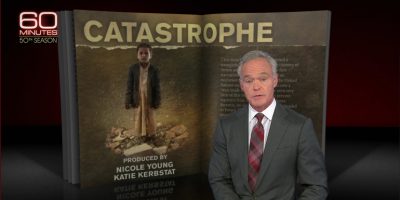
In one of the most glaring, power-serving omissions in some time, CBS News’ 60 Minutes (11/19/17) took a deep dive into the humanitarian crisis in Yemen, and did not once mention the direct role the United States played in creating, perpetuating and prolonging a crisis that’s left over 10,000 civilians dead, 2 million displaced, and an estimated 1 million with cholera.
Correspondent Scott Pelley’s segment, “When Food Is Used as a Weapon,” employed excellent on-the-ground reporting to highlight the famine and bombing victims of Saudi Arabia’s brutal two-and-a-half year siege of Yemen. But its editors betrayed this reporting—and their viewers—by stripping the conflict of any geopolitical context, and letting one of its largest backers, the United States government, entirely off the hook.
As FAIR has previously noted (10/14/16, 2/27/17), US media frequently ignore the Pentagon’s role in the conflict altogether. Pelly did not once note that the US assists Saudi Arabia’s bombing campaign with logistical support, refueling and the selling of arms to the tune of $400 billion. The US also routinely protects Saudi Arabia at the UN from condemnation—a shield that may have vastly prolonged the war, given that it signals the support of the most powerful country on Earth.
Meanwhile, Iran’s involvement in the conflict—which, even by the most paranoid estimates, is far less than the United States’—is placed front and center as one side of the “war.” The conflict is framed in hackneyed “Sunni vs Shia” terms, with Saudi Arabia unironically called the “leader of the Sunni world” and Iran the “leader of the Shia world.” A reductionist narrative that omits that Sunnis have fought alongside the Houthis, and the fact that Saudi bombs kill members of the marginalized, mostly Sunni Muhamasheen caste, who are neither “led” by Saudi Arabia nor part of the “Shia world.”
This cartoon dichotomy is the extent of the context. Saudi Arabia is rightly singled out as the primary aggressor (though a dubious comparative body count of 3,000 killed by Saudis vs. 1,000 by Houthis is proffered that is far lower than the UN’s January 2017 estimates of 10,000 total civilians killed), but who the Saudis’ primary patrons are—the United States and Britain (and Canada, too)—is simply not mentioned. One would think, watching Pelley’s report, it was a purely regional conflict, and not one sanctioned and armed by major Western superpowers to counter “Iranian aggression.”
To compound the obfuscation, 60 Minutes doesn’t just omit the US role in the war, it paints the US as a savior rescuing its victims. The hero of the piece is American David Beasley, the director of the UN’s World Food Programme, the organization coordinating humanitarian aid. “The US is [the World Food Programme]’s biggest donor, so the director is most often an American. Beasley was once governor of South Carolina,” Pelly narrates over B-roll hero shots of Beasley overseeing food distribution.
Beasley, in his sit-down interview, bends over backwards to downplay Saudi responsibility, insisting at every turn that “all parties” are to blame:
You see it’s chaos, it’s starvation, it’s hunger, and it’s unnecessary conflict, strictly man-made. All parties involved in this conflict have their hands guilty, the hands are dirty. All parties.
The spin that the crisis is the fault of “all parties” is understandable from a US-funded de facto diplomat, charged with providing some cover for a major regional ally. But the premise that “all parties” are causing the famine is never challenged by Pelley. It’s taken as fact, and the piece moves on.
It’s part of a broader trend of erasing American responsibility for the conflict and resulting humanitarian disaster. The Washington Post ran an editorial last week (11/8/17) and an explainer piece Saturday (11/19/17) detailing the carnage in Yemen, neither one of which bothered to mention US involvement. American complicity in the war is so broad in scope, it merited a warning last year from the US’s own State Department they could be liable for war crimes—yet it hardly merits a mention in major media accounts. The war just is, a collective moral failing on the part of “all parties”—irrational sectarian Muslims lost in a pat “cycle of violence” caricature.
As momentum builds in Congress, animated by grassroots anti-war activists, to push back against the war and hold US lawmakers accountable, how the US contributes to the death and disease in the Arabian peninsula is of urgent political import. By erasing the US role in the war, CBS producers obscure for viewers the most effective way they can end the war: by pressuring their own lawmakers to stop supporting it. Instead, viewers are left with what filmmaker Adam Curtis calls “Oh, dearism”: the act of feeling distressed but ultimately helpless in the face of mindless cruelty—perpetrated, conveniently, by everyone but us.
You can send a message to 60 Minutes at 60M@CBSNews.com (or via Twitter: @60Minutes).
Prof. Tony Hall wins – U. of Lethbridge backs down, does the right thing
 Tony Hall (on the right) has the courage to speak truth to power on False Flag Weekly News… and courage is not always appreciated in the academy

By Kevin Barrett | Veterans Today | November 23, 2017
In a victory for academic freedom (and common sense) Professor Anthony Hall is back at work at the University of Lethbridge, starting today, after the Board of Governors announced that it is rescinding his suspension. Here is the Board’s statement:
The Board of Governors of the University of Lethbridge and the University of Lethbridge Faculty Association have agreed that the outstanding issues that have been raised concerning Dr. Anthony Hall will be addressed in the context of the Faculty Handbook. As a result, the suspension imposed on Dr. Hall has been lifted and he has returned back to work at the University. The parties will be fully participating in the agreed upon procedures in the Faculty Handbook to investigate and address the outstanding issues. – November 23, 2017
Professor Hall was suspended more than one year ago following a witch hunt orchestrated by B’nai Brith Canada. The anti-Hall PR campaign was launched by an outrageous and illegal “kill all Jews” image surreptitiously planted on his Facebook page by parties still unknown. B’nai Brith and its allies falsely insinuated (and in some cases stated) that Hall was responsible for posting the image. The Canadian mainstream media, including CBC, dutifully echoed those lies and false insinuations.
At the height of the media witch hunt, University President Mike Mahon, apparently backed by the Board, unilaterally suspended Hall without pay. Mahon never even contacted Hall to ask whether Hall had posted the offending image! Mahon and the Board took the position that they had the right to fire any faculty member at will, for any reason or no reason, with no due process of any kind, in complete violation of the procedures of the University of Lethbridge Faculty Handbook. In response, the Canadian Association of University Teachers (CAUT) issued a stinging reprimand to the Board, threatening to censure and sanction the University for its outrageous conduct. The U of L Faculty Association, U of L founder Owen Holmes, and others rallied to the defense of academic freedom, and the witch hunt gradually crumbled under the weight of its own absurdity.
Professor Hall and I will be discussing and celebrating his return to the University of Lethbridge this Friday, 11 to noon Eastern, on False Flag Weekly News, broadcast live on No Lies Radio and later archived at my VT page and also here.
Featured Video

Spain train disaster raises questions over Israeli-linked security contractors
or go to
Aletho News Archives – Video-Images
From the Archives
Are There 50,000 ‘Israeli-born’ Individuals Living in the UK?
By Professor David Miller | August 18, 2026
Recent disclosures by the Zionist regime show that some 2,069 British nationals were serving in the IDF as of March 2025, according to Freedom of Information (FoI) requests submitted to the occupation forces (1,686 dual British-Israeli, plus 383 multinational). We cannot tell from the figures how many of these were already settler colonists and intend to stay in the colony, and how many will return or have returned to the UK. Presumably, those returning to the UK will number far fewer than 2,000, since many are known to have become permanently residents of the colony.
Additionally, the IDF figures only provide a snapshot, and do not tell us how many have served in the Jewish supremacist military either before or after March 2025. One way into the question of how many genocidaires are living in Britain is to ask how many current British residents were born in the Zionist colony. There is data on that, as we shall see. … continue
Blog Roll
 Aletho News
- Are There 50,000 ‘Israeli-born’ Individuals Living in the UK?
- German CDU MPs Seek Climate “Misinformation” List
- The ‘Gaza Treatment’: How Media Headlines Obscure Who is Bombing Yemen
- Ro Khanna urges Democrats to strip Israel ‘integration’ provision from defense bill
- Why Iran designated British MI6, Royal Navy, and RAF as hostile, terrorist organizations
- Armenian opposition politician dies in custody
- US still trying to recycle failed hypersonic missile programs
- France’s ‘Cold War’: Paris blames Tehran for supermarket fridge hacks
- Psywar no more? 77th Brigade’s sudden death
- Ukraine Already Carved Up… Before Talks Begin? /Prof. Richard Sakwa
- If Americans Knew
- An error has occurred; the feed is probably down. Try again later.
- No Tricks Zone
- German Authorities Start Initiative To Evaluate Public Register For Climate “Disinformation” Spreaders!
- Zonal Asymmetry of Temperature Change in the Antarctic Circumpolar Current
- New Study: The Net Fossil Fuel Contribution To Rising Atmospheric CO2 Has Been Zero For 500 Years
- Germany’s Green Energy Transition Becoming Increasingly Expensive…Another 6 Trillion Euros!
- Sudden Stratospheric Warming, Powerful El Niño Combination May Lead To Extreme Europe Cold, Energy Crisis!
- Two New Studies Find Thwaites Glacier Melt Cannot Be Driven By Human Activity Or A Warming Ocean
- E-Cars Reduce CO2 Emissions By Only 41% Compared To Internal Combustion Engine Vehicles
- Predictions Made By Renowned Climate Professor Over Past Decades Have Been Proven To Be Poor
- New Study Suggests Large Regions Of The Pacific Ocean Have Been Cooling For The Last 80 Years
- Germany’s Green Energy Debacle: High Energy Costs Force Kahla Porzellan to Close After 182 Years!

