UK Police Spied on Over 1,000 Political Groups Over 40 Years
Sputnik – July 27, 2017
UK undercover police officers who adopted fake identities and infiltrated political groups in deployments often lasting several years spied on more than 1,000 such factions over four decades, the judge-led public inquiry into the scandal has revealed. It’s the first time the number of infiltrated movements has been officially confirmed.
The inquiry, set up to examine into police spying practices since 1968, was launched by then-Home Secretary Theresa May in 2014 following revelations police spies had gathered information on the grieving relatives and friends of Stephen Lawrence and Jean Charles de Menezes, formed long-term relationships with female activists and stolen the identities of dead children to create their pseudonyms.
More than a dozen official inquiries have been announced, but all others are internal and will remain confidential, overseen or carried out by the very forces involved in the scandal. The public inquiry has been much delayed, as police chiefs have attempted to block its investigations, arguing its proceedings should be private in order to protect their spies and spying techniques. The police have also submitted legal applications to keep the identities of their spies secret. It disclosed the figures after campaigners inquired how many political groups were known to have been infiltrated — although requests for a full list of the targeted organizations, and the fake identities used by undercover officers, were not answered. In the former instance, previous exposures suggest it will likely include environmental, anti-racist and animal rights movements, and both left wing and far-right parties and collectives.
Since the 2010 exposure of Mark “Stone” Kennedy as a long-term undercover infiltrator of activist groups in the UK and abroad, it has been determined at least 144 undercover police officers have been deployed to spy on political groups since 1968. Extensive profiles of 20 agents have been compiled by the Undercover Research group — as documented undercover agents typically spied on more than one group (whether at once or at different times), it’s almost certain the total number of undercover police officers that inveigled themselves in activist circles is several times what was initially thought.
The spies developed elaborate false identities supported by fake documentation provided by the state, and typically spent five years pretending to be political activists while they fed back to their superiors information about the activities of campaigners and the protests they organized. Moreover, officers testified in Court under their false names, withheld exculpatory evidence, acted as agent provocateurs and planned and participated in serious crimes.
The most notorious “spy cops” yet uncovered include Bob Lambert, who moonlighted as “Bob Robinson” in the Animal Liberation Front and London Greenpeace in the 1980s. Over the course of his deployment, he is alleged to have planted a fire bomb in a branch of department store Debenhams, committed perjury and co-authored the infamous “McLibel leaflet” — the pamphlet documented McDonald’s unethical practices, leading the fast food giant to sue London Greenpeace leaders Helen Steel and David Morris for defamation, in a case that lasted a decade. He also fathered a child with an activist.
In May, Andy Coles, Deputy Police and Crime Commissioner for Cambridgeshire and Peterborough, resigned after being unmasked as an undercover operative who spied on animal rights groups from 1991 — 1995, under the pseudonym Andy Davey. In a lengthy profile, based on evidence collected by URG, it is noted suspicions about the bogus activist abounded contemporaneously, but were largely silenced due to “Davey’s” specialist IT skills.
Coles has also been accused of attempting to foster, and successfully fostering, sexual relationships with fellow activists. The practice is alleged to have contravened strict internal guidelines on undercover conduct, and has been dubbed by the Metropolitan Police as a “violation” of the victims’ human rights, and “an abuse of police power” that caused “significant trauma.” Nonetheless, examples of known police spies that didn’t do so, or attempt to do so, are exceptionally rare — leading some activists to suggest such practices were deliberate policy.
On July 25, the Home Office confirmed the public inquiry would now be headed by a new judge, Sir John Mitting. He replaces Sir Christopher Pitchford, who stepped down after being diagnosed with motor neurone disease.
US Air Force Admits to Poisoning Colorado Groundwater
Sputnik – July 26, 2017
On Tuesday, the US Air Force finally acknowledged responsibility for contaminating the water at a east Colorado Springs air base and its surrounding areas.
In a report released Tuesday, service investigators confirmed that groundwater surrounding Peterson Air Force Base had been tainted by perfluorinated firefighting foam chemicals, based on dozens of water and soil tests taken at the base last year.
Several sites where the chemicals had been sprayed directly on the ground by firefighters since the 1970s were highlighted in the report. Despite decades of research noting the danger of using the chemicals, they remained in wide use, and military officials are dealing with similar contamination issues all across the country.
Research has found that laboratory animals exposed to the chemicals suffered low birth weights and cellular and liver damage, according to KKTV.
The levels of perfluorinated chemicals found during testing at the Colorado Springs site were more than 1,000 times higher than the limit put forth by a national health advisory.
Greg Lauer, a council member from nearby Fountain City told the Denver Post, “It makes me really angry that it has taken them this long to get some numbers — and more than a little concerned.”
“We and our ratepayers are going to be dealing for a very long time with this problem we did not create.”
Roy Heald, who manages the Security Water and Sanitation District near Colorado Springs, said that after municipal wells were contaminated the agency spent $3.6 million on alternative water sources and pipelines. But the US Air Force has not yet furnished the $800,000 in reimbursements they promised.
Notably, Tuesday’s report said contamination at the base was most acute at Peterson’s fire training pit, despite there being a plastic liner in place to prevent the chemicals from leeching into the groundwater. Investigators blamed this on “overspray” from firefighters.
Though Air Force investigators admitted that Colorado Springs sewers had been used to dispose of contaminated waste, they glossed over any possible pollution of drinking water.
“The holding tank is occasionally drained into the sanitary sewer system, but such events are rare,” they wrote, adding that 10,000 to 20,000 gallons of chemical-laden wastewater was drained with each release.
Peterson officials last year admitted to storing chemical-tainted water from the fire pit in a tank nearby, pumping it into Colorado Springs’ sewers three times a year, likely tainting the Widefield Aquifer nearby, where high quantities of the chemicals were found last year. The aquifer serves about 65,000 residents, among them the 20,000 of Fountain City, according to the Colorado Department of Health and Environment.
When the water passes through the Colorado Springs Utilities’ treatment plant the chemicals are not removed, and once it leaves the plant that water heads for the aquifer’s primary water source, Fountain Creek.
Rep. Doug Lamborn (R-CO) called for funds to be allocated for testing people for health issues related to toxic water and contamination clean up. “The people of the surrounding communities are patriotic Americans who will do whatever they can to help our national defense,” he said in a statement. “But they should not be called upon to suffer needless environmental burdens.”
READ ALSO:
Radioactive Contamination from Nuclear Waste Site Spreads in Washington
SIRHAN SIRHAN: A “REEL BAD” ARAB?
By J. Michael Springmann | Hausfrau Leaks | July 21, 2017
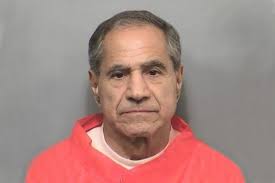 On July 20, 2017, William F. Pepper, Ed.D., J.D., spoke at the National Press Club about his previous day’s filing of a 200-page petition regarding Sirhan Sirhan. Sirhan, jailed since 1968, is the alleged killer of Robert F. Kennedy, late New York U.S. senator and Democratic presidential candidate. Organized by Andrew Kreig, J.D., editor of the Justice Integrity Project (http://www.justice-integrity.org/), the well-attended conference enabled Dr. Pepper to discuss his long-sought evidentiary hearing.
As Sirhan’s lawyer for many years, Pepper conceded that the legal remedies for his client in the United States have been exhausted–at both the State and federal levels. California, where Kennedy had been murdered in a Los Angeles hotel kitchen, did not assure a fair trial. Essentially, ineffective assistance of counsel got the accused wrongly convicted. Grant Cooper, his attorney, under threat of a sealed felony indictment, did almost nothing to defend Sirhan. He failed to investigate the matter, obtain the autopsy report, or examine ballistics tests. He spent most of the court proceedings arguing that Sirhan was guilty and, that because of diminished capacity, should not be given the death penalty.
Sirhan also got no relief in the federal system, neither with with the U.S. District Court for the Central District of California, nor with the extremely liberal and contrarian U.S. Court of Appeals for the 9th Circuit, nor with the U.S. Supreme Court, which declined to review the case.
Now, Pepper is staking Sirhan’s chances on the Inter-American Commission on Human Rights (IACHR), an Organization of American States (OAS) body. His goal is either a new trial or an evidentiary hearing. The filing alleges that the California and U.S. justice systems violated Sirhan’s right to a fair trial, as required under the OAS Declaration of the Rights and Duties of Man. By treaty, the IACHR may review U.S. cases and those from 34 other nations when domestic remedies have been exhausted.
Pepper, who had been a friend of Martin Luther King, Jr. and Robert F. Kennedy, is known for his winning defense of King’s supposed murderer, James Earle Ray, during a 1993 mock trial on HBO. In a celebrated wrongful death proceeding in 1999, Pepper obtained a symbolic award based on 10 years of dogged pursuit of relevant evidence and witnesses. He is doing the same now with Sirhan.
Noting that the U.S. media is controlled, by high level businessmen, bankers, and other influential figures who move in and out of government, such as John J. McCloy one-time U.S. High Commissioner for Germany and member of the Warren Commission, Sirhan’s lawyer said that the “conclusive evidence” reported as news was, in realty, extremely weak. There was never a hearing on the facts, he commented. Such an investigation would have shown that Sirhan, the claimed criminal, was nowhere near Kennedy when the shooting started. Thomas Noguchi, Los Angeles’ chief medical examiner at the time, swore that Kennedy was struck by three shots fired within inches of his body, from behind. Sirhan got off two shots at Kennedy from a six-foot distance, in front. Sirhan was immediately tackled and pinned down while still pulling the trigger on his handgun. However, Sirhan fired only eight shots total yet a carefully-examined sound recording heard thirteen rounds. Moreover, the shots came from different directions.
Yet, the Los Angeles Police Department, Pepper revealed, failed to preserve the physical evidence from the crime scene, such as ceiling tiles, doors, and door frames with bullets buried in them. The cops’ excuse? There was no space in which to store them. Pepper went on to say that the Los Angeles police had long-standing and very close ties to the Central Intelligence Agency (CIA).
The suspicion is, Pepper remarked, that Sirhan appeared to fit the parameters of the infamous CIA drug and consciousness-altering program, MK-ULTRA. (Its former director, Sid Gottlieb, destroyed most of the operation’s records in 1973.) Dr. Daniel Brown, Harvard Medical School, spent nearly 70 hours examining Sirhan through hypnosis and questioning, concluding that the Palestinian Christian had undergone a variety of procedures coupled with drugs to make him controllable. Notably, Pepper said, this could have occurred while Sirhan had mysteriously disappeared for two weeks before the assassination. Seen as a patsy, he was prepped as a distraction while the real murderer fired the close-up shots killing Kennedy, Pepper continued. Sirhan had apparently had a handler, a woman in a polka dot dress, the attorney remarked. She disappeared after she pinched the scapegoat on the neck, apparently triggering Sirhan’s belief that he was really shooting at a paper, man-shaped target from a firing range.
COMMENT. Despite Andrew Kreig ‘s extensive and most vigorous efforts, only a few members of the press turned up at the conference: an intern from the Washington Times, a representative from Al-Mayadeen TV, Beirut, along with a knowledgeable White House correspondent for an alternative news site. This appeared to validate Dr. Pepper’s view of the heavily-managed American media. And it bodes ill for what seems to be the attorney’s goal in filing with the OAS–to generate enough adverse publicity to force the United States to re-examine the questionable trial of Sirhan Sirhan. Indeed, a casual search of the Internet turns up a number of references about “conspiracies” revolving around the problematically convicted man.
Perhaps everyone involved in this matter should take a look at Dr. Jack Shaheen’s writings on Arabs, notably Reel Bad Arabs: How Hollywood Vilifies A People.
The Atlantic Council: Experts on the front line of disinformation
By Bryan MacDonald | RT | July 26, 2017
NATO’s academic wing has been warning about disinformation for years. And it’s no wonder when its staff and contributors are so well-versed in the practice themselves.
The Atlantic Council is an organization dedicated to discussion between people who hate Russia and folk who really, really hate Russia. Thus, amid the current hysteria, it’s Christmas every day for its assorted staff and “fellows” or, to use a more accurate term, ‘lobbyists.’
For the uninitiated, it’s difficult to explain what exactly the Atlantic Council does. Essentially, the club exists to influence the information space to justify NATO’s continued existence. It does that by either employing Russia’s opponents directly or offering retainers to journalists and media analysts who can be relied upon to push the outfit’s anti-Russian stance. Which, of course, is its lifeblood.
While the Atlantic Council is set-up to promote antagonism toward Russia, it also needs it. Because if Russia combusted tomorrow, everyone on the payroll would be out of a job. So, it’s like the famous U2 song “I can’t live, with or without you.” But unlike the protagonist of that ditty, these guys don’t give themselves away. Instead, this NATO adjunct is lavishly funded, by a roll call of famous entities.
Such as the Foreign & Commonwealth Office of the United Kingdom, Abu Dhabi’s National Oil Company, the Ukrainian World Congress, the Lockheed Martin Corporation, the Raytheon Company, the US State Department and the Victor Pinchuk Foundation, which is the plaything of a Ukrainian oligarch.
Some of the more prominent beneficiaries of the resultant money tree include Bellingcat’s Eliot Higgins, CNN’s Michael Weiss, Crowdstrike’s Dmitri Alperovitch, Obama advisor Evelyn Farkas and Maxim Eristavi of Ukraine’s Maidan. All of whom are conveniently united by their hostility to all things Russian.
Like Rolling Stones
The Atlantic Council’s content ranges from very anti-Russian to extremely anti-Russian. For instance, it carries articles by the likes of Alexander Motyl, who predicted Russia’s imminent collapse in January of 2016, before warning in January of 2017 that Moscow was planning a major land invasion of Ukraine. Which is Russophrenia at its finest, in fairness. Nevertheless, Motyl is a shrinking violet compared to Atlantic Council lobbyist Anders Aslund, who foresaw Russia’s demise way back in September 1999. And now, almost eighteen years later, he’s still hanging around for the big moment. In the manner of a Seventh Day Adventist awaiting the second coming of Jesus, any day now.
So, now that we’ve established the Atlantic Council’s modus operandi let’s look at the latest example of the group’s myopia. This week, they’ve unleashed one Polina Kovaleva to opine on “why Congress should pass the Russian sanctions bill.” And she’s delivered a tirade which is shoddy, even when measured by the usual indigent standards.
Kovaleva gives her readers examples of why the embargo is justified, in her opinion, but then delivers a line so deceptive that it makes you wonder whether she’s in touch with reality. “Although the Senate easily passed a strong sanctions bill in June to punish Russia for its aggression in Ukraine and annexation of Crimea, the White House has quietly lobbied to weaken it, and some European politicians are pushing back,” she writes.
Eurocrat Anger
That’s’ right, “some European politicians are pushing back.” Some! What she actually means is “basically every significant elected representative in the European Union.” Including, the “leader of the free world” herself Angela Merkel and that well-known renegade Jean-Claude Juncker.
Here’s what Reuters reported on Wednesday morning: “European Commission President Jean-Claude Juncker said on Wednesday the European Union was ready to act “within a matter of days” if proposed new US sanctions on Russia undermined the bloc’s energy security. And that came three days after the Financial Times reported how Brussels was considering imposing penalties on the US if it damaged European interests to settle scores with Moscow.
Meanwhile, for her part, Merkel has backed Germany’s Foreign Minister, Sigmar Gabriel, in expressing concerns that Washington is threatening “illegal extraterritorial sanctions against European companies that participate in the development of European energy supply.”
Because everybody in Europe knows this US Congress bill has little or nothing to do with punishing Russia. Instead, it’s about trying to nudge Moscow’s energy companies out of Europe, to create market share for their competitors. In other words, a form of economic war, in which the EU countries’ interests don’t amount to a hill of beans.
Something explained recently by Wolfgang Ischinger, a prominent German pundit and former diplomat. He contended: “how would the US have reacted if Europeans had adopted a bill against Keystone XL pipeline but in favor of European business?” before pointing out “for Europe, the loss of such large oil or gas supplies from Russia is unacceptable: there are no alternatives.”
Without question, this is a high-profile resistance campaign. And these sanctions could severely rupture transatlantic ties. Because you don’t get more powerful than Merkel and Juncker in Europe. But the Atlantic Council makes it sound as if a few fringe politicians are off on a solo-run, rejecting Washington’s supreme wisdom.
That is certainly not the case and amounts to misleading agitprop of the highest order. Which is rather apt for a lobbying firm which recently held a “Disinfo week” and proudly claims to be “On the front lines of disinformation.” Because, on this evidence, the Atlantic Council is home to seriously proficient gurus of hogwash.
Bryan MacDonald is an Irish journalist, who is based in Russia.
OAS Appoints Former ICC Prosecutor Ocampo to Look Into Venezuela ‘Crimes Against Humanity’

Luis Moreno Ocampo (L) discusses human rights with NYT columnist Nicholas Kristof (R) at the CFR Symposium on International Law and Justice sponsored by the Pitt-Jolie Foundation*
teleSUR | July 25, 2017
Luis Almagro, the secretary-general of the Organization of American States, has appointed former International Criminal Court Prosecutor Luis Moreno Ocampo as OAS special adviser on crimes against humanity.
Ocampo, who also served as a World Bank consultant, is a controversial figure who has been described as erratic and prone to grandstanding performances that undercut his own legal efforts.
According to a statement published by the OAS, Ocampo’s tasks will include analyzing, studying and discussing the situation in Venezuela with all interested parties and, consequently, making suggestions on possible courses of action by the OAS.
Almagro said the decision was made in light of an “escalation of human rights violations in Venezuela and the systematic attack on the civilian population includes murder, imprisonment and torture … it is evident in the eyes of the international community that we are witnessing crimes against humanity. ”
Caracas has repeatedly accused Almagro and the OAS of promoting intervention and destabilization in Venezuela, which ultimately led to the Bolivarian nation leaving the regional body on the grounds that its continued presence there posed a threat to the country’s sovereignty.
“The OAS can prevent impunity in Venezuela,” Ocampo said. “The secretary-general is creating a new space within the OAS, focusing on crime prevention and control, as well as gathering information that may be useful to the OAS in conducting an independent judicial investigation”
Luis Moreno Ocampo earned much of his recognition during his time as deputy prosecutor during the case of nine members of the military junta that ruled Argentina from 1976 to 1983. However, his time as ICC prosecutor is largely seen as a failure in which the global court lost a great deal of its credibility as some impartial body, largely thanks to Ocampo’s wild moves and desire to seek the media spotlight.
Ocampo drew criticism for his role in Colombia, where in 2008 he suggested that the ICC should begin investigating the Revolutionary Armed Forces of Colombia or FARC for crimes against humanity. At the time, then-President Alvaro Uribe was busy pursuing a bloody counterinsurgency campaign against the group, utilizing paramilitary death squads and security forces whose operations led to the execution of 2,364 civilians, a figure that dwarfed the death toll resulting from FARC actions during Uribe’s reign.
In recent years, Ocampo also drew negative attention for his proceedings against sitting heads of state, a pattern that also began in 2008 when he sought a warrant for the arrest of Sudanese President Omar Bashir amid the raging conflict in Darfur. Critics claim that the evidence cited by Ocampo was a spurious mix of fact and fiction, and such an intervention while the civil war raged would only stymie the possibility of an internationally-mediated peace process.
“My time in the ICC was a mixture of a fascinating time and a terrible time,” a former staffer for the Office of the Prosecutor said at the time, according to World Affairs Journal. “The prosecutor was erratic, so irrational sometimes that you felt despair. He uses his charisma in a negative way.
Since then, Ocampo has pursued the prosecution of Syrian President Bashar al-Assad on charges of genocide while likewise charging deceased former Libyan leader Muammar Gaddafi with crimes against humanity for alleged massacres committed against anti-government protests that became increasingly violent before culminating in an open “regime change” campaign spearheaded by the U.S. with European and Gulf Arab allies.
The court has largely been discredited among non-Group of 7 nations as a neocolonial tool of Western capitals seeking to control the Global south. Last October, Gambia’s Information Minister Sheriff Bojang noted that the ICC is, “in fact, an International Caucasian Court for the persecution and humiliation of people of color.”
Most recently, the former ICC prosecutor advised the Israelis on how to evade criminal charges for their perpetual expansion of illegal settlements. Ocampo noted that the settler-colonial state could successfully defend itself by manipulating international legal perceptions through arguments that the ongoing settlement construction is legal “once ratified by the country’s top court,” the Israeli High Court, which Ocampo argued “is highly respected internationally.”
* Photo: YouTube-Council on Foreign Relations
The Guardian’s Propaganda on Venezuela
By Ricardo Vaz | Investig’Action | July 25, 2017

With the Constituent Assembly elections due to take place on July 30th, the Guardian published a piece titled “Venezuela elections: all you need to know”. But instead of breaking through the fog of falsehood and misinformation that is typical of the mainstream media’s coverage of Venezuela, the Guardian comes up with another propaganda piece laden with lies, distortions and omissions. In this article we go through the Guardian’s piece, clarifying the falsehoods, adding the conveniently omitted information and questioning the whole narrative that is presented.
*****
What is happening on 30 July?
To be fair to the Guardian, there is one almost-informative paragraph, where the electoral procedure is explained. In a previous article the Guardian stated that
“[…] election rules appear designed to guarantee a majority for the government even though it has minority popular support”,
instead of presenting said electoral rules and letting the reader decide if they are so designed. This time they do present the rules, only omitting to say that everyone not currently holding public office can run for a seat. But then the Guardian brings in the propaganda artillery to ensure the reader’s conclusions do not stray too far off from those of the State Department.
“[…] voter turnout will be exclusively pro-government – and likely very low, given that Maduro’s approval rating hovers around 20%” 1
One assumes the Guardian is citing Datanalisis, their favourite Venezuelan anti-government pollster. Putting aside the fact that other, more reliable polls, demonstrate larger levels of government support, and the massive turnout for last Sunday’s dry-run, there are two obvious questions here. If turnout will be so low, why is the opposition hell-bent on stopping the vote from taking place, barricading streets and killing candidates? And if the opposition has such an overwhelming majority, why did they decide not to participate? This might have been their chance to introduce a Platt Amendment into the Constitution.
“The current constitution was written by an assembly called in 1999 by Maduro’s predecessor and political father, Hugo Chávez. But Chavez made sure he had popular support for the rewrite, by calling a referendum first. This time around, Maduro ordered the constituent assembly by decree.”
Chávez needed to call a referendum because he was working within the legal framework of the 1961 Constitution which did not have anything about such a mechanism. In the 1999 Constitution, article 348 states who can convene a Constituent Assembly.

Venezuelan president Nicolás Maduro has repeatedly urged opposition leaders to engage in dialogue and has backed the Constituent Assembly to guarantee peace.
“On 16 July, a symbolic plebiscite against Maduro’s initiative held by the opposition drew more than seven million people – more than those who voted for Maduro in the 2014 election.”
When it comes to the Venezuelan opposition, the Guardian checks all the journalism tools at the door. In a recent Investig’Action article we examined the opposition’s highly doubtful numbers, Venezuelanalysis did the same. At least the Guardian refrained from explicitly saying this vote could have recalled Maduro, something the opposition could not manage even with a lot of number-cooking (see footnote 2).
“Amid mounting pressure, Maduro vowed last month to hold a popular vote at the end of the process to approve or reject the new constitution.”
This was announced almost two months ago, and if it had been due to “mounting pressure” the mainstream media would have done a victory lap. Here another question springs up: why are the Venezuelan opposition and the Guardian so scared of this process? If they represent this huge majority, can they not just vote down the Constituent Assembly proposal?
Why did Maduro call this vote?
The final paragraph of this section contains the mandatory red-baiting and waving of the Cuban bogeyman.
“Venezuela has been rocked by nonstop street protests since the government’s attempt in late March to strip Congress of its right to legislate. Although the move was partially reversed, demonstrations have continued against an increasingly authoritarian government widely blamed for the country’s tanking economy and soaring crime rate.”
Again, there is very little journalism here to be found. It was not the government that overrode the National Assembly, but the Supreme Court. And they did it because the National Assembly is currently in contempt of court. Three legislators from Amazonas state are being investigated for electoral fraud, and despite repeated warnings from judicial authorities, the opposition went ahead and swore in these legislators. One can agree or disagree with the Supreme Court’s initiative, but omitting this fact is pure dishonesty.
This is also a good point to notice how only the “authoritarian” government and the “beleaguered” president have earned adjectives. “Protests” are referred to five times without a single reference to their violent nature, and a few adjectives (“divided”, “US-backed”, “coup-plotting”) also come to mind when describing the opposition.
“[…] violence and state repression have escalated since, with more than 100 people killed and hundreds arrested.”
Sophisticated newspapers like the Guardian are careful not to state directly that everyone was killed by state repression, only heavily implying it. A breakdown of the cases shows that it is the opposition’s political violence that has been responsible for the large majority of casualties.
What does the opposition say?
“The coalition of opposition forces known as the Democratic Unity Roundtable (known by its Spanish initials, MUD) rejected the move from the start. But criticism extends far beyond the political opposition. According to one pollster, eight out of 10 Venezuelans oppose a new constitution and would prefer general elections.”
One would think this would be an opportune moment to remind readers of the opposition’s constant, repeated calls for a Constituent Assembly in the recent past. And according to a different pollster, 79% of Venezuelans agree that the process should take place, 54% think the process will defend social gains of recent years, and 65% agrees with holding elections in 2018.

Opposition leaders Freddy Guevara and Maria Corina Machado had called for a Constituent Assembly in the past. (Tweets by Misión Verdad)
What happens next?
“Pressure is set to rise after the MUD called a two-day national strike for Wednesday and Thursday, and then mass protests dubbed the “taking of Caracas” on Friday.”
To anyone familiar with the recent history of Venezuela these announcements sound eerily like the events leading up to the failed 2002 coup. In fact, this would be the time to mention that many of the opposition leaders, including Henrique Capriles, Julio Borges, Leopoldo López and Maria Corina Machado, were directly involved in the 2002 coup attempt. Why is there never a mention that the opposition leadership is full of protagonists from that US-backed military coup that ultimately failed? Quite simply because it would undermine the entire “democracy vs. dictatorship” propaganda narrative.
“Maduro has been very vague about the scope of the new constitution – prompting fears that this is simply a move to tighten the government’s hold on power rather than to solve the country’s many problems.”
This is again a distortion. Maduro proposed nine issues to be tackled by the ANC, including the economy, national sovereignty, social missions, communes, and more. Granted, there is some ambiguity on what a “post-oil economy” stands for, with radical sectors looking for a deepening of the Revolution and business leaders looking for more incentives to private investment. But is down to the individual candidates to bring forward their proposals during the campaign. If Maduro specifically said what changes he wanted made to the Constitution, would he not fit into the “authoritarian” label that the Guardian loves to use?
“Maduro threatened to jail two high profile opposition leaders for “treason to the motherland”…”
Once more, it would be useful to put the actions of the Venezuelan opposition in context. There is hardly any other place in the world where opposition leaders openly call for a US military invasion or urge foreign agents to create a financial blockade against their own country!
“According to human rights groups…”
Which rights groups? Why not link to the reports and disclose who funds these groups? Because groups like Human Rights Watch have been beyond partisan when it comes to Venezuela, not to mention the revolving door that puts former US officials as human rights “guardians”. UNICEF, for example, has criticised the use of children in the opposition’s violent protests and the opposition’s attack against a maternity hospital.
“The next presidential elections – which Maduro seems likely to lose – are currently scheduled to be held in 2018, but it is unclear whether this would remain the case under a new constitution.”
Maduro has said that, rain or shine, there will be a presidential election in 2018. And he said it after convening the Constituent Assembly. The omission of this statement is again plain dishonest journalism.

Chavistas march on May 1st. The Venezuelan opposition is fearful of a large turnout for the Constituent Assembly elections on July 30th.
What is the international community doing?
“The Organization of American States has tried repeatedly to chastise Venezuela diplomatically, but Caracas has used oil diplomacy to ensure that small Caribbean states reliant on subsidised oil voted against critical resolutions or abstained.”
It is amazing that countries that are part of PetroCaribe are bullied by oil diplomacy, and yet countries that receive billions in US (military) aid and host US military bases are moved by a genuine love for democracy and human rights. Does it not occur to a journalist that, for a small Caribbean country, if a US-dominated organisation such as the OAS is dictating to Venezuela which elections can take place and when, then soon enough the same will happen to them? By rejecting this interference they are actually asserting their own independence.
It is precisely because this kind of bullying that Venezuela left the OAS. On the other hand, regional organisations that have been formed in the last decade precisely to counter US hegemony, like ALBA or CELAC, have come out in support of Venezuela and its sovereignty. International meetings like the People’s Summit or the Foro de São Paulo have also rejected the imperialist aggression against Venezuela.
“Previous US sanctions have targeted Venezuelan officials accused of drug trafficking or involvement in human rights abuses.”
These accusations have always been very big in terms of publicity and very thin in terms of evidence. They are always based on dubious sources mentioning all-powerful, yet unheard-of, drug cartels, Hezbollah training camps in Latin America and the like.
In summary, the Guardian is passing a pure propaganda piece under the guise of clarifying the upcoming Constituent Assembly elections in Venezuela. Quite clearly the next few days will be crucial, as the opposition ramps up its violent regime change efforts and the US blares out its threats, while on the other side chavismo is mobilising for this important step and (true) solidarity movements are standing with the Venezuelan poor and working-class.
As for the Guardian, whenever they ask you to support “quality, independent journalism”, you should look for it someplace else…)
- Even if this number were true, that would still make Maduro more popular than the presidents of Colombia, Mexico and Brazil, staunch US allies in the region.
Moscow Calls Reports of Russia’s Alleged Arms Supplies to Taliban ‘Groundless’
Sputnik – 26.07.2017
MOSCOW – On Tuesday, CNN claimed that it had exclusive videos purporting to show that the Taliban had allegedly received weaponry in Afghanistan which appeared to have been supplied by Russia, however, presented no proof.
According to CNN, two separate Taliban groups say they got hold of weapons, which were allegedly supplied by the Russian government. One group said it took the weapons after defeating a rival group, while the other claims it got pistols for free that were smuggled through Tajik border. Experts say the weapons have no identification markings hence it is impossible to trace their origins.
“We have repeatedly stated that accusations of a series of Western and … Afghan media regarding Russia’s alleged support of the Taliban movement are groundless… We reiterate, Russia does not support the Taliban movement, and only maintains contacts with the Taliban to ensure the safety of Russian nationals in Afghanistan and to incentivise this group to join the process of national reconciliation,” the ministry said in a statement.
The ministry stressed that it is impossible to trace the country of origin of the weapons demonstrated in the video, as they were common and manufactured by many countries.
“It is hardly possible to seriously perceive the video materials, in which old, small arms of unknown and untraceable origin are demonstrated. [The weapons are] not stamped by the manufacturer, serial numbers are knocked down. In addition, the shown weapons are typical. As it is known, such samples were produced not only in Russia, but also in other countries, including [those in] Eastern Europe, from where the Americans imported them massively to Afghanistan in the early 2000s. Recently, the Taliban attacked the Afghan national security forces’ base in Helmand province using American Humvee armored vehicles. What conclusion can be made based on this information using the logic of the CNN?” the statement read.
The ministry strongly noted that neither Afghan authorities, nor US command or NATO in Afghanistan have provided evidence that would confirm these speculations.
Earlier, US and Afghan officials accused Russia of supporting the Taliban. Moscow denounced the claim, calling it utterly false. The Kremlin said that these accusations are made to cover up US failures in Afghanistan and noted that it maintains contact with the terrorist group only to promote peace talks.
Russian Foreign Minister Sergei Lavrov said earlier that Moscow is only working with the Taliban in order to assist the implementation of a UN Security Council decision requested by the Afghan government that would allow the group to take a role in the political process. Lavrov also called accusations from the United States that it is supplying the Taliban with weapons baseless and unprofessional.
Earlier, Director of the US Defense Intelligence Agency Lt. Gen. Vincent Stewart said in his testimony before the Senate Armed Services Committee said that there was no evidence Russia had transferred weapons or money to the Taliban in Afghanistan.
Russian Military Denies Reports of Airstrike in Syria’s East Ghouta Safe Zone
Sputnik – 25.07.2017
DAMASCUS – The Russian reconciliation center in Syria denied Tuesday the reports of an airstrike on July 24 in the de-escalation zone in eastern Ghouta.
The agreement on operation of a de-escalation zone, envisaging full ceasefire, came into force in eastern Ghouta on Monday. Earlier Tuesday, media reports emerged claiming that an airstrike killed at least eight people in an attack on the town of Arbin the previous evening.
“Western media reports citing the UK-financed White Helmets and the London-based Syrian Observatory for Human Rights on an alleged airstrike on evening of July 24 in the eastern Ghouta deescalation zone are a complete lie aimed at discrediting the peace process,” a spokesperson of the center said.
According to the spokesperson, local opposition groups “confirmed there were no airstrikes or combat in this de-escalation zone.”
On Saturday, Russian Defense Ministry announced the signing of an agreement on the order Eastern Ghouta de-escalation in Syria following the results of the talks held in Cairo with Syrian opposition, mediated by the Egyptian side. The agreements define the borders of the deescalation zone, the deployment sites and powers of the deescalation control forces, as well as the routes for delivering humanitarian aid and clear passage to the population. On Monday, the General Staff of the Russian Armed Forces reported that Russia has set up two checkpoints and four observation posts in the zone.
When the Gatekeepers of Press Freedom Deride Trump or Putin…
By Phil Butler – New Eastern Outlook – 24.07.2017
“The media’s the most powerful entity on earth. They have the power to make the innocent guilty and to make the guilty innocent, and that’s power. Because they control the minds of the masses.” – Malcolm X
Seven hundred and nineteen words is what it takes for an experienced journalist at The Atlantic to earn his comeuppance hating Donald Trump, and fueling the anti-Putin narrative. When a second meeting between the two world leaders at the G20 comes out, the mainstream “fake news” outlets turn tabloid embellishing a non-event. Since CNN was proven to be running game for ratings, the creative floodgates seem to have opened for the rest of corporate controlled media.
The Atlantic piece in question, written by Trump hater David A. Graham, tells us the story of how Donald Trump and Vladimir Putin met a second time after a dinner for G20 notables. Graham admits from the start, “it’s not known what they discussed”, but the lack of facts does not avert wondering propaganda evangelism from The Atlantic. The magazine led by the super Zionist and ultra-lefty, Jeffrey Goldberg the Obama doctrine preacher. History will remember Goldberg for his New Yorker piece entitled “The Great Terror”, which argued of the threat posed to America by Saddam Hussein, and which assisted (as other narratives did) the Bush White House in engaging in regime change there. I’ll leave off on my expectations and anticipations for when the chickens might come home to roost on Goldberg and The Atlantic here. Suffice it to say The Atlantic does not have “the truth” in it. Now on to the Trump-Putin secret meeting of super villains. Let me quote Graham once again here:
“When President Trump’s meeting with Russian President Vladimir Putin went for more than two hours, well past the scheduled half-hour, it was a major news event. But it turns out that wasn’t even the end of the conversation between the two men.”
The reader can now sense the adolescent enthusiasm with which The Atlantic writer embosses the confidential meetup of world leaders. “Wasn’t even the end” appeals to the youthful Democrat just wringing his or her hands in anticipation of the state secrets disclosed in between Trump and Putin. But there is nothing more to learn! Trump and Putin met with a lone interpreter, neither officially denied the meeting, but somehow the media coverage is frenzied? From a media analyst and PR perspective, I can tell you the stories are just made as an opportunity to rehash the Trump-Russia collusion narrative – such opportunities being “momentum” and “reach” practice for “clients” who need buzz. The author continues:
“There’s no indication of what happened in the second meeting. White House aides only learned of it from Trump, and there was no official readout of the conversation. But given the collusion questions and the conflicting accounts of the earlier meeting, the content could be important.”
A “non-story” put into play by The Atlantic’s politics staff writer. One cannot blame Graham actually, because he gets paid for being on the “Trump beat”, after all. For those unaware of how media works, the various editors say “yeah or nay” for reporting and editorial. For somebody like Graham to step outside guidelines would mean certain unemployment or worse. But that’s another story. Trump bad, Putin bad, conservatism and protectionism bad, and only flat out globalist liberalism is good. This is the message people. The technocrats and western oligarchs are in control of the message – they control the horizontal and the vertical. And when you allow CNN to admittedly broadcast a false narrative for ratings?
This is what you get. Former journalism masterpieces convoluted and reduced to smut magazines. “The Other Putin-Trump Meeting” should have been only a sound bit, a blurb on the evening news, but The Atlantic uses it as a component of a bigger strategy. So, let me return to the subject of The Atlantic’s decline, the former Israeli prison guard, editor in chief Jeffrey Goldberg. Yes, you read that correctly. The Atlantic is run by a man who inflicted torture on detained Palestinians, and by his own admission. But Goldberg’s foaming at the mouth Zion or die attitude is better characterized by a fellow Jew named MJ Rosenberg, who wrote this scathing criticism on the Huff Post. Concerning The Atlantic’s editor Rosenberg writes:
“In fact, nothing drives him nuttier than people like former President Carter and Professors Stephen Walt and John Mearsheimer, the latter two in particular. He hates them — hates them like poison — because they wrote an expose of the lobby which dealt it such a serious blow that its defenders became unhinged and stayed that way.”
The media watchdog S.H.A.M.E. takes the case a step farther, characterizing Goldberg as the worst kind of Israel shill mutated into dangerous liar. It will save time and space if I simply quote from S.H.A.M.E. once again:
“For two decades now, Jeffrey Goldberg has peddled blatantly false war propaganda with disastrous consequences, fronted for the military-industrial machine, played a key PR role pushing America into war with Iraq, and advanced the agenda of the Israeli military-intel establishment—and he has been rewarded for his lies and failures with the top editor’s job at the Atlantic Monthly. Put another way: If Judith Miller was a dweeby Ivy League graduate who worked as a detention camp guard holding Palestinian prisoners, and she never had to answer for her journalistic fraud after being exposed, she would be Jeffrey Goldberg.”
So, there it is. When you read Google News headlines about Trump, Putin, Syria, Ukraine, or anything else for that matter, understand your news has been put in charge of the gatekeepers. And they are gatekeepers with no qualms about punishing people for simply disagreeing. This is where we are.
Intel Vets Challenge ‘Russia Hack’ Evidence
Consortium News | July 24, 2017
In a memo to President Trump, a group of former U.S. intelligence officers, including NSA specialists, cite new forensic studies to challenge the claim of the key Jan. 6 “assessment” that Russia “hacked” Democratic emails last year.
MEMORANDUM FOR: The President
FROM: Veteran Intelligence Professionals for Sanity (VIPS)
SUBJECT: Was the “Russian Hack” an Inside Job?
Executive Summary
Forensic studies of “Russian hacking” into Democratic National Committee computers last year reveal that on July 5, 2016, data was leaked (not hacked) by a person with physical access to DNC computers, and then doctored to incriminate Russia.
After examining metadata from the “Guccifer 2.0” July 5, 2016 intrusion into the DNC server, independent cyber investigators have concluded that an insider copied DNC data onto an external storage device, and that “telltale signs” implicating Russia were then inserted.
Key among the findings of the independent forensic investigations is the conclusion that the DNC data was copied onto a storage device at a speed that far exceeds an Internet capability for a remote hack. Of equal importance, the forensics show that the copying and doctoring were performed on the East coast of the U.S. Thus far, mainstream media have ignored the findings of these independent studies [see here and here].
Independent analyst Skip Folden, a retired IBM Program Manager for Information Technology US, who examined the recent forensic findings, is a co-author of this Memorandum. He has drafted a more detailed technical report titled “Cyber-Forensic Investigation of ‘Russian Hack’ and Missing Intelligence Community Disclaimers,” and sent it to the offices of the Special Counsel and the Attorney General. VIPS member William Binney, a former Technical Director at the National Security Agency, and other senior NSA “alumni” in VIPS attest to the professionalism of the independent forensic findings.
The recent forensic studies fill in a critical gap. Why the FBI neglected to perform any independent forensics on the original “Guccifer 2.0” material remains a mystery – as does the lack of any sign that the “hand-picked analysts” from the FBI, CIA, and NSA, who wrote the “Intelligence Community Assessment” dated January 6, 2017, gave any attention to forensics.
NOTE: There has been so much conflation of charges about hacking that we wish to make very clear the primary focus of this Memorandum. We focus specifically on the July 5, 2016 alleged Guccifer 2.0 “hack” of the DNC server. In earlier VIPS memoranda we addressed the lack of any evidence connecting the Guccifer 2.0 alleged hacks and WikiLeaks, and we asked President Obama specifically to disclose any evidence that WikiLeaks received DNC data from the Russians [see here and here].
Addressing this point at his last press conference (January 18), he described “the conclusions of the intelligence community” as “not conclusive,” even though the Intelligence Community Assessment of January 6 expressed “high confidence” that Russian intelligence “relayed material it acquired from the DNC … to WikiLeaks.”
Obama’s admission came as no surprise to us. It has long been clear to us that the reason the U.S. government lacks conclusive evidence of a transfer of a “Russian hack” to WikiLeaks is because there was no such transfer. Based mostly on the cumulatively unique technical experience of our ex-NSA colleagues, we have been saying for almost a year that the DNC data reached WikiLeaks via a copy/leak by a DNC insider (but almost certainly not the same person who copied DNC data on July 5, 2016).
From the information available, we conclude that the same inside-DNC, copy/leak process was used at two different times, by two different entities, for two distinctly different purposes:
-(1) an inside leak to WikiLeaks before Julian Assange announced on June 12, 2016, that he had DNC documents and planned to publish them (which he did on July 22) – the presumed objective being to expose strong DNC bias toward the Clinton candidacy; and
-(2) a separate leak on July 5, 2016, to pre-emptively taint anything WikiLeaks might later publish by “showing” it came from a “Russian hack.”
* * *
Mr. President:
This is our first VIPS Memorandum for you, but we have a history of letting U.S. Presidents know when we think our former intelligence colleagues have gotten something important wrong, and why. For example, our first such memorandum, a same-day commentary for President George W. Bush on Colin Powell’s U.N. speech on February 5, 2003, warned that the “unintended consequences were likely to be catastrophic,” should the U.S. attack Iraq and “justfy” the war on intelligence that we retired intelligence officers could readily see as fraudulent and driven by a war agenda.
The January 6 “Intelligence Community Assessment” by “hand-picked” analysts from the FBI, CIA, and NSA seems to fit into the same agenda-driven category. It is largely based on an “assessment,” not supported by any apparent evidence, that a shadowy entity with the moniker “Guccifer 2.0” hacked the DNC on behalf of Russian intelligence and gave DNC emails to WikiLeaks.
The recent forensic findings mentioned above have put a huge dent in that assessment and cast serious doubt on the underpinnings of the extraordinarily successful campaign to blame the Russian government for hacking. The pundits and politicians who have led the charge against Russian “meddling” in the U.S. election can be expected to try to cast doubt on the forensic findings, if they ever do bubble up into the mainstream media. But the principles of physics don’t lie; and the technical limitations of today’s Internet are widely understood. We are prepared to answer any substantive challenges on their merits.
You may wish to ask CIA Director Mike Pompeo what he knows about this. Our own lengthy intelligence community experience suggests that it is possible that neither former CIA Director John Brennan, nor the cyber-warriors who worked for him, have been completely candid with their new director regarding how this all went down.
Copied, Not Hacked
As indicated above, the independent forensic work just completed focused on data copied (not hacked) by a shadowy persona named “Guccifer 2.0.” The forensics reflect what seems to have been a desperate effort to “blame the Russians” for publishing highly embarrassing DNC emails three days before the Democratic convention last July. Since the content of the DNC emails reeked of pro-Clinton bias, her campaign saw an overriding need to divert attention from content to provenance – as in, who “hacked” those DNC emails? The campaign was enthusiastically supported by a compliant “mainstream” media; they are still on a roll.
“The Russians” were the ideal culprit. And, after WikiLeaks editor Julian Assange announced on June 12, 2016, “We have emails related to Hillary Clinton which are pending publication,” her campaign had more than a month before the convention to insert its own “forensic facts” and prime the media pump to put the blame on “Russian meddling.” Mrs. Clinton’s PR chief Jennifer Palmieri has explained how she used golf carts to make the rounds at the convention. She wrote that her “mission was to get the press to focus on something even we found difficult to process: the prospect that Russia had not only hacked and stolen emails from the DNC, but that it had done so to help Donald Trump and hurt Hillary Clinton.”
Independent cyber-investigators have now completed the kind of forensic work that the intelligence assessment did not do. Oddly, the “hand-picked” intelligence analysts contented themselves with “assessing” this and “assessing” that. In contrast, the investigators dug deep and came up with verifiable evidence from metadata found in the record of the alleged Russian hack.
They found that the purported “hack” of the DNC by Guccifer 2.0 was not a hack, by Russia or anyone else. Rather it originated with a copy (onto an external storage device – a thumb drive, for example) by an insider. The data was leaked after being doctored with a cut-and-paste job to implicate Russia. We do not know who or what the murky Guccifer 2.0 is. You may wish to ask the FBI.
The Time Sequence
June 12, 2016: Assange announces WikiLeaks is about to publish “emails related to Hillary Clinton.”
June 15, 2016: DNC contractor Crowdstrike, (with a dubious professional record and multiple conflicts of interest) announces that malware has been found on the DNC server and claims there is evidence it was injected by Russians.
June 15, 2016: On the same day, “Guccifer 2.0” affirms the DNC statement; claims responsibility for the “hack;” claims to be a WikiLeaks source; and posts a document that the forensics show was synthetically tainted with “Russian fingerprints.”
We do not think that the June 12 & 15 timing was pure coincidence. Rather, it suggests the start of a pre-emptive move to associate Russia with anything WikiLeaks might have been about to publish and to “show” that it came from a Russian hack.
The Key Event
July 5, 2016: In the early evening, Eastern Daylight Time, someone working in the EDT time zone with a computer directly connected to the DNC server or DNC Local Area Network, copied 1,976 MegaBytes of data in 87 seconds onto an external storage device. That speed is many times faster than what is physically possible with a hack.
It thus appears that the purported “hack” of the DNC by Guccifer 2.0 (the self-proclaimed WikiLeaks source) was not a hack by Russia or anyone else, but was rather a copy of DNC data onto an external storage device. Moreover, the forensics performed on the metadata reveal there was a subsequent synthetic insertion – a cut-and-paste job using a Russian template, with the clear aim of attributing the data to a “Russian hack.” This was all performed in the East Coast time zone.
“Obfuscation & De-obfuscation”
Mr. President, the disclosure described below may be related. Even if it is not, it is something we think you should be made aware of in this general connection. On March 7, 2017, WikiLeaks began to publish a trove of original CIA documents that WikiLeaks labeled “Vault 7.” WikiLeaks said it got the trove from a current or former CIA contractor and described it as comparable in scale and significance to the information Edward Snowden gave to reporters in 2013.
No one has challenged the authenticity of the original documents of Vault 7, which disclosed a vast array of cyber warfare tools developed, probably with help from NSA, by CIA’s Engineering Development Group. That Group was part of the sprawling CIA Directorate of Digital Innovation – a growth industry established by John Brennan in 2015.
Scarcely imaginable digital tools – that can take control of your car and make it race over 100 mph, for example, or can enable remote spying through a TV – were described and duly reported in the New York Times and other media throughout March. But the Vault 7, part 3 release on March 31 that exposed the “Marble Framework” program apparently was judged too delicate to qualify as “news fit to print” and was kept out of the Times.
The Washington Post’s Ellen Nakashima, it seems, “did not get the memo” in time. Her March 31 article bore the catching (and accurate) headline: “WikiLeaks’ latest release of CIA cyber-tools could blow the cover on agency hacking operations.”
The WikiLeaks release indicated that Marble was designed for flexible and easy-to-use “obfuscation,” and that Marble source code includes a “deobfuscator” to reverse CIA text obfuscation.
More important, the CIA reportedly used Marble during 2016. In her Washington Post report, Nakashima left that out, but did include another significant point made by WikiLeaks; namely, that the obfuscation tool could be used to conduct a “forensic attribution double game” or false-flag operation because it included test samples in Chinese, Russian, Korean, Arabic and Farsi.
The CIA’s reaction was neuralgic. Director Mike Pompeo lashed out two weeks later, calling Assange and his associates “demons,” and insisting, “It’s time to call out WikiLeaks for what it really is, a non-state hostile intelligence service, often abetted by state actors like Russia.”
Mr. President, we do not know if CIA’s Marble Framework, or tools like it, played some kind of role in the campaign to blame Russia for hacking the DNC. Nor do we know how candid the denizens of CIA’s Digital Innovation Directorate have been with you and with Director Pompeo. These are areas that might profit from early White House review.
Putin and the Technology
We also do not know if you have discussed cyber issues in any detail with President Putin. In his interview with NBC’s Megyn Kelly, he seemed quite willing – perhaps even eager – to address issues related to the kind of cyber tools revealed in the Vault 7 disclosures, if only to indicate he has been briefed on them. Putin pointed out that today’s technology enables hacking to be “masked and camouflaged to an extent that no one can understand the origin” [of the hack] … And, vice versa, it is possible to set up any entity or any individual that everyone will think that they are the exact source of that attack.”
“Hackers may be anywhere,” he said. “There may be hackers, by the way, in the United States who very craftily and professionally passed the buck to Russia. Can’t you imagine such a scenario? … I can.”
Full Disclosure: Over recent decades the ethos of our intelligence profession has eroded in the public mind to the point that agenda-free analysis is deemed well nigh impossible. Thus, we add this disclaimer, which applies to everything we in VIPS say and do: We have no political agenda; our sole purpose is to spread truth around and, when necessary, hold to account our former intelligence colleagues.
We speak and write without fear or favor. Consequently, any resemblance between what we say and what presidents, politicians and pundits say is purely coincidental. The fact we find it is necessary to include that reminder speaks volumes about these highly politicized times. This is our 50th VIPS Memorandum since the afternoon of Powell’s speech at the UN. Live links to the 49 past memos can be found at https://consortiumnews.com/vips-memos/.
FOR THE STEERING GROUP, VETERAN INTELLIGENCE PROFESSIONALS FOR SANITY
William Binney, former NSA Technical Director for World Geopolitical & Military Analysis; Co-founder of NSA’s Signals Intelligence Automation Research Center
Skip Folden, independent analyst, retired IBM Program Manager for Information Technology US (Associate VIPS)
Matthew Hoh, former Capt., USMC, Iraq & Foreign Service Officer, Afghanistan (associate VIPS)
Michael S. Kearns, Air Force Intelligence Officer (Ret.), Master SERE Resistance to Interrogation Instructor
John Kiriakou, Former CIA Counterterrorism Officer and former Senior Investigator, Senate Foreign Relations Committee
Linda Lewis, WMD preparedness policy analyst, USDA (ret.)
Lisa Ling, TSgt USAF (ret.) (associate VIPS)
Edward Loomis, Jr., former NSA Technical Director for the Office of Signals Processing
David MacMichael, National Intelligence Council (ret.)
Ray McGovern, former U.S. Army Infantry/Intelligence officer and CIA analyst
Elizabeth Murray, former Deputy National Intelligence Officer for Middle East, CIA
Coleen Rowley, FBI Special Agent and former Minneapolis Division Legal Counsel (ret.)
Cian Westmoreland, former USAF Radio Frequency Transmission Systems Technician and Unmanned Aircraft Systems whistleblower (Associate VIPS)
Kirk Wiebe, former Senior Analyst, SIGINT Automation Research Center, NSA
Sarah G. Wilton, Intelligence Officer, DIA (ret.); Commander, US Naval Reserve (ret.)
Ann Wright, U.S. Army Reserve Colonel (ret) and former U.S. Diplomat
Wine and the Canada-Israel Free Trade Agreement
By Yves Engler | Dissident Voice | July 24, 2017
Two weeks ago the worst fear of Canadian opponents of neoliberal ‘free trade’ agreements came true.
Surprisingly, there has been almost no reaction from the political parties, unions, and other organizations that warned these agreements would be used to undermine Canadian law, even though this is exactly what happened.
After David Kattenburg repeatedly complained about inacurate labels on two wines sold in Ontario, the Canadian Food Inspection Agency (CFIA) notified the Liquor Control Board of Ontario (LCBO) that it “would not be acceptable and would be considered misleading” to declare Israel as the country of origin for wines produced in the Occupied Palestinian Territories. Quoting from official Canadian policy, CFIA noted “the government of Canada does not recognize Israel’s sovereignty over the territories occupied in 1967.” On July 11 the LCBO sent out a letter to all sacramental wine vendors that stated CFIA’s conclusion that products from two wineries contained grapes “grown, fermented, processed, blended and finished in the West Bank occupied territory” and should no longer be sold until accurately labelled.
But, in response to pressure from the Israeli embassy, Centre for Israel and Jewish Affairs and B’nai Brith, CFIA quickly reversed its decision. On July 14 the government announced that it was all a mistake made by a low level CFIA official and that the Canada-Israel Free Trade Agreement (FTA) governed the labelling of such wine, not CFIA rules. “We did not fully consider the Canada-Israel Free Trade Agreement,” a terse CFIA statement explained. “These wines adhere to the Agreement and therefore we can confirm that the products in question can be sold as currently labelled.”
In other words, the government publicly proclamed that the FTA trumps Canada’s consumer protection laws. And the basis for this dangerous precedent is that the Israel FTA includes the illegally occupied West Bank as a place where Israel’s custom laws apply.
Incredibly, the Green Party of Canada seems to be the only organization that has publically challenged this egregious attack against consumer protections and Palestinian rights. “The European Union and the United States made it clear long ago that goods made in these illegal settlements cannot be mislabelled as ‘Made in Israel’”, said Green Party leader Elizabeth May in a press release. “Why is Canada singling out Israel for preferential treatment at the expense of both Palestinians’ human rights, and the rights of Canadian consumers?”
The Green’s statement points to a startling “Israel exception” by the government as well as FTA critics. I’ve seen no comment from the Council of Canadians or the organization’s trade campaigner Sujata Dey about the Liberal’s announcement that an FTA overides Canadian consumer protections. The same can be said for NDP International Trade critic Tracey Ramsey as well as the Canadian Centre for Policy Alternatives and its Trade and Investment Research Project leader Scott Sinclair. (Since CFIA’s announcement Ramsey and Dey have each posted repeatedly to twitter regarding CETA, NAFTA and other FTAs.) Nor have consumer protection groups such as the Consumers’ Association of Canada or Consumers Council of Canada opposed this attack on the Food and Drugs Act.
But, FTA critics still have an opportunity to join the fight against CFIA’s recent decision. David Kattenburg and his lawyer Dmitry Lascaris are planning a court challenge and their efforts should be supported.
To allow this precedent to pass without challenge the CCPA, NDP and Council of Canadians would be conceding an extremely broad “Israel exception”. Opposing CFIA’s move isn’t akin to backing Palestinian civil society’s (entirely legitimate) call for international Boycott, Divestment and Sanctions until Israel: “Ends its occupation and colonization of all Arab lands and dismantles the Wall; Recognizes the fundamental rights of the Arab-Palestinian citizens of Israel to full equality; and Respects, protects and promotes the rights of Palestinian refugees to return to their homes and properties as stipulated in UN Resolution 194.”
Nor is it a request for Ottawa to bar wines produced on the 22% of pre-1948 Palestine supposed to be a Palestinian state as per official Canadian policy. It is not even necessarily a demand to eliminate the special tariff treatment the Israel FTA currently grants companies based in the occupied territories. It is simply a request to respect Canada’s Food and Drugs Act and label two brands of wine accurately.
Kattenburg explains:
Israel’s self-declared right to sell falsely labeled products on Canadian store shelves should not be allowed to trump the right of Canadians to know what they’re eating and drinking; to know that the fine bottle of ‘Israeli’ red or crispy chardonnay that they just bought was actually not produced from grapes grown in Israel, but rather, in Israeli-occupied, brutally exploited Palestine.
Yves Engler is the author of A Propaganda System: How Canada’s Government, Corporations, Media and Academia Sell War and Canada in Africa: 300 years of aid and exploitation.
Featured Video

When Israel Is Mighty
or go to
Aletho News Archives – Video-Images
From the Archives
US murdering 1 million Iraqis is democracy, Iran giving yogurt to Iraq is “domination”
By Ali Salaam | American Herald Tribune | July 31, 2017
The New York Times, owned by the Zionist Jewish supremacist Ochs-Sulzberger family, has no problem with Iraqi suffering as long as Iran is not the one behind it.
The Iraq War was a genocide of the Iraqi people by Zionist supremacists in the Bush administration. Over 1 million innocent people were killed based on a lie. American soldiers died in an Israeli war and now an average of 22 soldiers commit suicide every day because their consciences cannot cope with the fact they committed crimes in an illegal war that served no purpose other than to benefit Israel, not America.
Benjamin Netanyahu, Prime Minister of the Zionist regime, once said “We are benefiting from one thing, and that is the attack on the Twin Towers and Pentagon, and the American struggle in Iraq.”
Paul Wolfowitz had his sights on Iraq since his time in the first Bush administration. Former Israeli official and Bush administration official Richard Perle had his eyes on Iraq since at least his authorship of the Clean Break white paper. The Zionist regime had their eyes on Iraq since the 1980s when strategist Oded Yinon wrote his white paper in support of dividing the Arab-Muslim world along ethnic and sectarian lines. The global Zionist lobby has had their eyes on Iraq since Theodor Herzl stated that Eretz Israel’s true borders go from the Nile River in Egypt to the Euphrates River in Iraq. … continue
Blog Roll
 Aletho News
- When Will This White House Madness End?
- Huckabee aide goes to ‘unusual lengths’ to portray ‘Israel’ positively
- Trump Announces Diesel Supply Deal With Putin Following Phone Call
- MEP blasts ‘Euro-Gestapo’ for lecturing Russia on democracy
- Syria May Send Troops to Saudi Arabia Amid War with Ansar Allah
- UK whines about losing billions to ‘Putin tax’
- Baghaei to Rubio: Distorted narratives cannot erase US record of broken commitments
- Houthis Don’t Have to Conquer Saudi Arabia to Make It Pay
- MOE: Nearly 22,000 Students and Education Workers Killed
- Guterres in Islamabad: Genocide, cowardice, and the cage of Imran Khan
- If Americans Knew
- Gaza ceasefire exists in name only, say more than 100 organizations
- Nearly 2 Million in Gaza Need Urgent Shelter Assistance as Winter Looms: IOM Chief Warns
- Suppressing Palestinian resistance: US charity under fire for AI monitoring of Gaza classrooms
- Thousands Are Held in Israeli Torture Camps. This Is What Happens Inside
- Israel puts Gaza’s sick, injured, newborn in peril – Daily Update
- Report claimed Mark Levin used by Israeli government to influence Trump
- Over 2,000 Gazans have died awaiting medical evacuation amid Israel’s continued siege
- How a U.S. Diplomat Suppressed and Altered Reports Critical of Israel
- 5 Palestinians Die from Israeli Strikes in Gaza as Relentless Attacks Continue
- Report: Ceasefire Slows Killing but Leaves Devastation Intact
- No Tricks Zone
- New Study: 50 Years Of The Most Aggressive ‘Net Zero’ Policies Can Only Affect The Global Climate By 0.03°C
- US September “Heat” Was No Record…Many Records Set Decades Ago
- Latest European Green Energy Debacle; Portugal’s Largest Flagship Solar Park Insolvent!
- Green Energy Debacle: German Expert Professor Fritz Vahrenholt Warns Of Severe Economic And Social Consequences
- Two More Paleo Reconstructions Affirm Meters-Higher Sea Levels Across Ireland, Brazil 7000-6000 Years Ago
- New Study: Earth And Venus Surface Warmth Largely Explained By Convection And Lapse Rate, Not CO2 Or Radiation
- 2025 Nature Paper Claiming Worsening Global Drought Gets RETRACTED …Heavily Flawed
- New Study: ‘Global Drought Shows No Detectable Recent Acceleration Under Climate Warming’
- Economic Masterminds: German Socialists Suggest Taxing Productivity Gains Stemming From Using AI
- The South China Sea Has Not Been Cooperating With The Climate Change Narrative

