FBI informants act as ‘honeypots’ to entrap 21yo ‘ISIS sympathizer’ – report
RT | April 22, 2016
FBI informants acted as ‘honeypots’ to trap a 21-year-old man, posing as love interests to glean information, audio obtained by the Intercept reveals. One woman lured him into making a false claim that he’d tried to go to Syria to fight with Islamic State.
The target of the FBI’s operation was Khalil Abu Rayyan, a Michigan resident. When he met an undercover informant by the name of ‘Ghaada’ online, he quickly became enamored with her. A relationship began, and the two even talked about marriage, children and the future.
But the online relationship ended when Ghaada called it off. Rayyan was heartbroken, but the FBI soon sent another woman, known as ‘Jannah Bride,’ to heal his wounds.
Rayyan opened up to Jannah Bride, even disclosing that he had thought about suicide. He claimed to have bought a rope which he could use to hang himself.
“I bought a rope this morning… it’s not that hard,” he said in the 14-minute audio footage obtained by the Intercept. “In only a minute or two, it would be over.”
Seeing an open opportunity to prey on Rayyan’s vulnerable state, Jannah Bride decided to steer the conversation in the direction of hurting other people.
“Which thought is greater to you right now – hurting yourself or somebody else?” the FBI informant asked.
But despite the FBI’s intentions, Rayyan’s response proved no violent thoughts towards others.
“Well, I mean, I would not like to hurt somebody else… but at the same time, if I did it to myself, it’d be easier. I wouldn’t get in trouble,” he said.
In another attempt to try to trap Rayyan into admitting he was violent, Jannah Bride appeared to take a deep interest in jihad.
To impress her, Rayyan said he had an AK-47, claiming it was purchased for a plan to “shoot up a church,” which was later foiled. He also claimed to have attempted to travel to Syria. However, both stories appeared to be false. He didn’t own the assault weapon, and there is no evidence that he ever bought a ticket to war-torn Syria.
But the claims were enough to prompt the US government to search Rayyan’s home and business a couple of months later. And although they couldn’t find the apparently fictional AK-47, they managed to charge him with unlawful possession of a handgun, which his lawyer says was obtained for self-defense reasons while delivering pizzas in Detroit.
And despite there being no record of a purchased ticket to Syria (or anywhere nearby), the US government now alleges that Rayyan is an Islamic State (IS, formerly ISIS/ISIL) sympathizer, the Intercept reported.
What’s more is that the FBI is aiming to keep details of the exchanges with Rayyan completely private. However, Rayyan’s lawyers have asked the court to force the government to turn over all communications between their client and the FBI informants.
According to a filing by the defense, the government has proposed a “limited protective order” that “would have kept sealed anything that even summarized material the government deemed sensitive.” Unsurprisingly, the defense has refused to accept the proposal.
In a motion filed April 15, Rayyan’s lawyers wrote: “The government clearly exploited Rayyan, and blatantly attempted to steer him toward terrorism as an acceptable form of suicide before God.”
The FBI uses more than 15,000 informants in counter-terrorism investigations, according to the Intercept. Recent investigations have focused on alleged IS sympathizers.
Hillary PAC spending $1m to ‘forcefully correct’ social media trolls
RT | April 22, 2016
A pro-Hillary Clinton Super Pac is spending serious money to tackle negative Clinton comments across social media.
Describing its focus as being “to defend Hillary Clinton from baseless attacks”, Correct the Record is launching a digital taskforce and investing over $1million to “push back on online harassment”.
“Correct The Record will invest more than $1 million into Barrier Breakers 2016 activities, including the more than tripling of its digital operation to engage in online messaging both for Secretary Clinton and to push back against attackers on social media platforms like Twitter, Facebook, Reddit, and Instagram,” said the PAC in a statement released Thursday.
The statement says “lessons learned from online engagement with ‘Berni Bros’ during the Democratic Primary will be applied to the rest of the primary season and general election – responding quickly and forcefully to negative attacks and false narratives”.
The PAC also says it will be “pushing out information to Sanders supporters” to encourage them to support Clinton.
Super PACs aren’t normally allowed to coordinate with candidates, but FEC loopholes mean Correct the Record can – a move discovered by the Sunlight Foundation’s Libby Watson.
“The whole reasoning behind (Supreme Court decision) Citizens United rests on (PACs) being independent, but Correct the Record claims it can coordinate,” Watson told The Daily Beast.
“It’s not totally clear what their reasoning is, but it seems to be that material posted on the Internet for free — like, blogs — doesn’t count as an ‘independent expenditure’.”
9/11 Coverup Czar Zelikow “doesn’t know what the real story is”
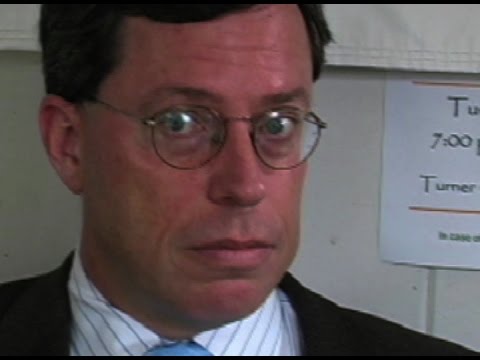
Cornered rat?
By Kevin Barrett | truthjihad | April 20, 2016
Philip Zelikow, a self-described expert in “the creation and maintenance of public myths,” wrote the 9/11 Commission Report in chapter outline before the Commission even convened.
Zelikow, architect of the Bush Doctrine of framing criminal wars of aggression as “pre-emptive wars,” is the co-author of an astonishingly precognitive 1998 Foreign Affairs article speculating about the likely political and cultural consequences of a massive Pearl Harbor style event such as the destruction of the World Trade Center – a catastrophe that, he said, would split time into a dimly-remembered “before” and an Orwellian “after.”
Zelikow is on record stating that the 9/11 wars were not about defending the US from any threat. Instead, they were about “the threat that dare not speak its name” – the threat to Israel.
Many of us suspect Zelikow co-wrote the script for the 9/11 “reality disaster movie” in the late ’90s. So if anyone should know “the real story” of 9/11 it would be him.
Yet now he tells NBC News: “To this day I don’t quite know what the real story is”:
“If people want to get to the truth about 9/11, the shortest route would be to bring the people responsible to trial,” Zelikow said, “because all of the information that’s been gathered in all the years since 9/11 would be available to then become part of the public record.” But Zelikow also said there are some things about the 9/11 attacks that even the government doesn’t know. “To this day I don’t quite know what the real story is,” he said. “We said what we said in the commission report. When we said that this needs more work, that was a big thing for us to say.”
For once in my life I agree with Mr. Zelikow. And among the first people responsible we should put on trial is the likely co-author of the script for the 9/11 false flag event, Philip Zelikow himself.
How The New Yorker Mis-Reports Syria
By Jonathan Marshall | Consortium News | April 20, 2016
Only 6 percent of Americans surveyed in a new national poll say they have a lot of confidence in the media — a result driven by a widespread perception that news stories are one-sided or downright inaccurate. That finding came to mind as I heard New Yorker editor David Remnick introduce an April 17 segment on Syria on the New Yorker Radio Hour.
“For the last five years Syria’s President Bashar al-Assad has framed the revolution in his country as a conspiracy fueled entirely by foreign powers,” Remnick claimed. “His security agencies have . . . killed hundreds of thousands and displaced possibly half of the entire country.”
The New Yorker is famous for its fact checkers, but Remnick evidently failed to consult them. Even a casual listener might have questioned his remarkable attribution of Syria’s entire death toll and refugee crisis to Assad’s security agencies, as if ISIS, Al Qaeda, and other rebel forces were mere innocent bystanders.
In fact, the dead include somewhere between 100,000 and 150,000 pro-government forces, comparable to the number of opposition fighters killed, and human rights organizations report that “Opposition armed groups in Syria have indiscriminately attacked civilians in government-held territory with car bombs, mortars, and rockets.”
But what about Remnick’s claim that Assad’s crackdown was driven by paranoia about foreign conspiracies? Like a feature article in his magazine’s April 18 issue, Remnick’s shorthand attempt to portray Assad as insane as well as ruthless fails the test of good journalism.
The article by Ben Taub, which describes efforts by international rights activists to smuggle government documents out of Syria for future war crimes trials, says that Assad “declared his intention to suppress dissent in the brutal tradition of his father” during an address to the Syrian nation on March 30, 2011, shortly after the outbreak of anti-government demonstrations in several cities.
Taub makes his point with a few choice quotes from the speech: “Syria is facing a great conspiracy, whose tentacles extend” to foreign powers that were plotting to destroy the country, [Assad] said. “There is no conspiracy theory,” he added. “There is a conspiracy.” He closed with an ominous directive: “Burying sedition is a national, moral, and religious duty, and all those who can contribute to burying it and do not are part of it.” He emphasized, “There is no compromise or middle way in this.”
Forgotten History
The quotes are accurate, but the missing context tells us important facts both about the origins of Syria’s violent conflict and what’s wrong with much advocacy journalism today. Assad certainly did see foreign conspiracies at work in Syria, but he was not paranoid. Unlike most of Taub’s readers, Assad knew that the first military coup in Syria’s modern history was instigated in 1949 by agents of the newly formed Central Intelligence Agency.
That was not the last foreign covert intervention in Syria. In 1957, according to official papers summarized by The Guardian, “[Prime Minister] Harold Macmillan and President Dwight Eisenhower approved a CIA-MI6 plan to stage fake border incidents as an excuse for an invasion by Syria’s pro-western neighbours, and then to ‘eliminate’ the most influential triumvirate in Damascus. . .
“Although historians know that intelligence services had sought to topple the Syrian regime in the autumn of 1957, this is the first time any document has been found showing that the assassination of three leading figures was at the heart of the scheme.”
In 2005-6, as I documented previously in ConsortiumNews, Washington and Saudi Arabia began secretly backing Syria’s Islamist Muslim Brotherhood with the goal of ousting Assad. Further details of that covert operation emerged just weeks after Assad’s March 30 speech, when the Washington Post reported that “The State Department has secretly financed Syrian political opposition groups and related projects, including a satellite TV channel that beams anti-government programming into the country.”
The recipients were described in State Department cables as “moderate Islamists” and former members of the Muslim Brotherhood. The paper continued:
“The London-based satellite channel, Barada TV, began broadcasting in April 2009 but has ramped up operations to cover the mass protests in Syria as part of a long-standing campaign to overthrow the country’s autocratic leader, Bashar al-Assad . . .
“The U.S. money for Syrian opposition figures began flowing under President George W. Bush after he effectively froze political ties with Damascus in 2005. The financial backing has continued under President Obama, even as his administration sought to rebuild relations with Assad. . . .
“Syrian authorities ‘would undoubtedly view any U.S. funds going to illegal political groups as tantamount to supporting regime change,’ read an April 2009 cable signed by the top-ranking U.S. diplomat in Damascus at the time.”
In his March 30, 2011 address, Assad referred explicitly to the challenges his regime faced in 2005 and to recent anti-government violence incited by “satellite TV stations” — an obvious reference to Barada TV. So when Assad complained in his speech that “our enemies work every day in an organized, systematic and scientific manner in order to undermine Syria’s stability,” he was not merely delusional.
Acknowledging Fault
But Assad also took care to acknowledge Syria’s genuine internal problems and overdue reforms, “so that satellite T.V. stations will not say that the Syrian president considered all that has happened a foreign conspiracy.” Toward the end of his speech, Assad reiterated, “Since some people have short memory, I will refresh their memory once again by saying that not all of what is happening is a conspiracy, because I know that they are on the ready in their studios to comment.”
Despite Assad’s best efforts, Taub and Remnick evidently never got the message.
“We all discuss, criticize, and have our disagreements because we have not met many of the needs of the Syrian people,” Assad further conceded. “That is why it was easy to mislead many people who demonstrated in the beginning with good intentions. We cannot say that all those who demonstrated are conspirators. This is not true, and we want to be clear and realistic.”
Assad devoted much of his speech to explaining why reforms had moved so slowly since he took office in 2000. His message disappointed many Syrians, especially political critics living abroad. But, to the applause of other Syrians, he promised over the course of the following month to “identify the measures that need to be taken” for reform.
Unmentioned by Taub, Assad followed through with some significant steps. He fired unpopular governors of two provinces, named a new prime minister and cabinet, dismantled his unpopular National Security Court, and lifted the emergency law.
On April 16, Assad spoke to ministers of his new government, telling them that the most effective way for Syria to resist regime change was to carry out reforms and attend “to the needs of the Syrian population.”
Sounding not at all like a ruthless dictator, he also decried the loss of life during recent anti-government demonstrations, saying “the blood which has been spilled in Syria has pained us all. . . . We are sad for the loss of every Syrian and for all those who have been injured. We pray to God to provide solace to their families and friends.”
Assad discussed plans to lift the country’s state of emergency. He called for better training of police to help them “cope with the new reforms” and “protect demonstrators” while still preventing “sabotage.” He cited detailed proposals for improving the fight against public corruption. And he stressed the need for economic reforms to reduce unemployment and the despair felt by young people with no prospects.
Said Joshua Landis, a leading U.S. academic authority on Syria, Assad’s speech “was about as good” as he could have made it, and a big improvement on his March 30 address. “For those who continue to believe in the possibility of reform and not regime-change, this speech was reassuring.”
But anti-government demonstrators took Assad’s limited reforms as a challenge, not an opening. As I recounted previously, protesters declared one major city a “liberated zone,” prompting a massive crackdown by Assad’s security forces and gun battles between soldiers and armed opponents. Key opposition leaders also rebuffed national dialogue meetings sponsored by the Assad government in June and July of 2011, when the death toll was still low.
As Landis later commented, “Western press and analysts did not want to recognize that armed elements were becoming active. They preferred to tell a simple story of good people fighting bad people. There is no doubt that the vast majority of the opposition was peaceful and was being met with deadly government force and snipers. One only wonders why that story could not have been told without also covering the reality that armed elements, whose agenda was not peaceful, were also playing a role.”
The New Yorker, like much of the Western media, still prefers telling simple stories of good and evil when it comes to Syria. But quality journalism requires more than story-telling. It requires factual accuracy, context, and nuance, professional attributes needed more than ever during passionate times.
A less biased look at Assad’s words and actions would not absolve him of repression and war crimes, but might suggest that Syria’s opposition had peaceful alternatives to civil war.
We’ll never know, of course. But we do know for certain that by demanding nothing less than “regime change,” Assad’s opponents and their foreign backers contributed along with Assad’s own actions to one of the great humanitarian catastrophes of our time.
Jonathan Marshall is author or co-author of five books on international affairs, including The Lebanese Connection: Corruption, Civil War and the International Drug Traffic (Stanford University Press, 2012).
Palestinians Are Dying, But Only Israelis are “Vulnerable” in The NY Times
By Barbara Erickson | TimesWarp | April 19, 2016
Isabel Kershner in The New York Times reports that Israelis are suffering from “a sense of vulnerability” after a bus bombing in Jerusalem this week. The event, she reports, sowed fear and anxiety in a population “already on edge” after a series of attacks over the past several months.
Although there were no reported deaths from the bombing, she writes that Israelis were reminded of the second Palestinian uprising “when suicide bombers blew up buses in Jerusalem and other Israeli cities, killing scores.”
Missing from her account is any mention of Palestinian fear or vulnerability in spite of data showing that Palestinian deaths outnumber Israeli fatalities by a factor of five or more, depending on the time frame. The second intifada, for instance, which Kershner takes as her reference point, left 5,904 Palestinians dead compared with 1,163 Israelis.
She notes that “about 30” Israelis have died in the past six months in contrast to “more than 200” Palestinians, a rate of more than six to one. But this fact has not inspired her to look into Palestinian anxieties. Instead she once again attempts to place the blame on Palestinians, writing that they reportedly died in “attacks or attempted attacks or in clashes with Israeli security forces.”
Nothing is said of the frequent charges that Israeli troops have carried out “street executions” of Palestinians who pose no threat to them or others. (See TimesWarp 3-25-16.) Likewise, nothing is said about the crippling effects of the brutal Israeli occupation of the West Bank and Gaza, the crucial background for this conflict.
Kershner entirely omits the context here while focusing on every possible source of Israeli angst: the bus bombing, the recent discovery of a tunnel leading from Gaza to Israel, a belligerent statement by Hamas and the lone-wolf knife and vehicular attacks by Palestinians.
Discerning readers may ask why Palestinians are using kitchen knives and automobiles as their weapons of choice, but the Times is not about to address the question. It would underscore the fact that Palestinians are the vulnerable party, an unarmed and virtually helpless population contending with one of the most sophisticated armies in the world.
In fact, Palestinians face daily threats from Israeli weapons, ranging from bulldozers to drones to live fire. Gaza farmers tending their fields near the border with Israel and fishermen at sea are frequently targeted by Israeli bullets and shells. West Bank communities confront the threat of land confiscation, settler attacks and demolitions that destroy homes and livelihoods.
And unarmed protesters in Gaza and the West Bank have been injured and killed during non-violent demonstrations. In fact, Israeli security forces injured a shocking number of Palestinians last year, a total of 14,925. As of April 11 this year, troops had already wounded 1,627.
According to United Nations data, Israeli forces have injured an average of 109 Palestinians each week in 2016. By comparison, Palestinians are wounding an average of four Israelis weekly. Yet it is Israeli “vulnerability” that takes center stage in the Times.
Kershner writes that “the threat of the tunnels continues to sow fear in Israeli communities along the border,” but she fails to say that not a single Israeli civilian has been harmed because of the tunnels. During the 2014 attacks on Gaza, they were used solely for targeting Israeli troops.
Palestinians, on the other hand, have reason to feel vulnerable, and they have reason to build tunnels as one of the few means of defense when they are under attack from Israeli weapons, but the Times has no interest in reporting this. It is only Israeli angst that matters here.
Israelis may have to deal with their fears, but Palestinians have to face much more: the loss of land, water, mobility, security and dignity. They have concrete and verifiable casualties, and they have to contend with their own defenselessness and fears, but in spite of all the evidence, the Times has turned its back on their narrative, joining Israel in blaming the victim.
Follow @TimesWarp on Twitter
Media Scoundrels Ignore NY Primary Irregularities
By Stephen Lendman | April 20, 2016
America resembles a banana republic. Its sham political process has no legitimacy, democracy in name only, voters with no say whatever.
Democrat party bosses intend nominating Clinton at their July convention – rigging primaries to assure it, perhaps the tainted NY one the latest example.
Republican counterparts want anyone but Trump, despite overwhelming GOP voter support he enjoys.
America’s political process is rigged, too debauched to fix, a vital issue media scoundrels ignore. Instead they pretend US elections show democracy works – for the privileged few alone, excluding most others.
A same day article asked if Clinton stole the NY primary, explaining it was rife with irregularities, including disenfranchising over 125,000 NYC voters and various other disturbing practices.
Media scoundrels airbrushed Tuesday electoral irregularities from their reports. The New York Times headlined “A Homecoming, and a Triumph, for Hillary Clinton in New York” – instead of explaining electoral irregularities too serious to ignore, tainting Democrat primary results, questioning their legitimacy.
The Times suppressed dirty politics, diverting attention from what’s most important, saying Clinton “danced the merengue in Washington Heights.”
“She slammed down a mean game of dominoes in East Harlem (and) d(ug) into an ice cream concoction named the Victory.”
The entire article was an unabashed Clinton commercial. Times editors endorsed her earlier, shill for her repeatedly, outrageously call her “the most broadly and deeply qualified (aspirant) in modern history.”
They ignore her pure evil, the greatest threat to world peace among all the deplorable candidates – none worthy of any public office, let alone the nation’s highest.
The neocon Washington Post was no better, highlighting Clinton saying “(t)here’s no place like home,” the Democrat party nomination “nearly within her grasp…”
WaPo quoted her hawkishness, risking possible global war if elected, saying “at a time when terrorists are plotting new attacks and countries like Russia, China and Iran are making aggressive moves, protecting America’s national security cannot be an afterthought.”
“Our next president has to be just as passionate about defending our country as she is about fixing our economy.”
No WaPo explanation about America facing no threats except ones it invents. Nothing about Clinton’s ties to Wall Street, war-profiteers and other corporate favorites.
Not a word about likely NY primary electoral rigging, voter rolls purged, other disturbing irregularities, or explaining America’s sham political process.
The Wall Street Journal highlighted Clinton, saying “(t)he race for the Democratic (sic) nomination is in the home stretch, and victory is in sight.”
The fix is in to hand it to her, the nation’s highest office likely following after November elections.
She represents monied interests, not popular ones, supports endless wars of aggression, not world peace and stability.
She’s the greatest threat to humanity’s survival, more than any other presidential aspirant in US history. If elected in November, WW III may follow.
Media scoundrels ignore what’s most vital to hammer home to readers and viewers without letup. Instead they support what demands condemnation.
Stephen Lendman can be reached at lendmanstephen@sbcglobal.net.
His new book as editor and contributor is titled “Flashpoint in Ukraine: US Drive for Hegemony Risks WW III.”
Widespread Public Distrust of Mainstream Media
By Stephen Lendman | April 19, 2016
Americans have little faith in so-called major media news and information, a collective lying machine by any standard, suppressing what’s most important to report, substituting managed news misinformation rubbish.
Gallup and other polls show Americans’ trust in mass media around an all-time low.
A new American Press Institute (API) report said around half of respondents surveyed expressed “some confidence” in media reporting, over 40% virtually none, API saying:
“Over the last two decades, research shows the public has grown increasingly skeptical of the news industry.”
“The study reaffirms that consumers do value broad concepts of trust like fairness, balance, accuracy, and completeness. At least two-thirds of Americans cite each of these four general principles as very important to them.”
Social media changed how many Americans get news and information. Only 12% trust what they get.
TV news combines travesty and farce. Why anyone wastes time watching they’ll have to explain. Truth is a scarce commodity, in times of war the first casualty.
Media giants are our national thought control police, manipulating our minds, programming our thoughts, instilling beliefs, diverting our attention from what matters most, destroying a free marketplace of ideas essential to a healthy democracy – entirely absent in America and other Western societies.
Instead of news and views to trust, the public is fed lies, damn lies and Big Lies – along with demagoguery, scandal, gossip, sleaze and war-mongering.
The percent of Americans with great trust in major media is less than one in ten. Believers should be asked to explain why they trust a notorious lying machine.
The best way to defeat media scoundrels is tune them out, stopping buying their publications.
Trust only reliable alternative sources, independent ones – free from dirty corporate money and handouts from their foundations.
Stephen Lendman can be reached at lendmanstephen@sbcglobal.net.
His new book as editor and contributor is titled “Flashpoint in Ukraine: US Drive for Hegemony Risks WW III.”
Is US-Funded Destabilization in Latin America Now Paying Off?
By Francisco Dominguez – teleSUR – April 14, 2016
Most progressive governments in Latin America find themselves under intense attack in what is evidently a well synchronized and well financed continental plan of destabilization.
Riots, street demonstrations, anti-corruption campaigns, protests about the domestic negative impact of the world economic crisis, general strikes, impeachment efforts, economic sabotage, and the like, have become the battle horses on which oligarchic forces in cahoots with Washington are riding to carry out “regime change.”
So far, conservative forces in Latin America have been successful in overthrowing President Manuel Zelaya in Honduras in 2009 and President Fernando Lugo in 2012 in Paraguay. Both presidents were ousted by oligarchic parliamentary majorities with mass support from middle class “civic associations”, in complicity with the judiciary, with the latter providing a veneer of legality.
The preconditions for “regime change” take, in some cases, years of careful preparation. This normally involves intoxicating media campaigns of demonization aimed to exacerbate political polarization to the maximum, through the instilling of fear, the staging of aggressive and sometimes violent, middle class mobilizations, the activating of many associations of civil society, and the setting up of, sometimes hundreds, of externally funded NGOs.
The aim is to question the legitimacy of the “target government” which usually involves the systematic discrediting of existing political institutions so as to foster chaos as the most conducive context for “regime change”. This strategy has been “theorized” in manuals that are mass-produced and get heavily promoted free of charge by establishment outfits.(1)
Despite the fastidiousness with which Washington and domestic perpetrators seek to enshrine their efforts at “regime change” in any one nation with the veil of legality, constitutionality, democracy promotion, regional autonomy, and virtuous legitimacy, always a powerful media apparatus is activated the world over, unleashing a barrage of negative reporting and demonization of the “target government” with one overriding message: the solution to created crisis is the ousting of the government.
The favorite demonization is to label the “target government” as a totalitarian dictatorship or in the process of becoming so, unless stopped. This is coupled with regular official condemnatory statements of the “target government” from the U.S. State Dept. and a barrage of U.S. official bodies.
In this “regime change” narrative, the ousting of the target government, being the cause of “civil society’s rebellion”, is fully justified. Thus for example the highly illustrative New York Times editorial of April13, 2002, on occasion of the brief ousting of Hugo Chavez: “Venezuelan democracy is no longer threatened by a would-be dictator.”
The NYT explained that Chavez had been ousted “after the military intervened and handed power to a respected business leader.” The key, therefore, is to portray the “ruler” of the target government as a threat to democratic civilization, thus the NYT editorial justifies the 2002 coup in Venezuela because Chavez “battled the media and alienated virtually every constituency from middle-class professionals, academics and business leaders to union members and the Roman Catholic Church.(2)
So, 21st century “regime change”, different from the more traditional 20th century U.S.-orchestrated coup d’état, involves an intense “battle for hearts and minds”, an essential component of the strategy.(3) Thus, huge financial, political and cultural resources are mobilized to bring about hegemony for “regime change” in society and in all state and civil society institutions, going as far, in some cases, as even co-opting sections of the downtrodden. Most of this is “facilitated” with generous NED and USAID grants awarded over many years.
Faced with its own steady decline and the rise of radical governments in the post-Soviet era, the U.S. seeks to destabilize and oust governments through “color revolutions” as in Georgia, 2003 and the Ukraine, 2004 and 2014. Consequently the U.S. has substantially reorganized its architecture for intervention with the CIA becoming a mere appendix but with USAID and the National Endowment for Democracy and their many associated bodies taking center stage and receiving the lion’s share of the resources. The modality may have changed but U.S. foreign policy remains pretty much what it was: to remove governments it does not like. U.S. State Dept. and USAID budget is bigger than the GPD of many states, in 2016 it was US$50.3 billion.
Among the key U.S. institutions involved in “regime change” is the U.S. State Department, the body with the biggest authority, but there is also the United States Southern Command, the Congress and Senate Foreign Affairs Committees, and the CIA. Then further down the food chain, there are USAID, NED, Office for Transition Initiatives, American Center for International Labor Solidarity and American Institute for Free Labor Development, among the most important ones.
They work closely together and in the pursuance of the same aims, with the International Republican Institute, chaired by John McCain of CHECK; the National Democratic Institute, chaired by Madeline Albright; Transparency International; and Centre for International Private Enterprise. They all channel huge sums to support civil (and when possible) military subversion to create the conditions for “regime change”. They also channel huge sums to fund “civil society” associations, political parties, media outfits, NGOs, professional bodies, trades unions, think tanks, business, student groups and so forth.(4)
These institutions are the field commanders that coordinate the national detachments in every target country around a regional perspective so as to maximize the results of every push for “regime change” in any individual Latin American nation. We are increasingly seeing former right-wing Latin American presidents acting jointly to contribute to the destabilization of Bolivarian Venezuela, for instance.
Additionally there is a raft of “private” or “independent” bodies concerned chiefly with Latin America, the most important of which are Inter-American Press Association; Fundacion para el Analisis y los Estudios Sociales – led by Jose Maria Aznar; the Instituto Prensa y Sociedad; hundreds of Think Tanks; and possibly thousands of NGOs that share the “regime change” aim but that do it from a specialist angle. To all of this architecture of U.S. intervention, the overwhelming majority of the world corporate media play a decisive role, making any U.S. led intervention, a lethal political threat to the survival of any “target government”.
Most progressive governments in Latin America have been or are subjected to systematic levels of traumatic and deliberately created social, economic and political chaos, politics and culture, which in many cases it can go on for years. In Cuba for five decades, in Nicaragua (on and off) nearly four decades and in Venezuela for 17 years thus far, with no end in sight.
Venezuela’s Bolivarian government is currently in the crosshairs of U.S. destabilization plans and “regime change” efforts through an economic war that has the Bolivarian process on the ropes. In Argentina, three years of an intense dirty war against Cristina Fernandez’s government, aspects of which had sinister overtones, paid off when at the November 2015 presidential election, the Right’s candidate, Mauricio Macri, won the election by a small margin of 1 percent. In Ecuador, a police mutiny in September 2010, obviously instigated from abroad and with huge U.S. support, nearly succeeded in ousting the government with with President Rafael Correa miraculously escaping with life.
The destabilization against Ecuador continues with the “revolt” of civil society and very violent street protests. And in Brazil, through a very intense and thoroughly intoxicating media campaign, a “regime change” push seeking to oust the democratically elected and legitimate president Dilma Rousseff is underway, as we write it is not clear whether the effort to oust Dilma will be successful or not.
By substantially reducing export revenues that fund progressive social programs, the persistent world economic crisis significantly helps the “regime change” efforts by the U.S. and its allies. It may be just coincidence but the U.S. ambassador in Paraguay when elected president Fernando Lugo was ousted by a right-wing parliamentary coup, was Liliana Ayalde. The current U.S. ambassador in Brazil, where a right-wing parliamentary coup against elected president Dilma Rousseff is in progress, is Liliana Ayalde.
Bolivar once said that the United States appears to be destined by Providence to plague America with misery in the name of liberty. Exactly, through the NED, USAID and others, the United States must stop destabilizing elected governments in the name of “democracy,” “good governance” and “national security.”
Francisco Dominguez is a senior lecturer at Middlesex University, where he is head of the Centre for Brazilian and Latin American Studies.
(1) See Gene Sharp, “From Dictatorship to Democracy,” Serpent’s Tail, 2011, first published in 2002.
(2) “Hugo Chavez Departs,” New York Times, April 13th, 2002
(3) The overthrow of Honduras President Manuel Zelaya, in June 2009, has led to the book with the very suggestive title “The Good Coup” (Mario Caceres di Iorio, CCB, Canada, 2010).
(4) See “Evolution of USAID and NED in Dominguez,” Lievesley and Ludlam, Right-Wing Politics in the New Latin America, Zed, 2011.
Featured Video

Seyed M. Marandi: US-Iran War Inevitable: Kuwait and Bahrain May Fall
or go to
Aletho News Archives – Video-Images
From the Archives
Oil and the Israel Lobby
Reknowned economist M. Shahid Alam offers this excellent critique of Noam Chomsky’s defective analysis of the relative influence of Oil versus the Israel lobby over US foreign policy: … continue
Blog Roll
 Aletho News
- ICC ignored ‘very well-documented’ NATO crimes – ex-Libyan minister
- SNSC secretary dismisses US response to Iran’s conditions as ‘inadequate’
- Sanaa says Taiz roads open, secure for residents, warns Saudi forces
- Iraqi resistance group urges Saudi leadership to admit defeat, lift Yemen siege
- Trump’s Retreat: How Al-Aqsa Flood Took Down the US Empire
- Israel’s Military Actions in Lebanon Grossly Violate International Law — Lavrov
- Seyed M. Marandi: US-Iran War Inevitable: Kuwait and Bahrain May Fall
- Leaders Condemn Ansarallah Attack on Saudi Arabia While Ignoring Illegal War Against Yemen
- Leaked: Britain’s Covert Iraqi Psyops Network
- Yemeni Armed Forces Warn Airlines Against Using Saudi Airports, Exempt Mecca and Medina
- If Americans Knew
- After Oct 7, IDF policy allowed civilian casualties for even the lowest-ranking targets
- Israel’s Destruction of Southern Lebanon Intensified After the Cease-Fire
- The Last-Minute Decision That Gave Israel Its Name
- The American Conservative: How Trump Made the World Go Nuclear
- Meet the US generals and admirals advancing Israeli policy
- Opinion: Why news organizations should boycott Israel
- The Israeli witch hunt of Sami Abu Shehadeh exposes the lie of the ‘Jewish and democratic’ state
- No state has a ‘right’ to exist – least of all Israel
- Testimonies about Gaza’s civilian death toll expose Israel’s atrocities – Daily Update
- How Israel Conquered the Latin American Right
- No Tricks Zone
- Germany’s Green Energy Debacle: High Energy Costs Force Kahla Porzellan to Close After 182 Years!
- New Study: 50 Years Of The Most Aggressive ‘Net Zero’ Policies Can Only Affect The Global Climate By 0.03°C
- US September “Heat” Was No Record…Many Records Set Decades Ago
- Latest European Green Energy Debacle; Portugal’s Largest Flagship Solar Park Insolvent!
- Green Energy Debacle: German Expert Professor Fritz Vahrenholt Warns Of Severe Economic And Social Consequences
- Two More Paleo Reconstructions Affirm Meters-Higher Sea Levels Across Ireland, Brazil 7000-6000 Years Ago
- New Study: Earth And Venus Surface Warmth Largely Explained By Convection And Lapse Rate, Not CO2 Or Radiation
- 2025 Nature Paper Claiming Worsening Global Drought Gets RETRACTED …Heavily Flawed
- New Study: ‘Global Drought Shows No Detectable Recent Acceleration Under Climate Warming’
- Economic Masterminds: German Socialists Suggest Taxing Productivity Gains Stemming From Using AI

