Obama’s Legacy: al-Qaida’s Protector-in-Chief
A Black Agenda Radio commentary by executive editor Glen Ford | April 27, 2016
President Obama continues to play his three card monte game in Syria, pretending to wage an all-out war against ISIS, while at the same time helping al-Nusra, al-Qaida’s terrorist army in Syria, blend in with the other jihadists armed and financed by the United States and its allies. With Russian help, the Syrian Army may soon be in position to march against the ISIS capital, in Raqqah, and to drive al-Qaida from the country’s second largest city, Aleppo. If that happens, it would signal the final unraveling of a nearly four decades-long U.S. policy of using fundamentalist Islamic jihadists as foot soldiers for U.S. imperialism, in partnership with Saudi Arabia. That’s what is driving the Saudi monarchy crazy, because, if the jihadists are defeated in Syria, they are certain to turn on their Saudi paymasters and the other infinitely corrupt monarchies in the Persian Gulf. What goes around, eventually comes around.
And, that’s why President Obama is sending 250 more Special Forces troops into Syria, supposedly to train more of those phantom “moderate” rebels that the Pentagon last year admitted do not exist. The real number of U.S. troops in Syria and Iraq is certainly much higher than the U.S. is admitting. These U.S. soldiers are attempting to rearm and unite all of the smaller terrorist groups that are integrated with al-Qaida – that is, everyone except ISIS.
The Russians aren’t fooled one bit by Obama’s terrorist shell game. Russian Foreign Minister Sergey Lavrov has resisted U.S. Secretary of State John Kerry’s proposals to carve Syria up into so-called “zones of interest,” a phony kind of cease-fire that would prevent the Syrian government from taking back its national territory. Lavrov is telling the U.S. that any so-called rebels that are caught fighting alongside al-Qaida will be killed, just like al-Qaida, and that the national sovereignty and territorial integrity of Syria is not subject to negotiation.
The Russians and the Syrian government not only have international law firmly on their side, but also the relevant United Nations Security Council resolution, which calls on the entire world to fight against both ISIS and al-Qaida’s Nusra Front. The U.S. voted for the resolution, and President Obama has repeatedly stated that Washington respects Syria’s national sovereignty. Obama is lying, of course – but then, the U.S. war on terror is probably the greatest lie of the 21st century, and a big part of the 20th century, too.
The U.S. presence in Syria is totally illegal – which is why Obama has to cloak it in terms of American self-defense against ISIS, despite the fact that ISIS grew by leaps and bounds until the Russians intervened and forced the Americans to pretend to wage war against it. The U.S. troops’ main job is to arm the various brands of al-Qaida fighters with heavy weapons, and to act as a “trip wire,” daring the Russians to bomb areas of the country where American troops are active. In other words, he is prepared to go to war with Russia to defend the terrorist armies he has unleashed on Syria.
Obama will end his term in office as the protector-in-chief of al-Qaida. What a legacy for the First Black President.
Glen Ford can be contacted at Glen.Ford@BlackAgendaReport.com.
NATO pledges to boost military presence in Eastern Europe
Press TV – April 27, 2016
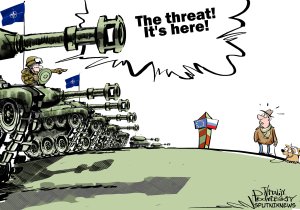 NATO has pledged to expand its military presence in Eastern Europe to protect its partners and allies from potential threats as the US sends two of the world’s most advanced warplanes to Romania.
In a speech at the University of Bucharest in Romania on Tuesday NATO Deputy Secretary-General Alexander Vershbow discussed the main issues the Western alliance is facing.
He said the alliance is struggling with many complex risks apart from the “destabilizing actions” of Russia and “the tide of instability which has swept across the Middle East and North Africa.”
“We are also wrestling with other complex risks and threats to our cyber security, to our energy supplies, and in the case of international terrorism to the safety of the people on our streets,” he said.
Vershbow said NATO is doing everything to respond to these challenges, adding that “the alliance takes a 360 degree approach to deterring threats, to protecting its member nations and if necessary to defending them.”
“That presence will be rotational, multinational, and combat capable. It will thereby send a clear message to any potential aggressor that if they violate NATO’s territory, they will face strong response from the whole alliance; Americans, Europeans and home defense forces,” he said.
The NATO secretary general also said that the organization has “set up a series of small headquarters, including here in Romania, to support planning, training and re-enforcement.”
“We are intensifying our maritime patrols, exploring the need for increased military and exercises, providing support to partners like Ukraine, Georgia and Moldova and encouraging efforts to strengthen energy security,” he said.
US sends F-22 Raptors to Romania
Vershbow’s comments came a day after the US sent two F-22 Raptor fighter jets to Romania as part of the commitment to NATO security.
The fighter jets, which travel at twice the speed of sound, touched down in Romania, close to the Black Sea and Ukraine, the Crimean Peninsula and Russia.
A US statement said the aircraft possess sophisticated sensors which would allow pilots to track, identify, shoot and destroy air-to-air threats without being detected.
The dispatch of the fighter jets, which can also attack surface targets, came two weeks after Russian fighter jets buzzed an American warship in the Baltic Sea.
The Western military alliance has been deploying troops and equipment close to Russia’s borders since it suspended all ties with Moscow in April 2014 after the Crimean Peninsula integrated into the Russian Federation following a referendum.
The United States and its European allies accuse Moscow of destabilizing Ukraine and have imposed a number of sanctions against Russian and pro-Russia figures. Moscow, however, rejects having a hand in the Ukrainian crisis.
This as Moscow has on many occasions slammed the Western military alliance’s expansion near its borders, saying such a move poses a threat to both regional and international peace.
Ecuador’s Earthquake and the NYT’s Spin Doctors
By Joe Emersberger | teleSUR | April 25, 2016
On April 23, a New York Times article by Nicholas Casey quoted a businessman in the earthquake-ravaged city of Portoviejo complaining about temporary tax increases that Rafael Correa’s government announced to pay for reconstruction which is presently estimated to cost US$2 to US$3 billion. Casey didn’t tell his readers that the areas impacted by the earthquake would be exempt from the new taxes and also given tax cuts.
The article inaccurately reported there would be “a one-time garnishing of government wages for those earning more than US$1,000 a month.” The measure would apply to all wages outside the disaster areas, not just “government wages.” Casey neglected to mention that most Ecuadorians earn less than US$1,000 per month. The average monthly salary is US$574 per month, not exactly a fact that would be common knowledge to the vast majority of NYT readers.
The biggest howler in the article is the assertion that the IMF has been “long shunned” in Ecuador “for its demands to cut government spending”. That’s like saying people avoid dealing with the Mafia because “they‘ve been known to be unpleasant”: true but wildly misleading. By the beginning of the 21st century, the IMF lost a tremendous amount of influence in Latin America because from 1980 to 2000 it had bullied governments into adopting disastrous policies which are known as “neoliberalism.”
Ecuador’s real GDP per capita grew by a pitiful 5 percent from 1980 to 1998 compared to over 100 percent in the previous two decades. Then, in 1999, Ecuador’s banking sector collapsed under the weight of corruption and a neoliberal obsession with “central bank independence” and financial deregulation. By 2000, real GDP per capita fell below what it had been in 1980.
Casey quotes Jose Hidalgo, an economist who has praised Ecuadorian governments of the neoliberal era for having “saved” money. Those governments certainly “saved” for various huge bailouts of Ecuador’s super rich like the infamous “secretization” of 1983 and the bank bailouts in 1999. Those governments also “saved” in order to make interest payments to foreign investors for debt that had often been illegally contracted.
By the time Correa took office in 2007, decades of neoliberalism had left Ecuador’s roads, public hospitals, schools and other basic infrastructure in shambles. The World Economic Forum ranked Ecuador’s roads tenth among 18 countries in the region in 2006. By 2015 they were ranked as the best. The efficiency of Ecuador’s public services, as ranked by the Inter-American Development Bank, rose from next to last among the 16 countries it evaluated to sixth best in the region. Comparative studies by the U.N. found that the quality of Ecuador’s educational system is one of the most improved in the region since 2006.
Economists like Hidalgo don’t generally try to deny the vast improvements in Ecuador’s infrastructure under Correa’s government. Instead they vaguely decry “excessive public spending.” Presumably, Ecuador’s infrastructure and public services should have been left in a deplorable state. Imagine Ecuador’s government refusing to rebuild the damage from the recent earthquake and then bragging about how much money it “saved.”
That sums up the warped logic behind Hidalgo’s view, one that was tragically put into practice during the neoliberal era. Is a country better equipped to confront natural disasters when traveling through the country is badly hampered by dilapidated roads; when hospitals are in short supply and are under equipped and understaffed; when rescue workers and other public servants are poorly paid, inadequately trained and do not have proper equipment?
Casey wrote that oil prices “once fueled a government spending bonanza.” The “bonanza” actually had more to do with clamping down on tax avoidance by the rich and sensibly regulating its financial sector. Real per capita tax revenues doubled between 2006 (the year Correa was first elected) and 2012. At their highest point during Correa’s time in office, inflation-adjusted oil revenues per capita, accounting for costs of extraction, were lower than they were during much of the 1970s and 1980s.
Moreover, early on in Correa’s presidency, Ecuador’s economy suffered a massive external shock due to the global recession of 2009 which drove oil prices down. So even before oil prices collapsed in 2014, Correa’s government did not have exceptionally high oil revenues compared to previous governments.
Another blow from the 2009 global recession was a drop in remittances from Ecuadorians living abroad. One legacy of the neoliberal era is that remittances from Ecuadorians who fled their country during those years became very important to Ecuador’s economy. The fact that Ecuador has reduced poverty by about half during Correa’s time in office cannot be rationally attributed to luck.
Based on resilience to external shocks, there is also no credible argument for returning to economic policies endorsed by Casey’s article. In 2015, Ecuador avoided recession despite losing 7 percent of its GDP to the oil price collapse. In 1987, under the neoliberal government of Febres Cordero, Ecuador went into recession when export revenues dropped by only 1.84 percent of GDP.
Casey never seemed to consider that there were facts and counterarguments to the views expressed by his sources. In the United States, newspapers like the New York Times present Paul Ryan, who wants to eliminate the entire federal government (with the exception of the military) from the U.S. economy, as a serious policy expert. So it isn’t surprising that successful public investment in Ecuador is eagerly presented as wasteful. If you can’t identify extremists and charlatans at home, you probably won’t do so abroad either.
Mexican authorities obstruct probe of missing students case: report
Press TV – April 25, 2016
A panel of international experts probing the 2014 massacre of 43 Mexican students has accused the government of obstructing its inquiry into Mexico’s most notorious murder case in recent years.
Foreign experts from the Inter-American Commission on Human Rights (IACHR) issued their final report Sunday, saying the government’s stonewalling stopped them from reaching the truth.
The five-member panel, who has been investigating the case for a year, said Mexican authorities showed “little interest” in moving forward with the probe.
The panel also accused the Mexican government of allowing a smear campaign against its investigation in an attempt to discredit the final report as it prepared to leave the country.
A group 43 students from Ayotzinapa Teacher Training College went missing on the night of September 26, 2014, after they participated in a protest in the south-western city of Iguala, in Guerrero state.
Mexican prosecutors say they were arrested by corrupt municipal policemen and handed over to the local criminal gang of Guerreros Unidos, which apparently massacred them and burned their bodies at a garage dump.
Relatives of the victims dismiss the government version of the incident, accusing authorities of trying to cover up the involvement of senior politicians and army officers in the killings.
The international report also dismissed the government’s narrative, saying there is no evidence that the 43 students were incinerated at the dump.
It said the claim that the students had been burned is scientifically impossible given the heat needed to reduce human remains to ash.
It said the remains of only one student were fully identified after they were found in a nearby river.
“More than a year and a half after the students’ disappearance, we are no closer to knowing what really happened that night but one thing’s for certain: the credibility of the Mexican government is more in doubt than ever,” the report noted.
The case sparked outrage across the country and has led to street protests against President Enrique Pena Nieto.
The report also accused the government of torturing some of the suspects detained in relation to the case.
It said medical report of the suspects shows “significant indications of mistreatment and torture” against 17 of the detainees. More than 100 suspects were detained in the case.
Trust the IDF investigation
By Yossi Gurvitz | Yesh Din | April 25, 2016
The case of Bassem Abu Rahme challenges the army’s claim that it can conduct a serious investigation of itself.
On April 17th 2009, Bassem Abu Rahme was demonstrating against the separation wall in his village, Bil’in. After another demonstrator was hit by crowd-dispersal weapons shot by Israeli security forces, Abu Rahme shouted at the soldiers and Border Policemen that the person was wounded. Seconds later, a person in Israeli uniform (it is unclear whether he or she was an IDF soldier or a Border Policeman) fired a tear gas canister directly into Abu Rahme’s chest; the wound was fatal, and within hours Abu Rahme was dead.
These facts were not, until recently, in contention. Even so, almost seven years after his death, no one has been held responsible for Abu Rahme’s death. Seven years of foot dragging and avoiding investigation (more on that in these two posts). This is what happens when a member of the security forces shoots an unarmed man — who everyone agrees posed no danger to — and the cameras (three of them, actually) document the event – yet are not aimed directly at the shooter.
We do not know who shot Abu Rahme, whether he or she was an IDF soldier or a Border Policeman. We do, however, have forensic evidence pointing to where the shooters stood. According to the ballistics examination, conducted by the IDF itself, “the only possibility of this sort of armament hitting the target is only by direct fire and using a flat angle — in the single digits — no more than three or four angles.” That is, there is no possibility of Abu Rahme being hit by a canister shot according to the orders and hitting him by mistake; even were the canister to ricochet off a fence, it would still be fired directly, contrary to orders.
The Chief of the IDF’s Photo Reconnaissance Department told the Military Police Criminal Investigations Division (MPCID) in 2013 that direct fire of tear gas canisters is forbidden and that it should hold a lineup to determine where each of the shooters stood. The MPCID refrained from doing so.
Last week, Israel’s Supreme Court heard an appeal by Yesh Din and human rights NGO B’Tselem , in which we demanded that the shooter be indicted, or that at least the army indict his commander. The hearing was held ex parte due to a strike by the prosecution. We estimate that the state would have argued that the shooters cannot be identified; and that it would also try to avoid mentioning the fact that the MPCID and the military prosecution did everything in their power to refrain from investigating the case for 15 months, and were forced to open an investigation after our first petition to the High Corut of Justice. The government is likely to claim that the canister that hit Abu Rahme’s chest ricocheted off something – and will play down the fact that even if it did, its own ballistic diagnosis ruled that it was fired contrary to orders.
The government is further likely to argue that it has no clue as to whom it should prosecute, hoping the judges will not think too much of the fact that it strangled the investigation for years. Our demand is simple: even if there is no chance to indict the shooters themselves, and we contend this claim since the MPCID’s failure to investigate rendered the case no longer investigable, the commanders should still bear responsibility.
So far, none of this has happened. The justices decided to rescind the petition, since under the Turkel Commission’s recommendations one may now object to the Attorney General over the military prosecution’s decision – a process that did not exist when we made our appeal. Justice, it seems, will have to keep waiting.
It is important to emphasize this time and again: Abu Rahme was unarmed. He was a danger to no one. He was protesting an injustice in his village – an injustice recognized by the High Court of Justice. And yet, an Israeli security officer, perhaps more than one, fired at a demonstrator in a life-threatening manner and caused his death. We note that one of the suspects said in his interrogation that he never received proper training with the weapon he was using. The commanders of these warriors, who are responsible for their actions, continue dodging this responsibility to this day.
Over the last few weeks, the very well-documented murder in Hebron has been called an exceptional, unrepresentative, and isolated incident by senior IDF and political figures. Every person of conscience should wonder whether this is so; whether the important statement in the case was not made of by Chief of Staff Eizenkot, but rather by Prime Minister Netanyahu, who phoned the father of the shooter and told him (Hebrew) to “trust the IDF investigation.”
What ought an Israeli security officer understand from the prime minister’s remarks? A reasonable interpretation would be: “don’t worry, our investigation will find you acted properly.” This, after all, is the unwritten contract between the government and its soldiers: we send you to do the dirty work of oppressing a civilian population, and in return we will turn a blind eye if you sometimes exceed your orders – unless are caught red-handed, that is. In such a case, we shall regrettably have to begin the investigation show.
Turkey bars entry to photojournalist on Bild assignment
RT | April 25, 2016
Greek freelance photojournalist Giorgos Moutafis, who was trying to travel through Turkey on an assignment from German tabloid Bild, has been barred from entering the country without explanation.
Moutafis, 38, was denied entry to Turkey after landing in Istanbul on Saturday and sent back to Athens. He was kicked out of the country less than an hour after German Chancellor Angela Merkel left it after visiting a refugee camp in Gaziantep, the newspaper pointed out. He intended to go to Libya from Turkey.
“I was told at the passport control that my name was on a blacklist and that I’m not allowed to enter Turkey. Then my passport was taken from me until the early morning. I had to spend the night in a room in the airport. The reasons why I’m on this list were not explained to me,” Moutafis said.
He added that he entered Turkey six months ago with no problems, and that he cannot explain why he could have been banned since then.
Moutafis is an internationally-acclaimed journalist and filmmaker, who has covered stories for outlets such as Newsweek, TIME, the New Yorker, Der Spiegel, the Guardian, Al Jazeera, CBS, CNN and the BBC, among others. He received the 2014 Press Freedom Award from Reporters Without Borders.
The focus of his work is on the perils of asylum seekers travelling to Europe from the Middle East, but he also reported on the battle for the Kurdish city of Kobani in Syria, which may explain the Turkish authorities’ attitude.
Last week, Turkey barred Volker Schwenck, a journalist working for the TV channel ARD, from entering the country. Ankara cited “security reasons.” Schwenck, who heads the channel’s Cairo bureau, intended to travel to Gaziantep to cover Merkel’s visit.
Turkey’s crackdown on the media is a hot topic in Germany after Merkel failed to oppose the prosecution of a comedian who recited a crude poem criticizing Turkish President Recep Tayyip Erdogan. Ankara had complained that the poem was insulting.
Some 2,000 libel cases have been filed in Turkey against people accused of insulting the president.
Read more:
Is Hillary Clinton ‘Honest’?
By Robert Parry | Consortium News | April 24, 2016
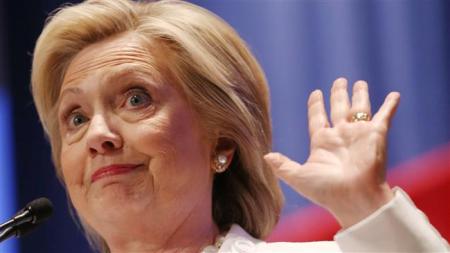
New York Times columnist Nicholas Kristof has offered a curious defense of Hillary Clinton’s “honesty,” refuting the public’s widespread view that she is a liar by narrowly defining what it means to be “honest” and arguing that she is less dishonest than she is a calculating and corner-cutting politician.
Kristof writes, “as we head toward the general election showdown, by all means denounce Hillary Clinton’s judgment and policy positions, but let’s focus on the real issues. She’s not a saint but a politician, and to me this notion that she’s fundamentally dishonest is a bogus narrative.”
Kristof cites, for instance, that half of her campaign statements, as evaluated by PolitiFact, were rated either true or mostly true, comparable to how the group assessed statements by Sen. Bernie Sanders and Sen. Ted Cruz and much better than Donald Trump’s 22 percent. Leaving aside the “conventional wisdom” bias of this mainstream media organization, Kristof does seem to have a point. In a narrow definition of “honesty,” former Secretary of State Clinton may be “truthful” or kind of truthful half the time.
But Kristof misses the larger point that the American people are making when 56 percent of them rate her negatively and many call “crooked” and “dishonest.” They seem to be commenting on her lack of authenticity and perhaps her resistance to sincerely acknowledging major errors in judgment. She only grudgingly apologized for her pro-Iraq War vote and still insists that her bloody “regime change” scheme for Libya was a good idea, even as the once-prosperous North African nation slides into anarchy and deprivation – with the chief beneficiary the head-choppers of the Islamic State.
A Nixonian Quality
Many Americans sense that there is a Nixonian quality to Hillary Clinton – her excessive secrecy, her defensiveness, her rigidity, her unwillingness to acknowledge or learn from mistakes. Even when she is forced into admitting a “mistake,” such as her violation of State Department rules when she maintained a private email server for official correspondence, she acts as if she’s just “apologizing” to close off further debate or examination. As with Richard Nixon, there’s a feeling that Clinton’s apologies and rationales are self-serving, not forthcoming.
Yet, while it’s true that Nixon was a deceitful character – his most famous lie being when he declared “I am not a crook” – I would argue that he had some clear advantages over Clinton as President. He was a much more strategic thinker than she is – and sometimes went against the grain of expectations as encapsulated in the phrase “Nixon goes to China,” meaning that Nixon could open up to communist China precisely because he was viewed as such a hardliner who would never do such a thing but who finally judged that the move was in America’s interests.
While it’s impossible to say whether Clinton would seize unexpected openings as President, she showed none of that creativity, subtlety and courage as Secretary of State. She marched down a straightforward neocon line, doing precisely what Israel’s Prime Minister Benjamin Netanyahu wanted in the Middle East.
Clinton tried to sabotage President Barack Obama’s diplomatic outreach to Iran and favored military solutions to Afghanistan, Libya and Syria. She also followed a rightist approach in backing the 2009 coup in Honduras that ousted an elected progressive president who had offended some of the Honduran oligarchs and outside corporate interests.
Lack of Self-Criticism
In addition, Clinton appears to have learned nothing from her support for the catastrophic Iraq War and has argued against “conflating” her Iraq decision with her Libya decision. But that suggests that she is incapable of learning a lesson from one mistake and applying it to a similar situation, an almost disqualifying characteristic for someone who hopes to become President.
Being a successful President requires extracting painful lessons from one mistake and making sure you don’t make the same mistake again. But Clinton’s personal arrogance or defensiveness (it’s hard to figure out which is dominant) prevents her from that sort of self-criticism.
Indeed, her ritualistic (and politically timed) apology for her Iraq War vote in 2006 came across less than an honest recognition that she had done something horribly wrong than that she had to say something to appease a furious Democratic electorate as she mounted her first run for President against anti-Iraq War candidate Obama.
After losing to Obama and becoming his Secretary of State, she privately hedged her Iraq War apology by saying privately that she thought that President George W. Bush’s “surge” in Iraq was successful and admitting that she had only opposed it in 2007 for political reasons, according to former Defense Secretary Robert Gates in his memoir, Duty.
On Oct. 26, 2009, as Gates — a holdover from the Bush administration — and Clinton joined forces to pressure Obama into approving a similar “surge” for Afghanistan, Gates recalled a meeting in which Clinton made what he regarded as a stunning admission, writing:
“The exchange that followed was remarkable. In strongly supporting the surge in Afghanistan, Hillary told the president that her opposition to the surge in Iraq had been political because she was facing him in the Iowa primary [in 2008]. She went on to say, ‘The Iraq surge worked.’
“The president conceded vaguely that opposition to the Iraq surge had been political. To hear the two of them making these admissions, and in front of me, was as surprising as it was dismaying.” (Obama’s aides disputed Gates’s suggestion that the President indicated that his opposition to the Iraq “surge” was political, noting that he had always opposed the Iraq War. The Clinton team has not challenged Gates’s account.)
But the exchange, as recounted by Gates, indicates that Clinton not only let her political needs dictate her position on an important national security issue, but that she accepts as true the superficial conventional wisdom about the “successful surge” in Iraq, which claimed the lives of about 1,000 American soldiers and a much larger number of Iraqis but failed its principal mission of buying time for the Iraqis to resolve their sectarian differences.
So, when one considers Hillary Clinton’s “honesty” more should be in play than simply whether she accurately describes her policy positions half the time. Honesty, as most people would perceive it, relates to a person’s fundamental integrity, strength of character, readiness to acknowledge mistakes and ability to learn from them. On that measure, the American people seem to have sized up Hillary Clinton pretty well.
[For more on this topic, see Consortiumnews.com’s “Yes, Hillary Clinton Is a Neocon.“]
Investigative reporter Robert Parry broke many of the Iran-Contra stories for The Associated Press and Newsweek in the 1980s. You can buy his latest book, America’s Stolen Narrative, either in print here or as an e-book (from Amazon and barnesandnoble.com).
Another Proposed Sham Israeli/Palestinian Peace Conference
By Stephen Lendman | April 24, 2016
The longstanding Israeli/Palestinian peace process is the greatest hoax in modern times, repeating on and off for decades, dead-on-arrival each time, accomplishing nothing.
Obama hopes to lay the groundwork for another round of sham talks after he leaves office. France proposed an international conference in Paris this summer, presenting general ideas and principles only. Solutions remain elusive.
Months of John Kerry’s mediated talks collapsed in April 2014. America is no honest broker, one-sidedly supporting Israel, spurning Palestinian rights.
France’s position is no different. Israel rejects Palestinian self-determination. Liberation depends on resistance, not more talks achieving nothing.
A Paris meeting later this week is expected to involve high-level international diplomats, according to Palestinian ambassador to France Salman al-Harfi.
Israeli and Palestinians representatives aren’t attending. Objectives include agreeing on a way to achieve Palestinian statehood within pre-1967 borders, Jerusalem as a shared capital for both states, and resolving the right of return issue.
Mahmoud Abbas’ draft Security Council resolution condemning illegal Israeli settlements was withdrawn. It wasn’t a serious effort in the first place, having no chance to pass.
Netanyahu criticized the French initiative. Israel rejects Palestinian self-determination. It wants full control over future talks – to manipulate them to its advantage.
It long ago declared Jerusalem its exclusive capital, categorically rejects the right of diaspora Palestinians to return home.
It wants endless war and turbulence. Peace and stability defeat its imperial aims.
On Saturday, it approved stealing another 1,250 acres of privately owned Palestinian land, declared “state land” under full military control.
It’s intended for expanding illegal settlements – more proof Israel wants continued conflict, not peace.
Stephen Lendman can be reached at lendmanstephen@sbcglobal.net.
His new book as editor and contributor is titled “Flashpoint in Ukraine: US Drive for Hegemony Risks WW III.”
Hamas: France peace conference a ‘waste of time’
MEMO | April 24, 2016
Hamas said it rejects the France-sponsored international peace conference between the Palestinians and the Israelis, which is scheduled to take place on May 30 in Paris.
“We consider it a waste of time and a free service for the Israeli government that continues its daily violations against the Palestinians,” Hamas spokesman Sami Abu Zuhri told Anadolu Agency on Saturday.
Abu Zuhri also warned against agreeing to any deal that would harm the Palestinians and their national interests.
In March, Palestinian President Mahmoud Abbas affirmed his support for the French proposal.
Peace talks between Israeli and Palestinian negotiators collapsed in April 2014 over Israel’s refusal to release a group of Palestinian political prisoners despite earlier pledges to do so.
A Note on Clinton’s Faux-Concern
By Andrew Smolski | CounterPunch | April 22, 2016
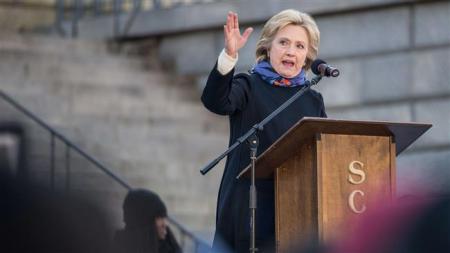 Hillary Clinton’s recent comments on the 43 students for La Opinión show the media’s failure to judge her pandering rhetoric against her actual, substantive actions. When she states she is indignant about the case, she erases her role in the violence engulfing Mexico. The corporate media allows this, because their pages never print about the US-role in Mexico’s War on Drugs.
Hillary Clinton was Secretary of State from 2009 to 2013. During that time, State Department officials under her direction continued to vet and clear Mexican security forces to receive arms transfers. When she says rhetorically, “If there was something the US could do to help, I would be the first to offer it”, it is the theatre of faux-naivety. She knows quite well that the US could end support for policies militarizing Mexico. It’s just that she is not concerned with human rights if that means demilitarization.
It was under the Clinton State Department that the Merida Initiative continued passed its original 3-year time frame. The Merida Initiative enables the Mexican government to repress dissent, while at the same time increasing Mexican elite dependence on the infusion of US armaments. She has called for more of this Plan Colombia-style policy in the future, which means that under a Clinton presidency we can expect more violence throughout Central America.
So, when Clinton exclaims that she is indignant about the Mexican government’s role in covering up the Ayotzinapa case, it belies the fact that she would support (and possibly ramp up) policies that enable the Mexican government to do exactly what she says is a “violation of the law”. The evidence is quite clear on this point, and reported by countless others, like Dawn Paley, Greg Grandin, and Jesse Franzblau. The fact that the corporate media has ignored the record is typical. Clinton’s pandering hypocrisy, typical as well.
Sadly, Clinton is using the tragedy of the 43 to justify and continue policies that brought it about. That is why I am indignant. That is why we should all be indignant.
How CBS News Aided the JFK Cover-up
By James DiEugenio | Consortium News | April 22, 2016
In the mid-1960s, amid growing skepticism about the Warren Commission’s lone-gunman findings on John F. Kennedy’s assassination, there was a struggle inside CBS News about whether to allow the critics a fair public hearing at the then-dominant news network. Some CBS producers pushed for a debate between believers and doubters and one even submitted a proposal to put the Warren Report “on trial,” according to internal CBS documents.
But CBS executives, who were staunch supporters of the Warren findings and had personal ties to some commission members, spiked those plans and instead insisted on presenting a defense of the lone-gunman theory while dismissing doubts as baseless conspiracy theories, the documents show.
Though it may be hard to remember – amid today’s proliferation of cable channels and Internet sites – CBS, along with NBC and ABC, wielded powerful control over what the American people got to see, hear and take seriously in the 1960s. By slapping down any criticism of the Warren Commission, CBS executives effectively prevented the case surrounding the 1963 assassination of President Kennedy from ever receiving the full airing that it deserved.
Beyond that historical significance, the internal documents – compiled by onetime CBS News assistant producer Roger Feinman – show how a major mainstream news organization green-lights one approach to presenting sensitive national security news while blocking another. The documents also shed light on how senior news executives, who have bought into one interpretation of the facts, are highly resistant to revisit the evidence.
Buying In
CBS News jumped onboard the blue-ribbon Warren Commission’s findings as soon as they were released on Sept. 27, 1964, just over 10 months after President Kennedy was assassinated in Dallas, Texas, on Nov. 22, 1963. In a special report, CBS and its anchor Walter Cronkite preempted regular programming and, with the assistance of reporter Dan Rather, devoted two commercial-free hours to endorsing the main tenets of that report.
However, despite Cronkite and Rather giving the Warren Report their public embrace, other people, who were not in the employ of the mainstream media, examined critically the report and the accompanying 26 volumes. Some of these citizens were lawyers and others were professors, the likes of Vincent Salandria and Richard Popkin. They came to the conclusion that CBS had been less than rigorous in its examination.
By 1967, the analyses challenging the Warren Report’s conclusions had become widespread, including popular books by Edward Epstein, Mark Lane, Sylvia Meagher and Josiah Thompson. Thompson’s book, Six Seconds in Dallas, was excerpted and placed on the cover of the wide-circulation magazine Saturday Evening Post. Lane was appearing on talk shows. Prosecutor Jim Garrison had announced a reopening of the JFK case in New Orleans. The dam was threatening to break.
The doubts about the Warren Report had even spread into the ranks at CBS News, where correspondent Daniel Schorr and Washington Bureau chief Bill Small recommended a fair and critical look at the report’s methodology and findings. Top prime-time producer Les Midgley later joined the effort.
CBS News vice president Gordon Manning sent the proposal on to CBS News president Richard Salant in August 1966, but it was declined. Manning tried again in October, suggesting an open debate between the critics of the Warren Report and former Commission counsels, moderated by a law school dean or the president of the American Bar Association. The idea was to give the two sides a chance to make their best points before the viewing public.
Zapruder Evidence
One month after Manning’s debate proposal, Life Magazine published a front-page story in which the Warren Commission’s verdict was questioned by photographic evidence from the Zapruder film (which the magazine owned). Life also interviewed Texas Gov. John Connally who disagreed that he and Kennedy had been hit by the same shot, a claim that undercut the “single bullet theory” at the heart of the Warren Report.
Without the assertion that a single bullet inflicted multiple wounds on Kennedy and Connally, who was riding in front of the President, the commission’s verdict collapses. The magazine story ended with a call to reopen the case. Indeed, Life had put together a small journalistic team to do its own internal investigation.
A few days after this issue appeared, Manning again pressed for a CBS special. This time he suggested the title “The Trial of Lee Harvey Oswald,” with a panel of law school deans reviewing the evidence against Oswald in a mock trial, including evidence that the Warren Commission had not included. In other words, there would be a chance for American “jurors” to weigh the evidence that might have been presented against Oswald if he had lived and to make a judgment on his guilt. Again, this approach offered the potential for a reasonably balanced examination of the Kennedy assassination.
At this point, Manning was joined by producer Midgley, who had produced the two-hour 1964 CBS special. Midgley’s suggestion differed from Manning’s in that he wanted to title the show “The Warren Report on Trial.” Midgley suggested a three-night, three-hour series with one night given over to the commission defenders, one night including all the witnesses that the commission overlooked or discounted, and the last night including a verdict produced by legal experts. But the title itself suggested a level of skepticism that had not been part of the earlier proposals.
The Higher-ups Intervene
However, then CBS senior executives began to intervene. On Dec. 1, 1966, Salant wrote a memo to John Schneider, president of CBS Broadcast Group, telling him that he might refer the proposal to the CBS News Executive Committee (CNEC). According to information that a former CBS assistant producer Roger Feinman obtained during a legal hearing against CBS, plus secondary sources, CNEC was a secretive group that was created in the wake of Edward R. Murrow’s departure from CBS.
Murrow was a true investigative reporter who became famous through his reports on Sen. Joe McCarthy’s abuses and the mistreatment of migrant farm workers. The upper management at CBS did not like the controversies that these reports generated among influential segments of the American power structure. There was a perceived need to tamp down on such wide-ranging and independent-minded investigations. After all, the CBS executives were part of that power structure.
CBS News president Salant epitomized that blurring of high-level corporate journalism and America’s ruling class. Salant had gone to Exeter Academy, Harvard, and then Harvard Law School. He was handpicked from the network’s Manhattan legal firm by CBS President Frank Stanton to join his management team.
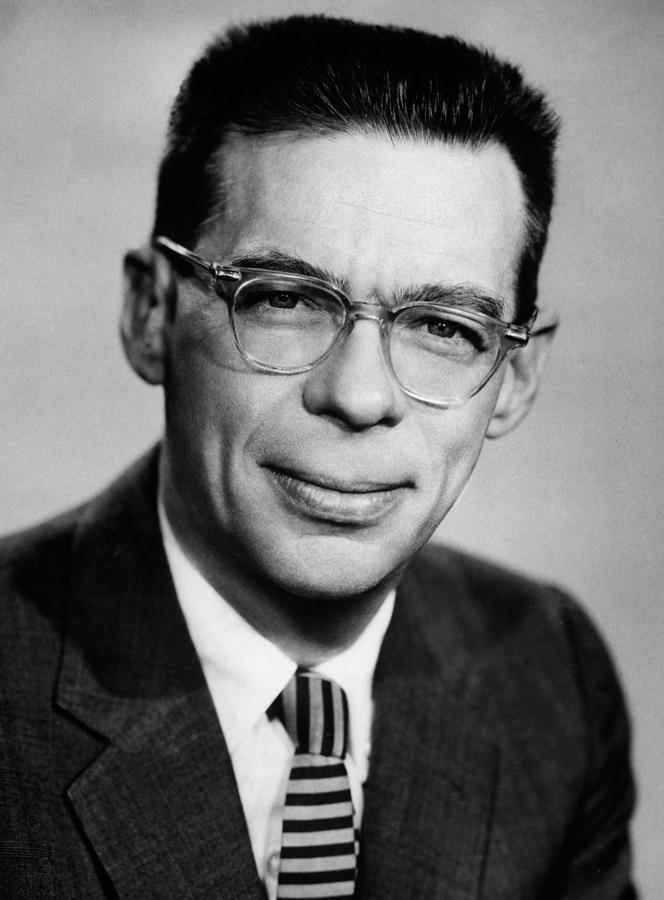
CBS News president Richard Salant
During World War II, Stanton had worked in the Office of War Information, the psychological warfare branch. In the 1950s, President Dwight Eisenhower had appointed Stanton to a small committee to organize how the United States would survive a nuclear attack. From 1961-67, Stanton was chairman of Rand Corporation, a CIA-associated think tank.
The other two members of CNEC were Sig Mickelson, who had preceded Salant as CBS News president and then became a director of Time-Life Broadcasting, and CBS founder Bill Paley, who had also served in the World War II psy-war branch of the Office of War Information and – after the war – let CIA Director Allen Dulles have the spy agency informally debrief CBS overseas correspondents.
When Salant turned the Warren Commission issue over to CNEC, the prospects for any objective or skeptical treatment of the JFK case faded. “The establishment of CNEC effectively curtailed the news division’s independence,” Feinman later wrote about his discoveries.
Further, Salant had no journalistic experience and was in almost daily communication with Stanton, whose background was in government propaganda.
Scaling Back
The day after Salant informed CNEC about the proposed JFK assassination special, Salant told CBS News vice president Manning that he was wavering on the mock trial concept. Salant’s next move was even more ominous. He sent both Manning and prime-time news producer Midgley to California to talk to two lawyers about the project.
One of the attorneys was Edwin Huddleson, a partner in the San Francisco firm of Cooley, Godward, Castro and Huddleson. Huddleson attended Harvard Law with Salant and, like Stanton, was on the board of the Rand Corporation. The other lawyer was Bayless Manning, Dean of Stanford Law School. They told the CBS representatives that they were against the network undertaking the project on the grounds of “the national interest” and because of the topic’s “political implications.”
CBS News vice president Manning reported that both attorneys advised the CBS team to ignore the critics of the Warren Commission or to appoint a special panel to critique their books, in other words, to put the critics on trial. Huddleson also steered the CBS team to cooperative scientists who would counter the critics.
On his return to CBS headquarters, Manning saw the writing on the wall. He knew what his CBS superiors really wanted and it wasn’t some no-holds-barred examination of the Warren Commission’s flaws. So, he suggested a new title for the series, “In Defense of the Warren Report,” and wrote that CBS should dismiss “the inane, irresponsible, and hare-brained challenges of Mark Lane and others of that stripe.”
Out on a Limb
Manning’s defection from an open-minded treatment of the evidence to a one-sided Warren Commission defense left producer Midgley out on a limb. However, unaware of what Salant was up to, on Dec. 14, 1966, Midgley circulated a memo about how he planned on approaching the Warren Report project. He proposed running experiments that were more scientific than “the ridiculous ones run by the FBI.” He still wanted a mock trial to show how the operation of the Commission was “almost incredibly inadequate.”
In response, Salant circulated an anonymous, undated, paragraph-by-paragraph rebuttal to Midgley’s plan, which Feinman’s later investigation determined was written by Warren Commissioner John McCloy, then Chairman of the Council on Foreign Relations and the father of Ellen McCloy, Salant’s administrative assistant.
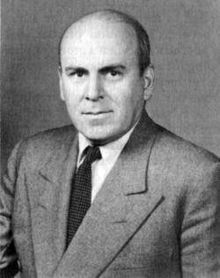
John J. McCloy
In this memo, McCloy wrote that “the chief evidence that Oswald acted alone and shot alone is not to be found in the ballistics and pathology of the assassination, but in the fact of his loner life.” As many Warren Commission critics have noted, it was this approach – discounting or ignoring the medical and ballistics evidence, but concentrating on Oswald’s alleged social life – that was a fatal flaw of the Warren Report.
Despite the familial conflict of interest, Ellen McCloy was added to the distribution list for almost all memos related to the Kennedy assassination project and thus could serve as a secret back-channel between CBS and her father.
A Stonewall Defense
Clearly, the original idea for a fresh examination of the Warren Commission and the evidence that had arisen since its report was published in 1964 had been turned on its head. The CBS brass wanted a defense, not a critique.
Salant asked producer Midgley, “Is the question whether Oswald was a CIA or FBI informant really so substantial that we have to deal with it?” Midgley, increasingly alone out on the limb, replied, “Yes, we must treat it.”
As the initial plan for a forthright examination of the Warren Commission’s shortcomings was transformed into a stonewall defense of the official findings, there was still the problem of Midgley, the last holdout. But eventually his head was turned, too.
While the four-night special was in production, Midgley became engaged to Betty Furness, a former actress-turned-television-commercial pitchwoman whom President Lyndon Johnson appointed as his special assistant for consumer affairs, even though her only experience in the field had been selling Westinghouse appliances for 11 years on television. She was sworn in on April 27, 1967, which was about two months before the CBS production aired. Two weeks after it was broadcast, Midgley and Furness were married.
As Kai Bird’s biography of McCloy, The Chairman, makes clear, Johnson and McCloy were friends and colleagues. But there is another point about how Midgley was convinced to go along with McCloy’s view of the Warren Commission. Around the same time he married Furness, he received a significant promotion, elevated to executive editor of the network’s flagship news program, “The CBS Evening News with Walter Cronkite.” This made him, in essence, the top news editor at CBS, a decision that required the consultation and approval of Salant, Cronkite and Stanton – and very likely the CNEC.
So, instead of a serious investigation into the murder of President Kennedy – at a time when there was the possibility of effective national action to get at the truth – CBS News delivered a stalwart defense of the Warren Commission’s conclusions and heaped ridicule on anyone who dared question those findings.
Shaping that approach was not only the influence of Warren Commission member John McCloy, an icon of the Establishment, but the carrots and sticks applied to senior CBS producers, such as Gordon Manning and Les Midgley, who initially favored a more skeptical approach but were convinced to abandon that goal.
Curious Consultants
Once McCloy was brought onboard, the complexion of CBS’s treatment of the JFK assassination changed. CBS hired consultants who were rabidly pro-Warren Report to appear as on-air experts while others would be hidden in the shadows. In addition to the clandestine role of McCloy, some of these consultants included Dallas police officer Gerald Hill, physicist Luis Alvarez and reporter Lawrence Schiller.
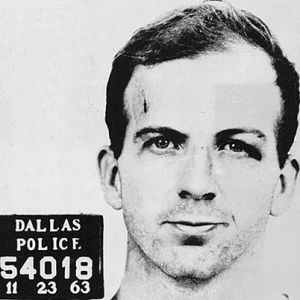
Lee Harvey Oswald
Officer Hill was just about everywhere in Dallas on Nov. 22, 1963. He was at the Texas School Book Depository where Oswald worked and allegedly shot the President from the sixth floor; Hill was at the murder scene of Officer J. D Tippit, who was allegedly shot by Oswald after he fled Dealey Plaza; and he was at the Texas Theater where Oswald was arrested.
Hill appeared in the CBS 1967 program show as a speaker. But Roger Feinman found out that Hill also was paid for six weeks work on the show as a consultant. During his consulting, Hill revealed that the police did a “fast frisk” on Oswald while in the theater. They found nothing in his pockets at the time, which begs the question of where the bullets the police said they found in his pockets later at the station came from. That question did not arise during the program since CBS never revealed the contradiction. (Click here and go to page 20 of the transcript.)
Physicist Luis Alvarez, who had a served as an adviser to the CIA and to the U.S. military in the Vietnam War, spent a considerable amount of time lending his name to articles supporting the Warren Report and conducting questionable experiments supporting its findings. As demonstrated by authors Josiah Thompson (in 2013) and Gary Aguilar (in 2014), Alvarez misrepresented some data in some of his JFK experiments. (Click here and go to the 37:00 mark for Aguilar’s presentation.)
Making Fun
The same year of the 1967 CBS broadcast, reporter Lawrence Schiller had co-written a book entitled The Scavengers and Critics of the Warren Report, a picaresque journey through America where Schiller interviewed some of the prominent – and not so prominent – critics of the report and caricatured them hideously.
Secretly, he had been an informant for the FBI for many years keeping an eye on people like Mark Lane and Jim Garrison, whom Schiller attacked despite discovering witnesses who attested to Garrison’s suspect Clay Shaw using the alias Clay Bertrand, a key point in Garrison’s case. The relevant documents were not declassified until the Assassination Records and Reviews Board was set up in the 1990s. [See Destiny Betrayed, Second Edition, by James DiEugenio, p. 388]
This cast of consultants – along with McCloy – influenced the direction of the 1967 CBS Special Report. The last thing these consultants wanted to do was to expose the faulty methodology that the Warren Commission had employed.
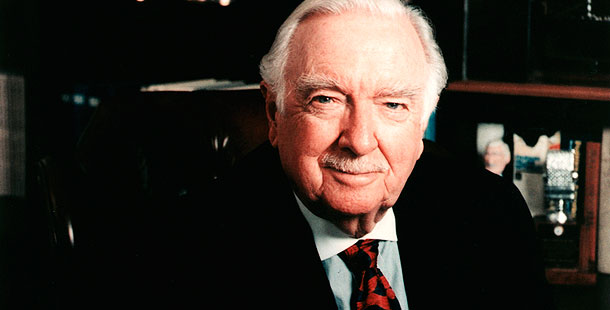
Longtime CBS News anchor Walter Cronkite.
As in 1964, Walter Cronkite manned the anchor desk and Dan Rather was the main field reporter. Again, CBS could find no serious problems with the Warren Report. The critics were misguided, CBS said. After all, Cronkite and Rather had done a seven-month inquiry.
‘Unimpeachable Credentials’
In the broadcast, Cronkite names the men on the Warren Commission as their pictures appear on screen. He calls them “men of unimpeachable credentials” but left out the fact that President Kennedy fired Commissioner Allen Dulles from the CIA in 1961 for lying to him about the Bay of Pigs invasion of Cuba.
When Cronkite got to the crux of the program, he said the Warren Commission assured the American people that they would get the most searching investigation in history. Then, Cronkite showed books and articles critical of the commission and mentioned that polls showed that a majority of Americans had lost faith in the Warren Report.
At that point, the network special revealed its purpose, to discredit the critics and reassure the public that these people could not be trusted.
Cronkite went through a list of points that the critics had raised, including key issues such as how many shots were fired and how quickly they could be discharged from the suspect rifle. On each point, Cronkite took the Warren Commission’s side, saying Oswald fired three shots from the sixth floor with the rifle attributed to him by the Warren Commission. Two of three were direct hits – to Kennedy’s head and shoulder area – within six seconds.
One way that CBS fortified the case for just three shots was Alvarez’s examination of the Zapruder film, Abraham Zapruder’s 26-second film of Kennedy’s assassination taken from Zapruder’s position in Dealey Plaza, a sequence that CBS did not actually show.
Alvarez proclaimed that by doing something called a “jiggle analysis,” he computed that there were three shots fired during the film. What the jiggle amounted to was a blurring of frames on the film (presumably because Zapruder would have flinched at the sound of gunshots).
Dan Rather took this Alvarez idea to Charles Wyckoff, a professional photo analyst in Massachusetts. Agreeing with Alvarez, at least on camera, Wyckoff mapped out the three areas of “jiggles.” The Alvarez/Wyckoff formula was simple: three jiggles, three shots.
But as Feinman found out through his legal discovery and hearings, there was a big problem with this declaration. Wyckoff had actually discovered four jiggles, not three. Therefore, by the Alvarez formula, there was a second gunman and thus a conspiracy.
Wyckoff’s on-camera discussion of this was cut out and not included in the official transcript. But it is interesting to note just how committed Wyckoff was to the CBS agenda, for he tried to explain the fourth jiggle as Zapruder’s reaction to a siren. As Feinman noted, how Wyckoff could determine this from a silent 8 mm film is puzzling. But the point is, this analysis did not support the commission. It undermined the Warren Report and was left on the cutting-room floor.
There were other problems with the Alverez-Wyckoff “jiggle” theory, since the first jiggle was at around Zapruder frame 190, or a few frames previous to that, which would have meant that Oswald would have had to be firing through the branches of an oak tree, which is why the Warren Commission moved this shot up to frame 210.
But CBS left itself an out, claiming there was an opening in the tree branches at frame 186 and Oswald could have fired at that point. But that is patently ridiculous, since the opening at frame 186 lasted for 1/18th of a second. To say that Oswald anticipated a less than split-second opening, and then steeled himself in a flash to align the target, aim, and fire is all stuff from the realm of comic book super heroes. Yet, in its blind obeisance to the Warren Report, this is what CBS had reduced itself to.
Another way that CBS tried to bolster the Warren Report was to have Wyckoff purchase other Bell and Howell movie cameras (since CBS was not allowed to handle the actual Zapruder camera.) After winding up these cameras, CBS hypothesized that Zapruder’s camera might have been running a little slow, giving Oswald a longer firing sequence.
The problem with this theory, however, was that both the FBI and Bell and Howell had tested the speed of Zapruder’s actual camera. Even Dick Salant commented that this was “logically inconclusive and unpersuasive,” but it stayed in the program.
The Shot Sequence
But why did Rather and Wyckoff have to stoop this low? The answer is because of the results of their rifle firing tests. As the critics of the Warren Report had pointed out, the commission had used two tests to see if Oswald could have gotten off three shots in the allotted 5.6 seconds indicated by the Zapruder film.
These tests ended up as failing to prove Oswald could have performed this feat of marksmanship. What made it worse is that the commission had used very proficient riflemen to try and duplicate what the commission said Oswald had done. [See Sylvia Meagher, Accessories After the Fact, p. 108]
So CBS tried again. This time they set up a track with a sled on it to simulate the back of Kennedy’s head. They then elevated a firing point to simulate the sixth floor “sniper’s nest,” though there were differences from Dealey Plaza including the oak tree and a rise in the street in the real crime scene. Nevertheless, the CBS experimenters released the target on its sled and had a marksman named Ed Crossman fire his three shots.
Crossman had a considerable reputation in the field, but – even though he was given a week to practice with a version of the Mannlicher Carcano rifle – his results were not up to snuff. According to a report by producer Midgley, Crossman never broke 6.25 seconds (longer than Oswald’s purported 5.6 seconds) and – even with an enlarged target – he got only two of three hits in about 50 percent of his attempts.
Crossman explained that the rifle had a sticky bolt action and a faulty viewing scope. But what the professional sniper did not know is that the actual rifle in evidence was even harder to work. Crossman said that to perform such a feat on the first time out would require a lot of luck.
However, since that evidence did not fit the show’s agenda, it was discarded, both the test and the comments. To resolve that problem, CBS called in 11 professional marksmen who first went to an indoor firing range and practiced to their heart’s content, though the Warren Commission could find no evidence that Oswald practiced.
The 11 men then took 37 runs at duplicating what Oswald was supposed to have done. There were three instances where two out of three hits were recorded in 5.6 seconds. The best time was achieved by Howard Donahue on his third attempt after his first two attempts were complete failures.
But CBS claimed that the average recorded time was 5.6 seconds, without including the 17 attempts that were thrown out because of mechanical failure. CBS also didn’t tell the public the surviving average was 1.2 hits out of three with an enlarged target.
The truly striking characteristic of these trials was the number of instances where the shooter could not get any result at all. More often than not, once the clip was loaded, the bolt action jammed. The sniper had to realign the target and fire again. According to the Warren Report, that could not have happened with Oswald.
There is also the anomaly of James Tague, who was struck by one bullet that the Warren Commission said had ricocheted off the curb of a different street, about 260 feet away from the limousine. But how could Oswald have missed by that much if he was so accurate on his other two shots? That was another discrepancy deleted by the CBS editors.
The Autopsy Disputes
CBS also obscured what was said by the two chief medical witnesses after the assassination; by Dr. Malcolm Perry from Parkland Hospital in Dallas, where Kennedy was taken after he was hit, and James Humes, the chief pathologist at the autopsy examination at Bethesda Medical Center that evening.
In their research for the series, CBS had discovered a transcript of Dr. Perry’s press conference that the Warren Commission did not have. But CBS camouflaged what Perry said on Nov. 22, 1963, specifically about Kennedy’s anterior neck wound. Perry said it had the appearance to him of being an entrance wound, and he said this three times.
Cronkite tried to characterize the conference as Perry being rushed out to the press and badgered. But that wasn’t true, since the press conference was about two hours after Perry had done a tracheotomy over the front neck wound. The performance of that incision had given Perry the closest and most deliberate look at that wound.
Perry therefore had the time to recover from the pressure of the operation and there was no badgering of Perry. Newsmen were simply asking him questions about the wounds he saw. Perry had the opportunity to answer the questions on his own terms. Again, CBS seemed intent on concealing evidence of a possible second assassin — because Oswald could not have fired at Kennedy from the front.
Commander James Humes, the pathologist, did not want to appear on the program, but was pressured by Attorney General Ramsey Clark, possibly with McCloy’s assistance. As Feinman discovered, the preliminary talks with Humes were done through a friend of his at the church he attended.
There were two things that Humes said in these early discussions that were bracing. First, he said that he recalled an x-ray of the President, which showed a malleable probe connecting the rear back wound with the front neck wound. Second, he said that he had orders not to do a complete autopsy. He would not reveal who gave him these orders, except to say that it was not Robert Kennedy. [Charles Crenshaw, Trauma Room One, p. 182]
The significance of the malleable probe is that, if Humes was correct, the front and back wounds would have come from the same bullet. However, we learned almost 30 years later from the Assassination Records Review Board that other witnesses also saw a malleable probe go through Kennedy’s back, but said the probe did not go through the body since the wounds did not connect. However, x-rays that might confirm the presence of the probe are missing. [DiEugenio, Reclaiming Parkland, pgs. 116-18]
Location of the Wounds
On camera, Humes also said the posterior body wound was at the base of the neck. Dan Rather then showed Humes the drawings made of the wound in the back as depicted by medical illustrator Harold Rydberg for the Warren Commission, also depicting the wound as being in the neck, which Humes agreed with on camera. He added that they had reviewed the photos and referred to measurements and this all indicated the wound was in the neck.
Even for CBS — and Warren Commissioner John McCloy — this must have been surprising since the autopsy photos do not reveal the wound to be at the base of the neck but clearly in the back. (Click here and scroll down.) CBS should have sent its own independent expert to the archive because Humes clearly had a vested interest in seeing his autopsy report bolstered, especially since it was under attack by more than one critic.
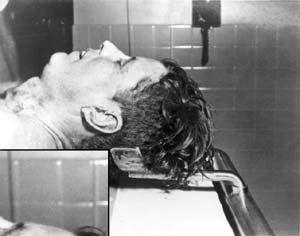
Autopsy photo of President Kennedy
The second point that makes Humes’s interview curious is his comments on the Rydberg drawings’ accuracy. These do not coincide with what Rydberg said later, not understanding why he was chosen to make these drawings for the Warren Commission since he was only 22 and had been drawing for only one year. There were many other veteran illustrators in the area the Warren Commission could have called upon, but Rydberg came to believe that it was his inexperience that caused the commission to pick him.
When Humes and Dr. Thornton Boswell appeared before him, they had nothing with them: no photos, no x-rays, no official measurements, speaking only from memory, nearly four months after the autopsy, Rydberg said. [DiEugenio, Reclaiming Parkland, pgs. 119-22] The Rydberg drawings have become infamous for not corresponding to the pictures, measurements, or the Zapruder film.
For Humes to endorse these on national television – and for CBS to allow this without any fact-checking – shows what a case of false journalism the special had become.
Limiting Access
CBS also knew that Humes said he had been limited in what he was allowed to do in the Kennedy autopsy, a potentially big scoop if CBS had followed it. Instead, the public had to wait another two years for the story to surface at Garrison’s trial of Clay Shaw when autopsy doctor Pierre Finck took the stand in Shaw’s defense. Finck said the same thing: that Dr. Humes was limited in his autopsy practice on Kennedy. [ibid, p. 115]
The difference was that this disclosure would have had much more exposure, impact and vibrancy if CBS had broken it in 1967 rather than having the fact come up during Garrison’s prosecution, in part, because the press corps’ hostility toward Garrison distorted the trial coverage.
So, in the summer of 1967, CBS again had come to the defense of the official story with a four-hour, four-night extravaganza that again endorsed the findings of the Warren Commission.
At the time of broadcast, it was the most expensive documentary CBS ever produced. It concluded: Acting alone, Lee Harvey Oswald killed President Kennedy. Acting alone, Jack Ruby killed Oswald. And Oswald and Ruby did not know each other. All the controversy was Much Ado about Nothing.
Unwinding the Back Story
In 1967, the clandestine relationship between CBS News President Salant and Warren Commissioner McCloy was known to very few people. In fact, as assistant producer Roger Feinman later deduced, it was likely known only to the very small circle in the memo distribution chain. That Salant deliberately wished to keep it hidden is indicated by the fact that he allowed McCloy to write these early memos anonymously.
As Feinman concluded, McCloy’s influence over the program was almost certainly a violation of the network’s own guidelines, which prohibit conflicts of interest in the news production, probably another reason Salant kept McCloy’s connection hidden.
In the 1970s, after Feinman was fired over a later dispute regarding another example of CBS News’ highhanded handling of the JFK assassination – and then obtained internal documents as part of a legal hearing on his dismissal – he briefly thought of publicizing the whole affair (which he eventually decided against doing).
But Feinman wrote to Warren Commissioner McCloy in March 1977 about the ex-commissioner’s clandestine role in the four-night special a decade earlier. McCloy declined to be interviewed on the subject, but added that he did not recall any contribution he made to the special.
But Feinman persisted. On April 4, 1977, he wrote McCloy again. This time he revealed that he had written evidence that McCloy had participated extensively in the production of the four-night series. Very quickly, McCloy got in contact with Salant and wrote that he did not recall any such back-channel relationship.
In turn, Salant contacted Midgley and told the producer to check his files to see if there was any evidence that would reveal a CBS secret collaboration with McCloy. Salant then wrote back to McCloy saying that at no time did Ellen McCloy ever act as a conduit between CBS News and her father.
However, in 1992 in an article for The Village Voice, both Ellen McCloy and Salant were confronted with memos that revealed Salant was lying in 1977. McCloy’s daughter admitted to the clandestine courier relationship. Salant finally admitted it also, but he tried to say there was nothing unusual about it.
Reassuring Americans
So, in 1967, CBS News had again reassured the American people that there was no conspiracy in President Kennedy’s murder, just a misguided lone gunman who had done it all by himself. Anyone who thought otherwise was confused, deceptive or delusional.
However, in 1975, eight years after the broadcast, two events revived interest in the JFK case again. First, the Church Committee was formed in Congress to explore the crimes of the CIA and FBI, revealing that before Kennedy was killed, the CIA had farmed out the assassination of Fidel Castro to the Mafia, a fact that was kept from the Warren Commission even though one of its members, Allen Dulles, had been CIA director when the plots were formulated.
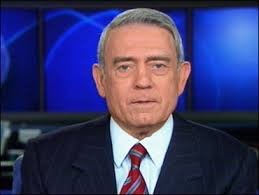
Longtime CBS anchor Dan Rather
Secondly, in the summer of 1975, in prime time, ABC broadcast the Zapruder film, the first time that the American public had seen the shocking image of President Kennedy’s head being knocked back and to the left by what appeared to be a shot from his front and right, a shot Oswald could not have fired.
The confluence of these two events caused a furor in Washington and the creation of the House Select Committee on Assassinations (HSCA) to reopen the JFK case.
Having become a chief defender of the original Warren Commission findings, CBS News moved preemptively to influence the new investigation by planning another special about the JFK case.
CBS’s Sixty Minutes decided to do a story on whether or not Jack Ruby and Lee Oswald knew each other. After several months of research, Salant killed the project with the investigative files turned over to senior producer Les Midgley before becoming the basis for the 1975 CBS special, which was entitled The American Assassins.
Originally this was planned as a four-night special. One night each on the JFK, RFK, Martin Luther King and the George Wallace shootings. But at the last moment, in a very late press release, CBS announced that the first two nights would be devoted to the JFK case. Midgley was the producer, but this time Cronkite was absent. Rather took his place behind the desk.
In general terms, it was more of the same. The photographic consultant was Itek Corporation, a company that was very close to the CIA, having helped build the CORONA spy satellite system. Itek’s CEO in the mid-1960s, Franklin Lindsay, was a former CIA officer. With Itek’s help, CBS did everything they could to move their Magic Bullet shot from about frame 190 to about frames 223-226.
Yet, Josiah Thompson, who appeared on the show, had written there was no evidence Gov. Connally was hit before frames 230-236. Further, there are indications that President Kennedy is clearly hit as he disappears behind the Stemmons Freeway sign at about frame 190, e.g., his head seems to collapse both sideways and forward in a buckling motion.
But with Itek in hand, this became the scenario for the CBS version of the “single bullet theory.” It differed from the Warren Commission’s in that it did not rely upon a “delayed reaction” on Connally’s part to the same bullet.
Ballistics Tests
CBS also employed Alfred Olivier, a research veterinarian who worked for Army wound ballistics branch and did tests with the alleged rifle used in the assassination. He was a chief witness for junior counsel Arlen Specter before the Warren Commission. [See Warren Commission, Volume V, pgs. 74ff]
For CBS in 1975, Olivier said that the Magic Bullet, CE 399, was not actually “pristine.” For CBS and Dan Rather, this made the “single bullet theory” not impossible, just hard to believe.
Apparently, no one explained to Rather that the only deformation on the bullet is a slight flattening at the base, which would occur as the bullet is blasted through the barrel of a rifle. There is no deformation at its tip where it would have struck its multiple targets. There is only a tiny amount of mass missing from the bullet.
In other words, as more than one author has written, it has all the indications of being fired into a carton of water or a bale of cotton. If CBS had interviewed the legendary medical examiner Milton Helpern of New York — not far from CBS headquarters — that is pretty much what he would have said. [Henry Hurt, Reasonable Doubt, p. 69.]
Rather realized, without being explicit, that something was wrong with Kennedy’s autopsy. He called the autopsy below par and reversed field on his opinion about pathologist Humes, whose experience Rather had praised in 1967. In the 1975 broadcast, Rather said that neither Humes nor Boswell were qualified to perform Kennedy’s autopsy and that parts of it were botched.
But let us make no mistake about what CBS was up to here. The entire corporate upper structure — Salant, Stanton, Paley — had overrun the working producers and journalists, including Midgley, Manning and Schorr. And those subordinates decided not to utter a peep to the outside world about what had happened.
Not only Cronkite and Rather participated in this appalling exercise, so too did Eric Sevareid, appearing at the end of the last show and saying that there are always those who believe in conspiracies, whether it be about Yalta, China or Pearl Harbor. He then poured it on by saying some people still think Hitler is alive and concluding that it would be impossible to cover up the assassination of a President.
But simply in examining how a major news outlet like CBS handled the evidence shows precisely how something as dreadful and significant as the murder of a President could be covered up.
Much of this history also would have remained unknown, except that Roger Feinman, an assistant producer at CBS News, had become a friend and follower of the estimable Warren Commission critic Sylvia Meagher. So, Feinman knew that the Warren Commission was a deeply flawed report and that CBS had employed some very questionable methods in the 1967 special in order to conceal those flaws.
When the assassination issue returned in the mid-1970s, Feinman began to write some memoranda to those in charge of the renewed CBS investigation warning that they shouldn’t repeat their 1967 performance. His first memo went to CBS president Dick Salant. Many of the other memos were directed to the Office of Standards and Practices.
In preparing these memos, Feinman researched some of the odd methodologies that CBS used in 1967. Since he had been at CBS for three years, he got to know some of the people who had worked on that series. They supplied him with documents and information which revealed that what Cronkite and Rather were telling the audience had been arrived at through a process that was as flawed as the one the Warren Commission had used.
Feinman requested a formal review of the process by which CBS had arrived at its forensic conclusions. He felt the documentary had violated company guidelines in doing so.
Establishment Strikes Back
As Feinman’s memos began to circulate through the executive and management suites – including Salant’s and Vice-President Bill Small’s – it was made clear to him that he should cease and desist from his one-man campaign. When he wouldn’t let up, CBS moved to terminate its dissident employee.
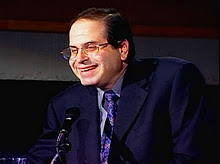
Roger Feinman
But since Feinman was working under a union contract, he had certain administrative rights to a fair hearing, including the process of discovery through which he could request certain documents to make his case. His research allowed him to pinpoint where these documents would be and who prepared them.
On Sept. 7, 1976, CBS succeeded in terminating Feinman. But the collection of documents he secured through his hearing was extraordinary, allowing outsiders for the first time to see how the 1967 series was conceived and executed. Further, the documents took us into the group psychology of a large media corporation when it collides with controversial matters involving national security.
Only Roger Feinman, who was not at the top of CBS or anywhere near it, had the guts to try to get to the bottom of the whole internal scandal.
And Feinman paid a high personal price for doing so. Feinman’s contribution to American history did not help him get his journalistic career back on track. When he passed away in the fall of 2011, he was freelancing as a computer programmer.
[This article is largely based on the script for the documentary film Roger Feinman was in the process of reediting at the time of his death in 2011. The reader can view that here.]
James DiEugenio is a researcher and writer on the assassination of President John F. Kennedy and other mysteries of that era. His most recent book is Reclaiming Parkland.
Featured Video

Seyed M. Marandi: US-Iran War Inevitable: Kuwait and Bahrain May Fall
or go to
Aletho News Archives – Video-Images
From the Archives
Oil and the Israel Lobby
Reknowned economist M. Shahid Alam offers this excellent critique of Noam Chomsky’s defective analysis of the relative influence of Oil versus the Israel lobby over US foreign policy: … continue
Blog Roll
 Aletho News
- ICC ignored ‘very well-documented’ NATO crimes – ex-Libyan minister
- SNSC secretary dismisses US response to Iran’s conditions as ‘inadequate’
- Sanaa says Taiz roads open, secure for residents, warns Saudi forces
- Iraqi resistance group urges Saudi leadership to admit defeat, lift Yemen siege
- Trump’s Retreat: How Al-Aqsa Flood Took Down the US Empire
- Israel’s Military Actions in Lebanon Grossly Violate International Law — Lavrov
- Seyed M. Marandi: US-Iran War Inevitable: Kuwait and Bahrain May Fall
- Leaders Condemn Ansarallah Attack on Saudi Arabia While Ignoring Illegal War Against Yemen
- Leaked: Britain’s Covert Iraqi Psyops Network
- Yemeni Armed Forces Warn Airlines Against Using Saudi Airports, Exempt Mecca and Medina
- If Americans Knew
- Israel’s Destruction of Southern Lebanon Intensified After the Cease-Fire
- The Last-Minute Decision That Gave Israel Its Name
- The American Conservative: How Trump Made the World Go Nuclear
- Meet the US generals and admirals advancing Israeli policy
- Opinion: Why news organizations should boycott Israel
- The Israeli witch hunt of Sami Abu Shehadeh exposes the lie of the ‘Jewish and democratic’ state
- No state has a ‘right’ to exist – least of all Israel
- Testimonies about Gaza’s civilian death toll expose Israel’s atrocities – Daily Update
- How Israel Conquered the Latin American Right
- Agents search Rep. Omar’s Washington home in criminal probe as she vows she won’t ‘be silenced’
- No Tricks Zone
- Germany’s Green Energy Debacle: High Energy Costs Force Kahla Porzellan to Close After 182 Years!
- New Study: 50 Years Of The Most Aggressive ‘Net Zero’ Policies Can Only Affect The Global Climate By 0.03°C
- US September “Heat” Was No Record…Many Records Set Decades Ago
- Latest European Green Energy Debacle; Portugal’s Largest Flagship Solar Park Insolvent!
- Green Energy Debacle: German Expert Professor Fritz Vahrenholt Warns Of Severe Economic And Social Consequences
- Two More Paleo Reconstructions Affirm Meters-Higher Sea Levels Across Ireland, Brazil 7000-6000 Years Ago
- New Study: Earth And Venus Surface Warmth Largely Explained By Convection And Lapse Rate, Not CO2 Or Radiation
- 2025 Nature Paper Claiming Worsening Global Drought Gets RETRACTED …Heavily Flawed
- New Study: ‘Global Drought Shows No Detectable Recent Acceleration Under Climate Warming’
- Economic Masterminds: German Socialists Suggest Taxing Productivity Gains Stemming From Using AI

