The geopolitical consequences of the OPEC+ agreement

By Hazem Ayyad | MEMO | October 7, 2022
Amir Hossein Zamani Nia, Iran’s OPEC governor, announced when he left a meeting with representatives of the 13 member states of the Organisation of Petroleum Exporting Countries (OPEC) and their ten allies – known as OPEC+ – the decision to reduce oil production by two million barrels per day for November.
The initial reactions to the large production cut were hysteria. One American journalist asked the Saudi Minister of Energy, Prince Abdulaziz Bin Salman, if he was worried about the American reaction to the production cut. He sarcastically told her to enjoy the sun in Vienna; a clear indication of the difficulties that Europeans will face next winter.
The American reactions to the decision of the OPEC+ countries were quick and distinct. White House press secretary Karine Jean-Pierre commented on the decision by saying it was clear that the OPEC+ alliance was “aligning with Russia” and was making a “short-sighted decision” to reduce oil production at the height of the conflict in Ukraine.
White House National Security Adviser Jake Sullivan noted that US President Joe Biden was feeling “disappointed” with the decision of the OPEC+ alliance to reduce its oil production.
The reactions confirm President Biden’s failure to manage the sanctions against Russia and the dismantling of the OPEC+ alliance, whose decisions ruined the ambitions of the US administration, the US Treasury, and the Federal Reserve to fight inflation and reduce interest rates.
The OPEC+ alliance has once again proven its strength and the unity of its countries, which include Iran, Saudi Arabia, the UAE and Russia. Despite the disparity, competition and conflict between its countries, the OPEC+ agreement exceeded the limits of technical performance confirmed by UAE Energy Minister, Suhail Al Mazrouei, when his country announced it was joining the efforts to reduce production. Its geopolitical reach extended from the Gulf and Yemen to the Red Sea and the Mediterranean.
The agreement that included regional opponents such as Iran, Saudi Arabia and the UAE, and international sponsors such as Russia, stressed the geopolitical dimensions as it coincided with a meeting held by the Russian President’s Special Envoy to the Middle East and Africa, Deputy Foreign Minister Mikhail Bogdanov, on Wednesday evening with the Emirati Ambassador to Moscow, Mohammed Ahmed Al-Jaber, to discuss the situation in Yemen and the Gulf region after the expiry of the deadline for the truce agreement in Yemen on 2 October.
This meeting came at the request of the Emirati ambassador and coincided with threats made by a member of the Political Bureau of the Houthi movement, Muhammad Al-Bakhiti. He said: “We have the ability and the courage to strike the Saudi and Emirati oil facilities if our demands are not met.”
The meeting with the Emirati ambassador coincided with a press conference held by the US special envoy to Yemen, Tim Lenderking, during which he discussed his country’s position on renewing the truce in Yemen between the countries of the Arab coalition, led by Saudi Arabia and the UAE, and the Houthi group. The US official held the Houthis responsible for hindering the reaching of an agreement without providing practical solutions for resuming the truce or dealing with Houthi threats.
These actions and movements confirm the connection between the regional files and their connection to the international mediations led by both America and Russia in Yemeni. Saudi Arabia and the UAE view the OPEC+ agreement as a trump card and a comprehensive framework that allows activating mediations and truces in Yemen, with the positive and consensual atmosphere it provides, which the Biden administration was unable to provide. This is despite its frequent talk about security cooperation in the Red Sea and the Gulf and naval and air manoeuvres, but it quickly turned into a political and economic framework that serves Israel and its interests more than it serves the interests of Riyadh and Abu Dhabi.
OPEC+ has shifted from a technical framework to an emerging economic and geopolitical framework; fuelled by the Ukrainian war and Russian demands. The tense American reactions deepened the Arab Gulf states’ mistrust of the American partner, which repeatedly failed to deal with the Yemeni and Iranian file. It also failed to deal with the economic requirements of the Gulf states and their political and cultural specificity, which put them in conflict with the powers of the region and threatened their political and religious legitimacy.
This article first appeared in Arabic in Arabi21 on 6 October 2022.
OPEC+ decision to cut oil counteracts Europe’s idea of price cap on Russian energy
US and Europe can no longer make condescending and hegemonic demands on energy producers
By Ahmed Adel | October 7, 2022
The European Commission is hoping to impose a cap on gas prices as the current energy crisis will inevitably deepen over the winter. However, European Union member states are divided over the proposed measures, which are designed to lower soaring inflation amid Moscow’s response to sanctions imposed for its military operation in Ukraine.
Although France, Italy, Poland and 12 other EU countries urged the Commission to propose a broader price cap targeting all wholesale gas trade, the Netherlands, Denmark and Germany – Europe’s biggest gas buyer – are among those opposed against the measure as they believe capping prices could endanger the security of supply as it undermines the EU’s ability to attract gas deliveries.
It is recalled that in early September, Russian President Vladimir Putin described the idea of a price cap as “stupid”, highlighting that the EU was “in no position to dictate”. After warning that the EU would “freeze” if such a cap was imposed, Putin said: “We will not supply gas, oil, coal, heating oil – we will not supply anything.”
While EU leaders are doggedly and obsessively calling for a price cap, industry experts show their scepticism, and in some cases concern on the repercussions of such an action. It is already noted that EU sanctions imposed against Russia are already affecting European economies far worse than the Russian economy.
In this light, chairman and CEO of French energy major TotalEnergies, Patrick Pouyanné, said on October 5: “Honestly, I am not sure that a price cap on Russian oil is a good idea.”
“What I am sure is that if we do that (cap), then Putin will say that ‘we don’t sell my oil’ – and the price will not be at $95, it will be at $150,” Pouyanné said.
For her part, Elisabetta Cornago, a senior energy researcher at the Centre for European Reform, explained that “It’s hard to picture such a level of market intervention. This is uncharted territory.” Another expert, Bram Claeys, a senior advisor at the Regulatory Assistance Project, said that the energy price cap would “quickly start costing billions” because it would force governments to continually subsidise the difference between the real market price and the artificially capped price.
Despite the scepticism from energy experts, the head of the European Commission, Ursula von der Leyen, maintains the need to introduce a ceiling on the price of Russian gas. At the end of August, she announced that the European Commission was taking quick and long-term measures to improve the situation amid rising electricity prices in the EU.
However, it appears that Russia is already pre-emptively responding to price cap suggestions by convincing its partners in OPEC+ (Organization of the Petroleum Exporting Countries) to reduce oil production by 2 million barrels per day from November. This will cause a severe crisis, which will reverberate in Europe and the United States, especially as the OPEC+ decision was made just weeks before the US midterm elections.
For this reason, the White House angrily said in a statement that Biden was “disappointed by the shortsighted decision by OPEC+ to cut production quotas while the global economy is dealing with the continued negative impact of Putin’s invasion of Ukraine.”
OPEC+ comprises of 24 members, many of them close partners with Russia, such as Saudi Arabia, the United Arab Emirates, Iran and Venezuela, and not a single member is Western. In addition, the most influential members have significant differences with Washington, and unlike in decades past, are not afraid to push back to defend their own interests.
Washington is trying to impose the No Oil Producing and Exporting Cartels, or NOPEC bill, which is designed to protect US consumers and businesses from oil spikes. However, OPEC’s most influential members have warned that this legislation would cause chaos in the energy market.
Saudi Energy Minister Prince Abdulaziz bin Salman said on October 5: “We will continuously prove that OPEC+ is here not only to stay but here to stay as a moderating force to bring about stability.”
It is recalled that when Biden arrived in Saudi Arabia earlier this year on a mission to urge one of the world’s largest oil exporters to ramp up production in a bid to help bring down gasoline prices, OPEC+ raised oil output by a minuscule 100,000 barrels per day in what was widely seen as an insult to Biden.
In this way, it is demonstrated that Western influence over energy is waning and that OPEC+ members are behaving more confidently in protecting their own interests. Putin has delivered on every warning he has made whenever a red-line was crossed, and there is little doubt that if Europe imposes a cap, he will counteract Europe’s economic aggression by significantly cutting energy flows, which will make prices soar. There is effectively very little Europe and the US can do to stop this and they must accept the fact that they are at the mercy of OPEC+ and can no longer impose their condescending and hegemonic demands over the organisation and its member states.
Ahmed Adel is a Cairo-based geopolitics and political economy researcher.
Serbia furious over latest anti-Russia sanctions
Samizdat | October 6, 2022
The Serbian government has slammed the latest package of EU sanctions targeting Russia’s oil exports, describing it as the “first EU sanctions package” against Serbia.
Restrictions on the maritime transportation of Russian oil would make it too expensive for Serbia and severely hit the nation’s economy, government officials said on Thursday. In a scathing statement, Serbian Interior Minister Aleksandar Vulin called the EU “the place of our future humiliation and suffering.”
Belgrade will now be “forced to buy more expensive Iraqi oil and thus lose hundreds of millions of euro,” he argued, accusing neighboring Croatia, which is an EU member state, of lobbying for the new measures.
Vulin said the only “consistent” feature of EU policy is “revenge on free nations,” and decried the fact that Western Balkan nations had not been exempted from the latest batch of anti-Russia measures.
The EU “introduced not the eighth package of sanctions against Russia but the first sanctions package against Serbia,” the minister said. He argued that this was why it is “better to be a militarily and politically neutral country” rather than a member of a club of nations that allows the “[psychological] complexes” of its members to run the show.
Serbian Prime Minister Ana Brnabic was equally critical of the new sanctions, saying they were introduced “at the expense of the lives and living standards” of all Serbian people. “It will cost us hundreds of millions of euro,” Brnabic told Serbia’s Happy TV broadcaster.
“What they thought they would do to Russia they did to us on Wednesday, because we depend on the oil pipeline in Croatia,” the prime minister added, accusing Brussels of “using energy for political blackmail and retribution.”
On Thursday, the EU announced the eighth package of restrictions on Russia which include a price cap and “further restrictions” on the maritime transportation of Russian crude oil and petroleum products to third countries. Serbia imports Russian oil by sea through a Croatian port terminal on the island of Krk, from which it is then transported through a pipeline to Serbian territory.
The new measures would make such imports at least 20% more expensive, according to Serbian media. In June, Serbian President Aleksandar Vucic warned that Serbia would not be able to import Russian oil after November 1 due to EU sanctions.
US imports from Russia up despite sanctions
Samizdat – October 6, 2022
US imports from Russia reached $522.1 million in August, 7.7% more than the July total of $484.8 million, marking the first monthly increase since April, according to a report released on Wednesday by the US Census Bureau.
The growth comes despite US President Joe Biden’s pledge to deal a “crushing blow” to Moscow through restrictions on commodity trade.
According to analysts, Washington continues to benefit from the anti-Russia sanctions. While pressuring the EU to give up supplies from Russia, the US continues to buy hundreds of unsanctioned types of goods.
“There is a tacit agreement between the US government and business: we puff our cheeks, and you trade with Russia if it suits you. Their words don’t meet their actions,” Aleksandr Razuvaev, a member of the supervisory council at Moscow’s Guild of Financial Analysts, told Russian state media on Wednesday.
Meanwhile, exports of American goods to Russia slumped by 19% to $66.8 million in August from $82.5 million in July. In June, Russia imported goods worth $58 million, down from $77.4 million in May, and $89.1 million in April.
The data shows that in total from January to August the US imported goods from Russia worth $12.1 billion, while exports stood at just $1.3 billion.
The buffoon delivering a permanent energy crisis
By Andrew Montford | TCW Defending Freedom | October 4, 2022
In 2017 it was announced that windfarms had agreed to sell power to the grid at just £57 per megawatt hour. It heralded, said the cutters-and-pasters of press releases in the mainstream media, a new era of cheap renewable power. A few stubborn souls pointed out that there was no sign that windfarms were getting any cheaper to build and run, but such naysayers were shunned and insulted, and the establishment carried on as if nothing had happened.
Five years on, and the windfarms concerned are busily selling power into the open market at anything between four and ten times the prices they had agreed. Their agreements have gone unfulfilled. The extra cost to consumers is running into billions of pounds every year.
We were tricked, big time. But we live and learn by our errors. You’d have to be pretty slow on the uptake to fall for a multi-billion-pound trick like that a second time, wouldn’t you?
Unfortunately, this is precisely what Sir John Armitt, the chairman of the National Infrastructure Commission, seems to have done. In fact, rather than being ‘once bitten twice shy’, he seems to be pleading ‘Bite me harder, and this time do it where is really hurts.’ Let me explain.
In an article in the Telegraph, Sir John says we need lots more renewable energy, and adds that the latest auctions ‘secured prices nine times cheaper than current high electricity prices set by gas generation’. Well, yes, but we have already seen that auction price contracts are a trick; the last round of agreements were abandoned the moment operators found they could get more in the open market. Does Sir John not know this? Can the chairman of the National Infrastructure Commission really be so divorced from the realities of the energy system? Moreover, he clearly understands that the price differential between gas-fired and wind prices is mostly temporary – a function of the war in Ukraine driving up gas prices – but still believes it should motivate permanent changes to the electricity system. What can he be thinking?
Sir John’s positions on other aspects of the energy system are equally mystifying. He seems to think there is a global market for gas. But a global market would have a global price, and that is simply not the case: European gas prices are (in dollar terms) currently 70 per cent higher than UK ones and 800 per cent higher than US ones (!) Does Sir John not understand this? How can he possibly think there is a global market? Is there nobody at the National Infrastructure Commission who can put him right?
Nor is the auction price trick the only example of Sir John failing to learn from experience. In one notable flight of fantasy in his article he says that ‘reducing prices, enhancing energy security and reaching net zero carbon emissions by 2050 all point in the same direction’. Huh? Between 2002 and 2020, a period when gas prices were broadly flat, electricity prices for consumers roughly doubled, a function of the inefficiencies that renewables impose on every other generator and on the grid as a whole. How can he think that more renewables will bring lower prices? He understands that the gas price spike is temporary! And as for security, the electricity grid has been severely destabilised by renewables (because they have no ‘inertia’, in the jargon). A million people were left in the dark in 2019, and the grid as whole is now in danger of falling over completely. But Sir John wants more!
In similar fashion, he says we should be furiously insulating our housing stock. Yet we simply cannot get away from the fact that most of the housing stock is old and, in our humid maritime climate, needs to breathe to prevent damp and mould. Has Sir John not learned from the fiasco the last time a crash insulation programme was tried? Two million homes were damaged. Lives were ruined. Is he even aware that this happened?
On and on he goes. We should use hydrogen to store energy, he suggests, without apparently a thought to the cost involved. Can the chairman of the National Infrastructure Commission really not understand that in going from electricity to hydrogen and back, two-thirds of the energy is lost? So when we start emptying the hydrogen store, it will set market prices, which will soar in response, probably to levels similar to what we see today, far, far higher than the economy can bear.
In other words, Sir John’s ideas will deliver a permanent energy crisis and a great depression. It is no more than you would expect from such an epitome of the British establishment: urbane, erudite, a consummate networker. And utterly incompetent.
Western regimes are intent on maintaining energy poverty in Africa
By Ekaterina Blunova – Samizdat – 05.10.2022
Sudanese-British billionaire Mo Ibrahim criticized the West on Monday for obstructing African nations’ effort to develop their own hydrocarbon reserves and constantly ignoring the energy poverty problems of the Global South. What’s behind the Global North’s political short-sightedness and who benefits from the controversy?
Even though Africa boasts roughly 12% and 9% of the world’s oil and natural gas reserves, respectively, most of the continent’s nations suffer from energy poverty. However, once the energy crisis hit Europe, EU governments immediately turned to the African continent, seeking to tap its resources while overlooking the continent’s longstanding problems.
“The West’s exploitation of Africa’s wealth is driven by two factors,” explained Dr. Mamdouh G. Salameh, an international oil economist and a global energy expert. “The first is the old racist view that African people are backward and inferior to Western people and therefore can’t defend themselves or protect their natural resources. In a nutshell, it is doable. The second factor is greed and profit, which are the core of the Western capitalist system of taking advantage of poor and helpless people and exploiting their resources without letting them benefit the slightest from their stolen resources. That is how Western empires were built in Africa and around the world in the 19th and 20th centuries.”
The Central African Countries suffer from severe energy poverty because they neither have the infrastructure (refineries, oil and gas pipelines) to benefit from their vast energy resources and also distribute energy, nor do they have the financial means to build such infrastructure, according to the oil economist. The deplorable state of Africa’s energy infrastructure stems from the fact that the West is by no means interested in the continent’s sustainability, Salameh highlighted.
“The ultimate beneficiary from Africa’s energy poverty, particularly refined products, is Western oil companies,” the energy expert said.
One glaring example is the 4,128 km-long Trans-Saharan gas pipeline. It is supposed to link Nigeria to Algeria, passing through Niger and bring Nigerian and Algerian gas exports to Europe while simultaneously benefiting energy-poor African countries from Nigeria’s and Algeria’s plentiful gas reserves estimated at 206.53 trillion cubic feet (tcf) and 159 tcf respectively, the oil economist explained.
Although this pipeline was conceived in the 1970s, it is still at the drawing board stage despite many memorandums of understanding signed over the years, the latest in mid-February, Salameh pointed out, forecasting that “it won’t see the light of day even in the next 10 years.”
“Western countries have consistently ignored Africa’s energy resources for years declining to offer investments as long as they didn’t need these resources at the time,” he said. “But in the aftermath of the Ukraine conflict and having introduced sweeping sanctions against Russia, the European Union is trying to curry favor with African hydrocarbon producers to reduce its dependence on Russia’s gas and oil supplies.”
The unfolding energy crisis offers new opportunities for Africa to develop oil and gas infrastructure and step up production of hydrocarbons. However, while African business leaders and policy-makers are brushing off the dust from their long-delayed energy projects, Western politicians and environmentalists have raised concerns about climate change issues, insisting that Africa’s consumption of fossil fuels could make matters far worse.
“The West puts so much importance on the climate change agenda in Africa,” said Salameh. “I would hazard two explanations for the West’s attitude. The first explanation is that the West is under the misjudged and erroneous view that any future energy assets – like investing in oil and gas production and building pipelines will end up after 2030 as stranded assets. The second explanation is a more sinister one, with the West wishing to keep African energy resources underground in order to satisfy its own appetite for energy in the future.”
Last month, US climate czar John Kerry discouraged investors from funding long-term gas projects in Africa, warning that they would be unable to recoup their investments beyond 2030. According to Kerry, it will be important to capture the emissions from gas after 2030, as the world is set to reach net-zero emissions in 2050.
On October 3, Sudanese-British billionaire Mo Ibrahim lambasted the West for hypocrisy and a double-standard approach at the “Reuters impact” conference in London. Ibrahim drew attention to the fact that the “Global North” is preventing African nations from developing their own gas reserves over climate change fears, while at the same time seeking opportunities to gain from African resources themselves.
This is not the first time that Ibrahim has lambasted Western policy-makers over their Africa policies. In July 2022, the billionaire’s foundation released “The road to COP27: Making Africa’s case in the global climate debate,” dedicated to the forthcoming 2022 United Nations Climate Change Conference in Egypt scheduled for November, 6-18. The report highlighted that “the current climate agenda is failing Africa” and placed the emphasis on the continent’s people’s right to energy access, given that a staggering 600 million Africans are still lacking it.
“The green agenda is hampering African countries from fully tapping and exploiting their hydrocarbon resources,” said Salameh. “This is a double-edged approach in that it enhances energy poverty in Africa while simultaneously depriving the EU of Africa’s energy resources (…) If African countries don’t have the infrastructure, the technical know-how and the financial resources to benefit from their own vast hydrocarbon resources, how would anyone expect them to develop green energy?”
Meanwhile, the Western green agenda for Africa is “faulty,” according to the energy expert: Africa accounted for only 3.8% of the world’s emissions of carbon dioxide (CO2) from fossil fuels and industry in 2020, which is the smallest share among all world regions.
On the other hand, climate groups who call for an abrupt end to fossil fuels and a sudden adoption of renewable energy fail to recognize the obvious lack of logic in this, continued Salameh.
“On their own, renewables aren’t capable of satisfying global demand for electricity and energy because of their intermittent nature,” the oil economist explained, characterizing a total energy transition as an “illusion.”
The current energy crisis in Europe clearly indicated that the Old Continent can’t rely on renewables alone. Furthermore, EU member states had to restart their coal plants after resorting to an anti-Russia energy embargo over the latter’s special military operation in Ukraine.
“While denying Africa’s right to push ahead with its own energy endeavors, the West would be eager to offer investments and technological know-how to the continent in exchange for receiving the lion’s share of the regional hydrocarbon wealth. The West doesn’t care whether African countries are experiencing severe energy poverty or not as long as it gets its hands on these reserves,” Salameh concluded.
Orbán: ‘Sanctions were not decided democratically’
Free West Media | October 5, 2022
Hungarian President Orbán has once again positioned himself as a committed advocate of genuine European interests and persists in his criticism of the EU’s sanctions policy against Russia.
At least in Hungary, citizens will be able to vote on the sanctions that are causing massive damage to Europe, after Orbán confirmed that there would soon be a referendum on this.
“The sanctions were not decided in a democratic way, but decided by Brussels bureaucrats and European elites,” he said in the Budapest parliament. “Although Europe’s citizens are paying the price, they have not been asked,” he added, underlining that “the sanctions imposed are causing enormous damage to Europe.”
Orbán recalled that since the war began, Russia has earned 158 billion euros over the last six months from energy exports at increased prices. That is more than Russia’s total annual export earnings for 2021 in half a year. Half of this, 85 billion euros, was paid for by the EU countries.
Orbán considers this situation to be intolerable: “European companies are unable, or only with difficulty, to pay the sanctioned energy prices. We are waiting for an answer, the whole of Europe is waiting for an answer from Brussels on the question of how much longer we have to go through with this. If this continues, all of Europe will be ruined. It’s time to talk openly about this with our American friends while it’s not too late.”
Pakistan’s Energy Crisis Worsens as Gov’t Fails to Finds Bidder to Supply Natural Gas Before 2028
Samizdat – 04.10.2022
Pakistan Prime Minister Shehbaz Sharif has said that the European countries are purchasing most of the gas supplies available on the market, leaving Pakistan with no source of energy. Similar concerns about difficulties experienced by the ‘Global South’ in meeting their energy demands have been voiced by Indian Foreign Minister S. Jaishankar.
Islamabad has failed to find even a single bidder in response to a tender floated by Pakistan LNG Limited (PLL) for supplying liquefied natural gas (LNG) between 2023 and 2028, as per an official document.
As per tender documents, the PLL had in August invited bids for the supply of 72 units of LNG cargo starting in January next year. Under the terms of the tender, the government agency said it wanted to import 140,000 cubic meters of LNG every month for six years. The results of the bid were published on Monday.
A tender for procuring 10 cargoes of LNG floated by the Pakistani government in July had also failed to attract even a single bidder.
The latest development comes against the backdrop of an ongoing energy and economic crisis in the South Asian country, which is grappling with power shortages owing to a shortfall in energy supplies spurred by high prices and a surge in demand in the European countries.
Pakistan has also been facing the problem of depleting forex reserves and is awaiting the disbursement of $1.17 billion from the International Monetary Fund (IMF) after reaching a staff level agreement (SLA) in July.
Billions of dollars in aid are also awaited from other countries such as Qatar, Saudi Arabia and the UAE, the authorities have said.
S&P Global said last month that power shortages have been exacerbated by unprecedented flooding, as major grid stations have been endangered due to the climate disaster and connectivity options have been disrupted.
Before the floods struck in June-July, Pakistan was already reeling under high energy import bills, which had surged 91 percent to $4.98 billion on a year-on-year basis as of the end of the financial year in June, as per the Pakistan Bureau of Statistics.
A report by Institute of Energy Economics and Financial Analysis (IEEFA) has said that energy import bills could increase to more than $32 billion by 2030.
The global surge in energy prices has largely been blamed on Western sanctions against Russia in the wake of the eruption of Ukraine crisis, with many European countries looking for alternatives to Russian energy.
As the EU seeks to draw down its reliance on Russia, which has been EU’s primary supplier of gas, many EU countries have ramped up their imports from other countries such as Qatar, another major producer of natural gas.
In many cases, the richer EU nations have been offering better rates for sourcing energy than the developing countries.
As truce ends, Yemen warns oil companies to leave Saudi Arabia, UAE
Press TV – October 2, 2022
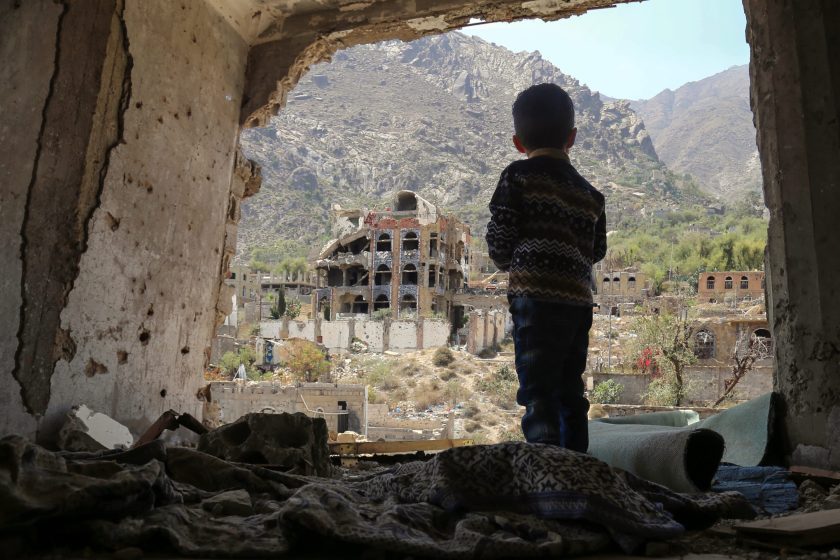
Yemen’s Armed Forces have put oil companies operating in Saudi Arabia and the United Arab Emirates on notice, warning that they could be targeted as long as Riyadh and its allies fail to commit to a proper ceasefire.
Tweeting on Sunday, the Armed Forces’ spokesman Brigadier General Yahya Saree said Yemeni troops were providing the oil companies with a window of opportunity to leave the Saudi and Emirati soils “fast.”
The Saudi kingdom and its allies, most notably the United Arab Emirates, have been waging a war against Yemen since March 2015, trying, in vain, to restore Yemen’s power to its former Riyadh-friendly officials. The military campaign, which has been enjoying unstinting arms, logistical, and political support from the United States, has killed hundreds of thousands of people, and turned the entire Yemen into the scene of the world’s worst humanitarian crisis.
A temporary United Nations-mediated ceasefire took effect between the warring sides in April and has been renewed twice ever since. The truce, however, expired on Sunday amid the invading coalition’s constant violations of the agreement and its refusal to properly lift a siege that it has been enforcing against Yemen simultaneously with the war.
“The warning,” Saree said, “stands as long as the countries that make up the invading American-Saudi coalition refuse to adhere to a ceasefire that allows the Yemeni people to exploit their oil wealth….”
Also on Sunday, Hans Grundberg, the United Nations’ special envoy for Yemen, confirmed failure of efforts aimed at extending the truce.
“The UN special envoy regrets that an agreement has not been reached today, as an extended and expanded truce would provide additional critical benefits to the population,” a statement said.
“I urge [the warring parties] to fulfill their obligation to the Yemeni people to pursue every avenue for peace,” the Swedish diplomat was quoted as saying.
Western-imposed Green Agenda Would ‘Cripple’ Africa’s Energy Security, Energy Expert Warns
Samizdat – 01.10.2022
The African Development Bank Group estimates that more than 640 million Africans have no access to energy, with the continent enjoying an overall electricity access rate of just over 40 percent. Multinational energy giants have systematically underfunded local energy projects, all while searching for new sources of oil and gas for Western markets.
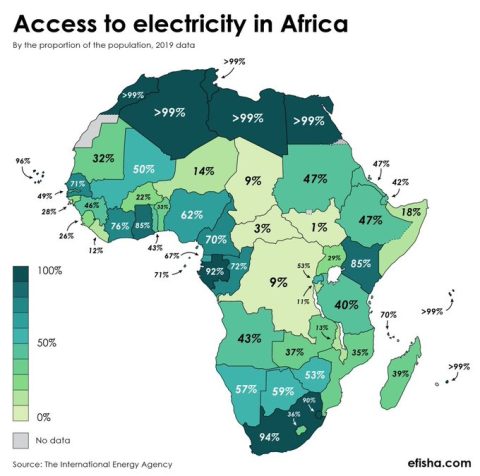 Despite its untold riches in energy and other natural resources, Africa remains the least developed continent on the planet when it comes to access to the benefits of this wealth by ordinary citizens. The International Energy Agency has estimated that among Africa’s 54 nations, only nine – Algeria, Egypt, Gabon, Ghana, Kenya, Morocco, Libya, South Africa and Tunisia, enjoy electrification rates of 85 percent or above.
Even countries endowed with large reserves of oil and gas like Nigeria, Angola, Sudan, Congo and Uganda have been unable to provide the vast majorities of citizens with access to these resources, with 38 percent of Nigerians, 57 percent of Angolans, and 71 percent of Ugandans lacking access to electricity.
For nations with smaller energy reserves, and those without proven oil and gas assets, the figures are even gloomier, with just 9 percent of Chadians and residents of the Democratic Republic of the Congo hooked up to the electricity grid, while only 12 percent of Liberians, 14 percent of the residents of Niger, and 18 percent of Somalis enjoy access.
The causes of the continent’s stunted energy status are multifaceted, ranging from the legacy of colonialism to decades of plunder of energy rich nations’ resources by foreign multinationals, to a dearth of capital for domestic investment, to efforts by Western powers and international institutions they control to force the region to reject fossil fuels in favor of renewables.
The problem has only been exacerbated by the global energy crisis caused by Western nations’ efforts to sanction or restrict Russian oil and gas purchases. In August, Germany’s Handelsblatt newspaper reported that European states have made a push to fix the energy shortfall by outbidding developing nations for contracts from other global suppliers, driving poorer countries out of the market.
Last year, Nigerian Environment Minister Mohammad Mahmood Abubakar accused the developed West of deliberately defunding Africa’s natural gas projects on the grounds that they contribute to the global climate crisis, notwithstanding the fact that the entirety of Sub-Saharan Africa produces just 0.55 percent of the world’s carbon emissions.
In 2021, the European Investment Bank stopped financing hydrocarbon development projects in Africa altogether as part of an “ambitious new climate strategy and energy lending policy.” The same year, the World Bank announced plans to shift resources from energy projects to “combating climate change.”
“Africa’s oil and gas sector is experiencing underproduction and underinvestment as major international majors exit portfolios in key hydrocarbon producing countries such as Nigeria and Angola,” says N.J. Ayuk, chairman of the African Energy Chamber, a Johannesburg-based nonprofit advocating energy development in Africa, for Africans.
“Projects operated by majors in the deep-water projects are cost intensive. But also, capital restrictions by Western financial institutions are crippling the African gas market. Without finance, energy poverty rates will go up dramatically,” Ayuk says.
Characterizing energy poverty as the “single most important issue” facing the continent, the expert dismisses Western-backed institutions’ efforts to push Africa toward renewable energy, pointing out that as things stand, underdevelopment of hydrocarbon resources means that 45 percent of the continent relies on highly polluting hard biomass for energy.
As for renewable sources of energy like solar, wind and hydrogen power, Ayuk warns that the push being made in this direction threatens to “cripple” the continent.
“Many existing power grids in Africa remain underdeveloped, such that an intermittent supply of energy can threaten the stability of an entire grid,” the observer says, referring to the tendency for renewable energy to depend heavily on weather conditions.
“Such is the case in Kenya, which is widely considered to be at the forefront of Africa’s energy transition, building momentum in the renewable sector with the 310 MW Lake Turkana wind farm and 50 MW Garissa solar PV station. Some 15 percent of Kenya’s installed capacity comes from solar and wind, but as our 2022 Outlook reports, they have experienced severe voltage instability. Better system management, upgraded infrastructure, and long-term power storage technology are needed to solve these problems, but implementing these things on a nationwide or continent-wide scale won’t happen overnight,” Ayuk explains.
Another problem is Africa’s “near-complete” dependence on foreign equipment and expertise for its renewables capacity, with the majority of solar cells and windmills made in China, Europe or the United States, who also provide training and tech related to the installation, maintenance and repair.
“Economically, this means fewer home-grown jobs for Africans in this sector until such capacity can be developed. It also ensures [insecurity] of supply in case war or politics cripples the ability to import key raw materials and workers,” Ayuk stresses.
What Is To Be Done?
An alternative to listening to foreign dictates on energy policy is to focus on domestic resources, and to partner with those nations which are ready to help Africa secure its energy independence.
For Ayuk, this means intra-African natural gas pipelines capable not only of working to diminish energy poverty, but stimulating a drive toward industrialization which will translate to jobs. To stimulate development, African nations will need to stimulate capital investments and reduce taxes, and to work conscientiously to focus on infrastructure for domestic use, instead of export.
“Energy demand across Africa is expected to triple within the next 20 years – faster than anywhere else in the world – as a result of population growth, rising incomes, and rapid urbanization. To meet such rapidly accelerating demand, Africa needs the ability to make use of its existing natural resources and human capital, and to employ tried-and-true solutions that will reliably keep the lights on when the wind won’t blow and the sun won’t shine. Mitigating climate change must remain part of the equation, but the perfect cannot be allowed to be the enemy of the good when so many people are starting from zero,” the analyst says.
Russia can play an important role in improving Africa’s energy security, the observer believes, with Moscow needing to step up its game on the fulfillment of memorandums already signed, and to engage in the financing of gas projects, as well as sharing the country’s substantial expertise on the construction of infrastructure.
Earlier this year, Nigerian Minister of Petroleum Resources Timipre Sylva announced that Russian investors had expressed an interest in the financing of a massive gas pipeline project running from Nigeria to Morocco. If implemented, the prospective 5,600+ km piece of infrastructure would connect nations along the entire West African coast to natural gas, serving as a catalyst both for electrification and for regional economic development.
Nigeria has over 206 trillion cubic feet of proven natural gas reserves valued at trillions of dollars, but has long been starved of capital for the development of these resources.
Speaking to Sputnik last week, Sylva expressed confidence that Nigeria and Russia would be able to cooperate to help stabilize the global supply of energy.
However, last month, Biden administration climate envoy John Kerry warned against long-term gas projects in Africa, claiming countries that make investments would be unable to recoup their investments beyond 2030, and that the continent should instead focus on cleaner energy sources.
Dismantling Nord Stream Means Cutting Putin’s “Arteries of Power”: Agitator Manifesto
eugyppius – September 30, 2022
 Back in August, before the Nord Stream attacks, it was possible even for dim Green journalists to see that destroying the pipelines would be to Russia’s disadvantage.
Felix is a 31 year-old reporter for Welt with Green tendencies and very little intelligence or knowledge. He’s responsible for a string of ridiculous articles about how the German “gas panic” is exaggerated and why he should be allowed to donate money to arm Ukraine. Back in August, this ridiculous man wrote a long editorial about why Germany should “Dismantle the pipelines” because “That would be the ultimate sign of strength against Putin.” Reading this today, after the very pipelines Eick deplores have been destroyed, is instructive indeed:
The energy crisis hurts … But we must not lose sight of the big picture. Shifting away from Russian fossil fuels remains the most important thing. … The West should … turn the tables … with an ultimate sign of strength – and start pipeline demolition wherever it can. Every kilometre less pipeline means more freedom. …
Basically, with greater or lesser reduction in prosperity, we will succeed in destroying the greater part of this autocrat’s business model, and in freeing ourselves from the grip of his blackmail. As for Putin, he has fallen into a trap of his own making: Russian soil is full of oil and gas, but the leader of the self-declared energy superpower will be able to do less and less with it. Already, gas pipeline exports to Europe are at a 40-year low.
Above all, however, the gas emperor Putin must no longer be able to use gas as a political weapon. That is why we must take the decisive step. Too often, the sweet smell of the Kremlin has lured Germans in particular back again and again, despite all their political and ideological reservations. We should decide today to protect ourselves more strongly from Russia, also at an economic level. It is not enough to conclude treaties with other states and replace Russian oil and gas. Nor is it enough to rely more on renewable energies, even if energy sovereignty is still the best means against despots and madmen.
Germany and Europe should send a tougher signal to the Kremlin – one that hits Putin’s system at the root. We should decide today to dismantle the pipelines as far as possible, and we should start as soon as possible. Even if it’s only the few kilometres of pipeline on German soil. …
The two Nord Stream pipelines run through areas that cannot be assigned to any territory, but but rather belong to the so-called “exclusive economic zones” of Finland, Sweden and Denmark. These countries would presumably be in favour of dismantling at least Nord Stream 2, if only because the ailing Nord Stream 2 AG is unlikely to be able to pay enough for maintenance. …
The exit from the pipeline system would be worthwhile, because without pipelines, Putin’s system is nothing. In 2021, 45 per cent of Russia’s state budget was financed by revenues from oil and gas, and about 80 per cent of their exports flow through pipelines. About three quarters of natural gas exports go to the EU, as well as about half of oil exports, according to the US Energy Information Administration (EIA). Gazprom has also failed to invest in LNG technology and instead has always relied only on pipelines. Without these arteries of power, the system faces extinction. Even a declaration of intent would make Putin shudder, much as his threat of a nuclear strike made us shudder. …
“Away with the pipelines” does not mean “Never again Russia.” Russia, however, would have to accommodate the West as a consumer of its primary economic product. Reduced pipeline capacity simply means more independence. Gazprom would have to invest in liquid natural gas and build appropriate terminals. Sourcing gas and oil from Russia would become one possibility among many – without anyone being able to turn off the tap overnight.
Two months ago, even arrant fools like Felix Eick could see that destroying Nord Stream would hurt Russia. Now that somebody has actually destroyed Nord Stream (or the better part of it), we have to read harebrained theory upon harebrained theory about why Russia is actually responsible and how the end of these pipelines confers an overwrought twelve-dimensional chess advantage to Putin or helps Gazprom escape hypothetical lawsuits or permits Russia to escape sanctions. I wonder what Felix Eick thinks about all these theories. Perhaps he’d like to thank Putin for bringing about the reforms he has long demanded?
Featured Video
Seyed M. Marandi: Toward Total War in the Middle East
or go to
Aletho News Archives – Video-Images
From the Archives
The Geopolitics behind the War in Yemen (I)
By Mahdi Darius NAZEMROAYA | Strategic Culture Foundation | 30.03.2015
The United States and the Kingdom of Saudi Arabia became very uneasy when the Yemenese or Yemenite movement of the Houthi or Ansarallah (meaning the supporters of God in Arabic) gained control of Yemen’s capital, Sanaa/Sana, in September 2014. The US-supported Yemenite President Abd-Rabbuh Manṣour Al-Hadi was humiliatingly forced to share power with the Houthis and the coalition of northern Yemenese tribes that had helped them enter Sana. Al-Hadi declared that negotiations for a Yemeni national unity government would take place and his allies the US and Saudi Arabia tried to use a new national dialogue and mediated talks to co-opt and pacify the Houthis.
The truth has been turned on its head about the war in Yemen. The war and ousting of President Abd-Rabbuh Manṣour Al-Hadi in Yemen are not the results of «Houthi coup» in Yemen. It is the opposite. Al-Hadi was ousted, because with Saudi and US support he tried to backtrack on the power sharing agreements he had made and return Yemen to authoritarian rule. The ousting of President Al-Hadi by the Houthis and their political allies was an unexpected reaction to the takeover Al-Hadi was planning with Washington and the House of Saudi. … continue
Blog Roll
 Aletho News
- Pakistan-Iran talks secure LNG shipment to Islamabad through Hormuz
- Black Sea grain crisis puts global wheat supplies under pressure
- IRGC air defenses destroy another US MQ-1 drone over Strait of Hormuz
- Imran Khan’s entire immediate family detained in Pakistan ahead of mass protest demanding his release
- EU nation detains former presidential frontrunner
- Leaked: Britain’s Sham Conviction Of Hashim Thaci
- Seyed M. Marandi: U.S. Strike Imminent – Toward Total War in the Middle East
- Russia Voted Under Fire. Washington Is Loading the Tankers.
- 12 Things Your Oncologist Was Trained Not to Tell You
- Anthrax Attacks Paved Way for COVID-Era ‘Junk Drugs and Vaccines’
- If Americans Knew
- Israeli Attacks in Gaza Kill at Least Seven Palestinians Over Three Days, including Woman and Child
- Trump’s militarization of Washington DC as he pursues Israel’s war against Iran
- Why Israel Fears This Searing New Documentary
- Huckabee aide solicited cash gifts from Israelis
- This isn’t sci-fi, AI is already killing people
- ‘The Most Brutal Thing’: Investigation Reveals Execution of Elderly Woman in Rafah
- Inside Israel’s ‘soft’ ethnic cleansing plan for Gaza through the eyes of its victims
- New online database tracks pro-Israel political donations in the United States
- Israeli president pardons soldier convicted for killing wounded Palestinian
- Singer Ed Sheeran says his ‘heart broken’ by Gaza devastation, addresses Macklemore controversy
- No Tricks Zone
- 2025 Nature Paper Claiming Worsening Global Drought Gets RETRACTED …Heavily Flawed
- New Study: ‘Global Drought Shows No Detectable Recent Acceleration Under Climate Warming’
- Economic Masterminds: German Socialists Suggest Taxing Productivity Gains Stemming From Using AI
- The South China Sea Has Not Been Cooperating With The Climate Change Narrative
- Energy Crisis: Germany Enters Heating Season With Historically Low Gas Reserve Fill Levels
- New Study: The Antarctic Ice Sheet Gained Mass From 2020-2024 Due To Staggering Snow And Ice Accumulation
- Study: Ocean Heating Rates From Thousands Of Years Ago ‘Dwarf’ Modern Ocean Heating Rates
- Climate Extremists Target, Attack Large-Scale Power Grid Infrastructure In Germany!
- New Study: Antarctic Ice Melt Has Contributed Less Than 1 Centimeter To Sea Level Rise In The Last 30 Years
- Fear Of Debate: Alarmist German Climate Scientist Calls On Mainstream Media To Discredit Skeptic Voices
 Aletho News