Britain’s “Diverse and Reliable” Electricity System
By Paul Homewood | Not A Lot Of People Know That | September 19, 2021
According to Kwasi Kwarteng, we have a diverse and reliable electricity system:


Well, we used to anyway!
The chart below sums up exactly how we and Europe got into the mess we are now in:

BP Energy Review
Because coal power capacity has been squeezed out of the system, we are now ultra reliant on natural gas when renewables fail to deliver, with the inevitable impact on power prices which we are now seeing.
Meanwhile if the government is serious in getting energy prices back down, I would suggest the following actions should be taken immediately:
- Abolish carbon pricing forthwith
- Support the opening of new oil and gas fields in the North Sea
- Impose an Intermittency Tax on wind and solar farms, so that they carry the full cost of intermittency, instead of the consumer.
- Take action to increase the UK’s natural gas storage capacity
- Abandon all spending plans for Net Zero, allowing money to be returned to taxpayers or energy users.
These actions would have an immediate impact on energy prices, as well as providing longer term energy security at little or no cost to the Exchequer.
Lebanon House Speaker: Israeli exploration in controversial maritime zone blasts UN-sponsored Framework Agreement
Al-Manar | September 18, 2021
In a statement issued today, House Speaker Nabih Berri called on the Ministry of Foreign Affairs to take “urgent and immediate action in the direction of the UN Security Council and the international community to verify the possibility of a new Israeli attack on Lebanese sovereignty and rights,” following reports received about the “Halliburton” company winning the contract to explore for oil and gas in the disputed area between Lebanon and occupied Palestine.
Berri stressed that “the Israeli entity’s undertaking commissions and concluding offshore exploration contracts for Halliburton or other companies in the disputed area at sea represents a violation, or even a blow to the framework agreement sponsored by the United States of America and the United Nations.”
He also considered that “the reluctance and procrastination of the alliance of Total Novatek and Eni companies in starting the drilling operations, which were supposed to begin several months ago in Block No. 9 of the Lebanese side of the maritime borders, raises major questions.”
“The Israeli entity’s persistence in its aggression represents a threat to international peace and security,” Berri emphasized.
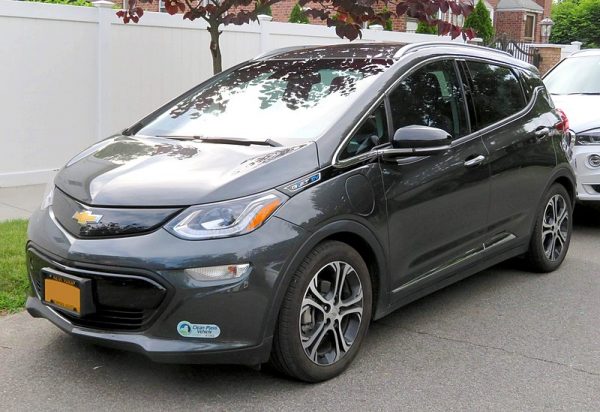
After Two Recalls, GM Finally Just Tells Bolt EV Owners: “Don’t Park Your Car Within 50 Feet Of Another Car”
Tyler Durden | Zero Hedge | September 16, 2021
After a series of recalls that we have documented here on Zero Hedge, General Motors looks to be taking its precautions with the Chevy Bolt one step further: the automaker is asking Bolt owners to park “at least 50 feet” from other vehicles if you’re going to leave your car in a parking deck.
GM spokesman Dan Flores, who we’re sure isn’t getting paid enough to deliver this line with a straight face, said this week: “In an effort to reduce potential damage to structures and nearby vehicles in the rare event of a potential fire, we recommend parking on the top floor or on an open-air deck and park 50 feet or more away from another vehicle. Additionally, we still request you do not leave your vehicle charging unattended, even if you are using a charging station in a parking deck.”
“We are aware of 12 GM confirmed battery fires that have been investigated involving Bolt EVs vehicles in the previous and new recall population,” he continued, telling The Detroit News. “We’re still working with LG around the clock to resolve the issue. Both companies understand the urgency to move as quickly as possible, but, again, the most important thing here is we have to get this right.”
Recall, back in July, General Motors issued their second recall for the Chevy Bolt after it announced that two Bolts had caught fire without impact and that at least one of the two was related to the battery and happened despite the owner getting a fix from a previous recall.
The second recall included all Bolt EVs from 2017 to 2019, encompassing 68,000 vehicles. 50,925 of those vehicles were located in the U.S. and they have batteries that are produced at LG Chem’s Ochang, South Korea, facility, the report notes.
A spokesman for GM said earlier this summer: “As part of GM’s commitment to safety, experts from GM and LG have identified the simultaneous presence of two rare manufacturing defects in the same battery cell as the root cause of battery fires in certain Chevrolet Bolt EVs. As part of this recall, GM will replace defective battery modules in the recall population. We will notify customers when replacement parts are ready.”

GM, at the time, was recommending that owners:
- Return the vehicle to the 90% state of charge limitation using Hilltop Reserve mode (for 2017-2018 model years) or Target Charge Level mode (for 2019 model year), or visit a dealer to make that change.
- Charge the vehicle after each use and avoid depleting the battery below 70 miles of remaining range.
- Park the vehicle outside immediately after charging and do not leave the vehicle charging overnight.
- Customers who have not received the advanced diagnostics software should visit their dealer to get the update. After obtaining the software, limit the state of charge to 90% and follow the advice above.
We’re guessing those rules still run concurrent with the new “50 foot” rule.
Back in November of 2020, tens of thousands of Chevrolet Bolt vehicles were first recalled after the company became aware of “five fires involving the cars” that resulted in two injuries from smoke inhalation.
A notice was issued in November for 50,932 of the vehicles in the U.S. dating from 2017 to 2019. General Motors said the battery could “catch fire when charged to full or nearly full capacity,” at the time.
As a temporary fix, the company said it would be reprogramming its battery’s “hybrid propulsion control module 2” to only allow charging to 90%.
“This fix clearly looks as though it didn’t work and the company will likely now be forced to take more drastic measures.” we said about the recall in July. Apparently, we were right.
GM CFO Paul Jacobson commented last Friday at an RBC conference: “The number one focus right now obviously is to get the production line fixed, the manufacturing process cleaned up and get back into cell production and ultimately get a path for these vehicles to be repaired and … do what’s right for our customers.”
Most Americans say Biden’s vaccine mandates for companies set bad precedent – poll
RT | September 13, 2021
The majority of Americans oppose President Biden’s vaccine mandate for employees of mid-size or larger companies, according to a recent poll which found many doubt his authority to impose such a rule and fear it will be abused.
Nearly six in ten (58.6%) Americans polled over the weekend believe the president lacks “constitutional authority” to force private businesses to mandate that employees receive vaccination against Covid-19, according to the Trafalgar Group, which published the results of its survey on Monday. Just 29.7% argued he did have the authority, while 11.7% were unsure.
The White House plans to roll out the vaccination mandate announced last week through the Occupational Safety and Health Administration, a subsidiary agency of the Department of Labor. Under the proposed rule, any business with 100 or more employees must require its workers to be vaccinated or receive weekly Covid-19 testing. The mandate is expected to affect as many as 100 million Americans.
Opinions regarding the president’s authority or lack thereof were strongly split along party lines, with 54.9% of Democrats agreeing Biden did in fact have the power to order private businesses to demand their employees be vaccinated. Among Republicans, however, 83.5% believed the president was overstepping his authority, and more than two thirds of independents and those with no party affiliation (68.2%) agreed Biden lacked the ability to make such demands.
Similarly, the vast majority of Republicans – 79.5% – believed the vaccine mandate set a dangerous precedent that “could be abused by future presidents on other issues,” an opinion shared by 58% of non-affiliated voters and even 30.4% of Democrats. The majority of those hailing from Biden’s party, however (54.4%), did not believe the mandate would be abused by future leaders.
Biden’s announcement on Thursday regarding the pending vaccine mandate has polarized the nation, with even many fully vaccinated Americans balking at using government muscle to force a controversial medical treatment on unwilling individuals. Several Republican governors have vowed not to enforce the mandate, a show of defiance which won support from 55.1% of the poll’s respondents. Some 40.1% opposed the governors’ efforts to block Biden’s mandates, however. Party affiliation heavily predicted whether one supported or opposed the dissident governors, with the majority of unaffiliated voters (62.3%) also supporting the governors who had vowed to block the mandate.
No timeframe has yet been unveiled for the mandate to take effect, though the White House has hinted OSHA will deliver the order “in the coming weeks.” There has been little discussion of exemptions, medical or otherwise, and the matter of who will be expected to pay for weekly testing for those who refuse vaccination remains up in the air. Companies that fail to heed the mandate have been threatened with enforcement fees of $14,000 per violation.
Conducted in partnership with the Convention of States Action, the poll surveyed 1,098 likely general election voters.
People’s Party of Canada is the only federal election candidate that opposes vaccine passports
By Tom Parker | Reclaim The Net | September 9, 2021
With the Canadian federal election less than two weeks away, only one of the top six parties has definitively opposed COVID vaccine passports and vowed to repeal them if elected; Maxime Bernier’s People’s Party of Canada.
The other parties – Justin Trudeau’s Liberal Party of Canada, Erin O’Toole’s Conservative Party, Jagmeet Singh’s New Democrat Party, Yves-François Blanchet’s Bloc Québécois, Annamie Paul’s Green Party of Canada – have either expressed support for vaccine passports or not made a definitive statement on the issue.
The People’s Party’s COVID policy takes a strong stance against vaccine passports and includes a plan that details how the party intends to repeal and oppose vaccine passports and mandates if elected.
“Governments don’t want to admit that they were wrong and are imposing increasingly authoritarian measures on the population, including vaccine passports,” the People’s Party states in its COVID policy. “Both the vaccinated and the unvaccinated will suffer under a regime of segregation, constant control, and surveillance. It is illusory to believe that the virus can be eradicated. We have to learn to live with it, without destroying our way of life in the process.”
The People’s Party also notes that “both the vaccinated and the unvaccinated can get infected and transmit the virus, which negates the rationale for segregation and vaccine passports.”
If elected, the People’s Party has promised to:
- Repeal vaccine passports for travelers
- Repeal vaccine mandates and regular testing for federal civil servants and workers in federally regulated industries
- Oppose vaccine mandates and passports imposed by provincial governments and support individuals and groups that challenge such measures in court
In addition to this strong stance against vaccine passports and mandates, the People’s Party has also vowed to promote an approach to the pandemic that “guarantees the freedom of Canadians to make decisions based on informed consent, and rejects coercion and discrimination.”
The People’s Party also promises to not follow the recommendations of the World Health Organization (WHO) – a group whose recommendations have been used by Big Tech to justify the mass censorship of debate and dissent on a wide range of COVID-related topics.
To achieve this, the party vows to fire the Chief Public Health Officer of Canada Theresa Tam if elected and replace her with “someone who will work with provincial agencies to implement a rational approach to the pandemic, instead of following the recommendations of the World Health Organization.”
Bernier has consistently reiterated the People’s Party’s strong stance against vaccine passports by displaying banners with a “No Vax Passports” slogan during campaign stops, speaking out against vaccine passports, and attending vaccine passport protests.
“Vaccine passports are inefficient, unconstitutional and immoral,” Bernier told True North in August. “They will not prevent the spread of the virus because we now know that vaccinated people can also spread it. They would create two types of citizens with different rights. I don’t want to live in a ’show-me-your-papers’ society. If that happens, whether you are vaccinated or not will be irrelevant. Everyone will lose their freedoms and suffer in a surveillance and police state.”
By contrast, Trudeau’s Liberals have promised a $1 billion COVID-19 proof-of-vaccination fund to assist provinces in developing and implementing their own systems. Trudeau has described provincial vaccine passports as an “interim measure, that will perhaps last a year or so” before federal vaccine passports are promised to support businesses that are sued for forcing vaccine passports.
O’Toole’s Conservatives and Singh’s New Democrats have also expressed support for a federal vaccine passport while Blanchet’s Bloc Québécois supports vaccine passports for international travel.
Paul’s Green Party has yet to make a definitive statement on vaccine passports. In August, Paul questioned the Liberals’ motives in announcing a plan for mandatory vaccination two days before calling an election and called for information on “how the plan will accommodate people with legitimate reasons for not getting vaccinated.”
Local Green Party candidates have given conflicting answers on vaccine passports. Simcoe North Green Party candidate Krystal Brooks stated “I believe vaccine passports should be mandatory for essential workers to decrease the spread” while Kootenay-Columbia Green Party candidate Rana Nelson said “We, as in the Green Party, are not going to force vaccines.”
Anti-Tyrany Protests Growing Worldwide, Truckie Victory In Australia
By Brian Shilhavy | Health Impact News | September 8, 2021
All across the world there were massive protests against medical tyranny and COVID vaccine passports this past week, but most of these are not being reported by the corporate media.
In Australia, people are reporting that the cell phones of truckers were blocked so that they could not communicate and take photos and videos of their nationwide strike, which is apparently still in effect. There have been videos of empty shelves in some grocery stores, but the corporate media is reporting that it has nothing to do with the trucker strike.
South Australia, however, did drop their COVID-19 vaccine mandate for truck drivers.
In France, the reports are that the demonstrations against the vaccine passports are getting larger and larger every weekend.
I have put together a short video update, which also includes massive protests in Brazil, allegedly against pharmaceutical companies.
The corporate media in Brazil has reported that at least 32,000 people have now died after taking one of the COVID shots. See:
Over 32,000 People DEAD in Brazil Following COVID-19 Vaccines According to Official Media Report
We are also now seeing video clips of local protests in the U.S. One in New York City over the Labor Day weekend, and one in Waikiki, Hawaii.
This is from our Bitchute channel, and it will also be on our Rumble channel shortly.
Coup in Guinea, led by Israeli trained Colonel, hurts Russian interests

Colonel Mamadi Doumbouya along with US Africa Command soldiers
By Lucas Leiroz | September 8, 2021
A recent coup in Guinea has left the world surprised and unanswered about what is really happening in the region. The military overthrew the president and seized power after some controversies involving alleged attempts by the former leader to perpetuate himself in power. Regardless of political factors on the domestic scene, the coup appears to have great international relevance, as it strongly harms Russian interests in Guinea.
On Sunday, Guinea’s armed forces arrested the country’s then president, Alpha Conde, and announced the dissolution of the government. According to witnesses, during the president’s detention, at least two people were injured in an intense firefight in and around the presidential palace, located in Conakry, the country’s capital. The military official who led the coup was Colonel Mamadi Doumbouya, who, in statements to the local media, said that there will be a major reform in the country, with the formation of a new government, promulgation of a new constitution and beginning of a military administration.
Doumbouya heads a dissident military group that calls itself the “National Committee of Reconciliation and Development” (CNRD, in its French acronym). So far, little is known about such organization, which appears to have been formed a few days before the coup and does not seem to have a formal ideology or agenda to be defended, just joining soldiers dissatisfied with Conde’s government. The CNRD released videos proving that the former president is alive and safe, but there is still not enough information to affirm the conditions under which he is being treated.
To understand the case, we must pay attention to the background of the coup. Alpha Conde was elected for a third presidential term in October 2020 and was declared president the following month, in November. The opposition claimed fraud during the elections and initiated a crisis of legitimacy. The point most criticized by his opponents was Conde’s decision to amend the constitution so that he could be perpetuated in power. Guinea’s constitution forbade a president to run for office three times in a row, but Conde made a change in the legal text in order to be able to run and defeat his opponents. Despite being a complicated and controversial legal maneuver, Conde gained strong popular support and his permanence in power was the preference of most of the Guinea’s people, according to surveys carried out at the time.
On the other hand, the leader of the coup, Colonel Doumbouya, was until then a rather obscure figure to the national political scenario. Doumbouya is a former member of the French Foreign Legion, having served in military operations in Afghanistan and African countries. He received military training in Israel before returning to his country and assuming command of the special forces. There are photos circulating on the internet showing Doumbouya along with US Africa Command soldiers at the US embassy in Guinea – the circumstances are unknown but reveal some degree of connection between military dissidents and foreign agents.
The reason that explains why the strong opposition occurred between Condé and Doumbouya may be precisely in their foreign connections. Guinea is one of the largest aluminum and bauxite suppliers in the world. The coup strongly impacted the metals industry, which reached record highs in the price of aluminum. And one of the main aluminum and bauxite explorers in Guinea is the Russian company Rusal, which has been operating in the country for two decades and is responsible for managing several local firms and industries.
Obviously, there wasn’t a coup d’état just to stop Rusal’s actions in Guinea. The tension is due to the level of collaboration between the African country and Russia. Conde was interested in taking advantage of the partnership in the aluminum and bauxite business to increase economic cooperation and seek more Russian investments in Guinea. In June of this year, Conde sent a delegation of officials to Russia, during the 24th St. Petersburg International Economic Forum, with the intention of starting a bilateral dialogue to attract more investment in Guinea, mainly in the infrastructure sector, which is a strategic point for the implementation of national development policies. In fact, Conde saw Russia as an opportunity for strategic international cooperation between two emerging nations, just as other African countries have seen in China, for example.
Certainly, no Western country will publicly support the coup, but the unstable situation in national politics will already be enough to prevent Russian investments in Guinea, so Guinea has been “neutralized” in this regard. Perhaps, in addition to Latin America, Africa is also in Washington’s plans since the US has lost strength in Asia. If this is confirmed, it is possible that in the near future we will see new coups taking place in other African states.
Lucas Leiroz is a research fellow in international law at the Federal University of Rio de Janeiro.
They can’t hide the costs of Net Zero forever
By Patrick Benham-Crosswell | TCW Defending Freedom | September 6, 2021
THE run-up to the COP26 climate change jamboree in Glasgow later this year is probably not going as well as the government would like. Despite being committed to Net Zero by Mrs May’s undebated and uncosted statutory instrument, the size of the likely costs can’t be hidden for ever and the guardian of the magic money tree, Chancellor Rishi Sunak, is fretting.
I have just produced a short book on Net Zero (brazen plug, you can buy it here) and, having spent several months trawling through the government’s own numbers, have reached the conclusions that the costs are huge (and possibly more than that). Replacing fossil fuels means we have to produce our energy from nuclear and renewables. At the moment they provide just about 10 per cent of our energy requirements. Making up the shortfall needs 30 to 50 Sizewell Cs, or 300 to 500 Small Modular Reactors, or 17,000 to 28,000 new offshore wind turbines. It will also need the electricity distribution grid to more or less quadruple in size. (The uncertainty primarily comes from whether Mr Gove can convert 25million homes to heat pumps, or whether we adopt hydrogen).
The cost of the generation alone comes out at something like £1trillion. Add to that car chargers, heat pumps, hydrogen electrolysers and suchlike and the costs could double. Or more.
The cost of energy will also rise. A report from the Department for Business, Energy and Industrial Strategy (BEIS) in 2016 (when Mrs May imposed Net Zero) forecast that the price of electricity would increase by at least 50 per cent. Which means that the UK is likely to be operating on a higher cost base than those economies which have not yet followed our lead and declared a net zero target. That’s most of the world – only Bhutan, Suriname, Uruguay, Finland, Iceland, Sweden, Austria and Germany have followed Mrs May’s quixotic charge. I’m not sure Germany is serious – 25 per cent of its power comes from coal and it is phasing out nuclear power.
Hilariously (or tragically) the government is threatening to crack down on ‘greenwashing’, by which they mean the habit of suppliers claiming that buying their product saves the planet. Yet our political leaders maintain that it will all be fine, that Net Zero is achievable and all we need to do is plant some trees. If they looked at their own data they would know that this is not the case.
To cite one example, every now and then one of them will trumpet about carbon capture, use and storage. Capturing CO2 is tricky and expensive. The world CO2 demand is some 230million tons per year (mostly for the oil and food industries). That’s less than half of the UK’s current CO2 emissions. There is no chance of widescale use of CO2 captured in the UK.
Of course there is already ample legislation on what may or may not be said in advertisements. New legislation is unnecessary.
As we have seen during the pandemic, this government has a habit of deploying misleading graphs and generally being economical with the truth. If they really wanted to improve the flow of information to the public they would apply the current law to their own presentations.
Hell will freeze over before that happens.
The Collapse of Climate-Related Deaths
Climate-related deaths have fallen over 99 percent since 1920
By Gale Pooley | HumanProgress | September 3, 2021
Hurricane Ida has devastated the Gulf Coast. CNBC reports that “Ida made landfall in Louisiana on Sunday as a Category 4 storm with winds of 150 miles per hour, one of the strongest storms to hit the region since Hurricane Katrina.” The property damage will be significant. Nineteen deaths have been confirmed, and more will likely follow. Those deaths are tragic, but thanks to enhanced preparation and flood defenses, they are a small fraction of the 1,833 deaths caused by Hurricane Katrina in 2005.
Compare Ida to the Great Galveston Hurricane that made landfall on September 9th, 1900. The storm killed between 8,000 and 12,000 people. In 1915, another storm similar in strength struck Galveston. The 1915 storm resulted in only 53 deaths. How did Galveston reduce hurricane fatalities by 99 percent in 15 years? In a word, adaptation. In 1902, the residents of Galveston funded a 10-mile-long seawall, dredged sand from the shipping channel, and raised many buildings, some by as much as 17 feet.
Thankfully, the rest of the world is following Galveston’s example. Even the most dangerous storms kill fewer people than in the past. The Great Hurricane of 1780 killed between 22,000 and 27,000 people, making it the deadliest Atlantic hurricane ever recorded. The second deadliest hurricane (Mitch) occurred in 1998 and killed just over 11,000.
Average deaths are declining as well. The Danish environmentalist Bjorn Lomborg has reported that climate-related deaths averaged 485,000 a year in the 1920s. Between 2010 and 2019, there was an average of 18,362 annual climate-related deaths. In 2020, the death rate dropped to 14,893. Based on what has been reported, there have been 5,569 climate-related deaths in 2021 so far.
So, adjusted for population, we went from 255.3 deaths per million in 1920 to 1.9 per million in 2020, a 99.25 percent decrease. In other words, for every climate-related death in 2020, we had 133.6 deaths in 1920.

The above numbers suggest that between 1920 and 2020, the world has become 13,260 percent safer from climate-related death (i.e., around 5 percent safer a year). Lomborg notes:
This is clearly the opposite of what you hear, but that is because we’re often just being told of one disaster after another – telling us how *many* events are happening. The number of reported events are increasing, but that is mainly due to better reporting, lower thresholds, and better accessibility (the CNN effect).
To avoid falling for the CNN effect, look at the number of dead per year as reported by the most respected global database, the International Disaster Database (https://public.emdat.be/). You can also read more from Lomborg’s peer-reviewed article here.
Will there continue to be dangerous weather and climate-related deaths? Yes, but we must put these catastrophes into context. Over the last 100 years, humanity has shown that we can adapt and thrive under varying climate conditions. Let facts, rather than advertising dollars, inform your thinking.
Professor Gale L. Pooley teaches economics at Brigham Young University, Hawaii. He is a Senior Fellow at the Discovery Institute and a board member of HumanProgress.org
Journal Nature: COVID lockdowns are key to begin ‘personal carbon allowances’
Restrictions on individuals… that were unthinkable only 1 year before’ have us ‘more prepared to accept tracking & limitations’ to ‘achieve a safer climate’
Nature Sustainability |
Authors argue COVID restrictions, smart meters & tracking apps can be used as a stepping stone for a personal carbon allowance:
Journal article urges for “the need for a low-carbon recovery from the COVID-19 crisis” by using “personal carbon allowances (PCAs).”
“A PCA scheme would entail all adults receiving an equal, tradable carbon allowance that reduces over time in line with national targets… encompassing individuals’ carbon emissions relating to travel, space heating, water heating and electricity.” …
“Allowances were envisioned to be deducted from the personal budget with every payment for transport fuel, home-heating fuels and electricity bills. People in shortage would be able to purchase additional units in the personal carbon market from those with excess to sell. New, more ambitious PCA proposals include economy-wide emissions, encompassing food, services and consumption-related carbon emissions, for example.”
In particular, during the COVID-19 pandemic, restrictions on individuals for the sake of public health, and forms of individual accountability and responsibility that were unthinkable only one year before, have been adopted by millions of people. People may be more prepared to accept the tracking and limitations related to PCAs to achieve a safer climate and the many other benefits (for example, reduced air pollution and improved public health) associated with addressing the climate crisis.Sustainable Development Goals (SDGs)
Other lessons that could be drawn relate to the public acceptance in some countries of additional surveillance and control in exchange for greater safety… Recent studies show how COVID-19 contact-tracing apps were successfully implemented with mandatory schemes in several East Asian countries, such as China, Taiwan and South Korea… Recent advances in smarter home and transport options make it possible to easily track and manage a large share of individuals’ emissions. Evidence from the roll-out of smart meters and informative displays can be used to design feedback that is highly effective in engaging individuals to reduce their energy-related emissions… In terms of implementation platforms, while in the 2000s carbon allowances were expected to be managed by a card, in the 2020s high ownership would make smartphones the preferred option for accounting and trading (while providing alternative options for the few without smartphones).
Featured Video

Trita Parsi: Middle East Unraveling — Are We on the Path to World War?
or go to
Aletho News Archives – Video-Images
New Book
Trans agenda is ‘normalization of sadism’ – US author

RT | September 23, 2026
The US Democratic Party has embraced a transgender agenda that amounts to “the normalization of sadism,” author A.J. Rice has said, warning that radical trans policies would return if the party is allowed to regain power.
Speaking to RT’s America First host Scotty Nell Hughes about his new book, ‘The Curse of the Bearded Lady: How the Trans Mafia Whacked American Sanity’, Rice argued that activists have gained significant influence in schools, medicine, and corporate America while people who questioned the agenda have faced pressure to stay silent.
The author described the “trans mafia” as the sprawling network of people and institutions that have helped the movement gain influence. He singled out parts of academia, wealthy backers, and corporations, and stated that providers of transition-related treatment also have a financial incentive to keep young people in their care indefinitely.
Rice argued that the consequences of these policies ultimately fall on children who are being drawn toward gender-affirming medical treatments and on girls who are expected to share locker rooms or compete in sports with biological males.
He noted that while voters rejected the Democrats’ approach to gender in 2024, the party, which has been “captured by madness,” has since only doubled down and is seeking what is effectively “the normalization of sadism.” … Full report
Blog Roll
 Aletho News
- NATO chief wants Europeans to fight American wars [for Israel]
- German chemicals giant reveals details of downsizing
- Refaat Al-Areer Was The Canary In The Coal Mine In Israel’s War On The Truth
- Israeli election committee bars candidate from Knesset race over Gaza war opposition
- French-Lebanese man files war crimes complaint over Israeli attacks
- Mahan Air Flight Lands in China Despite US Threat against Iranian Airlines
- US eyes $10bn fund to rebuild war-battered Gulf infrastructure
- Trump meets Rodríguez near Maduro’s prison as Venezuela’s oil flows to US
- Trita Parsi: Middle East Unraveling — Are We on the Path to World War?
- Iran FM meets with US envoy on UN meeting’s sidelines at American side’s insistence: Report
- If Americans Knew
- Caught on Tape: AIPAC CEO Boasted of Controlling Trump’s National Security Officials
- Why Hamas Attacked Israel in October 2023 – Israeli professor Ilan Pappé
- They see them, then kill them: Israeli quadcopters track, deliberately target civilians in Gaza
- Winter could turn Gaza’s treacherous, war-damaged buildings into deathtraps
- Majority of Democratic Voters Want to Prosecute Both Biden and Trump Administration Officials Over Gaza
- As Gaza languishes, world leaders gather at the UN – Daily Update
- Sanctions are collective punishment: immoral and self-defeating
- Phosphorus Munitions Fired by Israel Burn Groves, Orchards in Southern Lebanon
- Israel Carries Out New Ceasefire Violations Across Gaza
- AI – Emphasis on the ‘I’: Israel Is Funding AI Chatbot Propaganda
- No Tricks Zone
- New Study: Earth And Venus Surface Warmth Largely Explained By Convection And Lapse Rate, Not CO2 Or Radiation
- 2025 Nature Paper Claiming Worsening Global Drought Gets RETRACTED …Heavily Flawed
- New Study: ‘Global Drought Shows No Detectable Recent Acceleration Under Climate Warming’
- Economic Masterminds: German Socialists Suggest Taxing Productivity Gains Stemming From Using AI
- The South China Sea Has Not Been Cooperating With The Climate Change Narrative
- Energy Crisis: Germany Enters Heating Season With Historically Low Gas Reserve Fill Levels
- New Study: The Antarctic Ice Sheet Gained Mass From 2020-2024 Due To Staggering Snow And Ice Accumulation
- Study: Ocean Heating Rates From Thousands Of Years Ago ‘Dwarf’ Modern Ocean Heating Rates
- Climate Extremists Target, Attack Large-Scale Power Grid Infrastructure In Germany!
- New Study: Antarctic Ice Melt Has Contributed Less Than 1 Centimeter To Sea Level Rise In The Last 30 Years

