How Japanese scientists confronted the U.S. and Japanese governments to reveal the effects of Bikini H-bomb tests
By Okuaki Satoru¹ – The Asia Pacific Journal – September 1, 2019 – Volume 17 | Issue 17 | Number 2
Introduction and translation by Steve Rabson
Introduction
The March, 1954 “Bravo Shot” H-bomb test in the Pacific dumped radioactive debris on the Marshall Islands, U.S. servicemen, and the crew of a Japanese fishing boat. The multi-megaton blast infected Marshall Islanders with radiation sickness and caused cancers in the years that followed. Their contaminated home on Bikini Atoll remains uninhabitable to this day. U.S. servicemen who had been purposely transported by the Navy into the blast zone have suffered from multiple cancers from radiation exposure. For years their claims denied were denied by the Veterans Administration. It took an act of Congress in 1990 to provide compensation for them and their children with birth defects. The crew of the Japanese fishing boat, Lucky Dragon No. 5, suffered from acute radiation poisoning. One crew member, Kuboyama Aikichi (age 40), died while in treatment for exposure.

“Bravo Shot” H-bomb test, Bikini, March 1, 1954

U.S. military forcibly evacuating Marshall Islanders from Bikini Atoll

U.S. servicemen transported under orders into the Bikini blast zone

Japanese scientists examine the hull of contaminated Lucky Dragon at Yaizu City port
Okuaki Satoru tells below how Japanese scientists confronted, and eventually overcame, roadblocks thrown up by both the U.S. and Japanese governments to obtain urgently needed information for the treatment of radiation poisoning and to determine the extent of environmental contamination. As Jacob Darwin Hamblin and Linda M. Richards explain in the journal Historia Scientarium, “Japanese perspectives influenced several American scientists to think differently about the implications of nuclear tests for humans and the natural environment . . . despite stiff resistance from offices of the U.S. government.”2
The U.S. government withholds information on lethal fallout
On March 16, 1954, the newspaper Yomiuri Shimbun first reported victims of a U.S. nuclear test in the Pacific among Japanese crew members of the fishing boat Lucky Dragon. The U.S. government acknowledged that tests had been carried out, but, insisting on secrecy, refused to provide information about them to Japanese scientists. Today it is known that they were hydrogen bomb tests, but even that wasn’t disclosed at the time. The only information Japanese scientists could obtain was from radioactive contamination of the Lucky Dragon’s hull.
Several scientists visited the fishing port at Yaizu City in Shizuoka Prefecture and recorded high levels of radioactive contamination from fallout on the boat’s hull. Okano Masaharu, a specialist in measuring radioactivity, was twenty-eight at the time and on the faculty of the Institute for Scientific Research (now known as RIKEN).
After World War II when Japan was under Allied Occupation (1945-1952), research on atomic energy was strictly prohibited. However, in 1950 permission was granted for research on radioactive isotopes. Okano traveled throughout the country giving lectures to inform Japanese about isotopes, and became skilled in handling radioactive materials. On April 16, 1954, he traveled with his supervisor, Dr. Yamazaki Fumio, to examine the hull of the Lucky Dragon. A full month had passed since fallout had contaminated the boat, but both men were astonished to see the needle of their radiation meter swing wildly up into the danger zone. This was the first time they had detected significant radiation outside their laboratories, and it exceeded one hundred times the level occurring in nature. With the discovery that radioactive fallout had contaminated the Lucky Dragon, scientists at universities in Tokyo, Kyoto, Shizuoka, Osaka and Kanazawa began their own studies, communicating their findings by telephone.
Ikeda Nobutaka conducted research on radioactive fallout in Professor Kimura Kenjirō’s research laboratory in the Chemistry Department of Tokyo University. He also visited the Lucky Dragon at Yaizu, and collected samples of fallout-contaminated material. Returning with them to the laboratory, he and about a dozen other researchers spent the next several days and nights frantically analyzing the material out of acute concern for the Lucky Dragon’s crew.
“We needed the results as soon as possible,” said Ikeda, now eighty-eight. “Without knowing the characteristics of the fallout, there would be no way to find a treatment for the crew. We were also aware that the reputation of Japanese scientists was at stake. If our results turned out to be wrong, it would be a disgrace for Japan’s scientific methods.”
Over the next month Ikeda and his colleagues found twenty-seven types of atomic radiation including Strontium (Sr) 89, Yttrium (Y) 90, and Cerium (Ce) 141. “We were overjoyed because knowing the radiation characteristics meant that it could be located in patients’ bodies and a way might be found to eliminate it. I can still remember how lovely the sunset looked the evening we finally finished the analyses.”
U.S. Atomic Energy Commission declares “no risk” from radioactive contamination
The U.S. carried out many nuclear weapons tests in the Pacific; however, the one named “Castle Bravo” on March 1, 1954, which showered fallout on the Lucky Dragon, was the most powerful conducted to that time, 1,000 times the fifteen megatons of the Hiroshima bomb. On March 31, Lewis Strauss, Chairman of the U.S. Atomic Energy Commission, issued a statement denying that there had been any contamination of fish or seawater.
With respect to the stories concerning widespread contamination of tuna and other fish as a result of the tests, the facts do not confirm them. The only contaminated fish discovered were in the open hold of a Japanese trawler [that had been] well within the danger zone. The Federal Drug Administration has informed us that their thorough survey found no radioactive contamination of boats or fish. The fallout dissipated rapidly in the ocean current and has posed no risk. No radioactivity has been detected in an area between five and five hundred miles of the test site.
There was a rumor last week of a danger from radioactivity falling in the United States. As with Soviet nuclear tests, there might be a small increase in natural background radiation in some local areas. However, it is only infinitesimally higher than what has been observed after previous tests in the continental United States and overseas, far too small to pose any risk to persons, animals or plants. Radioactivity dissipates rapidly after tests, and soon returns to normal levels of natural background radiation.
Did American officials deny that radioactivity had contaminated the ocean because they wanted to conceal the possibility that it had, or because they didn’t believe it would spread over a wide area beyond the test site?
Professor Higuchi Toshihiro at the Institute for the Study of Diplomacy of Georgetown University cites radioactive contamination from the Bikini tests as having initiated world-wide concern over the problem of environmental pollution; and he has studied how the governments and societies in Japan and in the United States took opposing positions over the issue of radioactive pollution.
It was known among scientists at the time that, at least in theory, radioactive contamination of the ocean from nuclear tests could be detected in seawater, plants, and animals. So when the U.S. conducted the first hydrogen bomb test in 1953, the Atomic Energy Commission began surveying seawater, tuna, and other ocean life for radioactivity. The Bikini test that contaminated the Lucky Dragon occurred the following year, but the data collected by the survey was still insufficient. Nevertheless, the Atomic Energy Commission sought first and foremost to quiet the furor over the tests at home and abroad, and issued a series of announcements for political reasons. Lacking reliable scientific data, the Commission surveyed a large area of seawater in which any trace of radiation would have been much diluted, and then claimed no contamination had been detected. Thus, it wasn’t that the Commission was trying to conceal findings of contamination, or that it was ignorant of the possibility. For strictly political reasons, it quickly declared the ocean safe.3
Contradicting its own denials of radioactive contamination, the U.S. government banned imports of Japanese tuna
The U.S. government was greatly alarmed by news that radiation had contaminated tuna in Japan. At the time of the Bikini tests the U.S. was importing large quantities of canned tuna from Japan. Cheap and plentiful, long-finned tuna was canned in vegetable oil.
The development of Japan’s canning industry had begun before World War II in the fresh waters of Shizuoka Prefecture. In the 1950’s before Japan’s heavy industry recovered from the war, the government strongly encouraged the production of goods for export of which canned tuna was a key enterprise. Sold under the brand names “Fujiyama” and “Geisha,” high-quality and inexpensive Japanese canned tuna became so popular it dominated the American market.
Now the U.S. government became deeply concerned that contaminated tuna was being imported and distributed in America. Located by Professor Higuchi in the U.S. National Archives, an official U.S. government memo entitled “fish exports” was sent to Washington from the American Embassy in Tokyo on March 21, 1954, five days after the Yomiuri Shimbun reported contamination of the fishing boat Lucky Dragon. Higuchi described the memo:
The memo explained that embassy officials and representatives of the American fishing industry had warned the Japanese government to stop exports of contaminated fish. The government agreed that no fish would be exported to the United States in which radiation was detected.4
Subsequently, a member of the Atomic Energy Commission came to Japan and went to Yokohama Port. There, he ordered thorough monitoring tests for the fins and bellies of frozen tuna scheduled for export to the United States. People in Japan were outraged because, on the one hand, the U.S. government was denying that radiation from nuclear tests had contaminated the ocean or fish, yet it was suspiciously monitoring fish being exported to America.
The Japanese government refuses to pursue U.S. responsibility for contamination and supports continuation of nuclear tests
How, then, in the wake of radiation injuries to the Lucky Dragon’s crew and nuclear contamination of tuna, did the Japanese government deal with the U.S. government that had carried out the tests?
On March 17, with the Diet in an uproar over the Bikini tests, Foreign Minister Okazaki Katsuo came under persistent questioning in a session of the Lower House Budget Committee. Representative Imazumi Isamu, a member of the Socialist Party, severely criticized the Japanese government for failing to request crucial information from the U.S. about the nuclear tests. “America has inflicted radiation injuries on our country’s innocent fishermen. The treatment varies depending on what kind of bomb was detonated. A Japanese government that fails to seek this information for treating the victims is in no way worthy of representing our citizens. It is truly unforgivable.”5
Representative Kawasaki Hideji of the Progressive Party insisted that the Japanese government confront the U.S. government.
We have learned that the test was of either a hydrogen or a cobalt bomb. Should Japan bring the case to the International Court of Justice, world opinion would be deeply sympathetic to a nation that has been victimized three times by nuclear explosions. Our foreign policy must be courageous enough to petition the court. Does the Foreign Minister agree? Please answer the question directly.6
“We know from the information they already provided us that the Americans are very sympathetic,” replied Foreign Minister Okazaki. “They have said they will send doctors specializing in atomic bomb injuries and pay compensation no matter the cost. I am confident we can resolve the issue without going to the International Court of Justice.”7
Foreign Minister Okazaki reiterated the decision not to pursue America’s legal responsibility at a party given by the America-Japan Society in Tokyo on April 9, 1954. A tape recording of his speech before guests that included the American ambassador is available at the Society’s office in Akasaka.
Although it goes without saying that the fishing industry Japan’s economy relies on has suffered major losses as a result of the ban in the area of the ocean affected by the atomic tests, we have no intention of asking the U.S. government to stop them. We recognize that they are indispensable to the security, not only of America, but of Japan and other democratic nations. Thus, we join the other democratic nations in helping to make sure the atomic tests are successful.8
Radioactive contamination from the Bikini test occurred two years after Japan regained its independence in 1952 under the San Francisco Peace Treaty. Yet, despite the damage the test inflicted on the nation, the Japanese government supported their continuation. This attitude provoked outrage among the citizenry.
Japanese scientists respond
Japanese government leaders refused to pursue U.S. responsibility for the damages inflicted by the Bikini test. However, among all government departments, the Fisheries Agency was most acutely aware of the danger. It alone planned a survey of radiation contamination in the ocean area around the Bikini atoll where the test was conducted. “The U.S. government was entirely downplaying the test’s effects,” explained Miyake Yasuo who joined the scientific advisory group organized to carry out the survey. “The Japanese government was seeking compensation for injuries to the Lucky Dragon’s crew and the major damage to our fishing industry, but conducting a survey at the site for crucial information about the radioactive contamination was absolutely essential.”
With daily reporting in the newspapers on their expedition aboard the ship Shunkotsu Maru, the scientists were given a heroes’ welcome when they returned to Tokyo on July 4, 1954 from their fifty-one day voyage. It was their survey that first determined the extent of ocean contamination and damage to the environment from atomic tests. Though conducted for the Fisheries Agency, the results advanced knowledge in several scientific fields including radiology, oceanography, meteorology and medicine.
Notes
1From Okuaki Satoru, 海の放射能に立ち向かった日本人:ビキニからフクシマへの伝言 Radioactive Contamination of the Ocean Revealed by Japanese Scientists: From Bikini to Fukushima, Junpō-sha, Tokyo, 2017.
2Jacob Darwin Hamblin and Linda M. Richards, “Beyond the Lucky Dragon: Japanese Scientists and Fallout Discourse in the 1950s,” Historia Scientiarum, Vol. 25, No. 1 (2015), pp. 36-56.
3Okuaki, pp. 44-45.
4Ibid., p. 46.
5Ibid., p. 47.
6Ibid., pp. 47-48.
7Ibid., p. 48.
8Ibid., pp. 48-49.
Okuaki Satoru is a program director at NHK. Born in Kanagawa Prefecture, he graduated with a Masters Degree from the Life Sciences Division of Tokyo University, joining NHK in 1999. He has directed television documentaries on the work of novelist Inoue Yasushi and the massacres of Koreans following the 1923 Tokyo earthquake. He was awarded the Media Ambitious Prize in 2013 for the documentary “Radioactive Contamination of the Ocean Revealed by Japanese Scientists: the Bikini Test Nuclear Fallout and the Ship Shunkotsu Maru,” which is the subject of the excerpts below from his book.
Steve Rabson is Professor Emeritus of East Asian Studies, Brown University, and a contributing editor to the Asia-Pacific Journal. He is the author of Righteous Cause or Tragic Folly: Changing View of War in Modern Japanese Poetry (Center For Japanese Studies, University of Michigan, 1998) and The Okinawan Diaspora in Japan: Crossing the Borders Within (University of Hawaii Press, 2012). His recent articles include “Okinawa was a ‘storage location’ for nuclear weapons: published accounts,” Asia-Pacific Journal, January 7, 2013, Volume 11 | Issue 1 | Number 6 and “Nuclear Hawks in Tokyo Call for Stronger US Nuclear Posture in Japan and Okinawa,” Gregory Kulacki with a comment by Steve Rabson, Asia-Pacific Journal, June 1, 2018, Volume 16 | Issue 11 | Number 1. He was stationed as a U.S. Army draftee at a nuclear weapons storage base in Henoko, Okinawa, 1967-68.
The original Japanese text can be found here.
Related articles:
Ōishi Matashichi and Richard Falk, “The Day the Sun Rose in the West. Bikini, the Lucky Dragon and I,” Asia-Pacific Journal, June 19,2011, Vol. 9, No. 3
Steve Rabson, “Okinawa was a ‘storage location’ for nuclear weapons: Published accounts,” Asia-Pacific Journal, January 7, 2013, Volume 11 | Issue 1 | Number 6
“Nuclear Hawks in Tokyo Call for Stronger US Nuclear Posture in Japan and Okinawa,” Gregory Kulacki with a comment by Steve Rabson, Asia-Pacific Journal, June 1, 2018, Volume 16 | Issue 11 | Number 1
The Bigotry of Environmental Pessimism

By Michael Shellenberger | Quilette | August 15, 2019
Democratic Presidential candidates and the New York Times rightly condemned the use of inflammatory words like “invasion” by President Donald Trump and Fox News hosts to describe the desperate people coming from Latin America to seek a better life in the U.S. Such language is irresponsible and may very well have contributed to the motivation of a man suspected to have killed 13 Americans, eight Mexicans, and one German in El Paso last week. In a manifesto he posted online before the attack, the suspect also used the word “invasion.”
While they are at it, they should condemn the inflammatory rhetoric used by environmentalists, which also may have contributed to the motivations of the El Paso shooting suspect. The suspect justified his mass shooting of people in a Walmart by arguing that “our lifestyle is destroying the environment of our country.” The suspect writes, “y’all are just too stubborn to change your lifestyle. So the next logical step is to decrease the number of people in America using resources. If we can get rid of enough people, then our way of life can become more sustainable.”
For over 50 years, environmentalists have argued that a significant down-sizing of American living standards is required to prevent environmental catastrophe. They have been attacking the American lifestyle since the 1960s, and Walmart since the 1990s. The El Paso shooting suspect named his manifesto “The Inconvenient Truth,” a title nearly identical to the 2006 documentary about Al Gore’s slideshow on global warming. In it, Gore says: “The truth about the climate crisis is an inconvenient one that means we are going to have to change the way we live our lives.”
Many Democrats and New York Times readers will object that we cannot attribute the El Paso shooting subject’s actions to Gore or to the language he uses. But if that’s true, then we can’t attribute them to Trump and Fox News, either. We can’t have it both ways.
After I made this point on Twitter, some people replied that while the suspect may have had environmental concerns, he acted on his anti-immigrant beliefs. Others said that had he acted on his environmental concerns, he would have shot up ExxonMobil. But such claims demonstrate ignorance of what the shooting suspect wrote, his worldview, and the ways in which it “echoes,” to use the Times’ word, the long history of anti-immigrant, Malthusian environmentalism.
The suspect clearly states that his decision to kill immigrants was, in significant measure, because of their impact on the natural environment. “Of course these migrants and their children have contributed to the problem, but are not the sole cause of it,” he writes. “The American lifestyle affords our citizens an incredible quality of life.”
The El Paso suspect said he was partly inspired by the suspected shooter of Muslim immigrants in New Zealand in March, who also made clear in a manifesto that environmental concerns motivated his anti-immigrant ones. “Why focus on immigration and birth rates when climate change is such a huge issue?” the New Zealand shooting suspect asks. “Because they are the same issue, the environment is being destroyed by overpopulation, we Europeans are one of the groups that are not overpopulating the world.”
It is not surprising that the two manifestos echoed environmentalist ideas. For two centuries, prominent scientists, conservationists, and journalists, have blamed immigrants, the poor, and non-whites for their degradation of the natural environment. Much of what we call “environmentalism” is simply a repackaging of the ideas of 19th-century economist Thomas Malthus. He believed overpopulation of the poor would deplete resources, and that the ethical thing to do was let the poor die of hunger and disease to prevent more hunger and disease in the future. “Instead of recommending cleanliness to the poor, we should encourage contrary habits,” he wrote, “and court the return of the plague.” The British government and media used Malthus’ ideas to justify the policies that led to mass starvation in Ireland from 1845 to 1849.
After the Second World War, leading conservationists embraced Malthus’ view that overpopulation would result in resource depletion. Their concerns were directed at poor non-whites in other countries, particularly India, even though North Americans and Europeans consumed and produced an order of magnitude more resources and pollution. Anti-humanist environmentalism came full bloom in Stanford biologist Paul Ehrlich’s 1968 Sierra Club book, The Population Bomb, which used dehumanizing language similar to that used by today’s anti-immigrant activists. In the opening pages of his book, Ehrlich depicted poor people in India as animals, “screaming… begging… defecating and urinating.”
More recently, environmentalists and scientists concerned about overpopulation tried to get the Sierra Club to oppose immigration from Mexico and other Latin American countries, expressing the concern that, by adopting an American lifestyle, immigrants will use up supposedly scarce natural resources—the same argument used by the El Paso shooting subject—and increase pollution.
Both the El Paso and New Zealand suspects echo the exaggerated rhetoric of environmentalists. “Nothing is conserved,” wrote the New Zealand shooting suspect. “The natural environment is industrialized, pulverized and commoditized.” The El Paso suspect blames “consumer culture” for plastic and electronic waste, and “urban sprawl” for environmental degradation.
The El Paso suspect says environmental destruction was “brilliantly portrayed in the decades old classic The Lorax,” which is a children’s book about a greedy entrepreneur who shortsightedly chops down all of the trees. “Corporations are heading the destruction of our environment by shamelessly overharvesting resources,” he writes. The New Zealand shooting suspect agrees. “Not a thing has been conserved other than corporate profits and the ever increasing wealth of the 1% that exploit the people for their own benefit.”
Both men’s views are highly simplistic. Happily, Malthusian environmentalists, including the two shooting subjects, are wrong about the environment, and have been since Malthus wrongly predicted that too many people would result in famines and resource scarcity. Technology has outpaced increases in population and consumption, so that today humankind faces the prospects of reducing the total amount of our usage of natural resources, including land.
It is simply not the case that “nothing is conserved,” nor that “urban sprawl” is a major problem in comparison to other uses of land. Humans use about half of the ice-free surface of the earth, with just one to three percent of it used for cities. In fact, by increasing the size of cities through industrialization, we have been able to return more of the countryside to nature. Urbanization and industrialization have mostly been good, not bad, for the natural environment. When people move to cities and grow more food on less land, forests grow back and wildlife returns. This has been happening in developed nations for over 100 years, a process that could begin in most poor and developing nations before mid-century. If we encourage the process of ecological modernization, it will happen faster. That means humanistic environmentalists should help poor countries move up the energy ladder, from wood to hydroelectricity and coal to natural gas to uranium[?].
The “Lorax” view of environmental problems as a consequence of greed has always been wrong and depressing. Environmental problems, from climate change to plastic waste to species extinctions, mostly result from people trying to improve their lives, not from a few greedy corporate fat cats. Around the world, where important natural grasslands and forests are vulnerable, they are usually threatened by people seeking to expand agriculture to produce the food that people need, not to build suburban Walmart stores.
Anti-humanist environmentalists have long exaggerated high birth rates in poor nations, even while condemning the most effective ways to lower them. The New Zealand shooting suspect opens his manifesto by repeating “it’s the birth rates” three times. He later writes, “There is no Green future with never ending population growth, the ideal green world cannot exist in a World of 100 billion 50 billion or even 10 billion people.”
But technology is a far bigger factor in determining humankind’s environmental impacts than fertility rates. Modern agriculture reduces by half the amount of land we need to produce the same amount of food. Nuclear plants require less than one percent of the land that solar and wind farms need to produce the same amount of electricity. With abundant clean[?] nuclear energy, we will never run out of food, because it can be used to desalinate water, produce fertilizers, and even power indoor farms.
Birth rates among wealthier, more industrialized populations are a product of choice, driven mostly through a reduced need of children for farming. Unsurprisingly, the New Zealand suspect cites China as a model. For decades it enforced a draconian “one child” policy when birth rates would have fallen on their own.
Why do the shooting suspects and other pessimists get the environment so wrong? Perhaps because doing so makes them feel better about themselves and their place in society. Environmentalist concern over birth rates has always been disproportionately focused on immigrants, non-whites, and people in poor countries. The sad reality is that many weak and desperate humans—the kind who gun down innocent people—feel more powerful by seeking to hurt others and keep them down.
While it’s easy to dismiss the Christchurch and El Paso shooting suspects as insane, it’s also dangerous. Their manifestos, like the one written by the “Unabomber” before, suggest that the problem isn’t just psychological but also ideological—a consequence of believing people are inherently greedy, the environment is in decline, and the future is dark. As such, both anti-human and anti-immigrant influences may be having a larger influence on recent shootings than either side in the culture war wants to admit.
Michael Shellenberger is a Time Magazine “Hero of the Environment,” and president of Environmental Progress. Follow him on Twitter @ShellenbergerMD.
Who is Woods Hole Oceanographic Institution? Oceanographer or defense contractor?

R/V Neil Armstrong arrives at Woods Hole Oceanographic … collectspace.com
By Richard Hugus | August 28, 2019
WHOI is the acronym for the ‘Woods Hole Oceanographic Institution’, based on Cape Cod, Town of Falmouth, village of Woods Hole, Massachusettts. On August 2, 2019 WHOI applied to the town of Falmouth for the clearing of 2.7 acres of woodland and the construction of a 3 story, 50,000 square foot building on what it calls its Quissett Campus, about a mile north of Woods Hole village. Woods Hole residents, the town of Falmouth, and a regulating authority called the Cape Cod Commission are now in the position of having to evaluate the proposed project and decide on approving it. Documentation and promotion of the project provided by WHOI to the Falmouth Planning Department, and summarized by the Falmouth Enterprise, says its new building — the New Quissett Facility — “is proposed as a ‘technology accelerator . . . by creating this facility the NQF will become the epicenter of autonomous vehicle, sensor, and technology innovation at WHOI and around the world and could lead to a net increase in regional economic activity.”
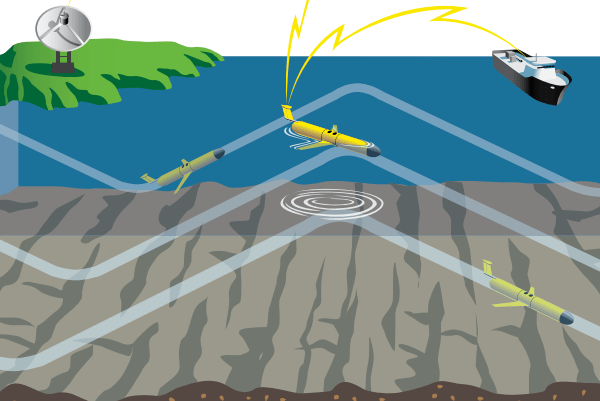
Mention of “autonomous vehicle and sensor technology” brings up the question of military research into and use of underwater drone and warfare technology and WHOI’s role in developing that technology. Though operating for years in the midst of a pleasant residential and tourist area, few people are aware that WHOI is a defense contractor. The Institution was created in 1930 and was devoted solely to defense work during World War II. In all available documents submitted to the Cape Cod Commission for its recent building projects, and in all currently available representations of its activities to the public, WHOI describes itself as a scientific and educational institution dedicated solely to studying the ocean. In its documentation for the Quissett project, WHOI calls itself “the world’s largest non-profit dedicated to ocean research.” The omission by WHOI of its significant military research and development amounts to deception. WHOI receives major funding from the Office of Naval Research, which “coordinates, executes, and promotes the science and technology programs of the United States Navy and Marine Corps.” These programs are highly unlikely to be peaceful and benevolent. The US Navy and Marines are, afterall, in the business of war.
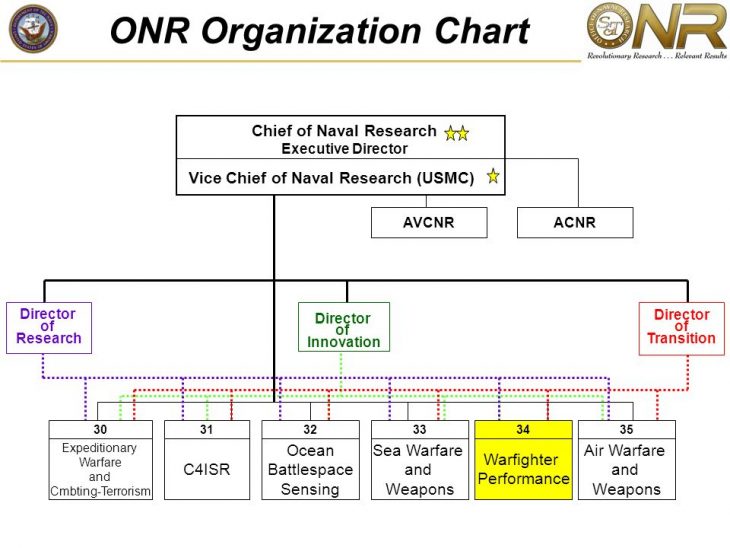
Source: slideplayer.com (C4ISR-Command, Control, Communications, Computers, Intelligence, Surveillance and Reconnaissance)
A July 20, 2018 Department of Defense listing of Navy/Office of Naval Research contracts states: “Woods Hole Oceanographic Institution, Woods Hole, Massachusetts, is awarded a $7,719,478 cost-plus-fixed-fee contract for development and demonstration of advanced ocean battlespace capabilities . . . This contract was competitively procured . . . for science and technology projects for advancement and improvement of Navy and Marine Corps operations, including Ocean Battlespace Sensing . . . The Office of Naval Research, Arlington, Virginia, is the contracting activity . . .”
Ocean Battlespace Sensing has to do with submarine and mine warfare. There is no information on WHOI’s web site about this nearly $8 million grant, or about what it is doing in the area of ocean battlespace sensing and submarine warfare. On April 7, 2016 when the new research vessel Neil Armstrong first arrived in Woods Hole, Dr. Frank Herr, head of the U.S. Navy’s Ocean Battlespace Sensing department (so-called “code 32” above), was among the notables addressing a gathered crowd. WHOI Director Mark Abbott also spoke, telling him and others, “We’re very proud to have been selected by the Office of Naval Research to operate the Neil Armstrong.” Navy-owned ships and advanced ocean battlespace work are not what we normally associate with a “non-profit organization dedicated to ocean research, exploration, and education” — WHOI’s stated activities. Defense-related activities are clearly a part of WHOI’s operations, but they are consistently edited out of the public image WHOI promotes.
The Next Level – Drone Wars, breakfornews.com
As another example: according to an April 22, 2019 report by the DoD Defense Logistics Agency: “Woods Hole Oceanographic Institution, Woods Hole, Massachusetts, is awarded an $8,421,581 cost-plus-fixed-fee contract for the research effort entitled, “Project Sundance.” Except for the announcement of this contract, there is no information available anywhere on the web, or at WHOI’s own web site, about what Project Sundance is, leaving one to wonder if the project is classified — i.e., something the public is not entitled to know about.
Finally, in 1985, WHOI achieved fame when one of its scientists, Robert Ballard, discovered the wreckage of the Titanic. It wasn’t until years later that we got the full story. According to The National Geographic (November 21, 2017), the Titanic discovery only happened by the way in what was actually a top secret military operation to find two wrecked US Navy nuclear submarines. Remote sensing technology and an underwater submersible vehicle developed in Woods Hole and used aboard the WHOI research vessel, Knorr, was used in the discovery. National Geographic tells us the Knorr’s true mission: “the military wanted to know the fate of the nuclear reactors that powered the ships . . . this knowledge was to help determine the environmental safety of disposing of additional nuclear materials in the oceans.”
Ballard held the rank of Commander in the US Navy and was working as a liason to WHOI from the Office of Naval Research at the time of the discovery. Research on disposal of nuclear waste in the ocean is hardly in keeping with WHOI’s stated mission, “to advance knowledge about our planet, but also to ensure society’s long-term welfare and to help guide human stewardship of the environment.” Moreover, by making it look like this was just a fun adventure undertaken by WHOI to solve the mystery of the Titanic, a hoax was perpetrated on the public.
WHOI, the proponent of this new building project, is not being fully honest in the descriptions it gives of its mission and operations in Woods Hole. This calls WHOI’s credibility and full disclosure into question, and prompts further questions about the military-related role of the proposed new facility — “the epicenter of autonomous vehicle, sensor, and technology innovation.” The mentioned technology may well have uses in oceanographic research, but it may equally well have to do with “ocean battlespace sensing” — i.e., marine warfare. WHOI advertises itself as a humanitarian scientific institution without mentioning the clearly relevant fact that a significant part of its funding and research is from and for the US Department of Defense. It is not possible to fully evaluate a building proposal from an institution that is involved in secret projects because Cape Cod residents have no way of knowing if they are being given all the facts. Indeed, they have good reason to believe they are not being given all the facts,
The US military and its supporting contractors are the main source of wars of aggression and misery in the world today. It would be unethical to support expensive new facilities, paid for with our tax dollars and with what is left of our open space, for one of those contractors on Cape Cod. Yet war and militarization are so normalized in the American landscape, it is as if this is not even an issue.
EU destroys 700,000 hectares of rainforest for biofuels
Rainforest Rescue | 03/07/19
The European Union wants to protect the climate and reduce carbon emissions from motor vehicles by blending fuels with increasing shares of supposedly eco-friendly “biofuels”.
Last year, 1.9 million tons of palm oil were added to diesel fuel in the EU – in addition to millions of tons of equally harmful rapeseed and soybean oils.
 The plantations needed to satisfy Europes’s demand for palm oil cover an area of 700,000 hectares – land that until recently was still rainforest and the habitat of 5,000 endangered orangutans. Despite the clear-cutting, the EU has classified palm oil as sustainably produced.
This policy has now blown up in the legislators’ faces, with scientists confirming what environmentalists and development experts have long asserted: biofuels help neither people nor the environment – and they are most certainly not climate-neutral, as even studies commissioned by the EU show. Biodiesel from palm and soybean oil, but also from European-grown rapeseed, has a larger carbon footprint than diesel from fossil sources.
The EU must scrap its biofuels policy immediately, but the agri-industry is fighting hard to maintain the status quo. Not surprising, when one considers that biofuels are currently subsidized to the tune of 10 billion euros in the EU alone.
Decision making in the European Union is a long process and involves many different actors that bring in studies, reports, arguments, and numbers. Hundreds of industry lobbyists seek to influence this process and they are trying hard to protect their financial interests. Next, the European Parliament and its committees along with the Council of the European Union will need to agree on a compromise based on the proposal published in October 2012.
Please sign our petition to the EU and demand an end to biofuels.
Petitioning Against Climate Alarmism Goes Global
By Larry Bell ~ PA Pundits – International ~ August 21, 2019
A petition being submitted by hundreds of independent climate scientists and professionals from numerous countries to heads of the European Council, Commission and Parliament declares “There is No Climate Emergency.”
Briefly summarized, the request for consideration conveys five urgent messages:
- Climate change is real and has been occurring with nature-driven cold and warm cycles for as long as the planet has existed.
- There should be no surprise that the Earth has been warming through natural causes since the last Little Ice Age ended around 1870. Actual temperature increases, however, are far less than predicted by theoretical climate models.
- There is no real evidence that anthropogenic (human-caused) CO2 emissions are a major or dangerous warming influence. They instead offer great benefits to agriculture, forestry and photosynthesis that is the basis for life.
- There is also no scientific evidence that increasing CO2 levels are causing more natural disasters. However, CO2-reduction measures do have devastating impacts on wildlife (e.g. wind turbines), land use (e.g. forest clearance), and vital energy systems.
- Energy policies must be based on scientific and economic realities — not upon a harmful and unrealistic “2050-carbon-neutral policy” driven by unfounded climate alarm.
The petition concludes by recommending the recognition of clear difference in policies addressing the Earth’s environment through good stewardship versus Earth’s climate, the latter of which “is largely caused by a complex combination of natural phenomena we cannot control.”
This recent petition to EU leaders signed by approximately 100 Italian scientists from many prominent organizations urges recognition of the same basic realities.
The Italian petition calls attention to the fact that the planet has previously been warmer than the present period, despite lower atmospheric CO2 concentrations. Warming periods have been repeated about every thousand years, including “the well-known Medieval Warm Period, the Hot Roman Period, and generally warm periods during the Optimal Holocene period.”
Most recent climate warming observed since 1850 followed the Little Ice Age – the coldest period of the last 10,000 years. “Since then, solar activity, following its [previous cooling-influence] millennial cycle, has increased by heating the Earth’s surface.”
The notification advises that climate, “the most complex system on our planet,” needs to be addressed with scientific methods that are “adequate and consistent with its level of complexity.”
This system “is not sufficiently understood. And while CO2 is indisputably a greenhouse gas, “according to [UN Intergovernmental Panel on Climate Change] IPCC itself, the climate sensitivity to its increase in the atmosphere is still extremely uncertain.”
The petition states that “In any case, many recent studies based on experimental data estimate that the climate sensitivity to CO2 is considerably lower than estimated by the IPCC models.” Accordingly, all evidence suggests that such models “overestimate the anthropic [human] contribution and underestimate the natural climatic variability, especially that induced by the sun, the moon, and ocean oscillations.”
Likewise, alarmist media claims that extreme weather events, such as hurricanes and cyclones, are increasing in frequency are entirely inaccurate and typically far more directly tied to natural ocean oscillation cycles.
Again, the Italian signatories from numerous universities and research organizations take strong issue against “deplorable propaganda” claiming that carbon dioxide is a pollutant rather than a molecule that is indispensable to life on our planet.
Accordingly, given “the crucial importance that fossil fuels have for the energy supply of humanity,” the petitioners urge that the EU should not adopt economically burdensome and unwarranted CO2 reduction policies under “the illusory pretense of governing the climate.”
The petitioners also emphasize that while credible facts must be based upon scientific methods, not determined by numbers of supporting theorists, there is no alleged “consensus” among specialists in many and varied climate disciplines suggesting that human-influenced climate change presents an imminent danger. They point out that many thousands of scientists have previously expressed dissent with alarmist anti- fossil energy conjecture.
More than 31,000 American scientists from diverse climate-related disciplines signed a Global Warming Petition Project rejecting limits on greenhouse gas emissions attached to the 1977 Kyoto Protocol and similar proposals. The list of signatories included 9,021 Ph.D.s, 6,961 at the master’s level, 2,240 medical doctors, and 12,850 carrying a bachelor of science or equivalent academic degree.
A 12-page petition attachment was introduced with a cover letter issued by Fredrick Seitz, a past president of the National Academy of Sciences and former president of Rockefeller University. It read, in part:
“This treaty is, in our opinion, based upon flawed ideas. Research data on climate change do not show that human use of hydrocarbons is harmful. To the contrary, there is good evidence that increased atmospheric carbon dioxide is environmentally helpful.”
The letter added, “The proposed agreement would have very negative effects upon the technology of nations around the world, especially those that are currently attempting to lift from poverty and provide opportunities to over 4 billion people in technologically undeveloped countries.”
Gratefully, an American Congress at that time listened to that sage advice and unanimously agreed. We can only fervently hope that more current legislators will continue to be equally wise.
Larry Bell contributes posts at the CFACT site. He heads the graduate program in space architecture at the University of Houston. He founded and directs the Sasakawa International Center for Space Architecture. He is also the author of “Climate of Corruption: Politics and Power Behind the Global Warming Hoax.”
When your beverage of choice is tritium
Welcome to France
By Linda Pentz Gunter | Beyond Nuclear | August 11, 2019
The headline — Police probe opened into rumours of unsafe tap water in Paris — raised hopes that nuclear operators might finally be held accountable for what appears to be routine radioactive contamination of drinking water in France.
News stories had circulated after a French radiological testing laboratory published findings on June 17, 2019, that more than six million French residents were drinking water contaminated with tritium released by the country’s nuclear power plants and other nuclear installations.
The laboratory — L’association pour le contrôle de la radioactivité dans l’Ouest or ACRO — raised the alarm because, it said, the presence of tritium implied there could be other radioactive isotopes in the water as well. None of the tritium levels they measured on this occasion, exceeded those French health authorities have established as “safe”, but research in the past has found higher levels, especially in groundwater, rivers and streams.
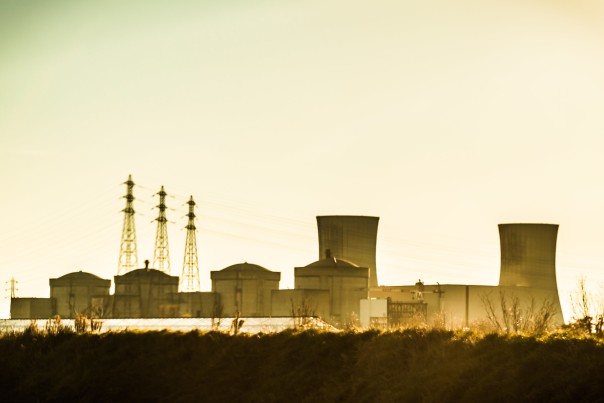
The Tricastin nuclear site — source of multiple leaks and radioactive releases over decades. (Creative Commons/xklima)
That “acceptable” level is 100 Becquerels per liter, not quite as arbitrary as the shocking 10,000 Bq/L level set by the World Health Organization, in thrall to the nuclear power-promoting International Atomic Energy Agency through a 1959 agreement.
The cities affected included Paris and its suburbs, and other large population areas in the Loire and Vienne regions of France such Orléans, Tours and Nantes.
Unsurprisingly, the story spread like wildfire, especially across social media, causing alarm among residents in the communities cited — 268 in all.
But the police investigation in Paris was not of EDF, the country’s chief nuclear facility operator. It was to root out fear-mongering purveyors of “fake news” among the citizenry who, according to the French state, were unnecessarily spreading panic among the populace by claiming drinking water containing tritium is unsafe.
It is.
The independent radiological testing lab CRIIRAD (Commission for Independent Research and Information on Radioactivity) denounced what it called the “trivialization of tritium contamination” and warned French citizens not to be lulled by the 100 Bq/L levels set by the authorities and especially not by the WHO’s 10,000 Bq/L standard. CRIIRAD said the level for tritium in drinking water should be set between 10 and 30 Bq/L.
For context, in our report, Leak First, Fix Later, we noted that the “naturally occurring” levels of tritium found in surface and groundwater is, at its highest, 1 Bq/l. Therefore, tritium is almost non-existent in water in nature.
To CRIIRAD, it is therefore all the more outrageous that that the levels for radiological contamination in France are set at “more than 100 times higher than the maximum allowed for chemical carcinogens.”
Tritium is radioactive hydrogen and is therefore assimilated by all living things as water. It has a half life of 12.3 years. It is produced in huge quantities in nuclear reactor cores, then released into the environment as a gas or in liquid discharges. Tritium cannot be filtered out of water and tritium released into the air can return in rainfall. All nuclear power plants release tritium, and nuclear reprocessing facilities — such as the one at La Hague on the French north coast — release even larger amounts.
These releases, including into rivers, streams and the sea, are regulated by authorities but, as CRIIRAD points out, at levels that are not so much safe as unavoidable, effectively granting nuclear installations “permission to pollute.”
“The liquid and atmospheric releases of tritium cause contamination of the air, water, the aquatic and terrestrial environment and the food chain,” wrote CRIIRAD in a statement put out after the tritiated drinking water news broke.
When rumors began to fly that drinking tap water had been banned, authorities quickly stepped in to “reassure” people that the levels of tritium in the water — already not actually safe according to CRIIRAD — were of no concern.
The criminality of nuclear plants across France releasing huge amounts of tritium into the environment was quickly turned on its head. Instead, in a sinister but not entirely unpredictable turn of events, given that France is a nuclear state, it would be ordinary citizens who would be committing a “crime” if they were found to be “publicizing, spreading and reproducing false information intended to cause public disorder,” according to an AFP article.
In reality, there was genuine cause for concern. ACRO had found levels of tritium in drinking water at 30 Bq/L on five occasions, then at 55 Bq/L and finally at 310 Bq/L in the Loire river.

Picture entitled “Water makes milk.” In France, is that milk radioactively contaminated? (Photo: Graham Knott/Creative Commons)
But drinking tritiated water is not the end of the story — or the danger. Even though tritiated water may pass through the human body in about 10 days, about 10% of it binds organically inside the body. Organically bound tritium remains in the body for far longer than free tritium. According to CRIIRAD, this means that beta radiation from tritium can endure inside the body for years, causing chromosomal mutations, cancers and genetic mutations.
Tritium also binds organically to organisms in the environment such as aquatic plants present in rivers and streams into which nuclear facilities release tritiated water, or crops irrigated using water contaminated with tritium. These are in turn ingested by animals and humans — setting in motion tritium’s journey up the food chain.
The CRIIRAD statement notes the systematic downplaying of these risks by the nuclear safety regulator and other French governmental authorities.
This was never more apparent than during a law suit brought by CRIIRAD, the Sortir du nucléaire network, Stop Nucléaire 26-07 and FRAPNA Drôme in 2013 after the huge multi-unit Tricastin nuclear site leaked tritium into the groundwater at levels as high as 700 Bq/L.
EDF, Tricastin’s operator, claimed then that “tritium is a completely harmless radioactive isotope.”
Of course there is no such thing as a “safe dose.” Even the august and certainly not anti-nuclear National Academy of Sciences agrees. And as CRIIRAD points out, every dose increases the risk. “Since all living matter is made up of hydrogen atoms, a part of any tritium released will eventually be found in the cells of living organisms, including in the DNA, creating long-term internal irradiation that increases cancer risks (among others),” said the lab.
What of course got forgotten in all the dismissal and downplay by authorities — and in the attempts to criminalize those who sounded the alarm — is that some members of the population are more vulnerable than others when it comes to radiation exposure.

There is an Europe-wide movement to abolish the Euratom Treaty. (Photo: PLAGE)
Even while a daily dose of tritiated drinking water is not good for anyone, it is far more dangerous for babies and young children and for women, especially pregnant women. But those already bad standards don’t take the most vulnerable into account.
So how did the 100 BQ/L limit come about? It is no surprise to learn that it was the influence of Euratom (no conflict there) that boosted it that high.
After CRIIRAD had pushed for a 10 Bq/L limit before the European Parliament in 2012-2013, that body settled on a 20 Bq/L limit. But its decision was swept aside after “experts” at Euratom insisted on the 100 Bq/L limit. That, among other issues, is what spurred a Europe-wide movement to abolish the Euratom Treaty.
Clearly, what should have happened in France is an investigation into the cause and source of the tritium in drinking water. Instead, there was a propaganda campaign to neutralize concern and vilify those who sounded the alarm on safety. In Nuclear France, it’s never plus ça change, but always la même chose.
Brazil’s toxic pesticides ‘affecting people all over the world’ through agricultural exports
RT | July 30, 2019
“EU-banned pesticide[s are] being manufactured in the EU, and then coming back to citizens in the EU, in the food we eat,” environmental journalist and founding member of the Green Economic Institute think tank Oliver Tickell told RT, explaining that as one of the largest soy exporters in the world, Brazil supplies a significant quantity of the feed that cattle and other livestock worldwide consume. European consumers tucking into a juicy steak have no idea that the creature they’re eating might have been nourished on soy sprayed with highly toxic pesticides.
“This is not just a problem for Brazil and Brazilian people and people exposed in the countryside to these pesticides and consumers and farmers,” Tickell warned. “It is actually affecting people all over the world through Brazil’s agricultural exports.”
ANVISA, the Brazilian public health regulatory agency, relaxed pesticide regulations last week so that only those chemicals with lethal potential can be classified as “extremely toxic,” triggering a massive backlash from environmental groups, human rights organizations, and food safety advocates. The fervently pro-business government of President Jair Bolsonaro has already approved 262 pesticides this year, 82 of which are classed as “extremely toxic,” as he follows through on campaign promises to demolish environmental regulations and open up protected rainforest lands to mining and agriculture.
Dozens of pesticides banned or strictly regulated in the EU, including paraquat and chlorpyrifos, were already permitted for use in Brazil before Bolsonaro took power, and the country uses approximately 400,000 tons of pesticides per year, according to Human Rights Watch. While Agriculture Minister Tereza Cristina has flatly denied Brazil uses any more pesticides than any other country, attributing such allegations to “data manipulation” and accusing critics of “terrorism,” EcoWatch claims the country consumes more pesticides per capita than any other nation.
Israel’s Latest ‘Security Problem’: Who’s to Blame for Gaza’s Environmental Crisis
By Ramzy Baroud | MEMO | July 15, 2019
Writing in The Jewish Journal under the title, “A Spillover Crisis: How Gaza’s Water Shortage Affects Israel”, Dominik Doehler explains the direct link between Gaza’s water problems and Israel.
Doehler offered a scientific explanation behind the besieged Strip’s water crisis, but when it was time to assign responsibility, something went wrong. Instead of recognising how Israel’s war and protracted siege destroyed Gaza’s infrastructure, the writer blamed the “ongoing conflict between Hamas and the Palestinian Authority” for Gaza’s suffering.
“Today, those who pay the price of the conflict between the Palestinian factions are the two million people in Gaza,” Doehler writes, without any mention of Israel’s primary role in any of this.
The dishonesty of the writer should not be entirely surprising, considering the biased nature of the publication. This is particularly symptomatic of Israeli and pro-Israeli media which often shy away from acknowledging the facts, but deflect responsibility from Israel, and point the finger of blame on Palestinians only.
That said, it is interesting that Gaza’s growing humanitarian crisis is finally registering in Israel as a pressing problem requiring action. However, it is not the impact of the crisis on the population of Gaza that is sounding the alarm bells in Tel Aviv, but rather the potential environmental damage Gaza’s ongoing misery may cause Israel.
On June 3, researchers from Israel’s Tel Aviv and Ben-Gurion universities presented a report commissioned by the environmental organization, EcoPeace Middle East, in which they warned that “the collapsing water, sewage and electricity infrastructure in the Gaza Strip pose a material danger to Israel’s groundwater, seawater, beaches and desalination plants”.
One would expect any report on the environmental situation in Gaza to focus on the fact that nearly two million Palestinians in the Strip are living in inhumane conditions due to a relentless 12-year Israeli blockade and repeated devastating military assaults which are rending the area “uninhabitable by 2020“.
Instead, the report has implied that the residents are solely responsible for the imminent environmental catastrophe in Gaza, which is threatening the security and well-being of Israeli citizens. The Israeli newspaper, Haaretz, which published a detailed report on the presentation, also spun the issue as a matter of national security.
But what Israel has now identified as a “national security problem” is indeed a disaster of its own making. The occupation, colonisation, dispossession and aggression against Palestine and the Palestinians have caused untold environmental damage to the extent that now, even the Israeli occupier is suffering.
The environmental situation in Gaza is indeed dire at the moment, but it is not the Palestinians who made it so. Neither the “rapid population growth”, nor neglect or ignorance of residents that are its root causes. Countless reports by the United Nations and other organisations have documented in detail how and why the main culprit is Israel, its violent assaults on Gaza and its merciless siege.

Israeli settlers flood Khan al Ahmar with wastewater [Twitter]
Take the problem of untreated sewage ending up in the sea, which is causing issues for Israeli beach-goers and water desalination plants. The reason why Gaza’s sewage is getting disposed of in this “irresponsible” way is that water treatment plants are not operational; they were targeted in the 2014 Israeli assault on the Strip and were never rebuilt because the Israeli siege does not allow for construction materials and spare parts to be brought in.
Untreated sewage is part of the larger water crisis in Gaza. As the report rightly points out, Gaza residents are overusing the aquifer under the Strip, which has become increasingly contaminated with seawater and chemicals and which constitutes the only source of freshwater for residents because of the involuntary separation with the West Bank.
The reason for Palestinians in Gaza being unable to establish a proper water management system is again Israel’s doing. Israel has repeatedly bombed its water infrastructure, including water pipes, wells and other facilities, and the debilitating Israeli siege has prevented the local authorities from fixing it and building a water desalination plant.
Gaza’s water problem is not only an annoyance for the Israelis but a potential source of an epidemic for the Palestinians. Already, diarrheal diseases have doubled, reaching epidemic levels, according to the Palestinian Ministry of Health, while salmonella and typhoid fever are also on the rise.
Then there is the problem with rubbish which Palestinians are burning, hence “polluting Israeli air”. As Cambridge University academic, Ramy Salemdeeb, has pointed out, Gaza has been unable to develop a proper waste management system because of economic restrictions due to the Israeli siege and a “limited land availability” because of its isolation from the rest of the occupied Palestinian territories.
Given that Israel is a settler-colonial project, the overexploitation of the colonised land to the detriment of the environment and the local population is naturally a part of its modus operandi.
Indeed, all the land Israel has taken and occupied has suffered from environmental degradation in one way or another, with its harmful effects being conveniently shifted towards Palestinians area, villages and cities.
If Israel continues to treat the issue as a “security problem” it will never get resolved because at the heart of it is the destructive logic of a colonial enterprise which seeks to exploit both land and people with no regard for nature and human wellbeing.
In other words, Israel will never achieve security – environmental or otherwise – as long as it continues to oppress the Palestinians, occupy their land and ravage the environment. Israeli air, water and the overall environment will never be immune from the Israeli-made disasters in occupied Palestine.
Featured Video

Trita Parsi: Israel Set a Trap for Total War in the Region
or go to
Aletho News Archives – Video-Images
From the Archive
Zionism’s Violent Legacy
By Donald Neff | Washington Report On Middle East Affairs | January 1996
On January 4, 1948, Jewish terrorists drove a truck loaded with explosives into the center of the all Arab city of Jaffa and detonated it, killing 26 and wounding around 100 Palestinian men, women and children.[1] The attack was the work of the Irgun Zvai Leumi – the “National Military Organization,” also known by the Hebrew letters Etzel – the largest Jewish terrorist group in Palestine. The Irgun was headed by Revisionist Zionist Menachem Begin and had been killing and maiming Arabs, Britons and even Jews for the previous ten years in its efforts to establish a Jewish state.
This terror campaign meant that at the core of Revisionist Zionism there existed a philosophical embrace of violence. … continue
Blog Roll
 Aletho News
- Trita Parsi: Israel Set a Trap for Total War in the Region
- Trump’s Iran war is on an Israeli leash
- Saudi oil boss issues global supply warning
- Riyadh Says Its Oil System Is Intact. The Numbers Say Otherwise.
- Trump and Netanyahu Want to “Finish the Job” on Iran
- US ‘one-sided dictation’ not Iran’s beliefs makes rational talks impossible: Baghaei
- Iran’s Next Strike May Not Explode. It Could Shut You Down /Col Doug Macgregor
- Iran: US political targets legitimate if assassinations return
- Iraq shuts key border crossing with Iran under US pressure: Report
- Undersea Internet cables could be targeted in retaliation for attacks on Iran: IRGC deputy chief
- If Americans Knew
- The Israel Lobby’s Changing Fortunes
- AIPAC has become such a political liability that it’s shifting to a more “nimble” approach to buying politicians
- At least 160 Israeli settler attacks in 2 weeks
- Will Gaza’s Ancient Christian Community Disappear Forever?
- Israel’s vision of regional security rests on keeping Arab states weak
- Heidi Levine recounts how Palestinian youths helped save her in settler attack
- DAILY UPDATE: Latest essential news on Palestine, Israel, & region
- Trump’s Intensifying Sabotage of the ICC, for Israel’s Sake
- Israeli military detain US and UK volunteers in West Bank including Democratic NY politician Brad Lander
- Americans at National Conservatism Conference held in Israel this year criticize Israel
- No Tricks Zone
- E-Cars Reduce CO2 Emissions By Only 41% Compared To Internal Combustion Engine Vehicles
- Predictions Made By Renowned Climate Professor Over Past Decades Have Been Proven To Be Poor
- New Study Suggests Large Regions Of The Pacific Ocean Have Been Cooling For The Last 80 Years
- Germany’s Green Energy Debacle: High Energy Costs Force Kahla Porzellan to Close After 182 Years!
- New Study: 50 Years Of The Most Aggressive ‘Net Zero’ Policies Can Only Affect The Global Climate By 0.03°C
- US September “Heat” Was No Record…Many Records Set Decades Ago
- Latest European Green Energy Debacle; Portugal’s Largest Flagship Solar Park Insolvent!
- Green Energy Debacle: German Expert Professor Fritz Vahrenholt Warns Of Severe Economic And Social Consequences
- Two More Paleo Reconstructions Affirm Meters-Higher Sea Levels Across Ireland, Brazil 7000-6000 Years Ago
- New Study: Earth And Venus Surface Warmth Largely Explained By Convection And Lapse Rate, Not CO2 Or Radiation

