Monsanto agrochemicals causing genetic damage in soybean workers – study
RT | January 22, 2015
Soybean workers exposed to the agrochemicals like glyphosate, the main component in Monsanto’s ‘Roundup’ herbicide and other biocides, suffer from elevated DNA and cell damage, according to a new study.
The study, published in the journal Mutation Research/Genetic Toxicology and Environmental Mutagenesis, involved 127 people, including 81 exposed to biocides while working in the Brazilian soybean industry and 46 non-exposed individuals in a control group.
The exposed group exhibited an elevated level of cellular apoptosis, as well as DNA damage, according to researcher Danieli Benedetti and his team, which concluded that the now-common use of genetically-modified soybeans in the State of Rio Grande do Sul, especially in the city of Espumoso, has toxic ramifications for workers.
“Our findings indicate the advisability of monitoring genetic toxicity in soybean farm workers exposed to pesticides,” the researchers said.
Genetically-engineered seeds, proliferated across the globe by multinational agribusiness conglomerates like Monsanto, are designed to withstand dousing by glyphosate and other biocides in order to terminate insect, fungus, and weed nuisances.
Benedetti’s team focused specifically on Glyphosate and 2,4-D, the two top biocide components in American-biotechnology farming culture. Glyphosate is the prime ingredient in Monsanto’s Roundup products, while Dow Chemical’s 2,4-D is a potent herbicide that was also used in making Agent Orange, the chemical used by the US to devastate resistance during the Vietnam War.
Last spring, Brazil’s public prosecutor sought to suspend use of glyphosate based on its toxic effects. Studies have linked glyphosate to a fatal kidney disease that has affected poor farming regions worldwide.
Just last week, Monsanto won final approval from the US for its new genetically-modified soybeans and cotton, designed to withstand a dominant biocide that fights weed resistance built up as a result of the company’s glyphosate-based Roundup herbicide already in use.
Monsanto reported an earnings drop of 34 percent in its first fiscal quarter. The company reportedly lost $156 million in the fourth quarter of last year due to a one-time payment made to settle an environmental legal case.
As multinationals such as Monsanto and Dow Chemical have sought strict standardization in agriculture markets the world over, the corporate leviathans, especially the former, have become the target of considerable protests and demonstrations.
Companies like Monsanto market their own patented seeds that, given their genetic modification, can be doused with biocides to kill pests and weeds, and which can jeopardize long-term health of the soil and the necessary biodiversity of a local environment that allows for natural pollination and, thus, food security.
In May of last year, activists on five continents around the globe, comprising of 52 nations organized resistance under the ‘March against Monsanto’ umbrella. Protests positioned against Monsanto and involving other corporate-food issues occurred in around 400 cities worldwide, according to reports.
Just this past weekend, more than 120 organizations joined the fifth annual ‘We are Fed Up!’ demonstration in Berlin to focus on the increased importation of American farming practices – such as genetic modification, frequent antibiotic injections for animals, and chemical meat treatments – following the implementation of the controversial Transatlantic Trade and Investment Partnership (TTIP).
Protests have raged most furiously in Europe, where the EU recently approved a law that would let its nations ban genetically-modified organisms even if the EU had deemed them safe. Monsanto said last year it would not try to get any more GM crops approved in Europe given the consistent pushback.
Anger and unrest against Monsanto’s stranglehold has also spread to South America. In Argentina, protests have occurred in resistance to the company’s potent biocides used in tandem with their genetically-engineered seeds. In Brazil, farmers have called on Monsanto and other producers of pest-resistant corn seeds to reimburse them for money spent on additional biocides when the bugs killed the crops instead of dying themselves, speaking to the biocide arms race involved in using GM seeds. Brazilian soy exporters are also tangling with Monsanto over seed royalties.
In Central America, Guatemala’s highest court suspended in September a controversial ‘Monsanto Law,’ a provision of a US-Central American trade agreement, that would insulate transnational seed corporations considered to have “discovered” new plant varieties.
On its home turf in the United States, Monsanto has worked diligently with other multinational biotech, agribusiness, and food production companies to beat down state-level proposals to simply label whether food is comprised of GM ingredients.
The most recent example came in the state of Oregon, where a November ballot initiative to require GMO labeling was narrowly defeated in what became the most expensive ballot measure in the state’s history. The likes of Monsanto and Dupont flushed more than $21 million into the anti-labeling campaign, dwarfing the $9 million raised by proponents.
The company has sued Hawaii’s Maui County for passing last year that bans the cultivation of genetically modified organisms.
Monsanto’s St. Louis headquarters have been the target of mild protests, especially during shareholder meetings.
Meanwhile, agribusiness allies on Capitol Hill are pushing new federal legislation, the Safe and Accurate Food Labeling Act, that would standardize food labeling, effectively killing popular state-based efforts to pass labeling laws.
READ MORE:
Monsanto gets approval for new GMO corn, soybeans designed for potent new biocide
Rising suicide rate for Indian farmers blamed on GMO seeds
In facts & numbers: Absolute majority of Americans want GMO food to be labeled
Monsanto gets approval for new GMO corn, soybeans designed for potent new biocide
RT | January 16, 2015
Monsanto has won final approval from the US for its new genetically-modified soybeans and cotton, designed to withstand a dominant biocide that fights weed resistance built up as a result of the company’s glyphosate-based Roundup herbicide already in use.
The US Department of Agriculture’s Animal and Plant Health Inspection Service (APHIS) announced Thursday that the powerful biotechnology corporation’s GMO cotton and soybean plants have been given “non-regulated” status.
Monsanto now awaits approval from the US Environmental Protection Agency for the new herbicide – a mix of the formidable chemical dicamba and glyphosate, which the company has developed for use on the newly-approved GMO crops.
The new GMO crops – coupled with the dicamba/glyphosate cocktail – make up what Monsanto has dubbed the ‘Roundup Ready Xtend crop system,’ designed to trump super weeds that have evolved along with the company’s glyphosate-based Roundup biocide.
Dicamba was first approved in 1967 and has been linked to high rates of cancer and birth defects in the families of food growers, according to government and other scientific studies.
Consumer, health, environmental, and farmer advocates have fiercely opposed the new Xtend system, as it portends an overall “10-fold increase in dicamba use in American agriculture, from under 4 million lbs. at present to more than 40 million lbs. per year,” according to Center for Food Safety.
“Monsanto’s genetically-engineered dicamba-resistant crops are yet another example of how pesticide firms are taking agriculture back to the dark days of heavy, indiscriminate use of hazardous pesticides, seriously endangering human health and the environment,” said Andrew Kimbrell, executive director of Center for Food Safety, in a statement.
“If EPA also reneges on its responsibility to protect human and environmental health, Center for Food Safety will pursue all available legal options to halt the introduction of these dangerous crops.”
The USDA and Monsanto have said that Xtend will increase dicamba use in cotton by 14 times current levels, according to Reuters, and, in soybeans, 500 times current levels, the Pesticide Action Network said in a statement.
“I am convinced that in all of my years serving the agriculture industry, the widespread use of dicamba herbicide [poses] the single most serious threat to the future of the specialty crop industry in the Midwest,” said Steve Smith, Director of Agriculture for Red Gold, a tomato-processing company.
Opposition — and even the USDA — says more dicamba will only mean additional weed resistance in the future, translating to more profits for the likes of Monsanto and Dow Chemical, which received US approval for its genetically-engineered 2,4-D-resistant corn and soybeans in September 2014.
“The pesticide treadmill spins on, and that’s great news for Monsanto,” said Gary Ruskin, executive director of U.S. Right to Know, a consumer advocacy group, Reuters reported. “This is just the latest in a endless string of favors from our federal government to Monsanto.”
Crops most at risk from increased dicamba exposure include fruits, nuts, and vegetables, growers of which say they fear the chemical will drift onto and damage their fields.
Monsanto, according to Reuters, said it will educate food growers over the proper way to avoid dicamba drift. But biocide opponents are skeptical of these promises and say the burden will rest with the growers — not Monsanto.
“Monsanto’s response to farmers’ concerns about crop damage has been to develop exceedingly complex and demanding protocols for applying and disposing of the herbicide cocktail, including a ten-step triple rinse of sprayers that is likely to take more than an hour and then entails proper disposal of the contaminated rinse water,” said the Pesticide Action Network. “This ‘solution’ puts all responsibility on farmers, and sets up the company to escape liability for crop damage.”
Biocide drift will also adversely impact flowering plants and their pollinators and other species, which depend on them for nectar and habitat.
Meanwhile, Monsanto is awaiting approval from China to allow imports of its new soybeans. China has been reticent about approving more GMO crops, as exemplified in farmer lawsuits aimed at American agribusiness companies following the nation’s rejection of US genetically-engineered-corn imports.
Monsanto Chief Technology Officer Robb Fraley said last week that Chinese approval is expected in time for Xtend’s commercial launch in 2016.
READ MORE:
EU to pick which GMO it grows after new bill passed overwhelmingly
Oregon GMO-labeling initiative defeated by Monsanto-sponsored groups
Monarch butterfly may be listed as endangered species after 90% population drop
Britain scraps Sellafield nuclear deal
Press TV – January 13, 2015
Britain said on Tuesday that it had scrapped a deal worth $30.2 billion with an international consortium to clean up the Sellafield nuclear facility in Cumbria in the northwest of the country.
The contractors of the project were Amec of Britain, Areva of France and URS, an American company. They have been fired from the job that was delegated to them six years ago after their leader was accused by the government of “delays and exceeding budgets”.
Meanwhile, there are reports that while rising costs have been a major motivation for the decision, among the problems encountered was the accidental shipping of radioactive waste to a landfill, which resulted in a fine of more than $1 million.
Despite the problems, members of parliament hesitated to tear up the contract last year in part because of concerns about the government’s ability to get the decommissioning job done, the Telegraph said.
The government’s Nuclear Decommissioning Authority (NDA) will now take ownership of the clean-up.
Energy and Climate Change Secretary Ed Davey described Sellafield as “the biggest and most complex nuclear site in Europe” and said “it’s right that we keep the way it’s being managed under constant review”.
He added that a “strategic partner” would be found from the private sector.
Predictions Based on the 2015 Federal Budget – An Analysis
By Lawrence Davidson | To the Point Analyses | December 28, 2014
Part I – Predictions
I can make high-probability predictions for 2015 and the near-beyond without the benefit of a crystal ball, tarot cards or tea leaves. The only thing that I need is a list of items from the new 2015 federal budget. Here are some of my forecasts and the budget items that make them so highly probable:
1. There will be more deadly truck-related accidents than necessary on the nation’s highways in 2015. That means more deaths, injuries, highway delays, stress and frustration. How do I know? Because the 2015 budget rolls back the safety requirement that truckers need to get more rest between driving assignments. The regulation that was rolled back was itself barely adequate. It restricted drivers to a 70-hour week with mandated rest times between long periods behind the wheel. Nonetheless, despite obviously being in the public interest, this regulation could not survive the pressure of the lobbies representing the trucking industry and its corporate customers. Now we are back to truckers working 85-hour weeks with hardly any mandated rest at all.
2. Either in 2015 or soon thereafter there will be another major banking crisis requiring the outlay of enormous sums of public money to avert economic meltdown. How do I know? Because the 2015 federal budget rolls back the requirement, put in place after the last financial crisis, that forced the trading of derivatives to be done by corporate entities separated from the banks and not covered by the Federal Deposit Insurance Company. In other words, if the banks wanted to devise unreasonably risky investment strategies for their more gullible customers, they had to insulate these strategies from their main banking operations that are crucial to the national economy. In addition the government was not required to insure such undue risks through the Federal Deposit Insurance Corporation. Although obviously in the public interest, these regulations could not survive the pressure coming from the banking lobbies and so, once more, we all must be prepared to pay the price of this version of insufficiently regulated capitalism.
3. The political influence of the nation’s wealthiest individuals will increase by a factor of ten in 2015, making the United States more of a plutocracy and less of a democracy than at any time since the 1920s. How do I know? Because the new federal budget emasculates what little was left of the 2002 McCain-Feingold Bipartisan Campaign Finance Reform Act by increasing tenfold the amount of money individuals can give to political parties. This is the result of conservatives’ demanding that political campaigns be underwritten wholly by private funds. Common sense tells us that such an arrangement can only confirm political power in the hands of those who are already economically dominant. By the way, most countries claiming to be democracies regulate against just this dominance of private money because it is recognized as politically corrupting.
4. Environmental protection will deteriorate in 2015. If you live in a rural area where there are large farms, your water supply will become more suspect. How do I know all this? Because the 2015 federal budget slashes funding for the Environmental Protection Agency by $60 million and forbids the same agency from applying the Clean Water Act to farm ponds and irrigation ditches. In the public interest? Of course not. However this move pleases agribusiness concerns and other industries.
5. Israel, the economically developed nation that has violated just about every human rights regulation listed under international law, and also has repeatedly broken U.S. law forbidding the use of U.S.-supplied weapons for offensive actions against civilian populations, will continue to be both economically and militarily subsidized by the American taxpayer in 2015. How do I know this? Because the 2015 federal budget follows in the footsteps of so many past budgets by setting aside huge sums of money – in the present case $3.1 billion in total aid – for the Zionist state. Of that aid package, $619.8 million is military related.
I could not get exact gross figures for how much money the federal government gives back per year to U.S. states for various programs, but certainly Israel gets more of your federal tax dollar than any single state does, and maybe more than all fifty states put together.
On the same topic of foreign aid to undeserving governments, the 2015 budget will help insure the survival of the brutal military dictatorship in Egypt. That bunch of gangsters will be getting $1.3 billion in military aid.
These dubious expenditures are also not in the U.S. public interest for they will undermine democracy in Egypt and uphold dictatorship. In the case of Israel the money will help uphold racist authoritarianism, ethnic cleansing and religious bigotry. All of which (including the aid to Egypt) has been successfully encouraged by the financial power of the Zionist lobby.
Part II – John Boehner’s Bipartisanism
According to House Speaker John Boehner, the 2015 federal budget is a product of bipartisan compromise: “Understand all these provisions … were worked out in a bi-partisan, bi-cameral fashion.” However, this can hardly be the whole story. Boehner’s statement implies that there were only Republicans and Democrats in the proverbial back room where the budget was worked out and that everyone was practicing sweet reason so as to come to a compromise that benefits the nation. In truth, looking over the shoulders of those representing both parties were numerous lobbyists who had given a lot of money to all these politicians and now wanted something back for their investment. As a result, we as a nation, as a community, were thoroughly outbid by the trucking industry, the bankers, agribusiness, and a good number of conservative ideologues who want the right to gut the federal government (particularly the Environmental Protection Agency and the Internal Revenue Service) while monopolizing funding of our two major political parties. They want to do this so that, among other things, they don’t have worry about regulations or pay even a reasonable amount of taxes.
Part III – Conclusion
The ultimate conclusion we can draw from this “bipartisan” process is that there is no sense of national interest, and damn little sense of community, in the American political system. Both concepts have been superseded by the particular parochial goals and sense of solidarity of groups and subgroups with the deep pockets necessary to buy legislators and legislation. This is what happens when democracy allows itself to be captured by an increasingly unregulated capitalist ethic – an erosion of any politically based sense of a need to work for the common good.
The really depressing part is that for most of our national history it has not been very different. In the mid nineteenth century President James Polk, himself a man of questionable integrity, observed, “There is more selfishness and less principle among members of Congress than I had any conception of, before I became President of the United States.” Well, the problem persists, and given our political way of doing things, it may never be fully overcome
Ecuador ends deal with Germany on environmental issues
Press TV – December 20, 2014
Ecuador has terminated its environmental cooperation with Germany after German legislators tried to visit an Amazon rainforest recently opened for oil exploitation, the country’s foreign minister says.
“Ecuador unilaterally ends all cooperation with Germany on environmental issues,” Ricardo Patino said on Friday.
In 2012, Germany and Ecuador inked a cooperation deal worth 36 million euros ($44 million) to protect the environmentally sensitive rainforest known as Yasuni. They also signed another deal worth 7 million euros ($9 million) in other environment projects.
“If they think they had the right to doubt the word of Ecuador’s government on the issue of Yasuni because they were providing funds, we’ll give them their money back with interest,” Patino added.
He also noted that the Latin American country has not received the funds for the rainforest, and the money allocated for the other projects will be returned soon.
In 2007, Ecuadorian President Rafael Correa asked rich countries to donate $3.6 billion to help protect the Yasuni in exchange for pledges not to drill for the oil beneath it.
However, Correa allowed the national oil company to do drilling after his proposal was not welcomed by the other countries.
Earlier this month, Correa did not permit the German lawmakers to visit the Yasuni to observe oil production and talk to activists opposing the measure.
The Ecuador government assured that it will take every measure possible to protect the sensitive Amazon environment during the extraction process. However, the Correa government was not pleased that the German delegation wanted to meet with opposition groups first.
“We either have relations based on equality, or none at all,” Correa said in a statement to the German delegation, asking if Germany would likewise accept a delegation from Ecuador coming to their country to inspect their nuclear projects, for instance. Correa added that his country “stopped being a colony 200 years ago.”
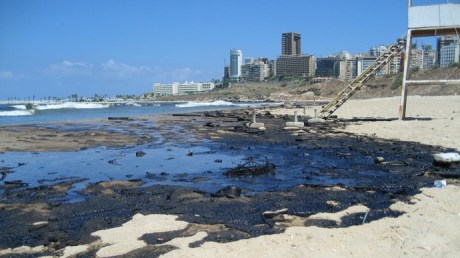
UN General Assembly votes for Israel to compensate Lebanon for 2006 oil spill
Al-Akhbar | December 20, 2014
Israel was asked by the UN General Assembly on Friday to compensate Lebanon for $856.4 million in oil spill damages it caused during the July 2006 war.
The non-binding vote, which passed 170-6 with three abstentions, asks Israel to offer “prompt and adequate compensation” to Lebanon and other countries affected by the oil spill’s pollution.
While General Assembly votes are non-binding, they reflect broader international opinion without the possibility of veto by world powers like in the Security Council.
The resolution indicated that UN Secretary General Ban Ki-moon “expressed grave concern at the lack of any acknowledgment on the part of the government of Israel of its responsibilities vis-a-vis reparations and compensation” for the oil spill.
Lebanon’s permanent representative to the UN Nawaf Salam hailed the resolution, the Lebanese National News Agency reported.
“Lebanon considers this to be a major progress,” Salam said. “This resolution also paves the way for further compensation into other areas of damage (health, ecosystem services as habitat, potential groundwater contamination, and marine diversity), that were not considered in the current calculated amount.”
“Furthermore, its adoption asserts the will of the overwhelming majority of the international community to hold countries responsible for their internationally wrongful acts,” he added.
“We affirm that Lebanon will continue to mobilize all resources and resort to all legal means to see that this resolution is fully implemented, and that the specified compensation is paid promptly.”
In a statement, Israel condemned the resolution as “[serving] no purpose other than to contribute to institutionalizing an anti-Israel agenda at the UN,” Israeli media reported.
The oil spill was caused by Israel’s air force when it bombed oil tanks near a coastal Lebanese power plant during its fierce month-long war with Hezbollah resistance fighters.
The attack flooded the Mediterranean coastline with 15,000 tons of oil, according to the United Nations.
The adopted resolution cited $856.4 million (700 million euros) in damages caused by the oil spill, accounting for inflation of a October 2007 estimate by the United Nations Secretary General that reported the spill caused $729 million in damage.
Lebanon bore the brunt of the spill, but the Syrian coast and other Mediterranean countries have suffered as well, the UN said.
The oil slick made by the spill “has had serious implications for livelihoods and the economy of Lebanon,” the resolution said.
The UN asked Lebanon to continue clean-up efforts and the international community to increase funding for its environmental restoration.
The US, Australia, Canada and Israel were among the six states that voted against the UN text.
(AFP, Al-Akhbar)
Feds say cleaning up most contaminated nuclear weapons site in US is too costly
RT | December 9, 2014
The United States government recently argued in court filings that the state of Washington’s request of $18 billion over 14 years to address the nation’s most polluted nuclear weapons production site should be rejected based on expense.
The US Department of Justice said in a court filing on Friday that the cost of the state’s proposal for a hastened cleanup of the Hanford Nuclear Reservation would cast into doubt other nuclear projects funded by the Department of Energy.
According to The Tri-City Herald, the filings in US District Court by the DOJ and the state of Washington were part of the state’s lawsuit that seeks a more pressing timeline for Hanford’s cleanup.
Friday was the deadline for the parties to comment on new cleanup timelines, as the DOE said many of the existing timelines were at risk of being missed.
Hanford, located along the Columbia River in south-central Washington, is the site of 177 massive underground nuclear waste storage tanks, making it the largest collection of nuclear waste in the US. For four decades, the site was home to plutonium development for use in the production of nuclear weapons.
As RT previously reported, a deal was recently struck between the DOE and Washington state to allow a leaky radioactive storage tank at Hanford to remain as is for more than a year before its contents are removed.
In its court filing, Washington state again criticized federal management at Hanford and asked for an intensified oversight plan to address its leak-prone waste tanks and the construction of a $13 billion vitrification plant to treat waste for future burial.
The state said in its filing that the DOE wants to establish future cleanup deadlines at the expense of hard deadlines already agreed to by the parties in a 2010 consent decree, which sprang from a 2008 lawsuit following the department’s failure to meet an earlier set of deadlines for the plant and its waste tanks.
The construction project “should be matched with the best project management plans in the country,” the state contended. “Energy, however, implies that such planning is impossible.”
The state asked for more than 100 new deadlines to keep the Department of Energy’s cleanup process on track, yet the Department of Justice argued the plan was out of reach.
“The state’s proposal would require a dramatic and unrealistic increase in funding that, if mandated, would jeopardize DOE’s ability to carry out ongoing cleanup operations on other parts of the Hanford site and at other sites across the country,”documents filed by the Justice Department stated.
Hanford’s construction and waste management get $1.2 billion annually from the federal government, more than one-fifth of the Department of Energy’s annual budget for national environmental cleaning projects.
The state’s plan requires $4 billion over the next five years, on top of the current level of annual funding, the Justice Department said.
The Justice Department also said the state’s plan would violate the 2010 consent decree for cleanup, as the proposal would demand new storage tanks and treatment facilities.
The federal government has claimed construction work at Hanford has fallen behind because of technical issues.
Hanford contains”53 million gallons of High Level Radioactive hazardous waste, equivalent to 2,650 rail cars full of waste,”according to the Washington State Dept. of Ecology, making it the most contaminated nuclear site in the United States. Or, as Heart of America Northwest called it,”the most contaminated site in the Western Hemisphere.”
In 1943, construction began on Hanford as part of the top-secret Manhattan Project.
“Hanford was the producer of the plutonium that fueled the 1st test explosion in Alamogordo, New Mexico on July 16, 1945. The same plutonium also powered Fat Man, the five-ton atomic bomb that exploded over Nagasaki on August 9, 1945,” according to Heart of America Northwest.
Letter from scientists prompts Suez Canal conspiracy theories
Mada Masr | October 8, 2014
A letter published in an international scientific journal about the ecological risks of expanding the Suez Canal has raised cries of conspiracy theories in local media.
The letter to the editor was signed by 18 scientists from around the world, including lead author Bella Galil of Israel’s National Institute of Oceanography. It was published in Biological Invasions, a peer-reviewed scientific journal which is ranked among the top 25 percent of scholarly publications in the fields of plant and animal sciences.
In keeping with the theme of the journal, the letter raises concerns that Egypt’s plans to widen the Suez Canal will speed the invasion of non-native species into the Mediterranean Sea.
It points out that half of the 700 multicellular non-native species found in the Mediterranean Sea were introduced via the Suez Canal, which it describes as “one of the most potent mechanisms and corridors for invasions by marine species known in the world.” Thus, the authors say, plans to expand the canal come as “ominous news.”
The migration of non-native sea creatures, many of whom have few natural predators in the Mediterranean, has led to “profound environmental, economic and human-health issues,” the authors say.
Among the examples cited are the annual swarms of jellyfish that harm tourism, fisheries and coastal installations such as desalination and power plants, the spread of poisonous pufferfish throughout the Levant and to Italy and Tunisia, and the invasion of several species of fish and prawns and oysters that have displaced local species that have traditionally been harvested by local fisherman.
The letter concludes with a reminder about international conventions that require signatories, including Egypt, to “prevent the introduction of, control or eradicate those alien species which threaten ecosystems, habitats or species,” and a call for a regionally-supervised environmental impact assessment to mitigate a new wave of invasive species that could migrate through a wider and deeper canal.
Ordinarily, a fairly technical letter-to-the-editor of a scientific journal would draw little notice outside of academia. In this case, however, it hit headlines because the lead signatory is a scientist from Israel’s National Institute of Oceanography, and because it involves the Suez Canal expansion, which is widely regarded as a patriotic national project that will underpin Egypt’s future economic success.
The story was picked up by Haaretz newspaper on October 6, and in turn by Egyptian publications. Although the letter was published September 28 in a journal based in the Netherlands, privately owned Youm7 ran a story on it under the headline: “A Zionist attempt to divert attention from October 6 commemoration. Israel starts war of rumors on new Suez Canal project. Tel Aviv publishes fabricated research claiming that widening the canal will pose environmental threat.”
French Polynesia to demand nearly $1bn from Paris over tests
RT | November 25, 2014
In an unprecedented move, French Polynesia, an overseas territory governed by France, is to ask Paris for nearly $1 billion in compensation for damage caused by nuclear weapons tests carried out by France in the South Pacific between 1966 and 1996.
The Assembly of French Polynesia has prepared a demand for $930 million (754,2 million euros) over “major pollution” caused by the 193 tests carried out by France for 30 years, La Dépêche de Tahiti reported. On top of this, the proposed resolution seeks an additional $132 million for the continued occupation of the Fangataufa and Mururoa atolls, used for nuclear testing.
The conservative Tahoera’a Huiraatira party committee has been acting independently of Polynesian President Edouard Fritch, who said he was “sorry” for the motion “written without consulting him,” local press reported.
Meanwhile, the text of the resolution, set for approval by the Assembly, highlights a “very poor situation of the atolls,” and a clean-up “impossible in the current state of scientific knowledge,” Tahiti Infos reported. They write that French Polynesia has been “too long sidelined” from decisions on “waste conservation and monitoring modes whatever their nature as well as the rehabilitation options of the atolls.”
On 24 August 1968, France conducted its first multi-stage thermonuclear test at Fangataufa atoll in the South Pacific Ocean, the so-called ‘Canopus’ test. With a 2.6 megaton yield, its explosive power was 200 times that of the Hiroshima bomb, according to the Comprehensive Nuclear-Test-Ban Treaty Organization (CTBTO).
France began its last series of nuclear tests in the South Pacific in 1995, breaking a three-year moratorium, provoking international protests and the boycott of French goods. It conducted its final nuclear test in January 1996 and then permanently dismantled its nuclear test sites. Later in that year, France signed the Comprehensive Nuclear-Test-Ban Treaty (CTBT).
In 1996, in the wake of the nuclear testing, a $150 million annual payment was granted to French Polynesia, a territory of over 100 islands and atolls with its own government.
France, together with China, is not party to the 1963 Partial Test Ban Treaty, which bans nuclear explosions in the atmosphere, under water and outer space but not underground.
Last year it came to light that French nuclear tests carried out in the South Pacific had proved to be far more toxic than previously thought. According to declassified documents, seen by Le Parisien, plutonium fallout covered a much broader area than Paris had initially admitted, with Tahiti allegedly exposed to 500 times the maximum accepted levels of radiation.
According to the CTBTO, a study conducted between 2002 and 2005 of thyroid cancer sufferers in Tahiti, who had been diagnosed between 1984 and 2002, established a “significant statistical relationship” between cancer rates and exposure to radioactive fallout from French nuclear tests. Another survey carried out by an official French medical research body, Inserm, in 2006, also detected an increase in thyroid cancer among people who had been living within some 1,300 km of the nuclear tests conducted on the Polynesian atolls between 1969 and 1996.
In 2010, France pledged that veterans and survivors would be elegible for compensation, noting that this process would take time.
Featured Video

Trita Parsi: Israel Set a Trap for Total War in the Region
or go to
Aletho News Archives – Video-Images
From the Archive
Zionism’s Violent Legacy
By Donald Neff | Washington Report On Middle East Affairs | January 1996
On January 4, 1948, Jewish terrorists drove a truck loaded with explosives into the center of the all Arab city of Jaffa and detonated it, killing 26 and wounding around 100 Palestinian men, women and children.[1] The attack was the work of the Irgun Zvai Leumi – the “National Military Organization,” also known by the Hebrew letters Etzel – the largest Jewish terrorist group in Palestine. The Irgun was headed by Revisionist Zionist Menachem Begin and had been killing and maiming Arabs, Britons and even Jews for the previous ten years in its efforts to establish a Jewish state.
This terror campaign meant that at the core of Revisionist Zionism there existed a philosophical embrace of violence. … continue
Blog Roll
 Aletho News
- Trita Parsi: Israel Set a Trap for Total War in the Region
- Trump’s Iran war is on an Israeli leash
- Saudi oil boss issues global supply warning
- Riyadh Says Its Oil System Is Intact. The Numbers Say Otherwise.
- Trump and Netanyahu Want to “Finish the Job” on Iran
- US ‘one-sided dictation’ not Iran’s beliefs makes rational talks impossible: Baghaei
- Iran’s Next Strike May Not Explode. It Could Shut You Down /Col Doug Macgregor
- Iran: US political targets legitimate if assassinations return
- Iraq shuts key border crossing with Iran under US pressure: Report
- Undersea Internet cables could be targeted in retaliation for attacks on Iran: IRGC deputy chief
- If Americans Knew
- The Israel Lobby’s Changing Fortunes
- AIPAC has become such a political liability that it’s shifting to a more “nimble” approach to buying politicians
- At least 160 Israeli settler attacks in 2 weeks
- Will Gaza’s Ancient Christian Community Disappear Forever?
- Israel’s vision of regional security rests on keeping Arab states weak
- Heidi Levine recounts how Palestinian youths helped save her in settler attack
- DAILY UPDATE: Latest essential news on Palestine, Israel, & region
- Trump’s Intensifying Sabotage of the ICC, for Israel’s Sake
- Israeli military detain US and UK volunteers in West Bank including Democratic NY politician Brad Lander
- Americans at National Conservatism Conference held in Israel this year criticize Israel
- No Tricks Zone
- E-Cars Reduce CO2 Emissions By Only 41% Compared To Internal Combustion Engine Vehicles
- Predictions Made By Renowned Climate Professor Over Past Decades Have Been Proven To Be Poor
- New Study Suggests Large Regions Of The Pacific Ocean Have Been Cooling For The Last 80 Years
- Germany’s Green Energy Debacle: High Energy Costs Force Kahla Porzellan to Close After 182 Years!
- New Study: 50 Years Of The Most Aggressive ‘Net Zero’ Policies Can Only Affect The Global Climate By 0.03°C
- US September “Heat” Was No Record…Many Records Set Decades Ago
- Latest European Green Energy Debacle; Portugal’s Largest Flagship Solar Park Insolvent!
- Green Energy Debacle: German Expert Professor Fritz Vahrenholt Warns Of Severe Economic And Social Consequences
- Two More Paleo Reconstructions Affirm Meters-Higher Sea Levels Across Ireland, Brazil 7000-6000 Years Ago
- New Study: Earth And Venus Surface Warmth Largely Explained By Convection And Lapse Rate, Not CO2 Or Radiation

