Israeli troops launch ‘massive incursion’ into south Gaza hospital
The Cradle | February 15, 2024
Israeli forces stormed Al-Nasser Hospital in Gaza’s southern city of Khan Yunis on 15 February, which had been besieged by the invading troops for several weeks.
“Israel’s military stormed Nasser Hospital and turned it into a military outpost. The Israeli military destroyed the ambulance station and tents of displaced civilians and bulldozed over [mass] graves in the courtyard of the hospital,” the Gaza Health Ministry announced.
Displaced Palestinians inside the hospital were “forcibly evacuated” on 14 January before a “massive incursion” on Thursday morning, which began under intense shelling, the ministry added.
Al-Jazeera reported “heavy tank and machine-gun fire as the Israeli army entered Nasser Hospital in Khan Yunis after ordering occupants to evacuate this morning.”
Intensive care patients were forced to move into one of the hospital’s older buildings, which was not equipped to care for them.
“The Israeli occupation forces the administration of Nasser Medical Complex to keep intensive care patients without medical staff, which puts their lives in grave danger,” Gaza Health Ministry spokesman Ashraf al-Qudra said.
According to hospital officials, seven patients were hit by Israeli fire, and one of them was killed.
The Israeli military claimed on 15 January it had “credible evidence” that Hamas kept prisoners inside Al-Nasser Hospital and that their remains may still be in the facility.
However, Hebrew media reported on Thursday that “expectations regarding finding corpses of Israeli detainees at Nasser Hospital must be lowered.”
Tel Aviv also claimed Hamas operatives involved in Operation Al-Aqsa Flood were hiding in the hospital. The Israeli army entered Khan Yunis in early December, laying siege to the southern city’s hospitals.
Over the past week, dozens of Palestinians have been shot and killed by Israeli snipers in the vicinity of Al-Nasser Hospital, including those who were trying to leave the facility.
The Israeli army stormed Khan Yunis’ Al-Amal Hospital at the start of this month.
Tel Aviv has been conducting a military campaign against hospitals in Gaza with the aim of making the strip uninhabitable for Palestinians. In November, north Gaza’s Al-Shifa hospital was besieged, stormed, and transformed into a detention center by Israeli troops.
Israeli forces are now preparing to push further south into Rafah but are still facing fierce resistance from Hamas’ Qassam Brigades and other resistance groups in Khan Yunis.
The West’s duplicitous stance and hypocrisy draw condemnation in the world
By Viktor Mikhin – New Eastern Outlook – 15.02.2024
Many politicians around the world strongly condemn not only Israel’s inhumane policy in the Gaza Strip, when peaceful Palestinians are being slaughtered, but also the hypocrisy, duplicity, pharisaism and arrogance of the West. In one case, the current worthless rulers of Europe condemn the defence of their citizens in Donbass by Russia, which is complying with all international rules of engagement. On the other, when Israel started to destroy civilians in the Gaza Strip (which according to international laws is considered a policy of genocide), the West welcomes and applauds, defending its protégé in the Middle East in every possible way.
For example, Turkish Foreign Minister Hakan Fidan called the West’s position on Gaza, which differs from its position on Ukraine, “the height of hypocrisy.” “What happened in Gaza, has caused the West and the Europeans to lose all their reputation, all their accumulated credits (of trust). They have squandered all their political capital in the eyes of humanity, especially in the eyes of our generations,” Turkish daily Hürriyet quoted Hakan Fidan as saying. According to him, it will not be easy for the West to regain the lost trust. “It will not be easy for them to regain it. Unlike their stance on Ukraine and Russia, their stance on Gaza is the height of hypocrisy. They cannot talk about principles, virtue and morality. They ignore them completely. I see that all this is preparing the ground for a huge geostrategic rupture,” the minister said.
A huge swath of the Global South sees and criticises the double standards that guide the West’s actions in the Gaza Strip and Ukraine, as the New York Times (NYT) reluctantly reported through gritted teeth. The publication notes that for the past 20 months, US authorities have actively criticised Moscow for its special military operation in Ukraine, but now that the IDF has carried out a bloodbath in Gaza, full American support for Israel risks creating new and complex obstacles in Washington’s efforts to win over world public opinion.
The war in the Middle East, the piece says, is driving a wedge between the West and leading nations of the Global South such as Brazil and Indonesia. In addition, the West’s unconscionable double standard in defence of Israelis has been sharply criticised by leaders of the Arab world. The fact that the West treats Ukraine as a special case because it is in Europe, against the backdrop of Middle East escalation, has only increased discontent in Africa, Asia and Latin America. There, the impression is that the West is more concerned about refugees from Ukraine than about those affected by the conflicts in Arab countries. The publication has to admit that the West has failed to convince countries such as India and Turkey to support sanctions against Russia. Given the bloody events in the Gaza Strip, “Western efforts to widen the front against Russia are unlikely to be successful in the near future.”
Earlier, American businessman Vivek Ramaswamy, who was seeking the nomination as the country’s presidential candidate from the Republican Party (he ended his campaign and supported Donald Trump’s candidacy in the presidential election), said that the United States should seek an early settlement of the conflict in Ukraine, which would provide for the transition of Russian-speaking regions into Russia. And he is not alone in the US, where questions are increasingly being asked as to why it is the Americans who should bear the brunt of the financial burden and supply vast quantities of weapons to the neo-Nazi regime in Kiev.
Irish MEP Mick Wallace has rightly stated that the Ukrainian conflict is still going on because of the unwillingness of the United States to end it. He expressed the same opinion with regard to the situation in the Gaza Strip. The world media also noted that the International Criminal Court, at the behest of the United States, has ignored many years of genocide in Palestine, Syria, Iraq and Afghanistan, and therefore the ICC is “unfair in its choice of topics to explore” and has turned into “an unscrupulous legal body of the West.”
Russia’s Permanent Representative to the United Nations Vasily Nebenzya has accused the United States of its position preventing the Security Council from adopting resolutions aimed at stopping the violence in the Gaza Strip, RIA Novosti reported. “It is regrettable that under these circumstances the UN Security Council has so far failed to adopt a single resolution demanding a halt to the violence because of the position of one delegation, the United States, which is blocking all efforts and initiatives to stop the bloodshed,” the diplomat said. He noted that this gave Israel carte blanche to further destroy the Palestinians.
The huge difference in the West’s attitude to the Palestinian-Israeli and Ukrainian conflicts points to hypocritical double standards, one of the goals of which is to interpret international law exactly as it suits the US. In this case, the fate of the Palestinian population is much less interesting to the hardened Western officials in terms of “domestic political points.” How many times have Western delegations requested UN Security Council meetings on Ukraine? The answer is at least twice a month, while how many times the said delegations have requested Security Council meetings on the Middle East issue – zero. Apparently, in this case comments are unnecessary, the conclusion is already on the surface. The West’s double standards “in all their glory” were also observed in the situation with the migration crisis in the EU. While Ukrainian refugees have been given all sorts of benefits, refugees from Africa and the Middle East are being “kept in camps in inhumane conditions.”
The State Department has after all decided to explain the difference in its approaches to the situation in Gaza and Ukraine in the way that yesterday’s hegemon considers, rather than in accordance with the generally accepted laws of international law. Thus, the deputy head of the State Department’s press service, Vedant Patel, responded to a journalist’s question about the difference in the approaches of the US authorities to the situation in the Gaza Strip and the Russian-Ukrainian conflict. The official said that Washington sees no grounds to accuse Israel of genocide of Palestinians, and “one should be very careful when making such statements.” At the same time, when Patel was asked why US President Joe Biden “very quickly” called the events in Ukraine “genocide” in 2022, the State Department official could not give more specific explanations. He only noted that “such definitions must be made with a careful consideration of the law and the facts”, without specifying which facts he had in mind. He simply did not have a reasonable answer, and in the current circumstances he did not dare to say that this was Washington’s wish and favourable.
Incidentally, NATO Secretary General Jens Stoltenberg said earlier that international law must be respected in all conflicts. This is a correct observation, but according to the Secretary General’s personal interpretation, the conflicts in the Gaza Strip and Ukraine have differences. And he personally believes that Israel, which destroys peaceful Palestinians, strictly observes international law, while Russia, which fights against the neo-Nazi regime in Kiev only on the battlefields, violates this law. Apparently, in Stoltenberg’s “enlightened” opinion, Russia will respect international law only when it, like Israel, destroys the peaceful population of our brother nation. A strange opinion worthy of a schizophrenic from a psychiatric hospital. On this occasion, Russian Foreign Ministry spokeswoman Maria Zakharova called the statement by the head of European diplomacy, Josep Borrell, about the “senselessness of humanitarian aid supplies to the Gaza Strip” if hostilities continue there an apologetic of transhumanism. She asked her colleague whether he also considered it pointless to provide medical assistance and love “someone who will die tomorrow”. There was, of course, no reply.
The accusations against the Russian side on the subject of “indiscriminate strikes” against Ukrainian cities can best be assessed by comparing “two realities” – the situation in Ukraine and in the Gaza Strip. In this regard, we can recommend that opponents go to the Internet and familiarise themselves with Ukrainian news or watch local TV channels. On Ukrainian websites one can easily find a large number of reports on club and restaurant life in such cities as Kiev, Kharkov, Odessa, Dnepropetrovsk and others. Ukrainian state institutions and other municipal buildings are functioning normally almost everywhere, transport continues to operate, schools and hospitals are open. This situation can be observed almost two years after Russia launched a special operation aimed at protecting the population of Donbas from the neo-Nazi regime in Kyiv. All of this shows, as has been repeatedly confirmed by independent observers, that the Russian Armed Forces are conducting exclusively precision strikes against military facilities and infrastructure related to military capabilities. This policy is in sharp contrast to the crimes against humanity committed by the neo-Nazi regime in Kyiv, which is deliberately firing Western-made missiles at civilians in Donbas. And there are numerous facts and evidence to this effect, which at the very least would make for a new Nuremberg process.
The current leaders of the West should look at what their lackey Israel is doing in the Gaza Strip, which for three months now has sought to raze the territory and destroy the Palestinians living there. Not only have hospitals and schools been burned to the ground, but entire towns have been destroyed, and the death toll, including a large number of children, is appalling. And all this is happening before the eyes of the world in the 21st century, to the hooting and applause of the Biden administration and the current rulers of Europe, who have finally lost shame, conscience and simple human compassion. “Comparing these two realities, ask yourself a question: how many times have you condemned the methodical annihilation of peaceful Palestinians?” – noted Russia’s UN representative Nebenzya, when asking Western representatives whether they had ever supported calls for a ceasefire in the Middle East conflict, whether they had condemned Israel’s anti-human crimes. The answer would be only negative. Not only has the West done nothing to stop Israel’s current massacre of Palestinian civilians, it has encouraged them even more by supplying the latest lethal weapons, financially pumping in huge sums of money and defending them on the international stage. Suffice it to say that the US representative at the UN has twice vetoed Security Council resolutions to stop the deadly slaughter in the Gaza Strip, unleashing the Israeli military for even more atrocious crimes, rightly assessed by the International Criminal Court in The Hague.
In the current circumstances, when the former hegemon has lost its power and authority, it has to resort more and more to hypocrisy and double standards to somehow camouflage its bankrupt policy. But no matter how hard the West, led by the U.S., tries, they will no longer be able to fundamentally influence events in the world. And the events in Ukraine, where Russia is successfully conducting a special military operation to protect the Russian population, and the bloody events in the Gaza Strip are the best evidence of this.
Victor MIKHIN is a Corresponding Member of the Russian Academy of Natural Sciences.
The unrepentant West: Olaf Scholz and the right to commit genocide in Gaza
By Dr Ramzy Baroud | MEMO | February 14, 2024
German Chancellor Olaf Scholz was in Washington on an official visit on 8 February aimed at working jointly with the United States to make “sure that Israel has what it needs to defend itself.” If such a statement was made soon after Operation Al-Aqsa Flood on 7 October, the logic would be more obvious, not least because of the well-known, inherent bias of both Washington and Berlin towards Israel. Scholz made his visit and statement, however, on the 125th day of one of the bloodiest, most well-publicised genocides in modern history.
The purpose of the visit was highlighted in a press conference by White House spokesperson John Kirby, even though, hours later, US President Joe Biden admitted that Israel has gone “over the top” in its response to the Hamas attack.
If killing and wounding more than 100,000 civilians, and counting, is Israel’s version of self-defence, then both Scholz and Biden have done a splendid job in ensuring that the apartheid state has everything it needs to carry out its bloody mission. However, in this context, who is entitled to act in self-defence, Israel or Palestine?
On a recent visit to a hospital in a Middle Eastern country, which must remain nameless as a precondition of my visit, I witnessed the most horrific sights that one could ever see. Scores of limbless Palestinian children, some still fighting for their lives, some badly burned and others in a coma.
Those who were able to use their hands had drawn Palestinian flags to hang on the walls beside their hospital beds. Some wore SpongeBob T-shirts and others had hats with Disney characters on them. They were pure, innocent, and very much Palestinian.
A couple of children flashed the victory sign as soon as we said our goodbyes. They wanted to communicate to the world that they remain strong and that they know exactly who they are and where they come from. The children, though, are far too young to understand the legal and political context of their strong feelings towards their homeland.
UN General Assembly Resolution 3236 (XXIX), for example, “affirmed the inalienable right of the Palestinian people in Palestine (…), the right to self-determination, (and) the right to national independence and sovereignty.” The phrase “Palestinian right to self-determination” is perhaps the most frequently uttered in relation to Palestine and the Palestinian struggle since the establishment of the UN. On 26 January, the International Court of Justice (ICJ) also affirmed what we already know, that Palestinians are a distinct “national, ethnical, racial or religious group”.
Those injured Palestinian children do not need legal jargon or political slogans to locate themselves. The right to live without fear of extermination, without bombs and without military occupation is a natural right, requiring no legal arguments and unfazed by racism, hate speech or propaganda.
Unfortunately, we do not live in a world built upon common sense. It’s built on topsy-turvy legal and political systems that exist only to cater for the strong. In this parallel world, Scholz is more concerned about Israel being able to “defend itself” than a besieged Palestinian population, starving, bleeding, yet unable to achieve any tangible measure of justice.
Israel doesn’t actually have the right to claim “self-defence” when the people living under its brutal military occupation stand up for themselves and say enough is enough.
Moreover, those carrying out acts of colonial aggression — and settler-colonial occupation itself is a de facto act of aggression — should not demand that their victims refrain from fighting back.
Palestinians have been victimised by Israeli colonialism, military occupation, racist apartheid, siege and now genocide. As such, for Israel to invoke Article 51, Chapter VII of the Charter of the United Nations makes a mockery of international law. Article 51, often used by the major powers to justify their wars and military interventions, was designed with a completely different legal spirit in mind.
Article 2 (4) of Chapter I in the UN Charter prohibits the “threat or use of force in international relations.” It also “calls on all Members to respect the sovereignty, territorial integrity and political independence of other states.” Given that Israel is in violation of Article 2 (4), it simply has no right to invoke Article 51.
In November 2012, Palestine was recognised as an Observer State at the UN. It is also a member of countless international treaties, and is recognised by 139 countries out of the 193 UN member states.
Even if we accept the argument that the UN Charter only applies to full UN members, the Palestinian right to self-defence can still be established under international law. In 1960, General Assembly Declaration No. 1594 guaranteed independence to colonised nations and people. Although it did not discuss the right of the colonised to use force, it condemned the use of force against liberation movements.
In 1964, the UN General Assembly voted in favour of Resolution No. 2105, which recognised the legitimacy of the “struggle” of colonised nations to exercise their right to self-determination.
In 1973, the Assembly passed Resolution 38/17 of 1983. The language, this time, was unambiguous; people have the right to struggle against colonial foreign domination by all possible means, including armed struggle.
The same dynamics that ruled the UN in its early days continue to this day, where Western countries, which represented the bulk of all colonial powers in the past, continue to give themselves a monopoly over the use of force. Conversely, the Global South, which has suffered under the yoke of those Western regimes, insists that it, too, has the right to defend itself against foreign intervention, colonialism, military occupation and apartheid.
While Scholz was in Washington to discuss yet more ways to kill Palestinian civilians, the government of Nicaragua made an official request to join South Africa in its effort to hold Israel accountable at the International Court of Justice for the crime of genocide in Gaza.
It is interesting how the colonisers and the colonised continue to build relations and solidarity around the same old principles. The Global South is, again, rising in solidarity with the Palestinians, while countries in the North, with a few exceptions, continue to support Israeli oppression.
Just before I left the aforementioned hospital, a wounded child handed me a drawing. It featured several images, stacked one on top of the other, as if the little boy was creating a timeline of events that led to his injury: a tent, with him inside; an Israeli soldier shooting a Palestinian; prison bars, with his father inside; and, finally, a Palestinian fighter holding a flag.
He knows who he is. He knows where he comes from. And he knows where he belongs. He will never forget.
Egypt builds ‘buffer zone’ in Sinai as 1.4 million Gazans face displacement: Report
The Cradle | February 15, 2024
The Egyptian government has started building an “isolated security zone” in the eastern Sinai Desert on the border with the Gaza Strip that would serve as a buffer zone for Palestinian refugees if they are forced out of Rafah by the Israeli army, according to the Sinai Foundation for Human Rights.
Local contractors told the rights group that the construction work was commissioned by the Sons of Sinai Construction and Building Company, owned by businessman Ibrahim al-Arjani, a former warlord from the Tarabin tribe in northern Sinai who holds close ties with the family of Egyptian President Abdel Fattah el-Sisi.
The construction work aims to “create an area surrounded by walls seven meters high, after removing the rubble of indigenous homes that had been destroyed.” The construction is expected to be completed in under 10 days and is supervised by the Egyptian Armed Forces Engineering Authority, with a heavy security presence.
“This morning, the Foundation’s team … monitored the construction of a seven-meter-high cement wall, starting from a point in the village of Goz Abu Waad, south of the city of Rafah, and heading north toward the Mediterranean Sea, parallel to the border with the Gaza Strip,” the Sinai Foundation said on 14 February.
“The construction work seen in Sinai along the border with Gaza – the establishment of a reinforced security perimeter around a specific, open area of land – are serious signs that Egypt may be preparing to accept and allow the displacement of Gazans to Sinai, in coordination with Israel and the United States,” Muhannad Sabry, a researcher in Sinai affairs and security in Egypt, told the Sinai Foundation.
Earlier this month, Egyptian journalist Ahmed el-Madhoun shared a video showing workers strengthening the security wall separating Egypt and Gaza. Since the outbreak of the war on 7 October, Cairo has constructed a concrete border topped with barbed wire and extending six meters into the ground.
Cairo recently boosted its military presence on the Gaza border, citing fears of a spillover of Israel’s ethnic cleansing campaign onto its territory once the ground invasion of Rafah begins. Western media has also quoted Egyptian officials as saying that the government considered suspending the 1978 Camp David Accords if Palestinians were forcibly displaced into the Sinai Desert.
Nevertheless, Israel’s Army Radio reported over the weekend that Cairo informed Tel Aviv that they will not object to a military operation in Rafah as long as it is conducted without harming Palestinian civilians. Other Israeli outlets, as well as the New York Times, have reported Egyptian officials expressing fears that any influx of Palestinians could lead to a resurgence of “Islamist militancy.”
Israeli officials have repeatedly made clear their desire not only to defeat Hamas but also to force Gaza’s 2.3 million citizens to flee to Egypt or other countries as refugees. Those statements coincided with explicit plans to annex Gaza and build settlements for Israeli Jews over destroyed Palestinian homes.
Israeli settler groups and Knesset members recently held a conference to discuss building Jewish settlements in Gaza once its indigenous inhabitants have been ethnically cleansed.
41 UK Labour MPs Accepted Money From Pro-Israel Lobbying Groups
By Ian DeMartino – Sputnik – 15.02.2024
At least 41 of the UK Labour Party’s 197 sitting Members of Parliament (MPs) have accepted money from the Israel lobby, according to a report by an alternative UK media outlet.
More than £280,000 have been spent by the groups, paying for more than 50 visits to Israel by Labour MPs since 1999, the report stated. It also noted that an additional £210,000 has been spent by individual pro-Israel lobbyists.
The funders include Labour Friends of Israel and its primary benefactor, Trevor Chinn, a multi-millionaire business tycoon who has long been a supporter of Israel and pro-Israeli groups in the UK.
Labour Friends of Israel (LFI) describes itself as a “Westminster based lobby group working with the British Labour Party to promote the State of Israel,” and currently counts 75 Labour MPs as supporters or officers a number that has increased even as Israel’s campaign in Gaza has intensified and that the International Court of Justice described as a “plausible” genocide in its preliminary hearing.
The organization’s UK branch is headed by former Labour MP Joan Ryan. It focuses on bringing MPs and Journalists to Israel for “fact finding” missions and often pays for the expenses of those trips.
At least one Labour MP, Margaret Hodge, has continued to accept money from the Israel lobby. Over a quarter of Chinn’s £195,210 donations to Labour members were given to Keir Starmer, the leader of the Labour Party, during his campaign for that post. He did not reveal the donations until after his election. Eleven MPs inside Starmer’s shadow cabinet have also accepted funds from Israeli lobbyists, the same outlet reported in November.
The Labour Party in the UK has not called for a ceasefire in Gaza and the UK has been one of Israel’s staunchest supporters, arguably behind only the United States. Chinn has funded LFI and other pro-Israel groups since the 1980s. Other pro-Israel donors to Labour MPs include David Menton, the former director of the British Israel Communications and Research Centre and Red Capital, a private company headed by the former chairman of LFI, Jonathan Mendelsohn.
In the past two days, Starmer has suspended two parliamentary candidates, Azhar Ali and Graham Jones, after they made comments that were critical of Israel and were accused of antisemitism.
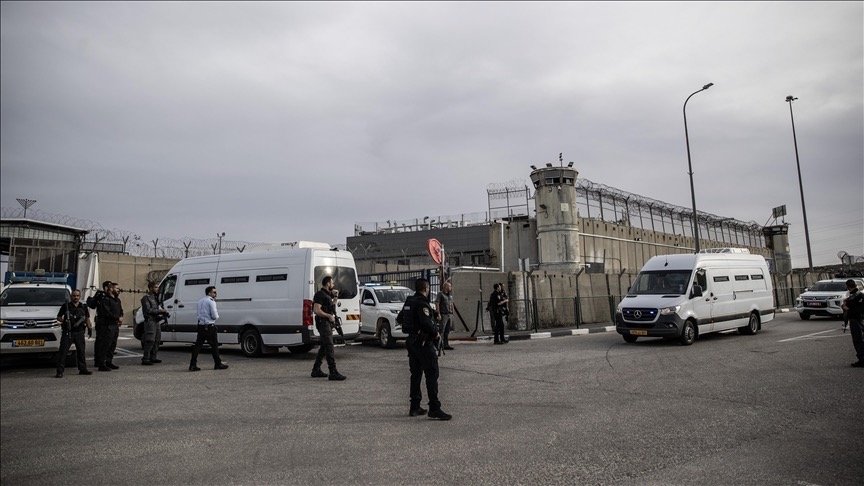
Palestinian arrests in West Bank exceed 7,000 since 7 October
(Photo Credit: Anadolu Ajansı)
The Cradle | February 14, 2024
The number of Israeli arrests in the West Bank since 7 October has risen to around 7,020, multiple institutions concerned with the rights of detained Palestinians reported on 13 February.
According to the human rights groups, 18 arrests were made in the West Bank overnight, including two women from Jericho alongside other children and former prisoners.
Overnight arrests made by the Israeli forces were mainly carried out in Hebron and Qalqiliya, while other arrests were made across Jericho, Nablus, Jerusalem, and Ramallah.
The Ministry of Detainees and Ex-Detainees Affairs, the Palestinian Prisoners Society (PPS), and the Addameer Prisoner Care and Human Rights Association released a joint statement revealing that the total number of arrests – including individuals from the 1948 territories – amounted to approximately 220 women and 440 children.
The number reported includes those arrested in their homes, at military checkpoints, those taken hostage, and those forced to surrender under pressure.
The statement added that 53 journalists had been detained since 7 October – 36 of whom remain imprisoned – with 21 others under administrative detention without charge or trial.
The detention campaigns are accompanied by escalating instances of abuse, beatings, and threats against the detainees and their family members. This includes the destruction of homes as well as the confiscation of vehicles, money, and jewelry.
They also reported executions targeting members of detainees’ families.
The data given by the prisoner rights groups does not include those arrested from Gaza due to Israel’s refusal to disclose such information.
The total number of Palestinians detained in Israeli prisons is estimated to exceed 9,000 individuals. Among them, there are 3,484 administrative detainees and 606 individuals classified as “illegal fighters” from Gaza.
Biden will not ‘punish Israel’ for civilian massacre in Rafah: Report
The Cradle | February 14, 2024
The White House has no “reprimand plans” in the works to punish Israel if its army launches a ground invasion into the city of Rafah in the southern Gaza Strip, where 1.4 million Palestinians are taking shelter after forcible displacement.
“Israeli forces could enter the city and harm civilians without facing American consequences,” POLITICO reports, citing three US officials speaking on condition of anonymity.
Measuring about 64 square kilometers in size, Rafah is severely overcrowded, with hundreds of thousands of civilians who fled there after the Israeli army designated the city a “safe zone” in its ongoing genocide campaign.
Israeli Prime Minister Benjamin Netanyahu plans to stage a land assault on Rafah, as he announced over the past several days, where he claims the “last four battalions” of Hamas’ armed wing are entrenched.
“We’re going to do it while providing safe passage for the civilian population so they can leave,” Netanyahu said in an interview with US outlet ABC News on Sunday. The premier, however, failed to specify where such a large number of displaced civilians could evacuate, stating only that Tel Aviv is “working out a detailed plan.” He alleged that “there are plenty of areas” north of Rafah despite the Israeli army having flattened most buildings and infrastructure in that region.
US President Joe Biden reportedly told Netanyahu on Sunday that an attack on Rafah should not be launched “without a credible and executable plan for ensuring the safety of and support for the more than one million people sheltering there,” yet he did not oppose the operation.
Hours later, bombs rained down on Rafah, killing over 100 civilians.
Over recent weeks, western media has been awash with reports that Biden is growing “frustrated” with Netanyahu, even using “disparaging terms” to refer to the Israeli premier and holding discussions about the “day after” Netanyahu.
Nevertheless, public statements by White House officials make it abundantly clear there will be no change in approach to US–Israel relations.
Newly-minted US National Security Council Coordinator for Strategic Communications John Kirby told reporters on Monday that the White House will “continue to support Israel … And we’re going to continue to make sure they have the tools and the capabilities” to continue military operations.
Asked on Wednesday what the US response would be to a ground invasion of Rafah without concern for civilian safety, Kirby refused to respond, saying, “I’m not going to get into a hypothetical game.” The senior US official has also come under fire for saying the Israeli military is doing a “better job at protecting civilians in Gaza” than their US counterparts would.
Furthermore, as international calls grow for Washington to cut arms deliveries to Israel, earlier this month, US Assistant Secretary of State for Near Eastern Affairs, Barbara Leaf, made it clear Washington has no plans to do such a thing.
“In a word, no – we are not contemplating that,” Leaf told reporters during a digital press briefing when asked if the White House is contemplating a reduction in the pace of arms deliveries to Israel.
In addition to fueling the mass murder of nearly 30,000 Palestinians in Gaza, the US has also provided political cover for Israel. Most recently, it threatened to review its ties with South Africa after Pretoria took Tel Aviv to the International Court of Justice (ICJ) on charges of genocide.
When courts intervene: halting the transfer of vital military equipment to Israel
By Dr Binoy Kampmark | MEMO | February 14, 2024
Moody’s Downgrades Israel, Warns That Weaker US Backing for Israel, War with Hezbollah Would Trigger Crash
By John Helmer – Dances with Bears – February 11, 2024
Twice already the warning of the obvious has been posted in the money markets — Israel cannot survive a long war with the Arabs and Iran.
In this long war, the gods do not favour the Chosen People, it was reported on October 27, three weeks after the Hamas offensive began. The decline in Israel’s export earnings from tourism and diamonds; the loss of imported supplies for manufacturing and consumption from the Houthi blockade of the Red Sea; and increasing risk to both imports and exports at the Mediterranean ports within range of Hamas and Hezbollah strikes were identified at that time.
The international ratings agencies, Moody’s, Fitch and Standard and Poors, postponed announcing the obvious for as long as they could.
In attrition war, on the economic front just like the Gaza and other fire fronts, the Axis of Resistance wins by maintaining its offensive capacities and operations for longer than the US and US-backed Israeli forces can defend. Like troops, tanks, and artillery pieces, the operational goal is to grind the enemy slowly but surely into retreat, then capitulation. Last week, Moody’s had already decided in-house to downgrade Israel; for several days senior management fended off a ferocious attack from Israeli officials and their supporters in the US trying to compel postponement of the downgrade and the analytical report substantiating it.
On February 6, in a review of the shekel, bond, credit default swaps (CDS), budget deficit, and other indicators, the conclusion was there could be no stopping the money markets from moving against Israel. Negative ratings from the agencies raise the cost of servicing Israel’s state and corporate bonds, and put pressure on the state budget. A ratings downgrade is a signal to the markets to go negative against the issuer – this usually comes after the smart money has changed its mind and direction. In Israel’s case, however, there has been an exceptional delay between negative outlook and downgrade. The last Fitch report on Israel was dated October 17; Moody’s followed on October 19; Standard & Poors (S&P) on October 24.
That Israeli and US tactics had forced postponement of new reports from the troika was obvious. A fresh warning was published on this website: as real estate and other tax collections collapse, Israel will have to make a large cash call on the US. This is going to come in the near future, just as the government in Kiev has been forced into calling on Congress as the Ukraine war is being lost. The longer both wars are protracted, the more obviously the loss of confidence expresses itself in Washington.
Moody’s has now caught up. According to the Israeli press, this is the first credit and currency downgrade in their country’s history.
In a report dated last Friday but not issued until Saturday, the Jewish sabbath, the agency officially reduced Israel’s rating from A1 to A2, and added pointers of further downgrading to come. The Anglo-American press immediately reacted against Moody’s. “Israel hits back”, the Financial Times headlined. The newspaper added: “[Prime Minister Benjamin] Netanyahu, in a rare statement over the Jewish Sabbath, said: ‘The rating downgrade is not connected to the economy, it is entirely due to the fact that we are in a war. The rating will go back up the moment we win the war — and we will win the war.’” In the Associated Press report, “Israel’s finance minister blasts Moody’s downgrade”. Rupert Murdoch’s platform Fox claimed: “Israel has a strong, open economy despite Moody’s downgrade”. “Israel’s creditworthiness remains high,” according to the New York Times, “but the rating agency noted that the outlook for the country was negative… A rating of A2 is still a high rating.”
The press release version of Moody’s report is republished verbatim so that its meaning can be understood without the propaganda.
Three points have been missed in the Anglo-American counterattack and Israeli government’s bluster. The first is the warning that Israel will soon have to request enormous cash backing from the US, and if there is any sign of weakening on that in Washington, the collapse of the Israeli economy and its capacity to continue its war is inevitable. The Moody’s report camouflaged the point this way: “The related issuances benefit from an irrevocable, on-demand guarantee provided by the Government of the United States of America (Aaa negative) with the government acting through USAID. The notes benefit explicitly from ‘the full faith and credit of the US’ and as per prospectus, USAID is obligated to pay within three business days if the guarantee is called upon.”
The second point strikes at announcements from Israel Defence Forces (IDF) generals and Netanyahu of their plan to expand their operations on the northern front – the Litani River ultimatum they called it in December. According to Moody’s report, “downside risks remain at the A2 rating level. In particular, the risk of an escalation involving Hezbollah in the North of Israel remains, which would have a potentially much more negative impact on the economy than currently assumed under Moody’s baseline scenario. Government finances would also be under more intense pressure in such a scenario.”
The third point is the most explosive. After cutting Israel’s rating to A2, Moody’s warned that further and deeper downgrades may follow, but that there is presently no way the ratings agency can predict what will happen next. “The ongoing military conflict with Hamas, its aftermath and wider consequences materially raise political risk for Israel as well as weaken its executive and legislative institutions and its fiscal strength, for the foreseeable future.”
In flagging those last four words – “for the foreseeable future” — Moody’s has told the markets that the strategic initiative in this war has now passed to the Axis of Resistance. Of course, the Arabs and Iranians already know. … Full article
Joe Biden Acts Like the Defender of Gazans, But He is the Destroyer
By Adam Dick | Peace and Prosperity Blog | February 13, 2024
This week President Joe Biden was again talking about his ideas of how the Israel government should exercise more restraint in its war in Gaza. But, he remains all talk and no action on this count.
It is tedious to repeatedly hear the man who is, in the absence of congressional action to provide special assistance to Israel for its war, unilaterally providing the key aid including weapons and intelligence for prosecuting Israel’s war continue to insist he supports restraint while the Israel government keeps pursuing relentless devastation.
Biden, in a Monday statement he made at the White House after meeting with Jordan King Abdullah, said the following regarding impending Israel military action:
As I said yesterday, our military operation in Rafah — their — the major military operation in Rafah should not proceed without a credible plan — a credible plan for ensuring the safety and support of more than one million people sheltering there. Many people there have been displaced — displaced multiple times, fleeing the violence to the north, and now they’re packed into Rafah — exposed and vulnerable. They need to be protected.
This schtick is way past its expiration date. The Israel war, now in its fifth month, continues to rack up destruction of life, health, and the physical manifestations of civilization in Gaza at an astounding pace, with the brunt of the suffering imposed on civilians. Israel is taking the actions. But, the US is the key accomplice to the atrocities because of the aid it provides.
This is Biden’s war as much as it is Israel’s war.
Biden is notoriously prone to make blunders in his public presentations. The blunder he made in his comment in his Monday White House statement is different than many. Biden quickly corrected his mention of “our military operation in Rafah” to clarify that the military operation is Israel’s. The slipup here was not that Biden had stated something false. Instead, it was that Biden had stated the truth that he and his administration are trying their best to hide.
GMO denounces targeting two members of Al-Jazeera team in an Israeli airstrike on Gaza

Palestinian Information Center – February 13, 2024
GAZA – The Government Media Office (GMO) in Gaza condemned in the strongest terms the Israeli targeting of the Al-Jazeera Arabic news crew for the fifth time, leading to the serious injury of the channel’s correspondent and cameraman in Khan Yunis, in southern Gaza Strip.
The GMO said, in a statement on Tuesday, Israeli airstrikes targeted Al-Jazeera’s reporter Ismail Abu Omar and cameraman Ahmed Matar, stressing that “the Israeli occupation army has deliberately targeted the channel’s teams for the fifth time in a row in a complete crime in violation of the international law.”
Journalist Abu Omar has had his right leg and some fingers amputated, in addition to other various wounds. His colleague Matar sustained various injuries, as well.
The GMO pointed out that since October 7, the Israeli occupation army has killed 128 journalists, arrested 10, and injured many others, stressing that this indicates that journalists have become targets of the Israeli occupation army.
The GMO called on press unions, media agencies, and human rights groups to denounce this crime and to pressure Israel to stop targeting journalists and to halt its genocidal war against civilians.
Featured Video

AIDS Inc. by Gary Null (2007)
or go to
Aletho News Archives – Video-Images
From the Archives
Clash of Civilization, Iran Part II
By Jamal Kanj – Intifada-Palestine.com – January 14, 2011
Israel’s survival kit is: perpetuate conflict, insecurity to rationalize collective hate and finally playing victim.
Devoid of conflict, Israel implodes internally; without hate, Zionism loses its justification; and playing eternal victim to continue blackmailing the West. Absence of this holy trinity, Israel ceases to exist.
From its inception, the house of Zion has mastered exploiting adversarial powers to advance Israel’s cause. For instance, their influence over the Democratic Party in the US began with President Truman’s bid for 2nd term election in 1948.
Responding to strong opposition from Secretary of State General George Marshall and Department experts urging against recognition of Israel, President Truman replied: “I’m sorry gentlemen but I have to answer to hundreds of thousands [Jewish voters] who are anxious for the success of Zionism. I do not have hundreds of thousands of [voting] Arabs among my constituents”
Zionists influence over liberal American politics was matched with the doctrinal school of Conservative theoreticians aligning the Republican Party’s platform with Israel’s objectives. The Neoconservative Zionists, coined Zioncons, invented the “Clash of Civilization” concept to fight Israel’s wars. … continue
Blog Roll
 Aletho News
- 12 Things Your Psychiatrist Was Trained Not to Tell You
- From Unipolar Universalism to Multipolar Civilizational Distinctiveness
- RSF military group defects, joins Sudanese army: State media
- Ireland goalkeeper refuses to play ‘Israel’ as squad weighs boycott
- China pushes back against US on Cuba, Iran
- Ukrainian Soldiers, Potential Mercenaries: Have Gun, Will Travel!
- Burnham’s UN debut… A masterclass in British disinformation
- Iran flights continue despite US aviation sanctions
- Global Tipping Points Lead the World Into a State of Entropy
- The day-after at the White House: USA and Xi Jinping
- If Americans Knew
- Israel forces Gazans to live in constant peril – Daily Update
- Deconstructing Netanyahu’s pants-on-fire UN rant – Daily Update
- Trump betrayed voters with his campaign lies and prioritized a foreign country once he took office
- Netanyahu calls Israel’s war in Gaza ‘opposite of genocide’ in UN speech to near-empty hall
- Settler Kidnappings: Torture, Sexual Abuse and Terrorisation of Palestinian Abductees as Israel Deepens Annexation of West Bank
- Gaza winter nears as 162,000 tents become unusable, raising fears of humanitarian crisis
- Netanyahu says, “It’s the opposite of genocide”; UN says Gaza economy is world’s ‘most severe crisis on record’ – Daily Update
- Israel’s US-Backed Assault on Gaza Has Created the ‘World’s Most Severe Economic Crisis on Record’: UN
- ‘Protecting U.S. Citizens’… From Israel
- ‘This is where I live now, the back of a truck’: a day in the life of a grandmother in Gaza
- No Tricks Zone
- New Study: Earth And Venus Surface Warmth Largely Explained By Convection And Lapse Rate, Not CO2 Or Radiation
- 2025 Nature Paper Claiming Worsening Global Drought Gets RETRACTED …Heavily Flawed
- New Study: ‘Global Drought Shows No Detectable Recent Acceleration Under Climate Warming’
- Economic Masterminds: German Socialists Suggest Taxing Productivity Gains Stemming From Using AI
- The South China Sea Has Not Been Cooperating With The Climate Change Narrative
- Energy Crisis: Germany Enters Heating Season With Historically Low Gas Reserve Fill Levels
- New Study: The Antarctic Ice Sheet Gained Mass From 2020-2024 Due To Staggering Snow And Ice Accumulation
- Study: Ocean Heating Rates From Thousands Of Years Ago ‘Dwarf’ Modern Ocean Heating Rates
- Climate Extremists Target, Attack Large-Scale Power Grid Infrastructure In Germany!
- New Study: Antarctic Ice Melt Has Contributed Less Than 1 Centimeter To Sea Level Rise In The Last 30 Years

