Penn Students’ Lawsuit Shows Campus Antisemitism Uproar Is A Manufactured Crisis
Vast majority of “incidents” are merely expressions of unwelcome political views
By Brian McGlinchey | Stark Realities | December 12, 2023
Saturday’s resignation of University of Pennsylvania President Liz Magill came after months of controversy — and a viral-video grilling of Magill in a congressional hearing — over allegations the school has become a hotbed of antisemitism.
While those allegations have been given widespread credence, a Stark Realities analysis of dozens of claimed antisemitic incidents at Penn finds that, apart from a small handful of cases, the great majority are merely instances in which Penn students, professors and guest speakers engage in political expression that proponents of the State of Israel strongly disagree with.
Conveniently, a catalogue of supposed examples of anti-Jew bigotry at Penn is laid out in a federal lawsuit filed last week against the school by two Jewish students who allege it “has transformed itself into an incubation lab for virulent anti-Jewish hatred, harassment, and discrimination.” In the suit, dual American-Israeli citizen Eyal Yakoby and American Jordan Davis seek “substantial damages in an amount to be determined at trial.”
For those wanting to look beyond what’s been said about Penn by grandstanding politicians, click-seeking news outlets and sensationalist social media posters, the 84-page complaint is a valuable resource. Unlike the sloppy court of public opinion, real courts demand a detailed presentation of specific allegations.
However, scrutiny of the Penn complaint — prepared by Philadelphia lawyer and Penn law grad Eric Shore and New York City law firm Kasowitz Benson Torres — confirms the campaign against the Philadelphia school is just the latest component a broader, long-running drive to censor political expression that’s critical of the State of Israel and sympathetic to Palestinians.
In support of that drive, conservatives who’d previously and rightfully bashed campus viewpoint censorship and crackdowns on flexibly-defined “hate speech” are among the most vocal advocates of installing a new censorship regime to keep students “safe” from anti-Israel rhetoric.
Objective readers of the complaint will quickly note a number of red flags, starting with strident, vitriolic language referring to “rabidly antisemitic professors” and “Jew-hating” speakers who “spew antisemitic venom” by “bellowing into bullhorns to express their hatred for Israel.”
However, the complaint’s foremost flaw is its repeated assumption that various political concepts, views and slogans promoted by critics of Israel are inherently antisemitic or genocidal. This kind of attack isn’t unique to the Penn complaint; it’s constantly used by Israel’s advocates to silence the opposition. Among the forbidden ideas:
- Anti-Zionism. A philosophy embraced by many Jews, anti-Zionism opposes the idea of a Jewish nation-state. Opposing the concept of such a Jewish state doesn’t automatically make someone a bigot any more than opposing a white state or a Christian state does. The Chavurah, a progressive Jewish group at Penn, recently rejected this charge, saying that “continual conflation of anti-Zionism with anti-semitism undermines any chance for productive dialogue at Penn concerning Israel.”
- Questioning Israel’s “right to exist.” No country has a right to exist. Countries are mere political arrangements. There’s nothing inherently bigoted about campaigning for a different political order between the Jordan River and the Mediterranean Sea. The State of Israel has no more “right to exist” than did the Soviet Union or Czechoslovakia, or does North Korea or the United States.
- “From the river to the sea, Palestine will be free.” As I wrote last month, “while any slogan will mean different things to different people, this one has been used for decades by Palestinians seeking the same liberties as Israeli Jews throughout the entire territory ruled by the State of Israel.” For most, it’s a call for the State of Israel to be replaced by a new governing arrangement. While some may be reasonably concerned about how that would play out, the idea isn’t inherently genocidal or antisemitic.
- The Palestinian “right of return.” This concept argues that Palestinians displaced by the 1948 creation of Israel should be allowed to return to their homes. It isn’t inherently embedded with bigotry, as the complaint suggests. Indeed, its advocates would argue the concept is a counter to Israeli ethnocentrism.
- “Singling out” Israel for criticism. This preposterous standard, routinely advanced by Zionists, suggests that it’s antisemitic to criticize policies of the Israeli government if you don’t simultaneously criticize other governments guilty of the same sins.
- Calling Israel an “apartheid state.” A great many Jews say Israel satisfies the definition of apartheid — for starters, Hebrew University Holocaust professor Amos Goldberg, former Mossad chief Tamir Pardo and Israeli human rights group B’Tselem.
- Accusing Israel of genocide. While the suit is filled with accusations of genocidal intent on the part of pro-Palestinian activists, the plaintiffs would have us assume it’s antisemitic to argue that Israel’s bombardment of civilian areas in Gaza and displacement of Palestinians amounts to genocide.
- Urging boycotts, divestment and sanctions (BDS) against Israel. In another display of double-standards, Israel’s backers cheer on economic warfare against Iran, but the BDS movement — which aims to achieve better treatment of Palestinians by using similar economic tactics — is supposedly a bigoted enterprise.
The most controversial term, “intifada,” has been chanted by pro-Palestinian protesters at Penn and around the world. Roughly translating to English as “shaking off,” intifada refers to an uprising against Israeli control of the West Bank and Gaza. Palestinians have engaged in two previous intifadas. While the tactics included suicide bombings targeting civilians, Palestinians also engaged in peaceful protests, rioting, and attacks on Israeli government targets ranging from mere stone-throwing to deadly rocket attacks.
“It is not a term against Jews, it is a term against the Israeli government,” said Glenn Greenwald last week on his show, System Update. “Just like you’re allowed to say ‘I think we should bomb Iran’ or go to war in Iraq or ‘flatten Gaza,’ people are allowed to say, allowed to opine…in the United States of America, that the repression by the Israeli government has become sufficiently severe that an uprising or even violence against the State of Israel is warranted.”
“Intifida” played a key role in last week’s Capitol Hill grilling of then-Penn president Magill, Harvard president Claudine Gay and MIT president Sally Kornbluth by New York Rep. Elise Stefanik.
[…]
Finally, in what may be the complaint’s “jump the shark” moment, the plaintiffs accuse Penn of discriminating against Jews “by intentionally reducing its Jewish enrollment.” Jews represent about 2.4% of the US population, but occupy 16% of Penn’s prized enrollment slots.
The complaint decries the fact that the Jewish share has fallen from about a third of students in 2000, a trend they say the school has “intentionally engineered.” The plaintiffs don’t specify which non-Jewish populations are now over-represented at Jews’ expense. – Full article
Biden regime has no plans to restrict military aid to Israel, officials say
Press TV – December 13, 2023
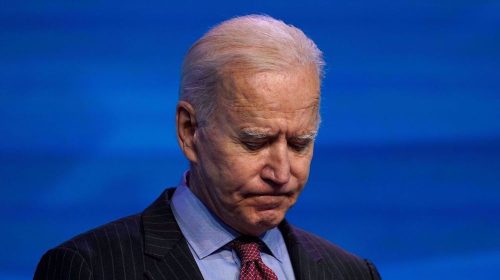
US officials have revealed that the administration of President Joe Biden has no plans to withhold military aid from Israel despite the aggravating humanitarian situation caused by the regime’s relentless military campaign in Palestine’s Gaza.
The CNN quoted officials as saying on Wednesday that there will be no changes to US positions on the transfer of weapons and munitions to Israel despite growing calls by Democratic lawmakers and human rights organizations for Washington to stop its open support for Israel until the regime commits to a ceasefire or at least to measures that can protect civilians amid the Gaza war.
A US official said that Washington would rely on Israel’s assessment of whether its attacks on civilians in Gaza are proportional and legal rather than independently evaluating Israeli strikes on civilians that it deems unlawful and concerning.
A congressional source also said that the State Department had failed to provide any assurances to lawmakers that the Biden administration would monitor how Israel would use a consignment of tank ammunition that was recently supplied to the Israeli regime without congressional consent.
The State Department transmitted an emergency declaration to US lawmakers late on Friday notifying them of the sale of thousands of tank munitions to Israel, a move that had been done without observing the standard 20-day period that congressional committees normally have to review such sales.
Democratic lawmakers have called on Biden to stop supplying military aid to Israel as the regime goes on with its indiscriminate attacks on civilians in Gaza.
That comes as Biden said this week that he has had tough conversations with Israeli Prime Minister Benjamin Netanyahu about Israel’s military campaign but did not threaten to cut off aid and said his administration will do nothing other than protect Israel.
“We’re not going to do a damn thing other than protect Israel in the process. Not a single thing,” said Biden while addressing Democratic donors in Washington.
More than 18,600 people have been killed in Gaza as a result of the Israeli attacks that started on October 7, the day on which the Palestinian resistance group Hamas launched a major operation into the occupied territories near Gaza, killing some 1,200 Israeli settlers and military forces.
Israeli military abducts Gaza hospital director after he decries siege
Press TV – December 12, 2023
The Israeli military has abducted the director of a main hospital in the northern Gaza Strip after he decried the occupying regime’s days-long siege of the facility and its draconian and deadly repercussions.
Ahmed al-Kahlout, head of Kamal Adwan Hospital in the city of Beit Lahiya, was arrested and taken to an “unknown destination outside the hospital,” Gaza’s Health Ministry said on Tuesday.
The hospital has been under siege by Israeli tanks for the past four days. Earlier on Tuesday, health officials reported that Israeli forces had stormed the hospital, rounding up Palestinian men for interrogation.
Before his abduction, Kahlout had strongly criticized the siege laid on the hospital, saying it had caused the situation at the facility to become “very difficult.”
“No electricity, water, or food at the hospital,” Kahlout had bemoaned, and noted that “three children at the hospital lost their lives in the last three days due to a shortage of oxygen.”
“Israeli drones target anyone entering or leaving the hospital,” he had also said, announcing that the Israeli military had shelled the facility’s maternity ward and water system, forcing the staff to rely on groundwater.
The Israeli military was sustaining its siege and attacks on the hospital, while the facility was accommodating “65 injuries, including 12 children in intensive care, six children with serious injuries, and 3,000 displaced people,” the hospital director had said.
The remarks came amid an ongoing war by the Israeli regime against the entire Gaza, which Tel Aviv began on October 7 in response to an operation staged by the coastal sliver’s resistance groups.
Nearly 18,500 people have been killed in Gaza as a result of the Israeli attacks, most of them women and children.
Also on Tuesday, the UN said only 13 out of 36 hospitals in the Gaza Strip were partially functional as Israeli occupation forces were targeting medical centers and staff amid heavy bombardment of the besieged territory.
The United Nations Office for the Coordination of Humanitarian Affairs (OCHA) said in a report that the services provided to patients at operational hospitals were “limited” as the facilities had run out of bed capacity.
Euro-Med Monitor: “In Gaza, Israel’s Army Replicates the Crimes Committed by Zionist Gangs in 1948”
IMEMC | December 12, 2023
An urgent international investigation must be opened into horrific crimes committed by the Israeli army during its land incursions into the Gaza Strip, including field executions, torture, and rape threats, said Euro-Med Human Rights Monitor, citing testimonies collected from newly-released civilians.
Euro-Med Monitor said that Israeli army forces are reenacting the same crimes committed by Zionist gangs during the 1948 Nakba, which resulted in the collective displacement of Palestinians.
These crimes include premeditated murder, setting fire to Palestinian homes and properties, torture, and insulting and humiliating detained civilians.
The human rights organisation highlighted the Israeli forces’ brutal storming of civilian homes in crowded residential neighbourhoods during the ongoing genocide.
Members of Israel’s military terrorized and beat residents, plus arrested hundreds of them, including women, children, and sick people.
According to testimonies gathered by Euro-Med Monitor from several detainees who were newly released, the Israeli forces took the detainees from their homes, stripped them naked, and attacked them with machine guns, electric cables, and cold water.
Sixteen-year-old Muhammad Mahmoud Aslim told the Euro-Med team that the Israeli forces stormed his family’s home in Al-Shuja’iya neighbourhood, east of Gaza City, after they were trapped for an entire week without food and water.
He stated that over the past few days, Israeli forces killed everyone in his neighbourhood who tried to leave their home, including Aslim’s brother.
Israeli forces later stormed his family’s house, said Aslim, and destroyed its contents with heavy gunfire. His family members were gathered naked and handcuffed before being violently assaulted and beaten.
Aslim still does not know what happened to his mother and sisters, who were captured and kidnapped by the Israeli army.
The Euro-Med Monitor team has gathered statements and testimonies about Israeli special forces raiding refugee centres in Gaza City and its northern areas, which housed thousands of displaced Palestinians.
These raids have involved the execution of young men who were shot with live ammunition at point-blank range.
Displaced people at the Cairo School, which houses hundreds of displaced people west of Gaza City, told Euro-Med Monitor’s team that several civilian cars carrying Israeli special forces stormed the school yard on Friday December 8, killing and wounding a number of unarmed young men.
According to the testimonies, the Israeli special forces ordered all of the men in the school to quickly gather and line up opposite them. Four of the men were executed, and the others were arrested after a brief interrogation.
Muhammad Abu Mustafa said that three individuals—two from the Abdul Ghafour and Abu Zaid families and one from his own family—were shot and killed by Israeli snipers after they went to assist a neighbour in Al-Shuja’iya neighbourhood. The victims were left bleeding to death.
Similar violations were reported on Saturday by other internally displaced people at the UNRWA-run Khalifa Bin Zayed School, in the northern Gaza Strip town of Beit Lahia.
They reported that the Israeli forces arrested dozens of men and minors in the school. The detainees were stripped of their clothes, bound, and taken to another location, where they were interrogated and tortured. Some of them were released, while the rest were kept in custody.
One of the released men, who requested anonymity for fear of retaliation, said that they were ordered to take off their clothes after being handcuffed and blindfolded.
They were then put in trucks and taken to the seashore, where they were kept shackled for about 19 hours.
According to the young man, they were subjected to insults, severe beatings, threats of being shot in the head, and had numbers written on their hands. They were also deprived of drinking water for many hours.
Upon their release, they were transferred naked to Salah al-Din Street, south of Gaza City, where the soldiers ordered them to walk on foot towards the central areas of the Gaza Strip.
The Israeli random arrests also targeted a young disabled man who suffers from hemiplegia.
The young man had been displaced from Al-Zaytoun neighbourhood in Gaza City to a relative’s apartment in the city centre before he and his brother were arrested; their fate remains unknown.
Ms. M.Z., a resident of Al-Zaytoun neighbourhood who was displaced to Shuhada Al-Aqsa Hospital in Deir Al-Balah, in the southern part of the Strip, said that an Israeli soldier pointed his gun at her head and threatened to kill her even though she had told him she was five months pregnant.
The soldier ordered her to take off her clothes and threatened to rape her.
As it continues to document testimonies from victims of the Israeli army’s crimes and random arrests, Euro-Med Human Rights Monitor renewed its call for an urgent international investigation into Israel’s violations and crimes against civilians, and called on the United Nations to assume its responsibilities and provide a safe passage for the displaced to use to evacuate.
Israel is required by international humanitarian law to take all reasonable steps to prevent harm civilians and to guarantee their safe shelter.
The Geneva-based rights organization emphasized, however, that civilians who choose to stay in areas designated for evacuation do not forfeit their protection, and cannot be singled out or targeted for any reason.
Iran: EU sanctions others, looks the other way on Gaza genocide, ethnic cleansing
Press TV – December 12, 2023
Iran has denounced the EU’s recent sanctions on its defense industry over “baseless” allegations of drone delivery to Russia, slamming the block for turning a blind eye on Israel’s “genocide” unfolding in the Gaza Strip.
In a statement on Tuesday, Iran’s Foreign Ministry spokesman Nasser Kan’ani “strongly condemned” European Council’s “destructive actions” and imposing sanctions against 6 persons and 5 entities involved in Iran’s development and production of unmanned aerial vehicles (UAV).
“The desperate efforts of some malicious actors with political motives in order to use the inefficient sanctions and spread of false information only create more self-made obstacles in the path of relations between the Islamic Republic and Europe and prove ineffective,” he said.
Kan’ani said the EU talks about international law and the United Nations Charter, while it is “practically turning a blind eye on Israel’s war crimes” and violation human rights and international humanitarian laws.
He further criticized EU for not making any tangible efforts to stop Israel’s “unquestionable genocide and ethnic cleansing” against the “oppressed Palestinians in Gaza and the West Bank.”
Kan’ani also reaffirmed the Islamic Republic’s supports for efforts aimed at finding a solution to the Ukraine military conflict through peaceful means.
Tehran says it reserves the right to retaliate after the European Union imposed new sanctions against Iran in connection with the allegation, he concluded.
The European Union and the US have long accused Iran of supplying drones to Russia for use in Ukraine.
The Council’s sanctions, announced on Monday, imposed restrictive measures against the Shahed drone-maker Shakad Sanat Asmari, its CEO, deputy CEO and chief scientist.
The other companies hit were the Baharestan Kish Company, Saad Sazeh Faraz Sharif, the Sarmad Electronic Sepahan Company and the Kimia Part Sivan Company.
The US has also imposed similar sanctions on a number of entities and individuals based in Iran and other countries, accusing them of supporting Tehran’s drone development.
Iran has repeatedly rejected the West’s claim, saying it has not sold any weapons to Russia for the the war against Ukraine, and asked the West to offer evidence for the allegation.
Canadian mayor backs Israel’s actions no matter how many children die
RT | December 12, 2023
The mayor of the Montreal suburb of Hampstead Jeremy Levi has said that, regardless of the number of children’s lives taken, he would continue to support Israel in its ongoing offensive in Gaza.
More than 18,200 people have so far died in the nine-week bombardment of Gaza, health officials in the besieged enclave said on Monday, as Israel’s retaliatory campaign in response to Hamas’ October 7 cross-border attack continues at pace. Israeli officials say that 1,147 of its citizens were killed in the October assault, while another 240 were seized as hostages.
But as international condemnation of Israel’s siege of Gaza swells, Levi – who was elected last year to govern the predominantly Jewish Hampstead community – has said that Israel’s military offensive must continue until “good” prevails over “evil.”
“I’m not calling for a ceasefire,” Levi said in a video posted to social media on Monday by Yves Engler, a vocal critic of Israel. “I want the hostages home, but I’m not calling for a ceasefire.”
The mayor added about the increasing death toll in Gaza, particularly deaths of children: “I would never support [the killing of children], it’s terrible. But Israel has to do whatever they have to do to protect the security of their own people.”
The Palestinian ministry of health has said that about 70% of those killed in the enclave since Israel’s offensive began are women and children under the age of 18. United Nations humanitarian officials said late last month that about 160 children are being killed each day in Gaza, or one child every ten minutes.
UNICEF spokesman James Elder added to reporters in Geneva in November that conditions are deteriorating further, and forecasted a deepening humanitarian crisis “if youngsters continue to have restricted access to water and sanitation in Gaza.”
“Hamas must be eradicated completely,” Levi continued in his video clip. “[The collateral death toll] is terrible, but there is no other way. My heart goes out to all the innocent people who have suffered great loss in this tragedy, but good needs to prevail over evil.”
Asked if he would continue to support Israel if 100,000 children were killed, Levi said: “You can give me all sorts of numbers, my answer is going to be the same: Israel needs to eradicate Hamas.”
Last month, Levi imposed a bylaw in the Hampstead community which would see anyone who tore down a poster of missing Israeli citizens fined CAN$1,000 – with the money being donated directly to Israel.
Israeli regime turning to Western mercenary groups to back its war on Gaza
By Reza Javadi | Press TV | December 12, 2023
Apart from the lavish military aid offered by the United States and Europe, the Israeli military is turning to Western mercenary groups in its genocidal war against the Gaza Strip.
In a recent interview with Spanish newspaper El Mundo, Pedro Diaz Flores, a notorious Spanish mercenary, revealed that the Israeli regime is recruiting Private Military Companies (PMCs) to achieve its interests in the besieged territory.
He revealed that “many” mercenary groups have joined Israel’s army, which pays them “very well.”
“So I came for the economy, for money. They pay very well, they offer good equipment and the work is calm. It is 3,900 euros [$4,187] per week, complementary missions aside,” Flores said.
Flores, who fought alongside neo-Nazis in Ukraine, spoke of his group’s assistance to Israeli forces.
“We only provide security support to arms convoys or the troops of the Israeli armed forces that are in the Gaza Strip,” Flores said, confirming the presence of PMCs in Gaza.
“We are in charge of the security of the checkpoints and access control on the borders of Gaza and Jordan. There are many PMCs here and they share the work. Traditionally they have guarded border terminals between Eliat and Aqaba.”
According to the images posted by a leading American PMC, Forward Observations Group (FOG), the American PMCs seem to be active in the occupied Palestinian territories aiding the Israeli regime.
On their social media accounts, FOG posted numerous images and stories showing its recruits in Palestine, surrounded by a large cache of weapons and sporting combat gear.
Wearing the American flag on their uniforms, the mercenaries’ social media accounts show that they are stationed alongside the Gaza border in the occupied territories.
In a YouTube video posted back in January, the group revealed its presence on the frontlines of the Ukraine war, assisting the Ukrainian forces in their war against Russian forces.
On its social media channels and website, FOG has advertised its gear through its training videos.
The founder of FOG is US mercenary and ex-US paratrooper, Derrick Bales, who has taken heat for his association with Vadim Lapaev, a member of the far-right Azov Battalion in Ukraine.
Bales, the former US infantry soldier who also served in Afghanistan, apologized but downplayed the radical aspects of those Ukrainian fighters.
Lapaev was quoted as saying by Vice News that he regretted his past association with neo-Nazis.
Apart from unconventional forces, the US has deployed more than 15,000 military troops to the occupied territories since the regime launched its fresh aggression against Palestinians on October 7.
Deployments disclosed by the Pentagon back in October also include two US aircraft carriers and their associated escort ships, in addition to the repositioning of an amphibious task force made up of about 4,000 US Marines and sailors.
The task force of sailors and Marines embarked aboard the USS Bataan and two other warships, includes an infantry battalion of about 900 combat personnel, F-35B fighter jets, armored vehicles and other weapons.
Apart from billions of dollars of military aid to the Israeli regime, the US military still continues to ship weapons and has pledged to provide more missile interceptors for Israel’s Iron Dome military system, small-diameter bombs and other GPS-guided weapons, Sabrina Singh, a Pentagon spokeswoman confirmed recently.
In this regard, the US is covertly providing 2,000-pound “bunker-busting” bombs to Israel’s air force to be used against the Palestinians in the Gaza Strip.
According to a recent report by the Wall Street Journal (WSJ), some 100 of the BLU-109 bombs – designed to penetrate hardened surfaces to reach underground targets such as military bunkers – have been sent to Tel Aviv.
The bombs, which carry a warhead weighing more than 900 kilograms, are capable of penetrating hardened structures such as concrete before exploding, causing heavy casualties.
The covert arms transfers are being reported when the US claims that it is urging Israel to limit civilian casualties in its military campaign in Gaza. However, the US-provided weapons have been the main cause of high civilian casualties across Gaza.
According to US officials, an airstrike that hit the Jabalia refugee camp in northern Gaza in the initial days of the war that killed over 100 people was conducted using US-provided bombs.
According to another latest report, phosphorus shells used by Israeli forces in an October attack on a Lebanese village were also provided by the US.
The revelation came after US officials expressed “concern” over the regime’s use of white phosphorous, which human rights campaigners say should be investigated as a war crime.
Meanwhile, some Russian news agencies and several experts have reported about mercenaries leaving Ukrainian soil and heading to the occupied territories to aid the regime forces against the Palestinian resistance movement.
“Assistance and attention to Kiev are noticeably decreasing due to the Israeli-Palestinian conflict, which cannot but worry the Ukrainian authorities,” a Russian news agency posted on Telegram.
“The transfer of Foreign Legion fighters to participate in the war on the side of the Israel Defense Forces can greatly affect the morale of the Ukrainian Armed Forces,” wrote another X account.
“Is the West ready to close the Ukraine project and devote all its attention to a new conflict in the Middle East?”
In this regard, the deployment of mercenaries in Gaza raises questions about accountability and the role of the international community, as it exacerbates the suffering of Palestinians.
What Sort of “Caring” Do Zionist Medical Faculty at U of T Teach?
By Yves Engler | Dissident Voice | December 11, 2023
An exaggerated sense of self-importance and entitlement, hubris, chutzpah, racism while claiming victimhood and massively flawed thinking are the descriptors that come to mind when considering the 555 doctors at the U of T who signed an Open Statement to the University of Toronto Faculty of Medicine (TFOM) from Jewish Physician Faculty.
The statement is an endorsement of Israel’s genocidal war against Palestinians in Gaza, which has been “catastrophic”, according to the WHO, for its healthcare system and killed 200 medical workers.
The opening declaration is: “We affirm the right of TFOM faculty to be openly Zionist and to support the right of Israel to exist and defend itself as a Jewish state and for those faculty to be free of public ostracism, recrimination, exclusion, and discrimination in the TFOM.”
In plain language, the doctors want to promote Israel’s slaughter in Gaza and not be challenged by (disproportionately) racialized and younger students and colleagues.
The statement effectively brands all criticism of Israel as antisemitic. It declares “that accusations against Israel as ‘apartheid’, ‘colonialist’, or ‘white supremacist’ or committing genocide are mendacious and aim to promote the argument that Israel should be dismantled as a Jewish state, making such accusations themselves antisemitic.” Amnesty International, Human Rights Watch, Al Haq, B’tselem and the UN Special Rapporteur on Palestinians have all labeled Israel an apartheid state. Many Zionist pioneers described their aims as “colonial” and hundreds of experts in the field believe Israel is currently committing genocide in Gaza.
While framing themselves as victims, the letter threatens colleagues. “We believe that academic freedom is not absolute. In particular, leaders in academic medicine with power over learners and faculty, who in some cases are the sole leader responsible for thousands of learners and faculty, should not be issuing statements which collide with equity, diversity and inclusion for Jews or which make Jews feel unsafe and unwelcome in the TFOM and which are unrelated or unessential to their core academic role, research, and publishing of results.”
But it’s the many openly racist signatories who have authority over students, as Ghada Sasa’s followers showed on X. The new medical collective Combat Online Harassment concluded, “1 in 5 signatories to the University of Toronto medical school’s proud Zionist letter with active Twitter accounts have posted racist, hateful, or harmful materials!”
This includes Sandy Buchman justifying massacres against Palestinians since Gaza is a “sociopathic society full of murderers”. Another Zionist letter signatory Gideon Hirschfield liked a tweet threatening all Palestinians in Gaza with “immediate and complete destruction” and Dr. Leslie Shulman called for deporting darker skinned teenagers who protested against genocide in Toronto. “Expel. Them. Now. Reason… failure to show evidence of being human.”
Combat Online Harassment, a group of North American healthcare workers, says it was formed in response to “increasing amounts of racist anti-Palestinian, anti-Arab, and Islamophobic behavior from our colleagues. Simultaneously, we’ve observed an unsettling trend where physicians expressing pro-Palestinian views find themselves unjustly targeted with baseless accusations of antisemitism, resulting in detrimental consequences for their careers. Our work aims to highlight the double standard in the policing of voices; clearly racist and hateful views (ones we post), if coming from Zionists, face little to no repercussions.”
Jewish Zionist doctors have succeeded in punishing anti-genocide voices for making them “feel” uncomfortable. The most high-profile and egregious case is University of Ottawa doctor Yoni Freedhoff who targeted resident Yipeng Ge, leading to his suspension. Over 95,000 people have signed a petition calling for Ge to be reinstated. Toronto Star columnist Shree Paradkar noted, “Several Ontario doctors tell me they are being hauled up for supporting Palestinian rights including for signing a ‘don’t bomb hospitals’ petition. Higher-ups have told them there were complaints and accused them of making Jewish colleagues feel unsafe.”
The Zionist letter highlights the power dynamic in medicine and TFOM. A year ago I wrote about a big Israel lobby and media brouhaha over a ‘report’ on purported antisemitism at TFOM. It concluded: “As Black and Indigenous — and to a lesser extent Latin American, South Asian and Arab — communities struggle for positions within the elite institution, many Jewish and politically Zionist faculty members complain that expressing solidarity with Palestinians discriminates against them. Their pressure led to the appointment of a Special Adviser on Anti-Semitism who published a spurious ‘report’, which outside groups amplified and the dominant media covered widely. This reflects power, not oppression.”
When 555 Jewish doctors openly support Israel’s killing of 17,000 Palestinians this confirms that analysis.
And it makes one wonder what sort of education the ‘caring professions’ at U of T are receiving.
US imposes media restrictions on Palestine FM as visa condition, Saudi FM confirms
MEMO | December 10, 2023
Israeli army fires on 6 Palestinian Red Crescent ambulances escorted by UN vehicles
MEMO | December 10, 2023
The Israeli army opened fire on six ambulances of the Palestinian Red Crescent Society, escorted by UN vehicles, carrying 11 patients with critical injuries, including amputations and head wounds, in Gaza, the Red Crescent said on Sunday, adding that one of the injured died before receiving any treatment, Anadolu Agency reports.
“The Palestine Red Crescent Society coordinated with the United Nations to evacuate 11 casualties in critical condition last night from Al-Ahli Baptist Hospital in Gaza City to the hospital in the south of the Strip,” the Red Crescent said in a statement on X.
A convoy of six Red Crescent ambulances, accompanied by UN vehicles, set off from Khan Younis after waiting about four hours for the first green light to move towards the military checkpoint that separates the north from south in the Gaza Strip, it added.
“The convoy then waited a full hour to get a second green light to cross the checkpoint,” the Red Crescent explained, noting that “It was then subjected to a thorough inspection that lasted for about two hours, during which two paramedics were detained and released as soon as the convoy was allowed to pass.”
As soon as the convoy left the checkpoint and arrived near the Kuwait Roundabout, the statement said, “The occupation soldiers opened fire on one of the ambulances.”
One of the side windows was hit, and the bullet damaged the ambulance, the Red Crescent said.
“After the convoy returned from the Baptist Hospital and upon reaching the checkpoint on the way back, the convoy’s path was deliberately obstructed and paramedic Rami Al-Qatawi was detained again,” it said.
The Red Crescent said the Israeli military repeated its thorough inspection procedures, obstructing the convoy’s passage, and “interrogation at the checkpoint for more than two hours led to the martyrdom of one of the wounded.”
“After a detention that lasted for more than four hours during which he was subjected to beatings, abuse, and blackmail while being interrogated, paramedic Rami Al-Qatawi was released,” according to the statement.
He arrived at the other side of the checkpoint in a deplorable state after being forced to walk more than 2 kilometers (1.25 miles) on a rough road in cold weather while “naked and handcuffed,” the Red Crescent said.
Israel resumed its military offensive on the Gaza Strip on Dec. 1 after the end of a week-long humanitarian pause with Hamas.
At least 17,700 Palestinians have been killed and more than 48,780 others injured in relentless air and ground attacks on the enclave since Oct. 7 following the cross-border attack by Hamas.
The Israeli death toll in the Hamas attack stood at 1,200, according to official figures.
Doha Summit: US Risks Alienating Muslim World by Vetoing Gaza Ceasefire Resolutions
By Ekaterina Blinova – Sputnik – 10.12.2023
A DC think tank has pointed out that Washington could lose influence in the Arab and Muslim world by killing off the UN ceasefire resolutions.
The US was the only country that vetoed a UN Security Council Gaza ceasefire resolution on Friday. The 15-member gathering voted 13-1 in favor of the initiative – with the United Kingdom abstaining.
Israel’s military operation in the strip has already claimed the lives of more than 17,700 people with 70% of them estimated to be women and children, per Gaza’s Ministry of Health.
Judging from the opening remarks at the 21st Doha Forum in Qatar on Sunday, the Arab world is deeply frustrated by Washington’s veto, DC think tank The Quincy Institute of Responsible Statecraft pointed out.
In particular, Foreign Minister of Qatar Sheikh Mohammed bin Abdulrahman Al-Thani said that Washington’s move to kill the resolution exposed the “great gap between East and West… and double standards in the international community.”
He placed emphasis on the necessity to create a new multipolar world order that “respects justice and equality between the people where no people are more powerful than the other.” The Qatari leadership vowed to continue exerting pressure on Tel Aviv and Hamas to implement a new truce despite “narrowing” chances.
Palestine Prime Minister Mohammad Shtayyeh argued that the US gave the “greenest of green lights” to Israel’s brutal methods of waging war in Gaza. Per him, Washington should be held responsible for Israel’s attacks and the loss of Palestinian lives.
For his part, Jordan’s Foreign Minister Ayman Safadi accused Tel Aviv of implementing a policy of expelling Palestinians out of Gaza by military actions.
Addressing the forum, United Nations Secretary-General Antonio Guterres stated that the humanitarian system is currently under threat: “We are facing a severe risk of collapse of the humanitarian system. The situation is fast deteriorating into a catastrophe with potentially irreversible implications for Palestinians as a whole and for peace and security in the region.”
“Last week, I delivered a letter to the President of the UN Security Council invoking Article 99 of the Charter of the UN for the first time since I became Secretary General in 2017,” said Guterres. “I wrote that there is no effective protection of civilians in Gaza. As a matter of fact, during my mandate, the number of civilian casualties in Gaza in such a short period is totally unprecedented.”
Article 99 of the UN Charter states: “The Secretary-General may bring to the attention of the Security Council any matter which in his opinion may threaten the maintenance of international peace and security.”
Meanwhile, DC think tank The Quincy Institute of Responsible Statecraft highlighted that humanitarian advocates repeatedly called the situation in Gaza “unprecedented”, adding that UN agencies are continuing to lose people in the war zone. The United Nations Relief and Works Agency has lost 134 relief workers in Gaza since Tel Aviv’s military operation began.
The Quincy scholars also warn about the growing anti-American sentiment in the Arab world, as Washington is seen as the major obstacle on the way to peace in Gaza due to its repeated vetoes of ceasefire resolutions in the UN.
Khaled Saffuri, executive director of the National Interest Foundation in Washington, told the think tank that he was “struck by the backlash against American brands” during his travels in Kuwait and Qatar over the last week. Per him, Arab customers and restaurants are boycotting Coke, Pepsi, McDonald’s, and Starbucks. Saffuri called Washington’s latest veto in the UNSC “horrible.” “America is losing a lot in the Muslim world,” he told the think tank.
Featured Video

AIDS Inc. by Gary Null (2007)
or go to
Aletho News Archives – Video-Images
From the Archives
Clash of Civilization, Iran Part II
By Jamal Kanj – Intifada-Palestine.com – January 14, 2011
Israel’s survival kit is: perpetuate conflict, insecurity to rationalize collective hate and finally playing victim.
Devoid of conflict, Israel implodes internally; without hate, Zionism loses its justification; and playing eternal victim to continue blackmailing the West. Absence of this holy trinity, Israel ceases to exist.
From its inception, the house of Zion has mastered exploiting adversarial powers to advance Israel’s cause. For instance, their influence over the Democratic Party in the US began with President Truman’s bid for 2nd term election in 1948.
Responding to strong opposition from Secretary of State General George Marshall and Department experts urging against recognition of Israel, President Truman replied: “I’m sorry gentlemen but I have to answer to hundreds of thousands [Jewish voters] who are anxious for the success of Zionism. I do not have hundreds of thousands of [voting] Arabs among my constituents”
Zionists influence over liberal American politics was matched with the doctrinal school of Conservative theoreticians aligning the Republican Party’s platform with Israel’s objectives. The Neoconservative Zionists, coined Zioncons, invented the “Clash of Civilization” concept to fight Israel’s wars. … continue
Blog Roll
 Aletho News
- Merck Virologists Admitted to Falsely Certifying Vaccine Efficacy
- Mandatory Folic Acid for every man, woman & child
- Pro-Palestine protesters arrested outside UK’s ruling Labour Conference in Liverpool
- Mauritius denies landing permit to flight from Israel, forcing cancellation: Tour operator
- Israeli finance minister calls for genocidal war on West Bank, annexation of south Lebanon
- 12 Things Your Psychiatrist Was Trained Not to Tell You
- From Unipolar Universalism to Multipolar Civilizational Distinctiveness
- RSF military group defects, joins Sudanese army: State media
- Ireland goalkeeper refuses to play ‘Israel’ as squad weighs boycott
- China pushes back against US on Cuba, Iran
- If Americans Knew
- Israel forces Gazans to live in constant peril – Daily Update
- Deconstructing Netanyahu’s pants-on-fire UN rant – Daily Update
- Trump betrayed voters with his campaign lies and prioritized a foreign country once he took office
- Netanyahu calls Israel’s war in Gaza ‘opposite of genocide’ in UN speech to near-empty hall
- Settler Kidnappings: Torture, Sexual Abuse and Terrorisation of Palestinian Abductees as Israel Deepens Annexation of West Bank
- Gaza winter nears as 162,000 tents become unusable, raising fears of humanitarian crisis
- Netanyahu says, “It’s the opposite of genocide”; UN says Gaza economy is world’s ‘most severe crisis on record’ – Daily Update
- Israel’s US-Backed Assault on Gaza Has Created the ‘World’s Most Severe Economic Crisis on Record’: UN
- ‘Protecting U.S. Citizens’… From Israel
- ‘This is where I live now, the back of a truck’: a day in the life of a grandmother in Gaza
- No Tricks Zone
- New Study: Earth And Venus Surface Warmth Largely Explained By Convection And Lapse Rate, Not CO2 Or Radiation
- 2025 Nature Paper Claiming Worsening Global Drought Gets RETRACTED …Heavily Flawed
- New Study: ‘Global Drought Shows No Detectable Recent Acceleration Under Climate Warming’
- Economic Masterminds: German Socialists Suggest Taxing Productivity Gains Stemming From Using AI
- The South China Sea Has Not Been Cooperating With The Climate Change Narrative
- Energy Crisis: Germany Enters Heating Season With Historically Low Gas Reserve Fill Levels
- New Study: The Antarctic Ice Sheet Gained Mass From 2020-2024 Due To Staggering Snow And Ice Accumulation
- Study: Ocean Heating Rates From Thousands Of Years Ago ‘Dwarf’ Modern Ocean Heating Rates
- Climate Extremists Target, Attack Large-Scale Power Grid Infrastructure In Germany!
- New Study: Antarctic Ice Melt Has Contributed Less Than 1 Centimeter To Sea Level Rise In The Last 30 Years

