Seyed M. Marandi: U.S. Military DIVIDED? Iran’s Secret Defense EXPOSED
Dialogue Works | April 6, 2026
An intense discussion on escalating U.S.–Iran tensions highlights internal divisions within the U.S. military and claims of miscalculation in confronting Iran’s long-prepared defense systems. The interview argues Iran’s capabilities remain largely intact, with underground bases and strategic planning shaping its response. It emphasizes regional involvement, warning that Gulf states hosting U.S. forces are deeply entangled. The conversation frames the conflict as potentially catastrophic globally, with risks to energy routes, economies, and civilian infrastructure, while stressing that continued escalation could trigger widespread retaliation and long-term geopolitical consequences.
Baghdad tells Asian refiners, traders to begin loading Iraqi crude amid Iranian exemption
The Cradle | April 6, 2026
Baghdad has told Asian traders and refiners they can begin loading Iraqi oil into tankers for transit through the Strait of Hormuz following an Iranian exemption to transit the strategic waterway.
After the US and Israel began their unprovoked attack on Iran over one month ago, Iran closed the Strait of Hormuz, threatening to target vessels linked to the US and Israel with missile and drone strikes.
The move forced Iraq to cut its oil production by some 70 percent, as Baghdad had no major alternate route for exporting oil, which funds 90 percent of the state budget, and as its oil storage facilities quickly reached capacity.
Iraqi oil exports subsequently plunged by roughly 97 percent, to an average of 99,000 barrels per day (bpd).
However, in a notice sent on Sunday, Iraq’s State Organization for Marketing of Oil (SOMO) announced that Iraqi oil shipments were now “exempt from any potential restrictions.”
It asked Asian buyers to begin loading crude into vessels, saying export terminals, including in the city of Basra on the Persian Gulf, were “fully operational.”
According to Bloomberg, it was not immediately clear if the Iranian exemption would apply to all Iraqi oil or just the tankers owned by SOMO.
“Buyers expressed caution about the move,” the financial news outlet added.
The Ocean Thunder, a tanker carrying a million barrels of Iraqi crude, crossed the narrow strait on Sunday.
Iraq often sells oil on a free-on-board basis, meaning refiners arrange their own shipping. Asian buyers speaking to Bloomberg said they were seeking additional information, including whether Iraq would allow the use of its own tankers for extra security.
Transit of vessels through Hormuz has not only been hampered by Iranian threats, but by massive increases in maritime insurance premiums, as well as outright cancellations of insurance policies by western insurers.
Bloomberg notes that the number of vessels transiting through Hormuz has increased over the past week but remains at a “trickle” compared to before the war.
On 18 March, Baghdad reached a deal with leaders of the Iraqi Kurdistan region to resume oil exports via pipeline to Turkiye, though the volume the pipeline can hold is too small to make up for the disruptions of exports from Basra through Hormuz.
Roughly 300,000 bpd are now exported via the pipeline in the Kurdistan Region through Turkiye’s Ceyhan port.
This may aid Israel’s oil security, as Tel Aviv receives much of its oil from Azerbaijan, which ships to Ceyhan via the Baku-Tbilisi-Ceyhan pipeline. From there, Israel can import crude via oil tankers transiting to Haifa on the Mediterranean Sea.
Under fire, Moscow and Tehran close ranks
US–Israeli escalation is accelerating, rather than weakening, the Russia–Iran axis, reshaping the Caspian into a contested strategic corridor.

By Hazal Yalin | The Cradle | April 6, 2026
Hours after the US and Israel – increasingly referred to in some circles as the “Epstein coalition” – attacked Iran on 28 February, Russia’s Foreign Ministry issued a sharply worded response, describing the assault as “a deliberate, premeditated, and unprovoked act of armed aggression against a sovereign and independent UN member state, in direct violation of the fundamental principles and norms of international law.”
When interpreting diplomatic texts in general – and Russia’s statements in particular, given its near-obsessive adherence to traditional diplomacy – the importance of terminology is often overlooked. The concept of “aggression” is not an ordinary one; it signifies a violation of the very spirit of the UN Charter, especially Article 2(4).
A firm response to aggression
Just as significant as its use is its absence elsewhere. Aside from Russia, North Korea, and Cuba, no other state initially used the term “aggression” in condemning the attack—not even China, which only adopted the wording after 2 March.
This framing has been consistent across Russian statements and in President Vladimir Putin’s diplomatic readouts. At the same time, Moscow has walked a careful line in its engagement with Persian Gulf monarchies.
While avoiding endorsement of Iranian strikes on US and Israeli-linked targets in the Gulf, Russian officials have repeatedly stressed that the central issue remains US–Israeli aggression—and that criticism of Iran cannot be allowed to obscure this.
Foreign Minister Sergey Lavrov captured this balance on 5 March during the Ambassadorial Roundtable on the Ukraine crisis. While opposing Iranian strikes on Gulf states and questioning their military utility, he warned that “Simply saying that Iran has no right to do anything effectively means openly encouraging the United States and Israel to continue what they are doing.”
In line with this approach, Russia (and China) did not veto the UN Security Council resolution on 11 March condemning Iran. However, Russia’s permanent representative to the UN, Vasiliy Nebenzya, stated that the resolution was one-sided and “confused cause and effect.”
This stance is largely linked to the UAE’s critical role in facilitating capital movement for Russia under western sanctions.
Israeli irritation and escalation
Such an uncompromising definition of aggression – and the Kremlin’s apparent decision to avoid even routine contact with the Israeli government – was never likely to pass unnoticed in Tel Aviv.
The first notable rupture came via an interview with Israeli army spokesperson Anna Ukolova on Radio RBK. Referencing reports that Israel had hacked Tehran’s traffic cameras to track Iranian officials, she was asked whether similar access existed in Moscow. Her response was striking:
“The elimination of key figures – the leadership of all these proxy groups, including Iran’s Supreme Leader, Ali Khamenei – already demonstrates that we possess quite formidable capabilities, and that no one who seeks to do us harm will go unscathed.”
“Then again, the question is: Who would want to do us harm? I hope that, at this moment, Moscow does not wish Israel ill. I want to believe that.”
Israeli Prime Minister Benjamin Netanyahu’s extremist government has traditionally adopted a cautious and diplomatic stance in relations with Russia. Even if it had decided to shift toward open hostility, one would expect it to do so through diplomatic, economic, or even, at most, fifth-column activities within Russia. Ukolova’s direct threat – drawing a parallel of “elimination” against the Russian leadership – was unprecedented.
Attack on Bandar Anzali
The remark itself might have been dismissed as bluster were it not followed by something far more consequential: Israel’s reported strike on Iran’s Bandar Anzali Port on the Caspian coast.
The attack was first reported on 18 March by Israel’s Channel 12 as an “unusual attack” carried out 1,300 kilometers from Israeli territory.
Curiously, western media remained silent on the matter for some time. In Russia, Press Secretary Dmitry Peskov initially stated on 20 March that he had no information about it. When asked how Moscow would view a situation where the conflict escalated to engulf the Caspian Sea region, he said: “Russia would view it extremely negatively.”
Later that same day, Russia’s Foreign Ministry spokesperson Maria Zakharova confirmed the strike, warning that the Caspian Sea basin has always been regarded “as a safe zone of peace and cooperation. The aggressors’ reckless and irresponsible actions pose a threat of dragging Caspian states into an armed conflict.”
She also stressed that Bandar Anzali is “an important trade and logistics hub that is actively used in Russian–Iranian trade, including for food deliveries. The strike has affected the economic interests of Russia and the other Caspian states that maintain transport communications with Iran via that port.” Two days later, Peskov noted that the conflict was “showing a tendency to expand its boundaries.”
Because there is a general tendency to follow events through the lens of London or Washington, The story only gained wider traction on 24 March, when the Wall Street Journal (WSJ) ran it as a headline: “Israel Hits Russian–Iranian Weapons Smuggling Route in the Caspian Sea.”
Casting a sovereign logistics corridor as “smuggling” recodes the strike as pre-emptive policing rather than escalation. The same report noted that the attack threatened Iran’s food supply and signaled Israel’s capacity to inflict broader civilian hardship – language that treats civilian suffering as a strategic message.
Russia’s public response was strong – and predictably so – for two reasons.
The Caspian legal order
First, the legal status of the Caspian Sea. Unlike other bodies of water, the Caspian falls outside the UN Convention on the Law of the Sea. Its governance is defined instead by the 2018 Convention on the Legal Status of the Caspian Sea, agreed upon by its five littoral states.
Under this framework, all decisions concerning the Caspian must be made jointly by the five littoral states – Russia, Iran, Azerbaijan, Kazakhstan, and Turkmenistan. Non-littoral states are prohibited from maintaining a military presence (Article 3/6), and littoral states cannot allow their territory to be used for aggression against one another (3/7). Navigation security is a shared responsibility (3/9).
An attack carried out by a non-littoral actor via the Caspian undermines not only these provisions but the broader stability they are meant to guarantee.
While no explicit breach of Articles 3/6 or 3/7 has been formally identified, the presence of Israeli, US, and British military and intelligence networks – particularly in Azerbaijan – is widely acknowledged. This latent infrastructure adds a further layer of tension.
The strike on Bandar Anzali directly engages Article 3/9. It represents a breach of navigational security by an external actor, placing responsibility on all littoral states. Yet, aside from Russia and Iran, none have responded – an omission that speaks as loudly as any formal position.
Trade routes and strategic depth
The second factor is more straightforward: geography. The Caspian is the primary trade corridor between Russia and Iran, and Bandar Anzali is one of its key nodes.
This trade is not limited to civilian goods. Since the signing of the “comprehensive strategic partnership agreement” on 17 January 2025, it is widely understood that military logistics also transit this route.
The agreement was signed in Moscow on 17 January 2025 by Russian President Vladimir Putin and Iranian President Masoud Pezeshkian. It was approved by the Russian State Duma on 8 April 2025, signed by Putin on 21 April 2025, approved by the Iranian parliament on 21 May 2025, endorsed by the Guardian Council on 11 June 2025, and entered into force on 2 October 2025.
As previously noted by The Cradle, the agreement is not a binding mutual defense pact but a statement of strategic intent. Russia’s threshold for military support hinges on legal framing – specifically, whether an action qualifies as “aggression” in terms Moscow recognizes. Iran, for its part, has resisted any arrangement that would allow foreign military use of its territory.
Still, the agreement is far from symbolic. It outlines extensive cooperation in defense, security, and intelligence, and explicitly commits both sides to countering third-party interference across the Caspian, Central Asia, the Caucasus, and West Asia.
Articles 4, 5, and 6 set out broad military and security cooperation frameworks, while Articles 4/1 and 4/2 specifically formalize intelligence exchange, experience-sharing, and operational coordination between the two countries’ security and intelligence services.
Iran, US receive Pakistan-mediated plan for ceasefire then final deal
Al Mayadeen | April 6, 2026
Iran and the United States have received a plan to end hostilities that could come into effect on Monday and reopen the Strait of Hormuz, Reuters reported, citing a source aware of the proposals.
A framework to end the US-Israeli war on Iran has been put together by Pakistan and exchanged with Tehran and Washington overnight, the source told Reuters, outlining a two-tier approach with an immediate ceasefire followed by a comprehensive agreement.
“All elements need to be agreed today,” the source said, adding the initial understanding would be structured as a memorandum of understanding finalized electronically through Pakistan, the sole communication channel in the talks.
Pakistan as mediator
Axios first reported on Sunday that the United States, Iran, and regional mediators were discussing a potential 45-day ceasefire as part of a two-phase deal that could lead to a permanent end to the war, citing US, Israeli, and regional sources.
The source told Reuters that Pakistan’s army chief, Field Marshal Asim Munir, has been in contact “all night long” with US Vice President JD Vance, special envoy Steve Witkoff, and Iranian Foreign Minister Abbas Araghchi.
Under the proposal, a ceasefire would take effect immediately, reopening the Strait of Hormuz, with 15 to 20 days to finalize a broader settlement. The deal, tentatively dubbed the “Islamabad Accord”, would include a regional framework for the Strait, with final in-person talks to be held in Islamabad.
Iran rejects opening Hormuz in exchange for ‘temporary ceasefire’
Meanwhile, a senior Iranian official told Reuters on Monday that Iran will not reopen the Strait of Hormuz in exchange for a “temporary ceasefire”, adding that Tehran views Washington as lacking the readiness for a permanent ceasefire.
The official confirmed Iran had received Pakistan’s proposal for an immediate ceasefire and was reviewing it, adding that Tehran does not accept being pressured to accept deadlines and make a decision.
Two Pakistani sources said Iran has yet to commit despite intensified civilian and military outreach.
“Iran has not responded yet,” one source said, adding that proposals backed by Pakistan, China, and the United States for a temporary ceasefire have drawn no commitment so far.
The final agreement is expected to include Iranian commitments not to pursue nuclear weapons in exchange for sanctions relief and the release of frozen assets, the source said.
Iran’s approach
For Tehran, the calculus is clear: any agreement must include guarantees that the United States and “Israel” will not use the ceasefire to regroup and launch any attacks in the future. Having been burned by previous negotiations, most notably when Iran engaged in good-faith talks with the US only to see them bomb Iranian territory, Iranian officials are understandably cautious.
As the Monday deadline approaches, the world waits to see whether Tehran will sign onto a deal that, on paper, offers sanctions relief and an end to hostilities, but in practice, offers few assurances that the aggressors will not strike again.
Pakistan mediation not new
Pakistan first publicly signaled its mediation role in the escalating US-Israeli war in late March 2026, when Islamabad offered to help facilitate indirect talks and relay messages between Washington and Tehran. This came as the war involving Iran entered its second month, heightening fears of wider regional instability.
On March 24, 2026, Prime Minister Shehbaz Sharif said Pakistan was ready to host talks and promote a diplomatic path toward peace, emphasizing that Islamabad stood “ready and honoured” to support meaningful negotiations.
By March 26, 2026, Deputy Prime Minister and Foreign Minister Ishaq Dar confirmed that Pakistan was relaying a 15‑point US proposal to Iranian officials as part of indirect peace efforts. He acknowledged that media speculation had grown but said Islamabad was working discreetly to keep communication lines open.
Pakistan’s role gained broader visibility as it worked with other regional capitals, including Turkiye and Egypt, to prepare the ground for diplomatic engagement and explore avenues to reduce hostilities.
Iran submits demands for end to war as mediators scramble ahead of Trump deadline
The Cradle | April 6, 2026
Iran announced on 6 April that it has conveyed its demands on a potential ceasefire with the US and Israel through intermediaries, as US President Donald Trump’s threat to bomb Iranian energy and water infrastructure looms.
Iranian Foreign Ministry spokesperson Esmail Baghaei told a news briefing that Tehran has communicated its demands “based on national interests” through regional mediators.
“We have formulated our own set of demands based on our interests and considerations. We are not ashamed to voice our legitimate and logical demands,” he said when asked about the prospect of an end to the war.
Iranian officials have previously stated that Tehran has four main conditions for an agreement: an end to the war and guarantees against future military attacks, compensation for losses during the conflict, recognition of formal control of the Strait of Hormuz, and no limits on its ballistic missile program.
Baghaei stressed that Iranian leaders are committed to continuing the war to defend the country from US-Israeli attacks if necessary.
“Expressing our positions quickly and courageously should not be interpreted as backing down,” he said.
The ministry at the same time expressed doubts about US intentions, stating that “America destroyed the path of diplomacy in months in the worst way, and the world sees that its claims do not match its actions.”
“America gives no value to the security of the region’s countries, and its only obsession is maintaining the existence of the Zionist entity,” the statement added.
The US and Israel launched an unprovoked war on Iran starting on 28 February, including assassinating the Islamic Republic’s supreme leader, Ali Khamenei, despite negotiations taking place at the time described by Omani mediators as “positive.”
US and Israeli attacks have so far killed over 1,340 people in Iran, according to Iranian authorities.
The Iranian Foreign Ministry announcement comes amid a report from Axios claiming that the US, Iran, and a group of regional mediators are discussing a potential 45-day ceasefire meant to lead to a permanent end to the war.
The negotiations are crucial, as US President Donald Trump gave a 48-hour deadline for Iranian leaders to reach a deal with him, including opening the Strait of Hormuz, while threatening to bomb Iran’s electricity and water infrastructure if they refuse.
However, Axios described the chances for reaching a deal before Trump’s deadline of Tuesday at 8:00 pm Eastern Time (ET) as “slim.”
“But this last-ditch effort is the only chance to prevent a dramatic escalation in the war that will include massive strikes on Iranian civilian infrastructure and a retaliation against energy and water facilities in the Gulf states,” the news outlet wrote.
On Sunday, Trump extended the deadline to Tuesday, telling Axios that he was “deep in negotiations” with Iranian officials.
“There is a good chance, but if they don’t make a deal, I am blowing up everything over there,” he claimed.
Last week, during a televised address to the nation, Trump threatened to bomb Iran “back to the Stone Age.”
If Trump orders deliberate attacks on Iran’s civilian infrastructure, such attacks would constitute war crimes.
They would be reminiscent of the US bombing campaign against Iraq during the 1991 Gulf War, which heavily damaged the country’s electricity and water purification facilities. Coupled with economic sanctions over the next decade, the US bombing campaign led to hundreds of thousands of Iraqi deaths.
If Trump makes good on the threat, Iran has, in turn, threatened to retaliate with attacks against power and water infrastructure in Israel and the Gulf states.
Iran’s shuttering of the Strait of Hormuz to the US and its allies has already struck a blow to Gulf oil production, while the targeting of Gulf desalination facilities could eliminate drinking water supplies for a combined 62 million people.
Two sources speaking with Axios said the plan for a major US-Israeli bombing campaign targeting Iran’s energy facilities is “ready to go,” if no deal is reached by the deadline.
The last-minute diplomatic effort reportedly involves Pakistani, Egyptian, and Turkish mediators, according to the four sources. Messages are reportedly being passed between Trump’s envoy Steve Witkoff and Iranian Foreign Minister Abbas Araghchi.
The sources said the mediators are discussing the terms of a two-phase deal: the first phase would involve a potential 45-day ceasefire, during which a permanent end to the war would be negotiated in the second phase.
According to the sources, a deal to open the Strait of Hormuz and a “solution” for Iran’s highly enriched Uranium, such as removing it from the country or diluting it, would only be reached in the second phase.
The Iranian officials have reportedly insisted to the mediators that they will not agree to a ceasefire similar to that reached in Gaza or Lebanon, where Israel had the ability to carry out additional attacks at any time despite the agreement.
Hezbollah hits Israeli warship off Lebanon’s coast, sets it aflame
Press TV – April 5, 2026
Fighters from the Lebanese Hezbollah resistance movement have carried out an operation in retaliation for the Israeli acts of aggression against Lebanon, targeting a military vessel off the coast of the Arab nation before it could launch any hostile action.
According to a statement issued by the group on Sunday, Hezbollah members targeted an Israeli military ship 68 nautical miles off the Lebanese coast, stressing that the vessel was preparing to carry out its aggressions against Lebanese territory.
“The targeting operation was carried out with a naval cruise missile after monitoring the target for hours, and it was confirmed to have been directly hit,” the statement noted.
Hezbollah emphasized that the strike falls within the framework of Operation Devoured Straw, and in defense of Lebanon and its nation.
This came a day after the Lebanese resistance fighters conducted a total of 42 top-tier operations against Israeli positions, including military bases and illegal settlements.
Hezbollah said 20 operations out of those conducted struck enemy positions within the occupied territories, while 21 were carried out on Lebanese soil.
“The most distant operation reached a target located 15 kilometers beyond the Palestinian-Lebanese border,” the statement read.
Three more military operations were carried out during the early hours of Sunday, which included separate attacks on Israeli forces inside Lebanese territories or along the border settlements.
Israeli Channel 12 television channel has revealed that Northern Command chief Major General Ravil Milo admitted in a leaked closed-door meeting with settlers in Misgav Am that the regime’s military apparatus was “surprised” by Hezbollah’s ability to rebuild its strength.
According to the report, post-war assessments following the 2024 aggression on Lebanon that claimed Hezbollah had been neutralized were “overly optimistic.
Milo highlighted a widening gap between what the Tel Aviv regime believed after the war and the current situation on the ground, acknowledging that Hezbollah continues to maintain both presence and operational capabilities.
“They suddenly found that Hezbollah still exists,” he said, underscoring the persistence of the resistance despite previous Israeli assertions.
In letter to UN chief, Araghchi warns of dire consequences of US-Israeli attacks on Iran’s nuclear facilities
Press TV – April 5, 2026
Iran’s foreign minister has raised serious concerns over the adverse consequences of US-Israeli airstrikes on the Iranian civilian nuclear facilities, notably the Bushehr nuclear power plant, emphasizing that such attacks expose the region to the risk of radioactive contamination.
In identical letters addressed to the UN Secretary General Antonio Guterres and the members of the Security Council on Saturday, Abbas Araghchi said that the US-Israeli assaults on Iranian nuclear installations happen regardless of the fact that these facilities are devoted exclusively to peaceful purposes and are operating under the IAEA’s comprehensive safeguards regime.
“These unlawful attacks expose the entire region to the risk of radioactive contamination with grave humanitarian and environmental consequences, and as such shall not be left unattended,” the letters read.
Araghchi pointed out that Iran has experienced two wars of aggression within the span of nine months, imposed by the US, a depository of the Treaty of the Non-Proliferation of Nuclear Weapons (NPT), and Israel, an outlaw regime that remains outside the framework of the NPT.
He noted that Iran’s peaceful nuclear facilities were attacked and bombed in both instances, and with grave disappointment, the United Nations Security Council, the IAEA Board of Governors and its director general have flatly failed even to condemn the illegal attacks, let alone undertake effective measures within their mandate to prevent their recurrence.
“Now the US Senior officials, who label international humanitarian law as ‘stupid,’ have gained the audacity to state that nuclear facilities are among their targets,” the Iranian foreign minister wrote.
He stated that the US permanent representative to the United Nations has openly expressed that attacks against the Bushehr nuclear power plant are “not off the table.”
“Such recklessness is the direct consequence of the inaction of the United Nations and the agency regarding the manifest acts of aggression by the United States and the Israeli regimes, which have only emboldened the aggressors. This course of unlawful attacks inflicted an irreparable blow upon the credibility of the United Nations, the Security Council, the IAEA, and its safeguards system,” Araghchi stated.
The top Iranian diplomat said it is disturbing that since the beginning of the ongoing war on February 28, attacks on Iranian civilian nuclear facilities have been carried out without any outright condemnation being heard from relevant international bodies.
“The aggressors’ repeated strikes in the vicinity of the active nuclear power plant in Bushehr is extremely alarming; their proximity to an active nuclear facility constitutes an intolerable escalation entailing a grave risk of radiological release,” Araghchi said.
The Iranian foreign minister finally highlighted that should the Security Council and the Board of Governors of the IAEA remain indifferent in the face of a manifest illegal attack against Iran’s safeguarded nuclear facilities, the member states may lose confidence in the United Nations, the agency, and the broader non-proliferation regime will be further eroded. “The consequences of such inaction would not be confined to Iran,” he added.
The United States and Israel initiated a large-scale and unprovoked military campaign against Iran on February 28, assassinating Leader of the Islamic Revolution Ayatollah Seyyed Ali Khamenei and several high-ranking military commanders and civilians.
The aggression has comprised a series of intensive strikes on both military installations and civilian facilities throughout Iran, leading to considerable loss of life and widespread damage to infrastructure.
In response, the Iranian Armed Forces have carried out waves of massive missile and drone operations against US interests across West Asia and Israeli positions in the occupied territories.
Washington University removes professor who condemned US-Israeli war on Iran
Press TV – April 5, 2026
The University of Washington has removed a professor from his role as director of its West Asia Center after he criticized the illegal US-Israeli aggression against Iran and condemned Zionism.
Aria Fani, who will remain an associate professor at UW’s Jackson School of International Studies, said the new interim, Daniel Hoffman, told him last week he was fired from his leadership role at the West Asia Center.
Fani, who was born and raised in Iran and came to the US when he was 18 years old, said he was hired for his research on Iran. However, he told the Times that he now feels “profoundly hurt and betrayed” by his removal.
“There is a chilling effect on not just my academic freedom, but that of my colleagues; anyone who dares to speak out against the war and against aggression,” he said.
In a separate interview on Friday with My Northwest, Fani said he was removed “for improper use” of the center’s listserv, an email application.
“I sent out two memos about this atrocious war on Iran in which I offered historical analysis that’s lacking in the media,” Fani said.
“I was told that my email made ‘certain constituents feel attacked.’ By certain constituents, I assume the university means Zionists who would like to keep bombing every Middle Eastern country and continue dehumanizing their people.”
Last July Fani told the Daily UW, a student newspaper, that President Donald Trump’s militaristic foreign policy is not making the world safer.
“If you tell the dozens of children that were killed in Israeli bombardment… in Iran, or the families of the nuclear scientists who were just wiped out, I hardly imagine they would say that the world is a more peaceful place,” he said amid the first round of US and Israeli airstrikes on Iran.
Since then, many more Iranian children have been killed by US and Israeli bombing, including more than 100 students who were among around 175 people massacred in the February 28 US missile strike on a girls’ school in Minab.
“The [only] peace this secures is for weapons manufacturers, for oil companies, for drone companies,” Fani said in an implicit rebuke of Trump’s claim to be the “president of peace.”
“It secures peace for them, fills their pockets with money, and makes them fully invincible,” he added. “It’s creating a class of people that are living [on] an alternate planet.”
The US and Israel launched an unprovoked aggression against Iran in late February, by attacking 30 targets across Tehran and assassinating the Leader of the Islamic Revolution, Ayatollah Seyyed Ali Khamenei, along with several senior Iranian officials.
Since then, Iranian armed forces have retaliated strongly by launching barrages of missiles and drones at Israeli-occupied territories, as well as US bases across the region.
Al Mayadeen voices solidarity with Dr. Marandi amid death threats
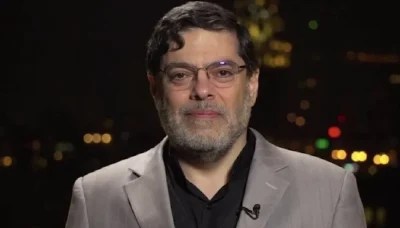
Al Mayadeen | April 5, 2026
Al Mayadeen Media Network has expressed full and unwavering solidarity with Professor Mohammad Marandi in response to online campaigns openly calling for his assassination.
Professor Mohammad Marandi, a distinguished Iranian academic with global recognition, has been targeted by pro-Israeli accounts on X, including a verified account that posted a $1 million bounty explicitly calling for his assassination.
Despite repeated requests for the post’s removal and the suspension of the account, the platform and its CEO, Elon Musk, have taken no action.
Al Mayadeen characterized the spread of such content on global media platforms as ‘blatant, intelligence-driven terrorism,’ expressing profound outrage and disbelief that US-owned media outlets would permit calls for the extrajudicial killing of academics and scientists.
The network condemned these assassination threats as a manifestation of ‘cowboy-era barbarism,’ underscoring that Professor Marandi wields only his voice and his commitment to independent thought.
Al Mayadeen further highlighted the stark hypocrisy in permitting such threats against a peaceful academic while systematically curtailing the voices of those associated with resistance movements.
Call for global solidarity
Al Mayadeen called on the global academic, scientific, and media communities to publicly support Dr. Marandi and condemn the policies of major digital platforms that tolerate incitement to violence while suppressing legitimate expression.
The network warned that such practices foster a perilous environment in which intimidation and assassination threats can flourish unchecked.
“The threats against Professor Marandi are a stark example of how media platforms enable terror under the guise of free expression, while silencing those who challenge the status quo”, Al Mayadeen stated.
Professor Mohammad Marandi continues to be a leading authority on Iranian and regional affairs, and Al Mayadeen reaffirmed its commitment to safeguarding his right to speak freely, free from threats of violence or state-orchestrated harassment.
One martyr, 5 injuries in US attack on Iraqi border crossing with Iran
Al Mayadeen | April 4, 2026
On Saturday, Major General Omar Al-Waeli, head of the Iraqi Border Ports Authority, confirmed the martyrdom of one person and injuries to five others following an attack on the Shalamcheh border crossing with Iran.
Al Mayadeen’s correspondent in Basra reported that movement at the crossing has been completely suspended, adding that US warplanes targeted the Iranian passport hall at the border point.
Since the onset of the US-Israeli war on Iran, American attacks have relentlessly targeted Iraq, including Popular Mobilization Forces (PMF) units and centers.
PMF martyr, injruies in US attack earlier today
Earlier today, the PMF reported that its 45th Brigade, part of the Jazira Operations Sector, was attacked at the al-Qaim border crossing. The assault left one PMF member martyred, four others injured, and one Ministry of Defense employee wounded.
In response to the repeated aggression, the Iraqi Cabinet directed the armed forces and the Popular Mobilization Forces to defend themselves and respond to any attacks on their positions.
The cabinet also instructed the Ministry of Foreign Affairs to submit an official complaint to the UN Security Council, condemning the attacks and demanding they be stopped.
Iraqi Resistance calls for action against US-Israeli regional allies
Similarly, the Iraqi Resistance Coordination Committee praised the Iraqi people’s positions in support of the Axis of Resistance, while calling for punitive measures against countries that enable US-Israeli aggressions in the region.
In a statement, the Committee said that “the alignment of the rulers of Jordan, Saudi Arabia, and the UAE with the criminality of the Zionist-American enemy against the Islamic Republic and their betrayal of the honorable free people of Iraq represent the height of baseness and vileness.”
It stressed that this “requires a firm deterrent response from the Iraqi government,” adding that such measures should begin with “punishing Jordan in particular, as it serves as a launch point for enemy aircraft targeting the fighters of the Popular Mobilization Forces and Iraqi security forces,” calling for “the complete closure of the land border crossing and the suspension of Iraqi oil grants.”
The Committee also stated that the Iraqi Resistance has avoided harming Kuwait’s economic interests and infrastructure while targeting US forces in the country. It further called for avoiding harm to Qatar’s interests, excluding US bases, “in appreciation of Doha’s responsible positions toward the Palestinian cause and the Axis of Resistance.”
‘This war is Israel’s war’: World facing ‘security breakdown’, says Qalibaf
Press TV – April 4, 2026
Iran’s Parliament Speaker Mohammad Baqer Qalibaf says the ongoing aggression is “Israel’s war,” adding that its security repercussions and resulting losses have extended beyond the region and affected the wider world.
“This war is Israel’s war, and the resulting security breakdown and losses have affected the world,” Qalibaf said in an interview with Al Jazeera Arabic.
He added that Iran has prepared for this confrontation and proven its ability to defend itself.
“Iran was forced to target US bases and interests in the region to preserve its presence,” he said, warning that any further escalation against Iran “will be met with a decisive and broad response” directed at US interests.
According to Qalibaf, maintaining stability in the region serves the interests of all regional states, and Iran considers sustainable security a priority.
He added that countries in the region are capable of safeguarding their interests through bilateral and multilateral security arrangements “without foreign interference.”
Qalibaf further said that the key sources of regional instability must be addressed, emphasizing that security should be established “without the involvement of the United States and Israel.”
The US and Israeli regimes launched their military aggression against Iran in late February by attacking 30 targets across Tehran, assassinating Leader of the Islamic Revolution Ayatollah Seyyed Ali Khamenei and several senior Iranian officials.
Since then, Iranian armed forces have retaliated strongly by launching barrages of missiles and drones at Israeli occupied territories as well as US bases across the region.
Poll finds world views China better than US
Xinhua | April 4, 2026
A poll conducted by Gallup found that China surpassed the United States in global approval ratings in 2025, with a median of 36 percent approving of China’s leadership, compared with 31 percent for the United States.
Gallup’s report published Friday said China’s five-percentage-point advantage over the United States is the widest it has recorded in China’s favor in nearly 20 years.
The recent shift reflects a decline in US ratings alongside an increase for China. Median approval of US leadership fell from 39 percent in 2024 to 31 percent in 2025, returning to earlier lows, while China’s approval rose from 32 percent to 36 percent, according to the report.
The latest results are based on Gallup surveys conducted in 2025 in more than 130 countries, with around 1,000 respondents in each country. They do not account for recent U.S. foreign policy moves since the beginning of 2026, including its attack on Iran and its withdrawal from 66 international organizations.
Approval of US leadership has declined across many US allied nations, including many NATO partners, and sunk the most in Germany by 39 percentage points.
Featured Video
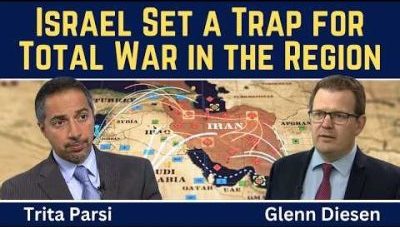
Trita Parsi: Israel Set a Trap for Total War in the Region
or go to
Aletho News Archives – Video-Images
From the Archive
Zionism’s Violent Legacy
By Donald Neff | Washington Report On Middle East Affairs | January 1996
On January 4, 1948, Jewish terrorists drove a truck loaded with explosives into the center of the all Arab city of Jaffa and detonated it, killing 26 and wounding around 100 Palestinian men, women and children.[1] The attack was the work of the Irgun Zvai Leumi – the “National Military Organization,” also known by the Hebrew letters Etzel – the largest Jewish terrorist group in Palestine. The Irgun was headed by Revisionist Zionist Menachem Begin and had been killing and maiming Arabs, Britons and even Jews for the previous ten years in its efforts to establish a Jewish state.
This terror campaign meant that at the core of Revisionist Zionism there existed a philosophical embrace of violence. … continue
Blog Roll
 Aletho News
- Trita Parsi: Israel Set a Trap for Total War in the Region
- Trump’s Iran war is on an Israeli leash
- Saudi oil boss issues global supply warning
- Riyadh Says Its Oil System Is Intact. The Numbers Say Otherwise.
- Trump and Netanyahu Want to “Finish the Job” on Iran
- US ‘one-sided dictation’ not Iran’s beliefs makes rational talks impossible: Baghaei
- Iran’s Next Strike May Not Explode. It Could Shut You Down /Col Doug Macgregor
- Iran: US political targets legitimate if assassinations return
- Iraq shuts key border crossing with Iran under US pressure: Report
- Undersea Internet cables could be targeted in retaliation for attacks on Iran: IRGC deputy chief
- If Americans Knew
- The Israel Lobby’s Changing Fortunes
- AIPAC has become such a political liability that it’s shifting to a more “nimble” approach to buying politicians
- At least 160 Israeli settler attacks in 2 weeks
- Will Gaza’s Ancient Christian Community Disappear Forever?
- Israel’s vision of regional security rests on keeping Arab states weak
- Heidi Levine recounts how Palestinian youths helped save her in settler attack
- DAILY UPDATE: Latest essential news on Palestine, Israel, & region
- Trump’s Intensifying Sabotage of the ICC, for Israel’s Sake
- Israeli military detain US and UK volunteers in West Bank including Democratic NY politician Brad Lander
- Americans at National Conservatism Conference held in Israel this year criticize Israel
- No Tricks Zone
- E-Cars Reduce CO2 Emissions By Only 41% Compared To Internal Combustion Engine Vehicles
- Predictions Made By Renowned Climate Professor Over Past Decades Have Been Proven To Be Poor
- New Study Suggests Large Regions Of The Pacific Ocean Have Been Cooling For The Last 80 Years
- Germany’s Green Energy Debacle: High Energy Costs Force Kahla Porzellan to Close After 182 Years!
- New Study: 50 Years Of The Most Aggressive ‘Net Zero’ Policies Can Only Affect The Global Climate By 0.03°C
- US September “Heat” Was No Record…Many Records Set Decades Ago
- Latest European Green Energy Debacle; Portugal’s Largest Flagship Solar Park Insolvent!
- Green Energy Debacle: German Expert Professor Fritz Vahrenholt Warns Of Severe Economic And Social Consequences
- Two More Paleo Reconstructions Affirm Meters-Higher Sea Levels Across Ireland, Brazil 7000-6000 Years Ago
- New Study: Earth And Venus Surface Warmth Largely Explained By Convection And Lapse Rate, Not CO2 Or Radiation

