Al Quds Day: Supporting Palestinians against Israeli oppression
PressTVUK | June 1, 2018
Ramadan is an opportunity to show solidarity with the Palestinian cause. Annual Al Quds marches will take place around the world next week, renewing a commitment to resistance against Israeli crimes.
See also:
US vetoes Kuwait-drafted UN resolution on protecting Palestinians

US Ambassador to the UN, Nikki Haley with Israeli Ambassador Danny Danon. (Photo: Mintpress)
Press TV – June 1, 2018
The United States has vetoed a Kuwait-drafted UN resolution calling for protection of Palestinians in Gaza and the occupied West Bank.
Out of the 15 UN Security Council members, Russia, France and China along with seven others voted in favor of the resolution on Friday, while four including Britain abstained.
The draft called for “the consideration of measures to guarantee the safety and protection of the Palestinian civilian population in the Occupied Palestinian Territory, including in the Gaza Strip.”
Kuwait’s Ambassador Mansour al-Otaibi said the US veto “will increase the sentiment of despair among the Palestinians.”
US envoy to the UN Nikki Haley called the resolution a “grossly one-sided” view of the conflict between Palestine and Israel.
She also described Hamas as a major impediment to peace, proposing an alternative draft resolution which only gained Washington’s positive vote.
During a second vote, when the US put forward its own rival measure, eleven countries abstained, while Russia and two others opposed it.
At least 120 Palestinians have been killed by Israeli forces since the “Great March of Return” began in the Gaza Strip on March 30. Fourteen children are among the fallen Palestinians.
About 13,300 Palestinians also sustained injuries, of whom 300 are in a critical condition.
The occupied territories have witnessed new tensions ever since US President Donald Trump on December 6, 2017 announced Washington’s recognition of Jerusalem al-Quds as Israel’s “capital” and said the US would move its embassy to the city.
The dramatic decision triggered demonstrations in the occupied Palestinian territories and elsewhere in the world.
The status of Jerusalem al-Quds is the thorniest issue in the decades-long Israeli-Palestinian conflict.
The Palestinians see East Jerusalem al-Quds as the capital of their future state.
Mainstream media gets it wrong on Gaza AGAIN

The New York Times, the Washington Post, and CNN are 3 examples of the selective amnesia from which nearly every mainstream media news source seems to suffer when it comes to the subject of Israel. It doesn’t take much digging to discover the actual truth – the context that completely changes the story.
By Kathryn Shihadah | If Americans Knew | June 1, 2018
Palestinians of Gaza have been peacefully protesting for 2 months, unarmed, demanding only their human rights. They have been met with Israeli sniper fire week after week, killing at least 118.
And the United States hasn’t done anything.
Grant Smith points out on antiwar.com that “a stunning 81.5% of Americans say they never heard about the massacre through any channel,” which perhaps explains our apparent apathy.

Source: IRmep poll of 1,506 US adults through Google Surveys May 25-27, RMSE 4.1%. Raw data and demographic filters at Google
Mainstream media reports on incidents in Palestine-Israel, but its effectiveness as a source of accurate information is questionable. For example, most Americans don’t even know who is occupying whom.
On May 29, 2 weeks after the bloodiest day of protesting – in which at least 60 Palestinians were killed and thousands were injured – several factions in Gaza had enough and began shooting rockets toward Israel. Israel naturally responded with airstrikes from warplanes.
Mainstream media, with its short-term memory loss in all matters Israeli, forgot about the context of unarmed Palestinian protest and sniper fire, describing the Gazan rockets almost as though they represented an unprovoked attack on a peaceful state.
It is not hard to see that, when there is coverage, MSM tends to come down firmly on the side of Israel. In the interest of accurate education of American readers, we provide the following corrections of recent articles.
The New York Times published on May 29:
Gaza Militants Barrage Israel With Mortars and Rockets
NYT: Islamic militants in Gaza attacked southern Israel with rockets and mortars on Tuesday and Israel responded instantly with a wave of airstrikes across the Palestinian territory, a sharp escalation of violence after weeks of deadly protests, arson attacks and armed clashes along the border.
Everything about this paragraph is problematic.
Let’s talk chronology first: since March 30th there have been 9 weekends of nonviolent protests by Gazans, which were met by Israeli sniper fire, killing at least 118 and injuring 13,000. The number of Israeli casualties: three. The “deadly protests” were only deadly for Palestinians, who were unarmed. During this time, no rockets or mortars were fired out of Gaza. When “militants” responded after 2 months of Israeli violence, the NYT called it “an attack,” and Israel’s action “a response.”
NYT: The exchanges were the most intense cross-border hostilities in Gaza since the two sides fought a 50-day war in the summer of 2014.
“Cross-border hostilities” refers again to an unarmed population, protesting for their rights, vs. snipers. Palestinians never crossed any borders, but Israelis did. Likewise, Palestinians were not hostile, but Israelis were.
Similarly, the “two sides” that fought in 2014 included 34,000 unguided shells shot into Gaza by Israel (including 19,000 high-explosive artillery shells, which form a crater 50 feet wide and 36 feet deep, penetrate up to 15 inches of metal or 11 feet of concrete), and 4,500 rockets shot into Israel by Gaza. No wonder 72 Israelis (mostly military) vs. 2,200 Palestinians (mostly civilians, including 500 children), died in that “war.”
The “cross border hostilities” in 2014 and this week were similarly lopsided.

Israeli Air Force MK-84 crater from 2014 incursion on Gaza, “Operation Protective Edge.”
NYT: By 10 p.m. on Tuesday, Israel said there had been 70 rockets or mortars fired from Gaza throughout the day.
This may sound frightening, and it would indeed be unnerving to endure. But context matters: in 14 years of rockets from Gaza, only 17 Israelis have been killed during peacetime, and 44 total.
NYT: Tensions have been spiraling along the border in recent weeks during a series of Palestinian protests against the 11-year blockade of the Gaza Strip and to press Palestinian claims to lands in what is now Israel. Israel insisted that it was not seeking to escalate, and that it was up to Hamas to decide whether to ratchet things up or stand down.
We applaud NYT for mentioning the 11-year blockade and Palestinian claims to land in what is now Israel. Don’t be in such a rush, though, NYT. Linger over the blockade for a moment – at least long enough to help your readers understand the truth. The blockade is against international humanitarian law.The blockade is keeping food and medicine out of Gaza, and has done so for over a decade.
NYT: Early Wednesday, Israel announced a new wave of airstrikes against 25 more Hamas targets in Gaza, saying it was holding Hamas responsible for conducting and allowing a “wide-scale attack against Israeli citizens.”

U.S. Ambassador to the United Nations Nikki Haley (Drew Angerer/Getty Images)
The United States called for an emergency meeting of the United Nations Security Council to discuss the latest attacks on Israel from Gaza and said it expected the session to be held on Wednesday afternoon… [US ambassador to the UN Nikki Haley said], “The Security Council should be outraged and respond to this latest bout of violence directed at innocent Israeli civilians.”
It’s puzzling that the US sees Gaza’s nonlethal rockets as worthy of outrage, but Israel’s snipers killing over 100 as unworthy of comment.
NYT: As many as 120 Palestinians have been killed by Israeli fire since March 30, according to the Gaza Health Ministry, mostly by snipers during the protests and half of them in a single day, May 14, the peak of the campaign.
Israel said it was defending its border and the nearby communities against a mass breach by the protesters, adding that Gaza militants intended to use unarmed civilian protesters as cover to infiltrate Israeli territory and attack Israeli soldiers and civilians.
Oh, NYT, you started strong there, acknowledging the Palestinian deaths and the snipers. But then you gave your readers only Israel’s explanation (“Gaza militants intended to use unarmed civilian protesters as cover”) as though this was an indisputable fact instead of an opinion. A comment from a Palestinian spokesperson would have been in order at this juncture.
The Washington Post was similarly one-sided in its May 29 coverage:
Tensions rise as Gaza militants fire more than 70 mortars, rockets into Israel
WaPo: “This is something we cannot tolerate,” said [Israeli army spokesman Lt. Col. Jonathan] Conricus. “Hamas is turning the fence into an active combat zone, and we cannot tolerate attacks on Israeli civilians and military targets.”
Interestingly, even Ha’aretz has conceded that the Great March of Return is not a “Hamas project,” but a grassroots movement by people who are deeply invested in resistance and return. But WaPo prefers the official Israeli spin, that “Hamas is turning the fence into an active combat zone,” in spite of the obvious fact that one side of the fence has no combat weapons. There is also, apparently, nothing noteworthy in the statement, “we can not tolerate attacks on Israeli civilians and military targets” (as if Palestinians do not have the same right to be intolerant of violence being perpetrated on their people).
WaPo: Tensions have been soaring between Israel and Gaza for the past few months. Residents of the coastal enclave, which has been under land and sea blockade by Israel and Egypt since Hamas wrested power over the strip more than a decade ago, have been holding weekly demonstrations at the Israeli border fence. They are demanding a right to return to land that now sits inside Israel and expressing frustration over a growing humanitarian crisis in what they describe as an open-air prison.
WaPo came so close to getting the paragraph right. Fact is, Hamas did not “wrest power over the strip.” Rather, Hamas won a free and open election – which the US encouraged.
CNN likewise managed, on May 29, to miss the point:
Gaza militants launch mortars, rockets at Israel, which responds with airstrikes
CNN: In a statement, the IDF said the [launching of mortars and rockets by Gazans] was a “severe, dangerous, and orchestrated act of terror, aimed at Israeli civilians and children.”
The degree of self-deception required for the IDF to make such a statement is staggering. The “severity” and “danger” of Gaza rockets is minor in comparison to Israel’s snipers; the label “act of terror” belongs with the side that has been killing unarmed protesters; likewise, the targeted “civilians and children” were the ones killed (at least 12 children out of 118 dead) and injured (about 1,000 children out of over 13,000 injured).
CNN: UN chief Middle East envoy Nickolay Mladenov expressed his deep concern at what he called “indiscriminate firing” by Gaza militants toward communities in southern Israel.
“Such attacks are unacceptable and undermine the serious efforts by the international community to improve the situation in Gaza.”
Of course, “indiscriminate firing” is problematic (especially if it actually hits something, as Gazan rockets rarely do); how about “discriminate firing that hits people who are praying, or running from the border, or helping injured protesters, or children, or journalists, or medical personnel? Does discriminate firing help the “serious efforts by the international community”? And where in the international community is work actually being done to “improve the situation in Gaza”?

Israeli soldiers take aim as they lie prone over an earth barrier along the border with Gaza
Bottom line, these mainstream media articles were not aberrations, but business as usual. Every day in Gaza has yielded either similarly inaccurate news, or radio silence – the one exception perhaps being May 14, 2018. On that day there was opportunity for a dazzling visual display on every news channel: a split-screen exhibition contrasting the high-class, clueless crowd at the opening ceremony of the US embassy in Jerusalem, with the Israeli violence and Palestinian carnage at the Gaza border. For that brief moment, many commentators pointed out Israeli aggression against a besieged people group.
Shortly after that day, reporters’ memories were erased, and Gazans are once again aggressors and followers of Hamas. Avigdor Lieberman is correct again: there are “no innocent civilians in Gaza.”
Life is back to normal.
UN Officials Call on Israel to Halt Khan Al-Ahmar Demolition
IMEMC | June 1, 2018
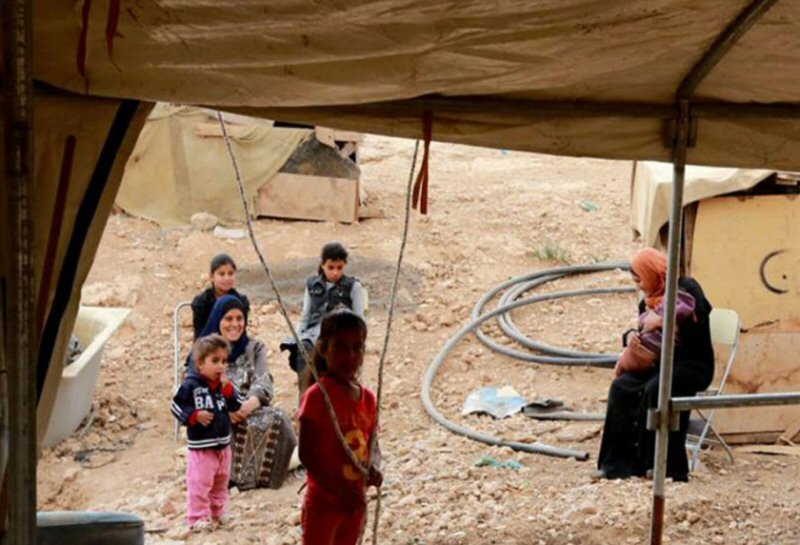
United Nations officials, on Friday, called on Israel to abandon plans to demolish the Palestinian community of Khan al-Ahmar, east of Jerusalem.
Humanitarian Coordinator, Jamie McGoldrick, and United Nations Relief and Works Agency for Palestine Refugees (UNRWA) Director of Operations in the West Bank, Scott Anderson, joined others in the international community in calling on the government of Israel to cease its plans to carry out the mass demolition and transfer of the Palestinian Bedouin community of Khan al Ahmar – Abu al Helu, located on the outskirts of East Jerusalem in the occupied West Bank.
“Like many Palestinians in Area C, the residents of Khan al Ahmar – Abu al Helu have fought for years to live with dignity, to protect their children, their homes, and their community,” said McGoldrick. “They have struggled in the face of tremendous daily pressure and are asking for the continued support of the international community to prevent the demolition of their homes.”
Following the Israeli Supreme Court’s May 24 rejection of the community’s petition to prevent the demolitions, marking an end to years-long legal efforts and leaving virtually no legal options to protect the community, nearly all of Khan al Ahmar – Abu al Helu’s structures are now at immediate risk of demolition by the Israeli authorities, including the school, initially built with donor support. The school serves some 170 students from the community and four surrounding ones. The proposed transfer seeks to move the rural livestock-dependent community to an urban site unsuitable for Bedouin livelihood, culture and traditions and is likely to increase their level of humanitarian need.
“After nine years of legal battle, this refugee community now faces the demolition of their homes, the loss of traditional livelihoods and the imminent risk of forcible transfer should the demolitions be conducted and the community be compelled to relocate, which would be a grave breach of the Geneva Convention,” said Anderson. “Many already displaced from the [Naqab] as a result of the 1948 conflict; they now face being displaced for a second time. As we have seen in similar circumstances in the past, the transfer of rural Bedouin to the urban setting of Jabal West, proposed by the Israeli state, will likely prove socially and economically devastating,” he concluded, according to WAFA.
Khan al Ahmar – Abu al Helu is one of 18 communities located in or next to an area slated in part for the E1 settlement plan, aimed at creating a continuous built-up area between the Maale Adumim settlement and East Jerusalem. This week, the Israeli authorities approved a planning scheme providing for the construction of 92 new housing units and an educational institution in the Kfar Adumim settlement, immediately adjacent to Khan al Ahmar; this settlement has also petitioned the High Court for the implementation of the outstanding demolition orders against the community.
“Israel’s obligations as an occupying power to protect the residents of Khan al Ahmar are clear,” said McGoldrick. “Should the Israeli authorities choose to implement the outstanding demolition orders in the community and force the people to leave, they would not only generate significant humanitarian hardship but also commit one of the grave breaches of international humanitarian law,” he concluded.
Palestinian ‘Medical Volunteer’ Killed by Israeli Fire in Gaza

Paramedic Razan al-Najjar was shot dead by an Israeli sniper on the Gaza border on June 1. (Photo: via Twitter)
Palestine Chronicle – June 1, 2018
A Palestinian woman – reportedly a medical volunteer – was shot dead by Israeli soldiers on Friday, Gaza’s health ministry has reported, as protests continued on the border with Israel.
Razan al-Najjar – a 21-year old volunteer with the ministry of health – was shot by Israeli forces on the eastern border of Khan Younis in the southern Gaza Strip.
There is little information yet on how Najjar was killed.
Friday’s death marks weeks of demonstrations on the Gaza border, beginning 30 March, which has seen at least 123 Palestinian protesters killed by Israeli gunfire.
The protests – dubbed “the Great Return March” – called for the right of return of refugees, and peaked on 14 May when the US moved its embassy in Israel from Tel Aviv to the contested city of Jerusalem.
Over 61 Palestinians were killed and 2,400 injured on that day, while tens of thousands protested along the besieged strip’s border.
Israeli snipers fired live rounds and tear gas at the protesters, with condemnation from the UN and human rights groups.
#Watch || Palestinians are marching to the eastrern border of #Gaza Strip to participate in #GreatReturnMarch.
Video from the middle area camp in the east of Al-Buraij Refugee Camp
Video by: @pallive_en pic.twitter.com/gAR3hvXCW2— Great Return March (@GreatReturnMa) June 1, 2018
Gaza Palestinians call for supporters around the world to mobilize in solidarity
Plan for mass protests to end the blockade and occupation

Participants in Gaza’s Great March of Return on the eighth Friday of the demonstration.
Contact:
U.S.: Pam Bailey | founder/director, We Are Not Numbers | +1 301-518-0199 | pam@wearenotnumbers.org
Gaza: Ahmed Alnaouq |+972 567676219 | ahmed@wearenotnumbers.org
Protests marking two historic dates are planned along Israel’s massive “security fence” in Gaza June 5 and 8. June 5 is the 51st commemoration of the Israeli invasion and occupation of Gaza, the West Bank and East Jerusalem and on June 7 of the same year, Israel seized control over Jerusalem’s Old City. The committee of Palestinians coordinating the ongoing, mass protests in the Gaza Strip are calling on human rights advocates around the world to mobilize June 5 and 8 in solidarity.
The largest protest in Gaza (as well as in the West Bank) is planned for June 8, since that is a Friday. It also marks the 51st anniversary of the Israeli attack on the USS Liberty in international waters off the Gaza Strip. The intelligence ship was well-marked as an American vessel and only lightly armed. This particular anniversary is ironic, since the Israeli navy just attacked and seized a Palestinian vessel called the Liberty when it attempted to sail out of the Gaza harbor May 29.
“We urge all free people everywhere to join the Palestinians by organizing solidarity events to demand that their governments exert pressure on Israel to end its oppression and occupation of the Palestinian people,” said a statement from the Legal Committee of the National Commission for the Return and Breaking-the-Siege Marches. Specifically, the committee calls on activists to push for a ban on the supply of weapons to Israel and support the public boycott of Israeli products.
“As a nation under occupation, siege and apartheid rule, we need your help to end this oppression, including the blockade of Gaza imposed 12 years ago,” the statement concluded. “We need you to scream out against injustice and double standards and urge your governments to carry out their moral and legal duties to protect the civilians of Palestine.”
Ahmed Alnaouq, project manager for We Are Not Numbers, a youth project in Gaza, notes, “The media and agencies are publishing charts and graphics showing the number of dead and wounded, but it is critical to remember that each one of those numbers represents an unarmed human who had a story to which most of us—even those in the West—could relate. Our team has been busy trying to write those stories so the world cannot hide behind the anonymity of ‘collateral damage’.”
——————————————
WeAreNotNumbers.org—a group of young adults in Gaza whose lives have been forced into a state of limbo by the world’s highest unemployment rate (60 percent among youth), a constant threat of war, a ban on most travel and shortages of electricity averaging 20 hours a day—has worked for the past three years to document the stories of the “silenced voices” in Gaza. Since March 30, when the massive, nonviolent protests began in Gaza, the team has produced regular stories and videos about the “human faces behind the numbers in the news”—including the 128 killed and 13,375 injured by Israeli snipers.
Working for Peace and Justice: Hebron Freedom Fund is a U.S. based 501c3 organization that supports the resiliency and nonviolent efforts of Palestinians living under the most difficult circumstances of Israel’s occupation.
US ‘losing its cards’ in Syria: Highlights of RT’s interview with Bashar Assad
RT | May 31, 2018
Washington and its “puppets” tried, and failed, to destroy Syria – and the US military will eventually be forced out of the country: These are a few of the highlights from RT’s exclusive interview with President Bashar Assad.
Speaking with RT’s Murad Gazdiev in Damascus, Assad commented on a range of topics, from the threat of direct conflict between the US and Russia, to why he doesn’t fear Israeli assassination threats.
On Victory: ‘It’s self-evident’ that Syria is ‘moving closer to the end of the conflict’
Assad noted that the “majority” of Syria is now under government control, but said that continued provocations and escalations by the United States and its allies have needlessly prolonged the seven-year conflict. With each Syrian military victory or successful reconciliation effort, the US and its partners have attempted to counteract these gains by “supporting more terrorism, bringing more terrorists to Syria, or by hindering the political process,” Assad said.
However, he stated that it was “self-evident” that “we are moving closer to the end of the conflict,” adding that “without external interference it won’t take more than a year to settle the situation in Syria.”
The Syrian leader said that whenever possible, his government has chosen negotiations and reconciliation over use of force.
“War is the worst choice but sometimes you only have this choice,” Assad told RT. “Factions like Al-Qaeda, like ISIS, like Al-Nusra, and the like-minded groups, they’re not ready for any dialogue… So, the only option to deal with those factions is force.”
He defended the government’s use of ceasefires and allowing extremists to withdraw to Idlib province, describing the agreements as strategically advantageous for the Syrian army. “If you have two or three frontiers, that’s better than having 10, maybe more than 100 at the time.”
On the US: Washington ‘losing its cards’ in Syria
Although the US forces continue to operate illegally in Syria, they will eventually be forced out of the country, Assad told RT.
“The United States is losing its cards. The main card was Al-Nusra, that was called ‘moderate,’ but when scandals started leaking that they’re not moderate, that they’re Al-Qaeda, which is supposed to be fought by the United States, they started looking for another card. This card is the SDF [Syrian Democratic Forces] now,” he said, referring to the US-backed militia group. According to Assad, once Islamic State (IS, formerly ISIS) and Al-Nusra are exterminated, the Syrian military will turn its attention on the SDF.
“We’re going to use two methods to deal with the SDF: The first one, we started opening doors for negotiations – because the majority of them are Syrians. And supposedly they like their country, they don’t like being puppets to any foreigners – that’s what we suppose.” Assad said that these commonly-shared values could allow reconciliation with the government. “We all don’t trust the Americans, [so] the one option is to live with each other as Syrians.” However, if negotiations fail, the Syrian army will be forced to liberate areas occupied by the SDF, with the Americans, or without the Americans.”
On this point Assad was adamant: “This is our land, it’s our right, it’s our duty. To liberate [these areas], and the Americans should leave. Somehow, they’re going to leave. They came to Iraq with no legal basis. And look what happened to them. They have to learn their lesson.”
On Russia: Moscow’s leadership prevented ‘direct conflict’ with US military
Syria’s president heaped praise on Moscow, claiming that Russian “wisdom” had prevented a direct conflict between Russian and American forces in Syria. “We were close to having direct conflict between the Russian forces and the American forces, and fortunately, it has been avoided, not by the wisdom of the American leadership, but by the wisdom of the Russian leadership.”
While Assad reiterated that the United States military was not welcome in Syria, he said that avoiding escalation was the key to restoring Syria’s territorial integrity. “We need the Russian support, but we need, at the same time to avoid the American foolishness in order to be able to stabilize our country.”
He emphasized that Russia has shown restraint – not weakness – in Syria, noting how Russian warnings had likely dissuaded Trump from launching a full-scale attack against Damascus.
“The Russians announced publicly that they are going to destroy the bases that are going to be used to launch missiles, and our information – we don’t have evidence, we only have information, and that information is credible information – that they were thinking about a comprehensive attack all over Syria, and that’s why the threat pushed the West to make it on a much smaller scale,” the Syrian president said.
On Israel: No longer phased by ‘threat of Israeli aggression,’ Tel Aviv in ‘panic’
Assad shrugged off Israeli threats against his own life, telling Gazdiev that “my generation – and most of the generations in Syria now – has lived under the threat of Israeli aggression. This is something in our unconscious feeling. So to say that you are afraid while living with the same threat for decades – this is nonsense.” He said that the fact that Tel Aviv has resorted to threats suggests that the Israelis are panicking.
“The Israelis have been assassinating, killing, occupying for decades now, for around seven decades, in this region, but usually they do all this without threatening. Now, why do they threaten in this way? This is panic, this is a kind of hysterical feeling because they are losing the ‘dear ones,’ the dear ones Al-Nusra and ISIS, that’s why Israel is panicking recently, and we understand their feeling.”
He said reports that Syria was helpless to stop Israeli airstrikes were inaccurate. “Our air defense is much stronger than before, thanks to the Russian support and the recent attacks by the Israelis and by the Americans and British and French proved that we are in a better situation” than at the start of the conflict seven years ago, he said. However, Assad noted that when foreign-backed fighters first poured into Syria, the first thing they did was target air defense systems – suggesting a “direct link” between the terrorists groups and Israel.
On chemical attacks: ‘Is it in our interest? Why? And why now?’
Syria’s president described the string of alleged chemical attacks as provocations that have ultimately failed to persuade the international community to give the US and its allies a military mandate in Syria.
Washington and its allies blamed the last such attack, in April, on Damascus, but Assad insisted that the Western narrative makes no sense.
“The timing of this alleged strike was after the victory of the Syrian troops in Ghouta. Let alone the fact that we don’t have chemical weapons anyway,” he told RT. Pointing to multiple reports of civilians and medical workers in the area having no knowledge of a chemical attack – with some even appearing in the Western press – Assad concluded that the alleged incident was a last-ditch Western attempt to sway international opinion – one that failed.
“They told a story, they told a lie, and the public opinion around the world and in the West didn’t buy their story, but they couldn’t withdraw. So, they had to do something, even on a smaller scale,” Assad said, referring to the joint airstrikes against purported Syrian chemical weapons facilities, carried out on April 14 by the US, UK, and France.
However, Assad acknowledged that nothing was stopping Washington from attempting similar provocations in the future. The US has “trampled on international law,” and “there’s no guarantee that it won’t happen [again].”
Assad asked: “What was the legal basis of [the April missile] attack? [Or] the so-called anti-terrorist alliance, which supports the terrorists, actually? What is the legal basis of their attack on Yemen, Afghanistan? There’s no legal basis.”
On Trump: ‘What you say is what you are’
Asked if he had a nickname for US President Donald Trump, who had previously called Assad an “animal,” Syria’s leader admitted that he wasn’t in the business of name-calling.
“This is not my language, so, I cannot use similar language. This is his language. It represents him,” he said. “I think there is a very well known principle, that what you say is what you are. So, he wanted to represent what he is, and that’s normal,” Assad added.
“The only thing that moves you is what people that you trust, people who are level-headed, people who are thoughtful, people who are moral, ethical, that’s what should move anything inside you, whether positive or negative. Somebody like Trump will move nothing for me,” he said.
On the myth of Syria’s ‘civil’ war: It was foreign-backed regime change
Assad disputed claims that the seven-year conflict has been a “civil war,” pointing out that there is no sectarian or ethnic conflicts in the areas currently controlled by the government. “Now in Damascus, in Aleppo, in Homs, in every area under Syrian government control, you will see [the whole] spectrum of Syrian society. With no exceptions.”
He noted that the term ‘civil war’ had been used widely since the beginning of the conflict in Syria – but it does not correctly characterize the conflict.
“A Syrian civil war means there are lines based either on ethnicities or sects or religion. Or maybe political opinion. In reality, in the areas in direct control by the government, which is now the majority of Syria, you have all this diversity,” Assad said. “So the word civil war is not correct. What we have actually, from the very beginning – mercenaries, Syrians and foreigners being paid by the West in order to topple the government. This is the mere reality. Everything else is just a mask to cover the real intentions.”
‘Summary executions & unacceptable brutality’: The Gaza flotilla massacre 8 years on
RT | May 31, 2018
On May 31, 2010, Israeli forces ambushed an aid flotilla heading to Gaza, killing 10 activists in a siege that drew international condemnation and sparked damning investigations, despite Israel’s efforts to control the narrative.
Six ships – three carrying international aid – were on their way to Gaza to break the blockade imposed by Israel in 2007 when Israeli forces raided the vessels in international waters, about 64 nautical miles from the blockade zone.
The flotilla was organized by the Free Gaza Movement umbrella organization and the Foundation for Human Rights and Freedoms and Humanitarian Aid (IHH). Nine Turkish people were killed during the ambush, while a 10th died in 2014, after spending four years in a coma as a result of his injuries.
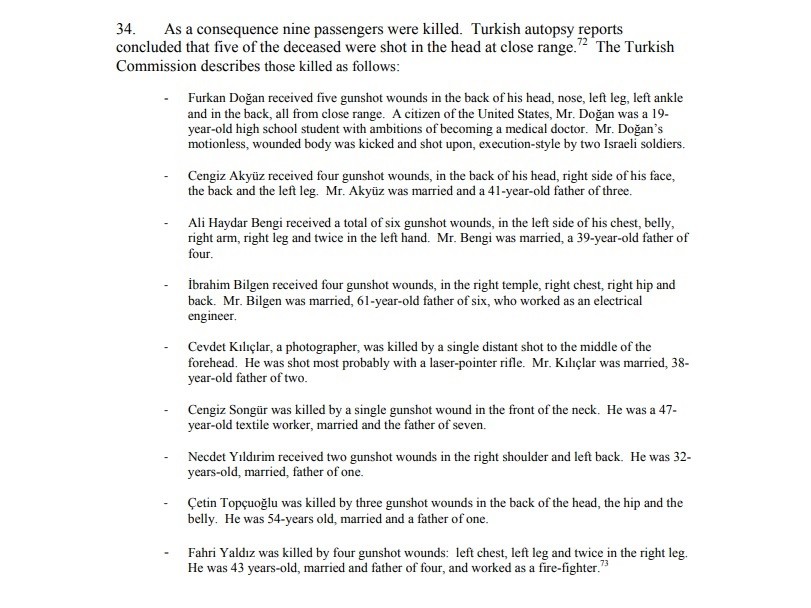
A UN Human Rights Council report said at least six of the killings were “consistent with an extra-legal, arbitrary and summary execution.” At least 50 other people were injured and Israel arrested more than 600, including 60 journalists, politicians and other passengers.
‘No satisfactory explanation for deaths’
On May 30, the flotilla gathered off the coast of Cyprus to make its way to Gaza. The Israel Defense Forces and Navy told the ships to go to the Israeli port of Ashdod, which the flotilla ignored and Israel claimed the move was a “provocation.” At 4am, Israel signal-jammed communications, and half an hour later, launched its attack.
When Israeli forces attempted to board the largest boat, Mavi Marmara, they were met with resistance. Passengers sprayed water hoses and threw things, including chairs. The first of three helicopters arrived and stun grenades were thrown at the boat, while at the same time, forces took over the other, smaller boats in the flotilla.
The Turkish-owned boat experienced the harshest response in the raid. Nine men were killed on board after being shot some 30 times between them, with five receiving gunshots to the head, Turkey’s autopsies revealed. A 19 year old, who also had US citizenship, was shot five times at close range.
According to Israel’s account, a number of the Mavi Marmara passengers were “hardcore” and bore bars and knives. Activists, however, claim the soldiers began shooting as soon as they entered. “After 20 minutes, maybe 15 minutes, there were three dead bodies,” Knesset Member Hanin Zoabi recounted.
A 2011 Report of the UN Secretary-General’s Panel of Inquiry found Israel gave “no satisfactory explanation” for any of the deaths. It also said that “such substantial force at a great distance from the blockade zone and with no final warning immediately prior to the boarding was excessive and unreasonable.”
While there were no fatalities on the other boats, those on board say they too suffered violence from the raiding Israeli forces. “They treated all of the boats on the flotilla with violence, they didn’t treat any of us peacefully and when they say that, it’s an absolute lie,” Alex Harrison, who was on board another of the vessels, told a Palestine Solidarity Campaign meeting in June, 2010. “Two of the women were hooded, Guantanamo-style.”
Suppressing footage
The flotilla raid drew international outrage, despite Israel getting ahead of the story whilst the activists were detained. Protests over the incident erupted around the world and tensions between Israel and Turkey deteriorated. Israeli Prime Minister Benjamin Netanyahu said the raid was to “prevent the infiltration of thousands of rockets, missiles and other arms that could hit our cities, communities or people.”
Israel sought to play down the events of the raid, releasing radio recordings it claimed showed the boat’s passengers were anti-Semitic and threatening but which it later had to admit had been edited and couldn’t be confirmed as from the Mavi Marmara, as originally claimed.
Officials also released select footage, allegedly showing the activists being violent. This included clips from the footage they had seized, which was condemned by the Foreign Press Association and the Committee to Protect Journalists (CPJ). Efforts were also made to frame the IHH as a terrorist organization and some of the passengers as members of Al-Qaeda.
A UN Human Rights Council panel accused Israel of suppressing footage of the raid. The IDF attempted to confiscate images and footage, taking phones and laptops from them, including those belonging to journalists on board. Despite this, an hour of footage from Mari Marmara was released by filmmaker Iara Lee, who was on board.
Israel’s inquiry into the events found its actions were legal under international law and noted the “regrettable consequences of the loss of human life.” The UN General Assembly’s 2010 fact-finding mission found Israeli forces were guilty of a series of violations of international law, and its disproportionate response “betrayed an unacceptable level of brutality.” Israel said this was biased.
In November 2017, the International Criminal Court’s prosecutor Fatou Bensouda said it would not prosecute Israel, but that there is “reasonable basis to believe that war crimes were committed by some members of the Israel Defence Forces.”
Eight years on from the flotilla deaths, Gaza remains under blockade and with two wars waged on Gaza since then, the situation on the ground is more bleak than before. A new flotilla is currently making its way to Gaza, due to arrive in July.
Israel, Myanmar sign agreement to teach about the Holocaust
MEMO | May 31, 2018
Israel and Myanmar have signed a cooperation agreement on educational programmes including curricula on teaching about the Holocaust, Israeli Deputy Foreign Minister Tzipi Hotovely said on Twitter on Tuesday.
“We continue to cooperate with our friends around the world,” Hotovely wrote, referring to Myanmar whose army has been accused by the UN of committing ethnic cleansing against the Muslim Rohingya minority and where hundreds of thousands of survivors have been displaced as refugees.
“The two countries will work to develop two official curricula for schools in both countries to teach about the Holocaust and its lessons as well as the negative consequences of intolerance, racism, anti-Semitism and xenophobia,” Haaretz newspaper reported Wednesday.
Israel has continued to supply Myanmar with arms despite allegations of genocide. The armaments sold to Myanmar include over 100 tanks, weapons and boats that have been used to police the country’s border and perpetrate numerous acts of violence against the Rohingya, such that the UN suspects the army is committing ethnic cleansing.
Palestinian Youth injured by Israeli gunfire in blockaded Gaza
Palestine Information Center – May 31, 2018
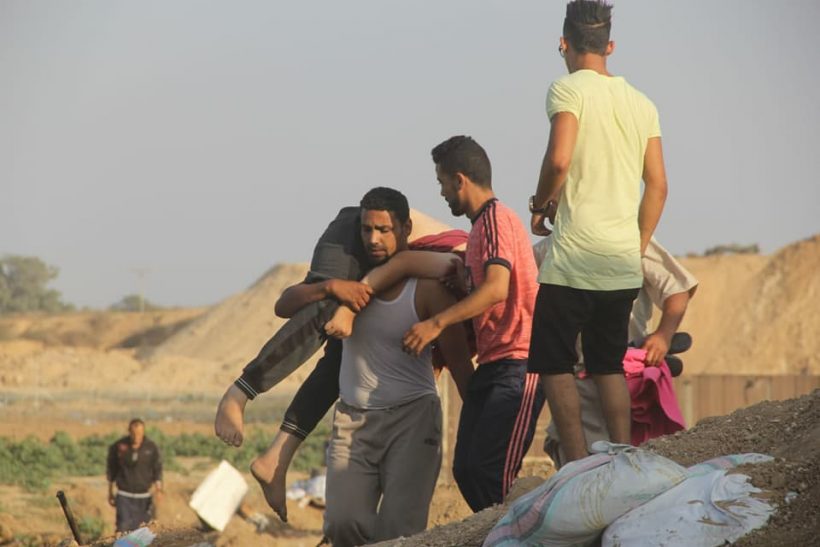
GAZA – A Palestinian youth was shot and injured by the Israeli military east of the Bureij refugee camp, in central Gaza Strip on Wednesday evening.
A PIC news correspondent said a bullet fire by Israeli soldiers penetrated a 15-year-old child’s back. He was rushed to the Shuhadaa al-Aqsa Hospital, in Deir Balah, so as to be treated for his wounds, reported critical.
According to the Gaza-based Palestinian Health Ministry, 118 Palestinians were killed and 13,300 others injured by Israeli gunfire unleashed toward Palestinian protesters as they joined the Great March of Return, launched on March 30.
Featured Video

The Search for Truth: Charlie Kirk’s Assassination One Year Later
or go to
Aletho News Archives – Video-Images
From the Archives
The 9/11 “Double-Cross” Conspiracy Theory
BY LAURENT GUYÉNOT • UNZ REVIEW • SEPTEMBER 6, 2022
Is it true that “9/11 was an inside job”? Yes, insofar as Israel is “inside” the U.S. But for the 9/11 truthers who have identified Israel as the main perpetrators, “9/11 was an inside job” is at best a half-truth, and at worst an integral part of the Zionist operation, like a secondary flag sewn as a lining under the false flag of Islamism. Victor Thorn (1963-2017) wrote in his book 9/11 made in Israel: The Plot Against America (2011): “In essence, the ‘9-11 truth movement’ was created prior to Sept. 11, 2001 as a means of suppressing news relating to Israeli complicity. . . . The slogan ‘9-11 was an inside job’ was quite possibly the greatest example of Israeli propaganda ever devised.” In milder terms, it is “controlled opposition”.
A genuine truth movement would have pointed to Israel as the prime suspect from the start. From day one, it was obvious who would benefit. … continue
Blog Roll
 Aletho News
- Europe’s mounting social chaos… chickens coming home to roost for proxy war against Russia
- US-Russia Diesel Deal Becomes Massive Defeat for Ukraine
- Hormuz and the Looming Economic Catastrophe
- Dhubab offensive, media blitz and the rapid unraveling of Saudi-backed coalition’s new gambit
- Putin Conveys to Trump Iran’s Vision on Possible Conflict Resolution – Kremlin
- The Search for Truth: Charlie Kirk’s Assassination One Year Later
- ‘Harsh reality’: Iran says France seeks monopoly on power and intimidation, not peace for all
- When Will This White House Madness End?
- Huckabee aide goes to ‘unusual lengths’ to portray ‘Israel’ positively
- Trump Announces Diesel Supply Deal With Putin Following Phone Call
- If Americans Knew
- Israeli forces kill another child in Gaza – Daily Update
- Gaza ceasefire exists in name only, say more than 100 organizations
- Nearly 2 Million in Gaza Need Urgent Shelter Assistance as Winter Looms: IOM Chief Warns
- Suppressing Palestinian resistance: US charity under fire for AI monitoring of Gaza classrooms
- Thousands Are Held in Israeli Torture Camps. This Is What Happens Inside
- Israel puts Gaza’s sick, injured, newborn in peril – Daily Update
- Report claimed Mark Levin used by Israeli government to influence Trump
- Over 2,000 Gazans have died awaiting medical evacuation amid Israel’s continued siege
- How a U.S. Diplomat Suppressed and Altered Reports Critical of Israel
- 5 Palestinians Die from Israeli Strikes in Gaza as Relentless Attacks Continue
- No Tricks Zone
- New Study: 50 Years Of The Most Aggressive ‘Net Zero’ Policies Can Only Affect The Global Climate By 0.03°C
- US September “Heat” Was No Record…Many Records Set Decades Ago
- Latest European Green Energy Debacle; Portugal’s Largest Flagship Solar Park Insolvent!
- Green Energy Debacle: German Expert Professor Fritz Vahrenholt Warns Of Severe Economic And Social Consequences
- Two More Paleo Reconstructions Affirm Meters-Higher Sea Levels Across Ireland, Brazil 7000-6000 Years Ago
- New Study: Earth And Venus Surface Warmth Largely Explained By Convection And Lapse Rate, Not CO2 Or Radiation
- 2025 Nature Paper Claiming Worsening Global Drought Gets RETRACTED …Heavily Flawed
- New Study: ‘Global Drought Shows No Detectable Recent Acceleration Under Climate Warming’
- Economic Masterminds: German Socialists Suggest Taxing Productivity Gains Stemming From Using AI
- The South China Sea Has Not Been Cooperating With The Climate Change Narrative

