Muzzling Israeli Dissent in the NYT
B’Tselem’s Hard Hitting Testimony Lost in the Telling
By Barbara Erickson | TimesWarp | October 18, 2016
Israeli rights advocate Hagai El-Ad spoke eloquently last week before the United Nations Security Council, appealing to the world body for action on the brutal occupation of Palestine, but according to The New York Times little of what this courageous activist said was fit to print: The real news was Israeli Prime Minister Benjamin Netanyahu’s outraged response.
Thus we find a story on the speech appearing two days after the event under the headline “Settlement Debate Flares Again in Israel’s Quarrel With Rights Group.” The article by Isabel Kershner has much to say about Israeli government criticism of the human rights group B’Tselem, which documents and publicizes Israeli abuses in the West Bank and Gaza.
She says as little as possible, however, about El-Ad’s actual comments. Of his 2,000 word speech she quotes no more than two dozen: “Anything short of decisive action will achieve nothing but ushering in the second half of the first century of the occupation… [Living under occupation] mostly means invisible, bureaucratic, daily violence.”
The heart of the address is missing: El-Ad’s devastating deconstruction of the Israeli justice system as “a legal guise for organized state violence,” the daily indignities and suffering under Israeli military rule, the demolitions of homes, theft of land and water and the impunity surrounding trigger happy security forces.
His words become lost in the framing of this story, glossed over in the tit for tat between attackers and defenders of B’Tselem. Other media reports, however—in Israel and the United States—give readers more substantial excerpts from his address, and they also provide links to the actual speech, something the Times conveniently omits.
The Times also fails to say that amidst the turmoil over B’Tselem’s UN appearance, the U.S. State Department declared its gratitude to the organization for providing information on “fundamental issues that occur on the ground.” Times readers, however, are denied these same benefits.
El-Ad was not the only speaker to criticize Israel at a special session titled “The Settlements as the Obstacle to Peace and the Two-State Solution,” but he bore the brunt of the furious denunciations from Netanyahu and other government officials. He and his organization were also the focus of the Times story.
All this attention is a sign that El-Ad’s performance was a direct hit on Israeli efforts to whitewash their occupation. Much of the time B’Tselem’s reports and press releases, well-buttressed with detailed research, receive no mention either in the Times or in government circles. But now that El-Ad has managed to bring the group’s message to the highest international level, the backlash has been swift and harsh.
The Times has become a willing partner in this effort, working to distract readers from El-Ad’s eloquent appeal to the Security Council by framing the story as a two-sided debate between rival points of view.
Discerning readers will take notice, however, and realize that El-Ad’s speech is worth searching out in spite of the Times’ efforts to draw attention away from his actual words. They can find the text and a video of his address at the B’Tselem website—if they haven’t already found his performance posted on social media.
So it comes to this: Times readers need to read between the lines for clues to the reality deemed unfit to print, and then they must use their skills to search elsewhere for the story behind the words. This is not what we should expect from a newspaper like the Times, with pretenses to the highest standards of ethics and performance, but readers beware: Use this journalistic product with care and a hefty dose of skepticism.
Follow @TimesWarp on Twitter
Five years on: The Wafa al-Ahrar agreement and prisoner exchange
Samidoun Palestinian Prisoner Solidarity Network – October 19, 2016
On 18 October 2011, 477 Palestinian prisoners were released from Israeli occupation prisons in the Wafa al-Ahrar (“Dedication to the Free”) prisoner exchange with the Israeli occupation. One week prior, hundreds of Palestinian prisoners were engaged in an open-ended hunger strike against the solitary confinement and isolation of Palestinian leaders, especially Ahmad Sa’adat, the imprisoned General Secretary of the Popular Front for the Liberation of Palestine. The strike was suddenly interrupted with stunning news: a prisoner exchange agreement had been released between the Palestinian resistance and the Israeli occupation, for the release of 1,027 Palestinian prisoners in exchange for the release of captured occupation soldier Gilad Shalit. The exchange was completed with the release of 550 fellow Palestinian prisoners in December 2011. In the agreement, among the first set of 477 prisoners released, 131 were released to Gaza and 110 to the West Bank, as well as six Palestinians holding Israeli citizenship returning to Palestine ’48. 203 more were deported from Palestine. This group were the prisoners with lengthy sentences.
This was, of course, not the first time that the Palestinian resistance secured the release of Palestinian prisoners through prisoner exchanges. Throughout Palestinian history, large numbers of Palestinian prisoners in Israeli jails with lengthy sentences have found freedom in prisoner exchanges negotiated by Palestinian resistance organizations.
Since the 2011 Wafa al-Ahrar exchange, dozens of released prisoners have been re-arrested, many with their original sentences reimposed. 57 former prisoners have been re-imprisoned by the Israeli occupation, out of 74 who have been arrested; 50 prisoners have had their original sentences re-imposed on allegations of “violating their terms of release” through “association or support for” prohibited organizations, including all major Palestinian political parties. Three more re-arrested prisoners are serving sentences lower than their original sentences, including Nael Barghouthi (30 months), Nayef Shawamreh (4 years), and Bassam Natsheh (3 years). Israeli Military Order 1651 allows the re-imprisonment of former Palestinian prisoners on prior charges for arbitrary re-arrests, on the basis of secret evidence.
Palestinian prisoners re-arrested include Samer Issawi, who was previously re-arrested and freed after a 265-day partial hunger strike and then re-arrested once more in the raids in June and July 2014 alongside the Israeli assault on Gaza; Samer Mahroum, originally a co-defendant of Omar Nayef Zayed; and Nasser Abed Rabbo, a Jersualemite ex-prisoner prevented from seeing his newborn son by the re-arrest.
Historical precedents for the release of prisoners through resistance actions have been noted on multiple occasions, including exchanges between the Israeli state and Arab states, Hezbollah, the Palestine Liberation Organization and other Palestinian resistance organizations.
On 23 July 1968, the first exchange was successfully completed between the Palestinian revolution and the Israeli occupation. The Popular Front for the Liberation of Palestine hijacked a plane from Rome to Tel Aviv, releasing the passengers in exchange for 37 Palestinian prisoners, some with high sentences imprisoned before 1967.
On 28 February 1971, Palestinian prisoner Mahmoud Bakr Hijazi was exchanged for an Israeli soldier in an exchange agreement between Fateh and the Israeli occupation.
On 14 March 1979, the Popular Front for the Liberation of Palestine – General Command conducted an exchange agreement with the Israeli occupation for the release of 76 Palestinian prisoners, including 12 women prisoners.
In 1980, Palestinian prisoner Mehdi Bseiso was released in exchange for a collaborator captured by the Fateh movement.
On 23 November 1983, 4560 Palestinian detained Palestinian and Lebanese prisoners in southern Lebanon, including 65 Palestinian women prisoners were exchanged for six Israeli occupation soldiers arrested in southern Lebanon, in an exchange with the Palestine Liberation Organization.
In June 1984, 291 Syrians imprisoned by the Israeli state and 72 Syrians’ remains, as well as 20 Palestinian prisoners, were exchanged for six captive Israeli soldiers and five soldiers’ remains in an exchange with Syria.
On 20 May 1985, 1155 Palestinian prisoners were released in an exchange for three Israeli soldiers captured by the PFLP-GC. Many of the Palestinian prisoners released later became leaders in the intifada that arose in 1987.
In September 1997, the Mossad attempted to assassinate Hamas leader Khaled Meshaal in Jordan with a poisonous injection. Two Mossad agents were arrested in Jordan and in exchange for those agents, the Israeli state released Sheikh Ahmed Yassin, the founder and leader of the Hamas movement, then serving a life sentence in Israeli prisons. (Yassin had been previously released in the 1985 prisoner exchange.)
In January 2004, the Israeli occupation released 436 prisoners, including 400 Palestinians, 23 Lebanese, two Syrians, three Moroccans, three Sudanese, one Libyan and one German prisoner, and returned the remains of 59 soldiers in exchange for the remains of three Israeli occupation soldiers and the release of drug dealer, businessman and potential intelligence agent Elhanan Tannenbaum, in an exchange with Hezbollah in Lebanon.
In 2008, Samir Kuntar of the Palestine Liberation Front and four Hezbollah fighters were released in exchange for the remains of two Israeli occupation soldiers in southern Lebnon, in an exchange with Hezbollah in Lebanon.
Today, there are four Israelis, including two Israeli soldiers missing in action, held by the Palestinian resistance. The two soldiers, Hadar Goldin and Oron Shaul, were captured by the Palestinian resistance during the massive Israeli assault on Palestinians in Gaza in 2014, when over 2,300 Palestinians were killed, tens of thousands wounded, and hundreds of thousands displaced by the massive occupation assault on the besieged Palestinian strip. The Israeli media originally declared them killed in action after a massive bombardment under the so-called “Hannibal directive” mandating the massive bombardment of the Palestinian civilian population in order to kill any captured soldier; however, Shaul’s status has been changed to “missing in action.” Also captured by Palestinian resistance organizations are Avera Mengistu and Hashem al-Sayyed, who entered Gaza without permission.
In total, over 8,000 Palestinian prisoners have been released through exchanges, which is why the capture of Israelis and especially Israeli soldiers or settlers has been such a high priority for the Palestinian resistance in the past and at present. Palestinian resistance organizations, including Hamas, have demanded the release of the 57 re-arrestees of the Wafa al-Ahrar agreement as a condition to begin negotiations for an exchange of the four Israelis they currently hold. Palestinian prisoners’ organizations and human rights groups have been urging the release of the 57 prisoners since their re-arrest, including calling on Egypt, which served as a mediator in the exchange, to pressure the Israeli state for their release as part of its commitments to Egypt as part of the exchange agreement.
The 57 re-arrestees have been identified as follows:
1. Nidal Zaloum
2. Abd El-Men’em Othman To’meh
3. Majdi Atieh Suleiman ‘Ajouli
4. Ayed Khalil
5. Samer El-Mahroum
6. Alaa El-Bazyan
7. Adnan Maragha
8. Nasser Abedrabbo
9. Safwan Oweiwi
10. Rabee’ Barghouthi
11. Suleiman Abu Eid
12. Ibrahim Shalash
13. Ibrahim Al-Masri
14. Zuheir Sakafi
15. Ahmad Al-‘awawdeh
16. Bassam Na’im Al-Natsheh Abu Eid
17. Mahmoud Al-Swaiti
18. Mu’amar Al-Ja’bari
19. Khaled Makhamra
20. Abbas Shabaneh
21. Rasmi Maharik
22. Nayef Shawamreh
23. Na’eem Masalmeh
24. Mu’az Abu Rmouz
25. Amer Moqbel
26. Ashraf Al-Wawi
27. Muhamad Barakat
28. Ya’koub Al-Kilani
29. Aref Fakhouri
30. Waheeb Abu Al-Rob
31. Muhamad Saleh El-Rishek
32. Mu’amar Ghawadra
33. Imad Mussa
34. Abdelrahman Salah
35. Ashraf Abu El-Rob
36. Wael Jalboush
37. Nidal Abdelhaq
38. Taha Al-Shakhsheer
39. Zaher Khatatbeh
40. Hamza Abu Arkoub
41. Mahdi El-Assi
42. Shadi Zayed Odeh
43. Jamal Abu Saleh
44. Ismail Hijazi
45. Rajab Tahan
46. Samer Issawi
47. Khader Radee
48. Imad Fatouni
49. Muhamad Issa Awad
50. Suleiman Abu Seif
51. Ahmad Hamad
52. Khaled Ghizan
53. Ismail Musalam
54. Yousri Joulani
55. Nael Barghouthi
56. Imad Abdul-Rahim
57. Fahd Sharaya
Samidoun Palestinian Prisoner Solidarity Network salutes the freed prisoners on the fifth anniversary of their liberation, and joins in the call for pressure and action to free the 57 re-arrested prisoners of Wafa al-Ahrar, and for the liberation of all 7,000 Palestinian prisoners in Israeli jails.
Antisemitism Report tries to Whitewash Zionism
By Stuart Littlewood | Dissident Voice | October 18, 2016
The House of Commons Home Affairs Select Committee has just issued its report ‘Antisemitism in the UK’ in response to concerns about “an increase in prejudice and violence against Jewish communities” and “an increase in far-right extremist activity”. It was also prompted by allegations of antisemitism in political parties and university campuses.
*****
The following observations are based on the report’s Conclusions and Recommendations, which is as far as most people will read.
- Israel is an ally of the UK Government and is generally regarded as a liberal democracy.
Hardly. It is no friend of the British people. Nor is it remotely a Western-style liberal democracy. We share few if any values.
- Those claiming to be “anti-Zionist, not antisemitic”, should do so in the knowledge that 59% of British Jewish people consider themselves to be Zionists. If these individuals genuinely mean only to criticise the policies of the Government of Israel, and have no intention to offend British Jewish people, they should criticise “the Israeli Government”, and not “Zionists”. For the purposes of criminal or disciplinary investigations, use of the words ‘Zionist’ or ‘Zio’ in an accusatory or abusive context should be considered inflammatory and potentially antisemitic.
The Israeli regime’s inhuman policies are driven by Zionist doctrine. I doubt if justice-seekers are in the least swayed by how many Jews consider themselves Zionists. Or how many Christians do, for that matter.
- Universities UK should work with appropriate student groups to produce a resource for students, lecturers and student societies on how to deal sensitively with the Israel/Palestine conflict, and how to ensure that pro-Palestinian campaigns avoid drawing on antisemitic rhetoric.
For the sake of even handedness, who will ensure that pro-Israel campaigns avoid drawing on hasbara lies and false claims to Palestinian lands and resources?
- Jewish Labour MPs have been subject to appalling levels of abuse, including antisemitic death threats from individuals purporting to be supporters of Mr Corbyn. Clearly, the Labour Leader is not directly responsible for abuse committed in his name, but we believe that his lack of consistent leadership on this issue, and his reluctance to separate antisemitism from other forms of racism, has created what some have referred to as a ‘safe space’ for those with vile attitudes towards Jewish people.
The abusers, and others with vile attitudes, may well be provocateurs bent on making Corbyn look bad. In any case why should he or anyone else feel obliged to “separate” antisemitism from other forms of racism?
- The Chakrabarti Report is clearly lacking in many areas; particularly in its failure to differentiate explicitly between racism and antisemitism… [its recommendations] are further impaired by the fact that they are not accompanied by a clear definition of antisemitism, as we have recommended should be adopted by all political parties.
Who needs a special definition or actually cares about differentiating antisemitism from racism? They are two of the same stripe, and I suspect most of us regard them with equal distaste and have no reason to put one above the other. In short, we know racism when we see it and that’s enough.
- The Labour Party and all political parties should ensure that their training on racism and inclusivity features substantial sections on antisemitism. This must be formulated in consultation with Jewish community representatives, and must acknowledge the unique nature of antisemitism.
Unique? Racism is racism.
- The acts of governments abroad are no excuse for violence or abuse against people in the United Kingdom. We live in a democracy where people are free to criticise the British Government and foreign governments. But the actions of the Israeli Government provide no justification for abusing British Jews.
We tend to take a dim view of those who support states that terrorise others. Jews themselves have warned that Jews everywhere may suffer as a result of the Jewish State’s unacceptable behaviour. This is unfortunate as many Jews are fiercely critical of the regime’s misconduct and, to their great credit, actively campaign against it. By the way, how does the Select Committee suggest we treat those inside our Parliament who promote the interests of a foreign military power with an appalling human rights record?
- In an article for The Daily Telegraph in May, the Chief Rabbi criticised attempts by Labour members and activists to separate Zionism from Judaism as a faith, arguing that their claims are “fictional”. In evidence to us, he stressed that “Zionism has been an integral part of Judaism from the dawn of our faith”. He stated that “spelling out the right of the Jewish people to live within secure borders with self-determination in their own country, which they had been absent from for 2,000 years—that is what Zionism is”. His view was that “If you are an anti-Zionist, you are anti everything I have just mentioned”.
The Chief Rabbi is flatly contradicted by the Jewish Socialists’ Group which says:
Antisemitism and anti-Zionism are not the same. Zionism is a political ideology which has always been contested within Jewish life since it emerged in 1897, and it is entirely legitimate for non-Jews as well as Jews to express opinions about it, whether positive or negative. Not all Jews are Zionists. Not all Zionists are Jews.
Criticism of Israeli government policy and Israeli state actions against the Palestinians is not antisemitism. Those who conflate criticism of Israeli policy with antisemitism, whether they are supporters or opponents of Israeli policy, are actually helping the antisemites. We reject any attempt, from whichever quarter, to place legitimate criticism of Israeli policy out of bounds.
On the Chief Rabbi’s other point, what right in law do the Jewish people have to return after 2000 years, forcibly displacing the Palestinians and denying them the same right? Besides, scholars tells us that most returning Jews have no ancestral links to the Holy Land whatsoever.
- CST and the JLC describe Zionism as “an ideological belief in the authenticity of Jewish peoplehood and that the Jewish people have the right to a state”. Sir Mick Davis, Chairman of the JLC, told us that criticising Zionism is the same as antisemitism, because: “Zionism is so totally identified with how the Jew thinks of himself, and is so associated with the right of the Jewish people to have their own country and to have self-determination within that country, that if you attack Zionism, you attack the very fundamentals of how the Jews believe in themselves.”
The Select Committee is careful to say that “where criticism of the Israeli Government is concerned context is vital”. The Committee therefore need to understand that the so-called Jewish State is waging what amounts to a religious war against Christian and Muslim communities in the Holy Land. Ask anyone who has been on pilgrimage there. And read The Jerusalem Declaration on Christian Zionism, a joint statement by the heads of Palestinian Christian churches. It says:
We categorically reject Christian Zionist doctrines as false teaching that corrupts the biblical message of love, justice and reconciliation.
We further reject the contemporary alliance of Christian Zionist leaders and organizations with elements in the governments of Israel and the United States that are presently imposing their unilateral pre-emptive borders and domination over Palestine. This inevitably leads to unending cycles of violence that undermine the security of all peoples of the Middle East and the rest of the world.
We reject the teachings of Christian Zionism that facilitate and support these policies as they advance racial exclusivity and perpetual war rather than the gospel of universal love, redemption and reconciliation…..
In seeking to defend Zionism the Select Committee fails to put the opposing case – for example, that many non-Jews regard it as a repulsive concept at odds with their own belief. There is no reason to suppose that Zionist belief somehow trumps all others.
- Research published in 2015 by City University found that 90% of British Jewish people support Israel’s right to exist as a Jewish state and 93% say that it forms some part of their identity as Jews….
Did researchers ask British Muslims and Christians about the Palestinians’ right to their own state?
This research sounds like a swipe at people who are accused of ‘delegitimising’ Israel by questioning its right to exist. Actually Israel does a very good job of delegitimising itself. The new state’s admission to the UN in 1949 was conditional upon honouring the UN Charter and implementing UN General Assembly Resolutions 181 and 194. It failed to do so and repeatedly violates provisions and principles of the Charter to this day.
Israel cannot even bring itself to comply with the provisions of the EU-Israel Association Agreement of 1995 which makes clear that adherence to the principles of the UN Charter and “respect for human rights and democratic principle constitute an essential element of this agreement”.
In 2004 the International Court of Justice at The Hague ruled that construction of what’s often referred to as the Apartheid Wall breached international law and Israel must dismantle it and make reparation. The ICJ also ruled that “all States are under an obligation not to recognize the illegal situation resulting from the construction of the wall and not to render aid or assistance in maintaining the situation created by such construction”. Israel nevertheless continues building its hideous Wall with American tax dollars, an act of hatred against the Palestinians and a middle-finger salute to international law.
Here at home powerful Friends of Israel groups are allowed to flourish in all three main parties in the UK. Their presence at the centre of government and in the fabric of our institutions is considered unacceptable by civil society campaign groups and a grave breach of the principles of public life. The backlash to growing criticism of Israel’s stranglehold on its neighbours and increasing influence on Western foreign policy is mounting intolerance, Hence the Inquisition, which lately has been directed against Labour’s new leader Jeremy Corbyn, an easy target for orchestrated smears given his well known sympathy with the Palestinians’ struggle and his links to some of Israel’s (not our) enemies.
The shortcomings of the Select Committee’s inquiry are obvious. Its report doesn’t properly consider the opposite view. It is half-baked. It is lopsided. It is written in whitewash.
Greece’s Syriza Party playing double game on Palestine issue: Activist
Press TV – October 18, 2016
Greece’s ruling left-wing Syriza Party has called on the government to recognize the state of Palestine. Back in December, the parliament approved a non-binding resolution, urging the government to formally recognize the Palestinian statehood. If implemented, Greece would become the first European country to follow Sweden’s lead which officially recognized Palestine in 2014.
Talking to Press TV, Joe Catron, an activist with International Solidarity Movement, has described the announcement as “a tremendous victory” for Palestinians and solidarity activists who have made Palestine a popular issue in Greece.
But at the same time, he drew attention to the fact that this is only “a symbolic move” which comes on the heels of other steps taken by Syriza to boost its ties with Israel.
“Since Syriza took power, we have seen it sign [an] agreement with Israel which is comparable only to Israel’s existing agreement with the United States,” he said. “We have seen it move to increase its energy cooperation with Israel and [have] even seen Syriza prime minister refer in writing, during a visit to the occupied Palestinian Jerusalem al-Quds, to it [the city] as Israel’s historic capital.”
He further noted that Syriza is playing a double game over Palestine by trying to cement its ties with Tel Aviv on the one hand; while taking limited pro-Palestine steps on the other.
“I do not think that Israel is happy to see any steps taken internationally in solidarity with Palestine and the Palestinians, including this one. [But] I think they probably prefer it to any alternative that might include its isolation, for example Greece ending its energy ties. That is something that, I think, they would take more seriously,” Catron added.
According to the activist, it is up to Palestinians to decide whether such symbolic steps are worth celebrating or they are simply distractions from more concrete measures that might produce results.
Palestinian student leader’s detention extended by Israeli occupation forces

Samidoun Palestinian Prisoner Solidarity Network – October 17, 2016
Palestinian student leader and media activist Ibrahim Abu Safiya remains imprisoned after his detention was extended by Israeli occupation forces until 5 November 2016. Abu Safiya, the coordinator of the Islamic Association at Bir Zeit University, was arrested at Beit Ur checkpoint west of Ramallah on 28 September by occupation forces.
The Islamic Association at Bir Zeit issued a statement denouncing the arrest of their coordinator, saying that it “reflects the occupation’s arbitrary policy against Palestinian media, activists and organizers, and punitive actions to cover the crimes of the occupation and the settlers.”
Abu Safiya, 21, is a journalism student at Bir Zeit in his final year, an active member of many popular unions and associations who works with a number of media offices as a freelance journalist and researcher.
He is heavily involved in Bir Zeit student union activities, including the 28-day student strike against tuition increases on the campus, in which he engaged in a five-day hunger strike. Just days before his arrest, he spoke to the media about the success of the student campaign in preventing tuition hikes that make education inaccessible to Palestinian youth, and announcing the agreement to end the student strike. Abu Safiya had been one of the four student spokespeople and representatives during the anti-tuition-hike campaign.
Dozens of Palestinian journalists remain imprisoned by the Israeli occupation, including Omar Nazzal, member of the General Secretariat of the Palestinian Journalists’ Syndicate; Hasan Safadi, media coordinator for Addameer Prisoner Support and Human Rights Association; and Ali Oweiwi, journalist held without charge or trial.
Abu Safiya’s arrest also points to the ongoing targeting of Palestinian student activists and organizers for involvement in student union activities, student protests and other student actions on campus.
Israel closes news site focusing on Al-Aqsa
MEMO | October 17, 2016
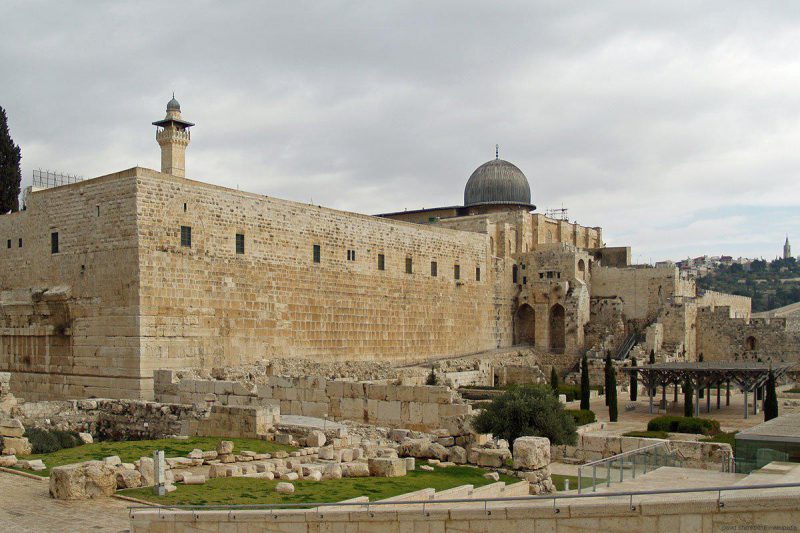
Qpress, a media centre specialising in Jerusalem and Al-Aqsa affairs, has been closed by Israeli authorities.
After being questioned and banned from entering Al-Aqsa Mosque last week, the head of the news organisation, Dr Hekmat Na’amna, was informed that Qpress was being shut down in accordance with a military decision issued early this month.
He was also informed that the use of the website has been banned, in addition to the use of the Facebook page. He was warned by the Israeli intelligence that any use of Qpress would result in prosecution.
These orders issued by the Israeli military and security forces indicate that the Qpress agency has been banned and completely shut down.
Commenting on this decision, Mahmoud Abu Ata, a journalist specialising in Jerusalem, Al-Aqsa and holy site affairs and a former employee of Qpress said that “this closure aims to silence the voice of Al-Aqsa Mosque, Jerusalem and the holy sites and to censor true facts and the true situation on the ground in occupied Jerusalem.”
“The occupation wants to cover up its crimes and plans against Jerusalem, Al-Aqsa and the Muslim and Christian holy sites in Jerusalem as well as across Palestine. Qpress has always exposed such crimes as part of its media duty in a professional and transparent manner. However, it seems that such objectivity and honourable professionalism that portrayed the events, pictures and videos exactly as they occurred did not please the Israeli administration.”
The Paris Massacre of 40 Algerians on October 17th 1961 – Some were herded into the Seine River, others thrown from bridges
American Herald Tribune | October 16, 2016
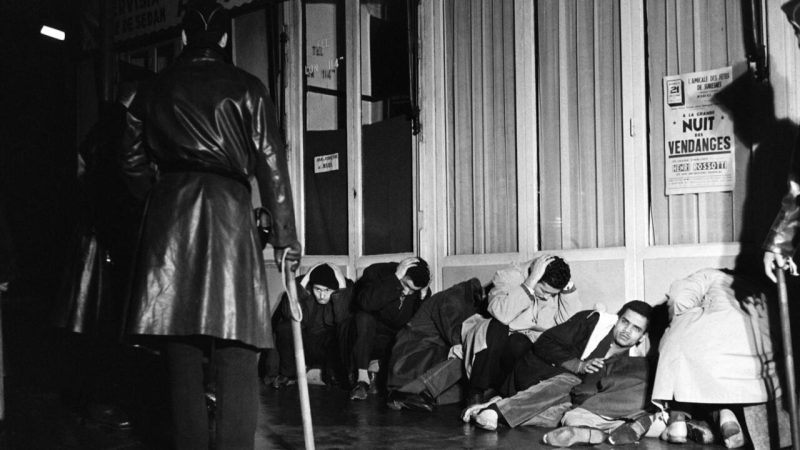
Some 30,000 pro FLN (National Liberation Front) Algerians gathered for a peaceful demonstration in the Streets of Paris. Under orders from the head of the Parisian police, Maurice Papon, the French police attacked the demonstration. The Paris Massacre of 17 October 1961 appears to be intentional. After 37 years of denial the French government admitted the acts, and acknowledged 40 deaths in 1998. Estimates of deaths exceed 200.
Historian Jean-Luc Einaudi won a trial against Maurice Papon in 1999. The latter, according to official documents, seems to have directed the massacre. He assured officers in one station that they would be protected in prosecution if they participated in quelling the demonstration.
The protestors were killed in many different methods. Some were herded into the Seine River, others thrown from bridges after being beaten unconscious. Other still were delivered to the Paris police headquarters after being arrested and killed there.
The estimates of the deaths range between 70 and 200.
A few days after the massacre on 31 October, some anonymous policemen published a text stating:
What happened on 17 October 1961 and in the following days against the peaceful demonstrators, on which no weapons were found, morally forces us to bring our testimony and to alert public opinion… All guilty people must be punished. The punishment must be extended to all of the responsible people, those who give orders, those who feign of letting it happen, whatever their high office may be… Among the thousands of Algerians brought to the Parc des Expositions of the Porte de Versailles, tens were killed by blows from rifle butts and pickaxe handles… In one of the extremity of the Neuilly bridge, groups of policemen on one side, CRS on the other, moved slowly towards each other. All the Algerians captured in this huge trap were knocked out and systematically thrown in the Seine. A good hundred people were subjected to this treatment… [In the Parisian police headquarters], torturers threw their victims by tens in the Seine which flows only a few meters from the courtyard, to keep them from being examined by the forensic scientists. Not before having taken their watches and money. Mr. Papon, prefect of the police, and Mr. Legay, general director of the municipal police, assisted to these horrible scenes… These indisputable facts are only a small part of what has happened in these last days and what continues to happen. They are known by the municipal police. The extortions committed by the harkis, the district special brigades, the brigades des aggressions et violences are not secret any more. The little information given by the newspapers is nothing compared to the truth… We do not sign this text and sincerely regret it. We observe, not without sadness, that the current circumstances do not allow us to do so…”
Pro-Israel Faculty Found Anti-BDS Campus Group
By Richard Silverstein | Tikun Olam | October 16, 2016
A friend in the academy pointed me to a new faculty organization founded to confront the BDS “menace” and the threats to Israel’s existence on campus. Israel and the Academy (IA) seems to be a group centered around Cary Nelson, perennial campus Israel advocate. Under Publications, the site lists only one: Nelson’s upcoming, Dreams Deferred, his supposed “guide” to BDS. The IA website was registered in April 2016.
There are, of course, a number of pro-Israel faculty groups, chief among them Scholars for Peace in the Middle East. A number of the IA Advisory Board members are affiliated with SPME. Signatories to the new group include:
Russell Berman Stanford
Paul Scham University of Maryland
Debra Dash Moore University of Michigan
Naomi Sokoloff University of Washington
There are also two somewhat odd signatories: Alan Johnson, who is editor of BICOM’s hasbara publication, Fathom. BICOM is the UK’s version of Aipac. Second is Menachem Kellner, teaches at Israel’s Shalem College, the academic offshoot of the pro-Likud Shalem Center.
I suppose what’s new about IA is that it is laser-focused (as they say) on BDS. Its purpose appears to be to provide curriculum and pedagogical tools to rebut the claims of BDS. Its mission statement reads in part:
Enriched with content provided by hundreds of faculty members across the world, Israel in the Academy aims to educate, inform, and empower those who believe in the existence and legitimacy of a secure and democratic homeland for the Jewish people and who are convinced that that goal can only be secured by providing for the aspirations of both Israelis and Palestinians. To make that possible we must bring an end to efforts to delegitimize Israel and to prevent the mutual empathy and dialogue that we see as essential to negotiating a solution to the Israeli-Palestinian conflict. We also need to increase and enrich both historical knowledge and knowledge of the contemporary scene.
Israel and the Academy is a natural outgrowth of the MLA Members for Scholars’ Rights, a voluntary organization that stands for the universal principle of academic freedom. The group was founded to analyze and organize opposition to efforts within the Modern Language Association to abridge academic freedom through boycotts and other means. Israel and the Academy seeks to support such efforts across the humanities and social sciences while also providing pedagogical resources to further discourse and understanding surrounding modern day Israel and its historical context.
This statement actually mentions the word “Palestinians.” But there is no consideration in it of the interests of Palestinians. The name of the group itself, Israel and the Academy, gives away where its true sympathies lie. There is the unsubstantiated claim that BDS somehow removes the possibility for mutual empathy in resolving the conflict. But with the pro-Israel advocacy of the group being clear, I don’t see any empathy by these faculty for the Palestinians themselves. So how do they propose to solve the conflict without that?
One of its members, Russel Berman, lectured at the University of Washington under the auspices of SPME. One of the goals he mentioned in his talk was to “model civil discourse.” In light of the successful campaign to drive Steven Salaita from the University of Illinois, his pro-Israel opponents propounded a theory that the subject of Israel and Palestine required “civil discourse.” Faculty who violated this artificial code were somehow trespassing on this ‘sacred’ value. In truth, they were violating a truly sacred principle of free speech and open academic discourse.
Note the mission statement above upholds “academic freedom,” which supposedly will be stifled by boycotts. No word here about the damage to Prof. Salaita’s career based on claims that his speech violated some sort of academic code. In other words, the pro-Israel academy wants its cake and to eat it too: BDS violates academic freedom; but professors who support BDS should lose theirs.
Yet another irony of Berman’s UW talk was that during the Q & A period he took a question about campus Palestinian solidarity activists and said: “they’re nuts!” So much for modeling civil discourse.
A Glimpse into Jewish Guilt and Aggression
By Gilad Atzmon | October 16, 2016
Some Jews were not delighted by Donald Trump’s recent reference to ‘International Bankers”. Trump declared this week that his rival Hillary Clinton is somehow “an instrument of a vast conspiracy involving scads of money and international banks”
You may note that Trump didn’t refer to Jews nor did he point out any ethnicity or religious group. However, Jonathan Greenblatt, the CEO of the Anti-Defamation League, was quick to react using the twitter platform. “Trump should avoid rhetoric and tropes that historically have been used against Jews and still spur antisemitism,” Greenblatt said and then added “Let’s keep hate out of campaign.”
One may wonder at this stage why a leading American Jew sees ‘hatred’ in Trump’s critical reference to ‘International Banking’? Is it because Greenblatt knows that the International Bankers who fund Clinton’s presidential affair belong to one particular ethnic group? Is it possible that Greenblatt believes that the bankers at Goldman Sachs, along with individuals like Haim Saban and George Soros, may have one or two things in common apart from being filthy rich?
The Jewish Telegraphic Agency was also alarmed by Trump’s true observation that “This election will determine if we are a free nation or whether we have only the illusion of democracy, but are in fact controlled by a small handful of global special interests rigging the system”
Once again Trump didn’t refer specifically to Jews, yet the JTA must have gathered that he had Jews in mind. The JTA probably knows something many of us may have gathered but prefer to suppress.
I guess the good news is the sudden appearance of Jewish guilt. Greenblatt and the JTA act out of guilt. They do know that international banking is a Jewish territory and that makes them feel uncomfortable. But the tragic news is that Jewish guilt hardly leads to ethical reflection, and too often it is quick to transform into aggression.
If Greenblatt was genuinely concerned with defamation and the safety of American Jews he should have lobbied the herd of Jewish international bankers to remove themselves from American politics. But for Greenblatt and others within his tribal milieu, Jewish power is the power to silence the very discussion of Jewish power!
In practice, Greenblatt, an American Jewish leader, is telling the Republican presidential candidate which topics to avoid.
I would like to tell Greenblatt and his acolytes that this development is very dangerous to American people and to American Jews, in particular.
WikiLeaks: The two faces of Hillary Clinton on Syria

By Sharmine Narwani | RT | October 14, 2016
“People don’t trust Hillary Clinton, and no one can agree on why,” begins a sympathetic piece on the Democratic Party presidential candidate in Fast Company last July.
In a CNN poll that same month, only 30 percent of Americans believed Clinton to be “honest and trustworthy.”
If voters don’t know what to make of Clinton or how to read her, the blame may lie directly with the candidate herself. In an April 2013 speech made public by WikiLeaks last week, Clinton confided:
Politics is like sausage being made. It is unsavory, and it always has been that way, but we usually end up where we need to be. But if everybody’s watching, you know, all of the back room discussions and the deals, you know, then people get a little nervous, to say the least. So, you need both a public and a private position.
That last “public vs. private” comment quickly made the media rounds, and confirmed – for her critics – Clinton’s deliberate duplicity on a number of policy positions.
WikiLeaks has provided an opportunity to delve into some of these, so let’s take a look at one very prominent feature of Clinton’s foreign policy agenda: Syria, a country that stands at the center of a potential global confrontation today.
Not a Syrian uprising; a regime change plan
A 2012 email released by WikiLeaks last year shows that, behind the scenes, Clinton’s State Department was calculating its Syria policy using entirely different metrics than its publicly-stated narrative of supporting reforms and rejecting violence:
It is the strategic relationship between Iran and the regime of Bashar Assad in Syria that makes it possible for Iran to undermine Israel’s security — not through a direct attack, which in the thirty years of hostility between Iran and Israel has never occurred, but through its proxies in Lebanon, like Hezbollah, that are sustained, armed and trained by Iran via Syria. The end of the Assad regime would end this dangerous alliance. Israel’s leadership understands well why defeating Assad is now in its interests.
The email, written by an unidentified person and included within the WikiLeaks ‘Clinton archive,’ lays out a plan:
Washington should start by expressing its willingness to work with regional allies like Turkey, Saudi Arabia, and Qatar to organize, train and arm Syrian rebel forces. The announcement of such a decision would, by itself, likely cause substantial defections from the Syrian military. Then, using territory in Turkey and possibly Jordan, US diplomats and Pentagon officials can start strengthening the opposition… Arming the Syrian rebels and using Western air power to ground Syrian helicopters and airplanes is a low-cost high payoff approach.
Arming a Syrian rebellion from outside the country was already a consideration “from the very beginning,” according to a recent WikiLeaks release of a June 2013 speech by Clinton:
So, the problem for the US and the Europeans has been from the very beginning: What is it you – who is it you are going to try to arm. And you probably read in the papers my view was we should try to find some of the groups that were there that we thought we could build relationships with and develop some covert connections that might then at least give us some insight into what is going on inside Syria.
Certainly, we know that by early 2012, the Obama and Erdogan administrations had struck a deal to establish a rat-line transporting weapons and ammunition from Libya to Syria – via the CIA and MI6, and funded by Turkey, Saudi Arabia and Qatar.
The attack on the US consulate in Benghazi which killed US Ambassador Christopher Stevens was only a temporary setback. Weapons and financial assistance to militants in Syria, however, continued to flow from America’s regional allies without any US push-back, even though Washington clearly knew arms were being siphoned to extremists.
A declassified DIA document from August 2012 circulated to Clinton’s State Department states plainly that “the Salafist, Muslim Brotherhood and AQI (Al-Qaeda in Iraq) are the major forces driving the insurgency in Syria” and that “the West, Gulf countries and Turkey support the opposition.”
But if US Special Forces were involved in driving arms and fighters into Syria in early 2012, the groundwork would have had to have begun many, many months before. The US military’s unconventional warfare (UW) strategy requires that target-state population perceptions are first “groomed” into accepting an armed insurrection, using “propaganda and political and psychological efforts to discredit the government”… creating “local and national ‘agitation’”… helping organize “boycotts, strikes and other efforts to suggest public discontent”… before beginning the “infiltration of foreign organizers and advisors and foreign propaganda, material, money, weapons and equipment.”
You get an idea of how this “propaganda” and “grooming” works in a June 2011 email from Clinton’s recently-departed Director of Policy Planning Anne-Marie Slaughter, who openly calls for fabricating sectarian narratives to incite Syrian protestors:
This suggests US should be making much more of the ways in which Syrian regime is simulating violence. Can’t we call for a meeting of the UNSC where we do not call for action but simply present information along the lines of what is recounted below so as to ‘bring it to the attention of the Council’ in a way that then has greater credibility globally? Making the point repeatedly that the regime wants this to look like/turn into sectarian violence? At the very least that can be broadcast back into Syria in various ways that will encourage protestors. There is an information war going on; we can do much more to elevate and legitimate the truth.
This is business as usual for a US State Department well-versed in sowing sectarian discord in the Middle East – all while publicly denouncing sectarian strife. A WikiLeaks email from 2006 shows that this thinking was already well-entrenched in Foggy Bottom, with a focus on “exploiting vulnerabilities” – particularly “sectarian” ones – inside Syria.
Fueling the sectarian Jihad
By late 2011, US intelligence had assessed that Al-Qaeda was operating inside Syria. This information was public, but not widely disseminated. Instead, Clinton’s team focused heavily on flogging the narrative that “Assad must go” because of his government’s widespread human rights violations.
Clinton liberally used the “humanitarian” pretext to advance a regime change agenda – pushing, behind the scenes, for increased assistance to militants and direct US military intervention, while publicly decrying the escalating violence inside Syria.
But did she give a toss about keeping Syrians safe? The evidence suggests otherwise. In this new WikiLeaks release of a speech to the Jewish United Fund in August 2013 – “flagged,” incidentally, by her staffers who worried about its content – Clinton outlines one possible Syria policy option:
One way is a very hands off, step back, we don’t have a dog in this hunt, let them kill themselves until they get exhausted, and then we’ll figure out how to deal with what the remnants are. That’s a position held by people who believe there is no way, not just for the United States but others, to stop the killing before the people doing the killing and the return killing are tired of killing each other. So it’s a very hands off approach.
To any observer of the foreign-fueled Syrian war of attrition, it looks very much like Clinton opted for this course of action.
And given that Washington’s allies in the Syrian fight consisted mainly of head-chopping, jihadist foot soldiers, Clinton’s scenario of a killing field to keep all sides “exhausted” may have even been the starting plan.
These fighters came equipped with a militant, sectarian mindset courtesy of Saudi Arabia, Turkey and Qatar – under the supervision, of course, of a CIA that cut its teeth doing the exact same thing with the Mujahedeen in Afghanistan.
A WikiLeaks email sent from Hillary Clinton to her now-campaign chief John Podesta in August 2014 shows that the former Secretary of State is fully aware that her allies were partial to supporting terrorists:
While this military/paramilitary operation is moving forward, we need to use our diplomatic and more traditional intelligence assets to bring pressure on the governments of Qatar and Saudi Arabia, which are providing clandestine financial and logistic support to ISIL and other radical Sunni groups in the region.
Qatar and Saudi Arabia are, of course, two staunch US allies in the region that host American military bases and, apparently, also support ISIL.
Another October 2013 Clinton speech “flagged” by her campaign staff, and released by WikiLeaks this week, has her saying:
The Saudis and others are shipping large amounts of weapons – and pretty indiscriminately – not at all targeted toward the people that we think would be the more moderate, least likely, to cause problems in the future.
The State Department knows all too well that both fighters and weapons are fungible in the Syrian militant marketplace. It is a key reason the US has always resisted naming those groups it considers “moderate” rebels. Arms and supplies to US-backed groups have often found their way to ISIL and Al-Qaeda, with photo evidence aplenty making the social media rounds.
Despite these loaded disclosures, Clinton and other US policymakers still flog outdated narratives about an “evil Syrian regime killing innocent civilians” while ignoring the narrative they know to be true: bloodthirsty jihadists armed to the teeth by ideologically-aligned US allies.
This Syrian conflict – privately, at least – is about regime change at all costs for the hawkish side of the policy establishment which includes the CIA, Pentagon brass and Clinton. Publicly, however, it’s still about “crimes against humanity” – whatever that means today.
Earlier this month, Clinton began to publicly reveal that truth in advance of the November presidential election. Reuters reports Clinton as saying “removing President Bashar al-Assad is the top priority in Syria.”
She is also once again touting a “no-fly zone” over Syria – much as she did with Libya. In yet another speech ‘flagged’ by her campaign and released by WikiLeaks – this one delivered to Goldman Sachs at their CEO conference in June 2013 – Clinton explains:
To have a no-fly zone you have to take out all of the air defense, many of which are located in populated areas. So our missiles, even if they are standoff missiles so we’re not putting our pilots at risk – you’re going to kill a lot of Syrians. So all of a sudden this intervention that people talk about so glibly becomes an American and NATO involvement where you take a lot of civilians.
So Clinton is advocating for a no-fly zone despite the fact that she recognizes she’s “going to kill a lot of Syrians.” Which then puts that other speech of hers about letting Syrians “kill themselves until they get exhausted” into context.
Her only regional allies in this endeavor will be the Saudis and Qataris, who we now know support ISIL and other terrorists inside Syria. We also know that Clinton will continue to ignore this indiscretion – not because of what she says, but because of what she does.
Her public-versus-private position on the Saudis, after all, has been bandied about since the 2010 WikiLeaks State Department cables were released.
In 2009, a secret WikiLeaks cable signed off by then- Secretary of State Hillary Clinton reads, in part:
Donors in Saudi Arabia constitute the most significant source of funding to Sunni terrorist groups worldwide… Saudi Arabia remains a critical financial support base for Al-Qaeda, the Taliban, LeT (Laskhar-e Taiba), and other terrorist groups… It has been an ongoing challenge to persuade Saudi officials to treat terrorist financing emanating from Saudi Arabia as a strategic priority.
Yet by 2011, Clinton was ushering through the biggest weapons sale to Saudi Arabia in US history – a massive $67 Billion arms dump into the epicenter of global terror.
Clinton is not averse to cashing in on Saudi riches for her and her family’s foundation either. The Clinton Foundation has received millions of dollars from Saudi, Qatari and other Gulf sources, despite the role their governments have played in funding global Jihad. And her campaign manager’s brother, Tony Podesta, just signed on to furnish the Saudi government with very expensive public relations services earlier this year.
There is something schizophrenic about Hillary Clinton’s compartmentalization of issues that speaks to the very competence of her judgment. Her whole private-versus-public-positions shtick is antithetical to the transparency, process and accountability demanded by democracy.
She speaks of her Iraq “mistake,” yet we have still not heard what lessons she has learned. And it grates, because we can see she has repeated them again and again, in Libya and in Syria.
The “public” Hillary Clinton supports self-determination, freedom and human rights for Syrians. The “private” Hillary Clinton supports the wholesale massacre of Syrians by a closely allied network of depraved sectarian terrorists – in order to weaken Iran and strengthen Israel.
If you’re one of those Americans who don’t trust her, you have good reason. At this point it is hard to ascertain if Clinton herself knows what her truth is anymore.
Featured Video

Seyed M. Marandi: US-Iran War Inevitable: Kuwait and Bahrain May Fall
or go to
Aletho News Archives – Video-Images
From the Archives
Oil and the Israel Lobby
Reknowned economist M. Shahid Alam offers this excellent critique of Noam Chomsky’s defective analysis of the relative influence of Oil versus the Israel lobby over US foreign policy: … continue
Blog Roll
 Aletho News
- ICC ignored ‘very well-documented’ NATO crimes – ex-Libyan minister
- SNSC secretary dismisses US response to Iran’s conditions as ‘inadequate’
- Sanaa says Taiz roads open, secure for residents, warns Saudi forces
- Iraqi resistance group urges Saudi leadership to admit defeat, lift Yemen siege
- Trump’s Retreat: How Al-Aqsa Flood Took Down the US Empire
- Israel’s Military Actions in Lebanon Grossly Violate International Law — Lavrov
- Seyed M. Marandi: US-Iran War Inevitable: Kuwait and Bahrain May Fall
- Leaders Condemn Ansarallah Attack on Saudi Arabia While Ignoring Illegal War Against Yemen
- Leaked: Britain’s Covert Iraqi Psyops Network
- Yemeni Armed Forces Warn Airlines Against Using Saudi Airports, Exempt Mecca and Medina
- If Americans Knew
- After Oct 7, IDF policy allowed civilian casualties for even the lowest-ranking targets
- Israel’s Destruction of Southern Lebanon Intensified After the Cease-Fire
- The Last-Minute Decision That Gave Israel Its Name
- The American Conservative: How Trump Made the World Go Nuclear
- Meet the US generals and admirals advancing Israeli policy
- Opinion: Why news organizations should boycott Israel
- The Israeli witch hunt of Sami Abu Shehadeh exposes the lie of the ‘Jewish and democratic’ state
- No state has a ‘right’ to exist – least of all Israel
- Testimonies about Gaza’s civilian death toll expose Israel’s atrocities – Daily Update
- How Israel Conquered the Latin American Right
- No Tricks Zone
- New Study Suggests Large Regions Of The Pacific Ocean Have Been Cooling For The Last 80 Years
- Germany’s Green Energy Debacle: High Energy Costs Force Kahla Porzellan to Close After 182 Years!
- New Study: 50 Years Of The Most Aggressive ‘Net Zero’ Policies Can Only Affect The Global Climate By 0.03°C
- US September “Heat” Was No Record…Many Records Set Decades Ago
- Latest European Green Energy Debacle; Portugal’s Largest Flagship Solar Park Insolvent!
- Green Energy Debacle: German Expert Professor Fritz Vahrenholt Warns Of Severe Economic And Social Consequences
- Two More Paleo Reconstructions Affirm Meters-Higher Sea Levels Across Ireland, Brazil 7000-6000 Years Ago
- New Study: Earth And Venus Surface Warmth Largely Explained By Convection And Lapse Rate, Not CO2 Or Radiation
- 2025 Nature Paper Claiming Worsening Global Drought Gets RETRACTED …Heavily Flawed
- New Study: ‘Global Drought Shows No Detectable Recent Acceleration Under Climate Warming’

