Official: 71 Palestinian prisoners have died of torture in Israeli jails since 1967
MEMO | June 27, 2016
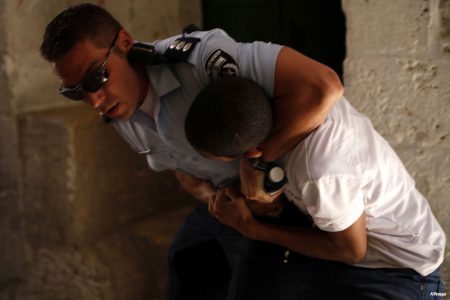
As many as 71 Palestinian prisoners have died in Israeli jails as a result of torture since 1967, Abdel Nasser Farwana, head of the documentation and studies unit at the detainees and ex-detainees committee, said.
In a statement released on Sunday to mark the International Day Against Torture, Farwana said dozens of others died shortly after being released as an effect of the torture they had endured, adding that many more suffer from long-term physical and psychological disabilities.
“Israel practices a unique and atypical form of physical and psychological torture and it is the only country in the world that legalises torture in its jails and detention camps and protects its perpetrators,” he explained.
“Israel uses torture on institutional level against Palestinian and Arab detainees. According to our data, 100 per cent of the Palestinian prisoners were subjected to one form or another of torture,” he added.
Farwana called on international institutions and human rights organisations to take serious and effective steps to stop all forms of torture against Palestinian prisoners and to prosecute those who practice torture against them.
Israel, Turkey reach agreement to normalize ties – Israeli official
RT | June 26, 2016
Israel and Turkey have reached an agreement to normalize ties, a senior Israeli official told reporters, according to Reuters. This will end the bitter rift over the Israeli Navy’s killing of nine Turkish citizens during a Gaza flotilla raid in 2010.
The agreement, which took three years to reach, is expected to be officially announced on Monday, said the official traveling with Israel’s Prime Minister Benjamin Netanyahu, who is currently in Rome.
The restoration of full diplomatic relations that deteriorated after the Israeli navy killed nine Turkish and one Turkish-American pro-Palestinian activists in 2010 has been brokered with the help of Washington.
Israel conducted an operation against six civilian ships that belonged to the Gaza Freedom Flotilla in international waters of the Mediterranean Sea. The ships fit by the Free Gaza Movement and the Turkish Foundation for Human Rights and Freedoms and Humanitarian Relief (IHH) were carrying humanitarian and construction supplies to the blockaded Gaza Strip.
The deal is likely to involve compensation (of around $20 million) to the families of the killed Turks and higher Turkish aid and development projects for Gaza, Israeli media report.
The $20 million in compensation will come as a humanitarian act to a special fund organized for the families of the victims killed by the Israeli soldiers. The payment is external to the agreement, an act of good will, and doesn’t imply that Israel has acknowledged responsibility for the incident, the official stressed, according to the Jerusalem Post. The transaction will be carried out as soon as Turkey passes legislation making it impossible for the families to file further claims against Israeli officers or soldiers.
Turkish President Recep Tayyip Erdogan has reportedly pledged to make efforts to release the bodies of two Israeli soldiers that are held by the Hamas organization in the Gaza Strip and two other Israeli civilians.
“We asked for and received a document in which the Turkish president instructs the relevant Turkish agencies to work toward resolution of the issue of those kidnapped and missing. The document is in our hands, that’s what Turkey can do for now,” the official said, according to the Times of Israel.
The deal is to be signed on Tuesday by Foreign Ministry Director Dore Gold and his Turkish counterpart, Mevlut Cavusoglu.
Two of Turkey’s conditions for normalizing diplomatic relations that involved an apology and compensation are going to be fully met, reports say. The third demand – lifting the Gaza blockade – was a matter of disagreement and called for a compromise.
Israel will reportedly allow Turkey to help with the completion of a hospital in the Palestinian enclave and the construction of a new power station as well as a plant for desalination of water.
The Istanbul-based Foundation for Human Rights and Freedoms and Humanitarian Relief (IHH) has expressed its objections to the agreement on its official Twitter feed, both in English and Turkish. It includes 12 points that explain why Turkey shouldn’t be constrained with the terms of the deal, especially stressing that the agreement “should be based on the conditions of abolishing the blockade, not the embargo.”
Israeli soldiers shot Palestinian boy ‘deliberately’, claims B’Tselem
MEMO | June 25, 2016
The Israeli human rights group B’Tselem has said that the shooting of a 15-year-old Palestinian boy on Tuesday night was “deliberate, entirely unjustified and a direct result of military policy.” The group’s report gave details of the incident during which Mahmoud Badran was shot and killed by Israeli soldiers. The boy from Beit Ur a-Tahta was with four of his friends at the time; they were wounded in the unprovoked attack.
“The shots were fired at a car with seven passengers inside, who were making their way back from a night out at a water park,” reported B’Tselem. “The military initially announced the soldiers had ‘targeted terrorists who were throwing stones and Molotov cocktails at Israeli cars on Road 443’, but later changed its version and stated the boy had been ‘mistakenly’ killed.” The organisation’s field-researcher indicated that “the soldiers used heavy fire against the moving car without any justification.”
According to B’Tselem, said: “At around 1:30am, seven residents… were making their way home after a night out at the Lin Land Waterpark in the village of Beit Sira. When the car approached a narrow underpass used by Palestinian vehicles to get across Road 443, [Israeli] soldiers standing on the road, on top of the underpass, opened massive fire at the car from a distance of 40 to 50 metres.”
Most of the passengers in the car were hit by the shots, including the driver, who lost control and crashed into a wall. “Five of the seven passengers were hit in the shooting: Mahmoud Badran was killed instantly, four passengers were injured.”
Trump Will Not Recognize Palestinian Statehood if elected President
Sputnik – 25.06.2016
Republican presidential nominee Donald Trump has backtracked from his neutral position on the Israel-Palestine conflict, and is now “committed” to supporting Israeli settlement expansion on territories it has seized illegally, according to an advisor.
David M. Friedman, a real-estate attorney serving as Trump’s main advisor on Israel, said the Republican presidential candidate and reality television star would not support the recognition of the Palestinian state without “the approval of the Israelis.” Friedman also remarked that Trump was unconcerned with the inhabitants of the West Bank, because “nobody really knows how many Palestinians live there.”
Trump made Friedman a part of his campaign staff in April, at a meeting with Orthodox Jews, naming him and Jason Greenblatt, another real-estate lawyer and Trump’s chief attorney, as his advisors on Israel. Friedman said at the time, “Mr. Trump’s confidence is very flattering. My views on Israel are well known, and I would advise him in a manner consistent with those views. America’s geopolitical interests are best served by a strong and secure Israel, with Jerusalem as its undivided capital.” Friedman has made no secret of his feelings about a two-state solution with Palestine, writing that, “It was never a solution, just an illusion that served both the US and the Arabs.”
Trump has earned a reputation for taking contradictory stances on issues, and when asked in May if he thought Israel should cease construction in the West Bank, the candidate said, “No, I don’t think there should be a pause… because I think Israel should have – they really have to keep going. They have to keep moving forward.” Later in the same interview he remarked, “I’d love to negotiate peace. I think that, to me, is the all-time negotiation… I would love to see if peace could be negotiated. A lot of people say that’s not a deal that’s possible. But I mean lasting peace, not a peace that lasts for two weeks and they start launching missiles again. So we’ll see what happens.”
Friedman says Trump’s attitude toward Israel is positive, and his view on the Palestinian state springs, in part, to a lack of power on the part of Palestinian President Mahmoud Abbas. “His [Trump’s] feeling about Israel,” Freidman said, “is that it is a robust democracy. He does not think it is an American imperative for [Gaza Strip and other territories seized by Israel] to be an independent Palestinian state.”
When asked directly about his own feelings on recognizing the State of Palestine, Friedman was open, if tentative.
“If the Israelis conclude that they need to do this [recognize the Palestinian state] in order to enhance their long-term security – which I think we are very skeptical about – but if this is what they conclude they want to do, we will respect this decision…. If the circumstances change… and there is a reason to be optimistic, then great, but the current facts don’t make that [recognizing the Palestinian state] an American imperative at all.” he said.
Israel moves to keep interrogations from being filmed
Ma’an – June 24, 2016
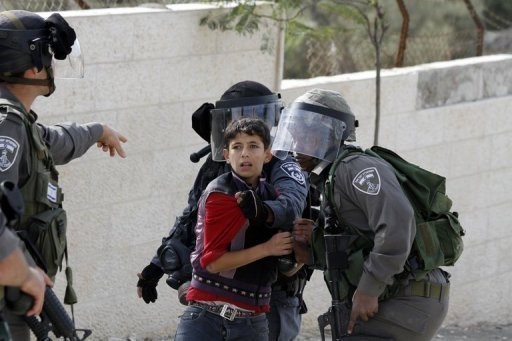
BETHLEHEM – Israel’s Public Security Ministry proposed its latest bill to prevent “security” interrogations from being videotaped, for “fear the footage could reach terror groups that would learn Israeli interrogation techniques,” Israeli media said Friday.
According to the Shin Bet, Israel’s internal security service, there is a “fear” that those being interrogated would refuse to reveal information in the event the video could possibly reach the groups they had informed against, said Israeli newspaper Haaretz.
In 2003 a law came into effect that required Israeli police to document almost all its interrogations, both visually and aurally.
Since then, the Knesset Constitution, Law and Justice Committee has consistently approved an “exemption” for security interrogations, which Israeli Deputy Attorney General Raz Nazri reiterated “stems from security considerations.”
In 2015, the committee agreed to extend the exemption for a year and a half, but rejected a proposed exemption of five years.
Israel has consistently been criticized by international rights groups for its interrogation practices, specifically towards Palestinian children.
Some 700 Palestinian children per year are arrested and face “ill-treatment” by Israeli forces, according to a 2015 report by Child Rights International Network (CRIN).
“Arrested children are commonly taken into custody by heavily armed soldiers, blindfolded with their wrists tied behind their backs before being transported to an interrogation centre,” the CRIN report said.
“Children questioned about their experience frequently report verbal and physical abuse during the arrest.”
According to research conducted by Defense for Children International – Palestine cited by the report, some 56 percent of children report having experienced “coercive” interrogation techniques during their time in Israeli custody.
Some 42 percent say they signed documents in Hebrew, despite the fact that most Palestinian children do not speak or understand the language.
Additionally, 22 percent of detained children say they underwent up to 24 hours of solitary confinement, in violation of international standards.
Some Palestinian teens reported that they were beaten to the point of their bones being fractured while being held in Israeli detention centers.
In a report released in February 2013, the UN children’s agency UNICEF criticized Israel for its treatment of arrested Palestinian children, saying their interrogation mixes “intimidation, threats and physical violence, with the clear purpose of forcing the child to confess.”
According to the latest numbers from prisoner rights group Addameer, there were a total of 414 child prisoners in Israeli prisons in May 2016, 104 of whom were under the age of 16.
Has Myanmar’s iconic leader taken genocide lessons from Israel?

By Yvonne Ridley | MEMO | June 23, 2016
Myanmar’s Aung San Suu Kyi is one of the most famous women in the world. She is a holder of the Nobel Peace Prize and hailed as “the Mandela of Asia” because of her human rights record. However, when we look at her continual lack of concern about the plight of the Rohingya people in the former Burma, you have to question the level of her compassion and integrity.
You may gasp at this and I must admit that I never thought that I would ever write that about such an iconic figure. I, like tens of thousands of others around the world, campaigned long and hard to have the pro-democracy leader freed from the shackles of the Burmese junta which kept her under house arrest for years.
When she was finally released to lead her country to a better future there were tears in my eyes, but now I am completely bewildered by her deathly silence about the pitiful state of the Rohingyas living in squalor and inhumane conditions in Myanmar.
The military junta in Burma-Myanmar refused to acknowledge the existence of the Rohingyas and would only ever refer to them as “Bangladeshis”. Now, under the political leadership of Aung San Suu Kyi, the government has gone one step further by banning the use of the word Rohingya, as if 1.1 million people have just disappeared. One has to ask if she and the generals still lurking in the background are following the Israeli manual on how to deal with unwanted citizens and ethnic minorities.
Let’s not forget that Israel’s founding Prime Minster David Ben-Gurion maintained close ties with Burma. In December 1961 he was given the full red carpet treatment during a state visit. Shortly before boarding his flight he gave a press conference: “I am leaving today for a new country but not a strange one; in all of Asia, there is no more friendly nation to Israel than Burma. Israel and Burma are two old countries with old histories which renewed their independence in 1948.”
According to Ben-Gurion, “Both [Israel and Burma] are democratic and both follow the same principle in foreign relations – promoting friendly relations and mutual aid with all peace-loving countries irrespective of their internal regimes and without injuring the interests of any other country; loyal to international cooperation based on United Nations principles.”
Of course the state visits by Israeli leaders didn’t stop at Ben-Gurion; Shimon Peres, Moshe Dayan, Yitzhak Ben-Zvi and Golda Meir all went to Burma along with a string of other politicians. Others, including current Prime Minister Benjamin Netanyahu, have extended hospitality to Burmese-Myanmar leaders in Tel Aviv.
By flattening more than 530 Arab towns and villages since 1948, controlling the movement of the Palestinians living in the West Bank and Gaza and airbrushing Palestinian culture, cuisine and lifestyle from everyday life, some say that the Israelis have been engaged in a slow genocide against the Palestinian people. Now I’m wondering if they’ve handed over the genocide manual to Aung San Suu Kyi and Myanmar.
The official narrative pushed out to the media is that there is religious tension between Rohingya Muslims and Myanmar’s Buddhists and that that is the problem. This is untrue. The state-sponsored persecution and oppression of the Rohingya people has gone on for decades. They are denied citizenship and ready access to health care and hospitals, and they have limits placed on their right to free movement and many other basic human rights. Religious persecution has been the order of the day along with land confiscations, forced labour, arbitrary taxation, house demolitions and restrictions on marriage, work and education. These are all forms of state oppression and tyranny the same as or similar to those encountered by Palestinians at the hands of Israel; now they’re being endured by the Rohingyas.
Last year, Asia witnessed a huge refugee crisis when hundreds of thousands of Rohingyas were exploited by people smugglers and took the seas in unseaworthy vessels. Abandoned by the smugglers their boats sailed aimlessly for weeks on end; without the food thrown to them by local fishermen the death toll as they starved would have been much higher.
It was only after an international outcry that neighbouring countries finally offered refuge to the Rohingya boat people, but then they forced them to live in squalid refugee camps in Thailand, Malaysia, India and Bangladesh. Around 150,000 live in conditions that are little better than concentration camps, and reports of mass graves surfaced last year.
Meanwhile, the ever-fragrant female “Mandela of Asia” smiles sweetly during less than robust press interviews and obfuscates at the very mention of the Rohingya people. What’s worse is that she gets away with it because most of the media still eulogises the icon who world leaders and statesmen simpered over when she was released.
The so-called head of state in Myanmar’s first “democratically elected government since 1962” maintains silence over the plight of the Rohingyas. Recently, she appeared a little tetchy when asked about them by US Secretary of State John Kerry, who was told to be more cautious over the “sensitive issue”. Even the Dalai Lama has been blanked by the diminutive leader after he called publicly and privately on several occasions for her to show compassion and act to stop the persecution.
If she has taken genocide lessons from the Israelis, then the State Counsellor and Foreign Minister Aung San Suu Kyi has learned well. She has now declared that her government will not use the term “Rohingya” when referring to the “Muslim community” in Rakhine State. It is an echo of the occasion when former Israeli Prime Minister Golda Meir declared infamously that there was “no such thing as Palestinians.”
“Suu Kyi does not use the terms ‘Rohingya’ or ‘Bengali’,” announced Aye Aye Soe, the deputy director general of the Ministry of Foreign Affairs during a visit by the UN Special Rapporteur on Myanmar, Yanghee Lee. “The words of war do not support the current situation. Now, citizenship is under close scrutiny, and the use of the terms does not support the scrutiny process for citizenship. Suu Kyi requested that UN officials and other guests not use these controversial terms in case they should lead to conflict.”
As far as chutzpah goes, some might say that Aung San Suu Kyi has outdone the Israelis in her determination to shut down discussion or questions about the Rohingyas. In her world, it seems, they simply do not exist.
Prince Zeid Ra’ad Al-Hussein, the current UN High Commissioner for Human Rights, issued an 18-page report on 20 June calling for a halt to discrimination against Rohingyas and human rights violations when Aung San Suu Kyi and Yanghee Lee met. There were warnings that crimes against humanity were suspected of being committed. The UN official criticised the Myanmar government for not releasing the plans for the “peace and stability and development implementation work committee” for Rakhine State, led by Aung San Suu Kyi.
Mary Scully is a veteran of political activism, including in the anti-war, women’s rights, civil rights and Palestinian solidarity movements; she was blunt about Aung San Suu Kyi: “She won that election through a loathsome compromise with the military junta and by supporting their neoliberal policies bringing in foreign investment and mining projects at the expense of farmers and rural workers.”
Some of those farmers and villagers were way ahead of the rest of the world in understanding her betrayals, she explained. “They booed her out of town for saying the expropriations of their lands and destruction of the environment were ‘for the greater good’. Now the New York Times reports that in a recent meeting, Suu Kyi advised the US ambassador against using the term ‘Rohingya’ to describe the Muslim people of Myanmar because her government does not recognise them as citizens.”
Scully, who is also running as an independent socialist candidate for US president later this year, added: “Using the same kind of marble-mouthed deceits she used to blither to reporters, her representative told the ambassador, ‘We won’t use the term Rohingya because Rohingya are not recognised as among the 135 official ethnic groups. Our position is that using the controversial term does not support the national reconciliation process and solving problems’.”
If Aung San Suu Kyi has indeed studied Israel’s ethnic cleansing of the Palestinians then the student is on her way to becoming the master. Or, as Scully sees it: “Solidarity with Rohingya Muslims against genocide and for justice means educating about their struggle against genocide and part of that education requires exposing the murderous duplicity and collusion of Suu Kyi.”
Strong words, but given the evidence that is coming out about Aung San Suu Kyi, it is hard to see how the veteran campaigner could have said anything less.
US, Israel agree to cyber information-sharing efforts
RT | June 22, 2016
The United States and Israel have signed a joint declaration on cyber defense cooperation, making Israel one of the only nations to join the Department of Homeland Security’s information-sharing platform on cyber threats.
The declaration was signed Tuesday by Israel’s National Cyber Directorate chief Eviatar Matania and Cyber Security Authority head Buky Carmeli, as well as Alejandro Mayorkas, deputy secretary of the US Department of Homeland Security, and Under Secretary of Homeland Security Suzanne Spaulding.
The agreement was announced at the 6th Annual International Cybersecurity Conference at Tel Aviv University.
The bilateral cyber defense initiative will commit the US and Israel to expanded cooperation “for the benefit of dealing effectively with common threats in the cyber domain,” the Israeli Prime Minister’s Office said in a statement.
The pact means Israel will be one of the first nations in the world to join the DHS’s Automated Indicator Sharing program, which involves data-sharing on cyber threat indicators between governments and private companies.
The declaration specifically means the two nations will cooperate in real time on the monitoring of cyber activities, defending vital infrastructure, private-sector partnerships, and future efforts at research and development of new technologies, JTA reported.
Spaulding, the undersecretary for national protection and programs with DHS, will oversee the bilateral cyber defense operations, along with Israel’s Carmeli.
Indigenous Leader Killed in Land Dispute in Brazil
By Aline C. Piva | Council on Hemispheric Affairs | June 20, 2016
On June 14, 2016 approximately 70 armed men approached a small group of Guaraní-Kaiowá families and, after terrorizing them by burning their belongings, opened fire, killing 26-year-old indigenous leader Clodiodi Aquileu Rodrigues de Souza Guaraní-Kaiowá. Among those shot, at least 10 other people were injured, including a twelve-year-old boy who was shot in the stomach. The Instituto Socioambiental (Socio-environmental Institute; ISA), a non-profit organization that advocates for human rights observance among the indigenous people, first reported the case, writing that indigenous leaders were taken hostage and that others are missing.[1] The attack happened within a disputed area in the traditional indigenous territory of Tekohá Te’ýikue, located on the indigenous reserve of Dourados-Amambaipegua I. This land is within the municipality of Caarapó, located in the central Brazilian State of Mato Grosso do Sul, a region known for violent conflict between indigenous groups and land owners.
On May 12, as a result of over 30 years of struggle and an intense mobilization of members of the Guaraní and Kaiowá nations in Brasília, the Brazilian government recognized a local parcel of land as an indigenous territory.[2] Although throughout her presidency Dilma Rousseff had done little to advance indigenous rights and to help in reclaiming their traditional lands, this indifference eventually started to change a couple of months before Congress voted on her impeachment process. Rousseff created the National Council for Indigenous Policy and confirmed the demarcation of three indigenous lands. [During] that period, the Ministry of Justice declared five major areas as traditional indigenous territory.[3] It is important to note that these demarcations are now at risk, since Brazilian interim president Michel Temer has stated that he might revise such indigenous demarcations in the country.[4]
Missionaries and indigenous leaders have pointed out that, although the violence against indigenous nations in the region is not a recent development, the attacks have been escalating. According to the Special Indigenous Sanitary District of Mato Grosso do Sul (DSEI/MS), a total of 475 cases of indigenous homicides were recorded in the region from 2001 to 2015. Last year alone, there were 36 murders (34 men and two women), with most of the indigenous people killed being between 15 and 29 years old. In 2014, the DSEI-MS registered 619 cases of physical violence against members of the Guaraní and Kaiowá nations.[5] Large-scale landowners often perpetrate these attacks with the complicity of local authorities so as to evict indigenous communities from their traditional lands illegally and violently with complete disregard for their constitutional rights.
According to Eliel Benites, a professor at the Federal University of Grande Dourados (UFGD) who lives in the indigenous village Te’ýikue, the Kaiowá and Guaraní families are very fearful: “All farmers in the region were together to carry out the attack. We are living a war,” stated Benites.[6] The Fundação Nacional do Índio (National Indigenous Foundation, Funai, responsible for the demarcation of indigenous territories) has started investigating the June 14 attack, but no one has been charged yet. A delegation of members of the Human Rights Committee of the Brazilian Lower House traveled to the site of the attack on Wednesday, June 16, to check closely the situation of the indigenous people in the region.[7]
Diogenes Cariaga, an anthropologist at the Federal University of Santa Catarina (UFSC), reiterates that the conflict situation in the region was already being planned and reveals that the Rural Union of Caarapó (the city where the indigenous land is located) has been encouraging farmers to act violently against indigenous families. On May 18, 2016 shortly after the publication of the report that classified the region of Dourados-Amambaipegua I as an indigenous reserve, the Rural Union Council mobilized the farmers in the region to discuss measures against the demarcation. For Cariaga, the State’s lack of response to the violence against indigenous communities allowed landowners to create and finance militias to attack them.[8]
Over six thousand indigenous families of the Guaraní and Kaiowá nations live in the Caarapó region. As explained by Cariaga, “These families were taken forcibly into the reserve and for many years were forced to stay there.” He points out that since the 1980s, the Guarani and Kaiowá in the region have been fighting to repossess their traditional lands. The anthropologist also recalls that the territories within the boundaries of Dourados-Amambaipegua I were part of a Conduct Adjustment Commitment (CAC) signed between Funai and the Federal Public Ministry, requiring the Funai to publish studies of the areas claimed by indigenous people so that they could be ruled as indigenous reserves.[9]
Although the Funai has been prioritizing indigenous land demarcations, the negligence of the Brazilian state to conclude this process to investigate and prosecute the crimes against these communities has contributed to the escalation of violence in the area. Land disputes in the central region of Brazil have led to serious attacks against constitutional and human rights of the indigenous communities, which has amounted to a systematic genocide against Brazilian native peoples.
[1] “Ataque a Comunidade Guarani Kaiowa (MS) Deixa Um Indígena Morto E Pelo Menos Dez Feridos.” ISA. 2016. Accessed June 15, 2016. https://www.socioambiental.org/pt-br/noticias-socioambientais/ataque-a-comunidade-guarani-kaiowa-ms-deixa-um-indigena-morto-e-ate-dez-feridos.
[2] “Após Mobilização De Guarani E Kaiowa, Funai Reconhece TI Dourados-Amambai Pegua I (MS).” Articulação Dos Povos Indígenas Do Brasil. 2016. Accessed June 15, 2016. https://mobilizacaonacionalindigena.wordpress.com/2016/05/12/apos-mobilizacao-de-guarani-e-kaiowa-funai-reconhece-ti-dourados-amambai-pegua-i-ms/.
[3] “Saiba quais foram os últimos atos de Dilma antes de ela ser afastada”. A Tal da Política. Acessed June 16, 2016. http://ataldapolitica.tk/index.php/2016/05/12/saiba-quais-foram-os-ultimos-atos-de-dilma-antes-de-ser-afastada-executivo/
[4] “Temer Diz a Ruralistas Que Vai Revisar Desapropriações E Demarcações.” O Globo. 2016. Accessed June 16, 2016. http://oglobo.globo.com/brasil/temer-diz-ruralistas-que-vai-revisar-desapropriacoes-demarcacoes-19202640.
[5] “MANIFESTO DE REPÚDIO AO MASSACRE DE CAARAPÓ/MS CONTRA O POVO GUARANI E KAIOWÁ.” Google Docs. Accessed June 15, 2016. https://docs.google.com/forms/d/1hJX2gIKH02gC2d8qCgK7rXVGJ9wE1O-J92UEtXUM7Y4/viewform?c=0.
[6] “Ataque a Comunidade Guarani Kaiowa (MS) Deixa Um Indígena Morto E Pelo Menos Dez Feridos.” ISA. 2016. Accessed June 15, 2016. https://www.socioambiental.org/pt-br/noticias-socioambientais/ataque-a-comunidade-guarani-kaiowa-ms-deixa-um-indigena-morto-e-ate-dez-feridos.
[7] “Comissão De Direitos Humanos: “Os Tiros Foram Para Matar; Atingiram Somente Regiões Vitais” – Viomundo – O Que Você Não Vê Na Mídia.” Viomundo O Que Voc No v Na Mdia Comisso De Direitos Humanos Os Tiros Foram Para Matar Atingiram Somente Regies Vitais. 2016. Accessed June 20, 2016. http://www.viomundo.com.br/denuncias/comissao-de-direitos-humanos-os-tiros-foram-para-matar-atingiram-somente-regioes-vitais.html.
[8] “Ataque a Comunidade Guarani Kaiowa (MS) Deixa Um Indígena Morto E Pelo Menos Dez Feridos.” ISA. 2016. Accessed June 15, 2016. https://www.socioambiental.org/pt-br/noticias-socioambientais/ataque-a-comunidade-guarani-kaiowa-ms-deixa-um-indigena-morto-e-ate-dez-feridos.
[9] ibid
Featured Video

Saudi Led Destruction of Yemen’s heritage
or go to
Aletho News Archives – Video-Images
From the Archives
Israel: Strategic Ally or Liability?
By Stephen Sniegoski | My Catbird Seat | June 12, 2010
The claim that Israel serves as a valuable ally for the United States is made by both pro-Zionists and much of the anti-war and anti-Zionist Left that is influenced by Noam Chomsky. As a result of the Gaza flotilla massacre, which has caused a world-wide uproar against Israel, the value of Israel to the United States is being publicly questioned in more mainstream foreign policy forums. … continue
Blog Roll
 Aletho News
- Four in five new UK jobs taken by foreigners – report
- Here’s what Trump’s latest U-turn really means for Russia and Ukraine
- The Houthis Are Not an Iranian Proxy
- Europe’s Energy Hypocrisy, Russian LNG Profits and US Dependence
- ICC ignored ‘very well-documented’ NATO crimes – ex-Libyan minister
- SNSC secretary dismisses US response to Iran’s conditions as ‘inadequate’
- Sanaa says Taiz roads open, secure for residents, warns Saudi forces
- Iraqi resistance group urges Saudi leadership to admit defeat, lift Yemen siege
- Trump’s Retreat: How Al-Aqsa Flood Took Down the US Empire
- Israel’s Military Actions in Lebanon Grossly Violate International Law — Lavrov
- If Americans Knew
- Israeli occupation forces using social media surveillance unit to target hundreds of Palestinians in the West Bank
- Israel’s New – and Terrifying – Security Doctrine
- Israeli Attacks Kill Five in Gaza, Including a four-year-old and a woman
- Air Force Major Who Called for Trump’s Impeachment Held in Solitary Confinement
- It’s a Genocide, I’m Into It’: Seinfeld Mocks Protest over Palestinian Children Killed
- Universities fire dozens amid pressure from Zionist billionaires
- Gaza’s buildings are collapsing on top of us. But there’s nowhere else to shelter
- Israel kills four-year-old Gaza child – Daily Update
- After Oct 7, IDF policy allowed civilian casualties for even the lowest-ranking targets
- Israel’s Destruction of Southern Lebanon Intensified After the Cease-Fire
- No Tricks Zone
- New Study Suggests Large Regions Of The Pacific Ocean Have Been Cooling For The Last 80 Years
- Germany’s Green Energy Debacle: High Energy Costs Force Kahla Porzellan to Close After 182 Years!
- New Study: 50 Years Of The Most Aggressive ‘Net Zero’ Policies Can Only Affect The Global Climate By 0.03°C
- US September “Heat” Was No Record…Many Records Set Decades Ago
- Latest European Green Energy Debacle; Portugal’s Largest Flagship Solar Park Insolvent!
- Green Energy Debacle: German Expert Professor Fritz Vahrenholt Warns Of Severe Economic And Social Consequences
- Two More Paleo Reconstructions Affirm Meters-Higher Sea Levels Across Ireland, Brazil 7000-6000 Years Ago
- New Study: Earth And Venus Surface Warmth Largely Explained By Convection And Lapse Rate, Not CO2 Or Radiation
- 2025 Nature Paper Claiming Worsening Global Drought Gets RETRACTED …Heavily Flawed
- New Study: ‘Global Drought Shows No Detectable Recent Acceleration Under Climate Warming’

