120 Palestinian prisoners are currently on hunger strike in Megiddo prison in solidarity with Bilal Kayed, the Palestinian prisoner who was ordered to six months administrative detention without charge or trial upon the expiration of his 14.5 year sentence in Israeli prison on Monday, 13 June. Two of the leaders of the prisoners’ movement – Wael Jaghoub and Kamil Abu Hanish – have been thrown into solitary confinement, said early reports from the prisons on 21 June.
Kayed has been on hunger strike since 14 June demanding his freedom and the cancellation of the administrative detention order. A prominent leader among the prisoners of the leftist Palestinian party, the Popular Front for the Liberation of Palestine, Kayed’s struggle has received strong support from his comrades and fellow Palestinian prisoners, who note that his situation poses a danger to all Palestinian prisoners of a new systematic Israeli policy of administrative detention upon release.
Hundreds of Kayed’s comrades have been participating in limited-duration hunger strikes and other protests inside Israeli prisons; they have announced that they will pursue a collective open hunger strike after 7 July – which are being met with repression.
Prisoner leaders Jaghoub and Abu Hanish were ordered to isolation as repressive forces invaded sections 1, 5, and 7 in Ramon prison, confiscating electrical appliances and personal belongings and locking down cells.
There is also high tension in Nafha prison after Jamal al-Hour, a representative of Hamas prisoners, was ordered transferred to Eshel prison.
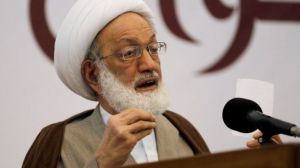
Sunni-ruled Bahrain has deprived leading Shia cleric Sheikh Isa Qassim of his citizenship, media reported Monday.
According to the BBC, Bahrain stripped Qassim, who is the spiritual leader of Al-Wefaq, Bahrain’s biggest opposition group, and holds the senior religious title of Ayatollah, of his citizenship.
On June 14, Bahrain’s Court of Cassation ruled to close all offices of Al-Wefaq in a response to an appeal lodged by the country’s Ministry of Justice.
Al-Wefaq has organized mass protest rallies against the current constitutional monarchy in Bahrain. Al-Wefaq’s leader, Sheikh Ali Salman, was arrested in 2014 and sentenced to four years in prison for inciting hatred and disobedience as well as insulting public institutions in 2015. Earlier in June, the court decided to increase the sentence to nine years.
Since 2011, the Sunni regime in Bahrain became locked in a struggle with an opposition movement led primarily by Shiites, who form a majority in the country. The protesters were calling for political freedom, equality and a parliamentary system that operates independently of Bahrain’s Sunni royal family.
Deir Istiya, occupied Palestine – When Aziz ‘Aasee, the mayor of Qarawah Bani Hassan village drives through the streets, we’re stopped every few meters by one of his constituents, all of whom are asking the same question: When will we have water again? For some, the question is a joke; they are used to going without water for days, weeks, or even months each summer. Others are more aggressive, and the question comes off as a threat. People are looking for someone to blame for their thirst. The mayor, who is responsible for paying the town’s water bills, seems like an easy target.
In reality, there is little Aziz can do to ensure that his town has enough water. The village shares a water access network with two other municipalities, Sarta and Biddya. The three villages, with a combined population of approximately 30,000 people, depend on one 8 inch pipe, designed to deliver 145 cubic meters of water per hour. During the winter months when water tables are higher, the water flows at full capacity, ensuring coverage to the entire network. However for the past two months, the amount has been restricted to between 50 and 70 cubic meters per hour. With such a small amount in the pipes, the pressure is too low for the water to reach many of the houses at the end of the system. Qarawah, which sits at the highest elevation out of the three villages, suffers the most from the low water pressure: no house in the village has received water in over a week. The most remote properties have gone dry for over a month.
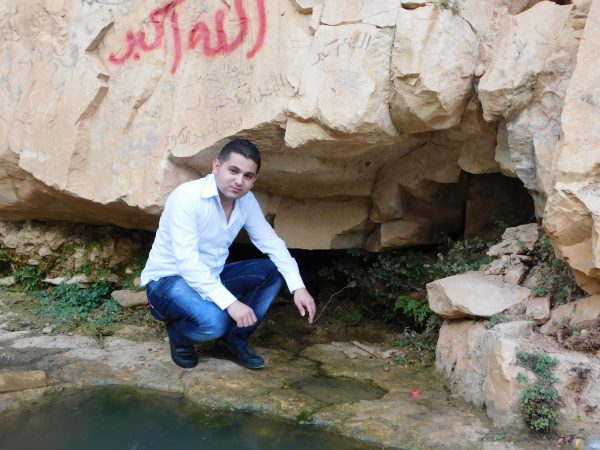
Qarawah’s only potable water source
Mekorot, the Israeli national water company which ostensibly owns the water infrastructure in question, and controls 87% of the aquifer located inside the West Bank, lies at the root of the problem. Since 1982, when the Israeli military sold their control of the West Bank’s water resources to Mekorot for a mere Shekel, the company has become the main enforcer of water apartheid between the Palestinians, and Israelis living in illegal settlements. While settlements enjoy a 24/7 supply of water year round, Mekorot caps its supply to Palestinians at the levels stipulated in the Oslo agreements over 20 years ago. Since then, the population of the West Bank has grown exponentially, and almost no improvements to Palestinian water infrastructure have been made. The Israeli military administration in the West Bank only makes matters worse. They routinely deny permits for new wells and pipes that would benefit villages like Qarawah by providing alternative sources of water or improving water pressure. In addition, the Israeli military has demolished 50 water and sanitation structures owned by Palestinians in 2016 alone. The result is that Palestinians have essentially no control over any of the water within their borders, or the infrastructure to deliver it.
Negotiations with Mekorot are almost impossible for small municipalities like Qarawah. Officials in the district capital of Salfit have spent the past two months trying to persuade the Israelis to increase the water supply without result. Even on the national level, appointees from the Palestinian Authority have refused to negotiate with Mekorot and the Israeli military administration. Aziz, for his part, chiefly contacts Mekorot through one of their Palestinian employees, and the communication is confusing at best. The representative will promise to show up on a certain day, and then never arrives. Or he’ll leave an update to say the water supply will be increased for one night to 100 cubic meters per hour, enough to ensure that at least some homes in Qarawah will receive water, yet the taps remain empty. Meanwhile, the illegal settlement of Kiryat Netafim, easily visible on a neighbouring hillside, boasts green lawns. It’s clear from a glance that the settlements are receiving more than adequate service from the same company.
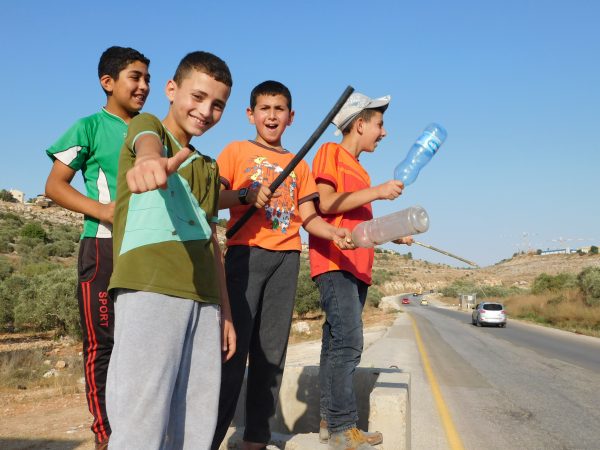
A few times over the past weeks, the municipalities of Qarawah, Satra and Biddya have called for popular protests, gathering at the meter access point for their shared pipe. Small groups of children and young men beat empty water bottles with sticks and shouted “Bidna may, bidna may” – “we want water” – at passing cars. Regardless, many in the three towns are afraid of a backlash from the protests. Shortly after the protests, armed Israeli soldiers arrived at the meter, demanding that the organizers cancel, or face repercussions. While it’s unclear what sort of consequences might be imposed, some worry that the water might be cut off completely as an act of collective punishment.
“Bidna may” – we want water protest
With no solution in sight, the villagers of Qarawah are finding ways to mitigate the effects of living under water apartheid. Villagers are using bottled water for drinking and showers, and hauling water up from local springs, located 4-6 kilometres outside the village limits, to use in toilets and irrigation. The springs also provide a small amount of potable water. However, this is not nearly enough to meet the village’s needs. Some houses in the village also have private wells; but with the summer stretching ahead, these limited resources are sure to be depleted far too soon. So until Mekorot is disbanded, or agrees to give equal service to Palestinians, the people of Qarawah will continue to suffer.
Facebook, in present-day Israel, has hired Jordana Cutler as its head of Policy and Communications. Cutler is a longtime senior advisor to Israeli Prime Minister Benjamin Netanyahu and chief of staff to Israeli Ambassador Ron Dermer.
According to the Alternative Information Center in Beit Sahour, Israeli Public Security, Strategic Affairs and Information Minister Gilad Erdan congratulated Cutler on her appointment, last week, at the Hezliya conference, an Israeli security and national policy meeting.
“There has been an advance in dialogue between the State of Israel and Facebook,” he acknowledged. He added, “Facebook realizes that it has a responsibility to monitor its platform and remove content. I hope it will be regulated for good.”
Cutler’s appointment indicates a burgeoning partnership between the Israeli government and Facebook. Considering Israel’s propensity to arrest Palestinians for Facebook posts and its endeavors to silence the Boycott, Divestment, and Sanctions (BDS) movement, such collaboration is cause for concern.
Since the popular uprising started in October 2015, Israel has arrested at least 150 Palestinians over Facebook posts it labeled as “incitement.”
The Israeli government allocated $26 million for 2016 to launch cyber warfare to “dismantle the infrastructure” of the BDS movement. The BDS National Committee surmises that Israel is be behind cyber attacks meant to shut down its website.
One of the most celebrated qualities of the people of Gaza is their sumoud, their steadfastness and capacity to endure the woes inflicted by Israeli terror. Media coverage of the tiny strip is full of soppy stories about how, regardless of the number of times Israel mows the lawn or casts lead, farmers will always sow their buffer zone farmlands and medics will never cease to improvise with what little they have.
The question is not whether the people of Gaza have given up on their professions and fell to their knees before their occupiers, but the cheap reproduction of them as an extraordinary population who will continue to endure all sufferings imposed on their lives and cling to their cause. What is more disturbing is that foreign journalists on the ground often steer the conversation to get the answers they are looking for. The people of Gaza have memorised the right answer: No matter what, we will never leave.
The truth, however, is that the “people of Gaza” are for the most part sick of this framing and, in fact, a considerable number of them are leaving. In September 2014, nearly five hundred Palestinians from Gaza drowned in the Mediterranean as they attempted to reach Europe. To risk one’s life with smugglers and brave seas in pursuit of a better life elsewhere should tell us something about people’s limited capacity to endure inhumane conditions as well as the limited truth of the sumoud narrative. This is not to say that people are abandoning their struggle for justice and their liberation ideals; many join activist groups or dedicate years of research to them. However, it is time to step back a little and reassess the sumoud narrative; it is perhaps time to understand Gaza and its people on their own terms. To do so, one should look critically at blanket narratives and long-held assumptions, as well as changes that have occurred to established concepts.
There are, to my mind, two primary dangers in trumpeting this narrative of sumoud. The first lies in transforming an ordinary population into mythical creatures able to overcome the most excruciating of circumstances. This transformation places a high, and utterly unjustified, expectation on Gaza’s Palestinians to endure Israel’s relentless aggression and to hold on to the land regardless of the level of destruction implemented. This expectation winds up minimising the power and consequences of Israel’s occupation because, no matter how filthy and bloody it becomes, the Palestinians are predisposed to endure.
For Palestinians on visas abroad, questions on whether they plan to go back to Gaza at the end of their studies are often posed by -without generalising- some Palestine supporters. To be sure, what motivates the question is a principled concern for the liberation of the land. Leaving Palestine, they would say, is exactly what Israel wants. This objection is often, and understandably, voiced by exiled Palestinians and their younger descendants. It is understandable because their varied experiences of Palestine are defined less by daily reality and more by the vision of what Palestine was and will be again. The present certainly plays a role but actual daily experience makes a lot of difference. Questions of this sort, nevertheless, place a lot of pressure on those in Gaza who already have so much to deal with or live abroad under the threat of deportation. What I am calling for is a more comprehensive understanding of the conditions in Gaza and a re-examination of what sumoud means in contemporary reality.
The second danger is that the sumoud narrative paints steadfastness as a choice rather than a forced reality. Palestinians in Gaza are not given the choice between enduring Israel’s aggression and seeking opportunities elsewhere. Palestinians, at least in part, continue to plough, sow, dig tunnels, and improvise because there is no other option. Simply put, Palestinians endure because they have to, not because they choose to. It is perhaps more worthwhile to write stories on the disgraceful visa processes and mistreatment and degradation of Palestinian asylum seekers than pretend as though we have chosen to suffer and, therefore, to endure. As though we are naïve enough to allow ourselves to hope when no signs of improvement can be glanced anywhere.
The Palestinian governments in the West Bank and Gaza have taken this narrative of a mythical people to heart. Each feels it necessary to act as if the Palestinians are not only doing fine under their dysfunctional governments but are flourishing too. Mahmoud Abbas, for example, is still “state building” and constructing mythical cities such as Rawabi when hardly any land is left. The obscene complicity of both governments, together with the collective efforts of Israel, Egypt, and Jordan, have made it impossible for Palestinians trapped in Gaza to leave and, consequently, they are forced endure.
HEBRON – Human Rights Defenders (HRD) in Palestine released a video last week showing an Israeli soldier kicking a knife toward the body of Abd al-Fattah al-Sharif — who was shot point-blank in the head by an Israeli soldier in March — an action the group said represents a clear violation of international law.
The video shows an Israeli soldier casually kicking a knife — allegedly used by al-Sharif during an attempted stabbing attack — to the other side of the road in the town of Tel Rumeida in the southern occupied West Bank district of Hebron, as al-Sharif’s body lay a few meters away.
The footage was taken before al-Sharif was shot execution-style in the head by an Israeli soldier, a graphic video of which was released in March, leading to widespread condemnation by rights groups and the UN demanding an investigation into the apparent “extrajudicial execution.”
Badi Dweik, an activist from HRD, said in a statement released Saturday that the group decided to make the video public in order to challenge current narratives unfolding at the ongoing military trial of Elor Azaria — the Israeli soldier charged with manslaughter after killing al-Sharif. Azaria has claimed that he shot the immobilized Palestinian because he saw al-Sharif reaching for the knife, or feared he had explosives strapped to his chest.
An additional video surfaced at the start of June, showing an Israeli ambulance driver kicking the same knife near to al-Sharif’s body after he was killed.
The video footage, obtained by Israel’s Channel Two, was expected to be shown to an Israeli military court to disprove claims by the Israeli soldier who killed al-Sharif that he shot the young Palestinian point-blank in the head after al-Sharif moved to grab a knife, according to the Israeli media outlet Ynet.
The footage shows that the knife allegedly used in the attack was far from al-Sharif when he was shot, notably showing an ambulance driving over the knife before it was kicked closer to al-Sharif’s body.The Israeli military prosecutor reportedly said that an Israeli ambulance driver, Ofer Ohanna, who was near the scene kicked the knife towards al-Sharif’s body following his murder, according to Hebrew-language news outlet Maariv.
The new video that has surfaced reveals that the ambulance driver was not the only one to tamper with evidence at the crime scene, but that an Israeli soldier also manipulated a piece of key evidence by moving the knife, which Dweik emphasized was a violation of international law. Al-Sharif was shot alongside Ramzi Aziz al-Qasrawi after the two Palestinians allegedly stabbed and moderately wounded an Israeli soldier at a military checkpoint in the Tel Rumeida area of Hebron on March 24.Although it was widely believed that Al-Qasrawi was killed immediately, new witness accounts documented by Israeli human rights group B’Tselem have since emerged that “raise concerns that al-Qasrawi was also executed with a shot to the head, as he lay injured on the ground after having been hit by gunfire elsewhere in his body.”
Al-Sharif, meanwhile, was left severely wounded for several minutes without treatment, before Azaria stepped forward and put a bullet through his head, killing him.Azaria was charged with manslaughter, rather than murder as had initially been expected, and is being held on a military base in “open detention” where he is free to roam and has received visits from his family. His trial opened in early May.
Palestinians have long held fears that Israeli soldiers and settlers tamper with crime scenes involving Palestinians, with human rights groups accusing Israel of practicing a policy of extrajudicial executions since a wave of violence erupted in October, leaving more than 200 Palestinians and some 30 Israelis killed.
A groundswell of opposition is building among pro-Israeli politicians in the US against Boeing’s plans to sell aircraft to Iran.
The Chicago-based aerospace giant has reportedly received requests for more information after Iran said on Tuesday it had reached an initial agreement with Boeing for the supply of jetliners.
Two senior Republican House representatives have said Boeing could threaten US national security with the planned sale of aircraft to Iran.
“American companies should not be complicit in weaponizing” Iran, Representatives Jeb Hensarling and Peter Roskam were reported to have said in a letter to Boeing released on Friday.
In their letter to Boeing Chief Executive Dennis Muilenburg, the lawmakers asked for “clarification” of the current state of negotiations.
A senior Iranian official said on Friday serious talks were underway between the two sides and expected “good news” about them to be announced within a couple of days.
The European Commission announced on Thursday that the Iranian flag carrier Iran Air has been taken off a safety blacklist and cleared to fly the European skies.
Iran Air agreed in January to buy 118 jets worth $27 billion from Airbus and is discussing further orders with Boeing.
Iranian officials have said the country needs as many as 500 jets to renew its fleet which has suffered under US-led sanctions for years, marked by a series of disasters in which hundreds of people have lost their lives.
Iran’s current civil aviation fleet consists of 248 aircraft with an average age of 20 years, of which 100 are grounded.
Israel law center Shurat Hadin said on Thursday it had told Boeing that it would place liens on any of its airplanes sold to Iran.
The center claims to be representing hundreds of families of alleged victims of terrorism, who have been awarded billions of dollars in damages from frozen Iranian assets.
Shurat Hadin reportedly warned Boeing that a nuclear deal the US and several others countries signed with Iran in July, lifting many sanctions on Tehran, did not override American judgments held by the families the Israeli center represents, which means they can serve liens on anything Iran purchases.
US Representatives Hensarling and Roskam have asked whether Boeing could guarantee that Iran could not convert Boeing passenger jets to cargo aircraft and whether it would repossess aircraft if the nuclear agreement fell through.
The nuclear pact reached by President Barack Obama was opposed by every Republican member of the US Congress. Several questioned the Boeing deal as soon as the news reports came out.
The planned Boeing deal would be the biggest by far between a US company and Tehran since the Islamic Revolution in 1979.
Apart from Airbus and Boeing, Iran is also negotiating with several other global aviation giants over the purchases of planes including Bombardier and Embraer.
According to media reports, Iran’s order list from the American aviation giant includes narrow-body 737s for domestic flights and two-aisle 777s for long-haul routes.
Clinton is the presumptive Democrat party nominee. She’ll face Trump in November.
On Thursday night from his Burlington, VT home base, Sanders addressed supporters via livestream, maintaining the myth of his “political revolution,” pretending his campaign continues.
His address was warmed-over stump mumbo jumbo previously delivered numerous times before – empty rhetoric, belying his business as usual voting record, the true measure of the man, the only thing that counts.
All politicians lie. Ignore what they say. Follow only what they do. Sanders’ political history isn’t pretty. It speaks for itself.
Due diligence checking exposes him as just another dirty politician, a self-serving opportunist like all the rest with rare exceptions – none since Jack Kennedy becoming presidential material.
Sanders is no JFK, no anti-war activist, no peace, equity and justice champion, no social democrat as he claims – for sure no transformational revolutionary advocate.
Saying “the political revolution must continue” ignored its nonexistence. Dirty business as usual continues unchanged no matter who succeeds Obama.
Sanders saying he’s “very optimistic about the future of our country” belies its deplorable state – a neocon infested rogue state at war with humanity, risking WW III.
Throughout his campaign, he never once explained its danger, imperial madness, the risk of US-initiated nuclear war, targeting Russia and/or China, wrongfully blaming them for America’s high crimes against peace.
He lied, saying his “campaign has never been about any single candidate… always about transforming America.”
He did nothing to achieve it throughout 30 years in public office, failing to follow through when his vote mattered most, virtually always yielding to powerful entrenched interests – suppressing his deplorable record in addressing followers on the stump, again on Thursday night.
He ignored US imperial wars, not a word said about them, naked aggression against nonbelligerent countries, raping one after another, responsible for millions of deaths, chaos and human misery on an unimaginable scale.
He “look(s) forward to working with secretary Clinton,” he said, his endorsement certain, an unindicted war criminal/racketeer belonging in prison, not high office.
Claiming his intention “to transform the Democratic (sic) party” ignored its hardwired ruthlessness too debauched to fix – exclusively serving wealth, power and privilege.
Republicans operate the same way, both parties in lockstep on major issues mattering most, notably supporting endless imperial wars, corporate empowerment and harsh crackdowns on nonbelievers.
Sanders is part of the problem, not the solution. He’ll never admit it. I just did!
Within hours of the mass shooting in Orlando, the corporate media backing neoconservative favorite Hillary Clinton began, almost unanimously, to exploit the opportunity to passively promote holocaust and genocide denial.
Outlets including theNY Times, CBS News, NBC News, CNN, Newsweek, USA Today, and so on, all referred to the Orlando massacre unequivocally as the worst shooting and/or worst act of gun violence in US history. (CBS News, at the time it was accessed for this piece, was running a large “I’m With Her” ad for Hillary Clinton at the top of its page.) A useful comparison to the corporate assessment might be to imagine if a German civilian gassed a group of people to death and the German press reported it as the worst gassing in German history. After the Paris shooting, the Western press likewise reported that as the worst shooting in recent Parisian history, despite that the Parisian police not long ago massacred some 300 peaceful marchers protesting the French dictatorship in Algeria and dumped their bodies in the river that runs through the city (more info in previous piece).
Native News Online quickly pointed out that the corporate media was almost completely whitewashing “mass killings of American Indians in its reporting” on Orlando. It gave two well-known (as far as these go) examples of worse gun-violence and mass-shootings: some 300 Native men, women, and children, were massacred at Wounded Knee, and 70 to 180 were massacred at Sand Creek.
One commenter on the Native News piece shared that she “wrote to every single news outlet yesterday from the New York Times, the Guardian, the Huffington Post, and Salon to CNN, NBC, and the BBC. I have yet to receive a reply from any of them with the exception of the Oregonian, who changed its language immediately. They also informed me that the Associated Press has just begun to change its language. I’m hoping the Guardian and BBC begin to do the same too.”
Another commenter on the Native News piece gave a short list of some acts of gun-violence, mass-shootings, or mass killings perpetrated in US history, by US forces:
1864 – 300 Yana in California
1863 – 280 Shoshone in Idaho
1861 – 240 Wilakis in California
1860 – 250 Wiyot in California
1859 – 150 Yuki in California
1853 – 450 Tolowa in California
1852 – 150 Wintu in California
1851 – 300 Wintu in California
1850 – 100 Pomo in California
1840 – 140 Comanches in Colorado
1833 – 150 Kiowa in Oklahoma
1813 – 200 Creek in Alabama
1813 – 200 Creek in Alabama
1782 – 100 Lanape in Pennsylvania
1730 – 500 Fox in Illinois
1713 – 1000 Tuscarora in North Carolina
1712 – 1000 Fox in Michigan
1712 – 300 Tuscarora in North Carolina
1704 – 1000 Apalachee killed & 2000 sold into slavery in North Carolina
1676 – 100 Algonquian and Nipmuc in Massachusetts.
1676 – 100 Occaneechi in Virginia
1675 – 340 Narragansett in Rhode Island
1644 – 500 Lanape in New York
1640 – 129 Massapeag in New York
1637 – 700 Pequot in Connecticut
1623 – 200 Powhatan & Pamunkey in Virginia with “poison wine”
Professor David E. Stannard describes one such massacre, wherein US forces weakened a Delaware group of Native men, women, children, and elders through starvation, convinced them it would be in their best interest to disarm, then tied them up and exterminated them and mutilated their dead bodies. Stannard notes that such massacres by US forces “were so numerous and routine that recording them eventually becomes numbing”. (American Holocaust, pp. 125/6)
A couple of corporate news outlets used somewhat more precise language to describe the Orlando massacre, editorializing (while again presenting it as fact) that it was the ‘worst shooting in modern US history’.
However, this still leaves unstated the writer’s opinion of what constitutes ‘modern’. The wounded knee massacre took place in 1898, and the Black Wall Street massacre, for example, in which 55-400 people were murdered and a wealthy black community in Oklahoma ethnically cleansed, took place in 1921. (More examples.)
And, of course, the US has massacred millions of people, many of them with rifles and other types of guns, but also in far worse ways, outside the territory it officially claims, and continues to do so. Obama recently massacred almost a hundred people at one time with what could be viewed as an AR-15 on steroids. Is any of this part of ‘modern US history’? Why or why not? The qualifications are unstated and thus subjective. The vague language from the neoliberal, government-linked corporate outlets may lead readers to believe that all of US history is included in their ‘factual’ statements, and that the US has never massacred more than fifty people anywhere.
In some cases, this impression will have been intentional on the part of the oligarch mouthpiece outlets, which have an interest in fostering a benevolent image of the US to help elites further capture global markets . In others, it will have been a result of conveniently self-aggrandizing ignorance on behalf of the writers and editors – an ignorance that makes an important contribution to their job security.
As some of them partially or belatedly demonstrated, all of the corporate outlets could have easily avoided any holocaust/genocide-denial by calling the shooting the worst by a single civilian on US territory in at least the last thirty years, or any number of other obvious, simple, direct phrasings, which are supposed to be integral to journalism, anyway.
But as John Ralston Saul points out, the neoliberal/neoconservative ideology relies on the ‘whitewashing of memory’. That doesn’t always work, though, especially on survivors of US and Western genocides, which is why, as Ralston Saul further notes, the West and its proxies are behind most of the global murders of writers, who may try to expose facts and evidence that interfere with the West’s historical whitewashing.
Since the Orlando massacre, both Clinton and Trump have called for further escalation of Western aggression in the Middle East.
Robert Barsocchini is an internationally published author who focuses on force dynamics, national and global, and also writes professionally for the film industry. Updates on Twitter.
The world is waiting with baited breath for 23 June. This is the day when a referendum in Great Britain will decide the question of its membership in the European Union. If the country remains a member of the EU, then the process of financial and economic entropy will continue and a global crisis will be postponed to a much later date. If Britain votes to leave the EU, however, then this could disturb the delicate international equilibrium and the referendum could become the trigger that immediately sparks a global crisis. If it happens, Brexit could prompt the collapse of the world’s post-war political, economic and financial architecture.
Experts believe that the main threat posed by Britain’s withdrawal from the EU is the collapse of the European Union itself. But not even the most intrepid daredevils are prepared to calculate the global political, economic and financial consequences of the European Union’s collapse. For several years now, the European Union has been at death’s door and it all started with the 2007-2009 financial crisis. While the US and many other countries managed to drag themselves out of the crisis (for a while at least), it became a chronic disease for the countries of the EU and is now being called a ‘debt crisis’.
The depth of this crisis varies widely from country to country. According to the IMF, the relative level of public debt in 2015 (% of GDP) was: Greece – 178; Italy – 124; Portugal – 124; France – 95; and Spain – 94. The external debt picture for EU countries is even more impressive (% of GDP, 2014): Great Britain – 322; France – 236; Greece – 234; Germany – 159; Italy – 144; and Spain – 136. As can be seen, even Greece, which everyone has gotten used to considering the most inveterate debtor in the European Union, comes second to Britain and France in terms of the relative size of its external debt.
It is still Greece that is considered the weakest link in the European alliance, however. Calls have begun to be heard both within Greece and beyond its borders for the country’s withdrawal first from the eurozone and then from the European Union. Events like the crisis in Ukraine, the economic sanctions against Russia, talks with Washington on the Transatlantic Trade and Investment Partnership, and the mass migration of refugees have started to split ‘United Europe’ apart and it has divided into Euro-optimists and Eurosceptics.
The former advocate for the preservation of the European Union and even for the further deepening of integration, the dismantling of the remnants of state sovereignty, and the accession of new members. The latter stand for the restoration of individual governments’ lost sovereignty either through radical reform of the EU or its dismantling (or the country’s withdrawal from the EU). Britain’s Eurosceptics are now being looked at with hope by like-minded people in other countries of old Europe. In 2017, general parliamentary elections will be held in Germany, France and also the Netherlands, where Eurosceptics are gaining momentum. A vote by Britain in favour of leaving the European Union will cause a chain reaction of similar initiatives in a number of other countries.
At present, the media are regularly publishing opinion poll findings that reveal what the Brits think of the European Union. It is interesting that at the beginning of the year, the number of those in support of Britain staying in the EU was noticeably higher than those in favour of leaving, in April and May the gap began to narrow and now, at the beginning of June, those in support of leaving have started to outnumber those who wish to stay. Despite a split in the British government on the Brexit issue, it is still strongly influenced by Prime Minister David Cameron who, as is well known, is an ardent supporter of the country retaining its EU membership. The effect of the ‘Cameron factor’ on British public sentiment began to weaken in June, however.
Brexit was one of the key issues at the annual Bilderberg Group meeting held on 9-12 June in Dresden. According to unofficial data, the meeting’s participants (130 people from 20 countries) were extremely concerned about the outcome of the forthcoming referendum, and the heads of major corporations and banks taking part in the discussion have committed themselves to doing everything possible to stop those in favour of Britain leaving the EU from winning the referendum.
In the meantime, scepticism about the EU has also increased noticeably in a number of other European countries. On 8 June, the results of a poll conducted in ten EU countries by the Pew Research Center, a US think tank, were made public. They show that even in Germany, only 50 percent of those surveyed have a favourable view of the EU. Last year, the EU had the trust of 58 percent of Germans. And if a referendum on EU membership were to be held in other countries right now, they would probably choose to leave the Union. The results of the survey also show that the level of trust in the EU has fallen over the last year in France from 55 to 38 percent. And there is no point even talking about Greece, where scepticism about the EU had already begun to dominate last year. Today, just 27 percent of Greeks are in favour of EU membership. The European Union only enjoys a higher reputation in the countries that are more recent EU members, for example in Poland (72 percent) and Hungary (61 percent).
Significantly, even many of those in Europe who are currently in favour of remaining a member of the EU are dissatisfied with Brussels’ policies. This concerns the EU’s economic, monetary and financial policies and, over the last year, its migration policy as well. The fewest people unhappy with the policies being carried out by Brussels were in Germany (38 percent), but the percentages in other EU countries are as follows: France – 66, Italy – 68, and Greece – 92. In addition, 67 percent of Germans, 77 percent of Italians, 88 percent of Swedes and 94 percent of Greeks expressed their dissatisfaction at Brussels’ migration policy. And many of those who disapprove or are dissatisfied could soon join those in favour of their country leaving the European Union. This will be inevitable if those voting for Brexit secure a victory in the referendum on 23 June.
It seems that European Parliament President Martin Schultz can be regarded as a Eurosceptic now as well. In an interview last month, Schultz admitted that, «the European Union is in a dismal state».
Whatever the outcome of the vote in the British Isles, the Eurosceptics in Germany, France and the Netherlands, who are expecting to improve their position in the 2017 elections, are determined to achieve similar referendums in their own countries.
Slavery has been abolished in the United States since 1865, when the 13th Amendment was passed in the ashes of the Civil War.
Well, almost abolished. Actually, the amendment included a caveat: “except as punishment for a crime.” Since then, prison and forced labor have always gone together.
In fact, with over 2 million people behind bars in this country, the American prison system is a massive — albeit largely invisible — part of our economy and social fabric.
Recent years have seen a rise in both private prisons and the use of prison labor by private, for-profit corporations. This has created perverse incentives to imprison people and exploit them for cheap labor — often at 50 cents an hour or less.
Corporations such as Microsoft, Target, Revlon, and Boeing have all made products with prison labor. With over a third of home appliances and 30 percent of speakers and headphones made using prison labor, it’s likely most American households own inmate-made products.
(Photo: popularresistance.org)
Even Whole Foods, a famed destination for ethical consumers, was forced to stop selling certain artisanal cheeses last year when those “artisans” were revealed to be prisoners who made a base wage of 60 cents a day
We won’t even get into what Whole Foods — sometimes called “Whole Paycheck” — was charging consumers for prisoner-made products, which also included organic milk and tilapia.
The problem is making its way into popular culture as well. A season three episode of the Netflix prison dramedy Orange Is the New Black, for example, illustrated a similar scam.
In the episode, a thrilling new job opportunity is marketed to the inmates. Most are beside themselves at the idea of working for $1 an hour — well above the compensation offered for any other job in the prison. A scheme is hatched to trick the women into clamoring for the job in a fake competition.
The episode closes with a scene showing the chosen women as their new job is revealed to them. They walk into a warehouse. The lights click on, and the viewer first sees the shock and disappointment on their faces. Then the camera turns to show rows and rows of sewing machines and a corporate logo overhead.
They’d competed to work in a sweatshop.
Real-life prisoners are starting to organize against this kind of abuse. This April, prisoners in Texas held a coordinated work stoppage with the help of the Incarcerated Workers Organizing Committee — an arm of the global IWW union.
The striking inmates refused to do work assigned to them by Texas Correctional Industries, an arm of the state Department of Justice that uses inmate labor to make everything from personal care items to toilets. Incarcerated workers there are paid as little as 17 cents an hour, even as phone calls can cost $1 a minute and medical care requires a $100 copay.
Another union-coordinated strike is underway at several Alabama prisons, where inmates labor in deplorable conditions even as they generate profits for private industries. Unions and rights groups are gearing up for a national strike this September to derail this exploitative system.
Those most directly and negatively affected, the prisoners and their families, need and deserve our support. But the rest of us need to finish the work of the Civil War and end forced labor in our country for good.
Lauren Karaffa is a New Economy Maryland fellow at the Institute for Policy Studies.
Cloudione Souza, a 26-year-old member of the Kaiowa Indigenous community, was shot and killed Tuesday morning during an attack allegedly perpetrated by local landowners and hired henchmen.
Community leaders say the incident began when vehicles started assembling at the location of the community’s territory in the municipality of Caarapo in the state of Mato Grosso do Sul.
The community’s territory is formally recognized as Indigenous land by the Brazilian government.
According to Brasil de Fato, 300 Indigenous people had reclaimed 12,000 acres of land within the area of land demarcated as Indigenous lands, provoking the ire of nearby landowners.
Witnesses said up to 70 armed individuals arrived early Tuesday morning to forcibly expel those occupying the land. They reportedly began burning vehicles and homes before opening fire on those present.
Ten people were wounded, including a 12-year-old boy, AFP reported. The figure is expected to rise as many people fled after the attack and have not reported to the hospital.
In a video recorded by witnesses, the assailants can be heard calling out to those present, using a racial slur to refer to the Indigenous people.
The Indigenous Missionary Council said this was the 25th paramilitary attack on Indigenous people since the 2013 murder of Terena Osiel Gabriel, an Indigenous leader from the community of Buriti.
The council said nearly 400 Indigenous Kaiowa-Guarani people had been killed in land disputes since 2003.
“This is a slow-motion genocide. There is a war against us. We are afraid. They kill our leaders, hide their bodies, intimidate and threaten us,” said community leader Tonico Benites Guarani during a visit to Europe last month.
By Stephen Sniegoski | My Catbird Seat | June 12, 2010
The claim that Israel serves as a valuable ally for the United States is made by both pro-Zionists and much of the anti-war and anti-Zionist Left that is influenced by Noam Chomsky. As a result of the Gaza flotilla massacre, which has caused a world-wide uproar against Israel, the value of Israel to the United States is being publicly questioned in more mainstream foreign policy forums. … continue
This site is provided as a research and reference tool. Although we make every reasonable effort to ensure that the information and data provided at this site are useful, accurate, and current, we cannot guarantee that the information and data provided here will be error-free. By using this site, you assume all responsibility for and risk arising from your use of and reliance upon the contents of this site.
This site and the information available through it do not, and are not intended to constitute legal advice. Should you require legal advice, you should consult your own attorney.
Nothing within this site or linked to by this site constitutes investment advice or medical advice.
Materials accessible from or added to this site by third parties, such as comments posted, are strictly the responsibility of the third party who added such materials or made them accessible and we neither endorse nor undertake to control, monitor, edit or assume responsibility for any such third-party material.
The posting of stories, commentaries, reports, documents and links (embedded or otherwise) on this site does not in any way, shape or form, implied or otherwise, necessarily express or suggest endorsement or support of any of such posted material or parts therein.
The word “alleged” is deemed to occur before the word “fraud.” Since the rule of law still applies. To peasants, at least.
Fair Use
This site contains copyrighted material the use of which has not always been specifically authorized by the copyright owner. We are making such material available in our efforts to advance understanding of environmental, political, human rights, economic, democracy, scientific, and social justice issues, etc. We believe this constitutes a ‘fair use’ of any such copyrighted material as provided for in section 107 of the US Copyright Law. In accordance with Title 17 U.S.C. Section 107, the material on this site is distributed without profit to those who have expressed a prior interest in receiving the included information for research and educational purposes. For more info go to: http://www.law.cornell.edu/uscode/17/107.shtml. If you wish to use copyrighted material from this site for purposes of your own that go beyond ‘fair use’, you must obtain permission from the copyright owner.
DMCA Contact
This is information for anyone that wishes to challenge our “fair use” of copyrighted material.
If you are a legal copyright holder or a designated agent for such and you believe that content residing on or accessible through our website infringes a copyright and falls outside the boundaries of “Fair Use”, please send a notice of infringement by contacting atheonews@gmail.com.
We will respond and take necessary action immediately.
If notice is given of an alleged copyright violation we will act expeditiously to remove or disable access to the material(s) in question.
All 3rd party material posted on this website is copyright the respective owners / authors. Aletho News makes no claim of copyright on such material.