The Civil War Didn’t End Slavery After All
The American prison system is a massive — if invisible — part of our economy and social fabric
By Lauren Karaffa | OtherWords | June 15, 2016
Slavery has been abolished in the United States since 1865, when the 13th Amendment was passed in the ashes of the Civil War.
Well, almost abolished. Actually, the amendment included a caveat: “except as punishment for a crime.” Since then, prison and forced labor have always gone together.
In fact, with over 2 million people behind bars in this country, the American prison system is a massive — albeit largely invisible — part of our economy and social fabric.
Recent years have seen a rise in both private prisons and the use of prison labor by private, for-profit corporations. This has created perverse incentives to imprison people and exploit them for cheap labor — often at 50 cents an hour or less.
Corporations such as Microsoft, Target, Revlon, and Boeing have all made products with prison labor. With over a third of home appliances and 30 percent of speakers and headphones made using prison labor, it’s likely most American households own inmate-made products.

(Photo: popularresistance.org)
Even Whole Foods, a famed destination for ethical consumers, was forced to stop selling certain artisanal cheeses last year when those “artisans” were revealed to be prisoners who made a base wage of 60 cents a day
We won’t even get into what Whole Foods — sometimes called “Whole Paycheck” — was charging consumers for prisoner-made products, which also included organic milk and tilapia.
The problem is making its way into popular culture as well. A season three episode of the Netflix prison dramedy Orange Is the New Black, for example, illustrated a similar scam.
In the episode, a thrilling new job opportunity is marketed to the inmates. Most are beside themselves at the idea of working for $1 an hour — well above the compensation offered for any other job in the prison. A scheme is hatched to trick the women into clamoring for the job in a fake competition.
The episode closes with a scene showing the chosen women as their new job is revealed to them. They walk into a warehouse. The lights click on, and the viewer first sees the shock and disappointment on their faces. Then the camera turns to show rows and rows of sewing machines and a corporate logo overhead.
They’d competed to work in a sweatshop.
Real-life prisoners are starting to organize against this kind of abuse. This April, prisoners in Texas held a coordinated work stoppage with the help of the Incarcerated Workers Organizing Committee — an arm of the global IWW union.
The striking inmates refused to do work assigned to them by Texas Correctional Industries, an arm of the state Department of Justice that uses inmate labor to make everything from personal care items to toilets. Incarcerated workers there are paid as little as 17 cents an hour, even as phone calls can cost $1 a minute and medical care requires a $100 copay.
Another union-coordinated strike is underway at several Alabama prisons, where inmates labor in deplorable conditions even as they generate profits for private industries. Unions and rights groups are gearing up for a national strike this September to derail this exploitative system.
Those most directly and negatively affected, the prisoners and their families, need and deserve our support. But the rest of us need to finish the work of the Civil War and end forced labor in our country for good.
Lauren Karaffa is a New Economy Maryland fellow at the Institute for Policy Studies.
10 Indigenous People Shot, 1 Killed in Brazil
teleSUR – June 15, 2016
Cloudione Souza, a 26-year-old member of the Kaiowa Indigenous community, was shot and killed Tuesday morning during an attack allegedly perpetrated by local landowners and hired henchmen.
Community leaders say the incident began when vehicles started assembling at the location of the community’s territory in the municipality of Caarapo in the state of Mato Grosso do Sul.
The community’s territory is formally recognized as Indigenous land by the Brazilian government.
According to Brasil de Fato, 300 Indigenous people had reclaimed 12,000 acres of land within the area of land demarcated as Indigenous lands, provoking the ire of nearby landowners.
Witnesses said up to 70 armed individuals arrived early Tuesday morning to forcibly expel those occupying the land. They reportedly began burning vehicles and homes before opening fire on those present.
Ten people were wounded, including a 12-year-old boy, AFP reported. The figure is expected to rise as many people fled after the attack and have not reported to the hospital.
In a video recorded by witnesses, the assailants can be heard calling out to those present, using a racial slur to refer to the Indigenous people.
The Indigenous Missionary Council said this was the 25th paramilitary attack on Indigenous people since the 2013 murder of Terena Osiel Gabriel, an Indigenous leader from the community of Buriti.
The council said nearly 400 Indigenous Kaiowa-Guarani people had been killed in land disputes since 2003.
“This is a slow-motion genocide. There is a war against us. We are afraid. They kill our leaders, hide their bodies, intimidate and threaten us,” said community leader Tonico Benites Guarani during a visit to Europe last month.
International aid workers in Gaza found spying on resistance
MEMO | June 16, 2016
A group of employees working with international organisations active in the Gaza Strip have been found to be carrying out activities against the resistance, security website Al-Majd reported yesterday.
Security sources told the Hamas owned website that the group was found to be carrying out doubtful activities related to work sites for the Palestinian resistance.
Later on, the workers of international aid organisations were questioned and they recognised that they are connected to international intelligence services.
The foreigners recognised that they were asked to record footage of resistance work sites such as tunnels, military bases and other sensitive places, in addition to monitoring military movements in Gaza.
The security source reiterated that these collaborators used their work with the international aid organisations to cover-up their anti-resistance acts.
At the same time, they recognised that they are run by international intelligence services connected with the Israeli occupation.
An Armenian American Group Caves in to the Anti-Defamation League
By David Boyajian | Dissident Voice | June 14, 2016
For several decades the Anti-Defamation League (ADL) and other leading Jewish American organizations (AIPAC, AJC, B’nai B’rith, and JINSA) have deliberately colluded with Turkey and Israel to defeat U.S. Congressional resolutions on the Christian Armenian Genocide and to diminish the factuality of that genocide.
Yola Habif Johnston, a director at JINSA (Jewish Institute for National Security Affairs), once admitted that “the Jewish lobby has quite actively supported Turkey in their efforts to prevent the so-called Armenian genocide resolution from passing.”
The hypocrisy is breathtaking given these organizations’ loud, endless demands for recognition of, and legislation on, the Jewish Holocaust.
 Starting in 2007, Armenian Americans in Massachusetts and elsewhere made international news by exposing the national ADL’s hypocrisy. In disgust, 13 Massachusetts cities and the umbrella Massachusetts Municipal Association kicked out the ADL’s alleged anti-bias program, “No Place for Hate.” Human rights advocates and many honest Jews supported those efforts. The Turkish government raged that its collaboration with Israel, the ADL, and other Holocaust hypocrites had been blown wide-open.
But in mid-May, a small group of Armenian Americans in Massachusetts — including the politically ambitious Sheriff of Middlesex County Peter Koutoujian and a few members of the Armenian Assembly of America (AAA) and the Armenian National Committee of America (ANCA) — struck a horrible “deal” with the two-faced ADL.
For his part of the “deal,” ADL National Director Jonathan Greenblatt casually “blogged” that his organization now “unequivocally” acknowledges the Armenian Genocide and “would support” (not “do support”) American recognition of that genocide.
Even Andrew Tarsy, former Director of the New England ADL, termed the pact “inadequate“. The ADL “ought to lead the conversation about reparations for these [Armenian] families … assets, land … everything that Holocaust reparations … has represented should be on the table.”
Of the many things wrong with this “deal,” let’s list a few.
The Horrible “Deal”
- The “deal” was concocted behind the backs of the Armenian American community and the hundreds of activists — Armenian and non-Armenian — who started the campaign in 2007 and have battled the ADL since. Why haven’t the verbal or written details of the negotiations and “deal” been made public? Why the lack of transparency?
- Greenblatt (former Starbucks VP and Special Assistant to Pres. Obama) isn’t the ADL’s highest official and may not have the authority to set policy. Have the ADL’s National Commission and National Executive Committee (its “highest policymaking bodies”) formally approved of Greenblatt’s “blog” post? We don’t know.
- The ADL has long played word games with the Armenian Genocide. In 2007, for example, it disingenuously dubbed it “tantamount to genocide” but not genocide. Greenblatt’s conditional claim that “we would support U.S. recognition of the Armenian Genocide” is similarly suspect. Why not just “we support”?
- The Armenian American activist website “NoPlaceForDenial.com” demands that the ADL “support U.S. affirmation of the Armenian Genocide, as it does with the Holocaust.” I authored those last six words years ago. They mean that as partial atonement the ADL must work as hard for acknowledgment of the Armenian Genocide as it has for the Holocaust. Nothing in Greenblatt’s statement remotely suggests that the ADL would do that.
- For three decades or more, the ADL has attacked Armenian Americans and worked with Turkey and Israel to defeat U.S. recognition of the Armenian Genocide. Yet the ADL has never apologized for its atrocious conduct. Ironically, the only ADL apology came in 2007 when National Director Abe Foxman apologized to Turkey because publicity surrounding the Armenian issue had embarrassed that country. The failure to obtain an apology from the ADL is scandalous.
- Americans deserve to know the details of the ADL’s longtime Genocide-denial pact with Turkey and Israel. Where are the documents, and why was their release not part of the “deal”?
The Berman Affair
Armenian Americans won a major victory in 2014 when Attorney Joseph Berman, an ADL National Commissioner, lost his bid to become a Massachusetts Superior Court judge. Governor Deval Patrick had nominated him in 2013. I testified against Berman.
Following a widely publicized fight, the eight elected Governor’s Councilors refused to confirm Berman. His leadership position in the hypocritical ADL was one reason why Councilors opposed him.
While I was in close touch with several Councilors, an incident occurred that has never before been made public.
A Councilor who opposed Berman told me of receiving several calls asking that the Councilor vote for Berman. One such caller was Sheriff Peter Koutoujian, an Armenian American prominent in the recent ADL “deal.” I remain deeply troubled by that call. Why would Koutoujian do such a thing? I think I know, but only Koutoujian can answer that question. He did not return my recent call asking about his past activities in the campaign against the ADL.
The final Council vote on Berman was 4 to 4. Had the Councilor voted as Koutoujian asked, the ADL’s candidate and the ADL would have triumphed, and Armenian activists would have been defeated.
That and other significant incidents raise questions as to whether the recent ADL “deal” was negotiated in the tough, adversarial way required to defend Armenian interests.
Failing to Confront
When a few activists and I launched the battle against the ADL in July 2007 and events were moving quickly, AAA and ANCA initially delayed even issuing a statement. Perhaps they were concerned about retaliation or being called anti-Jewish.
The following year, moreover, several activists and I became convinced that these organizations were not fully committed to the ADL fight. At one point, we were told that at least one of the organizations would no longer try to convince cities to sever ties with the ADL.
In 2015, even the NoPlaceForDenial.com website, an essential news resource maintained by ANCA persons, disappeared. It reappeared after I persisted in complaining about its removal.
Indeed, the ADL came under renewed pressure months ago only because I informed ANCA and a pro-AAA person that Newton, MA had, perhaps unintentionally, invited in the ADL after having booted it out in 2007.
Sheriff Koutoujian himself has long been very close to various Jewish organizations. He once received an award from the Jewish Community Relations Council of Greater Boston. He has taken two trips to Israel. The second one, last year, concerned “counter-terrorism.” It was organized by the ADL and funded by Israel’s Gal Foundation, which sponsors ADL programs. Of the 14 Massachusetts law enforcement personnel on the trip, Koutoujian was the only sheriff. Koutoujian later co-narrated a slideshow of the trip at a synagogue in Burlington, MA. Koutoujian has also spoken at other Jewish venues.
He recently wrote this on his Facebook page: “Thank you to the ADL and the Boston Globe for recognizing this terrible moment [Armenian Genocide] for what it is.” So after three decades of the ADL’s conspiring with Turkey to abuse Armenians, defeat Armenian Genocide resolutions, and damage the cause of genocide prevention, the ADL is thanked and all is forgiven, while hundreds of Armenian American activists get no thanks whatsoever? Incredible.
It’s well-known that Americans often interact with powerful Jewish American political organizations in two related ways. First, a person may hesitate to publicly disagree with such organizations due to concern about retaliation and being labeled anti-Jewish. On the other hand, being friendly and deferential to these organizations may advance one’s career in politics, academia, business, and other endeavors.
This question must be asked: Could these two types of interactions have adversely affected the post-2007 Armenian American campaign against, and the recent “deal” with, the ADL?
The Anti-Human Rights ADL
The ADL has an appalling anti-Armenian record. Despite this, recent stories about the “deal” in the Boston Globe and an Armenian American newspaper depicted the ADL as now somehow virtuous. Neither told readers about the ADL’s three decades of hypocrisy and collusion with Turkey.
The ADL claims to be “the nation’s premier civil rights/human relations agency [which] protects civil rights for all.” What nonsense! If that were so, it would never have been in the business of covering up genocide. Nor can acknowledging the Armenian Genocide magically now make the ADL a human rights organization. Indeed, the Armenian issue is just one of many that have unmasked the ADL.
The ADL, therefore, is not about civil or human rights. It’s just a Jewish political organization. For instance, it lobbied for an oil pipeline from Azerbaijan to Turkey. Human rights organizations don’t do that sort of thing.
What about nice-sounding ADL programs such as “No Place for Hate,” “World of Difference,” and “Combatting Bullying”? They’re covers. The ADL uses them to penetrate schools, colleges, corporations, and communities to enhance its visibility and political influence.
So that’s the organization that some Armenian Americans just made a “deal” with – a deal that was fatally flawed from the day it was conceived. True human rights advocates and perceptive Armenians reject it.
Russia slaps Israel in the face
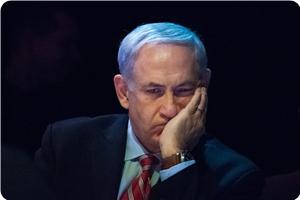
By Said Gafurov | Pravda | June 10, 2016
Israeli Prime Minister Benjamin Netanyahu’s recent visit to Moscow and his negotiations with President Putin, for the fourth time this year, has created the impression of failure. Russia and Israel have been developing active cooperation recently in the field of culture, trade and customs and education.
However, Netanyahu’s visit to Moscow does look like a failure from the point of view of foreign policy. In an official statement for the press, President Putin spoke about the “open” and “constructive” nature of the talks with the Israeli PM. In the diplomatic world, though, when negotiations are held in a friendly and even neutral fashion, they usually say that the talks were held “in a friendly atmosphere.” This is something that we have not heard from the Kremlin this time. In other words, there is no understanding between Russian and Israeli leaders.
The main purpose of Netanyahu’s visit to Russia was clearly focused on foreign policy issues, such as the regulation of the crisis in Syria and a possible solution to the Palestinian conflict. Israel sees clearly that the civil war in Syria is ending. Netanyahu’s visit coincided with a remarkable speech that Bashar al-Assad delivered at the opening session of the newly elected parliament. It is obvious that the question of the end of the war and national reconciliation in Syria is a matter of time. What happens afterwards?
The conflict in Syria has created an alliance between Russia, Iran, Syria, and units of Lebanese resistance. As for the latter, it is not only Hezbollah fighters, but also a large number of volunteers from Lebanese secular parties that struggle against Islamic State militants in Syria.
Netanyahu seems to be concerned about the prospect for the new, reunited Syria to appear near Israel. The Israeli Prime Minister is also concerned about the strong influence of Iran in the post-war Syria.
What does President Putin say to all this? Putin delivers a long speech, in which he talks about culture, economy, trade and economic relations, tourism and everything else. As for the Syrian problem, Putin said only two phrases: “We have paid great attention to international issues, and of course, we talked about the complicated situation in the Middle East region, including in Syria.” That’s all.
One shall assume that there is no understanding between Russia and Israel. Russia has ignored Netanyahu’s requirements, for example, to restrict supplies of weapons to Lebanon that Hezbollah fighters could get their hands on. Russia views Hezbollah as one of the most important political parties in Lebanon. Hezbollah is a member of the ruling coalition. Russia follows its principle to supply arms only to legitimate governments. Hezbollah is an important element of the legitimate government of Lebanon. Moscow sees Hezbollah as an essential element of structure of the Middle East.
In addition, Putin reaffirmed Russia’s position for a comprehensive and just settlement of the Palestinian-Israeli conflict and stressed that Russia was ready to act as a mediator. This came as another slap in the face of Israel, because it is the Palestinians who demand the Palestinian issue should be solved by the international community, while Israel insists on bilateral negotiations between Palestine and Israel.
Iraqi minister: 3.6 million people displaced from Daesh controlled areas
MEMO | June 14, 2016
The number of displaced people from areas controlled by Daesh in Iraq has increased to 3.6 million over the past two years, the Iraqi Minister of Immigration and Displacement Jassim Mohammed said on Monday.
The minister pointed out in a statement that 600,000 displaced people have returned to their original home areas during the past two years.
Chairman of the Parliament Committee on Displacement and Migration Raed Duhluki warned on Monday of a humanitarian catastrophe potentially facing those displaced due to a lack of funding from the government.
The official called on the Iraqi government, the international community and human rights organizations to form government and political delegations in order to bring the necessary funds from donor countries to provide aid to displaced Iraqis.
The minister warned that the authority’s indifference towards the suffering of those displaced will cause a catastrophe.
Oh the Joys of Dimona!
By Richard Silverstein | Tikun Olam | June 14, 2016

Happy shiny Dimona’s website home page
The subtitle of this post might be the same as the subtitle of the film, Dr. Strangelove: “How I learned to stop worrying and love the bomb.” Dimona’s bombs, that is.
In the past year, the Israeli Atomic Energy Agency launched a website dedicated to extolling the virtues of its Dimona. Not the place itself, which is a bit of a backwater company town devoted to the community’s main (perhaps only) industry. But to Israel’s plutonium reactor around which the town coalesced. That’s the reactor that churned out its first nuclear weapon around 1970 just in time for Moshe Dayan to suggest it should be used as a warning shot during the 1973 War when the fighting was going badly for Israel in the initial stages. It’s the same reactor which churned out another 200 or so nuclear weapons since then, making Israel the most dangerous–and so far, the only–nuclear power in the region.
This report on the world nuclear arsenal indicates Israel has only 80 nuclear weapons. But it adds that Israel is testing a new generation of ballistic missile, which is a substantial escalation of the regional nuclear arms race.
Dimona is also the same reactor which has poisoned hundreds or even thousands of workers who’ve died of various cancers. The same one which has poisoned the water in the plant’s vicinity. None of which may be reported openly by the Israeli press.
But if you examine the website you wouldn’t know any of this. From the “History” page, you wouldn’t know Dimona produced nuclear weapons at all; which is the main, indeed only reason it exists. You’d see bright shiny faces; the pretty blond locks of a female white-coated scientist presumably seeking a cure for cancer. Or the delicate toes of a baby held in the firm, supporting hands of an adult under the caption: “a secure, responsible place of work.” You’d see flowers. You’d see copy that reads like a Hallmark greeting card. Copy which extols Dimona’s mission as a “matter of national social responsibility.” That is, the authors of this tripe would have you believe that the production of nuclear weapons in Dimona is done in a manner that is environmentally responsible. This is real Alice in Wonderland stuff. Where words mean what the liar speaking them wants them to mean, “nothing more, nothing less.” It’s something like extolling Alamagordo or Auschwitz as environmental sanctuaries.
The website’s About page is titled: “Vision and Values, a Social Responsibility.” It continues: “In recent years the values of the Negev Center for Nuclear Have Been Articulated Anew.” Those values include the reactor staff volunteering in various projects to make their communities better places. Not a single word about the mass destruction Dimona’s products are capable or raining down on the world.
The launch of the website is in itself interesting. It indicates that some bureaucrats running the nuclear program felt it was important to join the modern age and feature a website to promote Dimona. That’s a break from six decades of total opacity regarding the nuclear program. Six decades of lies and denial regarding the purpose of the reactor. Avner Cohen notes in his recent Haaretz op-ed that Israel’s nuclear program isn’t even ratified under law. Rather, it exists in a netherworld called “residual powers.” This means the government may engage in any activity which the law doesn’t preclude it from doing.
Though on the surface, the new website does mark a break from the past, in reality the change is little more than cosmetic. Little has changed. Israel and the website still live in a state of denial. Israel can’t even admit in its website what the real purpose of this place is. … Full article
Muslim world angered by Israel election as UN committee chair
Press TV – June 14, 2016
Palestinians along with a group of Muslim countries have lashed out at a UN decision to elect Israel as the chairman of one of its permanent committees for the first time in the history of Israeli occupation.
Danny Danon, Israel’s representative at the United Nations, was elected Monday to head the world body’s Legal Committee also called the Sixth Committee, which oversees issues related to international law.
It is first time that Tel Aviv will head one of the world body’s six permanent committees since joining the United Nations in 1949.
His election, however, elicited angry reactions from Muslim countries, including those in the Arab League and 57 member states of the Organization of Islamic Cooperation (OIC).
The chief Palestinian delegate at the UN, Riyad Mansour, strongly denounced the results of the election, which according to him was “threatening the work of the Sixth Committee.”
Mansour said the Israeli regime has long been “the biggest violator of international law.”
The General Assembly has six standing committees that report to it on several issues, including human rights, decolonization, disarmament, economic and financial issues, as well as the UN budget and legal issues.
Danon was nominated for the position by the Western European and Others Group (WEOG) in the UN. Israel has been a temporary member of the WEOG since 2000, but joined the group permanently in December 2013.
The chairmanship of assembly is allocated on a rotational basis and is usually confirmed without a vote.
Deputy US Ambassador to the UN David Pressman, however, reacted angrily to the opponents of Danon’s election.
“We need a United Nations that includes Israel, that brings Israel closer, not one that systematically pushes Israel away.”
However, the UN warned Israel of unspecified action over its failure to cooperate with its reporters.
UN High Commissioner for Human Rights Zeid Ra’ad al-Hussein slammed Tel Aviv for denying UN special rapporteurs access to the occupied West Bank and the Gaza Strip.
“I must emphasize that non-cooperation by governments will not result in my office remaining silent,” he said.
He said investigators from his office had an important role in providing factual information that could prevent further violence.
Zeid also touched on the issue of the Palestinians held in Israel’s prisons, saying; “Over 400 Palestinian children are currently detained in Israeli prisons.”
He warned that violence could would break out again between Israeli forces and the Palestinian people unless the regime lifts the blockade on the Gaza Strip.
Gaza, one of the most densely-populated areas in the world, has been under an Israeli siege since June 2007.
Israel erases key Muslim, Christian holy sites from al-Quds ‘map’
Press TV | June 13, 2016
The Israeli tourism ministry has published a map of the occupied Old City of al-Quds (Jerusalem), which omits significant Muslim and Christian holy sites and entire neighborhoods in the area.
The so-called Old City map, which is distributed free of charge at tourist information centers across the city, does not refer to the venerated 14-hectare compound that comprises al-Aqsa Mosque — Islam’s third holiest site — and the Dome of the Rock, as “al-Haram al-Sharif,” and simply refers to it by its Jewish name of the Temple Mount, Al Jazeera reported.
Moreover, the map makes no reference to the Church of St. Anne, which is a Roman Catholic church located near the Lions’ Gate and churches of the Flagellation and Condemnation in East al-Quds.
The Lutheran Church of the Redeemer, the second Protestant church in Quds, is also shown on the map with a tiny and hard-to-find name.
The map, however, highlights dozens of sites whose historical importance is disputed, and a large number of them are indeed illegal settlements constructed in the Muslim and Christian quarters of the Old City of al-Quds.
Among 57 numbered sites, almost half are buildings occupied by illegal settlers in East Jerusalem and are largely unknown to licensed tour guides.
One such tour guide, requesting anonymity, said the map favors Jewish sites regardless of their touristic value and appears religiously flawed.
“When I saw it, I thought it was a map for only Jewish tour groups. The narrative it shows is quite exclusive to one religious group,” the tour guide said.
Aziz Abu Sarah, a resident of al-Quds, said, “The St. Anne’s Church, which I think is one of the most amazing places, is not on the map. There are many Christians coming to Jerusalem, and they are going to get a map that doesn’t identify their holy sites. It’s not a smart decision.”
 He further suggested that the inclusion of certain sites within the boundaries of the Old City of al-Quds is aimed at promoting a one-sided Jewish representation of East Jerusalem and ignoring its Christian and Muslim identities.
“Politically speaking, it adds sites that are controversial, like the settlements in East Jerusalem, and I think that makes it political and one-sided,” Abu Sarah said.
“There are a bunch of sites that are not only historically unimportant, but that are run by settlers,” said Betty Herschman, the director of international relations at Ir Amim, an Israeli human rights NGO that gives tours of East al-Quds to diplomats and others.
She added, “That is to the detriment of historically relevant Christian and Muslim sites, which you would think would be far more prioritized on a map of the Old City, the hub of the three major monotheistic religions.”
“This map, in addition to erasing important Muslim and Christian holy sites in the Old City, completely erases entire neighborhoods around the historic basin, supplanting them not only with Hebrew names but with the names of settlements,” Herschman argued.
She stressed that the settlements, for example Bet Orot, are built by radical and illegal settlers within the heart of Palestinian neighborhoods.
“The map is legitimizing private settlement around the historic basin,” Herschman said.
More than half a million Israelis live in over 230 illegal settlements built since the 1967 Israeli occupation of Palestinian territories in the West Bank and East al-Quds.
PLC member Dr. Samir al-Qadi among at least nine Palestinians arrested by Israeli occupation forces

Samidoun Palestinian Prisoner Solidarity Network – June 12, 2016
Dr. Samir al-Qadi, member of the Palestinian Legislative Council, was among one of at least nine Palestinians arrested by the Israeli occupation forces early Sunday, 12 June, in armed night raids in Jerusalem and throughout the West Bank.
Al-Qadi, 60, was arrested in an early-morning military raid on his home in Surif, northeast of Al-Khalil. He is a member of the Change and Reform Bloc in the PLC, associated with Hamas.
Al-Qadi was among at least four Palestinians arrested in al-Khalil district, alongside Ahmed Abdelfattah Hudoush, 30; Izz al-Ghaith; and Shaher Daoud, 40; as well as three in Jerusalem, Mohammed Ruweidi, Hamza al-Nimr and Musa Dabbagh, all working in the Islamic Waqf; Amer Samih Hamdan, 17, of Bethlehem; and Thaer Abu Zaher, 25, of Deir Bzeigh near Ramallah, reported the Palestinian Prisoners’ Society.
He has been arrested and imprisoned by Israeli occupation forces on multiple occasions in the past, in 1997, 2006, 201 and 2014, generally under administrative detention without charge or trial. He joins 6 more PLC members in Israeli prisons: 4 fellow Change and Reform Bloc PLC members, Hassan Yousef, Hatem Kufaisheh, Mohammed Abu Teir, and Abdel Jaber Fuquha; Ahmad Sa’adat, the General Secretary of the Popular Front for the Liberation of Palestine, elected on the Abu Ali Mustafa slate; and Marwan Barghouthi of Fateh.
Featured Video

Genocide-linked firm handles Britons’ NHS data
or go to
Aletho News Archives – Video-Images
Book Review
Book review: Boiling Point, How America Brought War to Ukraine
By Tim Kirby | Strategic Culture Foundation | November 14, 2026
Did Vladimir Putin just wake up one day on the wrong side of the bed and decide to invade Ukraine in February of 2022 or is there a lot more to this single decision that has been reshaping the 21st century geopolitical landscape?
Obviously, from the way that I just posed the question you can see that I am on the side that views the causes for the war in Ukraine to be very deep, long-term, historical and consciously nefarious, and most importantly, not from within the halls of the Kremlin. So it was a pleasure to take a look at the book “Boiling Point, How America Brought War to Ukraine” by author Stephen Kinzer, who like myself, also believes that the real reasons behind military conflicts around the world are not what CNN and the BBC have been telling you. The main thesis of this book was stated clearly by its creator; the war “may have been illegal, but it was definitely not unprovoked.” … continue
Blog Roll
 Aletho News
- The 10 Disease Renamings That Rescued the Vaccine
- NATO cancels 2027 leaders’ summit
- IAEA’s politicized use of safeguards undermines its impartiality: Russian envoy
- UK must be ready to strike Russian Arctic – ex-PM
- Fico’s Two Red Lines: Russian Energy and the Next Ukraine Loan
- Thousands rally for banned NATO-skeptic presidential candidate
- Ukraine Settlement and New European Security Architecture Must Go Hand in Hand – Kremlin
- Book review: Boiling Point, How America Brought War to Ukraine
- Israel Revives The ‘Iranian Assassination Threat Against Trump’ Deception In A Desperate Bid To Restart The War
- US rewrites history to dodge blame for illegal war on Iran: Foreign Ministry spokesperson
- If Americans Knew
- An error has occurred; the feed is probably down. Try again later.
- No Tricks Zone
- New Study: Barents Sea Temperatures Were Warmer And Sea Ice Less Extensive In The 1700s Than Today
- German Authorities Start Initiative To Evaluate Public Register For Climate “Disinformation” Spreaders!
- Zonal Asymmetry of Temperature Change in the Antarctic Circumpolar Current
- New Study: The Net Fossil Fuel Contribution To Rising Atmospheric CO2 Has Been Zero For 500 Years
- Germany’s Green Energy Transition Becoming Increasingly Expensive…Another 6 Trillion Euros!
- Sudden Stratospheric Warming, Powerful El Niño Combination May Lead To Extreme Europe Cold, Energy Crisis!
- Two New Studies Find Thwaites Glacier Melt Cannot Be Driven By Human Activity Or A Warming Ocean
- E-Cars Reduce CO2 Emissions By Only 41% Compared To Internal Combustion Engine Vehicles
- Predictions Made By Renowned Climate Professor Over Past Decades Have Been Proven To Be Poor
- New Study Suggests Large Regions Of The Pacific Ocean Have Been Cooling For The Last 80 Years

