European legislators threatened with arrest by Israeli authorities
By Saed Bannoura | IMEMC News | December 31, 2013
Israeli Minister of Defense Moshe Ya’alon declared, on Tuesday, that former British International Development Secretary Clare Short and three other European legislators would be arrested if they try to come to Israel, due to their involvement in a European-Palestinian organization calling for an end to the Israeli siege on Gaza.

Clare Short (image from wikimedia)
The Israeli government, last week, outlawed the organization, Council for European Palestinian Relations (CEPR), which allows the Israeli government to seize its assets and arrest any members of the organization.
Clare Short is a member of the Board of Directors of the non-profit group, and is a British Parliament member with the Labour Party, as well as a former Cabinet member in the British government. In response to Ya’alon’s declaration, she said, “Given Israel’s track record, the Defence Minister’s action is not surprising, but it is yet more evidence that Israel’s claim to be a democracy is eroding very fast.”
The CEPR states that its aim is “to promote dialogue and understanding between European, Palestinian and Arab parliamentarians and policy-makers. It seeks a resolution to the Israeli-Palestinian conflict based on justice and the restoration of Palestinian rights, in accordance with international humanitarian and human rights law.”
Although Israel has declared the organization to be a threat to its national security, it has yet to provide evidence of the group’s involvement in any terrorist activity. In his statement, Ya’alon referred vaguely to the group’s opposition to the Israeli siege on Gaza as the reason for its being declared illegal.
Boycott of Israeli universities angers NY lawmakers
Press TV – December 31, 2013
Two New York legislators say they will introduce a bill to strip state aid from universities that take part in a recent movement to boycott Israeli academic centers.
State Sen. Jeff Klein, a Bronx Democrat, and Assemblyman Dov Hikind, a Brooklyn Democrat who is also a former member of the Jewish Defense League that was classified as a “terrorist group” by the FBI in 2001, say they want to cut off state aid to universities affiliated with the American Studies Association’s movement to boycott Israeli institutions.
Earlier this month, members of the ASA overwhelmingly voted to ban Israeli universities from collaborations with their campuses.
The organization said the reason behind its decision was that the Israeli institutions were “a party” to policies “that violate human rights” as Israel’s “violation of international law and UN resolutions” continues and the “impact of the Israeli occupation on Palestinian scholars and students” is well-documented.
“The American Studies Association is carrying on a long and proud tradition of American academics by engaging in an academic boycott much like many professors did during apartheid South Africa,” Michael Shallcross, a member of Students for Justice in Palestine at Temple University in Philadelphia, told Press TV.
However, the move, which is part of a larger international effort to win boycotts of Israeli institutions, angered some US politicians both at state and federal level.
Rep. Eliot Engel (D-New York) has urged the ASA to end the boycott, saying he was surprised by the organization’s decision.
And now, two pro-Israel Democrats in New York’s state legislature, Klein and Hikind, are trying to cut state aid to universities affiliated with the movement.
“[It] is a shameless attempt at censorship by powerful Zionist politicians in New York State by cutting off economic life lines that make higher education possible,” Shallcross said.
The ASA is the largest and oldest association involved in interdisciplinary studies of American culture and history.
Person of the Year 2013: Palestinian Hunger Striker Samer al-Issawi
Al-Akhbar | December 31, 2013
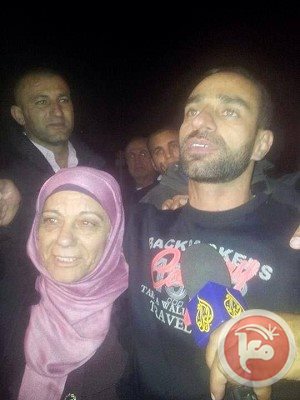 One can only imagine the looks on the faces of Israeli settlers living in Masharef Mountain, near the Hebrew University that overlooks Issawiya, as they watched the celebrations welcoming back Palestinian prisoner Samer al-Issawi.
Issawi returned victorious to his village despite Israel’s desperate attempts to ban celebrations. The occupation forces delayed his release for about 10 hours last Monday, December 23, and erected military checkpoints near the village, but young men and Palestinian mothers insisted on welcoming their hero.
Following his nine-month hunger strike amid the “battle of the empty stomachs,” Issawi was released along with 1,026 other Palestinians in an exchange for the return of Israeli soldier Gilad Shalit.
He wished to remain loyal to those who lost their lives while planning and conducting the Shalit kidnapping, and didn’t want the Israelis to arrest the liberated prisoners all over again, forcing them to serve the rest of their sentences.
From the first intifada until the mid-1990s, Issawi, born 1979, resisted Israeli occupation by setting settler cars of fire and throwing Molotov cocktails. He told Al-Akhbar that he was careful not to be arrested because he wanted to support his family, since his four brothers – Raafat, Medhat, Firas, and Fadi – were held by the Israelis. But all that changed when his brother Fadi was killed in clashes that erupted in Issawiya, following the Hebron massacre in 1994.
The day Samer saw his brother in a pool of his own blood was the last straw.
Issawi was first arrested in 1998 and sentenced to a year and a half in prison for throwing a Molotov cocktail. He was later sentenced to six months in jail for beating up an Israeli soldier, then he was imprisoned again in 2000 for 15 days at the beginning of al-Aqsa intifada. He was later arrested for six months without charges.
“Israeli military attacks escalated during the second Intifada, and we began to hear about airstrikes on Gaza,” said Issawi, revealing that on the first day of his release he joined the ranks of the Democratic Front for the Liberation of Palestine. He formed a five-member cell with friends and conducted 11 shooting operations targeting Israeli vehicles in the Ma’ale Adumim settlement, seven kilometers east of Jerusalem.
These shootings caused material damages and injured one Israeli officer. Once Issawi’s role was revealed, the Israelis hunted him down for a whole year and finally arrested him during the 2002 Operation Defensive Shield in Ramallah.
Issawi refused to appear before the Beit Eil military court and rejected the presence of an attorney because he didn’t acknowledge the legitimacy of the court. He told the judges that it was more of a traveling circus that the Israelis brought along to every territory they occupied.
Issawi was sentenced to 30 years in jail. He wasn’t surprised. Usually sentences in such cases are life in prison, even though no injuries were caused.
He said he was confident he wouldn’t serve his entire sentence, and told the judge, “I will be out before 30 years.” Ten years later, Issawi was released within the “Loyalty to the Free Men” prisoners’ deal.
Issawi as Art
Occupation forces arrested Issawi again on 7 July 2012. His interrogation continued for 30 days, following which he was accused of planning to kidnap Israeli soldiers. Meanwhile, the head of Israeli intelligence in the West Bank threatened to send him back to jail to serve the remaining 20 years of his sentence.
Issawi realized that he was in a serious situation. Hence, on July 27, he started returning two of his meals and settling for a simple one of two slices of bread and a spoonful of labneh and jam.
He maintained this diet for 19 days and was transferred to Nafha Prison. On August 24, he started training his body for an open hunger strike. He wrote a letter to prison services and informed them about his escalation. Back then, he settled for a glass of juice or milk or soup until he cut off food completely and started his open hunger strike on September 14, which also included a strike on water from time to time.
Finally, Issawi reached an agreement with the Israelis last April allowing him to return home to Jerusalem within eight months.
Israelis resorted to different tactics to try and exhaust Issawi into giving up his hunger strike. They sent him on prisoners’ buses to courts and moved him from prison to prison, forcing him to wait for hours for his jailers. They demolished his brother Medhat’s house and attacked him and his family in court despite his deteriorating health.
Samer dropped to 99 pounds and suffered attendant health risks. “When I slept on my right side, I felt numb, and the same with my left side. I also couldn’t sleep on my chest because I had a broken bone,” he said.
With His Family
“Every time I heard about Palestinians and freedom-loving people around the world joining this this battle, I forgot my own pain, mainly after the martyrdom of Mahmoud al-Titi and Mohammed Asfour. There was nothing I could offer them, just insisting on the goals that we put together before the hunger strike. I was also moved by young men protesting for the first time in front of Jerusalem Magistrates Court,” he said.
Issawi said, “The anger I saw in the eyes of the jailers after seven months of the hunger strike proved to me that we succeeded in raising the voices of prisoners and revealing Israeli violations of the prisoner swap deal, while preserving Palestinians dignity. All the goals were accomplished and the only thing left was me going back home.”
On the Palestinian official position, Samer said, “Let’s be honest, all of us Palestinians, from the president to common citizens, can’t even move from one region to the other without Israeli authorization. We don’t count on the official position as much as we count on the will of the people to exercise pressure to force politicians to take more serious steps. A Palestinian negotiator can sign a deal, but it would not be applicable on the ground without popular support.”
Jewish settlers attack local official in south Hebron hills
Ma’an – 30/12/2013

(MaanImages/file)
BETHLEHEM – A group of settlers injured a local Palestinian official in the south Hebron hills on Saturday after attacking him with a rock, a local peace group said Monday.
“On Dec. 28, a group of settlers attacked Palestinians who were plowing a field in the South Hebron Hills village of At Tuwani. Hafez Huraini, a member of the South Hebron Hills Popular Committee, was injured in the attack,” Operation Dove said in a statement.
Huraini told the group that five settlers from the illegal outpost of Havat Maon, four of whom were children, attacked the villagers as they worked on their land.
One of the settlers approached Huraini and hit him over the head with a rock.
Residents from at-Tuwani gathered and managed to force the settlers away, but they continued to throw rocks at the villagers before finally leaving the area.
The attack took place at 2.45 p.m. and Israeli forces arrived in the area at 4.15 p.m., by which time Huraini was at a hospital in Yatta receiving treatment.
“This is resistance: to go daily to your land. We are protesting every day, every night,” Huraini said.
In November, Operation Dove said the illegal outpost of Havot Maon was expanding at a “phenomenal” rate.
Home to around 200 settlers, the outpost is one of the most violent and radical in the occupied West Bank.
Related articles
‘5-year high’ in number of Palestinians killed in West Bank
Ma’an – 31/12/2013
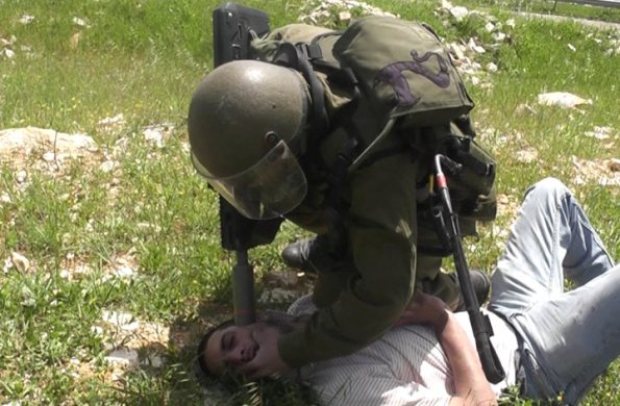
BETHLEHEM – Israel killed 27 Palestinians in the occupied West Bank in 2013, making it the deadliest year for Palestinian fatalities since 2008, Israeli rights group B’Tselem said Monday.
According to data compiled by the rights group, three times as many Palestinians were killed in the West Bank in 2013 compared to 2012.
By contrast, in 2012 Israeli security forces killed eight Palestinians in the West Bank and 246 in the Gaza Strip, including at least 167 in its November war on the coastal territory.
In nine of the 2013 West Bank killings, Israeli military forces raided Palestinian communities during arrest operations.
Four of those killings involved an exchange of fire, according to Israel’s army, while four other cases involved Israeli soldiers opening fire after stones had been thrown at them.
Seven other killings took place while Israeli soldiers were lying in wait to capture alleged stone throwers or after Israeli soldiers had used live fire against Palestinians throwing stones.
One Palestinian was killed when he tried to enter Israel without a permit, one female bystander was shot dead by soldiers, another man was killed after breaking into a military base with a tractor and one man was shot after allegedly assaulting a border police officer.
In the final case, the Israeli border police volunteer retracted his original claim that Antar Shalabi Mahmoud al-Aqraa had tried to stab him before being shot dead.
In the Gaza Strip, nine Palestinians were killed, four of whom were allegedly taking part in hostilities when they were killed and three who were not, B’Tselem said.
In one case the group said it is unknown if the victim was taking part in hostilities. Another Palestinian was assassinated by Israeli forces.
Three-year-old Hala Abu Sbeikha was killed last Tuesday in Gaza following an Israeli airstrike.
Investigations into killings ‘slow and cumbersome’
B’Tselem says that over two years have passed since a new investigative policy by the MAG Corps unit went into effect, in which time 35 Palestinians were killed by Israeli soldiers.
A total of 23 investigations into the fatalities were launched, with the MAG corps reaching a decision on only five of the cases.
In one case, a decision was made not to open an investigation, in three cases the file was closed, and in another an Israeli soldier was indicted and convicted by plea bargain based on his admission, B’Tselem said.
“The sharp rise in fatalities in the West Bank only serves to intensify concern about lack of accountability. Admittedly, MPIU investigations are now launched almost automatically, yet the essence of the investigative mechanism remains unchanged,” B’Tselem Director Jessica Montell said.
“It is slow and cumbersome and decisions are made only years after an incident takes place. Such a mechanism, in which practically no one is held accountable for the killing of Palestinians, does not serve as a deterrent and indicates disregard for human life.”
Related article
The cover-up police

The Shay Police Unit manage to avoid basic investigative actions – even while holding two suspects caught red-handed in custody
By Yossi Gurvitz | Yesh Din | December 29, 2013
On July 26th, 2010, Israeli civilians – some of whom were seen coming from the direction of the settlements of Yizhar and Har Bracha – went on two rampages in the Palestinian village of Burin. In the first and more severe case, they attacked and destroyed property; when the owner, Ibrahim Eid, could no longer stand watching his property go up in flames and approached the scene, they hit him over the head with an iron bar. Eid lost consciousness and had to be treated in a hospital.
During the second rampage, Israeli civilians stoned the nearby home of Bashir Hamza Zaban. Unfortunately for the hoodlums, border policemen were on the scene and spotted them. The cops chased the attackers, detaining two of them. One of the detainees chose to hide a knife in his shoe. The two refused to identify themselves, but later were identified in the police station. The two maintained their right to remain silent during their interrogation. Zaban also managed to identify a third attacker, who – unlike the detainees – was not hooded.
On its face, this is an open and shut case. Yet lo and behold: even though two suspects were arrested, having been caught red-handed; even though one of them was carrying a concealed knife; and even though they refused to identify themselves – the police wouldn’t do the bare minimum, i.e. ask the victim to identify his attackers. Instead, the police closed the case, citing lack of evidence.
Hold on, the epic screw-up of this case is just beginning. Despite the fact that Zaban noted in his statement to the police that he was aware of the attack on Eid, and although he gave the police a disc containing photos of the attack on Eid, the police took their sweet time and summoned Eid for a statement in November of 2010, a mere five months after the incident. After all, we all know that the memory of witnesses just improves as time passes by.
We’re not done yet: Eid, in his statement to the police, noted the existence of the disc, containing quite clear images of the Israeli civilians who attacked him, who can be easily identified. Even so, the police – who had had the disc since July – didn’t bother summoning him to a lineup so he could point out his attackers; hence, it naturally did not summon any of them for an interrogation. And to top it all off, the police closed the case in December 2012 – after two years and five months of doing little investigative work – but only bothered to inform us, who represent the victims, in August 2013.
Such phenomenal incompetence, which would not surprise anyone familiar with the SJPD (‘Samaria and Judea’ Police Department), generally has two plausible explanations. The first is that the cops and their superiors are complete failures at their duties. The second is that they’re not that dumb, in fact they’re quite smart: we can assume they have a good reason to believe that if they do their jobs properly, they will be harmed. Some of them, after all, live among the population they’re charged with investigating. So they do a half-assed job, ignore evidence, silence nasty questions, and bullshit their way through the closing of a case, hoping no one pays attention.
Such a police force is the hallmark of dark regimes. The SJPD has been functioning this way for years. Anyone who thinks that these investigators, when re-posted within Israel proper, will not retain the work norms developed beyond the ‘separation’ wall, is deluding herself. As for us, once we lifted our jaws off the floor, we appealed the decision to close this case. We hope that the embarrassing negligence of the SJPD will force the prosecution to act. We’ll keep you informed.
Related article
- While you were sleeping…. (imemc.org)
Israeli forces shoot photographer in Bilin demonstrations
Ma’an – 29/12/2013
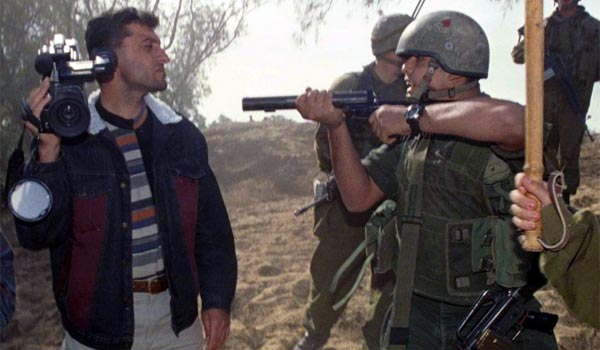
RAMALLAH – A photographer was injured and dozens suffered from excessive tear gas inhalation as Israeli forces dispersed a demonstration in Bilin near Ramallah.
Israeli forces fired rubber-coated steel bullets, tear gas and stun grenades at demonstrators as they neared their lands close to the wall.
Photographer Mohammad Yassin, 20, was hit with a rubber coated steel bullet during the protests.
The demonstration was held in celebration of Christmas and the release of Samer Issawi, and in protest of Israeli settlement activity and the separation wall.
Participants, some of whom wore Santa Claus costumes, raised Palestinian flags and chanted songs for unity and resistance.
Since 2005, Bilin villagers have protested on a weekly basis against the Israeli separation wall that runs through their village on land confiscated from local farmers.
Previous protests by Bilin activists have forced the Israeli authorities to re-route the wall, but large chunks of the village lands remain inaccessible to residents because of the route.
Related article
Mazal Tov to Chomsky and Jews Voice for Peace
By Gilad Atzmon | December 28, 2013

JVP is moving from strength to strength. Though it didn’t liberate Palestine yet, it certainly managed to convince a few Jews that Jewishness is actually a good thing.
Today we learned that the legendary activist and scholar Noam Chomsky appealed to the general public to donate to the Jews only Group.
In the letter Chomsky admitted that “these days, there are really only a handful of Jewish organizations that honor the traditions of universal equality that inspired me to be an activist so many years ago.”
Chomsky is no doubt a clever boy, he surely knows why there are only a handful of Jewish organizations that subscribe to universalism. Jewish culture and identity politics are tribal. In other words, Jewish politics is anything but universal. Chomsky knows very well that JVP is a Jews only group. Though it is happy to take donations from everyone, its leadership is Jewish. Accordingly, Ahmad, Salem or Ali wouldn’t become JVP’s leaders. They are not racially qualified.
So I am left wondering what Chomsky has in mind when he refers to “Jewish organizations that honor the traditions of universal equality”? Can a Jew only organization be universal? I guess that Chomsky would say ‘yes’, as long as it is universally Jewish.
Israel’s recurring use of terror on civilians

By Bob Finch | January 26, 2009
Insanely disproportionate use of violence against unarmed civilians
“The stated aim was, as always, to stop the launching of the rockets. The means: killing a maximum of Palestinians, in order to teach them a lesson. The decision was based on the traditional Israeli concept: hit the civilian population again and again, until it overthrows its leaders. This has been tried hundreds of times and has failed hundreds of times.” (Uri Avnery “Kill a Hundred Turks and Rest”: The Five-Day War in Gaza March 2008).
Operation Grapes of Wrath ~ Lebanon, in 1996
“Ehud Barak will be remembered in Israel’s history as the one who introduced the abuse of innocent civilians as political cards. Barak was probably not the first Israeli warrior to abuse civilians on a tactical level, but he was the one who turned it into a central Israeli strategy. Operation Grapes of Wrath in Lebanon, in 1996, with Barak as an influential cabinet member, openly targeted civilians, turning them into refugees to make them put pressure on Beirut’s government. The recent siege on Gaza follows a similar logic: put pressure on civilians to achieve political goals. (A clear war crime, it goes without saying.)” (Ran HaCohen ‘Israel Says ‘No’’ Feb. 2008).
Israelis fire 1,300,000 bullets during first few days of Intifada
“Malka, in an interview with the Israeli paper Ha’aretz on 14 June, revealed that during the first few days of the intifada, Israeli occupation soldiers fired 1,300,000 bullets on Palestinian population centres and other targets. This massive firepower, which had no operational justification given the Palestinians’ inherently inferior firepower (they possessed only light firearms and in limited numbers), showed that the Israeli army was interested more in decimating and harming the Palestinians and less in ending the violence. According to Israeli sources, then-Chief of Staff and now Defence Minister Shaul Mofaz didn’t plan to bring about the end of the conflict. Instead, he thought he had finally seized the opportunity to “beat and vanquish” the Palestinians in order to “burn into their consciousness” and make them “internalise their weakness and inferiority vis-a-vis Israel’s strength”. Mofaz’s ultimate aim, of which he later convinced Israeli Prime Minister Ariel Sharon, was to hector Palestinians into negotiations in a weakened and exhausted state whereby they would have no choice but to accept Israel’s dictates and demands. The new revelations, Palestinian officials argue, prove that the escalation of violence during the first few months of the intifada was, first and foremost, Israel’s responsibility. “This is what we have been saying all along that this is not about Israeli security but rather about Israel’s terrorising the Palestinian people for the purpose of arrogating their land and rights. Israel is now admitting that,” said Michael Tarazi, adviser to Palestinian Authority leader Yasir Arafat.” (Khalid Amayreh ‘The second intifada, an Israeli strategy’ July 2004).
Lebanon 2006
“This intentional and coldly calculated Israeli policy of targeting innocent Lebanese civilians and civilian infrastructure stems from a time-honoured, but hardly ever successful, Israeli doctrine of applying intense “pressure” against a civilian population in order to compel them, in-turn, to pressure the resistance into submitting to Israeli dictates, thereby doing Israel’s bidding by proxy. It has been consistently used against the Palestinians ever since the Nakba of 1948, and is still applied now in the ongoing barbaric offensive and hermetic siege against Gaza. Israel may have plagiarized this doctrine from the legacies of previous oppressors, but it has refined it to a degree that it no longer raises any moral qualms in most of Israeli society, where it is widely accepted by the public as a right, even a duty in the fight for Israel’s “security.” (Omar Barghouti ‘The Massacre at Qana’ August 01 2006); “As Limor and Shelah reveal, in spite of the fact that the conflict on the ground took place on a very narrow strip of land (the Israeli border on the south and Litani River on the north), the Israeli artillery had managed to shoot over 170,000 shells. In comparison, in the 1973 war while fighting against two strong state armies over two very large fronts, the Israelis had launched only 53,000 shells. The figures relating to the Air Force are even more striking. Though less than a few concrete targets were available for the IDF intelligence, the IAF (Israeli Air Force) had launched as many as 17,550 combat missions, this translates into 520 missions a day, almost as many as in the 1973 war (605 a day). Yet, in 1973 the IAF was fighting two well-equipped air forces, it was engaged in a fair amount of air-to-air combat and a relentless struggle against the latest Soviet ground-to-air missiles. None of that happened in the Second Lebanon War. The IAF was engaged solely in hammering the Lebanese soil. It literally threw and launched everything it had in its disposal, presenting a merciless method that in places (southern Beirut for instance), had a similar effect to the infamous 1940s Anglo-American carpet bombardment.” (Gilad Atzmon ‘Saying NO to the Hunters of Goliath’ August 13, 2007); “That was on Aug. 30, by which time U.N. teams had identified 359 separate cluster-bomb sites. Since then, the true dimensions of the problem have become even clearer: 770 cluster-bomb sites have now been identified. And the current U.N. estimate is that Israel dropped between 2 million and 3 million bomblets on Lebanon, of which up to a million have yet to explode.” (Saree Makdisi ‘Israel’s Cluster Bomb War’ Oct. 2006).
Related articles
Featured Video

Strike Iran Again, Open Pandora’s Box | Brian McGlinchey
or go to
Aletho News Archives – Video-Images
New Book
The Food Book — First Edition, 2026, Paperback
Lies are Unbekoming | November 18, 2026
 Traditional food was food. Not organic food. Not slow food. Not wellness food. Food. Bone broth was food. Raw milk was food. Fermented vegetables were food. Butter was food. Eggs were food. Honey was food. Liver was food.
Weston Price travelled from 1931 to 1936 across fourteen populations — Swiss villagers in the Lötschental valley, Gaelic communities in the Outer Hebrides, Inuit in Alaska, Native Americans in northern Canada, Māori in New Zealand, Masai in Kenya, Melanesians in the South Pacific, Peruvian Indians in the Andes. He photographed their faces. He measured their dental arches. He weighed their vitamin and mineral intake. He published the results in 1939 in Nutrition and Physical Degeneration. The pattern was consistent across every population. The generation raised on ancestral foods had broad faces, straight teeth, strong bone structure, and virtually no chronic disease. The generation raised on refined flour, refined sugar, and canned goods did not.
What has not been treated at book length, until now, is the whole shelf — the twenty works that, taken together, describe what the traditional kitchen was, what industrial food replaced it with, and what the body does when the replacement runs for a century.
The Food Book reads twenty of those works as a single library: Weston Price and Sally Fallon on the tradition that was lost; Francis Pottenger on what cooking does to a species over four generations; Sandor Katz on fermentation as an ecology; William Dufty on the two-and-a-half-century history of refined sugar; William Campbell Douglass on raw milk; James DiNicolantonio on the inversion of the salt argument; Max Gerson on cancer; Ulric Williams on medicine as a cartel; William Engdahl on seed sovereignty; Stephen Harrod Buhner on what plants do, chemically, that pharmaceuticals disrupt. … continue
Blog Roll
 Aletho News
- Study of 14,000 Children Links Vaccination to Higher Rates of Chronic Illness
- Strike Iran Again, Open Pandora’s Box | Brian McGlinchey
- ‘Revenge of Big Pharma’: 12 States Could Lose Religious Exemptions to Vaccination in 2027
- Brazil targeted by Western biopower
- B’nai B’rith UK’s bid to brand anti-Zionism as extremism
- ‘Same fraudulent script’: Iran slams US biological and chemical weapons claims as recycled Iraq-style deception
- Tom Friedman’s Deceptive Attempt to Lure Democrats to Escalate the Iran war
- Russia Warns of Response if Nuclear Deployment Limits Near Its Borders Are Lifted
- Putin is Partly Right on NATO
- The trillion-dollar question: Why can’t machines replace soldiers?
- If Americans Knew
- Under the West’s watch, genocide apologism has become entirely respectable
- Israeli Diplomat Offered Iowa Attorney General Free Trip, Then Asked for Favors
- On World Children’s Day, 350 Palestinian Children Remain in Israeli Prisons
- Why Is Israel Jailing a Palestinian Student Without Trial? Because It Can
- ICJ ruling on Rohingya genocide could strengthen South Africa’s case against Israel
- DAILY UPDATE: Latest essential news on Palestine, Israel, & region
- Newly nominated House Speaker funded Gaza genocide
- Leaked: How Silicon Valley Elites Bankrolled an Anti-Migrant, Pro-Israel Propaganda Machine
- ‘One Started Spraying Bullets’: Palestinian Eyewitnesses Describe Settler Incursion That Left 72-Year-Old Woman Dead
- Palestinian children are 40% of all children killed & maimed worldwide, says Save the Children
- No Tricks Zone
- Argentina’s Perito Moreno Glacier Joins Antarctica and Arctic In Defying Doomsday Melt Claims
- New Study: Barents Sea Temperatures Were Warmer And Sea Ice Less Extensive In The 1700s Than Today
- German Authorities Start Initiative To Evaluate Public Register For Climate “Disinformation” Spreaders!
- Zonal Asymmetry of Temperature Change in the Antarctic Circumpolar Current
- New Study: The Net Fossil Fuel Contribution To Rising Atmospheric CO2 Has Been Zero For 500 Years
- Germany’s Green Energy Transition Becoming Increasingly Expensive…Another 6 Trillion Euros!
- Sudden Stratospheric Warming, Powerful El Niño Combination May Lead To Extreme Europe Cold, Energy Crisis!
- Two New Studies Find Thwaites Glacier Melt Cannot Be Driven By Human Activity Or A Warming Ocean
- E-Cars Reduce CO2 Emissions By Only 41% Compared To Internal Combustion Engine Vehicles
- Predictions Made By Renowned Climate Professor Over Past Decades Have Been Proven To Be Poor

