Donors may halt aid to Palestinian Authority if no progress is made in peace talks
MEMO | August 29, 2013
Donors will not continue to subsidise the Palestinian Authority forever and if Palestinian-Israeli talks do not make any progress, donations could be stopped according to the Norwegian foreign minister, Espen Barth Eide, in the Jerusalem Post.
“The donors will not be ready to keep funding Palestinian state-building much longer if we do not see a political solution on the horizon,” said Eide.
“I think this is important for the Palestinians to know… the comfort of an internationally subsidised state-building endeavour may be wrong,” Eide told the newspaper. “And I think that it is important for some people on the Israeli side… to know that this cannot continue forever.”
An international group of donors are due to meet next month in New York on the side-lines of the UN General Assembly meeting.
Eide said that he is “optimistic” about the peace process. “There are two basic reasons for my relative optimism this time compared to previous rounds,” he said. Palestinian and Israeli sides understood that “this might be the last opportunity for a two-state solution according to the Oslo paradigm.”
“I think we are at the point where we will either move ahead or backward to a very different situation.”
The second reason for his optimism, he said, was due to “dramatic events everywhere in the region, from Egypt to Syria, Lebanon and the apocalyptic terror we are seeing all around.”
The Norwegian minister said he knew that Israel and the Palestinian Authority have a shared position on their attitudes towards Iran, Syria, Muslim Brotherhood and Hamas.
He said that the ousting of Egyptian president Mohamed Morsi had clearly weakened Hamas to the advantage of the Palestinian Authority.
“A year ago we feared that the centre of gravity was slowly moving from the West Bank to Gaza. Now it is clearly back in the West Bank, where it should be,” he said, adding that this was another reason to move purposefully with the negotiations.
The Saudi-Israeli Superpower
By Robert Parry | Consortium News | August 29, 2013
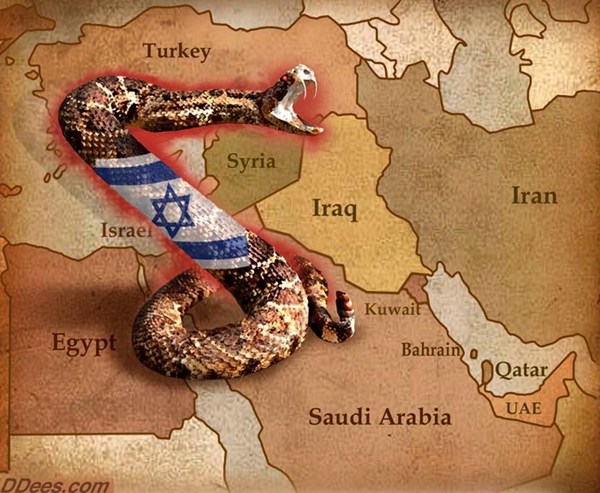
The twin crises in Syria and Egypt have marked the emergence of a new superpower coalition in the Middle East, the odd-couple alliance of Israel and Saudi Arabia, with Jordon serving as an intermediary and the Persian Gulf oil sheikdoms playing a supporting role.
The potential impact of this new coalition can barely be overstated, with Israel bringing to the table its remarkable propaganda skills and its unparalleled influence over U.S. foreign policy and Saudi Arabia tapping into its vast reservoir of petrodollars and exploiting its global financial networks. Together the two countries are now shaping international responses to the conflicts in Syria and Egypt, but that may only be the start.
Though Israel and Saudi Arabia have had historic differences – one a Jewish religious state and the other embracing the ultraconservative Wahhabi version of Sunni Islam – the two countries have found, more recently, that their interests intersect.
Both see Iran, with its Shiite rulers, as their principal regional rival. Both are leery of the populist Islamic movements unleashed by the Arab Spring. Both sided with the Egyptian military in its coup against the elected Muslim Brotherhood government, and both are pleased to see Syrian President Bashar al-Assad facing a possible military assault from the United States.
While the two countries could be accused of riding the whirlwind of chaos across the Middle East – inviting a possibility that the sectarian divisions and the political violence will redound negatively to their long-term interests – there can be little doubt that they are enjoying at least short-term gains.
In recent months, Israel has seen its strategic position enhanced by the overthrow of Egypt’s populist Muslim Brotherhood President Mohamed Morsi, a political change that has further isolated the Hamas-led Palestinians in Gaza. Meanwhile, in Lebanon, the Shiite movement of Hezbollah has come under increasing military and political pressure after sending militants into Syria to support the embattled Assad regime.
Assad is an Alawite, a branch of Shiite Islam, and has been a longtime benefactor of Hezbollah, the political-military movement that drove Israeli forces out of southern Lebanon and has remained a thorn in Israel’s side. The growing sectarian nature of the Syrian civil war, with Sunnis leading the fight against Assad, also served to drive a wedge between Hamas, a Sunni movement, and two of its key benefactors, the Syrian government and its Iranian allies.
In other words, Israel is benefiting from the Sunni-Shiite divisions ripping apart the Islamic world as well as from the Egyptian coup which further weakened Hamas by re-imposing the Gaza blockade. Now, Israel has a freer hand to dictate a political solution to the already-weak Palestinian Authority on the West Bank when peace talks resume.
A Method to Neocon Madness
Giving Israel this upper hand has long been the goal of American neoconservatives, although they surely could not have predicted the precise course of recent history. The idea of “regime change” in Iraq in 2003 was part of a neocon strategy of making a “clean break” with frustrating negotiations in which Israel was urged to trade land for peace with the Palestinians.
The plan to dump negotiations in favor of confrontations was outlined in a 1996 policy paper, entitled “A Clean Break: A New Strategy for Securing the Realm” and prepared by prominent neocons, including Richard Perle and Douglas Feith, for Benjamin Netanyahu’s campaign for prime minister.
In the document, the neocons wrote: “Israel can shape its strategic environment, in cooperation with Turkey and Jordan by weakening, containing, and even rolling back Syria. This effort can focus on removing Saddam Hussein from power in Iraq – an important Israeli strategic objective in its own right — as a means of foiling Syria’s regional ambitions.” [See Consortiumnews.com’s “The Mysterious Why of the Iraq War.”]
The neocons failed to persuade President Bill Clinton to invade Iraq in the late 1990s, but their hopes brightened when George W. Bush became president in 2001 and when the American people were whipped into a state of hysteria by the 9/11 attacks.
Still, it appears that the neocons believed their own propaganda about the Iraqis welcoming American troops as liberators and accepting a U.S. puppet as their new leader. That, in turn, supposedly was to lead Iraq to establish friendly ties with Israel and give the U.S. military bases for promoting “regime change” in Syria and Iran.
In 2002, as President Bush was winding up to deliver his haymaker against Saddam Hussein, neocons passed around a favorite joke about where to go next after conquering Iraq. Should it be Syria or Iran, Damascus or Tehran? The punch line was: “Real men go to Tehran!”
However, the Iraq War didn’t work out exactly as planned. Bush did succeed in ousting Hussein from power and enjoyed watching him marched to the gallows, dropped through a trapdoor and hanged by the neck until dead. But the U.S. occupation touched off a sectarian bloodbath with Hussein’s Sunni minority repressed by the newly empowered Shiite majority. Sunni extremists flocked to Iraq from around the Middle East to kill both Iraqi Shiites and Americans.
The end result of the Iraq War was to transform Iraq from a Sunni-ruled authoritarian state into a Shiite-ruled authoritarian state, albeit still a place where sectarian bombings are nearly a daily occurrence. Yet, one of the principal beneficiaries of the Iraq War was Iran with its Shiite theocratic government unexpectedly finding itself with a new Shiite ally replacing a longtime Sunni enemy, Saddam Hussein, all thanks to the United States.
Widening Violence
But the Iraq War had another consequence. It exacerbated sectarian tensions across the region. Saudi Arabia and other Persian Gulf oil states that had supported Hussein in his war with Iran in the 1980s, were shocked to see Iran now have a “Shiite crescent” of influence extending through Iraq and Syria to the Shiite enclaves in Lebanon.
The Saudi monarchy was shaken, too, by the popular uprisings known as the Arab Spring. Egypt’s President Hosni Mubarak, a longtime Saudi ally, was ousted and replaced by a democratically elected government led by the populist Muslim Brotherhood.
Though the Muslim Brotherhood was Sunni, too, the movement represented a mix of Islam and democratization, which posed a threat to the Saudi princes who live pampered lives of unimaginable wealth and privilege. On a personal level, these playboys confine their wives to humiliating conditions out of the Middle Ages while the men sample the pleasures of lavish European resorts or fly in Scandinavian prostitutes for parties.
Yet, while the Arab Spring sent shivers down the spines of the oil sheiks of the Persian Gulf – and even brought a Saudi military intervention to put down a Shiite-led democratic uprising in Bahrain – the political upheavals also presented an opportunity to Saudi geopolitical strategists, the likes of Prince Bandar bin Sultan, the former ambassador to the United States and now head of Saudi intelligence.
By supporting rebels and militants in Syria, for instance, the Saudis and the other oil sheiks saw a chance to reverse Iran’s geopolitical gains. And, by funneling billions of dollars to the Egyptian generals, the Persian Gulf monarchists countered any pressure for restraint from the United States.
Increasingly, too, the interests of Saudi Arabia and Israel began crisscrossing, sparking a relationship that the Jordanian monarchy helped broker and encourage. Jordan has strong security ties to Israel and is dependent on the largesse of the Persian Gulf royals, making it a perfect matchmaker for this unlikely hook-up.
According to intelligence sources, Jordan has been the principal site for bilateral contacts between Israelis and Saudis, a behind-the-scenes alliance that finally went public with their joint support for the Egyptian coup. While Saudi Arabia arranged the finances for Egypt’s new military regime, Israel deployed its potent lobby in Washington to dissuade President Barack Obama from labeling the coup a coup, which would have forced a shutoff of U.S. military aid.
New Superpower
Now, this new powerhouse combo is teaming up on Syria, where the Saudis and other Persian Gulf states have been financing the rebels seeking to destabilize and possibly overthrow the Assad government, while the Israelis have been deploying their political and propaganda assets to increase international pressure on Assad.
Both the Saudis and the Israelis stand to benefit from having Assad’s regime bled over time into either a weakened state or its demise. For Saudi Arabia, regime change in Syria that would mark a strategic victory against its chief rival Iran.
Israel also would like to see Iran undercut and isolated, but there is the additional benefit of hurting Hezbollah and further alienating the Palestinians from important sources of support, i.e. Iran and Syria. That gets Israel closer to the neocon vision of leaving desperate Palestinians with little choice but to accept whatever “peace” terms that Israel chooses to dictate.
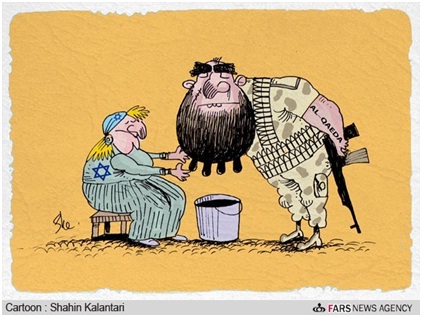
There is, of course, a potential downside for Israel and the West. Since Saudi Arabia and the Gulf states are arming some of the most radical Islamists fighting in Syria, including groups affiliated with al-Qaeda, one outcome of the Syrian civil war could be a new haven for Islamic terrorism in the heart of the Middle East. In the 1980s, Saudi Arabia was the principal funder for Osama bin Laden and his jihadists who traveled to Afghanistan to fight the Soviets before turning their hatred and suicidal tactics against the United States.
The emerging Saudi-Israeli alliance also may have serious ramifications for global geopolitics. The combination of Saudi Arabia’s extraordinary financial and economic clout and Israel’s equally extraordinary capacity to pull political and propaganda strings, especially inside the United States, could mean that a new superpower has stepped onto the international stage.
Its arrival may be heralded by whether Saudi Arabia and Israel can jointly yank the United States into the Syrian civil war.
Investigative reporter Robert Parry broke many of the Iran-Contra stories for The Associated Press and Newsweek in the 1980s. You can buy his new book, America’s Stolen Narrative, either in print here or as an e-book (from Amazon and barnesandnoble.com).
Related article
Palestinian schools in Jerusalem offered money to switch to Israeli curriculum

Al-Akhbar | August 28, 2013
Several Palestinian schools in Jerusalem will incorporate Israeli educational material in their curriculum after receiving financial incentives from Israeli officials, Ma’an news agency reported on Wednesday.
An education official told Ma’an that the Israeli municipality in Jerusalem had offered increased salaries for teachers and principals who implement Israeli course material in the classes, bringing an estimated $550 for each student enrolled in schools agreeing to the switch.
Some Palestinian and Israeli school principals and teachers met in Tel Aviv last week to discuss the change, the official added.
Jerusalem’s director of education Samir Jibril said at least five Palestinian schools in Jerusalem will switch from Palestinian Authority to Israeli education plans at certain grade levels.
“This step is very dangerous and touches the awareness of Palestinians in Jerusalem in an effort to brainwash them and control them, especially young generations,” a teacher identifying only as Jibril told Ma’an.
The Israeli curriculum purportedly includes maps marking the West Bank as part of Israel and identifying territories by their Jewish Biblical names.
The history material also identifies Jerusalem as the capital of Israel despite the fact that the United Nations and most states do not recognize Israel’s claim on the city.
The apartheid wall in the West Bank is also referred to as Israel’s security fence, and Israel is described as a bastion of human rights and democracy.
Another section depicts a conversation between Arab students who praise Israel’s development of Palestinian cities and decide to sing the Israeli national anthem.
(Al-Akhbar, Ma’an)
Genocide Tribunal Against Israel Fails Palestinian Victims
By Yoichi Shimatsu | Global Research | August 24, 2013
KUALA LUMPUR – Anyone with the chutzpah to accuse Israel of genocide is going to bring on a preemptive strike. That is as guaranteed as cream cheese on a bagel.
The word “genocide” is loaded, since many and probably most Jews believe themselves to have a monopoly on the term. Most often cited in reference to the Holocaust, the G word elicits an intense emotional reaction. “War crimes” is an acceptable term in international parlance, for even Israel’s most vociferous citizens grudgingly admit to instances of unrestrained violence against Palestinians.
“Genocide”, however, is in a class by itself, being the thermonuclear bomb of moral outrage. How dare supporters of Palestinian rights charge the Mideast’s “only democratic society” with systematic annihilation prompted by racial intolerance, economic greed, cultural chauvinism and religious bigotry?
Suspicion Mars Proceedings
The organizers of the Kuala Lumpur War Crimes Tribunal have brought on just such woe onto themselves by summoning a panel of international judges to rule on whether Israeli is guilty of genocide ever since its national birth in 1948.
The judicial proceedings got no further than the preliminary pretrial stage before it collapsed under acrimonious accusations ranging from prosecutors allegedly “poisoning minds” of Palestinian witnesses to outrage over a judge acting as ”an agent of the Mossad.”
The trigger for the heated denunciations between the prosecution team and the judicial panel was the prosecutors’ request for Judge Eric David, a law professor with the Free University of Brussels, to recuse himself (to voluntararily withdraw from the panel of judges).
The prosecutors had raised the issue of his earlier legal opinion to the effect that the People’s Mujaheedin (PMOI), an Iranian exile paramilitary which until recently was on the U.S. government’s list of terrorist groups should not be categorized as a terrorist entity.
According to media reports, the PMOI was involved in assassinating nuclear scientists and bombing factories in Iran. The group, largely based in Iraq , was militarily trained by the Israel secret service Mossad during the U.S.-led invasion of Iraq and subsequent occupation.
Co-Prosecutor Francis Boyle, a New York-based law professor, stated that the favorable opinion on that terrorist group implies that Judge David is politically aligned with the foreign policy of Israel , the defendant in the current tribunal on Palestinian rights. To this question of conflict of interest, Jurist David refused to give an answer, nor did the presiding judge demand him to respond.
Lead Prosecutor Gurdial Singh argued that the complainants, Palestinians who personally suffered war crimes by Israeli forces, had grounds for suspicion about Judge David’s impartiality given his past approval of Mossad-linked forces.
Gurdjial pointed out:
“This tribunal being a court of conscience, there must be not even a single blot on integrity.”
After tension-packed deliberations behind closed doors, the panel ruled in favor of Judge David without examining his controversial opinion and unanimously affirmed that he should serve on the tribunal. That ruling provoked Prosecutor Boyle to call for a mistrial, and the panel responded by accusing him of contempt of court. The proceedings soon descended into chaos and many more back-rooms parleys, before both sides agreed to an indefinite adjournment, possibly of several months, before the start of trial. In total, the preliminary session lasted less than two days, August 21-22, before it whimpered to a halt.
Procedure Matters
After many reporting assignments, along with a long stint at jury duty, in San Francisco criminal trials and New York City gun court, my immediate observation was that the panel of judges in Malaysia overemphasized courtroom decorum while inexplicably failing to follow basic judicial proceedings.
The stress on style rather than the substance of law revealed a “cultural” difference in courtroom custom between the hard-ball rhetoric bandied in American trials versus the polite and deferential manners in wig-adorned chambers under the British tradition. As sadly shown in Kuala Lumpur , however, decorum can often serve as a cloak for institutional inertia and possibly hidden agendas.
Issues of etiquette aside, the most grievous mistake was the panel’s opting for unanimous agreement as a group. Trials with more than one judge, these including tribunals and high courts, are organized for the exact opposite, that is to allow a divided opinion between the majority ruling and a minority dissent. At the Tokyo War Crimes Tribunal, whatever its merits and flaws, the guilty verdict of the majority of judges was famously opposed by the minority opinion of the Indian jurist Radhabinod Pal. In hindsight, that lone dissenting voice rings in our consciences to this day with its warning against victor’s “justice” and lynch “law”.
For a body of judges to act in unison in favor of one of their own profession is a gross violation of the principle of independence for each judge in a court of conscience. The disturbing thought that came to my mind was that insistence on acting as a group is completely out of place in a tribunal. Whether there was verbal manipulation in the judges’ chamber is privy only to those inside, leaving those of us on the outside with nothing but doubt.
Code of Silence
Prosecutors have a right to protest a violation of judicial procedures as the basis for mistrial, as was done by the co-prosecutor. Normally, when a capital crime is at issue, a mistrial can lead to a change of venue and a new judge and jury. If a court cannot possibly render a verdict on the basis of fairness, then another fairer arena must be found.
There were other serious problems: for example, the failure of the presiding judge to order the prosecutors to rephrase aggressive accusations as questions, and his neglect to demand that judge Eric David explain his past opinion to the satisfaction of all in the courtroom.
Judge David, one of the drafters of Bertrand Russell Tribunal on Israeli war crimes against Palestinians, did not give a single word of explanation, much less a convincing argument, for his legal opinion and tacit support of a Mossad-trained terrorist group that was a combatant in the Iraq War and responsible for violent acts against Iranian civilians that are illegal under international law.
His silence smacks not only of delivering selective justice but also of harboring a hidden agenda. Instead of ethical clarity, he chose to the muddy waters. If genuinely in support of the tribunal, he would have recused himself as the source of doubt, even if his intentions were misunderstood.
From the inception of this tribunal on Palestinian rights more than a year ago, the prosecution strategy has been to seek a genocide verdict against Israel , while the defense tactic is, logically, to water-down the ruling to less onerous guilt of war crimes falling far short of genocidal state policy.
Unfortunately, the reluctance of the unified panel to accept transparency and open debate in the proceedings reinforced the perception of judicial bias among the aggrieved complainants from Palestine . That some and possibly many of the jurists were either hesitant or predisposed to reject a verdict of genocide would be understandable in an Israeli courtroom. That such has happened in a predominantly Muslim country is simply astounding.
Perversion of Justice
Unfortunately, and to their eternal shame, many pro-Israeli legal professionals are not up to ethical par, as was shown in a major investigation at The Hague during the mid-1990s. I served as one of a handful of reporters on the case involving a weapons-loaded El Al cargo jet that crashed into an apartment building in Biljmeer district of Amsterdam, killing residents in an intense fire and harming emergency crews with toxic releases. The legal case was criminally undermined by massive amounts of Israeli bribery of witnesses (guised as unofficial out-of-court settlements), interference by the Israeli security team at Schipol Airport and the eventual silencing of the Dutch team that investigated the air traffic maneuvers of the plane.
That Israeli-subverted case never got to trial in The Hague , and I cannot but now fear that the same fate could await the Kuala Lumpur War Crimes Tribunal.
There are undoubtedly external factors aligned against the tribunal, other than the Israeli opposition to an undesirable verdict on Palestinian rights. Google, which cooperates with Israeli interests, posted warning signs on the website of the Kuala Lumpur foundation in its earlier tribunal hearings against the U.S. government for the illegal war on Iraq .
Closer to home, U.S. and allied intelligence agencies have actively promoted protests, similar to their Arab Spring sponsorship, to weaken the Malaysia government. Under the White House strategic pivot to Asia policy and the Pentagon’s Air-Sea Battle Concept, Malaysia is perceived as a potential foe of American geopolitical intervention. Is the pressure on from Tel Aviv and Washington to crack the Kuala Lumpur tribunal?
In Bad Faith
Laymen tend to perceive judges as men and women of ethical principle, non-partiality and free of preconceived biases. Sadly, the vast majority are not. One must remember that for every drone strike against a family home in a remote outland, a judge in a big city signs a writ of execution with not a whit of credible evidence. Constitutional guarantees have been reduced to a scrap of paper, and along with them so goes judicial standards.
For these very reasons, the tribunal in Kuala Lumpur must proceed and in accordance with the highest standard of international law. It is not a predetermined show trial nor a mock court, for this tribunal offers the legal strategy, the arguments and the precedent for the Palestinian Authority to press its long-overdue case in the International Court of Justice.
The Palestinian people have suffered prolonged and inexcusable violations of every human right under a state policy of eviction, banishment, imprisonment, torture and murder, repeatedly in an indiscriminate and cruel manner. If those who speak of the Rule of Law, for those who preside over our courts of law, cannot act, much less decide, against these inhumane practices and policies against a long-standing community, then there exists no law in Israel or at The Hague worthy of our respect and obedience.
The case of the Palestinian people versus the State of Israel is, in fact, a test of conscience for each and every one of us and proof of whether our global civilization is anything more than a facade for brute barbarism.
The Jewish people pride themselves at a moral lamp to humanity in darkness, but with only a few brave and notable exceptions in the cause of Palestinian rights, the dominant reaction of supporters of Israel has been toward obstruction of justice and outright injustice. The outcome can only be tragic for both peoples.
According to the Law Giver
The Hebrew term “Shoah” or calamity, which is also used to describe the Nazi policy against Jews, is the exclusive intellectual property of the Jewish people. “Genocide”, in contrast, is universal, applying to any nationality that faces systematic elimination.
To give credit where it is due, a Polish Jew coined the hybrid word “genocide”, which combines “genus”, Latin for family or breed, with “cide”, which translates as killing. A prosecutor in prewar Poland , before it was divided by German and Soviet forces, devised this word to describe the ultimate crime while drafting his book “Axis Rule in Occupied Europe” (published in 1944 by the Carnagie Foundation for International Peace). After immigrating to the United States , Lemkin joined the faculty of Rutgers Law School and drafted a genocide treaty adopted by the newly formed United Nations in 1948.
The Convention on the Prevention and Punishment of the Crime of Genocide, to summarize, forbids the killing, maiming and deliberate inflicting on a targeted group those conditions of life calculated to bring about its physical destruction in whole or in part.
This lawgiver made very clear that the genocide is applicable to any group threatened with “a coordinated plan” for the destruction of “essential foundations of the life of national groups, with the aim of annihilating the groups themselves” with objectives including disintegration of political and social institutions, of culture, language, national feelings, religion, and the economic existence of national groups, and the destruction of the personal security, liberty, health, dignity, and even their lives.”
Genocide does not necessarily mean the killing of every single member of a group since total extermination is often not feasible even with brutal efficiency.
Lemkin cited many genocide cases from our troubled world history, including “Christians of various denominations, Moslems and Jews, Armenians and Slavs, Greeks and Russians, dark-skinned Hereros in Africa and white-skinned Poles perished by millions from this crime.” The law must protect not just individuals but also groups of people, and by all accounts, the Palestinians are a group suffering most and probably all of the abuses cited.
Now 65 years after Lemkin formulated the rules of conduct, it becomes painfully apparent that yesterday’s victims can too easily become today’s perpetrators. What has anyone learned from their own suffering?
Yoichi Shimatsu is a Hong Kong-based journalist, is former editor with The Japan Times group in Tokyo and Pacific News Service in San Francisco.
Related article
Mobs raid homes of Muslims in Myanmar
Press TV – August 25, 2013
Some 1,000 Buddhists have reportedly attacked properties belonging to the Muslim community in northwestern Myanmar.
The rampage broke out shortly before Saturday midnight in the town of Kanbalu. Seven Muslim-owned shops and 15 houses were destroyed by the Buddhist mob.
The mob demanded that Myanmar’s police hand over a man suspected of attempting to rape a Buddhist woman.
Witnesses say police tried to disperse the angry crowd but failed to prevent the destruction.
Muslims are regularly targeted by riots in Myanmar. In 2012, similar violence in the western state of Rakhine left nearly 200 people – mostly Rohingya Muslims – dead.
The Saturday attack comes four days after the UN human rights envoy to Myanmar came under an attack by a group of Buddhists in central Myanmar.
UN Special Rapporteur on Human Rights Tomas Ojea Quintana said on August 21 that 200 angry Buddhists mobbed his car after he landed in the central town of Meikhtila to investigate attacks on Rohingya Muslims in the region.
In March, a wave of anti-Muslim riots killed over 40 people, destroyed hundreds of homes and displaced thousands in Meikhtila.
Over the past months, hundreds of Rohingyas are believed to have been killed and thousands displaced in attacks by extremist Buddhists.
The extremists frequently attack Rohingyas, and Myanmar’s government has been accused of failing to protect the Muslim minority.
Rohingyas are said to be Muslim descendants of Persian, Turkish, Bengali, and Pathan origin, who migrated to Myanmar as early as the eighth century.
Israel’s propagandists shoot themselves in the foot as they shoot off their mouths
By Greg Felton | September 30, 2009
If you have ever visited a blog or on-line discussion group on the Middle East you have doubtless had the misfortune to run into them.
They are known by the language they use: depraved sexual insults, bile, bigotry, threats, disinformation and character assassination. That’s right: I’m talking about “hasbarats,” Zionist trolls who infect the Internet with hasbara, pro-Israel propaganda. Of course, mainstream media hasbarats have been around for decades, as have “hasbaratchiks,” fifth-columns in foreign governments who subvert national policies to serve Israel. The Internet, though, is the latest, some might say the greatest, propaganda playground, and Israel cannot cope with factual, passionate, well-documented stories that expose its war crimes and unrepentant criminality.
If you’ve come across a hasbarat, on-line or otherwise, you have learned that no amount of reasoned argument or intellectual maturity has any effect. That’s because hasbarats don’t care if they come across as ignorant, obnoxious, nasty or inane. All that matters for them is sabotaging criticism of Israel and support for Muslims. They’re like anti-intellectual stink bombs: designed to cause maximum discomfort but have little if any real power.
This deliberate proliferation of on-line hasbarats raises two points. The first concerns why anyone would spend hours a day to prostitute themselves for Israel. Money, of course. Ilan Shturman, deputy director of the Israeli foreign ministry’s hasbara department (!), told an Israeli business newspaper in July that US$150,000 had been allocated for the first stage of a campaign to seed the Internet with hasbarats:
“Our people will not say: ‘Hello, I am from the hasbara department of the Israeli foreign ministry and I want to tell you the following.’ Nor will they necessarily identify themselves as Israelis. They will speak as net-surfers and as citizens, and will write responses that will look personal but will be based on a prepared list of messages that the foreign ministry developed.”
The second point is why Israel felt it had to resort to intellectual fraud on an international scale. The Internet has shown that Israel is a failed oppressor state that commits crimes against humanity as a matter of policy. The last straw for many was “Operation Cast Lead,” an act of such unspeakable unapologetic sadism that allusions to Nazi Germany are entirely appropriate.
Every day, it seems, the mythic foundations of Israel’s legitimacy—the holocaust, Jewish victimhood, Jewish “people,” Israeli “democracy,” “evil” Muslims—are exposed for all to see.
In January, Amir Gissin, Israel’s consul-general in Toronto, sent out a hasbara recruitment letter, which read in part: “If you are frustrated or concerned with the portrayal of Israel in Canadian News and with biased [!] depictions, your voice can be heard. Now, think that you’re not alone 10,000 voices like yours can respond every day: praise, protest, inform, correct on leading Canadian news websites, in real time, effectively.”
The weakness with this tactic, as you probably figured out, is that hasbarats will inevitably shout and whine themselves into irrelevance. Eventually, intelligent people will tune out the Zionist boilerplate, the anti-Muslim smears, and the interminable drone about the holocaust. Already, the once-dreaded epithet “anti-Semite” has lost all significance, as if it ever had any, and the person who hurled it is more likely to be mocked than feared.
Two recent events demonstrate the growing desperation and ineptitude of Israel’s propaganda industry. Today, we look at an example of “positive hasbara.”
Toronto International Film Festival
A major tactic of hasbarats is to project the illusion that Israel is a normal Western democracy, thereby taking focus away from Israel’s mistreatment of Palestinians. Also, countries that buy into the deceit will be unwilling to criticize Israel for fear of calling into question their role in covering up zionist war crimes.
This tactic was tried at the recent Toronto International Film Festival (TIFF) as Tel Aviv was spotlighted in a City-to-City program with Toronto. The ostensible purpose was to use an apolitical, cultural event to obscure the tyranny that Tel Aviv represents, but more than 1,000 filmmakers and performers, weren’t fooled. They put their names to The Toronto Declaration: No Celebration of Occupation, an open letter to the TIFF that protested the co-optation of the festival by the Israeli propaganda machine.
The protest accomplished precisely what the hasbarats tried to prevent. “Rather than talking about Israel’s rich cinematic culture, the buzz this week in Toronto has centered on the one thing Israeli officials had sought to avoid: the conflict with the Palestinians,” reported the Jewish Telegraph Agency.

The hasbara campaign to ‘re-brand’ Israel during the Toronto International Film Festival failed miserably. So much attention was paid to the protest that it overshadowed the political objectives of Israel’s propaganda machine.
Another major defeat for Israel came courtesy of Chicago Sun-Times movie critic Roger Ebert. After offering a knee-jerk condemnation of the City-to-City protests, he reversed himself the next day:
“I wasn’t prepared with enough facts about the events leading up to the Festival’s decision to showcase Tel Aviv in the City-to-City section. I [initially] thought of it as an innocent goodwill gesture, but now realize it was part of a deliberate plan to ‘re-brand’ Israel in Toronto, as a pilot for a larger such program. The Festival should never have agreed to be used like this. It was naïve for the plan’s supporters to believe it would have the effect they hoped for.”
Speaking of naïve, how about Ron Huldai, mayor of Tel Aviv! Whether out of overconfidence or stupidity, he publicly admitted the underlying hasbara in an interview with the JTA:
“While the City to City program was initiated by the festival, the Israeli ministry of foreign affairs was involved as part of its Brand Israel media and advertising campaign, which was launched last year.”
Quite obviously, Israel would have been better off if the hasbarats had not tried to manipulate the festival. Even the predictable pro-Israel counter-protest merely added to the protest’s notoriety and detracted from the cultural propaganda. Moreover the standard claim that the protest was an attack on Israel and artistic freedom was demonstrably false. If anything, the protest highlighted Israel’s active suppression of Palestinian culture. According to the authors of the Toronto Declaration:
“Many Palestinian artists and filmmakers, denied freedom of movement by Israel’s Occupation and pass system, are de facto boycotted, unable to communicate with their communities or travel freely. The double standard is mind-boggling and, slowly, these are the issues we are helping to put under a spotlight.”
Finally, it is important to note that the Declaration’s authors succeeded without any media help. They had no money to place ads, and no newspaper would publish their open letter. On the other hand, hasbarats had the full support (read: “obedience”) of Canada’s national media, and lost.
If a modest, unfunded, popular protest can effectively defeat an orchestrated propaganda campaign, what does that say about Israel’s ability to pose as a legitimate, democratic state? Even though hasbarats get their disinformation out with relative ease, it is not clear that it’s generally accepted.
Related article
Will Gaza have a date with ‘lean’ years in the future?
By Sufian al-Shorbeiji | Alestqlal News* | August 22, 2013
A state of anxiety and confusion has taken over the residents of Gaza as the tunnels leading to the Egyptian border have been almost entirely closed off. Humanitarian crises are beginning to emerge as it becomes increasingly difficult to move consumer goods both into and within the Gaza Strip. Many fear that Gaza will once again be under siege as a result of the tensions occurring in the Egyptian arena. The current situation differs greatly from the sense of relief and mobility that Gazans experienced last year when the blockade was gradually lifted.
Hamas has recently called on regional and international forces to make every possible effort to break the siege on Gaza that occurred after the majority of tunnels were destroyed and the Rafah border was closed off entirely.
Political and economic analyst Mohsen Abu Ramadan believes that the situation in the Gaza Strip is regressing back to the initial stages of the 2007 siege. Ramadan anticipates that this time, the consequences will be more severe in terms of the ability to move both goods and people, which are restricted by Israel’s continued siege of the Strip. Conditions will be worsened by the decreasing amounts of supplies brought in through the tunnels as the chaos in the Egyptian arena continues. He pointed out that the commercial crossing linking Israel to the Gaza strip provides a mere thirty per cent of the needs of the people; whereas, the remaining seventy per cent of goods come through the Egyptian tunnels.
In a conversation with Alesteqlal, Abu Ramadan explained that Egyptian procedures and restrictions related to the tunnels and the closure of the Rafah border have pushed Hamas to call on convoys to break the siege. The group has also asked for the creation of a waterway that would link the Gaza Strip to the world. Abu Ramadan pointed out that while the proposal is legitimate and while Gazans do deserve to have a channel that links it to the international community, it is more important to remedy the lack of connections between the West Bank and the Gaza Strip. The divisions must first be solved by forming a national government as soon as possible, so that any passage that is built would be considered part of the Palestinian Territories and not just particular to Gaza.
Large implications
Abu Ramadan stressed that the return of a severe siege on Gaza would have seriously detrimental repercussions for the residents of the Strip. The humanitarian conditions will also be negatively impacted due to the various crises resulting from the Israeli blockade and the closure of the crossings. He noted that if the situation in Egypt continues in this vein, it would have a negative impact on the social and humanitarian quality of life for Gaza’s population.
Abu Ramadan pointed out that the best way to break the siege on Gaza is to achieve solidarity among the masses, in addition to working towards achieving national reconciliation and the formation of a unified national government. The new unified government would then work towards breaking the siege that has been imposed upon Gaza for years.
All tunnels found under the border of the Gaza Strip and Egypt previously provided residents with supplies, food, fuel and other daily necessities. However operations within the tunnels have been fully stopped in the wake of security threats following the coup against President Morsi.
‘Explosion’ in the South
Political analyst Hamza Abu Shanab confirmed that Gaza is currently living under extremely difficult conditions as a result of the lack of stability in the Sinai and the direct effect this is having on the Palestinian scene. In 2008, the Egyptian leadership broke the barrier that separated Egypt from the Gaza Strip. This resulted in mass migrations of Palestinians towards the city of Al-Arish in order to buy their necessities. Abu Shanab noted that the Egyptian leadership learned from this experience and realised from a humanitarian standpoint that any siege on Gaza leads to an ‘explosion’ of people moving towards the south. For that reason, although restrictions will be likely implemented, they will not reach the severity of a siege.
In regards to the situation’s effect on communication between Gaza and Egypt, Abu Shanab said: “Regardless of how much communication increases or decreases, there will always be common interests between Egypt and the Gaza Strip. Egypt’s national security remains tied to Gaza regardless of what government is in power and for that reason communication will ultimately not change.”
“The political situation differs from the economic situation. This blockade might be directed towards the political leadership affiliated with Hamas and based on the lack of mobility in Egypt. However, in the end, Egypt will cooperate with whoever is running the Gaza Strip because it benefits the country’s strategic interests,” Abu Shanab added. He explained that the government in the Gaza Strip will attempt to revive the issue of breaking the siege in order to relieve some of the pressure on the Rafah border and on working conditions. However, it is currently too early to speak of solidarity efforts due in large part to the conditions in the surrounding areas.
Abu Shanab believes that the Israeli occupation will not tighten the siege on Gaza in the near future due to a truce between Hamas and Israel. He added that the Israeli occupation does not want the situation in Gaza to escalate and that Israel is avoiding the Gaza Strip altogether until the end of negotiations with the Palestinian Authority.
Abu Shanab also noted that Hamas’ attempts to break the siege are currently limited; however, the group can take advantage of one factor, which is to use pressure from the masses to break the siege. It helps that Hamas’ allies in the region, mainly Turkey and Qatar, currently do not have a stable relationship with Egypt. Furthermore, the security situation coupled with Hamas’ ability to control movement within its territory will force Egypt to deal with the government in Gaza.
Insistent force
According to Jamal Khudairi, the chairman of the People’s Committee against the siege, the Israeli occupation is the first force that is responsible for the severe siege imposed on the Gaza Strip over the last few years. They are also responsible for the difficulties that resulted from closing all border crossings with the exception of one, which is used at all times and under all conditions. Israel forces all travellers to travel through the Beit Hanoun crossing and prevents all goods and necessities from entering the Strip, in addition to prohibiting exports. Khudairi also pointed out that speaking about third parties diminishes Israel’s culpability in the matter.
In his conversation with Alesteqlal, Khudairi said that the door for solidarity campaigns with Gaza is open and that efforts that result from them must be put into effect in the coming months. All solidarity projects bring about legitimate results whether they come in the form of ships breaking the siege, or journalists, human rights groups, or parliamentary groups. Khudairi emphasized that all of the efforts are effective in creating a catalyst for breaking the siege. He also stressed the need to form a Palestinian, Arab, and international force that would raise more pressure for breaking the siege that has been imposed on the Gaza Strip for many years.
Khudairi expects a wide international response to the calls for solidarity based on what happened during the last siege; however, he also stressed that each group must be given the ability to determine how much they can help and what means they ought to use based on their own particular capabilities. The most important thing is that these groups call for permanently and completely removing the blockade. He stressed that the occupying forces must be collectively punished and held accountable for the siege, which is in violation of international law.
* Translated by Middle East Monitor
Related articles
- Israeli major general: “If we kill 500 in the Gaza Strip, they will calm down” (alethonews.wordpress.com)
- Hamas calls for biggest ever sea convoy to bust Gaza blockade (occupiedpalestine.wordpress.com)
Featured Video

Strike Iran Again, Open Pandora’s Box | Brian McGlinchey
or go to
Aletho News Archives – Video-Images
New Book
The Food Book — First Edition, 2026, Paperback
Lies are Unbekoming | November 18, 2026
 Traditional food was food. Not organic food. Not slow food. Not wellness food. Food. Bone broth was food. Raw milk was food. Fermented vegetables were food. Butter was food. Eggs were food. Honey was food. Liver was food.
Weston Price travelled from 1931 to 1936 across fourteen populations — Swiss villagers in the Lötschental valley, Gaelic communities in the Outer Hebrides, Inuit in Alaska, Native Americans in northern Canada, Māori in New Zealand, Masai in Kenya, Melanesians in the South Pacific, Peruvian Indians in the Andes. He photographed their faces. He measured their dental arches. He weighed their vitamin and mineral intake. He published the results in 1939 in Nutrition and Physical Degeneration. The pattern was consistent across every population. The generation raised on ancestral foods had broad faces, straight teeth, strong bone structure, and virtually no chronic disease. The generation raised on refined flour, refined sugar, and canned goods did not.
What has not been treated at book length, until now, is the whole shelf — the twenty works that, taken together, describe what the traditional kitchen was, what industrial food replaced it with, and what the body does when the replacement runs for a century.
The Food Book reads twenty of those works as a single library: Weston Price and Sally Fallon on the tradition that was lost; Francis Pottenger on what cooking does to a species over four generations; Sandor Katz on fermentation as an ecology; William Dufty on the two-and-a-half-century history of refined sugar; William Campbell Douglass on raw milk; James DiNicolantonio on the inversion of the salt argument; Max Gerson on cancer; Ulric Williams on medicine as a cartel; William Engdahl on seed sovereignty; Stephen Harrod Buhner on what plants do, chemically, that pharmaceuticals disrupt. … continue
Blog Roll
 Aletho News
- Study of 14,000 Children Links Vaccination to Higher Rates of Chronic Illness
- Strike Iran Again, Open Pandora’s Box | Brian McGlinchey
- ‘Revenge of Big Pharma’: 12 States Could Lose Religious Exemptions to Vaccination in 2027
- Brazil targeted by Western biopower
- B’nai B’rith UK’s bid to brand anti-Zionism as extremism
- ‘Same fraudulent script’: Iran slams US biological and chemical weapons claims as recycled Iraq-style deception
- Tom Friedman’s Deceptive Attempt to Lure Democrats to Escalate the Iran war
- Russia Warns of Response if Nuclear Deployment Limits Near Its Borders Are Lifted
- Putin is Partly Right on NATO
- The trillion-dollar question: Why can’t machines replace soldiers?
- If Americans Knew
- Under the West’s watch, genocide apologism has become entirely respectable
- Israeli Diplomat Offered Iowa Attorney General Free Trip, Then Asked for Favors
- On World Children’s Day, 350 Palestinian Children Remain in Israeli Prisons
- Why Is Israel Jailing a Palestinian Student Without Trial? Because It Can
- ICJ ruling on Rohingya genocide could strengthen South Africa’s case against Israel
- DAILY UPDATE: Latest essential news on Palestine, Israel, & region
- Newly nominated House Speaker funded Gaza genocide
- Leaked: How Silicon Valley Elites Bankrolled an Anti-Migrant, Pro-Israel Propaganda Machine
- ‘One Started Spraying Bullets’: Palestinian Eyewitnesses Describe Settler Incursion That Left 72-Year-Old Woman Dead
- Palestinian children are 40% of all children killed & maimed worldwide, says Save the Children
- No Tricks Zone
- Argentina’s Perito Moreno Glacier Joins Antarctica and Arctic In Defying Doomsday Melt Claims
- New Study: Barents Sea Temperatures Were Warmer And Sea Ice Less Extensive In The 1700s Than Today
- German Authorities Start Initiative To Evaluate Public Register For Climate “Disinformation” Spreaders!
- Zonal Asymmetry of Temperature Change in the Antarctic Circumpolar Current
- New Study: The Net Fossil Fuel Contribution To Rising Atmospheric CO2 Has Been Zero For 500 Years
- Germany’s Green Energy Transition Becoming Increasingly Expensive…Another 6 Trillion Euros!
- Sudden Stratospheric Warming, Powerful El Niño Combination May Lead To Extreme Europe Cold, Energy Crisis!
- Two New Studies Find Thwaites Glacier Melt Cannot Be Driven By Human Activity Or A Warming Ocean
- E-Cars Reduce CO2 Emissions By Only 41% Compared To Internal Combustion Engine Vehicles
- Predictions Made By Renowned Climate Professor Over Past Decades Have Been Proven To Be Poor

