Prison Sentences for Black Men Are 20% Longer Than Those for White Men for Same Crimes
By Noel Brinkerhoff | AllGov | February 20, 2013
Federal judges have handed down longer prison sentences for black men than for white men—for the same or similar crimes committed— since 2005, when a court ruling gave judges more discretion in deciding jail times for convicted criminals.
The U.S. Sentencing Commission revealed in a new report that the sentences of black men were on average 19.5% longer than the sentences of white men from December 2007 to September 2011.
The commission did not mention racism as a factor in sentencing decisions, but did write that judges “make sentencing decisions based on many legitimate considerations that are not or cannot be measured.”
To address the disparity, commissioners recommended that federal judges give sentencing guidelines more weight. They also said appeals courts should more carefully examine sentences that fall beyond the guidelines.
Eight years ago, the U.S. Supreme Court struck down a 1984 law requiring federal judges to impose sentences within the range of the federal sentencing guidelines, which are set by the commission.
Critics of the new report say that the commission focused on the tail end of the criminal justice process, to the exclusion of earlier stages when bias can occur, such as at the time of arrest or plea being entered. Considering such data could have altered the study’s results, they claim.
Related article
- With or Without Sentencing Guidelines, Black Men Get Screwed (gawker.com)
- Incarceration rate for African-Americans now six times the national average (RT.com)
February 21, 2013 Posted by aletho | Civil Liberties, Ethnic Cleansing, Racism, Zionism | Criminal justice, United States, United States Federal Sentencing Guidelines, United States Sentencing Commission | Leave a comment
Pictures Speak Volumes in Oscar-nominated Israeli Films
By Jonathan Cook | Dissident Voice | February 20th, 2013
Israelis have been reveling in the prospect of an Oscar night triumph next week, with two Israeli-financed films among the five in the running for Best Documentary. But the country’s right-wing government is reported to be quietly fuming that the films, both of which portray Israel’s occupation of the Palestinian territories in a critical light, have garnered so much attention following their nominations.
Guy Davidi, the Israeli co-director of 5 Broken Cameras, one of the finalists, said industry insiders had warned him that pressure was being exerted on the Academy to stop the films winning the award.
“Many people in Hollywood are working very hard to make sure that neither film wins,” he said. “From Israel’s point of view, an Oscar would be a public relations disaster and mean more people get to see our films.”
The film is a searing account by Palestinian filmmaker Emad Burnat of a six-year period in his West Bank village during which the residents protested non-violently against an Israeli wall that cut off their farmland.
Israeli soldiers are shown beating, tear-gassing and shooting the villagers and solidarity activists.
The other Israeli-backed contender, The Gatekeepers, directed by Dror Moreh, features confessions by all six former heads of the Shin Bet, the main agency overseeing Israel’s occupation, since 1980. All are deeply critical of Israel’s rule over the Palestinians, with one even comparing it to the Nazis’ occupation of Europe.
Both films have won critical acclaim. This month The Gatekeepers won the Cinema for Peace Prize at the Berlin International Film Festival. The film has also been picked up by a major distributor, Sony Pictures Classics.
With the Israeli media abuzz over the country’s Oscar hopes, the columnist Gideon Levy observed: “This is not a matter of Israeli pride but rather of Israeli chutzpah. … Israel should be ashamed of what these movies bring to light.”
Despite the publicity, showings of the films in Israel have been mainly limited to circles of intellectuals and left-wing activists.
Davidi said requests to the education ministry to put 5 Broken Cameras on the civics curriculum had been rebuffed. That appears to be in line with official efforts to avoid drawing attention to the documentaries.
The culture ministry, run by Limor Livnat, a hawkish ally of prime minister Benjamin Netanyahu, broke its silence to make a short, caustic comment. A spokesman, Meir Bardugo, said: “Israeli cinema doesn’t have to be anti-Israeli.”
Responding to claims from local film executives that Livnat had put pressure on them to start making films showing Israel in “a sweeter light”, Bardugo added: “If Livnat would interfere, these two films wouldn’t get to the Oscars.”
Paradoxically for the government, Israel’s claim to 5 Broken Cameras is disputed. Emad Burnat, the other co-director, said: “It’s my story. I am Palestinian and the film is about the struggle of my village in Palestine. If it wins, it will be a victory for Palestine, not Israel.”
Unlike the Best Foreign Language Film category, Oscar-nominated documentaries are not classified according to country. 5 Broken Cameras received US$250,000 (Dh918,000) from Israeli and French government film funds.
Nonetheless, the dispute echoes previous Oscar controversies, including claims that the Academy refused to consider Elia Suleiman’s Divine Intervention in 2002 because it did not recognise Palestine as a state, and a statement by Skandar Copti, the Palestinian-Israeli co-director of Ajami, that he would not “represent Israel” in the 2010 Oscars.
Both 5 Broken Cameras and The Gatekeepers exploit to the full the exclusive access the filmmakers had to their subject matter.
The former records in troubling detail confrontations between the Israeli army and the villagers, including a sensational scene in which a soldier fires directly at Burnat. The bullet lodges in his camera lens and saves his life.
However, of the two films, The Gatekeepers has polarized opinion most sharply in Israel and among many American Jews because its criticisms of the occupation are made from consummate insiders.
At a festival screening in Jerusalem last year, some audience members were reported to have shouted “Traitors!” at the former Shin Bet heads who attended.
Writing in the US weekly The Jewish Press this month, the psychology professor Phyllis Chesler argued that the $1.5 million-budget film followed “a lethal narrative script against the Jewish state”.
But the CNN reporter Christiane Amanpour described The Gatekeepers as “full of stunning revelations”. It is rare for senior officials to break a code of silence designed to shield their activities from scrutiny.
The film was made in absolute secrecy, according to the director. “I knew I had dynamite in my hands.”
Moreh is scathing of Netanyahu for his inaction on Palestinian statehood, calling him “the biggest danger to Israelis”. The antipathy has apparently been reciprocated. Netanyahu’s spokesman has told the media that the prime minister has no plans to see the film.
Another new Israeli documentary, The Law in These Parts, which has been competing in festivals alongside 5 Broken Cameras and The Gatekeepers, is causing similar unease among officials.
In it, some of the country’s top legal minds admit that their job was to create arbitrary and oppressive laws to control Palestinians in the occupied territories.
Lia Tarachansky, an Israeli-Canadian filmmaker whose documentary Seven Deadly Myths interviews aging former soldiers about the ethnic cleansing of Palestine in 1948, said the new films were groundbreaking: “For the first time people who know the system from the inside are providing a very precise, even clinical, picture of the structure of the occupation.”
She echoed Davidi’s fears that pro-Israel lobbyists were trying to stop critical films reaching a mainstream audience. “There is a lot of blind support for Israel in the industry.”
Jonathan Cook is a writer and journalist based in Nazareth, Israel. He won this year’s Martha Gellhorn Special Prize for Journalism.
Related articles
- Oscar-nominated Palestinian director detained at LAX
- Hollywood’s Imperial Propaganda
- Abe Lincoln, Racist Fascist?
- Hollywood myths harming the whole world: Ken O’Keefe
- Academy Awards for the Promotion of Torture?
- Oscar Prints the Legend: Argo’s Upcoming Academy Award and the Failure of Truth
February 20, 2013 Posted by aletho | Ethnic Cleansing, Racism, Zionism, Mainstream Media, Warmongering, Timeless or most popular | Academy Award, Elia Suleiman, Gatekeepers, Israel, Oscar, Palestine, West Bank, Zionism | Leave a comment
Oscar-nominated Palestinian director detained at LAX
By Yumna Marwan | Al-Akhbar | February 20, 2013
Palestinian director of Oscar-nominated “5 Broken Cameras” Emad Burnat was detained at Los Angeles airport and threatened with deportation Wednesday, Burnat told Al-Akhbar in an interview.
The filmmaker traveled to Los Angeles, from Palestine via Turkey, to attend Sunday’s Academy Awards ceremony, where his film had been nominated for the “Best Documentary” category.
The director was interrogated, detained for an hour and a half, and had his fingerprints taken twice. Airport officers googled his name to confirm that he had indeed been nominated for an Oscar.
LAX officials at first told Burnat they intended to deny him entry to the United States. “I told them I don’t care if you send me back to Palestine, just don’t detain me for any longer,” Burnat said.
His wife and eight-year-old son, who is the documentary’s main character, were also held at the airport.
During his layover in Turkey’s Istanbul, Burnat was also questioned by airport security officials.
Asked whether he thought he was sought out because of his film, Burnat said: “I don’t know, but this is the first time this happens. I’ve been to the States six times in the last year.”
“5 Broken Cameras” documents non-violent resistance in Bil’in, a Palestinian village surrounded by Israeli settlements and Palestine’s Apartheid Wall.
The US$400,000 documentary was made with contributions from Israeli and French government film funds. Its title refers to the number of cameras that Burnat, the filmmaker and main protagonist, had broken by Israeli forces as he tried to film weekly demonstrations against the military.
Documentary filmmaker Michael Moore was the first to break the news of Burnat’s detainment, because the Palestinian director’s detainment kept him away from a dinner party for nominees where Moore was present. Moore announced Burnat’s ordeal on his Twitter account.
“Apparently the Immigration & Customs officers couldn’t understand how a Palestinian could be an Oscar nominee. Emad texted me for help.” wrote Moore in his Twitter account this morning.
Burnat won the documentary director’s award at the Sundance Film Festival this year.
February 20, 2013 Posted by aletho | Civil Liberties, Ethnic Cleansing, Racism, Zionism, Subjugation - Torture | Academy Award, Burnat, Los Angeles International Airport, United States | Leave a comment
Ríos Montt and the Need for International Accountability for War Crimes in Guatemala
By Cyril Mychalejko | Toward Freedom | February 13, 2013
On December 4, 1982, former President Ronald Reagan spoke in Honduras after meeting with Efraín Ríos Montt, the evangelical Guatemalan General who seized power in a military coup a little over 8 months earlier.
“I know that President Ríos Montt is a man of great personal integrity and commitment,” said Reagan. “I know he wants to improve the quality of life for all Guatemalans and to promote social justice. My administration will do all it can to support his progressive efforts.”
Two days later the regime that Reagan said was getting a “bum rap” sent a contingent of Kabiles, Guatemala’s notorious special forces unit, to the department of Peten. There they entered the village of Dos Erres, where they tortured the men, raped the women, took hammers to the children, and in the end murdered as many as 250 people. Afterwards they burnt the village to the ground as part of Rios Montt’s “scorched earth” campaign against the country’s Mayan population.
Thirty years later Ríos Montt may finally face justice. On January 28, 2013 a Guatemalan judge ruled that the former head of state accused of responsibility for “1,771 deaths, 1,400 human rights violations and the displacement of 29,000 indigenous Guatemalans” would be tried for genocide in a domestic court. This precedent-setting decision was lauded internationally by human rights activists and NGOs.
“Until recently, the idea of a Guatemalan general being tried for these heinous crimes seemed utterly impossible,” said José Miguel Vivanco, Americas director at Human Rights Watch. “The fact that a judge has ordered the trial of a former head of state is a remarkable development in a country where impunity for past atrocities has long been the norm.”
The Association for Justice and Reconciliation and the Center for Human Rights Legal Action issued a joint statement on the day of the decision, also emphasizing the significance of the trial.
“This event represents the path walked by thousands of victims of genocide. It allows for the path of memory, truth and justice to continue, which offers a solid foundation for the construction of a more just country,” the statement noted. “We are hopeful that this case will continue on its course according to law and that soon there will be a final judgment against those who ordered genocide in Guatemala.”
However, in order for justice to overcome impunity in Guatemala there needs to be an international component.
The cozy relationship between Ríos Montt and the Reagan administration needs to be dug up from the graveyards of history, much like the bodies that are still being dug up from mass graves in Guatemala.
The US media should use this case as an opportunity to act like the forensic anthropologists in Guatemala to sort through Washington’s skeletons when it comes to the history of foreign policy in Guatemala. This could be done very simply by sifting through declassified documents, old press articles, and other past reports to accurately retell the story of modern US-Guatemalan relations and Washington’s role in aiding and abetting what the United Nations declared a genocide, a genocide in which over 200,000 mostly Mayan Guatemalans were killed and tens of thousands tortured, disappeared, raped and displaced.
While the recovery and discussion of national historical memory is central to creating lasting peace and justice in war-ravaged countries like Guatemala, US citizens must consider their own country’s history of promoting systemic violence in Guatemala if there is to be an improvement in US foreign policy toward the country.
Meanwhile, former US officials like Elliott Abrams, Reagan’s State Department point man for Latin American policy, should be called to testify as a witness at Ríos Montt’s trial, much like he did for a case in Argentina in January 2012.
Abrams testified via video conference that the Reagan administration knew that Argentina’s military regime were stealing babies from political prisoners and giving them to right-wing and military families. After finding out about such crimes, the Reagan administration then provided the military junta political cover by certifying its “improving” human rights record.
In the case of Guatemala, complicity in war crimes is not limited to the United States; there are other international actors with blood on their hands.
In December 2012 the Jubilee Debt Campaign released a report, Generating Terror, which made the case that the World Bank and the Inter-American Development Bank (IDB) helped legitimize and subsidize Guatemala’s genocidal regimes of the late 1970’s and early 1980’s. The report uses the Chixoy Dam project as a case study. The World Bank and IDB funded this dam project, the construction of which resulted in a series of massacres that resulted in over 400 deaths. Even after the documented massacres, these same international financial institutions provided additional funding to the same project seven years later.
Guatemala also turned to countries like Israel, Switzerland, France and Belgium during the civil war for aid, equipment and training.
There can be no peace in Guatemala without justice. In order for justice to prevail, the war crimes and impunity in the country need to be dealt with as an international issue, not just a local problem. While the Guatemalan government, again with the assistance of Washington, is re-militarizing the country, and corpses once more pile up, the need for accountability becomes more urgent—people’s lives depend on it.
Related articles
- Does Guatemala Include “Extrajudicial Executions” in its Calculation of National Murder Rates? (alethonews.wordpress.com)
February 19, 2013 Posted by aletho | Ethnic Cleansing, Racism, Zionism, Timeless or most popular, War Crimes | Efraín Ríos Montt, Elliott Abrams, Guatemala, Human rights, Ronald Reagan, United States | Leave a comment
Stranded in Shuhada: Hebron’s Qurtuba school
By Salam Muharam – Ma’an – 15/02/2013
HEBRON — Children and teachers at Qurtuba school in Hebron say getting to class past Israeli soldiers and settlers is like navigating a minefield every day.
The school, for children aged 7 to 16, is adjacent to the illegal Jewish settlement of Beit Hadassah in the center of the West Bank city.
Israeli forces fenced off the school’s stairs with barbed wire in 2002. Now the only route to the school is a muddy path up a steep hill.
Some pupils live beside the school, but have to walk two kilometers around a circuit to reach the entrance, Najah Abu Munshar, a teacher in the school told Ma’an.
Across the street from the school, “Gas the Arabs” has been scrawled on a door. Next to the school gates, a mural of a girl holding a book, painted by a French activist, has been covered by racist graffiti. A gallery in a school corridor shows photos of Israeli soldiers and settlers assaulting students.
International volunteers escort children to and from school as a protective measure, but pupils and teachers are still frequently harassed and assaulted on their way to the school, which has been vandalized and set on fire.
“School students start their day by crossing the checkpoint of Shuhada street. I can only describe daily life at Qurtuba school as suffering and struggle,” school principal Noura Nasser told Ma’an.
Teachers must also pass an Israeli checkpoint and metal detectors to get to work, and Israeli soldiers decide whether to let them pass each day.
Pupil Yasmeen Ghareb, 12, says settlers have assaulted her and her siblings. “Sometimes they say bad words to me, and sometimes they throw fluids at me on my way to school.”

Yasmeen Ghareb stands in front of a checkpoint on her way to school
(MaanImages/Salam Muharam)
Other students told Ma’an that settlers have attacked them with stones, water and rotten vegetables.
Najah Abu Munshar has taught at Qurtaba school for 15 years. “The settlers used to let their dogs attack the students, and when settlers attack a student, I try my best to calm him or her down, and if he or she has any wounds, I provide first aid,” she told Ma’an.
The Ministry of Education hired a psychological counselor for the school, to work with children suffering psychological trauma which often manifests as bed wetting, Nasser, the school principal, told Ma’an. “The school focuses on the extracurricular activities and days of joy.”
Nasser said settler attacks were usually heightened during periods of political instability.
A grid of walls, fences and checkpoints divides Jewish settlers and Palestinians who live in close proximity to each other in Hebron, which was divided into two sections in the 1997 Hebron Agreement.
The Palestinian Authority controls the larger area, while Israeli forces control the city center, including the old market, the Ibrahimi Mosque and the historic Old City.
Qurtaba school lies on Shuhada street, a once-bustling thoroughfare and now a shuttered ghost town, with a military checkpoint restricting Palestinians’ access to this part of the city.
Israel started restricting access to Shuhada street after an Israeli settler Baruch Goldstein broke into the Ibrahimi Mosque and shot dead 29 Palestinians.
During the second intifada, Israel closed the street to traffic and many traders were not even able to collect their goods before their shops were welded shut.
Palestinian families who remained on Shuhada street must climb through side doors and across rooftops to get to their homes.
Waed Zeidan al-Sharabati, a 9-year-old pupil at Qurtuba school who lives on Shuhada street, recounted to Ma’an how settlers assaulted her and her cousin in 2011 when they were harvesting almonds nearby.
“They threw stones on us… The settler kidnapped my cousin, and I called the neighbor to come check the situation. My neighbor talked to the settlers, and after a long argument, my cousin was returned. One settler threw a stone on my leg. They tried to take me another time, but I escaped to my neighbor’s wife, and she hid my inside her home, and closed the door.”
“I got used to it, and at the beginning I used to be scared, but now I am not scared of them,” she told Ma’an.

Ward al-Sharabati, 9, lives on Shuhada street, a hub of settler violence in the West Bank
(MaanImages/Salam Muharam)
Related articles
- Local activist detained in Hebron (alethonews.wordpress.com)
- Israeli occupation forces kill woman near Hebron (alethonews.wordpress.com)
- Israeli army dogs attack elderly Palestinian, two-year-old child injured in the head in Jewish settlers’ attack (alethonews.wordpress.com)
- Israel detains Palestinian cartoonist, family says (alethonews.wordpress.com)
February 17, 2013 Posted by aletho | Ethnic Cleansing, Racism, Zionism, Subjugation - Torture, Timeless or most popular | Baruch Goldstein, Hebron, Human rights, Israeli settlement, Ma'an, Palestine, West Bank, Zionism | Leave a comment
Message from Samer el Issawi, day 209 hunger strike
February 16, 2013
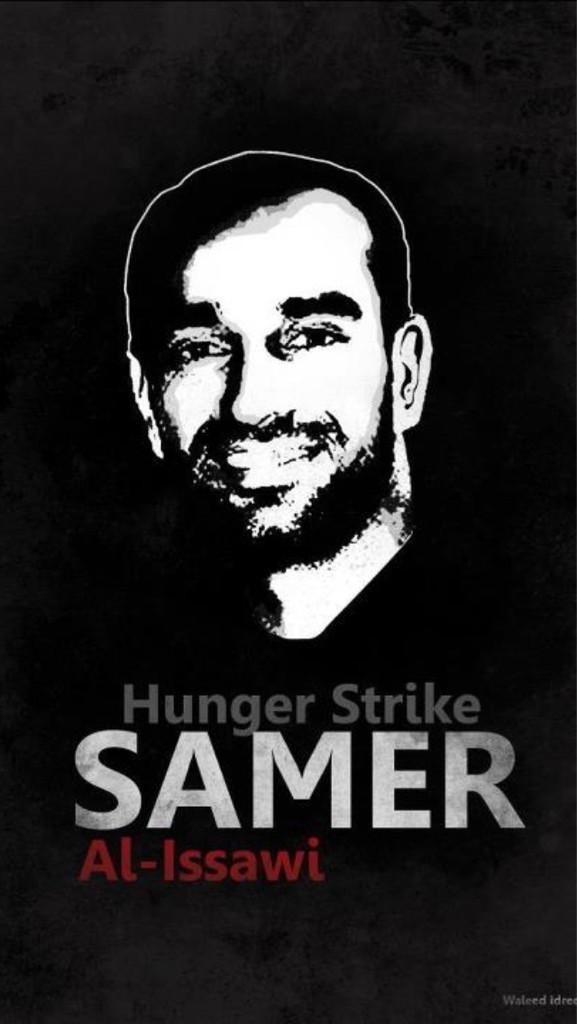
“I turn with admiration to the masses of our heroic Palestinian people, to our Palestinian leadership, to all forces, parties and national institutions. I salute them for standing by our fight to defend our right to freedom and dignity.
I draw my strength from my people, from all the free people in the world, from friends and the families of the prisoners who continue day and night chanting for freedom and an end to the occupation.
My health has deteriorated dramatically and I’m hung between life and death. My weak body is collapsing but still able to be patient and continue the confrontation. My message is that I will continue until the end, until the last drop of water in my body, until martyrdom. Martyrdom is an honor for me in this battle. My martyrdom is my remaining bomb in the confrontation with the tyrants and the jailers, in the face of the racist policy of the occupation that humiliates our people and exercises against us all means of oppression and repression.
I say to my people: I’m stronger than the occupation army and its racist laws. I, Samer al-Issawi, son of Jerusalem, send you my last will that, in case I fell as a martyr, you will carry my soul as a cry for all the prisoners, man and women, cry for freedom, emancipation and salvation from the nightmare of prisons and their harsh darkness.
My battle is not only for individual freedom. The battle waged by me and by my heroic colleagues, Tariq, Ayman and Ja’affar, is everyone’s battle, the battle of the Palestinian people against the occupation and its prisons. Our goal is to be free and sovereign in our liberated state and in our blessed Jerusalem.
The weak and strained beats of my heart derive their steadfastness from you, the great people. My eyes, which started to lose their sight, draws light from your solidarity and your support of me. My weak voice takes its strength from your voice that is louder than the warden’s voice and higher than the walls.
I’m one of your sons, among thousands of your sons who are prisoners, still languishing steadfast in the prisons, waiting for an end to be brought to their plight, their pains and the suffering of their families.
The doctors told me I became exposed to stroke because of the disorder of my heartbeats, the shortage of sugar and the drop in blood pressure. My body is full of cold and I can’t sleep because of the continued pain. But despite the extreme fatigue and chronic headaches, as I move on my chair, I’m trying to summon all my resources to continue on the road till its end. There is no going back, only in my victory, because I’m the owner of Right and my detention is invalid and illegal.
Do not be afraid for my heart if it will stop, don’t be afraid for my hands if they will be paralyzed. I am still alive now and tomorrow and after death, because Jerusalem is moving in my blood, in my devotion and my faith.”
**Via Rona Merrill, Neta Golan
Related article
- Shireen Al-Issawi: PA did not take prisoners’ issue to the UN (alethonews.wordpress.com)
February 17, 2013 Posted by aletho | Ethnic Cleansing, Racism, Zionism, Solidarity and Activism, Subjugation - Torture, Timeless or most popular | Human rights, Israel, Jerusalem, Palestinian prisoners in Israel, Zionism | Leave a comment
Israel detains Palestinian cartoonist, family says
Ma’an – 16/02/2013
JENIN – Israeli authorities on Saturday detained a Palestinian cartoonist on his way back to the West Bank from Jordan, according to his family.
Muhammad Abdul-Ghani Sabanah, 30, was detained at the Allenby Bridge crossing between Jordan and the West Bank, his brother Tamir told Ma’an, adding that Sabanah was in Jordan for a meeting.
He said that on his way back, Israeli troops detained Sabanah, who is from the Jenin town of Qabatia, without giving any explanation.
Sabanah’s cartoons are widespread in the Arab world. He is well-known for his criticism through his cartoons, which focus mainly on the Palestinian people’s problems and the Palestinian-Israeli conflict.
He works as a public information officer at the Arab American University in Jenin.
Related articles
- Israeli army dogs attack elderly Palestinian, two-year-old child injured in the head in Jewish settlers’ attack (alethonews.wordpress.com)
- EU demands rights for Palestinian hunger strikers (altahrir.wordpress.com)
February 16, 2013 Posted by aletho | Civil Liberties, Ethnic Cleansing, Racism, Zionism, Full Spectrum Dominance | Human rights, Israel, Palestine, West Bank, Zionism | Leave a comment
Robbery of Books and Ownership of Narrative
By Susan Abulhawa | Palestine Chronicle | February 16, 2013
I finally watched The Great Book Robbery at the University of Pennsylvania this weekend with some friends. It’s a film documenting Israel’s systematic looting of over 70,000 books from Palestinian public and private libraries after Jewish gangs in Palestine proclaimed the state of Israel and ethnically cleansed the native population.
The film itself is excellent and I have a lot of good things to say about it. But I was bothered by a certain element, at the very end, which was repeated by the Director, Benny Brunner, who was at the showing to answer questions. So I raised my hand and asked a question about it. Mr Brunner became very defensive.
His reaction made me think and re-think on a topic that already preoccupies me on a near daily basis – namely, the Palestinian narrative: who tells it, in what context is it told, how is it told, and, ultimately, who owns it. The importance of such a discussion regarding a people’s narrative should not be underestimated, particularly in instances of oppression and ethnic cleansing.
Putting aside the single, albeit important, element that bothered me in the film, and the film director’s unfortunate reaction to uncomfortable questions, I will first tell you everything that was right and good about this documentary. For starters, it unveils another facet of the Zionist project to strip the indigenous Palestinians of everything tangible and intangible, not merely out of pure greed and opportunism, but also to necessarily fill in the various gaps and requirements of manufacturing a Jewish state in the 20th century. This documentary deals with our books – some ancient, others contemporary; some rare one-of-a-kind books, others reproduced. Most of them were personal, all were historic, and each was a piece of Palestinian cultural and intellectual heritage and identity.
As Zionists did with our homes, bank accounts, photographs, farms, orchards, and all remaining worldly possessions, they also stole our books. A large number of them were looted from wealthy families from Jerusalem and Haifa, and in the process of watching this documentary, the viewer gets a sense of the cultured and highly-educated Palestinian society that was dispossessed of home and history by foreign Jewish newcomers. One man in the audience made reference to this in a comment to the director. This film clearly changed the image of Palestinians in his mind from something other than cultured, to people he could relate to. That says something about the film’s power.
Several Palestinian personalities were featured, including Nasser Nashashibi, whose tears fell as he spoke of the loss of his library. Ghada Karmi, too, was in the film. Footage showed her returning to her home in Qatamon and finding the same lemon tree and porch tiles from her youth. Another poignant interview was with a Palestinian by the name of Ahmed Batrawi. He described himself as a prisoner of war who was forced to work and to clear out other Palestinian homes, including his own, and turn over all loot to Zionist authorities. Although the director did not mention this, all evidence points to Batrawi having been in one of the many forced labor camps that Israel apparently established just 4 years after Nazis closed the last of their forced labor camps. Little is known of these camps and I first heard of them from Dr Salman Abu Sitta, whose research into the archives of the Swiss Red Cross revealed 5 camps with 6,360 prisoners who were forced into slave labor after 1948. But I digress.
The story was haunting and compelling. It provoked anger in me that plunged into a depth of sadness and loss. I think it would seem silly to some to mourn old books, especially when there is so much more to mourn, from stolen futures to extinguished lives. But perhaps it is precisely for the magnitude of our loss that our books, our intellectual heritage and narrative, matter so much.
Now I’ll tell you what bothered me about this film. Toward the end, text appeared on the screen to tell us that no attempts have ever been made to return any of these stolen books (marked abandoned property in the Israeli national library). Immediately after, there was text indicating that there has also been no organized Palestinian demand for these books to be returned. My well-honed antennae perked up with this statement and I sat through much of the Q&A session ruminating about the unspoken meaning of those words, particularly as they were coming from an Israeli filmmaker. In one of his responses to questions, he made another reference to Palestinian inability to coalesce around a demand for those books, “whose ownership is easily proven.”
It was here that I raised my hand. I asked the first of my questions, which didn’t pertain to what really annoyed me: “Palestinians can prove ownership of nearly all of Israel, what makes you think that demanding our books back would get a result different than demanding our homes back?” He said it didn’t matter whether we got them back or not, what mattered was the demand.
It seems that Israelis, especially those referred to as “leftists” can’t help but to lecture Palestinians. The kind of paternalistic finger wagging the director was doing seemed so natural. Even when I questioned him about it, he was indignant and self-assured in his right to criticize.
I reminded him that they – yes, he is part of the “they” – have taken everything from us and with what gall, with what right, did he think he could wag his finger at us when heroes like Samer Issawi are dying of hunger in their prisons.
He didn’t get it. And few in the audience understood my perspective. What an angry, ungrateful Palestinian I was being! This Israeli was on our side and here I was jumping all over the poor guy. Even the Palestinian young woman who organized the event stood up to defend Mr Brunner. I asked her to sit down if she was going to try to squash this discussion because he, the director, should be able to answer uncomfortable questions.
Mr Brunner defended his position and said he did indeed have a right to criticize Palestinians. He said the books were part of his history, too. I disagreed. The legacy of theft was all, and is all, he can claim of those books. Anything else is as ridiculous and laughable as “Israeli couscous” and “Israeli hummus”.
Mr Brunner further lectured that an ideal “solution” to the problem of these stolen books would be that photocopied replicas remain in the Israeli library while the originals could go to the “Birzeit library”. An astute Palestinian woman behind me asked why he thought they should be transferred to Birzeit when these books came from Jerusalem, Haifa, Yaffa, Lod, and other Palestinian towns quite a distance from Birzeit. His response? “It doesn’t have to be only Birzeit. The books can be split between there and Nablus, for example.” He clearly didn’t understand what the woman was asking or the deeply Zionist underpinnings of his response.
In his irrelevant response that followed, Brunner recounted how he was not permitted to participate in the showing of his film in Ramallah because his participation would have constituted normalization. He was indignant that Palestinians would not want to engage in a cultural event with an Israeli in Ramallah. Again, he didn’t get it.
It is not for Mr Brunner to lecture or criticize us. It is not up to him plot an ideal future for our books, one that is suitable to Zionist desires relocate Palestinian identity to the confines of “Birzeit” or “Nablus”, “for example.” Nor is it for him to decide or even express an opinion on how Palestinians should conduct a non-violent anti-normalization struggle.
This is an important lesson for us. Just because and Israeli makes a film and admits that Israel murdered, dispossessed, robbed, disinherited, marginalized, and terrorized Palestinians, it doesn’t mean they really understand. It doesn’t mean that they have a right to our story. Most of all, it doesn’t give them a right to express their endless subtext of ineffectual Palestinian efforts. We know our weaknesses and we know our (official) leaders have fallen short of leadership. Given the magnitude of his societies crimes against the indigenous population and the fact that Israeli society keeps electing one war criminal after another to lead them, perhaps Brunner should focus his criticism at his own and just stick to that.
I recounted this story recently to a friend who is African American. He laughed, cut me off, and said, “Susie, you don’t need to explain it to me. I’m a black man. You know how many do-gooder white people have tried to lecture me on everything wrong in the Black community and what we need to do to fix it?”
The fact is that Mr Brunner’s film is wonderful and he’s being compensated for it, with whatever funds, fame or recognition the film brings. And while there is nothing wrong with an Israeli contributing to our narrative, it is not okay for him or her to try to frame that narrative or the discussion of our narrative. When an Israeli filmmaker cannot understand why an occupied, imprisoned, oppressed society might not want to normalize relationships with members of the occupier’s society, that filmmaker does not have the right to condescend and criticize. That is something that must be earned by Israelis, and there are certainly some who have. They are those who have truly joined Palestinian society in one way or another. People like Neta Golan and Amira Haas come to mind.
The fact is also this: For societies that have been stripped of everything tangible and intangible, so little remains. Some of us still have a little property left. Some still have the privilege to wake up and see the land our forefathers and foremothers roamed (and the price of that privilege is living under the hell of occupation). But the one thing we all still have is our narrative. Our collective story. Our societal truth that’s made up of millions of individual histories. We should all guard, protect, and propagate that. It’s ours. We are the natural descendants of every tribe that ruled or submitted in that land, every conqueror who passed through and raped our mothers, every battle, every harvest, every wedding. We didn’t step off European boats and proceed to kill, terrorize, or steal everything in sight. I’d like every liberal Zionist or Israeli leftist to remember that before he or she presumes to adopt a paternal tone that criticizes or tries to shape the Palestinian narrative or Palestinian struggle.
– Susan Abulhawa is the author of the international bestselling novel, Mornings in Jenin (Bloomsbury, 2010) – http://www.morningsinjenin.com – and founder of Playgrounds for Palestine – http://www.playgroundsforpalestine.org.
Related posts:
- Three Books to Stimulate Thought
- Zionists and the Palestine Narrative
- Five Books: Stories to Shape Life
- Deconstructing the Israeli Narrative
- Jim Miles: Between the Lines – Books Review
February 16, 2013 Posted by aletho | Ethnic Cleansing, Racism, Zionism, Solidarity and Activism, Timeless or most popular | Benny Brunner, Israel, Susan Abulhawa | Leave a comment
Western Media and Israel: The Definition of Insanity
By Jamal Kanj | Palestine Chronicle | February 14 2013
Western media is obsessed with presenting a positive spin on everything related to Israel, while trivializing good and accentuating negative news on Palestine.
It’s admirably free in many aspects, but when it comes to discussing Israel the Western media loses its spark. Disingenuous news spin and Israeli pampering are doing peace a great disservice.
In 2003, the Israeli government of Ariel Sharon rejected a road map for peace by adding 14 conditions. Western media downplayed the provisions, emphasizing only Sharon’s pretense at approval.
Now, the same media wants the public to believe that Israel’s anti-peace coalition lost seats in the current Israeli election.
At first glance, this may appear speciously accurate. But the media fails to impart that the pro-peace camp did not gain any new support.
While Prime Minister Benjamin Netanyahu may have lost direct party control over some members of the Knesset, this did not translate to a loss for the anti-peace crowd. That’s because the same exact number of seats (11) went to Netanyahu’s former acolyte Naftali Bennett. That means in this election, the Israeli public voted in a far more radical anti-peace coalition. To the right of his former boss, Bennett’s Jewish Home party calls for the annexation of large parts of West Bank.
However, instead of focusing on this the Western media remained sanguine that another new self-proclaimed centrist party, Yesh Atid (There is a Future), won 19 seats. It ignored the fact that in 2009 another perceived centrist party, Kadima, won more seats than Netanyahu’s Likud party – but this hardly mattered. The anti-peace coalition of right wing parties has maintained an overall majority in the Knesset. Meanwhile, Kadima – which ran on a national and pro-peace platform in 2009 – was reduced from 28 seats to just two.
Yesh Atid did well in this election after campaigning on domestic issues and calling for an end to military service exemption for ultra-Orthodox Israelis. Even though the new party received less than 45 per cent of the seats secured by the anti-peace camp, its leader Yair Lapid declared he would not enter the government unless Netanyahu was serious about peace negotiation. In reality, and on issues most critical to Palestinians Lapid’s position does not differ much from the current anti-peace government.
In an article headlined “Lapid’s peace-process doublespeak”, Israeli newspaper Haaretz concluded his party’s platform “does little to distinguish it from the hawkish agendas”. On the subject of occupied East Jerusalem, he believes Israel has “no existence without (East) Jerusalem”. He is so far out of touch that, according to Israeli peace activist Gershon Baski, he thinks by taking firm stand he will “be able to convince the Palestinians to give up Jerusalem”.
Alon Pinkas, former Israeli consul general in New York, accused the new party of being “too vague” on peace negotiations. Sadly, even Lapid’s professed interest in “peace” stems from inhibited racism, a desire to preserve an ethnocentric nation and a wish to avoid living in a country “half Arab, half Jewish”.
Lapid belongs to the same school of deceptive Israeli leaders who claim to support a two-state solution and announce their readiness to make “painful sacrifices”, while impeding Palestinian statehood by building separation walls and illegal “Jewish only” colonies.
The Palestinian leadership must stop waddling. They need to behave like a recognized nation, not an observer of events, and they can’t afford to wait for a new Israeli government to emerge – or until the West recycles another peace plan for the same elusive Zionists.
With an indifferent world community and absence of tangible Arab support, the Palestinian leadership can’t give it another try as “Jewish only” colonies are disintegrating Palestine. It was Albert Einstein who defined insanity as doing the same thing over and over again, and expecting different results.
– Jamal Kanj (www.jamalkanj.com) writes a weekly column on Arab issues and is the author of “Children of Catastrophe,” Journey from a Palestinian Refugee Camp to America.
February 15, 2013 Posted by aletho | Ethnic Cleansing, Racism, Zionism, Illegal Occupation, Timeless or most popular | Israel, Palestine, Yair Lapid, Zionism | Leave a comment
Tanzania’s Shift towards Israel
PressTVGlobalNews | February 12, 2013
Press TV’s documentary program “Tanzania’s shift toward Israel” Looks at how Nyerere’s policies of supporting the oppressed and the Palestinian cause have been abandoned in Tanzania in favor of economic diplomacy advocated by the West.
Tanzania’s Shift towards Israel (I)
Tanzania’s Shift towards Israel (II)
Follow our Facebook on: https://www.facebook.com/presstvchannel
Follow our Twitter on: http://twitter.com/presstv
Follow our Tumblr on: http://presstvchannel.tumblr.com
February 14, 2013 Posted by aletho | Economics, Ethnic Cleansing, Racism, Zionism, Video | Africa, Israel, Press TV, Tanzania | Leave a comment
PBS Goes to Israel and Palestine–Mostly Israel
By Peter Hart | FAIR | February 12, 2013
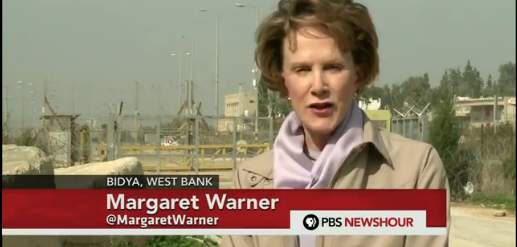
On the January 22 broadcast of the PBS NewsHour, correspondent Margaret Warner reported on the outcome of the Israeli elections. It told the same story as most other reports on the issue, trying to sort out the implications for Prime Minister Benjamin Netanyahu. Palestinians basically do not exist in the report; Warner makes one reference to ultra-right Israeli politician Naftali Bennett, who she says believes “the time for negotiating with the Palestinians is over.”
But what was most intriguing was a comment at the end of the piece, from anchor Gwen Ifill: “We will hear more from Margaret as she travels through Israel, the West Bank and Gaza over the next week and a half.”
That sounded like it could be be an interesting opportunity for TV viewers to get a glimpse of Palestinian life. But that’s not what PBS chose to put on the air.
The next installment (1/25/13) was also about the Israeli elections: “So, Margaret, a few days after the election, what kind of government seems to be taking shape?” asked anchor Jeffrey Brown. The emphasis was on Israeli society: “How divided does it feel politically and culturally?”
Warner explained that
the old divide used to be over how much and how to deal with the Arabs and the Palestinians in particular and whether to give land for peace. The new divide is very cultural, and it is between the ultra-orthodox religious and also the pro-settler nationalist movement, which aren’t the same.
Later on Brown asked Warner to explain what her reporting would be touching on. Warner explained that the big stories are “the Iranian nuclear program, the conflict in Syria, and the Israeli/Palestinian issue.” She added that, “of course, we have talked to a lot of Israelis. But, yesterday, for instance, we went up to the Golan Heights, which is, you know, land that the Israelis captured from the Syrians.” So Israelis one day, Israeli-occupied land the next day. Warner nonetheless promised “some textured stories next week that look at all three of those.”
The next report (1/28/13) was again about the Israeli elections–a look at the relationship between Netanyahu and Barack Obama, including their plan to deal with “the threat posed by Iran’s nuclear program.” Warner started in Israeli-occupied Golan Heights:
The sweeping vistas of the Golan Heights plateau and the bucolic life of the Israelis who live here bear quiet witness to the strategic importance of this area, which Israel captured from Syria during the 1967 Arab/Israeli war.
The report was entirely about how Israeli officials view the possibility of the Syrian war “spilling over” into the land they were occupying. Warner shifts the focus to include a look at Tel Aviv, where houses include safe rooms, and she recalled
the conflict last November,when radical Palestinian groups in Hamas-controlled Gaza fired rockets into Tel Aviv, sending residents scrambling to their shelters.
In Gaza, such safe rooms mostly do not exist; over 100 civilians were killed in those Israeli attacks.
At the end of the piece, anchor Gwen Ifill previewed the next installment: “Margaret’s next story looks at the debate in Israel over how to deal with the threat of a nuclear-armed Iran.”
And that’s exactly what viewers got on January 30, a report that started out with Warner’s unsubstantiated claims about an Israeli airstrike inside Syria, relying on what the Israeli and U.S. governments were saying. Warner also referred to how several nations were “concerned about Iran’s nuclear weapons program”–a false description of the state of Iran’s nuclear enrichment program, which has not been shown to be connected to any weapons program.
On January 31, Warner was back–with another report about what Israelis think of the world. Anchor Judy Woodruff offered this description:
Tonight, Margaret Warner, on assignment in the Middle East, reports on the growing debate within Israel about how much of a threat Iran really is.
The piece was an exploration of Iran from various Israeli perspectives–from those who see Iran as an “existential threat” to those who do not. Current and former military officials occupied much of the conversation. And Warner took a look at an Israeli emergency medical facility.
It wasn’t until the February 1 broadcast–in a series that was supposed to take viewers around Israel, the West Bank and Gaza–that viewers actually started hearing from Palestinians.
The report started with a furniture business in the West Bank, which used to do a lot of business with Israelis. “Then came the second Palestinian intifada, or uprising,” explained Warner, “that brought suicide bombings and terror to Israel.”
Had violence ever been “brought” to Palestinians in Gaza or the West Bank? Warner didn’t say.
And years later, this West Bank shopping district “has become a virtual ghost town.” Israelis and Palestinians are not hopeful about the future and are suspicious of each other. Warner makes a brief stop in Gaza, interviewing a Palestinian fisherman who used to work alongside an Israeli who lived in a Gaza settlement.
So what the PBS NewsHour gave viewers was the view from Israel–with a few moments at the end of the series to include Palestinian perspectives, never as subjects in their own right, but to illustrate a “divide” that exists on “both sides.”
On February 5, anchor Jeffrey Brown remarked, “All last week, Margaret Warner and a NewsHour team reported from Israel on many facets of its increasingly tense relations with its neighbors.” That is a far more accurate description of what PBS actually gave viewers.
Related articles
- PBS and Iran’s ‘Nuclear Weapons’
- PBS, NPR Try to Defend Iran Distortions
- Iran’s ‘Nuclear Weapons Program,’ Again
February 13, 2013 Posted by aletho | Deception, Ethnic Cleansing, Racism, Zionism, Mainstream Media, Warmongering, Timeless or most popular | Golan Heights, Gwen Ifill, Iran, Israel, Margaret Warner, Palestine, Zionism | Leave a comment
Jewish settler’s ‘bio-war’ against the ancient city of Sabastiya
International Solidarity Movement | February 12, 2013
Sabastiya, Occupied Palestine – Sabastiya is an ancient city located just 10 km north of Nablus, West Bank. It contains Canaanite, Israelite, Hellenistic, Herodian, Roman and Byzantine ruins as well as the tomb of John the Baptiste. The winding city streets along with its history make Sabastiya an ideal place to visit. Yet, as charming and beautiful as the old city is, the nearby Israeli settlement of Shafi Shamrom is making lives of Sabastiya’s residents very difficult: settlers uprooted olive trees, introduced wild boars into the environment to damage the land, and most recently, sewage has started leaking from the settlement flooding Palestinian fields.
In 2001 settlers uprooted and destroyed around 1000 olive trees, substantially damaging the land of several families. In 2006 the army put up a fence in an attempt to confiscate the land where the trees had originally been. Sabastiya’s farmers acted: they pulled the fence down in a defiant act of resistance and since that time there have been no further attempts to install it again.
The most recent and disturbing action on the part of illegal settlers of Shafi Shamron is pumping their raw, untreated sewage directly onto Palestinian fields. As the sewage is absorbed into the land, olive and apricot trees are rendered diseased and, according to the residents, “poisoned”. The flow of human waste begins from a pipe on the perimeter of the settlement, creating a sort of reservoir which then runs through the adjacent Palestinian fields, compelling each subsequent land owner to create a canal in order to drain the sewage water on to his neighbors land and further away.
Residents of Sabastiya are currently bringing legal action against Shafi Shamron in order to stop the settlement from dumping its sewage on Palestinian lands. The malodorous sewage running through the fields must remind a regular visitor of non-violent protests of a very effective strategy used by the army; the “skunk” water, which is chemical liquid smelling of excrement commonly sprayed on protesters. Settlers are evidently using a similar technique to make local residents’ lives even more difficult.
Related articles
- Farming Injustice (alethonews.wordpress.com)
- Resist the land grab: donate a tree (palsolidarity.org)
- Israel’s Colonial Terrorism: Settlers drench Palestinian land with wastewater (occupiedpalestine.wordpress.com)
- Israel must remove all Jewish settlers from occupied West Bank – UN inquiry (alethonews.wordpress.com)
February 13, 2013 Posted by aletho | Ethnic Cleansing, Racism, Zionism, Illegal Occupation | International Solidarity Movement, Israeli settlement, Palestine, West Bank, Zionism | Leave a comment
Featured Video
Strike Iran Again, Open Pandora’s Box | Brian McGlinchey
or go to
Aletho News Archives – Video-Images
From the Archives
Some Call It Conspiracy Theory – Part 1
BY IAIN DAVIS | SEPTEMBER 25, 2023
There are certain assumptions that are applied to anyone labelled a “conspiracy theorist”—and all of them are fallacies. Indeed, the term “conspiracy theory” is nothing more than a propaganda construct designed to silence debate and censor opinion on a range of subjects. Most particularly, it is used as a pejorative to marginalise and discredit whoever challenge the pronouncements and edicts of the State and of the Establishment—that is, the public and private entities that control the State and that profit from the State.
Those of us who have legitimate criticisms of government and its institutions and representatives, who are therefore labelled “conspiracy theorists,” face a dilemma. We can embrace the term and attempt to redefine it or we can reject it outright. Either way, it is evident that the people who weaponise the “conspiracy theory” label will continue to use it as long as it serves their propaganda purposes.
One of the most insidious aspects of the “conspiracy theory” fabrication is that the falsehoods associated with the term have been successfully seeded into the public’s consciousness. Often, propagandists need do no more than slap this label on the targeted opinion and the audience will immediately dismiss that viewpoint as a “lunatic conspiracy theory.” Sadly, this knee-jerk reaction is usually made absent any consideration or even familiarity with the evidence presented by that so-called “lunatic conspiracy theorist.”
This was the reason why “conspiracy theorist” label was created. The State and its propagandists do not want the public to even be aware of inconvenient evidence, let alone to examine it. The challenging evidence is buried under the “wild conspiracy theory” label, thereby signalling to the unsuspecting public that they should automatically reject all of the offered facts and evidence.
There are a number of components that collectively form the conspiracy theory canard. Let’s break them down. … continue
Blog Roll
-
Join 2,369 other subscribers
Visits Since December 2009
- 7,831,740 hits
Looking for something?
Archives
Calendar
Categories
Aletho News Civil Liberties Corruption Deception Economics Environmentalism Ethnic Cleansing, Racism, Zionism Fake News False Flag Terrorism Full Spectrum Dominance Illegal Occupation Mainstream Media, Warmongering Malthusian Ideology, Phony Scarcity Militarism Progressive Hypocrite Russophobia Science and Pseudo-Science Solidarity and Activism Subjugation - Torture Supremacism, Social Darwinism Timeless or most popular Video War Crimes Wars for IsraelTags
Afghanistan Africa AIPAC al-Qaeda Australia BBC Benjamin Netanyahu Brazil Canada CDC Central Intelligence Agency China CIA CNN Covid-19 COVID-19 Vaccine Donald Trump Egypt European Union Facebook FBI FDA France Gaza Germany Google Hamas Hebron Hezbollah Hillary Clinton Human rights Hungary India Iran Iraq ISIS Israel Israeli settlement Japan Jerusalem Joe Biden Korea Latin America Lebanon Libya Middle East National Security Agency NATO New York Times North Korea NSA Obama Pakistan Palestine Poland Qatar Russia Sanctions against Iran Saudi Arabia Syria The Guardian Turkiye Twitter UAE UK Ukraine United Nations United States USA Venezuela Washington Post West Bank WHO Yemen Zionism
Aletho News- Pentagon fails ninth financial audit in a row, unable to account for trillions in assets
- Russia rejects Danish plot claims, vows response to expulsion
- Study of 14,000 Children Links Vaccination to Higher Rates of Chronic Illness
- Strike Iran Again, Open Pandora’s Box | Brian McGlinchey
- ‘Revenge of Big Pharma’: 12 States Could Lose Religious Exemptions to Vaccination in 2027
- Brazil targeted by Western biopower
- B’nai B’rith UK’s bid to brand anti-Zionism as extremism
- ‘Same fraudulent script’: Iran slams US biological and chemical weapons claims as recycled Iraq-style deception
- Tom Friedman’s Deceptive Attempt to Lure Democrats to Escalate the Iran war
- Russia Warns of Response if Nuclear Deployment Limits Near Its Borders Are Lifted
If Americans Knew- An error has occurred; the feed is probably down. Try again later.
No Tricks Zone- Argentina’s Perito Moreno Glacier Joins Antarctica and Arctic In Defying Doomsday Melt Claims
- New Study: Barents Sea Temperatures Were Warmer And Sea Ice Less Extensive In The 1700s Than Today
- German Authorities Start Initiative To Evaluate Public Register For Climate “Disinformation” Spreaders!
- Zonal Asymmetry of Temperature Change in the Antarctic Circumpolar Current
- New Study: The Net Fossil Fuel Contribution To Rising Atmospheric CO2 Has Been Zero For 500 Years
- Germany’s Green Energy Transition Becoming Increasingly Expensive…Another 6 Trillion Euros!
- Sudden Stratospheric Warming, Powerful El Niño Combination May Lead To Extreme Europe Cold, Energy Crisis!
- Two New Studies Find Thwaites Glacier Melt Cannot Be Driven By Human Activity Or A Warming Ocean
- E-Cars Reduce CO2 Emissions By Only 41% Compared To Internal Combustion Engine Vehicles
- Predictions Made By Renowned Climate Professor Over Past Decades Have Been Proven To Be Poor
Contact:
atheonews (at) gmail.com
Disclaimer
This site is provided as a research and reference tool. Although we make every reasonable effort to ensure that the information and data provided at this site are useful, accurate, and current, we cannot guarantee that the information and data provided here will be error-free. By using this site, you assume all responsibility for and risk arising from your use of and reliance upon the contents of this site.
This site and the information available through it do not, and are not intended to constitute legal advice. Should you require legal advice, you should consult your own attorney.
Nothing within this site or linked to by this site constitutes investment advice or medical advice.
Materials accessible from or added to this site by third parties, such as comments posted, are strictly the responsibility of the third party who added such materials or made them accessible and we neither endorse nor undertake to control, monitor, edit or assume responsibility for any such third-party material.
The posting of stories, commentaries, reports, documents and links (embedded or otherwise) on this site does not in any way, shape or form, implied or otherwise, necessarily express or suggest endorsement or support of any of such posted material or parts therein.
The word “alleged” is deemed to occur before the word “fraud.” Since the rule of law still applies. To peasants, at least.
Fair Use
This site contains copyrighted material the use of which has not always been specifically authorized by the copyright owner. We are making such material available in our efforts to advance understanding of environmental, political, human rights, economic, democracy, scientific, and social justice issues, etc. We believe this constitutes a ‘fair use’ of any such copyrighted material as provided for in section 107 of the US Copyright Law. In accordance with Title 17 U.S.C. Section 107, the material on this site is distributed without profit to those who have expressed a prior interest in receiving the included information for research and educational purposes. For more info go to: http://www.law.cornell.edu/uscode/17/107.shtml. If you wish to use copyrighted material from this site for purposes of your own that go beyond ‘fair use’, you must obtain permission from the copyright owner.
DMCA Contact
This is information for anyone that wishes to challenge our “fair use” of copyrighted material.
If you are a legal copyright holder or a designated agent for such and you believe that content residing on or accessible through our website infringes a copyright and falls outside the boundaries of “Fair Use”, please send a notice of infringement by contacting atheonews@gmail.com.
We will respond and take necessary action immediately.
If notice is given of an alleged copyright violation we will act expeditiously to remove or disable access to the material(s) in question.
All 3rd party material posted on this website is copyright the respective owners / authors. Aletho News makes no claim of copyright on such material.