Obama’s Israel Trip
Ignore the hype. It’s four more years of settlement growth
By Jonathan Cook | Dissident Voice | February 25th, 2013
NAZARETH — Israeli and Palestinian officials have been in Washington laying the ground for President Barack Obama’s visit to Israel and the West Bank, scheduled for next month and the first since he took office four years ago.
Topping the agenda, Israeli Prime Minister Benjamin Netanyahu has said, will be efforts to restart the long-stalled peace process. Last week Palestinian officials said they had urged the White House to arrive with a diplomatic plan.
The US president began his first term on a different footing, ignoring Israel and heading instead to Cairo where he made a speech committing the US to a new era in relations with the Arab world. Little came of the promise.
Now he apparently intends to start his second term — as Netanyahu resumes office too, following last month’s elections — with an effort to engage with Israel and the Palestinians that is almost as certain to prove an exercise in futility.
The prospect of reviving the peace track between Israel and the Palestinians is not one that is appetising for either Obama or Netanyahu. Both are bruised from locking horns over a settlement freeze — the key plank of the US president’s efforts — during his first term.
But equally, it seems, the price of continuing inaction is high too. The Palestinians have repeatedly embarrassed Obama at the United Nations, not least by isolating the US in November as it opposed an upgrade in the Palestinians’ observer status. Inertia also looks risky given the growing unrest in the West Bank over hunger-striking prisoners.
Ahead lie potentially even bigger headaches, including the doomsday scenario — from Israel and Washington’s perspective — that the Palestinians approach the International Criminal Court to demand Israel be investigated for war crimes.
The perennial optimists have been searching for signs that Obama is readier this time to get tough. Neither of the president’s recent major appointments — John Kerry as secretary of state and Chuck Hagel, nominated as defence secretary — has been welcomed in Israel.
US determination has been buoyed, it is argued, by what is seen as a tide change in Israeli public opinion, highlighted by the surprise electoral success of centrist Yair Lapid and relatively poor showing by Netanyahu’s Likud party.
Netanyahu’s officials sense similar motives, complaining that Obama’s visit so soon after the election is direct “interference” in coalition-building. The centrists, they fear, will be able to extract concessions from Netanyahu, who will not wish to greet the US president as head of an extremist government.
Israeli officials, meanwhile, look eager to mend fences: they have hopefully codenamed the visit “Unbreakable Alliance” and announced an intention to award Obama Israel’s highest honour, the presidential medal.
The more hopeful scenarios, however, overlook the obstacles to a diplomatic solution posed both by Israel’s domestic politics and by the Palestinians’ inability to withstand Israeli bullying.
Not least, they ignore the fact that Netanyahu’s Knesset faction is the most right-wing in Likud’s history. He cannot advance a peace formula — assuming he wanted to — without tearing apart his party.
Equally, there is nothing in Lapid’s record to indicate he is willing to push for meaningful compromises on Palestinian statehood. On this issue, he occupies the traditional ground of Likud, before it moved further right. A recent poll found half his supporters called themselves right-wing.
Last week Netanyahu signed a coalition pact with another supposed centrist, Tzipi Livni, a former Likud leader who now heads a small faction called Hatnuah. The goal, as one Likud official cynically put it, was to use Livni to “whitewash the Netanyahu government in the world’s eyes”.
In other words, Netanyahu hopes a Livni or a Lapid will buy him breathing space as he entrenches the settlements and pushes Palestinians out of large areas of the West Bank under cover of what the Israeli newspaper Haaretz termed a “booby-trapped diplomatic process”.
What of the Palestinians? Will they not be able to mount an effective challenge to Israeli intransigence, given an apparent renewed US interest in diplomacy?
Here is the rub. Netanyahu already has a stranglehold on the politics of his potential peace partners. He can easily manipulate the fortunes of the Palestinian leader Mahmoud Abbas on the two biggest tests he faces: the “peace process” overseen by the international community, and reconciliation talks with the rival Palestinian faction Hamas.
The latest talks between Hamas and Fatah broke down in Cairo this month, even though unity, in the view of most Palestinians, is a precondition of their seeking viable statehood. The talks’ failure followed the “arrest” by Israel of 25 Hamas leaders in the West Bank, seizures that Palestinian human rights groups and Hamas warned were intended to disrupt reconciliation.
Meanwhile, Israel has repeatedly undermined Abbas’s rule, and kept his PA close to collapse, by turning on and off one of its major sources of income — tax monies Israel regularly collects on behalf of the Palestinians and is supposed to pass on.
As a result, Abbas is trapped between various pressures impossible to reconcile: the need to keep Israel happy, to maintain legitimacy with his own people and to foster a shared political agenda with other Palestinian factions.
The sticks that Israel wields force Abbas to keep the door open to negotiations even as most Palestinians recognise their utter pointlessness. Likewise, his constant need to appease Israel and the US serves only to widen differences with Hamas.
The Palestinians are stuck in a political and diplomatic cul-de-sac, unable to move forward either with the development of their national struggle or with talks on viable statehood. Whatever Obama’s intentions, the reality is that this will be another four years of diplomatic failure.
Jonathan Cook is a writer and journalist based in Nazareth, Israel. He won this year’s Martha Gellhorn Special Prize for Journalism.
Israeli court extends remand of Issawi’s brother

Shireen, Samer and Shadi Issawi
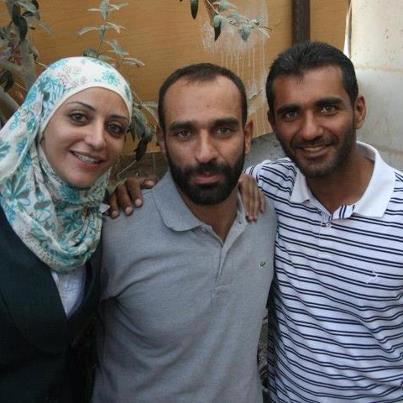
Palestine Information Center – 25/02/2013
RAMALLAH — The Israeli Magistrate Court in occupied Jerusalem extended on Sunday the remand of Shadi Issawi, the brother of hunger striker Samer Issawi, and did not allow him to see his lawyer.
Shireen Issawi, the sister of Shadi and a lawyer, said that the arrest of Shadi and extending his remand fell in line with pressures on Samer to end his seven months hunger strike.
She charged the Israeli occupation authorities (IOA) with targeting all members of Samer’s family, recalling that the IOA razed the home of her third brother Rafat at the start of the year and cut water supplies to her family home in addition to detaining her and her fourth brother Firas for a period of time.
Related articles
- Shireen Al-Issawi: PA did not take prisoners’ issue to the UN (alethonews.wordpress.com)
- Samer Issawi sentenced to 8 months in prison (alethonews.wordpress.com)
Minister: Autopsy shows torture killed Jaradat
Ma’an – 25/02/2013
BETHLEHEM – An autopsy has revealed that Arafat Jaradat died of extreme torture in Israeli custody and did not have a cardiac arrest, the PA Minister of Detainee Affairs said Sunday.
At a news conference in Ramallah, Issa Qaraqe said an autopsy conducted in Israel in the presence of Palestinian officials revealed that 30-year-old Jaradat had six broken bones in his neck, spine, arms and legs.
“The information we have received so far is shocking and painful. The evidence corroborates our suspicion that Mr. Jaradat died as a result of torture, especially since the autopsy clearly proved that the victim’s heart was healthy, which disproves the initial alleged account presented by occupation authorities that he died of a heart attack,” Qaraqe said.
A spokeswoman for Israel’s Prison Authority said Saturday that Jaradat had apparently died of cardiac arrest in Megiddo prison. An emergency service team had tried to resuscitate him but failed, she said.
Qaraqe described the claim as a fabrication and called for a committee to investigate those responsible for Jaradat’s death.
The minister said Jaradat had sustained injuries and severe bruising in the upper right back area and severe bruises of sharp circular shape in the right chest area.
The autopsy revealed evidence of severe torture and on the muscle of the upper left shoulder, parallel to the spine in the lower neck area, and evidence of severe torture under the skin and inside the muscle of the right side of the chest. His second and third ribs in the right side of the chest were broken, Qaraqe said, and he also had injuries in the middle of the muscle in the right hand.
Jaradat’s heart was in good condition and there were no signs of bruising or stroke, the minister added.
Israel’s Health Ministry said the injuries found in the autopsy could have been caused by the medical emergency team’s efforts to resuscitate Jaradat.
“These initial findings are not enough to determine the cause of death,” the Israeli ministry said, adding that further test results were not yet in. An Israeli police spokesman said the investigation into Jaradat’s death was still ongoing.
Qaraqe’s deputy, Ziyad Au Ain, urged any doctors, including Israeli doctors, who doubted that Jaradat was tortured to death to view his body in Al-Ahli Hospital in Hebron.
“Jaradat died due to torture and not a stroke or heart attack,” he said, adding that those responsible must be sued either through Interpol or the International Criminal Court.
Palestinian Prisoners Society president Qaddura Fares added that the autopsy revealed seven injuries to the inside of Jaradat’s lower lip, bruises on his face and blood on his nose.
After the autopsy, Jaradat’s body was transferred to the Palestinian Red Crescent at the Tarqumiya crossing west of Hebron, and taken to the Al-Ahli Hospital. He will be buried on Monday in his hometown Sair.
Jaradat’s lawyer Kameel Sabbagh said he was tortured by Israeli interrogators.
Sabbagh, who works for the prisoners ministry, was present at Jaradat’s last hearing on Thursday, which an Israeli judge postponed for 12 days.
“When I entered the courtroom I saw Jaradat sitting on a wooden chair in front of the judge. His back was hunched and he looked sick and fragile,” Sabbagh said in a statement Sunday.
“When I sat next to him he told me that he had serious pains in his back and other parts of his body because he was being beaten up and hanged for many long hours while he was being investigated
“When Jaradat heard that the judge postponed his hearing he seemed extremely afraid and asked me if he was going to spend the time left in the cell. I replied to him that he was still in the investigation period and this is possible and that as a lawyer I couldn’t do anything about his whereabouts at this time.”
Sabbagh said Jaradat’s psychological state was very serious and that he informed the judge his client had been tortured. The judge ordered that Jaradat should be examined by the prison doctor but “this didn’t happen,” the lawyer added.
On Sunday, thousands of Palestinians protested the death across the West Bank and Gaza, and at least two protesters were injured by live fire in clashes with Israeli forces, including the 13-year-old son of a Preventive Security officer.
Dozens more were injured by rubber-coated bullets.
An Israeli military spokeswoman said soldiers used riot dispersal means against Palestinians hurling rocks at security forces.
Two residents from Burin arrested overnight: confrontations follow
ISM Media Group | Aletho News | February 25, 2013
Mahmoud Nasser Asaus (17) and Magdi Loai Najjar (24) were arrested last night by Israeli forces in the village of Burin and are now being held in Kishon Interrogation Centre in Haifa. Residents of Burin suspect this is the start of a wave of arrests following the Al-Manatir protest that took place In Burin at the beginning of February.
Several jeeps entered Burin at around 2.30am to raid Mahmoud and Magdi’s houses, taking them, handcuffed and blindfolded, to Huwwara military base. At 7am this morning they were transferred to Kishon Interrogation Centre where they are still being held.
These arrests come after the neighbourhood of Al-Manatir was established on a village’s hilltop threatened with confiscation by Israeli settlers. The protest camp was aimed at denouncing Israel’s grab of Burin’s land and to recover the hilltop which has been inaccessible for residents of Burin since 2007.
However, the neighbourhood of Al-Manatir, made up of metal huts and tents, was violently evicted by Israeli soldiers and border police on the same day it was established. Israeli forces protected and accompanied settlers from the nearby settlements of Bracha and Yitzhar; while they were stealing metal huts and throwing stones at Palestinian activists. Simultaneously, around twenty settlers attacked several Palestinian homes on the outskirts of Burin and chopped down one hundred olive trees. When Palestinians ran to the area to defend their homes, stone throwing between settlers and Palestinians ensued. Zakaria Najjar (17), was shot in the right leg with live ammunition by a settler.
During the eviction, eight people were arrested and three of them remained in Israeli prison for twelve days, finally being released without charges. Further reprisals took place in Burin the days following Al-Manatir. Ghassan (23) and Mohammed (19) Najjar were arrested for several hours and interrogated about the protest camp. In addition, the village was sealed off by military checkpoints. The hilltop continues to be inaccessible for residents of Burin.
Following last night’s arrests there have been further incursions into the centre of Burin today. The Israeli army again tried to raid the village resulting in confrontations that began at around midday. Tear gas and rubber coated steel bullets were fired directly into the gathering crowd; as yet no serious injuries have been reported. A further arrest was made by the Israeli authorities, Bahar Adnan Imran who is just 14 years old.
Related articles
- Israeli troops force out 200 from camp (morningstaronline.co.uk)
- Israeli Settlers Attack Palestinian Shepherds In Nablus, Hebron (imemc.org)
Lawyer: “Prior To His Death, Detainee Complained Of Pain Due To Ongoing Interrogation”
By Saed Bannoura | IMEMC & Agencies | February 24, 2013
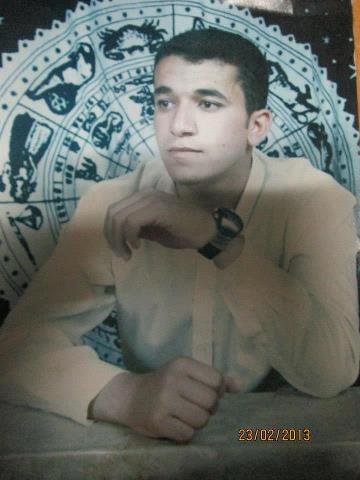 Attorney Kamil Sabbagh, who represented detainee Arafat Jaradat, who died Saturday at an Israeli interrogation facility, stated that Jaradat complained to him of sharp pain due to ongoing and extensive interrogation.
The lawyer said that he represented Jaradat during a court session that was held Thursday February 21.
The court session was the first time the detainee was able to see a lawyer since the army kidnapped him more than 12 days ago. The hearing was held at the Al-Jalama detention and interrogation center.
Sabbagh said that Jaradat complained of sharp pain in the back, and several other parts of his body. Jaradat told his lawyer that he was interrogated for several hours, every day, and repeatedly complained of sharp pain but was never seen by a physician.
The lawyer said that, during the court hearing, he told the military judge about the complaints made by Jaradat, and that the judge instructed the prison administration to grant him the needed medical attention, but the request was apparently ignored.
During the court hearing, the judge ordered Jaradat under interrogation for an additional 12 days.
Following the death of Jaradat on Saturday, several Israeli media agencies claimed that the detainee suffered a heart attack that led to his death.
Palestinian Minister of Detainees, Issa Qaraqe’, held Israel responsible for the death of Jaradat, and said that the detainee died only six days after the army kidnapped him on February 18.
Qaraqe’ demanded forming an international committee to investigate the death of Jaradat, and held Israel responsible for the lives of Palestinian detainees on hunger strike demanding an end to their illegal detention.
Hundreds of Palestinians held a protest in front of the home of Jaradat and chanted slogans against the Israeli occupation, Israel’s ongoing violations and attacks, and chanted for more solidarity with all Palestinian political prisoners held by Israel.
Protests have also been reported in different parts of the occupied territories.
Israel instructs Obama: “Iranian and Syrian sanctions are not painful enough!”
… impose an international blockade now!
By Franklin Lamb | Al-Manar | February 23, 2013
On 3/26/2013 Iran is expected to meet other world powers in Astana, Kazakhstan to discuss its nuclear program. Discussions that the occupiers of Palestine fervently hope will not be successful. It is toward this end that their key demand this week to the US Congress, the White House and the European Union is “to cast responsibility on the Iranians by blaming them for the talks’ failure in the clearest terms possible.”
According to the Al-Monitor of 3/19/13, Israel also demands that the countries meeting in Kazakhstan “make it perfectly clear that slogans such as ‘negotiations can’t go on forever’ are their marching orders to the White House, and they want the Kazakhstan attendees to act “so severely that the Iranians realize that they face a greater threat than just Israeli military action.” “The message must be that this time the entire west, behind Israel’s leadership, is contemplating the launch of a massive military action.” Unsaid is that “the entire West” is expected to confront Iran militarily while Tel Aviv’s forces will mop up Hezbollah, Hamas, Islamic Jihad and Syria if necessary.
Pending the above arrangements, Israel this week is further demanding that the Obama White House issue another Executive Order dramatically ratcheting up the US-led Sanctions against Iran and Syria while it prepares for a hoped for “game changing international economic blockade, including no-fly zones enforced by NATO”.
To achieve yet another layer of severe sanctions, and at the behest of AIPAC, a “legislative planning” meeting was called by Congressman Eliot Engel, who represents New York’s 17th District (the Bronx) and who is the Ranking Member of the House Foreign Affairs Committee, and Rep. Ros-Lehtinen (Florida’s 27th District), Chair of the House Subcommittee on the Middle East and North Africa. The session was held in a posh Georgetown restaurant and participants included representatives from AIPAC, Israel, Saudi Arabia and Bahrain plus half a dozen Congressional staffers.
Congressman Engel has co-sponsored virtually every anti-Arab, anti-Islam, anti-Palestinian, anti-Iran, and anti-Syrian Congressional broadside since he entered Congress a quarter-century ago. His campaign literature last fall stated: “I am a strong supporter of sanctions against those who repeatedly reject calls to behave as responsible nations. [Israel excepted-ed]. I have authored or helped author numerous bills which have been signed into law to impose sanctions against rogue states including Iran and Syria.” Ros-Lehtinen and Engel led all members with AIPAC donations on the House side in last fall’s Congressional elections. They are ranked number one and two respectively as still serving career recipients of Israel-AIPAC’s “indirect” campaign donations.
Some Congressional operatives accuse Rep. Ros-Lehtinen of being a bit lazy and neglecting the bread and butter needs of her Florida constituents. But others argue that it depends on which constituents one has in mind. Her election mailings and her Congressional website claim that the Congresswoman “led all Congressional efforts tirelessly to generate votes to block what she views as anti-Israel resolutions offered at the former UN Commission on Human Rights.”
A big fan of US-led sanctions against Iran and Syria, Rep. Ros-Lehtinen introduced the Iran Freedom Support Act on January 6, 2005, which increased sanctions and expanded punitive measures against the Iranian people until the Iranian regime has dismantled its nuclear plants. Rep. Ros-Lehtinen also introduced H.R. 957, the Iran Sanctions Amendments Act, which she claims “will close loopholes in current law by holding export credit agencies, insurers, and other financial institutions accountable for their facilitation of investments in Iran and sanction them as well.” In addition, H.R. 957 seeks to impose liability on parent companies for violations of sanctions by their foreign entities. She also co-sponsored H.R 1357 which requires “U.S. government pension funds to divest from companies that do any business with any country that does business with Iran.” Her campaign literature states that, “She was proud to be the leading Republican sponsor of H.R. 1400, the Iran Counter-Proliferation Act. This bill applies and enhances a wide range of additional sanctions.”
In addition, last year Illeana introduced H.R. 394, which enlarges US Federal Court Jurisdiction regarding claims by American citizens their claims in U.S. courts. Unclear is whether she realizes that one consequence of her initiative would be to open even wider US courtroom doors to Iranian-Americans and Syria-Americans who today are being targeted and damaged by the lady’s ravenous insatiable craving for civilian targeting economic sanctions.
But Ileana and Elliot appear to be fretting.
So is Israel.
The reasons are several and they include the fact that the US-led sanctions have failed to date to achieve the accomplishments they were designed to produce. These being to cripple the Iranian economy, provoke a popular protest among the Iranian people over inflation and scarcity of food and medicines, weaken Iran as much as possible before adopting military measures against it, and, most essentially, achieving regime change to turn the clock back to those comfortable days of our submissive, compliant Shah.
Zionist prospects for Syria aren’t any better at the moment. Tel Aviv’s [schemes] to intimidate the White House into invading Syria have not worked. Plan A has failed miserably according to the Israeli embassy people attending the Engel-Ros Litinen’s informal confab. Neither did the “how about we just arm the opposition” plan that originated last year with David H. Petraeus and was supported by Hillary Clinton while being pushed by AIPAC. The goal was to create allies in Syria that the US and Israel could control if Mr. Assad was removed from power. Moreover, the White House believes that there are no good options for Obama. It has vetoed 4 recent Israeli proposals including arming the rebels and is said to believe that Syria is already dangerously awash with “unreliable arms.”
The recent shriveling in Israeli prospects for a dramatic Pentagon intervention in Syria reflect White House war weariness. And also Israel’s predilection to bomb targets itself in Syria, as it did recently to assassinate a senior Iranian officer in the Quds force of the Revolutionary Guards, Gen. Hassan Shateri. Contrary to the false story that Israel attacked a missiles convoy, some unassembled equipment was damaged but that was not the primary target according to Fred Hof, a former U.S. State Department official. Gen. Shateri was.
Making matters worse for Tel Aviv, the Israeli military is reportedly becoming skittish due to its deteriorating political and military status in the region and its troops have recently completed subterranean warfare drills to prepare them for a potential clash with Hezbollah in southern Lebanon, the Jerusalem Post reported on 2/20/13. “Today during training, we simulated a northern terrain, that included what we might encounter,” Israeli Lt. Sagiv Shoker, commander of a military Reconnaissance Unit of the Engineering Corps, based at the Elikim base in northern Israel near the border with Lebanon explained. Shoker added that his units spent a week focused on how to approach Hezbollah’s alleged underground bunkers and tunnels in South Lebanon and the Bekaa Valley quietly and quickly. Israeli forces commander Gantz has been complaining recently to the Israeli cabinet that Hezbollah Special Forces are gaining much valuable experience in Syria fighting highly skilled and motivated al Nusra jihadists and his troops may not be prepared to face them on the battlefield if a conflict erupts. It has been known since 2006 that Israeli soldiers “are having motivation deficits” as Gantz and others have complained.
Palestinians clash with Israeli troops across the West Bank
Ma’an – 23/02/2013
RAMALLAH – Clashes erupted across the West Bank after the Friday prayers between Israeli troops and Palestinian protesters who rallied to show solidarity with hunger-striking Palestinian prisoners.
Dozens were hurt as Israeli soldiers fired tear gas heavily to disperse the protesters.
Similarly, worshipers in Al-Aqsa Mosque in Jerusalem demonstrated in the compound after the Friday prayer before Israeli troops broke into the squares and clashed with the protesters.
According to Israeli radio station Reshet Bet, Israeli soldiers fired stun grenades to disperse the worshipers. The report highlighted that demonstrations started near the Moroccan Gate through which the soldiers stormed the compound and started to chase protesters.
In Ramallah in the central West Bank, 12 young men were hurt by tear gas and rubber-coated bullets during clashes with Israeli troops after the Friday prayers. Locals told Ma’an that the soldiers detained one Palestinian. The sources highlighted that the Friday prayer was performed near the main gate of Ofer detention center west of Ramallah.
They said about 100 Palestinians preformed Friday prayers near Ofer before Israeli soldiers showered them with tear gas as soon as they finished prayer.
As a result young men started to hurl stones at the soldiers and police officers. A Ma’an reporter said the soldiers directed their tear gas to journalists who gathered in the area to report about the event. He added that the soldiers fired live ammunition at a car for journalists, but nobody was hurt.
Further clashes took place in al-Arrub and al-Fawwar refugee camps in Hebron district.
Witnesses said young Palestinian men in al-Arrub camp north of Hebron pelted Israeli soldiers with stones. Clashes erupted first at the main entrance to the camp on the main road between Hebron and Bethlehem. Then the clashes extended to camp’s alleys resulting in more victims of tear gas as some canisters fell inside houses.
One owner of these houses was identified as Nayif Nimir al-Badawi. Four people were hurt by tear gas. Three others were hurt in house of Khamis Awad al-Badawi.
Israeli forces shut down the main entrance to al-Fawwar camp north of Hebron after young men hurled stones at Israeli soldiers. The soldiers responded with tear gas before they closed the main entrance to traffic.
In Tulkarem in the northern West Bank young Palestinians clashed with Israeli troops in the western part of the city. Soldiers fired tear gas as the young protesters pelted them with stones. The clashes erupted after hundreds of young men rallied after the Friday prayer chanting slogans against Israel’s treatment to Palestinian prisoners.
The northern West Bank city of Jenin also witnessed confrontations between young Palestinians and Israeli soldiers after the Friday prayer. Nine Palestinians were detained during the clashes and dozens were hurt by tear gas and rubber-coated bullets.
Jenin’s clashes started after young men marched from mosques toward al-Jalama checkpoint expressing solidarity with hunger striking Palestinian prisoners. A Ma’an reporter said Israeli forces fired hundreds of tear gas canisters at the protesters in addition to rubber-coated bullets and foul smelling liquids.
Local and security sources told Ma’an that Israeli soldiers detained nine young men. The sources identified one detainee as 14-year-old Amir Majid Irqawi. They said the soldiers assaulted him beating him brutally before he was detained.
Related article
Bedouin communities near Qalqiliya isolated by Israel and facing school demolition
International Solidarity Movement | February 22, 2013
Nablus, Occupied Palestine – The small Bedouin communities of ‘Arab Ramadin al-Janubi and ‘Arab Ab Farda lie south of Qalqilya between the apartheid wall and the green line,close to the illegal settlement Alfe Menashe. They are separated from the rest of West Bank from all sides by the Israeli apartheid wall. The communities, founded by people deported from areas in Negev and Netanya during and after the Nakba are today home to around 500 people. They suffer from multiple restrictions imposed by the Israeli authorities,including no permissions for new buildings or expansion of existing buildings, and limits to the amount of food and gas allowed for sale in the communities.
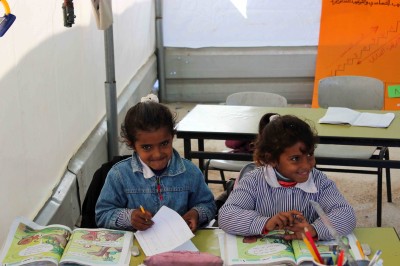
Bedouin girls at school
Access to the communities is limited by Israel with a permission system. The system of access permissions has effectively resulted in the social isolation of the communities, as people from the city of Qalqilya and neighboring villages face difficulties in obtaining permits for visiting the area.
The community of Abu Farda has no access to running water or electricity, and thus water has to be bought in tanks from the village of ‘Azzun. There is a well on the grounds of the village, but the illegal settlement Alfe Menashe has confiscated the well and closed access to it for the inhabitants of Abu Farda. People from the family Fayez living in Abu Farda told us:
“The lack of electricity is a big problem, as we are not able to refrigerate food bought from merchants or the yogurt and milk we produce ourselves for sale, and our children are not able to do their homework after dark due to lack of lighting.”
Furthermore, the Israeli authorities do not allow veterinaries access to the villages, while the village is largely dependent on the raising of livestock.
In October 2012 the community of Ramadin al-Janubi founded a school for 6 to 8 year old children. The new school gives it’s 25 students the opportunity to go to school without having to pass daily through the Israeli checkpoints between the community and a school in the nearby village of Habla. Children older than 8 years still have to go to school outside the community, and in order to reach their schools and go back home they need to cross the Israeli checkpoints twice every single day.
The school in Ramadin, consisting of 4 tents, received a demolition order from the Israeli authorities after two weeks of operation. The faculty of the school live in Qalqilya and have to spend from 30 minutes to over an hour every day passing through the checkpoint and having their papers and belongings examined by the IOF forces at the checkpoint in order to access the school. For now, the village has taken the demolition order to court, and is waiting to for the court hearings to take place.
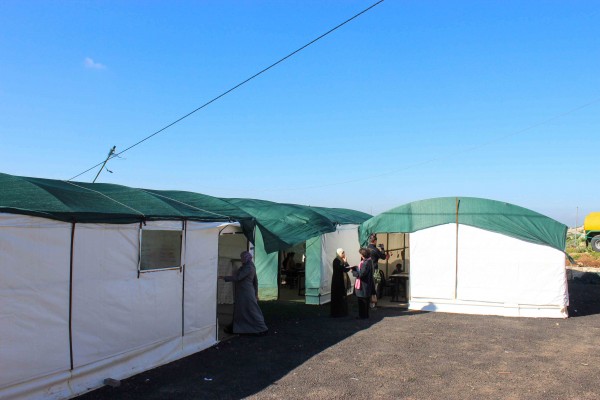
Bedouin school tents with demolition order
Related articles
- Palestinians’ Life in the Shadow of the Barrier Wall (alethonews.wordpress.com)
- West Bank: Aid agencies tread gingerly in Area C (alethonews.wordpress.com)
- Qalqiliya flooding exacerbated by separation wall (altahrir.wordpress.com)
- Israel to demolish Palestinian neighborhood (altahrir.wordpress.com)
Britain’s UKIP – another Zionist lobby tool
Is the UK Independence Party planning to free us from the EU and handcuff us to Israel?
By Stuart Littlewood | Salem-News | February 22, 2013
The main aim of the United Kingdom Independence Party (UKIP) is withdrawal from the European Union. A ComRes poll for the Independent on Sunday and the Sunday Mirror puts UKIP in third place on 14 per cent, well ahead of the Liberal Democrats.
A few weeks ago YouGov, with the European Parliament in mind and using two different methods, put support for UKIP at between 17 per cent and 19 per cent. So, the Conservatives are under pressure while the Liberal Democrats (on a measly 8 per cent) are set to lose badly.
Spouting Israeli propaganda
After 20 years and eight leader changes UKIP still has no seat in the British Parliament, but with 12 seats in the European Parliament it is now a force to be reckoned with, and the Zionists in their determination to cover all bases appear to have infiltrated the leadership core. It is no longer the likable anti-European Union protest party it used to be.
In its foreign affairs policy statement “Out of the EU, into the world”, UKIP says it
fully supports the right of Israel to exist as a Jewish state… Israel is surrounded by hostile states committed to its destruction. The tiny state has been the frequent victim of rocket attacks and suicide bombings from terrorist groups, almost all deliberately targeting civilians. Israel has every right to respond with proportionate force to these attacks, and a UKIP government would do the same were Britain similarly threatened.
UKIP rejects the notion that Israel should be punished through sanctions or cancellation of trade deals (such as the EU-Israel Association Agreement) for defending itself from attack.
UKIP urges Israel to adopt a lasting solution based on a political dialogue and not just military strength…
UKIP wishes to see a peaceful and mutually amicable settlement reached between Israel and the Palestinians. It is not for us to set the terms for these talks, nor the boundaries for any peace deal. This is an issue the Israelis and Palestinians must work out between themselves…
This stuff reads like it was written in Tel Aviv by the regime’s chief spin-master, Mark Regev himself. There’s no acknowledgement that the Palestinians have suffered illegal occupation, dispossession and ethnic cleansing for the last 65 years and they too are entitled to defend themselves. As for “political dialogue”, what does UKIP think has been going on for decades to no avail? Notice they don’t mention law and justice as the path to a solution, don’t demand due process nor an end to the illegal occupation of the West Bank and the blockade of Gaza, nor require compliance with those countless UN resolutions. They’re just happy for the oppressor and the oppressed to carry on arguing, one with a gun to the other’s head, with no prospect of a just peace.
Are they really too thick to understand there can be no peace under occupation?
The same policy document says UKIP believes a nuclear Iran would be unacceptable, and they’d support efforts to eliminate its nuclear weapons capability “by targeted military means” if necessary. UKIP conveniently ignores the fact that Israel possesses hundreds of nuclear warheads (and the means to deliver them), menaces the whole region and beyond, and defies calls to sign up to the Nuclear Non-Proliferation Treaty and place all its nuclear facilities under comprehensive International Atomic Energy Agency safeguards.
What part of Article 2 of the EU-Israel Association Agreement does UKIP not understand?
Rejecting calls for the suspension of trade deals such as the EU-Israel Association Agreement is further evidence of UKIP’s woeful ignorance. The purpose of the agreement is to promote (1) peace and security, (2) shared prosperity through, for example, the creation of a free trade zone, and (3) cross-cultural rapprochement. It governs not only EU-Israel relations, but Israel’s relations with the EU’s other Mediterranean partners, including the Palestinian National Authority. To enjoy the association’s privileges Israel undertook to show “respect for human rights and democratic principles” as set out as a general condition in Article 2, which says:
Relations between the Parties, as well as all the provisions of the Agreement itself, shall be based on respect for human rights and democratic principles, which guides their internal and international policy and constitutes an essential element of this Agreement.
Note that “respect for human rights and democratic principles” is an essential element – not optional.
The clause allows steps to be taken to enforce the contractual obligations regarding human rights and to dissuade partners from pursuing policies and practices that disrespect those rights. The agreement also requires respect for self-determination of peoples and fundamental freedoms for all.
Honourable politicians would have enforced Article 2, insisted on the observance of all other codes of behaviour and not let matters slide. They would have suspended Israel’s membership until the regime complied 100 per cent. Israel relies heavily on exports to Europe so the EU could, at a stroke, end the brutal occupation, murder and land theft, and resolve the problem in the Holy Land.
Bristling with lies and distortions
UKIP’s leadership has also decided that the party needs a “Friends of Israel” fan club. I include the mission statement http://foi-ukip.org/mission/ in full for its sheer entertainment value to those who know the truth about the situation in the Holy Land:
The State of Israel remains to date the only liberal democracy in the Middle East. It is also the world’s only Jewish state, surrounded and largely unrecognized by 21 Arab nations.
Despite constant assault from within and without, Israel has maintained an impeccable human rights record and remains the only country in the Middle East to extend full civil and political rights to all of its citizens, regardless of race or religion. Yet somehow it is cast as the oppressor, vilified as an “apartheid state” and singled out for disproportionate criticism.
Decades of malicious propaganda campaigns have seen to it that a one-sided historical narrative which portrays the Palestinians as blameless victims now successfully masquerades as reality. Little attention is paid to the fact that an independent Palestinian state has existed under the name of Jordan since 1946, and that the Palestinian leadership has consistently rejected a two-state solution whenever it has been offered, choosing instead to resort to terrorism.
The State of Israel, like all nation-states, has three fundamental rights which must be championed by freedom-loving people the world over: the right to exist, the right to secure borders, and the right to defend itself. In addition, it must also be allowed to preserve its unique Jewish character if it is to remain a safe-haven for Jews in a part of the world where violent anti-Semitism is still rife.
The purpose of Friends of Israel in UKIP is to support Israel’s right to exist as a viable, sovereign homeland for the Jewish people, and to oppose attempts to discredit, dissolve or damage it. FOI in UKIP does not seek to proffer a solution to the Arab-Israeli conflict, but rather to promote an impartial understanding of the issues by providing a counter-balance to the anti-Zionist rhetoric which currently dominates the debate.
Of course, friendship is more than mere political advocacy. FOI in UKIP will also seek to foster links with the Israeli government and people in order to provide an avenue for the discourse and meeting of minds which cement true friendship.
Doesn’t this just bristle with lies and distortion? UKIP’s leader, Nigel Farage, has been described by the Jewish Chronicle as “a good friend of Israel”. The party’s secretary, Michael Zuckerman, is the one who set up Friends of Israel. “There is tremendous support for Israel within UKIP,” Zuckerman told the Jewish Chronicle. The group has the backing of party leader Farage and others among their MEPs, he said.
The objectives of UKIP’s FoI include organizing delegations to Israel; ensuring that UKIP has “a fully informed” foreign policy (no joking); providing UKIP’s elected representatives with information relevant to Britain and Israel’s mutual security concerns (imagine the Zio-nonsense being circulated); and ensuring Israel gets a fair hearing in all forums in which UKIP is represented. Clearly UKIP, or at least those members who provide “tremendous support” to its Israel admiration society, are expected to act as agents for that foreign power.
As disenchantment with the corrupt, extravagant and unaccountable EU continues to grow, UKIP is the only party with a clear intention to bring us out. With its cluster of MEPs, UKIP is targeting local (county council) elections this year, and hoping to profit in the European parliamentary elections next year and the UK general election in 2015.
Fascists, racists and psychopaths
But UKIP is tainted with the extremism of groups to which it has become affiliated within the European Parliament, such as the odious EFD (Europe of Freedom and Democracy), which Farage co-chairs. Given this gruesome alliance, linking up with the racist psychopaths in Tel Aviv is no doubt seen as a “good fit”. It is obvious when listening to remarks by some of the leading lights of the EDF, for example Bastiaan Belder (Netherlands) who chairs the Delegation for Relations with Israel and sits on the Foreign Affairs Committee, that they have swallowed the Israeli propaganda narrative hook, line and sinker and still think the Palestinians are the terrorists.
I hear that if a UKIP MEP refuses to sit alongside those obnoxious EFD people he/she face disciplinary action.
More than likely, voters who are planning to tick UKIP’s box next time they go into a polling booth – and indeed many of the party’s members and activists – are unaware of this dark and dangerous side to the UK Independence Party. UKIP started life with the right idea but sadly has fallen into the wrong hands, like all the others.
Note
At the time of filing this article I found access to UK FoI’s mission statement blocked. Maybe it’s temporary. Maybe they’re feverishly rewriting it.
Israel to drill for oil in Syria’s Golan
Al-Akhbar | February 21, 2013
Israel has awarded its first license to drill for oil on the occupied Golan Heights to a US energy company, industry sources said on Thursday.
Israel captured the Golan from Syria in the 1967 Middle East war and annexed it in a move not recognized internationally. The strategic plateau has been extensively settled by Israelis and is the site of a major wind turbine project.
Energy sector sources said that after Israel decided last year to allow oil and gas exploration on the Golan, Genie Energy was awarded a license to drill. The New Jersey-based company still needs further work permits for drilling to commence, a process that could take years.
Genie did not immediately return calls for comment.
The company’s Strategic Advisory Board includes a number of high-profile pro-Israel political and business leaders: US Vice President Dick Cheney, media mogul Rupert Murdoch, and British banking tycoon Lord Jacob Rothschild.
The strategic advisory board “advises management on strategic, financial, operational and public policy matters.”
The Golan’s status has been at the heart of past Israeli-Syrian peace talks, with Damascus demanding its full return. With a two-year-old Syrian revolt now threatening President Bashar al-Assad’s rule, Israel has dug in on the Golan.
Last Thursday, financial news site TheMarker reported that US-Israeli consortium developing the Tamar natural gas field off Palestine’s Mediterranean coast is in talks to sell gas to Jordanian companies.
The Tamar prospect, whose estimated reserves of 274 bcm made it one of the largest discoveries of the past decades, is expected to begin production in the next few months.
Jordan, like Israel, was dealt a wave of attacks on pipelines from Egypt. But Egypt still supplies Jordan with gas while it halted supply to Israel last year.
Egypt’s pipeline with Israel was attacked over 13 times since a popular revolt toppled Egyptian President Hosni Mubarak in
January 2011.
(Reuters, Al-Akhbar)
Featured Video
Strike Iran Again, Open Pandora’s Box | Brian McGlinchey
or go to
Aletho News Archives – Video-Images
From the Archives
Some Call It Conspiracy Theory – Part 1
BY IAIN DAVIS | SEPTEMBER 25, 2023
There are certain assumptions that are applied to anyone labelled a “conspiracy theorist”—and all of them are fallacies. Indeed, the term “conspiracy theory” is nothing more than a propaganda construct designed to silence debate and censor opinion on a range of subjects. Most particularly, it is used as a pejorative to marginalise and discredit whoever challenge the pronouncements and edicts of the State and of the Establishment—that is, the public and private entities that control the State and that profit from the State.
Those of us who have legitimate criticisms of government and its institutions and representatives, who are therefore labelled “conspiracy theorists,” face a dilemma. We can embrace the term and attempt to redefine it or we can reject it outright. Either way, it is evident that the people who weaponise the “conspiracy theory” label will continue to use it as long as it serves their propaganda purposes.
One of the most insidious aspects of the “conspiracy theory” fabrication is that the falsehoods associated with the term have been successfully seeded into the public’s consciousness. Often, propagandists need do no more than slap this label on the targeted opinion and the audience will immediately dismiss that viewpoint as a “lunatic conspiracy theory.” Sadly, this knee-jerk reaction is usually made absent any consideration or even familiarity with the evidence presented by that so-called “lunatic conspiracy theorist.”
This was the reason why “conspiracy theorist” label was created. The State and its propagandists do not want the public to even be aware of inconvenient evidence, let alone to examine it. The challenging evidence is buried under the “wild conspiracy theory” label, thereby signalling to the unsuspecting public that they should automatically reject all of the offered facts and evidence.
There are a number of components that collectively form the conspiracy theory canard. Let’s break them down. … continue
Blog Roll
 Aletho News
- Pentagon fails ninth financial audit in a row, unable to account for trillions in assets
- Russia rejects Danish plot claims, vows response to expulsion
- Study of 14,000 Children Links Vaccination to Higher Rates of Chronic Illness
- Strike Iran Again, Open Pandora’s Box | Brian McGlinchey
- ‘Revenge of Big Pharma’: 12 States Could Lose Religious Exemptions to Vaccination in 2027
- Brazil targeted by Western biopower
- B’nai B’rith UK’s bid to brand anti-Zionism as extremism
- ‘Same fraudulent script’: Iran slams US biological and chemical weapons claims as recycled Iraq-style deception
- Tom Friedman’s Deceptive Attempt to Lure Democrats to Escalate the Iran war
- Russia Warns of Response if Nuclear Deployment Limits Near Its Borders Are Lifted
- If Americans Knew
- An error has occurred; the feed is probably down. Try again later.
- No Tricks Zone
- Argentina’s Perito Moreno Glacier Joins Antarctica and Arctic In Defying Doomsday Melt Claims
- New Study: Barents Sea Temperatures Were Warmer And Sea Ice Less Extensive In The 1700s Than Today
- German Authorities Start Initiative To Evaluate Public Register For Climate “Disinformation” Spreaders!
- Zonal Asymmetry of Temperature Change in the Antarctic Circumpolar Current
- New Study: The Net Fossil Fuel Contribution To Rising Atmospheric CO2 Has Been Zero For 500 Years
- Germany’s Green Energy Transition Becoming Increasingly Expensive…Another 6 Trillion Euros!
- Sudden Stratospheric Warming, Powerful El Niño Combination May Lead To Extreme Europe Cold, Energy Crisis!
- Two New Studies Find Thwaites Glacier Melt Cannot Be Driven By Human Activity Or A Warming Ocean
- E-Cars Reduce CO2 Emissions By Only 41% Compared To Internal Combustion Engine Vehicles
- Predictions Made By Renowned Climate Professor Over Past Decades Have Been Proven To Be Poor

