The Real Obstacles to Successful Nuclear Diplomacy with Iran Lie in Washington, Not Tehran
By Flynt Leverett and Hillary Mann Leverett | Race for Iran | December 23rd, 2012
We are just back from another visit to the Islamic Republic and see even more clearly that the real obstacles to successful nuclear diplomacy with Iran lie in Washington, not Tehran. Prior to our visit, we outlined several of the reasons for this in an extended interview on Ian Masters’ Background Briefing about our forthcoming Going to Tehran; click here to listen.
We open by taking issue with the conventional wisdom that the upcoming talks between the P5+1 and Iran will be the “last chance” to reach a nuclear deal with Tehran before the Islamic Republic gears up for its presidential election next year. On this point, Flynt notes that the only reason nuclear talks over the next few months would be a “last chance” is
“because of arbitrary deadlines and frameworks that the United States and some of its partners have imposed on these negotiations. In the end, the Iranian nuclear problem is actually quite simple: if the United States was prepared to accept Iran’s right to enrich uranium, under safeguards, on its own territory, you could have a deal in fairly short order… You could probably get limits on Iran’s 20-percent enrichment, you could get much more intrusive verification on its nuclear activities. But you would have to accept the Islamic Republic as kind of a normal state, with legitimate interests and rights.”
The Obama administration, of course, has shown no willingness to approach nuclear talks with Iran on such a basis. Instead, it has imposed the arbitrary deadlines and frameworks highlighted by Flynt. The dysfunctionality of this approach is reinforced by deeply flawed—and self-deluding—assessments of Iranian decision-making. As Hillary explains,
“The anxiety here, or the urgency, is because it’s put out that, if we don’t do something now, if we don’t try to make a deal now, the Iranian elections will come… and that will somehow derail any possibility for talks. This is something that, time and time again, permeates the American debate—that somehow the problem with negotiating with Iran is in Iran, is in Tehran… It’s either the “mad mullahs” are so crazy, so irrational that we can’t count on them to negotiate like a rational state, or various things are going to come up in their calendar, particularly elections (which in itself should make us question this idea that there are “mad mullahs” there)…
The whole debate here is that something is wrong in Iran, something is wrong in Tehran that is going to derail talks. There’s never any examination of what drives American politics to demonize countries like the Islamic Republic of Iran… The issue is something here; it’s about domestic politics here.
If President Obama cannot get a negotiation going with the Iranians in the next few months, he has a problem domestically here, because domestic constituencies here—and the Israeli government—will say, ‘Time is up. You’ve had enough time. We can’t let the Iranians continue to progress in their nuclear program. You have to take even more coercive action, either more coercive sanctions or military action.’ It’s a domestic problem here. It’s not because of something going on in the decision-making or some irrational craziness among Iranian clerics or Iranian lay leaders.”
On Israel’s role—and its motives for constantly pushing an alarmist view of the Islamic Republic, Flynt says,
“The Israelis are perpetually concerned—I think that their concern is exaggerated—but they are perpetually concerned that the Obama administration is going to try, in a serious way, to pursue a deal. Because the Israelis know that the only kind of deal you could really get out of this process that would have any meaning for both sides would be a deal that actually recognized Iran’s right to enrich—again, under safeguards, not building a nuclear weapon, but they do have a right to enrich… That’s what the Israelis are out to stop. They do not want the United States, other Western powers, to accept this basic fact of international law and international life—that the Iranians have this right, and they are not going to be bullied into giving it up.
This is something that I think the United States really has to come to terms with. For its own interests, it needs to get a nuclear deal with Iran; it needs to start realigning its relations with this important country in the Middle East. And we need to be able to separate Israeli preferences—that have more to do with [Israel’s] own commitment to military dominance in the Middle East—and Israeli security. Iran enriching uranium under safeguards doesn’t affect Israeli security at all. But we need to be able to sort out what our real interests are.”
Against the stereotypes of Iranian “irrationality” and internal political divisions that render effective diplomatic engagement with Tehran impossible, Hillary outlines some important realities about the Islamic Republic’s foreign policy and national security strategy:
“There is consensus [among Iranian policymakers] that Iran should and can engage with almost any country in the world, if [engagement] is to protect its own interests. Where it draws the line is anywhere that Iran would be asked to or expected to cede any of its sovereign rights. Iran is not going to agree to that kind of negotiation… In terms of what Iran should push for, what kind of deal Iran could make in the end, there is certainly discussion and debate—vociferous debate—in Iran about those kinds of tactics. But the strategy—that Iran is a strong country, that it can and should negotiate and deal with other countries in its own interests—is something that is really put forward by the Supreme Leader, by Ayatollah Khamenei. And it’s something, I think, that every senior official follows…
You hear in Washington, especially, periodic discussion… some days it’s Ahmadinejad is the hardliner and he would never be able to deal with the United States. And then someone points out, ‘Well, he actually wrote a 20-page letter to Bush. He actually wrote a congratulatory letter to President Obama on his first election.’ Then people say, ‘Well, maybe the issue is really the speaker of the parliament, or maybe it’s this person or that person.’ There’s a constant attempt in the United States, particularly in Washington, to read the tea leaves, as if [the Islamic Republic is] a very opaque system. These kinds of critics analogize it to the Soviet system.
But it’s not really opaque. If you listen, read, talk to [Iranian] officials, talk to a range of people in their political class, on their political spectrum, and take what they have to say seriously… you can really understand their strategy. You can understand where they’re coming from, and their strategic determination to be a very strong, independent country. The problem, I think, on our side—why we try always to see where there’s some daylight, where this person is competing with that person—is that we’re very reluctant to accept that Iran could be a strong, independent, not secular, not liberal, but still legitimate political entity…
We document rather exhaustively in our book the number of times that the Iranians have engaged with the United States… [In one of these episodes, I] worked personally with them as an official in the State Department and in the White House, with a small team of American officials, to deal with Afghanistan and the problem we were facing there after 9/11 with Al-Qa’ida… [The Iranians] were not paralyzed by internal conflict. The internal conflict was here. It’s the opposition that I had when I was in the White House, from my superiors or people who worked for Vice President Cheney, trying to undermine what Ryan Crocker and I were trying to do with the Iranians.”
Looking ahead, Flynt underscores that, notwithstanding recurrent debate among American political and policy elites over Tehran’s willingness to talk directly, on a bilateral basis, with Washington, “the Iranian position on dealing with the United States has been pretty clear and consistent for a long time, for years. They are open to improved relations, they are open to dialogue and diplomacy to facilitate serious improvement in relations. But they want to know, upfront at this point, that the United States is really prepared to accept the Islamic Republic as a legitimate political order representing legitimate national interests. And they want to know upfront that the United States is really serious about realigning relations with them.
They are not interested in having negotiations just for the sake of having negotiations. They are not interested in having negotiations if they think that the United States is just going to keep piling sanctions on them. They want to know upfront that the United States is serious.
So they will go the P-5+1 talks; they certainly are not refusing to participate in the P-5+1 process. And if, as part of that, the United States makes it clear that it really is interested in a different sort of relationship—that it really does accept the Islamic Republic and wants to come to terms with it as an important player in the Middle East—at that point the Iranians would be very open, very receptive to bilateral dialogue.”
In the interview, we also discuss the 2003 non-paper sent to Washington by Iran via Swiss intermediaries and why incremental, step-by-step cooperation between the United States and the Islamic Republic doesn’t work to improve the overall relationship (mainly because Washington won’t allow it to do so).
Related articles
- Senators urge Obama to take more steps against Iran (thehindu.com)
Zionist lobbies seek to restrict Press TV activities in US: Analyst
PressTVGlobalNews | December 22, 2012
United States Zionist lobby groups seek to limit the activities of Press TV in America over fears of losing the propaganda war, a human rights activist tells Press TV. This is while the US House of Representatives has recently approved a ‘defense bill’ that includes new anti-Iran sanctions on broadcasting, another almost USD500 million for the Israeli regime’s missile systems and approximately USD89 billion for its war in Afghanistan.
To further discuss this, Press TV’s News Analysis program has conducted an interview with William Spring, a human rights activist from London, Danny Schechter, editor with the mediachannel.org, from New York, and Omar Nashabi, Al-Akhbar Newspaper, from Beirut.
Follow our Facebook on: https://www.facebook.com/presstvchannel
Follow our Twitter on: http://twitter.com/presstv
Follow our Tumblr on: http://presstvchannel.tumblr.com

Related article
- Hispasat orders Overon to take Press TV, Hispan TV off air (alethonews.wordpress.com)
How to watch Press TV in the Americas
Following a recent move by the European satellite provider Hispasat to take Iranian channels, Press TV and Hispan TV, off the air in a flagrant violation of freedom of speech, the news networks’ viewers in the Americas can continue to watch the Iranian channels on the following frequency:
Hispasat (1E)
12092
27500
3/4
H
Optus D2 (152E)
12706
22500
3/4
V
IntelSat 20 (68.5E)
12562
26657
1/2
H
Intelsat 902 (62E)
11555
27500
3/4
V
NSS 12 (Encryption) (57E)
11605
45000
4/5
H
Express AM22 (53E)
12582
24000
2/3
V
Badr 5 (26E)
11881
27500
5/6
H
Badr 5 (26E)
12303
27500
3/4
H
Badr 4 (26E)
12054
27500
3/4
V
Eutelsat Hot Bird 13b (13E)
12015
27500
3/4
H
Eutelsat 7West A (7W)
11227
27500
3/4
V
Galaxy 19 (97W)
12053
22000
3/4
Jerusalem Post’s Self-Censorship Protects Leading Religious Leader, Cleanses Israeli Racism
By Richard Silverstein | Tikun Olam | December 20, 2012
… A Jerusalem Post report from 2010 featured some especially noxious remarks by Shas founder, Rabbi Ovadia Yosef, likening non-Jews to donkeys whose job was to serve Jews in the days of the messiah. This Nana-Channel 10 report features video of the former chief rabbi’s original statements. Here are a few passages translated:
The Goyim were only created to serve us. If that wasn’t the case they [Goyim] would have no place in the world.
… Jews earn eternal life in the days of the messiah. Goyim don’t. Like all people, they must die. But they earn long life. Why? Think about someone’s donkey. If it dies, he loses it, the money. The same with a servant [ or “the one who serves you”]. You also lose money [when he dies]. That’s why Goyim are given long life so they may work well for the Jews.
… Why do Goyim exist? So that they work [for Jews]. They thresh, they plant, they harvest, while we [Jews] sit like effendi and eat [our fill]. That’s why Goyim were created.
The remarks are especially important in the context of the Israeli work force which is filled with poor migrant labor from around the world, but especially from Asia and Africa. Without this cheap, victimized work force, Israel’s economy (especially the agricultural sector) couldn’t function.
It’s no accident that some of the most virulently racist language attacking African refugees in Israel has come from the Shas interior minister and disciple of Rabbi Yosef, Eli Yishai. In this sense, Yishai is giving license to his followers to incite such hate through sermons like this one.
In the past few weeks the Post article, which had been publicly-accessible since publication, vanished. When clicked, the old link brought a reader back to the Post’s main page. There wasn’t even a Page Not Found message. Just gone. … Full article
Google cache version of the Jerusalem Post page
Related articles
- Top Rabbi calls for extermination of the Iranian people (revisionistreview.blogspot.com)
- Religious and Social Crises and Political Consequences (alethonews.wordpress.com)
Religious and Social Crises and Political Consequences
By James Petras :: 12.20.2012
Introduction
No large scale, long term, socio-political movements have emerged to challenge the bi-partisan dominant classes. For a brief moment the “Occupy Wall Street” movement provided a platform to denounce the 1% super-rich but then faded into memory.
Questions arose whether in the midst of prolonged hardship people would turn to religion for solace and escape into spiritual pietism. The question this essay addresses is whether religion has become the ‘opium of the people’ as Karl Marx suggested or whether religious beliefs and institutions are themselves in crisis, losing their spiritual attraction in the face of their inability to resolve the everyday material needs of a growing army of impoverished, low paid, unemployed and contingent workers and a downwardly mobile middle class. In other words are major religions growing and prospering in our time of permanent economic crises and perpetual wars or are they on the down-slope part and parcel of the decline of the US Empire?
According to the latest data as of 2008 the biggest religious group is Christianity with 173.402 million members representing 76% of the adult population followed by Judaism with 2.680 million representing 1.2% of the adult population; followed by Eastern religions 1.961 million and representing .9% and Muslims 1.349 million representing .6% of adults. The second most populous group after the Christians are those adults who state they have ‘no religion’ 34.169 million or 15%.

The dynamic trends over time show a declining percentage of adults who are Christians: between 1990-2008 they dropped from 86.2% to 76%; Jews have declined from 1.8% of adult population in 1990 to 1.2% in 2008 and Eastern religion is growing from .4% of adult population to .97% of population. Likewise, the percentage of Muslims in the adult population has grown from .3% in 1990 to .6% in 2008. The percentage of non-religious adult population has increased from 8.2% in 1990 to 15% in 2008.
While both practitioners of Christianity and Judaism, as a percentage of the adult population, have declined, there is a sharp divergence in terms of numerical change; between 1990 and 2008 the number of Christians has increased by 2,218 million while the number of Jews has declined by 457 thousand. Judaism is the only one of the major and minor religions to decline in absolute numbers.
The combined number of Eastern and Muslim religious affiliates now exceeds Judaism by 630,000 believers about 30%. Jews today represent only 1.2% of the adult US population compared to 1.5% for Muslims, Buddhists and Hindus. The gap between Christians and non-religious US adults has narrowed over the past 20 years: from 86.2% to 8.2% in 1990 to 76% to 15% in 2008. Among Christians the biggest decline is among ‘mainline protestant churches’ (Methodists, Lutheran, Presbyterian, Episcopalian/ Anglican and United Church of Christ) from 32.8 million in 1998 to 29.4 million in 2008; and among “unspecified Protestants” from 17 million to 5.2 million. The biggest increases are among “non-denominational Christians” rising from 194,000 to 8.03 million believers in 1990-2008, unspecified Christians from 8.1 million to16.4 million and Pentecostals up from 5.7 million in 1990 to 7.9 million in 2008. Catholic and Baptists grew in numbers but barely held their own as a percentage of the adult population.
Analysis of Religious Trends in Political-Economic Context
Contrary to most observers and pundits, the economic crisis has not led to an upsurge in religious memberships or identification – the search for ‘spiritual consolation’ in a time of economic despair. The mainline churches and synagogues do not attract or even keep membership because they have little to offer in material solutions to their members in time of need (mortgage foreclosure, bankruptcies, unemployment, losses of savings, pensions or stocks). Contrary to some pundits even the more otherworldly, apocalyptic, Pentecostal, Charismatic, Born Again Churches while increasing their number have failed to attract a larger percentage of the adult population over the past 20 years; in 1990 they had 3.5% of adults and in 2008 4.4% an increase of .9%.
The crises decade has had several major impacts – it severely weakened religious identity with any specific denomination, it increased religious uncertainty and vastly increased the number and percentage of adult Americans who are no longer religious. Between 1998 and 2008, the percentage of adults in both categories doubled from 10.5% to 20.2%; the numbers increased from 18.34 million to 46 million. It would appear that most of the ‘non-religious’ are drawn from former mainline Christians and Jews.
The rise of non-religious adults between 1990-2008 cannot be related to greater education, urbanization and exposure to rationalist thought which has more or less remained the same over the two decades. What has changed is the rising discontent over declining income among wage and salaried workers, the vast increases in inequality, the perpetual wars and the public discredit of the principle political and economic institutions – Congress is viewed negatively by 78% of Americans, as are banks, especially Wall Street. The religious institutions and religious faith is increasingly seen as irrelevant at best and complicit in the decay of American living standards and workplace standards. Despite the dramatic increase in ‘non-religious’ Americans close to 75% still claim to be believers of one or another version of Christianity.
The crisis in Judaism is far more severe than even the ‘mainline Christian’ churches. Over the past 20 years the number of adult Jews has declined by about 15%, over 450,000 former Jews ceased to identify as such. Some of the political economic causes for the flight from Judaism may be similar to the Christians. Others may be more specific to Jews: over 50% of Jews marry outside of the synagogue with non-Jews, cause and consequence of ‘defection’. Others may convert to other religions – Oriental or Christian. Some Jewish neo-conservative rabbis and ideologues rant about the threat of ‘assimilation’ being the equivalent of ‘genocide’. Most likely most former Jews have become ‘non-religious’ or secular and some of the reasons may vary. For some, Old Testament bloody tales and Talmudic rulings do not resonate with modern rational thought. Political considerations may also contribute to the sharp decline in self-identifying Jews: the ever tighter links and identity of Israel with Jewish religious institutions, the Israeli flag waiving and unconditional support of Israeli war crimes has repelled many former parishioners, who quietly retire rather than engage in a personally costly spiritual struggle against the formidable pro-Israel apparatus embedded in the inter-locking religious-Zionist networks.
Conclusion
The religious crises, the decline in belief and institutional affiliation, is intimately related to the moral decay in US public institutions and the precipitous decline of living standards. Among Christians the decline is incremental but steady; among Jews it is deeper and more rapid. No ‘alternative religious’ revival is in the horizon. The more fundamentalist Christian groups have responded by becoming more politically involved in extremist movements like the Tea Party demonizing public spending to ameliorate social inequities or have joined Islamophobic pro Israeli movements – precisely as increasing numbers of ex-Jews depart!
The secular or non-religious adult population has yet to organize and articulate a program in contrast to the fundamentalists, perhaps because they are too disparate a social category – in terms of socio-economic and class interests. ‘Not religious’ tells us little about what is the alternative. The shrinking percentage of religious believers can have several outcomes: in some cases it can lead to a hardening of doctrine and organizational structures ‘to keep the faithful in line’. In others it has led to increasing politicization, mostly on the extreme right. Among Christians it means insisting on literal readings of the Bible and anti- evolutionism; among Jews, the shrinking numbers are intensifying tribal loyalties and more aggressive fundraising, lobbying, and unconditional support for a “Jewish State”, purged of Palestinians, and more punitive witch-hunts against critics of Israel and Zionism.
What needs to be done is a movement that links the growing mass of rational non-religious people with the vast majority of American wage and salaried workers, experiencing declining living standards and the rising costs (material and spiritual) of imperial wars. Some religious individuals and even denominations will be attracted to such a movement others will attack it for sectarian and political reasons. But as a non-religious morality links individual and political crises to social action, so can the political community create the bases for a new society built on secular needs and public ethics.
South Africa’s ruling ANC officially endorses Palestine’s boycott movement
Al Akhbar | December 21, 2012
South Africa’s ruling party has officially endorsed Palestine’s Boycott, Divestment, and Sanctions campaign against Israel, making it the first major non-Muslim political faction to throw its weight behind the nonviolent resistance movement.
The African National Congress issued a resolution in support of the boycott campaign making it a part of its official policy, and specifically called for “all South Africans to support the programmes and campaigns of the Palestinian civil society which seek to put pressure on Israel to engage with the Palestinian people to reach a just solution.”
A press release issued by activist group BDS South Africa called the move “the most authoritative endorsement of the Boycott, Divestment and Sanctions (BDS) against Israel campaign.”
Previous moves to support Palestine’s nonviolent resistance movement from state actors have restricted their backing to the boycott of Israeli settlements, shying away from targeting the Jewish state. In September, the Irish parliament voted to ban Israeli settlement imports. Earlier this month, an Israeli newspaper reported that the EU was looking into boycotting settlement goods, after Israel defied calls to stem construction of the illegal houses.
Another clause of the resolution lashed out at Israel’s mistreatment of Africans, which culminated in the mass deportation of South Sudanese this year: “The ANC abhors the recent Israeli state-sponsored xenophobic attacks and deportation of Africans and request that this matter should be escalated to the African Union.”
The move is the latest in a series of actions by the ANC to pressure Israel into ending the Jewish state’s racist policies, particularly against indigenous Palestinians.
This August, South Africa’s Deputy Foreign Minister Ebrahim Ebrahim advised South Africans not to travel to Israel “because of the treatment and policies of Israel towards the Palestinian people.”
Palestine activists have long worked to draw attention to parallels between South Africa’s apartheid period and Palestinian repression under Israel’s ethno-religious-exclusive government system. Palestine’s BDS movement is said to be largely inspired by South Africa’s own boycott movement, which is credited with playing a major role in dismantling apartheid in that country in 1994.
South African Apartheid was declared official policy in 1948, the same year the state of Israel was created and thousands of Palestinians were expelled or put under martial rule.
In 2005, Palestinian civil society issued a call for a campaign of boycotts, divestment and sanctions against Israel until it complies with international law and Palestinian rights. The launch followed a historic ruling at the International Court of Justice that Israel’s apartheid wall, which greatly restricts movement in the West Bank and expropriates large swathes of Palestinian land, be demolished.
The BDS movement has garnered support from activists and labor unions worldwide, as well as from a growing list of artists, including Roger Waters, Elvis Costello, Santana, Cat Power and the late Gil Scott Heron.
Full BDS South Africa Press release
MEDIA RELEASE: S. Africa’s ruling party, the ANC, reaffirms boycott of Israel resolution
South Africa’s ruling party, the African National Congress (ANC), at its 53rd National Conference, reaffirmed a resolution supporting the Palestinian Boycott, Divestment and Sanctions (BDS) against Israel campaign.
In October 2012, the ANC’s International Solidarity Conference (ISC) declared its full support for the Boycott, Divestment and Sanctions (BDS) against Israel campaign (ISC Declaration, page 2, point 10).
Today, Lindiwe Zulu (member of the ANC’s International Relations Sub-Committee and special advisor to President Jacob Zuma) announced at the ANC’s 53rd National Conference plenary session, the ANC’s official endorsement, as captured in Resolution 39 (b), of the ANC’s October International Solidarity Conference (ISC) and all its resolutions, which includes a resolution on BDS. Giving muscle to resolution 39 (b), the ANC has committed to set up a steering committee to implement these ISC resolutions.
In addition, the ANC adopted resolution 35 (g) that specifically called for “all South Africans to support the programmes and campaigns of the Palestinian civil society which seek to put pressure on Israel to engage with the Palestinian people to reach a just solution.” In 2005 Palestinian civil society issued a call to the international community for a program and campaign of boycott, divestment and sanctions (BDS) to be applied against Israel as a way to pressure Israel to end its violations of international law, respect Palestinian human rights and engage in fair negotiations for a just peace.
Mbuyiseni Ndlozi of BDS South Africa welcomed today’s decision: “This reaffirmation by the ANC’s National Conference, its highest decision making body, is by far the most authoritative endorsement of the Boycott, Divestment and Sanctions (BDS) against Israel campaign. The ANC has now taken its international conference resolutions, and officially made it the policy of the ANC. We look forward to working with the ANC and specifically the ISC steering committee to expedite its implementation.”
Another hard-hitting decision on Israel that was adopted by the ANC was resolution 35 (j): “The ANC abhors the recent Israeli state-sponsored xenophobic attacks and deportation of Africans and request that this matter should be escalated to the African Union”. In June this year Israeli anti-African protests turned into full-fledged race riots. Israeli racism and xenophobia against Africans is shared and even encouraged by Israeli politicians including the Israeli Prime Minster, Benjamin Netanyahu, who has said: “If we don’t stop their [African immigrants’] entry, the problem that currently stands at 60,000 could grow to 600,000, and that threatens our existence…and threatens the social fabric of society.” Israel’s Minister of Interior, Eli Yishai, has said that African immigrants “think the country doesn’t belong to us, the white man.” And the Israeli parliamentarian, Miri Regev, has publicly compared Sudanese people to “a cancer”.
Finally, in a blow to the Israeli lobby, the ANC also adopted resolution 35 (c) stating: “The ANC is unequivocal in its support for the Palestinian people in their struggle for self-determination, and unapologetic in its view that the Palestinians are the victims and the oppressed in the conflict with Israel.” In the build up to the ANC’s National Conference the Israeli lobby, including the South African Jewish Board of Deputies, demanded a “balanced” and “nonpartisan” rather than a decisive and solidarity role by the ANC in the Palestinian-Israeli issue.
ISSUED BY MBUYISENI NDLOZI FOR BDS SOUTH AFRICA
Related articles
Stark Christmas message from the Holy Land: “Act and intervene, or nothing will change”
Peace is possible if justice is possible
By Stuart Littlewood | My Catbird Seat | December 19, 2012
 A family in the ruins of their home, bombed to rubble in the latest Israeli offensive against the Palestinian people (grateful thanks to Fadi F Hamada)
My first Christmas greeting this year came all the way from Bethlehem itself, just yards from where the Big Story is supposed to have begun 2012 years ago. My friend Jiries is a survivor of the murderous 40-day siege of the Church of the Nativity by Israeli troops in 2002.
These days, for me, Christmas has become a time to remember some of the extraordinary people I’ve met in the Holy Land… And none is more extraordinary than the veteran Catholic priest in Gaza, Fr Manuel Musallam, who hosted a visit by a small group I was with in 2007. The Gaza Strip had been under tight blockade for 18 months following Hamas’s 2006 election victory and the mood was strained to say the least.
In the church’s school assembly hall I was surprised to meet so many Muslim students. On one wall hung a huge portrait of the Pope and on the adjacent wall an equally large portrait of Arafat.
Fr Manuel whisked us off to a meeting at the House of Fatah and from there we drove to see the Hamas prime minister Ismail Haniyeh and some of his colleagues, who received us with utmost courtesy and friendship and gave straight answers to straight questions. Haniyeh and Fr Manuel declared their unity to the TV cameras afterwards, emphasising that they were Palestinians first and Muslim or Christian second, in the struggle against a common foe.
When I got home to the UK Gaza’s health minister sent me, as he had promised to do, lists of desperately needed medical supplies and hospital equipment spares that had been blocked at the border by Israel. I forwarded these to my own Government direct and via my MP, but as far as I could discover they simply ignored them.
The following year – and who can forget it? – the Israelis launched their horrific 3-week blitzkrieg called Operation Cast Lead at Christmas-time and New Year 2008/9.
At the height of the killing spree, Fr Manuel sent this message from the smoking ruins to anyone who would listen:
“Our people in Gaza… eat but remain hungry, they cry, but no one wipes their tears. There is no water, no electricity, no food, only terror and blockade… Our children are living in a state of trauma and fear. They are sick from it and for other reasons such as malnutrition, poverty and the cold… The hospitals did not have basic first aid before the war and now thousands of wounded and sick are pouring in and they are performing operations in the corridors. The situation is frightening and sad.
He added:
“May Christ’s compassion revive our love for God even though it is currently in ‘intensive care’.”
A few days later he wrote:
“Hundreds of people have been killed and many more injured in the Israeli invasion. Our people have endured the bombing of their homes, their crops have been destroyed, they have lost everything and many are now homeless. We have endured phosphorus bombs which have caused horrific burns, mainly to civilians. Like the early Christians our people are living through a time of great persecution, a persecution which we must record for future generations as a statement of their faith, hope and love.”
When he retired in 2009 in failing health I remarked in an article: “I doubt if God has finished with him just yet. There’s a mountain of work to be done and good men are hard to find.”
And so it was to be. In the run-up to Christmas 2010 Fr Manuel was one of a trio of churchmen from the Holy Land touring Ireland to raise awareness of the plight of the dwindling Christian community under Israeli military occupation. He, Archbishop Theodosius Hanna (Greek Orthodox Church) and Constantine Dabbagh (Executive Director of the Middle East Council of Churches) showed they were more than a match for western politicians who fancied they knew all about the Middle East. “We need only one thing, to be protected by the world against the crimes of Israel,” was their central message.
And they made this stark plea: “Act and intervene, or nothing will change.”
Fr Manuel told Irish Government ministers and their foreign affairs committee:
“I was in Gaza during the war [Operation Cast Lead] and suffered with my people for 22 days. I saw with my own eyes a phosphoric bomb in the school yard. I saw people injured by these phosphoric bombs, although these bombs are forbidden. These crimes against us were ignored by all the people of the world…
“What happened in Gaza was not a war. A war is a clash between soldiers, aircraft and weapons. We were victims, just victims. They destroyed Gaza. I was there and saw with my own eyes what happened. We in Gaza were treated like animals… We are not terrorists. We have not occupied Israel.
“We do not want to die to liberate Palestine. We want to live to build Palestine…. We are asking the world to give the Palestinian people their rights. The question is whether peace is possible. Despite all the difficulties, the crimes and the war, we as Palestinians say peace is possible if justice is possible.
“All we ask of Israel is to respect us and not treat us like animals. We also ask parliamentarians and governments across the world not to give us food aid. We do not need cookies from Israel. We do not even need to trade with Israel. All we need is to be protected. We are suffering a war that we have endured for more than 60 years.”
Christianity in the region had been destroyed not by Muslims but by Israel, said Fr Manuel. “Israel destroyed the church of Palestine and the church of Jerusalem beginning in 1948. It, not Muslims, has sent Christians in the region into a diaspora.”
He told his listeners how he had seen the Israeli army target the Christian school in Gaza.
“Five Hamas ministers visited the school after it was attacked and promised they would repair the damage… Hamas paid more than $122,000 to repair all the damage caused. Afterwards I met the Hamas prime minister, Ismail Haniyeh. When he embraced me he said this, and we believed it. He said: ‘Go to your family, but be assured that Hamas will employ weapons against Muslims to protect Christians in Gaza.’ This is the reality. Christians in Palestine are not suffering persecution, because we are not considered to be a religious community, but rather the people of Palestine. We have the same rights and the same obligations.”
He finished by describing how things really are.
“We have spoken to Israel for more than 18 years and the result has been zero. We have signed agreements here and there at various times and then when there is a change in the Government of Israel we have to start again from the beginning. We ask for our life and to be given back our Jerusalem, to be given our state and for enough water to drink.
“We want to be given more opportunity to reach Jerusalem. I have not seen Jerusalem since 1990… We want to see an end to this occupation, and please do not ask us to protect those who are occupying our territory.”
Fr Manuel should have been a political leader. To improve the human condition, it seems to me, churchmen must also be politically minded and not afraid to ‘mix it’ with the out-and-out scoundrels who infest our political institutions and cloak themselves in a national flag.
The priest’s words are all the more poignant this Christmas after yet another bloody and cowardly assault on defenceless Gazans and the continued inaction, even connivance, of some (supposedly Christian) Western powers.
My Christmas message to Palestinians in the Holy Land therefore is, pray for a miracle.
And my Christmas message to politicians in the world outside the Holy Land is this: as Fr Manuel says, peace is possible if justice is possible, so get off your fat backsides and ACT to deliver JUSTICE.
Make peace possible.
Or go pack your bags, find other employment, for you offend all decent people.
Related articles
- Connection to the Land Cannot Not Be Broken (alethonews.wordpress.com)
Despite US criticism, Israel continues with plan to construct 6,000 new settlement units
By Saed Bannoura | IMEMC News | December 20, 2012
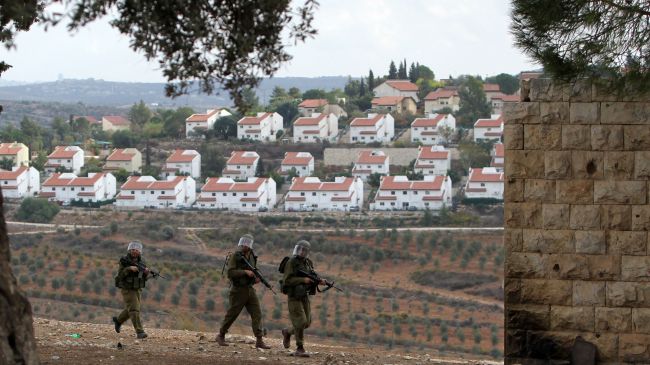
The US State Department issued a statement this week that included a rare criticism of Israeli policy, calling the ongoing construction of settlements on Palestinian land a “pattern of provocative action” that prevented the renewal of peace talks. Despite this critique, the Israeli government announced plans to move ahead with 6,000 new settlement units, mainly in the Jerusalem area.
After the Palestinian Authority pursued, and succeeded in obtaining, a vote for non-member statehood status at the United Nations last month, the Israeli government undertook a number of punitive measures against the Palestinians. These including illegally confiscating Palestinian Authority funds that would pay the salaries of teachers, doctors, pensioners and the disabled, as well as announcing a plan to increase settlement construction in the Israeli-occupied West Bank.
Israeli forces have militarily occupied the West Bank and Gaza Strip since 1967, and have illegally seized large swaths of Palestinian land in order to transfer Israeli civilians onto this land, in direct violation of its obligations as an Occupying power under the Fourth Geneva Convention.
Since a peace agreement known as the ‘Oslo Accords’ was signed in 1993, hundreds of thousands of Israeli settlers have poured into the West Bank and established colonies. In 2005, around 5,000 settlers were paid by the Israeli government to move out of settlements in the Gaza Strip, although many of them ended up moving to other settlements in the West Bank.
In this week’s statement to the press, US State Department spokeswoman Victoria Nuland told reporters, “Israel’s leaders continually say that they support a path towards a two-state solution yet these actions put that goal further at risk.”
Israeli Vice Prime Minister Moshe Ya’alon responded defiantly, “ We will continue to build in accordance with Israel’s strategic interests.”
1,500 units were approved on Monday by Israel’s Interior Ministry, and discussion is continuing throughout this week on the plans for 4,500 additional units, which are expected to receive final approval by the Israeli Interior Ministry early next week.
All Israeli settlements in the West Bank are considered to be violations of international law.
Sandy Hook and Netanyahu’s Victimization Philosophy
Netanyahu identifies Israel with the children of Sandy Hook Elementary School
By Matt Moir | Palestine Chronicle | December 18, 2012
It was intended to be thoughtful and compassionate, but it came across as something far different.
In his letter of condolences to President Barack Obama over the tragedy in Newton, Connecticut, Israeli Prime Minister Binyamin Netanyahu deliberately referenced Palestinian attacks in Israel. He didn’t actually write ‘terrorism’ or ‘Hamas’ or something else incendiary because he didn’t have to; the implication was clear.
The letter reads:
Dear President Obama,
I was shocked and horrified by today’s savage massacre of innocent children and adults at the Sandy Hook Elementary School in Connecticut.
We in Israel have experienced such cruel acts of slaughter and we know the shock and agony they bring.
I want to express my profound grief, and that of all the people in Israel, to the families that lost their loved ones.
May you and the American people find the strength to overcome this unspeakable tragedy.
With my deepest condolences,
(Signed) Benjamin Netanyahu,
Prime Minister of Israel
It would be deeply cynical to suggest that Netanyahu consciously saw a massacre of innocent children as an opportunity to make a political point about the conflict between Israel and Palestine. In fact, there is no doubt that the Prime Minister’s sympathies are genuine.
But that’s just the point. The line about Israel having ‘experienced such cruel acts of slaughter’ gives us a telling commentary on the way Netanyahu sees the world, and, more specifically, the way he sees Israel’s relationship with Palestinians.
Prime Minister Netanyahu identifies Israel with the children of Sandy Hook Elementary School, and Palestinians in the West Bank and Gaza with the gunman. According to Netanyahu’s worldview, any violent interaction between Israelis and Palestinians will, without fail, be an example of evil Palestinian terrorists preying upon Israeli innocence. To wit, even after the formidable Israeli army pounded Gaza City last month [killing 35 children], Netanyahu, displaying a stunning nerve, declared that Israel would not be bullied by the Palestinians.
It’s this perverse victimization philosophy that drives Israeli foreign policy, and, according to Israel’s hawkish officials, it is what should form the framework of the United States’ national conversation about the Israel-Palestine conflict. According to Netanyahu, however, that framework has begun to crack under the Obama Presidency.
Though Obama has repeatedly reaffirmed the ‘special relationship’ the US has with its Middle Eastern partner, the President’s administration has had the temerity to chastise Israel for some of its particularly extreme policy decisions, such as the approval of the construction of thousands of apartment buildings the day after the United Nations voted to upgrade Palestine’s diplomatic status.
Netanyahu has found it intolerable that Obama is either unable or unwilling to entirely accept (to the Prime Minister’s standard) the Israeli narrative on Israel-Palestine relations, and has struggled for a way to help the President understand what the Palestinians truly represent.
The shooting in Connecticut was his chance, and he took it. In Netanyahu’s mind, comparing the state of Israel to the victims of the Sandy Hook slayings wasn’t a crude and awkward attempt to portray the Palestinian struggle for statehood and dignity as a cold-blooded attack on school children. It was an opportunity to show Obama just how evil the Palestinians really are.
He just couldn’t help himself.
– Matt Moir is a Journalism graduate student and former history teacher in Toronto, Canada.
Israeli forces assault hunger-striker in court
Ma’an – 19/12/2012
 RAMALLAH – Israeli forces on Tuesday assaulted long-term hunger striker Samer al-Issawi during a court hearing, the head of the Palestinian Prisoners Society said.
Guards from the Alnhacon unit beat al-Issawi when he tried to greet his family in the Jerusalem court, said Jawad Boulos, adding that the prisoner’s hands and feet were cuffed.
Al-Issawi has been on hunger strike for 140 days in Israel’s Ramle prison and was briefly hospitalized when his heart dropped to 36 beats per minute.
Boulos said he asked the judge to adjourn the hearing as al-Issawi needed urgent medical treatment for chest pains but the judge refused and continued the hearing for 30 minutes.
The session was postponed to Dec. 27 and the judge ordered guards to take al-Issawi for medical treatment.
The Ministry of Prisoner Affairs said Tuesday that al-Issawi and Ayman Sharawneh, who has been on hunger strike for 171 days, refused Israeli proposals to release them to exile.
Sharawneh, 36, is suffering muscle spasms, memory loss and severe kidney and abdominal pains, the ministry’s lawyer Fadi Abedat said.
Israeli prison services spokeswoman Siwan Weizman said both men were still on hunger strike but that they were “both fine.” Weizman told Ma’an that al-Issawi had been returned from hospital to Ramle jail.
Sharawneh and al-Issawi were rearrested after being freed in the Oct. 2011 prisoner exchange between Israel and Hamas. They are on hunger strike to demand their release.
Related articles
Remember All the Children, Mr. President
America’s Selective Grief
By BILL QUIGLEY | CounterPunch | December 18, 2012
Remember the 20 children who died in Newton Connecticut.
Remember the 35 children who died in Gaza this month from Israeli bombardments.
Remember the 168 children who have been killed by US drone attacks in Pakistan since 2006.
Remember the 231 children killed in Afghanistan in the first 6 months of this year.
Remember the 400 other children in the US under the age of 15 who die from gunshot wounds each year.
Remember the 921 children killed by US air strikes against insurgents in Iraq.
Remember the 1,770 US children who die each year from child abuse and maltreatment.
Remember the 16,000 children who die each day around the world from hunger.
These tragedies must end.
Bill Quigley is a human rights lawyer and law professor at Loyola University New Orleans and Associate Director of the Center for Constitutional Rights. You can reach Bill at quigley77@gmail.com
Connection to the Land Cannot Not Be Broken
The struggle for land rights near the Gaza border
By Joshua Brollier | Voices for Creative Non-violence | December 15th, 2012

Mohammed and Ahmed Qdeih Dec 15, 2012 Photo- Maher Alaa
Gaza City – Yesterday in al-Faraheen, Gaza, Israeli Occupation Forces shot and wounded an unarmed 22 year old farmer, Mohammed Qdeih, from behind.
Mohamed and nine others went out to their fields in the early afternoon, walking approximately 250 meters from the Israeli border. Within minutes, two heavily armed Israeli military jeeps rushed to the security fence. They issued a warning for the farmers and residents to leave the area and shortly thereafter the Palestinians, intimidated by the heavy military presence, began to head back to the village of Abasan. The soldiers were not satisfied and opened fire, piercing Mohamed’s right arm from the backside. Israeli forces continued to shoot rounds of live ammunition while Mohamed and the others frantically evacuated and waited for an ambulance. Another young Palestinian, 19, was shot yesterday near the border in Jabaliya.
Under the siege, Israeli “closed military zones” have confiscated up to 35 per cent of Gaza’s arable land, which was previously used for fruit and olive orchards, wheat and various vegetables. With nearly half of Gaza’s population designated as “food insecure” by UN Office for the Coordination of Humanitarian Affairs (OCHA) and the farming industry having been crippled from the inability to export products under the Israeli blockade, this land is essential for the livelihoods of thousands of farmers and residents of Gaza. Even so and given that four Palestinians have been killed and over 50 injured since the November 21st, 2012 ceasefire agreement, one might ask why anyone would risk their life and venture near the border at all.
Palestinians have had varying experiences near the fence. There have been some successes with farming and some incidents resulting in death and serious injuries. The agreement between Israel and Hamas clearly stated that Israeli forces would “refrain from targeting residents in the border areas” and to “stop all hostilities in the Gaza Strip land, sea and air including incursions and targeting of individuals.” Hamas and other factions have held up their end of the bargain with not a single rocket being fired from Gaza.
As a participant in an international solidarity team, I sat down this with Mohammed Qdeih and family members this afternoon to get their perspective on the breach of the ceasefire and why they would risk their lives in pursuit of reclaiming their land. “The ceasefire is without any sense,” said Mohammed. “They attempted to kill me.” Mohammed is single but works the land to help provide for his 15 extended family members who reside together in Abasan al-Kabir. The family has approximately ten dunams of land which fall in the vaguely defined “buffer zone.” He is one of only five who are able to work in the fields and now the family will be without his help for a month at least.

Farmers work with solidarity activists 12.15.2012 Photo- Maher Alaa
After waiting patiently for Mohammed to tell his story, attention shifted to the eldest member of the family, Ahmed Hassan Jabbar Qdeih. Around ninety five years old, Ahmed became infuriated and began to speak up passionately. “What I have seen in my lifetime is too much to bear!” Though they are originally from Abasan, the Qdeih family used to have 500 dunams of land which spread far beyond Gaza’s borders, most of which fell in what is now considered Israel. In 1948 when Ahmed was in his thirties, he was working near the local water well when Zionist militias terrorized his farm. Ahmed was detained, along with his family, and taken to their house where they were forced to watch as his father was murdered in front on them. The militias destroyed their home, bombed the well and set ablaze 60 dunams of land. Additionally, they stole 60 sheep and two cows to take with them.
Mr. Qdeih also spoke of February 7th, 1957. Just before Israel withdrew from the Gaza Strip in March of that year (under very strong pressure from the United States), Ahmed again barely escaped with his life. Presumably during one of Israel’s last “screening operations” to eliminate members of the Palestine Brigades in which over 500 Palestinians were killed, Israeli forces lined up Ahmed and ten other men who were then mowed down with gunfire and executed. The rifle which targeted Ahmed malfunctioned. When he was later discovered to still be alive, he was arrested and imprisoned in Israel for eight years. While in jail, the prison guards stomped on his hands and beat him mercilessly, leaving him permanently disabled and unable to walk properly. In the process of explaining this, Ahmed almost removed his shirt successfully in front of all present before being discouraged by a relative standing nearby. “Look, look! You can still see the scars on my back,” he nearly screamed in a fashion as if he was still reliving those torturous years.

UNEF forces in Gaza, 1957 Photo- Palestine Remembered
Having a proud persistence in farming and a history of tragedy dating back to the Nakba, the connection to the land runs deep for the Qdeihs and obviously so do the scars. As many Palestinians feel that they have taken the victory from the recent conflict, the present situation holds many possibilities for farmers like the Qdeih family. However, recent events have been no less distressing. Two days after the Israeli Pillar of Cloud offensive, Anwar Qdeih, the twenty year old cousin of Mohamed Qdeih, was shot and killed while participating in an impromptu demonstration near the border.
In a celebratory mood due to the gains supposedly guaranteed by the ceasefire and in defiance of the brutality of the recent Israeli assault, a small group consisting primarily of young men headed to the “buffer zone.” When approached by heavily-armed Israeli soldiers, some threw stones and managed to cross the first security fence, which does not constitute the official border. Upon confrontation with the soldiers, the group turned back and the Israeli forces opened fire striking Anwar in the head and killing him instantly. Eighteen others were wounded, including three children. (There is also a second fence the protesters did not reach which is electrically charged, more heavily guarded and virtually impenetrable to such a group. There are no Israeli houses or civilians in the vicinity. It is also essential to remember that Palestinians have a legal right to resist the occupation through such demonstrations and even armed resistance.)
The Israeli military establishment seems to be confounded that, for all its advanced weaponry and fire power, hundreds of young men like Anwar and Mohammed and elders like Ahmed continue to come out daily to their fields. The right-wing, ruling elite and even many self-proclaimed “liberals” in Israel appear to be in denial that the Palestinians’ claim to their land and will for self-determination is unquenchable. While they talk of more deadly operations like Cast Lead and Pillar of Cloud, they continue with the harassment of farmers and fishermen. While they provide for and forcefully protect more illegal settlements and carry out the demolitions of Palestinian homes in the West Bank, they justify the killing of a young man at a check point in Hebron and the following vicious assaults on the media. While strengthening apartheid policies against Arab and non-Jewish Israelis and fortifying new stretches of the separation wall, they feel the need to collectively punish the civilian population of Gaza with siege. While they aggressively stomp any remnants of a two-state solution under their feet and isolate themselves with mantras of victimhood, the United Nations has affirmed the right to Palestinian statehood.
What are the goals and likely consequences of these violent and obstructionist policies? How could they possibly make Israel more secure or lead to a just solution? All the while, resistance is again becoming more and more popularized among Palestinian civilians and the factions are moving towards uniting. Regardless of the new shapes the resistance takes or any path the Israelis choose, as evidenced clearly since 1948 until this very day, the Palestinians’ deep connection to and affection for their homeland cannot be broken.
Joshua Brollier is a co-coordinator with Voices for Creative Nonviolence. He can be reached at Joshua@vcnv.org.
Links:
1. http://www.ochaopt.org/documents/ochaoptgazablockadefactsheetjune2012english.pdf
2. http://www.imemc.org/article/64748
3. http://vcnv.org/israeli-forces-fire-on-gaza-farmers-and-internationals-in-khuza-a
4. http://www.media-diversity.org/mdi/additional-files/documents/c-books/Unprotected%20Palestinians%20in%20Egypt%20since%201948%20%5BEN%5D.html#page19
5. http://www.pchrgaza.org/portal/en/index.php?option=comcontent&view=article&id=9072:weekly-report-on-israeli-human-rights-violations-in-the-occupied-palestinian-territory-22-29-nov-2012&catid=84:weekly-2009&Itemid=183
6. http://en.wikipedia.org/wiki/IsraelandEgypt%E2%80%93GazaStrip_barrier
7. http://www.jadaliyya.com/pages/index/8807/is-gaza-still-occupied-and-why-does-it-matter
8. http://972mag.com/why-was-17-years-old-muhammad-killed/61950/
Related articles
- Israeli forces attack Press TV crew in Gaza (alethonews.wordpress.com)
Featured Video
Get ready for the big Israeli false flag cyber-attack
or go to
Aletho News Archives – Video-Images
From the Archives
Chocolate Gives Statins a $29 Billion Run For Their Money
By Sayer Ji · GreenMedInfo · April 17, 2012
With the blockbuster cholesterol-lowering class of drugs known as statins being widely promoted for the primary prevention of cardiovascular disease, despite their having over 300 documented adverse health effects (including heart failure!), how does chocolate sound as a viable, heart-friendly alternative?
We already connect amorously with chocolate (to the tune of 6 billion lbs of cocoa consumed annually worldwide), revealing in heart-felt expressions like “I love it,” and “this is to die for!” how comfortable we are with publicly declaring our affection. But did you know that while it makes our emotional hearts sing, it may actually keep our physical hearts happy, alive and ticking longer, as well?
Indeed, back in 2006, researchers found that for elderly men, eating cocoa was inversely associated with blood pressure and 15-year cardiovascular and all-cause mortality. … continue
Blog Roll
 Aletho News
- China warned Trump not to touch Iran’s oil tankers: Larry Johnson
- EU Central Banker Plans To Plant Barren AI Crops Across The Continent
- Macron’s Strategic Autonomy Paradox: France Rearms on Debt and Depends on Foreign Fuel
- Nigel Farage vs Tucker Carlson: Who is right about Hitler and Britain?
- Chocolate Gives Statins a $29 Billion Run For Their Money
- Hypotheses on the collapse of U.S. computer systems
- Discover Iran: North Khorasan’s medicinal plants, spices, and sustainable economic potential
- ‘Stop Putting Drugs in Our Food’: Scientists Link Folic Acid in Food to Rising Rates of Colorectal Cancer
- The 14 Things That Happen to Your Newborn in the First 48 Hours
- JFK’s Forgotten Confrontation with Israel
- If Americans Knew
- DAILY UPDATE: Latest essential news on Palestine, Israel, & region
- Reporting Raises Fresh Questions About Israeli Role in CNN’s ‘Preposterous’ Iranian Dirty Bomb Story
- DAILY UPDATE: Latest essential news on Palestine, Israel, & region
- Under the West’s watch, genocide apologism has become entirely respectable
- Israeli Diplomat Offered Iowa Attorney General Free Trip, Then Asked for Favors
- On World Children’s Day, 350 Palestinian Children Remain in Israeli Prisons
- Why Is Israel Jailing a Palestinian Student Without Trial? Because It Can
- ICJ ruling on Rohingya genocide could strengthen South Africa’s case against Israel
- DAILY UPDATE: Latest essential news on Palestine, Israel, & region
- Newly nominated House Speaker funded Gaza genocide
- No Tricks Zone
- New Study: Modern Temps Are Among The Coldest Of The Last 10,000 Years In East Central Europe
- Germany’s Renewable Energies Lead to 1.4 Billion Euro Electric Power Trade Deficit
- Argentina’s Perito Moreno Glacier Joins Antarctica and Arctic In Defying Doomsday Melt Claims
- New Study: Barents Sea Temperatures Were Warmer And Sea Ice Less Extensive In The 1700s Than Today
- German Authorities Start Initiative To Evaluate Public Register For Climate “Disinformation” Spreaders!
- Zonal Asymmetry of Temperature Change in the Antarctic Circumpolar Current
- New Study: The Net Fossil Fuel Contribution To Rising Atmospheric CO2 Has Been Zero For 500 Years
- Germany’s Green Energy Transition Becoming Increasingly Expensive…Another 6 Trillion Euros!
- Sudden Stratospheric Warming, Powerful El Niño Combination May Lead To Extreme Europe Cold, Energy Crisis!
- Two New Studies Find Thwaites Glacier Melt Cannot Be Driven By Human Activity Or A Warming Ocean

