2,600 Bedouins threatened with displacement as Israeli settlements expand
By Sophie Crowe | The Electronic Intifada | 7 February 2012

Women sort through their belongings three days after Israeli forces demolished several homes in Anata, 26 January 2012. (Anne Paq / ActiveStills)
Jerusalem – The “E1” area of the West Bank, comprising 12 square kilometers, lies between the Maale Adumim settlement and occupied East Jerusalem, curling around and separating the Palestinian towns of Anata and Abu Dis. While E1 is home to roughly 2,600 Bedouins, Israel has prevented any Palestinian development there so that Maale Adumim might expand and new settlements can go up.
Though the settlement development project was temporarily postponed in 2008 due to disapproval from the United States, Israel has long planned on emptying the space of its Palestinian inhabitants in order to implement the plan. Many of these communities have been displaced several times since the 1970s to make way for Israel’s settlement enterprise.
Two years ago, rumors began circulating among the Bedouins living in the E1 area of Israel’s intentions to displace them once more. These rumors have been buttressed by waves of demolition orders in most of the Bedouin encampments.
Twenty communities, in which 2,600 persons live, are facing displacement, stated Abu Suleiman, mukhtar (or leader) of Qeserat, a Bedouin community within E1.
Stealing water resources
Qeserat, home to approximately 200 persons, spreads along the slope of a hill beside a busy highway, close to Anata. Israel moved the community there in the 1970s in order to use their land for Kfar Adumim settlement. The Israeli authorities wanted this site for its valuable water resources, Abu Suleiman noted.
Most of the Bedouins in this area are from the Jahalin tribe, originally from the Naqab (Negev) desert. They became refugees after 1948, when the new authorities forced them from their land, and eventually resettled in the West Bank.
Israeli authorities have suggested moving some of the communities in E1 to a location beside Abu Dis — an East Jerusalem suburb partitioned from the city by Israel’s wall in the West Bank — which borders Jerusalem’s chief garbage dump.
This site is already home to about 2,000 Bedouins, who were moved there in the 1990s from land which is to facilitate the expansion of Maale Adumim.
The Civil Administration (the body overseeing Israel’s occupation of the West Bank), however, may be backing down from its enforcement of this idea. Haaretz reported yesterday that Israeli Major General Eitan Dangot suggested Israel would find another location on which the Bedouin would be permanently settled (“Bedouin community wins reprieve from forcible relocation to Jerusalem garbage dump,” 6 February 2012).
Shlomo Lecker, an Israeli lawyer representing 250 Bedouin families threatened by removal, has advised them to refuse the Abu Dis plan at all costs.
He told Israeli daily Haaretz in November that Israel’s plan “is intended to cut them off from the area … No one wants to move to the Abu Dis village and those living there refuse to accept them” (“Israel cancels plans for new Bedouin neighborhood,” 7 November 2011).
The Bedouins have traditionally lived off rearing animals, but the continuing encroachment on their land has made grazing animals increasingly difficult. The proposed site near Abu Dis would bring a halt to this way of life altogether.
“To raise animals you need space,” Abu Suleiman told The Electronic Intifada. “We don’t want to go to Abu Dis. It is crowded and not a safe place for people to live.”
Land mines
Aside from the proximity to a refuse site, land mines remain on the land near the Abu Dis site from Israeli military training. The Bedouin Protection Committee, a representative body comprising leaders from each community, was formed last summer to discuss ways of dealing with the threat of displacement and to advocate for suitable living conditions.
The committee has asked why Israel should not — if they insist on transferring the Bedouins — let them return to their original home in the Naqab. “In our history we are refugees,” Abu Suleiman stressed.
He would be happy, he said, with a permanent Bedouin town, “away from the cities, near the Dead Sea.” He is not optimistic, however, but acutely aware of Israel’s intransigence: “They will not enlarge the Palestinian areas.”
Abu Rashed, mukhtar of Arara, another Bedouin encampment in E1, believes Israel is trying to coerce the Bedouin into accepting the Abu Dis site by expropriating land the communities may see as an alternative. In the first week of January, Israeli soldiers left a military order near Arara, informing them that Nabi Musa, a neighboring area of 18 dunams used for grazing animals, was now a closed military zone (a dunam is equal to 1,000 square meters).
Abu Rashed recalls how life changed after Israel’s occupation of the West Bank in 1967. “Under the Jordanian government we felt free,” he reflects. The situation began to worsen in the 1980s, by which time Israel’s illegal settlement of the West Bank was in full swing. “Israel was taking land, claiming it to be a military area,” he says. “Since then they have taken 90 percent of Arara’s land.”
Many of the E1 communities made agreements decades ago with the owners of the land, mostly residents of Anata or Abu Dis. “Since the settlements began to appear, people prefer for Bedouins to live on their land rather than use it for farming; it’s like protection,” Abu Rashed explained.
Thousands made homeless
The Bedouins of Abu Hindi, an encampment near Abu Dis that falls just outside E1, have been embroiled in a years-long legal battle for their right to stay on their land.
Abu Hamad, the mukhtar’s brother, explains that the deal with the original landowner was informal, agreed upon without the official documentation of ownership that Israel now demands of them.
Israel’s demolition of homes in Area C, creating 1,000 homeless persons in 2011, has continued unabated into the new year.
On 23 January Israeli forces demolished a home — Beit Arabiya, which houses the Shawamreh family and doubles as a peace center — near Anata, for the fifth time, leaving the family of seven homeless. Three other homes and several animal enclosures in the community were also torn down (“Halper vows to rebuild Palestinian home destroyed five times by Israeli soldiers,” Mondoweiss, 25 January 2012).
Two days later the Israeli military tore down six sheds, home to six Bedouin families, in the War ad-Beik area, also bordering Anata (“Army bulldozer destroys six sheds near Jerusalem,” International Middle East Media Center, 25 January 2012).
Abu Suleiman suspects Israel’s pressure on the Bedouins is part of a wider plan to push all Palestinians out of Area C of the West Bank — where Israel has total control. Israel creates obstacles in each facet of life, he says, taking away communities’ water tanks and tractors and refusing to supply them with electricity.
He does not see much change on the horizon. The state “will try to destroy people step by step,” he predicts.
Sophie Crowe is a journalist based in the West Bank. She can be reached at croweso [at] tcd [dot] ie.
Related articles
- Israeli forces violently ethnically cleanse Bedouin homes in Beit Hanina (alethonews.wordpress.com)
- Anata falls victim to militarized, illegal settlement once again (alethonews.wordpress.com)
- Live round fired by Israeli soldier leaves 4 year-old girl paralyzed (alethonews.wordpress.com)
- Professor of Hate: Israeli “scholar” urges ethnic cleansing of Bedouins (alethonews.wordpress.com)
Palestinians in Israel – Book Review
sternchenproductions | January 31, 2012 – AVAILABLE IN HD
By Ludwig Watzal | Palestine Chronicle | February 6, 2012
(Ben White, Palestinians in Israel. Segregation, Discrimination and Democracy, Pluto Press, London 2012, 128 pp., 13 Pounds.)
 With the signing of the Oslo Accords that led to the outbreak of the so-called peace process between Israel and the occupied Palestinian people, the Palestinian Liberation Organization (PLO) abandoned its initial political goals (to realize the right of return of Palestinian refugees and to liberate Palestine from Zionist colonization) for some privileges and turned itself into an obedient servant of the colonizers. Whereas the PLO under the leadership of Yasser Arafat tried to get back some territory from Israel to establish a Palestinian state, Palestinians living in Israel, although suffering under discrimination as second-class citizens, demand Israel to become finally “a state for all its citizens” instead of staying a “Jewish State”. Since the establishment of the State of Israel, the non-Jewish inhabitants have been subject to a second-class status in most walks of life.
Ben White is a freelance journalist and writer specializing in the subject of Palestine/Israel. In his previous book “Israeli Apartheid” he showed that Israel established its special kind of “Israeli apartheid” that differs in its sophistication from the petty apartheid in South Africa under the white racist regime. His current book deals with the Palestinians living in Israel and their plight. It was overdue, that someone as competent as White would shed some light on Israel’s discriminatory treatment of some 20 per cent of its citizens. In comparison to their fellow countrymen in the Occupied Palestinian Territories (OPT), who live a life in extreme oppression; Israeli Palestinians might be designated as “Palestinians de luxe”.
The well-known Israeli Palestinian Knesset member Haneen Zoabi contributed a fine foreword in which she demanded full citizenship rights and added; “These taken for granted demands, for the indigenous people and for ‘full citizenship’, are suffice to undermine the moral and political legitimacy of the entire Zionist project, and to relegate it to the status of a racist, colonialist venture.” Israeli Palestinians demand from the State of Israel no less than to become the “state of all its citizens”. According to Zoabi, this demand “has forced the Jewish state to admit the primacy that it grants to Jewish-Zionist values over democratic values and to recognize the impossibility of coexistence between the two”. Currently, Israel is a democracy sui generis.
For making such demands, MK Zoabi and also the author came under attack by Zionist propagandists in Israel and Great Britain. Yaniv Halili wielded in “ynet” the worn Zionist “argument”, accusing both of “anti-Semitism”. Zionist defenders of Israeli war crimes, crimes against humanity, violations of human rights, contempt for international law and the United Nations, can only “justify” the morally bankrupt policies of the “only democracy in the Middle East” by slandering people who merely describe the horrible reality. The infamous Zionist lobby in Great Britain attacked the British branch of amnesty international, because it had dared present White’s book, and called for a “balanced” debate. The problem with Zionist slanderers is not their meanness – any rational person will immediately discount their arguments – the real problem lies with the non-Zionist citizens or politicians who are afraid of standing up to such intimidation, because they fear being accused of “anti-Semitism” or threatened in their career.
Ben White brings the discrimination of the forgotten minority of Israel´s colonization project in Palestine, to light. The author pursues two aims: First, he wants to show how Israel relates to its Palestinian citizens, and second, he attempts to demonstrate that “denying democracy has been part of the Zionist colonization of Palestine from the very beginning”. For White, Israel’s definition as “Jewish and democratic” is the central contradiction and the heart of the conflict.
In seven chapters White describes the manifold discrimination against what some Israelis call “Israel’s fifth column”. To preserve their status of second-class citizens, Israel developed a sophisticated set of laws that apply to Jews only. This Palestinian minority is seen by Israel’s power elite as a “demographic threat” to “Jewish majority rule”. The author shows that Israel’s Declaration of Independence, which solemnly promises to “ensure complete equality of social and political rights to all its inhabitants irrespective of religion, race or sex” is not considered by the Israeli High Court as “constitutional law”. White quotes Ari Shavit’s article “Formative words” in the daily Haaretz saying: “The state it declared was not a state of all its citizens. It was not even a Jewish-democratic state, but a Jewish state, pure and simple.” In the last phrase of this sentence lies Israel’s ongoing dilemma and its inherent contradictions. That is why many Israelis and Jews around the world call Israel an “ethnocracy” rather than a “democracy”.
The rest of the book deals with the implementation of Israel’s institutional discrimination. One of these discriminatory laws is the “Absentee Property Law” passed in 1950. This law regulates the exclusion of Palestinians from land acquisition and the “mechanism of expropriation” to realize the permanent alienation of (Palestinian absentees) land in favor of the Jewish state”. (24) According to White, there are numerous other laws to be used to confiscate land, such as the “Emergency Land Requisition of 1949”, or article 125 of the Emergency Regulations of 1948. This law enabled an area to be declared “closed” and then, using the “Land Acquisition” law of 1950 to designate the land as “uncultivated” and expropriate it for Jewish-only use, writes the author. It should come to no one’s surprise that current Israeli President Shimon Peres called this judicial sophistry a means of “directly continu(ing) the struggle for Jewish settlement and Jewish immigration”. (25) The Israeli land regime was finally completed in 1960, with the passing of Basic Law: Israel Lands 1960.
The campaign entitled “Judaising of the Galilee” overlaps and echoes and “judaisation” of occupied East Jerusalem, the West Bank, and the Golan Heights. This strategy goes along with “day-to-day racism”, a phenomenon widely cited by White. (54) Israeli newspapers periodically, including recently, report the most outrageous racist statements by rabbis, who do not mind to cite biblical texts in justification. It should be noted, that there has been no outcry by Zionist politicians against such overt racism. The author cites opinion polls showing “deep-seated levels of anti-Arab racism” in the population. (56) Such racism is reflected, among other things in the “judaisation program” against the Bedouins in the Naqab desert and the refusal to “recognize” certain Arab villages.
Systemic discrimination is described by White in areas such as education, budgetary allocations to Palestinian communities in the Galilee and petty discrimination at all levels of society. Just being an Arab disqualifies a person from serving in the Israeli military, except for members of the Druze minority. With these disqualifications goes the loss of privileges granted to Jewish soldiers and veterans.
Summing up his findings, the author tries to remain objective by writing that there might be some “logic” to the Israeli argument in “justifying” its racist policies towards the Palestinians in the OPT by pretending that the occupied territories might be “disputed” or that there might be “security concerns”. The fallacy of these arguments is revealed when it comes to the treatment of Palestinians in Israel. Israeli politicians and their friends in the U. S. and Western Europe often point out as evidence for Israeli democracy the presence of Israeli Arabs in the Knesset. However, they ignore the fact that these Arab MKs are subjected to regular slander and threats by their right-wing Jewish “colleagues” to have their parliamentarian immunity lifted or their citizenship withdrawn. It is true that “Arabs and Jews” in Israel share the same beaches, work at the same hospitals, and may travel on the same buses. The relative absence of such petty racism hides, however, the more fundamental and pernicious discrimination against Palestinians enshrined in legislation and administrative practices.
White ends his book by quoting a revealing statement of Shmuel Dayan, General Moshe Dayan’s father, who admitted in 1950: “Maybe (not allowing the refugees back] is not right and not moral, but if we become just and moral, I do not know where we will end up.” The ongoing Zionist colonization dilemma could not be better phrased.
For democrats, who are interested in the reality and the functioning of the “Jewish and democratic” State, this book can be an eye-opener.
Related articles
- Delegitimizing discrimination: struggle of Palestinians in Israel focus of new book (alethonews.wordpress.com)
- More racist laws are on the way in Israel (alethonews.wordpress.com)
- New Pappe book highlights plight of forgotten Palestinians (alethonews.wordpress.com)
Israel serves notice to demolish homes in Khirbat al Taweel
MEMO | 05 February 2012
The Israeli occupation today served notice to demolish a number of homes in Khirbat al Taweel village in the northern West Bank. When enforced the measure would affect 15 families and displace 150 persons. Hundreds of dunums of agricultural land will also be confiscated. The occupation authorities state the notice was served to clear the land for military training facilities.
For several years, residents of Khirbat al Taweel have been subjected to regular attacks from settlers in the ‘Giteet’ settlement as part of a scheme to evict them from their land. To date, the occupation has seized 140,000 dunums, leaving only 10,000 dunums for the villagers.
Other forms of harassment and maltreatment include; the closure of the main road which residents use travel to and from their village, prevention of farmers from reaching their farms, allowing the settlers to vandalise the farms with pesticides, theft of animals, and destruction of wells.
This latest notice also includes the demolition of Al Khirbat mosque, which is under construction as well as the electricity network recently completed to the value of $200,000 donated by the Belgian government.
Related articles
- Kufr ad-Dik and Burqin march against boars, pollution, and violence by Israelis (alethonews.wordpress.com)
- Israeli occupation authority destroys Spanish-financed power station in Al-Khalil village (alethonews.wordpress.com)
- Al Baqa’a: The struggle of a family in the shadow of illegal annexation (alethonews.wordpress.com)
- Israeli occupation authority to raze hundreds of Palestinian homes, keep illegal outposts (alethonews.wordpress.com)
- Israeli forces demolish homes in Jericho (alethonews.wordpress.com)
- Israeli forces violently ethnically cleanse Bedouin homes in Beit Hanina (alethonews.wordpress.com)
- Palestine: Even Sheep Are Not Safe from Jewish Settlers (alethonews.wordpress.com)
Settlers Install New Outpost Near Hebron
By Saed Bannoura | IMEMC & Agencies | February 03, 2012
A group of fundamentalist Israeli settlers installed a new illegal settlement outpost, south of the southern West Bank city of Hebron, on Friday while another group of armed settlers invaded areas in Beit Ummar town, north of Hebron.
Rateb Jabbour, coordinator of the National Committee Against the Wall and Settlements, reported that approximately 250 settlers, accompanied by Israeli Border Police officers, invaded that Al-Carmel village, and installed six new caravans in Um Ash-Shuqhan area, near the Maoun illegal outpost that was installed on privately-owned Palestinian lands.
In related news, Yousef Abu Maria, media spokesperson of the National Committee Against the Wall and Settlements in Beit Ummar, stated that approximately 150 settlers attacked Palestinian farmlands in Za’ta area, east of Beit Ummar, and blocked the Jerusalem-Hebron road in front of Palestinian traffic.
According to Abdul-Hadi Hantash, a Palestinian expert on Maps and Settlements, that recent escalation is part of a larger plan that aims at installing more outposts, and expanding existing ones, by stealing more Palestinian lands.
Hantash added that settlers are stealing Palestinian lands in Um Ash-Shuqhan area, and installing new outposts, so that they can create a geographical contiguity by linking the new outposts with the settlements of Ma’oun, Karmiel, Havat Yair, Avigayil, and Susyia. All are illegal outposts built on privately-owned Palestinian lands.
The official further stated that Israel is implementing an agenda that aims at isolating the Palestinians in Hebron by the illegal Annexation Wall and the chain of settlements and outposts built on the hills of the Hebron district.
“Israel wants to force the Palestinians out of their homes and lands, wants them to leave”, Hantash added, “But the residents are determined to remain steadfast in their homes, lands”.
Related articles
- Official: Israeli settlers tour Beit Ummar (altahrir.wordpress.com)
- Settlers torch cars in Beit Ummar (alethonews.wordpress.com)
- An exclusive corner of Hebron (arunwithaview.wordpress.com)
- Demanding justice for Yousef, a quiet boy killed by Israeli settlers (alethonews.wordpress.com)
- Palestine: Even Sheep Are Not Safe from Jewish Settlers (alethonews.wordpress.com)
Kufr ad-Dik and Burqin march against boars, pollution, and violence by Israelis
International Solidarity Movement, West Bank | 3 February 2012
Burqin and Kufr Ad-Dik face daily obstructions in justice as nearby illegal Zionist settlements encroach on the livelihood of local Palestinians. The villages are surrounded by several hilltop illegal settlements and industrial sites with polluting factories and an army base.
“This is a microcosm of Palestinian suffering” stated a resident upon the arrival of International Solidarity Movement volunteers.
Burqin and Kufr Ad-Dik are under siege by settlers and soldiers. The villages are situated in Areas B and C as stipulated by the Oslo Agreement and sit dangerously close to the 1948 Green Line. Burqin has approximately 4000 residents which include many refugees from Al Nakba, or the Catastrophe, known to Palestinians when they faced exile from their villages in 1948 at the creation of Israel.

Kufr ad-Dik face to face with their oppressor
The village relies on small scale agriculture for its existence. The Israelis from the illegal settlements know this and routinely destroy Palestinian crops often by burning olive trees as part of the extremist “Price Tag Campaign.” They have also released wild boars from their settlements which eat Palestinian crops and are very dangerous, especially to the young of the villages. In an act of callousness the settlers destroyed a newly bought piece of farm machinery about two weeks ago. During this attack they also burned a car and unsuccessfully firebombed the local mosque, leaving threatening graffiti that they will be back.
While a local place of worship, graffiti, and vandalism seem like small offenses, one must keep in mind that these are systematically done to pressure the villages into abandoning what is left of their homes.
As with many of the Palestinian villages who have suffered the injustice of having their lands stolen by Israel in order to build illegal settlements, which continue to expand, Burqin and Kufr Ad-Dik are forced to endure regular attacks from the illegal occupants of their land as well as harassment by the Israeli military. The settlers, soldiers and Israeli government, which is benefiting from and funding the existence of these illegal settlements work cooperatively to forcibly remove Palestinians from their land.
There is an industrial estate, situated on top of a hill, which houses several severely polluting factories. These factories could not gain a license to be constructed inside of Israel due to the pollution that will be created, but they were granted permission by the Israeli government to be built within the West Bank illegally under international law. The waste from these factories is channeled in an open sewer through the villages.
Since the factories began polluting there has been a sharp rise in health problems within the village including an anomaly in cancer cases. A German charity volunteered to pay for the sewer to be covered and managed.
Permission to build this cover was flatly denied by the Israelis. The pollution from the factories has severely affected the surrounding land causing trees to die, crops to fail, and the meat from animals grazed on the land cannot be sold due to fear of contamination.
According to an article published by the Baheth Center for Strategic and Palestinian Studies, information on the size and power of these factories is not available to local Palestinians. In an article published by the Baheth center, they describe the extent of the factory waste:
The waste water and solid waste these industries produce, provide important clues about the type and extent of industrial activity… Clear evidence that Israeli factories operating in the Occupied Territories do not follow pollution prevention measures is provided by the Barqan industrial zone, which houses factories producing aluminum, fiberglass, plastic, electroplating, and military items. Industrial waste water from this zone flows untreated to the nearby valley, damaging agricultural land belonging to the Palestinian villages of Sarta, Kufr Al-Deek, and Burqin, and polluting the groundwater with heavy metals.
Unemployment is now very high in the villages since much of the land has been taken by settlers and the military. To add insult to the pollution inflicted on the villages, the Palestinians are banned from working the factories surrounding them. With more land being taken away every day, unemployment and poverty continue to rise. Yesterday an army order was issued to take another 60 dunums (1000m squared = 1 dunum) for “military purposes.” Farmers are now collating deeds to their lands in an attempt to argue their case in court.
Burqin has lost over 8000 dunums to the illegal occupation, most of which was stolen in the last 10 years. The land theft is sharply on the increase. The farm land that is left is still extremely dangerous to farm due to settler attacks and the threat of wild boars.
Not satisfied with attacking the food production, the Israelis have destroyed several wells, which are vital to the well-being of the villagers. The illegal settlers have commandeered most of the water supply leaving the Palestinians with critically low access to clean water. A recent study found that the average settler uses 18 times that of one Palestinian villager.
In addition to the destruction of wells several homes have been demolished including a home that the owner worked for 30 years to save enough to build.
Leaving or reentering the villages is high risk as settlers will often throw rocks at Palestinian cars. If the villagers successfully run the gauntlet they then have to pass through harassing Israeli Army checkpoints.
The villages have just started a weekly protest against their oppression in Kufr Ad-Dik. This was met last week with tear gas and steel bullets thinly coated with rubber leaving 10 villagers wounded.
The protest will continue every Friday.
Related articles
- West Bank village steps up protests against Israel’s theft of land (alethonews.wordpress.com)
- 13 injured in Nabi Saleh demonstration (alethonews.wordpress.com)
- Anata falls victim to militarized, illegal settlement once again (alethonews.wordpress.com)
Zionist plan to build a shopping centre on Armenian Church land
Palestine Information Center – 03/02/2012
OCCUPIED JERUSALEM — The Jerusalem occupation municipality announced a plan to build a new shopping centre with a car park on a piece of land that is owned by the Armenian Church in the old city.
The municipality further banned residents of the Armenian quarter in the old city from parking their cars on the land which is owned by the church.
Residents of the Armenian quarter demonstrated on Thursday to protest the steps taken by the municipality, but the demonstration was dispersed by the Israeli occupation police.
The land which is about 4000 square meters and which is owned by the Armenian Church was used by local residents as a free car park, but the locals were surprised when the so called Jewish quarters committee started collecting parking fees, and now barred them altogether from parking their cars there.
Related articles
- Zionist plan to build 60,000 settlement units in Jerusalem (alethonews.wordpress.com)
13 injured in Nabi Saleh demonstration
Ma’an – 03/02/2012
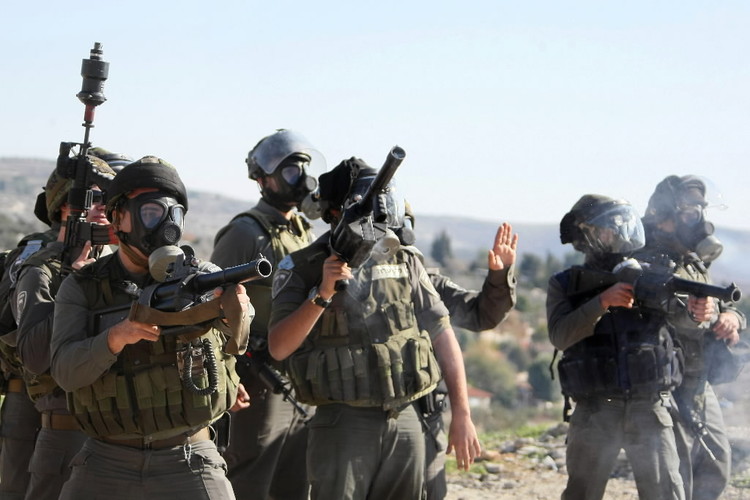 BETHLEHEM – Israeli forces injured 13 people in the village of Nabi Saleh, near Ramallah, during a Friday demonstration against Israeli land confiscation, witnesses said.
A French national sustained an injury from a tear-gas canister, activists said. She was taken to a hospital in Ramallah and her injury was described as moderate, they said.
Maj. Peter Lerner of the Israeli army suggested the injury was actually caused by a Palestinian stone-thrower. Israeli border police were injured at the same “riot,” he wrote on Twitter.
Palestinian residents of Nabi Saleh and their local and international supporters demonstrate each week against a nearby settlement’s encroachment toward lands owned by the village.
In December 2011, a tear-gas canister killed Mustafa Tamimi, a resident of the village.
Related articles
- We Are Nabi Saleh, a new film capturing people’s struggle, Mustafa Tamimi (alethonews.wordpress.com)
- Protester seriously hurt by gas canister (alethonews.wordpress.com)
- Palestinian protester severely injured in Nabi Saleh (alethonews.wordpress.com)
- Live sniper-fire injures protester in Nabi Saleh (alethonews.wordpress.com)
- Confronting Occupiers in Nabi Saleh (alethonews.wordpress.com)
- Nabi Saleh Protest Organizer Shot in Face at Weekly Protest (alethonews.wordpress.com)
Will Canada’s social-democratic party be able to prevent a leadership coup?
By Greg Felton | February 1, 2012
On March 24, Canada’s New Democratic Party will do more than elect a new leader; it will face a test of character.
As it stands, the NDP is the only major national party not led by an avowed zionist. Stephen Harper leads a cabal of governing “Likudniks,” who value subservience to Israel above all else, and the interim leader of the “Labour-Zionist” Liberals Bob Rae, is on the board of the Jewish National Fund, an organization so criminal that it has been condemned in Israel as racist.
The NDP, therefore, is the only apparently Canadian governing choice that voters have, but even this modest fig leaf will be blown away if the blatant Israel-firster Thomas Mulcair becomes party leader. On May 1, 2008, he told Canadian Jewish News: “I am an ardent supporter of Israel in all situations and in all circumstances.” [my emphasis]
Does Mulcair mean to say that he “ardently supports” Israel’s collective punishment of Palestinians, which includes torturing children, bulldozing homes, and keeping Palestinians near starvation levels as a matter of national policy? Do these constitute morally defensible “situations and circumstances?” Based on his abject endorsement of Israel, the answer is clearly, “yes.” The fact that all of the preceding are contrary to Canadian and international law, to say nothing of basic humanity, doesn’t faze Mulcair one bit. What a mensch!
How this walking advertisement for sedition found a home in a left-of-centre, social-democratic party is bizarre. The NDP, after all, still cleaves to the quaint notions that the federal government should defend the Constitution, uphold the rule of law, oppose military aggression, stand up for victims of human rights abuses, and generally serve the public good. Such high-minded ethical standards clearly distinguish it from both “Likud” and “Labour,” which are financially and politically indentured to the Israel Lobby.
So, why would the NDP even allow someone like Mulcair in the front door? This question takes on added significance when we recall that Mulcair had first considered joining Harper’s Likudniks, and was even said to have been tempted by a cabinet appointment. That would at least have made sense. When questioned last July about the earlier offer, though, the NDP’s newly minted interim leader Nycole Turmel seemed curiously unconcerned: “[Mulcair] was contacted by a number of people, a number of political parties and he chose to come work with us. He chose the NDP and I’m proud of that. He’s a great candidate.”
When looked at a bit more closely, however, Turmel’s praise for this crypto-Likudnik comes across more as a perfunctory platitude than a genuine endorsement; in this case the riding, not the MP, is the prize.
Mulcair represents Outremont, a small, wealthy riding on the Island of Montreal, which he won in a 2007 by-election, thus making him the NDP’s (ta-da!) first MP from Quebec. Outremont has a substantial Jewish population, more than 20%; in the larger Labour riding of Mount Royal just to the south, represented by Israel-firster extraordinaire Irwin Cotler, it is 36%. If the NDP expects to make inroads into Quebec it is logical for it to compete for the Jewish vote, but how far is the NDP prepared to go to mortgage its principles for electoral advantage?
As party leader, Mulcair would be expected to protect his caucus colleagues from harassment and abuse from other parties, but in 2010 he sided with Labour and Likud to call for the resignation of fellow MP Libby Davies as NDP House Leader. Davies’s “crime” was to state that Israel’s occupation of Palestine began in 1948, not 1967. Her statement is a fact supported by historical documents that include admissions from leading political and military Israelis like David Ben Gurion and Gen. Moshe Dayan.
Mulcair’s contemptible attack on Davies’s basic freedom of expression, to say nothing of historical honesty, showed Mulcair’s true allegiance, and the threat he poses to this country. It doesn’t matter if he believes the zionist bilge he spews or whether he’s merely pandering to the Jewish community. By rights, he should have been expelled from the party for his misconduct.
If you are reading this and are a member of the federal NDP who plans to cast a vote at the leadership convention, ask yourself these questions before you vote:
1) Can Mulcair be trusted to put loyalty to Canada and the NDP ahead of his loyalty to Israel?
2) Would Mulcair stifle his MPs’ freedom of expression in the name of being an “ardent supporter”of Israel?
3) Would Mulcair’s overt zionism irreparably debase the NDP’s reputation as a party of law and justice?
If you answered 1) no; 2) yes; and 3) yes, then you can proudly claim to be a member in good standing of a national, Canadian political party. You know what not to do on March 24. No matter how much you may like Mulcair’s position on the environment or any other issue, anyone who bullies his own people, betrays his party’s principles, and sells out his country is unfit to lead the NDP, much less sit in the House of Commons.
As I said earlier, the NDP appears to many voters to be the only viable Canadian governing option left in this country. Don’t force them into a no-win scenario among Likud, Labour and Meretz!
Messages of Support to Mustafa Tamimi’s Family
Life on Bir Zeit Campus | February 1, 2012

Martyrs are not numbers. It is essential for us and for supporters of the Palestinian cause to remember the stories behind the names and numbers.
For this reason, we offering this space as a platform where your voices will be heard regarding the first martyr the village of Nabi Saleh has sacrificed.
Write a message to Mustafa Tamimi’s family here. We will collect, translate, and print them all into a journal which we will then present to Mustafa’s family.
Let us not forget Mustafa.
On December 9th, 2011 a freedom fighter was ruthlessly murdered defending his village and the principles of freedom and justice which he fought and was previously imprisoned for by the Israeli occupation.
Mustafa Tamimi, the 28 year old resident of the tiny village of Nabi Saleh, was shot by an Israeli soldier who opened the back door of the armored jeep and fired a tear gas canister directly to his face from a distance of 3 meters.
Let us not forget Mustafa.
Villagers, locals, and other familiar activists remember Mustafa as one of the first to greet them in the village, before the popular protests started. He was the oldest of four brothers and one sister, and was engaged to be married the next month. He had the initial of his fiance tattooed on his chest, and was preparing to build another story above his parents’ house to live with his future wife there, following the traditional norm.
Let us not forget Mustafa.
The Israeli army has never been held accountable to the murder of Palestinian civilians. It continues to act with impunity and demonstrates a complete disregard for Palestinian suffering. 10 days after Mustafa’s murder, three Israeli jeeps surrounded his parents’ house, and 25 soldiers got out with the pretense to check the license of the car outside, but with the intention to arrest Mustafa’s younger twin brothers. Mustafa’s father shouted at them that if any arrests were to take place it would be over his dead body. The soldiers left. Let us not forget also the army spraying skunk water, firing tear gas, arresting activists, and beating people up on the day of Mustafa’s funeral.
Mustafa was killed on the 24th anniversary of the first Intifada, and the second anniversary of Nabi Saleh’s popular resistance protests, which started after settlers from the neighboring illegal settlement of Halamish- built upon the village’s land- further expropriated the main spring, al-Kaws.
Let us not forget Mustafa.
His murder only succeeded in strengthening the resolve of the Palestinians against occupation. Israel kills one, and a 100 rise up in his or her place.
We ask you to show your support and love to Mustafa’s family by writing messages of solidarity addressed to them either through this link or to this email: lifeonbirzeitcampus@gmail.com. There are no guidelines to this, other than including your name and the city or country you are from.
Let us not forget Mustafa.
Related articles
- We Are Nabi Saleh, a new film capturing people’s struggle, Mustafa Tamimi (alethonews.wordpress.com)
- Live sniper-fire injures protester in Nabi Saleh (alethonews.wordpress.com)
- No miracle yesterday in Nabi Saleh: Mustafa Tamimi murdered (alethonews.wordpress.com)
- Palestinian protester severely injured in Nabi Saleh (alethonews.wordpress.com)
- Israeli excuses on death of Mustafa Tamimi don’t hold up (alethonews.wordpress.com)
Jerusalem Political Activist Ordered Out of West Bank for Seven Months
By Saed Bannoura | IMEMC & Agencies | February 01, 2012
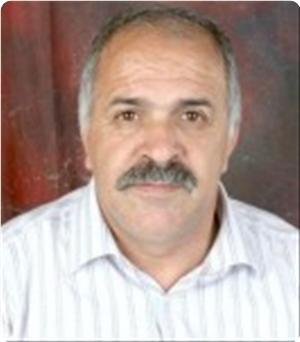 After interrogating him at a Police station in occupied Jerusalem, on Tuesday, the Israeli Police issued an order forcing Palestinian activist and intellectual, Rasem Obeidat, to remain in his residential area in Jerusalem for seven months. He will not be allowed out of Jerusalem, and will only be allowed into certain areas in the city.
The Police handed Obeidat a map detailing the areas he will be allowed to enter in Jerusalem for the duration of this order.
Obeidat was repeatedly imprisoned by Israel for his political activities and writings. He is active in many areas, mainly: social issues, the occupation, the issue of the detainees imprisoned by Israel, and in defending the Palestinian rights in the city.
He stated that preventing him from entering the West Bank, and forcing him out of several parts of Jerusalem, is a direct violation to the Freedom of Movement guaranteed by all international laws and regulations. Obeidat added that this order specifically violates the Fourth Article of the Geneva Convention of 1949.
He also stated that this order is unjust, and aims at targeting Palestinian political and social figures in the city, the same way Israel targets religious figures and all intellectuals, adding that this decision does not only target him personally, but also targets his family, as he heads the Vocational Rehabilitation Program at the YMCA in Beit Sahour, near Bethlehem.
Obeidat was arrested in 1985 for his political activities with the Popular Front for the Liberation of Palestine (PFLP), and was imprisoned for two years.
He was also imprisoned for 17 months (June, 7, 2005 – October 9, 2006) for his social and political activities. He is married and a father of four; the oldest is 17 years old.
Obeidat said that the European Union, the Quartet Committee, and all related international groups, must impose sanctions on Israel for its ongoing attacks and violations against the Palestinian people.
Two weeks ago, the Israeli Army and Police broke into the Red Cross headquarters in Jerusalem, and kidnapped Palestinian Legislator, Mohammad Totah, and former Jerusalem Minister, Khaled Abu Arafa.
Two days ago, the police raided an Islamic Club in Silwan, in occupied East Jerusalem, and shut down the Silwan Charitable Society under claims of supporting the Palestinian resistance.
Related articles
- Speaker Of Palestine Parliament Receives Six Months Administrative Detention (alethonews.wordpress.com)
Featured Video

They Double Down on BLOOD PRESSURE Guidelines!
or go to
Aletho News Archives – Video-Images
From the Archives
Chocolate Gives Statins a $29 Billion Run For Their Money
By Sayer Ji · GreenMedInfo · April 17, 2012
With the blockbuster cholesterol-lowering class of drugs known as statins being widely promoted for the primary prevention of cardiovascular disease, despite their having over 300 documented adverse health effects (including heart failure!), how does chocolate sound as a viable, heart-friendly alternative?
We already connect amorously with chocolate (to the tune of 6 billion lbs of cocoa consumed annually worldwide), revealing in heart-felt expressions like “I love it,” and “this is to die for!” how comfortable we are with publicly declaring our affection. But did you know that while it makes our emotional hearts sing, it may actually keep our physical hearts happy, alive and ticking longer, as well?
Indeed, back in 2006, researchers found that for elderly men, eating cocoa was inversely associated with blood pressure and 15-year cardiovascular and all-cause mortality. … continue
Blog Roll
 Aletho News
- The Israeli Nuclear Doctrine and the Turning Point of the Kennedy Assassination
- Striking Matches Near the Powder Keg
- Prominent Russia hawk: European leaders privately talk about war with Russia, first need ‘mass casualty event’
- China warned Trump not to touch Iran’s oil tankers: Larry Johnson
- EU Central Banker Plans To Plant Barren AI Crops Across The Continent
- Macron’s Strategic Autonomy Paradox: France Rearms on Debt and Depends on Foreign Fuel
- Nigel Farage vs Tucker Carlson: Who is right about Hitler and Britain?
- Chocolate Gives Statins a $29 Billion Run For Their Money
- Hypotheses on the collapse of U.S. computer systems
- Discover Iran: North Khorasan’s medicinal plants, spices, and sustainable economic potential
- If Americans Knew
- An error has occurred; the feed is probably down. Try again later.
- No Tricks Zone
- New Study: Modern Temps Are Among The Coldest Of The Last 10,000 Years In East Central Europe
- Germany’s Renewable Energies Lead to 1.4 Billion Euro Electric Power Trade Deficit
- Argentina’s Perito Moreno Glacier Joins Antarctica and Arctic In Defying Doomsday Melt Claims
- New Study: Barents Sea Temperatures Were Warmer And Sea Ice Less Extensive In The 1700s Than Today
- German Authorities Start Initiative To Evaluate Public Register For Climate “Disinformation” Spreaders!
- Zonal Asymmetry of Temperature Change in the Antarctic Circumpolar Current
- New Study: The Net Fossil Fuel Contribution To Rising Atmospheric CO2 Has Been Zero For 500 Years
- Germany’s Green Energy Transition Becoming Increasingly Expensive…Another 6 Trillion Euros!
- Sudden Stratospheric Warming, Powerful El Niño Combination May Lead To Extreme Europe Cold, Energy Crisis!
- Two New Studies Find Thwaites Glacier Melt Cannot Be Driven By Human Activity Or A Warming Ocean

