Israel deputy FM: UNRWA ‘morally, politically unacceptable’
Ma’an – 09/12/2011
TEL AVIV, Israel – Israel’s deputy foreign minister accused the UN agency for Palestinian refugees of perpetuating Palestine’s conflict with Israel, in a speech at the UN refugee headquarters in Geneva on Thursday, Israeli newspaper The Jerusalem Post reported.
Calling UNRWA “morally and politically unacceptable,” Danny Ayalon said the UN applied double standards by not resettling Palestinian refugees through its central body for refugees, UNCHR, and creating the separate Palestinian refugee agency.
“This has meant that a peaceful solution to the conflict between Israel and the Palestinians remains further away,” the report quoted Ayalon saying at the 60th anniversary celebration of the 1951 UN Convention relating to the Status of Refugees.
The UN Relief and Works Agency was set up in the wake of the 1948 war and founding of the Israeli state, when estimated 700,000 Palestinians were expelled from or fled their homes.
It provides services to some 5 million refugees, with the UN General Assembly renewing its mandate until a political solution is reached.
UNRWA spokesman Chris Gunness says that questioning the longevity of the organization “serve(s) only to distract from the need to address the real reasons for the protracted Palestinian refugee situation, namely the absence of negotiated solution to the underlying political issues.
“Palestine refugees are entitled to a just and lasting solution to their plight,” he told Ma’an in an interview in June.
“In the absence of — and pending the realization of — such a solution, it stands to reason that their status as refugees will remain.”
How we started ‘Radio against Apartheid’ in Philly
By Matthew Graber | Mondoweiss | December 7, 2011

In August, here on Mondoweiss, I wrote an article on the failure to recognize Palestinians in public discourse.
In order to listen to a Palestinian, one must be able to hear their voice, and to give that voice consideration and legitimation. The refusal to recognize a land known as Palestine coincides with the refusal to consider the Arab people who live there – to refuse to recognize their existence, their humanity, their mortality, and their voices.
So in September, when a friend with Prometheus Radio pitched the idea for members of Philly BDS to take to the airwaves with West Philadelphia’s community radio station WPEB 88.1, the opportunity was too good to pass up. Evan “DJ Ev Daddy” Hoffman and I, Matt Graber, have been producing a radio program called ‘Radio Against Apartheid‘ on WPEB 88.1 every Wednesday at 9 PM for the past 6 weeks. We are hoping to bring voices for justice and equality throughout the Middle East to the Philadelphia community by radio and to the world via podcast. We have both been active with the Philadelphia Boycott, Divestment, and Sanctions Coalition for over a year, and through this work we have been fortunate to collaborate with a tremendous group of insightful and moral individuals.
Evan was born in Madison, Wisconsin, and raised in Allentown, Pennsylvania, in a family which strongly valued criticism, protest, and social justice. Even in his youth, his family has been involved in a peace group in the area called the Lehigh-Pocono Committee of Concern (LEPOCO). Evan remembers being 8 years old and marching against the first Gulf war in Washington DC with his parents and their good Palestinian friends, Lena and her daughter, Jinan. He carried all these experiences with him through college at Temple University, where he majored in dance and continued to be an independent disc jockey. Evan has always utilized the power of creative expression, choreographing dances protesting the Iraq war (as a member of Not In Our Name), DJing at peace/justice rallies at City Hall in Philly and other locations, and learning how to connect lines of expression to create a new dialogue and use his voice! Radio Against Apartheid is another project of his which seeks to incorporate the power of creative expression into political activism.
I have only been marginally employed for the past year, after leaving the University of Pennsylvania with an incomplete masters degree in Social Work. In the summer of 2010, I spent a month living in al Azzeh refugee camp in Bethlehem. There, I experienced first hand the violence of Israel’s military occupation of the West Bank. We didn’t have running water for 23 days. I was tear gassed in Bil’in, and harassed at a check point. I helped to rebuild a demolished home in al Walaja. Reflecting on these experiences, I realized that in the world which I want to build, political institutions must come to consider both my own well-being and livelihood along with that of the anonymous other, regardless of their geographic location, ethnicity, spoken language, gender, or any other identifier.
Radio Against Apartheid is our way of bringing progressive, alternative views of the Middle East to the West Philadelphia community. Though there were no shows about the Middle East on West Philadelphia’s WPEB 88.1 until we started our program, the issues facing Palestinians are not foreign to the local community. West Philadelphia is a community historically and currently facing gentrification at the hands of the University of Pennsylvania and patrolled by a militant Philadelphia police force. Just as Palestinian communities are being destroyed and Palestinians are being unjustly imprisoned, so too have communities of Philadelphia been decimated and destroyed by gentrification and urban renewal, and so too have homes been bombed and people been imprisoned for political reasons.
With programs such as Labor Justice Radio and On the Block, West Philadelphia’s WPEB 88.1 has already been dealing with critical issues facing the local community. Radio Against Apartheid continues this tradition. As the charter of the radio station states:
WPEB 88.1 FM is an independent, noncommercial community radio station dedicated to reflecting, representing, incorporating, empowering, and serving West Philadelphia communities by:
providing a channel for groups, issues, and music that have been overlooked, suppressed or misrepresented by other media.
promoting communication, education, and entertainment through programming that invites interaction between the station and the community.
providing training that facilitates creative expression and exploration of public issues with the goal of incorporating and empowering members of the community.
Our hope with Radio Against Apartheid is to be a venue in Philadelphia fostering critical analysis of America’s and Israel’s continuing militarism in the Middle East and North Africa by featuring and listening to those most directly affected by these policies. So we’ve featured artists such as Omar Offendum, Suheir Hammad, and Susan Abulhawa, and we’ve gotten firsthand accounts, insight, and analysis from reporters Joseph Dana and Jesse Rosenfeld.
In an interview broadcast heard by hundreds, if not thousands, over the radio and through podcast, Joseph Dana and Jesse Rosenfeld reflected on their experiences as journalists living in Ramallah. Rosenfeld has reported for Alternet, The Nation, and various other outlets, and was on board the second Freedom Flotilla. Dana has reported for The Nation on board the US Boat to Gaza, the Audacity of Hope, and he writes regularly for +972 Magazine. His views challenged the notion of Israel as a democratic state:
Last Summer, Israel, a Western-style democracy, decides to basically cancel freedom of speech over [the issue of boycott, divestment, and sanctions] by passing an anti-boycott law, in which myself, as an Israeli citizen, am unable to publicly state any support for the boycott, and I’m unable to publicly advocate for the boycott. So if I was to say on this program, ‘Palestinian unarmed resistance is the best form of resistance. I understand their desire to resist the occupation and I think the boycott move is the most effective form of unarmed resistance and therefore people should support it.’ If I say that, then I can be sued in Israel. The people that would bring a lawsuit against me, any Israeli, they don’t have to prove that I actually damaged them. They just have to prove that I intended to. And so this law is so corrosive and so toxic that it, first off, demonstrates how effective the boycott campaign is. Because governments don’t pass these types of laws unless they’re effective. And secondly, its taking off this mask of Israeli democracy that we’ve had for so long. I mean, we can talk about it in terms of the rights of non-Jews, but now its filtering even into the rights of Jews.
One of my favorite shows featured a conversation with Susan Abulhawa, the author of ‘Mornings in Jenin’, Karina Goulordava of the Great Book Robbery, and me. We discussed the Great Book Robbery – a project examining the systematic theft of thousands of Palestinian books during al Nakba – and the consequences of the project from the perspective of Edward Said’s Orientalism.
In a conversation filled with grim topics, Susan offered hope to the program and to our listeners:
Of course they would want to hide evidence of culture. But you can’t. Israel has succeeded to a large extent at sort of re-writing history and covering it up. But I think that the truth has a way of emerging, of finding its way to the light. And I think we’re living in a time where we’re seeing that starting to happen. This documentary, The Great Book Robbery, is one element of that. The explosion of Palestinian literature throughout the West is another manifestation of that. There are a lot of documentaries in addition to the Great Book Robbery that are emerging by very talented film-makers. And of course the growing international solidarity and the slow but sure persistent awakening of civil society across the world. This is the truth starting to come to light.
This was Susan’s second appearance on the program, after her appearance on our second show when she told the history of Palestine since 1948.
Everybody involved in the show has been gracious. Its been very humbling to connect with such amazing guests, who have been surprisingly accessible. As we just began our program, I wasn’t certain about how we could create content for the radio show. At first, we thought “Every week? That sounds like a whole lot of content to put together in a short amount of time.” But we went about e-mailing people involved in the movement for justice in Palestine, and they replied. Everybody whom we have contacted has done an amazing job of working through their extremely busy schedules to try to make time for our program.
The people with WPEB and Scribe Video, the parent organization of WPEB, have also been supportive throughout the process. After our first proposal, they were helpful in training us in the studio and then getting us on the air. With a very tight schedule of programming at WPEB, Rashaw Alston cut an hour of his programming to fit with our schedules and allow us to go on the air. And though WPEB and Scribe have received complaints, they’ve been steadfast in their support of our program. We would never have been able to do this without the support from the WPEB community.
WPEB has been running a fundraiser from the beginning of October until the end of the year in the hopes of raising $5,000. This money would go towards keeping all of our programs on the air. The media landscape in the United States is dominated by corporate media, and it is essential to maintain community and independent radio as a place for alternative viewpoints to be expressed. If you’d like to make a donation to keep all of our programming going, you can go to the Scribe website.
As exciting as the experience has been so far, what is most exciting is the potential for what the program could be. This week’s show features a new segment produced by the Palestine News Network, “News from the Occupied Territories”, which reports on this week’s arrests, home demolitions, and land seizures in the occupied West Bank. This segment is the result of a new partnership between Radio Against Apartheid and the Palestine News Network.
This effort really shows how radio can be used to bring people together. And we would love to have your comments, ideas, and contributions. As a space for people to talk about building a world based on values of justice and equality, we hope that you’ll tune in and join the conversation.
Links to our latest program, relevant news topics, and previous shows are all posted to our blog. You can also subscribe to the weekly podcast via itunes. You can reach us by e-mail at RadioAgainstApartheid@Gmail.com and on Twitter at PEB881RAA.
Libya Still a Killing Zone
A Black Agenda Radio commentary by Glen Ford | December 7, 2011
At least 7,000 prisoners are held without benefit of law, suspected of having connections to slain leader Muammar Gaddafi by various armed elements in Libya. According to a report by the office of UN Secretary-General Ban Ki-moon, most of the prisoners are black migrant workers from sub-Saharan Africa. Others are black Libyans. The new regime, that was bombed into power by NATO after a green light from the UN Security Council, doesn’t make distinctions between black Libyan citizens and foreign blacks – they are all “slaves” and inferiors as far as the former rebels are concerned.
A doctor who is among the prisoners told reporters that detainees have been burned with cigarettes, beaten on their feet, hung by their arms, had their finger and toenails pulled out, and otherwise tortured. Those who were captured may be considered to be the lucky ones. Untold thousands have been massacred or simply disappeared. As one Nigerian man who lives in Libya said, “The Libyan rebels consider the blacks as their enemies and decided to kill any black man they come across.” A black Libyan who lived in Bani Walid, one of the last outposts of resistance to NATO and the rebels, said: “Anyone who tells the truth in Libya gets slaughtered.”
The former rebels cling to the lie, that Colonel Gaddafi employed legions of black mercenaries to keep him in power. Even the human rights groups that vilified Gaddafi’s regime now admit the mercenary stories were false, fictions that were reported as fact by virtually all of the western corporate media.
There is no real government in Libya, no central authority to safeguard the lives of prisoners held because of their politics, or their color, or for no clear reason at all. Rebel military units from various cities hold the prisoners in makeshift jails and detention centers. Among the most aggressive armed factions hails from Misurata, whose brigades waged a long siege of the black town of Tawurgha, once home to 30,000 people. Tawurgha has now disappeared, its people dispersed or detained or dead.
The UN Secretary General says he believes, in the absence of any evidence, that “the leaders of the new Libya are indeed committed to building a society based on respect for human rights.” The International Criminal Court, which was brandishing warrants for the arrest of Gaddafi and members of his government months before NATO established control over the country, is blind to the blatant ethnic cleansing, political persecutions and imprisonments, and rapes of displaced women that are ongoing in Libya. The same goes for most of the European and North American media, many of which continue to insist that NATO’s Libyan allies are freedom fighters, even though many of the one-time rebels are clearly Islamic jihadists who reject any formula for governing Libya that bears any resemblance to western notions of democracy.
Six hundred Libyan gunmen are said to have traveled to Syria to wage war against the government, there. Meanwhile, the UN Human Rights Council has demanded measures to “protect” the Syrian people from their own government, language reminiscent of the UN Security Council resolution that ultimately plunged Libya into hell. And the Security Council has just tightened sanctions against Eritrea, in the Horn of Africa, another nation marked for regime change by the United States.
Disengaging from Zionism
By Kristoffer Larsson | Dissident Voice | December 7th, 2011
In 2009 the UN Human Rights Council appointed the South African Judge Richard Goldstone to head the fact-finding mission investigating possible Israeli war crimes committed in Gaza during Operation Cast Lead. Aside from being a well-respected judge, Richard Goldstone could not easily be dismissed as anti-Semitic given his Jewish origin.
Goldstone probably had no idea what awaited him. After the Mission published its findings and conclusions, the judge quickly became the victim of a vicious slander campaign. Israel’s Information Minister said that the Goldstone Report was “anti-Semitic.” Harvard Professor Alan Dershowitz informed the listeners of Israel Army Radio that Goldstone was “an evil, evil man” and “an absolute traitor,” a “man who uses his language and words against the Jewish people.” Dershowitz later apologised for calling Goldstone a traitor, saying he thought the term moser (Hebrew for informer, delator) meant “monster” (as if that was any less harsh).
“I wrote to the broadcaster, retracting my word ‘traitor,’” Dershowitz told the Forward. “But if you’re asking me deep in my heart and soul do I believe that the word fairly characterizes him, in light of the way he’s used his Jewishness, both as a shield and a sword? You know, if the shoe fits.”
In the end, it all became too much for the South African judge. He’s tried to retract parts of the report he co-authored, along with publicly defending Israel against ‘the Apartheid Slander’. And if the truth be told it seems that he has never disengaged himself from Zionism. However, the damage has already been done and the greater part of the Jewish community simply has no trust in him anymore.
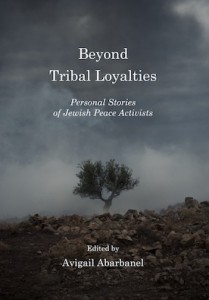 I came to think of Goldstone’s destiny as I was reading Beyond Tribal Loyalties: Personal Stories of Jewish Peace Activists. The book is an anthology with contributions from 25 Jewish activists living in different parts of the world who have come to see the conflict from the Palestinian point of view. For most Jews, criticising Israel comes at a price – relatives and Jewish friends regard it as treason, they are accused of being self-hating, and in some cases even of paving the way for another Holocaust. But these stories are not mainly about the price they have to pay for their activism; it’s about their personal journeys that led them from being (in many cases) completely uncritical supporters of Israel and Zionism into defenders of Palestinian rights.
The book is edited by Avigail Abarbanel, a psychotherapist residing in the United Kingdom. Born in Israel in 1964, Abarbanel grew up in an abusive family and was—just like most other Israelis—completely blind to Palestinians and their suffering. Instead, Jewish suffering was the ubiquitous issue. During her school years the fear of another Holocaust was “repeatedly raised and debated” and she “was taught that everyone in the world, including Arabs, hated us just because we were Jews.” Even though Palestinians make up a fifth of Israel’s population she never understood who they were. She recalls:
I resented the Arab countries around us and our “enemy from within”—or the “fifth column” as the Palestinian citizens of Israel were sometimes called—that I thought wanted to “throw us into the sea”. I resented the world that didn’t seem to understand us and was against us all the time, for what I thought was no reason except our Jewishness. I didn’t understand why “they” couldn’t just leave us in peace. I thought the reason for our suffering, anxiety and insecurity was out there. Together with everyone else I felt hard done by, hassled and unsafe.
Abarbanel later left Israel for Australia, where she earned a degree in psychotherapy. As a student she was forced to scrutinise her past. This, along with reading The Iron Wall by Avi Shlaim, led her to renounce her Israeli citizenship and eventually reject Zionism altogether.
Ronit Yarosky was also unaware of who the Palestinians were. Her family left Montreal for Israel when she was 14 years old. She did her military service and was stationed in the West Bank. The Palestinian residents served as background actors – they were there, yet unimportant. West Bank cities and towns she stayed in as a soldier “were nameless to me because they were “only” Arab towns, and therefore of no significance in my life,” she remembers. Yarosky’s conversion began as she was working on her MA thesis back in Canada. It wasn’t until she read Benny Morris’s The Birth of the Palestinian Refugee Problem that she realised that Jewish settlements were established on the ruins of Arab villages, and that her uncle was even living in a Palestinian house. When she brought this up with her mother, the latter replied: “Well, obviously.” But to Ronit the newly discovered facts was life-changing, and after she could no longer turn a blind eye to what is happening to the Palestinians.
For others like Peter Slezak, Zionism as such doesn’t appear to have been important in his childhood. As a Jew in Australia he felt as an outsider already in primary school. And with most of his relatives being Holocaust survivors, the Haggadah’s warning that “in every generation they [i.e. non-Jews] rise against us to destroy us….” can easily feel validated. Slezak, like many other Jews, used to worry that all non-Jews inevitably harbored anti-Semitic feelings, a worry that took many years to finally overcome. Instead of regarding the Holocaust as a crime against Jews and a proof of why a Jewish state is needed, he sees a universalistic message in Never again. Some Jewish friends have even cut all ties with Selzak, and he has in his own words ended up “becoming a pariah in my own community” because of his pro-Palestinian activism.
This culture of intolerance is well captured by American musician Rich Siegel when he describes himself as “a cult survivor.” There is something “very seriously wrong with Israel, and with the culture that supports it,” he writes. Siegel should know. He was an ardent Zionist as a teenager, even to the degree that he was out in the streets protesting Arafat’s appearance at the UN in 1974, this while singing along to lyrics such as “We’ll kill those Syrians.” For Siegel, the image of an innocent Israel threatened by Jew-hating Arabs first started to crack while waiting for his wife outside a train station in Rhode Island in 2004. A few activists had a book stand outside the train station and he perused Phyllis Bennis’s Understanding the Palestinian-Israeli Conflict: A Primer. He was left shocked after reading about Jews massacring Arabs at Deir Yassin, something he had never heard of. He kept on reading books about the conflict and came to understood what Zionism represented. Some of his friends and relatives are no longer part of his life, but he has no regrets.
I have here only presented glimpses from some of the 25 contributions, but they all deserve to be read in full. As a non-Jew it is difficult to fully relate to the ‘sacredness’ of the Jewish state. However, all people and cultures have their taboos that cannot be disrespected without running the risk of being questioned, persecuted or excommunicated. On a personal level, we all have inner demons holding us back until we have the courage to face them.
Hardly surprising, fear is a reoccurring theme in the stories. Zionism thrives on fears – fear of the Arabs who want to kill the Jews just because of who they are; fear of the non-Jewish world that doesn’t understand Jews because there’s an anti-Semite living in every Gentile. It is only by challenging and facing their fears that Jews can detach themselves from Zionism.
In the afterword Abarbanel writes that she struggled with finding a common denominator for all 25 contributors. But eventually she did find one thing they all share, which she terms “emotional resilience.” She defines it as “the ability to tolerate uncomfortable feelings without avoiding them or trying to make them go away,” and adds that it includes “the ability to tolerate the experience of being disapproved of, disliked and rejected by others, sometimes even by relatives and close friends.” In plain English: to have the courage to stand up for what you believe in no matter the cost.
This is what makes the book so inspiring. 25 stories written by people who struggle because they feel what they are not supposed to feel, because they do things they are not supposed to do. They have the emotional resilience and sense of justice that Richard Goldstone lacks.
~
Kristoffer Larsson studies Economics at a Swedish university. He holds a BA in Theology and is on the Board of Directors of Deir Yassin Remembered. He can be reached at: krislarsson@comhem.se.
UN Committee Demands Israel Stops House Demolitions Forthwith
Israeli Committee Against House Demolitions | December 6th, 2011

The UN Committee on Economic, Social and Cultural Rights, published its concluding observations earlier this week, calling Israel to stop forthwith house demolitions, forced eviction and residency revocation in the Occupied Palestinian Territory and East Jerusalem. After considering the state report by Israel on compliance with the International Covenant on Economic, Social and Cultural Rights, and the ICAHD parallel report (found here…) the Committee recommended Israel reviews and reforms its policies, to align with recommendations made by ICAHD and partner human rights and peace organizations.
ICAHD Co-Director Itay Epshtain addressed the Committee and highlighted the propagated ethnic displacement of Palestinians in the Occupied Territory and within Israel proper, and turned the Committee members’ attention to politically driven displacement trends in East Jerusalem, Jerusalem periphery and the Jordan Valley. To listen to the statement, press here…
The Committee was also presented with findings of the recent ICAHD publication ‘No Home, No Homeland: A New Normative Framework for Examining the Practice of Administrative Home Demolitions in East Jerusalem’ (found here…) in a side event held by ICAHD in conjunction with Al-Haq, Adalah, and Be’tselem.
The Committee adopted the following concluding observations:
The Committee is concerned about the revocation of residency permits of Palestinians living in East Jerusalem, which results in the loss, among other things, of their right to social security, including access to social services (art.9). The Committee calls upon the State party to put a stop to the revocation of residency permits of Palestinians living in East Jerusalem. The Committee urges the State party not to hinder the enjoyment of their right to social security, including access to social services.
The Committee is deeply concerned about home demolitions and forced evictions in the West Bank, in particular Area C, as well as in East Jerusalem, by Israeli authorities, military personnel and settlers (art.11). The Committee urges the State party to stop forthwith home demolitions as reprisals and ensure that evictions in Area C are in conformity with the duty (a) to explore all possible alternatives prior to evictions; (b) to consult with the affected persons; and (c) to provide effective remedies to those affected by forced evictions carried out by the State party’s military. The Committee recommends that the State party ensure that the development of special outline plans and closed military zones are preceded by consultations with affected Palestinian communities. The Committee also recommends that the State party review and reform its housing policy and the issuance of construction permits in East Jerusalem, in order to prevent demolitions and forced evictions and ensure the legality of construction in those areas.
The Committee is concerned that Palestinians living in the OPT do not have access to sufficient and safe drinking water and adequate sanitation. It is also concerned about the continuing destruction of the water infrastructure in Gaza and in the West Bank, including in the Jordan Valley, under military and settler operations since 1967. (art.11). The Committee urges the State party to take measures to ensure the availability of sufficient and safe drinking water and adequate sanitation for Palestinians living in the OPT, including through the facilitation of the entry of necessary materials to rebuild the water and sanitation systems in Gaza. The Committee urges the State party to take urgent steps to facilitate the restoration of the water infrastructure of the West Bank including in the Jordan Valley, affected by the destruction of the local civilians’ wells, roof water tanks, and other water and irrigation facilities under military and settler operations since 1967.
The Committee on Economic, Social and Cultural Rights concluding observations in their entirety can be found here…
At the time of the release of the Committee’s observations, Israel continued demolishing homes in East Jerusalem and Area C of the West Bank in defiance of international law. Yesterday (December 5th) a house and an animal pen were demolished in Wadi Asoul (Silwan, East Jerusalem), two homes were demolished in Beit Hanina, and this morning three homes were demolished in Al Khalayleh (Area C, West Bank).
Settlers torch West Bank mosque
Ma’an – December 7, 2011
SALFIT – A mosque was set on fire on Wednesday by settlers in the West Bank village of Bruqin, near Salfit, local officials said.
The governor of Salfit Isam Abu Bakr told Ma’an that at 2.00 a.m. a number of settlers sprayed racist anti-Arab slogans on the mosque walls and torched a car belonging to local resident Muatasim Samarah.
Abu Bakr said that the attack came “after Israeli forces issued demolition warrants against the mosque claiming it was built without a license.”
Mayor of Bruqin village Accra Samara said a flaming tire was thrown into the entrance of the mosque, and that assailants scrawled the words, “Hero of Ariel,” The Associated Press reported.
Ariel is a nearby Jewish only settlement which cuts deep into the West Bank.
A bulldozer belonging to local villager Ali Nael was also set on fire by settlers, locals said.
Israeli police spokeswoman Cuba Samurai told AP police were investigating the incident.
In June, a mosque in al-Mughayyir, near Ramallah was torched and sprayed with anti-Arab graffiti.
In a similar incident, settlers broke into al-Nurayn mosque in Qusra, south of Nablus in September, smashing windows before setting fire to used tires inside the building.
Settler-related incidents resulting in Palestinian injuries and damage to property are up more than 50 percent this year, according to the UN Office for the Coordination of Humanitarian Affairs, which documents violence in the Palestinian territories.
Almost all “price tag” attacks occur in the occupied West Bank, but in October a mosque in the Bedouin village of Tuba Zangaria in northern Israel was set alight. On the outside of the mosque were scrawled the words “price tag” and “revenge” in Hebrew.
Israel lawmaker wants to force Palestinians to swear “Zionist” oath
By Ali Abunimah – The Electronic Intifada – 12/06/2011
Danny Danon, a member of the Israeli parliament, the Knesset, is proposing that all Israeli citizens – especially the 1.4 million Palestinian citizens of Israel – should be forced to declare an oath of loyalty to the political ideology of Zionism as a condition for obtaining an ID card.
Danon, a member of Israeli prime minister Benjamin Netanyahu’s ruling Likud party, posted this message on his Facebook page:
I thought about the wording for the loyalty declaration bill: “I hereby declare my loyalty to the State of Israel as a Jewish Zionist and democratic state, and solemnly swear to maintain it values and not to engage in illegal acts against it or against any of its institutions.” I would love to hear your opinions.
Adherence to Zionist ideology a condition for obtaining an ID card
Meanwhile the right-wing website IsraelNationalNews.com quoted Danon explaining the purpose of his bill:
Loyalty to the State is something which should be obvious, but I’m afraid that in the current situation in the Arab sector loyalty has become rare, and in order to preserve this important value we’ll have to make it a condition that ID cards will be given in exchange for a declaration of loyalty to Israel.
The “Arab sector” refers to 1.4 million Palestinians who are survivors and descendants of the ethnic cleansing of Palestine in 1948, who are nominally citizens of Israel but face extreme discrimination and diminished rights because they are non-Jews.
Danon’s bill is a thinly-veiled attempt to strip indigenous Palestinians forced to live under a state imposed on them by war and conquest of citizenship, quite possibly as a prelude to expelling them to ensure that Israel remains “Jewish.” After all, what kind of “democracy” can Israel be if it forces citizens to swear allegiance to a particular political ideology – Zionism – which negates the rights of those citizens and expresses the state’s racial hatred toward them and intolerance of their very existence?
Jerusalem lawmaker to be deported to Ramallah
Ma’an – 06/12/2011
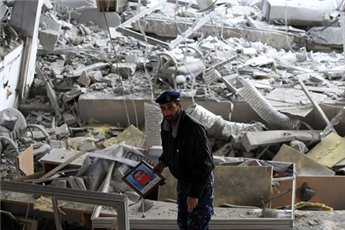 Photographs depicting Palestinian lawmakers jailed by Israel are displayed
in the parliament building that was destroyed during Israel’s offensive in Gaza
City, January 29, 2009. (MaanImages/Wissam Nassar)
JERUSALEM – An Israeli military court on Tuesday ordered the deportation of a Palestinian lawmaker from Jerusalem to Ramallah, a statement from the Palestinian Legislative Council said.
Ahmad Attoun, a Jerusalemite, was detained in front of the offices of the International Committee of the Red Cross in Jerusalem in September.
He had taken shelter in the ICRC building along with another Hamas legislator, Muhammad Abu Teir, and former PA minister Khalid Abu Arafa, after Israeli authorities revoked their Jerusalem residency permits.
In a statement issued in June 2010, after Israel ordered the men to leave Jerusalem, the three Hamas men wrote: “We as sons of Jerusalem have never left it before … we emphasize that we will remain here and never leave it.”
Hamas-affiliated Attoun was released from an Israeli jail in 2009, along with five other Palestinian lawmakers. He had been held for three years.
The ICRC has said it told Israeli authorities that international humanitarian law prohibited the forcible transfer of Palestinian residents from their homes.
Breaking the Silence: An interview with Yehuda Shaul
December 6, 2011 | International Solidarity Movement
West Bank – “If you don’t look nice, you don’t spend too many hours in front of the mirror,” says Yehuda Shaul, one of the founders and Executive Directors of Israeli NGO, Breaking the Silence.
“What we demand of our society is to look in the mirror, so no wonder no one likes it.”
Breaking the Silence was founded in 2004 by Israeli soldiers and veterans who collect and publish testimonies from soldiers who have served in the West Bank,Gaza and East Jerusalem since September 2000. They also hold lectures and conduct tours in Hebron and the South Hebron Hills area “with the aim of giving the Israeli public access to the reality which exists minutes from their own homes, yet is rarely portrayed in the media.”

Yehuda Shaul
The organization states that “cases of abuse towards Palestinians, looting, and destruction of property have been the norm for years, but are still explained as extreme and unique cases…While this reality is known to Israeli soldiers and commanders, Israeli society continues to turn a blind eye, and to deny what is done in its name.”
Shaul, 28, is a religious Jew and a Jerusalemite; he served as a combat soldier and a commander in an Israeli infantry unit during the Second Intifada, from March 2001 until March 2004. He grew up in a right-wing family; his high school was in an Israeli settlement in the West Bank near Ramallah, his cousins were settlers in Gaza, and his sister currently lives in a settlement. He is bearded, bulky and speaks English in a North American accent; his mother is American and his father is Canadian.
Shaul says that he always expected to become a soldier but that he had doubts from the very beginning that what he was doing was right. “But when you’re in the military you always find a way to continue because there are always things that are bigger than you – orders, missions – and I think the most important thing is the bond of comradeship.”
Two years of his service was spent in the West Bank, mostly in Hebron, where he did what all Israeli soldiers do in the Occupied Territories, ranging from the banal to the brutal – standing at checkpoints, carrying out house demolitions, firing grenades into civilian areas and using human shields.
The significant turning point came towards the end of his service as he began to think about civilian life beyond the military.
“Throughout my service it made sense; there were explanations, titles, logic – it’s only when you take one step out and you see things from a different perspective, that’s when you realize that something is wrong and we have to do something about it.”
Shaul says he didn’t really know what to do so he, “just started talking to [his] comrades about it, and very quickly [he] discovered that they all felt the same.” Shaul said,
The one thing that really shocked us was the realization that people back home had no clue. People back home who were sending us to do a job had no idea what doing the job means. In a way Breaking the Silence operates in a very simple logic; you send us to do the job, we went there, we’ve done it, we’re back, we’re not going to tell you who to vote for, but there’s one thing we demand – that you sit down and listen to what we’ve done.
Shaul, along with former soldiers Avichai Sharon and Noam Chayut, staged an exhibition in Tel Aviv in June 2004 of photographs and video footage taken in the Occupied Palestinian Territories by 65 Israeli soldiers. Shaul explains – “The idea was that – OK, this is insane what’s going on here, we need people back home to know…We didn’t really have any plans, it was a really personal thing, and it was the huge response and impact we had once we opened the gallery, with the fact that we met other veterans from other units who served other places who had the same story, that brought Breaking the Silence to where it is today.”
The Israeli military was rattled by the popularity of the exhibition as thousands of people attended; in the first week they broke into the gallery, confiscated exhibited items and hauled the organizers in for interrogation. However, Shaul says that “once they realized it just brought more attention to us, they left us alone.”
Breaking the Silence
Since the initial exhibition, the organization has grown and developed rapidly. In total Breaking the Silence now does around 400 tours and lectures a year – many of the talks are with young Israelis before they have been drafted, which Shaul claims is the organization’s main target group – “these are people who are still civilians and are not infected by the military – yet.”
Breaking the Silence also writes reports and collects testimonies, usually published anonymously, from Israeli soldiers. Almost 800 people have now testified about their experiences and conduct during occupation of Palestinian territory to Breaking the Silence.
According to Shaul, most of the soldiers that testify are low ranking commanders and officers and they tend to be people from the centre-left politically, although he estimates that 10-15% don’t come from this background. He says that usually people come forward because they had problems during their service that they have to express – “Half of the people who testify, do so because they saw the importance of doing it. There was a lot of pressure on them and then, OK, they’ve done a good thing [by testifying] – goodbye. For another big group, testifying was the first step to becoming political activists. It’s really diverse – different people, different experiences.”
Breaking the Silence knows the details of all those who testify and they claim to double check facts rigorously to ensure that testimonies are accurate, but they usually publish the results anonymously. As Shaul said,
When we started Breaking the Silence, most of the people in the first exhibition were still in service. So we had to keep their anonymity because they violated military law. Actually a lot of these investigations and threats in the beginning were to discover who they were so they could throw them in jail and shut down the project because people would be afraid. Of course there are also social repercussions and legal repercussions [in testifying].
Many of the soldiers that testify are men because they comprise the overwhelming majority of soldiers in combat units. However, Breaking the Silence has recently published a collection of testimonies from female soldiers. Shaul says that this was firstly a new way of telling a similar story but that also “this is a voice that is more silent than others. This is a unique voice and it’s an interesting voice that people must be confronted with…What comes from the testimonies is that usually women need to be worse than the men in order to prove themselves – that they’re one of the gang, one of the guys.”
In one of the testimonies, a female soldier describes how “a female soldier who can lash out is a serious fighter. Capable. A ball-breaker. There was one with me when I got there…everyone talked about what grit she had, because she could humiliate Arabs without batting an eyelash. That was the thing to do.”
The collected testimonies from Hebron show instances of extreme brutality, such as when a soldier wound metal wire so tightly round the hand of a Palestinian that his hand had to be amputated. Many of the stories are accounts of more systemic abuse, often sanctioned and encouraged by superiors, as soldiers randomly search houses, detain and beat up Palestinians and destroy and loot property just to “educate” the Palestinians or to “make our presence felt”.
Several soldiers express their disgust at the violence of the settlers in Hebron, like one who stated, ”I simply hated them…And you feel like you’re serving them. Them and their capacity for violence. There were all kinds of situations there of stark, brute, shocking violence.”
Breaking the Silence conduct tours to Hebron, showing people what life is like for the Palestinians that live in the divided city. Several thousand Israeli soldiers protect between 400-500 Israelis who live in settlements, illegal under international law, in the centre of Hebron. It is the only city in the West Bank that contains an Israeli settlement.
In 1994, Brooklyn-born settler Baruch Goldstein opened fire on worshipers as they prayed in the Ibrahimi mosque, killing 29 people and wounding many more. The Israeli authorities responded by effectively punishing the Palestinians by preventing them from accessing many streets and ordering the closure of over 1800 Palestinian shops.
Breaking the Silence explains how settlers frequently abuse and attack Palestinians in the area and how the military harass and restrict the freedoms of Palestinians at checkpoints throughout the Israeli controlled H2 sector of the city. They also show them the empty, shuttered Shuhada Street, once Hebron’s major market area and a vibrant shopping street – now desolate and forbidden for Palestinians to enter.
Given that a lot of Breaking the Silence’s work focuses on Hebron, to what extent is the city paradigmatic of the occupation?
“I think it’s the advocates of the status quo – the people who want to maintain the occupation, who try to make us think that Hebron is an extreme case,” said Shaul. “I don’t think it’s an extreme case , I think that Hebron is a gift from God. Two square kilometers where you walk for half a day and you actually understand how the West Bank works. Hebron is a microcosm of the West Bank. If you zoom out of Hebron, it’s the West Bank. Different policies you see in Hebron you can find all over. Hebron is more visual, more dense – but not extreme.”
The military and Israeli society
The military is a powerful and deeply rooted presence in Israeli society and culture. The writer Arthur Nelson claims that, “Israelis see their army as a great leveler. All teenagers are drafted, and those who serve undergo a rite of passage that forever links them with the national struggle and the national state.” Nelson points out that “Israel is a young country but the civil identification with army culture within it has been grounded in four major wars and two Intifadas.”
Despite the preeminence of the military, Shaul disputes the claim that Israeli society understands the reality of occupation and impact on the lives of the Palestinians.
I think this is one of the biggest lies of Israeli politics and Israeli society is that ‘everybody knows’ – almost no one knows. The amount of people that have the experience that I have – meaning being a combat soldier in the occupied territories in these specific years, is very very low. We’re basically talking about a few dozen thousand.
How does he explain the reluctance in Israeli society to discuss or examine what is being done in their name – is it a lack of information or do people mostly ignore the information that they have available to them?
It’s a mixture of everything. Of course Israeli society doesn’t want to know but still not everything is out there, people are not forced to confront it. Very deep inside there is a lot of optimism in the work of Breaking the Silence and a sense that we believe there is a significant minority of Israeli society that, if given the information and put in a corner, that they will have to choose whether they can stand behind this reality [the occupation] or not, they will choose our answer, which is ‘no’.
Shaul admits that “Israelis are not standing in line to listen to [Breaking the Silence],” and does not really expect them to.
“We don’t really fit into the categories of ‘human rights organization,’ ‘anti-occupation organization,’ ‘peace group’ – we don’t really fit easily into these, but out of all these groups, Breaking the Silence is the most mainstream group and I think that has a lot to do with who we are – we’re all ex-combat soldiers, in a way we’ve earned the right to speak out.”
‘The problem is the political mission…’
Breaking the Silence has taken a clear stand against the occupation of Palestinian territory, although Shaul is quick to point out that they don’t offer any political solutions. However, Shaul insists that in his view, the problem is political and systemic.
We don’t believe that the problem is the military. The problem is the political mission that the military gets”. He says that explains why Breaking the Silence doesn’t take the “mainstream human rights approach of ‘let’s identify the human rights violation, let’s identify the perpetrator, let’s make them accountable’. The problem with that is, if you actually want to put in jail every soldier that abused Palestinians, all soldiers would be in jail. It’s not that we all murdered innocent Palestinians – no. But, no one who served there has clean hands and that’s the story. There’s no way to change it if you don’t change the political mission…when you control people against their will, without giving them rights, the only way to rule them is that they will be afraid of you…if they get used to a level of fear then you have to increase it and that’s how the occupation woks, it’s very simple. So you can have a lot of investigations, as many as you want, and you can have a lot of hours about classes about morality and international law but at the end of the day when you are there to make sure that these people don’t have rights and these people do have rights, there’s no nice way of doing that, no legal way of doing that and that’s the story. In a corrupt reality, in an immoral reality, there’s no moral way to behave.
We ask Shaul if claiming that it is the political system that causes soldiers to commit crimes, is a way of excusing what happens and denying individual responsibility?
No, no, no” Shaul replied – “It’s not that I think I’m not responsible for what I’ve done. Look, when they called us in for interrogation in 2004 [after the exhibition in Tel Aviv] I was interrogated for like seven hours. I had the right to remain silent and not incriminate myself, but I said everything I can say in seven hours. Probably the list of my crimes, to talk about the stuff that I’ve done, would take more like 50 hours but I signed – I’ve used human shields, I’ve fired grenades into civilian neighborhoods…the reason why they don’t put me on trial was because putting me on the bench would mean putting the system on the bench…I think in that sense, the most political thing that I can do is to be put on trial – that’s when my message will be proven.
While there is a danger in posing that Israeli soldiers are victims of a political system, at the expense of the Palestinian victims of their crimes, Shaul said,
I didn’t say [Israeli soldiers] were victims – I said that any soldier – it doesn’t matter what his background, his socio-economic background, his age – being put in this reality, he will behave this way. I didn’t say he was a victim. We don’t see ourselves as victims. If I murdered an innocent person and I can’t fall asleep, that doesn’t make me a victim. I am a victimizer.
Shaul believes that some soldiers should be put on trial while others should not, but quickly adds “that’s not the story – I don’t really care about that. What I care about is to put society on trial. In most cases society cleans itself by putting soldiers on trial. How does it work? Very simple – once in a while someone, somehow, forces the army to admit about one event and stories pop up in the media about how ‘a soldier looted something here,’ ‘a soldier shot there.’ But always it’s being framed as ‘there’s another exceptional case, there’s another rotten apple.’ This soldier, who did that specific thing, to that specific Palestinian, in that specific place…’let’s court martial him and send him to jail and our conscience as a society is clean because we treat our bad apples.’ In a way usually when soldiers are sent to jail, the judge goes like this with the hammer,” motioning as if to strike a table top. “he basically washes us as a society, and I think this is our problem.”
But by not seeking justice for specific crimes, is there the danger that the Palestinian victims of the crimes are neglected?
Shaul replies, “Of course we don’t seek justice because I don’t know what that justice is. Who says that law is the solution for everything? No doubt that I feel better in the language of moral and immoral, than in legal and illegal. So what? We just feel as people that were there it is our moral obligation to speak out and tell the truth – that’s it.”
The future of Breaking the Silence
Shaul is highly critical of the Israeli media and says that Breaking the Silence has been struggling to get it’s voice heard. ” We see ourselves as journalists” he says – “If the Israeli media would do their job there would be no need for us. We’re basically doing what journalism’s about – exposing corruption to the public…I think Israeli journalists are first of all Israeli and these things don’t sell newspapers and people don’t want to be disrupted by this usually. There is a limit to how much you can report about the same thing. It’s been going for 45 years. It’s not news.”
Shaul is also concerned about the raft of recently proposed laws by the Israeli government that threatens the existence and funding of Israeli NGOs – ” These laws need to be looked at within a greater umbrella of other legislation that was passed and some that was not passed, of trying to shrink the space of Israeli civil society. From political appointments in the supreme court, up to libel cases. This is a regime change more than simply passing anti-democratic laws. In terms of human rights organizations, most of the laws are not really there to pass, they are there to shut down people and dominate the discourse and the debate.”
Nevertheless, Shaul feels that the organization has achieved many things.
“For me the most important is that, if you had come to me seven and a half years ago and told me that I would be sitting here and almost 800 people had testified to Breaking the Silence, I would probably laugh in your face. That’s 800 people who are saying the truth about what the occupation is.”
In terms of changing the practices of the Israeli military does he think Breaking the Silence has made an impact? ” God forbid – I don’t think we can do that. We maybe want to change the practice of the military, meaning from an occupation army into a defense army but that’s a different story.”
UNRWA: Israel’s displacement of Palestinians ‘doubles’
Ma’an – 06/12/2011
BETHLEHEM – The number of Palestinians displaced by Israeli demolitions this year has already more than doubled that of 2010, UNRWA spokesman Chris Gunness said Monday.
Research by the UN agency for Palestinian refugees found that 990 people — including 507 children — have lost their homes so far this year, Gunness told Ma’an. In 2010, 445 people — including 235 children — were displaced by Israeli demolitions.
He said 515 Palestinian structures have been demolished in the West Bank this year, of which 22 were in East Jerusalem.
“The loss of a home in normal times is highly destabilizing, but in the context of occupation and annexation it often becomes lastingly traumatic, especially for children,” Gunness said.
“The United Nations calls on the Israeli authorities to abide by their obligations under international law, of which these displacements and demolitions are a clear violation.”
A report by the Diakonia resource center for international humanitarian law says Israel’s civil administration systematically destroys Palestinian structures built without Israeli permission in the 62 percent of the West Bank designated Area C under the Oslo Accords.
The destruction of any civilian object during occupation is prohibited under the Fourth Geneva Convention “except where such destruction is rendered absolutely necessary by military operations” and even then, only if the structure is used solely by militants, Diakonia says.
Settlers kidnap shepherd near Nablus
Ma’an – 05/12/2011
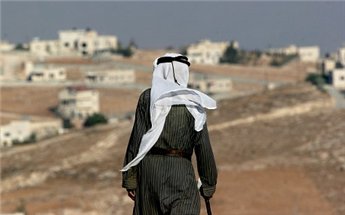 NABLUS – Israeli settlers on Monday kidnapped a 60-year-old shepherd after attacking him in Orif village south of Nablus, officials said.
Village council head Fawzi Shehadeh said six residents of Yitzhar settlement attacked Salim Jamil Shehadeh near the local high school and took him away in a car. The settlers stole all 50 of his sheep, the councilor added.
Palestinian Authority settlement affairs official Ghassan Doughlas told Ma’an the government was conducting intensive negotiations with Israeli officials to secure the shepherd’s release.
On Saturday, settlers from Itamar violently assaulted elderly shepherd Najih Abdul-Qadir as he worked on his land east of Nablus, Doughlas said.
Some 500,000 Israelis live in Jewish-only settlements in the West Bank and East Jerusalem. There are about 2.5 million Palestinians in the same territory.
All settlements are considered illegal under international law.
Israeli forces destroy stone-cutting facility in Qalqiliya
Ma’an – 05/12/2011
QALQILIYA – Israeli forces on Monday demolished a manufacturing facility used to cut stone in Qalqiliya.
Witnesses told Ma’an that various military vehicles and bulldozers arrived at the village of Azzun and destroyed the structure, claiming that it was unlicensed.
Hussain Ghannam, the owner of the stone-cutting plant, said that the structure is located in Area C and has been there since 2008. The manufacturing facility was the source of income for eight families, he told Ma’an.
The Israeli civil administration had asked Ghannam to produce a title deed for the property and he was working with lawyers to have one issued.
The decision to destroy his property was completely unexpected, he said.
Area C covers 60 percent of the West Bank with a Palestinian population of about 150,000.
Israel retains military authority and full control over building and planning in Area C: as much as 70 percent of it is inaccessible to Palestinians, classified as Israeli settlement areas, firing zones, or nature reserves.
From 2000 to 2007, the Civil Administration approved just 5 percent of the applications for building permits submitted by Palestinians in Area C.
Featured Video

They Double Down on BLOOD PRESSURE Guidelines!
or go to
Aletho News Archives – Video-Images
From the Archives
Chocolate Gives Statins a $29 Billion Run For Their Money
By Sayer Ji · GreenMedInfo · April 17, 2012
With the blockbuster cholesterol-lowering class of drugs known as statins being widely promoted for the primary prevention of cardiovascular disease, despite their having over 300 documented adverse health effects (including heart failure!), how does chocolate sound as a viable, heart-friendly alternative?
We already connect amorously with chocolate (to the tune of 6 billion lbs of cocoa consumed annually worldwide), revealing in heart-felt expressions like “I love it,” and “this is to die for!” how comfortable we are with publicly declaring our affection. But did you know that while it makes our emotional hearts sing, it may actually keep our physical hearts happy, alive and ticking longer, as well?
Indeed, back in 2006, researchers found that for elderly men, eating cocoa was inversely associated with blood pressure and 15-year cardiovascular and all-cause mortality. … continue
Blog Roll
 Aletho News
- I’M SO BLOODY FURIOUS: They Double Down on BLOOD PRESSURE Guidelines!
- The Israeli Nuclear Doctrine and the Turning Point of the Kennedy Assassination
- Striking Matches Near the Powder Keg
- Prominent Russia hawk: European leaders privately talk about war with Russia, first need ‘mass casualty event’
- China warned Trump not to touch Iran’s oil tankers: Larry Johnson
- EU Central Banker Plans To Plant Barren AI Crops Across The Continent
- Macron’s Strategic Autonomy Paradox: France Rearms on Debt and Depends on Foreign Fuel
- Nigel Farage vs Tucker Carlson: Who is right about Hitler and Britain?
- Chocolate Gives Statins a $29 Billion Run For Their Money
- Hypotheses on the collapse of U.S. computer systems
- If Americans Knew
- An error has occurred; the feed is probably down. Try again later.
- No Tricks Zone
- New Study: Modern Temps Are Among The Coldest Of The Last 10,000 Years In East Central Europe
- Germany’s Renewable Energies Lead to 1.4 Billion Euro Electric Power Trade Deficit
- Argentina’s Perito Moreno Glacier Joins Antarctica and Arctic In Defying Doomsday Melt Claims
- New Study: Barents Sea Temperatures Were Warmer And Sea Ice Less Extensive In The 1700s Than Today
- German Authorities Start Initiative To Evaluate Public Register For Climate “Disinformation” Spreaders!
- Zonal Asymmetry of Temperature Change in the Antarctic Circumpolar Current
- New Study: The Net Fossil Fuel Contribution To Rising Atmospheric CO2 Has Been Zero For 500 Years
- Germany’s Green Energy Transition Becoming Increasingly Expensive…Another 6 Trillion Euros!
- Sudden Stratospheric Warming, Powerful El Niño Combination May Lead To Extreme Europe Cold, Energy Crisis!
- Two New Studies Find Thwaites Glacier Melt Cannot Be Driven By Human Activity Or A Warming Ocean

