11 Settlers Armed with Knives, Stones Attack Palestinian Shepherds in South Hebron Hills
26 June 2011 | Operation Dove, Christian Peacemaker Teams
Around 10 am on Saturday 25 June, Palestinian shepherds were grazing their sheep and goats in the Meshakha Valley when they were attacked by 11 settlers who came over the hill from the nearby illegal outpost of Havat Ma’on, armed with stones and knives.

Israeli soldiers watch as settlers attack Palestinian shepherds in the South Hebron Hills (photo: Operation Dove)
Some of the settlers were masked as they ran toward the shepherds throwing stones, yelling blasphemies against Islam and stating that internationals were now not present to protect them. According to Shaady from Maghayr al Abeed, a settler attacked his donkey with a knife, and when he attempted to stop the attacker and protect his donkey, he was then hit by stones in the back and torso. Blows that took his breath away. Shaady has a huge welt on his back and bruising as a result of the attack.
Sheep and goats were also pummeled with rocks and the shepherds were forced to run to protect their flock. The shepherds were chased for several hundred meters. According to the Palestinian shepherds the soldiers saw the incident and refused to get involved. After the attack, Israeli soldiers were seen greeting and shaking hands with the settlers as they walked back into the trees of the outpost of Havat Ma’on.
Shaady stated that “we need all the people of the world, Europe and America, to see who is the aggressor and how the Palestinians are being treated by the settlers.”
[Note: According to the Fourth Geneva Convention, the Hague Regulations, the International Court of Justice, and several United Nations resolutions, all Israeli settlements and outposts in the Occupied Palestinian Territories are illegal. Most settlement outposts, including Havat Ma’on (Hill 833), are considered illegal also under Israeli law.]
Operation Dove and Christian Peacemaker Teams have maintained an international presence in At-Tuwani and South Hebron Hills since 2004.
Israel Bulldozes Muslim Historic Cemetery To Construct Oxymoronic “Museum of Tolerance”
By Saed Bannoura | IMEMC & Agencies | June 26, 2011

Israeli bulldozers started on Saturday at night the destruction of the Ma’man Allah ancient Muslim cemetery, in occupied Jerusalem, as part of the Israeli plan to construct the so-called “Museum of Tolerance” on the cemetery ruins.
The Al Aqsa Foundation for Waqf and Foundation reported that the attack was initiated at 11 PM on Saturday at night when three huge bulldozers and two smaller ones, and twenty municipality workers, started the destruction of nearly 100 graves in the three remaining areas of the graveyard.
The destruction targeted the eastern side, the western side and the pool of Ma’man Allah, and aims at including the graveyard area, after its destruction, to be part of the so-called “Tolerance Museum” Israel is planning to build.
The work continued until dawn hours; the graves and the stones were loaded in trucks and were taken away.
The cemetery is in West Jerusalem and is considered one of the largest cemeteries in Jerusalem as it stands on an area of 200 Dunams (nearly 90 acres).
Representatives of the Al Aqsa Foundation went to the graveyard and documented the Israeli violation.
Several month ago, the Israeli District Court in Jerusalem, rejected an appeal filed by the foundation against the destruction of the graves.
In August of last year, Israel bulldozed nearly 300 graves after the foundation renovated nearly 1000 graves that were repeated attacked by extremist settlers.
The ethnic cleansing of Lyd, and how it continues today
By Rana | Mondoweiss | June 24, 2011
The Israeli organization Zochrot has published testimonies from two men, Fayeq Abu Mana and Aaraf Muharab, on the Israeli ethnic cleansing of Lyd, my parents’ hometown. Israelis raping Palestinian women, wide-scale pillaging of Palestinian belongings for resale, mass murders of Palestinians, burning bodies of murdered, a massive Israeli military operation on the ground, military planes air bombing Lyd/Lod, Palestinians forced into prison and work camps. This is how Israel was created: raping, pillaging, and murdering.
From the testimony of Fayeq Abu Mana:
Lod was a quiet city without war. There were only Arabs here, Christians and Muslims, no Jews at all. Ben Shemen was the neighboring Jewish village and we were their friends. The war started and there were battles and they came to occupy Lod. The Jewish soldiers came from the direction of Ben Shemen dressed as Arabs like the Jordanian army. There was a war and there were casualties everywhere in Lod. In the room next to here there were many dead. There were many bodies. They were buried not far from here, near the main road. They buried them in a pit, I mean a jama’a [mass grave], everyone. Down in the city there is another mosque. It has a room that people entered, about 75 people. Someone from Lod took grenades and threw them at the army and killed a few soldiers. One of the soldiers, his brother was killed. He went to the mosque and killed all the people in that room.
We sat at home and they told us to burn the corpses. We burned them on the spot. They said to go to the mosque and take the corpses out from there. How take them out? The hands of the dead were very swollen. We couldn’t lift the corpses by hand, we brought bags and put the corpses on the bags and we lifted them onto a truck. We gathered everyone in the cemetery. Among them was one woman and two children. They said burn. We burned everyone.
I want those who stand with Israel to tell me how they justify this?
This man’s testimony matches the experience of my own family testimonies. My grandmother clinging to her citrus trees, refusing to leave her home and land that she and my grandfather had sacrificed so much and worked so hard for. Where was my grandmother to go with 11 children? She finally fled when the planes came and started bombing her hometown.
Aaraf Muharab relates the history in 1948 to the situation today, where Israel is still trying to force Palestinians out of Lyd, or at least limit the population’s growth. He says:
I want to connect it to what is happening today in local problems. Sometimes it seems to me that people experienced more than one Nakba. Two days ago a house in Lod belonging to a woman with nine children was destroyed and now she is discarded. We made a decision to rebuild the house but it’s not certain that they wouldn’t try to destroy it again. Most of the crimes are committed in fact because there is order. No suffering can be used as a reason to cause suffering to another, otherwise there is no end to it. I don’t think that Zionism is totally evil but you have to recognize the injustice here. Jews here think, that they are continuing the path of Herzl and they don’t see a difference between the expulsion of 1948 and expulsion today. You’re talking here about a demographic problem and that is the basis of racism.
I don’t want to use the word ‘discrimination’ because discrimination means, say, that 80% is apportioned to one side and 20% to the other. But here they give zero percent to the Arab side. It’s not discrimination but hostility. Planning in Lod is carried out purely in favor of the Jews and the Arab areas are an obstacle to the plans and nothing more.
Palestinian Refugees: The Right to Remain, the Right to Return
By Samah Sabawi | Palestine Chronicle | June 24, 2011
I was 12 years old when for the first time in my life I became a citizen of a country – Australia. Before that, I was a stateless Palestinian refugee. There were two laments my parents always repeated whenever they spoke of their place of origin Palestine: if only we could have stayed and if only we could return.
According to the Office of the UN High Commissioner for Refugees (UNHCR), in 2009 there were more than 10 million refugees around the world in need of assistance. This number does not include the7 million Palestinian refugees, who make up the world’s largest refugee population and whose question is the longest standing at the UN.
The plight of Palestinian refugees began 63 years ago when they were forced out of their homes or fled in fear as the Israeli state established itself on the ruins of their villages and their towns and it has not ended. The fact their issue still stands today, unresolved, is a poignant reminder that states and governments will continue to fail the weak and disenfranchised for the sake of political gains and posturing.
Refugees are by definition powerless, in many cases they are either stateless or have lost the protection of their nation state. They depend on international bodies to rescue them. There are two norms which guide the way the international community deals with refugee issues under the UNHCR, the first is to provide protection and assistance to refugees, and the second is to not return individuals to their own countries against their will or if they are at risk of persecution. However, various human rights conventions have over the years created additional norms that work as guidelines to resolve refugee issues by providing preventative measures to make it possible for people to remain on their land and rather than focusing on resettlement alone, safeguarding the rights of refugees to return to their homes if they choose to.
The concept of ‘preventive protection’ is especially important in the case of Palestinian refugees. The right of individuals and communities to remain in their own country is a principle which rejects the expulsion of ethnic communities or what is now known as ‘ethnic cleansing.’ The U.N. Sub-Commission on Prevention of Discrimination and Protection of Minorities has affirmed “the right of persons to remain in peace in their own homes, on their own lands and in their own countries”. The Turku/Abo Declaration on Minimum Humanitarian Standards also provides in Article 7: 1 “All persons have right to remain in peace in their homes and their places of residence.”
Also Article 7 states : “No person shall be compelled to leave their own country”.
Some in Israel may argue that because Palestinian refugees are not citizens of the state, they have no right to refer to the land from which they come from as ‘their country’. This claim is refuted by a litany of legal and human rights experts, most important of all, it is refuted by the UNHCR which defines the Palestinian population as the indigenous people of the land.
Palestinians who live under Israeli occupation face severe measures aimed to uproot them. One example is the practice of revoking residency rights: Hamoked, an Israeli NGO filed a freedom of information request from the Israeli government and found that over 140,000 Palestinians who left to study or work had their residency rights revoked between 1967 and 1994. They wrote in a statement “The mass withdrawal of residency rights from tens of thousands of West Bank residents, tantamount to permanent exile from their homeland, remains an illegitimate demographic policy and a grave violation of international law.”
Another example of an Israeli policy that is at the heart of the creation of the Palestinian refugee crisis is that of house demolition. An Israeli human rights group called the Israeli Committee Against House Demolitions (ICAHD) estimates at least 24,813 homes were demolished in the West Bank, East Jerusalem, and Gaza since 1967, and that according to UN figures, during the 2009 Gaza bombing, more than 4,247 Palestinian homes were destroyed.
The United Nations Relief and Works Agency (UNRWA) reports that Israeli demolitions of Palestinian homes and other buildings reached a record high in March of this year. According to UNRWA, 76 buildings were demolished leading to the displacement of 158 people, including 64 children. UNRWA put the total number of displaced persons in the last six months alone to 333, including 175 children. UNRWA spokesman Chris Gunness described the policy as “discrimination against one ethnic group”. These actions are illegal under article 53 of the 4th Geneva Convention and have been roundly criticized by the UN and other international groups, as well as by human rights organisations.
There are various other policies that drive Palestinians out of their homes, especially in Jerusalem where Palestinian neighborhoods are targeted for evictions to make way for Jewish settlers to move in. Once exiled, Palestinians are denied the right to ever return. This is also illegal under international humanitarian law.
The right to return voluntarily and in safety to one’s country of origin or nationality is a right enshrined in the rules of traditional international law and also in Human rights law. The U.N. Security Council has affirmed “the right of refugees and displaced persons to return to their homes”. The Sub-Commission on Prevention of Discrimination and Protection of Minorities has affirmed “the right of refugees and displaced persons to return, in safety and dignity, to their country of origin and or within it, to their place of origin or choice”.
This right is a pillar of international humanitarian law simply because it acknowledges that human beings form attachments to their native land. This is not a case that is unique to Palestinian refugees; it is one shared by indigenous people everywhere. Attachment to the land of one’s origin is a natural human condition and is precisely why these sentiments and emotional ties are protected.
The Palestinian refugee population will continue to grow because we in the international community have failed to find informed appropriate responses to their cries for help. We must intensify our efforts to prevent the increase of the number of Palestinian refugees that Israel uproots from the land and to help the indigenous people maintain their right to remain on the land. We also need to pressure Israel to make a repatriation offer to all the Palestinian refugees and to allow them to practice the right to return to their homes should they so choose. Failing to do so will set a negative precedent and can have an adverse consequence for the millions of other refugees.
~
Samah Sabawi is a Palestinian Australian writer, author of Journey to Peace in Palestine and public advocate of Australians for Palestine. She is a policy advisor for Al-Shabaka, the Palestinian Policy Network. She took part in Refugee Week’s Hebron-Leichhardt Festival of Friendship in Sydney.
“Now it’s all gone”: Women cope with siege in Jordan Valley
By Nora Barrows-Friedman | The Electronic Intifada | 24 June 2011
Israeli military forces have demolished 27 houses in the Jordan Valley in the occupied West Bank over the last two weeks. More than 140 Palestinians have been rendered homeless by the demolitions, while Israeli settlement expansion continues to threaten more land and restrict water access — affecting the vitality of dozens of Palestinian villages in the area.
According to the Jordan Valley Solidarity (JVS) campaign, an organization working with local communities, Israeli military and police jeeps and two bulldozers invaded the Bedouin community of al-Hadidya on 21 June. The bulldozers “demolished seven residential tents, 18 animal shelters and four kitchens, leaving 32 people homeless,” the group reports (“Big wave of demolitions in the Northern Jordan Valley,” 21 June 2011).
Al-Hadidya is located near two illegal Israeli settlements, which are built partly on the village’s farmland, according to JVS. The area is surrounded by three military bases and is a designated “closed military zone” by Israeli forces. JVS adds that there have been nearly a dozen demolitions of Palestinian homes in the village since 2007 “with many of the residents having had their homes destroyed multiple times.”
“After the demolition of al-Hadidya, the bulldozers drove on to nearby Khirbet Yerza, where they demolished two homes and two animal shelters. As a result ten people were left homeless,” JVS reports. The group filmed the demolition in al-Hadidya, which left the Daraghmeh family homeless, and uploaded the video to YouTube (“Khirbet Yerza Demolition,” 21 June 2011).
In the video, JVS reports that this is the second time in five months that the Daraghmeh family suffered a demolition of their home, and that the family was not given a demolition order before the destruction of their property on Tuesday.
Wave of home demolitions in the Jordan Valley
The demolitions in al-Hadidya and Khirbet Yerza come on the heels of a massive demolition inside the village of Fasayil on 14 June. The Israeli Committee Against House Demolitions (ICAHD) states in a report that more than 100 persons — including 64 children — were left homeless after Israeli forces destroyed 21 structures, including 18 homes (“Jordan Valley homes demolished, 103 left homeless,” 15 June 2011).
ICAHD co-director Itay Epshtain says in the report that the latest demolition of Fasayil “is part of an ongoing ethnic cleansing of the Jordan Valley … It is Israel’s overt policy to demolish Palestinians’ homes in the Jordan Valley to allow for land expropriation and for neighboring settlements to encroach on Palestinian land.”
Fasayil resident Khaled Abdallah Ali Ghazal added he was intent on rebuilding his destroyed home. “We have nowhere else to go, we will rebuild,” he says in the same report.
Meanwhile, on 20 June, demolition orders were handed out to Palestinian homeowners in Jiftlik, a village in the central Jordan Valley, months after Israeli officials came to “take pictures of the structures” that were listed for demolition, according to a JVS report (“3 new demolition orders in Jiftlik,” 20 June 2011).
The demolitions could happen on 11 July, JVS states, but the three families who were given the demolition orders are planning to challenge them in court.
“It happens very rarely that lawyers obtain a cancellation but sometimes they obtain a freeze. It enables people to stay in their house [until] the end of the freeze,” JVS reports. If the court rejects the appeal, 17 persons could be left homeless.
State of siege in Area C
These attacks on Palestinian villages are part of a wave of home demolitions across Area C in the West Bank. Under the Oslo accords signed by Israel and the Palestine Liberation Organization in the mid-1990s, the occupied West Bank and Gaza Strip were carved up into areas A, B and C, the last of which indicates full Israeli control.
Sixty percent of the West Bank is designated Area C, including East Jerusalem and the Jordan Valley. Under the Oslo regulations, Area C is administered and controlled by the Israeli government and its military, which has declared three-quarters of the land as “closed military zones” or nature reserves, and therefore “off-limits” to Palestinians. Approximately 40,000 Palestinians live in Area C.
At the same time, illegal Israeli settlements are continuing to expand on Palestinian land in the Jordan Valley for the benefit of Jewish settlers and Israeli agriculture, resulting in an increase in home demolitions and land appropriation.
The Israeli human rights organization B’Tselem reported recently that that there have already been more home demolitions in Area C in the first six months of 2011 than took place during all of 2010. The report states that since January more than 700 persons, including 341 children, were displaced after 103 homes were destroyed in Area C of the West Bank (“Sharp increase in West Bank home demolition,” 22 June 2011).
“This is a sharp increase in home demolitions in Area C,” B’Tselem states in the report. “In 2010, by comparison, the Civil Administration demolished 86 residential structures. In 2009, the figure was 28.”
Israeli settlement and resource theft in the Jordan Valley
In an in-depth report released by B’Tselem on Israeli policy in the Jordan Valley, released in May, the organization states that 9,400 Israeli settlers live in 37 different settlement colonies in the Jordan Valley and the northern Dead Sea areas, including seven outposts not yet authorized by Israeli officialdom.
The report also finds that Israel has used the “absentee property law” enacted during the initial years of ethnic cleansing and dispossession in the 1940s and the 1967 war to take over more Palestinian land and allocate it to the settlements after Palestinians were driven out of their homes by military force and prevented from returning (“Disposession and Exploitation: Israel’s policy in the Jordan Valley and Northern Dead Sea,” 12 May 2011 [PDF]).
By the end of 2010, B’Tselem reports, the Israeli government had approved funding for the construction of dozens of housing units in two settlement colonies in the northern Jordan Valley. The government says that Jewish settler population growth in the Jordan Valley has been “modest” and is therefore trying to encourage more settlers to move into the area by providing economic incentives.
Along with the promise of cheap land in the Jordan Valley, those settlers are given massive amounts of water from the underground springs, which used to provide Palestinian communities with irrigation for abundant crops and running water in their homes year-round. Those springs have run dry in the last few years as Israeli settlements divert water systems for their own use.
In a summary of the report, B’Tselem says that those settlers are “allocated 45 million [cubic meters] of water a year from [wells], from the Jordan River, from treated wastewater and from artificial water reservoirs. This is almost one-third the quantity of water accessible to the 2.5 million Palestinians living throughout the West Bank. This generous water supply has enabled settlements to develop intensive farming methods and to work the land all year round, with most of the produce being exported” (“New report exposes scope of Israel’s economic exploitation of Jordan Valley,” 12 May 2011).
Effect of Israel’s policies on women and children
In interviews held in person in late April, residents of two villages in the Jordan Valley told The Electronic Intifada that these types of widespread demolitions and water restriction policies have a catastrophic effect on the village communities — especially on women and children.
The Electronic Intifada spoke with several women involved with the Auja-Fasayil Joint Women’s Center, a community organization based in Auja village that is helping to support local women and families with trade skills training, education and economic opportunities since Israeli policies have severely impacted farmers’ livelihoods.
Currently home to approximately 5,300 residents, Auja was known for its abundant crops of produce and grains. Farmers exported watermelons, bananas, citrus fruit and wheat to other areas in Palestine and across the border to Jordan as well. The area was famously rich with natural water springs, which would cascade down hillsides like waterfalls.
Residents told The Electronic Intifada that people had developed sustainable ways of sharing water resources amongst the communities through an intricate system of canals — some which date back to the ancient Roman era.
“Our main source for livelihood was the water itself,” Suheir Nujum, 37, and a member of the center’s General Assembly, said. “But now, with the development of settlements, central areas of the canals have been confiscated. [Israel] has diverted our water with irrigation systems to the settlements.”
Just in the past several years, Nujum said, most of the village’s land has become dust-dry and barren, forcing villagers to sell their parcels of empty land to large-scale chicken farmers who sell poultry meat elsewhere in the West Bank. The income for families in the Jordan Valley, in places like Auja, Nujum explained, was dependent on community agriculture. In a dramatically short period of time, since Israel began diverting water to illegal settlements within the last decade, their lands have dried up and unemployment has skyrocketed.
“We now have two options,” Nujum said. “The younger population either works with the Palestinian Authority, or works in agricultural farms in a nearby settlement.” She pointed out the shocking indignity of the latter option, as this is the first generation of indigenous people in the area to not enjoy their own economic sustainability drawn from their own land but rather forced to work on land that has been taken over and appropriated by foreign settlers.
“Israel is not allowing us to survive as people in Auja. They’re taking it away from us,” she added.
“Now we can’t grow the grain to feed the sheep”
Nujum said that the effect on women under this type of stress has become significant. “Women in Auja and other communities in the Jordan Valley are very well-educated,” she told The Electronic Intifada. “Many of us have finished college. But there are limited opportunities for women to generate income for our families, so that is why we built this community center.”
“However we used to be entirely self-sufficient. We used to have livestock, and we would feed them with grain that we grew,” Nujum said. “Now, we can’t grow the grain to feed the sheep. We don’t have sheep to make dairy products. There used to be so many options for feeding your family. So the women — well-educated women — are at home without jobs. We used to work side-by-side with the men on the land.”
Umm Hamza, 47, the center’s public relations officer, told The Electronic Intifada that she was formerly a farmer, along with her husband. Now that the water has been diverted to the nearby settlement, both she and her husband have been unemployed. “If you look at it, it’s all intertwined,” she said. “Our children used to take care of the land. Now there’s nothing for them. The land used to bring the whole family together to take part in farming. We didn’t need anyone from the outside to help us.”
These days, she said, the community is dependent on finding menial labor jobs from outside the village to bring in income, and women must buy lower-quality, imported produce at high prices in order to feed their families.
Umm Hamza also said that water for drinking, bathing, cooking and irrigation now must be brought in by truck, and bought from the Israeli water company Mekorot. The company is known for its discriminatory water policies and regularly cuts off water supplies to Palestinians across the West Bank, especially in the Jordan Valley.
“The water is filthy,” Umm Hamza explained. “Our children are getting sick from drinking it. And sometimes we wait days or months without water in the village.”
Umm Hamza and Nujum said that villagers in Auja and Fasayil are forced to pay Mekorot for the distribution of unclean water, while just a short time ago, abundant water used to be clean enough to drink from the canals and agricultural crops were well-irrigated.
Nujum said that everything has dramatically changed in her village. As her family and community struggle against the next home demolition, settlement encroachment or water cut-off, she explained that working alongside other women in similar situations at the women’s center is empowering, but that something needs to be done about Israel’s devastating policies in the Jordan Valley before it’s too late.
“We used to live the best life, with what we had here — from our own sources. We’d love to go back to our tradition of working on our land. It was our main source of income, it was a way of life. It wasn’t too long ago that we had this life, and now it’s all gone.”
Nora Barrows-Friedman is an award-winning independent journalist, and is a staff writer and editor for The Electronic Intifada. She also writes for Inter Press Service, Al Jazeera, Truthout and other outlets, and regularly reports from Palestine.
Siham Rashid translated for this article.
Protesters in Bil’in drive bulldozer at the Wall
24 June 2011 | Popular Struggle Coordination Committee
Hundreds of protesters led by a bulldozer marched on the Wall in Bil’in today after the Israeli army began dismantling it earlier this week. Palestinian Prime Minister Salam Fayyad ank MK Mohammed Barakah participated in the demonstration.
Israeli soldiers open fire at a Palestinian protester driving a bulldozer at the site of the Wall in Bil’in today, shattering one of the vehicle’s windows and puncturing two of its tires. At the time of the shooting, the bulldozer was dismantling the gate in the section of the Wall that is being relocated by the army these days.
The 500 protesters, among them Palestinian Prime Minister Salam Fayyad and Israeli MK Mohammed Barakah, marched from the village’s mosque towards the Wall. On arrival to the gate, and as the bulldozer advanced at the gate, the protesters were attacked with rubber-coated bullets, tear-gas and foul-smelling water shot by a water-cannon. Two people were lightly injured.
At a demonstration in the village of Nabi Saleh, also today, the army attacked a group of children dressed as clown who were running kites inside the village. In Deir Qaddis, the Nili settlement’s security guard shot live fire at protesters who flew the Palestinian flag from one of the houses being built in the new neighborhood of the settlement.
The Bil’in Popular Committee has declared today as the last day of the old path of the Barrier on village’s lands, and the beginning of the struggle against the new path. A mass demonstration will march on the Barrier to dismantle it and access the lands sequestered behind it.
On Tuesday morning this week, army bulldozers began work to dismantle the Wall in Bil’in. As early as 2007, after two years of weekly protests in the village and following a petition filed by the residents, Israeli high court declared the path of the Barrier illegal. The court ruled that the route was not devised according to security standards, but rather for the purpose of settlement expansion. Despite the high court’s ruling four more years of struggle had to elapse for the army to begin dismantlement. During these years two people were killed in the course of the weekly protests and many others injured.
Yet even according to the new path, sanctioned by the high court, 435 acres of village land will remain on the “Israeli” side of the Barrier.
On September 4th, 2007, the high court ordered the state to come up with an alternative path for the existing Barrier in Bil’in within a reasonable period of time. Despite the ruling, many months elapsed and no new plan was offered. On the May 29th, 2008, the residents of Bil’in filed a petition to hold the state in contempt of the court due to this delay. In response to the petition, the state offered an alternative path. However, the plan failed to comply with the high court’s ruling as the proffered path left a large area designed for settlement expansion on the “Israeli” side of the Barrier. The only difference between the two paths being that the latter offered to award 40 acres of land back to the residents.
A second petition claiming the alternative path not in accordance with court ruling was then filed. On August 3rd, 2008, the court declared that the first alternative path indeed fails to adhere to the ruling. The court ordered the state to come up with another alternative path.
On September 16th, 2008, the state offered a second alternative path. This path also left a large area designed for settlement expansion on the “Israeli” side, offering to return 100 acres of village land to the residents. A lawyer for the residents asked that the state be held in contempt of the court for violating a court ruling for the second time.
On December 15th, 2008, the high court ruled that the second alternative path was not in accordance with the original court ruling.
In April 2009 the state offered a third alternative path which left most of the area destined for settlement expansion on the “Palestinian” side of the Barrier, thereby returning to the village 150 acres of 490 acres annexed by the original path.
Collective Apathy About Collective Punishment
By Meg Walsh for MIFTAH | June 22, 2011
It feels like my surroundings are rapidly closing in on me. The metal bars in which I am enclosed are ugly and the ground is littered with trash. Desperate children are trying to sell me gum and candy. Candy is the last thing I want right now; I want to escape. Bodies are pressing up against me as people struggle to make it through the revolving gate that only lets a few through at a time. If I am not aggressive, I will never get through. A teenage boy is getting yelled at by a soldier for some unknown reason, and a father is denied although his wife and children are granted passage. An old man in the car lane is taking out his groceries one by one from his trunk as a young soldier stands inspecting, finger on the trigger. Cars are backed up and people are getting impatient. I am angry.
I must pass through the checkpoint every time I wish to enter Jerusalem from Ramallah, even though east Jerusalem is Palestinian territory. I have to answer the familiar questions such as “What were you doing in the West Bank?” or “Do you have any Palestinian friends?” I hate being forced to lie. Having Palestinian friends should not be looked at as criminal. And I hate that they almost – almost make me feel that I am truly doing something wrong. Most of all, I hate the way the Palestinians are treated, and although I am uncomfortable, chances are I will get through without much problem. Their reality is much different. Any random checkpoint encounter could mean harassment, detainment, or worse. It seems to mostly depend on the mood of the soldier.
I had underestimated the anger and anxiety that I would feel in these scenarios. Some people around me appear visibly upset while others just look bored. Because of the freedom that I have enjoyed my entire life, I refuse to accept this dehumanizing process. As I stand there, I vow to never adjust, to never become desensitized to this. For me, that would signal complicity in the face of the injustice that is occurring: a complete domination of one group of people over another—a betrayal of humanity. Threat levels are determined by the color of your ID card and the language that you speak. I will not thank the soldiers when they return my passport. I will not grant legitimacy to their role by acting like they are doing me a favor. I will not be forced to equate human rights with privilege.
When they ask, I tell the interrogators that I have been in the city of Nablus, visiting Jacob’s Well, which is the biblical site where Jesus is believed to have had encountered a Samaritan woman. This falls in line with my Christian tourism story that most visitors have to use if they are planning on having any contact with Palestinians. Although with suspicious looks, I am allowed to pass through the gates with the others like herded animals.
When you witness the policies that are in place and the apartheid system that is occurring, it is hard to stay outside the cycle of hatred. It is hard to see the ‘other’, the one who is enforcing the rules, as human—they become robots, trapped inside a system that teaches you to follow orders, not to ask questions. It denies all natural laws of humanity, so the challenge then becomes to stay human in an inhuman situation. People are not meant to be kept in cages, both figuratively and literally, and race and religion should not be prioritized. The ironies are many in this ‘Holy Land’.
But how do I communicate to others what I have seen and felt when most people choose the comfort of ignorance over awareness in our unjust world? If words could accurately describe this oppression, I do not believe it would be allowed to continue unchecked. The gap between words and lived experience is vast, and those who may actually have the power to change things may never understand the reality—the reality of the nightmare that is occupation. It was only through my experience in this region that I was ultimately changed. It was from looking it in the eye, from feeling powerless, from experiencing a fear that the unexpected could happen at any given moment.
In Palestine, where most days I feel useless rather than useful, I still somehow feel that I have to be here no matter how outside of my comfort zone it lies. I cannot continue to be complicit or neutral, because I have seen what that means in this conflict and how collective apathy has embarrassingly allowed the occupation of Palestine to continue for 44 years. I am standing on a bridge between two worlds—one in which the powerful are silent, and the other in which the powerless are screaming, yet ignored. It is through this paradox that I am seeking answers. And some degree of hope.
~
Meg Walsh is a Writer for the Media and Information Department at the Palestinian Initiative for the Promotion of Global Dialogue and Democracy (MIFTAH). She can be contacted at mid@miftah.org.
Jordan Valley families left homeless
Ma’an – 23/06/2011

Ralia Saleh Yusuf Mahmoud Sharad sits on the rubble of her demolished home.
[MaanImages/Hilary Minch, EAPPI]
JERICHO — “The big soldier wouldn’t speak to me. He just said ‘This is my job, sit down and shut up’,” the newly homeless Ralia Darraghmeh, a diabetes sufferer in her sixties said of the one of the crew who had come to demolish her home Tuesday morning.
She was sitting alone, crying in Khirbet Yarza, a tiny Bedouin hamlet, as her tin home was taken down by order of Israel’s Civil Administration, which governs planning and permit issuing in the 60 percent of the West Bank categorized as Area C under the 1993 Oslo Accords.
According to an observer from the Ecumenical Accompaniment Program in Palestine and Israel, 30 people, including 8 children were affected by the demolitions.
The Darraghmeh family represent almost all of the residents of the hamlet. The eldest son of the group had planned to get married in July, but his brother said the goods and savings that would have supported the marriage were buried underneath the debris of their home.
“I really don’t care about my suffering, but what about the children?” asked another of the elder sons in the family as he surveyed the damage.

Israeli forces demolish homes in Khirbet Yarza. [MaanImages/Patricia Mercer, EAPPI]
With their belongings strewn in the rubble, the men, women and children of the hamlet began gathering up their goods, salvaging what was possible, and trying to decide where to go.
The family said they were warned by the army that the soldiers would return if the family remained in the area or received humanitarian assistance.
According to a report from the Israeli human rights group B’Tselem, home demolitions in the first six months of 2011 displaced 706 individuals, including 341 minors.
With reporting from Hilary Minch, an observer with EAPPI.
Israel moves Muslim skeletons making way for hotel in Jaffa
Palestine Information Center – 20/06/2011
NAZARETH — The Israel Antiquities Authority has been working with a local company to build a tourist hotel on the ruins of a Muslim cemetery near the Grand Mosque in the Palestinian port city of Jaffa, Al-Aqsa Islamic heritage foundation said in a statement Sunday.
It said the IAA has gathered the remains of Muslims buried there in cardboard boxes placed in a bunker near the cemetery, making way to transport them covertly. Dozens more skeletons are scattered across the cemetery, Al-Aqsa Foundation said.
The group, which operates chiefly in Jerusalem, said Israeli authorities have been trying to bargain with Jaffa locals in a bid to get them to agree to the hotel construction, but local Palestinians have so far shown no sign of budging.
Al-Aqsa Foundation has filed a petition in the Israeli court objecting to the construction, but the petition was denied, and the company behind the project was given permission to continue working. The foundation used photos documenting violations taking place at the site.
Can Palestine be partitioned? Taking the discussion back to basics
By Ali Abunimah – Electronic Intifada – 06/20/2011
Anyone who follows developments related to Palestine will have heard countless times the lazy assertion that “everybody knows” what a final outcome will look like.
It is common refrain from a Middle East peace process industry that seeks to define the limits of permissible discussion about political outcomes. Anything that does not fit with Israel’s priority to remain a “Jewish” state is automatically deemed “not pragmatic” or “utopian” at best, or “extremist” and betraying a desire to “destroy Israel” at worst.
US President Barack Obama echoed this consensus in his recent Middle East speech when he said:
What America and the international community can do is to state frankly what everyone knows – a lasting peace will involve two states for two peoples: Israel as a Jewish state and the homeland for the Jewish people, and the state of Palestine as the homeland for the Palestinian people, each state enjoying self-determination, mutual recognition, and peace.
Of course that depends on what the meaning of “everyone” is. Nadim Rouhana, founding director of Mada al-Carmel, the Arab Centre for Applied Research in Haifa challenges this broken conventional wisdom in a new article: The Colonial Condition: Is Partition Possible in Palestine?.
Rouhana, a professor at Tufts University, and a drafter of the Haifa Declaration and the One-State Declaration takes on the very idea that partition (“the two-state solution”) is an appropriate framework for Palestine:
Proponents of partition argue therefore that resolving this conflict should simply be a matter of devising a well-designed internationally supported negotiation process, because the parameters of partition are all “well-known.”
But such an argument overlooks the practicalities of colonialism and the complex political and physical realities it has been producing on the ground for generations. The argument fails to notice the colonizers’ patterns of violent domination and ingrained sense of superiority that has to come with the process of colonization, the continuous dispossession and demographic control of the native population, and the epistemological and psychological systems that have emerged among the colonizing population to deny or justify dispossession and domination. It also fails to see why the colonized indigenous population cannot accept surrendering their homeland and/or renouncing their original belonging to it, why they resist, and why they withhold granting legitimacy from the colonial project. The partition argument also pays no heed to the historical evidence about resolving conflicts caused by settler colonialism.
Rouhana points out that, historically, conflicts that emerged in a context of settler colonialism have never been brought to an end with a stable partition between the indigenous people and the settlers. A two-state solution ignores the rights of Palestinians inside Israel, and in the context of Zionism’s explicit goal of creating an exclusively Jewish state, any partition that left a substantial minority of Palestinians inside the “Jewish” state’s borders “could lead under certain circumstances to further ethnic cleansing and war crimes.”
This is precisely the argument I have put forward in an article that will appear in the September issue of Ethnopolitics (my article is part of a “Symposium” which means the journal will publish critical responses to it from three other scholars).
The key point here is that Palestine has too often been analyzed as an exceptional case, without reference to either the broader literature and field of ethnic conflict, and without careful comparison to other cases.
Rouhana, who has said he plans to expand his paper into a longer article, reaches a conclusion that ought to be increasingly obvious to all except those to whom everything is already “well known”: Partition or not, Palestinians inside Israel are going to continue to press for their full national and political rights which will push Israel in the direction of “bi-nationalism.”
“If that is the direction anyway,” Rouhana asks, “why should Israelis and Palestinians not start thinking about alternatives to partition?”
As the growing discourse about a one-state solution demonstrates, they already are, and it is a debate that will only continue to grow as the mirage of a two-state solution recedes ever further from political feasibility and lived reality.
Protest organizer jailed by Israeli court for year
Ma’an – 20/06/2011
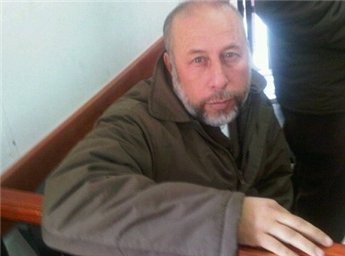 RAMALLAH — The Ofer Israeli military court sentenced popular protest coordinator Naji At-Tamimi to one year of imprisonment and a fine of 10,000 shekels ($2,914), his colleagues said.
Naji and Basem At-Tamimi were taken by Israeli forces from their homes in April and held without charge.
Naji was charged with inciting and participating in rallies and organizing demonstrations against Israeli land confiscation and settlement building. Israel has declared such demonstrations illegal.
In a statement released shortly after the sentencing was handed down, the Popular Struggle Committee in Nabi Saleh, where Naji is from, said it rejected Israel’s characterization of the protests as illegal, and said it considered the sentencing of Tamimi for his role in the protests as a “violation of the law,” noting it prevented Palestinians from defending their property.
The committee questioned the “international silence” on the issue, recalling European Union expressions of concern over the jailing of Bil’in activist Abdallah Abu Rahma, and condemnation from the international rights group Amnesty International.
The sentencing, the statement said, “will not curb us from our mission,” and demanded the release of the organizer.
Israeli occupation authority serves demolition notifications to citizens in Jordan Valley
Palestine Information Center – 19/06/2011
JORDAN VALLEY — The Israeli occupation authority (IOA) delivered demolition notices to Palestinian citizens in northern Jordan Valley on Sunday, locals said.
They told the PIC reporter that the IOA warned four families in Hadidiya area that they should tear down their tents and tin houses within a period of one month and a half and leave the area at the pretext that their land is in the proximity of an army training field.
About 110 Palestinians inhabit the area under severe deprivation of the simplest human rights especially after a Jewish settlement was established on their land with only 35 individuals inhabiting it.
The settlers blocked all routes leading to Hadidiya and prevented its inhabitants from passing through the gate erected by those settlers to separate them from nearby Palestinian cities such Tobas and Tamon.
Featured Video

They Double Down on BLOOD PRESSURE Guidelines!
or go to
Aletho News Archives – Video-Images
From the Archives
Chocolate Gives Statins a $29 Billion Run For Their Money
By Sayer Ji · GreenMedInfo · April 17, 2012
With the blockbuster cholesterol-lowering class of drugs known as statins being widely promoted for the primary prevention of cardiovascular disease, despite their having over 300 documented adverse health effects (including heart failure!), how does chocolate sound as a viable, heart-friendly alternative?
We already connect amorously with chocolate (to the tune of 6 billion lbs of cocoa consumed annually worldwide), revealing in heart-felt expressions like “I love it,” and “this is to die for!” how comfortable we are with publicly declaring our affection. But did you know that while it makes our emotional hearts sing, it may actually keep our physical hearts happy, alive and ticking longer, as well?
Indeed, back in 2006, researchers found that for elderly men, eating cocoa was inversely associated with blood pressure and 15-year cardiovascular and all-cause mortality. … continue
Blog Roll
 Aletho News
- I’M SO BLOODY FURIOUS: They Double Down on BLOOD PRESSURE Guidelines!
- The Israeli Nuclear Doctrine and the Turning Point of the Kennedy Assassination
- Striking Matches Near the Powder Keg
- Prominent Russia hawk: European leaders privately talk about war with Russia, first need ‘mass casualty event’
- China warned Trump not to touch Iran’s oil tankers: Larry Johnson
- EU Central Banker Plans To Plant Barren AI Crops Across The Continent
- Macron’s Strategic Autonomy Paradox: France Rearms on Debt and Depends on Foreign Fuel
- Nigel Farage vs Tucker Carlson: Who is right about Hitler and Britain?
- Chocolate Gives Statins a $29 Billion Run For Their Money
- Hypotheses on the collapse of U.S. computer systems
- If Americans Knew
- An error has occurred; the feed is probably down. Try again later.
- No Tricks Zone
- New Study: Modern Temps Are Among The Coldest Of The Last 10,000 Years In East Central Europe
- Germany’s Renewable Energies Lead to 1.4 Billion Euro Electric Power Trade Deficit
- Argentina’s Perito Moreno Glacier Joins Antarctica and Arctic In Defying Doomsday Melt Claims
- New Study: Barents Sea Temperatures Were Warmer And Sea Ice Less Extensive In The 1700s Than Today
- German Authorities Start Initiative To Evaluate Public Register For Climate “Disinformation” Spreaders!
- Zonal Asymmetry of Temperature Change in the Antarctic Circumpolar Current
- New Study: The Net Fossil Fuel Contribution To Rising Atmospheric CO2 Has Been Zero For 500 Years
- Germany’s Green Energy Transition Becoming Increasingly Expensive…Another 6 Trillion Euros!
- Sudden Stratospheric Warming, Powerful El Niño Combination May Lead To Extreme Europe Cold, Energy Crisis!
- Two New Studies Find Thwaites Glacier Melt Cannot Be Driven By Human Activity Or A Warming Ocean

