Dutch opposition boycotts parliamentary delegation to Israel
Adri Nieuwhof, The Electronic Intifada, 10 March 2011
Dutch opposition parties boycotted a parliamentary delegation to the Middle East in February after parties supporting the right-wing government insisted on going ahead with the visit despite an Israeli government ban on allowing the lawmakers to visit the besieged Gaza Strip.
Following the uprising that overthrew former Egyptian President Hosni Mubarak and after Israeli Foreign Minister Avigdor Lieberman blocked a proposed visit to Gaza, all parties opposing the right-wing government preferred to postpone the visit.
In spite of the tradition of deciding on such official parliamentary visits on the basis of consensus, right-wing and Christian parties decided to proceed on their own and their visit from 22 to 28 February became a right-wing junket.
In 2009, the parliamentary Committee on Foreign Affairs decided to plan an official visit to Egypt, Israel, the West Bank and Gaza Strip, Lebanon and Jordan. Egypt was to have been the focus of the visit given the important role of the country in the region.
But after the dissolution of the Egyptian parliament by the transitional military government, the Dutch parliamentarian delegation lost its major counterpart. After Lieberman refused permission for the delegation to visit Gaza, opposition parties called for the delegation to be postponed so that it would not become unbalanced.
The visit by the exclusively right-wing parties pours more oil on the fire started when Dutch Foreign Minister Uri Rosenthal attacked Dutch donor organization ICCO for its support to The Electronic Intifada last November.
In Jerusalem, the parliamentarians were briefed on Dutch subsidies to human rights and development organizations by the Israeli extreme right organization NGO Monitor, which was behind the attack on The Electronic Intifada.
This report shocked Kees Van der Staaij, an MP from the SGP (Reformed Political Party), which states on its website that its positions are based on the Bible. Van der Staaij said he would approach Rosenthal for “clarification” about the financial support from Dutch civil society groups ICCO, Oxfam Novib, Cordaid and the Dutch representation in Ramallah to organizations that “act against the State of Israel” (“Nederlands geld ingezet tegen Israel,” Reformatisch Dagblad, 25 February 2011).
Citing the NGO Monitor report, Van der Staaij tweeted that organizations that characterized Israel as an “apartheid colonial regime” should receive no funding.
Meanwhile, all four opposition parties held the opinion that a trip to the Middle East without stops in Egypt and Gaza is unbalanced. Alexander Pechtold of Democrats 66 said of the right-wing MPs, “Let them justify their decision to the voters and taxpayers. The trip could have been easily postponed by half a year.” Harry van Bommel of the Socialist Party characterized the decision as “undesirable and anti-social.” Labor Party representative Nebahat Albayrak, chair of the Parliamentary Committee on Foreign Affairs, announced her intention to take up the issue with the chair of parliament, Gerdi Verbeet (“Oppositie boycot Kamerreis naar Midden-Oosten,” de Volkskrant, 17 February 2011).
By pushing through the delegation against the long-standing tradition of decision-making by consensus, Dutch far-right parliamentarians have turned the visit into a private outing that was paid with public funds.
Adri Nieuwhof is a consultant and human rights advocate.
Jerusalem: 25 land violations in February alone
Palestine Information Center – 10/03/2011

OCCUPIED JERUSALEM — The land research center in the occupied city of Jerusalem said it documented more than 25 violations committed by the Israeli occupation authority (IOA) and Jewish settlers during last February.
13 serious violations against Palestinians’ right to housing took place during this reporting month, most notably, the forcing of a citizen to demolish his home by himself in Sur Bahir area at the pretext of unlicensed construction.
The center’s report affirmed that the Israeli occupation forces (IOF) and settlers continued assaulting, demolishing and seizing homes and property of Palestinians by forces in order to expand settlements and evacuate the holy city from its native people.
The IOF returned to reoccupy the roof of a building in Baten Al-Hawa neighborhood in Silwan district in order to protect Jewish settlers and help them attack the residents, while the settlers are still occupying the houses of three Palestinian families known as Hanoun, Ghawi and Kurd and launching repeated attacks from these houses on their displaced rightful owners and other residents of the neighborhood.
During the month, about 80 olive, almond, apricot and fig trees were uprooted by Israeli military bulldozers in Sheikh Jarrah neighborhood.
The IOA declared its intention to build 13 settlement units in place of Palestinian homes and Al-Maqa area in sheikh Jarrah neighborhood, and endowed lands belonging to the families of Al Saadi and Al Maghrebi, according to the report.
The IOA also wants to turn Qalandia airport into an industrial zone and build 154 settlement units at the expense of Shufat and Beit Hanina territory in the holy city.
Palestinians worshipers were prevented many times especially during Fridays from entering the Aqsa Mosque for prayers and the IOF used force to attack Palestinian protesters injuring one of them in his hand.
Among the violations reported by the center that one settler driving a car ran over a Palestinian child in Silwan district and others physically assaulted two young men in west Jerusalem and killed one of them.
Court: Settlers to share Palestinian home in Jerusalem
Ma’an – 10/03/2011
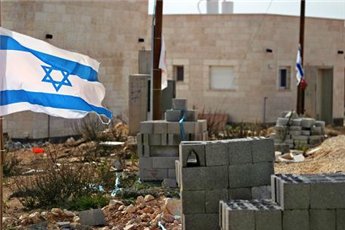
JERUSALEM — An Israeli court issued a decision last week allowing Israeli settlers to take part of a Palestinian family home in the Rad Al-Amoud neighborhood of occupied East Jerusalem.
The court decision came after an 11-year battle between the Hamdella family and American-Israeli billionaire Irving Moskowitz, who purchased the property in 1990 from a Jewish group claiming to own the land.
The Hamdella’s have lived in the home since 1952. An earlier decision from the court ordered that they evacuate buildings on the property built in 1989, including a shed and a storehouse. The order included a room in the front of the house, which the family said had not been built at the same time.
On Monday, settlers will move into the evacuated rooms and buildings, member of the Fatah revolutionary council Dimitry Delyani said.
He explained that the court decision gave Moskowitz rights to part of the home, adding “the courts would never treat a West Jerusalem family in this way.”
“The home will be turned into an outpost, the settlers will bring in armed guards in order to make life for the Hamdellas unbearable,” he said.
Netanyahu’s Illusory Peace Plan
By JONATHAN COOK | CounterPunch | March 9, 2011
Benjamin Netanyahu’s advisers conceded last week that the Israeli prime minister is more downcast than they have ever seen him. The reason for his gloominess is to be found in Israel’s diplomatic and strategic standing, which some analysts suggest is at its lowest ebb in living memory.
Netanyahu’s concern was evident at a recent cabinet meeting, when he was reported to have angrily pounded the table. “We are in a very difficult international arena,” the Haaretz newspaper quoted him telling ministers who wanted to step up settlement-building. “I suggest we all be cautious.”
A global survery for Britain’s BBC published on Monday will have only reinforced that assessment: Israel was rated among the least popular countries, with just 21 per cent seeing it in a positive light.
A belated realisation by Netanyahu that he has exhausted international goodwill almost certainly explains — if mounting rumours from his office are to be believed — his mysterious change of tack on the peace process.
After refusing last year to continue a partial freeze on settlement-building, a Palestinian pre-requisite for talks, he is reportedly preparing to lay out an initiative for the phased creation of a Palestinian state.
Such a move would reflect the Israeli prime minister’s belated recognition that cook Israel is facing trouble on almost every front.
The most obvious is a rapidly deteriorating political and military environment in the region. As upheaval spreads across the Middle East, Israel is anxiously scouring the neighbourhood for potential allies.
Unwisely, Israel has already sacrificed its long-standing friendship with Turkey. With the ousting of Hosni Mubarak, Netanyahu can probably no longer rely on Egyptian leaders for help in containing Hamas in Gaza. Israel’s nemesis in Lebanon, the Shia militia Hizbullah, has strengthened its grip on power. And given the popular mood, Jordan cannot afford to be seen aiding Israel.
Things are no better in the global arena. According to the Israeli media, Washington is squarely blaming Netanyahu for the recent collapse of peace talks with the Palestinians.
It is also holding him responsible for subsequent developments, particularly a Palestinian resolution presented to the United Nations Security Council last month condemning Israeli settlements. The White House was forced to eat its own words on the issue of settlements by vetoing the resolution.
The timing of the US veto could not have been more embarrassing for President Barack Obama. He was forced to side publicly with Israel against the Palestinians at a time when the US desperately wants to calm tensions in the Middle East.
Over the weekend, reports suggested that Netanyahu had been further warned by US officials that any peace plan he announces must be “dramatic”.
Then, there are the prime minister’s problems with Europe. Netanyahu was apparently shaken by the response of Angela Merkel, the German chancellor, when he called to chastise her for joining Britain and France in backing the Palestinian resolution at the UN. Instead of apologising, she is reported to have berated him for his intransigence in the peace process.
Traditionally, Germany has been Israel’s most accommodating European ally.
The loss of European support, combined with US anger, may signal difficulties ahead for Israel with the Quartet, the international group also comprising Russia and the United Nations that oversees the peace process.
The Quartet’s principals are due to hold a session next week. Netanyahu’s officials are said to be worried that, in the absence of progress, the Quartet may lean towards an existing peace plan along the lines of the Arab League’s long-standing proposal, based on Israel’s withdrawal to the 1967 borders.
In addition, Israel’s already strained relations with the Palestinian Authority are likely to deteriorate further in coming months. The PA has been trying to shore up its legitimacy since the so-called Palestine Papers were leaked in January, revealing that its negotiators agreed to large concessions in peace talks.
A first step in damage limitation was the resolution at the UN denouncing the settlements. More such moves are likely. Most ominous for Israel would be a PA decision to carry out its threat to declare statehood unilaterally at the UN in September. In that vein, Mahmoud Abbas, the Palestinian president, said on Saturday that he expected an independent Palestinian state to become a permanent member of the UN.
The other prospect facing the PA — of collapse or being swept away by street protests — would be even more disastrous. With the PA gone, Israel would be forced to directly reoccupy the West Bank at great financial cost and damage to its international image. Palestinians could be expected to launch a civil rights campaign demanding full rights, including the vote, alongside Israelis.
It is doubtless this scenario that prompted Netanyahu into uncharacteristic comments last week about the danger facing Israel of sharing a single “binational state” with the Palestinians, calling it “disastrous for Israel”. Such warnings have been the stock-in-trade not of the Greater Israel camp, of which Netanyahu is a leading member, but of his political opponents on the Zionist left as they justify pursuing variants of the two-state solution.
Netanyahu reportedly intends to unveil his peace plan during a visit to Washington, currently due in May. But on Monday Ehud Barak, his defence minister, added to the pressure by warning that May was too late. “This is the time to take risks in order to prevent international isolation,” he told Israel Radio.
But, assuming Netanyahu does offer a peace plan, will it be too little, too late?
Few Israeli analysts appear to believe that Netanyahu has had a real change of heart.
“At this point it’s all spin designed to fend off pressures,” Yossi Alpher, a former director of the Jaffee Centre for Strategic Studies at Tel Aviv University, wrote for the Israeli-Palestinian dialogue website Bitterlemons. “The object of the exercise is to gain a day, or a week, or a month, before having to come up with some sort of new spin.”
Indications are that Netanyahu will propose a miserly interim formula for a demilitarised Palestinian state in temporary borders. The Jerusalem Post reported that in talks with Abbas late last year Netanyahu demanded that Israel hold on to 40 per cent of the West Bank for the foreseeable future.
His comments on Tuesday that Israel’s “defence line” was the Jordan Valley, a large swath of the West Bank, that Israel could not afford to give up suggest he is not preparing to compromise on his hard-line positions.
His plan accords with a similar interim scheme put forward by Avigdor Lieberman, Netanyahu’s far-right foreign minister and chief political rival on the right.
Palestinians insist on a deal on permanent borders, saying Israel would use anything less as an opportunity to grab more land in the West Bank. At the weekend Abbas reiterated his refusal to accept a temporary arrangement.
Herb Keinon, an analyst for the right-wing Jerusalem Post, observed that there was “little expectation” from Netanyahu that the Palestinians would accept his deal. The government hoped instead, he said, that it would “pre-empt world recognition of a Palestinian state” inside the 1967 borders.
~
Jonathan Cook is a writer and journalist based in Nazareth, Israel. His latest books are “Israel and the Clash of Civilisations: Iraq, Iran and the Plan to Remake the Middle East” (Pluto Press) and “Disappearing Palestine: Israel’s Experiments in Human Despair” (Zed Books). His website is http://www.jkcook.net.
Israel seizes large areas of land near Jerusalem to complete separation wall
Palestine Information Center – 09/03/2011

OCCUPIED JERUSALEM — The Israeli army has confiscated 480,000 sq. meters of land in the town of Abu Dis near Jerusalem to be used in completing the separation wall, the Abu Dis land defense committee said.
The construction will destroy the historically-recognized Jerusalem-Jericho path and turn large swaths of land over to Israel to be used to build the apartheid wall that would isolate the area from the rest of the West Bank.
According to the defense committee, the wall’s primary objective is not security, but rather to seize land and isolate the West Bank from Jerusalem and expand the settlements.
Board chairman Attorney Bassem Bahr said the wall will be erected to the east of Abu Dis, which would split the West Bank north and south and separate the two areas from the Jerusalem region.
13 injured when Israeli settlers and army attack the village of Qusra
International Solidarity Movement | March 8, 2011
In the afternoon of the 7th of March 2011, villagers from Qusra, south of Nablus, were attacked by settlers from the surrounding illegal outposts who shortly were accompanied by the Israeli army. Thirteen Palestinian men were injured and taken to Rafidia hospital in Nablus. Nurses reported that the ambulance staff were prevented from reaching the wounded people.
Several of the victims were seriously injured. Ibrahim Hassan, 15 years old, was shot by a live bullet which entered his back and went through his kidney before it exited. His condition is reported to be stable, but he might loose his kidney. Qaher Oude, 25 years old, was first shot in his left leg and then beaten. The settlers beat him on his upper body with stones and sticks and then used a big stone to completely crush his right leg. He will have his surgery tomorrow.
“I heard that people were injured, so I went there to help them and suddenly I got shot. The settlers came from nowhere.” Said Qaher Oude.
Three farmers were working their land outside the village of Qusra when they were attacked by settlers from the nearby illegal outposts. At 16.30 the village imam called for help for the farmers and the people of the village came to their aid. When villagers arrived four Palestinians were already injured and the Israeli army was there, protecting the settlers. In total, there were about 50 settlers accompanied by the Israeli army. The residents of Qusra reported that the Israeli soldiers did nothing to stop the settler violence, but instead actually took part in the beating and shooting of civilians. Some of the injured people reported they had been shot and beaten by soldiers and some by settlers. “They were shot by Israeli bullets, it’s no difference”. Said one of the villagers.
Among the injured in Qusra today were people shot by live ammunition and rubber coated steel bullets, people beaten by settlers and soldiers, and people who suffered the asphyxiating effects of gas inhalation.
Qusra with its 4,000 inhabitants is situated 22 km south of the city of Nablus, near the illegal Israeli settlement of Migalim. This is the second serious incident involving violent settlers in Qusra in the last two months.
Temporary Injunction against New Building in Palestinian Village Destroyed in 1948
By Tania Kepler for the Alternative Information Center | 08 March 2011
An Israeli court has issued a temporary injunction on selling luxury lots on the site of the historic Palestinian village of Lifta, whose residents were expelled and forced out in 1948.

Israeli Judge Yigal Marzel issued a temporary injunction on Monday (7 March) ordering the Israel Land Administration to freeze publication of the results of a tender to lease plots for building in the historic Palestinian village of Lifta.
The tender was issued following the Jerusalem Municipality approval of construction of 268 housing units, one hotel and a number of community institutions on the site of the ancient Palestinian village, the residents of which were expelled in 1948.
The petition to save Lifta was submitted on Sunday by Attorney Sami Arshid on behalf of Jerusalem activists, including descendents of Lifta, the Bnei Lifta Association, Rabbis for Human Rights and the Jafra Association.
According to the petitioners, “in the given situation and according to which the village of Lifta is an abandoned village and its original inhabitants live as refugees at a distance of only a few hundred metres from their village, it would have been befitting to abstain from all construction in the area and certainly to prevent building that would result in destruction of the village and the complete dispossession of the rights of the original inhabitants of the place”.
The petitioners further write that the “marketing of plots for building in the village of Lifta and furthermore the construction of new buildings on the village lands and in place of the existing village could thwart the ability to preserve the existing village and foil any possibility of reconstructing the historic structure of the village, and everything that is derived from this.”
Before the creation of the state of Israel in 1948, more than 3,000 Palestinians lived in Lifta, but the village was depopulated during the 1948 war and partially destroyed. It is one of the few of the 500 villages that had not been completely destroyed by Israeli forces in the time since.
The AIC spoke with Meir Margalit, a member of the Jerusalem Municipal Council, about the situation in Lifta. He told the AIC, “I am extremely fearful that Lifta will eventually turn into an exclusive neighborhood, similar to neighborhoods such as Mamilla and other places where flats were sold to Jews from France and New York. I fear that Lifta will be a ghost neighborhood.”
Numerous organisations, especially BIMKOM, Zochrot and FAST have lobbied for the village to be listed by UNESCO as a heritage site, as a symbol of reconciliation between Palestinians and Israelis, and for alternative plans they have formulated with the Land and Housing Research Centre.
Architects and Planners for Justice in Palestine in 2005 placed an advertisement in the Times, signed by over 350 architects and planners worldwide, many of them eminent figures including academics, to help save Lifta for its original Palestinian inhabitants.
Esther Zandberg in Haaretz has again written a moving plea for the village to be symbolically returned to those who were forcibly removed from there, instead of building 212 luxury apartments that will be bought only by Jewish people, in the proposed decade-long project (plan number 6036) that the Israel Land Administration wishes now to commence.
According to a press release from the Coalition to Save Lifta, the court petitioners have requested that the court order an annulment of the tender to sell plots in Lifta and order the Israel Land Administration to desist from any action that would damage the physical and cultural heritage of the place, until an inclusive planning process is completed that includes the area of Lifta. This would ultimately include planning for preservation of the site in accordance with professional standards and with public participation.
“There are 37 Lifta refugees in East Jerusalem and Ramallah, and we have a Lifta Association; and now the internet makes it possible to keep in touch with those that have moved further away,” said Yakub Odeh, a Lifta refugee.
“We all want to return to our village. I’m sure we can achieve our dream through peaceful means….We will never give in. They say that every human being is born in the land, but for us Palestinians, our land is born in us.”
Khirbet Tana Water Confiscated By Israeli Army
By David Steele – International Middle East Media Center Editorial Group – IMEMC – March 7, 2011

The Ma’an News Agency reports that Israel has continued its campaign against Khirbet Tana by confiscating 20 portable water tankers on Monday morning.
The tankers were brought into the village after Israeli military forces blocked the village’s wells during a demolition. Khirbet Tana has been demolished six times recently. According to Ma’an, a group of military jeeps entered the village and removed all of the water carriers. These were used to provide drinking water for both residents and animals.
Israel has classified the land occupied by the village as ‘state land’ and refuses to issue building permits for the villagers. After a recent demolition, the United Nations Resident and Humanitarian Coordinator for the occupied Palestinian territory, Maxwell Gaylard, issued a statement condemning “the demolition of temporary tented structures sheltering families from the weather in Khirbet Tana”.
In a visit to the area, Gaylard noted that “under international law, Israel, as the occupying power in the oPt, is prohibited from destroying property belonging to individuals or communities except when absolutely required by military operations”. In 2010, the United Nations Office for the Coordination of Humanitarian Affairs (OCHA) noted at least 350 demolished structures in Area C.
Notice to evacuate 15 Jersulem apartments
Ma’an – 07/03/2011

JERUSALEM — Israeli police and Jerusalem municipality workers handed out 15 eviction notices on Sunday afternoon, affecting families in the Ar-Rashid building of East Jerusalem’s Beit Hanina neighborhood.
Residents were told to be out of their homes within 10 days, neighborhood officials said, before the home would be demolished.
Apartment owners Fakhri Haj Muhammad Al-Laftawi and Mussa Al-Qawasmi told the Jerusalem Center for Social and Economic Rights on Monday that the building was home to 150 men, women and children.
They said the building was built in 1997, and lawyers were still working to get it permits. The Jerusalem center said the process was begun before construction commenced. Lawyers for the families said they were trying to convert the demolition orders into a fine, which would allow residents more time to appeal the decision, and seek retroactive permits for the property.
A representative of the Israeli-run municipality of Jerusalem could not be reached for comment by phone.
Education in Ein Il Hilwe

The school in Ein Il Hilwe is a simple tent with plastic chairs
Ein Il Hilwe is a Bedouin community located in the north of the Jordan Valley and is one of many Palestinian communities doomed to suffer de-development under the strict policies of Area C. The village consists of around 130 people and is strategically located next to one of the few natural springs in the Jordan Valley that has not been confiscated by the Israeli government. The village itself is located off of the main highway in the Jordan Valley, at the foot of surrounding hills. Taken out of context of the Israeli occupation, Ein Il Hilwe seems to would be a picturesque manifestation of simplicity and tranquility. Unfortunately for the residents of the community, the occupation is omnipresent and unlikely to retreat soon; Ein Il Hilwe is surrounded by five illegal Israeli settlements that often come and harass the villagers. Like many other villages in Palestine, the effects of the occupation are perhaps most strongly felt my the children of the community.

Only 35 students from Ein Il Hilwe and the surrounding communities can use the school
Children from Ein Il Hilwe, as well as those from surrounding Bedouin communities, used to travel to school in the village in Tayasir, a trek of over 13km that required taking a bus and passing through an Israeli checkpoint. Too often, however, children would face harassment from the soldiers manning the checkpoint. Some were even forced by the soldiers to abandon the bus and walk the 13 km to and from school. Understandably, the brutal treatment from Israeli soldiers forced many of the children to drop out of school. To combat the falling retention rate and to support the existence of the Ein Il Hilwe community, the Save the Jordan Valley Campaign constructed a simple tent school last November. The school can hold 35 children, though many have classes outside, sitting on small plastic chairs where volunteer teachers instruct Arabic, English, Math, Chemistry and Religion, though classes include students of all ages and levels. Unfortunately, because the tent school in Ein Il Hilwe was illegally constructed (according to the draconian rules imposed by the defunct Oslo Accords), it is not recognized by the Palestinian Ministry of Education and therefore receives no funding from the state. The the tent and the play area, as well as the cost of transportation for teachers and all school supplies were all provided by developmental organizations. Indeed, the success of the school is entirely dependent on charity.
On Saturday, I attended a advocacy function in Ein Il Hilwe organized by the Save the Jordan Valley Campaign and Ma’an Development Center, during which volunteers helped extend the current play area for the children and met with the leaders of the community. Volunteers were meant to construct a second tent classroom for the community which would have allowed an additional 65 children to attend school, but on Friday, February 25, military jeeps arrived in the town and threatened to demolish both the tent and the existing play area.

Israeli soldiers threatened to demolish the school last week
Unfortunately, the situation in Ein Il Hilwe is not isolated. Communities throughout Palestine and particularly in the Jordan Valley are subject to the same horrifying circumstances. Area C – meaning full Israeli administrative and military control – extends to over 95% of the Jordan Valley. Most devastating about Area C is the inability of Palestinians to construct, leaving Palestinian communities in a constant state of, at best, stagnation and, at worst, de-development. Between 2000 and 2007, only 6% of Palestinian building permit requests were approved; 91 permits were granted to Palestinians while 18,472 Jewish units were built during the same period. For every building permit that Israel approves for Palestinians, it issues 55 demolition orders.
The students of Ein Il Hilwe are not alone in their suffering either. The Ka’abneh village is another Bedouin community that is surrounded by settlements. Like Ein Il Hilwe, a school was constructed for the community illegally, providing education to 66 students. Over the last three years, the Ka’abneh school has been issued six demolition orders, the most recent in October 2010 for a small bathroom. Likewise, the Jiftlik School faced a similar fate before 2005. Like their compatriots in Ein Il Hilwe, students from Jiftlik were forced to travel to nearby Beit Hassan to go to school. After the construction of the Hamra checkpoint, many from Jiftlik dropped out of school due to high transportation costs and harassment from Israeli soldiers at the checkpoint. The village decided to build a tent school, similar to the one in Ein Il Hilwe, but Israel demolished the school seven times between 2003 and 2008.

The entire community of Ein Il Hilwe is located in a firing zone
The Palestinians of the Jordan Valley are under constant attack. Not only does Israel use guns, but also bulldozers and lawyers to force Palestinians to leave their land. In 1967 320,000 Palestinians lived in the Jordan Valley. Today, that number has been reduced 82.5% to a mere 56,000. Poverty rates soar to 60%, worse than most areas in Gaza. Perhaps most tragic is that students in the Jordan Valley are actively refused their legal right to education by the Israeli occupation. Harassment by soldiers and settlers alike as well as the inhumanely routine practice of school demolition denies Palestinian children the right to learn.
Article 50 of the 4th Geneva Convention requires the occupying force – in this case Israel – to ‘facilitate the proper working’ of schools in the occupied territory. Harassing students, destroying schools and implementing policies undermining Palestinian education is a clear violation of this and any other international laws – including the Convention of the Rights of Children and the Convention against Discrimination in Education. More importantly, the damage done to schools and students today is greatly limiting and handicapping the future generations of Palestine.
Photos by Chris, 2010
* Chris is currently living in the West Bank and working at a community development NGO.
17 years after Goldstein massacre, Hebron city center paralyzed
B’Tselem | March 3, 2011
Zlikhah Muhtasab, 49, is one of the few Palestinians still living on Shuhada Street in the center of Hebron. The street, one of Hebron ‘s main thoroughfares, links the north and south of the city and passes by the major markets, the Old City , the Tomb of the Patriarchs and al-Haram al-Ibrahimi, and Israeli settlement compounds. Since October 2000, Israel has forbidden Palestinians to walk or drive on the street, although no valid military order for the closure has been presented. Along with other restrictions on Palestinian movement in the area, this has led to an economic collapse of the city center. Many residents have left, and the area has become a ghost town. Over the years, the army repeatedly claimed it was about to permit Palestinians to use the street again, but this has yet to occur.
Israeli settlers, however, are allowed to move freely on the street. In a testimony she gave to B’Tselem, Zlikhah related the harassment she and her 75-year-old mother have suffered since they moved, for financial reasons, to a house on the largely deserted street in 2006. In the first year, settlers regularly threw stones at the house. After Zlikhah came home one day to discover a large amount of stones within the house, she asked the Hebron Rehabilitation Committee to assist her in installing iron grating on the windows and porches of the house for protection. The grating, which gives the house a cage-like appearance, did not assist in deterring assaults, and settlers continue to throw stones at the house from time to time, even at night.

Zlikhah Muhtasab in her cage-like house. Photo: Musa Abu Hashhash, B’Tselem, 13 Feb. ’11.
Israel began to restrict Palestinian movement along the street in 1994. After the massacre carried out by Baruch Goldstein in the Tomb of the Patriarchs that year, Israel chose to impose restrictions on the Palestinians, rather than on the Israeli settlers in the city, contending that these restrictions were necessary in order to protect the settlers’ safety. At first, Israel forbade Palestinian commerce and vehicle traffic on part of the Shuhada Street , and only residents of the street were allowed to enter by vehicle. Under the Hebron Agreement, signed in January 1997, control of a large part of the city, referred to as Area H1, was transferred to the Palestinian Authority. The section of the city in which Israeli settlements had been established, termed H2, remained under Israeli control. The parties agreed that Israel would once again allow Palestinian vehicle traffic on Shuhada Street , in area H2. For several years, until the beginning of the second intifada, the forbidden section of the street was alternately opened and closed.
When the second intifada broke out, in October 2000, the army placed more stringent restrictions on movement on the street. Now, Palestinians are forbidden to drive along the entire length of the street, and even to walk along the section between the Avraham Avinu settlement compound and the Bet Hadassah settlement compound. The army also prohibits Palestinian traffic on adjacent streets, thereby creating a contiguous strip of land in the center of Hebron , from the Kiryat Arba settlement in the east to the Jewish cemetery in the west, in which Palestinian vehicles are completely forbidden.
As a result of these severe restrictions, 304 shops and warehouses along Shuhada Street closed down, and Palestinian municipal and governmental offices that had been on the street were relocated to Area H1. Israel also took control of the central bus station that had been on the street, turning it into an army base. In 2006, B’Tselem’s investigation revealed that most of the properties on or adjacent to Shuhada Street , including homes and businesses, had been abandoned or had been closed by military order. The army forces the few Palestinian families that continue to live on the street to enter their homes via side entrances, since they are not allowed to use the main entrances on Shuhada Street . Where side entrances are not available, the Palestinian residents have no choice but to climb on ladders leading to the roofs of the buildings.

Closed shops on Shuhada St. Photo: Tamar Gonen , B’Tselem, 2 March ’11.
Like other residents still living on the street, Zlikhah and her mother are also forced to enter and leave their home by climbing a steep flight of stairs that serves as a side entrance. As they are forbidden to walk on the main street, they must take circuitous routes and go through two checkpoints in order to reach the mosque of al-Haram al-Ibrahimi (the Tomb of the Patriarchs) or to visit relatives who live nearby. Zlikhah’s elderly mother has to walk almost a kilometer to reach her medical clinic, only 300 meters away if she could go via Shuhada Street . The cemetery in which Zlikhah’s grandfather and other relatives are buried lies right across the street, but the two have great difficulty visiting it now.
In April 2007, following reports in the Israeli media and public pressure on the issue, the Civil Administration began to issue temporary permits to some Palestinians living on the street. These permits enabled them to enter and leave their houses via the main entrance on the street. Visitors were still denied use of these entrances. The permits were valid for three months, and were extended four times. During this period, Zlikhah, her mother, and their neighbors returned to using the front entrances to their homes and to walking freely on Shuhada Street.
Zlikhah told B’Tselem of the relief she felt and how she would often go out to walk on the street, sometimes at night too, in order to realize her newly returned freedom. She noted that soldiers posted on the street fulfilled their duty to protect Palestinians who were now using the street again, and that settlers in the area were displeased with the development.
The last permit given to Zlikhah expired in August 2008. She related that when she and her neighbors applied to renew the permits again, the Civil Administration said the requests would be handled after the Jewish holidays. Then the Civil Administration dragged its feet, and repeatedly postponed renewing the permits, until the communication ceased altogether. The Palestinian residents of the street had to return to using side entrances or rooftops.
In 2005, the Hebron Municipality and the Association for Civil Rights in Israel petitioned Israel ‘s High Court of Justice to open the street to Palestinian movement. The state, in response, presented a “plan for protection of the Jewish community in Hebron ,” according to which Palestinians would be allowed to walk on the street, but the prohibition on opening shops and on vehicular traffic on the street would remain in force. Subsequently, military orders were issued restricting vehicular traffic on the street but not pedestrians.
Following this, ACRI wrote to the legal advisor for Judea and Samaria , who stated, in December 2006, that the army had prohibited Palestinians from walking along the street for six years “by mistake.” This contention was clearly a lie. In any event, the army continued to prevent Palestinian pedestrians from using the street. In response to a request ACRI made to the judge advocate general, the latter raised a new argument, whereby the army maintains that the street should remain closed “for security reasons,” without delineating the reasons. Two years ago, the army informed the media that it intended to cancel the prohibition on Palestinian movement on Shuhada Street . To this day, the prohibition remains in force.
The closing of Shuhada Street is part of the policy of separation that Israel imposes in the heart of Hebron. This policy has led to Palestinian mass abandonment of the city center and has brought with it severe, continuing breach of the human rights of Palestinians. It is, de facto, an unacceptable regime of discriminatory separation.
Denying Nazi-Zionist Collusion
McClatchy, the Sacramento Bee, Darrell Steinberg and Islamophobia
By ALISON WEIR | CounterPunch | March 4, 2011
In an inversion of journalistic ethics, the Sacramento Bee reported on opposition to an event before and after it took place, but didn’t cover the event itself.
It featured an entire report on accusations against a flier, but didn’t include a response from the flier’s authors.
It printed claims by powerful local figures that the flier was “an outrageous lie,” but refused to print information showing that the flier’s statements were factual.
Its headline about the allegedly offensive flier emphasized a Muslim connection, even though there was virtually no Muslim connection to the flier.
It neglected to report that one of those attacking the flier had previously attempted to use his official position to prevent the event at which the flier was distributed from taking place.
And finally, the Bee’s parent company, McClatchy, one of the nation’s largest newspaper chains, then sent out the Bee’s deficient story about a flier nation-wide, also emphasizing a (largely non-existent) Muslim connection in its headline, which then appeared on newspaper websites in Florida, Texas, Idaho, Mississippi, Alaska, and elsewhere, generating anti-Muslim comments.
The event in question was part of a national speaking tour that featured an Auschwitz survivor speaking about Israel’s treatment of Palestinians. Called “Never Again For Anyone,” it was sponsored by a diverse array of eight national organizations and nine local ones, secular, Jewish and Muslim, who reserved a hall owned by the local Islamic Center as the venue for the event. Also speaking was Dr. Hatem Bazian, a prominent academic from UC Berkeley.
The talk was immediately opposed by the Jewish Anti-Defamation League (ADL) and the 13-member Board of Rabbis of Greater Sacramento, who contacted the Islamic center and demanded that the center refuse to allow the event to take place.
The rabbis called it a “program of hate,” claimed that both the theme and the presence of an Auschwitz survivor speaking about the plight of Palestinians were “anti-Semitic,” stated that allowing the 86-year-old Auschwitz survivor to speak would “defile the sacred memory of millions who perished during the Holocaust” (nothing was said of the multitudes of non-Jews, including Arabs and Muslims, who died under the Nazis), and threatened that Jewish-Muslim relations would be fatally jeopardized if the Islamic Center did not renege on its agreement to allow the event to take place on its property.
The Sacramento Bee ran a news story on the rabbis’ complaints, claiming in its lead sentence that because of the proposed event, “Sacramento’s carefully cultivated interfaith bonds are being stretched to the limit,” although there is no indication that the planned talk was interfering with Christian, Buddhist, Hindu or other faith’s relations with the Muslim community.
Despite the attempt to prevent it, however, the event went forward as planned, drawing approximately 500 people. The Bee, despite choosing to cover prior complaints against it, chose not to cover it.
Four days later, however, the Bee carried another news story about the event, this time focusing on a complaint by the President Pro-Tem of the California Senate condemning a flier that was distributed at the talk.
California is in deep trouble. It is over $26 billion in debt and is facing potential bankruptcy. People have lost homes, businesses have failed, university fees have escalated. Yet, the Senate’s President Pro Tem, Darrell Steinberg, one of California’s most powerful politicians, twice took time out of his necessarily busy schedule to lodge semi-official complaints about the “Never Again” event.
Steinberg, who has worked to promote tolerance and build bridges with Muslim leaders to oppose bigotry, is devoted to Israel. In 2008 he was host of “Salute to Israel,” a celebration of Israel’s creation 60 years before, which had involved the expulsion of hundreds of thousands of Muslims and Christians to make room for the Jewish state.
According to the Jewish Forward, Steinberg became President Pro Tem “after intense involvement in the Jewish communal world, including stints as chairman of Sacramento’s Jewish Community Relations Council… The lobbyist for the California Jewish Public Affairs Committee, Cliff Berg, said he is looking forward to working more with an old friend.” Both organizations advocate for Israel; JPAC sponsors an annual 9-day trip to Israel for state legislators.
Steinberg was strongly opposed to the “Never Again for Anyone” event. First, although the Bee didn’t mention this, Steinberg tried to stop it, sending a letter on official Senate stationery urging the Islamic Center to revoke permission for it.
Then, after the talk had taken place (which Steinberg did not attend), he sent a second letter to the Bee and to a few individuals in the interfaith community (it’s available only on a pro-Israel website), again on official stationery. In it he condemned a flier that had been distributed at the event.
Produced by the International Jewish Anti-Zionist Network, a cosponsor of the event, the flier included information about collaboration between Nazis and leaders of the Zionist movement (the political/military movement to create a Jewish state in Palestine that created Israel in 1948).
Steinberg was outraged. In his letter he particularly objected to the flier’s statements that “…Zionist leaders made ‘transfer agreements’ with the Nazis…. refused to observe the international boycott of Nazi Germany… and even kept silent about impending plans to deport Jews into Nazi death camps.”
Steinberg called the statements an “outrageous rewrite of history,” and claimed that “in essence, they are saying the Jews orchestrated the Holocaust,” although the flier said no such thing.
Similarly angered, according to the Bee news report, was one of the rabbis who had tried to prevent the talk, Rabbi Mona Alfi of Sacramento’s prominent Congregation B’nai Israel.
While the Bee didn’t mention this, Alfi is also the official California Senate Chaplain, a position she has held since 2008. She was appointed to this position by Steinberg, a member of B’nai Israel. (According to a survey by the Pew Forum on Religion and Public Life, two percent of Californians are affiliated with the Jewish faith.)
According to the Bee, Rabbi Alfi called the flier’s allegations that some Zionists were Nazi collaborators “a disgusting lie.”
While the Bee’s report also included statements defending the talk, it contained no statements in defense of the flier itself, the paper having made no attempt to interview the authors of the flier that was the focus of its article.
As a result, the report contained none of the extensive evidence supporting the flier’s content, thus giving readers the impression that a flier filled with objectionable falsehoods had been distributed.
Worse yet, since the Bee and McClatchy then chose to emphasize the venue of the event in their headline (“Flier at California Muslim center condemned by state senator”), despite the fact that the center had nothing to do with the flier, a headline and news story were sent around the country that served to reinforce the Islamophobic fiction that Muslims are inherently anti-Semitic, generating comments such as:
“Muslims have been successfully trading in anti-Semitism for decades, Steinberg isn’t going to put a dent in it,” “ ‘The holocaust never happened.’ Since that didn’t work, certain Muslims decided to try this disgusting piece of nonsense,” “My, my, those Muslim propaganda sites must be working overtime.”
Zionist-Nazi Collusion
In point of fact, however, the flier’s statements are accurate. There is detailed evidence that some Zionists collaborated with the Nazis, that Zionists sabotaged anti-Nazi boycotts, and that Zionists interfered with efforts to rescue victims of Nazi oppression.
When facts first emerged in the 1950s about Zionist-Nazi collusion, it caused considerable scandal in Israel and led to the fall of the Israeli government of the time. A number of books are dedicated to this subject and it is discussed in numerous others, almost all by Jewish and/or Israeli authors. The topic inspired novels by well-known Israeli writers Amos Elon and Neil Gordon, was the subject of a 1987 British play, and was portrayed in a 1994 Israeli docudrama. It’s surprising that Steinberg and the Board of Rabbis make no indication of ever having heard anything about this.
Popular American playwright and fervent Zionist Ben Hecht wrote the first book on the subject, “Perfidy,” relating the history of a Hungarian Zionist leader who arranged for his family and several hundred prominent Jews to escape while facilitating the movement of the rest of Hungarian Jews to Nazi concentration camps.
Hannah Arendt, in her 1960 book “Eichmann in Jerusalem: A Report in the Banality of Evil,” writes: “To a Jew this role of the Jewish leaders in the destruction of their own people is undoubtedly the darkest chapter of the whole dark story.”
In “The Transfer Agreement: The Dramatic Story of the Pact between the Third Reich and Jewish Palestine” (containing an afterword by ADL head Abe Foxman), pro-Israel writer Edwin Black reports that in 1933 Zionist leaders concluded a secret pact with the Third Reich that transferred 60,000 Jews and $100,000 to Palestine, Zionists promising in return that they would halt the worldwide boycott “that threatened to topple the Hitler regime in its first year.”
Author-researcher Lenni Brenner wrote of Zionist-Nazi collusion in “Zionism in the Age of Dictators,” of which the London Times stated: “Brenner is able to cite numerous cases where Zionists collaborated with anti-Semitic regimes, including Hitler’s.”
Brenner’s second book on the topic, “51 Documents, Zionist Collaboration with the Nazis,” includes a 1940 letter from underground Zionist terrorist leader Avraham Stern proposing that Jewish militias would fight on Germany’s side in exchange for Nazi help in creating an “historic Jewish state.”
In “What Price Israel,” American Council for Judaism member Alfred Lilienthal describes FDR’s efforts to set up a program to rescue refugees, only to find Zionists sabotaging it. Roosevelt explained: “The Zionist movement knows that Palestine is, and will be for some time, a remittance society. They know that they can raise vast sums for Palestine by saying to donors, ‘There is no other place this poor Jew can go.’”
When New York attorney Morris Ernst joined this refugee effort, he was shocked: “I was thrown out of parlors of friends of mine who very frankly said ‘Morris, this is treason. You are undermining the Zionist movement.’” Ernst wrote that he found a fanatical movement of men “little concerned about human blood if it is not their own.”
In “The Seventh Million: The Israelis and the Holocaust,” Israeli historian Tom Segev quotes Zionist leader and future Israeli Prime Minister David Ben Gurion: “If I knew that it was possible to save all the Jewish children of Germany by transporting them to England, but only half of them by transporting them to Palestine, I would choose the second.”
Segev writes that Ben-Gurion worried that ‘the human conscience’ might cause various countries to open their doors to Jewish refugees from Germany and saw this as a threat, warning: ‘Zionism is in danger.’”
In the Bee’s report on the controversy, Sacramento’s Rabbi Alfi is further quoted as saying “there is no comparison” between the treatment of Jews in pre-war Germany and Palestinians. Yet, in 2002 the Israeli newspaper Ha’aretz reported that the Israeli military was specifically studying Nazi Warsaw Ghetto strategies for use in the Palestinian Occupied Territories.
Journalistic Malpractice
The Bee’s decision not to cover an event about which it had reported prior complaints is highly questionable.
Even more serious, its decision to publish a news report featuring attacks against a flier without also interviewing the flier’s authors violates fundamental journalistic principles. The story was published four days after the event took place; taking the time to follow professional good practices would have made sense.
However, hindsight is always clearer than decisions made under a looming deadline, and in the rush of daily journalism serious lapses sometimes occur. The real test of a newspaper’s commitment to honest, principled journalism is how it handles such lapses.
Bee editors failed this test with flying colors. From here on I speak from personal experience.
I happened to read the Bee’s flier report soon after it was published. Because I’ve studied Israel’s history extensively and own the books mentioned above (and others that mention the topic), I was aware that the flier’s statements were factual and that the undisputed complaints against it were unfounded.
I felt this information needed to be given to readers as soon as possible to correct the misimpression conveyed by the Bee’s one-sided reporting. Since op-ed columns were specifically created as a place for outside writers to convey views and information not otherwise contained in a newspaper, I took several books on the topic and went to the Bee’s offices to propose an op-ed.
From the lobby I called opinion page editor, Stuart Leavenworth, saying that I’d like to discuss a potential op-ed for the paper. He said he was in a meeting and couldn’t meet with me, but asked what I wished to address.
When I told him, he expressed skepticism and said he would not print an op-ed saying that Zionists had collaborated with Nazis.
I told him that I had books on the subject with me that I could show him. He replied that normally someone would schedule such a meeting ahead of time. I agreed and asked when we could schedule such a meeting. He said he would not schedule one. He asked me a few more questions, interrupted my answers, and then told me to submit an op-ed. He said that I must supply citations.
I wrote the article, cited seven books, and said that I would provide more extensive citations if he wished (even though I had already supplied far more references than normally required for an op-ed). I also said that I would be glad to cut the piece if it was too long and said I was very comfortable with rewriting.
He refused to publish it, providing no explanation for this decision.
I am fully aware that editors always retain the power to decide what they will and won’t publish (I’ve been an editor myself). However, since journalistic ethics required the Bee to remedy sloppy, one-sided reporting that gave readers a false impression of a controversial local event, of Muslims at a time when violence and bigotry against them is escalating, and about Israel, with which the U.S. has a unique “special relationship,” I emailed and phoned my concerns to the Bee’s chief editor and others (it has no ombudsman), but to no avail.
The newspaper’s response was disappointing but unsurprising. Editors, particularly when it comes to Israel-Palestine, are far more concerned with daily deadlines, financial necessities, and the need not to anger powerful constituencies than with moral or ethical principles.
This reality, combined with considerable ignorance on the Middle East among many journalists, and pro-Israel, anti-Muslim bias among others, means that there is virtually no effort to correct errors or remedy significant omissions in coverage having to do with Israel.
As a result, Americans are largely left in the dark about the current reality and past history of the tiny, rich nation that receives more of our tax money than any other country on earth, currently at least $8 million per day, and that is at the center of profoundly important issues concerning both the region and our own nation.
Israel and its partisans are working to make sure it stays that way. If Steinberg, Alfi, Leavenworth, the Bee, and McClatchy continue their current pattern, it doesn’t look like this is going to change anytime soon – unless enough people start to demand better.
~
Alison Weir is President of the Council for the National Interest and Executive Director of If Americans Knew, a nonprofit organization that provides information on Israel-Palestine. She splits her time between Sacramento and Washington DC. She can be reached at contact@ifamericansknew.org.
Featured Video

They Double Down on BLOOD PRESSURE Guidelines!
or go to
Aletho News Archives – Video-Images
From the Archives
Chocolate Gives Statins a $29 Billion Run For Their Money
By Sayer Ji · GreenMedInfo · April 17, 2012
With the blockbuster cholesterol-lowering class of drugs known as statins being widely promoted for the primary prevention of cardiovascular disease, despite their having over 300 documented adverse health effects (including heart failure!), how does chocolate sound as a viable, heart-friendly alternative?
We already connect amorously with chocolate (to the tune of 6 billion lbs of cocoa consumed annually worldwide), revealing in heart-felt expressions like “I love it,” and “this is to die for!” how comfortable we are with publicly declaring our affection. But did you know that while it makes our emotional hearts sing, it may actually keep our physical hearts happy, alive and ticking longer, as well?
Indeed, back in 2006, researchers found that for elderly men, eating cocoa was inversely associated with blood pressure and 15-year cardiovascular and all-cause mortality. … continue
Blog Roll
 Aletho News
- I’M SO BLOODY FURIOUS: They Double Down on BLOOD PRESSURE Guidelines!
- The Israeli Nuclear Doctrine and the Turning Point of the Kennedy Assassination
- Striking Matches Near the Powder Keg
- Prominent Russia hawk: European leaders privately talk about war with Russia, first need ‘mass casualty event’
- China warned Trump not to touch Iran’s oil tankers: Larry Johnson
- EU Central Banker Plans To Plant Barren AI Crops Across The Continent
- Macron’s Strategic Autonomy Paradox: France Rearms on Debt and Depends on Foreign Fuel
- Nigel Farage vs Tucker Carlson: Who is right about Hitler and Britain?
- Chocolate Gives Statins a $29 Billion Run For Their Money
- Hypotheses on the collapse of U.S. computer systems
- If Americans Knew
- An error has occurred; the feed is probably down. Try again later.
- No Tricks Zone
- New Study: Modern Temps Are Among The Coldest Of The Last 10,000 Years In East Central Europe
- Germany’s Renewable Energies Lead to 1.4 Billion Euro Electric Power Trade Deficit
- Argentina’s Perito Moreno Glacier Joins Antarctica and Arctic In Defying Doomsday Melt Claims
- New Study: Barents Sea Temperatures Were Warmer And Sea Ice Less Extensive In The 1700s Than Today
- German Authorities Start Initiative To Evaluate Public Register For Climate “Disinformation” Spreaders!
- Zonal Asymmetry of Temperature Change in the Antarctic Circumpolar Current
- New Study: The Net Fossil Fuel Contribution To Rising Atmospheric CO2 Has Been Zero For 500 Years
- Germany’s Green Energy Transition Becoming Increasingly Expensive…Another 6 Trillion Euros!
- Sudden Stratospheric Warming, Powerful El Niño Combination May Lead To Extreme Europe Cold, Energy Crisis!
- Two New Studies Find Thwaites Glacier Melt Cannot Be Driven By Human Activity Or A Warming Ocean

