Turkey Bans Media From Publishing Information on Istanbul Explosion
Sputnik — 12.01.2016
Turkish authorities introduced a gag order on the media on Tuesday to restrict the dissemination of information about the explosion that shook Istanbul earlier that day, local media reported.
The ban on the distribution of information will affect all kinds of news, interviews, analyses and other article formats in the printed press, on television, on the radio, via social networks and on the Internet, Anadolu news agency reported.
The decision will take effect immediately, once all Turkish media outlets have been officially notified by Ankara, according to the agency.
At least 10 people died and 15 were injured in an explosion in Istanbul’s historical center earlier on Tuesday, according to local authorities.
Health of Palestinian journalist on hunger strike in Israeli jail ‘deteriorating’
Press TV – January 11, 2016
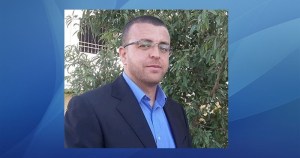 A Palestinian official says the health condition of a Palestinian journalist on hunger strike in an Israeli prison is worsening.
The Palestinian minister of prisoner affairs, Issa Qaraqe, said on Monday that Mohammed al-Qeq, 33, is in “critical condition” on the 48th day of his hunger strike. The journalist was arrested in November 2015, when Israeli forces blew up the front door of his house and took him in for interrogation.
Following his arrest, and for several days, he was not allowed to contact either his wife or his attorney.
He has been protesting his detention without trial or charge with the hunger strike.
Sources close to al-Qeq said he was interrogated for “journalistic incitement,” and when he refused to cooperate, he was put in administrative detention for a period of six months.
According to the sources, Israeli forces tortured al-Qeq during his interrogation, when he was subjected to beatings, sleep deprivation, exposure to cold, and other forms of abuse.
Administrative detention is a sort of imprisonment without trial or charge that allows Israel to incarcerate Palestinians for up to six months. The detention order can be renewed for indefinite periods of time.
Birzeit University condemns Israeli ‘military attack’ on campus
Ma’an – January 11, 2016
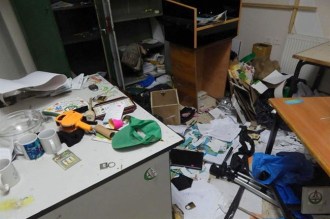 BETHLEHEM – Birzeit University on Monday condemned an Israeli army raid into its campus in Ramallah overnight, during which it said Israeli forces confiscated and damaged university equipment.
“Birzeit University condemns this attack and the direct violation of the sanctity of the university campus,” the university said in a statement. “This is a belligerent military attack on the university and our right to education and all the principles involved in the freedom of education.”
The university said that Israeli soldiers raided the campus in more than 15 military vehicles shortly before 3 a.m., breaching the campus’ western gate and storming the university’s student council and faculty of science.
“The military confiscated equipment and computers used in the activities of the students council and destroyed and damaged furniture leaving a great deal of havoc behind,” the university said.
“This is a blatant attack on our student council and the sanctity of democratic values. This violation of the campus is a part of a blatant and systematic attack on the right of education and freedom of expression.”
Birzeit University condemned a range of other “outrageous acts” by Israel, including the detention of some 80 students, including more than 25 taken into Israeli custody since a wave of unrest swept the occupied Palestinian territory in October.
“Stealing our students’ lives and working to destroy the sanctity of our university campus and our right to education is an atrocious and obvious attempt to destroy the will of the Palestinian people,” the university said.
The university added that the “constant” attacks against it would “strengthen the university’s commitment to its noble cause — education.”
The Israeli army confirmed that the raid took place. An army spokesperson said that Israeli forces had “seized material, including propaganda belonging to Hamas.”
Istanbul police raid district office of pro-Kurdish opposition party
Press TV – January 8, 2016
Police in Istanbul have raided a district office of Turkey’s main opposition pro-Kurdish Peoples’ Democratic Party (HDP).
Turkish media reports said on Friday that several people were detained and party documents seized during the two-hour raid at the Beyoglu headquarters of the HDP.
The co-chair of the district branch, Rukiye Demir, was among the detainees.
Turkish authorities have stepped up pressure on the HDP while Ankara’s military apparatus has been engaged in a security operation against suspected militants in the Kurdish-majority south and southeast of the country in the recent past, running offensives against the Kurdistan Workers’ Party (PKK) militants all the way into northern Iraq.
Turkish authorities accuse the HDP of acting as the political arm of the PKK.
Turkey and countries such as the United States and Britain consider the PKK as a terrorist group. The HDP strongly denies any links with the militants.
On July 20, 2015, a bomb attack in the southern Kurdish-majority town of Suruc claimed more than 30 lives. The Turkish government blamed it on the Takfiri Daesh terrorist group. After the bombing, the PKK, accusing the government of supporting Daesh, engaged in a series of supposed reprisal attacks against Turkish police and security forces, in turn prompting the Turkish military operations.
Ankara said Thursday that 305 PKK militants have been killed since December 14, 2015, when its security operation intensified.
The militant group has been fighting for an autonomous Kurdish region inside Turkey since 1980s.
New Jersey high schooler accused of violating bullying laws for making anti-Israel tweets

@bendykoval / Twitter
RT | January 7, 2016
A social media storm erupted after administrators at a New Jersey high school accused a student of bullying because of anti-Israel comments that she posted on Twitter. They say that the tweets may have violated the state’s broad anti-bullying laws.
Bethany Koval, a 16-year-old Israeli Jew, said on Wednesday that she was called to the principal’s office at Fair Lawn High School and reprimanded for making tweets criticizing Israel and mentioning that a pro-Israel classmate had unfollowed her on Twitter.
Administrators warned her that she could face legal consequences for her actions, since New Jersey has some of the strictest anti-bullying legislation in the country. Under the New Jersey Anti-Bullying Bill of Rights Act, which only came into force in 2011, she could be suspended or expelled.
Koval is a prolific Twitter user. She had made over 21,000 tweets and has almost 7,000 followers, many of whom she gained in the last few days. The fiasco that she is the center of has since become a social media sensation.
The outspoken high schooler has been met with both support and opposition online.
When Koval was called down to the principal’s office, she began documenting the situation on Twitter.
“I’m about to be exposed for being anti-Israel. Pray for me,” she tweeted.
A few minutes later, she tweeted that the administrator threatened to “file a bullying case” against her.
“It’s against state law to express unpopular political views on the Internet, now.”
In addition to rebuking her and warning her about legal consequences, the administator searched Koval’s phone to make sure that she had not recorded their conversation. The student could be sued if she had, he told her.
The administrator was correct in their assumption; Koval posted videos of the meeting on Twitter. In one recording, Koval can heard telling the administrator that her tweets may have been controversial, but she didn’t think they were “problematic.”
“Well that’s your interpretation,” the administrator said. “There’s a state law that might interpret it differently.”
In a second clip, the administrator can be heard warning her about legal consequences again.
“You can sit there with your smug attitude right now, but if it’s got to go into a bullying case because you think it shouldn’t be and the state says it is, you’re going to lose,” he said.
Fair Lawn High School Principal James Marcella told The New York Times that the issue has been referred to the school district’s superintendent, Bruce Watson, and that a statement would be released on Thursday afternoon.
Stanley Cohen, a lawyer consulted by Koval’s family, said that he doubted that the complaints over her tweets would end up being a legal matter. He said he hoped school officials would look beyond “the emotion of the moment and say ‘Move on, this is no big deal,’” adding that he believes that young people should be encouraged to express their opinions in an academic environment.
READ MORE: UCLA and Berkeley anti-Semitism resolutions ‘blur lines,’ hurt debate – critics
Saudi leadership defends execution of protestors
Reprieve – January 7, 2015
Saudi Arabia’s Deputy Crown Prince has used his first major interview since taking office to defend the country’s recent mass execution, claiming that human rights are ‘important’ to his government.
Speaking to the Economist, Mohammed bin Salman – the son of King Salman, and the country’s Defence Minister – sought to justify the execution on Saturday of 47 prisoners, saying they were “sentenced in a court of law.” Those killed included Sheikh Nimr, a prominent critic of the government, and three young political protestors – all four of whom were sentenced to death on charges that included shouting slogans and organizing protests.
Prince Mohammed also claimed, incorrectly, that those executed had had fair trials, saying they “had the right to hire an attorney and they had attorneys present throughout each layer of the proceedings.” He went on to say that “the court doors were also open for any media people and journalists, and all the proceedings and the judicial texts were made public.”
In fact, the protestors’ trials in the secretive Specialized Criminal Court (SCC) took place in largely closed hearings. Lawyers barred from attending hearings and from meeting their clients to take proper instructions, while police investigations were kept secret. The court also relied heavily on ‘confessions’ extracted under torture, in breach of international and Saudi law. Human rights organization Reprieve – which is assisting three juveniles who were sentenced to death in the SCC after attending protests – has repeatedly raised concerns about these trial conditions.
Prince Mohammed also said that Saudi Arabia would “always take criticism from our friends. If we are wrong, we need to hear that we are wrong.” He added that: “We have our values […] It is important to us to have our freedom of expression; it is important to us to have human rights.” He also claimed that “any regime that did not represent its people collapsed in the Arab Spring”– the period that saw widespread protests, and arrests of protestors, in Saudi Arabia’s Eastern Province.
Research by Reprieve in 2015 found that, of those facing execution in Saudi Arabia, the vast majority – 72 per cent – were convicted of non-lethal offenses such as political protest or drug-related crimes, while torture and forced ‘confessions’ were frequently reported. Reprieve has also established that the Saudi authorities executed at least 158 people in 2015 – a marked increase on the previous year.
Among those currently facing execution in Saudi Arabia are the three juveniles – Ali al-Nimr, Dawoud al-Marhoon and Abdullah al-Zaher – all of whom were sentenced to death in the SCC for attending protests, after being tortured into signing statements.
Commenting, Maya Foa, head of the death penalty team at Reprieve, said: “Mohammed bin Salman says he wants to hear when the Saudi government is wrong. Well, it’s safe to say that he is dead wrong on this occasion. Contrary to his claims, we know that Sheikh Nimr and three protestors killed on Saturday – as well as the three juveniles now awaiting execution – had catastrophically unfair trials, where the authorities relied on torture and forced ‘confessions’. The defence lawyers were excluded from attending hearings, or even meeting their clients. If the Saudi government wants to endear itself to the international community, it could start by halting its plans to execute juveniles and others who dare to express dissent.”
DHS releases best practices for government drone use, says nothing about warrants
PrivacySOS | January 4, 2015
In late December 2015, the Department of Homeland Security (DHS) released its “Privacy, Civil Rights & Civil Liberties Unmanned Aircraft Systems Working Group” best practices recommendations for government drone use. The 11 page document does not contain the word “warrant,” nor any recommendations to federal, state, or local law enforcement about getting judicial approval to use drones to monitor people.
The best practices DHS offers mostly concern basic data security issues, including recommendations to delete data when it’s not needed, to limit collection where possible, to be (a little—not too) transparent with the public about drone acquisitions and operations, to avoid mission creep, and to refrain from spying on people based on their political views or protected class alone.
Those are all good things, but these recommendations are just that—suggestions. The document isn’t legally binding. And it completely avoids tackling a very important issue: judicial oversight and approval of police drone use. There’s little chance that congress will pass legislation mandating that police get warrants to use drones any time soon, so the responsibility for filling in the gap falls to state legislatures and courts.
While at least 20 states have passed laws to regulate drones, many of them don’t put any restrictions on law enforcement. Maine and Virginia require police to acquire warrants before deploying drones in most circumstances. The Drone Privacy Act in Massachusetts would require that police get a warrant before spying on us with drones, and ban the use of weaponized drones among state and local law enforcement.
Journalist sentenced to 3 years imprisonment in Egypt
Mada Masr | January 3, 2015
Journalist Mohamed Abdel Moneim was sentenced to three years imprisonment on Sunday, after a court found him guilty of partaking in an unauthorized protest dating back to April 24, 2015. However, Abdel Moneim’s coworkers at the Tahya Masr news portal insist he was arrested while covering this protest, not participating in it.
Convening at the Police Academy, Cairo Criminal Court ruled that Abdel Moneim had breached the Protest Law by taking part in an unauthorized street protest. The court also ruled that the 22-year-old journalist was guilty of possessing weapons, Molotov cocktails, obstructing traffic, endangering the lives of civilians, as well as damaging both public and private properties.
The privately owned Al-Shorouk newspaper reported that the court had issued an identical sentence against two other defendants on Sunday: a 19-year-old student Essam Abdel Hakim, and 15-year-old student Abdel Rahman Sayyed.
The three-year sentence against the journalist was issued despite the in-court testimony of Tahya Masr’s administrative chief who, according to Al-Shorouk, confirmed that Abdel Moneim was his employee, and had been covering the street protest in question. Abdel Moneim’s boss added that the young journalist was objective in his coverage of protests, siding neither with the current administration, nor with the ousted regime of the Muslim Brotherhood.
According to state-owned Al-Ahram, the court did not recognize that Abdel Moneim was a journalist, as he is not an officially registered member of the Journalists’ Syndicate. However, there are several thousand journalists said to be operating in Egypt who are unable to enter this syndicate due its restrictive preconditions for membership.
As of last month, the Liberties Committee of the Journalists’ Syndicate announced that there are at least 32 journalists in detention across Egypt, from which at least 18 were arrested while reporting in public spaces.
The Liberties Committee has organized several petitions calling for the release of detained journalists and media staffers, along with several legal appeals, protests, and marches along with campaigns for improved treatment of jailed journalists.
According to the chief of the Liberties Committee, Khaled al-Balshy, at least 350 cases of assaults against journalists have been documented over the past two years.
Bahrain detains Shia cleric for protesting Nimr killing
Press TV – January 4, 2016
Bahraini forces have reportedly detained another Shia cleric following protests in the tiny Persian Gulf Arab country against Saudi Arabia’s recent execution of prominent Shia clergyman Sheikh Nimr al-Nimr.
According to the Bahrain Center for Human Rights, Sheikh Ahmad al-Jidhafsi was arrested on Sunday after he attended protest rallies against Nimr’s execution.
Bahraini opposition group ‘February 14 Revolution Youth Coalition’ has slammed the cleric’s arrest as heinous, saying Manama is after sparking sectarianism and a religious conflict.
In December 2014, the Bahraini regime also took into custody prominent Shia cleric and opposition leader, Sheikh Ali Salman.
Sheikh Salman, the head of al-Wefaq National Islamic Society, was arrested shortly after he called for serious political reforms in Bahrain following his re-election as the secretary general of al-Wefaq, Bahrain’s main opposition bloc.
The charges brought against him include “incitement to promote the change of the political system by force, threats and other illegal means,” among others. However, the 49-year-old has strongly denied the charges, emphasizing that he has been seeking reforms in the kingdom through peaceful means.
Meanwhile, the Bahrain Interior Ministry said in a Sunday statement that the country’s security forces detained an unspecified number of people protesting Sheikh Nimr’s execution over social media posts.
The regime in Bahrain has warned of criminal prosecution against those protesting the execution of Sheik Nimr.
On Saturday, the Saudi Interior Ministry announced that Sheikh Nimr had been put to death along with 46 others who were convicted of being involved in “terrorism.”
UN: Mexican Authorities Must Compensate Jailed Mayan Journalist

A drawing of Mayan journalist Pedro Canche Herrera, jailed in 2014 in the state of Quintana Roo for taking photos of a protest. | Photo: Twitter
teleSUR – January 3, 2016
The United Nations has urged Mexican officials in the south-eastern state of Quintana Roo to compensate a Mayan journalist who was jailed for more than nine months for taking photos of a protest, local media reported on Sunday.
Accused of the felony of sabotage against the government of Quintana Roo, Mayan journalist Pedro Canche Herrera was arrested on Aug. 30, 2014, and spent more than nine months in prison without bail or the right to request legal protections, the Mexican daily La Jornada reported.
Canche’s case will be submitted this week to Mexico’s Executive Commission for Victim’s Care under the Istanbul Protocol, the international U.N. guidelines regarding the documentation of torture, to rule on whether the journalist was subjected cruel and inhumane treatment.
The U.N. called on Quintana Roo Governor Roberto Borge Angulo to apologize to Canche and pay him reparations.
Canche was released from prison on May 30, 2015 after Mexico’s National Human Rights Commission and the U.N. working group on arbitrary detentions both urged Quintana Roo authorities to stop all harassment and threats aimed at the journalist and let him go free, according to El Universal.
Mexico has the highest murder rate of journalists and media workers in Latin America and the Caribbean region.
One in every three murders of media and communication workers in Latin America happens in Mexico, making the country one of the most dangerous places in the world for journalists, according to the Inter-American Commission on Human Rights.
Canche has worked as an independent journalist for over two decades, focusing on communicating the demands on Mayan communities.
According to Mexico’s El Universal, Canche hopes his case can set a precedent so that other Mexican journalist and human rights defenders are not persecuted in the same way.
Palestinian Journalist killed, 25 injured in December
Over 65 violations of journalists’ rights
Palestine Information Center – 2-1-2016
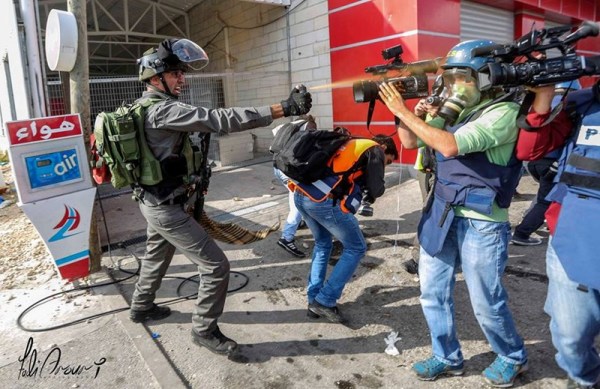
GAZA – Union of Islamic Radio Stations and Televisions-Palestine reported that Israeli forces committed 65 violations against the rights of journalists and pressmen in Jerusalem, West Bank and Gaza Strip in the month of December.
The union underlined that Israeli violations against Palestinian journalists led to the martyrdom of the photographer Ahmad Jahajha, 23, who was called “photographer of martyrs”.
The violations included direct attacks in the field and shooting at journalists while covering the events of Jerusalem Intifada and weekly popular marches. The union pointed out that 25 injuries among Palestinians who work in journalism were the result of direct attacks. Three among the wounded were female journalists. Ten cases of injuries were due to indirect attacks.
The union’s report also revealed that nine cases of repeated detentions, extension of detention, and summoning of journalists were documented in December including the case of a foreign journalist.
Detained Palestinian journalist Mohammad al-Qik was exposed to repeated assaults eight times. He was tortured and maltreated during investigation rounds and banned from seeing his lawyer or family. He was held under administrative detention which was extended to six more months despite being on hunger strike.
The report revealed that Israeli occupation forces banned Palestinian journalists and pressmen from doing their jobs and covering events. Israeli troops withdrew press cards from five journalists and banned two others from travel in Gaza.
The Israeli violations also included search and storming campaigns as well as confiscation of press equipment and closure of institutions and offices. Piracy of over five electronic websites was another form of Israeli violations. The webpage of al-Aqsa TV Channel was stopped and permanently deleted.
At the interior level, the union documented ten violations by the Palestinian Authority’s forces including ban orders against al-Aqsa satellite channel and tightening the noose on the team of Palestine Today satellite channel as well as summoning and detaining four journalists and assaulting four others.
Middle East leaders lash out at Saudi Arabia over Shiite cleric’s execution, protests erupt
RT | January 2, 2016
Shiite leaders are up in arms over Saudi Arabia’s execution of prominent cleric Nimr al-Nimr on terror charges. A senior Iranian Ayatollah called it a “crime,” while Tehran’s Foreign Ministry accused Riyadh of supporting terrorists.
“The Saudi government supports terrorists and takfiri [intolerant Sunni] extremists, while executing and suppressing critics inside the country,” Foreign Ministry spokesman Hossein Jaber Ansari was quoted as saying by state news agency IRNA.
According to a lawmaker from Iraq’s ruling Shiite coalition, Saudi Arabia’s execution of al-Nimr was intended to fuel Sunni-Shiite strife and “set the region on fire.”
“This measure taken by the ruling family [of Saudi Arabia] aims at reigniting the region, provoking sectarian fighting between Sunnis and Shiites,” Mohammed al-Sayhud told al-Sumaria TV.
Prominent Iraqis have called on the government in Baghdad on Saturday to cut ties with Riyadh over Sheikh Nimr al-Nimr’s execution, al-Sumaria TV reported.
“It’s a big crime that has opened the gates of hell,” Qasim al-Araji, the head of the Badr Organization in Iraq said, calling on Baghdad to cut diplomatic ties “immediately,” according to the channel’s website.
Another Iran-backed militia group, Asaib Ahl al-Haq, has accused Saudi Arabia of seeking to provoke Sunni-Shiite strife, according to the TV’s website. “What’s the use of having a Saudi embassy in Iraq?” it reportedly said.
Al-Nimr’s death has already added fuel to the fire in the boiling sectarian tensions in the Middle East.
Police in Bahrain fired tear gas at several dozen people protesting al-Nimr’s execution and carrying pictures of the cleric in a standoff in the Shi’ite Muslim village of Abu-Saiba, west of the capital Manama, an eyewitness told Reuters.
Scores of Shiite Muslims have come out to protest in Qatif, one of the oldest settlements in eastern Saudi Arabia, against the government’s execution of al-Nimr on Saturday, Reuters reported.
The protesters reportedly chanted, “down with the Al Saud,” referring to the name of the ruling Saudi royal family. They marched from al-Nimr’s home village of al-Awamiya to the region’s main town of Qatif, the only district in Saudi Arabia where Shiites are a majority.
One of the most senior clerics in Shiite-majority Iran, Ahmad Khatami, said that al-Nimr’s execution reflected the “criminal” character of the Saudi ruling family.
“I have no doubt that this pure blood will stain the collar of the House of Saud and wipe them from the pages of history,” Khatami, a member of the Assembly of Experts, was quoted as saying by the Mehr news agency.
He added: “The crime of executing Sheikh Nimr is part of a criminal pattern by this treacherous family … the Islamic world is expected to cry out and denounce this infamous regime as much as it can.”
Kataib Hezbollah’s leader, Abu Mahdi al-Mohandes, hailed the execution of Sheikh al-Nimr as “a crime that is added to the criminal record of Al Saud,” he said, according to al-Ahd TV.
Yemen’s Houthi movement has also mourned the prominent Shiite cleric, executed on Saturday.
“The Al Saudi family executed today the holy warrior, the grand cleric Nimr Baqr al-Nimr after a mock trial … a flagrant violation of human rights,” an obituary on the Houthis’ official Al Maseera website stated.
According to Lebanon’s Supreme Islamic Shiite Council, al-Nimr’s capital punishment was a serious “mistake.”
“The execution of Sheikh Nimr was an execution of reason, moderation and dialogue,” the council’s vice president, Sheikh Abdel Amir Qabalan said in a statement.
The brother of the executed cleric said he hopes that any reaction to al-Nimr’s killing will be peaceful.
“Sheikh Nimr enjoyed high esteem in his community and within Muslim society in general and no doubt there will be reaction,” Mohammed al-Nimr told Reuters by telephone. “We hope that any reactions would be confined to a peaceful framework. No one should have any reaction outside this peaceful framework. Enough bloodshed.”
Saudi Arabia executed Sheikh Nimr al-Nimr on Saturday, along with 46 other people. Authorities said most of those executed were involved in a series of attacks carried out by Al Qaeda between 2003 and 2006. Al-Nimr, along with six others, were accused of orchestrating anti-government protests between 2011 and 2013 in which 20 people died. Earlier this year, Saudi Arabia’s Supreme Court rejected an appeal against the death sentence passed on the Shia cleric.
Featured Video

Dan Dicks with James Corbett on Solutions Watch
or go to
Aletho News Archives – Video-Images
From the Archives
$1.5bn up in smoke: US THAAD missile stockpile dries up defending Israel against Iran
By Ivan Kesic | Press TV | July 2, 2025
According to American media, defense news outlets, and independent analysts, the 12-day Israeli military aggression against Iran significantly depleted the US stockpile of THAAD (Terminal High Altitude Area Defense) interceptor missiles.
Citing official sources, American magazine Newsweek reported on Friday that the US transferred a substantial portion of its advanced missile defense capabilities to support the Israeli regime, an effort with questionable results and a critical impact on US strategic reserves.
THAAD, developed by Lockheed Martin arms manufacturing company, is a key component of Israel’s multi-layered air defense architecture. It is designed to intercept medium-range ballistic missiles, including those launched from Iran and Yemen.
The US-made system is capable of targeting short-, medium-, and intermediate-range ballistic missiles during their terminal phase, whether inside or outside Earth’s atmosphere.
THAAD uses a “hit-to-kill” method, relying on kinetic energy rather than explosive warheads to destroy incoming threats, intercepting at altitudes of up to 150 km and ranges between 150-200 km.
Operated exclusively by American personnel, the US military maintains eight THAAD batteries with an estimated 350–400 interceptors in total. The eighth battery was activated during the June 20 Israeli aggression against Iran and is capable of intercepting hypersonic missiles. … continue
Blog Roll
 Aletho News
- Zionist Bought Senate Blocks Information About American Citizens Killed By Israel
- While Gaza dominates the UN, these are the people keeping it alive
- New Report: “Scholasticide and Genocide in Gaza: Assessment, Testimonies and Legal Analysis”
- ‘THAAD Delusion’: Iran war exposes US missile shield limits – The Atlantic
- Moscow issues warning to NATO over Russian exclave
- Yes, the Iran war has destroyed Trump’s presidency
- The fallacy of US delusions about Iran’s economic collapse
- Hezbollah denies Syria cell link, warns of Israeli plan to sow discord
- The legacy of US sanctions, war, and occupation in Iraq
- Iraqi resistance group rejects disarmament, vows to maintain support for Lebanon
- If Americans Knew
- Mamdani releases plan to combat antisemitism and hate crimes in New York City
- Iran’s Revolutionary Guards Publish Letter to the American People
- DMFI launches $1 million ad campaign supporting Virginia’s Elaine Luria
- US Senate blocks resolution seeking report on Americans killed by Israel
- Israeli Attacks Kill Ten Palestinians in Gaza
- Massacre at Minab: The School That Became a Grave
- Israeli media: The IDF Shows It Doesn’t Turn a Blind Eye; It Actively Emboldens Settler Havoc
- As settlers ravage West Bank, Israeli forces kill 10 in Gaza – Daily Update
- New Report: “Scholasticide and Genocide in Gaza: Assessment, Testimonies and Legal Analysis”
- Ex-Biden officials are desperate for a Gaza scapegoat
- No Tricks Zone
- Green Energy Debacle: German Expert Professor Fritz Vahrenholt Warns Of Severe Economic And Social Consequences
- Two More Paleo Reconstructions Affirm Meters-Higher Sea Levels Across Ireland, Brazil 7000-6000 Years Ago
- New Study: Earth And Venus Surface Warmth Largely Explained By Convection And Lapse Rate, Not CO2 Or Radiation
- 2025 Nature Paper Claiming Worsening Global Drought Gets RETRACTED …Heavily Flawed
- New Study: ‘Global Drought Shows No Detectable Recent Acceleration Under Climate Warming’
- Economic Masterminds: German Socialists Suggest Taxing Productivity Gains Stemming From Using AI
- The South China Sea Has Not Been Cooperating With The Climate Change Narrative
- Energy Crisis: Germany Enters Heating Season With Historically Low Gas Reserve Fill Levels
- New Study: The Antarctic Ice Sheet Gained Mass From 2020-2024 Due To Staggering Snow And Ice Accumulation
- Study: Ocean Heating Rates From Thousands Of Years Ago ‘Dwarf’ Modern Ocean Heating Rates

